• Skip to main content
  • Skip to secondary navigation
  • Skip to primary sidebar
  • Skip to footer

M.D. CREEKMORE

  • Blog
  • Books
  • Newsletter
  • Gear I Use
  • About
  • Contact
  • Facebook
  • YouTube
  • Blog
  • Books
  • Newsletter
  • Gear I Use
  • About
  • Contact
  • Privacy Policy
You are here: Home / Archives for Bushcraft

Bushcraft

Here you will find information on bushcraft, outdoor survival, and camping topics. If it happens in the woods then it will be found here.

Do It Yourself Long-Term Bushcraft Survival Shelter Ideas

September 13, 2018 M.D. Creekmore

long-term bushcraft shelterby Alex P

Veteran bushcrafters innately understand the Rule of Threes. The Rule of Threes is as follows: humans will die after 3 minutes with no air, 3 days without water, or 3 weeks of going without food. At least, those are the most commonly known rules.

One that is equally essential and that gets glossed over is the fact that people can die in three hours without shelter that thoroughly protects them from fatalities in harsh conditions.

You may not think the weather in your area is harsh enough to kill you but you might be surprised. During a 1964 race in England, three competitors were cut down by the cold even though it never dropped to freezing temperatures.

Even without the threat of imminent death, you can still face abundant health risks if you spend an extended period of time exposed to the elements. You name it, Heat, UV rays, cold, rain, snow, all these and more can quickly shorten your lifespan if you are continually exposed to them without a proper shelter to safeguard yourself.

In this world full of uncertainty, there’s always value in being prepared. Knowing what to do in a survival situation could literally determine life or death. If you know how to create survival shelters in the wild you could survive a situation you would have died in otherwise. That’s why we are sharing our top 6 ideas to creating survival shelters in the wild.

Lean-To

Lean-to is probably the most well-known option for creating a survival shelter. You need to find two trees that are close together and a thick stick that can be wedged between the trees. If you can’t find trees and sticks of the right size, you can hammer two sticks into the ground and secure a third between them.

If possible you should then tie the main pole to the supports to prevent a collapse. From there you simply lean a large number of sticks against the pole to create something that looks like half of a roof. Sticks are essential but they aren’t enough, you’ll need to fill in the open spaces between the sticks with moss, leaves, twigs, and other flora to act as a sort of insulation.

Overall, since the lean-to is open on one side the heat that can be kept in is minimal, the lean-to is mainly for achieving a basic level of protection.

Quinzhee

Getting trapped on a mountain with nothing but snow in sight is in many ways a worst case scenario, but that doesn’t mean it’s hopeless. Survival structures can be constructed using snow.

You’ve probably heard of igloos, and the idea here is similar. It’s just that in our idea you don’t need to have the expertise used by Northern natives to create homes from packed snow. You can create what is known as a Quinzhee must faster. You begin by piling up your supplies over an area that is larger than your body.

You then pile snow up around your supplies and pack it down until it’s about 30 inches thick all the way around. Try to keep the snow packed smoothly and evenly to prevent collapse. You then dig your way through the side and to your supplies, remove said supplies carefully, and take shelter in the cave you’ve created. Just make sure to poke a small hole in the top for air to come in or else you might be trading exposure for suffocation.

Basic Teepee

For this famous shelter, you need to start by either finding a thin but sturdy tree or a long pole that you can secure down in the ground. From there you will want to find as many long, straight branches as you can and circle the pole with them, leaning them up against it until you have a completely closed cone of empty space in the middle.

You should then somehow secure the pieces of wood together, tying them at the top with rope or fashioning a sort of cord from materials you find in the woods. Finally, you need to add the insulation, packing on anything you can to contain the heat without leading a collapse.

Debris Hut

The debris hut requires two sticks that stretch a bit beyond the length of your shoulders and one long stick that is larger than your height. You begin by sticking the two short sticks into the ground and leaning against each other so that they form a triangle.

You then place one end of the long stick on top of the triangle sticks and the other on the ground around 6 feet away. You then find as many sticks as you can and lean them up against the one long stick to form a sort of wooden pyramid that leaves just enough room for your body in the space left open. Small debris huts may feel claustrophobic, but that can actually be a good thing.

A small shelter may feel cramped at first but it actually seals in your body heat more effectively. And on the topic of body heat, don’t forget to insulate it, the debris in debris hut refers to the sticks used for the skeleton of the structure and the leaves and grass used for insulation.

Tarp Tent

One of the most helpful things you can have in a survival situation is a tarp. It makes shelter construction so much more simple, all you need to do is find a way to prop it over yourself and secure it down so that it will cover you safely through the night.

The second most helpful thing to carry is probably some sort of rope. If you can tie a rope between two trees and toss your tarp over the rope, you’ll have a tent ready. If you don’t have a rope, then you can wedge a sturdy stick between two trees to create the necessary support.

You can actually make just about any of the structures we’ve listed using a tarp, you simply have to put the tarp on top of the basic support instead of leaves, grass, and other natural types of insulation. Just make sure to secure the tarp with heavy rocks or logs to keep it from being blown away by winds.

Find Natural Shelter

The final of our top 6 ideas to creating bug out survival shelters in the wild offers something to think about in all the previous five scenarios. When creating survival shelters you don’t have to do everything yourself, and in most cases the less you can get away with doing the better off you will be.

Time and energy are everything when it comes to survival, you don’t want to waste time getting fancy with your construction ideas in a survival situation. That’s why it helps to start out with an existing foundation you can build on. If you can find a cave, cliff wall, large leaning tree, or some other sort of natural wall or enclosure then half of the job will be done for you.

The average entirely self-built structure might last a night but if you could be stranded for a longer period of time then finding something solid and natural to build around will save you time and effort in the long run.

Though at that point, you also need to consider things like access to freshwater and sources of nutrition when choosing where to set up your survival base camp. For your convenience, we put together a List of Emergency Essentials for you to check off. Survival is about planning ahead so life doesn’t catch you off guard.

Related and Recommended:

  • Shelters, Shacks, and Shanties: The Classic Guide to Building Wilderness Shelters
  • The Complete Survival Shelters Handbook: A Step-by-Step Guide to Building Life-saving Structures for Every Climate and Wilderness Situation
  • The Bomb Shelter Builders Book
  • The Secure Home

Have you built a shelter in the wild? Why? How did it turn out? Please leave a reply in the comments below…
Filed Under: Bushcraft

How to Make a Tripwire Trail or Camp Alarm

September 13, 2018 M.D. Creekmore

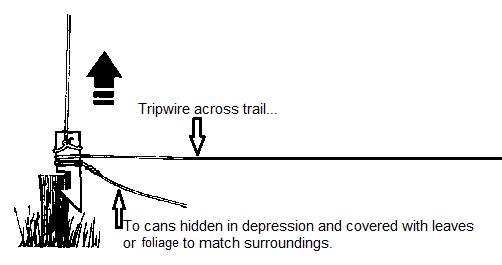
camp or trail alarmMany of you, have watched the old war movies where the approaching enemy trips an alarm made of tin cans, which in turn alerts the good-guys to their approach. The advancing troops trip the wire and the cans fly up into the air, making enough noise to alert the good guys to the approach, allowing them time to mount an effective counter.

In the real world there are better, more effective alarms that can be made to guard the entry points to your position, but since we love movie magic, I thought this infamous contraption would be a good place to start.

First, find the most likely area of approach and one offering enough cover to effectively hide the trap and wire. One of the best places is where the trail makes a sharp turn in another direction, this makes it more difficult for the target to spot the wire before tripping the trigger and sounding the alarm.

Try to make everything look natural, avoid breaking branches, turning over leaves or loose dirt, clean up all wood shavings etc. You want everything to look just like it did before you set the alarm.

It’s best to dig a slight depression to hide the cans, do this on the opposite side of the tree away from the approaching intruder. Add two or three rocks to inside each can then cover with natural cover to hide them from view.

This design and trigger can be used with other “noise makers” one of my favorites is a cowbell or goat-bell, a bell is louder and easier to hide. The main problem is that they may not be available when needed. But I’m sure you can come up with more ideas.

If you are interested in learning more about traps and path guards I recommend the Trapper’s Bible: Traps, Snares & Pathguardssurvival trapping by Dale Martin. This book includes pest snares, large animal snares, and transplant traps, plus camp alarms that alert you to intruders and deadly pathguards that could save your life.
Filed Under: Bushcraft

8 Things You Need To Know About Bushcraft

September 13, 2018 M.D. Creekmore

Bushcraft and survival skills to learn nowby Angela Williams

Civilization and advancements in technology have reduced to the minimum manmade disasters. Even some natural disasters can be foreseen and adequately planned for. However, Mother Nature sometimes has its way and, leaves a catastrophic aftermath. In such a case, your level of preparedness is the single most important determinant of your survival.

Such preparedness also comes in handy if you are in the wilderness.

To survive in the woods, you must possess some unique bushcraft skills, skills that the best preppers have perfected over the years. In this tutorial, we will provide you with 8 basic bushcraft survival skills that you ought to know to be a successful survivor.

1. Sourcing and Purifying Water

Over 70 percent of your body is water. For that reason, you cannot survive for more than three days without drinking water. In an extreme environment, it may not even be possible to survive that long. Perhaps the most important survival skill is locating and purifying water. It is always good to store sufficient water at all times and carry some prior to leaving for an exploration.

Mother Nature is another good source. You can actually extract clean drinking water from certain plants, especially those with large, green leaves. However, you have to learn to do it properly as some plants may be poisonous. Learn how to extract water from plants in time for adequate preparedness. If there is a ready source of water such as stream, river or pond, use the water only after filtering and boiling it.

2. Starting and Fueling Fire

The next basic but important skill is starting and fueling a fire. This skill is only second to sourcing and purifying water. Hypothermia, a medical emergency that occurs when your body is incapable of producing enough heat to cope up with heat loss, is a real threat if you do not find a way to start a fire to warm your body.

Fire is also essential for water purification, cooking of food, warding off deadly predators, cauterizing wounds following injury and in signaling help in case of an emergency. Ideally, it would be good to have matches or lighter in your person at all time. However, you must also equip yourself with skills so you can start a fire from scratch. Learning how to start a fire from scratch and tend to it is a vital survival tactic all survivors must undergo.

3. Building a Temporary Shelter

The basic needs for human survival are water, food, shelter, and clothing. If you leave to wander in the woods for a day and return to civilization in less than a day then building a temporary shelter should be the least of your worries. However, the story is different if you were to be lost in the wilderness for a couple of days. You would want to build a shelter to protect you from the elements and for peace of mind.

The risks and dangers of emergency are compounded by extreme weather including rain, snow, thick fog and cold. The manner of building shelter depends much on the surroundings and the environment where you are. Learn the best types of temporary shelter to build in emergency situations. Examples include Round Lodge (wickiup, teepee, or wigwam) and Lean-to.

4. Foraging and Hunting For Food

In a survival situation, the usual sources of food are no longer available. Once your food reserves are gone, you are left with the option of trusting Mother Nature to take care of your nutritional needs. You must learn to find and catch food to keep yourself and your loved one alive.

You can use various methods to forage and hunt for food. Such methods include hunting game using self-made weapons, trapping via small game survival snares, and fishing using a line and a hook and foraging for edible fruits, seeds, and herbs.

Concerning the latter, there are many helpful resources that can guide you on the particular plants to go for.

5. Proper Use of Survival Tools

Since most individuals cannot afford all the survival tools currently available in the market, the wise thing to do is pick the appropriate ones for your needs. Survival tools will help you in making a temporary shelter, fetching and preparing firewood, hunting, and cooking among other needs.

The most common survival tools to have in your possession include a flashlight, tactical folding knife, a backpack, scissors, hammer, splitting maul or ax, nails, pliers just but to mention a few. However, it is not enough just to have the tools; you must also know how to use them properly. This will not only make your work easier but also prevent accidents or nasty failures.

6. Psychological Preparedness

Survival means staying safe and functional by mitigating the effects of the disaster or emergency situation at hand. It takes a lot to manage your attitude and personality in an emergency situation. One of the most important survival skills is psychological preparedness. You must have confidence that you will survive despite the difficulties presented by the situation.

Think of what might happen to you if you were to lose hope along the way. It could prove fatal in the end if you cannot get your act together and approach the situation with confidence. It takes a lot of practice and soul searching to prepare psychologically for any eventuality in an emergency situation.

7. Predicting Weather

In most cases, we do not have to worry about the weather conditions of our immediate environment unless there is an impending natural calamity such as hurricane or floods. Nevertheless, being able to forecast weather is a vital skill every prepper should learn. The lessons will become handy in an emergency situation.

Any sudden change in weather conditions if you are in the wilderness can prove disastrous to you because you will not have the necessary skills to mitigate it. Among the weather predicting skills to learn include air pressure, cloud types, animal behavior and variations in temperature. While you can use weather prediction gadgets such as barometer, thermometer and so forth, you must also be able to make approximations from these natural phenomena.

8. First Aid Basics

First Aid is a fundamental skill everyone, especially preppers, must learn as part of disaster or emergency preparedness. In case of emergency, this skill can help you get out of a deadly situation. For instance, you might get a cut that leads to severe bleeding. In such a situation, you can use your First Aid skills to stop the bleeding before you access a medical facility for a more robust treatment. It also means you must have a small First Aid Kit.

Bottom Line

Acquiring the 8 bushcraft skills discussed is the first steps in learning outdoor survival bushcraft skills. Bushcraft skills are easy to learn with practice and incredibly helpful. If you do not possess these skills, chances are that you will fail if lost in the woods for an extended amount of time and I believe that’s something you do not want – so get to work.

Filed Under: Bushcraft

The Survivorman Zones of Assessment: The Key To Your Survival When The Situation Seems Hopeless

September 12, 2018 Guest Author

bushcraft skills for survivalBy Les Stroud aka Survivorman

You can imagine almost any survival situation. Dumping a canoe in a set of rapids. Falling off the edge of a cliff. Or simply, you’re lost. So what next? What exactly do you do now? In reality, your next move could be the most important thing you ever do. It will be perhaps the most important decision you ever make. That next step may ensure your survival or doom you to a tragic end. At the very least, this decision may make things much more difficult than they need to be.

First and foremost, when faced with a survival or traumatic situation of any kind, one must calm down. “Take a knee”. Calming down enables the person to start to use their brain power in a useful way for enabling salvation from the circumstances, whatever they may be. However, just calming down is never enough, for it only stops the action of the moment. What comes next is the most important aspect of survival: making a decision and taking action.

However, doing so without considering the options is foolhardy at best and likely to lead to disaster, more problems, or an exacerbation of the problems at hand. So decisions must be made on how to move forward.

So far all of this is not rocket science, yet how does one make decisions without knowledge? This is where the magic of survival skills, of all kinds, kicks in – with knowledge. Without ascertaining all kinds of details (knowledge) about your predicament you are liable to make decisions that are ill thought out and potentially dangerous. But how do you get the information you need? Enter the Survivorman Zones of Assessment ã

Zone 1- Your body and clothes

You start with yourself:

  • Are you hurt?
  • Are you tired or hungry?
  • What are you wearing?
  • What do you have in your pockets?

*I am wearing a backpack with extra clothes, one sandwich and a half a bottle of water inside of it. I have a power bar in my pocket, a small knife and I’m wearing good boots. I do NOT have a flashlight or any signaling devices. I have lots of energy and no one is injured, but my friend Brian is not physically fit and he lost all his gear.

If you are not alone, repeat this process so that everyone checks out their own Zone 1 and determines what the group has collectively. Even to the point of saying “everyone empty out their pockets – let’s take stock”.

Zone 2- Your Immediate Vicinity

This is simply the area immediate to you – the surrounding area of a few thousand square feet.

  • Do you have a tent?
  • A canoe?
  • Do you have any food or water or other items in packs?
  • What else is lying around you – firewood? a swamp full of edible cattail? an all-terrain vehicle with half a tank of gas?
  • What can you glean from your immediate surroundings? Can you rip or break something apart to aid you? For example, can you make protective insulated boots out of your car or boat seats?

*There are three of us. We have one tent and two sleeping bags, NO group food, a small first aid kit and one lighter.

Zone 3- Your Extended Area

This is further beyond – maybe a mile or a couple of miles away.

  • How far are you from safety?
  • Do you know of anything not too far away that can help you, like a cabin?
  • Which direction is safety and how difficult will to be to get there?
  • How difficult would it be to get to safety and is everyone up for the task?
  • If not, what are the challenges to getting to safety and can you overcome them easily?
  • Does anyone know you are in trouble and if so how long before they affect a rescue?
  • How soon can you move, IF you can move?
  • Do you know these answers FOR SURE? (not knowing something is as important to consider as is knowing something)

*I remember that there is a highway only one mile to the east if we walk straight but I don’t know what the terrain is like and no one at home is expecting to hear from us for at least 4 more days. I also remember we passed a cabin only a half a mile back and I know for sure we can get to it for the night. It is only about 12 pm.

Ok – so now you know:

I am wearing a backpack with extra clothes, one sandwich and a half a bottle of water inside of it. I have a power bar in my pocket, a small knife and I’m wearing good boots. I do NOT have a flashlight or any signaling devices and I have lots of energy.

There are three of us, no one is injured, but Brian is not physically fit and lost all his gear. We have one tent and two sleeping bags, NO group food, a small first aid kit and one lighter. I remember that there is a highway only one mile to the east if we walk straight but I don’t know what the terrain is like and no one at home is expecting to hear from us for at least 4 more days.

I also remember we passed a cabin only a half a mile back and I know for sure we can get to it for the night. It is only about 12 pm.

It likely only took 60 to 90 seconds to get all this knowledge! Yet now you have many details and are able to make a series of quality and concise decisions about how to effect proactive survival – the only kind of survival there is.

March is the beginning of the end of winter. February is our blah month. The term “bitterly cold” is tossed around a lot, and most folks just want to get it over with. Then comes March, with its tantalizingly warm days that hint at an early start to spring, but exit with nights that the cold simply refuses to ease its grip on.

So, February, the dead of winter, must be the most dangerous time of the year, right? Wrong. Without a doubt the most dangerous time of year comes after we’ve put away our big down coats, but just before the grass takes on its green hue. During the peak of winter, we’re expecting the bone-chilling cold.

We wear our Michelin-man coats making us all look like miniature Schwarzeneggers, hear the forecast for ‘minus-one-million’ and step outside, already braced for the frigid, clear, Canadian air. But we’re an excitable bunch when the sun begins warming our cheeks again mid-March. Coats are thrown back in the basement closet, and people start trying to get ready for swimsuit season and the summer months to come. But beware. Early spring is the time of year that’ll get ya!

There are more cases of hypothermia during the Spring (and Fall) months than during Winter. We’re not ready for the drop in temperature late in the day when we’ve had a balmy March afternoon. We’re not ready for the damp air that seems to cut through our clothing after two months of dry air that our fleece and down staved off. If being out in the wilderness is your thing, then beware of the lackadaisical approach of Spring.

SURVIVALMAN TV

Hypothermia is a killer. Plain and simple. Though strangely, after you get past the initial shivering it’s considered to be one of the most pleasant ways to die. Your body temperature begins to drop from 98.6˚ F (37° C) and as it drops, you become clumsy, forgetful and tend to walk around in a stupor, kind of like a lot of my friends now that I think of it.

Severely hypothermic people have been known to strip down from their protective clothing, stating that they are quite warm and comfortable, even though they are slowly chilling to death.

Over-exertion that leads to sweating during the warmth of a March day is deadly. By 6 p.m. your inner clothes are soaked with sweat and now the sun is going down. Within minutes the chills up your spine begin. From there, it’s a dangerous downward spiral, yet it’s all easily avoided with some simple preparation.

First, don’t become overconfident with the beautiful, warming sunshine of the day. March nights can dip well below zero quickly. Know that the cold is coming, and keep a day-pack with a down coat packed in it. Dress in layers and, though it’s a bit of a pain, constantly strip down or layer up if you are cold or hot.

Read that last sentence again.

It is one that can save your life. While trekking or heading out into the ides of March remember my favorite saying; ‘If you sweat, you die.’

That is the long and slow story of hypothermia. But there also exists the Coles Notes version. Immersion. Also known as plunging through the weak ice into frigid lake water, or for some people, a naked New Year’s Day tradition, the Polar Bear swim. It is possibly one of the scariest scenarios to occur in the waning winter months. After a few days of thawing, water will begin to wind its way along the path of least resistance, down to the lakes, creating sinkholes and weak ice everywhere. Now ice that thirty days prior was strong enough to drive a truck on has weaknesses and fault lines large enough for your poorly dressed body to break through.

The key to surviving a fall through the ice is, you guessed it, preparation. Simply put; don’t ever venture out onto frozen lakes without a pair of ice grippers around your neck, easily accessible. You don’t get a second chance at this.

I kick myself every-time I see a pair of ice grippers in the outdoor stores. You see, many years ago, my survival cronies and I made our own ice grippers and I always thought they should be mass marketed. Ah well, someone’s making a fortune now and I am confident lives are being saved because of this simple little device.

It’s hard to generalize the ‘look’ of ice and say it means one thing or another so as a general rule I would say watch out for the dark spots; areas on the surface of the lake where the slush and water has gathered and weakened the ice. Anywhere a river or creek flows into a lake will be weak for some distance, in a semi-circle, around the mouth of the tributary.

If you must travel on a frozen body of water and you already know the ice is weak, then it can help to have a long pole, perhaps even an ice chisel. You can test the ice in front of you as you gingerly walk, and also use the pole held horizontally to save you from falling all the way through a hole.

Once you’re in the drink, the only way out is pretty much the same as getting out of a swimming pool, only without having the side wall of the pool to push your feet against or the grip of the pool edge to push down on with your hands. The best method is a good scissor kick up from the water and then rolling yourself out on to the ice surface.

Any friend nearby that wants to rescue you must do so by finding something they can throw to you or reach out to you to give you something to grab hold of. They also need to lie flat if they are trying to get closer to you so that their weight is spread out on the weak ice around your hole. Falling through the ice is not a team sport.

Once you’re out, it’s time for a big fire. Scratch that. I mean a massive fire. Huge. We’re talking the kind of fire you could view from space. That’s the only thing that will knock the chill out of your now naked body. Sorry, but you have to strip down and get all the wet clothes off if you want to dry out.

Kinda gives a whole new meaning to the concept of shrinkage for the men! And it is absolutely vital that you do this out of the wind. Keep moving. Do jumping jacks. Get your blood flowing back through all your extremities. Did I mention to get out of the wind? The wind is a killer; you must be protected from it. You don’t want to add frostbite to your problems.

Now you want to be rescued, so I’d like to share a lesson in signaling I learned from first-hand experience. Ignore what you might have heard about making multiple smoke signals. Make one big signal tower fire. Concentrate your efforts on pooling all the resources for the big rescue moment.

Trying to run between multiple fires while the wind cuts through you is ridiculous and even dangerous. Make use of as much birch bark as possible so your fire flames up very fast. Above it put green spruce bows, which will give you lots of smoke.

And whatever you do, don’t go running out onto the ice to wave down your only chance of rescue…. and fall back into the same hole!

Les StroudLes Stroud aka Survivorman, is credited for single-handedly creating an entirely new genre of TV based on survival; Survival TV. He has recently launched www.survivormantv.com: his new online, subscription-based, web portal for all things survival/adventure and even Bigfoot. He is a multi-award winning TV producer/writer/director and host, a best selling author (his book Survive! Is considered the best new manual on survival today), and an accomplished adventurer and musician. He is a proud member of the Explorers Club, an ambassador for the Young Explorers and a Fellow of the Royal Canadian Geographic Society.

Filed Under: Bushcraft

Must Know Bushcraft Survival Skills for Living Off the Land

September 8, 2018 M.D. Creekmore

by Tony Nester

bushcraft skills field-dressing-a-rabit
Field-dressing a jackrabbit during a survival course.

Living off the land is a skill that can pay off in large dividends if you are stranded in the wilds long-term; want to add more variety into your daily diet at home and reduce food bills, or be prepared in the event of a grid-down situation where the grocery shelves empty.

Having taught extended bushcraft courses during the past 26 years, I’ve found the area of procuring food in the wilderness to be the most challenging skill in the field of wilderness living. Once learned and regularly applied, you will gain greater confidence in the back-country and know how to obtain food from a land that has much to offer, to those who know where to look.

The following material intends to convey practical methods that a person, with little experience in the outdoors, can use to get started obtaining food from Nature’s Kitchen. The emphasis of this article is on small game and not big game animals like elk, moose, and deer.

On any given day in the wilds, you are going to come across a greater concentration of rabbits, squirrels, woodchucks, marmots, raccoons, and other smaller critters. For the survivor, these animals will provide sustenance until you can procure the larger game.

Food procurement has a lot of myths and misconceptions surrounding it, however. The idea that one can simply grab their bug-out bag and head into the hills to live off nature’s kitchen for a few months has been perpetuated in the reality shows and can get you into trouble. It took a tribe to feed a tribe and our ancestors relied on sheer numbers to obtain wild food, not on a lone-wolf mentality.

I’ve had the opportunity to eat just about everything that crawls, flies, walks, or slithers- from snakes and coyotes to rats and grasshoppers. Under conditions where hunger is constantly gnawing away at the body (and mind), my food prejudices quickly fade after a few days and you will eat anything that runs in front of you. My success is also greatly increased by having a few key hunting and trapping tools with me at all times. Keep in mind that game laws vary tremendously from state to state so research your region of the country to determine what’s legal.

The Challenge of Living Off the Land

Procuring food in the wilderness can be a challenge because of some or all of the following reasons:

1) Few people subsistence hunt or trap like they did a generation ago and the skills and knowledge base in the community have been reduced or completely disappeared in some regions.

2) When many people hunt today, it is mostly for Big Game trophies which means sport first, and meat second. Plus, the sheer number of hunters taking to the woods each season is staggering. As a result, state game laws are becoming more restrictive and the pressure from often ill-informed animal rights groups have all but eliminated certain practices such as trapping from many states.

3) The geographic region (desert, mountains, etc…) may not support much life to begin with. It is far easier to make it as a hunter-gatherer in the lush, Pacific Northwest than in the desert lowlands of the parched Southwest.

4) It may have been a particularly tough year for your region. Perhaps the drought is severe or wildfires are wreaking havoc, and thus the animals and plants are suffering.

5) Modern game laws are much different than when our ancestors walked the planet and could harvest any species of animal in any season, day or night.

6) Subsistence hunting and gathering is best performed as a group (tribe) and not as a solo pursuit. The more eyes, ears, and hands out on the land the greater the odds of obtaining wild meat, fish, and plants. Many of us today have little choice but to go solo which reduces “caloric efficiency.”

7) Finally, one cannot discount the TBH Effect- “Trained By Hollywood Effect.” There is a constant barrage of romantic notions that we receive from movies and “reality” shows depicting how people are supposed to live in the wilds. If you trek into the wilderness like Jeremiah Johnson, then have realistic expectations of your own skills, what the land can provide, and what is reasonable (and legal) for your region. Even then, don’t expect it to be easy.

Four Areas of Study for the Modern Hunter-Gatherer

In today’s world, if you want to feed yourself reasonably well in the backcountry, you must focus on the following four areas of study:

  1. Proficiency with a .22 caliber rifle or pistol.
  2. Basic fishing methods such as angling.
  3. Knowledge of the ten common edible plants in your region.
  4. How to use traps and snares.

Granted, there are other methods of procuring wild game such as bowhunting, slings, bolas, etc… but the above four represent the core skills to set your sights on as a beginner, in my opinion. If you are a skilled archer then, by all means, work with what you know. The more skills you possess in this realm, the more options you have.

If you are new to firearms and hunting, then seek out an experienced family member or friend who can show you the basics of firearm safety and marksmanship. I highly recommend taking a Hunter Safety class. This will provide the foundation skills of safety and basic gun handling skills as well as covering game laws specific to your state.

Tools of the Trade

Traps-for-living-off-the-land-and-bushcraft-survival
Simple tools of the trade


Provided you are in good habitat, a quality rifle along with the proper training can tip the odds in your favor for procuring wild game. Having been on countless survival treks where we lived solely off the land using primitive skills (no modern gear), I can say that I will gladly take a small caliber firearm any day for filling the stew pot.

There are two approaches to living off the land: Passive and Active. 1) Passive is using traps, snares, deadfalls, trotlines, cast nets, etc…. You are setting out the device and letting it do the work for you while you are back at camp or home. 2) Active is where you are moving across the landscape or still hunting. This is more calorie intensive and not as productive as trapping. I find it is best to employ both methods which increases your food procurement capabilities.

Bushcraft Rifles

I use a Ruger 10-22 with a scope for small game. This is the most ubiquitous .22 on the market with plenty of products if you want to modify the stock, trigger, sights, etc…. CCI Minimag hollow points are my preferred ammo for hunting. I also have a Marlin Papoose collapsible .22 that I use on occasion.

Bushcraft Shotguns

I am a sucker for the old H & R single-shot 20 gauge for hunting small game. You can still find these for under $120 and many a youth has bagged his first squirrel with this simple but efficient shotgun. H & R also makes a hollow, synthetic stock called the Survivor. The stock has enough space to stow basic survival supplies.

Combination Rifles

I think the best of both worlds is getting an over and under rifle. I use either a Savage Model 24 which is a .222 caliber over a .20 gauge or a Savage Model 42 which is a .22LR over a .410 gauge. Both of these are excellent for taking large and small game. I have a penchant for the older rifles with a real wood stock and a nice heft.

Air Rifles

A former student of mine, who was involved in air gun competitions, introduced me to high-powered air-rifles for hunting small game. Until my vision changed recently, I was using a Benjamin 392 with iron sights but have switched to a Hatsan 125 with a scope. This shoots .25 caliber pellets and is excellent for dropping squirrels and rabbits easily within a 30-yard range not to mention that the ammo is cheap. The Pyramyd Air Company has a wide selection of air rifles and is a good place to start your research.

Recurve Bows

During archery season, I use a Bear Kodiak recurve or a handmade cherry bow both of which have a 45# draw weight. I like making my own cedar arrows and use blunt tips for small game and Zwickey Eskimo broadheads for large game. I fletch my own arrows with a Bitzenburger jig.

Slingshot

I like making my own high-powered slingshots using tubular bands and use these each Fall for squirrel hunting. The beauty of practicing with a slingshot is that the muscle-memory carries over to your archery skills. I use .50 caliber black powder balls for ammo.

Conibears

When we teach trapping courses in Utah, we utilize conibears and snares. A #110 conibear is an excellent game-getter that we use for procuring small animals while we use the larger #330 conibears for beaver and raccoon.

These are extremely efficient traps that can easily fracture your fingers or limbs if you are unfamiliar with how to use them. Take a trapper’s education course, obtain a permit, and then spend time with an experienced trapper if you plan on using conibears.

There’s a reason that the archeological record, the world over, indicates that trapping was the prime means of sustenance for indigenous cultures.

Rat traps, obtained from big-box hardware stores, would be another option for procuring small game and don’t have the hazardous kickback that the Conibear possesses.

Fishing

fish-on-open-fire-bushcraft-survival-skills-fishing
Fish filets and trout baking over the coals. These are secured with split, green willow shoots.

Fishing isn’t something I do much in Arizona but when I head up to northern regions I bring a collapsible Shakespeare fishing pole, 6-pound test line, three-dozen assorted fish hooks and assorted artificial baits.

Obviously, if you live in a more productive state then your fishing tackle should be heartier than my kit and you may even want to add in crayfish traps. The latter can be found at Wal-Mart.

Cast & Gill Nets

Both cast and gill nets allow the fisherman to harvest a large quantity of fish while expending little effort. These are the time-tested methods used throughout the world by maritime cultures. If I were venturing into a remote waterway or wilderness region and weight wasn’t an issue, I would definitely pack along a cast or gill net for survival purposes. Cast nets range in size from three to eight feet while the standard survival gill net is 12’ by 4’ and packs down to the size of a softball.

A Menu of Small Game

Small game includes cottontail rabbit, squirrel, marmots, skunk, gopher, woodchuck, jackrabbit, chipmunk, ringtail, raccoon, and porcupine. Not all of these are legal to hunt and you will have to check out your state’s game laws.

One squirrel or rabbit will generally provide a single meal for one person. On the other hand, a fat raccoon or porcupine might last one person for four days. Raccoon tastes like roast-beef, if grilled over an open fire or the barbecue, and is an outstanding meat.

Most of us tend to have a romantic image of the native hunter relying on deer or buffalo as their sole means of sustenance, when in fact, it was the microfauna or small mammals that provided the consistent day to day food source in many parts of the world.

In terms of animal population density, you will be able to sustain yourself with small game far easier than larger animals like deer and elk (and obtaining hunting permits for small game is far easier!).

One wildlife biologist in Nevada found that the number of small mammals per square kilometer was around 4600! Another study in Manitoba, Canada revealed 10 squirrels per acre. The research also suggests that spring and early summer show the highest concentration of mammals.

Summary

If you are reading this article, then you had ancestors who hunted and gathered, fished and foraged. Our body and mind evolved from a much different lifestyle than the one we lead today in our largely urban world. You were born with the senses and abilities to be a hunter. They are already hardwired into your being. Spend some time focusing on one of the four key areas listed here and get started this weekend.

Learn about the top ten edible plants used in your region, acquire proficiency with a .22 rifle or air-rifle; get a small-game hunting permit and take to the field; spend time fishing with your family on the next camping trip. The time to learn how to feed yourself from nature’s kitchen is before a crisis hits and the grocery shelves empty.

Start out with a few of these activities and you will be, not only eating healthier but prepared to supplement your home pantry in the event of an emergency.

Recommended Reading

  • Camp Life & the Tricks of Trapping
  • The Modern Hunter-Gatherer
  • Subsistence: A Guide For The Modern Hunter-Gatherer: Hunting, Trapping, Fishing & Foraging for a Living in Texas
  • The Forager’s Harvest: A Guide to Identifying, Harvesting, and Preparing Edible Wild Plants

About the Author: Tony Nester is the author of numerous books and DVDs on survival. His school is the primary provider of survival training for the Military Special Operations community, and he has served as a consultant for the NTSB, Travel Channel, NY Times, Backpacker Magazine, and the film Into the Wild. Tony also writes post-apocalyptic fiction under the pen name JT Sawyer.

For more information, visit www.apathways.com or www.jtsawyer.com.

Filed Under: Bushcraft

Edible Wild Plants: 25 Wild Plants You Can Eat to Survive in the Wild

September 7, 2018 M.D. Creekmore

wild plants to eat
by Christine W

I once read a very interesting article from a survivor of the Bosnian Collapse in the late 90’s. This was a true end of the world as they knew it event, and it was fascinating and eye-opening to read. One of the things the man talked about in his extensive article was the most useful skills to posses.

Medical knowledge was the highest on his list. Lacking real world medical training, people with the knowledge of the uses of herbs and plants were able to trade and use that knowledge to survive.

Most people in America can’t identify even 1% of the plants that surround them. They don’t know useful from poisonous or nutritious from useless plants. And yet there are dozens of plants that grow even in urban settings that are not only edible but downright lifesaving if you only can identify them.

For 15 years I have been a gardener and outdoorswoman. Much of my knowledge has come from being a curious person interested in the world around me, and also from searching for natural ways to heal common ailments for myself and my children.

I have been amazed at the amount of plants growing near me that can be used for healing, and have compiled a small list of what I consider the important common plants that grow in the USA, things you can find right out your back door. I am sure there are thousands more!

Knowledge is power, so I recommend that you should start now when it comes to identifying wild and not so wild food and medicinal sources. Once you can recognize a plant start noting where you see them, what time of year they flower in your area and when they bear fruit. I go out for drives along country roads and memorize where plants, bushes, berries, and helpful trees are growing.

You can also look around your neighborhood. Rose Bushes will provide you with rose hips that are high in vitamin C and can save you from scurvy in the winter. Echinacea also known as Purple Coneflowers are popular in gardens can boost the immune system and also have a host of other uses.

Look up color photos of plants on the internet to help you identify them, or join a wild crafting group if one is available. Having a print out of each plant with multiple pictures and uses of them, along with how to use them and dosages, is very important in a SHTF event.

There are many books specifying every area of America for finding wild foods and they often have excellent color pictures and identification keys. I keep a few of them in my purse when I go up to the wild and try to identify as many helpful plants as possible. Often these books are inexpensive so picking them up is a good idea.

As a note I say where you can find the below plants. We live in the dry west so most plants only grow near water sources. However, I know that in other areas of the country rain is more plentiful so the growing habitat is much different.

If you are gathering post or during SHTF remember your personal safety and weigh the possible benefits vs. danger of running into other hungry people. Never go alone even now as accidents happen and wild animals many times enjoy wild foods as much as people do.

Meeting a hungry bear while picking berries is a highly unpleasant event! When you head to any wilderness take precautions and let people know where you are going and when you are coming back. Always take a first aid kit, water, a good map, and some food with you.

Caution! As with any wild foraging check and double check your identification before eating anything, do not take another person’s word on the safety of a plant. Some wild foods are debated on their safety as some people will have a reaction where others do not.

Also if you have food allergies be wary and careful when trying new things. Remember that when harvesting wild foods make sure they are not sprayed with poisons or chemicals. I am not a doctor and am not giving medical advice. If you want to try natural remedies do your research and also talk to your doctor.

Even though these plants are natural they can still be very strong medicines and even interact with other medication you are taking!

Alfalfa

Amazingly enough, this plant, a common feed for animals, is one of the most useful in a TEOTWAWKI collapse, or even just in a financial collapse where you suddenly become dirt poor. Alfalfa is highly nutritious and can be used to treat several conditions. The most important in my mind being bleeding, hemorrhaging, hemorrhaging after birth, and heavy menstrual bleeding.

Blood loss is a common problem where medical care is limited and people are exposed to hard physical work or dangerous situations.

Childbirth for women is the most fatal event during life in 3rd world countries, many of the deaths coming from hemorrhaging after birth. Drinking a tea made from alfalfa, or eating alfalfa in the last few weeks of pregnancy can help prevent hemorrhage or excessive bleeding due to several compounds it contains, this includes vitamin K which is essential to blood clotting.

I used this supplement under my midwife’s supervision during my last two pregnancies.

My first two births went off well except that I hemorrhaged after birth. After my second birth, I hemorrhaged so severely that I was only saved by my midwife administering emergency shots of anti-hemorrhaging drugs (which will not be available to most women in a SHTF event).

For two months after I was weaker than normal and under strict instructions to take it easy. My next two births went well and I barely bled at all, even compared to normal bleeding. Both times I was taking alfalfa at the end of my pregnancy. Pregnant women should not take it until the last three weeks of pregnancy due to the fact that as it has hormone properties that could cause labor and miscarriage.

Once a woman is considered full term at 37 weeks that is not such an issue. Taking too much alfalfa for longer than a month can have the opposite effect and cause bleeding to be worse! Newborns need Vitamin K for proper development and usually receive an injection soon after birth, but during or after a SHTF event those shots may not be available and doctors recommend mothers consume foods with high vitamin K so that it will be passed to the nursing child.

Dried or fresh alfalfa can be used in the human diet and also as a compress on wounds to help them stop bleeding. In application to a wound, it is essential to boil the water for 10 minutes to kill bacteria and then boil the alfalfa added for a few minutes thus killing any bacteria on the plant leaves. Alfalfa helps people who are nutritionally deficient.

It helps a great deal with vitamin C deficiency when used fresh, for it contains more vitamin C than some citrus fruits. Scurvy is caused by a vitamin C deficiency and is a common problem for people during famines, or when there is a lack of fresh fruits and vegetables.

It also has very high B vitamin levels and Vitamin D levels which help with problems such as rickets, a common disease especially affecting children who have poor diets or are not exposed to enough sunlight. This is a common problem when living in a war zone or an area where people must stay inside much of the time due to violence as Vitamin D cannot be manufactured by the body and is mainly created by the skin’s exposure to the sun.

Alfalfa is also easy to store when dried and is very cheap. It is a good item to keep on hand. Alfalfa is grown everywhere in the USA and can be found along ditch banks and country roads growing wild, in fields as well as in farmyards. It does not need to be reseeded every year so a field that had it last year will have it this year as well.

Raspberry Leaf

Raspberries (also known as redcaps, bramble berries, dewberry, and thimbleberry) grow wild in the USA and are even considered an invasive species. They come in red, black, purple, and golden fruit all of which is essentially the same plant, but these other fruit colors do not generally grow in the wild like the common red does. Obviously, the fruit is edible but the leaves and even roots can be used for highly effective remedies.

The most well known is for aid to painful menstruation, to regulate and normalize a woman’s cycle, and also to help shorten and lessen the pain of childbirth. I am all for shortening the length of childbirth; having had four children naturally! Caution must be used however, raspberry leaf can cause uterine contractions, so it should only be used once labor has begun or a week before birth is expected.

It can be used by non-pregnant women during and right before menstruation. Another equally important use of raspberry leaf is it’s use as a cure for diarrhea. More on that in the Blackberry Section. These plants are found near water, in boggy areas, besides stream banks, in gullies, on ditch banks, or growing anywhere that gets plentiful rainfall.

Blackberry Fruits, Leaves, and Roots

Diarrhea is one of the most common killers in third world countries due to contaminated water supplies and poor water treatment facilities. As a country collapses the infrastructure of water treatment always breaks down, and waterborne illness explodes. Preparation for such a disease is essential when we plan for a SHTF event.

Diarrhea is especially fatal to children and the elderly and is frightening at how fast it kills. Soldiers in battle frequently suffer from dysentery due to bad water as well. For centuries blackberries (and to a lesser extent any of the brambleberry varieties such a red caps, black caps, Marionberries, dewberries, and raspberries) have been used for treating diarrhea, dysentery, foodborne illness, and even the more deadly waterborne illnesses. This must be remembered to be a treatment, not a cure as diarrhea is a symptom of an infection in the body which must be treated as well.

Blackberry Root Bark is the most effective remedy for diarrhea, but if you can’t get to the roots the leaves are highly effective as well, even dried ones. Last is the fruit which can be eaten or a syrup or juice made from the fruit. A syrup or juice is especially useful when treating small children.

One teaspoon of root or leaves per boiling cup of water, steeped for 20 minutes, then sweetened with honey if possible due to its healing and soothing properties is a good dosage. It is the tannins in the blackberry plant that help with diarrhea.

Blackberries are even more invasive than red raspberries and grow profusely throughout the USA. If in a dry region look for them along streams or down in gullies and canyons. The leaves and root bark are easy to dry, and the leaves can be eaten and are high in nutrition.

Elderberries

I grew up eating wild elderberries, these are a round purple-ish blue fruit that grows in clusters on a bushy tree. The bush flowers in late spring depending on your area and the fruits are ripe in early fall.

They are very common growing wild and like water so they grow either near bodies of water or in areas that get plenty of water. I often see them growing in old farmyards or homesteads because the pioneers and old farmers used them not only for health but as a much-needed fruit.

They also can be found in gullies and draws. The fruit has a dusty powder on it, but care should be taken as the red elderberry, the stems of all elderberries that connect to the fruit, and also the unripe fruit, are poisonous.

The fruit and flowers have been proven in clinical trials to help with many ailments, but especially in respiratory infections such as bronchitis and also to help thin mucus. The fruit are very high in vitamin C and are used to treat the flu and to boost the immune system. Elderberries would be good for an insurance against scurvy. Harvesting is easy and making juice, syrups, or tinctures from them is the best way to use them for healing.

The flowers are used to make a tea or tincture for respiratory ailments and compress for wounds. They also are good in pies, jams, jellies, and to make wine and liquors. There is some evidence that they should be cooked before consuming as uncooked raw fruit can cause stomach upset. Elderberry syrup is safe for children.

Other Berries – Obviously there are many berries growing throughout the United States, many of them not only edible but beneficial as well. Getting a good book on berry identification for your area is an excellent idea.

Rosehips

Wild roses grow all over the USA along roads, up in the mountains, and in forests. They are usually found as just a single flower, meaning they are a single layer of petals in a ring around the central part of the flower, maybe five petals in a ring.

Roses are also grown in many yards and gardens, and there are even rose varieties grown specifically for large rosehips. Rosehips are the main and most helpful part of the plant for use. Wild roses have small hips compared to their cultivated cousins, but size doesn’t matter when it comes to food and medicinal value.

They can be eaten raw in a pinch, but the most common way is to chop the hips roughly and pour 1 cup boiling water over two teaspoons of the chopped hips. Allow them to steep for 20 minutes and sweeten with honey, or, if for a child under two years of age, sugar or syrup. Rose hips are higher in vitamin C than citrus fruit and not only prevent but also treat scurvy.

They are easy to identify and easy to harvest. Rose hips make a tea that is tart and pleasant to drink. They can help treat urinary tract infections and the flu, and rose hips also boost the immune system. When fresh veggies and fruit are unavailable, rosehips can be found even in winter and still be eaten as they do not rot easily and cling to the rosebush.

Rosehips are generally a reddish color, and it is wise to look for ones that are still firm, not black or with mold or rot on them. They can be used to make syrup, jelly, jam, wine, and juice. The flowers of roses are also edible but make sure you don’t eat them if they are been sprayed with pesticide.

Bachelor Buttons

Bachelor Buttons, also known as cornflowers, are a flower that grows wild and cultivated across the USA. They are popular in wildflower or cottage gardens and are also drought tolerant and reseed prolifically in the wild. The common color is a cobalt blue, but especially in gardens, they come in white, light pink, and purple.

The flower is the part used and is most commonly utilized as an eyewash for injured or infected eyes. This is usually done by steeping the flowers in freshly boiled water, cooled, and then applied over the eyes on a moistened rag.

A similar rinse for cuts and sores in the mouth aids healing. In this instance, it is best to spit out after swishing around the mouth. Furthermore, they can also be used in the same form to wash cuts, scrapes, and bruises.

Combine one teaspoon of dried cornflower petals, or five fresh blossoms with one cup of boiling water. Cover and steep for 15-20 minutes; after this you may strain and consume. If taking internally it is best for no longer than two weeks.

Cornflower tea has been used to calm diarrhea, treat urinary tract infections, and for anxiety or nervousness. This flower can be found along roadsides, in fields, and in clearings. They love full sun and they are very easy to grow. Women who are pregnant or breastfeeding should not use this internally. If you have allergies to daisies or ragweed you should not use this at all.

Lambs Quarters/Wild Spinach

Lambs Quarters, also known as wild spinach, goosefoot, pigweed, good king Henry, and fat hen, is considered by most gardeners as a weed, but is, in fact, is a highly nutritious and delicious plant that grows everywhere and is easy to identify. It is nicer than common spinach because it is slow to bolt in the heat of summer, and because while tasting like spinach, it is even more nutritious.

It can be cooked or eaten raw and the stems leaves and seeds are all edible. It can also be frozen, canned or dried for later eating. Lamb’s Quarters is a good survival food and can be found in yards, abandoned lots, fields, gardens, and along roads. You can cut it off almost to the root, yet it comes up and starts leafing out again.

Dandelion

Dandelion is another common yard weed that grows almost everywhere, including in the mountains. I never dig up the dandelions in my yard but use them and also feed them to our rabbits. We do not treat our yard with chemicals. It is highly nutritious, and all parts are edible- including the roots which can be dried and used as a coffee substitute. It has been used as a diuretic and to cleanse the blood of toxins.

The milk that comes when you cut the plant can be used on wounds and is highly effective to use on warts. I have used the milk on three of my children’s warts and all three times it made them disappear naturally without pain or scarring. It must be applied every day for a good month to the warts. A tea made from all parts of the dandelion is absurdly rich in nutrients and would be well utilized by those suffering from malnutrition.

Wild Onions

Wild onions are easy to identify because they smell like onions! They are considered a weed in many parts of the country, and they can be eaten like regular onions while being a healthy addition to the diet and are easy to dry for future use. They can be in yards or near places that have a constant water supply or a good rain.

Pine Trees/Spruce Trees

Pine trees are common all across the USA and several parts of the tree can be used both medicinally and nutritionally. The needles themselves are rich in vitamin C and can be steeped in boiling water to create a tea to fight scurvy (vitamin C deficiency), and they are also high in vitamin A and beta-carotene. Spruce tip tea or pine needle tea is useful to treat a sore throat, cough, colds, and chest congestion.

This is a very important survival food as it is so readily available and easy to find. The best tasting needles are young tender ones, but older needles work just the same nutritionally. Pine nuts that are found in pine cones are rich in calories, healthy fats, vitamins, and minerals and are high in vitamin K which helps stop bleeding. The inner bark of pine trees is even edible but should only be used in an emergency because to get at it you kill the tree.

Pine Sap has many uses and is highly effective for use on wounds when mixed as a salve to prevent and treat an infection. It is also used as the flu and cold treatment when mixed with honey or made into a tincture. It not only fights the infection inside but also soothes sore throats.

Chopped pine needles added to a hot bath can help with skin problems since they contain natural sulfur, they also soothe sore muscles and joints. Pine oil can be used by adding a few drops to boiling water and then breathing in the steam; there is evidence that it helps cure sinus infections, bronchitis, and breaks up mucus. Pine oil kills germs and can be used to clean surfaces during illnesses, although, it must always be diluted and never applied straight to skin.

However, pine oil is a distilled product and must go through special processing and may not be easy to replicate after SHTF (although what a skill to have!) Use roughly chopped pine needles, with boiling water poured over, then cover your head with a towel over the bowl and breath deeply. Pine needles are also a natural flea and bug repellent and can be used to stuff beds and cushions to deter them. The scent of pine is generally very calming. Caution – Pregnant women should not use pine needle tea as there is fear it could cause miscarriage. There are three varieties of toxic pine, and it is highly recommended to learn how to identify and avoid them. They are Norfolk Island Pine, Yew, and Ponderosa Pine.

Crabapples

These are a variety of apple that are often overlooked as an edible fruit because they are unpleasant for fresh eating. They are very good for cooking and if sweetened can be made into pies, jams, jellies, syrup, wine, pickled, and when mixed with other fruits dried in fruit leather. They were mainly used by our forefathers as an addition to cider making as they added depth of flavor and a bit of tartness to the finished product. There are many varieties of crabapple tree and the fruit can be quite large as they are grown for their pretty look. They are grown in many yards and businesses as a decorative tree and the fruit is most often left to rot. Most people I have asked are eager to let me pick off their trees since otherwise they eventually fall and have to be raked up. They also can be found growing wild and in old orchards or farms. Crabapples are high in vitamin C and make a pleasant tea when sweetened. They have been used to treat urinary infections and can also be juiced to make cider vinegar which is one of the most healthy things you can make. For the best flavor harvest after they have been frosted on.

Wild Plums

These are native to the USA and grow in all parts. They are small and are usually a yellowish red color. Wild Plums are a tasty fruit for fresh eating and are useful in making jam, jelly, syrup, pies, and pickles. They are very high in vitamin C and Iron. Dried or fresh they are a good laxative and treat anemia.

Cattails

A well known wild food that grows in marshy or wet areas these are easy to identify. All parts of the plant are edible in different seasons and have good food value. The root can be pounded and applied to cuts and scrapes as a poultice. As these always grown near or in water be careful of pollution.

Rhubarb

This is not necessarily a wild food but it is so common that noting where it grows is a good idea. This plant comes back year after year for practically ever and you see it often in abandoned lots, old farmsteads, abandoned homes, or in peoples gardens.

Most people never use it and are happy to give away to those who will. Harvesting in the spring is best when it is tender. Rhubarb can be made into jam, sauce, syrup, put into pies, cakes, and bread and canned.

Rhubarb is rich in B- complex vitamins such as folates, riboflavin, niacin, vitamin B-6, thiamin, and pantothenic acid and good levels of vitamin K. It has been used to treat stomach problems. The leaves are poisonous, only the stalks should be eaten.

Daylilies

These grow all over the US and in many places, they grow wild or have taken over lots of land and gardens as they are hardy and invasive. They are edible. The shoots when young in spring can be cooked like asparagus or eaten raw, the flowers should be harvested in summer and can be fried like squash flowers, chopped and added to salads, and immature buds cooked like green beans. The tubers can be gathered year round and cooked like corn. They have been used to treat arsenic poisoning.

Nuts

There are so many trees that produce edible nuts that all I can recommend is that you get a good identification book and start looking around you. Nuts are high in nutrition, healthy fats, and calories so they make an excellent survival food.

A couple of varieties that are overlooked by people are acorns and pine nuts found in pine cones. Acorns have good food value but are bitter so most people avoid them, meaning that you will have more opportunity to gather them. Learn how to process them to get out the bitterness.

Wild Strawberries

Also known as Alpine strawberry, Common Strawberry, Mountain Strawberry, Pineapple Strawberry, Wild Strawberries, Wood Strawberry, Woodland strawberry. These grow prolifically all over the USA and although the fruit is very nice to eat (but tiny) the leaves have great food value and have been used to treat diarrhea when made into a tea.

The leaves contain beneficial minerals and vitamins. The root is also used to treat diarrhea. These like shady places but also can grow in sunny clearings and fields..

Wild Violets

The leaves and the flowers are edible and can be found growing in many yards and gardens where they are considered a weed. They are purple-ish blue or white and can be found in the shade of forests or moist clearings. They can be added to salads or cooked. The medicinal uses are many and they make a lovely salve for irritated skin and rashes and also a tea can be made from the leaves and flowers to ease the pain of headaches and arthritis as well as to treat diarrhea. They appear early in spring and grow all summer long in the shade. They are loaded with vitamin A and C which makes them a good remedy for colds and flu. The flowers can be added to jellies during the cooking stage and turn the liquid a lovely violet color.

Ferns

Several fern varieties are edible and are often called fiddleheads, however, care must be taken as there are also several non-edible varieties that can cause mild to severe illness. Invest in a good identification book or print many pictures out of edible varieties off the internet for better identification. These must be harvested in early to late spring. They are fried, steamed sautéed, boiled, and pickled and are rich in vitamin A and C.

Wild Greens

There are so many kinds that it would take a good sized book to describe them all and I highly recommend buying a field guide and searching them out. Some that are common and worth investigating are mustard, watercress, stinging nettle, miners lettuce, sorrel, red clover, and sweet coltsfoot. Most greens are best harvested in the spring and early summer when they are tender and young.

Willow Tree

The willow tree has been used for thousands of years to treat pain. It grows in yards and woods across the United States. The bark of the tree, especially that of the White Willow tree is what as used and has the same actions of aspirin for treating pain and fever Use 1 to 2 teaspoons of willow bark to 8 oz of boiling water and boil for 5 to 10 minutes.

Then turn off heat and allow to steep for 20 to 30 minutes more.

Drinking 3 to 4 cups throughout the day is recommended to be effective. Gathering and drying the bark in spring summer and fall would be a good idea to have a store through winter.

This is a real medication similar in its side effects to aspirin, it interacts with several drugs and can cause the same stomach problems as aspirin so research it well before use. Pregnant and nursing women and children under two should never use willow bark.

Mints

Mints are not a really wild species but are so highly invasive once planted in a garden that they quickly spread and can take over vast tracts of land. There are many varieties and just as many uses both as a food as well as medicinally. Mints are high in vitamin A and spearmint, in particular, is high in minerals. It is often used internally to treat stomach upset, headaches, body aches, reduce fever, for sore throats and cough, anti-flatulence, and diarrhea. Externally mint is an excellent insect repellent and can be used to treat lice, muscle aches, soothe insect bites, hair care, and vaginitis. A simple tea is used internally and is quite pleasant, externally a similar tea can be made and cooled before application.

Mushrooms

Wild mushrooms can be very helpful both medicinally and nutritionally but great care must be taken as so many varieties are deadly. I won’t go into them here but invest in a good full-color photographic field guide, and even then be careful! The only mushroom I feel very safe harvesting is morels because they are so distinctive and only have one similar species to contend with. As my father said they look like a brain!

Tree Saps

There are several trees that produce edible saps that can be boiled down into sweet syrups. Most commonly we think of the maple tree, and all maples produce sap although the sugar maple is the most well known and produces the highest volume per tree. There are however several other trees that produce good sap for human use. Pine trees are one but the sap is more for medicinal use than for pleasurable eating. Birch, Walnut, and Sycamore all produce an edible sap for syrup making. Obviously, these are high in sugar content which equals calories. As a caution only stick to the above or other documented non-poisonous trees for sap. Tree sap syrup has many vitamins and minerals making them a good survival food.

Wild Leeks Or Ramps

These are a leek or onion-like bulb that are common throughout the United States in forested areas and grow often near streams or on hills. The leaves when torn or bruised smell of onion or garlic so they are easy to identify. The plant resembles lily of the valley. These are found and harvested in the spring. When harvesting only take half of what you find so they can continue to propagate.

Supplies For Harvesting – A good pair of boots and weather specific clothing, good identification books or literature, a small hand shovel, a good sturdy bucket/basket with a handle/or canvas bags, a knife for cutting, gardening gloves, a sidearm for meetings with predators of the four-legged to two-legged kind.

M.D. Creekmore recommends you get a copy of The Forager’s Harvest: A Guide to Identifying, Harvesting, and Preparing Edible Wild Plants.


Filed Under: Bushcraft

  • « Go to Previous Page
  • Page 1
  • Page 2
  • Page 3
  • Page 4
  • Page 5
  • Go to Next Page »

Primary Sidebar

Subscribe to Blog via Email

Enter your email address to subscribe to this blog and receive notifications of new posts by email.

Join 7,197 other subscribers
  • Amazon
  • Facebook
  • Substack
  • Twitter
  • YouTube

“Do more with less.”

– Minimalist proverb

Recent Posts

  • Just so you know
  • Weather Update for My Corner of Appalachia
  • Why I’m Ordering Ivermectin + Mebendazole Every Year
  • The Website’s Shutting Down (But Here’s the Plan)
  • You Are Hated! Start Training Like It!

Footer

Recent Posts

  • Just so you know
  • Weather Update for My Corner of Appalachia
  • Why I’m Ordering Ivermectin + Mebendazole Every Year
  • The Website’s Shutting Down (But Here’s the Plan)
  • You Are Hated! Start Training Like It!

More about me

Books I’ve written

Books I’ve read

Follow Me on YouTube

Follow Me on Facebook

Gear I Use and Recommend

Newsletter

Search this site

Follow me elsewhere

  • Amazon
  • Facebook
  • Substack
  • Twitter
  • YouTube

© 2008–2025 M.D. Creekmore · As an Amazon Associate, I earn from qualifying purchases.