• Skip to main content
  • Skip to secondary navigation
  • Skip to primary sidebar
  • Skip to footer

M.D. CREEKMORE

  • Blog
  • Books
  • Newsletter
  • Gear I Use
  • About
  • Contact
  • Facebook
  • YouTube
  • Blog
  • Books
  • Newsletter
  • Gear I Use
  • About
  • Contact
  • Privacy Policy
You are here: Home / Archives for Bushcraft

Bushcraft

Here you will find information on bushcraft, outdoor survival, and camping topics. If it happens in the woods then it will be found here.

How To Start A Campfire With Wet Wood

August 27, 2018 M.D. Creekmore

Survival is all about being prepared for any scenario that comes your way. You should have protections against wildlife; you should have the necessary equipment for building a shelter; you should have extensive knowledge in hunting, trapping, and fishing and many more important elements to stay alive.

But, if you are the especially motivated survivor, you will have prepared yourself for every possible climate, which not only includes acquiring appropriate clothing and footwear but learning the basics of fire making as well.

Firemaking is one of several bushcraft skills every survivor should have in their toolkit. Creating a source of heat during cold weather and all that it entails (snow, ice, frost) can make all the difference when sleeping through a potential blizzard.

Many survivors know how to make a fire when the wood is dry and easily ignited, but making a fire with wood that is drenched by rain or snow can be a challenge.

Being prepared for these scenarios means planning ahead, learning necessary skills and being eager to employ those skills during moments of intense pressure, like surviving in the woods. If you follow these important steps, starting a fire during wet seasons will be no problem.

Prepping Your Pack

One of the most important things you can do to prepare yourself for any kind of scenario is have a well-established pack. Your pack should include everything from warm-weather clothing to cold-weather clothing, heavy-duty boots to sandals, sleeping equipment to cooking equipment and so much more.

The things that most survivors tend to forget are those which have to be prepared before being packed. These things typically include fresh batteries, fuel replacements, and tinder. Tinder is probably the most common and most important thing survivors forget to pack.

Tinder refers to small, highly flammable materials that help ignite kindling when preparing your fire. Tinder can be difficult to find in wet-weather situations because many materials have been dampened, but it is something that can easily be prepared and packed. Some examples of tinder include cotton balls soaked in petroleum jelly, wax-coated wooden toothpicks, paper/wood chippings, dryer lint and other highly flammable, compact items.

Aside from tinder, another important element to remember for starting your fire is multiple styles of firestarter. This includes things like BIC lighters (being sure the fuel level is sufficient), fire steel rods, magnesium, matches, torches and other combustible products.

Tools for chopping wood and shaving branches will become necessary for wet-weather fire-making. You will need some kind of ax for splitting wood, a sharp knife for fraying kindling to make feather sticks, and an extra knife for scraping magnesium or fire steel.

Finding a Spot

The location at which you start your fire will make a huge difference in the amount of time your fire stays lit. Unfortunately for wet-weather survivors, finding a dry place to build a flame can be nearly impossible. Luckily, starting a fire when it’s wet can be made easier if you follow a few simple hacks.

In your pack, you should have some kind of shovel. If not, use a stick and begin digging away at the wet soil to expose the dryer soil below. Removing the top layers of damp earth will help create a basin for starting your fire and give your fire a dry place to burn longer.

I also like to build small grills to start my fire by placing two large, fairly wet logs about a foot from each other and laying soaked pine needles and other tree trimmings over it. The outer logs act as legs, while the needles create a grate-like mechanism. This method allows your fire to burn above the wet soil or snow.

A less labor-intensive option could be simply laying wet tree trimmings on the ground and slowly layering dry wood over the top. The dry wood will catch flame while the wet materials beneath supports the fire.

If you can find a spot that has some overhead cover — like the mouth of a cave, the base of a large evergreen, or inside a shelter you’ve built with your masterful skills — lighting a fire will become even easier. You will be more likely exposed to dryer earth and have a more feasible location for starting a fire and staying protected from the elements.

Another little hack that has worked extremely well for me in the past is splitting logs in half to burn. Damp logs typically have very dry cores, so splitting the logs lengthwise helps expose the more flammable parts of the log. If you have a survival fort complete with a log splitter, consider doing this in advance and storing the split logs in a dry place.
how to build a camp fire

Locating Solid Materials

Having proper materials is probably the most important aspect of building a fire. You have to be sure your materials are flammable or your fire will never light. The hard part is locating these materials in the event of a blizzard or rainstorm when everything available to you is soaked.

The best place to begin looking for dry materials in a wet world is under large evergreen and pine trees. At the base of these trees, there are typically dry, mostly dead, branches still clinging to the tree, above the moisture on the ground. Use your knife or axe to remove these dry branches. If they are still slightly moist, peel or cut away the outer layers of bark to expose the inner, dry wood.

Some dead trees have already fallen and made themselves easier to scavenge for flammable materials. Stay toward the top side of the tree, as the bottom side may be pretty wet. Use the dry bark, inner layers, and dead pine needles as tinder for your fire.

If you happen to be near trees that drop pinecones, look for ones that are fairly dry and surely dead. Pinecones are excellent kindling and actually burn quite hot, giving you a better opportunity to ignite the dry logs and make the fire blaze.

Setting Up Your Fire

There are about a hundred and one different ways to set up a fire, but in cold weather scenarios, there are a few specific tricks that help your fire burn hotter, longer. For instance, the formation of the tinder and kindling is vital for creating a flame in a wet environment.

I prefer to use the log cabin method, which is exactly what it sounds like. Similar to your Lincoln Logs from childhood, arrange the kindling strips in a log cabin fashion, minus the roof. The tinder will fit nicely inside the “home,” and the fire will have plenty of oxygen to gain momentum.

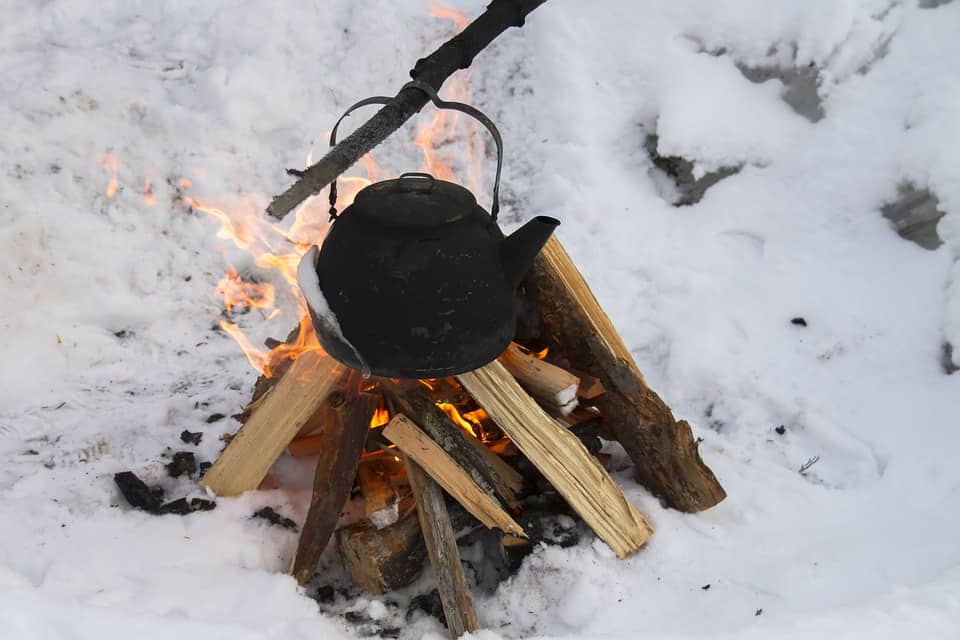
Another common style for lighting fires in moisture is the teepee style. Lean the kindling sticks against each other much like a teepee. The tinder will sit inside the kindling and ignite the larger sticks to make adding larger logs easier. The teepee shapes also allows heat to rise naturally and gives the fire a better chance of burning tall.

Igniting Your Fire

The inner pyro in all of us gets excited when it comes time to actually light the fire. This step is fairly self-explanatory but there are a couple of tips and tricks to make this process faster and safer.

  • Light your fire from the windward side, or the side that wind is blowing into. The breeze will help shift the heat from the flame across the structure and will help fuel the fire with oxygen once it gets going.
  • Light the tinder and kindling structure from the bottom. Heat rises, so starting from the bottom gives your fire a better chance of igniting. Trying to light your fire from the top, like a candle, will not do much good in your attempts to stay warm.

Keeping Your Fire Going

Feeding your fire is a surprisingly meaningful duty. The amount of time you plan to have your fire going relies heavily on the amount of wood you collected in the earlier steps. Without dry logs to continue to feed your flame, your fire will surely burn out and you will surely freeze.

Always be sure you have enough dry wood set aside for the amount of time you are in need of heat. If you plan to stay a whole night by the fire, have a large stack of logs waiting to be burned. If you are not alone, be sure to assign fire buddies: one person to take a sleep break and one person to watch the fire.

An obvious, but important reminder: only throw dry logs on the fire. Often, wet weather fires aren’t burning hot enough to truly burn through damp logs. Damp logs end up smothering the flame, making you start your process over — which is no fun.

Stay Alive and Live Free

My favorite part of starting a fire is being done starting your fire, focusing on keeping it burning, and enjoying the sights around you. Once you have a solid fire built, be sure to rest, relax, catch up on sleep, or roam the nearby wilderness in search of new landscapes to photograph.

Being a survivor is more than just working to live. Once you have done your duties for the day, take in the world and the sights that surround you. Enjoy your experiences in nature and open your heart to the possibility of a world bigger than yourself.
Filed Under: Bushcraft

How To Trap A Cat and Havahart Trap Review

August 24, 2018 M.D. Creekmore

By JD

I don’t like cats. Okay, maybe that’s an understatement. I hate cats. Especially the “free range” variety that you so often find in suburban America. We lived in an area where they were becoming a real problem that animal control wasn’t able to keep up with.

I’d wake up in the middle of the night to cats fighting in the street, find cat crap in my garden and see them just about everywhere on evening walks. The time had come to take a stand.


From previous experience, I knew that cats were difficult to eliminate in urban/suburban settings where your options are limited so I did my research and settled on the Havahart live trap (model 1079-B).

I found a combo set that included a squirrel size trap (model 1078) as well, so I bought the set hoping to also reduce strawberry theft in my garden from the local tree rats that most people call squirrels.

My wife was at peace with the purchase because the animals were being relocated. She never asked any questions and I never volunteered any more information. We have an understanding…it works for us.

My first sets were nothing fancy, just laid on the porch in the backyard or in one of the garden rows. The eradication quickly became a hobby and I started researching ways to make my sets more effective.

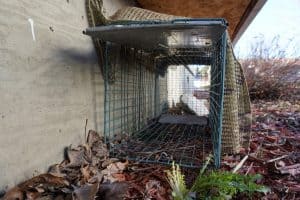
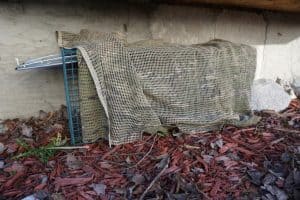
I learned that by placing some burlap over the top of the trap and putting it against a wall or under a bush helped the animals to feel safe entering the trap. My success rates continued to climb.


I tried a number of different baits in the beginning, but canned tuna in the large trap and peanut butter in the small trap were the most successful in luring the game.
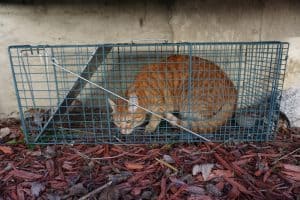
After the first month, I had captured 4 cats, 1 small dog, 2 raccoons and 1 possum in my large trap and 6 squirrels in the small trap! Over the years, I’ve even loaned these traps to family and friends to solve their critter complaints and they’ve had similar success rates.

Construction

After 10 years of ownership, both traps have continued to impress me. They have a solid door with steel reinforcements that keep even the smartest animals from escaping (I’ve never had a single animal escape). One piece wire mesh utilized in the body of the traps means there are no seams that can be exploited by the animal. Additionally, the galvanized coating on the trap body prevents rust and corrosion.

I’ve only had 2 problems with either trap: 1- Some minor bending of the spring that activates the door. This is easily bent back into place without the use of tools and with no negative effects. 2- The trigger rod and catch on the pressure plate have needed a little fine-tuning every year or so. Again


this adjustment is made by some simple metal bending (no tools needed).

The solid design on these traps incorporates a minimal amount of moving parts (read: fewer parts to break). I was also impressed with the metal hand guard near the carrying handle that keeps the captured animal from attacking your hand while being transported in the trap.

Durability

These traps are well-made (in the USA) and come with a one-year warranty. I have not had to carry out any maintenance other than the minor fixes to the spring on the door and simple adjustments to the trigger. During a decade of use, my traps have spent a considerable amount of time outdoors in both rain and snow without adverse effects. They work as well today as they did the day I bought them. I feel confident they will easily provide many more years of reliable service.


Ease of Use

I’ve employed a good variety of traps through the years like the Conibear, coil-spring foothold and all sizes of snares. Without question, the Havahart traps are the simplest design I have ever used. They can be used in almost any application, are super easy to set and are just as portable as their more challenging cohorts.

The beauty of this variety of trap is that the animal is unharmed in any way which gives you the option of relocating the animal if


you desire. You should know that releasing an angry possum in your neighbor’s tool shed forges a bond that really stands the test of time!

Even though it’s marketed as a live trap, the Havahart gives you the option of dispatching the animal by providing a secure way to hold it until you are ready to take care of business. In restrictive urban environments, this can be accomplished with a pellet gun or by submerging the trap in a barrel of water.

Sizes and Styles

22 different sizes are available for animals as small as chipmunk and mice or as large as dogs and bobcats.

In additional to the traditional one-door traps, Havahart offers a collapsible variety, a two-door model and an Easy-Set style that makes setting and releasing a simple one-handed operation. Check out their site to learn more: http://www.havahart.com/

Cost and Availability

I cringed when I first learned the cost of these traps, but after 10 years of dependable use and given the ease of employment, I feel the price point is very reasonable. If you crunch the numbers, these traps can provide meat for your pot for pennies on the dollar.

This style of trap has been around for a long time and can sometimes be found used at flea markets or garage sales. The new variety can be found at your local farm and feed type stores or Amazon of course!

Alternatives

Here are some alternative traps that are available:

• Conibear or body grip style-
Pros: Inexpensive and very effective.
Cons: User needs more advanced skill to place the trap, kills the animal (no live option) and are more dangerous to set.

• Coil Spring foothold style-
Pros: Live style trap and can be very effective.
Cons: User needs more advanced skill to place the trap, the animal can be damaged by the trap or chew their leg off to escape. This style is also more dangerous to set.

• Snares-
Pros: Very inexpensive, easy to make your own.
Cons: User needs more advanced skill to place snare, usually kills the animal (no reliable live option).

The Bottom Line

I would highly recommend the Havahart live trap to anyone. If you are new to trapping or live in an urban or suburban environment, there is nothing easier to employ than the Havahart trap. It’s safe to use, extremely effective, quietly works for you 24 hours a day and gives you options on releasing or dispatching your catch.

They’re so user-friendly, anyone can operate these traps. Providing meat for your pot while simultaneously solving your nuisance animal issues has never been easier!

About the Author: JD is the founder of I Will Make You Hard to Kill. His site is dedicated to a wide variety of skills that improve survivability in emergency situations as well as everyday life. He is a SERE Specialist with 18 years of military service teaching aircrew and special operations personnel how to survive, evade, resist and escape at the U.S. Air Force Survival School located at Fairchild AFB, WA.

M.D. Creekmore adds: In my book 31 Days to Survival: A Complete Plan for Emergency Preparedness I give detailed how-to-do-it plans with photos on building a homemade version of the Havahart Live Traps. I also recommend that you get a copy of Being Kind to Animal Pests: A No-Nonsense Guide to Humane Animal Control With Cage Traps.

Filed Under: Bushcraft

  • « Go to Previous Page
  • Page 1
  • Interim pages omitted …
  • Page 3
  • Page 4
  • Page 5

Primary Sidebar

Subscribe to Blog via Email

Enter your email address to subscribe to this blog and receive notifications of new posts by email.

Join 7,197 other subscribers
  • Amazon
  • Facebook
  • Substack
  • Twitter
  • YouTube

“Do more with less.”

– Minimalist proverb

Recent Posts

  • Just so you know
  • Weather Update for My Corner of Appalachia
  • Why I’m Ordering Ivermectin + Mebendazole Every Year
  • The Website’s Shutting Down (But Here’s the Plan)
  • You Are Hated! Start Training Like It!

Footer

Recent Posts

  • Just so you know
  • Weather Update for My Corner of Appalachia
  • Why I’m Ordering Ivermectin + Mebendazole Every Year
  • The Website’s Shutting Down (But Here’s the Plan)
  • You Are Hated! Start Training Like It!

More about me

Books I’ve written

Books I’ve read

Follow Me on YouTube

Follow Me on Facebook

Gear I Use and Recommend

Newsletter

Search this site

Follow me elsewhere

  • Amazon
  • Facebook
  • Substack
  • Twitter
  • YouTube

© 2008–2025 M.D. Creekmore · As an Amazon Associate, I earn from qualifying purchases.