• Skip to main content
  • Skip to secondary navigation
  • Skip to primary sidebar
  • Skip to footer

M.D. CREEKMORE

  • Blog
  • Books
  • Newsletter
  • Gear I Use
  • About
  • Contact
  • Facebook
  • YouTube
  • Blog
  • Books
  • Newsletter
  • Gear I Use
  • About
  • Contact
  • Privacy Policy
You are here: Home / 2018 / Archives for September 2018

Archives for September 2018

How to Buy Rural Land Without Getting Conned or Ripped Off

September 13, 2018 M.D. Creekmore

buying-homestead-propertyby MountainSurvivor

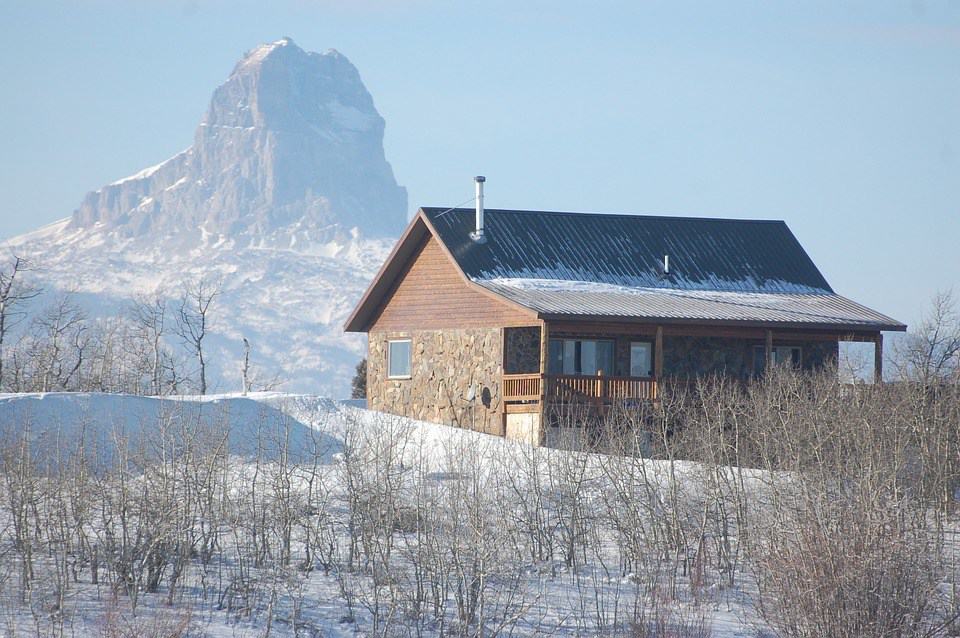
About fifteen years ago, when I went to Oklahoma with a friend of mine, we met a man in his mid- to late-fifties that offered to sell us some land that he said he owned. When we went to look at the piece, we saw a small travel trailer sitting there, surrounded by dense stickery brush, and he told us what a good deal he would make us.

After we headed out to discuss buying it from him, the next door neighbor down the road stopped us and asked us if he was trying to sell us the land. When they learned that he was, the neighbor informed us that the guy did not own the three-quarter acre that he had shown us and that his mother had willed him a measly ten feet from the edge of the dirt road. We were relieved that we had not been conned and taken for every cent that we had.

The other day, I was looking at a house on about an acre of land that was for sale on the internet and thought, for the price of about sixteen hundred dollars I could own it, clean it up and either keep it or sell it for a bit of pocket change.

Well, after further investigation, I learned that there was no house at the address that the advertiser had specified nor was there anything in the vicinity for sale which even resembled what I saw on the site. All the red flags were up and I ran as fast as my mouse would click.

The world is full of con artists so anxious to stuff their pockets with greenbacks that they will steal you blind if they have the slightest of chances. But not today because I am going to give you a crash course that will help you avoid looking like a meal for the ruthless vultures.

Now, I am not a real estate agent nor do I know the laws of every state but the principal I am about to share may be applied no matter where you are looking at buying a home or land.

Well, here we go. First, you must look at the land, walk it and verify that the corner posts are in. If you cannot find any then the seller needs to show you exactly where they are. The corner posts are placed into the ground to determine where every edge of a parcel of ground sits.

Without a survey, a landowner will not know where to put a fence, home, buildings, garden, etc. and be assured that they are not infringing on their neighbor’s dirt. Again, verify that a survey has been done by seeing, for yourself, that the posts really are in place.

chickens on the homestead property

Second, you need to do a little easy footwork which will probably take you under thirty minutes per parcel. You should never sign a contract or hand over any cash/trade until you personally, or by phone, contact the Treasurer as well as the Assessor of the County where the land or home is located because their records will enable them to tell you who the actual owner is, what their address is, how much the land is valued at, if the taxes are current or delinquent, the type of use the land has been zoned for such as Recreational which will not allow you to be there year-round, Residential which is usually year round or Ranchland which has it’s own set of rules that are dependent upon the location, possibly if the land is landlocked or legally accessible as well as other details of which only they can tell you about.

If you do not know how to ask for the details, just tell them that you are looking to buy Parcel Number (such and such) in (whatever) County and would like to know what they have on record.

For obtaining the specifications, always have a pen and paper handy, know the parcel number and/or site (situs) address, and the seller’s or real estate agent’s name. Also, most Counties have websites and there are many which provide parcel, tax and other information which is made available to the public.

Please note that, in certain parts of the country, the EPA has a choke hold on land so, if there is a source of water on or nearby a piece they may require that you have an Ecological Study done which will tell you whether or not you can even live on it but be prepared to pay through the nose, or far more than the land’s worth.

And, when purchasing any home or land, verify that an illegal drug dealer, user or manufacturer had ever used the premises because, if they were, the chemicals or drugs that may be left behind can affect your health.

Third, an Escrow Agent must always be involved because their job is to find out if the title is free and clear. You do not want to purchase a parcel of land or home only to later find out that you cannot take full possession because there is a lien or other things tying up the title.

Looking for land is simple if you know where to look or how to search for it. A lot of land goes through Real Estate Agencies and some agents keep a list of properties that they were advertising which they can refer back to if you ask them in a nice way.

Driving around looking for “For Sale” signs, empty or dilapidated houses and paths that are used by vehicles which head onto a parcel of land can lead you right to a purchase.

House and Land Brokers may have what you are looking for or they may know someone who does. Never overlook a broker because they are in business for selling and turning a profit. Check with them for “fixers” that need attention/TLC because if they have been sitting on something for a long time, they are not making any money, and no money means their pockets are not filling up.

If you run into a stubborn broker, one that would rather not sell because they believe the right buyer will come along, just move on and keep trying because, odds are, the tables will turn in your favor.
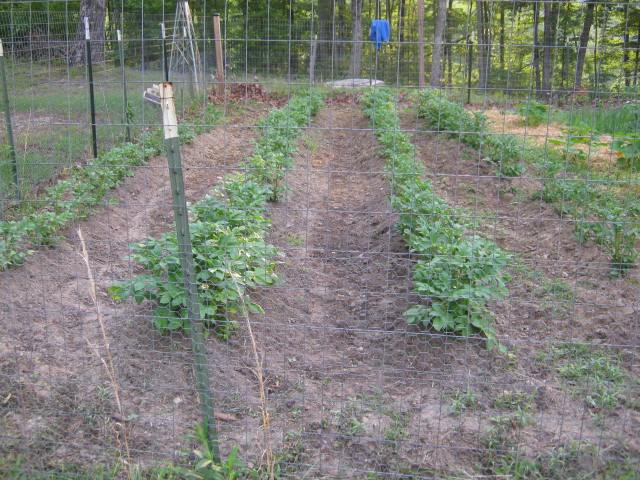
gardening on the homestead

Banks finance homes and sometimes land. They also like to sell what they foreclose upon because they do not want to lose the interest they would have made by the time the contracts were to be fulfilled. So, all you have to do is call a bank, ask to speak with someone in their loan department and then ask that individual if the bank has any foreclosures.

County Offices are notorious for selling homes, land, and homes with land, foreclosed and abandoned. They acquire them when the owners fail to pay their taxes after a certain period of time. This is where the public lucks out because for the price of the unpaid back taxes they can purchase the properties outright.

And they can do so through either the regular annual or multiple yearly auctions, or surplus sales which are properties which did not sell at the County-held auction(s). To obtain the properties, most Counties require that you submit a bid with payment and then if your bid is accepted, they will provide you with legal documentation.

The County Treasurer always knows when an auction will be held, will have a list of available properties to be auctioned and important information and facts that only they can provide to you as every County and State varies in regards to their rules and bidding processes.

The Internet contains millions of properties for sale. There is so much of it that it would take you years to get through it all. If you like to find things on your own but want to know what to type into the search box, enter “cheap acreage for sale in (the state or location where you are looking)” or “cheap fixers for sale in (again, the state or location where you are interested)”.

You could also type in the first two letters of the state followed by -realestate.net or check your state’s MLS (Multiple Listing Service) which is generally free to the public.

“Owner financing”, “no- or low-down” and “low monthly payments” can be a little hard to find so it is important that you specify that information in the search process but do not give up if you do not find what you are seeking right off. Just be patient and persistent because a search engine contains a lot of information that you may have to sift through before you are successful.

Hopefully our economy will not turn out to be like Greece’s or any nation that has suffered from bankruptcy and we find ourselves “wishing” we had found property and stuck in situations where we cannot even plant food because there is no room, regulations prevent us or we do not have the means or supplies to.

Those who have not found their dirt pie in the sky, what are you waiting for? Do not let your current situation determine when you may begin. Start looking now, begin rounding up the money by selling what you can and working a few extra jobs whenever possible to fill up the piggy bank to secure your future asap.

M.D. Creekmore adds: I found my first property on this website – the bank had foreclosed on it and I bought it directly from the bank. A great book that covers every state, with an eye towards long-term survival is Strategic Relocation: North American Guide to Safe Places.

Recommended Reading

  • Modern Homesteading: Rediscovering the American Dream
  • The Backyard Homestead: Produce all the food you need on just a quarter acre!
  • How To Find and Buy Land for a Small Homestead

Filed Under: Homesteading

Do It Yourself Long-Term Bushcraft Survival Shelter Ideas

September 13, 2018 M.D. Creekmore

long-term bushcraft shelterby Alex P

Veteran bushcrafters innately understand the Rule of Threes. The Rule of Threes is as follows: humans will die after 3 minutes with no air, 3 days without water, or 3 weeks of going without food. At least, those are the most commonly known rules.

One that is equally essential and that gets glossed over is the fact that people can die in three hours without shelter that thoroughly protects them from fatalities in harsh conditions.

You may not think the weather in your area is harsh enough to kill you but you might be surprised. During a 1964 race in England, three competitors were cut down by the cold even though it never dropped to freezing temperatures.

Even without the threat of imminent death, you can still face abundant health risks if you spend an extended period of time exposed to the elements. You name it, Heat, UV rays, cold, rain, snow, all these and more can quickly shorten your lifespan if you are continually exposed to them without a proper shelter to safeguard yourself.

In this world full of uncertainty, there’s always value in being prepared. Knowing what to do in a survival situation could literally determine life or death. If you know how to create survival shelters in the wild you could survive a situation you would have died in otherwise. That’s why we are sharing our top 6 ideas to creating survival shelters in the wild.

Lean-To

Lean-to is probably the most well-known option for creating a survival shelter. You need to find two trees that are close together and a thick stick that can be wedged between the trees. If you can’t find trees and sticks of the right size, you can hammer two sticks into the ground and secure a third between them.

If possible you should then tie the main pole to the supports to prevent a collapse. From there you simply lean a large number of sticks against the pole to create something that looks like half of a roof. Sticks are essential but they aren’t enough, you’ll need to fill in the open spaces between the sticks with moss, leaves, twigs, and other flora to act as a sort of insulation.

Overall, since the lean-to is open on one side the heat that can be kept in is minimal, the lean-to is mainly for achieving a basic level of protection.

Quinzhee

Getting trapped on a mountain with nothing but snow in sight is in many ways a worst case scenario, but that doesn’t mean it’s hopeless. Survival structures can be constructed using snow.

You’ve probably heard of igloos, and the idea here is similar. It’s just that in our idea you don’t need to have the expertise used by Northern natives to create homes from packed snow. You can create what is known as a Quinzhee must faster. You begin by piling up your supplies over an area that is larger than your body.

You then pile snow up around your supplies and pack it down until it’s about 30 inches thick all the way around. Try to keep the snow packed smoothly and evenly to prevent collapse. You then dig your way through the side and to your supplies, remove said supplies carefully, and take shelter in the cave you’ve created. Just make sure to poke a small hole in the top for air to come in or else you might be trading exposure for suffocation.

Basic Teepee

For this famous shelter, you need to start by either finding a thin but sturdy tree or a long pole that you can secure down in the ground. From there you will want to find as many long, straight branches as you can and circle the pole with them, leaning them up against it until you have a completely closed cone of empty space in the middle.

You should then somehow secure the pieces of wood together, tying them at the top with rope or fashioning a sort of cord from materials you find in the woods. Finally, you need to add the insulation, packing on anything you can to contain the heat without leading a collapse.

Debris Hut

The debris hut requires two sticks that stretch a bit beyond the length of your shoulders and one long stick that is larger than your height. You begin by sticking the two short sticks into the ground and leaning against each other so that they form a triangle.

You then place one end of the long stick on top of the triangle sticks and the other on the ground around 6 feet away. You then find as many sticks as you can and lean them up against the one long stick to form a sort of wooden pyramid that leaves just enough room for your body in the space left open. Small debris huts may feel claustrophobic, but that can actually be a good thing.

A small shelter may feel cramped at first but it actually seals in your body heat more effectively. And on the topic of body heat, don’t forget to insulate it, the debris in debris hut refers to the sticks used for the skeleton of the structure and the leaves and grass used for insulation.

Tarp Tent

One of the most helpful things you can have in a survival situation is a tarp. It makes shelter construction so much more simple, all you need to do is find a way to prop it over yourself and secure it down so that it will cover you safely through the night.

The second most helpful thing to carry is probably some sort of rope. If you can tie a rope between two trees and toss your tarp over the rope, you’ll have a tent ready. If you don’t have a rope, then you can wedge a sturdy stick between two trees to create the necessary support.

You can actually make just about any of the structures we’ve listed using a tarp, you simply have to put the tarp on top of the basic support instead of leaves, grass, and other natural types of insulation. Just make sure to secure the tarp with heavy rocks or logs to keep it from being blown away by winds.

Find Natural Shelter

The final of our top 6 ideas to creating bug out survival shelters in the wild offers something to think about in all the previous five scenarios. When creating survival shelters you don’t have to do everything yourself, and in most cases the less you can get away with doing the better off you will be.

Time and energy are everything when it comes to survival, you don’t want to waste time getting fancy with your construction ideas in a survival situation. That’s why it helps to start out with an existing foundation you can build on. If you can find a cave, cliff wall, large leaning tree, or some other sort of natural wall or enclosure then half of the job will be done for you.

The average entirely self-built structure might last a night but if you could be stranded for a longer period of time then finding something solid and natural to build around will save you time and effort in the long run.

Though at that point, you also need to consider things like access to freshwater and sources of nutrition when choosing where to set up your survival base camp. For your convenience, we put together a List of Emergency Essentials for you to check off. Survival is about planning ahead so life doesn’t catch you off guard.

Related and Recommended:

  • Shelters, Shacks, and Shanties: The Classic Guide to Building Wilderness Shelters
  • The Complete Survival Shelters Handbook: A Step-by-Step Guide to Building Life-saving Structures for Every Climate and Wilderness Situation
  • The Bomb Shelter Builders Book
  • The Secure Home

Have you built a shelter in the wild? Why? How did it turn out? Please leave a reply in the comments below…

Filed Under: Bushcraft

How to Make a Tripwire Trail or Camp Alarm

September 13, 2018 M.D. Creekmore

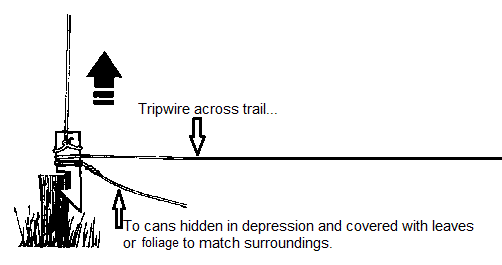
camp or trail alarmMany of you, have watched the old war movies where the approaching enemy trips an alarm made of tin cans, which in turn alerts the good-guys to their approach. The advancing troops trip the wire and the cans fly up into the air, making enough noise to alert the good guys to the approach, allowing them time to mount an effective counter.

In the real world there are better, more effective alarms that can be made to guard the entry points to your position, but since we love movie magic, I thought this infamous contraption would be a good place to start.

First, find the most likely area of approach and one offering enough cover to effectively hide the trap and wire. One of the best places is where the trail makes a sharp turn in another direction, this makes it more difficult for the target to spot the wire before tripping the trigger and sounding the alarm.

Try to make everything look natural, avoid breaking branches, turning over leaves or loose dirt, clean up all wood shavings etc. You want everything to look just like it did before you set the alarm.

It’s best to dig a slight depression to hide the cans, do this on the opposite side of the tree away from the approaching intruder. Add two or three rocks to inside each can then cover with natural cover to hide them from view.

This design and trigger can be used with other “noise makers” one of my favorites is a cowbell or goat-bell, a bell is louder and easier to hide. The main problem is that they may not be available when needed. But I’m sure you can come up with more ideas.

If you are interested in learning more about traps and path guards I recommend the Trapper’s Bible: Traps, Snares & Pathguardssurvival trapping by Dale Martin. This book includes pest snares, large animal snares, and transplant traps, plus camp alarms that alert you to intruders and deadly pathguards that could save your life.
Filed Under: Bushcraft

Archery Tips For Beginners

September 13, 2018 M.D. Creekmore

bow hunting tips for beginners

by Morgan

I’ve been an archer for around 14 years. I learned to shoot with a recurve when I was in college and I immediately fell in love. After that class ended, I ran to the nearest bow shop and picked up a compound bow. It was a Browning and it was beautiful. I shot a lot, but I never took it seriously and my accuracy was always way off, but I didn’t care as I was doing it for fun.

I moved to a new state and the movers lost my bow. I was so devastated, I loved that bow, I had had it for years and now it was suddenly gone. I didn’t pick archery back up for many years after that. It’s unfortunate that Browning doesn’t make bows anymore. A friend of mine was generous enough to gift me a Browning Recurve which I love and use as often as I can.

I digress; I love archery. Everything about it is so soothing. I am totally zen when I’m shooting my bow. The whole world just disappears and all that’s left is the target in front of me.

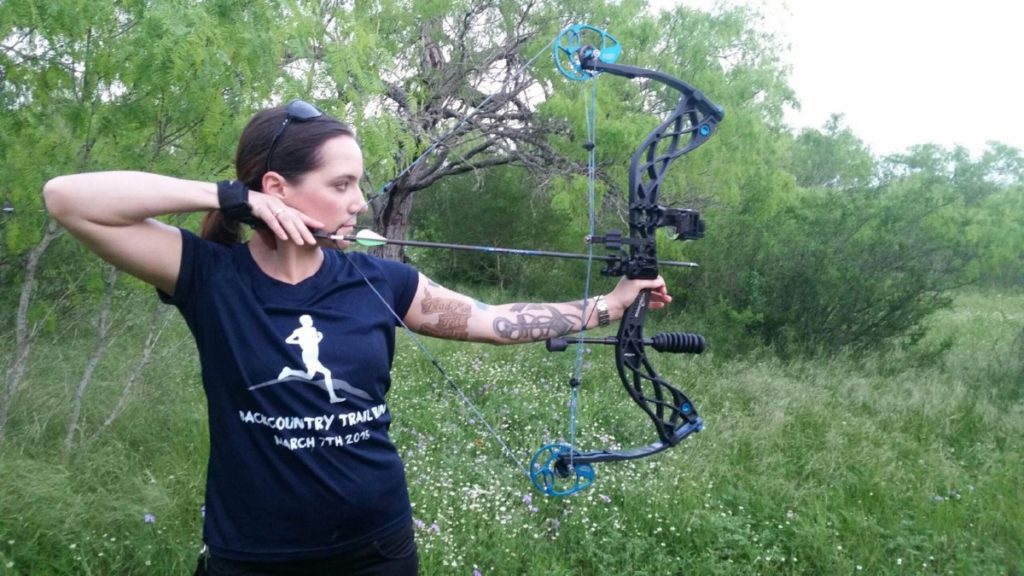
The primary bow that I shoot is a compound by Bowtech, the Eva Shockey Signature Series. It’s a light, fast, quiet bow. I practice with it at least once a week.

I love my compound, but I know in a true survival scenario that a compound may not be the best option for long term.

Here’s what we should consider about archery before choosing it as one of our main sources to hunt or for defense or whatever else.

Types of bows:

–Compound: The compound bow has a lot of moving parts that we must maintain to keep it running smoothly. Even if you keep extra pieces on hand, it would be difficult to maintain if you’re not at home with the necessary tools.

On that same note, it’s impossible to change the string of a compound bow without a press. So if you must change out the string (which you will have to do at some point, no matter how well you maintain your string), you need a bow press in order to get it off and get a new one back one. So even if you keep an extra string on hand, you’ll still need some way to get the new string on.

Some compounds are kind of heavy and bulky as well. Mine is lightweight and doesn’t feel bulky, but it could be a hindrance to some.

Deer at Cades Cove TN
Some nice deer at Cades Cove – Great Smoky Mountains TN.

The arrows are another concern. Unless you have a lot of arrows, they could get lost or break and you’d quickly run out of arrows. You can’t just make new arrows for a compound because of the sheer force that it would put on the wooden arrow, the arrow would simply shatter.

Lastly, you need a release to properly operate; if your release breaks, it’s gonna be difficult to macgyver a new release or to fix whatever happened to your existing release.

For the short term, as long as you wax your string and don’t dry fire it, it should last quite a while. But it wouldn’t be a super long-term solution. I haven’t changed my strings out in 2 years and they’re still perfectly fine, but they are getting to the point where it wouldn’t hurt to change them out.

–Crossbow: They have full-size crossbows and more ‘handheld’ crossbows. I’m personally not a fan of crossbows in general because they are heavy, bulky and it takes a lot of time to re-nock an arrow (bolt). Not only that, but it can be quite difficult to even nock a bolt depending on your strength. They do have crossbow assists that will help you nock your bolt, but even so, it can be difficult.

Many people may still choose this option because they’re kind of like a rifle, they come with a scope, you aim and pull a trigger and it’s a lot quieter than a rifle. So if you’re looking for something that it quiet but still want that point and shoot, a crossbow may be a good option.

However, just like with a compound, you have a lot of moving parts that you’ll need to maintain and/or fix.

Not only that, but it may not be possible to make bolts out of wood for your crossbow. The crossbow has so much power behind it that simply trying to make some wooden arrows for it probably wouldn’t work out too well.

Short term, a crossbow may be a good option, just make sure you have the appropriate tools and plenty of bolts. Those bolts have a habit of disappearing!

–Recurve/Longbow: I’m putting these into the same category because while they are difficult, they’re also kinda basically the same.

Whether it’s a takedown bow or all one piece, the recurve/longbow have very little downsides. They’re wood and string, that’s about it! It’s easy enough to make arrows out of wood and use them with basically any recurve or longbow, depending on the weight.

Make sure you can string and unstring the bow yourself. Also make sure that you can properly pull back the string, that it’s not too heavy. Unlike a compound, with a recurve/longbow you’re holding back all of the weight. If it’s a 35-pound bow, you’re pulling and holding back 35 pounds.

It’s also fairly easy to make a recurve/longbow and the arrows out in the field out of wood. I would highly suggest making a few before SHTF just so you know what you’re doing. There are a lot of tutorials online.

The recurve/longbow are definitely great options for short term and long term.

–Survival bow: I’ve heard mixed reviews about the foldable survival bows. Some people rave about them and others think they’re garbage.

In theory, a foldable, lightweight bow is ideal. In some cases, even the arrows fold.

Just be sure to do your research on this type of bow. I wouldn’t recommend getting this as your first bow, but more as a bow that you get after you’ve practiced a lot and feel confident in your archery abilities.

Even if you feel confident, if this bow is going to be your SHTF bow, you’ll need to practice with it regularly.

Considerations:

Bow Hunting Skills

Archery is a perishable skill. Don’t believe anyone who says that they can stop shooting for 13 years then suddenly pick it back up and still be able to shoot a dime 50 yards away. I’m sorry, that’s not how it works. It is a perishable skill and needs to be treated as such by practicing as often as you can.

Whether you plan to be using archery for just SHTF purposes or whether you want to get into bowhunting, bowfishing or 3D shoots; you need to practice. As I mentioned, I practice at least once a week, but you can choose to do more or less depending on your time. Just make the time. It takes only 10 or so minutes to sling a few arrows down range.

Learn how to properly shoot a bow. Take a lesson or two and gain the proper knowledge. A YouTube video is ok, but you’ll gain a lot more insight if you take a class in person.

Being good at archery isn’t just about accuracy. Of course, we all want to be amazing and hit the bullseye every time, but practicing will also help you get to know your bow; how to troubleshoot problems, what works, what doesn’t, your strengths and weaknesses, etc.

Archery also teaches you patience. Nobody is an expert right off the bat, so it’s going to require dedication and focus to be able to hit the target exactly where you were aiming.

This is especially true for recurve/longbow. They are a lot harder to master than a compound or crossbow. With a compound and crossbow, you have sights that you can adjust in order to make the right shots. You don’t have those devices on a recurve/longbow. All you have is practice and your intuition!

It’s not necessarily hard to learn how to shoot with a recurve/longbow, it just takes a bit more time and effort.

Learn how to maintain your bow and then properly maintain it. The better maintained it is, the longer it’ll last.

Never dry fire your bow. Dry firing means to pull back the string and let it go without an arrow. Without an arrow, instead of the energy pushing the arrow, all of the energy transfers to the bow and could damage your bow.

Make sure you wax your strings before and after each time you shoot.

Be sure to check the limbs for any cracks regularly, even if you don’t dry fire it, your bow could still become damaged over time.

Be sure to check your arrows for any cracks or damage. A damaged arrow can break before it’s even released and cause a lot of harm.

Make sure that you find a bow with the appropriate pull weight. You don’t want it to be too heavy or too light.

Relax and have fun! Even if you miss your intended spot, it’s ok! Not the end of the world. Just keep practicing and have fun. You’ll get better in time.

Aim small, miss small. As you get better with your archery, try to aim at smaller objects. It’s a fun challenge and the smaller the objects that you can hit from various distances, the better off you’ll be when you’re trying to hit your intended target. If you’re hunting rabbits, for instance, they are small and quick and require a lot of practice to accurately hit in an appropriate spot.

And it’s worth repeating: practice, practice, practice! Practicing consistently will help you to better use your bow in stressful situations, especially while hunting. Consider a mantra to help you relax and focus. My mantra is:

Aim – Focus on the target and where you want the arrow to go.
Breathe – Take a deep breath and as you’re letting it out…
Pull-Pull the trigger/release, this helps you to relax your shoulders and everything else.
Follow Through – Don’t yank the bow down so you can see your shot; let it drop naturally and hang there for a second. Then pull your bow down and look at your shot.

Dedication will be required if you choose archery for hunting, or survival purposes. But try not to take it too seriously, archery is a ton of fun and there are a lot of great archery events to participate in all across the country.

Filed Under: Archery

8 Things You Need To Know About Bushcraft

September 13, 2018 M.D. Creekmore

Bushcraft and survival skills to learn nowby Angela Williams

Civilization and advancements in technology have reduced to the minimum manmade disasters. Even some natural disasters can be foreseen and adequately planned for. However, Mother Nature sometimes has its way and, leaves a catastrophic aftermath. In such a case, your level of preparedness is the single most important determinant of your survival.

Such preparedness also comes in handy if you are in the wilderness.

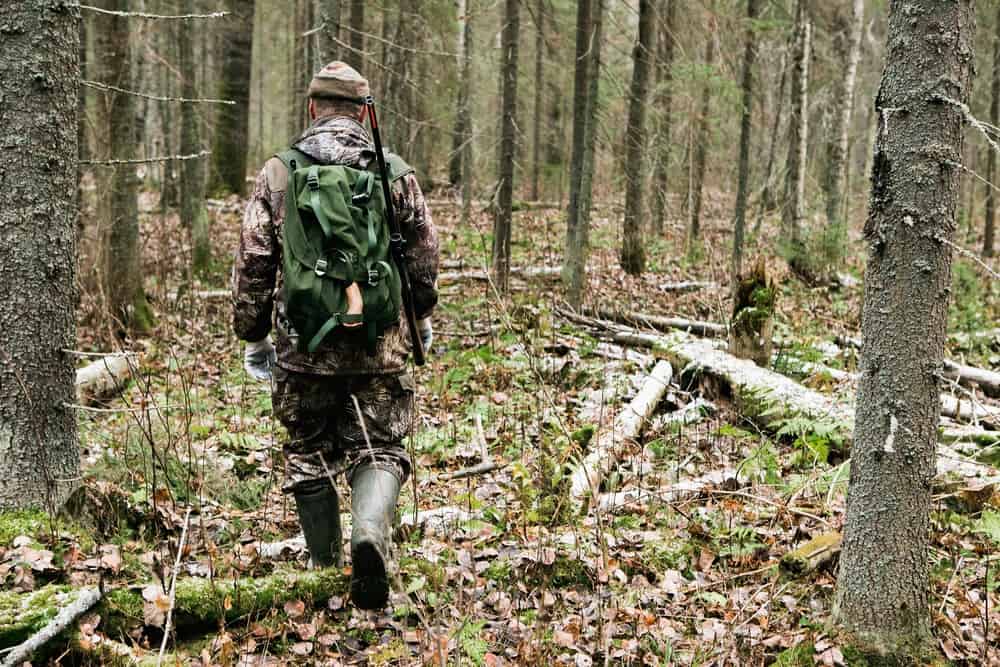
To survive in the woods, you must possess some unique bushcraft skills, skills that the best preppers have perfected over the years. In this tutorial, we will provide you with 8 basic bushcraft survival skills that you ought to know to be a successful survivor.

1. Sourcing and Purifying Water

Over 70 percent of your body is water. For that reason, you cannot survive for more than three days without drinking water. In an extreme environment, it may not even be possible to survive that long. Perhaps the most important survival skill is locating and purifying water. It is always good to store sufficient water at all times and carry some prior to leaving for an exploration.

Mother Nature is another good source. You can actually extract clean drinking water from certain plants, especially those with large, green leaves. However, you have to learn to do it properly as some plants may be poisonous. Learn how to extract water from plants in time for adequate preparedness. If there is a ready source of water such as stream, river or pond, use the water only after filtering and boiling it.

2. Starting and Fueling Fire

The next basic but important skill is starting and fueling a fire. This skill is only second to sourcing and purifying water. Hypothermia, a medical emergency that occurs when your body is incapable of producing enough heat to cope up with heat loss, is a real threat if you do not find a way to start a fire to warm your body.

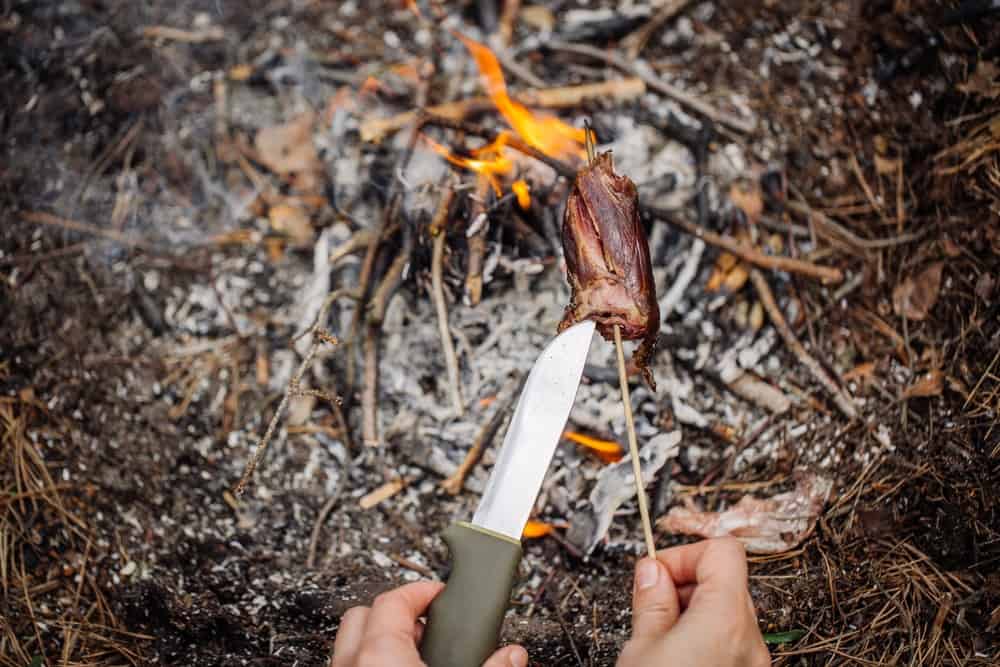
Fire is also essential for water purification, cooking of food, warding off deadly predators, cauterizing wounds following injury and in signaling help in case of an emergency. Ideally, it would be good to have matches or lighter in your person at all time. However, you must also equip yourself with skills so you can start a fire from scratch. Learning how to start a fire from scratch and tend to it is a vital survival tactic all survivors must undergo.

3. Building a Temporary Shelter

The basic needs for human survival are water, food, shelter, and clothing. If you leave to wander in the woods for a day and return to civilization in less than a day then building a temporary shelter should be the least of your worries. However, the story is different if you were to be lost in the wilderness for a couple of days. You would want to build a shelter to protect you from the elements and for peace of mind.

The risks and dangers of emergency are compounded by extreme weather including rain, snow, thick fog and cold. The manner of building shelter depends much on the surroundings and the environment where you are. Learn the best types of temporary shelter to build in emergency situations. Examples include Round Lodge (wickiup, teepee, or wigwam) and Lean-to.

4. Foraging and Hunting For Food

In a survival situation, the usual sources of food are no longer available. Once your food reserves are gone, you are left with the option of trusting Mother Nature to take care of your nutritional needs. You must learn to find and catch food to keep yourself and your loved one alive.

You can use various methods to forage and hunt for food. Such methods include hunting game using self-made weapons, trapping via small game survival snares, and fishing using a line and a hook and foraging for edible fruits, seeds, and herbs.

Concerning the latter, there are many helpful resources that can guide you on the particular plants to go for.

5. Proper Use of Survival Tools

Since most individuals cannot afford all the survival tools currently available in the market, the wise thing to do is pick the appropriate ones for your needs. Survival tools will help you in making a temporary shelter, fetching and preparing firewood, hunting, and cooking among other needs.

The most common survival tools to have in your possession include a flashlight, tactical folding knife, a backpack, scissors, hammer, splitting maul or ax, nails, pliers just but to mention a few. However, it is not enough just to have the tools; you must also know how to use them properly. This will not only make your work easier but also prevent accidents or nasty failures.

6. Psychological Preparedness

Survival means staying safe and functional by mitigating the effects of the disaster or emergency situation at hand. It takes a lot to manage your attitude and personality in an emergency situation. One of the most important survival skills is psychological preparedness. You must have confidence that you will survive despite the difficulties presented by the situation.

Think of what might happen to you if you were to lose hope along the way. It could prove fatal in the end if you cannot get your act together and approach the situation with confidence. It takes a lot of practice and soul searching to prepare psychologically for any eventuality in an emergency situation.

7. Predicting Weather

In most cases, we do not have to worry about the weather conditions of our immediate environment unless there is an impending natural calamity such as hurricane or floods. Nevertheless, being able to forecast weather is a vital skill every prepper should learn. The lessons will become handy in an emergency situation.

Any sudden change in weather conditions if you are in the wilderness can prove disastrous to you because you will not have the necessary skills to mitigate it. Among the weather predicting skills to learn include air pressure, cloud types, animal behavior and variations in temperature. While you can use weather prediction gadgets such as barometer, thermometer and so forth, you must also be able to make approximations from these natural phenomena.

8. First Aid Basics

First Aid is a fundamental skill everyone, especially preppers, must learn as part of disaster or emergency preparedness. In case of emergency, this skill can help you get out of a deadly situation. For instance, you might get a cut that leads to severe bleeding. In such a situation, you can use your First Aid skills to stop the bleeding before you access a medical facility for a more robust treatment. It also means you must have a small First Aid Kit.

Bottom Line

Acquiring the 8 bushcraft skills discussed is the first steps in learning outdoor survival bushcraft skills. Bushcraft skills are easy to learn with practice and incredibly helpful. If you do not possess these skills, chances are that you will fail if lost in the woods for an extended amount of time and I believe that’s something you do not want – so get to work.

Filed Under: Bushcraft

The Survivorman Zones of Assessment: The Key To Your Survival When The Situation Seems Hopeless

September 12, 2018 Guest Author

bushcraft skills for survivalBy Les Stroud aka Survivorman

You can imagine almost any survival situation. Dumping a canoe in a set of rapids. Falling off the edge of a cliff. Or simply, you’re lost. So what next? What exactly do you do now? In reality, your next move could be the most important thing you ever do. It will be perhaps the most important decision you ever make. That next step may ensure your survival or doom you to a tragic end. At the very least, this decision may make things much more difficult than they need to be.

First and foremost, when faced with a survival or traumatic situation of any kind, one must calm down. “Take a knee”. Calming down enables the person to start to use their brain power in a useful way for enabling salvation from the circumstances, whatever they may be. However, just calming down is never enough, for it only stops the action of the moment. What comes next is the most important aspect of survival: making a decision and taking action.

However, doing so without considering the options is foolhardy at best and likely to lead to disaster, more problems, or an exacerbation of the problems at hand. So decisions must be made on how to move forward.

So far all of this is not rocket science, yet how does one make decisions without knowledge? This is where the magic of survival skills, of all kinds, kicks in – with knowledge. Without ascertaining all kinds of details (knowledge) about your predicament you are liable to make decisions that are ill thought out and potentially dangerous. But how do you get the information you need? Enter the Survivorman Zones of Assessment ã

Zone 1- Your body and clothes

You start with yourself:

  • Are you hurt?
  • Are you tired or hungry?
  • What are you wearing?
  • What do you have in your pockets?

*I am wearing a backpack with extra clothes, one sandwich and a half a bottle of water inside of it. I have a power bar in my pocket, a small knife and I’m wearing good boots. I do NOT have a flashlight or any signaling devices. I have lots of energy and no one is injured, but my friend Brian is not physically fit and he lost all his gear.

If you are not alone, repeat this process so that everyone checks out their own Zone 1 and determines what the group has collectively. Even to the point of saying “everyone empty out their pockets – let’s take stock”.

Zone 2- Your Immediate Vicinity

This is simply the area immediate to you – the surrounding area of a few thousand square feet.

  • Do you have a tent?
  • A canoe?
  • Do you have any food or water or other items in packs?
  • What else is lying around you – firewood? a swamp full of edible cattail? an all-terrain vehicle with half a tank of gas?
  • What can you glean from your immediate surroundings? Can you rip or break something apart to aid you? For example, can you make protective insulated boots out of your car or boat seats?

*There are three of us. We have one tent and two sleeping bags, NO group food, a small first aid kit and one lighter.

Zone 3- Your Extended Area

This is further beyond – maybe a mile or a couple of miles away.

  • How far are you from safety?
  • Do you know of anything not too far away that can help you, like a cabin?
  • Which direction is safety and how difficult will to be to get there?
  • How difficult would it be to get to safety and is everyone up for the task?
  • If not, what are the challenges to getting to safety and can you overcome them easily?
  • Does anyone know you are in trouble and if so how long before they affect a rescue?
  • How soon can you move, IF you can move?
  • Do you know these answers FOR SURE? (not knowing something is as important to consider as is knowing something)

*I remember that there is a highway only one mile to the east if we walk straight but I don’t know what the terrain is like and no one at home is expecting to hear from us for at least 4 more days. I also remember we passed a cabin only a half a mile back and I know for sure we can get to it for the night. It is only about 12 pm.

Ok – so now you know:

I am wearing a backpack with extra clothes, one sandwich and a half a bottle of water inside of it. I have a power bar in my pocket, a small knife and I’m wearing good boots. I do NOT have a flashlight or any signaling devices and I have lots of energy.

There are three of us, no one is injured, but Brian is not physically fit and lost all his gear. We have one tent and two sleeping bags, NO group food, a small first aid kit and one lighter. I remember that there is a highway only one mile to the east if we walk straight but I don’t know what the terrain is like and no one at home is expecting to hear from us for at least 4 more days.

I also remember we passed a cabin only a half a mile back and I know for sure we can get to it for the night. It is only about 12 pm.

It likely only took 60 to 90 seconds to get all this knowledge! Yet now you have many details and are able to make a series of quality and concise decisions about how to effect proactive survival – the only kind of survival there is.

March is the beginning of the end of winter. February is our blah month. The term “bitterly cold” is tossed around a lot, and most folks just want to get it over with. Then comes March, with its tantalizingly warm days that hint at an early start to spring, but exit with nights that the cold simply refuses to ease its grip on.

So, February, the dead of winter, must be the most dangerous time of the year, right? Wrong. Without a doubt the most dangerous time of year comes after we’ve put away our big down coats, but just before the grass takes on its green hue. During the peak of winter, we’re expecting the bone-chilling cold.

We wear our Michelin-man coats making us all look like miniature Schwarzeneggers, hear the forecast for ‘minus-one-million’ and step outside, already braced for the frigid, clear, Canadian air. But we’re an excitable bunch when the sun begins warming our cheeks again mid-March. Coats are thrown back in the basement closet, and people start trying to get ready for swimsuit season and the summer months to come. But beware. Early spring is the time of year that’ll get ya!

There are more cases of hypothermia during the Spring (and Fall) months than during Winter. We’re not ready for the drop in temperature late in the day when we’ve had a balmy March afternoon. We’re not ready for the damp air that seems to cut through our clothing after two months of dry air that our fleece and down staved off. If being out in the wilderness is your thing, then beware of the lackadaisical approach of Spring.

SURVIVALMAN TV

Hypothermia is a killer. Plain and simple. Though strangely, after you get past the initial shivering it’s considered to be one of the most pleasant ways to die. Your body temperature begins to drop from 98.6˚ F (37° C) and as it drops, you become clumsy, forgetful and tend to walk around in a stupor, kind of like a lot of my friends now that I think of it.

Severely hypothermic people have been known to strip down from their protective clothing, stating that they are quite warm and comfortable, even though they are slowly chilling to death.

Over-exertion that leads to sweating during the warmth of a March day is deadly. By 6 p.m. your inner clothes are soaked with sweat and now the sun is going down. Within minutes the chills up your spine begin. From there, it’s a dangerous downward spiral, yet it’s all easily avoided with some simple preparation.

First, don’t become overconfident with the beautiful, warming sunshine of the day. March nights can dip well below zero quickly. Know that the cold is coming, and keep a day-pack with a down coat packed in it. Dress in layers and, though it’s a bit of a pain, constantly strip down or layer up if you are cold or hot.

Read that last sentence again.

It is one that can save your life. While trekking or heading out into the ides of March remember my favorite saying; ‘If you sweat, you die.’

That is the long and slow story of hypothermia. But there also exists the Coles Notes version. Immersion. Also known as plunging through the weak ice into frigid lake water, or for some people, a naked New Year’s Day tradition, the Polar Bear swim. It is possibly one of the scariest scenarios to occur in the waning winter months. After a few days of thawing, water will begin to wind its way along the path of least resistance, down to the lakes, creating sinkholes and weak ice everywhere. Now ice that thirty days prior was strong enough to drive a truck on has weaknesses and fault lines large enough for your poorly dressed body to break through.

The key to surviving a fall through the ice is, you guessed it, preparation. Simply put; don’t ever venture out onto frozen lakes without a pair of ice grippers around your neck, easily accessible. You don’t get a second chance at this.

I kick myself every-time I see a pair of ice grippers in the outdoor stores. You see, many years ago, my survival cronies and I made our own ice grippers and I always thought they should be mass marketed. Ah well, someone’s making a fortune now and I am confident lives are being saved because of this simple little device.

It’s hard to generalize the ‘look’ of ice and say it means one thing or another so as a general rule I would say watch out for the dark spots; areas on the surface of the lake where the slush and water has gathered and weakened the ice. Anywhere a river or creek flows into a lake will be weak for some distance, in a semi-circle, around the mouth of the tributary.

If you must travel on a frozen body of water and you already know the ice is weak, then it can help to have a long pole, perhaps even an ice chisel. You can test the ice in front of you as you gingerly walk, and also use the pole held horizontally to save you from falling all the way through a hole.

Once you’re in the drink, the only way out is pretty much the same as getting out of a swimming pool, only without having the side wall of the pool to push your feet against or the grip of the pool edge to push down on with your hands. The best method is a good scissor kick up from the water and then rolling yourself out on to the ice surface.

Any friend nearby that wants to rescue you must do so by finding something they can throw to you or reach out to you to give you something to grab hold of. They also need to lie flat if they are trying to get closer to you so that their weight is spread out on the weak ice around your hole. Falling through the ice is not a team sport.

Once you’re out, it’s time for a big fire. Scratch that. I mean a massive fire. Huge. We’re talking the kind of fire you could view from space. That’s the only thing that will knock the chill out of your now naked body. Sorry, but you have to strip down and get all the wet clothes off if you want to dry out.

Kinda gives a whole new meaning to the concept of shrinkage for the men! And it is absolutely vital that you do this out of the wind. Keep moving. Do jumping jacks. Get your blood flowing back through all your extremities. Did I mention to get out of the wind? The wind is a killer; you must be protected from it. You don’t want to add frostbite to your problems.

Now you want to be rescued, so I’d like to share a lesson in signaling I learned from first-hand experience. Ignore what you might have heard about making multiple smoke signals. Make one big signal tower fire. Concentrate your efforts on pooling all the resources for the big rescue moment.

Trying to run between multiple fires while the wind cuts through you is ridiculous and even dangerous. Make use of as much birch bark as possible so your fire flames up very fast. Above it put green spruce bows, which will give you lots of smoke.

And whatever you do, don’t go running out onto the ice to wave down your only chance of rescue…. and fall back into the same hole!

Les StroudLes Stroud aka Survivorman, is credited for single-handedly creating an entirely new genre of TV based on survival; Survival TV. He has recently launched www.survivormantv.com: his new online, subscription-based, web portal for all things survival/adventure and even Bigfoot. He is a multi-award winning TV producer/writer/director and host, a best selling author (his book Survive! Is considered the best new manual on survival today), and an accomplished adventurer and musician. He is a proud member of the Explorers Club, an ambassador for the Young Explorers and a Fellow of the Royal Canadian Geographic Society.

Filed Under: Bushcraft

  • « Go to Previous Page
  • Page 1
  • Interim pages omitted …
  • Page 4
  • Page 5
  • Page 6
  • Page 7
  • Page 8
  • Go to Next Page »

Primary Sidebar

Subscribe to Blog via Email

Enter your email address to subscribe to this blog and receive notifications of new posts by email.

Join 7,202 other subscribers
  • Amazon
  • Facebook
  • Substack
  • Twitter
  • YouTube

“Do more with less.”

– Minimalist proverb

Recent Posts

  • Just so you know
  • Weather Update for My Corner of Appalachia
  • Why I’m Ordering Ivermectin + Mebendazole Every Year
  • The Website’s Shutting Down (But Here’s the Plan)
  • You Are Hated! Start Training Like It!

Footer

Recent Posts

  • Just so you know
  • Weather Update for My Corner of Appalachia
  • Why I’m Ordering Ivermectin + Mebendazole Every Year
  • The Website’s Shutting Down (But Here’s the Plan)
  • You Are Hated! Start Training Like It!

More about me

Books I’ve written

Books I’ve read

Follow Me on YouTube

Follow Me on Facebook

Gear I Use and Recommend

Newsletter

Search this site

Follow me elsewhere

  • Amazon
  • Facebook
  • Substack
  • Twitter
  • YouTube

© 2008–2025 M.D. Creekmore · As an Amazon Associate, I earn from qualifying purchases.