• Skip to primary navigation
  • Skip to main content
  • Skip to primary sidebar
  • Skip to secondary sidebar
  • Skip to footer

M.D. CREEKMORE

  • Blog
  • Books
  • Newsletter
  • Gear I Use
  • About
  • Contact
  • Facebook
  • YouTube
You are here: Home / Archives for Archery

Archery

Why You Should Learn Bow Hunting for Survival

October 10, 2018 M.D. Creekmore

bow hunting for survivalby JimShyWolf

Let’s clear the air first. I’m not a professional archer or survival bow hunter. I’ve never published an article in BowHunter or Archery magazine, nor have I ever competed in the Olympics in any venue, let alone archery. (Regardless what you may have heard to the contrary.) Nor have I ever traveled out-of-state to hunt any animal with a bow (and only did it once with a rifle, so am no expert there, either).

Nor have I any formal education beyond what a college phy-ed class attempted to teach me after I’d been shooting and studying archery for twenty years. When push comes to shove, I am a ‘purist’ but I don’t let that stop me from using modern materials or style of bow.

At 64 years of age, what I have is more than fifty years experience shooting, hunting, ‘kind of’ studying archery from the bowhunting and zen aspects, and shooting since I was eleven because Mom didn’t think kids should have guns before they could walk.

So my career with archery began as many do: parents don’t equate bows and arrows with their ability to kill. And, as any child of a parent knows, they’re wrong. A 45-pound draw hunting bow has the killing ability of a 30-06 rifle. Actually, in expert hands and in the right circumstances, even a 25-pound draw weight bow will have the killing ability of a 30-06, or any other shoulder-fired weapon you want to stack against it.

Please note: I did not mention anything other than killing ability. I did not say “at 800 yards” or “point-blank range” or “with a 220-grain JHP” or any other round. I said “ability”. There isn’t an animal on earth that has been killed with a rifle before it was killed with a bow.

We won’t get into how the first bow was accidentally made by a caveman when he discovered his fire drill bow would shoot sticks across the fire faster than he could throw it, or how Nimrod was the first Mighty Hunter with a bow.

But how does a bow have the same killing capacity as a 30-06?

Because of much the same reason a bullet does: blood-letting. A bullet has ‘shock’ value as well, yet an arrow will bleed even more quickly than a bullet because of it’s cutting edges. And when hunting or speaking of hunting, the arrowhead is equally as important, if not more so, than the bow or arrow. Let’s look at this from the beginning, getting to the arrowhead in a few minutes.

When it comes to surviving in a true wilderness setting, a bow, In My Opinion, is the absolute best weapon you can have. Better than a rifle or pistol for several reasons.

First: a bow can be made from almost any hardwood material, especially the maples, yew, ash, and best of all, the Osage orange. Birch, some pines, and aspen can be used as well, with brittle oak being a fairly down-the-line choice. There are exotics that can be used, but we’re talking survival in North America so will limit our choices to anything growing around us.

Second: an arrow can easily be made from reeds (think cattail for one) or whittled from other woods, Port Orford Cedar being the most commonly used (until the Spotted Owl terminated the harvesting of it, and over-harvesting as well, to be totally honest).

Cedars make the best wood arrows because they don’t warp as readily as most other woods, have a more stable grain pattern and can be bereaved most easily into sheaves for arrow stock, and can be compressed most readily.

Arrowheads can be chipped from flint, or other stones, even panes of glass, and bone, or just the fire-hardened tip of the arrow itself. If you’re industrious, you can file steel down to a very serviceable point. But, we’re talking survival and what’cha got with you, not what you’d like to have.

Bowstrings can be spun quickly from the inner bark of many commonly available plants- milkweed being a common material or cut from any animal hide or, in a survival situation, from the cords of one’s jeans. (Just don’t tear away your groin cloth, Tarzan!) Now: name one bullet you can do this with. ‘Nuffa that. Now let’s get to the bow.

Regardless where you live, any archery shop now is going to convince you that “you must absolutely gotta have the very best top of the line got more speed than light double helix hyper snappy wheel compound that we happen to sell right here” bow. I won’t say BS on that, but I will tell you this: a salesman’s job is to sell. Not necessarily what you want or need, but to sell.

Here I’m going to state my opinions, not some scientific hyperbole an engineer came up with or what a catalog will say. What kind of bow you get- be it traditional longbow, recurve, or compound- is up to your preferences. I’m going to tell you mine.

I shoot them all. I love them all. All are very serviceable and sturdy. The newest bow I have, a Fred Bear compound, is darn close to 30 years old and shoots as well today as it did the day I bought it- only more accurately ‘cuz now it’s got ‘sperience. It’s also the only bow I have sights on. The oldest I have is 53 and my son learned to shoot with it as I did: one arrow at a time.

My second oldest- 39- is the original Fred Bear takedown with two sets of limbs (one target, one hunting) on a B riser (it came with choice of A,B, or C- diferentiated by length of the riser, which also was the deciding factor of draw weight).

There are others in my collection- a Ben Pearson takedown (TD) a year younger than the Bear, a Paul Bunyan fiberglass longbow, and a very antique pure aluminum bow made by ParX of Jackson, Michigan. (I should google them to see if they still make bows.) Sorry- thinking out loud again, and digressing. Some odds and ends complete the collection.

My point is, it won’t matter what style of bow you choose, just be sure it’s the one you want and dream about. If your imagination is filled with Robin Hood or Fred Bear or Ben Pearson or Howard Hill, you would probably feel more comfortable with a longbow or recurve. Either will be a fine choice.

Longbows have a tendency to ‘stack’, which means they get harder to draw as you draw them. If it’s a very short bow, it will stack more than a longer bow. Recurves stack less than longbows due to the curve. Too, the length of your personal draw will also cause it to stack more or less.

Draw length is measured the old-fashioned way: Hold your arms out in front of you, fingers extended, to make an arrowhead. The distance from your fingertips to your chin is your arrow length, your draw length is from your wrist to your chin.

Bowyers have simplified this for us, however, and make their bows with an ‘average’ draw length of 28 inches. The reason for the arrow length? So you don’t cut your fingers with the sharp broadhead, it extends beyond your hand. Arrows can be cut to length as required, even simply at home with a sharp knife.

If your dreams extend to the modern mystique of wheels and pulleys, cams and short, snappy- and very fast arrows- then you may be dreaming of a compound. Other than Bear, I won’t comment on who makes the best, but there are many out there. Some very good bows are made by some very unknown people, and a good way to learn about some is pick up a copy of a Bowhunter magazine. (No plug, just reference.)

Compounds do send arrows down range faster than other bows and use very light arrows. (Do not use a wood arrow on a compound bow- ever. Nothing may happen, but then again, you may end up with an arrow shaft in your forearm, or worse.

That’s experience talking, and manufacturer’s direction.) If TSHTF, my choice will be the recurve or longbow because of the simplicity of their design, maintenance, and ease of repair. I just don’t have the shop to rebuild steel/aluminum/magnesium pulleys and steel cable strings.

Not to mention, compounds are much heavier than stick bows. I’d rather carry more arrows than more bow.

Arrows for longbows and recurves run from cedar to esoteric compounds like graphite. In short, any arrow can be shot from a stick bow. Wood and aluminum have been around for… well, ever, almost. OK- when Alcoa came out with their first aluminum arrows, I was skeptical. Still am, but dang, they shoot nice. Almost as tough as wood.

Almost. In some instances, tougher: and they can be reasonably straightened of mild bends. (Wood can as well- use steam and pressure to do that, though.) Fiberglass and graphite… well, you ain’t gonna straighten those breaks. Some have told me graphite is tougher than wood, but my opinion is still out- and will be until I test some, which I don’t intend doing.

Compound bows shoot aluminum, ‘glass and graphite with equal aplomb, but never wood. (Don’t ask.) With today’s compounds, the biggest ‘thing’ is the speed factor. Everyone’s trying to get their bow to shoot as fast a 30-06 bullet. Or so it seems. I’ve heard excuses (ok, reasons) from things such as “the deer don’t jump the string” (which I laugh at), to “the lighter arrows need the speed” (which I agree with).

To gain this speed of the arrow, they use the lighter carbon or graphite arrow, which usually weighs less than the broadhead on the end. And speed creates penetration- which the lighter arrows need. Badly.

So my opinion of light arrows is still out. In “the old days”, we used to ‘spike’ our aluminum arrows with a wood arrow to increase the weight so they’d get better penetration. We didn’t need speed- we had power.

Arrows are ‘fletched’ with feathers- real turkey feather is best and be sure they come from the same wing- or plastic vanes. The debate rages as to which is best. I’ve used both, have some mighty old arrows with turkey feathers. And some mighty old vanes as well.

The biggest problem I’ve had with vanes is cold temps. They seem to stiffen and don’t stabilize the arrow as quickly. But that may just be my imagination. Some say feathers aren’t as waterproof as vanes, but I don’t see that. I sprayed mine with Camp Dry once and forgot it. No problems. Water runs off like a duck’s back.

Some people also claim wet bowstrings stretch and make the bow lose power due to less ‘fist’ in the bow. To which I say nonsense: I’ve never lost ‘fist’ with a string or cable. (‘Fist’ is your hand-made to a fist, thumb extended upward, and from the riser to the string is the height of the string from the riser.) I will admit that a vegetable fiber string will most likely stretch, as will leather. Soak them in tallow before use.

What does make a bow lose power can be on the string, though. Silencers. Attachments that quiet the string vibration after the shot- which vibration is also what the animal hears and causes it to ‘jump’ the string- and evade the arrow.

Silencers can be as simple as a feather tied to the string, both ends of the bow, or as complicated as gobs of rubber bands woven into the string layers. Here, less is more. Go as simple as you can get away with. Some people don’t use silencers at all.

Arrowheads (told’ja we’d get here) are what does the killing with an arrow. Where I live, there are several rules to follow with arrowheads used for hunting. (Note: in a survival situation, there is only one rule: survive.

So forget about ‘nice’ and ‘laws’ and ‘fair chase’.) MN requires arrowheads “be of barbless design with at least two blades and a circumference of two inches for three or more blades and weigh 125 grains”. Which just means, go to your local sports shop and buy what they sell cuz they’ll most likely not be selling illegal products.

If they are, call the local game warden and let him know and your butt is covered when you go to court. Other states probably have similar rules, so check yours if you’re interested in being ‘legal’. Fred Bear makes the Bear Razorhead, which was an original design two-blade with a third and fourth blade insert, and which has probably killed every animal on the planet.

They’re extremely difficult to find these days. Now hunters are using all kinds of jury-rigged designs, some utilizing real genuine razor blades as cutting edges.

Complicated monsters that cut quickly and cleanly, to be sure, but no where near as hardy as the old Razorhead. The closest I’ve seen to the Razorhead is the Magnus two-blade, and they’re great. Not to mention, take a very fine edge.

Oh, yes- I sharpen all my broadheads. Not something you’ll do with the more modern designs- all you need with them is more razorblades. And a few hundred bucks. Dang- those heads are very spendy now!

Between a two blade and three, or four, blade the biggest difference is cutting power. Or cutting ability. An arrow kills by bleeding the animal out- so expect it to run and have to track it- like cutting its throat. The more blades, the more damage to arteries and muscle and veins and… you get the idea, and the more easily tracked.

The more damage, the faster it bleeds out. Too, shot placement may be a bit more precise with an arrow than with a gun because arrows do not go through bone. Hitting the critter in its vitals is, well- vital.

So practice-practice-practice! Side note on broadheads: round over the tip so it passes by bone rather than trying to penetrate it and getting stuck. You don’t need a pointy point, you need something that slides past the bone. Also, an arrow wound to a non-vital spot with a rifle can cause an animal to bleed out, so there are more areas to aim at with a bow.

Also, MN does not allow crossbows unless one is handicapped and proven by a doctor’s permission slip. I’ve shot crossbows, don’t own one, and have little to say about them. I have considered getting one just ‘because’ and no other reason.

A friend uses one, loves it, and has lots of fun with it- but he’s not a hunter. Some compounds will draw hundreds of pounds and shoot a bolt (arrow) fast as… umm… lightning… but they lose speed, therefore power, quickly. Maybe others have more experience with them and can comment. Some states do allow hunting with crossbows, so they can’t be all that bad.

When it comes to shooting, a crossbow is probably the easiest to learn quickly since it’s so much like a rifle. Compounds are easy to learn and be accurate with when loaded with sights- and some with stabilizers, levels, and flucks (or whatever they’re called)- but have their limitations in those conditions. (More on that in a minute.) Most difficult- but certainly not hard- to learn is the recurve and longbow using instinctive shooting techniques (my fave method).

Shooting a bow is relatively simple. Nock an arrow on the string, push-pull the bow and string apart, bring the hand to your cheek, look at the target as you point the arrow at it, and let the string go. All bows are shot in that manner. The hardest part is doing the same thing over and over again and never varying that technique.

Let’s examine the shooting aspect a moment.

‘Instinctive’ shooting is how archers first shot. By looking at the target, pointing their arrow at it, and release. No sights, no levels, no floofloos. Use a push-the-bow-pull-the-nocked arrow method as you raise the bow to point the arrow at the target.

The string hand anchors someplace on your face- usually the corner of the mouth- prior to releasing the shot. The bow arm is extended almost straight out, with just a slight curve, the upper body leans forward slightly and the head is ‘cocked’ over the arrow.

Focus on the target- a small patch of hair (in hunting)- and not on the arrow. Let your eye aim the shot just as you would by pointing your finger at it. Release smoothly- release smoothly- release smoothly- by extending the shooting fingertips. Right: don’t go past the first joint on your finger to pull the string-arrow.

Just open your fingers and let the arrow go. Once released, hold the bow in place- don’t drop it or let it fly into orbit. And don’t let your release hand fly off into space, either.

Instinctive shooting can be done with any bow in any position. If you’re laying on your back, you can shoot with this technique holding the bow level with the ground, no need to bring it to a vertical position. If you’re leaning forward ducking under a branch, the bow can be shot without lifting it to a vertical position. If you’re hanging by your hair or the skin of your teeth, a bow can be shot without having to bring it to a vertical position.

Now let’s talk about sights and levels and stabilizers and… all those modern contrivances that require a bow be held vertically and level before it can be shot. Which usually includes all the compound bows being sold today because they ‘just gotta have all this stuff to make them work’. BS. IMO. Sights are wonderful on bows, just as on rifles and handguns. But they do limit a bow a lot more than a rifle- kind of.

When using sighted bows, the weapon must be held in a vertical position for the sight to be any use. In short, you can’t ’tilt’ your bow and expect the sight to be ‘on’, ‘cuz it won’t be. Any deviation of the axis the bow was sighted in at will negate the sight.

And in the bush, you’ll have a lot of fun trying to find a vertical position 100% of the time. For sure, it’s not the most difficult from a stand- through some shots from a stand with a sight are nearly impossible and only uncomfortable with instinctive shooting.

I enjoy the sights on my compound for tournaments and field shooting at the club, but for hunting, I feel they’re pretty ‘iffy’ if I’m stalking. As to having a sight level… I ain’t building a house, I’m shooting a bow, probably at a deer or pesky wabbit or partridge… I don’t need any stinkin’ levels.

Two additional items you’ll need- again, don’t ask why, just trust me on this- are some sort of finger protection such as a glove or tab. Mechanical releases are very good, make the release butter smooth, but again, use the KISS principle. Unless you absolutely positively gotta have the latest gizmo… I prefer the glove because ‘it’s on my hand and no fiddling involved’ when I want to use it. Not the best for some, but for me it removes a lot of other dilemmas.

An arm guard is mandatory, especially if you’re shooting with a jacket or ghillie suit or long sleeves- anything the string can whack on its way to resting. And it’s doubly mandatory if you’re shooting sleeveless. You don’t need broken blood vessels in your arm swelling to the size of a birthday party balloon. Trust me on this- I know. (Don’t ask!)

If you’re going to hunt with a bow, be sure to spend time honing your tracking skills as well. Nearly any animal shot with a bow is going to move out of the area before it bleeds out and you don’t need to waste a life or food. After all, that food may save your life or that of someone you love.

I know a lot of people have spent gazillions on their armories and think they have all the bases covered, but until they have a bow, they’ve only got to third base. Home plate is a long way off- about 90 feet, which is farther than the average deer shot with a bow.

So might I suggest getting a bow and half-dozen or more arrows, a finger glove or tab, an arm guard, and a few hours of practice to really round out your survival preps?

Who knows- the opportunity may arise you want a silent shot… and we haven’t even gone fishing or bird hunting yet.

Filed Under: Archery

Inexpensive Bows for Hunting, Bushcraft, and Survival

October 10, 2018 Jesse Mathewson

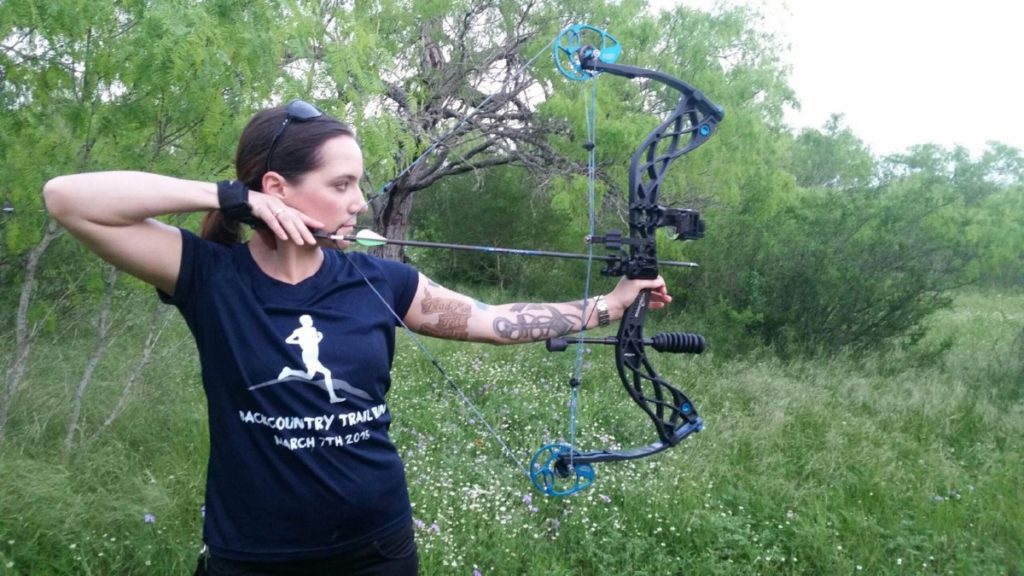
Recurve BOW for hunting“Immerse yourself in the outdoor experience. It will cleanse your soul and make you a better person.” Fred Bear
“Nothing clears a troubled mind better than shooting a bow.” Fred Bear

For thousands of years, archery has been utilized as a tool for hunting, defense and waging war. It is the one tool that has seen the littlest real advancements and yet remains solidly on the forefront for sports-related sales and use around the world.

Sure, we now have mechanically driven bows, special wheels and different styles of shooting, however, the basics remain the same. A “stick” a “string” and another “stick” combined to create one of the most historically terrifying and relevant tools of all time.

Obviously, I am simplifying things to say the above, however, using pure reasoning, one can see this being a true statement in a general way.

I grew up shooting rifles, handguns, using knives and bows and arrows. It was part of the tradition of the rural American to have this knowledge when I was a child, these days people will call you negligent to teach your children these arts…and yet, I firmly believe the opposite is true.

For safeties sake alone, knowledge of these tools is essential. So let’s get on with the review of the Sammick Sage takedown bow as well as the Sososhoot Buffalo style horsebow.

Takedown bows are superbly beneficial for individuals with space restricted, my Sammick Sage bow in its taken down configuration with two dozen arrows can fit inside of a 30” by 18” package and is less than “4 inches thick. I can easily fit string wax, spare strings, spare fletches and materials for building or repairing arrows and bow as well inside this package and it will be under 10 lbs.

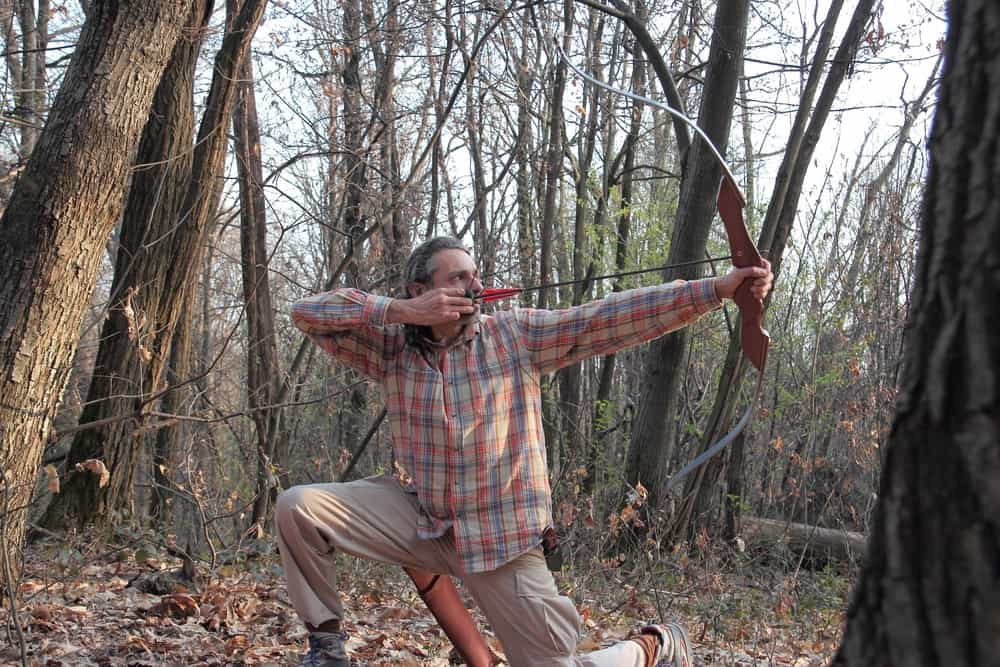
shooting a recurve bow more accurately

While I do not use a bow stringer, some recommend this and it is beneficial for most. In fact, I should get one, if simply to extend the life of my bows. The horsebows are under 48” unstrung and strung and are about 2lbs lighter than the Sammick Sage package, with other measurements remaining the same.

The horsebows cost between $120 and $165 dollars depending on draw weight, on Amazon, this is something you should make sure you get correct. (Buffalo Hunting Bow and Arrow Handmade Recurve Horsebow Longbow for Adults By Sososhoot) A bow with 30-65lb draw weight will work to take medium game (deer etc.,) 40-120lbs will easily take much larger game.

I have read stories of people with 45lb draw weights taking elephants so, don’t feel the need to be overly manly when choosing the bow you will use. You should be able to shoot 4-8 flights of arrows and not be sore afterward. These bows are shipped from China, I own two currently and have purchased several as gifts, the shipping time is within 2 weeks generally.

The Sammick Sage recurve take down bow runs between $126 and $200 on Amazon, these you can get within two days if you have Amazon Prime or a week without. They are absolutely worth every single penny and I have yet to have one fail or be a problem. Both companies are quite good about communicating and will work with you, yes, even and especially the Chinese company, Sososhoot.

The arrows I use range from Easton Aluminum through my cedar shafted wooden, turkey fletched favorites. (Huntingdoor Black Feather wooden arrows 30” length, tri tip bodkin style iron tip) Again, I have found the best pricing to be on Amazon and shipped from China by the same manufacturer. I use the 3 sided 150-grain bodkin style tips and truly love them, they puncture well, cause rapid exsanguination, (internal bleeding leading to death) and are reusable.

For practice, I use the 150-grain field points or have made my own stumping arrows, “stumping is shooting small grass clumps/ wood stumps with flat tipped, or cloth wrapped arrows for practice as you are walking about the woods.” I have had two pass through shots at 35 feet and one at approximately 70 feet on Javelina. Upon inspection after death, one of the arrows had pierced a shoulder bone and gone through it.

Understand that unless you have a serious set up with a dozen straw bales and styrofoam backstops, you will lose arrows during practice. Its the cost of archery, arrows are not cheap, HOWEVER, they are reusable and for myself at least I find that having 4 – 6 flights per bow is satisfactory and keeps the package weight under what I can carry with physical problems.

This being said, as the old saying goes, one can NEVER have too much ammunition…so remember that. Unlike firearms, high capacity magazines and the like archery should be available and or can be made from materials close at hand.

Now for the meat and potatoes of the review of these bows. It is essential to understand these are low cost, but NOT low-quality bows and arrows. They are worth every penny and then some. I have owned PSE bows, Bear bows and collectibles from several renowned boyers.

I prefer these bows simply because I am not afraid to bang them about a bit as they didn’t cost me $500+ as almost every major manufactures bow for adults will end up costing.

The pros of these bows.

Cost, they are quite simply the most cost-effective approach outside of making your own, which is a skill you would be better for learning.

Longevity, I have been using one of the horsebows and a Sammick Sage takedown for over three years and shoot 3-4 times a week in my backyard, 4 straw bales, a sheet of half inch plywood and a $60 Field Logic Classic Block black and white target has worked well for 4 years now, and this is in Arizona sun, rain and more.

You can easily purchase an inexpensive $15 or $20 foam and plastic block target from Walmart as well. Or, stuff a medium size box (24” by 24” cubed at a minimum) with crumpled up newspaper and this will also work.

Quality, again, after owning many different bows, I have not realized any real major loss in quality purchasing and using these versus the name brand ones that cost two or three times as much on average.

They work, are easy to take down and or are extremely lightweight, being made of wood laminated with fiberglass for the horsebows and coated with faux snakeskin for a fun look!
The cons, very few but there are cons!

They are inexpensive bows, you may have one that misses quality controls and need to return/ both companies allow for this and have solid customer service via email.
You will want to purchase spare strings, the strings that come with the bows are not the best.

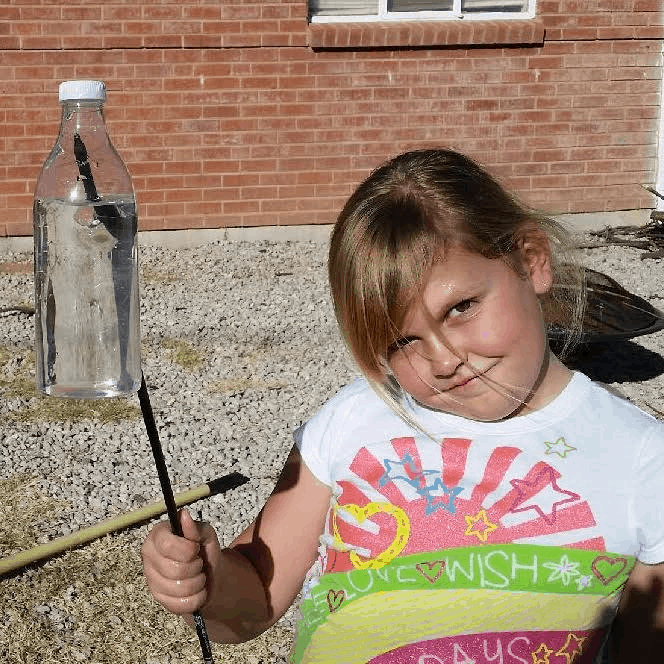
girl-with-bow

They work fine for quite a while, but they are definitely a lower quality, thankfully you can purchase strings from Trad Gear on Amazon, B-50 Dacron 16 strand strings run around $7 apiece. Wait till you get the horsebows before purchasing new strings, this way you can measure the string that comes with it. These bows sometimes vary as much as an inch either way as they are handmade.

The Sammick Sage has proper measurements available when you purchase them.

The horsebows do NOT have arrow rests on the bow or a place for one, the entire purpose of these bows is to shoot them from all angles, different sides and positions, literally shooting a horsebow is VERY different than shooting a standard recurve or longbow.

But, they are designed for strength and the ability to be shot from horseback without getting in the way of riding the horse, the Mongols, plains Indians and more used similar bows and did so with great, deadly efficiency.

That’s it, all I can say is, practice daily, it really is a great workout and has helped me strengthen my core which is essential with a bad back. Besides, it is also quiet, deadly and something discounted by governments around the world as a threat.

Understanding this places you ahead of them in the eternal battle for our individual freedom. While they may kick your doors in for your guns…they won’t look twice at the bows.

Comment, ask questions and please add knowledge. It is essential to our growth as a pack. Free the mind and the body will follow.

Filed Under: Archery

Why Are Compound Bows Better Than Traditional Bows?

October 10, 2018 M.D. Creekmore

Compound Bow vs Recurve Bow for Beginnersby Brandon Cox

If you’re in a survival situation or planning to live off the grid, you are probably interested in weapons. Specifically, what weapon should you take with you. Guns are a logical choice, but they’re hard to maintain over long periods of time because they require ammunition.

Once you run out of ammo, the gun will be useless. A better choice for survivalists is a bow. But, there are choices there as well. Here, we will compare a compound vs. recurve bow, which one is best for survival?

What’s the Difference between a Compound or Recurve Bow?

Many people have an opinion about which is better but don’t have any evidence to back it up. To help you make the best choice for you, we’ll go over the differences between a compound bow and recurve bow. Bows have some similarities. Both a recurve and a compound bow use leverage as a mechanical advantage.

Also, these weapons depend on stored energy to cast an arrow fast and far. In both situations, the arrow will travel much further than a person could throw it.

Recurve bows store energy as it is drawn. As more energy stores, it gets harder to pull the string. Compound bows are different because they use their mechanical advantage through cables and cams. Cables and cams let off some of the weight used to draw the string back.

A compound bow will through an arrow farther than a traditional bow. The differences between compound bows and traditional models like a recurve have several other differences including price, accuracy, weight, power, and speed.

Price Differences Between Recurve and Compound Bows

Just looking at a recurve and compound bow, you can tell there is a price difference. A top of the line recurve bow can cost as much as $1500. However, most traditional archers can get a great model for around $200. Any archer interested in a compound bow should expect to pay around $250 for an entry-level model.

But, most compound bows fall in the $500 to $600 range after they are all set-up. If you are trying to decide what type of bow would be ideal for a survival situation, the prices for each model are similar.

Which is more Accurate Compound or Recurve?

When set up right a compound bow is extremely accurate. A peep, release, and other shooting accessories help make an average archer a great shooter. With the help of cams and other mechanisms, a recurve bow is harder to draw and increases the possibility of the shooter shaking or quivering.

The movements can make shooting less accurate because of poor alignment. If you take an average shooter and give them both choices, they will likely be much more accurate with a compound bow. Since accuracy can be the difference between eating or starving in a survival situation, a compound bow makes a better choice.

Recurve Bows are Much Lighter than Compound Models

Another consideration to make for a survivalist is whether weight makes a difference. If you are going to carry your bow with you always, it might. A compound bow can be heavy. In comparison, a recurve bow is extremely light.

In fact, a recurve bow could weigh just a fraction of a compound bow. Even compound bows made of super light material weigh more than a rifle, which still makes it pretty heavy. If you have a ton of ground to cover, will be climbing, or running, a recurve bow is a better choice because it won’t slow you down.

Not convinced? Think about this as well. A bow isn’t the only thing you’ll be hauling on a daily or regular basis. Likely, you’ll also have a canteen, hunting light, knives, and much more. With so much to carry, it doesn’t make sense to weigh yourself down with a heavy weapon too.

Compound Bow vs Recurve Bow for Beginners
Ready for the hunt…

A Compound Bow has More Speed and Power than a Recurve Bow

We talked about it earlier, but it’s worth going over again. Not only is a compound bow more accurate than a recurve, but it also tosses arrows faster and further. Compound bows can do this because of their mechanical advantage. For even better results, archers can use a heavy arrow, which will go far fast and penetrate deep.

Does Shoot Ability Matter?

Now, it’s time to talk about shoot ability. It’s a controversial topic and those that favor either the traditional or compound bow may never agree completely. However, there are still a few topics to highlight for consideration.

When shooters aim and fire a recurve bow there it’s silky smooth. There’s no jerks or unexpected hand movements. For this reason, recurves are often considered more shooter friendly. But, it’s important to consider whether losing some accuracy is better than a smooth shot. Other factors to consider include noise.

Compound bows are noisier than a traditional bow. Some older bow models make sounds like rifles being shot when the string is released. There’s also a ton more hand vibrations when shooting, which makes it difficult to repeat repeatedly.

The Perfect Bow for Bushcraft and Survival

When it comes to survival situations, the best bow choice may be one that is made of raw materials. Arrows and fletchings can be made with natural materials. Broadheads can also be made or be made of stone. If you have a traditional compound bow and run out of arrows, it’s not easy to make arrows for this type of bow.

A wooden arrow in a compound bow could cause the arrow to explode and become dangerous. With all things considered, a traditional bow is a better choice for survival situations because the resources used to create are readily available in nature.

In conclusion, the best choice for survival situations are whatever you feel most comfortable using. If you are comfortable shooting a compound bow before you found yourself in a survival situation, you’ll still be most comfortable with that choice afterward. The same goes for a traditional recurve bow.

Both weapons have relatively the same costs associated with them. As far as accuracy goes, the best compound bow has some advantages. But, in terms of weight and the ability to move while carrying the weapon, a traditional bow has the compound bow beat.

What this means is that it’s really a personal choice as to what type of weapon you want to use in a survival situation. But, because of sustainability and the ability to reproduce arrows and even the entire bow if possible, we recommend relying on a recurve bow first with compound bows as a close second.

Filed Under: Archery

Archery Tips For Beginners

September 13, 2018 M.D. Creekmore

bow hunting tips for beginners

by Morgan

I’ve been an archer for around 14 years. I learned to shoot with a recurve when I was in college and I immediately fell in love. After that class ended, I ran to the nearest bow shop and picked up a compound bow. It was a Browning and it was beautiful. I shot a lot, but I never took it seriously and my accuracy was always way off, but I didn’t care as I was doing it for fun.

I moved to a new state and the movers lost my bow. I was so devastated, I loved that bow, I had had it for years and now it was suddenly gone. I didn’t pick archery back up for many years after that. It’s unfortunate that Browning doesn’t make bows anymore. A friend of mine was generous enough to gift me a Browning Recurve which I love and use as often as I can.

I digress; I love archery. Everything about it is so soothing. I am totally zen when I’m shooting my bow. The whole world just disappears and all that’s left is the target in front of me.

The primary bow that I shoot is a compound by Bowtech, the Eva Shockey Signature Series. It’s a light, fast, quiet bow. I practice with it at least once a week.

I love my compound, but I know in a true survival scenario that a compound may not be the best option for long term.

Here’s what we should consider about archery before choosing it as one of our main sources to hunt or for defense or whatever else.

Types of bows:

–Compound: The compound bow has a lot of moving parts that we must maintain to keep it running smoothly. Even if you keep extra pieces on hand, it would be difficult to maintain if you’re not at home with the necessary tools.

On that same note, it’s impossible to change the string of a compound bow without a press. So if you must change out the string (which you will have to do at some point, no matter how well you maintain your string), you need a bow press in order to get it off and get a new one back one. So even if you keep an extra string on hand, you’ll still need some way to get the new string on.

Some compounds are kind of heavy and bulky as well. Mine is lightweight and doesn’t feel bulky, but it could be a hindrance to some.

Deer at Cades Cove TN
Some nice deer at Cades Cove – Great Smoky Mountains TN.

The arrows are another concern. Unless you have a lot of arrows, they could get lost or break and you’d quickly run out of arrows. You can’t just make new arrows for a compound because of the sheer force that it would put on the wooden arrow, the arrow would simply shatter.

Lastly, you need a release to properly operate; if your release breaks, it’s gonna be difficult to macgyver a new release or to fix whatever happened to your existing release.

For the short term, as long as you wax your string and don’t dry fire it, it should last quite a while. But it wouldn’t be a super long-term solution. I haven’t changed my strings out in 2 years and they’re still perfectly fine, but they are getting to the point where it wouldn’t hurt to change them out.

–Crossbow: They have full-size crossbows and more ‘handheld’ crossbows. I’m personally not a fan of crossbows in general because they are heavy, bulky and it takes a lot of time to re-nock an arrow (bolt). Not only that, but it can be quite difficult to even nock a bolt depending on your strength. They do have crossbow assists that will help you nock your bolt, but even so, it can be difficult.

Many people may still choose this option because they’re kind of like a rifle, they come with a scope, you aim and pull a trigger and it’s a lot quieter than a rifle. So if you’re looking for something that it quiet but still want that point and shoot, a crossbow may be a good option.

However, just like with a compound, you have a lot of moving parts that you’ll need to maintain and/or fix.

Not only that, but it may not be possible to make bolts out of wood for your crossbow. The crossbow has so much power behind it that simply trying to make some wooden arrows for it probably wouldn’t work out too well.

Short term, a crossbow may be a good option, just make sure you have the appropriate tools and plenty of bolts. Those bolts have a habit of disappearing!

–Recurve/Longbow: I’m putting these into the same category because while they are difficult, they’re also kinda basically the same.

Whether it’s a takedown bow or all one piece, the recurve/longbow have very little downsides. They’re wood and string, that’s about it! It’s easy enough to make arrows out of wood and use them with basically any recurve or longbow, depending on the weight.

Make sure you can string and unstring the bow yourself. Also make sure that you can properly pull back the string, that it’s not too heavy. Unlike a compound, with a recurve/longbow you’re holding back all of the weight. If it’s a 35-pound bow, you’re pulling and holding back 35 pounds.

It’s also fairly easy to make a recurve/longbow and the arrows out in the field out of wood. I would highly suggest making a few before SHTF just so you know what you’re doing. There are a lot of tutorials online.

The recurve/longbow are definitely great options for short term and long term.

–Survival bow: I’ve heard mixed reviews about the foldable survival bows. Some people rave about them and others think they’re garbage.

In theory, a foldable, lightweight bow is ideal. In some cases, even the arrows fold.

Just be sure to do your research on this type of bow. I wouldn’t recommend getting this as your first bow, but more as a bow that you get after you’ve practiced a lot and feel confident in your archery abilities.

Even if you feel confident, if this bow is going to be your SHTF bow, you’ll need to practice with it regularly.

Considerations:

Bow Hunting Skills

Archery is a perishable skill. Don’t believe anyone who says that they can stop shooting for 13 years then suddenly pick it back up and still be able to shoot a dime 50 yards away. I’m sorry, that’s not how it works. It is a perishable skill and needs to be treated as such by practicing as often as you can.

Whether you plan to be using archery for just SHTF purposes or whether you want to get into bowhunting, bowfishing or 3D shoots; you need to practice. As I mentioned, I practice at least once a week, but you can choose to do more or less depending on your time. Just make the time. It takes only 10 or so minutes to sling a few arrows down range.

Learn how to properly shoot a bow. Take a lesson or two and gain the proper knowledge. A YouTube video is ok, but you’ll gain a lot more insight if you take a class in person.

Being good at archery isn’t just about accuracy. Of course, we all want to be amazing and hit the bullseye every time, but practicing will also help you get to know your bow; how to troubleshoot problems, what works, what doesn’t, your strengths and weaknesses, etc.

Archery also teaches you patience. Nobody is an expert right off the bat, so it’s going to require dedication and focus to be able to hit the target exactly where you were aiming.

This is especially true for recurve/longbow. They are a lot harder to master than a compound or crossbow. With a compound and crossbow, you have sights that you can adjust in order to make the right shots. You don’t have those devices on a recurve/longbow. All you have is practice and your intuition!

It’s not necessarily hard to learn how to shoot with a recurve/longbow, it just takes a bit more time and effort.

Learn how to maintain your bow and then properly maintain it. The better maintained it is, the longer it’ll last.

Never dry fire your bow. Dry firing means to pull back the string and let it go without an arrow. Without an arrow, instead of the energy pushing the arrow, all of the energy transfers to the bow and could damage your bow.

Make sure you wax your strings before and after each time you shoot.

Be sure to check the limbs for any cracks regularly, even if you don’t dry fire it, your bow could still become damaged over time.

Be sure to check your arrows for any cracks or damage. A damaged arrow can break before it’s even released and cause a lot of harm.

Make sure that you find a bow with the appropriate pull weight. You don’t want it to be too heavy or too light.

Relax and have fun! Even if you miss your intended spot, it’s ok! Not the end of the world. Just keep practicing and have fun. You’ll get better in time.

Aim small, miss small. As you get better with your archery, try to aim at smaller objects. It’s a fun challenge and the smaller the objects that you can hit from various distances, the better off you’ll be when you’re trying to hit your intended target. If you’re hunting rabbits, for instance, they are small and quick and require a lot of practice to accurately hit in an appropriate spot.

And it’s worth repeating: practice, practice, practice! Practicing consistently will help you to better use your bow in stressful situations, especially while hunting. Consider a mantra to help you relax and focus. My mantra is:

Aim – Focus on the target and where you want the arrow to go.
Breathe – Take a deep breath and as you’re letting it out…
Pull-Pull the trigger/release, this helps you to relax your shoulders and everything else.
Follow Through – Don’t yank the bow down so you can see your shot; let it drop naturally and hang there for a second. Then pull your bow down and look at your shot.

Dedication will be required if you choose archery for hunting, or survival purposes. But try not to take it too seriously, archery is a ton of fun and there are a lot of great archery events to participate in all across the country.

Filed Under: Archery

Primary Sidebar

About the author

I’m M.D. Creekmore, and I’m all about simple living, financial freedom, and life here in Appalachia. I grew up poor in these mountains and built a life around doing more with less. Read more→

Subscribe to Blog via Email

Enter your email address to subscribe to this blog and receive notifications of new posts by email.

Join 7,227 other subscribers
  • Amazon
  • Facebook
  • Substack
  • Twitter
  • YouTube

“Do more with less.”

– Minimalist proverb

Recent Posts

  • Weather Update for My Corner of Appalachia
  • Why I’m Ordering Ivermectin + Mebendazole Every Year
  • The Website’s Shutting Down (But Here’s the Plan)
  • You Are Hated! Start Training Like It!
  • I don’t really give a damn anymore.

Secondary Sidebar

Read My Books

Paperback and Kindle

Footer

Recent Posts

  • Weather Update for My Corner of Appalachia
  • Why I’m Ordering Ivermectin + Mebendazole Every Year
  • The Website’s Shutting Down (But Here’s the Plan)
  • You Are Hated! Start Training Like It!
  • I don’t really give a damn anymore.

More about me

Books I’ve written

Books I’ve read

Follow Me on YouTube

Follow Me on Facebook

Gear I Use and Recommend

Newsletter

Search this site

Follow me elsewhere

  • Amazon
  • Facebook
  • Substack
  • Twitter
  • YouTube

© 2008–2025 M.D. Creekmore · As an Amazon Associate, I earn from qualifying purchases.

  • Blog
  • Books
  • Newsletter
  • Gear I Use
  • About
  • Contact
  • Privacy Policy