• Skip to primary navigation
  • Skip to main content
  • Skip to primary sidebar
  • Skip to secondary sidebar
  • Skip to footer

M.D. CREEKMORE

  • Blog
  • Books
  • Newsletter
  • Gear I Use
  • About
  • Contact
  • Facebook
  • YouTube
You are here: Home / Archives for Bushcraft

Bushcraft

Here you will find information on bushcraft, outdoor survival, and camping topics. If it happens in the woods then it will be found here.

5 Powerful Life Lessons from Outdoor Adventures

October 19, 2019 M.D. Creekmore

test your bug out bagby Mike J

Believe it or not, your next outdoor adventure could be doing more than merely fulfilling the adrenaline junkie in you. There are a surprising number of powerful life lessons thrown into the mix when embracing the great outdoors. And you probably aren’t even aware of them.

Take a leap of faith and embrace the great outdoors and you could be giving yourself much more than an exhilarating day out or weekend away. Life in the great outdoors has an extraordinary way of teaching us the greatest of life’s lessons. We’ve picked out 5 powerful life lessons you can make the most of on your next outdoor adventure.

Living in the present moment: Mindfulness for the adrenalin junkie
Much has been written about mindfulness and meditation and you’d be forgiven for thinking it’s not something the average adrenaline junkie would give much time for. Surprisingly though, participators of extreme sports dedicate a huge amount of concentration and effort on one particular thing. Mountain and rock climbers, for example, are focused on the task in hand as a matter of safety. They are practicing mindfulness without even realizing it.

When engaging in an outdoor activity you are truly absorbing and observing your surroundings. It’s a far cry from everyday life, which is in most cases driven by a zillion distractions and the constant pinging of your phone. The pull for outdoor adventure is more often than not associated with a desire for adrenaline-laced activities. The irony is, outdoor adventures offer much more than excitement and release. They also offer direct, no-nonsense mind training.

A sense of connection part 1: Appreciating community
Our sense of appreciation for community is all too often dumbed down by busy modern living. Community happens around us all the time, but we often fail to appreciate it. There’s nothing quite like a team outdoor adventure in the wilderness to inspire appreciation for our diminishing community involvement. Hiking with a group in the wilderness gives us a stark reminder that our own existence depends upon the co-operation and involvement of others.

A sense of connection part 2: Appreciating nature
It’s a terrible thing, but many of us in the modern Western world are slowly disconnecting ourselves from nature. We are inadvertently closing off a general fascination with the natural world around us. Let’s face it, the closest many of us get to nature is an episode of David Attenborough’s Planet Earth on TV.

The fact is, connecting with nature is important for our well-being. It nurtures our natural creativity. A study last year conducted jointly by the University of Derby and The Wildlife Trust measured the impact of a daily practice to connect with nature over a period of 2 months. As reported by the BBC, the study showed that there was a scientifically significant increase in people’s health and happiness in accordance with a connection to nature, from simple activities such as feeding birds or planting flowers.

Appreciating nature comes with the territory of outdoor adventures, and that connection with the wild is it seems good for our health and our happiness.

Connecting to inner-resources
Part-taking in an outdoor adventure brings a great sense of accomplishment and can be extremely empowering. Whether you choose to rough it in the wild for a couple of weeks with friends or spend a day on an organized adventure activity, like those offered by Into The Blue, you’ll need to rely on your wits to get you through.

The Wilderness Foundation UK teaches adults and children to love our wild and wonderful planet. In their mission statement, they go as far as to say “The wilderness is an irreplaceable catalyst for personal transformation and growth.” Outdoor adventures offer the opportunity to discover inner resources we are unaware we have, or more succinctly we have forgotten about. The great outdoors presents the opportunity to strengthen life skills and reinforce crucial life lessons.

A sense of perspective
In the great outdoors many people experience a real sense of perspective. It’s so easy when we are running from pillar to post to lose perspective of what is important in life. We think we can’t live without checking our phones, Snapchatting or watching YouTube or even looking in the mirror. We see pretty much everything we rely on in modern life as a necessity.

An outdoor adventure reveals that it’s not only possible to live without checking social media channels and cooking in microwaves, but that in the right environment something as simple as cooking over a campfire is actually an unforgettably enjoyable experience. Swapping the TV dinner for a foraged bowl of soup in the great outdoors may not feel very appealing at face value, but try it and you’ll be surprised at how quickly your reliance on home comforts ebbs away.

It’s a wonderful world!

Filed Under: Bushcraft

Complete Guide to Concealed Carry While Backpacking

September 29, 2019 M.D. Creekmore

Appalachian National Scenic Trail Sign

Those of us who carry a handgun while hiking in the backwoods quickly realize that carrying a handgun while also carrying a backpack presents its own set of challenges. Sure you could put the handgun in the pack with the rest of your hiking gear, but then it wouldn’t be easily accessible should you need it on the trail.

Carrying a handgun in your backpack while hiking is kind of like carrying a handgun in the trunk of your car when driving. If a bear or human attacker is threatening your safety, what are you going to do… ask them to halt their attack while you remove your pack and sort through the contents until you can find your handgun so you can defend yourself…

That’s not going to work! If you’re going to carry a handgun while backpacking then it must be easily accessible and able to be drawn and brought into action quickly.

Don’t make the mistake of throwing a handgun in your pack and then thinking you’re protected. You’re not, really all you’ve done by doing that is added extra weight on your back while giving yourself a false sense of security.

Those of you reading this who have never actually hiked are probably asking yourselves why not just strap the handgun on your side, a shoulder holster or use an IWB type holster to carry while backpacking and those might seem feasible at first, however, as soon as you strap on a pack you realize that everywhere you want to carry a handgun there is a strap from the pack that’s crossing directly over that position.

Fortunately, there are several solutions to carrying a handgun while backpacking and we will get into those in detail below, but first, you need to ask yourself do you really need to carry a gun while hiking? Some people don’t and you need to be honest with yourself about this before strapping on a handgun.

Should YOU Carry Handgun While Backpacking?

black bear

If you aren’t proficient with your handgun via competent training and actual live-fire practice then please get some training and become efficient and effective with your handgun before carrying it while backpacking or at any other time.

Please read our article on where to find concealed carry firearms training and become proficient before carrying a handgun and relying on it as a tool to defend your life.  Don’t think that just because you’ve shot it a couple of times a couple of years ago that you’ll be able to use it effectively during a stressful situation… like when a bear is charging at you from 25 yards away and closing fast!

Okay, so who else shouldn’t carry a handgun while hiking? I’ve talked to people who are so opposed to taking a life, any life, that they have told me that they couldn’t shoot anyone even if it was to save their own life.

If you’re one of those folks who deep down you don’t think you could actually shoot anything or anyone even if your life depended on it then no you don’t need to carry a handgun when hiking, backpacking or at any other time.

Carry a can of pepper spray instead, or better yet a large can of bear spray – you can read my article on pepper spray here.

To me that type of thought process is incomprehensible, but those people have made a conscious decision to never take a life no matter the circumstances and I’ve found that trying to convince them otherwise is nearly impossible.

Realistic Threat Assessment

agressive dogs while hiking and packpacking
In my experience domestic aggressive dogs have been the most common threat when hiking through and near rural areas or when meeting other hikers with dogs.

Before deciding how to carry when hiking and backpacking you’ll need to do a threat assessment. What are the most likely dangers that you’re likely to face while on the trail or at camp? While it’s easy for many people to let their imagination run wild and foresee themselves being caught up in a scene from the moving Wrong Turn or Deliverance, in reality, you’re much more likely to have to deal with a wild animal or aggressive dog(s) when hiking trails run near farms and rural homes than anything else.

When it comes to dealing with aggressive dogs near rural homes and farms extra caution should be taken because pulling a gun and shooting someone’s dog can quickly spiral downward and into a deadly encounter with the dog’s owner.

Most dog owners aren’t going to be giving you a pat on the back and an apology for their dog’s aggressive behavior after you shoot it. No, most will be pissed off, to say the least, because after all, you are a stranger and the way they see it their dog was only trying to protect their home or farm when you shot it.

A situation like this could quickly turn into a deadly encounter with the dog’s owner and that’s something that you don’t want. A much better option when dealing with aggressive dogs when hiking near rural homes and farms is to use bear or pepper spray which is why I always carry both a handgun and bear spray while hiking.

So remember that even though a human threat is possible a threat from a wild animal or domestic dogs is far more likely, so plan accordingly.

Open or Concealed Carry When Backpacking?

Should you open or concealed carry when backpacking? The answer to that question will depend on several factors with the first factor being where you are backpacking and the open and concealed carry laws in that state. Another factor would be… do you have a handgun carry permit/license and does it allow for both open and concealed carry in your state?

In some states, such as Kentucky, for example, open carry is permitted by state law without a permit as long as you’re legally allowed to own a firearm, but you’ll need a license to carry concealed in the state. Another question you’ll need to find the answer to if you’re carrying outside of the state where your carry permit is issued is does that state have a Concealed Carry Reciprocity agreement with your issuing state?

And the last question you’ll need to consider is which do you prefer? Do you prefer open or concealed carry? I personally prefer open carry whether it a day hike, section hike, or through hike that crosses several states like the Appalachian Trail.

Best Concealed Carry Gun for hiking?

What handgun and in what caliber you carry will depend on your location and what threats you perceive. The most common handgun calibers recommended for “bear country” are 10mm and .44 magnum and I can’t argue with those recommendations.

My advice is to carry as large of caliber and as heavy a bullet as you’re comfortable and proficient with. I’m in “black bear country” and carry a Glock 19 X loaded with Cor Bon +P 125gr Self-Defense JHP ammo. This handgun and bullet have almost identical ballistics compared to the .357 magnum with the same bullet weight, but with the advantage of having 17-rounds in the magazine.

Some people will probably disagree with my handgun and caliber choice and that’s okay, however, if I were hiking in grizzly bear country I’d definitely up my handgun choice to a 10MM or larger because when it comes to large and aggressive wild animals bigger is usually better. But then my first line of defense against a black bear that gets to close or other animals like aggressive dogs is bear spray.

I carry the handgun mainly for those aggressive two-legged predators… aka humans who are intent on robbing and or killing me should we cross paths or if they come into my camp at night with the intent of doing me harm.

9mm vs Bear – while not ideal it can work… when in doubt empty the magazine (accurately).


The Best Way to Carry a Gun While Backpacking

There are several viable options for concealed as well as open carry of a handgun while backpacking and day hiking with my favorite for open carry while lugging a backpack being the Kenai Chest Holster (check current price and availability at Amazon.com).

For concealed carry, while backpacking I suggest this Active Pro Gear Jogger Concealment Holster. There are others that are similar to the Active Pro holster but the Active pro is one of the lowest cost options that are still well made and functional.

The Alien Gear holsters ShapeShift Backpack Holster is another option and I’ve read some great reviews recommending it, however, I don’t own one myself so I can’t give you a firsthand recommendation on it (you can check availability and the current price on Amzon.com).

Related Question

Can I carry a rifle or shotgun when hiking or backpacking? It depends on your location and the laws there. It’s best to do independent research for your area to find out what laws there are regarding carrying a rifle where you’ll be hiking. Start with online research and then contact the park service and fish and game enforcement for each state where you plan to hike. Remember that some hiking trails (such as the Appalachian Trail) pass through several states.

Personally, I would not want to lug around a rifle and ammo while covering miles of trails and then there is the question of what do you do with a rifle when you have to go into or through a town while on a long-distance through hike. A handgun is much easier to deal with.

Filed Under: Bushcraft

Escape and Evasion Survival Kit [aka Wilderness Survival Cache]

July 15, 2019 M.D. Creekmore

Escape & Evasion Cache

Please note: I wrote this post way back in 2010 and wanted to share it here with you by re-posting. I hope that my writing ability has improved at least some since then. 

I’m sure everyone reading this is familiar with the bug out bag – essentially the escape and evasion kit is based on the same concept, but with several advantages.

Don’t get me wrong, having abug out bagis a good idea, however a back-up plan, for your backup plan is even better – let me explain.

Depending on the situation, getting to your bug out bag may not be an option and let’s not forget the possibility of loss to fire, theft or another unforeseen event.

If the bug out bag is plan B, the escape and evasion kit should be considered plan C.

I know what you’re thinking – what is an “escape and evasion kit” and how do I get one? For the purposes of our discussion, an escape and evasion kit is basically a cache of supplies, hidden in a secure place. 

Unfortunately, I don’t know of any ready-made kits or at least none on par with what we need, so you’ll have to assemble yours yourself. 

Obviously, the first thing you’ll need is a container for securing your kit. I make mine from four-foot sections of 6-inch Schedule-40 PVC pipe with a permanent end cap on one end and Cleanout adapter and Threaded Plug on the other, both held in place with PVC cement.

Contents will depend on location and need – every situation will be different with kits being modified toward specific individual needs. Here are several areas to consider…

  • Shelter – Space Blanket, Plastic Trash Bags, Thermals.
  • Fire – Matches, Flint and steel, Magnifying Glass. Cotton wool.
  • Water – Sterilizing tablets, Filter, Collapsible Canteen and Cover.
  • Food – Fish-hooks and Line, Snare Wire, Slingshot Rubber, Food.
  • Cooking – Sheet of Aluminum Foil, Small Cooking Pot, and Utensils.
  • Medical – First-aid kit and Related Gear.
  • Tools – Mora Knife, Swiss Army Knife, Multi-Tool, Ka-Bar Kukri Machete.
  • Navigation – Compass, Topo Map of Area.
  • 0514173144/Light – LED Flashlight, Headlamp, and Batteries.
  • Rope and Cordage – Fishing Line, Spool of Dental Floss, Para-Cord.
  • Repairs – Sewing kit, Duct Tape, Crazy Glue.

It’s a good idea to pack items with a potential for leakage at the bottom of the tube,  and items of an immediate need (first-aid, etc) near the top.

Remember this is an escape and evasion kit, a last-ditch effort at survival, you could be wounded, pursued or both. Keep those items near the top and within reach.

Since you won’t be checking or replacing contents often, food items should be of low moister and suitable for long-term storage. You may find it a good idea to have a separate cache of food items aside from your main escape and evasion kit. I have one stuffed full of Mountain House Pouch foods and another with beans and grains.

After you get your tubes assembled and filled, it’s time to start thinking about security, or more specifically where and how to hide your kit. You don’t want to go through all this trouble and expense, just to have some two-bit thief or jackboot thug come along and steal what you’ve worked to put away.

Bug Out Bag Checklist (Ultralight Survival Pack)

The escape and evasion kit should be hidden away from your home or retreat and not buried in your backyard. Remember this is an effort of last resort. The escape and evasion kit acts as an insurance policy should you lose or be denied access to your home storage.  Having it buried in your backyard would be self-defeating.

These tubes (if constructed properly) are waterproof and could be submerged underwater without risk of damage to the contents. But erring on the side of caution, I look for a well-drained area not easily accessible to heavy machinery such as logging equipment.

When moving to the cache site, it’s a good idea to have someone scout the area ahead, hopefully averting the possibility of you being seen. The last thing you want is to run face-to-face with a group of hunters, hikers or police.

The scout can move ahead alerting you, by two-way radio if anything is out of the ordinary or if someone is heading your way, allowing you time to react and avoid detection.

When digging, it’s best to go slowly – stop often and scan the area for potential threats. Again, the scout can offer security by watching the most likely avenues of approach and giving advanced warning. 

Use a manual post hole digger to excavate a hole straight down and as deep as possible. Insert the tube in a vertical position into the hole and bacK-fill with dirt.

Carry an old tarp to pile the dirt on as you dig. Dispose of this in a discreet way out of sight and away from the cache area – when you finish, the area should look the same as it did when you started.

Foiling Metal Detectors:

  • Bury in a junkyard or a dump.
  • Seed the area with ferric chloride
  • Litter the area with metal shavings and debris
  • Old abandoned farms usually have pre-existing metal debris
  • Abandoned surface-mines are naturally seeded with discarded metal
  • Deserted log landing and yards can be good areas

It’s best to hide in an area with “naturally” occurring and pre-existing metal debris in fact seeding an area with metal can have the negative effect of drawing attention to it. 

Look for locations where such metal deposits would be considered normal and if needed add to this. Remember the best security is keeping your mouth shut.

A bug out bag is great for getting out of dodge in a hurry – a bug out bag combined with an escape and evasion kit and you just might make it. What do you think…?

Filed Under: Bushcraft

How to Build an Emergency Shelter in The Woods

July 14, 2019 M.D. Creekmore

How to Build an Emergency Shelter in The Woodsby Alex P 

Veteran survivalists innately understand the Rule of Threes. The Rule of Threes is as follows: humans will die after 3 minutes with no air, 3 days without water, or 3 weeks of going without food. At least, those are the most commonly known rules. One that is equally essential and that gets glossed over is the fact that people can die in three hours without shelter that thoroughly protects them of fatalities in harsh conditions.

You may not think the weather in your area is harsh enough to kill you but you might be surprised. During a 1964 race in England, three competitors were cut down by the cold even though it never dropped to freezing temperatures.

Even without the threat of imminent death, you can still face abundant health risks if you spend an extended period of time exposed to the elements. You name it, Heat, UV rays, cold, rain, snow, all these and more can quickly shorten your lifespan if you are continually exposed to them without a proper shelter to safeguard yourself.

In this world full of uncertainty, there’s always value in being prepared. Knowing what to do in a survival situation could literally determine life or death. If you know how to create survival shelters in the wild you could survive a situation you would have died in otherwise. That’s why we are sharing our top 6 ideas for creating survival shelters in the wild.

Build a Lean-To

Lean-to is probably the most well-known option for creating a survival shelter. You need to find two trees that are close together and a thick stick that can be wedged between the trees. If you can’t find trees and sticks of the right size, you can hammer two sticks into the ground and secure a third between them.

If possible you should then tie the main pole to the supports to prevent a collapse. From there you simply lean a large number of sticks against the pole to create something that looks like half of a roof. Sticks are essential but they aren’t enough, you’ll need to fill in the open spaces between the sticks with moss, leaves, twigs, and other flora to act as a sort of insulation.

Overall, since the lean-to is open on one side the heat that can be kept in is minimal, the lean-to is mainly for achieving a basic level of protection.

Quinzhee 

Getting trapped on a mountain with nothing but snow in sight is in many ways a worst-case scenario, but that doesn’t mean it’s hopeless. Survival structures can be constructed using snow. You’ve probably heard of igloos, and the idea here is similar. It’s just that in our idea you don’t need to have the expertise used by Northern natives to create homes from packed snow. You can create what is known as a Quinzhee must faster.

You begin by piling up your supplies over an area that is larger than your body. You then pile snow up around your supplies and pack it down until it’s about 30 inches thick all the way around. Try to keep the snow-packed smoothly and evenly to prevent collapse.

You then dig your way through the side and to your supplies, remove said supplies carefully, and take shelter in the cave you’ve created. Just make sure to poke a small hole in the top for air to come in or else you might be trading exposure for suffocation.

Basic Teepee

For this famous shelter, you need to start by either finding a thin but sturdy tree or a long pole that you can secure down in the ground. From there you will want to find as many long, straight branches as you can and circle the pole with them, leaning them up against it until you have a completely closed cone of empty space in the middle.

You should then somehow secure the pieces of wood together, tying them at the top with rope or fashioning a sort of cord from materials you find in the woods. Finally, you need to add the insulation, packing on anything you can to contain the heat without leading a collapse.

Debris Hut

The debris hut requires two sticks that stretch a bit beyond the length of your shoulders and one long stick that is larger than your height. You begin by sticking the two short sticks into the ground and leaning against each other so that they form a triangle. You then place one end of the long stick on top of the triangle sticks and the other on the ground around 6 feet away.

You then find as many sticks as you can and lean them up against the one long stick to form a sort of wooden pyramid that leaves just enough room for your body in the space left open. Small debris huts may feel claustrophobic, but that can actually be a good thing.

A small shelter may feel cramped at first but it actually seals in your body heat more effectively. And on the topic of body heat, don’t forget to insulate it, the debris in debris hut refers to the sticks used for the skeleton of the structure and the leaves and grass used for insulation.

Tarp Tent

One of the most helpful things you can have in a survival situation is a tarp. It makes shelter construction so much more simple, all you need to do is find a way to prop it over yourself and secure it down so that it will cover you safely through the night.

The second most helpful thing to carry is probably some sort of rope. If you can tie a rope between two trees and toss your tarp over the rope, you’ll have a tent ready. If you don’t have a rope, then you can wedge a sturdy stick between two trees to create the necessary support.

You can actually make just about any of the structures we’ve listed using a tarp, you simply have to put the tarp on top of the basic support instead of leaves, grass, and other natural types of insulation. Just make sure to secure the tarp with heavy rocks or logs to keep it from being blown away by winds.

Find Natural Shelter 

The final of our top 6 ideas to creating bug out survival shelters in the wild offers something to think about in all the previous five scenarios. When creating survival shelters you don’t have to do everything yourself, and in most cases the less you can get away with doing the better off you will be.

Time and energy are everything when it comes to survival, you don’t want to waste time getting fancy with your construction ideas in a survival situation. That’s why it helps to start out with an existing foundation you can build on. If you can find a cave, cliff wall, large leaning tree, or some other sort of natural wall or enclosure then half of the job will be done for you.

The average entirely self-built structure might last a night but if you could be stranded for a longer period of time then finding something solid and natural to build around will save you time and effort in the long run.

Though at that point, you also need to consider things like access to fresh water and sources of nutrition when choosing where to set up your survival base camp. For your convenience, we put together a List of Emergency Essentials for you to check off. Survival is about planning ahead so life doesn’t catch you off guard

Filed Under: Bushcraft

DIY Homemade Mosquito Trap [That Actually Works!]

June 27, 2019 M.D. Creekmore

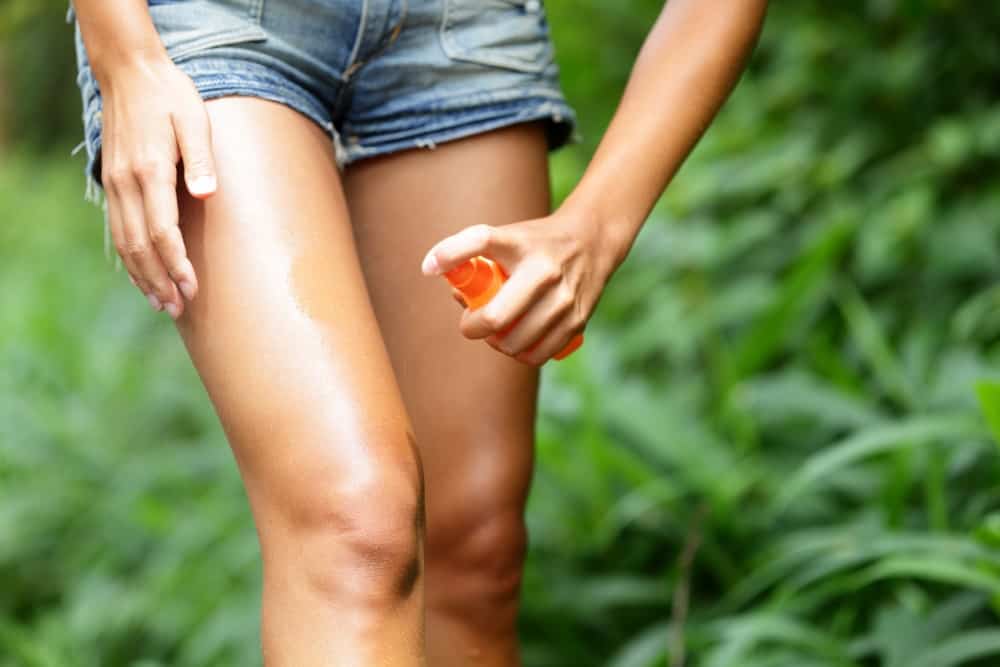
Homemade Mosquito Trap - girl spraying on mosquito repellent

By Matt D

You can keep mosquitoes away from your home for good with a few homemade mosquito traps and other simple and easy DIY steps that you can do at home cheaply and quickly…

(Note: If you want to skip all of the details about mosquitoes and how they can spread sickness and disease and get right to the details of how to make a homemade mosquito trap then simply scroll half-way down the page to get all of the nut and bolts details about how to make a DIY homemade mosquito trap…  

Okay, then let’s get started…

Anyone who loves the outdoors knows mosquitoes can be a nuisance. Their relentless search for blood and whining buzz can drive even the toughest outdoor enthusiasts indoors with ease. Along with the allergic reaction that causes itchy red bumps, mosquito bites pose numerous health risks to humans all around the globe.

From the West Nile and Zika viruses to malaria and yellow fever, illnesses spread by mosquitoes can be serious and even potentially deadly (such as microcephaly and encephalitis).

How do mosquitoes spread disease?

mosquito bugMosquitoes are primary vectors for numerous human diseases, which together infect and kill millions of humans each year. The female mosquito sucks blood because it provides nutrients for its eggs. Besides drawing blood when they bite, female mosquitoes also inject an enzyme to prevent blood from clotting.

Therefore, there’s an exchange of fluids between your bloodstream and the mosquito. Mosquitoes are vectors which carry infections between animals and humans.

When the mosquito feeds off an animal or person with a disease, it passes on the infection when it bites another person or animal. The itchy red bumps are an allergic reaction to this enzyme. Mosquitoes find their targets using chemical signals, observing our movements, and by detecting the infrared radiation emitted by warm blood.

Learning how mosquitoes spread disease and how to control them is an important step toward protecting yourself and your loved ones from mosquito bites and the diseases they spread.

The dangers of mosquitoes

According to the WHO (World Health Organization), mosquitoes infect more than 300 million people per year with Dengue and malaria, just two of the most dangerous illnesses mosquitoes can carry. Of those 300 million people, 800,000 die from malaria, and another 20,000 people from Dengue.

West Nile virus deaths illustration

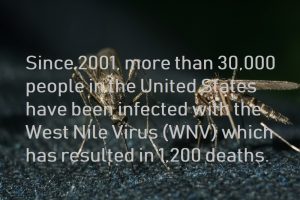
Since 2001, more than 30,000 people in the United States have been infected with the West Nile Virus (WNV) which has resulted in 1,200 deaths. In 2002, the cost of West Nile Virus-related health care alone in the United States was estimated at $200 million.

Besides carrying infections that can be transmitted to humans, mosquitoes can also transmit several parasites and diseases that dogs and humans are very susceptible to (such as West Nile Virus, eastern equine encephalitis, and dog heartworm). Mosquitoes have a 4-stage life cycle (egg-larva-pupa-adult) and they lay their eggs in different breeding areas such as:

  • Ponds
  • Lakes
  • Tree holes
  • Toys
  • Old tires
  • Tarpaulins or plastic covers
  • Buckets
  • Potted plant saucers and trays

These sites are also potential breeding areas for some of the most dangerous species such as the Asian tiger mosquito.

What types of illnesses do mosquitoes spread?

? Chikungunya

Most commonly found in North and South America, Africa, the Indian subcontinent, Asia and Europe, the chikungunya virus is now spreading in the United States. Chikungunya is transmitted by a mosquito species known as the Aedes aegypti mosquito.

It causes fever, severe muscle and joint pain, nausea, tiredness, headache, and a rash that may last several weeks. Patients usually need fluids and rest until symptoms go away. Doctors may also suggest pain relief medication.

? Zika

Zika Virus is transmitted by the Aedes albopictus (Asian tiger mosquito) and Aedes aegypti mosquito. These mosquito species breed entirely around the home. Zika is found in the Pacific region, Mexico, South East Asia, Africa, and North and South America. Symptoms include joint and muscle pain, mild fever, irritated eyes (pinkeye), a skin rash and headache.

The symptoms are usually mild and run their course in less than 7 days. However, if a pregnant woman is infected, Zika can also impact the unborn child. Zika has also been linked to more serious health problems such as a birth defect known as microcephaly and a nervous system disorder called Guillain-Barre syndrome.

Microcephaly: This is a birth defect that causes the baby’s head to be abnormally small and not fully developed. Babies with Microcephaly may have intellectual and developmental delays.

Guillain-Barre: This nervous system disorder usually causes general weakness and mild paralysis. However, most victims recover over time. There’s no vaccine to prevent Zika virus.

? West Nile Virus (WNV)

West Nile Virus is found in Asia, Africa, Europe, North and South America, and the Middle East. WNV is transmitted by the Southern House Mosquito (Culex quinquefasciatus) and the severe version of the virus (neuroinvasive WNV) can be fatal.

Homemade Mosquito Trap

Although some people who get WNV do not have any symptoms, 1 in 5 will have flu-like symptoms such as mild fever, headache, a stiff neck, and weakness of the muscle. Some of the severe symptoms of WNV include confusion, convulsions, and coma.

However, the fatality rate of WNV is less than 1%. The virus usually starts out as a bird disease which is then spread from bird to bird by mosquitoes. WNV spreads to humans when a mosquito feeds on an infected bird and then bites a human.

However, man is the dead-end host (the virus cannot be spread from human to human). Neuroinvasive WNV can also cause more serious infections that cause meningitis or brain swelling.

? Malaria

Malaria is the oldest illness that is caused by mosquito bites. The disease is transmitted by the female Anopheles mosquito. Areasa that have the most cases of malaria include the Pacific islands (such as Papua New Guinea) and Sub-Saharan Africa. Malaria causes over 400,000 deaths worldwide per year. Its symptoms include headache, fever, and vomiting.

? Yellow fever

Yellow fever is found in Latin America and Africa and it is transmitted by a mosquito species known as the Aedes aegypti mosquito. Although some people who get the disease won’t notice anything, some may notice symptoms such as muscle and back pain, headache, fever, vomiting, and lack of appetite.

Yellow fever can be fatal and some people may feel tired and weak for several months. Some people who notice mild symptoms at first may develop serious symptoms such once they start feeling better, including bleeding, jaundice and high fever. Yellow fever can cause kidney and liver failure, and it can be fatal.

? Encephalitis

Mosquitoes can transmit viruses that can cause inflammation around the brain and spinal cord. The type of encephalitis you get usually depends on your location:

  • LaCrosse encephalitis: States on the eastern side of the Mississippi River
  • Eastern Equine encephalitis: the Caribbean, South America, and the Gulf Coast, Atlantic, and Great Lakes States.
  • Saint Louis encephalitis: Throughout the United States, especially the Gulf of Mexico and Florida states.
  • Japanese encephalitis: Western Pacific and Asia.

Some of the mild symptoms of encephalitis include sore throat and mild fever. However, you should seek immediate medical attention if you experience symptoms such as seizures, muscle weakness, and confusion, to help prevent brain damage and other serious complications. Encephalitis can be fatal.

? Dengue Fever

Found in Asia, Africa, Europe and North, and South America, Dengue Virus is transmitted by a mosquito species known as the Aedes aegypti mosquito. Symptoms of Dengue fever include joint and muscle pain, nausea, headache, and a fever. Some people may get a high fever and bleed a little from the gums or nose.

Dengue can be very uncomfortable and the only things you can do is treating the symptoms and resting.

Some victims may develop a more severe form of dengue fever, called dengue hemorrhagic fever, which causes the small blood vessels to become leaky. If fluid starts building up in the lungs and belly, the patient should seek medical care immediately. In the last 15 years, there have been dengue fever outbreaks in the Florida Keys, South Texas, and
Hawaii.

? Dog Heart Worm

This is a parasitic roundworm that affects various animals including dogs. The heartworm takes residence in the heart as it grows. This worm is a major concern in dogs.

What can you do to keep mosquitoes away from your home?

Eliminate stagnant water ?

Many female mosquitoes lay their eggs in stagnant water. Make sure there is no stagnant water anywhere around your house including in open cans, buckets, old tires, toys, plates under flower pots and even in bottle caps.

Improperly drained yards, kiddie pools, and ponds can also be breeding spots for mosquitoes.

Since most mosquito breeds can’t fly too far, eliminating breeding grounds can help reduce the number of mosquitoes that plague your home. It is also important to change the water in your bird bath regularly and ensure your yard has proper drainage.

Check hidden spots ?

Inspect areas such as gutters, which can easily collect water and become mosquito breeding spots. It’s also important to replace any window screens that are broken, ripped, or nor fitting well, especially if you live in a hot, humid area.

Clean up debris ?

Some mosquito species lay their eggs in damp soil and debris such as leaf piles and decaying logs. Be sure to get eliminate debris and leaves around your home and from gutters, too. You may also consider mowing your lawn regularly and trimming your trees to increase light levels, reduce shade in your yard and make the landscape less habitable to mosquitoes.

Make mosquito-repelling plants part of your landscape ?

The essential oils and fragrances in some plants such as marigolds and lavender naturally repel mosquitoes. Therefore, if you really enjoy spending time on your patio or deck, plant some of these plants around the perimeter of your yard or simply pot them up and place them around your home to ward off mosquitoes and improve the aesthetic appeal of your yard.

Other plants that can help keep mosquitoes at bay include lemongrass, catnip, peppermint, sage, basil, citronella, bee balm rosemary, and ageratum.

Use backyard mosquito and bug control ?

Treating your yard can also help reduce mosquito infestations. You should spray during the day because this is when mosquitoes tend to hide in humid areas such as thick brush, tree hollows, grass, and shrubs.

Light lanterns or candles that contain oil repellents ?

You can keep mosquitoes away from your porch or patio by lighting lanterns or candles that contain essential oils that repel mosquitoes. These essential oils include lavender, eucalyptus, geraniol, clove, cedarwood, and lemongrass. However, it’s essential to keep in mind that mosquito-repelling candles and lanterns work best in small areas with very little air movement.

How to make a homemade mosquito trap

You can also set mosquito traps to keep these annoying pests away from your patio or porch. However, most types of mosquito traps need to be changed on a regular basis.

If you’re having a barbeque or outdoor party, mosquito traps can be a very effective way of protecting guests from mosquito bites, especially when the traps are used along with other mosquito control methods such as repellents.

Here are some simple DIY mosquito trapping ideas that really work:

Photo Instructions of How to Make a Homemade Mosquito Trap 

Homemade Mosquito Trap bottle and bait

Items needed:

✅ 1 cup of water

              ✅ 1/4 cup of brown sugar

✅ 1 gram of yeast

✅ 1 2-liter bottle 

HOW:

1. Cut the plastic bottle in half.
2. Mix brown sugar with hot water. Let cool. When cold, pour in the bottom half of the bottle.
3. Add the yeast. No need to mix. It creates carbon dioxide, which attracts mosquitoes.
4. Place the funnel part, upside down, into the other half of the bottle, taping them together if desired.
5. Wrap the bottle with something black, leaving the top uncovered, and place it outside in an area away from your normal gathering area. (Mosquitoes are also drawn to the color black.)

Change the solution every 2 weeks for continuous control.

If you don’t like making things or can’t get this thing to work correctly for some strange reason, then you can always try one of these that are guaranteed to work.

Video Explanation of a DIY Homemade Mosquito Trap

i.Use limes and cloves ?

Slice limes in half and adorn them with cloves. Surround your outdoor area with the fruits to create a mosquito-free zone.

ii.Trick mosquitoes into drowning ?

Fill a bucket with water and add detergent into it. Mosquitoes will be attracted to the stagnant water you’ve provided because they need it to lay their eggs in. However, the water will have no surface tension due to the detergent you’ve added and the mosquitoes will drown.

You can increase the efficiency of this trap by aiming a light source to the water because mosquitoes are also attracted to light.

How can you stop mosquitoes from biting? ?

Whether you’re swimming, riding your bike, hiking, or enjoying other outdoor activities, mosquitoes will always find a way to ruin the fun. You can make yourself less desirable to mosquitoes by trying some of these ideas:

·Skip the perfume ?

Many lotions, perfume, deodorant, and even hairspray, attract mosquitoes to us. If mosquitoes seem to be particularly attracted to you, try wearing scents that have a strong eucalyptus, lavender, basil or even rosemary scents.

·Wear long sleeve shirts and pants ?

If you’re planning an outdoor adventure, wear clothes that will help keep away mosquitoes. Loose fabrics and light colors work best. A light-colored hat can also help keep mosquitoes away from your head and face.

·Apply repellent ?

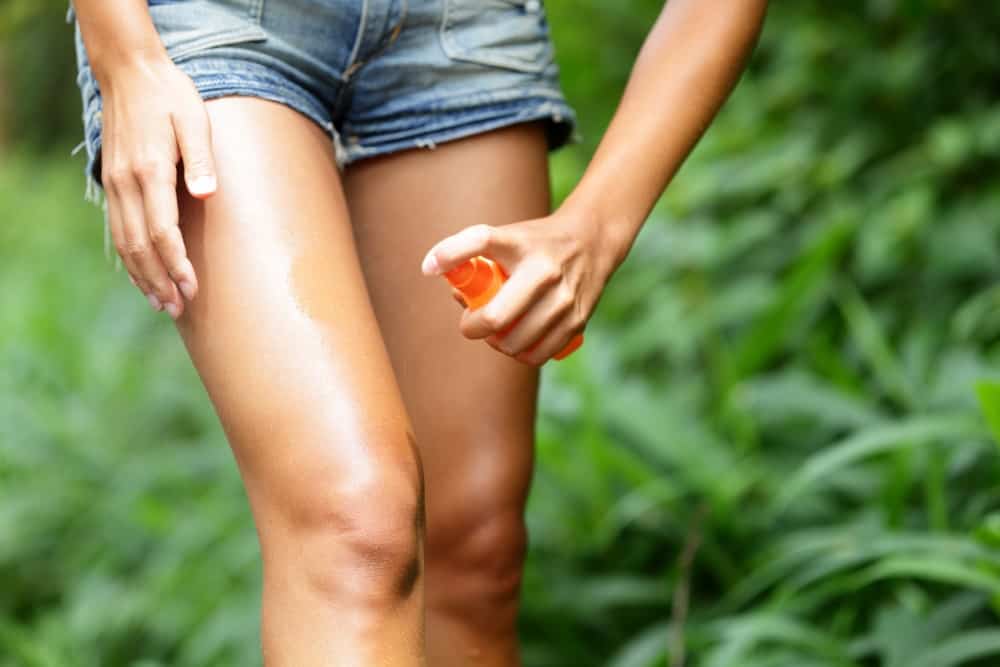
Sprays or lotions containing IR3535, DEET, lemon oil, eucalyptus oil, or Picaridin are particularly effective when it comes to keeping mosquitoes away. Mosquito repellents usually wear off after a few hours and you may have to apply again when necessary. Lotions and sprays containing DEET are safe even for children when used as directed.

·Spray yourself with vanilla ?

Add three teaspoons of vanilla to a cup of water and put the solution in a spritz bottle. Simply spray yourself when you’re outside biking, hiking or enjoying other outdoor activities. Vanilla will mask your body odor and help keep mosquitoes away.

·Cover your feet ?

Mosquitoes love bacteria and sweat, making your feet one of the prime blood sucking spots. In fact, the mosquito species known as Aedes aegypti, which is responsible for spreading the Zika virus, tend to bite the lower parts of the body. You can consider wearing high socks or high-top sneakers.

Human and mosquito movement is to blame for transferring uncommon mosquito-borne diseases to new areas. Climate change also contributes by pushing mosquitoes into more suitable areas.

However, these simple ideas can help you keep mosquitoes away from your home and prevent them from biting.

Filed Under: Bushcraft

How to Tie a Knot That Won’t Come Undone

June 7, 2019 M.D. Creekmore

how to tie a knot

Do you know how to tie a secure knot? Well, every man should know how to tie a knot and you’re a man, right? Okay, then let’s get to it. Below are ten knots that every man should know how to tie. I suggest that you get some rope and tie each of the ten below twenty or more times each. Tie and repeat until you’re 100% sure that you know how to do it right the first time… even if you’re under stress.

These knots are great for everyday use at home and at work (depending on your job) and are also great to know for camping and survival purposes. You’ll be able to construct shelters, traps and snares, weapons and tools, and other devices, you should have a basic knowledge of ropes and knots and some of the terminology used with them.

The terms are as follows:

Bight. A simple bend of rope in which the rope does not cross itself.

Dressing the knot. The orientation of all knot parts so that they are properly aligned, straightened, or bundled. Neglecting this can result in an additional 50 percent reduction in knot strength. This term is sometimes used for setting the knot, which involves tightening all parts of the knot so they bind on one another and make the knot operational. A loosely tied knot can easily deform under strain and change, becoming a slipknot or, worse, untying.

Fraps. A means of tightening the lashings by looping the rope perpendicularly around the wraps that hold the spars or sticks together. Lashings. A means of using wraps and fraps to tie two or three spars or sticks together to form solid corners or to construct tripods.

Lashings begin and end with clove hitches. Lay. The lay of the rope is the same as the twist of the rope. Loop. A loop is formed by crossing the running end over or under the standing end to form a ring or circle in the rope.

Pigtail. That part of the running end that is left after tying the knot. It should be no more than 4 inches long to conserve rope and prevent interference. Running end. The free or working end of a rope. This is the part of the rope you are actually using to tie the knot.

Standing end. The static part of the rope, or the rest of the rope besides the running end. Turn. A loop around an object, such as a post, rail, or ring, with the running end continuing in the opposite direction to the standing end. A round turn continues to circle and exits in the same general direction as the standing end.

Whipping. Any method of preventing the end of a rope from untwisting or becoming unwound. It is done by wrapping the end tightly with a small cord, tape, or other means. It should be done on both sides of an anticipated cut in a rope before cutting the rope in two. This prevents the rope from immediately untwisting.

Wraps. Simple wraps of rope around two poles or sticks (square lashing) or three poles or sticks (tripod lashing). Wraps begin and end with clove hitches and get tighter with fraps. All together, they form a lashing.

how to tie a knot

The 10 basic knots and methods of tying them that you should know for survival purposes are as follows:

1. Half-hitch.

This is the simplest of all knots, and it used to be the safety, or finishing, knot for all U.S. Army knots. Because it had a tendency to undo itself without load, it has since been replaced by the overhand. 2. Overhand. This is the simple knot that most people tie every day as the first step in tying their shoes. It can also be used to temporarily whip the end of a rope.

This knot should replace the half-hitch as a finishing knot for other knots. This knot alone will reduce the strength of a straight rope by 55 percent.

how to tie an Overhand knot

2. Square.

A good, simple knot for general-purpose use, the square knot is basically two overhand knots that are reversed, as in right over left, left over right. It is used to tie the ends of two ropes of equal diameter together (just like your shoelaces) and must be secured with an overhand on both ends. It is easy to inspect, as it forms two loops and is easy to untie after being loaded.

how to tie a Square knot

3. Round turn and two half-hitches.

This is the main anchor knot for one-rope bridges and other applications where a good anchor knot is required and high loads would make other knots jam and be difficult to untie. It is used most frequently to anchor rope to a pole or tree.

Round turn and two half-hitches knot

4. Clove hitch and end-of-the-line clove hitch.

These knots can be used to fasten a rope to a tree or pipe, and they put little strain on the rope. They are easy to anchor knots, but tension must remain on the knot or they will slip. This can be remedied by making another loop around the object and under the center of the clove hitch.

how to tie a clove hitch

5. Sheepshank.

A method of shortening a rope, a sheepshank may also be used to take the load off a weak spot in the rope. It is a temporary knot unless the eyes are fastened to the standing part of the rope on both ends.

how to tie a Sheep shank knot

6. Double sheet bend.

This knot is used to tie together the ends of two ropes of equal or unequal diameter. It will also join wet rope and not slip or draw tight under load. It can be used to tie the ends of several ropes to the end of one rope. When a single rope is tied to multiple ropes, the bight is formed with the multiple of ropes.

 Double sheet bend knot

7. Prusik.

This knot ties a short rope around a longer rope (for example, a sling rope around a climbing rope) in such a manner that the short rope will slide on the climbing rope if no tension is applied and will hold if tension is applied on the short rope. This knot can be tied with an end of rope or bight of rope.

When tied with an end of the rope, the knot is finished off with a bowline. The non-slip nature of the knot on another rope allows the climbing of ropes with footholds. It can also be used to anchor ropes or the end of a traction splint on a branch or ski pole.

Prusik knot

how to tie a knot

8. Bowline and bowline finished with an overhand knot.

The around-the-body bowline was the basic knot used for rescue for many years, as it provided a loop to place around a body that would not slip or tighten up under strain. It has been replaced by the figure eight in most applications because the latter does not weaken the rope as much.

Bowline and bowline finished with an overhand knot.

Figure eight and retractable figure eight.

9. Figure-eight and retractable figure eight.

This knot is the main rescue knot in use today. It has the advantages of being stronger than the bowline and easier to tie and check. One disadvantage is that when wet it may be more difficult to untie than the bowline after being stressed. The figure-eight (or figure of eight) can be used as an anchor knot on fixed ropes. It can also be used to prevent the end of a rope from slipping through a fastening or loop in another rope when a knot larger than an overhand is needed.

Filed Under: Bushcraft

Camping In Winter? Here’s What You Need to Know!

April 6, 2019 M.D. Creekmore

(The Following is a sponsored post).

by Billy

Cold temperatures and shivers can be an added challenge to the already challenging and adventurous activity of camping. The winter weather conditions can make it difficult for campers and hikers to tread the path, pitch their tents, source food, etc. But, if you’re still determined to experience camping in winters, then here are some important tips for you to keep in mind.

  1. Hydration and Nutrition

In winters we don’t feel very thirsty but that doesn’t mean that our bodies don’t need water. Remember to stay hydrated in the winters and keep taking sips of water at regular intervals. Eating proper meals or taking snack breaks regularly to give yourself sufficient calories is also important in winter camping. Drinking plenty of water and eating regularly will help you stay warm.

  1. Clothing

Don’t try to manage your winter camping trip with just multiple layers of clothing. Purchase winter-specific, camping clothing because those are designed for camping or hiking in the cold. Invest in fleece pants, a puffy coat, waterproof jackets and pants, socks, gloves, hat, earmuffs, etc. Keeping yourself warm in the winter weather is very important, so make that a priority.

  1. Health and Fitness

You should be careful about getting any cold-related injuries like frostbite, hypothermia, and others. It’s very important to keep yourself dry and warm in the winter weather. At any point of time if your feet or any other body part gets wet, change your clothes and get yourself warm immediately. So always make sure that you are carrying an extra pair of each of your clothing.

  1. Camping Gear

For winter camping and hiking, you will need extremely sturdy and durable gear. Ensure that your tents are sturdy enough to withstand the winter winds and temperatures, carry warm sleeping bags, two sleeping pads and most importantly, a stove which is suitable for cold weather conditions. Don’t forget to shop for the usual camping essentials which would include a tough UK pocket knife, ropes, tarps, flashlight, maps, compass etc.

  1. Gadgets

Remember that in winters gadgets lose battery very quickly so you might want to keep them warm and cozy. It would be best to keep them packed in your backpack until you need them. Take them out to use them, try to keep them warm and cozy while using them and then pack them away when you’re done.

  1. Campsite

It’s important to choose the right camping site for your winter camping adventures. You should avoid camping sites that are located at the bottom of the hills because of the formation of cold- air troughs and also the top of the hills because of the cold wind. If possible, choose a site which is flat and if there’s snow, you can suppress it by walking on it. Remember that snow which is packed will insulate heat better than snow which is left loose.

  1. Pee Bottle

Cold temperatures can cause you to pee more often than usual and it can also be very difficult to be able to pee out in the open during winters. So, mark a bottle with your name and create your own pee bottle for any urination requirements at night. You can also wrap it in duct tape if you would not like your pee to be visible to other campers

Conclusion

Camping in winters is a great adventure and an even greater challenge. However, nothing is impossible. If you’re well prepared, ready with your gear, aware of your surroundings, dare to take on the challenge and know your do’s and don’ts, this too can be an equally fun activity.

Filed Under: Bushcraft

Hiking Tips For Beginners – Test Your Gear to Know Your Gear!

January 19, 2019 M.D. Creekmore

hiking clean drinking water filters

by Ian D

The Importance of Knowing Your Equipment, and the Reality of the Using It.

A few months ago I decided it would be a good experience to go on an extended backpacking trip.   I carefully researched the area I was interested in by asking people who knew the area and by looking over various maps and descriptions.

I initially thought I’d attempt this solo but then asked my daughter if she’d like to come along.   She seemed interested and reluctant at the same time.  I described the hike to her as a leisurely and “easy” hike with several trails we could take and end the trip early if needed.

The one unexpected obstacle I ran into though was my wife.   She didn’t think it was a good idea for us to “jump” into this hike with little to no training or physical preparation.

My daughter and I are not in terrible shape but neither of us are doing long walks or running type activities on a regular basis.  My wife thought we’d be safer if we did a few day hikes beforehand and got used to having a pack on and carrying a heavier load incrementally.  I assured her that neither of us needed to do that and we could easily walk a few miles a day.

The total hike was only expected to be about 20 miles so that would only be about 7 miles a day or so.  So we eventually got the go ahead and started seriously planning.  We did all this serious planning about 5 days before the hike was to begin.

Then life happened and we were delayed by a meeting, a fence building project, and 100-degree record-setting temperatures.  We started packing about 2 days before the trip in the afternoons after working outside all morning on the fence project.   We ran out and got food and extra things we thought we needed and eventually had our packs “ready”.

My pack, an Osprey Kestrel 58, weighed in at 40 lbs and my daughter’s North Face Terra 55 weighed in at 30 lbs.   We figured we could handle the weight as we weren’t planning on very long days and we were going to hike at a leisurely pace.

The day of reckoning arrived and we headed out to the trailhead.  It was forecast to be sunny and around 96 that day.  As we got out of the car at 8:30 am, in the already 80 plus degree heat, the bugs proceeded to enthusiastically greet us.

Once we finally got our packs on our backs, I think we both knew right then this wasn’t going to end well.  We said goodbye to our ride and started up the trail.   We didn’t make good progress though, as we proceeded to stop about every 5 minutes or so for the next 2.5 miles, trying to figure out how to get our packs to sit comfortably on our backs!  We tried adjusting the load inside, the straps outside, and the internal frame adjustment.

We finally both found a somewhat better position that at least rested somewhat on our hips and shoulders together.  My daughter and I were in significant distress, discomfort, and dread from the packs, bugs, and heat!  We considered many times turning back that whole 2.5 miles and camping at the trailhead and hiking down to a place where the phone might work in the morning.   We believe that both packs have insufficient padding on the shoulder and waist straps.

Both packs seemed to just not be right for us, but this is probably more the fact that we clearly had NO idea how to set them up.  After 2.5 miles and 6 hours, we stopped for a water refill and lunch.  The water refill consisted of unpacking the brand new Katadyn Hiker Pro.

This worked flawlessly and allowed for a quick refill of both our hydration packs.  It uses quick disconnects that allow for direct filling of a similarly equipped hydration reservoir.  The cool water from the small stream was refreshing and turned out to be the one thing we both thought was the highlight of the trip.

Next up was lunch of some Backpacker’s Pantry Pad See You with Chicken.  But first I had to get my Solo Wood Stove going.  I knew how to use this stove as I’d pretested it a few years before.  The problem we ran into though was the waterproof matches we had simply would not light.

So the BIC lighter was used and after sufficient nursing of the kindling, the stove came to life.   The stove works fast and efficiently.   I only needed a small pile of twigs to get the water boiling and we were eating about 30 minutes later.

The problem was that 30 minutes gave enough time for every insect in the area to call their friends and come to greet us.  It was all we could do to eat our food, which actually turned out to taste really good, and not ingest some bugs with it.   We quickly finished, cleaned up, and “bugged” out so to speak!

Up to this point, we had yet to find anywhere desirable to camp for the night.  It was too rugged, hilly and any semi-flat spots seemed to be in the vicinity of the areas with a little remaining water, all of which were bug infested and quite smelly places.

So we trudged on in search of a possible campsite and toward the next trail junction which was a way down and out in case we needed to end things.  Around 6:00 pm we got to the junction of the trail we could escape on.   Here we could have made a hasty camp on the trail and hope for the best and then continue onward in the morning.   But I instead called the wife and requested an EVAC.  We discussed our options and decided to head down the trail the 6 miles to the trailhead.

We figured we could do the 6 miles downhill in about 3 hours, which turned out to at least be a correct estimate in the end.  This was some of the hardest 6 miles as we’d already been out for 9 hours in the heat and our bodies were both screaming for us to lie down and stop already.

In that 6 miles we were also contemplating every potential spot where we could stop and camp and still, the only places seemed to be right on the trail or bogs.   So we decided to keep going using the thoughts of a soft bed and a bug-free night to push us along.   Around 8:30 pm, we got to a switchback where there were about 2 miles left.

On the map, it looked as if the lower section of the trail was only a few feet below this switchback and we could take a “shortcut” to get there.  It looked as though someone previously had made a trail so we headed down that.   Unfortunately, the “trail” turned out to be a bad idea as it quickly ended a few hundred steep feet down, through deadfall, and some bushwhacking.

At this point, we both had no energy to try and get back up the steep slope.  So we decided to try a sideways hike through the bush to get to the trail.

This got us almost nowhere as it was simply too steep and closed in to make much progress.   We had both already fallen a few times and were on the verge of a mental breakdown.   I finally spotted the trail a few hundred feet down and it looked like it was almost straight down below us.   We had to slide on our backsides a few times to safely reach the trail and luckily there weren’t any serious rock cliffs.

Once down we thought we still had a few miles to go but luckily our near death off-trail experience had re-energized us ever so slightly.   It turned out to be only about a half a mile from the trailhead from where we had come out.

When we arrived there was a perfect camping spot, of course, in a nice dry grassy field.   I proceeded to essentially collapse and await our EVAC.   The wife pulled in about 5 minutes later which would have brought me to tears had I any water left in my body.  I imagine what we felt is remotely similar to what a soldier feels when the cavalry comes to the rescue.

Lessons Learned

  • Know your gear – If you have a backpack load it up and try it out. Simply buying it and letting it sit idly serves no purpose.  If you’ve loaded it to use as a BOB then you need to strap the thing on and walk a mile with it.  That way you’ll know how it feels and if you need help, as clearly we did, in getting it set up and adjusted properly.  The same goes for your water filter, stove, knife, firearm, and other gear.   Use it and know its functions and abilities, become proficient.
  • The Wilderness –  It’s got the word “wild” in it for a reason.   Be prepared for the bugs, heat, and rugged terrain.   If you think you could bug out by simply hiking into the woods with your family and survive, well, you’re wrong.  You’ve got to know the terrain and where water and campsites are.   Otherwise, like us, you could be in for a long uncomfortable hike.  Do your research and pre-locate camp and water on a map if possible.   Mark distances and account for the weather with regards to the number of stops you’ll need for breaks and water.
  • Backpacks – Apparently you need to know a few things when using one of these devices. I’m going to have to learn more about proper loading and adjustment of these things as we clearly couldn’t figure ours out.   So my advice is to ask a local expert to help set yours up and tell you how to use the thousands of straps, buckles, loops, and gizmos on these things.
  • Your Body – Let’s be serious here! Most of us American’s couldn’t hike a mile without getting winded.  Simply put, if you take care of your body then it will take care of you.  Get out and do day hikes with a partially loaded pack and work up to greater loads.   There’s simply no way you will understand the effects a pack has on your ability to move unless you strap one on fully loaded and try it.  Go explore your local wilderness and get to know it intimately.  That could be the forest, the mountains, or the inner city.   The more you know about the surrounding areas you live in the safer you’ll be.  Plus all that exploring will hopefully get you into better shape.
  • Hydration – It turned out that I was slightly dehydrated or had heat exhaustion as by the time we got home, I was shivering and feeling quite ill. You need to drink regularly and keep electrolytes in your system.  Carry electrolyte tabs with you to make sure you never “feel” thirsty, and the day before a hike or athletic event make sure you drink plenty of water.  What you drink today is used the next day.
  • Shortcuts – Be aware that the trails were generally made to avoid hazards and to get from point A to B in the least amount of slope. Thus why all the switchbacks are there.   But some trails as we all have encountered seem to be built by someone who’s a forest maze builder.   So if you’re going to take a shortcut to avoid the misery ahead then make sure you know the hazards or at least able to see the trail you’re going to.
  • Listen – There have been unconfirmed reports and rumors, that in some cases a wife’s advice has been known to be spot on. When your wife tells you something, try to listen to what she has to say.  Maybe even do some additional research and such to show you did listen.   This will make your wife happy and may get you some brownie points.   Then, in the end, discount everything she said and do whatever you wanted anyway.    How else is a man supposed to learn a life lesson?  Also, make sure you allow her a self-gratifying “I told you so!” as she picks you up off the ground and helps you into the car.

Filed Under: Bushcraft

How to Make a Fire in The Wilderness

January 7, 2019 M.D. Creekmore

How to Make a Fire in The Wilderness

by Richard Grimes

No discover since the beginning of time has been more important to the development of mankind, then the discovery of Fire.  The simple presence of fire added to the routinely “normal” day in the outdoors instantly adds the feeling of safety to any situation.  In any severe or extreme condition, the presence of fire literally means life.

There are many ways to start a fire.  They all have the same effect.  The Boy Scout Handbook states, “A fire can warm you, cook your meals, and dry your clothes.  Bright flames lift your spirits on rainy mornings.  On a starry night, glowing embers stir your imagination.”  (Birkby)  The base items needed to build all fires are, Tinder, Kindling, and Fuel.  Each of these must be collected and be prepared before any attempt to build the fire.

These three items are common to all fires.  Tinder is material that catches fire easily and burns fast.  Wood shavings, pine needles, dry grasses, shredded bark and the fluff from seed pods all make good tinder.  You should gather enough to fill a hat.

Kindling is dry, dead twigs no thicker than a pencil.  Gather enough to fill a hat twice.  Fuel, fuelwood can be as thin as your finger or as thick as your arm.  Gather dry dead sticks and limbs.  When gathering fuelwood remember these three rules.

One, you must always have at least 3 sticks in the fire at a time or it will go out.  Two, if you want to burn one, 3” stick, you need to have three 1” sticks burning first.  Three, gather twice as much fuelwood then you think you’ll need.  Once you have all of these items collected you are ready to begin building your fire.

In every case covered below, you will use your “source” to ignite the tinder, which will ignite the kindling, which will ignite the fuelwood.  The effect is always the same regardless of the cause of the initial item(s) used to generate the initial ember, spark or flame that actually starts the fire as these take many forms.

Most Common Ignitors

The most common and easiest items used to start fires are matches and cigarette lighters.  Matches work by striking them against a special surface in order to get them to ignite. The match heads contain sulfur (sometimes antimony III sulfide) and oxidizing agents (usually potassium chlorate), with powdered glass, colorants, fillers, and a binder made of glue and starch.

The striking surface consists of powdered glass or silica (sand), red phosphorus, binder, and filler. When you strike a safety match, the glass-on-glass friction generates heat, converting a small amount of red phosphorus to white phosphorus vapor. White phosphorus spontaneously ignites, decomposing potassium chlorate and liberating oxygen.

At this point, the sulfur starts to burn, which ignites the wood of the match. (about.com/chemistry).

Cigarette lighters work by rotating a steel wheel that is in contact with a flint.  When the wheel is turned the flint produces a spark which ignites the stored fuel in the lighter creating a flame.

Either of these when applied to the Tinder will result in a fire being started.

Metal Fire Starters

Magnesium and flint fire starters are also very common.  A piece of flint approximately 1/8” x 3” will be attached to a piece of magnesium that is approximately 5/8” x 1” x 3”.  It works by scraping a small amount of the magnesium from the block onto your tinder.  (Magnesium burns at 5000 degrees Fahrenheit.)

You then want to strike the flint in a manner to create a spark that will be thrown into the magnesium and tinder.  This is done by holding the bottom of your knife blade directly over the tinder and magnesium.

You then place the top rear portion of the starter against your knife blade.  Then holding the fire starter firmly with under your knife blade you draw the started backward quickly.  This produces a spark that flies forward from you knife blade into the tinder and magnesium.

If you attempt the hold the starter still and create the spark by moving your knife forward across the starter you will most likely know the tinder all over the place.

Wet Weather Starters

Wet weather creates a particular challenge when trying to start a fire.  I have found that taking cotton balls and coating them with Vaseline works wonderfully in wet weather.  You can fit about 10 coated cotton balls in a 35mm film can.  They work by removing one cotton ball from the can and stretching it out until the cotton ball is very thin.  Using any of the above methods to light the cotton ball will result in a small steady flame that will burn upwards to 8 minutes.

Lightning was probably the cause of the first fire that man ever got to enjoy.  If you have got the time, lightning may start your next fire for you too.  Otherwise, it would be smart to be prepared with a few of the items listed here to help you build your next fire.  It could well mean the difference between life and death for you.

Filed Under: Bushcraft

Can You Forage for Wild Plants to Eat In The City?

December 15, 2018 M.D. Creekmore

Crab Apples from Behind Target

By Trina Schmidt, Ed.D.

Being able to go outdoors and see a plant and know that it is edible is a valuable survival skill.  However, for many, eating wild plants sounds unthinkable and even a bit crazy. A few years ago I might have even said the same thing.

I grew up in the suburbs during the eighties where food only came from a grocery store and anything growing wild would be met with severe suspicion.  No one questioned where food came from or what was in it.

A farmer’s market was a dirty, smelly place downtown that you visited maybe once a year for the experience.  Genetically modified food was something from a science fiction novel and intolerance to whole classes of food like grain was unheard of.

Fast forward to today’s world where pesticides are built into the genetics of some of our most basic foods and the prices of products noticeably increase weekly.  Is it any wonder with the uncertainty of our food quality and the increasingly dire economic situation of our nation that a new interest in foraging for wild food has taken the United States by storm?

You can find hotbeds of foraging groups in San Francisco, Los Angeles, and New York City.  Gourmet chefs are finding new and unusual uses for what was once considered weeds.  Unfortunately, foraging skills are all but lost domestic art forms to most of the population.

How do you begin to learn these skills?  This article will discuss the steps to learning how to forage.

Be Safe

Safety is the first rule when foraging.  Imagine a banana.  You know what a banana looks like.  You would not hesitate to pick it up and eat it.  That is how sure you need to be that what you are eating is safe.  For any new plant that you forage, you should confirm from at least three sources that what you have is what you believe it to be.

Pine Needle Tea
Pine Needle Tea

Also, keep in mind that you may have an allergy to certain plants that you do not know about.  Always try just a small amount first to see if you have a reaction.  These wild cousins of the grocery store vegetables did not make it to the produce aisle for a reason.  What you see at the store is the milk toast of vegetables, least likely to cause reactions in people and chosen for the monetary benefit of the producer, not the consumer.  Unfortunately, you also trade nutrition for over bred easily digestible vegetables.

For instance, while we consider spinach to be a powerhouse of nutrition, dandelions have seven times more phytonutrients [1].  However, because dandelions are so easily available, there is no money in its addition to the grocery store shelf.  Unless of course, you are Whole Foods and import it from California to a clientele who would never even associate this vegetable with the plant that actually grows in the parking lot!  This example is far from being unique.

Safety is not only in what you consume but in how you acquire your wild edible.  Make sure you wear bug spray or you might just bring home a nasty collection of chigger bites and ticks.  If you are on private property, be sure and ask permission.  Be prepared for hot weather and bring a lot of water.  Always tell someone where you are going.

Evaluate What You Do Know

Did your grandmother ever pick Poke plant growing up?  Do you know what a blackberry looks like?  Often you will have knowledge of plants that if just connected to their edibility will open a new world to you.  For instance, as a child did you ever pick the clover flowers and make chains?

The Crab Apple Tree which began my foraging

These flowers are edible and can even be dried and ground into flour.  Do you have roses growing in your yard?  The petals can be used for jellies, syrups, candy and in bread.  Do you know what a pine tree looks like?

The pine needles of many pine trees can be used to make a delicious tea which has 4-5 times the vitamin C of fresh squeezed orange juice and is high in vitamin A.  It has been used throughout history to treat scurvy [2]. Did you ever enjoy the sweet nectar of the honeysuckle as a child?  Honeysuckle makes an excellent jelly.

Be Inquisitive

Look around you.  What is currently blooming?  Throughout the growing season, there will be waves of plants showing up.  Here is the South, there is a time where thistles will be prolific.  Their purple spikey flowers will show up everywhere.  It turns out that thistle is edible and if you remove the prickly edges, the center of the stem is quite tasty.

Research has also suggested that thistle has anti-cancer effects by reducing the blood supply to tumors and preventing cancer cells from dividing and reproducing [3]. Take the time to identify your currently blooming plants.  If there is a field of flowers, stop and photograph that plant and research it until you know what it is.

I began foraging three years ago all due to a tree that I had obliviously passed for six years.  One day I realized that it had small green balls of fruit growing on it.  It was next to a stop sign at my kids’ school.  I finally stopped and took a sample to a local plant nursery.

White Clover Flower Flour

The young employee thought it was a cherry, but I knew that was wrong.  It had multiple small seeds not a single seed.  I kept searching until I found a match online and discovered it was a crab apple.  I then began experimenting with recipes, and I was hooked.  This tree was abundant, and I could make jelly all summer long.  I was always into saving money and to discover all this potential free healthy food everywhere was exciting.

Because of this experience, I began to look around me more closely.  Suddenly I was seeing wild grapes at Home Depot, blackberries at the Post Office and mulberries in my local park.  They were always there, I had just not paid attention.

Look in unusual places.  I have found some of the best wild edibles in the growth behind grocery stores and in business parking lots.  Some of the prettiest blooming trees are fruit trees and often business parks will plant them.  Pay attention the next time you go to your dentist or pediatrician’s office.

Our local post office has the most amazing field of blackberries next to it.  Our local Target has twenty beautiful large crab apple trees behind it.  Some foragers will even volunteer where these trees are.  Check out Fallingfruit.org to see if your local area foragers have mapped some of these wild trees.

Connect With Other People with Similar Interests

The internet is an amazing tool for foragers.  If you belong to Facebook, join the Plant Identification group.  It is always helpful to have others look at your finds and help you identify them.  At the very least it will reassure you that you made the right determination.  Also by reading the other requests, you gain knowledge as well.

Wild BlackberriesThere are also Facebook groups for Wild Edibles Plants that you can join where people share their finds and recipes.  Pinterest has a huge collection of wild edible links.  You can also use the search tool on Pinterest for specific plants.

Find out who in your local area is knowledgeable on foraging and take a class.  I have taken several classes with our local naturalist.  It was a fantastic way to jump-start my knowledge. Photograph and write everything down that is discussed and research it when you get home so that you will remember it.  Try searching Meetup.com to see if there are any local teachers or groups available in your area.

Acquire a Good Selection of Reference Material

Thrift store book sections are great places to look for reference material.  I have found many books on herbs, mushrooms and several on wild edible plants.  Try your local bookstore for relevant material.  My local bookstore has a small section on wild edible plants in the “nature” section (not usually found in gardening).  It even has one or two wild edible cookbooks!

Amazon has a large collection of wild edible books.  Some of my favorites include Edible Wild Plants; Wild Foods from Dirt to Plate by John Kallas, The Forager’s Harvest; A Guide to Identifying, Harvesting and Preparing Edible Wild Plants by Samual Thayer, Mushrooming without Fear; A Beginners Guide to Collecting Safe and Delicious Mushrooms by Alexander Schwab, and one of the foraging classics, Stalking the Wild Asparagus by Euell Gibbons.

Your local library may be a great resource.  See if there is anything in the nature section and also in the cookbook section.  I have found that some of the cookbooks with antique recipes in them (like founding fathers, old South, and Civil War cookbooks) contain wild edible recipes.

Watch Videos

YouTube has a large collection of foraging videos.  Green Deane is one of my favorites. You can find his site at Eattheweeds.com.  He has over a hundred videos and is very knowledgeable.  He will even answer your questions.  While photographs of plants are a great resource, seeing the plant being used gives you a much better understanding.  Just knowing how big a certain plant is will be very helpful in looking for it.

Keep Track of Your Information

wild grapes
Wild Grapes

Write down what you learn.  A simple notebook will work.  When you visit an area, write down the location, date and what you find.  What you find will change throughout the year.  This way you will know where and when to find your treasures!  I also use it to store my research on the plant and recipes for its use.

Add your finds and locations to an online calendar.  Set it up so that it repeats every year.  That way you easily know when to go hunt for those Mulberries or pick that Plantain.  I use Cozi.com which is a free service and my whole family has access to it.  It sends you weekly emails letting you know what is coming up.

Be Courageous

It takes courage to try a new plant.  However, I guarantee that after you try it the first time, the fear will disappear and you will look forward to finding that plant next year.  This year I cannot wait for the milkweed flower pods to begin forming because last year I tried it for the first time, and they taste just like asparagus.

If you are still hesitant, try growing some of the wild edibles for confidence.  Many of the wild edible plant seeds can be found online.  It is a slower path but you will become intimately knowledgeable about all stages of the plant.  Try Rareseeds.com for a nice collection of seeds, some of which can be found in the wild.  I have done this with plants that I just cannot find locally but really want to see.

Foraging is a wonderful hobby and life skill.  It is a treasure hunt that can benefit you financially and nutritionally.  It is a great skill to teach to your children as well!  While your kids may complain (mine do), I can pull up to a stoplight and point to the grassy medium and my nine-year-old daughter can usually name at least two wild edibles available.  In these uncertain times, that skill may become priceless! 


Happy hunting!

References

[1] Breeding the Nutrition Out of Our Food (The New York Times)

By: Robinson, Jo.

http://www.nytimes.com/2013/05/26/opinion/sunday/breeding-the-nutrition-out-of-our-food.html?pagewanted=all&_r=0

[2] “Pine Needle Tea is Cure for Scurvy.” Toledo Blade 26 Nov. 1943. http://news.google.com/newspapers?nid=1350&dat=19431126&id=0thOAAAAIBAJ&sjid=uf8DAAAAIBAJ&pg=7201,3982067

[3] Scientific Evidence Of The Significant Anti-cancer Effect Of Milk Thistle (ScienceDaily)

http://www.sciencedaily.com/releases/2007/11/071114111149.htm

Edible Wild Plants: 25 Wild Plants You Can Eat to Survive in the Wild

Everything That You Ever Wanted To Know About Honeysuckle Medicinal Benefits

Filed Under: Bushcraft

Ten Ways to Keep Your Campsite Clean (and why you should)

December 14, 2018 M.D. Creekmore

how to keep your campsite clean

by Estar H

If you are prepping packs or vehicles to bug out, where are you planning to go? Will you seek refuge in a rural area, maybe even in the wilderness? Whether you retreat to a fully stocked off-the-grid hideaway, set up camp on private acreage, or wing it on public lands, everyone in your circle should be committed to keeping the area clean and safe. Your methods will vary according to location and duration.

This article focuses on activities related to eating. Thoughtfully managing the food cycle will deter pests, preserve the food supply, and help you keep a low profile. Failing to keep your area clean may wreak havoc in the camp, especially if you attract a bear. Then you could end up with a hole like the one in the accompanying photo in your camp.

When living in the wild there are no guarantees. But here are 10 things I do that usually work.

  1. Pack all food in solid metal or plastic containers with tight-fitting lids.

Start collecting containers of various sizes and storing food in them now. When you arrive at your destination, stash these containers in a secure area. This could be a cabin, cellar, vehicle, cache box, or a sack hung high in a tree.

  1. Don’t bring food in cardboard or paper containers.

It always amazes me when people bring sacks of sugar and flour to camp in the wilds. Such containers are easily chewed and clawed through. When they get wet you’ll have a mess on your hands. No boxes of crackers, mac, and cheese, or cookies in paper wrappers. Your food won’t be safe in cellophane or Styrofoam either.

  1. Leave plastic bags in civilization

Ziplock plastic bags can be washed out with soap and hot water and remain useful for a while. It’s nice that they’re waterproof, but they tend to retain food odors. They also fall apart. It’s better to bring containers that will last a long time. Besides, plastic is out of place in the wild.

  1. Don’t bring sweet condiments into nature

You may yearn to satisfy your sweet tooth, but so do all sorts of critters, from ants and Yellow Jackets to bears. Bring dried fruits and berries in canisters. Leave sweet sauces, syrups, and condiments behind. Pack hard candy sparingly. Nobody wants to suffer through an extended emergency with cavities.

  1. Clean up your food scraps

If you are fortunate to have any fresh fruits and vegetables there will be food scraps to deal with. If you are near a working compost pile, put your vegetable and fruit scraps there. It helps to cut them into small pieces. In a remote undeveloped area, rather than try to start a compost pile, the best bet is to bury those scraps a safe distance from camp.

Thoroughly dispose of meat and fish scraps, fats, and bones you don’t use. The most efficient way is to burn them. If you are trying to lay low, however, a fire will disclose your location. Rocket stoves are efficient and cause much less smoke, so check them out.

  1. Clear your plate

Like mom’s of old said, “Clear your plate!”. Leftovers are a liability where there is no refrigerator or ice, and they will attract animals in the wilderness. Before you head for the hills, practice cooking only as much as can be consumed in one meal. Train everybody you plan to retreat with to clear their plates.

  1. Washing the dishes

This is where you will be really glad to be camped near water. If you have a fire, wash and rinse dishes in water that is as hot as you can bear. Items used closest to the mouth get washed and rinsed first, in descending order.

What about soap? You may be intending to bring a stash, then make some as time goes by. Some folks like to use baking soda instead. Bicarbonate of soda offers an advantage in that it is versatile. In addition to washing dishes, it can be used as an anti-acid, toothpaste, foot powder, ant deterrent, and more.

For safety sake, assume all surface water contains something that can make you sick. It’s good to bring the water to a boil. This becomes a problem when fuel is scarce. Maybe you only have enough to boil the rinse water. If not, you will have to use cold water. Shake the excess off the dishes and, if there is sun, lay them in it to dry.

If you’re purifying potable water, decide whether you have enough to give implements destined for mouths a final rinse. Don’t worry so much about the pots and pans because high temperatures kill most pathogens. Rainwater is handy, but not ideal due to atmospheric pollution.

Did you bring food in tin cans? These will have to be washed out. Be really careful not to cut your fingers on the sharp edges. Take extra care with cans that contained fish because the strong odor will likely attract critters. Cleaning cans that contained fish packed in oil requires more hot water and soap than those canned in water. Fill used cans with water immediately so they can soak before getting crusty.

You may be tempted to flush waste away by simply discarding it into moving water. It’s not a healthy or aesthetic practice, especially if a lot of people are doing it.

  1. Bury the garbage

Limit the amount of garbage you bring with you. For example, what will you do with the cans once they’re clean? They will either pile up or you will have to bury them. (This goes for all your trash). If you think you can bury cans without cleaning them, you’d better dig down at least a good three feet if your hole is near camp.

The picture accompanying this article was taken the morning after a bear visited one of my camps. Some leftovers a fellow camper had buried about a foot in the ground attracted the bear. The hole is about 18 inches down.

  1. Managing the gray water

Gray water is what you get when you wash things, including yourself. During a SHTF scenario, gray water may no longer be flushed away through pipes. You’re going to have to collect it and do something with it.

If you will be stationary for a season, you might plant seeds. If water is scarce, you may consider applying gray water to the plants. Check out the pros and cons at oasisdesign.net. Does your gray water contain little scraps of food or oils? Think about insects and animals that may be attracted to it.

  1. What goes down must come out

Your destination probably won’t include toilet facilities managed by authorities. Therefore, you will have to take responsibility for your own excrement.

A preplanned refuge should include a composting system or outhouse. If you are escaping in an RV, better not rely on its toilet in case the emergency doesn’t pass before the collection tank is full. The same goes for chemical camping toilets that will have to be emptied somewhere.

On undeveloped acreage, you will either have to relieve yourself in small holes that are covered after each use, or you might dig a latrine, which you may prefer when bad weather hits. A tarp can be strung over the pit to get out of the weather and for privacy. In some cases, it may be practical to build a hut over the hole. Each deposit in the pit should also be covered after use. Ashes make an excellent covering that eliminates odor and flies. Just make sure any coals are cold. If your pit is at a temporary remote camp, fill it with dirt and restore ground cover before moving on.

If you flee to an undeveloped area in winter, with snow and frozen ground, hole digging will be severely limited. If you have a bonfire, burn things that will be completely consumed. Don’t leave half burned garbage lying around on the ground. When the fire is out, you may be able to dig there. If you have to store trash until spring, remove all food residues. Do everything in your power now to arrange for a safe and comfortable place to hole up, in case winter retreat becomes necessary.

Each person should consider it his or her responsibility to maintain a clean camp. Methods will vary according to location and circumstance. One thing is certain: strategies for keeping the camp clean are a crucial part of any bug out plan.

Filed Under: Bushcraft

  • Page 1
  • Page 2
  • Page 3
  • Go to Next Page »

Primary Sidebar

About the author

I’m M.D. Creekmore, and I’m all about simple living, financial freedom, and life here in Appalachia. I grew up poor in these mountains and built a life around doing more with less. Read more→

  • Amazon
  • Facebook
  • Substack
  • Twitter
  • YouTube

Subscribe to my newsletter

Join the thousands of readers who get it delivered free to their inboxes every week

“Do more with less.”

– Minimalist proverb

Secondary Sidebar

Read My Books

Paperback and Kindle

Footer

Recent Posts

  • Weather Update for My Corner of Appalachia
  • Why I’m Ordering Ivermectin + Mebendazole Every Year
  • The Website’s Shutting Down (But Here’s the Plan)
  • You Are Hated! Start Training Like It!
  • I don’t really give a damn anymore.

More about me

Books I’ve written

Books I’ve read

Follow Me on YouTube

Follow Me on Facebook

Gear I Use and Recommend

Newsletter

Search this site

Follow me elsewhere

  • Amazon
  • Facebook
  • Substack
  • Twitter
  • YouTube

© 2008–2025 M.D. Creekmore · As an Amazon Associate, I earn from qualifying purchases.

  • Blog
  • Books
  • Newsletter
  • Gear I Use
  • About
  • Contact
  • Privacy Policy