• Skip to main content
  • Skip to secondary navigation
  • Skip to primary sidebar
  • Skip to footer

M.D. CREEKMORE

  • Blog
  • Books
  • Newsletter
  • Gear I Use
  • About
  • Contact
  • Facebook
  • YouTube
  • Blog
  • Books
  • Newsletter
  • Gear I Use
  • About
  • Contact
  • Privacy Policy
You are here: Home / Archives for Knives and Blades

Knives and Blades

Here you will find articles on knives, and other bladed tools and techniques for their use and well as state knife laws that all knife owners need to know.

Illinois Knife Laws: A Simple Cheat Sheet With All You Need To Know

January 21, 2019 M.D. Creekmore

Illinois knife lawsYou probably have heard about the ratcheting up of violence on the streets of Chicago. The nightly news has covered the stories of street violence (mostly gang related) extensively, as well as nationally recognized publications such as USA Today and the Wall Street Journal. Has the publicity coincided with a push for more weapon control legislation by the Illinois legislature?

The answer is no, which is good news for outdoor recreational enthusiasts that use a wide variety of knives to cut fishing lines and set up duck blinds.

[ Note: Out of all of the pocket knives available on Amazon.com this one is my favorite everyday carry knife – click here to see what it is on Amazon.com. I love this knife! It’s built like a tank and holds an edge better than any other knife that I’ve owned…]

Overview of Illinois Knife Laws

Illinois represents one of several states that refer to intent when it comes to determining the legality of possessing a knife. State law defines intent as attempting to injure another person by using a knife.

However, intent is not the only criterion for determining how to write Illinois knife laws. The state has decreed specific types of knives to be illegal: ballistic, throwing and automatic. Residents of and visitors to the State of Illinois are prohibited from owning and/or selling the banned knives.

(720 ILCS 5/24-1)  Sec. 24-1 defines the unlawful use of weapons:

(a) A person commits the offense of unlawful use of weapons when he knowingly:

(1) Sells, manufactures, purchases, possesses or carries any bludgeon, black-jack, slung-shot, sand-club, sand-bag, metal knuckles or other knuckle weapon regardless of its composition, throwing star, or any knife, commonly referred to as a switchblade knife, which has a blade that opens automatically by hand pressure applied to a button, spring or other device in the handle of the knife, or a ballistic knife, which is a device that propels a knifelike blade as a projectile by means of a coil spring, elastic material or compressed gas; or

(2) Carries or possesses with intent to use the same unlawfully against another, a dagger, dirk, billy, dangerous knife, razor, stiletto, broken bottle or other piece of glass, stun gun or taser or any other dangerous or deadly weapon or instrument of like character;

Illinois law emphasizes the intent to use a legal knife can change the legality of owning the knife. For example, accidentally hurting another person by handing a dagger over is not typically considered bad intent. However, using the same dagger to threaten someone is cause for seeking a warrant for the violation of Illinois knife laws.

A Word about Automatic Knives in Illinois

Like many states, Illinois has banned automatic knives. You cannot create, own, sell, and/or trade an automatic knife. Legal restrictions placed on automatic knives have gotten tougher over the past few years in response to the violence epidemic plaguing the streets of South Chicago. Nonetheless, several Illinois legislatures that represent rural districts have formed a coalition to loosen the restrictions placed on automatic knives, which are popular among anglers and hunters. Avid anglers and hunters should pay close attention to any legislation introduced in Illinois that makes it legal to own an automatic knife.

Knives that are Considered Legal by Illinois Law

  • Pocket
  • Folding
  • Bowie
  • Butterfly
  • Sword
  • Machete
  • Dirk
  • Dagger
  • Stiletto
  • Hidden
  • Misleading

At one time deemed illegal according to Illinois knife laws, switchblades moved into the legal column in 2017 thanks to a coordinated push by legislators representing districts outside of Chicago. On August 11, 2017, Governor Bruce Rauner signed into law SB 607, which repeals a ban on switchblades in Illinois.

Open Carry Knife Laws in Illinois

Despite the media attention paid to the violence in Chicago, Illinois has remained a knife ownership friendly state. Only a few styles of knives are outright banned and in some areas of the state, you are not allowed to open carry a knife that exceeds three inches in length. Areas of concern that regulate open carry knives include public property, such as a state landmark and a federal courthouse. All other types of legal knives are eligible to be open carried anywhere in the State of Illinois.

Concealed Carry Knife Laws in Illinois

As opposed to open carry laws, Illinois does not place restrictions on the concealed carrying of a knife, as long as the knife is legal to own. However, like open carry knife laws in Illinois, concealed carry statutes ban the carrying of any kind of knife in the following public places:

  • Public schools
  • Public housing
  • Courthouses
  • School buses
  • School sanction activities held off-premise
  • Public transportation
  • Prisons
  • All types of athletic venues

Illinois Laws and Knife Length

Illinois law places few legal restrictions on the length of knives carried by residents and visitors. Yet, a couple of laws exist that prohibit the carrying of knives that are more than three inches long.  The length restriction is in place on properties partly or entirely owned by state, federal, and municipal governments. There does not have to be bad intent to ban knives measuring more than three inches in length.

Illinois Knife Laws and Minors

In an attempt to prevent the onset of illegal behavior by minors, Illinois legislators have focused on crafting knife laws that target minors. Under Illinois statute 105 ILCS 5/10 22.6, any student in possession of a knife while on school grounds is legal cause for expulsion of the student between one year and two years.

A group of legislators have proposed Illinois knife laws that increase the penalty for minor ownership of any type of knife off school grounds, but each bill has fallen short of receiving enough votes in the Illinois legislature.

Illinois Knife Laws 2019

Perhaps no other state has such a wide disparity in political perspective than what you find in the State of Illinois. Representatives of Chicago districts-especially districts located on the south side-want stricter knife possession laws, as well as harsher penalties for violating the laws. Rural legislators prefer a much more lenient approach to Illinois knife laws. Nonetheless, neither urban nor rural Illinois legislators have placed any bills on the 2019 legislative docket that address knife issues. Stay up to date to legislative activity by joining the email list created by your state representative.

Please note: None of the material in this article should be interpreted as legal advice.  I am not a lawyer.  Never take any action with legal consequences without first consulting with a lawyer licensed in your jurisdiction.  This article should not be relied upon for making legal decisions.  This information is provided for scholarship and general information only.

You can read my other knife law articles for other states here…

And check out these related articles:

  • What’s The Best Multi-Tool to Buy For EDC
  • Best Survival Knife of for Under $100
  • Best Folding Knives For Self-Defense
  • Work Sharp Pocket Knife Sharpener Review
  • SOG Tactical Tomahawk Review

Filed Under: Knives and Blades

Les Stroud SK Mountain Ultimate Survival Knife Review

October 13, 2018 M.D. Creekmore

survival knifeby Randw

My recent gift/purchase of a Les Stroud SK Mountain, Ultimate Survival Knife by Camillus, gave me an opportunity to do a review on a product that at first glance seems rather contrived and panders to the “Survival/Prepper community” by its very design and nature.  These types of fluff/specialty items usually leave me feeling exploited and preyed upon by the “Sax Fifth Ave” types who come up with various marketing tools to separate us from our hard-earned money through slick marketing and gimmickry that seldom leaves us feeling good about a potential purchase.

Check Latest Prices: Amazon.com | BladeHQ

Since I had been given a gift coupon to a big box hardware store during the recent Christmas Holiday I was feeling rather adventurous and wanted to see what was available in their knife selection.  I was somewhat in need as a few years back my favorite survival knife and I had said “good-bye” as someone was in need of the knife a whole lot more than me, but I digress.

Can you really have too many good knives?  After all, they are always “loaded”, and fit nicely in the palm of your hand.

I had intended to go with a Gerber, Buck, or other easily recognized quality American made knife or hatchet but was compelled to see what was available in the “survival expert Arena” (Bear Gilas, Less Stroud, Dual Survival, Cody Lundeen, etc.).

Since I am a strong advocate of “two is one and one is None” when it comes to bugout or survival gear, I knew I needed a back-up to my 8-inch “Dive knife” perched atop my BOB in the storage area of our home.  I was not certain what I was searching for but had not bought a good mid length, fixed blade knife in a long time and was certainly in the market for a backup, survival tools, and am always searching out other items to augment my outdoor gear when shopping in outdoor or sporting goods section at any retail market.

While browsing in the knife section I was first attracted to Gerber and Bear Grylls knives as well as Buck and Camillus.  As I was looking at the fixed blade knives, I noticed there was a survival knife in my price range ($40-$60.00) with a large plastic sheath and tons of advertising that Camillus put on their packaging of this Les Stroud SK style knife.  I was kind of mildly impressed by its versatility and the sheath’s “survival tool” integration, as well as the bladed weapon, they offered in this obviously contrived yet cleverly engineered product.

At first glance it is quite obvious that the knife is effective in design although not as robust as many Hunting/bush-craft or other survival knives I have looked at (blade is too thin on the front inch of the shank and needs additional spline reinforcing as well as spin thickness, in this area, as Buck and other premium Knife builders use)”.  This cutting tool would certainly offer many utilitarian as well as self- defense options for the end user.

The cutting edge of the knife itself includes a rather wide 1.5 inch by 5 inch blade with a Titanium coating that is proprietary to Camillus but has a similar coated appearance to the black (anodized) coatings put on the Buck, first generation, Knight hawk 6.5” black, anodized stainless steel blade, tactical  knife I owned and carried for years.  In addition, the sheath-knife has as its core, a super sharp, black tungsten treated, stainless steel blade, a  with a 1-inch serration for cutting bone or wire, and an integrated striking notch for starting fires using the flint, cut into the knife spine/back.

I knew in my heart that it would be very hard to replace the Buck, Night Hawk tactical knife I carried for years that I generously gave away as a token of appreciation.  The Buck and is now residing in the hands of an amazing man of God in the Himalayan Mountains of NE India, but that is another story, (I sort of still miss that knife but I know it was the right thing to do in giving it away).

In addition to this rather utilitarian, SK knife, I really was drawn to the innovation/redundancy that was offered in the sheath of this “survival” tool.  The assortment of survival trinkets incorporated in the sheath, include:  integrated signal whistle, LED flashlight, signal mirror, blade sharpener, flint striker and para-cord, like, cordage found on the knife’s sheath.  This combination of survival gear fit nicely into my duplication principle mentioned earlier (two is one…).

I currently and have for the last 3 years, incorporated all of the sheath mounted items (signal mirror, whistle, fire steel, flashlight, and para-cord) in my BOB but was intrigued by the fact that I was able to double dip on my preps in one single purchase, of a knife I would be carrying anyway.

One minor detail about the use of materials on the handle and the sheath that could be a potential drawback is the plastic construction of the sheath housing and accessories, as they are made of plastic and should not be kept too close to a campfire or heat source of any kind for fear of a melting event, but if you have most any modern knife or sheath with plastic components, being left too close to a fire there would probably result in adverse consequences.

As an additional plus for those living in a nanny state like I do anything over 6 inches in a fixed blade and 3.5 inches in a folding knife is illegal.  The blade of this SN knife is about five inches long and is therefore legal to carry openly.

In a grid down situation, to me, this would not be an issue (WROL SITUATION) but if I am pulled over tomorrow and the knife is laying on the seat beside me I would not be face scrutiny or worse for carrying a “scary” if not illegal, weapon.

While I have not had time to fields test every aspect of the props integrated into the knife sheath, I can tell you the whistle works with some practice and would be better that yelling for help for an extended period of time (intended purpose of any whistle),

The mirror is tiny; about 1.25 x 2.25 inches with a burnished rather than truly reflective surface like a mirror, but it might work in a pinch to check on a facial wound or to shave by.  It would certainly be able to reflect light to signal an aerial spotter and there is an incidental hole at the blade sharpening port found below the mirror that would allow a person to align the mirror with the sun in order to achieve the correct angles for optimal, signaling using the sun reflection.

The flashlight would work for up-close, detail work or reading a map in a low/no light situation, but would not offer a lot of illumination or security if you would need lighting for walking a trail on a cloudy night since it is a single LED bulb.

The flint/striker is only about 1.5 inches long but once the black paint/coating is scraped off, will create ample spark to ignite dry tinder or a prepared “fire wick” of some kind.

The integrated edge/blade sharpener is underpowered at best but in a wooded setting with no other stones to use as a blade, sharpener, it is good to know you have it available as a failsafe.

The so-called “Paracord” is about ½ the diameter of normal para cord but looks to be of similar construction to the real thing.  This 10 ft. cord would be a good place to start if all you had was shoelaces and not much more for cordage but would not be enough to hang a large shelter, tarp from.

There is also a small flip-up compartment housed in the sheath under the mirror that could store a small fishing line or some strike anywhere or waterproof matches but it is not truly water prof so additional packaging with a baggie/plastic wrap would be in order if used for a match safe.

The sheath has a good retention system for the knife, using a plastic clip that engages the knife at the hilt (there is a corresponding indention on the handle where the latch engages) and a Velcro strap is integrated in the top of the sheath to secure the upper portion of the handle when sheathed.  In addition to the black rubber grip materials on the knifes handle there is a knuckle contour for the index finger (this increases purchase and control when the blade is forced away from the user in skinning or whittling of shavings or tinder making).

This black rubber overlay embedded in the handle may not bear up to excessive use or abuse but should hold up for light to medium abuse as a back-up “zombie poker”. The head of the handle of this sheath knife contains an anvil/metal cap that would lend itself to cracking hard nut shells, tapping small tent stakes into the ground or in a pinch could be used as a club to fight off the occasional squirrel if the need should arise.

On the back of the plastic sheath, a portion of nylon webbing covers the case and extends along the length of the entire blade for a length of around 10 inches.  At the back of the nylon webbing is 3-inch webbing, belt loop about ¾ inch wide so a person can run a belt through the sheath and carry the knife on the waistband or their pants.

The relatively thin spine of the knife would probably hold up to moderate use such as splitting pine or less dense wood, if using a mallet or baton to help drive the blade, and is certainly sharp enough to skin small or even large game if need be, and to filet a fish.

In the configuration of the blade, this knife would certainly act as a deterrent to a marauder or two, but, is at best a compromise or backup Bush-craft tool when stack against a Bouie knife machete, or hatchet.  But then again most medium sheath knives would have the same or similar drawbacks for heavy outdoor use.

The Camillus (Les Stroud) SK knife would meet most camp outing needs, most of the time and has a lot going for it with the added trinkets found on the sheath.  While a compass is very sensitive to metallic objects in close proximity, an integrated compass might have been a welcome addition to the arsenal already included in the sheath.

The small net pouch on the back of the sheath is more of a gimmick and is rather smallish for a topo map (advertised use) but could carry a book of matches or handkerchief or ½ bandana section in a pinch, in order to retain usefulness.

One additional option that has been included on the sheath that might prove useful is the two eyelets/grommets, one at each corner of the flared top, nylon portion of the knife sheath.  These could be used to secure a thigh lanyard for extra securing or even be used as a neck lanyard to carry this tool over the shoulder or at the chest should one feel so inclined.

The Les Strand SK knife can be purchased separately with only a nylon sheath, from Camillus for around $50.00, but for the additional $10.00 or so for the survival equipped sheath (whistle, flashlight, cordage, mirror etc.) makes an affordable American knife an even greater barging, as a companion tool for those who are venturing out in the wilds for recreation or possible survival.

Would I recommend this purchase to a friend?  Yes if they were going to use it as an addition to a fully equipped (Bug out bag) BOB,    since I believe the sheath, integrated items are not robust enough for a total long-term, grid down, situation I would recommend this as a standalone tool.

For the money, I believe anyone purchasing this item, as intended, for bugging out bag, would be well served in a short-term survival situation.  Would I rely on the small integral tools in the sheath for my sole preps in a long-term, Grid down, Mad Max situation?  Probably not but would this knife and sheath come in handy in an emergent, evacuation, “you bet” and for the Money (around $60.00) one would have to look long and hard to come up with a better compromise package that meets most of the basic requirements of a BOB, survival knife than this product.

Pound for Pound strapped to your waist or fastened to your BOB I do believe this tool would be worth its weight in usefulness.  I do not regret the initial purchase of this tool and feel confident that even with the contrived design and miniaturized versions incorporated in the sheath, this tool would make life more bearable in a “Lost and Alone In the woods situation” that hikers, outdoorsmen and weekend survivors might find themselves in during a recreational outing or heaven forbid a SHTF event.

Filed Under: Knives and Blades

What’s The Best Multi-Tool to Buy For EDC

October 9, 2018 Jesse Mathewson


When it comes to multi-tools there are dozens, hundreds of available choices. The best part is, they can all be very useful for a variety of reasons and in a variety of situations. However, for survival, prepping and or simply having, is there one that can work as the go-to, all-around best approach?

Rome had pocket multi-tools, however, modern times the trend really started with the Victorinox and Wenger tools as far back as 1884 and 1893. However the folding pliers included version was introduced by Tim Leatherman in 1983, the Leatherman Company called it a PST, Pocket Survival Tool.

Since this time, they have come up with dozens of iterations, amazing tools all of them. However, they are not generally inexpensive. In fact, most of the better Leatherman’s run $70 plus dollars, at least for the good ones.

The Leatherman Wingman is an amazing tool, small enough and light enough to keep in a go-bag without being too much. After all, ounces are lbs. An alternative to the Wingman is the Gerber Suspension. Head to head there is not much difference. Here are the specifics.

Leatherman Wingman – Handle: stainless steel

Blade: 420 stainless steel
Blade Edge
Blade Finish
Blade Length: 2.6-inch
Open Length:
Closed Length 3.8-inch
Screwdrivers: small screwdriver, medium screwdriver, Philips screwdriver
Pliers: yes, needle nose
File: yes
Scissors: no
Wire Cutter: yes
Wood Saw
Bottle Opener: yes
Can Opener: yes
Other Tools: wire stripper, ruler
Weight: 7 oz
Recommended Use: being prepared for anything
[Click here to check current price and availability at Amazon.com]

Gerber Suspension – Handle and tools are stainless steel

Bottle opener
Can opener
Scissors
Small flathead screwdriver
Large flathead screwdriver
Phillips screwdriver
Serrated knife blade
Fine edge knife blade
Saw blade
Wire cutter
Needle nose and standard pliers
Closed length 4 inches
Weight: 9 oz
[Click here to check availability and current price at Amazon.com]

Recommended use, preparedness

The Leatherman version is $40 and worth every penny, the Gerber version is $27 and also worth every penny. Dollar for dollar, I have and will continue to put the Suspension to the test and come out even or ahead. The grind that the screwdrivers have allows for easier work on firearms and larger items as well. Both are amazing tools, however, which one do you prefer?

In all fairness I have bags that have the Leatherman and bags with the Gerber version, this being said, I am really not a friend of Gerber, after all, most of their knives are made out of country these days. However, here is the thing, recent years have shown that China has learned that by outproducing us with QUALITY and quantity they can, in fact, bankrupt us as a nation.

So they do, if I was a fan of our government (which I am not) I may be apart of the crowd that refuses to buy anything not made in the United States, however, since I want the best equipment I can get for the least expense (I am not rich, taxed to death by the very government so many still support), I buy Chinese at times.

I love my country, I love the land I live on, but let’s face it, folks, our government, is way, way out of control. Anyhow, so what’s the best one?

I will leave that up too you, I have tested and used both and love them both. They work well when needed and I have never once regretted purchasing either. Here is my recommendation for the fiscally strapped as I am. Haunt your local pawn shops, you will find them, Leatherman / Gerber multitools, and Victorinox folders as well, and you can talk them down to a much less expensive approach.

I go in with $100 bucks and will line up a selection I know is worth more, but will lay that $100 bill on the counter or five $20 bills, this is more effective…and than start dealing. KNOW what you are going after, and what the prices generally are.

Then remember they offer less than a quarter of what these tools are worth, almost always they are well used, handle them, make sure they function, dirty is fine, after all, you can clean them up. I almost always walk out with around $300 retail for $100 cash. It’s called horse-trading and it works!

Free the mind and the body will follow…

Filed Under: Knives and Blades

Maine Knife Laws: A Guide for Knife Carriers!

September 22, 2018 M.D. Creekmore

maine-knife laws
Maine Knife Laws

Maine has some of the most picturesque landscapes in the United States. It only makes sense that the state most known for lobster would allow permit possession of most types of knives.

It is legal to own all types of knives in the Pine Tree State including switchblades and automatic knives. However, the laws around concealed carry and the display of knives are less concrete. Recent changes in the law and cases that have tried to illuminate distinctions in what makes a weapon “dangerous” have led to confusion.

However, a brief history of knife laws in Maine will assist in clarifying what one can and cannot do. In summary, Maine, like many other states, relies on an expansive definition of intended use.

History of Maine Knife Laws

Like many states, the year 2015 was a turning point year for residents of Maine. Before 2015, anyone who wanted to carry a concealed weapon needed a police-issued permit.

The permit requirements were extensive and included a background check, fingerprints, criminal history information, domestic violence investigation(s), a screen for drug use and mental health disorders, and proof that the permit applicant passed a gun safety course.

The current law allows legal firearm owners to carry concealed handguns without a permit. The new law also repealed a 1959 ban on switchblades, butterfly knives and other blades that open automatically.

Permitted Knives in Maine

The following are legal to own in Maine:

  • Pocket knives
  • Bowie knives
  • Daggers
  • Single-edged and double-edged fixed blades
  • KA-BAR knives
  • Sword Canes
  • Stilettos
  • Throwing knives
  • Belt knives and other disguised knives
  • Hunting knives
  • Utility blades

Restrictions on Concealed Carry

A person is not allowed to carry certain concealed weapons which include dirks, bowie knives, stilettos, and other dangerous or deadly weapons. With the exception of knives used to hunt, fish or trap, a person may not “display in a threatening manner a firearm, slungshot, knuckles, bowie knife, dirk, stiletto or other dangerous or deadly weapon usually employed in the attack on or defense of a person; or wear under the person’s clothes or conceal about the person’s person a firearm, slungshot, knuckles, bowie knife, dirk, stiletto or other dangerous or deadly weapon usually employed in the attack on or defense of a person.”[i] (emphasis added)

There are two elements that are important to the interpretation of this law. First, the statute clearly states that a person cannot “display in a threatening manner” which is not clearly defined. Of course, holding a knife to someone’s throat would be a display in a threatening manner.

However, given that the statue is not clear what constitutes such a display it is easy for one to conclude that a determination one has broken the law will come down to a fact-based scenario. Second, the law does not define the type of weapon that would be usually employed in the attack or defense of another person.

However, it seems that the intended use of the knife, rather than simply the classification of the knife itself, is paramount in determining if it is a dangerous or deadly weapon. As an example, if one can conclude that if a knife was not designed for use against humans it can be carried concealed.[ii] Put another way, if a knife was designed solely to harm other humans it cannot be carried concealed.

It does appear that the Courts are moving away from a strict reading of the statute. In 2012, the Maine Supreme Court overturned the conviction of a man who was found in possession of two ordinary folding knives. The Court stated in State v. Jones, that:

“The [trial] court, in its written findings of fact and conclusions of law, noted ‘the size, the heft, and the sharp and serrated edges of the [blades]’ and that ‘these knives would easily do significant damage to human tissue, human organs, and major arteries.’ Such a description, however, could be given of any knife and renders Jones’s knives indistinguishable from those that the Legislature has expressly exempted from the prohibition against concealment.

Thus, there is no factual basis in the record to support a conclusion that Jones’s knives fall within the class of knives that the Legislature has prohibited individuals from concealing.”[iii] (emphasis added)

This decision is important for a number of reasons, among them, being that the decision came down from the state’s highest court. It is also important to note that the Court discussed legislative intent in its decision. The Court also noted: “It is the intrinsic qualities of the knife, not the circumstances in which it is found, that informs the determination whether it is the type of knife that the Legislature has prohibited from being concealed.

Any other approach would produce inconsistent results, leave the public to guess as to how to conform its conduct to the law, and judicially engraft a culpable state of mind requirement into a statutory provision that is silent as to intent.”

Limit of Blade Length & Other Exceptions

There is no maximum blade length is established by Maine’s knife laws. One-armed people are permitted to own and transport gravity knives, switchblades, or balisong knives if the blade of the knife is shorter than three inches long. The only knife length limit is the 3” limit for exempted switchblades and gravity knives carried by one-armed individuals.

Knife Laws Moving Forward

Cases will further clarify Maine’s knife laws by adding to the canon of intended use. Additionally, cases will help clarify which knives (and perhaps which situations) will permit concealed carry. Remember that knives are still prohibited on school grounds under school district rules – state preemption does not apply in Maine.

Knife owners should be cognizant of the jurisdictions they are traveling in at all times. Given that a sweeping overhaul of the law has already occurred in Maine, it is unlikely we will see any changes in the near future. Travelers to Maine should rest assured that residents can own switchblades – a welcome lift of a generations-old restriction.

[i]  25 M.R.S. §2001-A (2012)

[ii] http://www.mainelegislature.org/legis/statutes/25/title25sec2001-A.html

[iii] https://docs.google.com/viewer?url=http%3A%2F%2Fwww.courts.state.me.us%2Fopinions_orders%2Fopinions%2F2012_documents%2F12me88jo.pdf

None of the material in this article should be interpreted as legal advice.  I am not a lawyer.  Never take any action with legal consequences without first consulting with a lawyer licensed in your jurisdiction.  This article should not be relied upon for making legal decisions.  This information is provided for scholarship and general information only.

[ Note: Out of all of the pocket knives available on Amazon.com this one is my favorite everyday carry knife – click here to see what it is on Amazon.com. I love this knife! It’s built like a tank and holds an edge better than any other knife that I’ve owned…]

Check out these related articles:

  • What’s The Best Multi-Tool to Buy For EDC
  • Best Survival Knife of for Under $100
  • Best Folding Knives For Self-Defense
  • Work Sharp Pocket Knife Sharpener Review
  • SOG Tactical Tomahawk Review

Filed Under: Knives and Blades

Best Camping and Survival Knives for Under $100

September 17, 2018 Jesse Mathewson

the best survival knife in the world

Best, this word always brings to mind the 80’s ninjitsu and various karate/TKD/dance kick-boxing martial arts superstars. Best is at subjective and a useless measurement of anything. This said, I and many others, have done enough recorded testing to be able to give you a short list of good survival knives.

In fact, I believe quite strongly that as long as you do not want a knife that can be an axe, pry bar, fighting knife, butcher knife and a camp knife all in one the following short list will include knives that do exactly what you need!

There is a simple reality within our modern society, nothing is made in the United States or any single nation without raw materials or parts being made in other countries. This is a reality of a highly industrialized global commercial marketplace.

I am a huge fan of Palmetto State Armory products, and while they are almost entirely alone in their approach to making everything themselves and in the United States the raw materials used are sourced from outside the United States.

Likewise, I enjoy and promote Benchmade knives as well as Spyderco, both of these are quality well known American brand names. Both use steel formulated in other countries and other raw materials can be put in that bucket as well.

This is why when it comes to my families well being and safety, I shop for the best overall product and not what has “made in the USA” stamped on it alone. Facts matter, I enjoy shopping locally, except when the only local store is Walmart or another big box retailer.

I met Sam Walton (he gave me a few bucks and said I should get some ice cream – I was 10?) and worked for Walmart back in the 90s, these days Walmart is nothing like what it was meant to be.

Here is the knife/knife line I firmly believe is best currently for pure survival needs. While I am certain many will talk about their combat blades, those are not necessarily good for bushcraft work. Survival is more than the extremely romanticized fight for your life against hordes of humans who are all far less prepared than you.

Survival is not bugging out or bugging in. Survival is not endless ammunition and guns that never break to shoot that endless ammunition. Survival is quite simply the ability to adapt to any situation and live through it.

My choices of “best survival knife” is based entirely on the reality that is true survival. It should be noted I use my real name, my real picture and have not intentionally sold anyone a lie. Rather, I write these articles because I believe in the need to remain prepared and aware of everything.

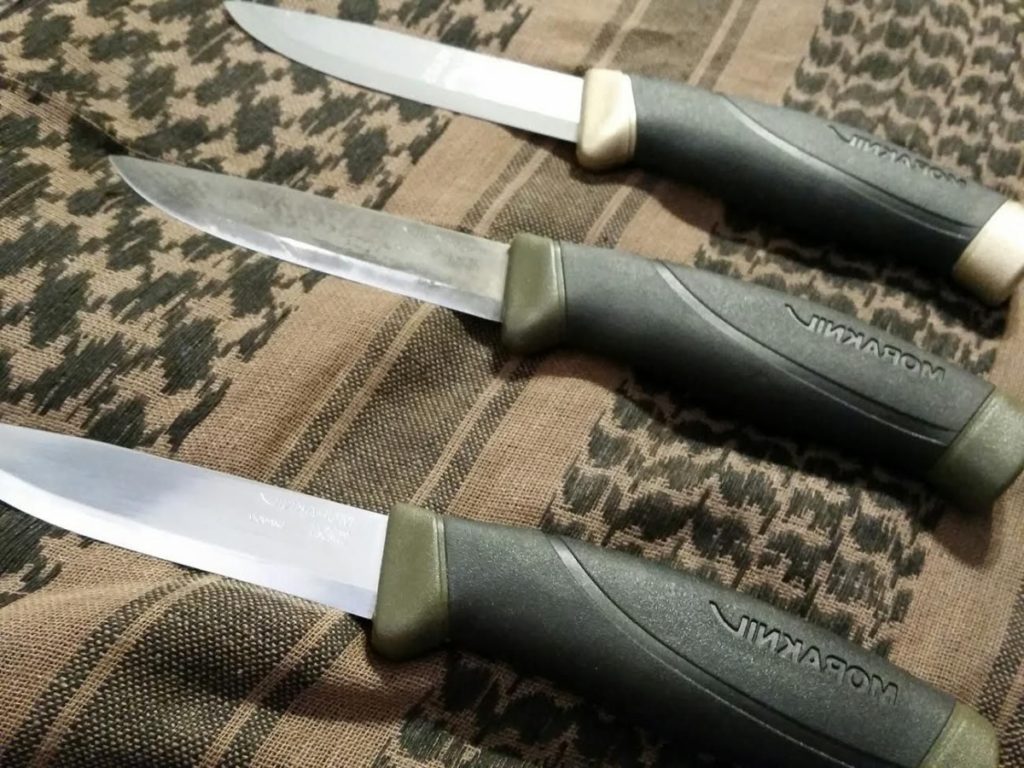
The knife I have chosen is the Morakniv Bushcraft Black. It is a very well made, high carbon steel blade that has been designed using the Mora pattern blade with modern steel. This combination allows it to be both lightweight and extremely durable.

The blade is 3.2mm (1/8th inch approximately) and 232mm or 9.25 inches long overall. The blade is 109mm or 4.25 inches long, my conversions may be off a bit, for the record an inch is equal to 25.4mm. It has a true 90-degree spine already for easy fire steel or flint use and a very grippy rubber/plastic composite handle.

Combine the well-designed sheath and you have a very serious package for well under $100 US. During my testing with this blade, I used it to chop, carve, feather stick and even batoned with it. Now, batoning is really a silly use for a knife.

You can carve wooden pegs and use those to split larger pieces of wood. Why risk your blade or sacrifice all else to get a heavy chopping blade when a knife was never really meant to chop wood? Do what I do, get a hatchet, axe or tomahawk and even a Khukri will suffice in many cases.

the best survival knife in the world

Next, we have the Morakniv Craftline Robust or the Companion HD in stainless or high carbon steel. If you prefer a guard on your fixed blade knives, get the Craftline Robust. This approach incorporates a small guard into the injection molded grip.

Like every Morakniv blade, I have owned or currently own these grips are honestly one of the best features and I really like their steel as well! I have used these blades for skinning large game/animals and many camp tasks in heavy rain and have never had my grip slip on one.

Edge retention of the carbon steel version of Morakniv knives is quite good, with a small stropping you can skin large game rather easily. The stainless version will require a bit more edge work as you go, however, it does have more corrosion resistance.

My personal approach is to force a patina using 120-140 degree apple cider vinegar, cold water, and isopropyl alcohol to clean the blade and a good bath of Ballistol after I am done forcing the patina. There are a few ways to do this, the easiest is to simply soak the well-cleaned blade until it reaches a level of patina you prefer.

This may take a few times and you need to rinse and clean the blade each time!

Now for some people who enjoy the over-engineered more robust modern “full-tang” approach, the modified rat tail tang can seem disappointing. It should be noted that with very few exceptions full-length swords, machetes, kukhris, and many other incredibly strong blades have utilized rat tail tangs.

I am one of the old breed of knife enthusiast who understands that it is not as simple as full versus rat tail, it really is all about the strength of the steel and what you plan on doing with your blades.

Morakniv Bushcraft Black can be found for $40 on Amazon, it is easily worth twice to three times that price in my opinion.

I have only had one rat tail knife break on me, I have had several “full tang” knives break on me. What it comes down too is steel type and temper (regardless approach taken with tempering a blade if it is not done properly it will fail!) Morakniv has proven to be a very well made brand, I do suggest getting the HD versions when possible, however, the standard work very well also!

You can easily buy 2 or more of these amazing blades for under $100 and have twice the support should you need it. I personally own several dozen Mora blades. I have custom mora type blades and I have original Frost Mora blades, I also have and use Kephart style and more.

I can honestly say that between the Kephart style and Mora style you are well taken care of regardless which you choose to purchase. Morakniv blades are made exceedingly well, I have personally only broken one of them in the many years I have owned and used them.

Skinning animals, filleting fish, prep work in a kitchen, camp work and building fires these blades have always performed above and beyond what I needed. Certainly, I can say that there are many blades designed for specific chores that work better alone.

However, if you are looking for a lightweight, strong, durable and exceedingly sharp blade look npo further than the Morakniv line of knives. All things break, this is a simple fact of life. Some things are made better than others, and these blades, fit that bill well!

Local laws and rules for blades always apply and this is another area where these blades shine well. I am unaware of any specific location outside of some major cities where you cannot legally carry a Morakniv knife.

They are working blades, they are not designed for fighting though with practice you could easily use them in this way. Because they are designed for working with, most places that may be strict on knives will allow these blades. If you live where you cannot have a working knife on you, move.

Seriously, if you are okay with not having any way to defend yourself or even just work on projects, you are at best indentured at worse a slave to a system that doesn’t care about you. And no, I will never agree that laws against natural rights should exist, using facts alone we see that any time this is allowed or promoted, lots of people die.

If you enjoyed this article let me know in the comments, I try to get back to most people and will do my best to respond to all queries and comments. Thank you for reading and feel free to drop me a line via email or in the comment box.

Please understand that I can not ever test every single item ever made by any company. I can and have tested dozens of Morakniv blades and am very much a fan of their products!

Free the mind and the body will follow…

Filed Under: Knives and Blades

CRKT Folding Knives – Kommer Free Range Folding Knife Review

September 14, 2018 Jesse Mathewson

free-range knife review

From the many manuals I have collected over the years, a truly solid hunting knife/ skinning knife is many things. Here are a few quotes from some of my favorites.

“Use a knife with a blade at least four inches long, a guard, and a large handle. A small knife can turn sideways in your hand when it hits bone. A butcher’s skinning knife is ideal.”

“A sharp knife will actually reduce bad cuts and will make the entire procedure easier. Take your time when dressing a buck, mistakes due to haste will often require you to make a trip to the hospital to get stitches.”

“A gut hook is a great way of opening the body cavity without cutting the intestines. If you do not have a gut hook, you can use one finger next to the knife to lift up skin giving you space between the knife blade and the intestines.”

Anyone who has dressed out a game mammal has learned valuable lessons in what works, and in my strict opinion, the following three rules apply.

Own a knife that will hold an edge, learn to sharpen your knives, carry a small set of stones or diamond hones and a strop, always. Learn what angles work best for which situations, shallow angles for flesh and light tasks, more intense angles for chopping and the like.

Know your knife, understand exactly how it will cut flesh before ever taking it into the woods, buy a steak or really BIG pork chop. And cut it, trim the fat, work it and use learn it.

Know your knife, understand exactly how it will cut flesh before ever taking it into the woods, buy a steak or really BIG pork chop. And cut it, trim the fat, work it and use learn it.

Stop thinking the only knife that will work is the one Bear Grylls or some other big-time boob tube star owns will work. There are literally hundreds of knives, I own over a thousand different brands, types, and sizes. Knives are purpose-built, if I could get away with it, I would carry 4 or 5 knives all the time. A fighter, a hunter, a woodsman and two solid folders (and that’s in addition to a primary handgun, backup and carbine at a minimum.)…but, that would make me the crazy guy on the block…not that I don’t already have that title. For the time being, get a solid knife that will do the job needed. Grow from there.

This review is on the Kommer Folding series from CRKT, a series of knives designed specifically for hunters. Russ Kommer has been a hunting guide in Alaska and the great North. His designs are based entirely on his observations and needs inherent. An amazing lineup designed by an American hunter from an American company.
CRKT KNIFE REVIEW

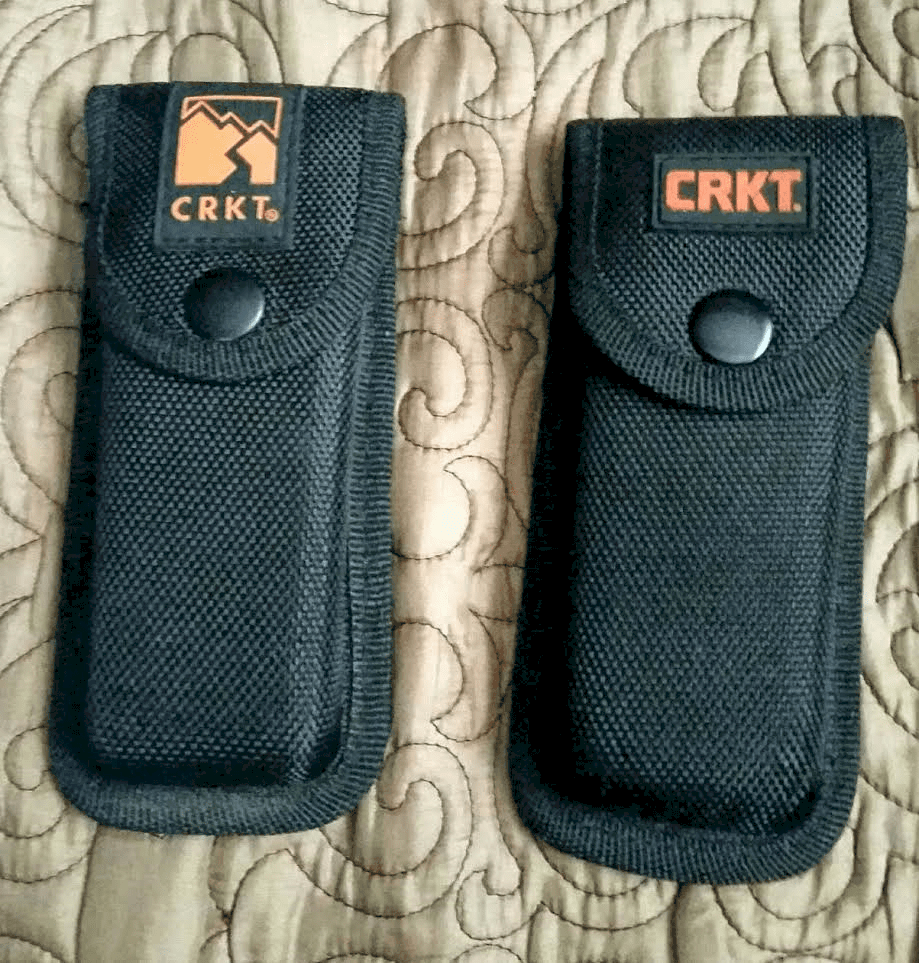
My versions of these are the Kommer Free Range Gut Hook folder and the Kommer Free Range Hunter, both blades are 3.75” in length, though the suggested length is 4” these have been used on big game by Kommer himself and several varieties of medium game by myself. The handles are a mixture of grippy double injection molded materials, one hard and the other where the palm of the hand and the fingers rest are softer and very grippy. These are designed for hunting, NOT every day carry or use, they do not have belt clips, and come in nicely molded nylon over hard plastic cases.

A quick list of pro’s for these knives follows.

  • A quick list of pro’s for these knives follows.
  • The steel is 8Cr13Mov, with an average hardness between 58-60.
  • They hold an edge very well, I have not seen one chip yet, however, given that bone is often apart of the cleaning process, I expect someday to see it happen.
  • They are moderately priced for such an amazing package, at $40-$50 apiece on Amazon.
  • After abusing one using the cold steel wack the back of the blade while it is locked in place method, I was unable to dislodge the locking mechanism, they are solid, three years of active use I have had the knives pictured, and there is NO blade play and I have not had to tighten anything.
  • They are relatively lightweight, at 3.5 to 4 ounces per knife.

Now for the con’s, and there are always con’s in honest reviews. If you can find them.

  • They are made of 8Cr13Mov steel, while a superb steel and one I own in many knife formations, I would have chosen VG10 or something similar because overall edge retention is paramount in hunting knives.
  • The sheaths close and open with an audible SNAP, if you are good with leather or Kydex I am sure you can find a way around this small issue.
    And last but not least, they are too expensive for me to own a dozen of each, like I do with my Opinels, Moraknivs, and a few other fun blades. So, for now, I only have the three, well two, my daughter has one!
  • As always, comments welcomed and responded to as possible. I have enjoyed writing reviews and being able to share with you all and hope to continue doing so for the discernible future. Be safe, prep wisely and remember, always, be willing to change your mental approach to what you know now.


Filed Under: Knives and Blades

  • « Go to Previous Page
  • Page 1
  • Page 2
  • Page 3
  • Go to Next Page »

Primary Sidebar

Subscribe to Blog via Email

Enter your email address to subscribe to this blog and receive notifications of new posts by email.

Join 7,197 other subscribers
  • Amazon
  • Facebook
  • Substack
  • Twitter
  • YouTube

“Do more with less.”

– Minimalist proverb

Recent Posts

  • Just so you know
  • Weather Update for My Corner of Appalachia
  • Why I’m Ordering Ivermectin + Mebendazole Every Year
  • The Website’s Shutting Down (But Here’s the Plan)
  • You Are Hated! Start Training Like It!

Footer

Recent Posts

  • Just so you know
  • Weather Update for My Corner of Appalachia
  • Why I’m Ordering Ivermectin + Mebendazole Every Year
  • The Website’s Shutting Down (But Here’s the Plan)
  • You Are Hated! Start Training Like It!

More about me

Books I’ve written

Books I’ve read

Follow Me on YouTube

Follow Me on Facebook

Gear I Use and Recommend

Newsletter

Search this site

Follow me elsewhere

  • Amazon
  • Facebook
  • Substack
  • Twitter
  • YouTube

© 2008–2025 M.D. Creekmore · As an Amazon Associate, I earn from qualifying purchases.