• Skip to main content
  • Skip to secondary navigation
  • Skip to primary sidebar
  • Skip to footer

M.D. CREEKMORE

  • Blog
  • Books
  • Newsletter
  • Gear I Use
  • About
  • Contact
  • Facebook
  • YouTube
  • Blog
  • Books
  • Newsletter
  • Gear I Use
  • About
  • Contact
  • Privacy Policy
You are here: Home / Archives for Prepping

Prepping

Here you will find articles about emergency preparedness and prepping including articles on prepper food, prepping checklists, home defense, bugging out, bugging in, and the best prepper gear ideas.

How to Prepare for a Power Outage [The Definitive Guide]

October 12, 2018 M.D. Creekmore

Shining lantern in complete darknessby Lorenzo Poe

Survival seems to be the current hot topic. Everywhere you look self-proclaimed experts are willing to tell you all you need to survive the upcoming apocalypse of whatever scenario they can imagine. Most of their tips are tied to more and better equipment.

I do think that it is important to prepare for the future, but knowing what to prepare for and how to start are always tricky. I am no fortune-teller just an old country boy who has been around several blocks in my day. I grew up in an area often hit by hurricanes and lived through one of the most active periods on record. While serving in the US Army I lived in the northeast through several winters. I have slept out in tents in 10-degree weather, in tents in 110-degree weather, sandstorms, lightning storms and some disasters of a man-made nature.

I grew up in a rural area as the son of parents who lived through the Great Depression. As such we already lived to maximize the things that we had but whenever a storm approached we had certain things that we had to do in case of power loss. Hopefully, you will find this plan an easy way to prepare.

Most survival guides try to talk you through surviving major apocalyptic events from financial system meltdown to electromagnetic pulse. This guide will attempt to help you make a plan for any disaster you may face.

The most common scenario most of us will face is a 3-day local power disruption.

Whenever there is an indication that something could disrupt power don’t just run out to buy milk and bread. There are several things that you can do at home to help you prepare and make your life better.

I tend to use ‘Hurricane’ as the general cause of short-term power outages but this can be adapted to any anticipated event of short-term duration.

Secure an adequate water supply

You will need a gallon of water per person per day. This is as easy as buying a case of water per person sheltering with you. This is drinking water only for people who are not performing manual labor. Persons performing manual labor will need 1-2 quarts of water per hour in the heat and 1 quart per hour in the cold. This is just water for drinking only; it does not take into account water for cooking or personal hygiene.

Fill your bathtub with water. This water will be used to flush the toilet. Conserve water by flushing only when necessary. Remember “yellow let it mellow, brown flush it down”.

Toilets in America are flushed by siphon. The goose-neck in the toilet keeps gas and odor from coming into the house. Pouring water into the toilet bowl raises the level of the water above the goose-neck and will cause a siphon action to drain the bowl.

You can understand how the siphon works by trying two experiments with your toilet. First, take a cup of water and pour it into the bowl. You will find that almost nothing happens. What’s even more interesting is that you can pour multiple cups of water into a toilet bowl, one at a time, and still, nothing will happen.

That is, no matter how many cups of water you pour in, the level of the water in the bowl never rises. When you pour the cup of water in, the water level in the bowl rises, but the extra water immediately spills over the edge of the siphon tube and drains away.

Now, take a bucket of water and pour it into the bowl. You will find that pouring in a certain amount of water at the precise speed causes the bowl to flush. That is, almost all of the water is sucked out of the bowl, and the bowl makes the recognizable “flush” sound and all of the water goes down the pipe.

What’s happened is this: You’ve poured enough water into the bowl fast enough to fill the siphon tube. And once the tube was filled, the rest was automatic. The siphon sucked the water out of the bowl and down the pipe. As soon as the bowl emptied, air entered the siphon tube, producing that distinctive flushing sound and stopping the siphoning action.

You can see that even with water service cut off you could still flush your toilet. All you need is a bucket containing a couple of gallons of water. It is not an exact science and you should practice prior to any event so you can do it with a minimum of water and maximum of achievement.

Use care because a spill from the toilet onto the floor will waste more water for a necessary clean-up. (Father Fenton, our priest in Afghanistan, lived through Hurricane Katrina just north of Biloxi, Mississippi and told us how several retired priests moved in with him because his house was still habitable.

As luck would have it, his small inflatable pool survived and was available to furnish water for toilet flushing. He said that his home suffered more water damage from errant flushing than from the storm.)

And yes you could simply remove the cover of the tank and pour the water into the tank so that you can use the toilet like normal. There are two reasons I recommend not doing that. First, the cover of your toilet is fragile and can be broken very easily and second, water conservation. Everyone’s instinct will be to automatically flush when finished.

Worse than a ‘slop’ over’ from an over-enthusiastic flush, will be a drain clog. Paper products should not be put in the toilet but into a plastic garbage bag for disposal.

Hand cleansing should be accomplished with hand sanitizer.

Fill plastic bottles with tap water and cram them into your freezer. The more full your freezer is the longer it will stay cold. Block ice will also last longer than cubed ice in an ice chest. A stand alone freezer will keep food frozen for up to 3 days if you leave the door closed. A freezer compartment above your refrigerator will not last that long. Avoid opening the door as long as you can.

After thawing, these bottles of water will be available for drinking.

Gather your food supplies

Once a Hurricane Warning has been issued, its time to prepare your food. Any food items in your refrigerator needing cooking should be cooked now and returned to the refrigerator or placed in an ice chest. Boil your eggs, bake your potatoes, fry your steak.

Leftovers that are in your refrigerator can be placed in an ice chest with ice so that you can keep your refrigerator closed.

The ideal food for short duration power outages are foods that take little or no preparation. Peanut butter sandwiches, spam, deviled ham, and other canned items that are tasty cold straight from the can. And that is how they should be eaten, straight from the can without a plate or bowl.

Water conservation is still the key so avoid dirtying anything that needs washing. Spoons and forks can be licked clean and wiped off then washed later. You could use paper plates and bowls with disposable utensils but chances are that your garbage service will be off schedule so try to minimize your waste.

Providing three meals a day for even short durations will not give you a large variety to choose from when picking foods that can be eaten cold, straight from the can but by adding seasoning and small snacks such as trail mixes and cans of fruit they don’t have to be unpleasant.

As an alternative, military-style meals, MREs, have a device that heats the meals by simply adding water to a heater pack. These meals can be expensive, have a shelf life that is limited to a few years and in my personal opinion, the main meal portions taste terrible cold.

Proper clothing

When you know in advance that a storm/event will likely put you out of power, wash all your dirty underwear. Clothes can and should be worn more than once in these situations but for health and well being change your underwear daily when possible.

The proper clothing for a short duration power outage will simply be your normal seasonal clothing. Keep in mind that in any season you may be spending more time outside so add a season-appropriate hat and sunscreen to your normal wear. Winter or summer you will need Chapstick, Blistex, something. (see Poo Poo Broussard on youtube)

Make sure that you have good quality rain gear including boots for all members of the family.

There are gloves for all purposes and all purpose gloves. My personal choice is leather working gloves for general work, welder’s gloves for work around a fire and good quality wool inserts for my leather gloves for winter work.

A shelter is key to survival

In most cases during power disruptions of short duration, the best choice is to shelter in place. This can be comfortably accomplished in any season with a little planning.

If your power-out event occurs in the summer opening all the windows and doors of your home that have screens will get you by in the same comfort our ancestors had. An alternative would be to set up a screen tent or canopy in the backyard. I also keep several different sprays that kill mosquitoes as well as the Deet types that repel them.

Winter events can likewise be handled by moving everyone into a single room, sealing it from all drafts, and setting up a tent. Insulate the tent floor with blankets and additional blankets can cover the top and sides of the tent. Good quality sleeping bags and comforters can keep you warm to zero degrees. Sharing a sleeping bag or comforter can increase the body heat available to warm the sleeping bag/comforter.

Do not use open flames in or near a tent. A good quality lantern/ oil lamp kept lit while everyone is awake can help warm a small, draft-free room but warm foods, high in calories can warm you from the inside. If you do use a lantern/oil lamp be sure to have a battery-powered carbon monoxide detector.

The trick to sleeping warm in winter is to use the bathroom prior to climbing in your sleeping bag, eating a small, high-calorie snack and dressing correctly.

The correct way to dress for sleeping in a sleeping bag is to strip down to shorts and a t-shirt. Sleeping bags are warmed by body heat. Clothes such as sweats or pajamas trap your body heat close to your body and don’t allow your sleeping bag to function as designed.

Additional things to help are, pick a temperature appropriate bag, wear a knit cap, cover your face with a towel or t-shirt and do not exhale into your sleeping bag. If your feet do not reach the bottom of your sleeping bag, fold the bottom under so you don’t heat that portion of the bag.

Wear warm socks if you suffer from cold feet. I have a pair of shorts, a t-shirt and a clean pair of socks that I keep in my bag. I put them on just before getting into my bag at nights.

Clean clothes and a clean sleeping bag are warmer than dirty ones. A sleeping bag liner can add up to 15* of warmth to your bag. Simply adding a sheet or insulating the bag from the ground can add another 10*. For additional warmth, place a wool blanket or comforter on top of your sleeping bag.

Three to five-day disruptions of power are not insurmountable challenges. With a little planning and almost no skill, anyone can do it. Plan and prepare so that you can do it with as much comfort as possible.

Also Read:

How To Prepare Your Family For Power Grid Failure [The Definitive Guide]

Filed Under: Prepping

The Redoubt Of The East

October 11, 2018 M.D. Creekmore

Tennessee preppersBy Joel M. Skousen,

Author, Strategic Relocation North American Guide to Safe Places

Many people new to the preparedness field often get exposed early on to the writings of survival blogger and author James Wesley Rawles (Patriots and Survivors). I have a great deal of respect for Rawles and the work he has done to get America motivated to prepared for very difficult times.

His books and tactics, however, often revolve around a civilian military-style response to both government tyranny and social unrest which is beyond the capabilities of most people. In addition, Rawles now promotes a related concept for retreating called “The American Redoubt” which consists of 3 states and parts of 2 others in the West which he feels are the only areas ultimately defensible, where Americans can and should make a final stand for liberty and survival when things really get bad.

His American Redoubt includes all of Idaho, Montana, Wyoming, and the eastern parts of Oregon, and Washington. He envisions this area as a focal point of collecting fellow patriots who want to survive and forging them into a “Biblically-sound and Constitutionally-sound silver local currency [community] that will give it unity.” These five states he selects happen to be also highly rated in my book on Strategic Relocation, though I expand the selection to include Utah and Western Colorado as well.

But ultimate retreating to the safest areas is not within the reach of all but a few and is not without serious compromise in other important factors. I’ve consulted with people for 40 years and most just can’t just pick up and leave where they live and relocate to one of these 7 states in the far West? Does this mean no one else survives the major wars and social unrest that are looming on the horizon? Not at all.

As a relocation specialist and designer, I found safe retreat locations and helped clients develop high-security homes in every state of the union and you can too. The concept that anyone caught East of the Mississippi River is doomed is only partially valid and highly exaggerated. It is based on the fact that the largest concentrations of people are East of the Mississippi, and that high population densities are your greatest threat in a severe crisis where food and public infrastructure fails—when even good people will be forced to pillage for survival.

To be truthful, the US coastal plains east of the Appalachian chain of mountains is the most dangerous area in America since that is where the overall concentrations of people are the highest and where the level of individual preparedness is the lowest.

The areas west of this first chain of mountains will become the general destination of choice for people fleeing the East Coast. Because refugee flows will flow exclusively westward, Rawles condemns it as unsuitable (at least as to a military-style standoff) clear up to the Mississippi River and beyond.

But for the vast majority who intend to survive without directly military confrontation, there are a much wider set of alternatives. When you understand the principles of retreat location and learn to avoid the flows of refugees (who will take fairly predictable paths out of the major cities), you can find relative safety in many rural forested and elevated areas in the East. It won’t provide the same kind of long-term safety as places farther west, but you can survive. The closer to population centers in meltdown, the greater the risk of having to deal with the more criminal type of looters. And that will happen near any major metro.

But the reality of all this is that few will find the perfect solution. Each person has to prepare as best they can given each person’s limited resources and abilities to relocate. That’s why I concentrate so much on contingency planning in Strategic Relocation knowing that few people can just “up and move” to the safest locations.

Many who have done so have underestimated the costs. I know from long experience that self-sufficiency if very expensive and people underestimate the skills needed and overestimate the savings from self-sufficiency. In short, quickly exhaust their savings and end up moving back to civilization. That happened a lot of people leaving jobs and buying rural during Y2K.

Let me give you an example of the general choices for people on the East Coast. The first line of retreat is that chain of mountains to the West—we’ll call it the Appalachians generally, even though you might know it locally as the Catskills, Berkshires, Great Smokeys or Blue Ridge mountains, etc. These are the most convenient retreat sites for most people because they are closest to the suburban areas in which they live.

Having a retreat within an hour or two has its advantages in terms of access and service of the construction process, but it also has the disadvantage of being closer to the actual threats of social unrest that will flow out of the major cities. These refugee flows will concentrate on low valley roads going through the mountains as people head for other known cities first.

When they find no refuge in those other cities, the concentrations of flows further west will diminish as people drop off due to fatigue, hunger and discouragement and start foraging locally. That’s where the danger of a site close to danger comes in: eventually, desperate people will make it to rural homes and cabins even in the mountains.

Only those, who are located out of these flows, and not visible from main roads will have a chance of evading major confrontations. And, even then, I recommend a strategy of providing concealment underground so as to avoid armed confrontation whenever possible. While I don’t have the space in this article to cover all that I’ve written about as far as retreat areas in the East, I will give a review of the highest rated areas relatively within a day’s drive.

Redoubt of the East

The first range of mountains can give you significant safety, but you can achieve a significantly higher level of safety going beyond the Appalachians to the high plateau regions of Tennessee and Kentucky. This massive and relatively unpopulated area is called the Cumberland Plateau—most of which falls within the state of Tennessee. A narrow section goes north into Kentucky but much of that is part of the Daniel Boone National Forest, where you can only buy land near the edge of the plateau.

Tennessee is where the most land is available on the plateau. This state is a famous battleground state with deep conservative sentiment and lots to offer in terms of lifestyle: great music, horse country, good growing climate and fine people. TN gets my best rating for a retreat state in the East. Land is relatively cheap and there is no income tax. Garden potential is good, there is lots of forest land within a tankful of gas from many large eastern cities.

I consider the Tennessee Cumberland Plateau the “redoubt of the East,” and it is my highest rated area for retreats near the East Coast. In a meltdown of the social order, by the time refugees get through the first mountain range and the numerous mountain rifts that confront them—before seeing the 1000 foot high Cumberland Plateau, they will be highly motivated to stay on the valley floor with its promise of food and civilization (the lure that keeps people on the march).

There isn’t much agriculture on the plateau (though it is fine for growing garden crops) nor large communities so there is little draw for refugees to make the trek up those slopes. What highways do lead up to the plateau cut through steep valleys and gorges and are fairly easy to block off to restrict access.

The two major cities that are closest to the plateau are Knoxville and Chattanooga. Both are very nice cities with fairly good economies that can support those who can relocate but still need to stay in the job market. The southern plateau areas are about an hour from Chattanooga and the northern areas are about the same distance and time from Knoxville. Interstate 40 cuts across the plateau and links Knoxville to Nashville. You should give it a wide berth.

The best area for those coming from Virginia and states to the northeast is the plateau area north of I-40 ranging from the Catoosa Wildlife Area on up to the Kentucky border where the Big South Fork Recreation Area is found. You have to avoid the Oak Ridge nuclear research site on the Tennessee river valley floor (a prime nuclear target during war), but the northern part of the Plateau along highway 27 from Wartburg to Winfield gets you far enough west and east of the threat area to be safe. The northern plateau area has two or three pockets of federal land which makes a nice backdrop for a retreat, especially if you find running water on your land.

The southern plateau south of I-40 has an even larger land area and is only sparsely populated. There is a small town in the middle named Spencer, but I prefer the broad forested lands further south near McMinnville, which the closest full-service valley town to the plateau. Highway 111 and 8 get you down off the plateau to the East or West sides of the plateau for shopping and jobs. Check out this area and you’ll find there is considerable safety in the East. There is hope.

Joel Skousen, is the publisher of the World Affairs Brief, a weekly news analysis and commentary service online at www.worldaffairsbrief.com  Mr. Skousen’s books (The Secure Home, and Strategic Relocation—North American Guide to Safe Places) are showcased on his website www.joelskousen.com

Filed Under: Prepping

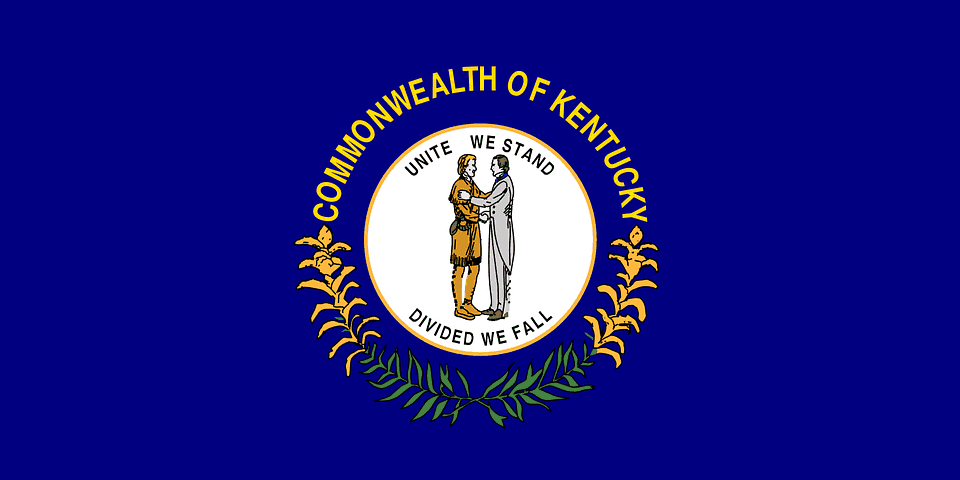
Is Kentucky a Survival Retreat Location For Preppers

October 11, 2018 M.D. Creekmore

kentucky-preppersBy Joel Skousen

Author,  Strategic Relocation and The Secure Home

Kentucky and Tennessee are a couple of my favorite states for relocation for those already in the East looking for safety.  They are both in or beyond the Appalachian chain of mountains which will channel refugee flows coming from the east into known highway corridors, which can be strategically avoided.  First, let me offer some general comments about Kentucky, which is a very diverse state, with 13 distinct geographic regions, each with their good points and bad.

Far western Kentucky includes alluvial plains and small hills with good basement potential but not as much forestation as the east.  But be careful, certain western counties surrounding Madisonville also have large coal deposits. The low lying areas south of the Ohio River, however, are nearly flat and thus poorly drained, thus leading to a lot of wetlands.

Where good drainage allows, the land is fertile and productive.  The cities of Louisville, Owensboro, and Henderson along the river are highly industrialized, with pockets of poor crime-prone areas.

The East/central Bluegrass region around Lexington is probably the most sought after area in Kentucky and is known for its horse farms. The land is expensive because of that but you can still find reasonable land away from the horse farms.  I’m partial to the south/central area around Bowling Green, Ky, This is a great small city that has friendly people and low crime.  It is surrounded by great country farms with lots of patches of forest and trees.

Kentucky has the advantage of having huge swaths of forested land out in the main farm areas of the state.  If you look on the satellite view at Google Maps you can see a very broad swath of forest land starting just south of Louisville and meandering back and forth, east and west of I-65 on its way south to Bowling Green.  When you find farmland backed up to these forested areas, you get both farm self-sufficiency and forested retreat privacy.

Your choices in Kentucky are broader than you think, but the important thing is to follow these general criteria:  1) find land with basement potential, 2) good water resources (well, spring, or creek), 3) a mix of forestation for shielding and open land for cultivation, and 4) the home site should not be visible from any main or secondary paved road.

For higher security farms and retreats, a lot of preppers are attracted to the Daniel Boone National Forest which is located along the Cumberland Plateau in the Appalachian foothills of eastern Kentucky—the subject of this briefing.  It encompasses over 700,000 acres of very rugged terrain and characterized by steep forested ridges and deep ravines—less than 15% is in private hands.

This is also coal country, especially in the regions abutting the national forest, where the most private land is found.  Here, you do have to be careful of pollution from mining as well as the uncertainties of not owning the mineral rights under your property.   Be especially careful about buying land after it has been strip-mined and then “reclaimed,” by bringing in fill dirt of unknown quality.

As a consequence of coal and difficult terrain, the region is highly depressed financially as coal has been strangled by environmental regulation and farming has never done well in small plots—though that’s what we want for retreat farming if they otherwise meet the above criteria.  The eastern counties of Kentucky have hundreds of small, mostly dying towns.  The downside of all this is that newcomers to the area are looked upon with some suspicion.  Why would anyone want to come to a place where there are few jobs?

Another negative is the political orientation of Eastern Kentucky–a Democratic stronghold due to the mining and welfare mentality that persists in this area.  Even though Kentucky is in the hands of two Republican Senators, Rand Paul is a positive, and future Senate Majority Leader McConnell is a problem—a compromising Republican leader who talks a good story but doesn’t follow through, except to support the Powers That Be.

Weather is often cloudy and rainy in the Appalachians, so you have to be prepared for that.  The rain provides abundant water resources but is not the best for livability.

For a look at the various divisions of the national forest, open up this link to the official map. The long national forest extends almost to the Ohio border in the north down to Tennessee in the south.  It is divided into 3 districts, the Cumberland to the north, the London district in the center and the Stearns district to the south. But, notice that there is a large district to the East called the Redbird district that is rarely shown in green (designating national forest) on most maps.

That’s probably because it is riddled with private land, which is great for retreat farms.  And there’s a good-sized town in the middle, Manchester, Ky.  In this district, you’re surrounded by national forest but there’s plenty of private lands to choose from—unlike the West where most national forests are locked up tight and where “inholders” are few and far between (and treated with some hostility by the Forest Service).  By the time these large forested lands were turned into national forests in the Appalachians, there was already way too much private farming to buy them all out, so they remain as “inholders.”

Normally, in Western states, I discourage the buying of remote inholding lands because there are too few property owners to mount an effective legal battle against the federal government should they choose to arbitrarily close off your access (which they have done in the past).  I don’t think confiscation of inholding land is a danger in this area because there are so many private holdings, and the constitution requires compensation (money the feds don’t have).

Some of the best areas of the National Forest in which to find private land is in the Southern Stearns District, West of Williamsburg along highways 92 and 478.  You don’t want to locate along those particular highways, but there’s a lot of private land and smaller roads branching off from both where you can find secluded homes and forested land.  In the middle of the district are the tiny towns of Stearns and Pine Knot which become the tourist and service centers for those living inside the National forest.

I actually prefer the land outside the forest between the town of Montecello, Ky and the western border of the DB National forest, bounded by the meandering south fork of the Cumberland river.  This is where you find real retreat land, already carved out by small farmers, but no major tourist roads or traffic—and less coal mining.

The central London District goes from Lake Cumberland in the south to the Kentucky River farther north.  This district is between the two major towns of London to the east and Somerset to the West, which provide good commercial access to those who find retreat sites amid the forest in between.  I-75 also crosses through the forest from SE to NW so stay clear of that passageway.  Much of the good retreat property near Somerset is to the East before you get to the National Forest, so don’t think you have to get within the national forest to be safe.  This central district is one of the few places that has a river running north/south through it (most other rivers simply cross the plateau West-East).  There isn’t much private land along this Rockcastle river, but there is some.  Follow it on Google maps (satellite view) to find cultivated parcels.

The northern district (Cumberland) is East of Lexington, Ky, a major city so there is more pressure on this area for second homes for the wealthy of Lexington.  But still, there are plenty of rural farms available. If you need to be near a big city like Lexington, locate east of I-75 so you don’t have any major obstruction blocking your access to the mountains to the east. The towns of Winchester and Mt. Sterling are ideal for being fairly close to Lexington but also very close to the mountains.

Filed Under: Prepping

How Much Food Should a Prepper Have?

October 8, 2018 M.D. Creekmore

How Much Food Should a Prepper Have?by SW

A prepper should have at least a three month supply of food in storage at all times. Keep in mind that a three-month food supply is a bare minimum, with a years supply or more being ideal. When striving for a years supply it’s best to build your food supply in smaller increments of one month at a time to avoid making mistakes and feeling overwhelmed.  

Here’s the deal

We all come to this journey our own way. For me, I started in gardening, then moved into homesteading, and on one of the homesteading sites, I got introduced into prepping. I will be the first to tell you that I’m not a prepper. I consider myself more of a homesteader with prepper tendencies. As such…, this article will probably reflect some of those thought processes.

When I started down this road I kept looking for blog posts or videos that would tell me I need to store XXX number of whatever item. No matter how hard I looked I could never find what I was actually looking for. Then it finally dawned on me. I’m looking for the answer in the wrong place and the wrong form.

If you have spent (or will spend) anytime on prepper/survivalist type websites you will see a phrase that comes up time and time again and that’s to store what you eat, and eat what you store!

I don’t know who coined the phrase but it is exactly true. Let’s, however, take it to the next level. Not only should you only store what you eat – but you should also only store what you use.

Don’t buy something just because it’s on sale… especially if you know you will never use it. Most things have to be rotated to maintain their freshness, or usefulness (like batteries). If you’re not using it, then it’s kinda hard to rotate it.

I could tell you that you need to store 600 pounds of rice, but I wouldn’t be doing you any good in saying that. So instead I’d like to use this article to help you figure out what you need to store and how much for your situation. Maybe you don’t like rice… so storing 600 pounds would be a waste.

What’s the bottom line?

I will say this… this article is not going to be the magic bullet all by itself. You will have to put in the work but I can promise you, it will be time well spent for your future peace of mind. I am also going to use this article to teach you how to figure out what you need for a years supply.

Let’s go back to the 600 pounds of rice. Do you like rice? Do you know how much rice you normally eat? Do you know how much rice it takes to make a serving? To further this rice discussion I’ll use myself and what I have found that works for me.

I have decided that for me a serving is a ¾ cup of rice and I can fit 5 servings inside a quart mason jar. There are about 2 1/2 cups of rice in a one pound bag. That would give me around 3.33 servings per 1 pound bag. Now.. I have a baseline to work from.

Let’s assume that if and/or when the SHTF you don’t really want to upset your culinary applecart. You want to hopefully have that aspect of your life somewhat intact. Currently, you eat rice three times a week. With that in mind, you’d need three servings a week (or one pound of rice). To continue that menu for a full year, you’d need 52 pounds of rice put back.

Granted.. this will give you a little extra because you can actually get 3.33 servings out of a pound of rice. Now that 52 pounds are just for one person. If you have a family of 4 then you’d need to store 208 pounds of rice to maintain your three meals a week routine.

I’d also be willing to wager that you don’t particularly like just plain rice. Me personally… I like to dress mine up with either chicken, beef, or ham. So with that in mind… I’d need 52-pint jars of each of those to go with my rice for the meal.

A pint jar can hold about a pound of meat. I can say this… with ¾ cup of rice and a pound of chicken, you could actually feed two people… they won’t be busting at the seams full, but they won’t be hungry anymore.

My best advice would be to make the meal and see how you and your family do on that ration. What about spices and salt? You need to figure out what you like and then how much you use per recipe.

Using the 3 meals of rice per week, we have figured out that we need 52 pounds of rice, 52 jars of chicken, 52 jars of beef, and 52 jars of ham. This will feed 1-2 people each day for that meal. What are you going to eat the other 4 days of the week, or the other meal or two in the day?

Look

What I am trying to show you is how to figure out what you need to store by making a menu of what you like to eat and that is easily stored. When I say easily stored, I don’t mean just rice and beans. There is very little that can’t be canned or dehydrated for easy storage.

Have you thought about canning up your own meals? It could either be a dehydrated meal in a jar, or something fresh like chili, soup, or something else. Just think… If there are only a couple of people you’re trying to feed, a quart jar of chili would fit the bill for a meal. If you’re doing chili one day a week, then 52 quarts of chili would last you a year.

The key is to figure out a menu that you can live with, and then figure out what it will take to create that menu for a year (or whatever time frame you decide on). Now that you have a menu, you have your goals for what you need to store, and you can work towards those goals. There is nothing that says you have to eat rice and beans the whole time.

Maybe you want to mix it up and have a two-week revolving menu. Basically, have something different every day for two weeks then start over again. The choice is yours and is up to you and your family on what you like to eat.

One of the websites I visited took the revolving menu to a new level. Instead of just staying with those 14 meals they had theirs set up for a 10 or 12 meal menu. Once or twice a week they had an open day to try new recipes. Sometimes it was completely new, and sometimes it was utilizing their stockpiles in a new way to create something different.

Those extra days will give you a chance to experiment and not become bored with the menu. If you trying new things with your stockpiles then you’re never really off course. That extra day also added some spice to the weekly meals.

Maybe in a SHTF scenario, you can’t have lamb chops or whatever else you really like, but why not indulge in them while you can.

As I mentioned above… another reason for creating a menu is to see what you need to have in your food preps. How many meals use salt? Do you know how much salt it will take to create just one meal for a year? What about using salt after the meal is cooked?

By having your recipes printed out and placed in a binder, not only will you be helping yourself, but you’ll be helping others that may be going thru the situation with you. With those recipes printed out (even if it’s something you came up with in your head) you will be able to sit down and calculate just how much of a single ingredient you need to prepare that meal for a year, or whatever time frame you’re shooting for.

It would also help someone else prepare the meal if you happen to be injured or engaged in another task when it came time to cook the meal. With the recipe printed out then no matter who cooks it, it will come out somewhat the same (providing they don’t burn it). This will most likely help with the overall morale of the folks in your group. It will be one less thing that changes when everything else around them is going to crap.

Now you can see why I stated at the beginning of the article that “this article is not going to be the magic bullet all by itself … you will have to put in the work but I can promise you it will be time well spent for your future peace of mind.” Hopefully, this will give you some idea on how to figure out what you need to store for your food preps. Each and everyone is different. What I store you may not like and vice versa.

It gets better

Let’s move from food to other home goods that we use. When I started doing this.. it was an eye-opener to me.

Do you actually know how long your bar of soap lasts? What about that stick of deodorant? How about that tube of toothpaste? Or that roll of toilet paper? Have you thought about how long it takes your cat or dog to go thru a bag of food? What about kitty litter, or flea collars?

All of these things will dictate how much you need to store. When I started trying to store extra of the things mentioned above I used a baseline of one item per month (not including the TP). Then I actually started tracking my usage and found some things that were off. Some for the good… some for the bad.

Here are some of the things that I found when I started tracking my usage. Of course, this is just a baseline for you because your mileage may vary.

Let’s start with our loveable pets first. I had figured I could manage a month on a 50-pound bag of food. I was wrong! I actually went thru that bag in about 25 days. That info is nice to have because now I know I don’t have as much stored up as I thought. As for my kitty… she’s still going strong on a 6.3-pound bag of food. It’s been a month and nine days and she might have about a week’s worth left. So I can figure about a month and a half on her food.

As for a bar of soap… that all depends on the variety of soap you use. I have found that a bar of Dove lasts longer than Irish Spring or Lever 2000. I can get around a month and a half out of a bar of Dove and IMO is a better soap than the other two.

My remaining Irish Spring & Lever 2000 will be set aside for barter if the need arises. I’ll fill up my stores with Dove. Keep in mind, if you have more than one person using that bar you’ll have to divide the time down according to the number of folks using it, or you could take the easy way out and say a bar of Dove per person per month.

Just like the soap… the size of your deodorant plays a factor in how long it will last. When I initially started, I made the assumption that a stick would last a month. Well… I was right, and I was wrong. If I am using the 2.7 oz stick of Degree I can make it just barely over a month. However, if I am using a 2.6 oz stick of Sure…

I am a little under a month. This just goes to show you that you really need to figure out how long whatever you use lasts. If I would have stayed with the assumption that 12 sticks of Sure would have lasted me a year then at some point before that year was up I’d be a little stinky.

While I currently don’t know how long a tube of toothpaste or shampoo will last, it won’t be long and I’ll be tracking them due to opening up a new one.

Put this thought process towards everything you use on a daily or weekly basis. Do you plan on washing dishes? How long does your bottle of dish soap last? What about that box of laundry detergent? How long does a bottle of toilet bowl cleaner last? Why am I harping on cleanliness?

Let’s think about this for a moment. There is a myriad of reasons we prep. Like most of us… I’m not concerned about just one event… I am thinking about multiples that could happen. IMO the most likely is a financial collapse which will eventually lead to a societal collapse.

Both of which will end up with martial law and a possible second civil war. In either case… uncleanliness leads to disease and sickness and we really don’t want to face that possibility when it might be hard or impossible to get to medical care.

If the S really does HTF then we will have enough to worry about. Why not plan for ways to help keep yourself from getting sick in the first place? An infected cut could be very dangerous when there is no medical care available. You are storing basic medical supplies, aren’t you?

At some point during this journey, your preps will grow to the point that you may not remember how much of a particular item you have compared to your goal for that item. This is where an inventory plan will come in handy. This is something I have been working on and I think I have it finally figured out. I utilize two different types of inventory methods.

To start off with… let’s assume that you have decided you need 96 cans of corn for your yearly meal plan. Considering that you should already be rotating your stockpiles, how do you keep track of the cans that are on the shelf without having to physically take the time to count each and every one… every time you do an inventory?

The simplest way I learned was from another site (I can’t take credit for this one). Take a piece of graph paper and make a column on the left-hand side.

Make it wide enough so you can list your supplies. Then for each and every can you have in stock make a “/” mark in the graph squares. You’ll want to leave several lines between the various suppliers. Then once you remove a can from the shelf converts the “/” on the far left to a “X”. Whenever you add to your supplies just add more “/” on down the line.

Now you can see at a glance (by a quick count of the “/”) how many of a particular item you have on hand. If you’ll keep these inventory forms hanging from a clipboard in your pantry or storeroom it won’t take long at all to keep it up to date.

If you’re storing home canned goods or vacuum-sealed jars, you really should check the seals once a month. I have had some jars that were sealed with oxygen absorbers lose their seal after a while. Thankfully I was able to catch them pretty quick and properly vacuum seal them with the food saver and jar attachment (these were done before I got that wonderful device).

As such I am physically pressing down on every lid, and I can count every jar of a particular item at that time. If I didn’t want to keep a running total on the graph paper I could always update the sheet once a month. You just have to figure out what works best for you and your situation.

The other inventory method I use is a custom sheet I made up in my spreadsheet program. It is used for those items that I don’t want (or it would be impossible) to track each and every item using the graph paper method. This sheet is still a work in progress, but I’ll give you basics behind it. Maybe you can give me ideas to finish it out and make it better.

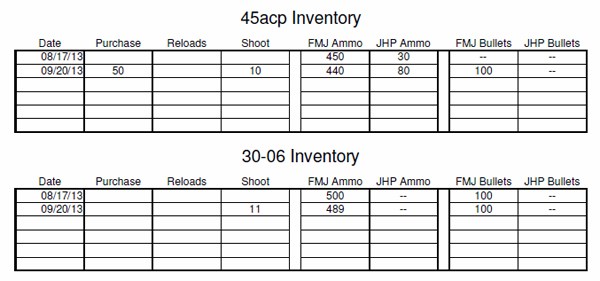
The column on the left that has the item I am tracking, and along the top, I have the month and year as a header for each additional column. Then each month I just write down the quantity of the item on the left in the appropriate month/year column. So far I am using this type of inventory form for my ammo/reloading supplies. Can you imagine using the graph paper method to track each and every bullet in 3 bricks of 22LR. You’d be marking hash marks for a very long time.

This sheet works out pretty well, but I am trying to come up with a way to improve it. In any given month I may purchase more ammo, shoot some ammo, or reload some ammo. Or all of the above.

As of current… this takes another sheet to keep track of the amounts on hand in order to accurately update the main inventory form. I would love to figure out a way to merge the two. As it stands… my main inventory form will allow me to keep track of 10 months worth of numbers on a single page.

If I was just counting cans of stuff, or rolls of toilet paper this sheet would be great for a monthly inventory sheet. But when you’re counting loose rounds it’s best to only do a major count once they have a form to add and subtract as needed each month.

I have found that these two methods of inventorying my supplies work best for me (until of course, I find a better way LOL). They are easy to keep up with and for the most part, you can tell at a glance how much of an item you have on hand. I know that there will be some that say… I don’t need inventory forms, I have a good memory. All I can say is… must be nice. Seriously though. Think about this.

Let’s say you have five different calibers of weapons and your initial goal is 500 rounds for each weapon. You’ve got 320 rounds for your AR, 525 rounds for your 12ga, 480 rounds for your 45, 1575 rounds for your 22LR, and 489 rounds for your 30-06 thanks to a recent target practice round. Having the inventory forms would make it easy for you to see just how many boxes of what caliber you need to buy (with the funds available) to work your way back up to your goals.

There will be no guessing and your money will be best spent where it is needed. Maybe your ’06 is close enough and you’d rather spend your funds to help bring up the numbers for your AR? With the inventory form, you can make an informed decision about your purchases.

The same goes for any other item that you’re tracking. Let’s go back to some of what we have discussed so far in this article. I know I want to have a years supply on hand, so on the inventory form in the supplies column, I’ll have something that looks like this.

  • Deodorant (14 sticks)
  • Dove Soap (8 bars)
  • Dog Food (15 sacks)

You get the idea… so now when it comes time to make out my shopping list I can use my inventory form (instead of physically going and counting my supplies each time I want to go shopping) to help create my list. I can see from the “/” marks that I’m 2 bars shy of my goal for soap, or I’m actually over on the amount of deodorant I need thanks to a recent sale and extra being purchased last time.

With time… Inventorying your supplies will make your life and shopping list easier. There will be no more guesswork and spending money on things that you really didn’t need to complete your goals.

I know I’m getting long winded so I’ll try to cover this next section quickly. The last thing that I feel is crucial to how much you need to store is your resupply plan. I don’t mean to step on any toes, but with this next statement… I fear there is no way around it. Most preppers won’t survive a long-term event. Now quit hollering at the computer monitor… I can’t hear you.

Before you break out the rope to string me up… hear me out. From a lot of the video’s I have watched on YouTube and some of the websites I have visited, most think that if they have cases upon cases of whatever they will be good to go. Their plan is to ride out the event and then restock once it’s over. For most things… that’s a pretty good plan, and you’ll be better off than 90% of the population.

But what if the event turns out to be like Syria? Their civil war has been going on for over two and a half years now and there really doesn’t seem to be an end in sight. Your cases upon cases will only last for so long, and if we are in the middle of a civil war then do you really think you’ll be able to get more cases from your favorite freeze-dried or dehydrated food supplier?

IF this country ends up going to war with itself then there is no doubt in my mind that it will be a long drawn out ordeal. The feds aren’t gonna give up power easily, just like the Syrian govt isn’t giving up easily.

Besides… isn’t that what prepping is all about. Trying to prepare for the worst. Aside from nukes on our own soil or an EMP that puts us back in the stone age… the worst thing I can fathom is a civil war. It will ugly and drawn out.

Thus you need to have a resupply plan. I have had folks tell me… I have several seed vaults, and I’ll just plant a garden when the SHTF. Well… I hope you like being hungry! There is a definite learning curve to gardening successfully, especially if that gardening successfully entails having to completely feed you and your family. Yes, there are some that have a green thumb, but for the majority of us, it is a learned skill… just like anything else.

This is why I consider myself a homesteader with prepper tendencies. My main goals in life are not to amass cases upon cases of whatever product. My main goal is to become self-sufficient so I don’t have to rely on products from other locations to survive. Some will say… I live in the great white north, or in a subdivision so I can’t homestead. Horse hockey!

I’ll give you the knowledge you need to start your research and prove that you CAN do it.

For those that just have a small backyard and think they can’t make a difference in their self-sufficiency, I’d like you to do a little research on the Dervaes family in California. They have a 1/10 acres lot and they produce 7,000 pounds of organic produce annually (as of 2010). Some of the ways they achieve this is thru succession planting and square foot gardening.

They also utilize vertical gardening to reach the lot’s full potential. Here is a short 15 min video on YouTube showing their urban homestead. It’s an inspirational video and worth your time.

For those that live in the great white north that think they can’t raise a garden that will provide food all year long. I’ve got news for you… You can. Eliot Coleman lives up in Vermont and raises food year round in his gardens.

He is the pioneer of the Four Season garden and you can find his book Four-Season Harvest: Organic Vegetables from Your Home Garden All Year Long on Amazon (click here to check availability and current price). It is chocked full of good, practical information to help you become more self-sufficient by raising your own garden produce… even in the dead of winter.

Guess what I am trying to say is this. Formulate a resupply plan and then stock up in bulk on those things you can not grow or produce yourself. That will save you space and money, plus ensure that you have food when you really need it.

Even if you’re not able to completely feed yourself or your family on what you can grow… every little bit helps. If you’ll start gardening now or raising chickens & rabbits, you might be surprised at how much you can grow when the time comes.

One last thing to think about… and then I’ll hush. IF it goes south… here are a couple items you may have not thought about stocking up on.

Hiking boots & leather gloves. Considering the Syrian civil war is moving towards 3 years… I’d have at least 3 pairs in reserve. If you are staying home to either protect the fort or out doing manual labor trying to provide for your family then you’re gonna go thru some footwear.

You don’t want to be without when you really need them. If you’re not used to manual labor… gloves can save your hands. After 15 minutes of hoeing my corn this spring I had blisters, so they are worth the investment.

Ziploc bags. If you have a plan to share with others in need… you need to have a supply of Ziploc bags on hand. You don’t want to hand them a Mylar bag of goodies. This just screams.. I have a stockpile. Instead, have them wait outside and transfer the goodies into a Ziploc bag that way it looks like your sharing what little bit you do have.

Blank paper. Paper can be used for all sorts of things… but have you thought about using it as a safety signal. Let’s say half your group goes out to hunt or patrol. The half left at home is faced with a fight or flee situation and they decide it’s safer to flee and regroup to take the house back.

On your way out… grab a piece of paper and wad it up and throw on the ground. Then the returning party can scope out all entrances to the house upon returning. If they see paper then they know to meet at a predetermined area. This way they are not walking into a bad situation. If the raiding party picks up the paper they are most likely to toss it back down because there will be nothing on it to interest them.

In closing… I hope that I have given you some things to think about when it comes to figuring out what and how much you need to store. If you’ve got any tips on figuring out what & how much to store, or how you track your inventory… then please share down in the comments below. Thanks for taking the time to read my long-winded ramblings.

Authors Edit

I had written this then decided to mull it over for a couple of days to see if there was anything I wanted to add or change. During that time I came up with a new way to inventory my ammo and reloading supplies. I have included a graphic so maybe it will help others.

Instead of being able to log 10 months worth of data, I am able to log 6 months, but I get everything on one page. I used the numbers and calibers from this article for the graphic. (you didn’t think I’d actually show you what I have do ya?)

Article-Graphic

Resources:

  • Food Checklist – What Foods Should A Prepper Store?
  • 21 Point Prepper’s Checklist For Stocking Up at Walmart

Filed Under: Prepping

What Survival Skills Does A Prepper Need?

October 5, 2018 M.D. Creekmore

bushcraft skills for survival

Top 15 Essential Prepper Skills to Learn Now!

Any person who sets out to acquire a set of survival skills must start with a brutally honest self-assessment. If you don’t make a truthful appraisal of where you are in terms of your survival skills and knowledge, you have no reliable means of getting to where you want to be.

Do an inventory. In what areas are you most skilled? Where are you definitely lacking? Are you well versed in firearms but lack knowledge about water purification? Have you amassed an impressive food pantry but have no way to protect that food should the need arise?

Do you have a stocked first aid kit but don’t know how to use it? Just as a business that fails to take regular inventory cannot succeed, neither can a survivor who doesn’t tabulate his resources. You need a starting point, and today’s assignment is to take an inventory of your essential survival skills. As you read through the following list, check off those skills you have mastered so you can focus on those skills on which you need to improve.

1. Food processing

Many survival planners overlook food processing in favor of more exciting elements of preparedness. This is a mistake. Learning how to prepare basic survival foods is one of the most important elements of long-term disaster preparedness.

2. Bulk food storage

Without adequate quantities of stored foods, your demise is virtually guaranteed after a major catastrophe. Storing and rotating basic grains, beans, and other foodstuffs isn’t difficult; anyone can learn how to do it properly in an hour or two.

You will find everything you need to know here and here.

3. Emergency medical care

Every survivalist should have sufficient medical training. A good start is taking a basic cardiopulmonary resuscitation (CPR) and first aid class; check with your local Red Cross for scheduling. If time and finances allow, taking EMT classes is an excellent idea.

Don’t overlook herbal medicine, which may be all you will have to work with after a disaster.

Please read my article Prepper’s First Aid and Medical Checklist to find out about getting medical training, alternative medicine, kits, and even birth control methods.

4. Gardening

Because of space and finances, most of us cannot cache enough food to last the rest of our lives. We’ll need to replace our stored foods with fresh supplies.

Gardening is an excellent way to do this and can be easily learned with instruction and practice. It is amazing the amount of food that can be grown in a small space under proper conditions.

5. Preserving food

Food preservation is an important survival skill, as most fresh foods spoil fairly quickly, resulting in a loss of quality, edibility, and nutritional value. You should learn how to can, dry, freeze, cure (salt or sugar), smoke, pickle, bury, vacuum-pack, jelly, and/or pot food.

6. Hunting

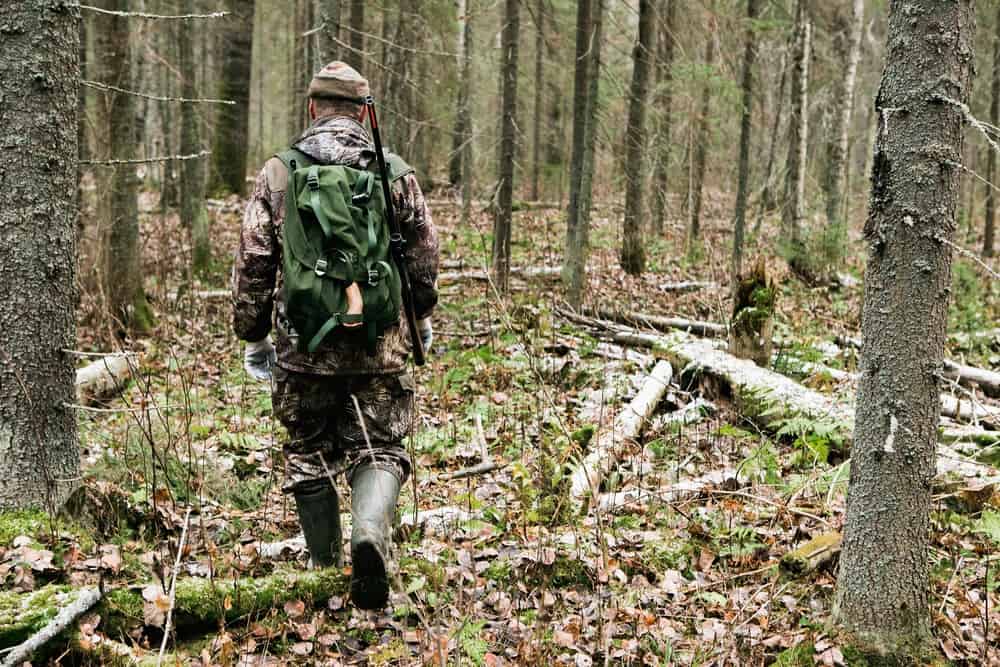
Contrary to popular belief, all wild game will not disappear after a collapse, natural or manmade. Most people would rather stand in a food line waiting for a handout than scour the backwoods for wild game.

And let’s not forget that the extent of most people’s hunting skills doesn’t go beyond the latest hunting themed video game.

7. Trapping

Trapping is more practical under survival conditions than hunting. By setting a trap, you can be other places doing other things while the trap does the hunting for you. Learn to build and set snares, deadfalls, box traps, fish traps, and steel traps.

Becoming a proficient trapper is not difficult—all you need to do is get off the couch and learn by doing.

8. Firearms repair

Basic firearms repair (replacement of broken parts) isn’t difficult if you have the parts needed when something breaks. You don’t need to learn how to repair every make and model of firearm in existence. You do need to have an in-depth understanding of your firearms: how they work and how to maintain and repair them.

9. Self-defense skills

The most effective self-defense techniques are also the easiest to master. Striking vulnerable points, biting, and eye gouging are simple and effective techniques that can be learned quickly and, when applied with aggression and precision, can bring down the most determined attacker.

10. Firearms proficiency

If you’re new to firearms, a basic safety course is highly recommended before learning defensive skills. Concealed-carry permit classes are held in most areas, as are hunter education programs. I suggest you participate in both.

The National Rifle Association (NRA) offers a number of classes that are most helpful.

11. Water purification

Another simple skill often overlooked is water acquisition and purification.

12. Using tools

You should have a survival toolbox of basic tools, including hammers, saws, drills, screwdrivers, winches, vise grips, wire cutters, and files. Your toolbox should also include the skills needed to put these tools to good use.

13. Raising small livestock

Raising livestock for food goes hand-in-hand with gardening, hunting, and trapping to ensure sustenance during hard times. I highly recommend Barnyard in Your Backyard by Gail Damerow and Secret Livestock of Survival which covers everything you need to know about making livestock part of your survival food plan.

14. Home power

While it may be possible to survive with no electrical power at all, having some source of electrical current will make life much easier. My solar setup cost me under $600, including the batteries, and the price of building my homemade electrical generator amounted to just under $100.

15. Investing

After getting your survival necessities in order (e.g., food, water, medical supplies, shelter, defense), you need to start thinking about investing in barter goods, such as .22-caliber ammo, pocketknives, and “junk” silver coins. Just be sure not to make the mistake of going into debt while investing in these metals.

And don’t overlook learning how to barter – here is a list of the ten top barter items.

Check your skills (be honest!) against the list above. If there are areas in which you are lacking (and there will be if you’re being honest), then get to work filling in the gaps. What skills do you have now? What skills do you need to learn or build upon?

Filed Under: Prepping

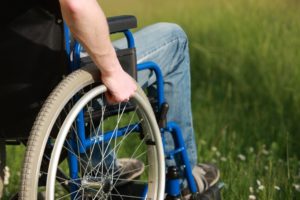
How To Be A Prepper With A Disability

September 22, 2018 M.D. Creekmore

how to be a prepper with a disability

by W. D. Sultemeier – The Wheelchair Prepper

When MD asked for readers’ help I responded with a suggestion for an article about and for the prepper who finds himself in a handicapped situation. I really meant the suggestion for MD to take the ball and run with it but he turned the table and challenged me to prepare a guest post.

I was diagnosed with a syrinx on my thoracic spinal cord in 1996. I was a teacher/coach at the time at a local public school and due to a stroke suffered by my dad in ’93, I was also operating the family cow/calf business. I was while having earned a pair of college degrees, someone who preferred a physical, outdoor lifestyle.

The prospect of spinal surgery was frightening, to say the least but the option was limited. The cyst was removed but the damage to the spinal cord was already done due to its lack of elasticity. Thus began a slow debilitation.

Let me say I seek no sympathy and have looked at this episode as a challenge. Pain management is the biggest part of my altered life. A gradual change in my mobility required an “adjustment” to my lifestyle. I went from a limp to a cane, to crutches and walker, to finally a wheelchair.

I had time to make some preparations for the changes that were coming. Those who find themselves faced with an abrupt physical change have a daunting but do-able task before them.

Making the structural changes necessary will challenge many depending on the individual’s situation. I was able to make my surroundings more easily manageable due to the length of time involved. Construction of ramps(not ADA approved), installation of handicap bars in the shower and at the toilet, making room to access the bed and closet space, were all things I was able to deal with.

Early on I was able to build and improve pathways around my house, shop, and barns, using hard-packed granite gravel from sources from the ranch. I was fortunate to have access to equipment and even unto this day have some ability to operate that machinery. I have to remind myself daily what can be done or should not be attempted, with safety being paramount.

I never leave the house without my cell phone. I sometimes feel a slave to that concession to my wife. I am very lucky that I have access to a battery-powered scooter and a power chair. These are used at the house and around the place. I do not take off out into the pastures with the scooter ( even though I would love to ) but do use it in the yard and to the shop and barns.

When we go somewhere, i.e. church, doctor, store, etc., I use a handed down traditional wheelchair for ease of handling into and out of the vehicles.

Like any of you, my wife and I stockpile canned and dry foods, store potable water, maintain first aid supplies, add to the ammunition stores, and do many of the things we have learned from MD’s blog. The point of this missive is to make one see that preparing can be done regardless of one’s physical abilities. Contributions can be made by pretty much anyone.

I come from a very tall family. I stand 6’5”, the wife is 5’10”, son is 6’8” and my daughter and her husband are both over 6’. Our house was built with that in mind 20 years ago with cabinets and pantry shelves reflecting our stature.

Today I need a “grabber” to reach some of the items and a careful balance to get others. We raised the kitchen table (hand-made by my grandfather) to allow me access in my power chair. Since my wife still works off-farm, I do the meal preps and try to keep the house (not very good at that). Because I can get to the table to help cut up meat, process fruit and vegetables, we have been able to keep our freezers full.

Gardening has been a tough one for me. I grew up with a seasonal garden at least a half acre in size. I would still love to get out into the middle of one but riding a scooter into a plowed garden would not be too simple. This year I had my son plow strips with space for packed ground to drive between rows. I have been keeping my hands dirty by container gardening.

Because I cannot get out among the cattle easily or safely to feed them, I began feeding them using 250# tubs of molasses lick. When empty, with perforated bottoms, these tubs make great container beds and are a good, easily accessible height.

I have gone from a short hoe to tractor and tiller, back to a short hoe for my gardening tool of choice. This past spring-summer I grew okra, beans, squash, tomatoes, peppers. I still have various herbs and shallots growing in these tubs.

After reading ONE SECOND AFTER, my wife became more supportive of the idea and efforts of being prepared for different situations (she recently broke her right arm). My adult children are like-minded and contribute as they can, be it with the butchering, vegetables, or keeping a good supply of firewood up to the house. Of course, they help with the regular ranch work as much as they can since they have been exposed to this life from the time they were little and not afraid to get a bit dirty.

We put together a rig for me to haul firewood to the house by pulling it with my scooter. I have moved my target range closer to the house so I can practice shooting. My kids are both shooters and better shots than I.

These days the practice is mostly with 22’s but the occasional feral hog still meets the business end of my .357 magnum. I am still proficient with my other pistols, rifles, and shotguns.

I don’t really foresee myself clearing the house at night with my wheelchair and Glock 21 but it would not be wise to enter our house uninvited. I have not thought too much about renewing my CCW permit, but I am determined to do so.

For those who think there is little hope or usefulness left to them due to a handicap…they are wrong. I have and continue to acquire source material on many topics covered in this blog. When TSHTF providing information will be a major contribution to keep you and yours safe and prepared.

Being a keeper of knowledge (sharer of knowledge) is and always has been a revered place in society. One can still work in one’s shop, doing projects, limited only by one’s imagination. After making room to navigate around the workbench and various tools, I recently began working on a Vertical Axis Wind Turbine using the heavy lids from the same feed tubs as the wings.

Getting power to make our lives easier when TSHTF is now a bigger concern. I will need something to charge my mobility batteries when the grid goes down. Solar panels and a bank of batteries are on the “someday” list. Money is always a factor for most of us.

The concept of bugging out is a bit more difficult in a wheelchair situation. I still have bags for my wife and myself in case we have to get out in a hurry. Preparations have been made setting up a site away from the house if the need arises.

The thing that disturbs me is being able to get back home if something catastrophic occurs while away. I keep emergency bags and firearms in each vehicle that sees time away from home. My fear is making a 30 to 60 mile trip in a wheelchair. I cannot jog but do try to keep the upper body fit.

There are assuredly many things I have omitted and others’ situations will be different, but one must remember that just because one is in a wheelchair or is in some way handicapped, one must still do what he can to prepare and help himself and his loved ones survive.

If you have tips, advice or survive with a disability I would love to hear from you in the comments below…

Filed Under: Prepping

  • « Go to Previous Page
  • Page 1
  • Interim pages omitted …
  • Page 11
  • Page 12
  • Page 13
  • Page 14
  • Page 15
  • Go to Next Page »

Primary Sidebar

Subscribe to Blog via Email

Enter your email address to subscribe to this blog and receive notifications of new posts by email.

Join 7,199 other subscribers
  • Amazon
  • Facebook
  • Substack
  • Twitter
  • YouTube

“Do more with less.”

– Minimalist proverb

Recent Posts

  • Just so you know
  • Weather Update for My Corner of Appalachia
  • Why I’m Ordering Ivermectin + Mebendazole Every Year
  • The Website’s Shutting Down (But Here’s the Plan)
  • You Are Hated! Start Training Like It!

Footer

Recent Posts

  • Just so you know
  • Weather Update for My Corner of Appalachia
  • Why I’m Ordering Ivermectin + Mebendazole Every Year
  • The Website’s Shutting Down (But Here’s the Plan)
  • You Are Hated! Start Training Like It!

More about me

Books I’ve written

Books I’ve read

Follow Me on YouTube

Follow Me on Facebook

Gear I Use and Recommend

Newsletter

Search this site

Follow me elsewhere

  • Amazon
  • Facebook
  • Substack
  • Twitter
  • YouTube

© 2008–2025 M.D. Creekmore · As an Amazon Associate, I earn from qualifying purchases.