• Skip to main content
  • Skip to secondary navigation
  • Skip to primary sidebar
  • Skip to footer

M.D. CREEKMORE

  • Blog
  • Books
  • Newsletter
  • Gear I Use
  • About
  • Contact
  • Facebook
  • YouTube
  • Blog
  • Books
  • Newsletter
  • Gear I Use
  • About
  • Contact
  • Privacy Policy
You are here: Home / Archives for Prepping

Prepping

Here you will find articles about emergency preparedness and prepping including articles on prepper food, prepping checklists, home defense, bugging out, bugging in, and the best prepper gear ideas.

Survival Essentials List: A 16-Point Checklist For Preppers

September 18, 2018 M.D. Creekmore

It seems everyone likes lists.

Lists are a quick reference point and a guide when stockpiling survival gear. Keep in mind that this is only a guide and not a list formed in stone. The tools and gear that you include should be individualized for you and your needs.

After all, who knows your skills, location, and resources better than you do? However, with that being said, I feel this list is a good starting point and a thrust in the right direction. It represents the bare minimum amount of gear.

I have purposely left out such items as cookware, clothing, and other everyday household items.

Every home should already have a plentiful supply of these everyday staples. I have also not included food, barter goods or firearms since these have already been covered, or will be, covered in more detail in other articles.

I have tried to keep this list as short and as to the point as possible. I have included only items that I feel are essential.

Sure, you could survive with less, but with some basic gear, things become less of a challenge. If nothing else, it should generate discourse. Let us get started.

1. Water filter

Even though we talked about water and the Berkey filters earlier, it is such an important and vital piece of survival gear that it bears repeating. Get a good water filter. The one that I recommend is the Big Berkey filter system (check current price on Amazon).

You should also have a smaller portable filter for when you are on the move.

2. Chainsaw

A chainsaw is essential if you are planning to heat with wood. Even if you are not, I still recommend that you get one. A chainsaw can be used for a lot more than just cutting firewood. It can be used when building wooden structures, and cutting felled trees that are blocking the roads leading to your location.

This is a great chainsaw for the homestead or farm.

3. Chainsaw accessories

Now that you have a chainsaw, you will need a few things to keep it running. To start, you will need mixing oil, bar/chain oil, and files. A spare saw is also nice to have and the quickest “repair” when a chainsaw breaks.

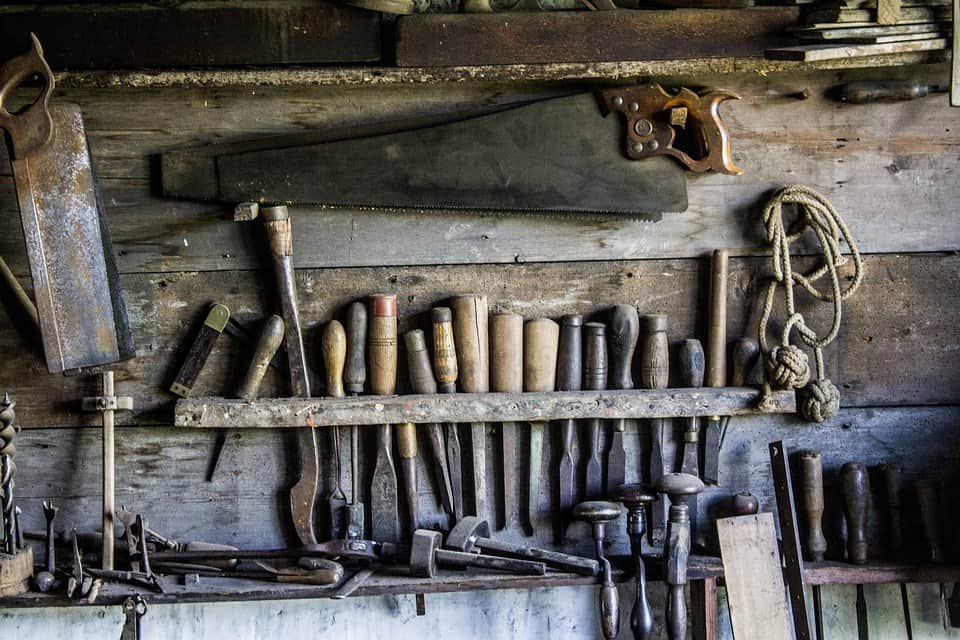
4. Basic tool-kit

Tools are essential prepper items and should not be overlooked. Instead of buying your tools one-at-a-time, it is quicker and in most cases cheaper to purchase a ready-made kit. After you have a basic kit, you can add tools as funds permit. Consider hand saws, drills, and other tools that do not require a source power to operate. See this article for a complete list.

5. Electrical generator

Current prices for electrical generators can range from just over one-hundred dollars to one-thousand dollars or even more, depending on what you get. I suggest that you get the best that you can afford.

Consider purchasing a diesel-powered model over gasoline if you can find an affordable one.

6. Work clothes and safety gear

Do not forget your safety when working with tools and saws. The last thing you need is to get hurt during a grid-down situation. Start by storing at least 12 pairs of good quality work gloves and several pairs of steel-toed boots, as well as eye protection, protective chaps, hearing protection, etc.

Always remember to work extra safe and to take every precaution to reduce the likelihood of getting hurt.

7. Five-gallon plastic buckets

It’s a good idea to have several of these around because they have multiple uses, for example carrying water, animal feed, garden produce, tools, etc.

8. Hunting Deer Cart & Game Hauler Cart

These carts work great for moving downed deer out of the woods and moving heavy but awkward loads around the homestead. They also work great on foraging trips after a crash where you need a way to haul scrounged supplies back to your survival retreat. This is the one that I have – click here to see it on Amazon.com.

9. Plastic sheeting

Six-mill plastic sheeting has multiple uses, including temporarily stopping a leaky roof, sealing windows, and as improvised body bags. You should include at least one large roll in your preps.

10. Tools of your post-collapse trade

The best barter item is you and your skills, and you will need the necessary tools to apply your trade on hand and in good working order. I suggest that you include at least two of each of those tools because it will be impossible to perform your trade with them.

11. Gardening tools

Get the best tools that you can afford. Most of the “tools” sold at Wal-Mart® are nothing but low-quality Made-in-China junk that will fail under hard use, especially when you need them the most.

12. Reloading gear

If you are not reloading your own ammo now, you need to start. I suggest that you buy a complete reloading kit to start with instead of trying to put it all together one piece at a time. Check out this article on TN Concealed Carry for the best reloading kit for under $40.

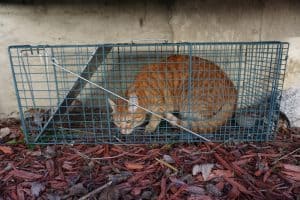
13. Animal Traps

I prefer live traps and snares for survival food procurement purposes to leg-hold type traps. Leg-hold traps are designed for catching fur-bearing animals and are not as effective when it comes to catching meat for the stewpot.

14. Camp toilet

We all have to go and we need a place to go, so I suggest that you have a camp toilet or a bucket with a screw-on lid to hold human waste until you have time each day to dispose of it properly. In the country, build an outhouse.

Be sure to put back some hydrated lime – poop, and then cover with a scoop of hydrated lime.

15. Personal items

Get a quality sleeping bag and enough toilet paper, toothpaste, brushes, soap, tampons, eyeglasses, sunscreen, medications, birth control, etc. for each person in your group to last approximately one full year. Note that this may be impossible with certain medications.

16. Antibiotics

Having a supply of antibiotics can mean the difference between life and death. For the survivor, unfortunately, maintaining a good supply can be nearly impossible when going about it the traditional way. Fortunately, companies like Camping Survival are selling “fish antibiotics” that pharmacologically indistinguishable from those prescribed by your doctor.

Disclaimer: Always seek medical advice from a licensed professional for diagnoses and treatment options.
Filed Under: Prepping

Survival Tools List – What You Need in Case of Disaster

September 18, 2018 M.D. Creekmore

survival tools listby Chad H

During the most recent years of my adult life, my finances have changed significantly, which forced me to seek additional ways to support my family. In my chosen career (firefighter) I have gone back to school in order to obtain additional training to become a Paramedic. The additional skills I am learning will allow me to provide better care for people in need, and give me more useful skills for a post SHTF scenario.

I have also taken on a second career as a handyman, doing odd repairs and to-do lists in my off days. Both of my current careers as a firefighter and as a handyman have much to offer in the area of survival and prepping. With this, I have been able to learn about many tools, their practical uses, and applications which would provide a positive benefit in a SHTF environment. The following descriptions are some suggestions that may be helpful to you.

Oxygen/Acetylene Torch: This type of torch is very versatile and reaches extremely high temperatures. An oxy/acetylene torch is capable of cutting many types of steel including chains, bolts, sheet metal, tubing, and locks. An oxy/acetylene torch also has the ability to weld steel, loosen corroded nuts/bolts, brazing, bending and forming all types of steel.

With all these options available, one could easily salvage parts from cars, repair fences, strengthen structures, or any other type of steel-related project. Oxy/acetylene torches do not require electricity making it very mobile and useful in a grid down environment. Additionally, an oxy/acetylene torch reaches temperatures of approximately 6330 F, thus giving it the ability to easily melt the following examples of metals: iron at approximately 2750 F, steel at approximately 2500 F, gold at approximately 1950 F, and silver at approximately 1765 F.

Propane Torch: This torch does not reach as high of temperatures as an oxy/acetylene torch, but it is inexpensive, very common, and easy to use. The propane torch is great for soldering copper pipe together (sweating pipe). Many propane torches come with convenient electric igniter which would make it a great fire starter in situations that demand more BTU’s than a regular cigarette lighter or matches can offer.

Another way of increasing your operating temperatures but having the convenience of one tank is using MAPP gas. It operates the same way as propane, but it burns at higher temperatures enabling you to melt some metals like lead or silver with it. Some systems use separate oxygen and propane/MAPP cylinders to increase the temperatures to almost oxy/acetylene levels. Additionally, some propane torches use very common “Coleman” style 1 lb. cylinders making use and storage of these tanks dual purpose.

Generator with 3-way Carburetor Conversion Kit: Having a generator on hand speaks for itself. With it you can run any number of electrical tools, operate lights, keep refrigerators cold, and be able to charge batteries. The unfortunate side is most residential use generators operate solely on gasoline. Gasoline is great if you can get it, but when it runs out you do not want to burn up your last fuel source for your vehicle.

If you are able to store gasoline, it is possible for it to go bad within a year even with fuel stabilizer. There is a kit you can buy for most gasoline generators that allow you to convert your standard carburetor to run on three fuels: gasoline, natural gas, and propane. You will always have some gasoline on hand, but why waste it if you can use natural gas that is being piped into your home?

If the grid goes down that flow of natural gas may stop, so then switch over to propane. Propane is great because you can store large capacity tanks without anyone showing concern, and it can be stored for many years as it virtually never goes bad. To make the generator more portable, you can operate it off 25lb. grill style tanks. Additionally, the propane you are storing can be used for other applications like heating water and cooking. Google search “propane carburetor conversion kit”.

Halligan Tool: In combination with a sledge-hammer, this is one of the most versatile hand tools available for breaching a means of egress. It is in use on nearly every fire company in America due to its’ versatility and effectiveness. The tool consists of a claw or fork end used for prying into doors or latches, the other end consists of a tapered pick used for breaching locked doors or punching holes and the wedge or adze which is another option for prying. Usual lengths are 24” to 42”, constructed of forged steel, and weighs 8 to 12 lbs. Google search “Halligan tool”.

18 Volt Cordless Drill Combo Kit: Currently the drill kit I use is an 18 Volt Ridgid, but there are many other brands that are just as serviceable. My kit included an 18-volt drill with work light, reciprocating saw, AM/FM Radio, and a flashlight. The kit included (2) batteries, and I have (2) additional batteries from a previous drill purchase which are all interchangeable.

The Ridgid brand is durable, and the batteries have a lifetime warranty. As long as I am able to charge the batteries, I will have a dependable flashlight, radio, saw, and drill without wasting disposable batteries or fuel to constantly run a generator. This will enable me to do work around my structure or listen to the radio for updates very easily and efficiently.

I also upgraded the light bulb on the flashlight from a standard incandescent bulb to an LED which will last longer and not use as much battery power. The bulb was easy to find at Superbrightleds.com for only about $10.00. There are additional accessories made by Ridgid like a shop light that uses the same battery, which can be purchased as well.

Pressurized Water Can: A great tool that most fire companies carry is called a PW can. It is a stainless steel can about the size of a large fire extinguisher that carries about 2 ½ gallons of water. On the top is an air valve that allows you to pressurize the can. It operates the same way as any fire extinguisher: PASS- Pull, Aim, Squeeze, Sweep.

These small cans actually put out a lot of fire do to the pressurized stream exiting the nozzle. They are however only recommended for use on Class A combustibles like wood and paper. In a grid down environment, the need for fire extinguishers will be high and there may be a lack of pressurized water available. With the PW can, it can be emptied and refilled as often as needed as long as water and pressurized air are available. Google search “pressurized water fire extinguisher”.

WD-40: Well, I like this stuff. It is very simple, but you can do a million things with it. For years I have used it in all situations around the house, as I am sure most people have. In a SHTF environment, the tools you have with you will be all the tools you have. They have to work and they must be taken care of. WD-40 is a great lubricant and a great preventative for rust and corrosion.

prepper tools checklist

I recently began cleaning and protecting my firearms with it and have had great results. You can also repair many varieties of sticky mechanisms with it. This stuff is cheap and does not go bad. To me, it is the duct tape of the lubrication world.

The following is a list of tools that I recommend every home should have. These will be important for any situation you find yourself in as they have many practical uses. In a SHTF situation, these tools could save your life.

  • Leatherman Multi-Tool-At least two
  • Bolt Cutters- Cut locks, fences, metal
  • Come Along- Lifting objects, pull-out stuck vehicles, securing vehicle loads
  • Farm Jack- Lifting objects, pull-out stuck vehicles
  • Chainsaw-Extra chains, oil, spark plugs, oil mix
  • Shovels- At least two
  • Axes/Hatchet- At least two
  • Machete- Making trails, trimming bushes, also a scary weapon
  • Pruning Saw- Great for small firewood
  • Hand Saws
  • Pick
  • Air Compressor
  • Pneumatic Tools
  • Full Wrench/Socket Sets
  • Full Screw Driver Sets
  • Full Allen Wrench Sets
  • Worm Drive Construction Saw
  • Side Grinder-Steel Blades/Masonry Blades
  • Flat Black Spray Paint (Lots)
  • Bullet Puller- Gunsmithing
  • Brass Extractor- Gunsmithing
  • Rubber Mallet- Gunsmithing
  • Plastic Mallet- Gunsmithing
  • Pin/Nail Punch- Gunsmithing
  • Files- To sharpen all edged tools
  • Soldering Iron- Repairing electronics, wiring applications
  • Full Sets of Pliers/Cutters
  • Chisels- Woodworking
  • Vise
  • 12 Volt Water Pump
  • Hacksaw- Extra blades
  • Duct Tape-Lots
  • Electrical Tape
  • Manual Flammable Liquid Pump- To siphon gas
  • Drill Bits
  • Hammer-Sledge, construction, Estwing’s are good due to metal handle construction

The above list is a good starting point, as there are many tools that could be added to this list, and your personal needs will determine what tools you should have. Please do consider some of the above tools for your home or getaway as they may save your life. Be aware of your surroundings, practice like its real, and may God be with all of you during the tough times ahead.

Further Reading

  • +Tools for Survival: What You Need to Survive When You’re on Your Own
  • +The Complete Do-it-Yourself Manual Newly Updated

Filed Under: Prepping

How To Prepare For and Survive a Nuclear Attack

September 13, 2018 M.D. Creekmore

Radioactive nuke attack survival

by Joel Skousen (first published on November 28, 2017)

With this week’s claimed test of a hydrogen nuclear device, North Korea is one step closer to making good on its threat to nuke some portion of the USA or its territories.

It is still not an imminent threat since North Korea apparently lacks the technology to build a warhead can withstand the extreme heat of high-speed reentry into the atmosphere—the last two missile warheads burned up on reentry.

Even more disturbing is that North Korea has long been suspected of being the “trigger event” for a third world war between Russia, China, and the United States.  So, with President Trump threatening a military response, it’s time to take nuclear preparations seriously.

That said, I do not think Russia and China are ready yet to take on the US in a full-blown war (until into the next decade) so it is still possible that another Korean war may not cause Chinese and Russian intervention—though you should count on that as an absolute.

First, let’s be clear about one thing:  nuclear war is very survivable, even with minimal preparations, so don’t believe the “everyone is going to die” claims about nuclear winter and total destruction.  50% of Hiroshima survived without any preparations, though many were very sick.

Keep in mind too that even Russian and Chinese war doctrine doesn’t include nuking American cities on a first strike, despite the verbal threats.  In reality, they intend to nuke US and NATO military facilities first and blackmail the West into submission.

There are 3 phases of nuclear war that you must be prepared to confront:

1) Initial blast and radiation.  The blast area of destruction is only 5-7 miles from any nuclear target, so don’t prepare against blast effects, which is very expensive—relocate instead.  Avert your eyes immediately from even a distant explosion and duck behind anything that will shield you from the instantaneous line of sight radiation and intense heat and light.

Most will never see any blast effects, but almost everyone will have to deal with residual radiation from anywhere from 2 weeks to a month, which is not that difficult if you prepare in advance.

2)  Immediate panic and cut off of electricity and supplies.  Because both Russian and Chinese nuclear doctrine dictates the use of high attitude Nuclear Electromagnetic Pulse weapons (EMP)  just before a physical nuclear strike, the electric grid will go down—which guarantees a lot of panic as people are plunged into darkness, lack of communication, and the cessation of all government services, like sewer and water.

Don’t believe the hype about Iran or North Korea doing an EMP strike.  It takes six simultaneous high altitude nuclear weapons exploding to blanket the entire US grid, not one.  So, only Russia and China have that capacity.

Remember too, that a total loss of electricity, including all TV and Radio may be your best immediate warning that a physical nuclear strike is about to fall within 15 or 20 minutes.  That’s not a lot of time, but it may allow you to get a head start out of town or make a quick call to warn the family.

This threat requires preparation to get to your secured home or retreat very quickly without getting caught in major traffic snarls.  Don’t get on a freeway that is already packed.  Use secondary roads, and map out routes that allow you to cross any freeways at an over or underpass NOT associated with an on-ramp or an exit.  Those will be the only ones not blocked with traffic.

3) Long-term famine and Social Unrest:   This gets into full swing within 3 days of an attack and may last more than a year depending on how quickly parts of the grid can come back up and how well industry can re-establish supplies lines.  While it’s hard to predict how these things will play out, this is where your long-term food and water storage supplies come in.

Don’t expect to be able to grow a garden that first year in a suburban area during high levels of social unrest without lots of theft. That will only be possible in rural and secluded areas.   That’s where having a rural retreat is a good long-term solution.

This article will deal mainly with the first threat—surviving the radiation.   It takes a heavy mass of materials to shield from gamma radiation, which is much more potent than X-rays, so forget about using medical grade X-ray shielding materials. Your wooden house and roofing materials are like paper to gamma rays, so not much shielding there either.

Nuclear protection purists would demand a reduction in radiation that is almost total requiring  13.8 feet of water, 10 feet of earth, 6 feet of concrete, or about 1.3 feet of lead—a Protection Factor (PF) of a billion, all of which are very costly to achieve.  This Survival Blog article discusses the relative protection factors for various materials.

As a practical matter, we have to arrive at a compromise between the cost of construction and shielding.  You need less shielding the farther you are away from an explosion since radioactive dust starts to fall out from the sky closest to the detonation and only the finer high altitude particles travel longer distances, depending on the wind direction.

In short, you get less radiation the farther from blast zones you are located.

For example, Immediately to the West of Seattle, which has multiple nuclear targets around Puget Sound including the Trident submarine base, you would probably need a PF of 1000 to shield against several inches of radioactive dust on your roof.

That amounts to 22 inches of concrete or 3 feet of dirt. But, further to the West in Idaho, the radioactive dust from Seattle would be a fraction of that, requiring much less shielding.

Many experts demand a “one size fits all” PF of 1000, but that means that very few could afford to build a shelter or safe room—and they don’t.

Because most areas of the country, not directly downwind and within 50 miles of a blast one, are not subject to those high levels, most people can survive with a protection factor of only 32, meaning that that radiation level is reduced to 1/32 of normal.  That involves 12” of concrete over your basement shelter—not 22”, which is doable, and not too costly.

Because of the much higher costs of protection close into target areas,  in my book Strategic Relocation, I recommend that your money is better spent relocating, even within the same general area, to avoid being directly downwind or close to a nuclear target.

In the book, I have maps of all the nuclear target areas for guidance, but also indicate the one or two prevailing wind directions in your area necessary to mapping out an avoidance strategy.

Choosing the type of shelter

Your two basic choices are to buy a prefabricated tank style shelter that is buried underground, or to build a basement style shelter within your own home, or as an extension.  The only advantages to the buried tank shelter are that it is quicker to install, and covering with dirt is cheaper than concrete.

However, they are more expensive per square foot of usable space, and they often come designed with expensive blast doors and valves, which you don’t need outside of a blast area.  S

adly, many also are designed with costly NBC or HEPA filters inside the shelter, but the sheet metal filter enclosures are not thick enough to stop radiation trapped in the filter from reaching those inside the shelter. The average cost is $50k-$75k, and you can build a lot of basement for that price.

But the worst problem with buried shelters is the fact that you have to go outside and open a hatch to get inside.  The notoriety of bringing in a huge tank shelter on a semi-truck and burying it in your backyard with a crane guarantees that the whole neighborhood is going to know about it.

How do you get in if that entrance is surrounded by others wanting shelter?   All your loading of supplies and equipment is down through that vertical ladder well, which is not easy.  In addition, the ventilation pipes emerge from the ground and are subject to tampering or blocking.  If you do use a buried shelter, put a shed or building over it.

That way the vents are protected from view and tampering.  Still have to cross open ground to get into the shed, which is a security risk.

The basement shelter avoids all of those disadvantages since you access it and stock it with supplies from within your home.  No one can view any of that activity.  Vents go up through walls into the attic, and HEPA air filters can be concealed in or under normal cabinets.

The basement safe room or shelter (never call it a “bunker”) is also easier to conceal, and it should be concealed.  In cases of massive social unrest, you want to have the option of avoiding confrontation by hiding out in a concealed safe room with a steel security door, communications, and alternate battery-powered electricity.

If you do an extension to your home with a basement shelter underneath, label the basement part as non-livable “storage” only, and don’t show any of the plumbing that might pertain to a future shelter.  Install all that after the occupancy permit is granted.  My book on the Secure Home has all of the architectural details on how to do that plus detailed listings of all the equipment necessary to outfit the shelter.

But, if you have an existing basement the best way to achieve total privacy without a permit or inspection, is to build a concealed shelter within the basement.  We have engineered plans to do just that here.

As a minimum, prepare your home to give you added protection without a formal shelter.  In a basement, that would involve building two addition stacked walls of concrete block (6ft high and 8ft across) into a corner of a room away from any window, but leaving a 24” entryway.  Cover that with a makeshift ceiling of 2×4 on 12” centers with ¾” plywood.

Then stack 3 levels solid 4” concrete blocks on top of that makeshift ceiling.  That will give you the minimum radiation protection you need.  Have a port-a-potty inside as well as some food and stored water.  It will be tight, but at least you’ll survive.  If you don’t have a basement, you’ll have to do four block walls inside an above ground room to get the sidewall protection. Do the lowered ceiling on top of those 4 six foot high walls.

It takes about two weeks for gamma rays to dissipate so you will need to buy a radiation meter to tell when it is safe to come out or to go back into a shelter (since in a war, there may be multiple nuclear events).  KI4U.com has a range of nuclear meters at good prices.

Resources:

  • https://www.ready.gov/nuclear-blast
  • Are You Ready – FEMA Guide
  • Nuclear War Survival Skills – Cresson H. Kearny
  • U.S. Nuclear Target Map (Do You Live In a Death Zone?)

Joel Skousen has designed high-security residents and retreats for over 40 years.  He is the author of Strategic Relocation, the Secure Home, The High-Security Shelter, 10 Packs for Survival, and is the publisher of the weekly World Affairs Brief, which analyzes the week’s top stories from a perspective of what the government and the mainstream news won’t telling you.

Filed Under: Prepping

How Many Rounds Of Ammo Does A Prepper Need?

September 9, 2018 Jesse Mathewson

Photo showing a prepper shooting an AK-47 how many rounds of ammo does he need?
My suggestion for long-term storage is a bare minimum of 250 rounds of defensive ammunition per defensive firearm in the house with 500 to 1,000 rounds being ideal.

There is an economic concept, the law of diminishing returns, that can be applied to your life. The law of diminishing returns refers to a point at which the benefits are less than the amount of effort invested. This applies directly to ammunition stored for personal use and firearms as well as general prepping supplies.

I should add that I detest the term prepper, as it is defined using modern vernacular and is seen as a negative to many. Rather I am someone who considers that even though I may never need insurance, it is a wise idea to have it.

Ammunition Storage

When it comes to prepping it is possible to have too many things and by default cause issues with both storage and distribution of the items needed. Ammunition if it is not stored properly does age rather poorly even if it is sealed in spam cans. Food regardless posted shelf life must also be stored in a relatively climate controlled environments.

In fact, there is very little that has an extended shelf life if it is not stored in a climate controlled environment. Look at the packaging for any dry frozen or dehydrated food supplies, store between temperatures are listed on the package.

Temperatures are somewhat important for ammunition, however, the real killer for stored ammunition is moisture. I do not suggest leaving ammunition in your car during an Arizona summer, the temperatures reached can negatively affect performance.

However, in personal testing with ammunition stored openly in magazines and original packaging as well as loaded in magazines I have found that overall the temperature variations rarely affect the ammunition by itself, though with un-crimped hand loads I have found it causes greater issues than crimped loads both factory and not.

What has always been the hands down ammunition killer is moisture and the subsequent corrosion that occurs.

Except for personal defensive ammunition I have on me at the moment and in my house for use at a moments notice, my ammunition is stored in watertight cases that are also somewhat airtight. I use desiccants inside the ammunition storage containers as a way to reduce the free oxygen and moisture amount even more.

With my testing and others, I have found that ammunition stored this way can be good for many decades, especially when temperature extremes are prevented. When it comes to defensive ammunition you should be rotating this every 6 months or so. You are not rotating it because it compresses in the magazine and becomes oval or for any reason other than your carry ammunition by default is carried on your person.

This means that it is subjected to temperature extremes and humidity, sweat and general degradation that occurs with carry ammunition.

My Bare Minimum Recommendations

For this purpose, my suggestion for long-term storage is a minimum of 250 rounds of defensive ammunition per defensive firearm in the house. This takes a rotation of 30-45 rounds every 6 months for handgun and between 60 and 240 rounds for the rifle and lastly 12-24 rounds for the shotgun if you have or use one.

Personally, I prefer buying a half a case for handgun and a full case at a time once a year of premium defensive ammunition. This covers needs for the firearms in use as a defensive tool at my house and keeps a decent supply for practice and storage as well.

With very few exceptions I keep all of my magazines loaded, modern Magpul magazines can be kept loaded fully and older NATO/STANAG magazines loaded at 28 for rifle and one round short for magazines not in current defensive rotation for the handguns.

This is not to reduce spring tension, instead, it is specifically because many older magazines do not seat easily or fully in a firearm that has a closed bolt or closed slide.

I am not going to argue the merits of learning how to count your rounds or other similar approaches as these are foolish and outdated approaches that at least will add steps that will only confuse you under stress and at worst get you killed. My suggestion is, use proven modern magazines and firearms.

How many rounds of non-defensive ammunition should you keep on hand? This is where the law of diminishing returns really comes into play. Ammunition weighs allot in quantity, for instance, a 30 round magazine of 5.56 or .223 weighs approximately 1 pound.

ammo in storage how much is enough?


Whereas a loaded 8 round magazine for a 1911 weighs around 9 ounces and a 15 round Smith and Wesson M&P magazine or a loaded 15 round Glock magazine will weigh around 8-9 ounces. Two defensive magazines for your handgun will end up weighing around 16 ounces and a single 2 ¾ inch 00 buckshot shell will weigh a little over one ounce by itself.

Unless you train regularly with your bug-out bag and a full load out of ammunition, I highly doubt you will be humping more than 3 or 4 magazines for any great distance.

Does this mean you shouldn’t keep more than 120 rounds on hand? Absolutely not!

In fact, I recommend at a bare minimum having 500 rounds of quality range ammunition for practice and long-term use. My suggestion is to avoid big box store ammunition, I do not mean specific ammunition retailers and resellers, I mean Walmart, Big Five, and other similar large box stores ammunition.

What is made for them will ALWAYS be a reduced quality than even military and law enforcement training overruns! Big box ammunition is loaded with far less QC being applied than is done with the more expensive yet better overall ammunition that is available.

If you reload, and this is something that takes great patience and dedicated time and effort to do well, store supplies for as much as you may need at current training use for 2-3 years. This can be applied to factory new loads as well. I like having several months at a bare minimum stored away, with my maximums being around 5 years at my current level of use.

If you go to the range and shoot 150 rounds a week, then calculate based on this number. If you carry defensively and do not train with at least 50 rounds a month, please remember a very simple reality, shooting is absolutely a perishable skill.

Certainly, many people get lucky and have used firearms successfully with little or no regular training or any real training. However, you will find a much greater level of success if you at least keep your basic skills sharp with 50-100 solid rounds downrange once a month.

I have taught and worked with law enforcement officers and soldiers who refused to practice regularly, leading them to have to shoot their generous qualifiers multiple times just to maintain employment!

how many rounds of shotgun ammo does a prepper need

Next, it is important to understand that you and your wife will not be taking on an armed group of marauders even with your multiple trips to FrontSight timeshare and firearms training facilities. I know that the Dr. who owns that training facility has told you that because you are a diamond member you are now better than Rambo, the reality is…you will still be best served with not clearing your house and avoiding issues whenever possible!

This is why individual focused training on your own and or with experienced real-world instructors is best. This means that you need to have additional amounts of ammunition available and stored safely and properly. What you will need much of your ammunition for is hunting, getting rid of predator or scavenger animals and potentially defense against two-legged marauders.

All of my ammunition except what is currently in use is stored in a dry, temperature controlled environment. What is currently in use is also kept dry and cleaned and maintained to promote longevity and 99.9% function when it is needed!

So before you have 50,000 rounds delivered, make sure you know why, how and what you are storing it for. Some places have passed laws recently regarding how much you can legally have. Be sure you follow the local laws whenever possible or whenever morally necessary. A few simple guidelines I use as a disabled middle-aged man with a family and some added individuals in potential problem times.

  • What can I carry by myself
  • What can I keep safely secured
  • How much do we use monthly multiplied by each person using monthly and 2-3 years minimum for EACH firearm
  • Use only what works best in each firearm for each required use, (hunting firearms/defensive/ etc.,)
  • What can my group carry
  • What can my family/group keep safely secured

As always use your head, ask yourself why you are doing or considering doing anything and by all means, avoid falling into the age-old trap that is doomsday prepping. Yes, this approach has been around since before the bronze age and is largely due to a time when humans did not have working networks for trade and exchange.

Certainly, being prepared for this is not a terrible idea though it will take more than stockpiling ammunition and can be extremely cost prohibitive to all but the most wealthy of us.

Free the mind and the body will follow…

Filed Under: Prepping

How To Be A Prepper In The City

September 1, 2018 M.D. Creekmore

how to be a prepper in the city

Even if you’re an urban prepper are fortunate enough to have a retreat out in the country getting to your safe-haven may be impossible during an urban upheaval. Roads blocked by wrecked and fuel-less vehicles will stop most people who are bugging out in their tracks. Maybe you were born lucky and can make it out safely before the balloon bursts, then what?

People in rural areas will start shooting if threatened by mobs of refugees fleeing the city. Don’t expect to be welcomed with arms outstretched. Most country folks don’t trust outsiders; you will likely be greeted with a load of buckshot and not the cup of fresh coffee and meaningful conversation you had hoped for.

After the cities are in ruins, criminal gangs will start to migrate into surrounding rural areas (especially known farming areas) where they will continue their business of stealing, raping and terrorizing in a more fruitful territory (when selecting a rural retreat location get as far away from urban areas and main roads as possible).

If you can’t or won’t get out of your urban location NOW at least start making plans to survive the best that you can where you are. It won’t be easy, but it can be done.

Start By Putting Together Your Urban Survival Kit

Most of you probably have a bug out bag by now. If not, go back and re-read the chapter on bug out bags and put one together. Having a bug out bag is good insurance in the event you are forced to evacuate your home or retreat for some unforeseen reason. It seems most preppers have planned to bug out but few of have even considered the need to find their way back home if caught away during an emergency. You not only need a bug out bag, you also need a get back home back.

No doubt, many of you spend a lot of time away from home – with work, school, and business sometimes taking you hundreds of miles away from home. Most of the time this is not an issue for me, but recently I have had to make several trips with my girlfriend to take her father to the cancer specialist on the other side of the state. What would we do if disaster struck while we were several hundred miles from home?

What would we do in the event of a terrorist attack, riot, earthquake, or similar disaster? Could we get back home? What would we do if forced to stay in the area for several days or even weeks? With any luck, I will be able to drive out but you never know; the roads could be blocked or impassable because of damage, the area could be quarantined or it could be too dangerous to move for several days.

As with anything related to survival, there are no guarantees, and I doubt her father could make it under anything but the best of conditions considering his health. I just hope nothing bad happens with him in tow.

To increase our odds of making it back or surviving in the city, I have put together a “Get Home Kit” that I take on extended trips. Sure, I could have just taken my bug out bag, but it really is not the best solution and the gear for the most part. It is not what I would need in an urban setting. The basic needs of water, shelter, food and medical are the same in the wilderness or city, but the means of attainment are different in most cases.

My bug out bag was put together for an extended trip to the woods where I can make most of what I need from what Mother Nature has to offer. However, if trapped in the city, I may have to scrounge or steal most of what we need to survive, especially if we are forced to stay and survive for an extended period. No, I am not advocating theft or looting, but I am not above it if the other alternative is starvation or death.

My get home kit is smaller than my bug out bag and weighs considerably less. Everything fits snugly inside a small dark gray and green backpack that I bought at the local flea market for five dollars. I intentionally averted from camo or military type packs to avoid attracting attention. Now that we know why we need a get home pack, the question remains what do we pack in our urban survival kit.

Urban Survival Kit Contents

  • A fixed blade knife (Glock Knife)
  • Multi-tool (Gerber Recoil Auto-Plier)
  • Two small Bic® lighters
  • One box water-proof wooden matches
  • Two Berkey water bottles
  • Small LED flashlight (Maglite XL100)
  • Cell phone
  • Prepaid calling card
  • Lockpick (Dyno Kwik Pick)
  • First aid tactical trauma kit
  • Antibacterial hand wipes
  • Space blanket
  • Bag of trail mix, box of power bars (15), electrolyte packets
  • A detailed map of area and compass
  • Garmin handheld GPS navigator
  • OC spray
  • One-hundred dollars in small bills ($1s, $5s, and $10s)
  • Glock 19 and 200 + rounds of ammunition, and 2 or more ammo magazines.

Aside from, and in addition to the get home kit, I pack a large cooler with food and drinks for the trip, partly for emergencies but mainly because I am cheap and do not want to waste money buying fast food along the way. I also carry sleeping bags in my vehicle during winter along with my winter emergency car kit and a full toolbox.

Food For City Preppers

mountain house foods reviewYou should store enough food to last at least six months – more than one year would be ideal, but probably impossible for most urbanites because of limited storage space. This means enough food to live on without leaving home. Food staples include rice, beans, honey, wheat, sugar, tea, coffee, salt, pepper, baking soda, cooking oil etc. Also canned soups, meats, fruits, and vegetables should be included. A food storage calculator is an excellent tool for approximating needed qualities of foods and is a great help here.

Also, see my recent article – The Ultimate Preppers Checklist of Recommended Supplies and Gear for a full list of supplies and gear.

Sprouting seeds for fresh greens is a very important urban survival skill that will keep you supplied with fresh greens even in the winter. Sprouts are germinated seeds of vegetables, nuts, grains, and legumes. Sprouts are nutritious, inexpensive and high in protein. Sprouts should be included in your survival food plans. All that is needed is a couple of quart mason jars, a square of nylon window screen, rubber bands and viable seed stock.

If you decide to include whole grains in your diet, you will need a grain mill. All chosen grain mills should have changeable heads so you can use both steel and stone heads for grinding depending on the product being milled. Some people suggest that steel burred grinders cause heat that could damage the nutrient content of the grain. Don’t buy into that. Hand grinding doesn’t cause enough heat to cause damage.

Next, you will need something to cook on. I recommend one of the Coleman multi-fuel camp stoves. I have a Coleman Exponent Multi-Fuel Stove which burns both unleaded gasoline or kerosene. These stoves are small, lightweight and very energy-efficient.

Remember, when using stoves like the Coleman camp stoves indoors the fumes must be vented to the outside, if not carbon monoxide can build up and kill you, especially in a small or confined area. In most cases, an open window near the cooking area will suffice for ventilation – read and follow the instructions in the provided owners manual.

My top recommendation for outdoor cooking (cooking outdoors my attract unwanted attention) is the EcoZoom rocket stove – click on the link to read my full review.

If you don’t have one already go by your local shopping center and pick up a Stanley Aladdin narrow-mouth thermos bottle. You will use the thermos as an energy-efficient appliance for cooking. Don’t get a wide-mouthed thermos; if you intend to use it for cooking, these are less efficient at holding heat.

It is best to use a different bottle for cooking then your everyday thermos. Coffee smell, for instance, tends to leach into whatever you are cooking, even if the bottle has been cleaned.

Thermos cooking is in no way difficult or complicated, all you need is some simple directions.

Water for City Preppers

berkey filterWithout a source of clean drinking water, most of us will die within three to seven days, depending on personal health, weather, and workload. The problem with water is it’s difficult to store enough to last through an extended emergency and living in an urban apartment makes it nearly impossible.

Collecting rainwater on the roofs of buildings could be a solution in areas that receive an ample amount of rainfall. Use plastic sheeting, tarps etc, to funnel water into clean trash cans, buckets, “kiddie pools” or other suitable containers.

When I lived in an apartment building years ago, I bought several “kiddie pools” just for this purpose. They can be stored neatly stacked one inside the other and slid under the bed out-of-the-way until needed.

Some urban areas have lakes or streams nearby but these will be polluted and contaminated – a running water source is better but still no guarantee of cleanliness. Never drink directly from the source; there is no way of knowing if the water is contaminated (it mostly will be) without proper testing. Don’t take chances; invest in a good water filter to be sure. The best filters filter out Bacteria, Organic Chemicals, and Protozoa (Giardia) Viruses.

Shelter for City Preppers

I hated living in an apartment. I felt like I had no privacy what-so-ever, I could hear every word, whimper, moan or scream through the walls, ceiling, and floor. I am sure everyone in the building felt the same way. If you are stuck in a large city an apartment is likely the situation you will need to deal with despite its limitations.

There are a few things you can do to make your place more secure. The first thing I did was replace the front door with a steel security door with deadbolt and peephole ( the same color and look of the old door). I hid the old door in the closet and replaced it when I moved. I also replaced the door leading into the bedroom with the same type door, lock and peephole set up for an instant safe-room (safer) inside the apartment.

Don’t forget smoke and carbon monoxide. Keep at least two fully charged fire extinguishers on hand. Also, the magnetic break door and window alarms work well when used to guard the windows and doors leading into the apartment.
If you are above the second floor an escape ladder or rope should be put back in case of fire. A proper mask should also be considered.

When we pay rent we are always faced with the possibility of eviction. If possible keep the rent paid up at least six months. If you have no other way of paying in advance, borrowing the money from the bank will keep you sheltered during hard times. I hate debt but this is an area where it could be to your advantage depending on your personal circumstances and how you work the situation.

Going mobile could be an option for the city survivor, but fuel will likely become a problem post-collapse. Like everything else in life, we must weigh the good against the bad and make our choices based on that knowledge. If you’re interested in this, some great information can be found here.

Firearms for City Preppers

Defense in the city will likely be a short-range engagement. For urban areas, I recommend a good pump-action 12 gauge shotgun and a handgun. The Mossberg 500/590 or Remington 870 are both excellent choices. For versatility put back a variety of shot-shell loads as well as buckshot and rifled slugs.

Handguns should be at least .38 caliber or above. I like both revolvers and semi-automatic handguns, in skilled hands both can be effective. Stay with what you know and practice. If you have had little or no training in this area seek out a competent instructor and become qualified. If you are fortunate enough to live in a state that issues concealed carry permits, you should apply for yours as soon as possible.

My favorite foraging tool in urban areas is the Savage Model 42.

Wild Game for City Preppers

In an urban area you’ll mostly have a choice of small game such as rabbit and squirrel but what most people fail to realize is that the outskirts of most urban areas harbor a good number of whitetail deer. The trouble is that everyone will be hunting, so the numbers of wild game might be depleted quickly and let’s not overlook the danger of going out to hunt those areas…

Small game can be taken with traps, air rifles, slingshots or ever killed with a club or rock. When I lived on a lot in a small city, I shoot squirrels that found their way into my back lot with a .22 caliber rifle loaded with CB caps, (down-loaded .22 rimfire ammo) the little rounds are very quiet and can take most small animals out to about ten yards.

Deer can easily be snared or shot.

Most cities have an abundant pigeon population. It is a simple matter to follow the flock to their roost at dusk. Shining a light into their eyes they tend to sit still where they can be caught or killed with little trouble. Air guns and slingshots work well.

Without a doubt, the most abundant source of meat in an urban environment is the common rat. They have thrived under even the most challenging circumstances. It is almost a certainty if there are human survivors after any catastrophe rats will be in abundance but likely infested with parasites and other things that could make you sick and therefore should be used only as a last resort to avoid death from starvation. Like most small animals they can be trapped in homemade box traps or shot.

Gardening for City Preppers

garden city preppersDon’t expect to support yourself entirely from a city garden, at least not at first. I have raised tomatoes in a window box and hanging baskets on the terrace. Perhaps in time, large community gardens would spring up that could be worked by groups of urban survivors.

During the first months preceding a total collapse, gardens will need to be hidden and out of sight. A lot of vegetables (especially among most city dwellers who think vegetables come from the supermarket) are easily mistaken for weeds and are not all that difficult to keep hidden from passers-by.

The first rule of avoiding detection is to never plant your crops using the traditional roll method. The three sisters gardening method comes to mind, some North American Indian tribes used this technique to grow corn, beans, and squash to great effect and it acts as a natural camouflage.

When it comes to survival gardening, obviously we must start with seed – it is a necessity to have a source of viable seed on hand. Look for non-hybrid (“heirloom”) varieties, you want to be sure the seed saved from year to year will breed true and continue to do so. Hybrid varieties, for the most part, are unpredictable and seem to only do well during the first year of planting.

Most garden varieties should be included in your stock. Include such vegetables as: artichoke, asparagus, beans, beets, broccoli, cabbage, carrots, cauliflower, celery, chives, corn, cucumber, eggplant, garlic, gourds, kale, leeks, lettuce, mustard green, onions, parsley, parsnips, peanuts, peas, peppers, pumpkin, radishes, soybeans, spinach, squash, sunflowers, Swiss chard, tomatoes, turnip, watermelon, zucchini etc; In general put back seeds that grow well in your area and of foods you like to eat.

Conclusion

Even in the most populated areas after the rioting, burning, and looting subsides there will be survivors. The most difficult part is surviving the first few months after the crash, and then the rebuilding can begin.

Also, see: U.S. Nuclear Target Map (Do You Live In a Death Zone?

Please share your thoughts and urban survival tips for city preppers in the comments section below…

Filed Under: Prepping

Long-Term Food Storage How To – Plastic Buckets, Oxygen Absorbers, Mylar Bags

July 27, 2018 M.D. Creekmore

Long term food storage plastic buckets

I store all my grains, beans, and other dry foods (besides sugar, salt, or sprouting seeds) inside food-grade five-gallon plastic buckets. There is some controversy over what is considered food grade. Most (but not all) buckets with #2 inside a small triangle on the bottom are food-grade. But the only way to be certain is to contact the manufacturer and ask.

You can also order food grade buckets directly from Amazon.com – click here to check the current price and availability.

I buy mine from the local hardware store in the paint department. They also have them at my Wal-Mart, but I prefer to buy from local business owners, if possible. Sometimes they can even be gathered free from bakeries and restaurants. Just make sure that they only contained food products, not paint, chemicals, or other things that can make you sick or dead.

Foods packed in oxygen do not store as well as those in an oxygen-free atmosphere. Oxygen absorbers (available from Amazon.com) work by removing the air from the enclosed container, leaving an atmosphere of 99% pure nitrogen in a partial vacuum inside the buckets.

Do not open the bag of oxygen absorbers until you’re ready to use it because they will absorb oxygen from the surrounding environment, rendering them useless. Have everything ready to go before you open the package. Any unused oxygen absorbers can be stored inside a small canning jar until needed.

Be sure to have everything ready to go before you start. Line the inside of the bucket with an appropriately sized Mylar bag (also available from Amazon.com). These help to keep light and moisture out, thereby extending the storage life of the foods inside. The Mylar bag also offers a layer of protection between the food and the plastic bucket, if for some reason the bucket that you are using is not food-grade.

Pour the food into the buckets a little at a time, shaking each bucket as it is being filled to settle and distribute the contents. Fill each bucket to about ½ inch from the top and throw in one 2000 cc oxygen absorber in each five-gallon bucket of food.

Sealing the Mylar bag is simple. First roll the top of the bag closed on one end, leaving an opening at the other. Then press out any air that is trapped inside. Next, place a 2×4 piece of wood across the top of the bucket, pull the Mylar bag over the 2×4, and seal it across the board with a clothing iron that is set at the highest setting.

Quickly put the lids on each bucket and pound shut by laying the board across the top and striking it with a hammer or rubber mallet (or use a Gamma Lid). After a few hours, the absorbers will create a vacuum that will cause the lids on the buckets to “pop down”, which indicates that there is a good seal and a proper atmosphere for long-term storage.

Be sure to label each bucket with a permanent marker with the date, contents, and weight written on the front.

You might also like:

  • The Doomsday Preppers Quick and Easy Food Storage Checklist
  • Free Printable: 21 Point Prepper’s Checklist For Stocking Up at Wal-Mart

Please add your thoughts, comments, and long-term food storage tips below…

Filed Under: Prepping

  • « Go to Previous Page
  • Page 1
  • Interim pages omitted …
  • Page 12
  • Page 13
  • Page 14
  • Page 15
  • Go to Next Page »

Primary Sidebar

Subscribe to Blog via Email

Enter your email address to subscribe to this blog and receive notifications of new posts by email.

Join 7,199 other subscribers
  • Amazon
  • Facebook
  • Substack
  • Twitter
  • YouTube

“Do more with less.”

– Minimalist proverb

Recent Posts

  • Just so you know
  • Weather Update for My Corner of Appalachia
  • Why I’m Ordering Ivermectin + Mebendazole Every Year
  • The Website’s Shutting Down (But Here’s the Plan)
  • You Are Hated! Start Training Like It!

Footer

Recent Posts

  • Just so you know
  • Weather Update for My Corner of Appalachia
  • Why I’m Ordering Ivermectin + Mebendazole Every Year
  • The Website’s Shutting Down (But Here’s the Plan)
  • You Are Hated! Start Training Like It!

More about me

Books I’ve written

Books I’ve read

Follow Me on YouTube

Follow Me on Facebook

Gear I Use and Recommend

Newsletter

Search this site

Follow me elsewhere

  • Amazon
  • Facebook
  • Substack
  • Twitter
  • YouTube

© 2008–2025 M.D. Creekmore · As an Amazon Associate, I earn from qualifying purchases.