• Skip to main content
  • Skip to secondary navigation
  • Skip to primary sidebar
  • Skip to footer

M.D. CREEKMORE

  • Blog
  • Books
  • Newsletter
  • Gear I Use
  • About
  • Contact
  • Facebook
  • YouTube
  • Blog
  • Books
  • Newsletter
  • Gear I Use
  • About
  • Contact
  • Privacy Policy
You are here: Home / Archives for Prepping

Prepping

Here you will find articles about emergency preparedness and prepping including articles on prepper food, prepping checklists, home defense, bugging out, bugging in, and the best prepper gear ideas.

Convincing Others to Prepare – It Can Be a Challenge.

December 25, 2018 M.D. Creekmore

Convincing Others to Prepare - It Can Be a Challenge.

by Scott in the Midwest

Do the following simple things with those you care about, and I firmly believe it will bring you more happiness and more benefit than any single “prep” activity you can do on your own:

Be open with them about your feelings on being independent and prepared for any future events.

Find activities to do with them on a regular basis that incorporate your mindset into their lives.

I worked in marketing for more than 10 years, and I know that the most powerful motivator is not telling people to try something, but by having them actively experience it themselves. That is why there are so many “try it risk-free” and “90-day money back guarantee” offers out there. The companies offering them know that if they can get you to just sample their offering, there is a great possibility that you will choose to buy the product or service.

Let’s take the same approach that has been profitable for so many companies and apply it to expanding the number of people in our lives that can develop a survivalist attitude. I feel very fortunate to have been born with an independent nature and good planning skills, but sometimes I get concerned that others don’t see the same looming problems in our society as I do. No matter how much I prep, it won’t be satisfying if I survive a crisis, only to see my brothers, their spouses and children, and my parents and friends suffer, especially when I could be doing things right now to get them familiar with being more self-sufficient.

However, I feel that there is a “prepper inside of all of us.” Most people just need to be introduced to it in a casual, non-threatening way, rather than be told that the end of the world is soon approaching.

Some things I do with family/friends to introduce them to my prepping:

-One Sunday each month, I visit my parents and can vegetables with them, using the old canning equipment and jars that, until recently, were gathering dust in their garage. It’s a good way to pass the time during a visit and they keep the finished product in their basement. It gives me piece of mind to know that they have a growing inventory of food at their home, particularly now as they are entering their 70s and are slowing down.

-I have a niece and a nephew, both under the age of 10. Every few months, we sort through the loose change I collect, keeping all nickels and any pennies minted prior to 1982 for their high content of copper. It’s fun for them to lie on the floor and sort through all the pieces of money, and they are becoming aware that some coins remain valuable over time because of their content. For further emphasis, I purchase a United States Silver Eagle for each of them on their birthday and at Christmas.

-Occasionally, I visit one of the local coin stores and make small purchases of pre-1965 U.S. coins. If my brothers and I are getting together that day, I arrange it that I pick them up, so they will come into the coin store with me. They now know what “junk silver” means, and how it is different from coins being minted today, which is something that they were totally unaware of just 12 months ago.

-For friends and co-workers, I loan them books on prepping from my personal collection, all of which I have purchased secondhand from garage sales, local bookstores or online. I also forward them links to information on the Internet (like this blog) that I find extremely helpful.

For the most part, I have found people to be at least somewhat interested in why I think the way that I do and how it motivates me to prep on a regular basis. Sometimes, however, people immediately assume that I have some sort of radical political ideas (my planning has nothing to do with any politics), or that I am not as much of a “patriot” to this country as I should be. If I really wanted to start an argument, I would explain to them that our country was founded by men and women who believed in being self-sufficient, and not being dependent on energy and financing from other countries. Instead, I just smile and calmly reassure them that I don’t wish anything bad to ever happen to any of us; I just want to be in control of daily necessities as much as possible and be healthy and able to lend a hand should a crisis ever develop.

To those people who openly doubt the wisdom of prepping and being self-sufficient, I offer the following suggestion, one that does not cost anything: take one item that you spend money that is not vital to your survival (most of us have at least one thing), and go for a period of time, like one month, or 100 days, without buying that item. You don’t have to tell anyone about this, in case you are worried about failing and what others may think. Just try it, holding you accountable. At the end of the allotted time, you will feel a sense of accomplishment and empowerment, that you have greater control over your actions, your destiny, and your future than you may have ever thought.

That feeling is why I do the prepping that I do.

These are a just a few of the things that I do and share with other people. I am certain that you can come up with simple, low-budget activities that best suit your circle of family, friends and even strangers. The hardest thing I find sometimes is to keep perspective and remain patient. Those of us who frequent this blog and others like it take so much of our understanding on the importance of prepping and survivalism for granted.

However, in terms of numbers in our society, what are we, 1 in 100? 1 in 1,000? 1 in 10,000? Now, I am certainly not in favor of disclosing your bug-out location to anyone or promoting how much food, water or precious metals you may stored; but, think about how much more confident we would feel about a post-crisis situation if many more people were made aware before the fact, and started to develop a similar mindset and stockpiling of materials, no matter how small at first.

As Mahatma Gandhi said, “Be the change that you want to see in the world.”

Filed Under: Prepping

How to Be a Prepper in an Apartment

December 21, 2018 M.D. Creekmore

How to Be a Prepper in an Apartment

by K.M. Nevel

Given that the majority of Americans live in heavily populated urban areas, it’s likely that many of us are living in apartment and condo complexes and buildings, whether by choice or out of necessity. It’s reasonable to assume that apartment renters are just as likely as a homeowner, if not more so, to suffer a disaster or emergency event, so survival preparedness is critical.

But living in an apartment presents several challenges to even the most experienced survivalist. The two biggest issues that an apartment renter must consider when preparing for that disaster or worst-case scenario are security and a lack of storage.

Security is hard to come by in an apartment complex, for many reasons. Perimeter control is especially difficult. Parking lots are rarely well lit and the same can be true for courtyards and walkways. If your building is lucky enough to have a doorman, they’re usually not anyone who is well-trained or capable of fending off an intruder or determined burglar. Security alarms are often ignored completely in favor of more insurance company friendly fire alarms.

Those same insurance company policies may allow for “security cameras,” but the likelihood that anyone is monitoring them is slim and, on the rare occasion that they are working, they can be defeated, bypassed or avoided altogether.

Dogs are usually prohibited because of the noise and the potential damage involved, and, even if you’re fortunate enough to live in a dog-friendly complex, you’ll likely be restricted to a smaller dog that’s more bark than bite. The good news is that, while a smaller dog won’t protect you physically, it will give you plenty of warning that you’re about to have company. Enough time to allow you to fist your firearm of choice, for example.

Another threat to your security are those pesky neighbors that seem to mind everyone’s business but their own. The ones who watch you hungrily as you move in, eyeing with envy your widescreen TV and your camera gear.

These same neighbors seem to be present whenever you come back from the range, too, looking on as you carry various weapons cases and expensive camping gear into your abode. They can always be found in the lobby when the mail comes, noting your gun catalogs and survival magazines. You can almost estimate in your head the number of days until your place is robbed and your valuables taken.

Major modifications to your doors and windows are usually not an option, so security upgrades can be limited. The landlord probably won’t allow you to reinforce door and window frames, so a visit to the hardware store is the best you’ll be able to manage, but anything that blocks or slows down an intruder is a step in the right direction.

Obviously, in an apartment complex environment, weapons security is incredibly important. Gun safes are great to have, but they are tough to move up flights of stairs if you’re above the first floor or two, and they take up a lot of space. You won’t be able to bolt it to the floor, but I guess you could always lay it on its back and use it as a coffee table.

Absent a gun safe, put trigger locks on all your guns. Savvy burglars may not bother with them if they can’t find the keys, and, if they are stolen, they’ll at least be unusable and therefore more likely to be recovered by police.

Storage space can be an equally complicated issue when you live in an apartment. I suppose you can stack canned goods and ammo boxes in the shapes of chairs and couches, but, even with the right cushions, your friends are going to notice. Hilarity will then ensue at your expense.

Storage space inside your apartment is at a premium and is likely taken up by belongings that you use every day. Long-term storage for items that you rarely – if ever – use, is hard to come by. A spare bedroom can be utilized, of course, and it will keep supplies out of your way but close enough to rotate into your pantry, when appropriate.

A basement can also be modified to fill this need, and, with a little shelving, can be an ideal storage space for a multitude of survival goodies.

Finding an apartment with a securable garage can make things much easier, especially if you plan on having enough supplies on hand to last a month or so. Water, food, ammo, first aid supplies and other emergency equipment can take up a lot of room, so you’d better plan on parking your car somewhere else.

An open parking space with a storage bin can also be used, but again, theft is a problem. Hinges are easily removed and even the best padlock can be defeated with a suitable application of force and determination.

You may also consider a storage facility if you can afford the expensive rates. Storage lockers come in a wide variety of shapes and sizes – and are priced accordingly – but you should make sure that it’s close enough to reach, by foot, when things get ugly. Otherwise, you just provided supplies for your morally-challenged neighbors on the other side of town when the proverbial crap hit’s the fan.

A better alternative is to find some like-minded friends who live in the neighborhood and form a security plan that addresses the need – and storage – of essential items for all of you in the event of an emergency. Such a plan is also handy when money is an issue since you will have the advantage of several incomes to purchase common supplies.

In addition to having critical items readily available, you’ll have the added benefit of trusted companions to rely upon at critical moments. And that can mean the difference between life and death, no matter how well supplied you are.

Failing any of these, the trunk of your car can be a godsend. Emergency water, food rations, first aid kit, spare batteries, and extra ammo can all be stored safely and for long periods of time, and nobody but Superman is going to know it’s there. This provides the added benefit of being handy if you’re caught away from home when disaster strikes.

As an added security measure, disable the trunk release on the dashboard of your car so that the key is needed to open the trunk. This will defeat the smash-window-pop-trunk-steal-goodies method popular among car burglars and thieves.

Even with limited space and the increased risk of theft, apartment residents can be prepared for any eventuality. Secure your property as best you can, discuss evacuation plans with friends and relatives, build your stockpiles (essentials first, then goodies) and, first and foremost, prepare for the defense of yourself and your family. When tragedy strikes, you’re going to be on your own.

And finally, given the state of the world at this moment, you’d better start today.

Filed Under: Prepping

Stocking up on Prepper Food Essentials

December 19, 2018 M.D. Creekmore

Prepper food essentials

by Kristy L

For a while now, I’ve been stocking up on food and drug store items. For me, it started after hurricane Ike. I got a taste of what it’s like to live without electricity and have all the grocery stores and restaurants around me shut down for several days. Eventually, it became about much more than hurricane prep.

I started watching the news and thinking someday I could lose my job, someday there may be a war on US soil, someday this country’s finances are going to collapse. So for me, stocking up on things now gives me peace of mind that should they not be available in the future, or if I cannot afford them in the future… I’ll be ready.

With the ongoing droughts, crazy weather patterns, random earthquakes, job losses, foreclosures, rising food and transportation costs, flash mobs etc. I am hearing alarm bells. After our bond rating went down they got louder. I feel like something I hoped would never happen could soon become a reality.

Point being – if you haven’t started stocking up, please start now. That means food and water for at least three months, ways to stay cool/warm, ways to cook if the power goes out, ways to purify water, medical supplies, seeds for the garden, and ways to defend yourself (or if self-defense makes you uncomfortable, align yourself with people who can help you defend yourself if it comes to that).

If you haven’t seen what happened in Venezuela… just imagine when the American people have had enough, or can’t get enough. Remember Katrina? It’s going to be ugly.

I can’t cover everything in one article, that would take a book, but here is a crash course on stocking up, primarily on food:

1) Coupons – At Walgreens and CVS you can get stuff for free practically every week… vitamins, body wash, hair clips, razors, toothpaste, toothbrushes, mouthwash. You pay out of pocket, then they give you rewards dollars to use next time, and you keep rolling them.

Walgreens also has store coupons in their circulars for cheap food pretty much all the time. If there is a BOGO sale and you have a BOGO coupon, you get both items free. Search the internet. I use SouthernSavers.com and they list all the deals and coupons for you.

If nothing else, think of these as potential barter items, but the vitamins are definitely a good item to keep on hand when you’re not getting the nutrition you should and your stress level is through the roof. To me, Wags and CVS trips are fun. I go in and get over $200 retail value, pay maybe $20, and get $15 back to spend next time… that’s pretty typical and it doesn’t include rebates that some manufacturers offer. (click here to read MD Creekmore’s article on coupons)

2) Clearance Aisles – My grocery store has a clearance section where (for example) I’ve been finding cans of pinto beans for 20-cents, and they aren’t close to their expiration date nor are they damaged, they just aren’t selling or maybe the brand shut that line down.

Even outside the clearance aisle, they have bags of beans for 99-cents every day. Throw a bag in your cart each time you shop. (and find some recipes to make them taste good or you’ll hate yourself after the first week… did you know they have pinto bean pie??? It actually sounds good.)

3) Amazon Subscribe & Save – I ran across this when I was looking for healthy, portable, food that doesn’t require refrigeration for my husband who is currently in Afghanistan, plus I also realized that I could keep some on hand for hurricane season.

You subscribe to their shipment service and get a 15% discount, shipping is free, plus they ship your order automatically in 1, 2, 3 or 6 months increments that you choose. They notify you prior to shipment and you can cancel one shipment or all shipments.

This is not a Guthy-Renker kind of cancellation, you do it on their website, it’s automatic, no one hassles you – it’s GREAT!!! I buy pouches of applesauce (baby food, but hey… it’s good), dried fruit, shelf stable sandwiches, etc. On occasion they even offer additional coupons to entice you in; if it’s something you would have bought anyway, that’s a great deal!

4) eFoods Global – They will send you three free entrees of your choice. You have to watch a video that tries very hard to get you to become a distributor… do as you wish, I ignored it. During the video they have a few poll-type questions, answer however you choose.

After that, you select your entrees and pay $10 for S+H, and they deliver it to your house. I got one followup email asking if I’d tried it yet and what I thought but after that no contact, no hassle. I didn’t give them my real phone number, so I can’t say if they tried to call or not, but I doubt it.

I was hesitant to pay the S+H, but my husband thought it was reasonable, and after the box arrived it did seem to be… the bags were larger than I expected and the weight of them probably did justify the cost. They look delicious.  eFoods Global (I am not a distributor)

5) Thrive Foods – This site has pouches available so you aren’t investing in #10 cans unless you want to / need to (but they do have #10 cans). They also have interesting items like freeze-dried shortening, powdered eggs, and freeze-dried butter.

Heck, I want it just because every time I buy shortening it goes bad before I use it, and since I married a Cajun… I need to learn to cook gumbo. They also have a “Q” where you set a monthly budget, add the items you’re interested in, and they will automatically group and ship the items to you. Thrive Foods (also not a distributor)

6) Coleman Camping Meals – If you don’t want to order anything online, these are available at Target in the camping section (or were) and are probably also available at other places where they sell camping equipment. My husband said the cheesy pasta was really good.

7) The fish aisle (for if it REALLY gets bad) – I never knew this, but fish use antibiotics, and you don’t need a prescription to get them. Farm supply stores carry them as well. I hope never to need them, but if I do, I have them. Amazon.com has several suppliers of amoxicillin, tetracycline, doxycycline, erythromycin, penicillin, etc.

I saw some at PetSmart, but it was in powder form (not a capsule) so I passed on that. You shouldn’t use antibiotics if you don’t have to, and until it gets to the point that there is no doctor to prescribe them to me I have no intentions of ever using them, but it makes me feel better to know they’re there.

That said, you need to know how to use them, so you will also need some sort of PDR or nursing book, I found an AARP guide to pills at my local used bookseller for $10. Raw garlic also has antibiotic properties if you want to go that route instead. Google it and the info is out there.

8) Clove oil – Good for toothaches. Lavender oil – a topical disinfectant, also repels fleas. Cedar oil – magic against bugs and safe for humans and pets, young and old.

9) Church of Latter Day Saints – I don’t care if you’re Mormon or not, and neither do they. They offer #10 cans of several pantry staples at less than a lot of the emergency food type websites. They also have a starter kit that I ordered once. There is no followup contact, they slip a pamphlet in the box and they’re done: http://store.lds.org/webapp/wcs/stores/servlet/Product3_715839595_10557_21003_-1__195787

10) Bath & Body Works – Believe it or not… They regularly have 5 for $15 or 7 for $20 antibacterial soap sales, especially around Christmas time. It’s an inexpensive way to stock up on soap, and not just soap, but soap that smells like heaven.

I’m not just saying that because I’m a woman, I think that when things get bad you need a little normalcy in your life and things that make you feel good… treats if you will. That said, I once had a nightmare that the SHTF and someone warned me that I shouldn’t go out there smelling all good when everyone around me stank or I’d stick out like a sore thumb; everyone would know I wasn’t suffering.

Sometimes dreams can be very insightful… but blending in is another topic altogether… ;p

11) Putting it all together – This is an excellent idea for a 72-hour kit that you can do with your kids. They’re light, portable, self-contained and fairly inexpensive. If you don’t know where to start, start with this:

http://foodstoragemadeeasy.net/2008/06/13/how-to-make-a-72-hour-kit/

What you stock up on and in what quantities is up to you. The trick is not to concentrate on just one aspect of prepping or to get bogged down by the enormity of the task. Start with what is most immediately possible where you live… on the west coast that’s earthquakes, on the gulf coast it’s hurricanes, in the north it is snowstorms. Branch out from there and tailor it to your needs. Little by little you’ll start to build up a stash that will give you piece of mind.

Filed Under: Prepping

Preppers How Much Food is Enough? (Estimates Based on Historical Events)

December 15, 2018 M.D. Creekmore

How Much Food Should a Prepper Have?

M. Roberts

A question that is commonly asked among preppers is “How much food should I store?”  There is no single answer which can fit the needs of all, for each prepper has different income levels and storage space.  Some may be responsible for feeding more than one person while others live in the midst of an abundant natural food supply.  How well one intends to eat during a crisis is another indiscernible factor which will vary from person to person.

Since no two food storage plans will be identical among preppers perhaps the better question to ask is, “How long will the coming crisis last?”  If we knew how long a future crisis would last then each prepper could calculate how much of their food would be needed to endure that crisis.  Obviously, no one can foresee the future to retrieve the answer to this question, but I think studying history can help us make some calculated decisions.

Most periods of food shortage since the year 1900 lasted only 1-2 years while some of them lasted 3-4 years.  Not very many of them lasted five years or more, but there were a few times in the last century when a food shortage crisis lasted a full decade.

In Russia, there were several factors which caused a prolonged period of food shortages which killed millions of people.  One of those factors was war, both WWI (1914) and the Russian Revolution (1918-1920).  During Russia’s civil war, opposing groups lived off the land while also stealing food from the farmers who grew it.

That food was distributed among allied friends and denied to enemy neighbors.  A drought in 1921 only made food more scarce for everyone, including farmers who would often consume seed grain rather than plant it.

Despite relief efforts, the famine was still widespread in 1923.  Overall, the people were desperate (to various degrees) for food for almost an entire decade.  This famine is considered to be one of the worst in Russian history.

The worst period of famine in Cambodia occurred between 1970-1979, also a full decade.  Civil war, brutal policies of the Khmer Rouge regime, and invasion by Vietnam all contributed to prolonging this time of food shortage which killed upwards of two million people.

Also in the last century, the world saw a period of food scarcity during the Great Depression which began in 1929.  High unemployment with a poor national economy kept many citizens in a rut of financial depression, especially those who lived in the southern U.S. “Dust Bowl” states.

Food of various quantities and qualities was still available, but many couldn’t afford it and millions starved to death.  Some regions recovered more quickly than others, but overall this economic depression lasted a full decade.  So far as American history is concerned, the Great Depression is considered to be one of the darkest moments of the last 100 years.

If three of the worst food shortages of the past century are known to have lasted a full decade then I think we can be fairly confident in using that duration as a high-end estimate guideline for future preparations.  One could go back further in time to find longer periods of famine such as the Thirty Years’ War in Europe (1618-1648), but the modern world no longer resembles much of anything from the Renaissance period.  Storing enough food to survive independently for additional years beyond one decade would have been considered overkill in retrospect of every food shortage crisis in history since the year 1900.

Based on history we can also know the cause of our next food shortage crisis will likely be associated with drought, internal and external political conflict, or extremely poor economic conditions.  Drought happens unpredictably virtually everywhere while the world had enjoyed very few years of peacetime since WWII.  Of course, the economic conditions worldwide leave a lot to be desired at the moment so all three causes are a concern even now.

Further, some believe this nation will experience another civil war in the not-so-distant future as well as a more severe national economic collapse.  If such predictions prove true in a worst-case scenario it would be wise to expect a repeat of what happened in Russia when nearly everyone was living off the land and consuming every available natural resource while the stolen crops of farmers never reached the marketplace.  Having a good food storage plan in place can help ensure basic survival until the day more prosperous times return, as modern history suggests time and time again that they will, even within a decade.

Regardless of how much food of different varieties and quantities a person has set aside, during a crisis, they will experience three phases as it concerns the usage of their food supply:

Phase One (measured in days and weeks which will vary from person to person):  Fresh food items from the refrigerator and freezer foods will be consumed first, especially if electrical power is unreliable, as well as canned and boxed food from kitchen cabinets and pantry shelves.

People will continue to acquire food from available suppliers (stores, farmers) and natural sources (fishing lakes, hunting grounds) for as long as possible.  In many cases, the crisis will be over before emergency foods stocks have to be tapped, but otherwise, the person will move on to Phase Two.

Phase Two (measured in weeks and months up to 2 years):  The diet of a person relying on emergency food stocks includes much heavier reliance on canned goods which have a shorter shelf life.  Some dry goods will also be consumed for more balanced nutrition.  Using food grown at home (e.g. fruits, vegetables, rabbits, chickens) can help conserve some of those canned goods, but know your trees, gardens, and animal cages will likely be a target of hungry thieves.

If your property is relatively safe from such intruders then make the best use of your harvest to prevent waste.  If no fruit-bearing trees and bushes were planted in advance of the crisis then this would be the time to begin transplanting them from the wild onto your private land. The daily diet should not be what it once was simply because food rationing efforts should be in place, but also to avoid appearing to be fat by comparison to those around you who are suffering from malnutrition.

Starving people will take notice and they will come looking for your food.  Assuming a decent stockpile existed from the start, there is a very good chance the crisis will be over by the time the last can of food is opened.  Otherwise, the person moves on to Phase Three.

Phase Three (measured in months and years up to one decade):  Most of the common canned goods will have expired, although some will still be edible despite some deterioration in quality of contents.  There is probably very little variety left in the pantry beyond dry goods such as beans, rice, and grain.  It’s not much, but a good number of people would have already died from starvation simply because they did not have even this much.

Long-term storage foods such as MRE’s (Meals-Ready-to-Eat) and freeze-dried foods would be extremely useful during this phase.  Many of the fruit-bearing bushes and trees which were transplanted onto your property during Phase Two will start to produce during Phase Three and any food produced at home can supplement or even replenish the dwindling stockpile.  This will include gathering dandelions from the lawn to make soup as well as other unusual recipes we may have heard our grandparents talk about.

Some people will begin to relocate during this time period in the hope of finding a better life elsewhere.  They may or may not succeed in their quest, but if they do leave for good then acquire any valuables they leave behind such as clothing, furniture, combustible materials, and items which would be useful for trade.  (If this feels too much like “stealing” for your liking then make arrangements with them in advance to “clean out” their abandoned home for free.)

Based on history, the odds are extremely good that life will be getting better long before your supply of dry goods are completely exhausted.  Otherwise, you’ll likely have outlasted most everyone around you and learned how to adapt in ways which will ensure your ongoing survival.

Obviously, most people would not be eating quite as healthily during Phase Three as they were during the first two phases, but they would still have far more than anyone had during the Great Depression.  Even so, the odds of remaining in Phase Three for more than a few years is very small based on a study of history.  There is no guarantee a future crisis won’t last longer than a decade, but it’s highly unlikely based on 100 years worth of history which saw many incidents of food shortages around the world.

Returning to our original questions of “How much food should I store?” and “How long will the coming crisis last?”, I believe we can draw some reasonable conclusions from history which can be applied to the future.  History tells us a two-year supply of canned goods (plus some dry goods for better nutrition) would have been enough to endure roughly 80% of all past food shortages.  Unfortunately, due to limited shelf life, most canned food can be expected to begin deteriorating after two full years.

If we want to plan for a longer duration then long-term storage foods need to be part of the mix as well.  Having another two years’ worth of long-term storage foods (dry goods, MRE’s, and freeze-dried foods) would have enabled a person to fully endure about 90% of all food shortages in the last century.

To have such a stock on hand today in preparation for a future crisis would be a tremendous accomplishment!  Most would be content at this level of preparation, but some will want to go the full distance of ten years.

Having only an additional six years’ worth of long-term storage foods would have enabled one to fully endure all of the worst food shortages we’ve experienced in the last century.  Again, there is no guarantee the next crisis will be limited to a duration of ten years or less, but that it will be is a good bet I’d be willing to make based on a study of history going back more than a century.

Ponder the past and prepare for the future by building a food supply which fits your own personal needs knowing you have learned from history which often does repeat itself.

Sources:
http://www.trust.org/alertnet/news/factbox-ten-worst-famines-of-the-20th-century/
http://en.wikipedia.org/wiki/List_of_famines

Filed Under: Prepping

Prepping on a Budget: A Survival Guide for The Minimalist Prepper

December 15, 2018 M.D. Creekmore

budget prepping tips

by Frank V

While I have been interested since high school in survival and what we now call prepping, I have never been able to initiate and create an ideal situation or even close to it. For me, like most people, one of the major obstacles has and still continues to be lack of finances or a reserve of funds that I can use to purchase an adequate supply of food, firearms, ammunition, hygiene products, tools, and any necessary gear and equipment.

Not to be forgotten of course is the building and fabrication of an adequately strong, secure, well sealed, well ventilated, climate controlled, comfortable, and reasonably roomy survival shelter, which to my thinking really means a bomb shelter since it was the fear of nuclear war that concerned me and nuclear war survival was my foray into survival in addition to some interests in wilderness survival.

Two of my first books were ‘Surviving Doomsday’ By Dr Bruce Clayton and one of Bradford Angier’s books on outdoor survival followed by several more on camping, hiking, mountain climbing and so on until I got the bug again when I read “Nuclear War Survival Skills” by Duncan Long and I found a copy of “Passport to Survival” by Ester Dickey.

The main point for mentioning these books being that I was being introduced to different approaches and that now for me, survival ran the gamut from surviving a night out in the woods, to bunkering down for foul weather or making preparations to get by on stored provisions.

While the nuclear war books can scare the crap out of you and the preparations they say are required can be very intimidating, they really make you think about being completely organized, stocked and prepared for total self-sufficiency. As I read more it was good to know that there are many ways to prepare, many options to choose from. More to learn yes, but also more options and the realization that you can and actually need to rely on the skills of others.

And many of the skills and knowledge required has been around for decades and still practiced today. And thank god for all these people who write books, so we can learn what we need to know, but also keep the books to refer back too if we forget anything or want to teach others what we learned. The task of getting geared up is in itself a daunting one. You read what you need and you think, “Wow that’s a lot of stuff to acquire. How am I going to afford all that”?

One of the key points and recommendations made by Duncan Long was to stock up on the small, inexpensive items that would be rather difficult and time-consuming to make but could be easily be purchased before a disaster and at a low price since the most of the items are inexpensive.

The main thing to remember is that these are inexpensive yet essential, if not at least considered useful and convenient items we currently take for granted and we would probably miss if they were not available. Who wants to struggle and toil for hours to trying to make just a few matches, rounds of ammo or some rope. And expendable items are the worst part of preparedness. You need frequent resupply, which we know will be interrupted requiring you to be adequately stocked before an event occurs.

I take every possible opportunity to collect if you will, any obvious survival gear or potentially useful item when I find something on sale or on clearance. I actually began to collect books from thrift stores which can be looked at as buying knowledge, which does have a value that outweighs the costs of the media it’s printed or recorded on. I would look for anything related to survival and self-sufficiency and I would basically buy, copy or save any book, list, guide, pamphlet and an occasional catalog that I would come across. I am a knowledge scavenger.

I can and do apply this same behavior or skill to everything I do. I try to collect, stock, learn, whatever I can afford or can get for free. I just migrated from books to shopping for gear. I have for example bought steel or aluminum water bottles and I also have some plastic ones as well. yet, I was at a local grocery store that was closing (the result of downsizing due to this recession) and I picked up 2 or 3 very nice water bottles.

And then I picked up 3 more, brand new in their boxes from our local Goodwill, in addition to some nicely painted bottles my mother had, brand new wrapped in bags, so by this time I had around 12. I had picked up 3 at a “dollar store” where they sell loads of cheap imported stuff. These were loose bottles, some printed with company logos, and only costs me about a $1.00 each. But then just two weeks ago I purchased another one from BigLots! that had been marked for clearance down to $2.50.

It was red with a cross on it and featured a screw on cup/compartment on the bottom and some first aid items. It was being marketed as a first aid item, but inspiring paint job aside it was a large metal bottle with an extra feature not found on other bottles.

I felt it was a greedy, but perfectly desirable, practical purchase. Also let me suggest that while it’s very trendy to buy pre-bottled water, I think it’s better in the interests of both frugality and maintaining hygiene that each person has a cup for various beverages or even a small personal bottle for water which can be filled from larger containers. I bought from a dollar store, a pair of ice trays (It’s really a mold for ice) in the form of rods that fit in the bottle opennings.

That’s part of my reason for buying water bottles with both small and wide necks and in various sizes. And with that, I’d recommend bottle brushes to scrub out any residue left behind from sticky liquids that have been allowed to dry out.

I also have a lot of matches, bandanas, flashlights, candles, emergency rain ponchos, stainless steel dog bowls, etc., that I have purchased cheap. I bought a tiny pocket knife on clearance at Wal-Mart. And I have a nice Gerber folder a friend gave me. I have a brand new, rear tire mountable rack for a bicycle, which I never get to ride, but I know if I have to rely on my bike to get around, at least I have it and plenty of bungee cords to attach a milk crate or two as well.

Plus I can attach some of those extra flashlights and water bottles to the frame. And while I truly wish I had more of the bigger, more expensive items like firearms or a 4-wheel drive jeep, at least I am preparing well enough for storms and hurricaines and worse in small, but still important areas.

And I have acquired a fair amount of machettes, knives, flashlights and multi-tools plus cordage, duct tape and waterproof match cases to at least put together more than one survival kit or bug out bag. And yet I purchased some black, rubber coated LED flashlights (AA) from WalMart because they were marked down from $3.99 to $1.99 and well… I had to have them and they’re really good little lights and extra ones would make good items for barter.

I sometimes feel I am buying too much or too many of one item, but then I like to have a backup and extra items for trade. One of the things that always concerns me or those people who break stuff. You may know someone like that. They ask to see your knife a second and the next thing you know they’re using it as a screwdriver and then after they damage it, they hand it back to you like nothing happened and when you point out what they did, they look at it, maybe wipe the item with their hand as if that will magically repair it and tell you “Oh it’s fine. It’ll still work”.

For this reason, I may seem out of my mind, but it happens, so it’s a good idea to have expendable items that while they might last you a long time, they won’t break your heart or your wallet when some dumb and careless, inconsiderate shmuck ruins it.

You see, I also believe in the concept of “I was prepared and it’s my stuff”. In other words, unlike the movies where some self-appointed leader emerges or someone is chosen by the group and decides to outfit him or herself with whatever is available, your stuff is your stuff. I’m not against sharing, but again, that careless schmuck, that infernal monster, can appear and his friend, the self-entitlement monster.

Sometimes they travel in packs or because they’re buddies or work together they are a notch above you and the others. These are people who feel that what you have is now his, her or their property and if they ruin or lose it you have no say or right to complain.

So for this reason, I say have extra items to avoid a confrontation, but don’t be foolish and let those unprepared and possibly less thoughtful, less skilled or less knowledgeable destroy your gear and ruin your chance for survival. Anybody can carry a few basic, essential items in their pockets, a vest, a small pouch or fanny pack, although I never wore mine over my fanny.

For those who are wondering what items, I mean a pocket knife, (read What Is The Best Swiss Army Knife For EDC) cell phone, lighter or matches, rain poncho, space blanket (read Can I Use an Emergency Space Blanket for Camping), cell phone, multi-tool, maybe a snack bar and some first aid items.

With the idea of making small gains and always trying to make progress I look at my actions as a whole and try to estimate if the end result is desirable. While I do have a few large water containers but would like to have some large drums, I know that every water bottle, every canteen, every pitcher I have on hand can be filled with water. Just as I know that every match I have can provide another potentially life-saving fire. Every little bit adds up so I never downplay the value or cheap or free items. And as for those stainless steel dog bowls I mentioned… well I do have dogs, but think about it.

They’re bowls you can eat out of, they hold water, they can take the heat, they clean easily if they’re the brightly polished types and since they’re “just dog bowls” instead of fancy department store kitchen mixing bowls, you can buy them for pocket change.

And while the usefulness of the things I buy cannot be disputed being that they are things we put on our lists, they are small things, but at least they give me some peace of mind that I am making the effort to achieve preparedness and I am sort of self-grooming myself to act and think like a survivalist minded individual.

I can also sort of reverse this thinking and use my various bird and animal cages and dog crates to raise and house livestock such as chickens, rabbits, and other small critters. A medium size dog crate can hold a turkey or a small pig. Then I began to think about supplying water and storing food, which is why I keep coffee cans on hand and other containers, so I can transfer pet food from their vulnerable paper and plastic bags into a sturdier metal or plastic container that is more mouse proof and more airtight.

Recycling or repurposing equipment is one way to save and to provide things you need, but do not have or can’t afford. Researching do it yourself projects online or watching videos on YouTube or similar sites will really open your eyes and your mind to creative ways to make equipment from scratch or to improve or improvise with what you may already have and only a few bits and pieces you can scrounge or buy from the hardware store or as they call them nowadays, home centers.

I’m not just an avid or obsessive shopper- at least I try not to fall into that trap. I just try to think of what my needs are and how I can meet them. I keep my eyes and ears open for opportunities and always thinking how I can use or make an item useful.

It’s been a struggle these last few years with my mother needing a lot of care at home and numerous hospital visits that exceeded around 50 trips to the ER and not to mention all the doctor appointments and time spent at this or that clinic over the last 10 years. I was concerned with her needs in addition to everyone else plus medical considerations and with the current economy that it posed too great a challenge, but I still tried in small ways to make progress.

I would advise anyone trying to make preparations to look, with a list in their hands possibly, around their own house for obvious items such as camping gear, tools (shovels, machette, hand pruners, small saws), cooking gear, etc., and think how these items they already possess can be useful.

Then you look outside your home. Can you collect some seeds, free fruit, or whole plants by asking neighbors? Would local businesses let you have some wooden pallets to build a compost bin? Can you get some used empty food pails from a bakery? Usually, if you ask they give them away… and yes, for free.

What about local dumpsters? You should look at them or even when the morning trash is put out. In my neighborhood, I have seen furniture, appliances, etc., put out and sometimes they have a sign saying “Take Away Free”.

It’s a regular practice for bakeries and food businesses to give buckets for the asking. People who make their own biodiesel at home get used cooking oil for free because restaurants have to pay to have it picked up. And Starbucks will gladly give customers discarded coffee grounds for gardening.

It’s actually a store policy. There are many businesses who will let people take stuff if they can avoid having to pay someone to clean it up or haul it away. And of course you can always ask to buy some scrap pieces or make some kind of deal or offer, but often it’s cheaper or more convenient for a shop or store to just have a product or materials, or even their ‘trash’ taken away with the added bonus of creating goodwill between them and yourself.

I do occasionally check out yard sales, which is often a drag, but you have to look to find the goodies. The other option are thrift stores with regular hours and their indoor comfort. I don’t care for pawn shops- at least I don’t think they offer bargains. The other thing is to look for clearance items at every department store or chain store.

The items they mark down are often real gems or at least the lower price makes them a more attractive deal. They’re often decent quality items and a good deal at the reduced price. Sometimes it’s better to have a few good items than just one more expensive one.

It’s always good to have replacements in case of loss or breakage due to wear and tear or carelessness. Again, you can always put aside multiple items to use for trade, to give to others in need, or to create a cache or for an alternate location. And possibly, in case of theft or robbery.

It would be great to have enough money to utilize your buying power to purchase supplies in bulk quantity alone or with others, but that isn’t the case for some of us. The flip side is that hopefully, it causes one to shop more carefully and thus buy more for less. I feel as coming across an item on sale or reduced for clearance when you usually the get the lowest prices, is an opportunity to buy small or large quantities of gear for those of us with smaller budgets.

It’s also an opportunity to try other brands or models and to have backups and choices if we don’t like an item or find a favorite. I picked up a load of batteries at Goodwill about 2-3 years ago that I am still using today.

There are some high priced items that should be purchased before an event because they will sell out quickly such as firearms, generators, propane tanks or large items like tractors, vehicles, or large amounts of building materials. It may be impossible to get them if they cannot be transported due to road conditions or lack of transportation to ship as a result of weather, strikes or fuel shortages.

Of course, this is why we stock food and water and the most critical items. I do not mean to imply these purchases and any particular equipment be ignored or written off our lists. It is deemed necessary then make the effort to acquire the right item or an adequate supply of whatever it is you think you need to get through an event.

On the other hand, you don’t have to have everything and for those of us on a budget, we have to find ways to make do rather than simply do without and live with fear or guilt because we felt we didn’t prepare well enough.

While we can all try to be more aware of deals and bargains, it’s awareness and the drive to prepare that can spark creative thought and a survival minded outlook. I would guess that as people get more involved in preparedness that they consciously and even soon after begin to subconsciously spot useful items or they hear that little bell that alerts them to something they should buy, reuse, repurpose or learn to do to better prepare and to be prepared for what tomorrow may bring.

My advice would be to just start preparing and chip away at the rock rather than trying to smash it in one blow. Progress is progress, so think and practice survival and emergency preparedness regularly. And I think even if you feel you are lacking in some areas, at least you are ahead of most people by making an effort to be prepared and you have or are in the process of developing the mindset to make it through an event.

Filed Under: Prepping

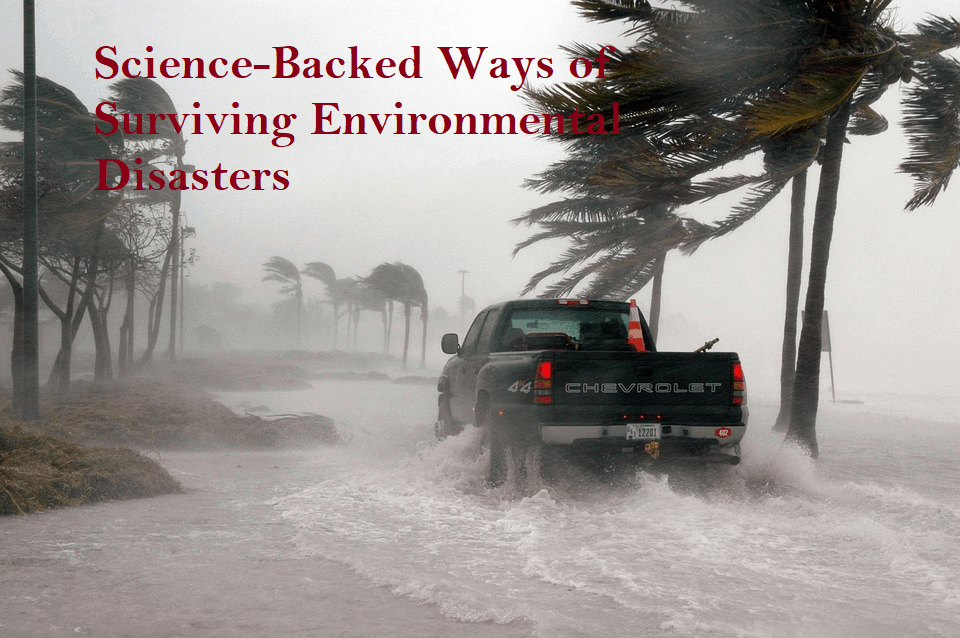
How to Protect Yourself from Natural Disasters (science-backed)

December 14, 2018 M.D. Creekmore

key-west-FLOOD

by Roger Gallager

Have you been seeing tsunamis, earthquakes, volcanic eruptions, devastating hurricanes and other natural disasters in the news more often? Have natural calamities become more frequent? According to a report released by the Centre for Research on the Epidemiology of Disasters (CRED), there had been 385 disasters recorded during the 2000 – 2009 period. This figure marks an increase of 233% from 1980 to 1989 and a 67% increase from 1990 to 1999.

This means that the increase in the frequency of natural disasters you see on the television and the internet is no coincidence. There has been a steady increase in natural disasters since 1980. Earthquakes made up 60% of natural disasters from 2000 to 2009 while climate-related events, such as droughts, storms, and floods, had made up the majority of disasters overall, increasing tenfold since data was first collected in 1950.  The resulting economic losses from these disasters were estimated at $446 billion.

Now, the question is, are you and your family prepared to face a natural calamity? According to a study conducted by the University of Iowa, College of Public Health which was published online in the American Journal of Public Health, older Americans are not adequately prepared to face natural calamities likes tornadoes, floods, hurricanes, and earthquakes.

Only one-third of the 1,304 adults interviewed said they had read information or participated in a disaster-preparedness program while fewer than twenty-five percent reported having emergency or contingency plans. A disturbing fifty percent of the respondents said they would not know where to seek shelter if they were forced to evacuate their home and about a quarter said they did not have access to transportation during emergencies.

Are you one of these people who are not prepared to face natural calamities? If the world’s worst disasters were to hit your city next week, would you know what to do for survival? If you are not sure, you better take a look at our seven ways to survive environmental disasters.

Surviving a Flood:

Flooding can be caused by different phenomenon. It can be natural, like excessive rain or a tsunami or man-made like the opening of a dam. A flood can develop slowly, over time or rapidly, as in the case of flash floods which can develop in just a few minutes and without visible signs of rain. A flood can be limited to a neighborhood or a community or very large and span the entire river basins or multiple states.

  1. Be aware if your area of residence is at risk of a flood. This is the first thing that a prepper should do. It is unwise to rely solely on history to determine whether your area is at risk of flooding. A number of factors which include, but are not limited to, rainfall, topography, flood-control measures, river-flow and tidal-surge data, and changes due to new construction and development can affect your area’s risk of flooding.
  2. Elevate electric panels, water heaters, and other electrical appliances in your home to reduce the chance of short-circuiting and accidental electrocution during a flood.
  3. Create an evacuation plan and route in case you have to evacuate your home. Be aware of the designated safe areas you can go to. Prepare food kits for natural disasters that you can easily take with you if you have to leave your house. It would help to stock up on your food storage through food preservations for emergency situations.
  4. If there is a possibility of a flash flood, leave your home and move immediately to higher ground. Do not wait for instructions to move. Evacuating may also cause a shortage in available food supply. During these cases, hunger becomes a very real threat. To survive, one must rely on food storage.
  5. While evacuating, avoid walking through moving water. Six inches of moving water can make you fall. If you have to walk in water, walk where the water is not moving. Use a stick to check the firmness of the ground in front of you.
  6. Do not drive into flooded areas. If floodwaters rise around your car, abandon the car and move to higher ground, when water is not moving or not more than a few inches deep. You and the vehicle can be swept away quickly. If your vehicle is trapped in rapidly moving water, stay in the vehicle. If the water is rising inside the vehicle, seek refuge on the roof.
  7. Stay on higher ground even if the floodwaters seem to be receding. There is no telling when another flash flood may occur.

Surviving an earthquake:

A calamitous earthquake is a violent shaking of the ground that can cause massive destruction to people and property. The most common cause of earthquakes is the moving of subterranean rocks to release tension that has accumulated over time.

  1. As with every natural disaster, try as much as you can to assess how much you are at risk of an earthquake. It is much harder to predict an earthquake-prone area compared to other natural disasters. The best one can do is to avoid building in areas which have soft rock foundations as these areas are prone to take more damage in the event of an earthquake.
  2. Most injuries caused by earthquakes are from falling objects hitting people. You can avoid this by fastening shelves securely to walls, placing  large or heavy objects on lower shelves, storing breakable items such as bottled foods, glass, and china in low, closed cabinets with latches and fastening heavy items such as pictures and mirrors securely to walls and away from beds, couches and anywhere people sit. You can also brace overhead light fixtures and top heavy objects.
  3. Earthquakes also usually cause fires as every household is filled with flammable items that can ignite easily when dropped or mixed together. That is why it is important to store flammable materials such as weed killers, pesticides, and flammable products securely in closed cabinets with latches and on bottom shelves.
  4. Always remember three things when it comes to an actual earthquake: drop, cover, and hold. Drop to the ground; take cover under tables or other solid pieces of furniture, and hold on. Remain stationary until the earthquake ends.
  5. If you are outdoors, stay away from buildings, streetlights, and overhead wires. Try to stay where you are unless there is imminent danger.
  6. After the earthquake, it is best to leave your house or building even if it seems to have taken no damage. Beams and foundations may have been broken which might cause collapses that might gravely injure you. In case of earthquakes with strong magnitudes, do not attempt to enter your house unless ensured safe by an expert.
  7. Even if your house and your family manage to take no damage from the earthquake, your surroundings and community could be extremely damaged.  In cases such as these, there might not be a steady stream of a dependable food supply. It would be best to be prepared for these cases by having emergency food ready and having the best survival kits for the situation.

These are just two of the natural disasters that you must be ready to face. Always remember that when it comes to natural disasters, always be aware, prepared, and alert. You never know when disaster might strike.

Filed Under: Bugging Out, Prepping

  • « Go to Previous Page
  • Page 1
  • Interim pages omitted …
  • Page 8
  • Page 9
  • Page 10
  • Page 11
  • Page 12
  • Interim pages omitted …
  • Page 15
  • Go to Next Page »

Primary Sidebar

Subscribe to Blog via Email

Enter your email address to subscribe to this blog and receive notifications of new posts by email.

Join 7,199 other subscribers
  • Amazon
  • Facebook
  • Substack
  • Twitter
  • YouTube

“Do more with less.”

– Minimalist proverb

Recent Posts

  • Just so you know
  • Weather Update for My Corner of Appalachia
  • Why I’m Ordering Ivermectin + Mebendazole Every Year
  • The Website’s Shutting Down (But Here’s the Plan)
  • You Are Hated! Start Training Like It!

Footer

Recent Posts

  • Just so you know
  • Weather Update for My Corner of Appalachia
  • Why I’m Ordering Ivermectin + Mebendazole Every Year
  • The Website’s Shutting Down (But Here’s the Plan)
  • You Are Hated! Start Training Like It!

More about me

Books I’ve written

Books I’ve read

Follow Me on YouTube

Follow Me on Facebook

Gear I Use and Recommend

Newsletter

Search this site

Follow me elsewhere

  • Amazon
  • Facebook
  • Substack
  • Twitter
  • YouTube

© 2008–2025 M.D. Creekmore · As an Amazon Associate, I earn from qualifying purchases.