• Skip to main content
  • Skip to secondary navigation
  • Skip to primary sidebar
  • Skip to footer

M.D. CREEKMORE

  • Blog
  • Books
  • Newsletter
  • Gear I Use
  • About
  • Contact
  • Facebook
  • YouTube
  • Blog
  • Books
  • Newsletter
  • Gear I Use
  • About
  • Contact
  • Privacy Policy
You are here: Home / 2018 / Archives for August 2018

Archives for August 2018

Home Defense and Fortification For SHTF

August 31, 2018 M.D. Creekmore

The Top 50 Things to Disappear from Store Shelves during an EmergencyKnowing how to defend your home from home invasion and attack is an important survival skill and one that you should master so you can protect yourself, your family and perhaps, your community from the roving bands of the unprepared after TSHTF (the shit hits the fan).

This his article is meant to be a crash course in home defense tips for preppers however the information is also vital for anyone living in rural areas where help from police maybe 30-minutes or more away or even non-existent because of a lack of phone service where you and your family will be the frontline of defense for your home and property.

Well, let’s get started…

OCOKA is a military term that stands for – Observation and fields of fire, Cover, and Concealment, Obstacles, Key Terrain, Avenues of Approach. When setting up retreat and home defenses OCOKA should always be kept in mind and each principle addressed when considering ideas for DIY home security for preppers.

Following these five key principles, you will greatly improve your home security and survivability. Let’s take a quick look at each in more detail.

Observation and Fields of Fire

You need to be able to see a potential threat at the earliest opportunity if you can see the threat early, and hopefully, before that threat see’s you, then you can make the correct decisions to either make contact, hide, or prepare to defend your area with force.

Can you observe all avenues of approach from your retreat? Do you have a full 360 degrees of view around your property? Are there areas that intruders could exploit to get close and possibly steal from, loot or attack you without being seen?

If forced could you fire upon an attacker from all angles without them being able to hide from view or without you possibly accidentally, shooting your neighbors or damaging key resources? If not then you need to get to work clearing obstacles that limit your view and ability to fire upon an attacker if you’re forced to do so.

Cover and Concealment

Cover is protection from bullets and concealment is something you can hide behind where an attacker cannot see you, but concealment offers no protection from gunfire. No matter what you’ve seen in the movies, car doors, kitchen tables, typical home entry doors, or the bed mattress isn’t cover and will not reliably protect you from being struck by bullets as they pass through.

If there isn’t any natural cover at your retreat, then you’ll need to get to work now constructing something that will protect you from bullets. You could build some decorative concrete or rock walls, tall raised flower or garden beds. These could provide effective cover and still allow your home to bend in with other homes around you and not look like a fortification.

It’s also a good idea to have a supply of sandbags on hand that can be filled with sand and/or dirt to provide an effective way to put up cover quickly in needed areas. Even unused trash cans that are filled with sand or dirt can work well if you have several to work with. Just remember that the area between the cans doesn’t provide effective cover, only concealment, no matter how close that you push them together.

Obstacles

Home Defense TipsObstacles are meant to slow or stop an attacker or to force him to go in a different direction either away from you or into a position where he is more vulnerable to you; preferably, into an area that offers him no means of cover or concealment.

One of the simplest and effective obstacles that you can put up is a fence. Don’t wait until a disaster; get to work putting up a fence now. It will increase your security and probably, your property value. The key, to success here, is to take a look around at the other houses in your area and note what types of fencing is already in use and put up a similar type around your property. The key is to blend in with everyone else; this will help you to avoid becoming a target.

Obstacles can also be used to stop vehicles from entering your property or neighborhood. For example, falling several trees close together in an interwoven pattern can be a very effective obstacle that can even stop tracked vehicles, if done correctly.

No matter how strong the obstacles that you put in place are given enough time an attacker can work through and remove that obstacle if given enough time by being unchallenged, meaning that key areas and avenues of approach should be blocked by obstacles and covered by observation – this will give you and your group early warning and time to escape or mount an offensive attack against the trespassers.

Key Terrain

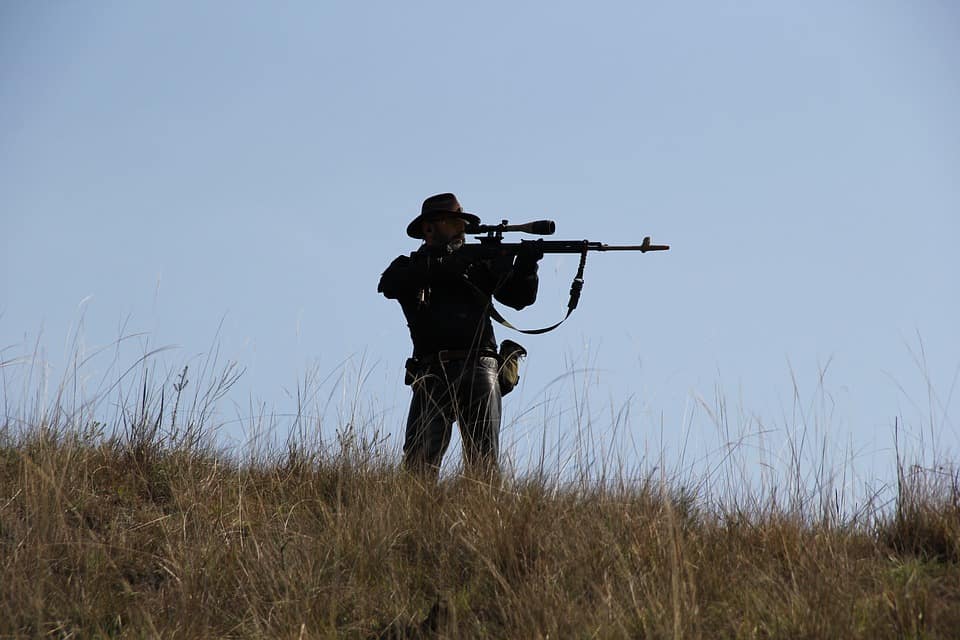
Key Terrain is any piece of terrain that offers an advantage to whoever controls it. Think the high-ground. If you can take the high-ground it can drastically increase your observation and offer an advantage if your area comes under attack. Take control of and retain that key terrain, you don’t want a potential attacker to gain control of that area and be able to use it to watch you, or worse use it to attack you or your area. One lone sniper could use the advantage given by such key terrain to wipe-out your entire family, group or community, with a few well-placed rifle shots.

Even if you’re in an urban area or the ground for miles under your feel is flat any taller than normal buildings can be viewed as key terrain or the high-ground. Control these and use to your advantage.

Avenues of Approach

This goes hand-in-hand with observation and fields of fire – look around and note the most likely avenues of approach that an intruder or attacker would take to reach you. Watch roads, pathways, waterways and open areas that lead up to your property, key terrain as mentioned above will offer a huge advantage here. And remember the father you can see the threat the better, the distance will give you more time to decide what needs to be done and how to do it, depending on the threat presented.

OKOKA: Observation and fields of fire, Cover, and Concealment, Obstacles, Key Terrain, Avenues of Approach. Memorize it and use it when setting up your retreat defenses. Now let’s look at a few more key defensive strategies and points.

Staying Hidden

No doubt about it; the surest way to survive a fight is to avoid getting into one in the first place. Too many preppers have an offensive mindset when it comes to retreat defense. Sadly, many will suffer for it. Forget about the macho BS, there is no shame in hiding until a threat passes by, in fact, it’s the smart thing to do.

As a family, or small survival group you cannot afford to risk injuries or worse casualties because you let your ego driven Rambo fantasies to guide you into taking offensive action when it could have been avoided it. However, you should be ready to violently, defend your area and retreat if a confrontation cannot be avoided.

Combat Multipliers

A combat multiplier is anything that makes you and your group more effective or more difficult for an attacker to defeat. You should amass as many combat multiplies as possible now, before the time of need. You don’t want to wait until the marauders are coming through the window to start thinking about it, then it will be too late – don’t put off until tomorrow what should be done today, your life depends on it.

Things like knowing your terrain, improvised alarms and boobie traps, holding key terrain, having long-range weapons, night vision equipment, body armor, two-way radios, semi-automatic weapons, putting in obstacles or reinforcing natural ones, camouflage, mobility, trained guard dogs etc. are all combat multipliers and should be considered in your retreat defensive plans.

Funneling the Attack

Funneling the attack in the simplest terms means using roadblocks (both natural and man-made) to “guide the attacker(s) into a place of your choosing and where you have a definitive tactical advantage.

Ambush and the Element of Surprise

An ambush can be used as both an offensive and defensive tactical maneuver, for example, an ambush could be used to attack a convoy in an offensive maneuver outside of your perimeter, and also to defend against an attacker or attackers, that have entered your property or home. Hide and wait until the attackers have reached a predetermined position where they are most vulnerable, then spring the ambush.

An effective ambush doesn’t always mean shooting and killing those being ambushed, while gunfire is an option depending on the circumstances, you can also us an ambush to capture potential attackers and then make a decision on what to do with them after you’ve gained more knowledge through questioning or interrogation.

Early Warning is a Must

home defense tips
This is the last thing that you want to wake up to a 3:00 AM – effective early warning systems are a must!

The sooner you know an intrusion is going to happen the better, time will allow you and your group to make a decision to stay and fight or make a speedy get-away. If you decide to stay and fight, early warning will hopefully allow you the time to get into the best possible defendable positions, or to plan an effective ambush.

Early warning for trespassers or attackers can come from a number of different options. For example; informants, lookouts placed in key locations that lead up to your retreat, dogs, motion activated lights, improved alarms, spotlights, security cameras etc.

It’s best not to rely on just one type of early warning device because it might be bypassed or could fail. For example, you could have a lookout a mile or two away with a two-way radio overlooking a road or trail that leads into your location, and then improvised alarm devices a little further in, and then guard dogs on the outskirts and perimeter of your property or retreat location.

Layered Defense

You should divide your area into three layers of defense – the outer layer, intermediate layer and the inner layer. The outer layer could be the area as far as you can see out past your property line, the intermediate layer could be anywhere inside your property-line and the inner layer would be your home. With each layer providing increasing levels of security and protection.

You will have a plan of action for each layer of defense. For example your outer layer could be a watch and report area only with no action being taken against anyone that wonders inside that layer – unless, of course, you know that they are planning to attack and loot you at your location, then defensive action could be taken to prevent them from ever reaching your second or third layer of defense.

Your second layer would probably be your property line; this would preferably be marked by a chained link or barbed wire fence. Anyone crossing into this area is probably up to no good and should be dealt with aggressively; the extent of your aggression will depend on the depth and length of the disaster.

Your third layer would be inside your home and in most cases, deadly force can and should be used here.

The key to an effective layered defense is for you and your group to know where each layer begins and ends and to have a predetermined plan of action for each layer when that layer has been breached, and to practice each scenario until it can be done effectively, even when you’re tired and hungry.

Misinformation

Misinformation is simply, leading anyone your group to believe something that you want them to believe that isn’t true. Let’s say for example that you know or suspect that someone or a group is listening in on your two-way-radio communications, to gain Intel before they loot or steal from you. You can use this fact to your advantage, by feeding them false information via your two-way communications or through know informants.

For example; you could make them believe that your group is larger or better armed than you are or lead them to think you’re going to be in one place but in reality, you’re setting an ambush, or planning your escape. The key is to make it believable and have a workable plan where you can use their response to your false information to your tactical advantage.

False or misleading information could also be used to make your neighbors think that you are worse off than they are. For example; you could show up at their door begging for food, when in fact you have a well-stocked pantry.  Just don’t be too aggressive by demanding that they share whatever they have with you because you might get shot if they mistake you as a threat.

Official looking signs can also be used to good effect when planting seeds of false information, for example; you could post official looking “Food and Water 5 Miles” with an arrow pointing down the road and away from your location. Use your imagination and I’m sure that you can come up with other ideas for signs that will mislead and confuse strangers that wander into your town or onto your property.

Defensive Positions

defending your home

Most homes were not built to defeat gunfire and bullets will pass right through the walls and riddle anyone caught in between. It is best to defend your home from the outside where you have more visibility and mobility. This is where your early warning devices come into play, by knowing when someone is approaching your location but before they get there, you and your group have time to get into a defensive or ambush position.

Sandbags are very useful and effective when setting up defensive poisons that offer ballistic cover. They are cheap enough (or can be improvised) that you can stock up on hundreds of bags for under $100 and can be filled with sand or dirt that you dig up from your property.

Although; you don’t want to defend your home from the inside it’s still a good idea to build up the area around and near the windows with filled sandbags. This will offer cover if for some unfortunate reason you were surprised and trapped inside the structure.

Lining the area inside your pouch up to the railing with filled sandbags is also a good idea. This will offer a protected shooting position that can be occupied quickly if an attacker or trespasser were to get inside your second layer of defense before you have time to man your main defensive positions away from your main living structure.

Your main defensive positions should be set up in key locations around your property and can range from hardened pillbox type structures with thick reinforced concrete or rammed earth walls to simple spider holes, or a mixture of both.

Don’t Look Like an Easy Target

Don’t be an easy target, and even if you are, you can use misinformation to make would be looters or attackers think that you’re far stronger and better armed than you really are. If they think you are a hard target hopefully they will think that going up against you is not worth the risk and move on in search of an easier target.

OPSEC – Operational Security

We hear this all of the time in prepper and survivalist circles, OPSEC aka operational security and it is very important now and will be a major factor toward keeping you and your group secure after the balloon goes up. The number one rule of OPSEC is to keep your mouth shut – everything should be done on a need-to-know basis and most people don’t need to know anything about what you and your group are doing.

A Plan of Retreat

No matter how well prepared or strong our defenses, we could be faced with a superior force that greatly outnumbers and outgun us, where staying and fighting would be suicidal. You need a plan of retreat, preferably, a way to retreat without being seen or confronted by the superior force. An escape tunnel from your home that leads to a hidden and safe evacuation point would be ideal. But most preppers don’t have the room or the resources to put such a plan and tunnels into place.

Again; this is where early warning by lookouts with two-way-radios and alarms can save your life. If you know a threat is approaching you have time to evaluate the threat and make a decision of whether to stay and fight or retreat. You should have a predetermined destination where everyone in your group knows to meet up if you’re forced from your retreat area.

Also having caches of first-aid, water, food and ammo along the way and at the safe location is a good idea. Get those into place now, before the time of need. Also, each member of your group should have an escape or “bug out bag” that can be quickly grabbed as the escape plan is being put into action.

I know many survivalists/preppers will resist the thought of retreating from their retreat, preferring to stay and fight even if defeat and death are certain. You know; take out as many of those SOB’s as possible before they take your location and while this is admirable, it isn’t the best decision.

The escape can be used to buy you time to get better organized and plan for a counterattack where you can ultimately, take your property back from the aggressors. I’ve talked to several preppers who have their main food caches hidden on their property while having a separate smaller cache out in the open for looters to find if they make it that far.

But the surprise is that those preppers have poisoned their “decoy cache” of food items ( I don’t advocate doing this but it is what some preppers are doing). So they plan to retreat, wait, then come back and remove the looters/attackers after they have died of the poison.

Well, folks, there you have it… my best ideas for DIY home defense tips for preppers when the shit really hits the fan…
Filed Under: Security

“What the Young Man Should Know” From Harper’s Magazine 1933

August 30, 2018 M.D. Creekmore

Skills Every Young Man Should Know

By Robert Littell, 1933

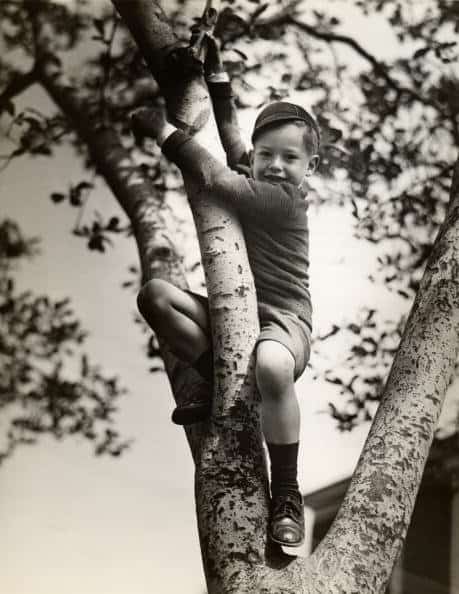
Glancing out of the window, I can see the subject–and eventual victim–of this inquiry, dangerously perched in the crotch of an old chestnut tree, about fifteen feet above the ground. Should I rush out and tell him to get down? Or should I let him be, hoping that he won’t climb any higher, or, if he does climb any higher, hoping that he will not fall?

It is probably all right, so I shall not bother him. Tree climbing is one of the things he has learned all by himself. There aren’t many things he will have the fun of learning all by himself. Most of the things he is going to learn will be hammered into him–Latin and history and grammar and mathematics up to the binomial theorem.

I’m not worried about this progress up the ladder from high school or boarding school to college and from college to law school or medical school. It seems incredible that the young biped now perched in the chestnut tree will someday, without stupendous effort on my part or on his, eventually graduate from college or even become a Ph.D.–but he will almost certainly. The strictly educational side of his life, once he gets his hands firmly on the lowest rung of that ancient ladder, will take care of itself.

What concerns me is something entirely different, a good deal more like tree climbing. I have never heard of a school or college that gave a course in tree climbing. And human life is full of useful accomplishments and rewarding experiences, like tree climbing–like making a speech, for example, or being able to take care of oneself on a camping trip: abilities that seem to me at least as valuable as a knowledge of conjugations and the dates of battles–perhaps (if one is to become a self-sufficient well-rounded human being) much more valuable. What are those abilities, skills, or accomplishments, those extra-curricular proficiencies that every man should have in order to be rounded and self-sufficient, and when can he acquire them, and how?

Let me return–without looking at him, for he is probably by now thirty feet above the ground–to the seven-year-old imp in the chestnut tree. Impartially adding up to myself his skills other than tree climbing, I find that he cannot count money or give change, that he is unable to tie his own shoelaces, that he would most certainly starve if left alone in a well-stocked kitchen, but, on the other hand, that he can perform a rather startling back somersault off a diving board, that he speaks and understands elementary German, and can sit down at the piano and play, with only a few mistakes, a Mozart minuet.

Clearly, to this handful of skills and accomplishments, he must add others, many others, before he is even on the road to becoming a self-sufficient and well-rounded young man. Leaving all formal subjects out of consideration, he should learn how to:

  • Swim
  • Handle firearms
  • Speak in public
  • Cook
  • Typewrite
  • Ride a horse
  • Drive a car
  • Dance
  • Drink

And speak at least one foreign language well

The list does not end there. There are several dozen mental and physical skills that I should like him to acquire. He will acquire some of them in the mere course of growing up; he will acquire some of them more painfully, as the result of adult pressure; there are others that he will avoid, and he will eventually be punished for their omissions with not a little discomfort and social misery.

Ordinary education, even high-priced education, will not guarantee him the essential skills, and some of them are better learned after “education” is over. It is up to me to set about making a list of those skills, it is up to me to see to it that he gets them, because they are skills of hand, eye, ear, or brain which will enlarge, deepen, and ripen him as a human being.

But how, you may ask, can a young man be enlarged by learning how to handle firearms? In what conceivable way will he be ripened by knowing how to cook or drink?

Patience… In asking what these things are that every civilized, intelligent, educated young man should know, remember that I am thinking of skills, not contents, of outside interests and non-scholastic activities rather than of the stream of Latin, Greek, physics, social sciences, Jacobean poetry, and elementary bee-keeping which, from kindergarten to senior year, will moisten, but not clog, the sieve that is his mind.

And so let me hasten to turn away from the mountain range of modern education which threatens to cast its shadow over this discussion; let me mention once, and then not mention again, the project method, John Dewey, intelligence quotients, and the Dalton plan.

The average high school or boarding school is not modern and will give your son and mine little beside formal education and even more formal sport: one will get him into college and the other may leave him with a peculiarly atrocious form of high-athletic patriotism. If we parents do not supplement what is given by the usual schools, our sons will come out of them mere Christian stockbrokers with an abnormal craving for bodily exercise.

If we want our sons to be able to drive a car, speak French fluently, play the piano, set a broken leg, and make horses do their bidding we shall have to look outside of the schools and colleges. And I submit that he who cannot do these things is not completely educated.

The list of skills, as distinct from book learning, does not include mere parlor tricks, such as playing the ukulele, fortune-telling, a startling acquaintance with the insides of the Encyclopedia Britannica or other accomplishments whereby the fear-psychology advertisements promise to make their victims the life of the party or a successful salesman in ten lessons. And the list does not include the special aptitudes necessary to a man in this profession or the accomplishments which aim at the development of his character.

The skills I have in mind may fortify character, but chiefly as a by-product. They will make life richer and, therefore, happier (though happiness itself is usually a by-product). They are tools which will help a man to mine his own vein of gold and some of the gold in the world about him. Some of them will save him discomfort, some of them will bring satisfaction and pleasure, some of them will help him avoid danger, and give him the joy of mastery over animal fears. Some are elementary and taken for granted; others are rarer accomplishments not always striven for.

II

It seems obvious that our young man should know how to swim. More specifically, he should know how to swim at least a mile, dive creditably, and not feel panicky under water. No parents will disagree on this point, since anyone who does not know how to swim stands in some danger of being drowned.

Swimming is valuable not only to preserve life but because the fear of water is instinctive, and the most civilized man is the one who has conquered all that makes him afraid and that can be conquered. Not only should our young man be able to dive courageously and neatly, but he should be able also to revive those less skillful than himself by rolling them on a barrel and pumping their helpless arms; though I do not insist that every young man should be a lifeguard–if he learns all the other accomplishments expected of him he will have little time left for that.

He should be able to drive an automobile well. By well, I mean far better than most people do now. Of all our conveniences the automobile is the most docile, and the most dangerous. It seems to encourage a perilous discourtesy. People who always answer letters, smile when spoken to, and rise when ladies enter the room think nothing of hogging the road or passing on a curve. Our young man should drive safely or not at all. He must know how to change a tire and offer some sort of diagnosis when the engine sputters and dies.

My list does not include a knowledge of how to pilot a plane. Good pilots are born, not made. A man should stay on the ground unless peculiarly fitted for the air. He may be as air-minded as you please, but unless he is air-bodied and air-reflexed, this modern skill should be left severely alone.

He ought to know how to clean, load, and shoot a revolver or a rifle. Someday he may have to, in self-defense. And shooting at a target is also good fun, and an excellent discipline for hand and eye. I should like my son to be able to hit a silver dollar at fifty yards.

And I should insist that he be able to manage a gun so as to injure no one but the target. He must not be the kind of duffer who makes bystanders nervous. I do not advance shooting as valuable for reasons of citizenship or military training. I prefer that what he shoots at be inanimate. He may develop a passion for shooting duck, grouse, and deer–without my blessing; for it seems to me that the longing to assassinate wild animals is a barbarous and childish method of asserting the superiority of the human race, and considerably less civilized than dueling.

As for self-defense, a man should certainly be able to take care of himself in a scrap. He need not learn jujitsu–old-fashioned boxing will be enough. He will get some of this in school. He should get enough of it so that he can give, and take, a good smack on the jaw, whether in friendship or anger. No matter how short the list of his accomplishments, this should be one of them. The Soviet Russians, who have seldom hesitated to use firearms against those whom doctrine forces them to consider enemies, hold boxing to be brutal, and forbid it to their young men. Let us register our disagreement and pass on.

He should learn how to take care of himself in other ways. He ought to know the rudiments of camping, how to build a fire, how to chop wood, how to take a cinder out of his eye, how to deal with a severed artery, how to doctor himself for ordinary ailments. He should also be able to take care of other people in emergencies, to apply first aid, set a broken bone, revive a drunk or a victim of gas, deal with a fainting fit, administer the right emetic or antidote for a case of poisoning.

And he should be able to feed himself, to cook, not only because someday he may need to, but because cooking is one of the fine arts and a source of infinite pleasure. He should be able to scramble eggs, brew coffee, broil a steak, dress a salad, carve a chicken, and produce, on occasion, one first-class dish, such as onion soup. The more he can do, in these days of the delicatessen store and the kitchenette, the better. It is not effeminate, it is not beyond him, and the best chefs are all men.

Our hands, originally the keys used by man’s brain to unlock the whole wide world, are in this age of patent appliances in some danger of withering through disease. A man may go through life without using his hands for anything more difficult than gripping a golf club, signing letters, fumbling coins, lighting a cigarette, opening a bottle, and holding a telephone receiver. When the furnace goes out, or the radio goes dumb, or a door won’t close, or a pipe leaks, he has to send for an expensive expert.

Therefore, our young man should learn to be handy in repairing the trifling faults of his home. Of course, he may live all his life in apartment houses and be spared such attention to trifling faults; but if he must live in apartment houses I had rather have him do so from choice than from incompetence. He should know how to use paint brushes, a saw, a hammer, and other common tools. It is much more fun then he might think; it adds to his self-respect; it satisfies the throttled manual ape, and it supplies one of his few contacts with the remote world of physical labor.

One of the best tools he can use is practically unknown among those who have not spent some time in a newspaper office: the typewriter. Our young man should also have a beautiful and distinguished handwriting. He will not learn this in any school–schools are as likely as not to ruin whatever handwriting he might have had. But handwriting should be reserved for special occasions. The bulk of his writing, particularly if he is a professional man who has much of it to do, should be done on a typewriter.

I do not mean poking at the machine with two fingers, but full-fledged touch-system, capable of turning out three thousand words an hour. This talent will be enormously useful. Spread widely enough, it might even revive the lost art of letter writing and undo some of the harm, the laziness, the mental as well as verbal sloppiness induced by the appalling habit of dictating to a stenographer.

III

He should play one outdoor game well and have a workable smattering of several more. To my eye, an American who cannot throw and catch a ball seems pathetic and grotesque. Perhaps I am prejudiced. And baseball, except for boys and a small band of professionals is a lost cause.

The usual American game is golf. So let him learn, for the sake of human contact and outdoor recreation, to go around the course in at most a hundred and ten. If it were a question of my own son, I should try to steer him toward tennis, a livelier game and prettier to watch, and one with more possibilities of mental release than golf, which often undoes in discouragement, obsession, and emotional strain the good it does as an exercise.

A game should not be an end in itself–as is often true of golf–but a relaxation and a complete contrast to the sedentary. There is something a little sedentary about golf.

The bicycle has gone, yet every boy should know how to ride one. Don’t ask me why. He should also be able to skate, sail a boat, and handle a canoe passably. Fishing is a specialty, like chess: those who have it in them will eventually find themselves doing it; those show do not feel the call need not bother.

It is a singular commentary on college athletics to realize how few sports a man can get along with quite happily after graduation; how quickly the vast array of football, soccer, pole vaulting, basketball, water polo, lacrosse, hurdling, handball, rowing, wrestling, fencing, shrinks in afterlife to golf or tennis, or, surprisingly often, to occasional sweat in the steam cabinet.

Walking is a noble but neglected sport. Americans “hike” once in a long while but seldom walk. And hiking easily becomes hitch-hiking. The automobile, organized athletics, and the fact that American cities and American suburbs are dismal places to walk in have caused American feet to abandon the roads.

For every climber in an American national park–some of which are quite as beautiful as any Alps–there are ten “hikers,” fifty who “pack” on horses, and ten thousand who survey the wonders of nature from the windows of a sedan. Walking in this country is a lost cause, yet walking is one of the habits I should wish my son to acquire.

No other exercise, if indulged in several days at a time in pleasant, moderately wild country, has greater power to remake a man, to iron out his creases, to produce deep health and spiritual calm. The first steps in this elementary course had best be taken in Europe, where the natives do not look upon people with heavy shoes and knapsacks as slightly cracked.

Everyone should know a great deal about animals. It is natural for boys to collect stray dogs, and all children seem instinctively to be much more interested in every other branch of the animal kingdom than their own. It is equally natural for the the city and suburban boy to grow up with no more contact with animals than Mickey Mouse and an occasional trip to the zoo.

Kindness to animals and an understanding of them has become in modern life a skill that must be nourished and artificially trained. I do not expect my son  to become a Raymond Ditmars or a William Beebe. But I shall think him lacking unless he has much to do with animals and gets on well with them.

Civilization has hustled us all horribly fast and horribly far away from our primitive state, from the time, biologically not very long ago, when man’s life depended a great deal on animals. A certain return to nature is healthy and desirable.

The best animal for the purpose of the return to nature is the horse. I insist then that a boy should have many horses in his life, and should learn how to stay in a saddle with pleasure to himself and a minimum of annoyance to his mount. Riding is one of the required studies in my curriculum, valuable both as one of the possible victories over physical timidity and as a source of pleasure.

With riding should go some knowledge of how to take care of a horse. But I should not like my son to become horsey. Horsey people are victims of an obsession even worse than golf. They lead, mentally, four-footed lives, and the spiritual aroma of the Noblest of Beasts clings to them as the smell of straw and manure clings to the stables. It is a clean, time-honored smell, but a bit too pervasive. I have three fears for the future of my son: that he will join the Army, enter the Church, or become horsey.

IV

Trivial, but important because one can be so uncomfortable if one does not know them, are the parlor amenities. A boy should learn how to dance. Good dancers, like aviators, are born, but anyone can learn to do modern real-estate dancing– that form of rhythmically bumping into other people in a small space with a technic dictated by the high land value of the places where dancing is usually found.

The kind of dancing that is really fun is extinct in America. Social dancing is no great art, but essential if one wishes between the ages of sixteen and twenty-two to become acquainted with more than a few specimens of the opposite sex.

As to card games, I play bridge so badly myself that I am prejudiced against it. If one plays bridge well enough to enjoy it, one probably plays too much of it to the exclusion of better things. As a refuge from a boring conversation, it is without equal. Backgammon, though useful for the same purpose, is a monotonous blind alley.

Pool and billiards are specialties. From these indoor pastimes, our student can pick one optional elementary course, which will be given at the pleasure of the instructor.

Even more trivial, but infuriating if one is clumsy at it: tipping. It would be very pleasant to go through life with a knowledge of how to tip naturally, justly, without fear and without reproach.

American social habits being what they are, there is one indoor skill which seems to me not only far more important than bridge or dancing but actually compulsory–drinking. A young man who could convince me that his lips would never touch liquor might be let off by my required course in drinking.

But he would be an exceedingly rare bird, and alcohol is so much more evident a liquid in the United States than water that it is probably quite as necessary for a young man to learn how to drink as it is for him to learn how to swim. If the youth of the country had been taught how to drink, just as they were taught not to eat between meals or swallow before they had chewed, we should never have had Prohibition.

It is a more difficult art than most, for every man should know, long before the time when (according to our customs) he indulges in his first collegiate binge, whether liquor goes to his head, his legs, or his morals, whether he is the type that sings, fights, weeps, climbs lamp-posts, or pinches the girls.

Furthermore, he should learn his capacity and stick within its limits; he should know something about the different kinds of drink, and which drinks produce chaos within him when mixed. By all means, let him leave drink alone if wants to. But since, nine times out of ten, he will drink, let him do so sensibly.

I have omitted from this list all the mention of women, not so much because it is a subject of appalling breadth, leading to endless discussion of chastity, frustration, fulfillment, birth-control, curiosity, mate hunger, and other less printable but even more important topics, but because, in regard to the other sex, the fairly well-educated seem to be at as great a disadvantage as the rest of mankind.

What every high school, boarding school, and college graduate should know is no different from what every man should learn in this darkest and most unteachable province of human conduct. I shall not be the one to tell students of this course what acquired skills can prevent mistakes and heartache. Where sex is concerned, nature clearly intended us to make many mistakes in her hope that some of them would be productive.

I shall certainly be in a minority in suggesting that our sons should know the rudiments of gambling. Gambling might be placed on the same plane as drink–the less use one has for it the better. And the sooner America gives up gambling, not only at card tables, roulette wheels, and slot machines but in stocks and bonds of equally mysterious and unpredictable corporations, the better also.

But gambling in one form or another seems to be a national habit of mind. Almost every American gambles at some time in his life. And there are things valuable in other departments of life which gambling can teach: to be a good sport, to be a good winner as well as a good loser, especially when games are played for money; not to brood over the irrevocable, not to give way to retroactive daydreams and say, “if only I had put a big stack on double zero, if only I had sold out in August 1929.”

October of that year was the rout of the amateur gambler, and the crash revealed this country to be singularly full of poor losers. Important as it is to be a good loser in public, it is even more important to learn not to try to turn the hands of the clock backward in the privacy of one’s own soul.

V

Higher than almost any other accomplishment on the list do I place music. There is no reason why any boy who is not absolutely tone-deaf should not learn how to play one musical instrument well enough for it to be a self-resource and a tolerable pleasure to others. If it were not for the certainty that our educators would make it as deadly during school and as shunned in afterlife as that badly embalmed language, I should advocate the substitution of music for Latin as a required subject.

Music is, or ought to be, an essential part of every civilized human being’s life. Economic necessity, the radio, and the phonograph have put the playing of music beyond most Americans. Our children should bring this back. My choice would be the piano–the violin is far more painful in incompetent hands, and most other instruments are not meant to be heard singly.

The saxophone and the ukulele should be placed on a par with the taking of drugs. There is much to be said for being able to sing parts decently, and any amateur who know the words of even the commonest songs is a phenomenon. I realize that even this is asking a great deal. Perhaps I expect too much. My students will receive a passing grade if they can sit and listen to good music intelligently, and moderately often without pressure.

A civilized man should know how to read. The ability to read, or rather the habit of reading, is a very rare even among intelligent people and has to be taught and kept up if it is not to become rust. The educators tumble over one another with new methods of teaching children how to make sense out of print, but not a single pedagogue, so far as I know, has successfully tackled the problem of how to keep people reading books once they have learned that it can be done.

Incidentally, if someone were to write a little book called How to Read the Newspapers he would earn the undying gratitude of those who search hurriedly for the sports, the market, the obituaries, glance at the headlines, and then throw all of the newspapers on the floor.

If the young man over whose head hangs this list of accomplishments could not find time, because of the necessity of healing for the News or keeping dates with co-eds, for more than a few of these skills, let a fluent reading and speaking knowledge of at least one foreign language be among them, French or German, preferably both.

A parent must expect no help from schools in the teaching of foreign languages–or rather (such is the impression of the student who goes to the average school) in the teaching of irregular verbs. Governesses and tutors, little trips abroad in adolescent summers, can start a false spring which withers and dies as soon as the child goes to a regular school. Everyone learns one’s language as he learns to walk–the learnings of one more ought not to be so hopeless.

But hopeless it is for Americans. Parents should form a foreign-language study association and devise ways to supplement, and combat, the schools. German children learn an amazingly good brand of English without ever crossing their borders. Why can’t we? For one thing, we don’t really want to. Yet we should. An American who knows only English is blind in one eye.

Corollary to this are the skills and experiences that come from travel, and the tolerances and curiosities about other sorts of people that only travel can produce. To travel well, efficiently, without fuss or complaint, without asking why porters are so stupid or blaming the Italians for speaking their own language is no small accomplishment.

But what I have in mind is a wider mental habit, an ability to think like a citizen of the world, to meet foreigners upon their own terms, to circulate freely and receptively in London without giving in to that curious chameleon temptation to be at the same time a little ashamed of one’s own country and to imitate the British.

The British have it over us in two particulars: their educated men talk well in public and handle their own language, in speech and in writing, as if it were a familiar object. Our young man should be able to express himself clearly before a crowd of strangers, without shyness, muddle, or a pathetic resort to “so much as been said and well said” or “I did not expect to be called on.”

Children somehow get over the terror of saying “how do you do” to strangers, but the American adult who can get to his feet, propose a toast, introduce a stranger, voice a civic protest, heckle a windbag politician, and give utterance to an unembarrassed thought is a museum piece.

And a man should command the elementary tool of written language, and be able to put simple things on paper in clear words; for in its essentials writing is not a mysterious art, but a human function, as possible to learn as walking or eating.

On the borderline between the skills like these and book-learning are all such things as a sound smattering of the theater, painting, opera, a good workable understanding of the structure of a business, investments, and banks (which in real life are not quite as they seem in the textbooks of economics).

To these skills and knowledge, I would emphatically add certain experiences. The educated young American male is in peril of too much shelter, too little danger and privations, and would be the richer if he had at some time in his life been without money and gone hungry for several days, been lost or shipwrecked, been robbed, been in jail, and spent a few months working as a common laborer.

This last I place high on the list. Let every educated man, as a necessary part of his education, be thrown into the muddy stream of American industry and see what it is like to swim alone on daily wages.

The list of extra-curricular accomplishments must come to an end, or our young friend will not pass his board examinations. One more desideratum: he should before reaching twenty-two have done something because he wanted to, whether other people wanted him to do it or not–sailed a boat on a perilous course, or shipped as a common seaman, or taken a job on a newspaper, or motored across the continent, or gone off to Europe on his own, or learned boiler-making.

Anything, so long as it was his own idea. And how does one make healthy young middle-class Americans want to do something if all they want to do is enjoy themselves? Ah, if I knew that…

And into the young man’s bag of tricks I should certainly insert the accomplishment of not acquiring property unless he needs it. The other skills I have proposed for him will not cost much money, so that he will be able, and also tempted, to record the increase in his standard of living by adding to his furniture, by buying a better car or an oil furnace, by going in for collections of medieval armor or ancient coins, and similar surrenders to the magpie streak in all of us.

Property quickly crowds out and preys upon less tangible pleasures, and is so often preferred to the fun one can have with one’s body or one’s mind because the joy of its acquisition is so immediate and keen. Property of a decorative or useless nature is, indeed, often more fun in anticipation and at the moment of its acquisition than it ever is again.

Insensitiveness to his personal property, unless of course, it is extraordinarily beautiful, is a desirable skill for any man to have. And, like swimming, bridge, or German, it must be learned and worked at.

VI

What a ferocious program, you may say. And how in the world is it, or even a quarter of it, to be put into effect, granted a normal male specimen of the race? Only a fraction of it will be acquired in school, we all admit. Parents are busy, and except in rare cases parents are the worst possible teachers of their own children, who know them far too well.

Summer camps can do some of it. American schools grant long holidays to their pupils from June to October, and the pupils, if left to themselves, use the holidays to wipe out as much education as possible with a useless, unsystematic, healthy good time.

For this idle summer, the camps substitute a schedule of outdoor skills, and the boy who goes to summer camp usually comes back knowing how to swim, fish, paddle a canoe, toss a flapjack, and not cry too much when hurt. The skills taught by the summer camp end with outdoor sports. Yet parents are dimly aware of how little school teachers really teach, and cling to supplementary education like that of the summer camps when they can get it. Why not enlarge the camps and to their outdoor curriculum add German, taught as thoroughly as they teach canoeing?

Why not, in fact, apply the basic principle of Americanism and have two systems of education competing against each other? On one side, the formal schools, pouring contents into rebellious minds; on the other, summer camps where the children are taught definite humane skills, some of them much better taught than the schools can ever expect to do? Who knows–in course of time the competition might be too severe and the schools might go into receivership.

Ah, I thought so – there is one skill I have forgotten. When, as the result of some trips to Europe, of much prodding on my part, and of summers spent at the kind of summer camp that does not yet exist, I am eventually confronted with a son who can make an onion soup like Savarin, ride a horse like an Indian, play a difficult sonata, speak French and German like a native, and repair a leak in the roof–will not there be something missing? Yes–an accomplishment vitally necessary to an American.

Unusual though this young man should be, he should not seem so. For his own comfort, for mine. Is not a parent’s basic ambition for this child that he be very different from other people, yet manage to seem almost exactly like them?

Filed Under: Uncategorized

How To Start A Campfire With Wet Wood

August 27, 2018 M.D. Creekmore

Survival is all about being prepared for any scenario that comes your way. You should have protections against wildlife; you should have the necessary equipment for building a shelter; you should have extensive knowledge in hunting, trapping, and fishing and many more important elements to stay alive.

But, if you are the especially motivated survivor, you will have prepared yourself for every possible climate, which not only includes acquiring appropriate clothing and footwear but learning the basics of fire making as well.

Firemaking is one of several bushcraft skills every survivor should have in their toolkit. Creating a source of heat during cold weather and all that it entails (snow, ice, frost) can make all the difference when sleeping through a potential blizzard.

Many survivors know how to make a fire when the wood is dry and easily ignited, but making a fire with wood that is drenched by rain or snow can be a challenge.

Being prepared for these scenarios means planning ahead, learning necessary skills and being eager to employ those skills during moments of intense pressure, like surviving in the woods. If you follow these important steps, starting a fire during wet seasons will be no problem.

Prepping Your Pack

One of the most important things you can do to prepare yourself for any kind of scenario is have a well-established pack. Your pack should include everything from warm-weather clothing to cold-weather clothing, heavy-duty boots to sandals, sleeping equipment to cooking equipment and so much more.

The things that most survivors tend to forget are those which have to be prepared before being packed. These things typically include fresh batteries, fuel replacements, and tinder. Tinder is probably the most common and most important thing survivors forget to pack.

Tinder refers to small, highly flammable materials that help ignite kindling when preparing your fire. Tinder can be difficult to find in wet-weather situations because many materials have been dampened, but it is something that can easily be prepared and packed. Some examples of tinder include cotton balls soaked in petroleum jelly, wax-coated wooden toothpicks, paper/wood chippings, dryer lint and other highly flammable, compact items.

Aside from tinder, another important element to remember for starting your fire is multiple styles of firestarter. This includes things like BIC lighters (being sure the fuel level is sufficient), fire steel rods, magnesium, matches, torches and other combustible products.

Tools for chopping wood and shaving branches will become necessary for wet-weather fire-making. You will need some kind of ax for splitting wood, a sharp knife for fraying kindling to make feather sticks, and an extra knife for scraping magnesium or fire steel.

Finding a Spot

The location at which you start your fire will make a huge difference in the amount of time your fire stays lit. Unfortunately for wet-weather survivors, finding a dry place to build a flame can be nearly impossible. Luckily, starting a fire when it’s wet can be made easier if you follow a few simple hacks.

In your pack, you should have some kind of shovel. If not, use a stick and begin digging away at the wet soil to expose the dryer soil below. Removing the top layers of damp earth will help create a basin for starting your fire and give your fire a dry place to burn longer.

I also like to build small grills to start my fire by placing two large, fairly wet logs about a foot from each other and laying soaked pine needles and other tree trimmings over it. The outer logs act as legs, while the needles create a grate-like mechanism. This method allows your fire to burn above the wet soil or snow.

A less labor-intensive option could be simply laying wet tree trimmings on the ground and slowly layering dry wood over the top. The dry wood will catch flame while the wet materials beneath supports the fire.

If you can find a spot that has some overhead cover — like the mouth of a cave, the base of a large evergreen, or inside a shelter you’ve built with your masterful skills — lighting a fire will become even easier. You will be more likely exposed to dryer earth and have a more feasible location for starting a fire and staying protected from the elements.

Another little hack that has worked extremely well for me in the past is splitting logs in half to burn. Damp logs typically have very dry cores, so splitting the logs lengthwise helps expose the more flammable parts of the log. If you have a survival fort complete with a log splitter, consider doing this in advance and storing the split logs in a dry place.

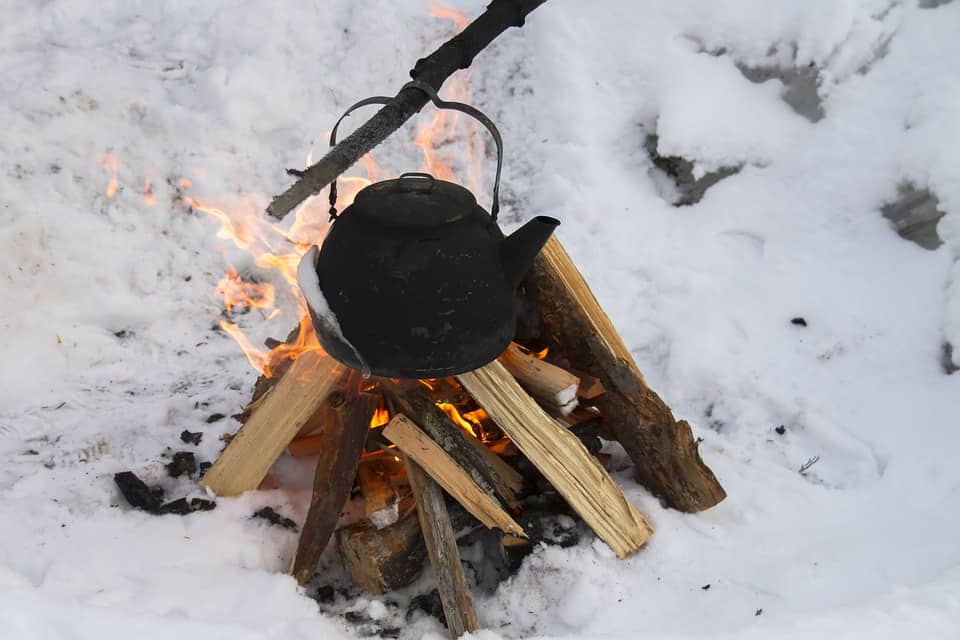
how to build a camp fire

Locating Solid Materials

Having proper materials is probably the most important aspect of building a fire. You have to be sure your materials are flammable or your fire will never light. The hard part is locating these materials in the event of a blizzard or rainstorm when everything available to you is soaked.

The best place to begin looking for dry materials in a wet world is under large evergreen and pine trees. At the base of these trees, there are typically dry, mostly dead, branches still clinging to the tree, above the moisture on the ground. Use your knife or axe to remove these dry branches. If they are still slightly moist, peel or cut away the outer layers of bark to expose the inner, dry wood.

Some dead trees have already fallen and made themselves easier to scavenge for flammable materials. Stay toward the top side of the tree, as the bottom side may be pretty wet. Use the dry bark, inner layers, and dead pine needles as tinder for your fire.

If you happen to be near trees that drop pinecones, look for ones that are fairly dry and surely dead. Pinecones are excellent kindling and actually burn quite hot, giving you a better opportunity to ignite the dry logs and make the fire blaze.

Setting Up Your Fire

There are about a hundred and one different ways to set up a fire, but in cold weather scenarios, there are a few specific tricks that help your fire burn hotter, longer. For instance, the formation of the tinder and kindling is vital for creating a flame in a wet environment.

I prefer to use the log cabin method, which is exactly what it sounds like. Similar to your Lincoln Logs from childhood, arrange the kindling strips in a log cabin fashion, minus the roof. The tinder will fit nicely inside the “home,” and the fire will have plenty of oxygen to gain momentum.

Another common style for lighting fires in moisture is the teepee style. Lean the kindling sticks against each other much like a teepee. The tinder will sit inside the kindling and ignite the larger sticks to make adding larger logs easier. The teepee shapes also allows heat to rise naturally and gives the fire a better chance of burning tall.

Igniting Your Fire

The inner pyro in all of us gets excited when it comes time to actually light the fire. This step is fairly self-explanatory but there are a couple of tips and tricks to make this process faster and safer.

  • Light your fire from the windward side, or the side that wind is blowing into. The breeze will help shift the heat from the flame across the structure and will help fuel the fire with oxygen once it gets going.
  • Light the tinder and kindling structure from the bottom. Heat rises, so starting from the bottom gives your fire a better chance of igniting. Trying to light your fire from the top, like a candle, will not do much good in your attempts to stay warm.

Keeping Your Fire Going

Feeding your fire is a surprisingly meaningful duty. The amount of time you plan to have your fire going relies heavily on the amount of wood you collected in the earlier steps. Without dry logs to continue to feed your flame, your fire will surely burn out and you will surely freeze.

Always be sure you have enough dry wood set aside for the amount of time you are in need of heat. If you plan to stay a whole night by the fire, have a large stack of logs waiting to be burned. If you are not alone, be sure to assign fire buddies: one person to take a sleep break and one person to watch the fire.

An obvious, but important reminder: only throw dry logs on the fire. Often, wet weather fires aren’t burning hot enough to truly burn through damp logs. Damp logs end up smothering the flame, making you start your process over — which is no fun.

Stay Alive and Live Free

My favorite part of starting a fire is being done starting your fire, focusing on keeping it burning, and enjoying the sights around you. Once you have a solid fire built, be sure to rest, relax, catch up on sleep, or roam the nearby wilderness in search of new landscapes to photograph.

Being a survivor is more than just working to live. Once you have done your duties for the day, take in the world and the sights that surround you. Enjoy your experiences in nature and open your heart to the possibility of a world bigger than yourself.

Filed Under: Bushcraft

How To Trap A Cat and Havahart Trap Review

August 24, 2018 M.D. Creekmore

By JD

I don’t like cats. Okay, maybe that’s an understatement. I hate cats. Especially the “free range” variety that you so often find in suburban America. We lived in an area where they were becoming a real problem that animal control wasn’t able to keep up with.

I’d wake up in the middle of the night to cats fighting in the street, find cat crap in my garden and see them just about everywhere on evening walks. The time had come to take a stand.


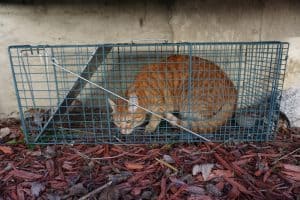
From previous experience, I knew that cats were difficult to eliminate in urban/suburban settings where your options are limited so I did my research and settled on the Havahart live trap (model 1079-B).

I found a combo set that included a squirrel size trap (model 1078) as well, so I bought the set hoping to also reduce strawberry theft in my garden from the local tree rats that most people call squirrels.

My wife was at peace with the purchase because the animals were being relocated. She never asked any questions and I never volunteered any more information. We have an understanding…it works for us.

My first sets were nothing fancy, just laid on the porch in the backyard or in one of the garden rows. The eradication quickly became a hobby and I started researching ways to make my sets more effective.

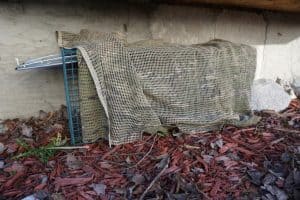
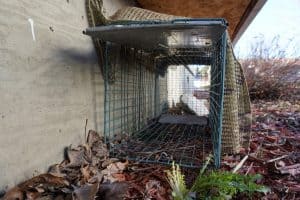
I learned that by placing some burlap over the top of the trap and putting it against a wall or under a bush helped the animals to feel safe entering the trap. My success rates continued to climb.


I tried a number of different baits in the beginning, but canned tuna in the large trap and peanut butter in the small trap were the most successful in luring the game.
After the first month, I had captured 4 cats, 1 small dog, 2 raccoons and 1 possum in my large trap and 6 squirrels in the small trap! Over the years, I’ve even loaned these traps to family and friends to solve their critter complaints and they’ve had similar success rates.

Construction

After 10 years of ownership, both traps have continued to impress me. They have a solid door with steel reinforcements that keep even the smartest animals from escaping (I’ve never had a single animal escape). One piece wire mesh utilized in the body of the traps means there are no seams that can be exploited by the animal. Additionally, the galvanized coating on the trap body prevents rust and corrosion.

I’ve only had 2 problems with either trap: 1- Some minor bending of the spring that activates the door. This is easily bent back into place without the use of tools and with no negative effects. 2- The trigger rod and catch on the pressure plate have needed a little fine-tuning every year or so. Again


this adjustment is made by some simple metal bending (no tools needed).

The solid design on these traps incorporates a minimal amount of moving parts (read: fewer parts to break). I was also impressed with the metal hand guard near the carrying handle that keeps the captured animal from attacking your hand while being transported in the trap.

Durability

These traps are well-made (in the USA) and come with a one-year warranty. I have not had to carry out any maintenance other than the minor fixes to the spring on the door and simple adjustments to the trigger. During a decade of use, my traps have spent a considerable amount of time outdoors in both rain and snow without adverse effects. They work as well today as they did the day I bought them. I feel confident they will easily provide many more years of reliable service.


Ease of Use

I’ve employed a good variety of traps through the years like the Conibear, coil-spring foothold and all sizes of snares. Without question, the Havahart traps are the simplest design I have ever used. They can be used in almost any application, are super easy to set and are just as portable as their more challenging cohorts.

The beauty of this variety of trap is that the animal is unharmed in any way which gives you the option of relocating the animal if


you desire. You should know that releasing an angry possum in your neighbor’s tool shed forges a bond that really stands the test of time!

Even though it’s marketed as a live trap, the Havahart gives you the option of dispatching the animal by providing a secure way to hold it until you are ready to take care of business. In restrictive urban environments, this can be accomplished with a pellet gun or by submerging the trap in a barrel of water.

Sizes and Styles

22 different sizes are available for animals as small as chipmunk and mice or as large as dogs and bobcats.

In additional to the traditional one-door traps, Havahart offers a collapsible variety, a two-door model and an Easy-Set style that makes setting and releasing a simple one-handed operation. Check out their site to learn more: http://www.havahart.com/

Cost and Availability

I cringed when I first learned the cost of these traps, but after 10 years of dependable use and given the ease of employment, I feel the price point is very reasonable. If you crunch the numbers, these traps can provide meat for your pot for pennies on the dollar.

This style of trap has been around for a long time and can sometimes be found used at flea markets or garage sales. The new variety can be found at your local farm and feed type stores or Amazon of course!

Alternatives

Here are some alternative traps that are available:

• Conibear or body grip style-
Pros: Inexpensive and very effective.
Cons: User needs more advanced skill to place the trap, kills the animal (no live option) and are more dangerous to set.

• Coil Spring foothold style-
Pros: Live style trap and can be very effective.
Cons: User needs more advanced skill to place the trap, the animal can be damaged by the trap or chew their leg off to escape. This style is also more dangerous to set.

• Snares-
Pros: Very inexpensive, easy to make your own.
Cons: User needs more advanced skill to place snare, usually kills the animal (no reliable live option).

The Bottom Line

I would highly recommend the Havahart live trap to anyone. If you are new to trapping or live in an urban or suburban environment, there is nothing easier to employ than the Havahart trap. It’s safe to use, extremely effective, quietly works for you 24 hours a day and gives you options on releasing or dispatching your catch.

They’re so user-friendly, anyone can operate these traps. Providing meat for your pot while simultaneously solving your nuisance animal issues has never been easier!

About the Author: JD is the founder of I Will Make You Hard to Kill. His site is dedicated to a wide variety of skills that improve survivability in emergency situations as well as everyday life. He is a SERE Specialist with 18 years of military service teaching aircrew and special operations personnel how to survive, evade, resist and escape at the U.S. Air Force Survival School located at Fairchild AFB, WA.

M.D. Creekmore adds: In my book 31 Days to Survival: A Complete Plan for Emergency Preparedness I give detailed how-to-do-it plans with photos on building a homemade version of the Havahart Live Traps. I also recommend that you get a copy of Being Kind to Animal Pests: A No-Nonsense Guide to Humane Animal Control With Cage Traps.

Filed Under: Bushcraft

What’s The Difference Between Military and Civilian Firearms?

August 22, 2018 Jesse Mathewson

The more it changes, the more it is the same thing. Alphonse Karr 1849

Arguments against civilian ownership of firearms have been debated as far back as the innovation of firearms. I am certain at some point a Roman Cesar or Egyptian Pharaoh also launched campaigns against the evils of the civilian owned swords or spears as well. There is a reason “civilized” nations tend to want no non-government employee ownership of firearms. It is a balance of power, and this is exactly why the astute individuals who refused to sign the Constitution unless it ensured continuing ownership of firearms for all citizens did so.

Interestingly it was the delegate from Vermont who was the initial refuser of the Constitution without the Second Amendments inclusion. It is interesting because Vermont has long been a staunch ally of individual liberty, and only recently has begun to cave into Yankee demands of regulation of natural rights of self-defense. I use the term Yankee to describe those individuals who desire absolute dedication to the state and its employees regardless of the cost. I am a civilian who lives in Arizona and yes, I do not much like what has been occurring most recently in this regards.

However, before we get too far off course, I want to delve into what makes a “military grade” firearm and what makes it civilian. Military grade is a term recently coined to make up for the losses that have occurred by those intent on regulating our natural right to self-defense with their use of the term “assault rifle”. Assault rifle was coined in the 80s by a Californian legislature (Reagan’s legislature) who desired to demonize the idea of semi-automatic, magazine fed firearms. The use of military-grade as a term is actually even more ridiculous and can be easily countered with simple facts.

Military grade applies to firearms that come in military standard calibers, NATO (North Atlantic Treaty Organization) or STANAG (STANdardization AGreement) calibers are as follows.

  • Handgun is 9×19 or 9 mm luger otherwise known as 9 mm parabellum
  • Small rifle is 5.56×45 (civilian standard .223 remington)
  • Large rifle is 7.62×51 (civilian standard .308 winchester)
  • There are other military grade calibers, however, they are not NATO/STANAG calibers but rather calibers used by Eastern Bloc and non-NATO signatories –

Now here is where things become a bit more interesting, military-grade the real definition of this term would mean that a firearm that is used by the military with military standard calibers is military grade. So if you use the United States Army for a point of reference, M16a2 and the M4 carbines are military grade small caliber rifles, SigP320 is a military grade handgun and the Remington 700/M14/Mk14/AR-10 are military grade large caliber rifles. It should be noted that with the exception of the handgun and the Remington 700 bolt action rifle the firearms themselves all have single shot per trigger squeeze and burst or fully automatic capability.

These firearms by definition are the only military-grade firearms in the United States. However, this also means that anything that may look similar may fall under that definition on a legal basis. This is where things get difficult, realistically what preforms the same is different than what looks the same. If looks were all it took to convict an individual than you would have a biased/discriminatory system of justice, right? So why are we okay with using how something looks to judge it in any approach? It is essential to remember a simple reality, not everyone is the same, not everyone has the same or similar circumstances. I am someone who is physically unable to flee from a threat and as I have shown in The article, Why you need to be trained and armed: or how to prevent a fire before it starts; the threat of real violence is greater than even a vehicle accident. This means that if you purchase vehicle insurance, wear seat belts and have working airbags and have no life insurance or plan for self-defense there is a gap in your preparations for life.

Civilian firearms that look like military firearms have been demonized for decades and longer. However, they are very different in function. The civilian AR15 carbine/rifle looks like the M16a2 or in some case the M4 carbine/rifles, though its function is quite a bit different. The AR15 is only capable of shooting one round per trigger squeeze/press. The AR15 is almost always built to exacting measurements, but in performance is not expected to meet or exceed rigorous military expectations. While some manufactures prefer to ensure their firearms are tested to the same specifications, they still cannot perform the same functions as a military grade firearm. Between 3 round burst (3 rounds fired with a single trigger press) and fully automatic (all rounds fired with a single trigger press) the civilian version cannot accomplish these tasks and without massive amounts of background checks and expensive licenses, the average civilian cannot own a rifle that does these things. The civilian AR15 is built without certain key changes to allow it to do these things.

The receiver of an AR15 civilian rifle does not have the appropriate cutouts for installation of the mechanical differences that allow for burst or fully automatic fire. The reality is the civilian AR15 is not designed to go to war or fight long drawn out battles. In fact, in many cases where criminals were shooting at people to cause harm using civilian AR15s they had malfunctions occur because of this reality. Military grade are designed specifically to function under adverse conditions and during drawn-out engagements. The essential thing to remember is that these are tools, and honesty are far more civilized than using a sword or bow and arrow to dispatch attackers. On a personal note I would rather be shot than stabbed. There are other minor changes that occur with some military firearms, though the large percentage of differences are based in volume and rate of fire.

Quite simply the differences between military grade and civilian are extreme. And the average civilian will never use a military grade firearm or own one. They are expensive to own and use and illegal without large fees and background checks that take several months to complete. The next time you read an article from any major news source that talks about assault rifles and military grade, remember this simple reality of journalism, what is reported is the rare event not the regular event. Normal and standard does not sell papers or airtime for advertisers. Rather it is what can be seen as extraordinary and amazing that is what you will see most often in media reports. It is important to always know facts and have access as much raw unfiltered data as possible. I suggest using FBI statistics and weigh data used against other sources to come up with a median that you can base decisions in.

Understanding that the use of AR15s in criminal activity is actually quite low when compared to overall ownership of these same firearms will make things much easier for you. In looking at concealed carry applications if others wish to use the term in reference to evil machines, than simply purchase and use handguns that are not used by your military. For the United States this means, the SIG M17 or M18 (civilian version is the SIG P320) and the phased out Beretta M9A1 or the Glock 19M (which is not available for civilians). Military grade firearms are almost always different designations and include a variety of changes from civilian. On handguns you will find that military grade handguns have a lanyard ring at the grip for securing the firearm to self in case it falls out of the holster. Additional requirements for military-grade handguns are as follows.

  • Integrated rail
  • External safety
  • Adjustable for ergonomics by means of grip inserts
  • grip panels
  • front or back straps
  • different triggers available
  • higher benched accuracy requirements

The question posed was, what is the difference in firearm types? The answer is, military arms are designed for military use, civilian arms are designed for civilian use! Since 1934 it has been illegal without special permits and background checks to own or use fully automatic firearms eg., military grade firearms. There have been dozens of small and major gun control acts passed since the founding of this country and the ratification of the Constitution. The reality is simple, guns scare people who do not have them or have experience with them. In today’s world, we want to blame anything – other than our own decisions – for events that occur. This results in several generations that believe everyone else is the problem, and they are victims.

As always thank you for reading and if I missed anything as I am certain to do, do not hesitate to comment and make suggestions. I learn from you as much as you may learn from me.

Free the mind and the body will follow – and please check out TN Concealed Carry right now!

Filed Under: Uncategorized

What Animals Should I Keep On A Small Homestead?

August 20, 2018 M.D. Creekmore

The chicks are growing up fast and should start laying in a couple more months… Yea!

Have you always dreamed about starting your morning with farm fresh eggs and fresh milk from your own cow or goat? Even on a small homestead, you can make that a reality.

And you will be happy you did. Raising animals will not only provide a source of food and milk for your family, it will provide you with a sense of independence as well as life experiences you can pass down to your children.

Before you begin, we will help you with the questions you need to ask and the planning that goes into bringing farm animals to your homestead.

1. Can you have farm animals on your property?

For obvious reasons, this is the first question you need to go over. Earlier in the series, we talked about purchasing your homestead. And one of the questions to look into was whether you can have farm animals, or anything beyond cats and dogs, outside. But maybe you are inheriting land or want to turn your current property into a homestead.

Many cities and HOAs will have covenants against any type of farm animals on your property. Make sure you aren’t on the wrong side of the law.

2. What do you have space for?

The size of your property will limit what you can have on your homestead. While you will likely see or hear differences on how much space each animal needs, just take this in to consideration.

As you plan what you want, make sure your property can handle it.

3. What animals do you want?

After you have figured out what you have space for, consider what animals you want on your homestead. And for what purpose.

For a smaller homestead, chickens are probably the most common or popular animal, to begin with. They will provide eggs and meat. Ducks will do the same, while rabbits will provide meat.

As you expand your homestead, animals like goats and sheep will be a great addition. Not only do goats provide milk and cheese, they will also clear land for you. And sheep will provide wool as a bonus.

Cows will provide a source of milk or meat. But they will also require more space and more feed. And then there are pigs. They are more work than traditional livestock, but they are both helpful for your homestead and provide great meat.

A wildcard is bees. They are great to have around your garden and, of course, you get free honey. Just make sure you know what you are doing as bees are pretty dangerous. You can learn more about beekeeping here. (affiliate link)

4. How big should I start?

It’s easier to start with smaller animals, like chickens and ducks, before moving up to cows or goats.

We understand the urge to start as big as you can but recommend taking your time. You will likely face your biggest obstacles in the first couple years. It will just be easier to correct that with a smaller flock or herd and then build up with time.

5. How can I involve young kids?

There is just something about young children and animals. For most children, their connection to animals will be picture books or an occasional trip to the zoo. But not on the homestead.

Kids can help by collecting eggs, filling up livestock waterers, feeding the animals, cleaning the chicken coop and milking the family cow. And the bigger kids can help with processing meat. Along the way, they will learn where food comes from and the values of hard work and responsibility.

By preparing, and taking your time early on, the animals on your homestead will provide a great source of food, milk, and pleasure for you and your family for years to come.

If you want even more in-depth prepping then please check out my best selling 176-page book “How To Survive The End Of The World As We Know It – Gear, Skills, and Related Know-How. It’s available in paperback and well as Amazon Kindle.

Filed Under: Homesteading

  • Page 1
  • Page 2
  • Go to Next Page »

Primary Sidebar

Subscribe to Blog via Email

Enter your email address to subscribe to this blog and receive notifications of new posts by email.

Join 7,202 other subscribers
  • Amazon
  • Facebook
  • Substack
  • Twitter
  • YouTube

“Do more with less.”

– Minimalist proverb

Recent Posts

  • Just so you know
  • Weather Update for My Corner of Appalachia
  • Why I’m Ordering Ivermectin + Mebendazole Every Year
  • The Website’s Shutting Down (But Here’s the Plan)
  • You Are Hated! Start Training Like It!

Footer

Recent Posts

  • Just so you know
  • Weather Update for My Corner of Appalachia
  • Why I’m Ordering Ivermectin + Mebendazole Every Year
  • The Website’s Shutting Down (But Here’s the Plan)
  • You Are Hated! Start Training Like It!

More about me

Books I’ve written

Books I’ve read

Follow Me on YouTube

Follow Me on Facebook

Gear I Use and Recommend

Newsletter

Search this site

Follow me elsewhere

  • Amazon
  • Facebook
  • Substack
  • Twitter
  • YouTube

© 2008–2025 M.D. Creekmore · As an Amazon Associate, I earn from qualifying purchases.