• Skip to main content
  • Skip to secondary navigation
  • Skip to primary sidebar
  • Skip to footer

M.D. CREEKMORE

  • Blog
  • Books
  • Newsletter
  • Gear I Use
  • About
  • Contact
  • Facebook
  • YouTube
  • Blog
  • Books
  • Newsletter
  • Gear I Use
  • About
  • Contact
  • Privacy Policy
You are here: Home / 2019 / Archives for November 2019

Archives for November 2019

Do Ramen Noodles Expire? Myths About Ramen Noodles Exposed!

November 13, 2019 M.D. Creekmore

Ramen Noodles
Ramen Noodles… Do They really expire? What you need to know!

by Kelly L

Ramen noodles come in different package sizes that can be consumed. The restaurant version of Ramen noodles are made on the spot and should be consumed immediately and not stored. The popularity of the instant Ramen noodles could be derived from the fact that restaurants readily make similar delicious versions of the Ramen noodles for a high price. Do Ramen Noodles Expire and if so how long is the storage life?

To answer your question – The shelf life of instant Ramen noodles is around two years from the time the manufacturer produces the noodles. When shopping for instant Ramen noodles, the first thing a consumer should look for is the expiration date. The expiration date should be long enough from the date of purchase so that one can enjoy the inexpensive nutritional meal. People can consume instant Ramen noodles even though the package says that the item expired. Expired instant Ramen noodles do not mean that the Ramen noodles are contaminated. However, the expiration does indicate that the overall freshness of the Ramen noodles has deteriorated.

Instant Ramen noodles at American grocery stores come in different types of packages. Packages include plastic sealed and wrapped square blocks of noodles. These square packages can be purchased at about $0.20-$0.30 per block and provide about 200 calories worth of nutrition.

Instant Ramen noodles also come in sealed Styrofoam cups and sealed bowl packages. It is believed that these Styrofoam cups and sealed bowls help make it convenient for consumers to consume the Ramen noodles by just adding water.

These Styrofoam cups and bowls go for around $0.20-$0.30 per package and include more calories. The calories in these packages come close to 300 calories worth of nutrition.

Do Ramen Noodles Expire?

The packaging of the instant Ramen noodles encourages consumers to believe that the food is similar to survival food storage. Survival food storage is packaged in a way so that the food can last up to a decade or even more. Survival food that lasts more than a decade is usually wrapped in air-tight sealed plastic similar to instant Ramen noodles. The same packaging does have different expiration dates. Instant Ramen noodles do not have an expiration date that extends out to more than a decade. It is quite less.

The Shelf Life of Instant Ramen Noodles.

The production of instant Ramen noodles begins at the noodle company. In America, food companies are required to post an expiration date for consumable goods somewhere on their package. Like canned goods, the packaging might communicate that the products can be stored forever, but they can have an expiration date.

Instant Ramen noodles have an expiration date that is printed on the package. This date could be anywhere from two months to two years from the time you have looked at or purchased the noodles from the store. Stores actively review the expiration date of items that are not selling fast. They do this so that they can keep new things on their store shelves. Stores will take instant Ramen noodles off of their shelves if they are expired.

 Consuming Ramen noodles before the expiration date is recommended so that one can enjoy the vibrancy in the taste and quality of the meal. Expired Ramen noodles are likely to taste stale.

Why Ramen Noodles Have a Long Shelf Life

When produced, Ramen noodles go through a dehydration process where all moisture is removed. This dehydration process ensures that bacterial growth and microorganisms cannot grow inside of the product. Food dehydration is intended to elongate the shelf life of the product.

Ramen noodles have a long shelf life because there are a lot of preservatives added to them. Preservatives are chemicals used in food to make them last a long time.

Comparatively speaking, instant Ramen noodles can last years longer than other forms of noodles due to dehydration and preservatives. Highly processed pasta like wheat noodles can last anywhere from 3 to 6 months. Wheat instant noodles do not go through the same dehydration preservative process as instant noodles. Fresh Ramen noodles are unprocessed noodles that should be stored in the fridge to keep its freshness. Fresh Ramen noodles have a shelf life of anywhere from 2 to 3 weeks.

What Causes the Instant Noodle Package to Spoil?

Understanding how instant noodle packages spoil will help us answer the question, “how do Ramen noodles expire?” The main factor that causes the instant noodle package to ruin is the ingredients. Some instant noodle packages have hydrated meats or vegetables. These packages have issues with absorbing moisture. Containers that absorb moisture tend to be a good breeding ground for bacteria and mold.

In the manufacturing phase of the Ramen instant noodle packages, the noodles are cooked then pre-fried. They are done in order to remove any water. Removing water from the noodles is necessary to keep the container and its contents from spoiling.

The noodles are pre-fried by the manufacturer, and pre-fried goods lose their quality around the predicted expiration date. For example, fried and stored chicken does not taste as good as when the chicken was first fried. Pre-fried noodles will spoil eventually over a long period of time.

Do Ramen Noodles Expire Faster Than the Expiration Date?

Instant Ramen noodles come in cheap packaging to save money for the manufacturer and the consumer. The cheaply made packaging poses a possibility of product spoilage before the expiration date. Many times consumers have come across instant noodle products that have holes and rips in their packaging. When looking at an instant Ramen noodle package, the buyer should always ignore packages that have been opened, have holes in them, or have ripped.

Every instant Ramen noodle package should be completely sealed for optimal freshness. Ramen noodle purchasers should carefully transport their instant Ramen noodles to their homes. This is because open instant Ramen noodle packages only last anywhere from 2 to 3 weeks in the refrigerator. If opened by accident, the instant Ramen noodle package should be re-sealed using air-tight plastic sealing technology.

To avoid potential store package seal issues and transportation issues of the instant Ramen noodles, the purchasers should consider buying higher-end noodle packages such as the Nissin noodles. This noodle package is a bowl package that has a tight seal on the top of the bowl. This package is convenient too. To prepare the Ramen noodle meal, the purchaser only has to add boiling water. The package is designed to prevent the possibility of rips and tears. Due to the package design, the expiration date should be longer on average.

Storage : Do Ramen Noodles Expire Quicker When Stored in Wet Areas?

The instant Ramen noodles that are purchased at the store are intended to be stored in similar conditions. Instant Ramen noodles should be stored in a dry place at room temperature. They should be stored in this dry place already sealed in its manufactured container. If the Ramen noodles have been opened, the Ramen noodles should be re-sealed in an air-tight container and placed back in a dry place at room temperature.

Exposing instant Ramen noodles outside of its packaging in wet areas is likely to shorten the expiration period. Instant Ramen noodles placed in wet areas that are exposed to the air are likely to be infected with bacteria and mold.

Instant Ramen noodles should be placed away from sunlight and heat sources. This is to prevent the packaging from wearing down and ripping. Packages that wear down due to excessive heat could have small holes in them. The small holes could have been made due to the extreme heat.

How to Know if Your Ramen Noodles Have Gone Bad

Instant dried noodles have packages that keep moisture out of the noodles. Moisture is a breeding ground for mold and bacteria. As long as the package is still intact, moisture should be outside of the package making the noodles consumable.

However, to be safe, the Ramen noodles should be checked to ensure that there are no mold, bugs, or any other unusual growth inside the package. After opening the Ramen noodle package, a close look should be given to all sides of the Ramen noodles. If the Ramen noodles are in a square brick, break the noodles apart and examine them. Look for any dark specks or signs of mold on the noodles.

After examining the noodles, check the expiration date and the conditions of where the noodles were stored at your home. Compare the noodles to pictures on the Internet if you question the quality of the noodles. This is the best way to know if your noodles are still good.

Summary : Do Ramen Noodles Expire?

Instant Ramen noodles are a cheap way to bring valuable nutrition to your daily diet. When taken in moderation, instant Ramen noodles can lower your overall grocery bill while satisfying hunger. These noodles are an easy and better way of preparing for workplace lunchtime than other methods. Fast food restaurants and other means of preparing food quickly do not match the use of instant Ramen noodles.

When people are introduced to instant Ramen noodles, they tend to fall in love with their properties. For one, the instant Ramen noodles are similar to the restaurant made noodles for less than 1/10 of the restaurant price. Consumers fall in love with this fact and believe that they can buy instant Ramen noodles in considerable quantities to serve all of their food needs.

The instant Ramen noodle packaging may give the buyer the idea that the noodle products can be stored similar to emergency food storage. The buyer of instant Ramen noodles should be aware that there is a manufactured expiration date that can be anywhere from 2 to 24 months from the time of purchase. Those who purchase these noodles should consume them before the expiration date.

Consuming the instant noodles before the expiration date will ensure that the quality and freshness of the product will be enjoyed. After the expiration date, instant noodles tend to become stale and loses their taste. After opening the expired product, the consumer should examine the contents for spoilage.

This should be done especially if the instant noodle packages were stored in wet areas and areas with excessive heat. Instant noodle packages should be stored in dry areas at room temperature. Remember that open packages should be re-sealed in air-tight containers. Any open packages at the grocery store should be ignored and not purchased.

The PERFECT INSTANT RAMEN Recipe? – Roy Choi’s Favorite

Ramen Noodle Hacks – Greg’s Kitchen

Filed Under: Prepping

The Complete Guide to Ham Radio for Beginners [and emergency frequencies list]

November 11, 2019 M.D. Creekmore

Ham Radio

by Old Hillbilly Prepper

Let me say upfront that I am not a writer (as you will soon learn) and I tend to ramble on and on and on….just as I do in person! Please forgive this shortcoming as my intent is not to bore you to tears but to do my best to cover every point, large or small, that I think will be of assistance to you based on my personal experiences.  Hopefully what follows will be of help to some of you regardless of all my failings as a writer.)

HAM RADIO COMMUNICATIONS-ON THE CHEAP…or…How I put together a HAM radio setup for less than $120.00 that allows me to talk with other HAMS hundreds of miles away

Water… food… shelter… medical supplies… security.  Since you are reading this on a blog dedicated to prepping then I imagine you have these priorities covered or at least are working toward covering them.  But what about communications?

If the world goes to hell in a handbasket will you be able to contact relatives, friends, loved ones, or emergency personnel when the communications infrastructure goes down?  Even if you don’t want to transmit, will you at least be able to listen to shortwave frequencies to hear what is going on in the world?

Maybe even gain a little INTEL as to what is going on in your area?  I frequently read posts on various survival forums where folks like us say they are woefully inadequate when it comes to communications and quite often some of the reasons given are:

  1. I don’t know where to start.
  2. It is all too technical for me.
  3. I have no clue what kind of equipment to buy.
  4. Getting good equipment is just too expensive.
  5. I don’t want to get involved in the licensing process required for some types of radio use.

I can say for certainty that EACH of these thoughts was in my mind for several years before I took the plunge into amateur radio.

Hopefully, in this article, I can shed some light on at least one area that I have had a small measure of success in….amateur radio commonly referred to as HAM radio.  First off let me state for the record that I am a novice when it comes to HAM radio, having received my Technician license less than 4 months ago.  I dabbled with CB back in the late ’70s and more recently with marine radio, but until just recently I had ZERO experience with amateur radio.

About two years ago I contracted a rare muscle disease that is rapidly crippling me to the point that I spend most of my days sitting in the house “playing” on the internet.  Much of that “playing” eventually turned into research involving HAM radio.  As stated, I am a novice and about as far from an expert as one can get but feel I have made some progress, learning that amateur radio communications do not inherently have to be overly technical or expensive.

It is my intent in this article to share some of my experiences with those of you in hopes that you may benefit from my research and brief experience.  Before I go further let me say that there are probably many who will read this that know far more about HAM radio this I will ever know.  To those individuals I say…please bear with me and forgive my oversimplifications and PLEASE, jump in and add your expertise or correction should you feel it is warranted.

Why HAM Radio?

Why not CB or FRS or GMRS or Marine?   Over the last 40 years, I have dabbled a little with each of these radio types with varying degrees of success.  In my neck of the woods, CB was great for a number of years until the channels became so clogged with nonsense and vulgarity that I finally gave it up.  I still own a CB base station but consider it only a backup.

The GMRS and FRS radios are nice little units but after trying them I found that the range was quite limited….nothing near the exaggerated claims of their manufacturers…15 miles…25 miles…30 miles…all of which are based on ideal conditions over a totally flat surface like water…which is rare in most places.  They are great for short-range communications, especially for patrolling purposes, but in my experience, that is about it.

Ham Radio
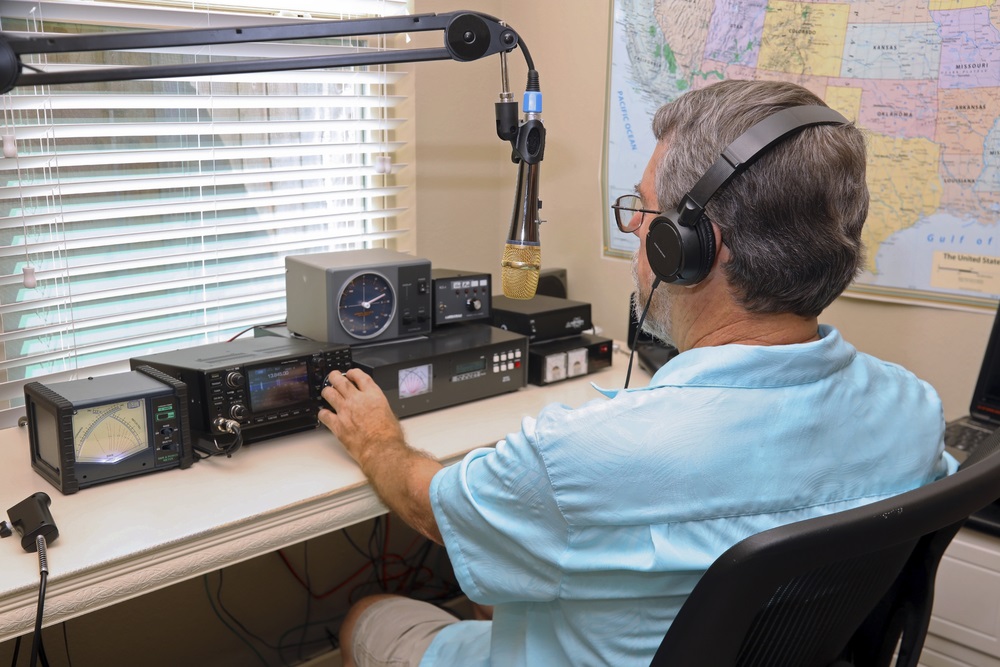
Ham radio operators are used in emergency situations to provide communications when phone lines, cell phone towers are down and power is out!,at times you can communicate with the space station!

Marine radio, on the other hand, is great!  The equipment is reasonably priced.  The range is good (I can hear local bear hunters talking 30 miles away without a repeater) and since they are FM, the reception is very clear.  However, marine radio use (transmission) is legal for maritime purposes ONLY, unless all you do is listen.

That leaves amateur radio also referred to as HAM radio.  Depending on the license you acquire (more about licensing later) your range is only limited to the size and type of equipment you use, some of which will allow you to talk to other operators thousands of miles away.  Someday I hope to be able to talk these great distances but holding only a technician license at this point, the likelihood of talking to someone halfway around the world is slim.

With the technician license (the beginner’s license) you are pretty much limited to “line of sight” use when speaking from one radio directly to another. (known as “simplex”).  However, by using what is called a repeater (more about repeaters later) you can greatly expand the effective distance of your communications.

One of the greatest benefits I have found thus far that HAM radio has over other types of radio (other than distance) is what I will call “community”….. or interaction with other HAM radio operators.  Thus far I have found them for the most part to be a very friendly (as long as you have a license), welcoming, and talented group of individuals.  At one point in time not too long ago, the HAM radio hobby was losing popularity caused, according to some, by the advent of the cell phone.

However, in the last few years, things are looking up as there are now more licensed HAMS than ever before… over 700,000 in the U.S.   I have to think that the popularity of amateur radio in the survivalist community is responsible for a large part of this increase.

Do I Really Need a Ham Radio License?

Simply put, no.  You don’t need a license to buy a HAM radio and you don’t need a license just to listen to HAM radio.   You only need a license to transmit LEGALLY on a HAM radio.   I have heard many folks in the survival community say they will just transmit when they have to and take their chances of not getting caught.

I must admit that they have a point…especially if the balloon has gone up and the rule of law no longer exists.  In that case, who cares if you have a license or not…certainly, not me.

Actually, the FCC rules say that it is not illegal to use a HAM radio without a license IF a life-threatening event requires such use.   SO…why do you need this license then (other than the obvious answer that the FCC requires it for you to legally transmit)?

The answer is…training and practice.  When you bought your firearms to defend your family and your homestead, did you simply sit them in the corner and look at them and never learn how to use them?  I doubt it.  If you did then should that fateful day come when you need to use them…will you know how to operate them? Will they work?   The same holds true for HAM radio equipment.

While transmitting is as simple as keying the microphone and speaking into it…knowing what to say, how to say it, when to say it, and how to get the most range, is not that simple.  Just like becoming proficient with your firearm takes practice, so does proficiency with your radio.  I know what you are thinking….”I don’t need a license….I will go ahead and start talking to people and avoid the hassle of getting a license”.

Wrong.  You might get away with it a time or two but the HAMs I have spoken to, while a friendly and supportive group, will not condone the use of a HAM radio by an unlicensed operator.  In fact, some HAM operators go so far as to use radio triangulation to locate broadcasting non-licensed operators using directional antennas and once found, report them to the FCC.  Please don’t think that just because I have a license that I condone this practice!

I am only stating what I have read regarding the practice.  In other words…if you broadcast without a license a large fine (up to $10,000.00) could be coming your way.  NOW….I know what you are thinking. HOW does someone on the listening end know from your transmission if you are licensed or not?  Simple….if you are a licensed HAM, you are required to give your call sign at the beginning and end of your transmission as well as every 10 minutes during that transmission.

Another HAM might forgive a novice forgetting this a time or two, but not indefinitely.  If you don’t give that call sign they may just pull out the triangulation equipment!  “Well…why can’t I just make up a call sign?”   You can but it probably won’t work very well.

There are a number of online services that allow HAM operators to do callsign searches to determine the name and location of any licensed operator.  They simply type in the call sign and if it is for real, your registration information pops up.

Many HAMS even go so far as to download database programs directly onto the computers that allow them to search by callsign without the need for an internet hookup!   So, while you don’t need a license just to listen, it would be a very wise idea to have one if you intend to become proficient in using your radio as well as making on-air acquaintances with other HAMS.  Such contacts could be extremely helpful in times of emergency (more about this later).

How Hard Is It To Get A Ham Radio License?

As with most things in life that are worth having, getting an amateur radio license takes some effort…but not nearly as much as some folks think it does!  At one point in time, every person desiring to be licensed had to be able to send and receive Morse code!

Fortunately (at least in my opinion) this requirement was dropped totally in 2007.   There are currently three levels of license available to HAM operators…..Technician (the beginner’s license like I have), General, and Extra.  With each upgrade in a license, a wider array of frequencies is opened to you which equates to longer ranges of communication.

The test you are required to take for a Technician license is composed of 35 questions randomly selected from a set group of questions in the FCC question database.  The FCC requires that the database contains a pool of 394 questions from which each 35 question test is chosen.

All the multiple-choice questions and answers are available to anyone wishing to take the test.   There are many study guides available that will cover EVERY question in the current database which means once you go through the guide, you will have covered every possible question and answer!

These study guides vary in price but since this article is about HAM radio “on the cheap”, the one I used was FREE!  It is easy reading and written in a manner that actually teaches you about the basics of amateur radio while preparing you for the actual test questions at the same time.

As you read through the guide you will notice words in bold letters which are actually the ANSWERS to actual test questions.  This allows you to zero in on the actual answers you need to know.   You can download this free guide in PDF format:

http://www.kb6nu.com/wp-content/uploads/2010/06/2010_Tech_Study_Guide.pdf

(NOTE: The questions in this guide are good through 6/30/14 at which time a new pool of questions will be used)

Once you have read through this 49-page guide you can start practicing for the test by using any of a number of free online sites that generate practice tests using randomly chosen questions from the FCC test pool.

The site I used can be found at  http://www.eham.net/exams/    To start taking the sample test, go to this site and click the “Technician” button and start your test.  The great thing about this site is that it grades your test instantly when you are finished and then tells you the ones you missed PLUS it then gives you the correct answer!   I took the sample tests many times until I was consistently scoring in the mid-’90s.  You must make at least 75 on the real test to pass.

(NOTE: Many local community colleges offer HAM radio study courses that conclude by giving the actual test to the applicant.  Not only do most of these classes give an in-depth study but they also allow you to meet others interested in HAM radio (many of which are probably survival oriented just like you) as well as having the opportunity to ask actual questions of the instructor…something the free guide above cannot offer.  However, since I was doing this “on the cheap” I opted to study on my own for free. )

Once you feel you are ready to take the test you need to find a testing site.  Fortunately, there are now many volunteer examiners which are actually amateur radio club members authorized by the FCC to give the test.  To find a local test site you can go to http://www.arrl.org/find-an-amateur-radio-license-exam-session  and search by Zip Code.   This site, http://www.arr.org  is a great site with lots of free info (can you tell I like “free”?).  If you want to find out if there are any licensed HAMs close to where you live you can go to http://www.arrl.org/fcc/search  type in your zip code and see the name(s), call sign, and license class of those living close to you.

When I tried to search the ARRL site for a testing location close to where I live all I came up with were places at least 75 miles away!  My next idea was to do an online search of amateur radio clubs in my area.  I started typing in names of local towns and counties in my area in my search engine ( www.bing.com ) along with the words “amateur radio” and found there was a club located in my neighboring county that had a website on which I found a contact email address.

I inquired of them about a testing site and was pleased to learn that their club gave tests quarterly with the next testing session only a week away!  I told them I would be there!  When I arrived at the site I was very pleased to meet a fine group of people all interested in helping me get my license.

I filled out a short application, paid $14 to take the test, and 30 minutes later I learned I had made a grade of 92 and would have my call sign issued within a week!  I was cautioned by the examiner that even though I had passed, I could not legally broadcast on my radio until my call sign was posted in the FCC database…which happened in about 4 days.

Now, at this point I a sure some of you are wondering just how “technical” these test questions are?  If I said there was nothing technical in them, I would not be truthful.  Some of the questions require a little bit of math using Ohm’s law and some require being able to identify certain schematic symbols found in typical electronic circuits.

However, please remember that the study guide mentioned above covers ALL of this and gives you the exact answers in bold as you go through it!  Also, when you take the practice test(s) the questions will be the exact questions you will see on the real test.

After taking the sample test a few times you will soon begin to remember the answers based on repetition, at least I did.  You will also notice that many of the questions are nothing more than common sense, especially the safety questions involving grounding, climbing antenna masts, etc.   So, all of this being said, don’t let the fear of too many technical questions deter you in pursuing your license if that is your goal.

To wrap up the section on licensing, I would like to touch briefly on privacy.  I resisted getting my license for many years because I did not want to be involved with a governmental licensing procedure unless I had too.  Over time I began to realize that since I have filed an income tax return for over 50 years, driven a car for about the same length of time, and purchased a firearm through a dealer, my personal data is already in numerous governmental databases.

Most of us have concerns also about being on governmental “watch lists” and I am no exception.  Rest assured that if you have bought a firearm legally, secured a concealed carry permit, or even frequented a website dedicated to survival/prepping, there is a good chance you are already on several “lists”.    After weighing this against the benefits of being a licensed HAM operator I decided that being on yet another government list probably wouldn’t matter in the overall scheme of things.

That being said, if YOU don’t feel comfortable with getting a license, then by all means DON’T!  As stated earlier, you can always listen and learn the best you can and then should the SHTF you can always key your microphone and broadcast in a life-threatening situation.

If the rule of law no longer exists, broadcast to your heart’s content as a license will not matter at that point.  Just remember that by getting a license now you can practice and learn how to use your radio along with the amateur radio network of users…and LEARN…just like you learn to become proficient with your firearms from use, not just looking at them

The Equipment – What It Costs and Where to Get It…

If you have survived my rambling this far then you must be interested so now let’s talk about what equipment you will need.  If you have ever looked at a HAM radio equipment supplier catalog then you are no doubt familiar with the dizzying array of radio types, brands, and configurations, not to mention all the other meters, antennas, cabling, and connectors.

I spent a long time researching what I needed to get started and then reading product reviews and blogs to come up with the best “bang for the buck” to get started in HAM radio.

I’ll cover the needed items one at a time and at the end of this section post a direct link for each item to the site where I bought it. (Note that almost all of the equipment can be purchased from Amazon.com so PLEASE make sure you use the direct link provided by M.D. so that he will at least get a little benefit from your purchases should you decide to make them.)

The Radio:  First let me say that with your technician license you are most likely going to want a 2-meter radio or a 70cm radio, or a dual-band unit that is both.  I am not going to get into the technicalities of bands at this point as you will cover this in your license study…only to say that the 2-meter band is where you will find the most activity….or at least it is in my neck of the woods.

Radios range from “base stations” that you set up in your home, to “mobile units” you can mount in a vehicle or connect to a power supply and use as a base unit, to “portable units” that some refer to as handi-talkies, or simply put, small portable handheld radios.

For the purpose of this article, I will talk about the small handheld unit as that is what I started with.  Prices on these units are all over the board and usually the higher the price the better the equipment.  Two well know brands are Icom and Yaesu, both of which offer handhelds that can cost several hundred dollars.

Once again since this is an article about doing it “on the cheap” I will sidestep these makes and move directly to the Chinese made handhelds that are sweeping the HAM radio market.  There are several brands of these radios but the one I settled on is Baofeng.

I found it is probably the cheapest handheld you will find and surprisingly enough it has a very good reputation! The unit I went with is the UV-5RA.  This little radio is not much larger than a king-sized pack of cigarettes but doesn’t let the size fool you!  While it only has 4 watts of output power, it has allowed me to access repeaters 50+ miles away which have then enabled me to extend out close to 200 miles away in all directions!

As offered by Amazon, the radio comes complete with a rechargeable lithium-ion battery pack, an a/c plug-in charger and a vox operated earphone/microphone combination.  Imagine the uses of a vox (voice-operated switch) microphone that will allow you to transmit hands-free as well as listen through your earpiece…especially patrolling where your hands are busy pushing through cover or holding/using a firearm.

The radio offers both 2 meter and 70cm band receive/transmit functions along with marine receive functions once programmed.  It comes complete with a “rubber duck” antenna that attaches to the top but with the addition of a small adapter (listed in the “what you will need” section below), you can also attach it to any antenna of the proper wavelength!

Now…I know you are wondering…what does this little electronic marvel cost? $100…$200…$300? NO, as of this writing you can get this amazing little radio for $32.98!  That’s right, less than $34.00!   Don’t let the price scare you, folks.

I am a firm believer in “you get what you pay for”, however, in the case of the UV-5RA, you get a whole lot more than you pay for when compared to similar radios costing many times more!   Before moving onto what else you will need, I need to point out that you may find similar radio’s from Baofeng that do not have the “A” on the end of the model number.  From what I read, these are pretty much all the same…only with small differences in the internal firmware.

As long as you order from the link listed below, you can rest assured you will get the most modern up to date model with the most current firmware…as far as I can tell.  If you see a UV-3A, stay away.  This is a fine little radio also but only has 3 watts output power so for a few more dollars, go with the UV-5A which has 4 watts output power.

Before moving onto accessories, it should be noted that this little radio also gives you access to the National Weather Service frequencies as well as “scan” capability of all programmed frequencies, including many police and fire frequencies.  So not only do you get a great HAM radio but you also get a weather alert radio as well as a scanner all wrapped up into one!

If you decide to buy the UV-5RA then PLEASE go to this website and read all the information listed.  It will answer a lot of questions and make your use of the little radio much more enjoyable, plus it has good information about using CHIRP.    http://www.miklor.com/uv5r/Ham 

Ham Radio Accessories: OK, I can hear it now….”the radio is only $32.98 but now he tells us we have to buy accessories that will cost us hundreds of dollars”!  Wrong.   As shipped from Amazon, you can take the UV-5RA out of the box, attached the included antenna, place it in the charger for an hour or so and be ready to transmit or just listen (if you are not licensed).

However, like most things we buy these days, accessories can add a lot more utility to our purchase in making it easier to use or increasing its capabilities.

This little radio is no different.   If there is a drawback to the UV-5RA, it is that like most HAM radios, it can be confusing to program, at least for me.  There is a manual in the box and there are several useful websites that will assist you in programming.

After researching about the UV-5RA  I learned that the easiest and fastest way to program it with the frequencies needed to access repeaters or to directly connect with friends or group members is to use a piece of freeware called “CHIRP” for which I will list the link below.  CHIRP is in the form of an Excel spreadsheet that allows you to enter the frequencies(s), tone and offset (both required for repeater access) and then quickly upload this data to your radio.

One of the best features of “CHIRP” is that it gives you the option of naming a frequency with a name that will allow you to keep up with the repeater name you are talking to without having to remember the frequency.

For instance, the highest elevation repeater east of the Mississippi is located on Mount Mitchell, North Carolina at approximately 6,600 feet above sea level.   Rather than having to remember that this repeater is on a frequency of 145.190 MHz, all I have to do is search the LED screen for the “Mt-Mit” name I typed into CHIRP for this frequency am I am quickly ready to transmit or listen whichever the case may be.

The only catch to using “CHIRP” is that you will need to buy a “programming cable” which comes with its own driver disk to load on your hard drive.  As of this writing, you can get the programming cable and driver from Amazon.com for $7.35!  I will list the direct link to the cable at the end of this article.

Another great (but optional) accessory is a plug-in microphone/speaker.  While the speaker and built-in microphone on the UV-5RA work fine, having an external microphone will allow you to place the radio in a shirt or vest pocket or clipped on a chest rig and still communicate without removing the radio from your pocket (assuming you don’t want to use the vox headset).

All you have to do is plug the microphone into the socket in the side of the radio and you are all set.  The great thing about this microphone is that it also doubles as a speaker for the radio!  I have mine set up as a “base unit” currently with the radio staying in the charger all the time so all I have to do to broadcast is pick up the external accessory microphone and talk…works great.   The external microphone/speaker can be purchased from Amazon.com for $8.80. (see direct link below)

Ham Radio Antenna:  I know, I said the radio comes with an antenna and it does, but if you want to get the best transmit/receive range possible from your radio and hit those far away repeaters, a longer antenna is definitely in order.  The little “rubber duck” is fine for local use and may even, depending on your location, allow you to access a local repeater, but if you want to reach repeaters farther away, a better antenna would be a wise investment in my opinion.

There are as many antenna options out there as there are radios but I am only going to mention one…the one I have found is one of the most durable and functional antennas on the market for what I consider a very reasonable price, considering what it can do.

I am speaking of a class of antenna called a “Slim Jim”.  I am not going to attempt to get into all the wavelengths and building or “cutting” of antenna’s to tune them because, to be honest, I don’t understand it all!  What I do know is what works for me.

I am speaking of an antenna offered by 2wayelectronix.com, found specifically at http://www.2wayelectronix.com/Dual-band-2m-70cm-Slim-Jim-Antenna-dual-slim.htm  .  This antenna is entirely handmade and is of the highest quality craftsmanship.  As you will note, it comes rolled up which means you can easily carry it in a bug-out-bag should you wish to carry your radio in the field.  The antenna is made from a piece of heavy flat ribbon wire similar to the old flat ribbon TV lead-in wire (if you are old enough to remember such as I am), but much larger.

It comes complete with a ferrite choke built in to prevent interference.  The method of mounting is entirely up to you.  I mounted mine between two PVC pipe standoffs on a PVC pole on the eve of my house.  Another consideration is to tie a piece of paracord to the end (push it through the hole made in the end just for this purpose) and then throw the line over a limb and hoist your antenna up!  (the higher the better…more about this later)  As you will note on the order form, you are given your choice of end connector.

In order to hook to the adapter (discussed next), you will need to choose the UHF Connector so-239.  This allows you to use a “standard” piece of coax in between the antenna and your radio. (more on coax later).   The price of this antenna is $22.99 plus shipping which will vary depending on where you live.  I will include the direct link again at the bottom of this article.

Finally, regarding this antenna, let me just say that I cannot believe the difference it makes.  Using the UV-5RA “rubber duck” antenna I never was able to access the Mount Mitchell repeater from my home 35 miles away.  However, as soon as I plugged in the “Slim Jim” antenna I could access the repeater with ease, being told on the other end that I was putting out a good signal on my little 4 watt $32.98 radio!

Adapter & Coax:    Simply put, if you use the “Slim Jim” antenna then you MUST have an adapter to attach it (or a longer piece of coax) to the UV-5RA.  It is called a “Reverse SMA to PL-259 Adapter” which will cost you $16.34 including shipping at Amazon.com (see direct link below).  There may be cheaper adapters out there but I know this one works, and take my word for it, if you are as radio illiterate as I am, it is very easy to order the wrong adapter.  Please don’t ask me how I know.  Still, as long as you can find one that says “Reverse SMA to PL-259” it should work.

Coax (short for coaxial cable) is what you need to be able to place your Slim Jim antenna up in a tree or on a mast on top of your house.  Consider it the same as you old TV lead-in wire or the cable that you now have run from your satellite dish to your TV.  In fact, that cable will probably work if it has the correct adapters and is 50 ohm.  You can pick up this cable at any number of places including Radio Shack or any number of online sources including Amazon.com.  I ordered 50 feet of the RG-8X cable with PL-259 cable end connections from Amazon for $28.61 including shipping.   Shop around….you may be able to beat this price as the prices vary.  If you don’t want to spend time shopping around, see the direct link below showing where I got mine.

Now I Have It…What Do I Do With It?

The first thing to do is get the radio out of the box, make sure everything is there, and then install the battery pack in the back of the radio.  Then plug the charging base into your wall outlet and place the radio in the base to charge the internal battery pack.  Next, turn your attention to your antenna.  If you are going to stick with the small “rubber duck” antenna, simply screw it into the top of the radio and you are finished!

However, if you are going with an external antenna like the Slim Jim you need to find a suitable place to mount it…the higher the better.  Why higher?  Since you are dealing with an FM signal you are transmitting and/or receiving “line of sight” so usually the higher the antenna the longer the line of sight distance is and therefore the longer the distance you can communicate.

The Slim Jim can be mounted any number of ways.  As said earlier, I have mine on a PVC pipe mount on my house.  Some folks put them in a tree on a mast and some simply hoist them up in a tree using a line thrown over a limb.

Just remember that however you do it, you need to BE CAREFUL and not get yourself or the antenna or coax near any electrical lines.  Also, try not to mount the antenna close to any large metal objects as this can lessen the receive/transmit ability of the antenna.

The manufacturer of the Slim Jim tells me that as long as the antenna is at least 18” from a metal roof it should be fine.  Before I forget, make sure you attach your coax cable to the end of the antenna before hoisting it up in the air.  You also need to consider a grounding method for your coax.  You can go to the following website for some great information about the Slim Jim antenna including mounting ideas.   http://www.n9tax.com/Slim%20Jim%20Info.html

Now that you have your antenna mounted and your radio battery charged, you need to attach the coax adapter to the top of the radio and then attach the coax cable to the end of the adapter with the screw-on fittings.  Your radio is now ready to transmit/receive as soon as you tell it which channel you want to use.

Ham Radio Frequencies (Channels)

The UV-5RA has 128 channel memory slots available.   As mentioned earlier, there are two ways to use your radio.  One is called “simplex” which simply means one radio communicating directly to another radio.  Suppose you and your friend(s) want to carry on a conversation.

You simply decide on the frequency such as 144.320 MHz and then each of you manually inputs this into your radio using the keypad.  That is all there is to it!  Once each of you has the same frequency punched in, all you do is key the mic and start talking.

As stated earlier, it is advisable to have your HAM radio license if you are going to transmit unless you are in an emergency situation or the rule of law no longer exits.  If either of these are the case, then I doubt a license will matter much, if at all.

The second communication method and the one that will give you the most communication range is by using a “repeater”.  Think of a repeater as being an “automatic radio” located at some high point in the area.  It could be on top of a building, or on top of a mountain, or on top of a tall tower.  Notice the pattern here…high in the air.  Repeaters operate by receiving your transmission and instantaneously re-broadcasting it again at a higher wattage output.

Since your UV-5RA is a low power unit with only 4 watts of output power, if you can hit a repeater with your signal, that repeater will boost your signal to a much higher wattage output and re-broadcast it simultaneously from its high location, greatly extending your communication range.  Each repeater uses two frequencies,  receive and transmit.  If it used only one frequency it would most likely destroy itself by overloading its circuitry.

However, by using two different frequencies and what is known as a duplexer, the repeater allows you broadcast to it on its “receive” frequency and then it “offsets” that frequency to a higher or lower frequency and re-transmits it at a higher wattage output.

Typically on 2 meter, the “offset” is 600 kilohertz.  You will also need to know if this is a plus or minus offset which indicates if the 600 kHz is added to the repeater’s receive frequency or subtracted from the frequency.  Many repeaters also require a “sub-audible” tone from your radio before they will listen to you…just another safeguard to keep the repeater working for everyone.

At this point I need to point out that just like your radio, repeaters operate on electric current and in the event that we are faced with some type of disaster or societal collapse that shuts down the power grid, it will most likely negatively impact repeater usage.

If you are lucky you will find a repeater to use that is powered not only by grid power but also by an alternate source such as solar or wind power.  Also, since HAM radio is such an integral part of most local government emergency response communications I would hope that efforts will be made by emergency services to keep the repeaters up and running…at least as long as emergency services exist!

If we suffer an EMP then all bets are off for any type of electronic communications.  Fortunately, the UV-5AR is inexpensive enough that it may allow some to purchase two or more to keep in a Faraday cage if desired, at least giving a means of radio to radio communication locally.

NOW, before you start screaming “THIS IS TOO TECHNICAL” let me say this….now you see why I said you need to buy the programming cable and download the free CHIRP software.  If you do this, you simply type in the repeaters receive frequency and whether it is a plus or minus offset and if there is a tone, the tone frequency…and that is it.

Once you get all this entered into the spreadsheet your click “upload to radio” and you are done!  Believe me…I am not very radio literate but after a few minutes of research and a little trial and error, I was quickly programming frequencies easily.  Fortunately, the software has a “help” menu as well as a website that will help if you have problems.

At this point, you are probably wondering “how do I find a repeater I can access and once I find it how do I know how to program my radio (using CHIRP) to access it”?   Simply put, go online and search on Google or Bing for “ham radio repeaters” and look for a link to one of the many online databases that allow you to enter your zip code to find local repeaters.  OR, do a search by typing in “amateur radio club” and then the name of your (or a nearby) town or county.

Once you find a clubs website, look around the site and there is a very good chance you will find info relating to a local repeater.  In that info, you should find the repeaters receive frequency, the offset (most likely 600 kHz) and whether it is plus or minus.  You should also find listed the tone frequency if the repeater requires one…not all do.

My advice would be to program in several repeaters at various distances from where you live and then start listening.  You can push the “scan” button on the UV-5RA and it will continuously search your programmed frequencies until it hears activity.  LISTEN for a while.  It is amazing what you can learn, especially when it comes to broadcast techniques and protocols used by other HAMS.  It doesn’t take long to catch on!  One last point regarding repeaters…virtually all of them are open to anyone that can access them, free of charge! (there’s that “free” thing again)

How Far Can A Han Radio Transmit and Receive?

The short answer is…” it depends”.   As stated earlier, since you are using FM transmission, you are pretty much restricted to “line of sight” usage.  If you live in an open, flat area, or are using your radio over open water, then you can probably transmit or receive 5 miles or more…maybe even a lot further if you are on a hill and depending on atmospheric conditions.

I am hesitant to give a specific distance as there are a lot of variables.  Let’s just say that your 2-meter radio will transmit a lot further than a CB, GMRS or FRS radio, at least in my experience.  FM transmissions from a 2-meter radio do not normally bounce off the ionosphere so you don’t get the “skip” like we use to talk about in the hay day of CB but they can sometimes bounce off of buildings if you live in an urban setting.

There are times however that you do get a measure of skip that will let you talk a few hundred miles, so I read.   NOW… where you get the real distance is when you can hit a repeater that is located at a high elevation.  As a case in point,  I don’t live within direct line of sight of the Clingman’s Peak repeater on Mount Mitchell, NC, and could not access it with the standard rubber duck antenna, although I could pick up its transmissions.

Once I got my Slim Jim antenna hooked up I was able to access this repeater easily with my little 4 watt UV-5RA.  Since this repeater is the highest repeater east of the Mississippi, it has a tremendous coverage area which enables me to talk with other HAMS located in East and Middle Tennessee, Southeast Kentucky, Southeast Virginia,  Upstate South Carolina, Northern Georgia, and Central North Carolina….and all points in between.

As best I can measure it this means on a good day my coverage area can be up to 400 miles from one side to the other!  In fact, I have read reports that on occasion HAMS in Maine and Florida have been able to hit the Mt. Mitchell repeater!

I don’t know how often this happens but when it does happen that means anyone accessing this repeater can talk to others up to a thousand miles away! I have no way of verifying this other than what I read but considering the elevation of the repeater tower I would not rule out the possibility.  Another example for me is using a repeater located on Holston Mountain near Bristol, Tennessee.

Sometimes I can hit this repeater and once I do, I am able to talk to other HAMS located near Middlesboro, Kentucky which is 85 miles west of Holston Mountain and much further from my home.

At this juncture, I do need to point out that my home is on top of a mountain at an elevation above 3,000 feet and this adds greatly to my transmit/receive capability.  Your mileage may vary up or down depending on where you live and your surrounding terrain.

Now, if you wonder why I brought up Middlesboro, Kentucky, if I am not mistaken this, is fairly close to where M.D. lives in the “Redoubt of the East” also known as the Cumberland Plateau!   Hence…this brings me back to what I mentioned in the introduction to this article is the mechanism for folks in this group that live in or plan to live in the “Redoubt” being able to communicate with each other!

Even if you have no intention of ever living in or even visiting this area, still this radio setup will give you the capability to talk to others in your own area and far outside your area if you are so minded!   To conclude discussing repeaters I need to mention what is called a linked repeater system.

I’m no expert on this by any stretch of the imagination but as best I can understand, a linked system simply means that one repeater links to another repeater which links to another repeater and on and on and on.  If you are fortunate enough to live in an area that has a linked repeater system then by being able to access any repeater in the system you could be linked to all other repeaters which could increase your effective range tremendously!

NOTE:  It needs to be noted here that just because you cannot transmit to a distant repeater or radio receiver does not mean you can’t receive from it.  That repeater or radio may be running much higher output wattage (power) than your 4-watt radio which explains why you can hear transmissions from it but cannot transmit to it.

Wattage on your end does not relate to how far a distance you can receive from, only to how far away you can transmit.  They type and height of your antenna directly relates to both transmit and receive capabilities on your end.

One final point to consider regarding how far you can communicate involves other HAM operators.  It is not uncommon for amateur radio operators (those holding a General or Extra license) to use more than one type of radio.  While 2 meter and 70cm are most used for line of sight communications (referred to respectively as VHF and UHF radios) another type of radio communications referred to as HF can be used to communicate long distances, even to the other side of the planet!

While an operator holding a technician license is not authorized to use the HF bands, still he/she may be able to contact another operator via 2 meter that does have HF equipment.  Imagine you are in a SHTF situation and you need to find out about the well being of a friend or relative located on the other side of the country, or that person needs to find out about you.

If you are able to contact another HAM that has HF equipment, that operator may very well be able to contact someone close to where your friend or relative lives and get a message to them or receive a message from them directed to you.

During crisis situations amateur radio operators do this regularly, having specific organizations set up for such a purpose.  This is just one more reason to get to know the HAMs in your area by communicating with them and listening.  Many times I have heard operators on my 2-meter radio talking about a contact they just made on one of the HF bands, a contact halfway across the nation!

Putting the numbers together along with where to buy:

Since the title of this article includes “on the cheap” it is time to put the numbers together.  Below you will find the necessary items discussed above, what they cost me and the direct link where you can get them.  At this point let me say that I have no financial stake in any of these companies and do not stand to profit in any manner from your purchasing any of the listed items.  However, as stated earlier, if you decide to buy any of the items sold by Amazon.com (which includes everything except the antenna) PLEASE click through M.D.’s Amazon.com portal so that when you purchase he can make a little money on the deal to compensate him for all he does for us through his site.

  • Radio:  Baofeng UV-5RA  (click here to check price and availability)
  • Antenna: Slim Jim  Cost:  $22.99 (shipping extra-amount depends on shipping location)
  • Coax:  RG8x (50 ohm) 50 ft.  Cost:  $28.61 (price on Amazon.co includes shipping)
  • Coax adapter: SMA to PL259   Cost:  $16.34 (price at Amazon.com includes shipping)  – shop around on this cable and you may find a cheaper one…just make sure it is an SMA to PL259)
  • Programming cable   Cost:  $ 7.35 (free shipping using Amazon “Prime”)
  • Aux. microphone/speaker   Cost:  $ 8.80 (free shipping using Amazon “Prime”)
  • CHIRP programming software   Cost:  FREE http://chirp.danplanet.com/projects/chirp/wiki/Home
  • Exam training guide  Cost:  FREE http://www.kb6nu.com/wp-content/uploads/2010/06/2010_Tech_Study_Guide.pdf
  • Sample Ham Radio Test Cost:  FREE http://www.eham.net/exams/

TOTAL COST    $117.07

It should be noted that shipping is factored in on some of the above but not others.  Where Amazon listed a set shipping amount, I included it in the price.  For other items, they only listed it as free when using Amazon “Prime”.

If you do not have Amazon Prime (which requires an annual fee) then, by all means, shop around!  Amazon often lists the same item from several suppliers so if you look around you might find free shipping or their own free shipping on orders $25.00 and over.   Shipping on the antenna will vary depending on where you live.  I think mine was around $5.00 which still brought me in under $120.00 total!

Your cost could vary up or down a little depending on price changes for specific items or the length of coax you need and if you can find it on sale or not.  I noticed that some of the prices are up and some down between the time I ordered mine about 3 months ago and now.

Any way you cut it, $120.00 for a HAM radio setup that allows you to communicate for hundreds of miles seems like a bargain to this Old Hillbilly but I guess it all boils down to one’s financial ability. (Note that I did not list the cost of taking the test either as this apparently varies based on where you take it so I won’t even hazard a guess what yours will cost although mine cost $14.00)

I hope this rambling article that you no doubt thought would never end is of some help to you.  As I stated at the start, I am a novice to HAM radio and am in no way saying the way I did it is the best or only way to do it.  All I can say is that it works for me and I am pleased.   Should you have any questions about my experiences I will do my best to respond to them in the remarks section.

I am sure there are lots of others here though that can answer your HAM radio questions much better than I can. May God richly bless each of you in all you do for His glory.

Filed Under: Prepping

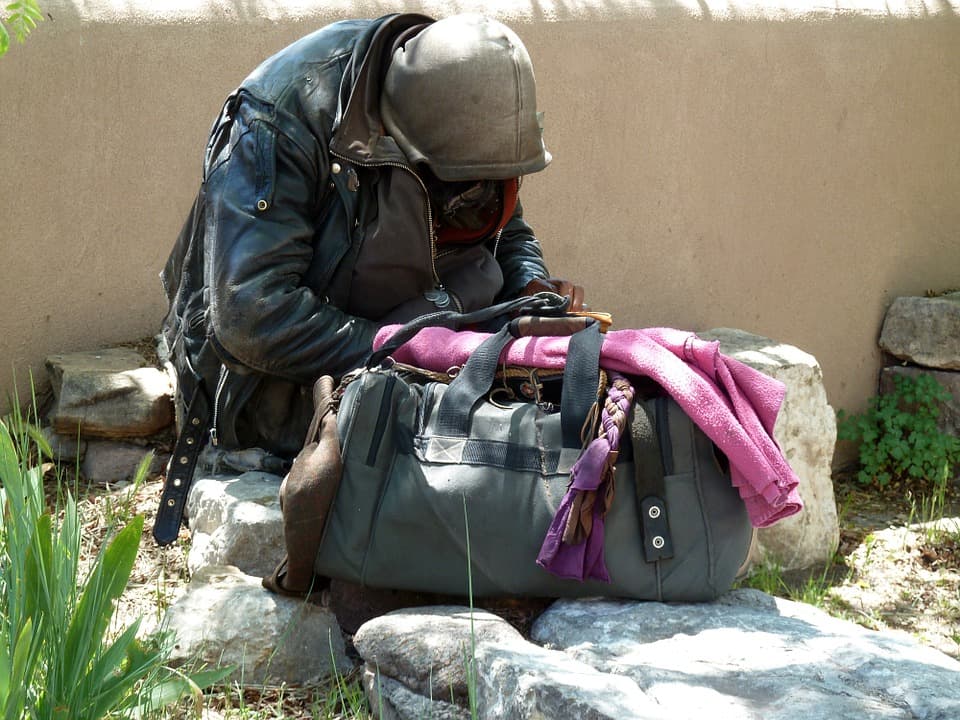
How To Survive Being Homeless and Broke

November 11, 2019 M.D. Creekmore

by Urban Nomad

These days, “survivalism” has come to mean preparing for great events like nuclear holocaust or total government collapse. But disaster may come on a much more personal level. Individuals can suffer catastrophe as surely as nations can.

When they do, it can be even more distressing because individuals feel alone in their suffering. I am talking about personal financial ruin and homelessness. Thousands of people across North America, indeed the world, have already experienced it following bankruptcies and foreclosures.

Whole families have been evicted from their homes, some quite forcibly. We see dozens of tent cities appearing across America, and more people ordering storage containers to live in. What we don’t see are the “hidden homeless” – those forced to survive by couch-surfing or moving back in with family.

If 47 + million Americans now live below the poverty line, that means 47 + million who are either homeless or in imminent danger of becoming so. And the number is still growing.

When I lost my own job a while ago, I was not overly concerned. I had enough savings to live on for over a year. Then the economy self-destructed. It became exceedingly difficult to score a job interview, let alone an actual job.

As the months of unemployment dragged on, my savings dwindled until I was forced for the very first time to consider homelessness as a real possibility.

What would I do if worse came to worst? How would I live? Not being a “rugged” or “street-smart” person at all, I knew from the outset that I could not follow the prevailing wisdom of living as the homeless do and trying to blend in with them.

Sleeping in bus shelters, eating from dumpsters, and staying in homeless shelters was not for me. I feel that joining the homeless population, as many recommend, severely limits your options, especially if you hold out any hope of ever rejoining society.

My only survival experience comes from camping and backpacking. I’ve survived for days or weeks with just the supplies on my back. So I tried to adopt that same knowledge to an urban environment, envisioning a new kind of “home-free” lifestyle.

I prefer to call it “distributed living” or being an “urban nomad” because it lets you have most of life’s necessities, just not all in one place. It’s based on the backpacking model of carrying everything you need with you and being self-sufficient.

It does require some resources and preparation. A plan like this must be undertaken before you actually become homeless when you still have some money and credit to draw on.

Fortunately, homelessness is more easily anticipated than some other disasters. You often can see it coming months in advance. But even those who do may prefer to live in denial. You may think it cannot happen to you.

But it has already happened to thousands who thought it could never happen to them either.

Nobody plans to end up in a homeless encampment. But lately, this is where more and more of the former middle-class are landing. Even many famous celebrities have had periods of homelessness.

If you’re one of the lucky few who has nothing to worry about financially, remember that poverty is not the only cause of homelessness. Things like chemical spills, radiation leaks, brush fires, mudslides, arson, water main breaking, and civil unrest could all force you from your home as surely as mounting debt can.

Natural disasters can strike anyone at any time. Hurricane Katrina rendered an entire city’s population homeless within hours. So have tornadoes in America’s heartland and nuclear meltdown in Japan. In such situations, people with vehicles and bug out bags ready will be survivors.

Everyone else will be refugees. With that in mind, the following suggestions should be helpful to many, whether facing imminent homelessness or not. They can also be used in partial disaster scenarios where much of society still functions, with only some residents being displaced.

WHERE TO FIND SHELTER

homeless-shelter

Obviously, this is the main problem faced by the homeless. Those who stay in the city are restricted by laws against putting up any kind of temporary shelter. This is why the homeless are so often seen huddling in doorways, alcoves, tunnels, etc.

Many cities have outlawed sleeping outdoors, which gives police the power to harass anyone they see lying down with their eyes closed. In fact, as long as you can be seen by anyone at night, your safety is at risk.

Homeless shelters may be no better. Filled with drugs and mental illness, they can be more dangerous than the streets, and many transients know enough to avoid them. Similar problems exist in tent cities. Diseases and parasites can easily spread when many people, all with poor hygiene, live close together.

Wooded areas appear safer and can be found throughout cities in the form of ravines, forests, valleys, and parks. Some homeless build shelters there using tarps, plywood, cardboard boxes, or whatever else they can find. This may work for a while.

But authorities keep tabs on these encampments and sooner or later come to take them down. Also, any shelter can be a target for thieves and squatters when you’re not there. Its mere presence during the day tells everyone that a homeless person is living there.

I get around these problems by using a relatively inexpensive “pop-up “camouflage dome tent found online. A pop-up tent can be set up and taken down extremely fast, with very little effort. The idea is to find a secluded area in the woods or a local park, put up the tent at sunset, and then take it down again at or before sunrise the next morning.

There is no campsite for anyone to find because it does not exist during the day. This is also known as stealth camping and many long-distance cyclists use it to avoid staying in motels. They camp on public or private land and take off before anyone knows they were there.

Your safety will come from being totally hidden. For anyone to see you sleeping at night, they would have to enter the forest after dark, leave the path at the right spot, and see through your camouflage. Even in broad daylight, a camo tent amid foliage is hard to spot.

I have spent several nights in city parks using this method and haven’t yet been detected. A tent is one of the best possible temporary shelters you can use and gives a sense of security, even if it is mostly psychological. It does need a relatively flat, clear area of ground to be set up, so scout locations before you need them and clear them of debris before nightfall.

An even smaller shelter that fits practically anywhere is the bivy sack– essentially a zippered bag just large enough for your body, made of waterproof, breathable material. Some fold down to the size of a water bottle. A bivy will keep you dry and sheltered but won’t have room for anything else, like changing clothes. Some come with a framework that holds the fabric away from your face for some breathing room.

Satellite images on Google Maps are great for finding dense woods in your area. You want areas that are more “wild” and overgrown, not those which are obviously mowed and well maintained by the parks department(though if you are very diligent about always taking your tent down at sunrise, you should have no problems either way).

Find spots that are totally hidden from both the trail and the street. At the same time, they should not be too far from places you want to go during the day. Eventually, you will have memorized a few ideal spots around the city and can rotate between them so that you never camp in the same place too long.

I use a heavy camouflage tarp as a groundsheet, protecting the tent floor from sharp debris. This can double as a cover for your gear, keeping it dry and hidden in the forest while you go about your daily business.

Do not try to weather a serious storm in a tent. At such times, train stations, bus stations, and airports are better choices. They are open24 hours a day and are designed for people to wait in, with ample seating, bathrooms, snack bars, and sometimes wi-fi.

In bad weather, some people will be sleeping in their seats or on the floor due to transit delays, and you can blend in with them. Keep a travel book from the library across your chest or some old boarding passes sticking out of your pocket.

If you are in an airport with multiple terminals, change terminals every so often. Lingering in one place too long may attract the attention of security(though I have heard of one woman living for months at the airport before anyone caught on). Hospital waiting rooms may be almost as good.

PRACTICAL CLOTHING

As an urban nomad, pick your outfit very carefully. It must not only protect you from the elements and carry what you need it to carry but also fit into an urban setting without looking odd. In my opinion, black should be the color of all your items, including bags.

Black looks right at home in the city, can go longer between washings without looking dirty, makes your bags and pockets look smaller despite being packed with stuff, and will render you practically invisible at night.

My all-black outfit consists of:

  • waterproof hiking shoes
  • paratrooper or cargo pants (lots of pockets)
  • alternate pair of waterproof pants
  • turtleneck
  • hoodie sweater
  • expedition vest filled with pockets
  • waterproof coat with hood
  • baseball cap with built-in LEDs (like the Panther Vision power cap, for hands-free lighting at night)

Add to this a week’s worth of clean socks and underwear, as well as duplicate pants and hoodie so you’ll still have something to wear when doing laundry. In cold weather, I add wool socks, thermal insoles, wool turtleneck, wool long underwear, waterproof mitts, and a balaclava.

BAGS AND BACKPACKS

homeless-survival-tips-for-city

Huge packs made for backpacking may look odd in the city. I use a large size army surplus ALICE pack to carry bulky items such as sleeping bag and sleeping pad, with a tent strapped to the outside.

Choose a backpack that places the weight on your hips, not your shoulders, as the ALICE does.

Urban commuter bags and messenger bags also work well for the city. You should be able to carry everything yourself when you need to. At other times, leave some of it stored or hidden and carry only what you need for that day.

As backpackers know, the level of fitness required to carry everything you need on your back is not inconsiderable. So get in shape.

A compression sack may help fit everything in. Used by the army, this is a sack meant to be carried inside your pack.

Fill it with compressible items (usually sleeping bag and clothes), then squeeze everything down, usually by sitting on it. At the same time, tighten all the straps around the sack. It will retain its smaller size until opened again.

HOW TO KEEP CLEAN

Besides clothing, this is the other area that gives homeless people away. Though cities are filled with public bathrooms, it is hard to find one private enough to do anything more than use the toilet and wash your hands.

So I recommend carrying a collapsible pail (found at camping stores) and a magnetic mirror (from a school supply store or dollar store).

Collapsible pails fold down flat to take up very little space in your pack. Fill one with warm water from the sink and bring it into one of the stalls. Set the pail atop the toilet tank or hang it from something if possible. Stick your magnetic mirror to the stall wall and use the pail as your sink. Now you can shave, brush teeth, and scrub your armpits in relative privacy.

Avoid bathrooms frequented by the homeless which tend to be the filthiest and most dangerous (eg. those in subways, public squares, certain restaurants, etc.). Clean, even elegant restrooms can be found in upscale shopping centers, colleges, theatres, airports, office buildings… places the homeless generally avoid. In hot weather, it may be possible to bathe in the same lakes and rivers where people go swimming.

When only a hot shower will do, visit a gym, YMCA, or university athletic center for the day, all of which have well-appointed locker rooms. Fitness centers on college campuses may just be the cheapest, cleanest and safest, and are usually open to the public.

A year’s membership will likely cost less than one month of rent and may include perks like free wi-fi, towel service, and a locker. It also provides a place to work out, rest, and socialize. Keeping suit clothes in your locker will allow you to go for job interviews. Beaches and campgrounds are other places to look for showers.

The travel section of dollar stores is a good place to pick up lightweight hygiene products like mini shampoo, mouthwash, and toothpaste. Don’t forget plastic containers for your soap and toothbrush, and pillboxes to carry Aspirin, vitamins, and any medication you need.

I keep all toiletries in a mesh bag which lets them air out after use. Replace your regular towel with a small, super-absorbent one from a backpacking store. A battery-powered travel razor will let you shave just about anywhere, any time.

Get one that runs on AA batteries as opposed to a plug-in rechargeable. Look for any way to save space, for instance using a bottle of camping soap also as dishwashing liquid and shampoo.

Facial cleansing cloths, wet naps, and hand sanitizer can keep you clean without water. If given any at a restaurant, save them until needed. Use those wet naps on your armpits and groin if necessary, where bacteria flourish. Use a high SPF sunscreen to avoid the telltale sunburn that many homeless people have.

And if the look suits you, shave your head and forget about all the maintenance that comes with having hair.

Always practice good hygiene and grooming, not just for your own health but to keep blending in with civilized society. If you look and smell like a bum, you will find many doors closed to you.

FINDING FOOD

The homeless survivalist does not have the option of storing food long-term or buying in bulk. You can only stockpile what you can carry – which amounts to maybe a week’s worth of sustenance at most. Peanut butter is an excellent choice, being easy to carry and eat, high in calories and protein, and needing no refrigeration.

Trail mix is another. There’s a lot of energy in nuts and seeds, and most of these mixes now come in resealable bags. Think like a backpacker, keeping heavy items like canned goods to a minimum and removing any unnecessary packaging from foods to make them lighter.

Dried (dehydrated) foods are the lightest. Foods that are simple, won’t spoil quickly, and require little to no cooking are well suited for the urban nomad: think beef jerky, granola bars, raisins and other dried fruits, corn chips, banana chips, buns, bagels, raisin bread, peanuts, instant soups, etc.

Again, dollar stores are good places to procure these items cheaply. Because your diet is sure to drop in quality, take a multivitamin daily as well.

Carry your food in a reusable cloth shopping bag and you will simply look as though you’ve just been grocery shopping. Also, keep a length of rope in this bag for hanging it from a tree when in the forest. Never keep food in your tent or your pockets at night, especially in city parks teeming with raccoons.

You should still have some means of cooking food. Needless to say, a big open fire in the woods would give away your presence. My personal choice was a Jet boil propane stove, with an Emberlit stove as a backup.

The Jet boil may be the fastest, most efficient means of boiling water outside, making it good for preparing instant foods and purifying water.

The Emberlit stove is a wood stove. It folds flat, taking up almost no space in a pack, and its fuel is essentially free. It lets you cook with a very small fire well suited to stealth camping.

Look into the ultra-light, compact kitchen utensils that backpackers use. Such products are designed to fit inside each other and take up minimum space. I fit my two stoves, fuel canisters, two bowls, pot, mug, cutlery, can opener, and even a Steripen water purifier into a bag less than 9” wide by 11” tall.

Cities usually have places to fish. Take advantage of this free food source by carrying a compact fishing rod. The smallest rods fold down almost to the size of a pen. For tackle, all you really need are a couple of floats, some hooks, sinkers, and a lure or two, all of which will fit in the palm of your hand.

Add a package of scented Power bait, or some similar product, to always have bait on hand. Look for live bait beneath fallen and rotting logs, or use pieces of food like bread or corn.

I’ve heard you can cook and eat practically anything that walks on land or flies. But be very careful with plants and eat only those you can positively identify as safe. (The color illustrations of plants in the pocket version of The SAS Survival Guide can help with this.)

FINDING WATER

This should be the least of your worries. Drinking water is readily found throughout cities. You should carry at least one 1L water bottle and get in the habit of topping it up every time you come to a tap or drinking fountain. Once you get used to water, you need never pay money for drinks again.

In the woods, large rivers are the preferred water source and you’ll want to camp near one if possible. A fast-moving stream will be cleaner than a pool of standing water. Of course, any water drawn from such a source must first be purified, just like in the wilderness. That means boiled, filtered, or treated with tablets or UV light.

Water purification tablets (easily found at camping stores) are the easiest way to treat water without additional apparatus. River water should never be your first choice for drinking but is good to have nearby when you run out of water collected from the city. Remember that almost all purification methods will remove the biological pathogens but not the chemical pollutants.

If rain is forecast, leave your collapsible pail outside to collect it. This water will not have to be purified.

INTERNET

Internet access is essential even when homeless. It is how you will look for jobs, send resumes, learn survival tips, and keep in contact with the wider world. You may even use it to earn money directly, using something like Amazon Mechanical Turk, or to offer your goods and services on eBay or Craigslist (the “gigs” section of Craigslist contains short-term odd jobs that pay cash).

Under normal circumstances, this would hardly be enough to live on. But without rent or utilities to pay, the economics of a nomadic lifestyle is somewhat different.

Fortunately, there are more and more places to use the Internet for free, especially if you can provide your own laptop, iPad or netbook. Find out all the free wi-fi zones in your vicinity. There will be some in places you never knew or expected.

Large district libraries and reference libraries can be ideal. There you can find computers, cubicles, outlets to plug into, and some portable chairs to sit in all day. (Note: When using public wi-fi, always use a Virtual Private Network or VPN, like the free service Hotspot Shield, when entering passwords.)

The online environment looks the same whether you are homeless or not, and so can be a source of comfort and consistency as your living conditions change. When immersed in online activities, it almost doesn’t matter where you are.

Even a homeless person can spend the day playing online games, watching shows, listening to music, writing a blog, and reading the news, much like a normal person would.

If you have the need and the money, consider a rugged computer like the Panasonic Toughbook. Able to withstand drops and freezing temperatures, with a waterproof keyboard that glows in the dark, this laptop line is practically built for homelessness.

RADIO

You should have a radio, like any survivalist. The lightest might be something like an armband radio for joggers, with readout showing the time and an alarm. Use it to check weather reports daily, and choose your attire and shelter areas accordingly.

TELEPHONE

Cellphones make having your own phone number as an urban nomad very easy. Remember to charge it and your other wireless devices whenever you come across an available outlet.

MAIL

If you need to receive mail, one choice is renting a PO Box. There are also services that can provide you with a real street address if you want people to think you have one. You will get an address like “99 Paladin Street #1” where the number actually refers to your box.

This is useful when you have to give your home address to obtain services.

This is the essence of “distributed living” – your shelter in one area, your shower in another, your mailbox in yet another. All are components of your “home”, you just need to travel a bit to get to each one.

TRANSPORTATION

Your own two feet may serve as your primary mode of transport. For this reason, don’t skimp on your footwear and make sure it fits perfectly.

If you can still afford gas, auto repairs, parking, and insurance, then, by all means, keep your vehicle as both transportation and shelter. If not, consider a bicycle as a substitute. Having a bike makes everything seem much closer than if you were walking, and will expand your range considerably.

I already cycle everywhere and now prefer it to the often poor and overcrowded public transit system.

Add a Bob Yak trailer, or almost any child bicycle trailer, and you can bring all your survival supplies with you. Some child trailers turn into strollers when detached from the bike. You can then push your belongings along the sidewalk in something a little more stylish than a shopping cart.

WINTER

Not everyone will have concerns about winter, depending on where they live. For me, the problem of surviving a Canadian winter without a heated shelter must be treated with deadly seriousness. Many homeless people die on the streets of cold countries every year.

Throughout Europe, we have just seen how extreme cold can strike even in unlikely places and kill hundreds without warning. Without going into all the details of winter survival, here are some tips:

You must test out your cold-weather gear before trusting your life to it. For example, camp out in the backyard during a deep freeze. Winterized sleeping bags have temperature ratings but their effectiveness varies depending on the user’s own body heat, metabolism, and clothing.

Sit in the park for several hours in your full winter outfit to see if it’s enough. The amount of insulation needed for sitting still in the cold is greater than what people typically wear for dashing from one heated structure to another. Dress in layers and always cover your head, even when sleeping. Wool is arguably the best material as it insulates so well, even when wet.

A sleeping pad is just as essential as a sleeping bag. This item is easy to overlook, but without it you will get cold no matter how great your sleeping bag is.

The ground has a way of conducting the heat right out of a warm body. (For the same reason, never sit directly on the ground without a thermal cushion like hunters use or some such insulating barrier.) The warmest sleeping pads are also the bulkiest and cannot be carried inconspicuously.

I chose to focus on the smaller self-inflating pads and get the one with the highest ‘R-value (insulation rating) I could find. Without a sleeping pad, you will have to sleep on cardboard or newspapers just like the homeless do, or use pine boughs when in the wilderness.

From what I’ve seen, gadgets like electric sleeping bags and propane space heaters are not practical or effective. And building a fire is usually out of the question. So you will be relying on your own body heat for warmth. Don’t lose it by leaving your shelter at night. If you have to relieve yourself, use a bottle instead. Study the survival tactics of winter campers and arctic explorers.

Anything that does not take well to freezing – laptops, cell phones, water bottles – should share the sleeping bag with you, down near your feet. Some winter sleeping bags have extra room at the bottom for this purpose.

If you fill your water bottle with hot water before retiring, it will help warm you. Use extra layers of shelter if you have them. For example, using a bivy sack inside a tent may seem redundant but it will increase your bag’s effectiveness against the cold. So will using a tent inside a larger structure.

FURTHER READING

The U.S. Army Survival Handbook adequately covers the wilderness side of homeless survival. It takes into account the soldier’s need for stealth and concealment when stuck in enemy territory.

Where other survival books tell how to remain visible and attract the attention of search parties, this one shows how to conceal your presence, move stealthily over terrain, and to build fires and shelters so that they cannot be spotted by the enemy.

(For our purposes, “enemy” can refer to anyone – police, park rangers, security guards, neighborhood watch, etc. – who tend to make life extra difficult for the homeless.) This no-nonsense guide also has surprising and innovative ways to treat your own injuries and illnesses in the field using common materials.

CONCLUSION

Thanks to odd jobs, credit cards and help from relatives, I remain housed for now. But the threat of homelessness still looms large. My debts are such that I do not know exactly where I will be living three months from now.

But even if homelessness never strikes, I won’t regret the time and money spent preparing for it. The increased confidence and peace of mind have been worth it. I know that, whether housed or not, life will go on.

Even the idea of spending winter without a permanent shelter is no longer unthinkable, and that is an amazing thing. Preparing for homelessness has incidentally prepared me for other scenarios, like the furnace breaking down or a sudden evacuation. And I can go camping or backpacking at a moment’s notice.

Homelessness has to be one of the gloomiest things to think about, let alone prepare for. But realize that not thinking or preparing will make the reality of it worse. If you do find yourself out on the street, having a plan of where to go, what to do, and what to take with you can make all the difference.

If it helps, don’t think of yourself as homeless but as a nomad practicing an alternative lifestyle. Without such an attitude or plan, you will start to resemble the typical bums who wander without direction or purpose. Who have nowhere to go, nothing to do, and nothing to hope for. Homelessness does not have to look like that.

Develop the skills of the urban nomad and practice distributed living. Keep your basic needs met and your mind clear, and you can always live a dignified existence whatever your situation may be.

Stealth Camping Tips

This video has some great tips on stealth camping that also apply to homeless survival…

homeless survival guide

Please share your thoughts, comments and homeless survival kit ideas in the comments below… thanks.

Filed Under: Bugging Out

What is The Shelf Life of Bottled Water in Plastic Bottles?

November 11, 2019 M.D. Creekmore

Bottled Water shelf life

What is the shelf life of bottled water? That’s a great question and one that everyone who stores more than a case of bottled water has probably asked at some point.

From what I’ve read online and from the emails that I’ve gotten from my readers it seems that many think that drinking bottled water that’s over a few weeks old will result in sickness or instant death and this simply isn’t the case.

So what is the shelf life of bottled water… well, the simple and most accurate answer is that bottled water has an indefinite shelf life if it’s stored properly. However, the plastic bottles can breakdown or leach chemicals such as BPA causing problems… this is especially true if bottled water isn’t stored properly.

How to Store Bottled Water

Since the shelf life of bottled water depends mostly on storage conditions it’s important to know what those conditions are so that you can store your bottled water under optimal conditions which provide the longest possible shelf life and water quality for consumption.

Store in a cool, dark place away from products with strong odors such as cleaning supplies.

Avoid prolonged exposure to sunlight and if forced to store water outside then keep it covered up and protected from the elements and temperature extremes as much a possible, however, outside storage isn’t recommended and water stored this way should be brought inside and stored under proper conditions or consumed as soon as possible.

Don’t store bottled water near a heat source or directly on the floor or on the ground (this also applies to any other consumable beverages or food items). To minimize the possible growth of bacteria and algae store bottled water in the dark.

I store bottled water in my basement on free wooden pallets that I get from a local hardware store and cover with a tarp to keep out any light.

To avoid crushing or damaging the cases of water on the bottom I stack the cases no more than six cases high. If you have a lot of cases than you could build or buy shelving to make better use of storage space in your allotted storage area.

As with food storage, bottled water should be dated using a permanent marker to note the storage date on each case and then use on a first-in-first-out rotation this will minimize the chance of the plastic bottles breaking down or any degradation of water quality.

What Happens When Plastic Water Bottles Get Hot?

According to The University of Florida water stored in plastic bottles can be unsafe to drink after being left in a hot car because some water bottles (maybe all?) are made from polyethylene terephthalate and can release the chemicals antimony and bisphenol A, or BPA, when exposed to heat and can raise the BPA levels above what is considered safe..

What is BPA, and what are the concerns about BPA?

According to the Mayo Clinic:

BPA stands for bisphenol A. BPA is an industrial chemical that has been used to make certain plastics and resins since the 1960s.

BPA is found in polycarbonate plastics and epoxy resins. Polycarbonate plastics are often used in containers that store food and beverages, such as water bottles. They may also be used in other consumer goods.

Epoxy resins are used to coat the inside of metal products, such as food cans, bottle tops and water supply lines. Some dental sealants and composites also may contain BPA.

Some research has shown that BPA can seep into food or beverages from containers that are made with BPA. Exposure to BPA is a concern because of possible health effects of BPA on the brain, behavior and prostate gland of fetuses, infants and children. Additional research suggests a possible link between BPA and increased blood pressure.

However, the Food and Drug Administration (FDA) has said that BPA is safe at the very low levels that occur in some foods.

So the takeaway is that while the U.S. Food and Drug Administration states that small amounts of BPA are “safe” larger amounts can pose a health risk when consumed especially when consumed over an extended amount of time like that would be the case if you had stored several months worth of bottled water inside your car trunk or inside an outbuilding in the summer.

The same goes for soda (or pop in the south) don’t leave or store it inside a hot car or in other areas where heat could become a problem… 

To recap – don’t store bottled water (or soda pop) inside a hot car, outbuilding or other location where heat could be an issue and you won’t have to worry about BPA or other nasty and potentially health-harming substances leaching into your bottled water.

Or, will you?

Another problem when it comes to bottled water is that we have no way of knowing how long or how it was stored before we came along and put it in our shopping carts.

For all, that we know the cases of bottled water that we picked up yesterday at the local grocery could have been sitting for days or even weeks in a semi-truck trailer in Arizona during the peak summer heat or in a hot warehouse under the same conditions. 

The Bottom Line

In my opinion, it is best to avoid drinking or eating from plastic as much as possible. Although the FDA has stated that BPA is safe at low levels, that could change after further research into BPA safety, and then who knows if the FDA reports and recommendations were influenced by outside sources such as in the case of the pharmaceutical, biotech and medical device companies as detailed in this report.

Store only a few cases of bottled water or soda at a time, date and use as soon as possible on a first-in-first-out rotation.  Also, use glass, porcelain or stainless steel containers for hot foods and liquids instead of plastic containers as much as possible.

Related Questions

How long does bottled water last after opened? Opened bottled water will last indefinitely as long as it’s clean and stored under the proper conditions as stated above, however, over time it may lose its peak quality and or taste.

How can you tell if bottled water is bad or spoiled? If the bottled water develops an off odor, flavor or appearance it should be discarded – in an emergency, it can be purified before drinking (click here to read my article on water storage and water purification).

How long do 5-gallon water jugs last? Milk jugs are biodegradable, meaning that they will break down over time and should not be used for long-term water storage. The best storage containers for drinking water are the AquaBrick Emergency Water & Food Storage Containers that are sold on Amazon or by the prepper supply dealers (click here to see current price and availability on amazon.com).

Is it safe to drink old bottled water? Yes, it’s safe to drink old bottled water as long as it hasn’t developed an off odor, bad flavor or appearance then it’s probably safe to drink. However, if in doubt then purify the water before drinking. You do have a water filter, right (click here read the full review of the Katadyn Vario Water Filter)?

Also, read:  

  • What Foods Have the Longest Shelf Life?
  • How Long Does Canned Food Last?

If this article was helpful or interesting then please leave a “heck yeah” in the comments section below…


Filed Under: Prepping

How Long Does Canned Food Last?

November 11, 2019 M.D. Creekmore

How Long Does Canned Food Last?

by Tara Dodrill

How long does canned food last? Well, that will depend on several very important factors. First, there is a difference between the potential shelf life of home-canned fresh produce or meat and commercially canned food items – at least according to the United States Department of Agriculture – USDA.

As a general rule store-bought, canned foods can remain edible for several years past the listed expiration date on the can, however, canned foods that are eaten past the listed expiration date may not have the full nutritional value as the same foods that are eaten before the given expiration date on the can.

There are several different varieties of “canned” food and date stamps applied to supermarket preserved food – both of these factors can make it very confusing to know when it is time to throw out the items stocked in your pantry. Fear of eating canned food beyond a date stamped onto a can accounts for about 20 percent of safe food waste in the United States annually.

Home Canned Food

The federal government (USDA) only considers home-canned food shelf-stable for up to 12 months and commercially canned food safe to eat for between two to five years – depending on the type of food inside the can.

Anyone who has been growing and canning food for a long time, or grew up eating home-canned food from grandma’s garden, already knows most food canned from a backyard garden or farm is typically stored and eaten for far longer than 12 months. If properly canned and stored, many farmers, homesteaders, and preppers eat home-canned meat and produce for up to five or sometimes even 10 years, after it was harvested – but the USDA strongly recommends against such a practice.

Just as with commercially canned food, it is essential to visually inspect the storage container for signs of cracking, damage, rust, or leaking – as well as the look of the food inside, before consuming any preserved food.

The answer to how long home-canned food will remain safe to eat will vary widely based upon who you ask.

A can of corn discovered in 1974 and had been sitting on a basement shelf in California for 40 years was examined by scientists from the National Food Processors Association. The researchers found that the canned corn both smelled and looked like it had only recently been canned. Upon further review, the scientists also learned a few of the nutrients in the corn (vitamin C, in particular) had lower levels than freshly canned or in date corn.

When cans of peppers were unearthed from a steamboat that sank in Nebraska more than a century, extremely similar results to those found after reviewing the can of corn.

Will every home-canned food item yield these same results? Maybe, maybe not. The USDA would not want you to eat anything canned in your own kitchen that is even a quarter as old, but learning how to can food properly, could make a life or death difference during a long-term disaster…and the extensive reconstruction phase which would follow.

Expiration Dates Explained

There are no true standards when it comes to the labeling of expiration dates of canned food, with the exception of baby formula. The expiration dates placed on cans is primarily intended for use by grocery stores so they know when to pull food from shelves because it is no longer guaranteed safe to consume beyond that date.

Some manufacturers use the term “expiration” others use phrases like “use by” or “best by” when stamping a date onto the bottom of a can. Once that relatively arbitrary dates passes, that does not necessarily mean the can most be thrown out and money lost. That date merely means the food is guaranteed to be safe to consume until the date stamp on the can passes.

Shelf Life Storage Factors

How the canned food, whether it is preserved at home or in a factory, is stored, will most likely have a vast impact on its shelf life. Canned food that is stored in a cool and dry place will almost always last a lot longer than canned food stored in a warm place that is exposed to even indirect artificial light or sunlight.

This is why tens of thousands of Americans used to routinely undertook the back-breaking work of digging a root cellar. The cool and dark storage area where the corn, tomatoes, and peppers noted above were found, almost certainly played a significant role in the incredible preservation longevity. Exposure to light also can diminish the overall nutrient quality of canned food.

While storing canned food in a basement should help it remain safe to eat long past the noted “sell by” date on the can, the placement location even in the underground storage area, is still substantially important.

If the home or commercially canned food is stored near a furnace or beneath pipes where hot water runs, it probably not last as long as the same food stored elsewhere in the basement away from the house utility features.

There are some drawbacks to both using root cellars and basements for storing canned food. If the canned food was not properly sealed, moisture from the typically damp location will infiltrate the food, forcing it to become either invisibly unsafe to out or quite visibly rancid.

Dampness causes the metal in home-canned food or commercially preserved cans, to corrode and ultimately leak If the lid or any portion of the can is damaged or there is flaking in the lid, that might indicate acid has worn through the metal and permitted potentially harmful microorganisms to get inside.

If the lid of home-canned food or any part of commercially canned food shows signs of rust, the contents inside are likely contaminated and no longer safe to eat. Before consuming any canned food past the USDA recommended guidelines, always inspect the food for signs of discoloration or unnatural changes in the texture of the food – this is actually a great habit to get into even when opening a can of food that is only a few weeks to months old.

Also review the color and texture of any broth, brine, or syrup the food is packed in to better detect signs of spoilage. If the liquid boasts a musty smell or appears either opaque or “muddy” in color, that is a sure sign the canned food might no longer be safe to eat.

If liquid squirts out of the can upon opening, air and moisture have infiltrated the inside, making the food quite unlikely to still be safe to consume.

Should you still be unsure about the quality of the food inside a can after following the tips above, do a little taste test.

Dip a clean finger just slightly into the can and sample its contents. Hopefully, you would be able to determine if the food “tastes right” from past experience eating the same item. This test should only be used as a last resort during a disaster scenario when no other food was available and you were desperate to eat.

Impact Of Acid Content On Shelf Life

Canned food with low acidic content can remain safe to eat approximately two to even five, years longer than food with high acidic content. Foods that are high in acid contain vinegar. The same vinegar that helps to preserve the beneficial nutrients in the food causes them to decompose at a far greater rate.

Food with high acid content should boast the crispest or fresh taste as well as the most nutrients for the first 12 months after being preserved, but they will not be shelf-stable.

Therefore, home or commercially canned meat and fish could potentially possess a longer shelf life than many varieties of preserved vegetables or fruit.

Canned pumpkin, peas, carrots, potatoes, and soups as long as they do not contain tomatoes, should have a substantially longer shelf life well past the “best by” date stamped on the can or permanent marker date inked to the top of a Mason jar lid.

High acidic foods that will likely only be shelf-stable or up to 18 months include all varieties of citrus, tomatoes, and pickles – due to the amount of vinegar in the brine used to make them.

Five Commercially Canned Food Items With Longest Shelf Life

  1. Hormel Spam. – This cheap processed meat product might not be a gourmet delight, but it is filled with protein, sodium, and “good” fats that should help your body strong during a long-term disaster. You could mix the canned Spam into soup or stew recipes to create more filling and energy building meals. How long will Spam keep? Some claim to have opened and safely eaten a can of Spam 10 full years after the expiration date stamped on the top of the can.
  2. Beef Stew – This is a low acid offering from the supermarket soup aisle because it does not contain tomatoes. It should safely keep, when stored properly, for about five years.
  3. Chunked Chicken Breast – The small cans of chunked or shredded poultry you would buy to make chicken salad also boast a low acidic count and are full of protein and sodium. This low acid canned food is typically expected to remain shelf-stable for around five years when stored in a cool dry and dark place.
  4. Canned Chili With Beans – This protein-rich commercially canned food also possesses at least an average fiber count and when stored properly, can remain safe to eat for at least five years.
  5. Green Beans – Getting in your greens could prove to be both especially difficult and important during a doomsday disaster. Stocking up on green beans when they are on sale or adding a few more rows to your garden will increase your level of shelf-stable greens. When stored properly, green beans should remain safe to eat for at least five years but possibly seven.

Food Rotation System

To avoid the loss of food and the money it cost to either grow or buy it, use a simple food rotation process for all types of canned goods. The first can put onto the shelf should be the first one pulled out and used.

Food storage rack system made for commercially canned food are designed so you roll a can onto an upper ramp, forcing each can to be pushed toward the opening where it can be selected and used – first can in…first can out.

Also, read: What Foods Have the Longest Shelf Life? [My Top 20 Checklist]

Here are some of my favorite prepping gear

Thank you for investing your time in this article, and I sincerely hope it has provided valuable insights to strengthen your survival preparedness. As a survivalist, I make use of a variety of tools and gear, many of which have proven to be indispensable in my journey. Here, I’ve compiled a list of some of my favorite survival gear, which I believe you will find beneficial as well.

These are affiliate links, meaning if you decide to use any of them, I’ll earn a commission at no additional cost to you. However, I assure you that these recommendations come from personal experience – these are the exact tools I trust, use, and confidently recommend to everyone, including my own family.

  1. Long-Term Food Storage: ‘My Patriot Supply‘ is my top choice for emergency food supplies. Their selection caters to long-term storage needs, ensuring you’re always prepared.
  2. Water Filter: Clean, safe drinking water is a priority in any situation. This water filter has served me well, and I trust it will for you too.
  3. Versatile Cooking Solution: The Zoom Versa Cook Stove is a reliable, versatile cooking solution perfect for outdoor and survival scenarios.

I’ve compiled an extensive, frequently updated list of my top survival gear recommendations for your convenience. Equip yourself with the best and latest gear here.

Remember, true survival isn’t merely about making it through – it’s about effectively navigating and thriving in challenging circumstances. Equip yourself well, stay informed, and always be prepared.

Filed Under: Prepping

Heating and Cooking Off-The-Grid With A Wood Stove

November 11, 2019 M.D. Creekmore

Buying a Used Wood Stove by Dan W

This topic has been frequently discussed around our table as one of the prime problems we needed to resolve. I thought that you all might be interested in our solution.

We live about as far north as you can go and still be in the continental U.S. It is about 60 miles to the Canadian border by road and 35 miles or so as the crow flies. Winter is the dominant season here! If it’s winter we’re coping with it and if it’s warm outside we’re thinking about the next winter.

Even so, we manage to stay quite comfortable though the temps often go below zero and stay there for extended periods ……… That is, as long as the grid is up and the propane tanks are full. Our log home is a rather large 2.5 story that is extremely well insulated. We heat, cook, and heat water with propane.

Our two 500 gallon propane tanks get refilled as long as the roads are passable.

Electrical service is fairly reliable but, without juice from the grid (or firing up our generator), we would have no furnace or hot water. Although we can still use our propane range top to cook, our oven is inoperative without electricity.

We do have a gas fireplace that will work without any electricity (no blower) but it is very hungry and uses a lot of propane. Located on the main floor it will not provide much heat for the lower level.

We have a 12.5 KW gas generator and 175 gallons of gasoline in storage plus a lot of 20# and 1# propane cylinders. We’ve bought several Mr. Buddy propane space heaters and have multiple Coleman stoves plus a camp-style small oven, but these are supplies intended for short-term use.

We’ve done about all we can as far as storing away extra fuels. The long-term answer is not man-made fuels. Even the largest supply of non-biofuels will eventually run out no matter how well you manage to ration their use.

All in all, we feel like we’ve planned well and have put in place those things that will dramatically extend our survival time ……….. but, we were still dependent on electricity, gasoline, and propane.

If we could become better prepared so that our supplies of diesel and gasoline were reserved for things other than heating and cooking (Generator, Tractor, ATV, Truck) we’d be in a much better position for a much longer period of time.

Our 30-acre property is all timber and offers nearly a lifetime supply of wood. The obvious solution is to be able to utilize this firewood supply as a means to eliminate our dependency on non-biofuels. A wood cookstove would satisfy the heating needs for the main floor and loft as well as cooking issues.

Due to the design of our home, we would also need a heat source for the lower level. At one time we had a wood furnace located in the lowest level of our home and its masonry chimney is still functional. So, we decided to take advantage of it.

A small wood stove in the lower level would give us the heat to ensure the pipes didn’t freeze and make it livable during winter. A wood-fired cookstove on the main level would give us the ability to cook and provide heating for the rest of the house. It looked to be a workable plan.

Buying a Used Wood Stove The search was on for a wood-fired cookstove that could be moved into place within the home and be safely put to use if/when the SHTF. I did not want to cut a hole in the roof for chimney pipe to pass through …….. a chimney thimble (just in case) mounted in our T&G roof decking was not acceptable to us. It would also mean that we’d have to get on our steep metal roof to initially install the chimney pipe and remove it when it needed cleaning.

Not good! We did, however, have a large window in a location where we thought a wood stove could be installed. The window slides so that one half is open to a screen fitted in an outside channel. The screen channel could easily be replaced with a custom-made solid piece of tin designed to fit exactly as the screen did.

This would be the exit point for the chimney pipe! I had the tin piece sized to duplicate the dimensions of the screen made at a local shop. I added a 6” insulated thimble to it. It turned out to be a good fit and can be installed without tools.

The stove pipe would exit through the thimble, turn at a 30-degree angle and then head towards the 4’ roof overhang. The pipe would be supported at the edge of the overhang by plumbers tape before it once again made another 30-degree upturn.

A short section of straight pipe was then added and finished off with a spark arrestor cap. Our roof is metal which helps to reduce the potential for a spark causing problems. I know, it’s not the perfect arrangement for a chimney ……….. but since the entire length will be only about 14’, the stove should still draw well.

This entire set up is adequate to safely exhaust the flue gases from a small wood fire like that contained within our cookstove.

The key to all of this working was the right stove. The one I was looking for needed to be relatively light in weight so it could be carried into the house when it was time to set it up. It needed to have an oven, be mostly cast iron, and be efficient. I did not want the typical Amish type wood cook stove as those were too large, too heavy, and way too expensive.

Although I found a few of those type stoves for sale locally, with more on the internet, they didn’t fit my criteria. After much searching, I finally found a stove that fit the bill ………. It’s the SOPKA! Manufactured by the SOPKA Stove Company and imported from Serbia (yeah, that’s right, Serbia), these stoves are an excellent example of a small dual fuel cookstove.

I spoke with the nearest dealer and was pleased to find out that the price was reasonable and delivery to our home was not a problem. I asked if they had sold many and were the buyers satisfied? The dealer’s response was very positive and they said that owners were very happy with the stoves operation, construction and performance.

They also said they were glad they had decided to become a dealer for SOPKA as the company was very good to deal with and stood behind their products. We live about 250 miles from the dealer’s showroom and, as luck would have it, they had the model we wanted in stock.

We purchased a black SOPKA Magnum complete with nickel trim. Check out the stoves at the SOPKA website: www.sopkainc.com .

What I especially liked about this stove is the size; it is actually a bit smaller than 3’ x 3’ x 2’. The smaller firebox uses small pieces of firewood and it is, therefore, easier to manage the cooking temps. As I said earlier, it’s also a dual fuel design that will burn coal as well as wood.

The top cooking surface is more than adequate for our needs while the oven is large enough to bake four loaves of bread at the same time.

Both the firebox and oven have glass windows and there is a temp gauge mounted in the oven glass. There is also a full-width storage drawer below the oven. It’s a small unit that offers virtually everything found on the larger old-styled stoves. The outlet on this stove is 4” but it comes with a 4” to 6” adapter.

I plan to have a water container made for it that will sit on the top surface in front of the stove pipe. When we placed the initial order for the stove we also ordered a large insulated floor pad (5’x5’) to protect our hardwood floors. The SOPKA stove, floor pad, and the stovepipe now reside in our garage waiting for the day when they will be put into service.

Once we had the stove and floor pad in hand, I designed the window insert that would serve as the pass-through for the stovepipe. Made of a medium gauge tin it is designed to fit perfectly into the half section of the window slider where the screen had previously fit.

A standard insulated 6” DW pipe thimble is installed. A 2’ straight piece of double wall 6” diameter pipe is inserted into the thimble.

Black single wall pipe from the stove is connected on the inside and double wall pipe runs up to the roof overhang on the outside. Since the interior walls of our home are cedar I designed a simple 4’ x 8’ wall heat protector using the same gauge tin as the window insert.

This not only protects the wall surface but will reflect heat into the room. It attaches to the wall behind the stove using screws and spacers to create an insulating airspace. I painted the wall heat protector with heat resistant black paint. The drawing will give you an idea of how we plan to set things up.

We’ve verified that we’ve got enough lengths of chimney pipe to connect everything when the time comes. The stove weighs in at 441# but we will remove the doors and inserts to reduce that weight before it gets moved into the house.

My little tractor can lift it and set it down on a furniture dolly on our front porch. From there it’s an easy matter to roll it to its home position in front of the window. By using a 6’ ladder on the outside deck all of the chimney pipe connections can be made without having to climb on the roof.

This is important as the chimney pipe will need to be cleaned a bit more often due to the angles and expected heavy usage (once it’s put into service). I don’t even want to think about getting on the roof during winter!

For heating the lower level I found a nice little Windsor wood stove manufactured by the Majestic Company: http://majesticproducts.com/family/Stoves/Non-Catalytic/Windsor/ This is their smallest non-catalytic model.

Weighing in at only 180 pounds, it’s rated at 23,000 BTU and takes up to 18” logs. Perfect for our application and priced right. The floor where this stove will be installed is concrete so no protective pad is needed.

Believe it or not, I was able to find this stove at a dealership in Iowa (we live in Montana) and have it shipped to us for a considerably cheaper price than I could buy it locally! It pays to shop around and buy off-season when you can.

To help move the heat around we purchased two Caframo Airmax Eco Fans (one for each stove). These fans sit on the stove top and generate their own power using the heat of the stove. Not the cheapest accessory but they do move a surprisingly large amount of air.

If the SHTF during a winter cycle we still have more than enough non-biofuels stockpiled to last until the warmer weather permits us to set up the stoves. All told we’ve invested about $4400 for the SOPKA and the Windsor wood stoves including the stovepipes and fittings.

Yes, it’s a big chunk of change ……….. But, these two stoves are pivotal items in our preps. Since our home is a BOL for several other families the expense has been shared. Now, we no longer fear that we will run out of man-made fuels and not be able to live in a heated environment or cook our food.

Obviously, our solution to the issues of cooking and heating if the grid goes down is not feasible for everyone.

The expense is a big factor (when isn’t it?) as is the availability of firewood (or coal). We figured that if we end up never using this investment our heirs can always sell it!

If, on the other hand, our worst fears do come to fruition ………….. we won’t be forced to cook outside over an open fire and freeze inside when winter arrives!

Filed Under: Power Generation

  • Page 1
  • Page 2
  • Page 3
  • Go to Next Page »

Primary Sidebar

Subscribe to Blog via Email

Enter your email address to subscribe to this blog and receive notifications of new posts by email.

Join 7,202 other subscribers
  • Amazon
  • Facebook
  • Substack
  • Twitter
  • YouTube

“Do more with less.”

– Minimalist proverb

Recent Posts

  • Just so you know
  • Weather Update for My Corner of Appalachia
  • Why I’m Ordering Ivermectin + Mebendazole Every Year
  • The Website’s Shutting Down (But Here’s the Plan)
  • You Are Hated! Start Training Like It!

Footer

Recent Posts

  • Just so you know
  • Weather Update for My Corner of Appalachia
  • Why I’m Ordering Ivermectin + Mebendazole Every Year
  • The Website’s Shutting Down (But Here’s the Plan)
  • You Are Hated! Start Training Like It!

More about me

Books I’ve written

Books I’ve read

Follow Me on YouTube

Follow Me on Facebook

Gear I Use and Recommend

Newsletter

Search this site

Follow me elsewhere

  • Amazon
  • Facebook
  • Substack
  • Twitter
  • YouTube

© 2008–2025 M.D. Creekmore · As an Amazon Associate, I earn from qualifying purchases.