• Skip to main content
  • Skip to secondary navigation
  • Skip to primary sidebar
  • Skip to footer

M.D. CREEKMORE

  • Blog
  • Books
  • Newsletter
  • Gear I Use
  • About
  • Contact
  • Facebook
  • YouTube
  • Blog
  • Books
  • Newsletter
  • Gear I Use
  • About
  • Contact
  • Privacy Policy

Blog

New York City Knife Laws: A Simple Cheat Sheet With All You Need To Know

January 21, 2019 M.D. Creekmore

New York City Knife Laws

Many weapons law experts believe New York City knife laws are at best confusing and at worst contradictory to the knife laws mandated by the State of New York. Several court decisions have attempted to unify New York state and city law, with many of the cases appealed for further clarification.

[ Note: Out of all of the pocket knives available on Amazon.com this one is my favorite everyday carry knife – click here to see what it is on Amazon.com. I love this knife! It’s built like a tank and holds an edge better than any other knife that I’ve owned…]

On average, more than 4,000 people are arrested every year in New York City for carrying a gravity knife. One of the reasons for the high arrest rate is New York City knife laws include a provision that states it is a crime for anyone to open a knife by flicking a wrist.

Here are the knives New York City residents and visitors are allowed to own:

  • Hunting
  • Dirk
  • Dagger
  • Stiletto

Here are the knives you cannot own in New York City:

  • Ballistic
  • Can Sword
  • Metal Knuckle
  • Throwing Star

You must be a United States citizen to own a knife in New York City. Municipal law makes it illegal to own a gravity knife unless you obtain a valid hunting and/or fishing license. City law prohibits owning a knife of any kind, if the intention of using the knife is to hurt another person.

What New York City Knife Laws Mandate

Here is the how New York City knife law reads in regards to criminal charges:

  • 265.01.  Criminal possession of a weapon in the fourth degree

A person is guilty of criminal possession of a weapon in the fourth degree when:

(1) He or she possesses any firearm, electronic dart gun, electronic stun gun, gravity knife, switchblade knife, pilum ballistic knife, metal knuckle knife, cane sword, billy, blackjack, bludgeon, plastic knuckles, metal knuckles, chuka stick, sand bag, sand club, wrist-brace type slingshot or slungshot, shirken or “Kung Fu star”; or

(2) He possesses any dagger, dangerous knife, dirk, razor, stiletto, imitation pistol, or any other dangerous or deadly instrument or weapon with intent to use the same unlawfully against another.

RESTRICTIONS ON CARRY

Written into a New York City ordinance, a resident or visitor to the city is allowed to carry a knife that measures fewer than four inches.

“It shall be unlawful for any person to carry on his or her person or have in such person’s possession, in any public place, street, or park any knife which has a blade length of four inches or more.”

Although legal to own, New York City law prohibits the open and concealed carrying of a dirk, dagger, or stiletto, if the intent on carrying any of the three knives is to use the weapon to harm another person. New York City does not have either an open or concealed carry law. Implicit in the absence of open and concealed carry knife laws is the premise that carrying any type of legal knife is allowed based on good intent.

One of the many quirks of New York City knife laws is the provision that presumes bad intent for people open and concealed carrying legal knives such as dirks, daggers, and stilettos. You can contest the presumption of bad intent in court, but that leaves you at the mercy of a judge or jury that might view New York City knife laws in a legal light that is not favorable for your case.

Determining whether someone carried a dirk, dagger, or stiletto with the purpose of hurting someone else is a murky legal water to traverse. As it is hard to read someone’s mind, judges and juries often turn to past criminal records to determine guilt in a legal to carry knife law case.

In the People v. Richards, the jury ruled in favor of Mr. Richards because he did not display the knife he was carrying in a threatening manner, nor did he make a verbal threat to harm another person. In this case, Mr. Richards told arresting officers he carried the knife for self-defense and the jury concurred. However, other cases have ruled against the defendant because of a prior arrest for committing a violent act.

Important Provisions of New York City Knife Laws

One exception to the knives deemed illegal to own and carry involves possessing a gravity knife and/or a switchblade. New York City knife laws permits the use of the banned knives for fishing, hunting, and trapping purposes, but you must present a valid fishing and/or hunting license to enjoy the legal exemption. New York City law defines a switchblade to be “any knife which has a blade which opens automatically by hand pressure applied to a button, spring or other device in the handle of the knife.” Gravity knives contain a blade that releases from a handle, sheath, or the application of centrifugal force.

Knives Stored in Vehicles

Any knife discovered inside a vehicle in New York City is deemed to be the property of every occupant of the vehicle. That is, unless a knife is discovered on one of the occupants. Several court cases have established the precedent that even if one occupant takes a knife out of a pocket and places in on a car seat unseen, the knife is still considered the possession of every occupant of the vehicle. For any vehicle hired by a customer, the driver of the hired vehicle is not presumed to be the owner of the knife.

Age and Schools

New York City knife laws states anyone under the age of 16 is not permitted to own and/or carry a “dangerous knife,” as defined by New York state law (N.Y. Penal Law § 265 05). The next clause in the New York state penal code makes it unlawful for anyone to possess a weapon on school grounds.

New York City Knife Laws Moving Forward

The growing calls for gun more control legislation in New York state has Second Amendment advocates worried about the status of knife laws in the state. Moreover, since New York City often sets the standard for weapon restrictions in the state, it is possible more stringent knife laws might receive approval from the New York City Council as soon as 2019.

Note: None of the material in this article should be interpreted as legal advice.  I am not a lawyer.  Never take any action with legal consequences without first consulting with a lawyer licensed in your jurisdiction.  This article should not be relied upon for making legal decisions.  This information is provided for scholarship and general information only.

Check out these related articles:
  • What’s The Best Multi-Tool to Buy For EDC
  • Best Survival Knife of for Under $100
  • Best Folding Knives For Self-Defense
  • Work Sharp Pocket Knife Sharpener Review
  • SOG Tactical Tomahawk Review

Filed Under: Uncategorized

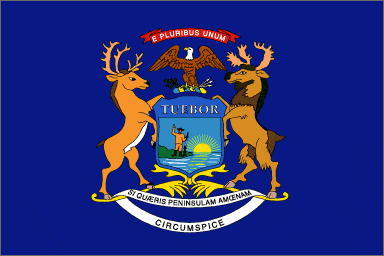
Michigan Knife Laws: A Guide for Knife Carriers!

January 21, 2019 M.D. Creekmore

Michigan knife lawsKnife laws in Michigan can create confusion, as an urban area such as Detroit and Lansing pass statutes that are much more restrictive than the knife laws passed at the state level. The major cities in Michigan have followed the legal lead set by San Francisco and New York City.

However, Michigan knife laws typically protect the right of citizens to bear arms, as clearly written into the Second Amendment of the United States Constitution.

The robust outdoor recreational industry-especially fishing and hunting has played a huge role in drafting knife laws that are favorable to outdoor recreational enthusiasts.

From wilderness areas located in the Upper Peninsula to well-stocked ponds in the backcountry of the Lower Peninsula, Michigan Knife laws remain citizen and visitor friendly. However, this does not mean that some state legislators have stopped trying to curtail your constitutional rights.

Legal Knives to Own

Despite conflicting municipal laws that cause confusion among residents of and visitors to the State of Michigan, state law clearly permits ownership of the following styles of knives:

  • Butterfly Knives (Balisong)
  • Daggers
  • Stiletto
  • Throwing
  • Switchblade
  • Automatic
  • Gravity
  • Bowie
  • Belt
  • Undetectable

Michigan does not permit ownership double-edged, out of the front knives.

Open Carry Knife Laws in Michigan

As of early 2019, the State of Michigan law considers every legal knife to be eligible for open carry. However, open carry laws represent the state law that has the most conflict with municipal and residential district laws. Local knife ownership laws that address open carry typically are stricter than what state law allows. In fact, the difference between state and municipal open carry laws has triggered the most lawsuits filed in state courts.

Concealed Carry Knife Laws in Michigan

Michigan Penal Code 750.227 clearly addresses the legality of the concealed carrying of knives:

(1) A person shall not carry a dagger, dirk, stiletto, a double-edged non-folding stabbing instrument of any length, or any other dangerous weapon, except a hunting knife adapted and carried as such, concealed on or about his or her person, or whether concealed or otherwise in any vehicle operated or occupied by the person, except in his or her dwelling house, place of business or on other land possessed by the person. […] (3) A person who violates this section is guilty of a felony, punishable by imprisonment for not more than 5 years, or by a fine of not more than $2,500.00.

The Michigan Penal Code does a better job of clarifying the definition of a double-edged, non-folding knife than the definitions written into other state laws.

(1) As used in this chapter, “doubled-edged, non-folding stabbing instrument” does not include a knife, tool, implement, arrowhead, or artifact manufactured from stone by means of conchoidal fracturing.

(2) Subsection (1) does not apply to an item being transported in a vehicle unless the item is in a container and inaccessible to the driver.

In other words, any weapon designed to stab is considered illegal to conceal carry in the Wolverine State. This means the only knives eligible for conceal carry possess blunt ends that are incapable of breaking skin without the use of tremendous force. Moreover, folding knives of any kind are illegal to conceal carry in Michigan.

How Does Michigan Knife Laws Address Vehicles?

The quirk with Michigan open knife carry laws is how the state deals with the issue of transporting knives inside vehicles. Although a knife such as a pocketknife is eligible for concealed carry, it cannot be concealed carried inside a vehicle. This means you cannot store an eligible concealed carry knife in the glove compartment or between the front and back seats.

Legally owned knives must be secured in a concealed place that no one but the owner of the car can access. For example, you can place an eligible conceal carry knife inside a vehicle by placing the knife into a secured case and then storing the case in the trunk of the car.

Michigan Law and Knife Length

As of January 2019, Michigan law does not place restrictions on knife length. The only time state statutes mention knife length occurs in the section of the penal code limiting knife length to three inches if the intent of the knife owner is to harm another person. State law muddies the knife length restriction further by stating all dangerous weapons are considered illegal regardless of the length of the knives.

Notice to Harm

MCL § 750.226 covers firearms and other dangerous weapons used with illegal intent. Michigan law defines the illegality and the punishment handed out by using a dangerous weapon against another human. Knives measuring more than three inches are automatically considered dangerous, even if there is no intent to harm someone.

Yet, the clause defining dangerous weapons finishes with this: “or any other dangerous or deadly weapon or instrument.” What does this mean? Case law, which establishes legal precedents, gives us a clue as to the meaning of the entire dangerous weapons provision.

The 1971 case of People v Iverson ruled that carrying a hunting knife is not considered a crime unless the purpose of carrying a hunting knife is to harm another person. State law is clear that intent to harm takes all legal knife ownership rights off the table.

The problem is the prosecution must prove intent, which typically relies on anecdotal evidence and not the type of hard evidence like threatening emails and handwritten letters. There is also sometimes the blurring of the distinction between accident and premeditation.

Michigan Knife Laws in 2019

As we enter 2019, the political climate appears to be much calmer when it comes to knife laws. Other than a strengthening of the school weapons-free provision in 2018, the Michigan legislature mostly stayed with the legal status quo. In October 2017, the Michigan legislature approved the legality of several types of knives, which represented the most sweeping change to knife laws in decades. Such sweeping change is not expected to materialize in 2019 from either side of the political aisle.

Please note: None of the material in this article should be interpreted as legal advice.  I am not a lawyer.  Never take any action with legal consequences without first consulting with a lawyer licensed in your jurisdiction.  This article should not be relied upon for making legal decisions.  This information is provided for scholarship and general information only.

[ Note: Out of all of the pocket knives available on Amazon.com this one is my favorite everyday carry knife – click here to see what it is on Amazon.com. I love this knife! It’s built like a tank and holds an edge better than any other knife that I’ve owned…]

Check out these related articles:

  • What’s The Best Multi-Tool to Buy For EDC
  • Best Survival Knife of for Under $100
  • Best Folding Knives For Self-Defense
  • Work Sharp Pocket Knife Sharpener Review
  • SOG Tactical Tomahawk Review

Filed Under: Knife Laws by State

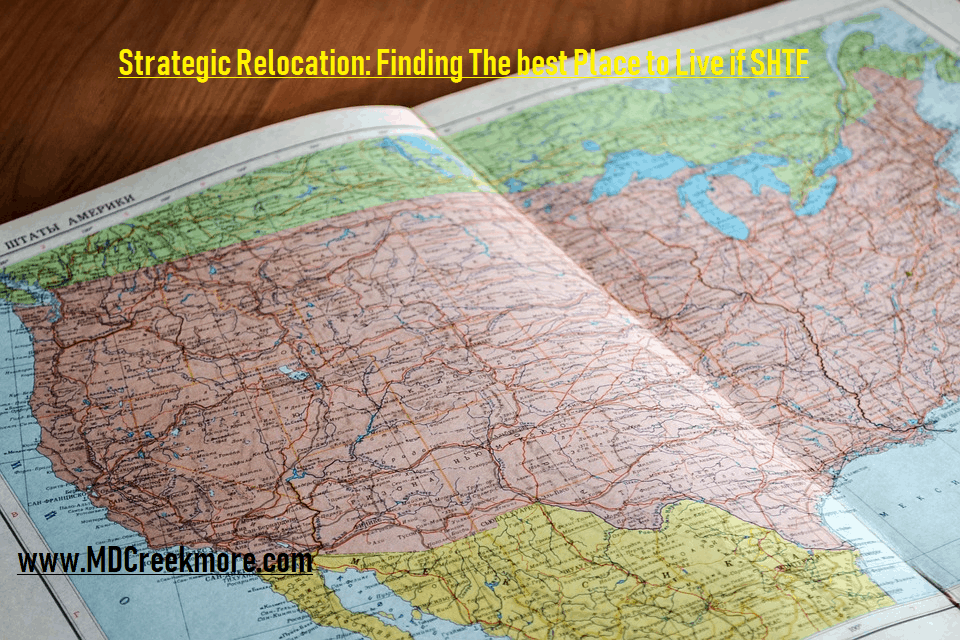
Strategic Relocation: Finding The Best Place to Live if SHTF

January 19, 2019 M.D. Creekmore

Strategic Relocation Finding The best Place to Live if SHTF

by Sierra Grey

Robert Burns once wrote, “The best-laid schemes o’ mice an’ men gang aft agley.”. Translated—no matter how well we plan, things often fail, turn out wrong, or go awry. Humans have limitations. We possess only fragments of knowledge and limited experience. Pride and emotions cloud our thinking. Only God plans perfectly. We, mortals, are left to hope we have planned well enough to survive what comes. And learn from our mistakes early in the game.

My baby steps as a prepper began in 1991. Talk radio exposed me to the teachings of Larry Burkett, a Christian financial advisor and author of the book, The Coming Economic Earthquake. The truths in that book still apply 23 years later—governments with huge levels of debt eventually fall victim to money printing and hyperinflation.

America becomes another Zimbabwe. He inspired me to forsake debt and avoid risky investments. We got seriously frugal and paid off our home. Got our small nest egg out of the stock market. Maximized our savings. Withdrew everything from our IRA to avoid government seizure in the future.

Larry Burkett did not live long enough to readjust the timing of his predictions. But I remembered his thoughts about the aftershocks that could follow the economic earthquake. Societal collapse. Fascistic government. Social disorder. Widespread violence.

My wife, the eternal optimist, doesn’t agree that the future could turn out that bad. The rest of my family sees me as a lovable, occasionally annoying, conspiracy theorist. So, instead of learning a trade, leaving the clutches of the California government, and moving to the Redoubt, I had to settle for a compromise. An “investment” in California land for my wife and family that would also serve as my desired survival destination when the SHTF. But California was simply too expensive.

One man’s misery is another man’s fortune.

The economic correction in 2008-2009 smashed the real estate market in California. A friend with inside knowledge told us that there was a bank-owned mountain cabin on 20 acres just over 75 minutes from Fresno. It was a foreclosure on the bank’s inventory and they wanted to dump it. Suggested we make a cash offer at 30% of asking price. But we had to act fast. I wasn’t sure what my friend was smoking, but if true, it was too good to pass up.

We quickly toured the property and made the offer. They accepted. Larry Burkett was correct—not everyone suffers during economic depressions. People without debt and who have saved can find incredible bargains. We did. Or so I thought

The retreat was beyond expectations. 4100 feet elevation—just below the snow line. A perfect blend of colossal Ponderosa and Jeffrey’s pines and a variety of deciduous trees. An artesian well, hardly needing the electric pump. Clean water poured out of an overflow pipe 24/7.

Locals couldn’t remember the flow ever stopping. Said there wasn’t another artesian well for miles. But should it ever fail, there was a man-made lake filled with good water. The cabin was heated with a wood stove and had modern facilities. One side of the property bordered King’s Canyon National Forest—a wide mountain expanse void of anything but nature.

My wife and I spent our weekends and holidays removing trash and debris. We painted and patched and learned how to repair fences. I cleared trees and split firewood, dug up broken pipes, and re-roofed the well-house. My income was enough to allow me to start adding supplies and equipment month-by-month.

The cabin was built 40 years ago as a summer house. It is perched on pylons on the side of a hill to allow the wind to cool the house from underneath. Winter was not in the original plans. I insulated under the cabin, not an easy task for an older man on top of a 16 foot ladder. But I was turning my plans into reality. God had blessed me above and beyond my wildest expectation. It was a labor of love.

The flora and fauna became my weekend learning lab. With the help of good books, I learned to identify the berries, edible greens, and avoid the poison oak. Bay trees, yerba santa, white sage, milkweed, chokecherries, and elderberry trees provided spice, sweetness, and medicinal supplies.

And if you wanted a puff, Indian tobacco. Wild apples served up a huge batch of applesauce each fall. The giant oaks provided enormous and abundant acorns as a source of protein and flour. There seemed to be a plant for every need. I learned how to dig 18 inches through rock-hard soil to extract the bulbous root of the Indian soap plant, a source of saponin for a sudsy shampoo. After 20 minutes of digging in the heat, my hair was ready for it. But I was pumped—I finally had a survival retreat!

Mule deer peacefully roamed the property in groups of three to six, and nice bucks were common. Shot the first at less than 50 yards from the comfort of my front porch while having a cup of coffee. Only needed my defense rifle, a Saiga in .308 Winchester that was conveniently close-by. Butchered the deer and learned how to turn it into jerky. I put pemmican on the “to learn” list.

The air was clean and crisp, the skies a deep blue, and the nights full of stars. Quail and rabbits were plentiful. Fox pups played near the porch after dark. My game camera caught black bears, bobcats, coyotes, and even the occasional mountain lion slinking about under the moon-lit night sky.

Wild turkeys visited the lake for their morning dip. Near a seasonal stream was an Indian relic, an enormous granite boulder marked with holes a foot deep where the Indians ground their acorns. The presence of Indians for such a long time assured me I was on the right property.

The prior owner had put up a deer fence to create a 10,000 square foot garden area and built raised beds to avoid gophers. I ran PVC plumbing for drip irrigation. We planted beds of strawberries and raspberries, and some grape vines. They grew happily in between our visits to enjoy the harvest. We planted fruit trees. There was more than enough room to enclose chicken and rabbit coops and grow far more of a garden than we had when we moved in full-time.

What more could we want? A comfortable cabin set among the giant Ponderosa’s. Fresh running water year round. A lake as back-up water supply, brimming with fat-legged bullfrogs. Abundant sources of wild food. I felt confident that my plans were working out.

Who moved the cheese?

Fresno County became a center for “medical” marijuana. We soon had over 500 growers in the foothills and mountains. A group moved onto the property next to mine. I have no issues with growth or use of marijuana.

But the War on Drugs has made it a very high-priced item and created a criminal market, as did Prohibition with alcohol. The growers are generally felons with nothing to lose, seeking easy riches and their own supply of high-grade “bud” and “Reggie.”

The marijuana crops are “medical” in name only. Most care little for their neighbors’ property rights or the environment, killing off local wildlife with poison scattered around the outside of their dwellings and crops. Worse, they brought crime and violence.

Its easier to steal someone else’s weed than grow your own. The first year, a robbery attempt was stopped by a shooting a quarter mile from my property. By the end of the year, six men had been killed in county marijuana-related crimes. Break-in’s of vacation cabins skyrocketed after the growers arrived. Booze and guns seem to be the targets. Some locals have started storing their gun collections in the safes of city pawn shops until they need to hunt.

They brought in a bulldozer and destroyed the natural lay of the land. Unusually heavy rains caused runoff from their property that damaged our road and cut deeply into the dam. Another rainy season could bring the dam down and cut off access to our cabin. When we asked them to have it repaired they promised they would, after they sold their crop in the fall. The crop came and went, as did they, to Mexico for the winter. We reached deep into our pockets and paid $7,000 to have the damage repaired.

The heavy rain was followed by three years of record drought, blistering summers, and record-cold winters. The fat and sleek mule deer turned haggard and worn, fewer in number. A small pond now sits where the lake once did.

Banks of mud that will suck in your foot to the knee and rob you of your boot prevent easy access to the remaining water. Water, if you can call it that. More of algae and moss soup. Nary a bullfrog can be found. The snakes, raptors, and critters are picking them off, one by one.

The lack of water and food at other elevations brought in more bears. Lion sightings increased. We suddenly had real competition for the local game animals and the limited harvest of wild berries. The coyote and bobcat populations increased as well, reducing the rabbit and quail populations to a small remnant.

And our 24/7, “has never run dry” artesian well? The overflow pipe has stopped producing anything but dry rust.

Get to know the neighborhood before moving in.

The area is populated by retirees on pensions and/or Social Security, vacation homeowners, and a handful of local forest and park service workers. Into the mix throw a goodly number of folks that just get by. Most on EBT cards and welfare, happy in their ancient, leaky single-wide’s covered by blue tarps.

That adds up to most of the resident population dependent in some way upon the federal government. Fixed incomes take a heavy hit when times get bad. And times are getting bad. What will happen when the SHTF?

As the economy continues to go down, the property crime has gone up. Two cords of oak that I had cut, split and stacked for the winter, disappeared. A local Hmong immigrant group was caught transporting 51 deer carcasses.

One of my “meth-head” neighbors was caught with five deer carcasses. He told the sheriff he was going to sell them for drug money. I was unaware of the ongoing problems with vacation homes being broken into by locals.

Poaching, thieving, drug-addicted neighbors were not in my planning. Not even close. A call to the local sheriff can take 2 to 4 hours for a response. I faced the reality that the only deputy sheriff available to my property was me.

No longer was it the just bears after my provisions that concerned me. Two-legged predators were now in the mix. Nothing can stop a determined, meth-addicted fellow with a crowbar and cutting tools from getting into a steel storage box. Fleeing a SHTF scenario, the last thing I need is to arrive and find an empty cabin and no supplies. I stopped adding to my supplies and equipment and transferred some back to the city.

Plans can and do go awry. Plan that it will happen.

While we prep, the world keeps on changing. We change. SHTF events are not always cataclysmic. Sometimes small chunks of s*** are flicked on you a bit at a time, more annoying than anything. One day you look in the mirror and realize you are covered in it.

Time to toss out the old plan and learn from mistakes. I learned that a deal too good to pass on is never too good to pass up. Price is not all that matters in survival preparations.

I made a list of my concerns and considered my options. We could sell the retreat for a profit and buy another. But how long would it take? Given the troubled times, we are closer to SHTF than ever before. But failures well-studied can lead to a better plan.

Due to my mistakes in planning, I now knew a lot more about the weaknesses of my retreat. The best option available for survival was to turn a lemon into lemonade. I’ll share some of the lessons I’ve learned, in hopes that someone might profit from my mistakes. And, some of the actions I am taking to modify my plans and survive.

I never considered the loss of regular income before the SHTF. I expected it would happen as we fled the city. Plan as though you could lose yours tomorrow. Not long after buying the property, I was laid off. Then again, and one more time.

Finally, three years of unemployment and I’m still without a job in my profession. My increasing age is an undesirable expense to potential employers, thanks to Obamacare. With much less income, I must reduce expenses. I’m using my now-abundant free time learning how do what I have always paid someone else to do.

Car and truck maintenance and repairs. Plumbing. Electrical work. Appliance repair. (YouTube is a great resource.) Video’s from the American Gunsmithing Institute (AGI) are showing me how to do gunsmithing repairs. Reloading my ammunition. How to use Craigslist to find some bargains and resell them on eBay for profit.

We sold a life insurance policy and purchased a small, underpriced property. Hired a friend to bulldoze a dirt access road and building pad, and resold it for a profit. The profit went to income and the principle into another property that I am currently improving to put on the market.

I wish I had worked on these skills before trouble hit instead of spending too much time obsessing over mastering 88 ways to start a fire or how to pack a bug-out bag.

Just because a SHTF scenario is inevitable, it may not be as imminent as you think. I’m amazed that the world’s central banks have been able to print so much money and put off the collapse for so long. You may be in poor health or have diminished physical ability when it finally occurs.

When did I become so grey? I now qualify for discounted coffee at McDonald’s and senior shopping days at my local drug store. When did arthritis own my hands? One day I realize that I could no longer reliably rack my Browning High Power in .40S&W. The recoil spring is 24#—something for a younger man. Sold it and purchased a used Glock 36, small and light. I noticed that hikes into the national forest are not so easy at this age. Who started making guns, ammo, and water heavier?

I’m buying used synthetic stocks on eBay to replace heavy wooden stocks on my long guns. My carbine had a very heavy metal butt plate I once had made for potential hand-to-hand encounters. Blow to the head stuff, you know. I found a plastic one to replace it. I’m too old for hand-to-hand. I’ll just have to carry more ammo and shoot the fellow. Anybody young whipper-snapper need an 18-ounce butt plate?

I underestimated how much of what I use and need can be made without much skill or knowledge and how much money I could have saved for other prepping needs. I’m a big believer in Lugol’s 5% iodine solution and took it daily before I lost my income. It is an important part of my supplies, as well. $15 an ounce is no longer affordable.

I researched how to cheaply make iodine crystals and produce the solution myself. It’s not rocket science. If you can make instant coffee, you can make Lugol’s iodine solution. Potassium iodide from eBay, muriatic acid from Home Depot, distilled water, dollar store 3% hydrogen peroxide, and a coffee filter. Cost—about $4 per ounce. I produce enough for my own needs and pure iodine crystals for pandemics, nuclear/radiation events, wounds, and decontaminating drinking water.

Colloidal silver is also important to me. My family regularly takes it and increases the amount with any sign of illness. Retail cost—more than $200 a gallon. A better way—two 99.9 silver coins, 2-quart glass pickle jar, orphaned laptop power supply, alligator wires, $10 fish tank air supply, distilled water, and $24 PPM meter from the pool supply store. Cost— less than $2 per gallon.

When the world shifts (and it will shift), shift accordingly. The traditional game animals are fewer and farther between. But there still are bears, foxes, bobcats, coyotes, and lions. And gopher, king, and rattlesnakes. What to do? Prepare to include predators in my food supply when the SHTF.

I bought some well-made snares and my wish list includes a few serious traps to use in the national forest. I’ve been rethinking my hunting guns and ammo to account for larger animals. And ways to hunt opportunistically—carrying enough weaponry to shoot whatever should present itself for dinner. Predator or prey.

But two long guns are just to heavy for an old man. Ideally, a shotgun-rifle combination gun would be best, but not in the budget. When I use a .22LR or shotgun for the intended game, I will also pack my best imitation of rifle at much less weight, my .44 Remington Mag Super Blackhawk with a 7 1/2 barrel.

That means increased practice at longer ranges and no more “cowboy” loads. I’m currently toying with homemade shotshells for the .44 to make it a pseudo-shotgun when I head out with a large caliber rifle.

A small powder load in the standard brass case leaves room to place shot. Disks of cardboard make a workable wad and a disk of styrofoam, a good seal. I considered making a snake-handling stick. And that was the end of that. If I have to eat snakes, I’ll shoot them.

Rethink scenarios that you thought you were fully prepared for. Who anticipates everything? I didn’t, and now it’s late in the game. What if an unlikely event happens? I’ve learned that my artesian well AND the lake cannot be relied upon as sources of water. I’ve added a solar well pump to my wishlist and moved water containers to the cabin and filled them.

I’ve constructed 3” PVC “buckets” that can be lowered down the wellhead by rope to retrieve water if electricity is lost. I’m dragging old wooden planks to the lake. Laying them on the mud, they will allow access to the water.

Next on my list is making a 5-gallon bucket sand-filter to take enough grossness out of the remaining water to allow filtering through a ceramic filter. After that, I’ve got to erect some sort of simple rainwater catchment system, and soon, before the winter rains start.

We, humans, are a worse lot than we think. Having grown up, worked, and lived most of my life in the nice parts of town, I never understood the true prevalence of crime. Or how much more it will be an issue after SHTF, even in the rural areas. Storing supplies at my treat in bolted-down construction boxes is no longer an answer.

I’m starting to locate possible caches in the walls and under the cabinets of the cabin for stashing ammo and other small supplies. Many of the smaller tools now go into my truck, as do some other of the small-sized, pricey or hard-to-replace supplies.

But I have yet to find a good answer for large supplies such as food, water, tools, and reloading equipment. Much less some way to prevent theft of firewood.

Full-size shipping container? There isn’t a lock that can’t be removed. And thieves out there have all the time in the world if I’m not there. The only acceptable solution may be to move to the retreat now, not when the SHTF.

It’s not like I have a job holding me back. With my reluctant wife staying in our city home, we’ve both considered that it may be wise for me to spend 5 or 6 days per week. It would make my presence known in the community as a full-time resident, not the owner of a vacation home/retreat. She and the family would make their exodus alone if need be. Sometimes botched plans are hard to smooth over.

Don’t forget that Indians dwelled in this land long before we did, wherever you happen to live. What did the local Indians do when times were tough? I met a very old man who is one of the last pure Indians in the area. He was happy to talk and to answer my questions.

He remembers foods that his grandmother made during the hard times of his childhood. Turns out that the abundant but poisonous local buckeye/horse chestnut is edible in a pinch. Just pulverize them finely and leach them thoroughly, several times.

Raw, crushed buckeyes mixed into the waters of a rock-damned stream stun the fish for easy collection. And…goats. Goats eat poison oak, which there is always plenty of. And the milk isn’t tainted by the poison oak. I need to locate local goat owners that I could buy or barter goats from after the SHTF. For anyone interested, he told me that the tastiest part of the goat is the tongue. I think I’ll save that for last.

Laws get enforced only when there is an enforcer. Anticipate less law enforcement in rural areas. And deputize yourself. I put on my big boy britches and cracked down on the marijuana growers next door. Slapped a new lock on my gate to prevent access through my property.

The very next day they visited my house and asked what was happening. I told them that further access was dependent upon payment for the damage. They protested and said they had a right to the easement. I told them to call the sheriff if they wanted, but I wasn’t opening the lock without payment.

Two thousand dollars in twenties hit my palm and they came up with the remaining money over the next few weeks. I’ve learned that when it comes to growers, the thing they fear the most is not making it to harvest. $7000 to these fellows is chump change. And, they treat me with a lot more respect.

Folks in your rural location are more citified than you may think. They fill their pantries when they go to the city twice a month. Can’t recognize edible wild plants. And don’t know how to garden. I’m now anticipating that I might have to deal with folks at my door looking for food, just as in cities. I need to improve my knowledge in that area by studying urban survival. On the bright side, I have skills in gardening and foraging and may have enough produce to barter.

Consider that your plans may fail utterly—your retreat may become unusable before SHTF. FUBAR. Total failure. In my case, it could be due to continued drought, a forest fire, or advancing age. I may have to remain in the city. And frankly, I’m not well-prepared for bugging-in.

My plan has been centered on an exodus to the mountains. Back to the drawing board. Add “Option B” to the master plan—survive in place. I recently purchased the Urban Survival course from surviveinplace.com and am finding it to be an excellent collection of materials. I’ve got real work ahead of me, at a late hour.

Perhaps the biggest problem with my plan was that I did not spend serious time choosing my retreat. I chose by price and opportunity. In the end, an impulse purchase. As realtors say, it’s all about location, location, location. Not once-in-a-lifetime deals or large properties with lakes and nice cabins.

As you may have read in Dirt Cheap Survival Retreat, by M.D. Creekmore, it can be done successfully with much less. (I have an excuse—it had not been published yet.) In addition to M.D.’s book and the solid material on MDCreekmore.com, the last several years have brought extensive information all over the Internet.

Most of the largest survival websites have helpful information. Visit the county assessor to research income demographics, tax rolls, and maps. Check with the county planning division or department to see if any major changes are scheduled to take place in your area of interest. Talk to the sheriff about problem areas and crime rates, and types of crime. Put boots on the ground. The only business establishment near me is a very old, tattered tavern.

I’m starting to eat there occasionally, just to listen to the old timers that spend so much time talking about what is going on in our tiny piece of California. They are a wealth of info. I’m driving the backroads to learn more about the lay of the land and the people and their properties. You know, the sort of things I should have done BEFORE buying.

My well-laid plans turned out to be seriously off course. Partly because of a lack of research and an impulsive purchase. Partly because life just happens. But isn’t survival more of a spirit and attitude than any specific action, skill, or equipment?

Experts in wilderness survival all emphasize that attitude or mindset is the most important element of any plan. That’s why so many tiny survival kits give up precious space for a bag of tea and packet of sugar. The first thing you do when you realize that things have gone wrong is to calm down, make a cup of warm tea, mentally regroup, and commit yourself to survival.

Not panic. Not despair. The other supplies in that kit are important, but useless without the will, determination and spirit to endure. I’m older than I want to be. My income has changed drastically. My retreat plan has serious flaws. Let me rephrase that — my retreat plan has serious challenges. But I’m going to make it. I will make it.

Filed Under: Homesteading

Are Preppers Normal? Blending Prepping Into Your “Normal” Lifestyle…

January 19, 2019 M.D. Creekmore

Are Preppers NormalBy: Matt in the Midwest

I enjoy prepping. I value independence, self-sufficiency, and taking responsibility for myself. I consider it a hobby with perks. I like growing my own food, canning, hunting, shooting, reusing or repurposing materials. I love reading apocalyptic fiction as well as survival nonfiction; homesteading (free homesteading guide), organic gardening, Mother Earth News, Outdoor Life, Guns and Ammo.

But I also live in the “real” world of having a wife, 2.5 kids, full-time job, a mortgage, car payments, vacations, soccer, baseball, and gymnastics. Trying to find a balance or better yet an “integration” of the two worlds is what I try to achieve. Not everything can fit in both worlds. But I use this as a guideline. The more integrated I make prepping into my life the more I can work towards being prepared. Here’s how I do it.

Where to start? That depends on you, your family, cash flow, and interest. I’ll describe my situation and where I’m at. I’m not saying this is the only way or the right way. Just saying this is how one man and family is doing it.

I consider our basic needs and multiply to broader situations or applications. Some categories to consider Water, food, shelter, security, communication, medical, transportation. Get the basics in place then add to each area. Look for ways to work on preps as you go about your “normal” life.

I avoid putting too much emphasis on long term, unlikely to use, hope I never have to use it items or supplies. I don’t own a bulletproof vest, Geiger counter, or gas mask. Hard to justify this as useful in my “normal” world.

When I consider a purchase, I often ask myself, “will I use it now? (meaning in the next 6 months or so). And would it come in handy in 5-10 years if “bad things happen?” I don’t dwell in the doom and gloom issues, but at the same time, a little preparedness goes a long way. If you have the money or see a great deal, by all means, add something off your wish list.

I didn’t think I was really prepping for many years. I had hobbies I enjoyed like hunting, fishing, hiking, and camping. I like to reuse things, save money, buy used, repair what I can repair. I also buy bulk when I can. Two for one deals, coupons, dented cans, day-old donuts, whatever.

Along the way, I realized the combination of these activities, and the mindframe of preparedness meshed with what is known as prepping. Adding on to activities you already do is one way of making more progress with your preps.

Thriftiness: I’m a sale shopper. Goodwill, resale shops, yard and estate sales are my favorite places to shop. I once found a new Blackhawk tactical pack at Goodwill for $5. Sold! Saved me $80-100 that one time. Kevlar chainsaw chaps for $8? Sold.

I often walk away empty handed which is fine by me. Buying to just buy isn’t for me. I’m not a big shopper, but if I’m at a pharmacy to get something, I take the time to walk through looking for clearance or sale items.

I’m happy to buy two for one of something I already use like soap, toothpaste, deodorant. Is this prepping? Yes in two senses. I’m purchasing bulk supplies of things I need and will use and second, I’m saving money that can be used for other purchases. One thing I am careful of is not buying things that will go bad before I use them. Check expiration dates. This is the integration or blending of habits or hobbies that I’ve described.

Will I get rid of our old bike trailer even though the kids are too big? Nope, it’s useful for getting groceries or hauling wood on a camping trip. And it folds up pretty flat in the garage. Also good long term to bug out if needed. Again, think short and long term, daily living as well as doomsday living. This item has applications in both worlds.

I try to balance short term and long term gains. Immediate use versus hope to never need. I can’t afford a bunker on 40 acres. But I can make sure our 21’ camper is adequately stocked and maintained, all the time. I don’t store 500 gallons of stabilized gas. But I do keep 5-10 gallons on hand for the lawnmower, chainsaw, truck, and generator if needed.

Do I have 2000 watts of solar panels with batteries? No, but I do have a portable panel and battery charger for my phone, and many sizes of batteries. Also a 20-watt panel for trickle charging our camper batteries. Look for ways to expand what you’re already doing.

Think about what activities you did this week, stores you shopped in. Try to brainstorm ways you could have worked on your preps as you did those same activities. I’m guessing you can come up with some ideas pretty easily.

Family: As I mentioned, I am married with young kids. Does my wife think I’m crazy? Yes, many times. Does she support my interests? Yes, indirectly. She has gone shooting with me, but usually only if we go with friends and she can choose where to eat afterward.

Does she wince when she sees another box on the stoop from Amazon or Midway? Certainly. Do I show her the tool or book I ordered? Yes, kind of. But only after I put away the new mags or Hogue grips in the same box.

If she asks, I can call all those things “hunting supplies,” an innocent synonym for survival supplies. She would go nuts if she looked through all the Rubbermaid tubs in the basement and garage. I hope to avoid that day.

She sees the benefits of growing our own food, reusing or repurposing old materials, camping, canning/freezing our harvest or product of hunting, buying bulk and on sale. These are the easy sells with her.

We do many activities that I consider part of my preps together as a family. We shoot occasionally, garden regularly, fish, go canoeing, camp quite often, cook outdoors, bike, and hike. I consider these great family activities, as well as having additional side benefits of fitness, building skills, food production, navigation, survival skills.

Do I feel that going on a vacation, out of state or out of the country, plane tickets, nice hotels, car rental, etc. is a waste of money? Sometimes. Let’s be honest, most of the time. But my family’s happiness, my wife being happy, us having experiences together, makes us stronger as a whole.

And for short and long term survival, I need us to care for each other, love each other, work together, have fun together, have common experiences.

At times I do feel paying $100 for a dinner out with my wife is an extravagance. And if given a choice, I’d spend it at Cabelas or Natchez. But my wife wouldn’t have it so I accept it and move on. Save in other ways.

Organization of consumables: We use a two pantry system – the first one is what we use daily, weekly, basic ingredients. The second one is more of the same but in quantity, bulk purchases. I don’t buy long term storage items, like # 10 cans of dried corn or MREs.

I might get there eventually but for my family right now, this is not where we’re at. I won’t have the shelf life, but my family will eat what I have because our bulk purchases are an extension of our regular purchases.

We stock the upstairs pantry from the basement pantry, then restock the basement/tier 2 pantry with new purchases. Same system with batteries (a big drawer upstairs and the spares are in a tub downstairs), cleaning supplies, medical supplies.

Same with our freezers. A few items in our fridge freezer. Home frozen meat, fruit, and veg in the deep freeze. In our basement, I just built shelves for store bought and home canned food. Build them strong; food weights a lot. You can adapt this for your situation. Keep food visible, easy to get at and you’ll be more likely to use it, keep it up to date.

I would recommend using this two-tier system for all consumables, not just food. Anything that has a shelf life should be rotated with the oldest used first. Batteries, vitamins, some medical supplies all can go bad over time. Hate to lose money by having to throw it out.

One method is to keep a shelf or cupboard in a bathroom or linen closet for your medical supplies. Then surplus/bulk purchases can be stored in the basement or in a tub somewhere else. Then when you buy 3 tubes of antibiotic cream or 10 toothbrushes, put them in the tub and rotate up to the bathroom the oldest.

A posted inventory list is also very helpful. Just update it as items leave or are added to your designated storage area. Here are some other activities that help me balance or integrate my immediate personal and family needs with possible long term prepper needs:

–chickens – we’ve had between 4 and 20 at different times. Mostly layers but sometimes meat birds. I am no expert, just learned by having them. We’ve lost a fair number to predators but overall I consider them a good investment.

Fresh eggs, compost/fertilizer for the garden, and to be honest, they’re just fun to watch. Very entertaining, quite funny at times. The kids love them. having chickens integrates food source, gardening (chicken poop), and family fun.

–go bags – bug out, get home, 72-hour bag; call it what you will. But should have one for each family member and include the basics: water, food, shelter, security, medical, communication, transportation. Each might be different, should be different, but the basics need to be covered.

We live in the midwest and have 4-5 months of winter with feet of snow and below freezing temps for weeks at a time. I add a winter go bag in addition to my basic one that lives in the truck. It contains mostly extra clothes, candle, pot, hand warmers, snacks. I also add extra tools like two shovels, tow strap, jumper cables. Is this prepping or just being prepared?

–garden – integrates food production, healthy eating, family activity, lifelong skill. Canning and freezing gives us more food on hand in the offseason.

–hunting – fun, kids are beginning to try it out, add food to the pantry as well as a possible barter item. My wife never had wild game before we met but now it’s more normal to eat venison than beef. I have handheld radios to communicate with the guys I hunt with which would be valuable in other situations. An example of blending hunting and communications into my normal life.

–shooting – ties into the hunting, as well as personal defense, family activity, and fun to do with friends or other couples. We will meet up with a few other couples to shoot for an hour or two, then go out to eat. Combines a “prepper” activity with a common social outing.

I guess to some it might seem weird, the shooting part on “date night.” But to us it’s just a social outing and could as easily be a movie or hike in the woods before we go eat.I guess to sum it up, prepping has become part of our lifestyle, not a separate activity. My “normal” life includes work, family activities as well as shooting, canning, gardening, hiking, etc.

I have “blended” or “integrated” those prepper hobbies/activities into my normal life. My wife would never call herself a prepper but loves to garden and camp and is happy I hunt and shoot. I can accept that. Overall I see prepping as one more way for me and mine to be responsible for ourselves.

Personal responsibility is a value I hold dear. Will I ever be done prepping? Not a chance. Because it is not only a list of supplies or a set of skills, but more so a lifestyle I have adopted. So as long as I’m living, I’m prepping.

Filed Under: Prepping

Hiking Tips For Beginners – Test Your Gear to Know Your Gear!

January 19, 2019 M.D. Creekmore

hiking clean drinking water filters

by Ian D

The Importance of Knowing Your Equipment, and the Reality of the Using It.

A few months ago I decided it would be a good experience to go on an extended backpacking trip.   I carefully researched the area I was interested in by asking people who knew the area and by looking over various maps and descriptions.

I initially thought I’d attempt this solo but then asked my daughter if she’d like to come along.   She seemed interested and reluctant at the same time.  I described the hike to her as a leisurely and “easy” hike with several trails we could take and end the trip early if needed.

The one unexpected obstacle I ran into though was my wife.   She didn’t think it was a good idea for us to “jump” into this hike with little to no training or physical preparation.

My daughter and I are not in terrible shape but neither of us are doing long walks or running type activities on a regular basis.  My wife thought we’d be safer if we did a few day hikes beforehand and got used to having a pack on and carrying a heavier load incrementally.  I assured her that neither of us needed to do that and we could easily walk a few miles a day.

The total hike was only expected to be about 20 miles so that would only be about 7 miles a day or so.  So we eventually got the go ahead and started seriously planning.  We did all this serious planning about 5 days before the hike was to begin.

Then life happened and we were delayed by a meeting, a fence building project, and 100-degree record-setting temperatures.  We started packing about 2 days before the trip in the afternoons after working outside all morning on the fence project.   We ran out and got food and extra things we thought we needed and eventually had our packs “ready”.

My pack, an Osprey Kestrel 58, weighed in at 40 lbs and my daughter’s North Face Terra 55 weighed in at 30 lbs.   We figured we could handle the weight as we weren’t planning on very long days and we were going to hike at a leisurely pace.

The day of reckoning arrived and we headed out to the trailhead.  It was forecast to be sunny and around 96 that day.  As we got out of the car at 8:30 am, in the already 80 plus degree heat, the bugs proceeded to enthusiastically greet us.

Once we finally got our packs on our backs, I think we both knew right then this wasn’t going to end well.  We said goodbye to our ride and started up the trail.   We didn’t make good progress though, as we proceeded to stop about every 5 minutes or so for the next 2.5 miles, trying to figure out how to get our packs to sit comfortably on our backs!  We tried adjusting the load inside, the straps outside, and the internal frame adjustment.

We finally both found a somewhat better position that at least rested somewhat on our hips and shoulders together.  My daughter and I were in significant distress, discomfort, and dread from the packs, bugs, and heat!  We considered many times turning back that whole 2.5 miles and camping at the trailhead and hiking down to a place where the phone might work in the morning.   We believe that both packs have insufficient padding on the shoulder and waist straps.

Both packs seemed to just not be right for us, but this is probably more the fact that we clearly had NO idea how to set them up.  After 2.5 miles and 6 hours, we stopped for a water refill and lunch.  The water refill consisted of unpacking the brand new Katadyn Hiker Pro.

This worked flawlessly and allowed for a quick refill of both our hydration packs.  It uses quick disconnects that allow for direct filling of a similarly equipped hydration reservoir.  The cool water from the small stream was refreshing and turned out to be the one thing we both thought was the highlight of the trip.

Next up was lunch of some Backpacker’s Pantry Pad See You with Chicken.  But first I had to get my Solo Wood Stove going.  I knew how to use this stove as I’d pretested it a few years before.  The problem we ran into though was the waterproof matches we had simply would not light.

So the BIC lighter was used and after sufficient nursing of the kindling, the stove came to life.   The stove works fast and efficiently.   I only needed a small pile of twigs to get the water boiling and we were eating about 30 minutes later.

The problem was that 30 minutes gave enough time for every insect in the area to call their friends and come to greet us.  It was all we could do to eat our food, which actually turned out to taste really good, and not ingest some bugs with it.   We quickly finished, cleaned up, and “bugged” out so to speak!

Up to this point, we had yet to find anywhere desirable to camp for the night.  It was too rugged, hilly and any semi-flat spots seemed to be in the vicinity of the areas with a little remaining water, all of which were bug infested and quite smelly places.

So we trudged on in search of a possible campsite and toward the next trail junction which was a way down and out in case we needed to end things.  Around 6:00 pm we got to the junction of the trail we could escape on.   Here we could have made a hasty camp on the trail and hope for the best and then continue onward in the morning.   But I instead called the wife and requested an EVAC.  We discussed our options and decided to head down the trail the 6 miles to the trailhead.

We figured we could do the 6 miles downhill in about 3 hours, which turned out to at least be a correct estimate in the end.  This was some of the hardest 6 miles as we’d already been out for 9 hours in the heat and our bodies were both screaming for us to lie down and stop already.

In that 6 miles we were also contemplating every potential spot where we could stop and camp and still, the only places seemed to be right on the trail or bogs.   So we decided to keep going using the thoughts of a soft bed and a bug-free night to push us along.   Around 8:30 pm, we got to a switchback where there were about 2 miles left.

On the map, it looked as if the lower section of the trail was only a few feet below this switchback and we could take a “shortcut” to get there.  It looked as though someone previously had made a trail so we headed down that.   Unfortunately, the “trail” turned out to be a bad idea as it quickly ended a few hundred steep feet down, through deadfall, and some bushwhacking.

At this point, we both had no energy to try and get back up the steep slope.  So we decided to try a sideways hike through the bush to get to the trail.

This got us almost nowhere as it was simply too steep and closed in to make much progress.   We had both already fallen a few times and were on the verge of a mental breakdown.   I finally spotted the trail a few hundred feet down and it looked like it was almost straight down below us.   We had to slide on our backsides a few times to safely reach the trail and luckily there weren’t any serious rock cliffs.

Once down we thought we still had a few miles to go but luckily our near death off-trail experience had re-energized us ever so slightly.   It turned out to be only about a half a mile from the trailhead from where we had come out.

When we arrived there was a perfect camping spot, of course, in a nice dry grassy field.   I proceeded to essentially collapse and await our EVAC.   The wife pulled in about 5 minutes later which would have brought me to tears had I any water left in my body.  I imagine what we felt is remotely similar to what a soldier feels when the cavalry comes to the rescue.

Lessons Learned

  • Know your gear – If you have a backpack load it up and try it out. Simply buying it and letting it sit idly serves no purpose.  If you’ve loaded it to use as a BOB then you need to strap the thing on and walk a mile with it.  That way you’ll know how it feels and if you need help, as clearly we did, in getting it set up and adjusted properly.  The same goes for your water filter, stove, knife, firearm, and other gear.   Use it and know its functions and abilities, become proficient.
  • The Wilderness –  It’s got the word “wild” in it for a reason.   Be prepared for the bugs, heat, and rugged terrain.   If you think you could bug out by simply hiking into the woods with your family and survive, well, you’re wrong.  You’ve got to know the terrain and where water and campsites are.   Otherwise, like us, you could be in for a long uncomfortable hike.  Do your research and pre-locate camp and water on a map if possible.   Mark distances and account for the weather with regards to the number of stops you’ll need for breaks and water.
  • Backpacks – Apparently you need to know a few things when using one of these devices. I’m going to have to learn more about proper loading and adjustment of these things as we clearly couldn’t figure ours out.   So my advice is to ask a local expert to help set yours up and tell you how to use the thousands of straps, buckles, loops, and gizmos on these things.
  • Your Body – Let’s be serious here! Most of us American’s couldn’t hike a mile without getting winded.  Simply put, if you take care of your body then it will take care of you.  Get out and do day hikes with a partially loaded pack and work up to greater loads.   There’s simply no way you will understand the effects a pack has on your ability to move unless you strap one on fully loaded and try it.  Go explore your local wilderness and get to know it intimately.  That could be the forest, the mountains, or the inner city.   The more you know about the surrounding areas you live in the safer you’ll be.  Plus all that exploring will hopefully get you into better shape.
  • Hydration – It turned out that I was slightly dehydrated or had heat exhaustion as by the time we got home, I was shivering and feeling quite ill. You need to drink regularly and keep electrolytes in your system.  Carry electrolyte tabs with you to make sure you never “feel” thirsty, and the day before a hike or athletic event make sure you drink plenty of water.  What you drink today is used the next day.
  • Shortcuts – Be aware that the trails were generally made to avoid hazards and to get from point A to B in the least amount of slope. Thus why all the switchbacks are there.   But some trails as we all have encountered seem to be built by someone who’s a forest maze builder.   So if you’re going to take a shortcut to avoid the misery ahead then make sure you know the hazards or at least able to see the trail you’re going to.
  • Listen – There have been unconfirmed reports and rumors, that in some cases a wife’s advice has been known to be spot on. When your wife tells you something, try to listen to what she has to say.  Maybe even do some additional research and such to show you did listen.   This will make your wife happy and may get you some brownie points.   Then, in the end, discount everything she said and do whatever you wanted anyway.    How else is a man supposed to learn a life lesson?  Also, make sure you allow her a self-gratifying “I told you so!” as she picks you up off the ground and helps you into the car.

Filed Under: Bushcraft

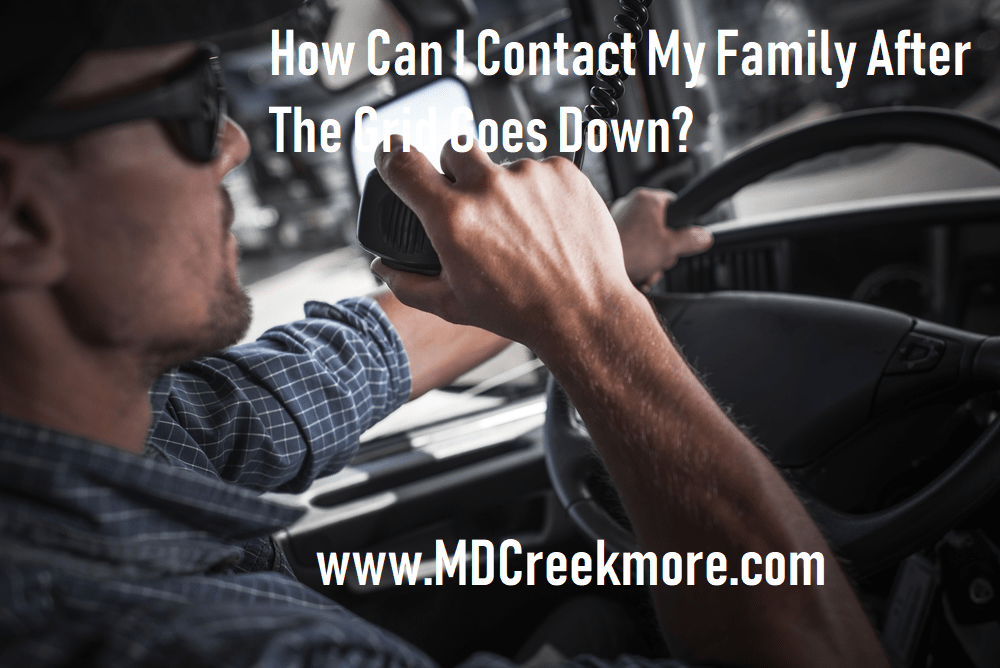
How Can I Contact My Family After The Grid Goes Down?

January 19, 2019 M.D. Creekmore

How Can I Contact My Family After The Grid Goes Down

The family disaster communications plan… by Moira M

You are at home waiting on the cable guy on a drizzly Monday morning. You relax in the quiet house since your spouse is at work, older kid away at college and younger kid in school. You settle in with a nice cup of coffee and the paper when suddenly the TV show is interrupted for a breaking news bulletin.

There have been terrorist attacks in your state capital and two other cities nearby. You grab your cell phone and get a polite message that the system is experiencing technical difficulties and to please try your call again later.

Your home phone has the same problem because it uses Voice Over Internet Protocol (VOIP) and the internet is down. This means no emails either. What do you do? Do you try to pick up the child at the local school? Do you try to make the hour drive to the college to pick up your older child?

What will your spouse do? Would you make it to the college only to find that your child had left for home or that your spouse had already picked her up? The best solution in this case would be to have a plan already in place for how to handle the situation and how to communicate when conventional methods fail.

In an emergency, whether it is a deliberate act or act of nature, communications can be disrupted. Not only can an increased load on the system cause failures, but the emergency at hand could damage the infrastructure. Storms take out towers and lines all the time.

Terrorists could intentionally target communications infrastructure. Not only does it cause a panic when people can’t contact loved ones, but it also prevents people from coordinating to resist them.

In the case of the famous and courageous resistance of the passengers of Flight 93 who tried to retake the plane on 9/11, crashing it in the process, but preventing it from being used against targets such as the White House and other occupied buildings communications played a major role.

The people on the plane were able to talk to loved ones to say goodbye. They were able to talk to emergency personnel and get news of the planes that crashed into the Twin Towers and the Pentagon.

Obviously, we can’t speak for them, but if they had thought the plane would land somewhere safely in a ransom demand, the passengers may have reacted differently than they did knowing that it was highly likely the terrorists planned to crash the plane into a populated target. The next time, the terrorists may prevent such opportunities.

We live in the age of instant communication. At any given moment you can contact people by phone, text, email, video chat and instant messaging. You can get information on news, current events, and any conceivable topic under the sun via the internet, from your wireless device that works almost everywhere. What if that changed?

I used to think it was a convenient plot hole when a movie character was out of cell service at an interstate rest area. That was based on my experience living in Florida. Since then, I’ve lived in Vermont and Tennessee.

There are plenty of stretches of interstate highway in those two states without cell service, let alone the remote boondocks locations we would explore. If you have a car accident or breakdown in those places you either walk to find help or hope someone comes along.

Your personal emergency may be affected by lack of communication. This can be avoided by letting someone know where you are going so that if you don’t arrive there or get back safely in a reasonable time, then they can search for and potentially rescue you.

In a short term emergency, such as a hurricane, ice storm, blizzard, or terrorist event, there may be more people trying to use cell phones and landlines than the available resources will allow. The nature of the emergency might also knock down transmission lines and towers that provide the services.

Many people these days have VOIP phone service (via internet) which requires both electrical power and internet service to work. Long term emergencies, of an apocalyptic nature, would likely be the end of these services forever. We would have to turn to other methods of communication.

In the scenario above you could have a plan where one spouse always collects the older child and the other spouse always collects the younger. You could have a plan where you establish which route (and backup route) would be taken so that you could go from the other direction and meet the person, whether it be the college child or the other spouse. You could establish a central crossroads type location where a message could be left that would let other family members know your plan before they go miles in another direction.

There are many alternative methods of communications that we don’t normally use because cell phones are easier to use. If you had a CB radio or long-range walkie talkie, then you could communicate with each other when you were close enough. For emergencies, we should consider setting up some of these methods and including a generator or solar powered method to run them and recharge batteries.

For short term emergencies, it is a good idea for all families to designate one or more people who live far away to be the communications hub. If an ice storm hits Tennessee, then my brother in Florida would be our hub.

If my family was shattered when an emergency happened, instead of each of us trying repeatedly (and maybe unsuccessfully) to reach the others, we call my brother to let him know whether we are ok, where we are sheltering and/or how we plan to travel to the others. He could prevent each of us from traveling to where we thought the others might be sheltering.

That would help us to get back together more quickly. The hub person could also serve as a news center if the people in the disaster area had spotty access to news (such as road closures and storm paths), and let extended family know you were safe.

Depending on what had happened, CB radios, long range walkie talkies, and ham radio sets could be useful. These radios don’t require the infrastructure as landlines and cell phones. Ham radios require a license and training to use legally.

For long term emergencies, communication plans would be more difficult. By long term emergency, I’m referring to anything that disrupts society on a national or worldwide scale. This would include revolution or foreign invasion,  a massive EMP, anything that takes down the power grid, a pandemic or an apocalyptic event.

Again, CB radios, long range walkie talkies, and ham radio sets could be useful. These communications methods could allow you to talk to family and also to get information about what is going on in the disaster.

However, the Ham radio license would mean that your name would be on a list. Depending on the emergency at hand, that could make you a target of any group wishing to control the flow of information. Any large antennas could make you the target of anyone looking for a prepared location to raid for food, weapons, and other supplies.

If you don’t have a way to communicate, you would need to have a prearranged plan to meet up. If you’ve ever separated at a Wal-Mart Supercenter and then tried to regroup without cell phones, you can imagine what it could be like. You take the front aisle from produce to pharmacy.

Your spouse takes the left aisle from pharmacy to sporting goods. In this fashion, you could walk for miles inside the store without catching a glimpse of each other. Imagine this on a statewide or multi-state scale with various difficulties in place caused by the disaster.

Without a plan, you may never see each other again. Depending on the distance, you may decide not to try. If you do want to try, consider setting up a system in advance to improve the odds that you’ll find each other. This is even a good plan to establish with family members living in the same area. If communication is down, but the disaster destroyed the entire neighborhood where the home was located, how would your family get together?

Family homes or other landmarks could be designated in a particular order as meeting points. Meet first at Grandpa’s house. If it is destroyed or in an unsafe area, go to the big tree by the Baptist church, then mom’s house and so forth until the group could meet. In each case, messages could be left in some agreed upon fashion, such as painted on the house or driveway, nailed to a tree, or hidden under a particular rock.

In disaster movies we often see people trying to get together with loved ones and don’t know if they are dead or alive. If your group gets separated at some point or if you have family members living in other areas, you could meet at a central location at a fixed time.

An example could be to meet at the eastern end of the Trammell Bridge over the Apalachicola River in Florida at midday on the full moon every month. If that is too much travel, pick one specific time, such as December. The system isn’t perfect because, without a calendar, people may have trouble keeping up with months.

Since December includes the winter solstice, hopefully, people could keep track of when the days were shortest. In that part of Florida, December would mean colder weather and less chance of meeting up with a poisonous snake. In northern climes, a summer meeting time would be best.

Any place or time would do as long as the area would be relatively safe and the date and time could be calculated without a calendar. It could also serve as a place to leave a message without meeting up. You or your relatives could leave a message in code or plain English that gave information or instructions for meeting up.

Talk to your family and set up a plan. Test it occasionally so everyone is familiar with it. Be prepared. Remember that communication is an important step in being prepared.

Filed Under: Prepping

  • « Go to Previous Page
  • Page 1
  • Interim pages omitted …
  • Page 46
  • Page 47
  • Page 48
  • Page 49
  • Page 50
  • Interim pages omitted …
  • Page 87
  • Go to Next Page »

Primary Sidebar

Subscribe to Blog via Email

Enter your email address to subscribe to this blog and receive notifications of new posts by email.

Join 7,202 other subscribers
  • Amazon
  • Facebook
  • Substack
  • Twitter
  • YouTube

“Do more with less.”

– Minimalist proverb

Recent Posts

  • Just so you know
  • Weather Update for My Corner of Appalachia
  • Why I’m Ordering Ivermectin + Mebendazole Every Year
  • The Website’s Shutting Down (But Here’s the Plan)
  • You Are Hated! Start Training Like It!

Footer

Recent Posts

  • Just so you know
  • Weather Update for My Corner of Appalachia
  • Why I’m Ordering Ivermectin + Mebendazole Every Year
  • The Website’s Shutting Down (But Here’s the Plan)
  • You Are Hated! Start Training Like It!

More about me

Books I’ve written

Books I’ve read

Follow Me on YouTube

Follow Me on Facebook

Gear I Use and Recommend

Newsletter

Search this site

Follow me elsewhere

  • Amazon
  • Facebook
  • Substack
  • Twitter
  • YouTube

© 2008–2025 M.D. Creekmore · As an Amazon Associate, I earn from qualifying purchases.