• Skip to main content
  • Skip to secondary navigation
  • Skip to primary sidebar
  • Skip to footer

M.D. CREEKMORE

  • Blog
  • Books
  • Newsletter
  • Gear I Use
  • About
  • Contact
  • Facebook
  • YouTube
  • Blog
  • Books
  • Newsletter
  • Gear I Use
  • About
  • Contact
  • Privacy Policy

Blog

Stocking up on Prepper Food Essentials

December 19, 2018 M.D. Creekmore

Prepper food essentials

by Kristy L

For a while now, I’ve been stocking up on food and drug store items. For me, it started after hurricane Ike. I got a taste of what it’s like to live without electricity and have all the grocery stores and restaurants around me shut down for several days. Eventually, it became about much more than hurricane prep.

I started watching the news and thinking someday I could lose my job, someday there may be a war on US soil, someday this country’s finances are going to collapse. So for me, stocking up on things now gives me peace of mind that should they not be available in the future, or if I cannot afford them in the future… I’ll be ready.

With the ongoing droughts, crazy weather patterns, random earthquakes, job losses, foreclosures, rising food and transportation costs, flash mobs etc. I am hearing alarm bells. After our bond rating went down they got louder. I feel like something I hoped would never happen could soon become a reality.

Point being – if you haven’t started stocking up, please start now. That means food and water for at least three months, ways to stay cool/warm, ways to cook if the power goes out, ways to purify water, medical supplies, seeds for the garden, and ways to defend yourself (or if self-defense makes you uncomfortable, align yourself with people who can help you defend yourself if it comes to that).

If you haven’t seen what happened in Venezuela… just imagine when the American people have had enough, or can’t get enough. Remember Katrina? It’s going to be ugly.

I can’t cover everything in one article, that would take a book, but here is a crash course on stocking up, primarily on food:

1) Coupons – At Walgreens and CVS you can get stuff for free practically every week… vitamins, body wash, hair clips, razors, toothpaste, toothbrushes, mouthwash. You pay out of pocket, then they give you rewards dollars to use next time, and you keep rolling them.

Walgreens also has store coupons in their circulars for cheap food pretty much all the time. If there is a BOGO sale and you have a BOGO coupon, you get both items free. Search the internet. I use SouthernSavers.com and they list all the deals and coupons for you.

If nothing else, think of these as potential barter items, but the vitamins are definitely a good item to keep on hand when you’re not getting the nutrition you should and your stress level is through the roof. To me, Wags and CVS trips are fun. I go in and get over $200 retail value, pay maybe $20, and get $15 back to spend next time… that’s pretty typical and it doesn’t include rebates that some manufacturers offer. (click here to read MD Creekmore’s article on coupons)

2) Clearance Aisles – My grocery store has a clearance section where (for example) I’ve been finding cans of pinto beans for 20-cents, and they aren’t close to their expiration date nor are they damaged, they just aren’t selling or maybe the brand shut that line down.

Even outside the clearance aisle, they have bags of beans for 99-cents every day. Throw a bag in your cart each time you shop. (and find some recipes to make them taste good or you’ll hate yourself after the first week… did you know they have pinto bean pie??? It actually sounds good.)

3) Amazon Subscribe & Save – I ran across this when I was looking for healthy, portable, food that doesn’t require refrigeration for my husband who is currently in Afghanistan, plus I also realized that I could keep some on hand for hurricane season.

You subscribe to their shipment service and get a 15% discount, shipping is free, plus they ship your order automatically in 1, 2, 3 or 6 months increments that you choose. They notify you prior to shipment and you can cancel one shipment or all shipments.

This is not a Guthy-Renker kind of cancellation, you do it on their website, it’s automatic, no one hassles you – it’s GREAT!!! I buy pouches of applesauce (baby food, but hey… it’s good), dried fruit, shelf stable sandwiches, etc. On occasion they even offer additional coupons to entice you in; if it’s something you would have bought anyway, that’s a great deal!

4) eFoods Global – They will send you three free entrees of your choice. You have to watch a video that tries very hard to get you to become a distributor… do as you wish, I ignored it. During the video they have a few poll-type questions, answer however you choose.

After that, you select your entrees and pay $10 for S+H, and they deliver it to your house. I got one followup email asking if I’d tried it yet and what I thought but after that no contact, no hassle. I didn’t give them my real phone number, so I can’t say if they tried to call or not, but I doubt it.

I was hesitant to pay the S+H, but my husband thought it was reasonable, and after the box arrived it did seem to be… the bags were larger than I expected and the weight of them probably did justify the cost. They look delicious.  eFoods Global (I am not a distributor)

5) Thrive Foods – This site has pouches available so you aren’t investing in #10 cans unless you want to / need to (but they do have #10 cans). They also have interesting items like freeze-dried shortening, powdered eggs, and freeze-dried butter.

Heck, I want it just because every time I buy shortening it goes bad before I use it, and since I married a Cajun… I need to learn to cook gumbo. They also have a “Q” where you set a monthly budget, add the items you’re interested in, and they will automatically group and ship the items to you. Thrive Foods (also not a distributor)

6) Coleman Camping Meals – If you don’t want to order anything online, these are available at Target in the camping section (or were) and are probably also available at other places where they sell camping equipment. My husband said the cheesy pasta was really good.

7) The fish aisle (for if it REALLY gets bad) – I never knew this, but fish use antibiotics, and you don’t need a prescription to get them. Farm supply stores carry them as well. I hope never to need them, but if I do, I have them. Amazon.com has several suppliers of amoxicillin, tetracycline, doxycycline, erythromycin, penicillin, etc.

I saw some at PetSmart, but it was in powder form (not a capsule) so I passed on that. You shouldn’t use antibiotics if you don’t have to, and until it gets to the point that there is no doctor to prescribe them to me I have no intentions of ever using them, but it makes me feel better to know they’re there.

That said, you need to know how to use them, so you will also need some sort of PDR or nursing book, I found an AARP guide to pills at my local used bookseller for $10. Raw garlic also has antibiotic properties if you want to go that route instead. Google it and the info is out there.

8) Clove oil – Good for toothaches. Lavender oil – a topical disinfectant, also repels fleas. Cedar oil – magic against bugs and safe for humans and pets, young and old.

9) Church of Latter Day Saints – I don’t care if you’re Mormon or not, and neither do they. They offer #10 cans of several pantry staples at less than a lot of the emergency food type websites. They also have a starter kit that I ordered once. There is no followup contact, they slip a pamphlet in the box and they’re done: http://store.lds.org/webapp/wcs/stores/servlet/Product3_715839595_10557_21003_-1__195787

10) Bath & Body Works – Believe it or not… They regularly have 5 for $15 or 7 for $20 antibacterial soap sales, especially around Christmas time. It’s an inexpensive way to stock up on soap, and not just soap, but soap that smells like heaven.

I’m not just saying that because I’m a woman, I think that when things get bad you need a little normalcy in your life and things that make you feel good… treats if you will. That said, I once had a nightmare that the SHTF and someone warned me that I shouldn’t go out there smelling all good when everyone around me stank or I’d stick out like a sore thumb; everyone would know I wasn’t suffering.

Sometimes dreams can be very insightful… but blending in is another topic altogether… ;p

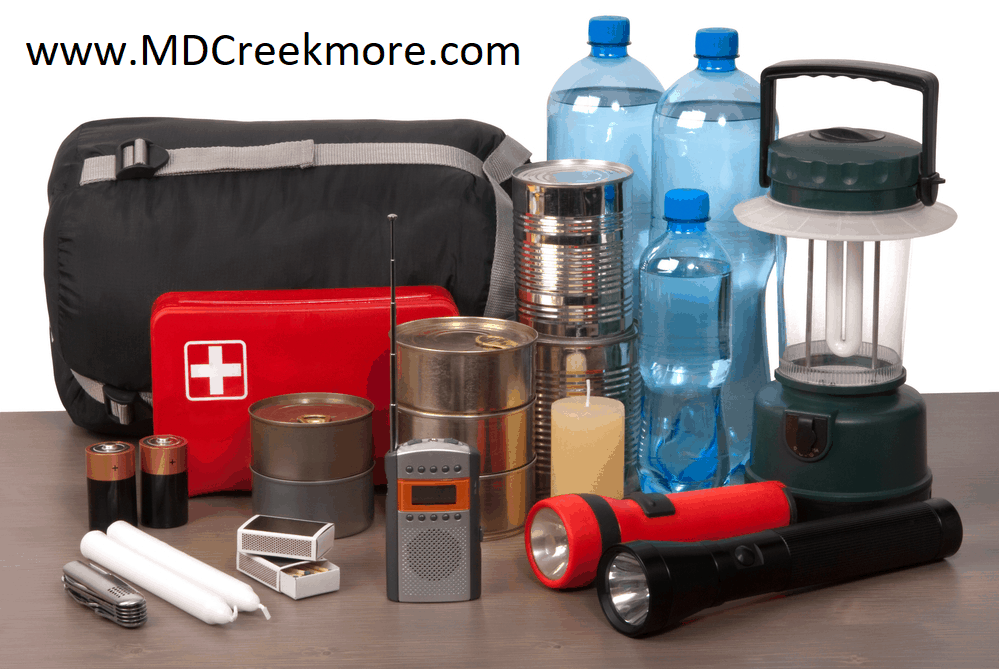
11) Putting it all together – This is an excellent idea for a 72-hour kit that you can do with your kids. They’re light, portable, self-contained and fairly inexpensive. If you don’t know where to start, start with this:

http://foodstoragemadeeasy.net/2008/06/13/how-to-make-a-72-hour-kit/

What you stock up on and in what quantities is up to you. The trick is not to concentrate on just one aspect of prepping or to get bogged down by the enormity of the task. Start with what is most immediately possible where you live… on the west coast that’s earthquakes, on the gulf coast it’s hurricanes, in the north it is snowstorms. Branch out from there and tailor it to your needs. Little by little you’ll start to build up a stash that will give you piece of mind.

Filed Under: Prepping

Preppers How Much Food is Enough? (Estimates Based on Historical Events)

December 15, 2018 M.D. Creekmore

How Much Food Should a Prepper Have?

M. Roberts

A question that is commonly asked among preppers is “How much food should I store?”  There is no single answer which can fit the needs of all, for each prepper has different income levels and storage space.  Some may be responsible for feeding more than one person while others live in the midst of an abundant natural food supply.  How well one intends to eat during a crisis is another indiscernible factor which will vary from person to person.

Since no two food storage plans will be identical among preppers perhaps the better question to ask is, “How long will the coming crisis last?”  If we knew how long a future crisis would last then each prepper could calculate how much of their food would be needed to endure that crisis.  Obviously, no one can foresee the future to retrieve the answer to this question, but I think studying history can help us make some calculated decisions.

Most periods of food shortage since the year 1900 lasted only 1-2 years while some of them lasted 3-4 years.  Not very many of them lasted five years or more, but there were a few times in the last century when a food shortage crisis lasted a full decade.

In Russia, there were several factors which caused a prolonged period of food shortages which killed millions of people.  One of those factors was war, both WWI (1914) and the Russian Revolution (1918-1920).  During Russia’s civil war, opposing groups lived off the land while also stealing food from the farmers who grew it.

That food was distributed among allied friends and denied to enemy neighbors.  A drought in 1921 only made food more scarce for everyone, including farmers who would often consume seed grain rather than plant it.

Despite relief efforts, the famine was still widespread in 1923.  Overall, the people were desperate (to various degrees) for food for almost an entire decade.  This famine is considered to be one of the worst in Russian history.

The worst period of famine in Cambodia occurred between 1970-1979, also a full decade.  Civil war, brutal policies of the Khmer Rouge regime, and invasion by Vietnam all contributed to prolonging this time of food shortage which killed upwards of two million people.

Also in the last century, the world saw a period of food scarcity during the Great Depression which began in 1929.  High unemployment with a poor national economy kept many citizens in a rut of financial depression, especially those who lived in the southern U.S. “Dust Bowl” states.

Food of various quantities and qualities was still available, but many couldn’t afford it and millions starved to death.  Some regions recovered more quickly than others, but overall this economic depression lasted a full decade.  So far as American history is concerned, the Great Depression is considered to be one of the darkest moments of the last 100 years.

If three of the worst food shortages of the past century are known to have lasted a full decade then I think we can be fairly confident in using that duration as a high-end estimate guideline for future preparations.  One could go back further in time to find longer periods of famine such as the Thirty Years’ War in Europe (1618-1648), but the modern world no longer resembles much of anything from the Renaissance period.  Storing enough food to survive independently for additional years beyond one decade would have been considered overkill in retrospect of every food shortage crisis in history since the year 1900.

Based on history we can also know the cause of our next food shortage crisis will likely be associated with drought, internal and external political conflict, or extremely poor economic conditions.  Drought happens unpredictably virtually everywhere while the world had enjoyed very few years of peacetime since WWII.  Of course, the economic conditions worldwide leave a lot to be desired at the moment so all three causes are a concern even now.

Further, some believe this nation will experience another civil war in the not-so-distant future as well as a more severe national economic collapse.  If such predictions prove true in a worst-case scenario it would be wise to expect a repeat of what happened in Russia when nearly everyone was living off the land and consuming every available natural resource while the stolen crops of farmers never reached the marketplace.  Having a good food storage plan in place can help ensure basic survival until the day more prosperous times return, as modern history suggests time and time again that they will, even within a decade.

Regardless of how much food of different varieties and quantities a person has set aside, during a crisis, they will experience three phases as it concerns the usage of their food supply:

Phase One (measured in days and weeks which will vary from person to person):  Fresh food items from the refrigerator and freezer foods will be consumed first, especially if electrical power is unreliable, as well as canned and boxed food from kitchen cabinets and pantry shelves.

People will continue to acquire food from available suppliers (stores, farmers) and natural sources (fishing lakes, hunting grounds) for as long as possible.  In many cases, the crisis will be over before emergency foods stocks have to be tapped, but otherwise, the person will move on to Phase Two.

Phase Two (measured in weeks and months up to 2 years):  The diet of a person relying on emergency food stocks includes much heavier reliance on canned goods which have a shorter shelf life.  Some dry goods will also be consumed for more balanced nutrition.  Using food grown at home (e.g. fruits, vegetables, rabbits, chickens) can help conserve some of those canned goods, but know your trees, gardens, and animal cages will likely be a target of hungry thieves.

If your property is relatively safe from such intruders then make the best use of your harvest to prevent waste.  If no fruit-bearing trees and bushes were planted in advance of the crisis then this would be the time to begin transplanting them from the wild onto your private land. The daily diet should not be what it once was simply because food rationing efforts should be in place, but also to avoid appearing to be fat by comparison to those around you who are suffering from malnutrition.

Starving people will take notice and they will come looking for your food.  Assuming a decent stockpile existed from the start, there is a very good chance the crisis will be over by the time the last can of food is opened.  Otherwise, the person moves on to Phase Three.

Phase Three (measured in months and years up to one decade):  Most of the common canned goods will have expired, although some will still be edible despite some deterioration in quality of contents.  There is probably very little variety left in the pantry beyond dry goods such as beans, rice, and grain.  It’s not much, but a good number of people would have already died from starvation simply because they did not have even this much.

Long-term storage foods such as MRE’s (Meals-Ready-to-Eat) and freeze-dried foods would be extremely useful during this phase.  Many of the fruit-bearing bushes and trees which were transplanted onto your property during Phase Two will start to produce during Phase Three and any food produced at home can supplement or even replenish the dwindling stockpile.  This will include gathering dandelions from the lawn to make soup as well as other unusual recipes we may have heard our grandparents talk about.

Some people will begin to relocate during this time period in the hope of finding a better life elsewhere.  They may or may not succeed in their quest, but if they do leave for good then acquire any valuables they leave behind such as clothing, furniture, combustible materials, and items which would be useful for trade.  (If this feels too much like “stealing” for your liking then make arrangements with them in advance to “clean out” their abandoned home for free.)

Based on history, the odds are extremely good that life will be getting better long before your supply of dry goods are completely exhausted.  Otherwise, you’ll likely have outlasted most everyone around you and learned how to adapt in ways which will ensure your ongoing survival.

Obviously, most people would not be eating quite as healthily during Phase Three as they were during the first two phases, but they would still have far more than anyone had during the Great Depression.  Even so, the odds of remaining in Phase Three for more than a few years is very small based on a study of history.  There is no guarantee a future crisis won’t last longer than a decade, but it’s highly unlikely based on 100 years worth of history which saw many incidents of food shortages around the world.

Returning to our original questions of “How much food should I store?” and “How long will the coming crisis last?”, I believe we can draw some reasonable conclusions from history which can be applied to the future.  History tells us a two-year supply of canned goods (plus some dry goods for better nutrition) would have been enough to endure roughly 80% of all past food shortages.  Unfortunately, due to limited shelf life, most canned food can be expected to begin deteriorating after two full years.

If we want to plan for a longer duration then long-term storage foods need to be part of the mix as well.  Having another two years’ worth of long-term storage foods (dry goods, MRE’s, and freeze-dried foods) would have enabled a person to fully endure about 90% of all food shortages in the last century.

To have such a stock on hand today in preparation for a future crisis would be a tremendous accomplishment!  Most would be content at this level of preparation, but some will want to go the full distance of ten years.

Having only an additional six years’ worth of long-term storage foods would have enabled one to fully endure all of the worst food shortages we’ve experienced in the last century.  Again, there is no guarantee the next crisis will be limited to a duration of ten years or less, but that it will be is a good bet I’d be willing to make based on a study of history going back more than a century.

Ponder the past and prepare for the future by building a food supply which fits your own personal needs knowing you have learned from history which often does repeat itself.

Sources:
http://www.trust.org/alertnet/news/factbox-ten-worst-famines-of-the-20th-century/
http://en.wikipedia.org/wiki/List_of_famines

Filed Under: Prepping

Prepping on a Budget: A Survival Guide for The Minimalist Prepper

December 15, 2018 M.D. Creekmore

budget prepping tips

by Frank V

While I have been interested since high school in survival and what we now call prepping, I have never been able to initiate and create an ideal situation or even close to it. For me, like most people, one of the major obstacles has and still continues to be lack of finances or a reserve of funds that I can use to purchase an adequate supply of food, firearms, ammunition, hygiene products, tools, and any necessary gear and equipment.

Not to be forgotten of course is the building and fabrication of an adequately strong, secure, well sealed, well ventilated, climate controlled, comfortable, and reasonably roomy survival shelter, which to my thinking really means a bomb shelter since it was the fear of nuclear war that concerned me and nuclear war survival was my foray into survival in addition to some interests in wilderness survival.

Two of my first books were ‘Surviving Doomsday’ By Dr Bruce Clayton and one of Bradford Angier’s books on outdoor survival followed by several more on camping, hiking, mountain climbing and so on until I got the bug again when I read “Nuclear War Survival Skills” by Duncan Long and I found a copy of “Passport to Survival” by Ester Dickey.

The main point for mentioning these books being that I was being introduced to different approaches and that now for me, survival ran the gamut from surviving a night out in the woods, to bunkering down for foul weather or making preparations to get by on stored provisions.

While the nuclear war books can scare the crap out of you and the preparations they say are required can be very intimidating, they really make you think about being completely organized, stocked and prepared for total self-sufficiency. As I read more it was good to know that there are many ways to prepare, many options to choose from. More to learn yes, but also more options and the realization that you can and actually need to rely on the skills of others.

And many of the skills and knowledge required has been around for decades and still practiced today. And thank god for all these people who write books, so we can learn what we need to know, but also keep the books to refer back too if we forget anything or want to teach others what we learned. The task of getting geared up is in itself a daunting one. You read what you need and you think, “Wow that’s a lot of stuff to acquire. How am I going to afford all that”?

One of the key points and recommendations made by Duncan Long was to stock up on the small, inexpensive items that would be rather difficult and time-consuming to make but could be easily be purchased before a disaster and at a low price since the most of the items are inexpensive.

The main thing to remember is that these are inexpensive yet essential, if not at least considered useful and convenient items we currently take for granted and we would probably miss if they were not available. Who wants to struggle and toil for hours to trying to make just a few matches, rounds of ammo or some rope. And expendable items are the worst part of preparedness. You need frequent resupply, which we know will be interrupted requiring you to be adequately stocked before an event occurs.

I take every possible opportunity to collect if you will, any obvious survival gear or potentially useful item when I find something on sale or on clearance. I actually began to collect books from thrift stores which can be looked at as buying knowledge, which does have a value that outweighs the costs of the media it’s printed or recorded on. I would look for anything related to survival and self-sufficiency and I would basically buy, copy or save any book, list, guide, pamphlet and an occasional catalog that I would come across. I am a knowledge scavenger.

I can and do apply this same behavior or skill to everything I do. I try to collect, stock, learn, whatever I can afford or can get for free. I just migrated from books to shopping for gear. I have for example bought steel or aluminum water bottles and I also have some plastic ones as well. yet, I was at a local grocery store that was closing (the result of downsizing due to this recession) and I picked up 2 or 3 very nice water bottles.

And then I picked up 3 more, brand new in their boxes from our local Goodwill, in addition to some nicely painted bottles my mother had, brand new wrapped in bags, so by this time I had around 12. I had picked up 3 at a “dollar store” where they sell loads of cheap imported stuff. These were loose bottles, some printed with company logos, and only costs me about a $1.00 each. But then just two weeks ago I purchased another one from BigLots! that had been marked for clearance down to $2.50.

It was red with a cross on it and featured a screw on cup/compartment on the bottom and some first aid items. It was being marketed as a first aid item, but inspiring paint job aside it was a large metal bottle with an extra feature not found on other bottles.

I felt it was a greedy, but perfectly desirable, practical purchase. Also let me suggest that while it’s very trendy to buy pre-bottled water, I think it’s better in the interests of both frugality and maintaining hygiene that each person has a cup for various beverages or even a small personal bottle for water which can be filled from larger containers. I bought from a dollar store, a pair of ice trays (It’s really a mold for ice) in the form of rods that fit in the bottle opennings.

That’s part of my reason for buying water bottles with both small and wide necks and in various sizes. And with that, I’d recommend bottle brushes to scrub out any residue left behind from sticky liquids that have been allowed to dry out.

I also have a lot of matches, bandanas, flashlights, candles, emergency rain ponchos, stainless steel dog bowls, etc., that I have purchased cheap. I bought a tiny pocket knife on clearance at Wal-Mart. And I have a nice Gerber folder a friend gave me. I have a brand new, rear tire mountable rack for a bicycle, which I never get to ride, but I know if I have to rely on my bike to get around, at least I have it and plenty of bungee cords to attach a milk crate or two as well.

Plus I can attach some of those extra flashlights and water bottles to the frame. And while I truly wish I had more of the bigger, more expensive items like firearms or a 4-wheel drive jeep, at least I am preparing well enough for storms and hurricaines and worse in small, but still important areas.

And I have acquired a fair amount of machettes, knives, flashlights and multi-tools plus cordage, duct tape and waterproof match cases to at least put together more than one survival kit or bug out bag. And yet I purchased some black, rubber coated LED flashlights (AA) from WalMart because they were marked down from $3.99 to $1.99 and well… I had to have them and they’re really good little lights and extra ones would make good items for barter.

I sometimes feel I am buying too much or too many of one item, but then I like to have a backup and extra items for trade. One of the things that always concerns me or those people who break stuff. You may know someone like that. They ask to see your knife a second and the next thing you know they’re using it as a screwdriver and then after they damage it, they hand it back to you like nothing happened and when you point out what they did, they look at it, maybe wipe the item with their hand as if that will magically repair it and tell you “Oh it’s fine. It’ll still work”.

For this reason, I may seem out of my mind, but it happens, so it’s a good idea to have expendable items that while they might last you a long time, they won’t break your heart or your wallet when some dumb and careless, inconsiderate shmuck ruins it.

You see, I also believe in the concept of “I was prepared and it’s my stuff”. In other words, unlike the movies where some self-appointed leader emerges or someone is chosen by the group and decides to outfit him or herself with whatever is available, your stuff is your stuff. I’m not against sharing, but again, that careless schmuck, that infernal monster, can appear and his friend, the self-entitlement monster.

Sometimes they travel in packs or because they’re buddies or work together they are a notch above you and the others. These are people who feel that what you have is now his, her or their property and if they ruin or lose it you have no say or right to complain.

So for this reason, I say have extra items to avoid a confrontation, but don’t be foolish and let those unprepared and possibly less thoughtful, less skilled or less knowledgeable destroy your gear and ruin your chance for survival. Anybody can carry a few basic, essential items in their pockets, a vest, a small pouch or fanny pack, although I never wore mine over my fanny.

For those who are wondering what items, I mean a pocket knife, (read What Is The Best Swiss Army Knife For EDC) cell phone, lighter or matches, rain poncho, space blanket (read Can I Use an Emergency Space Blanket for Camping), cell phone, multi-tool, maybe a snack bar and some first aid items.

With the idea of making small gains and always trying to make progress I look at my actions as a whole and try to estimate if the end result is desirable. While I do have a few large water containers but would like to have some large drums, I know that every water bottle, every canteen, every pitcher I have on hand can be filled with water. Just as I know that every match I have can provide another potentially life-saving fire. Every little bit adds up so I never downplay the value or cheap or free items. And as for those stainless steel dog bowls I mentioned… well I do have dogs, but think about it.

They’re bowls you can eat out of, they hold water, they can take the heat, they clean easily if they’re the brightly polished types and since they’re “just dog bowls” instead of fancy department store kitchen mixing bowls, you can buy them for pocket change.

And while the usefulness of the things I buy cannot be disputed being that they are things we put on our lists, they are small things, but at least they give me some peace of mind that I am making the effort to achieve preparedness and I am sort of self-grooming myself to act and think like a survivalist minded individual.

I can also sort of reverse this thinking and use my various bird and animal cages and dog crates to raise and house livestock such as chickens, rabbits, and other small critters. A medium size dog crate can hold a turkey or a small pig. Then I began to think about supplying water and storing food, which is why I keep coffee cans on hand and other containers, so I can transfer pet food from their vulnerable paper and plastic bags into a sturdier metal or plastic container that is more mouse proof and more airtight.

Recycling or repurposing equipment is one way to save and to provide things you need, but do not have or can’t afford. Researching do it yourself projects online or watching videos on YouTube or similar sites will really open your eyes and your mind to creative ways to make equipment from scratch or to improve or improvise with what you may already have and only a few bits and pieces you can scrounge or buy from the hardware store or as they call them nowadays, home centers.

I’m not just an avid or obsessive shopper- at least I try not to fall into that trap. I just try to think of what my needs are and how I can meet them. I keep my eyes and ears open for opportunities and always thinking how I can use or make an item useful.

It’s been a struggle these last few years with my mother needing a lot of care at home and numerous hospital visits that exceeded around 50 trips to the ER and not to mention all the doctor appointments and time spent at this or that clinic over the last 10 years. I was concerned with her needs in addition to everyone else plus medical considerations and with the current economy that it posed too great a challenge, but I still tried in small ways to make progress.

I would advise anyone trying to make preparations to look, with a list in their hands possibly, around their own house for obvious items such as camping gear, tools (shovels, machette, hand pruners, small saws), cooking gear, etc., and think how these items they already possess can be useful.

Then you look outside your home. Can you collect some seeds, free fruit, or whole plants by asking neighbors? Would local businesses let you have some wooden pallets to build a compost bin? Can you get some used empty food pails from a bakery? Usually, if you ask they give them away… and yes, for free.

What about local dumpsters? You should look at them or even when the morning trash is put out. In my neighborhood, I have seen furniture, appliances, etc., put out and sometimes they have a sign saying “Take Away Free”.

It’s a regular practice for bakeries and food businesses to give buckets for the asking. People who make their own biodiesel at home get used cooking oil for free because restaurants have to pay to have it picked up. And Starbucks will gladly give customers discarded coffee grounds for gardening.

It’s actually a store policy. There are many businesses who will let people take stuff if they can avoid having to pay someone to clean it up or haul it away. And of course you can always ask to buy some scrap pieces or make some kind of deal or offer, but often it’s cheaper or more convenient for a shop or store to just have a product or materials, or even their ‘trash’ taken away with the added bonus of creating goodwill between them and yourself.

I do occasionally check out yard sales, which is often a drag, but you have to look to find the goodies. The other option are thrift stores with regular hours and their indoor comfort. I don’t care for pawn shops- at least I don’t think they offer bargains. The other thing is to look for clearance items at every department store or chain store.

The items they mark down are often real gems or at least the lower price makes them a more attractive deal. They’re often decent quality items and a good deal at the reduced price. Sometimes it’s better to have a few good items than just one more expensive one.

It’s always good to have replacements in case of loss or breakage due to wear and tear or carelessness. Again, you can always put aside multiple items to use for trade, to give to others in need, or to create a cache or for an alternate location. And possibly, in case of theft or robbery.

It would be great to have enough money to utilize your buying power to purchase supplies in bulk quantity alone or with others, but that isn’t the case for some of us. The flip side is that hopefully, it causes one to shop more carefully and thus buy more for less. I feel as coming across an item on sale or reduced for clearance when you usually the get the lowest prices, is an opportunity to buy small or large quantities of gear for those of us with smaller budgets.

It’s also an opportunity to try other brands or models and to have backups and choices if we don’t like an item or find a favorite. I picked up a load of batteries at Goodwill about 2-3 years ago that I am still using today.

There are some high priced items that should be purchased before an event because they will sell out quickly such as firearms, generators, propane tanks or large items like tractors, vehicles, or large amounts of building materials. It may be impossible to get them if they cannot be transported due to road conditions or lack of transportation to ship as a result of weather, strikes or fuel shortages.

Of course, this is why we stock food and water and the most critical items. I do not mean to imply these purchases and any particular equipment be ignored or written off our lists. It is deemed necessary then make the effort to acquire the right item or an adequate supply of whatever it is you think you need to get through an event.

On the other hand, you don’t have to have everything and for those of us on a budget, we have to find ways to make do rather than simply do without and live with fear or guilt because we felt we didn’t prepare well enough.

While we can all try to be more aware of deals and bargains, it’s awareness and the drive to prepare that can spark creative thought and a survival minded outlook. I would guess that as people get more involved in preparedness that they consciously and even soon after begin to subconsciously spot useful items or they hear that little bell that alerts them to something they should buy, reuse, repurpose or learn to do to better prepare and to be prepared for what tomorrow may bring.

My advice would be to just start preparing and chip away at the rock rather than trying to smash it in one blow. Progress is progress, so think and practice survival and emergency preparedness regularly. And I think even if you feel you are lacking in some areas, at least you are ahead of most people by making an effort to be prepared and you have or are in the process of developing the mindset to make it through an event.

Filed Under: Prepping

Can You Forage for Wild Plants to Eat In The City?

December 15, 2018 M.D. Creekmore

Crab Apples from Behind Target

By Trina Schmidt, Ed.D.

Being able to go outdoors and see a plant and know that it is edible is a valuable survival skill.  However, for many, eating wild plants sounds unthinkable and even a bit crazy. A few years ago I might have even said the same thing.

I grew up in the suburbs during the eighties where food only came from a grocery store and anything growing wild would be met with severe suspicion.  No one questioned where food came from or what was in it.

A farmer’s market was a dirty, smelly place downtown that you visited maybe once a year for the experience.  Genetically modified food was something from a science fiction novel and intolerance to whole classes of food like grain was unheard of.

Fast forward to today’s world where pesticides are built into the genetics of some of our most basic foods and the prices of products noticeably increase weekly.  Is it any wonder with the uncertainty of our food quality and the increasingly dire economic situation of our nation that a new interest in foraging for wild food has taken the United States by storm?

You can find hotbeds of foraging groups in San Francisco, Los Angeles, and New York City.  Gourmet chefs are finding new and unusual uses for what was once considered weeds.  Unfortunately, foraging skills are all but lost domestic art forms to most of the population.

How do you begin to learn these skills?  This article will discuss the steps to learning how to forage.

Be Safe

Safety is the first rule when foraging.  Imagine a banana.  You know what a banana looks like.  You would not hesitate to pick it up and eat it.  That is how sure you need to be that what you are eating is safe.  For any new plant that you forage, you should confirm from at least three sources that what you have is what you believe it to be.

Pine Needle Tea
Pine Needle Tea

Also, keep in mind that you may have an allergy to certain plants that you do not know about.  Always try just a small amount first to see if you have a reaction.  These wild cousins of the grocery store vegetables did not make it to the produce aisle for a reason.  What you see at the store is the milk toast of vegetables, least likely to cause reactions in people and chosen for the monetary benefit of the producer, not the consumer.  Unfortunately, you also trade nutrition for over bred easily digestible vegetables.

For instance, while we consider spinach to be a powerhouse of nutrition, dandelions have seven times more phytonutrients [1].  However, because dandelions are so easily available, there is no money in its addition to the grocery store shelf.  Unless of course, you are Whole Foods and import it from California to a clientele who would never even associate this vegetable with the plant that actually grows in the parking lot!  This example is far from being unique.

Safety is not only in what you consume but in how you acquire your wild edible.  Make sure you wear bug spray or you might just bring home a nasty collection of chigger bites and ticks.  If you are on private property, be sure and ask permission.  Be prepared for hot weather and bring a lot of water.  Always tell someone where you are going.

Evaluate What You Do Know

Did your grandmother ever pick Poke plant growing up?  Do you know what a blackberry looks like?  Often you will have knowledge of plants that if just connected to their edibility will open a new world to you.  For instance, as a child did you ever pick the clover flowers and make chains?

The Crab Apple Tree which began my foraging

These flowers are edible and can even be dried and ground into flour.  Do you have roses growing in your yard?  The petals can be used for jellies, syrups, candy and in bread.  Do you know what a pine tree looks like?

The pine needles of many pine trees can be used to make a delicious tea which has 4-5 times the vitamin C of fresh squeezed orange juice and is high in vitamin A.  It has been used throughout history to treat scurvy [2]. Did you ever enjoy the sweet nectar of the honeysuckle as a child?  Honeysuckle makes an excellent jelly.

Be Inquisitive

Look around you.  What is currently blooming?  Throughout the growing season, there will be waves of plants showing up.  Here is the South, there is a time where thistles will be prolific.  Their purple spikey flowers will show up everywhere.  It turns out that thistle is edible and if you remove the prickly edges, the center of the stem is quite tasty.

Research has also suggested that thistle has anti-cancer effects by reducing the blood supply to tumors and preventing cancer cells from dividing and reproducing [3]. Take the time to identify your currently blooming plants.  If there is a field of flowers, stop and photograph that plant and research it until you know what it is.

I began foraging three years ago all due to a tree that I had obliviously passed for six years.  One day I realized that it had small green balls of fruit growing on it.  It was next to a stop sign at my kids’ school.  I finally stopped and took a sample to a local plant nursery.

White Clover Flower Flour

The young employee thought it was a cherry, but I knew that was wrong.  It had multiple small seeds not a single seed.  I kept searching until I found a match online and discovered it was a crab apple.  I then began experimenting with recipes, and I was hooked.  This tree was abundant, and I could make jelly all summer long.  I was always into saving money and to discover all this potential free healthy food everywhere was exciting.

Because of this experience, I began to look around me more closely.  Suddenly I was seeing wild grapes at Home Depot, blackberries at the Post Office and mulberries in my local park.  They were always there, I had just not paid attention.

Look in unusual places.  I have found some of the best wild edibles in the growth behind grocery stores and in business parking lots.  Some of the prettiest blooming trees are fruit trees and often business parks will plant them.  Pay attention the next time you go to your dentist or pediatrician’s office.

Our local post office has the most amazing field of blackberries next to it.  Our local Target has twenty beautiful large crab apple trees behind it.  Some foragers will even volunteer where these trees are.  Check out Fallingfruit.org to see if your local area foragers have mapped some of these wild trees.

Connect With Other People with Similar Interests

The internet is an amazing tool for foragers.  If you belong to Facebook, join the Plant Identification group.  It is always helpful to have others look at your finds and help you identify them.  At the very least it will reassure you that you made the right determination.  Also by reading the other requests, you gain knowledge as well.

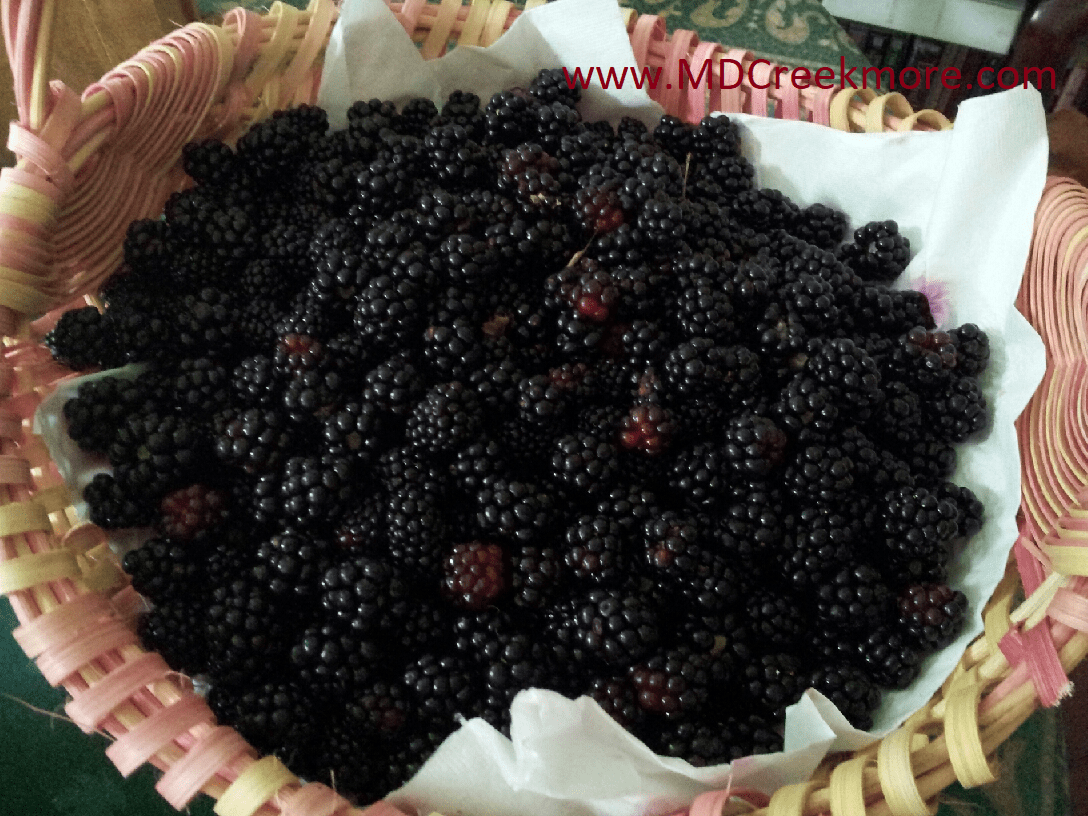
Wild BlackberriesThere are also Facebook groups for Wild Edibles Plants that you can join where people share their finds and recipes.  Pinterest has a huge collection of wild edible links.  You can also use the search tool on Pinterest for specific plants.

Find out who in your local area is knowledgeable on foraging and take a class.  I have taken several classes with our local naturalist.  It was a fantastic way to jump-start my knowledge. Photograph and write everything down that is discussed and research it when you get home so that you will remember it.  Try searching Meetup.com to see if there are any local teachers or groups available in your area.

Acquire a Good Selection of Reference Material

Thrift store book sections are great places to look for reference material.  I have found many books on herbs, mushrooms and several on wild edible plants.  Try your local bookstore for relevant material.  My local bookstore has a small section on wild edible plants in the “nature” section (not usually found in gardening).  It even has one or two wild edible cookbooks!

Amazon has a large collection of wild edible books.  Some of my favorites include Edible Wild Plants; Wild Foods from Dirt to Plate by John Kallas, The Forager’s Harvest; A Guide to Identifying, Harvesting and Preparing Edible Wild Plants by Samual Thayer, Mushrooming without Fear; A Beginners Guide to Collecting Safe and Delicious Mushrooms by Alexander Schwab, and one of the foraging classics, Stalking the Wild Asparagus by Euell Gibbons.

Your local library may be a great resource.  See if there is anything in the nature section and also in the cookbook section.  I have found that some of the cookbooks with antique recipes in them (like founding fathers, old South, and Civil War cookbooks) contain wild edible recipes.

Watch Videos

YouTube has a large collection of foraging videos.  Green Deane is one of my favorites. You can find his site at Eattheweeds.com.  He has over a hundred videos and is very knowledgeable.  He will even answer your questions.  While photographs of plants are a great resource, seeing the plant being used gives you a much better understanding.  Just knowing how big a certain plant is will be very helpful in looking for it.

Keep Track of Your Information

wild grapes
Wild Grapes

Write down what you learn.  A simple notebook will work.  When you visit an area, write down the location, date and what you find.  What you find will change throughout the year.  This way you will know where and when to find your treasures!  I also use it to store my research on the plant and recipes for its use.

Add your finds and locations to an online calendar.  Set it up so that it repeats every year.  That way you easily know when to go hunt for those Mulberries or pick that Plantain.  I use Cozi.com which is a free service and my whole family has access to it.  It sends you weekly emails letting you know what is coming up.

Be Courageous

It takes courage to try a new plant.  However, I guarantee that after you try it the first time, the fear will disappear and you will look forward to finding that plant next year.  This year I cannot wait for the milkweed flower pods to begin forming because last year I tried it for the first time, and they taste just like asparagus.

If you are still hesitant, try growing some of the wild edibles for confidence.  Many of the wild edible plant seeds can be found online.  It is a slower path but you will become intimately knowledgeable about all stages of the plant.  Try Rareseeds.com for a nice collection of seeds, some of which can be found in the wild.  I have done this with plants that I just cannot find locally but really want to see.

Foraging is a wonderful hobby and life skill.  It is a treasure hunt that can benefit you financially and nutritionally.  It is a great skill to teach to your children as well!  While your kids may complain (mine do), I can pull up to a stoplight and point to the grassy medium and my nine-year-old daughter can usually name at least two wild edibles available.  In these uncertain times, that skill may become priceless! 


Happy hunting!

References

[1] Breeding the Nutrition Out of Our Food (The New York Times)

By: Robinson, Jo.

http://www.nytimes.com/2013/05/26/opinion/sunday/breeding-the-nutrition-out-of-our-food.html?pagewanted=all&_r=0

[2] “Pine Needle Tea is Cure for Scurvy.” Toledo Blade 26 Nov. 1943. http://news.google.com/newspapers?nid=1350&dat=19431126&id=0thOAAAAIBAJ&sjid=uf8DAAAAIBAJ&pg=7201,3982067

[3] Scientific Evidence Of The Significant Anti-cancer Effect Of Milk Thistle (ScienceDaily)

http://www.sciencedaily.com/releases/2007/11/071114111149.htm

Edible Wild Plants: 25 Wild Plants You Can Eat to Survive in the Wild

Everything That You Ever Wanted To Know About Honeysuckle Medicinal Benefits

Filed Under: Bushcraft

How To Find Affordable Homestead Property in Tennessee

December 14, 2018 M.D. Creekmore

finding homestead propertyby Sandra O

A number of years ago I awoke to the unpleasant reality that when the stuff hits the fan and people were unable to get food and water, they would spill out into the suburbs, even past the burbs, to our sleepy community, to take what they wanted by any means they could.

Although I lived in a “safe” area with preps, a garden, and neighbors who were hunters, I realized I could not expect them to protect me, nor would I be able to defend the property I owned.  I recognized I was going to have to move out of my comfortable environment.

It was just a matter of where.  I started to search for a country homestead where I would stand a chance of staying alive and protecting myself.  A place small enough to be manageable on a small income, but large enough for my kids and their families to come when “the trigger event” occurs. This is the short version of how I did it.

First, I evaluated how much I could spend.  What could I pay cash for, what could I get a mortgage for, how much tax could I afford to pay once I left my job?  Would I buy just raw land or could I get some kind of a residence on the property?

Once I figured out that magic number, I had to decide if I was going to pay cash up front or get a small mortgage?  I called my bank and ask them what they would offer me and I was impressed with the no points and the very low rate they quoted.

I had to pray hard on what to do because I didn’t have any debt.  If I used my retirement funds to pay cash for a place it might put me in a tight spot later on. I finally decided to take a mortgage out until I could sell the suburb house and pay off the new mortgage.  With a pre-approval letter in hand, I started looking for my country homestead.

Where to go?  I read the recommended books, considered the options, including moving west where my husband’s family is located.  But, I like the state where I live. Tennessee is listed as one of the top 7 “freedom” states and the state legislature, while not perfect, thinks about preserving the people’s rights more than other states I have visited.  Plus, there is no state income tax and while there are four seasons, winter is normally mild and the growing season is about 8 months depending on the year.

I got the map out and decided where I was going to start looking.  I did a lot of research on the internet to learn about the counties and the small towns in those counties. I looked up taxes, best use rights, zoning laws, and restrictions.

Almost every weekend for a year, I was in the car driving the back roads of Tennessee. Besides my BOB (click here to read M.D. Creekmore’s bug out bag checklist), I always had maps, boots, hat, bug spray, a compass and a handgun with me (M.D. Creekmore’s Top Handgun Choices).  I frequently got lost and would go into the local café or gas station and ask directions.

I talked with the people in the cafes and ask them about the area and if any places were for sale.  Some places were friendly and others not so much, which gave me an idea of whether “outsiders” would be accepted or not.

I had to learn about the topography of the land in different counties. When you look at the pictures on the internet, they don’t show you that 13 of the 15 acres for sale are on a 1500 foot high hill, which would only be good for goats.

I walked quite a few properties so I could learn the lay of the land.  I wanted some acreage, so I learned to use land and farm sites, not realtor.com. I learned how to check google earth to see what was bordering the land I wanted to look at so I didn’t drive 3 hours to a site to find the next plot was a junkyard.  “Prepper” real estate ads and sites were way too expensive for what they offered and real estate agents were not willing to drive 1 or 2 hours from their offices to show you property.

I learned how to work around the agents to go see property myself and talk to the property owner and their neighbors.

Country folks are usually sitting on their porches watching the world go by. I’d pull in a driveway and wave at them and if they waved back, I’d go talk to them. They’d tell me who died and who was wanting to sell.  I would always ask if the land flooded, how often, where the closest stream/river was, if it was good hunting land, and if they would buy the land. I heard quite a few interesting stories!

After about 6 months, I got pretty knowledgeable and narrowed down the counties I would consider buying in.  I programmed my favorite internet sites with the parameters I wanted and then it was just watching, visiting and waiting until the right property came up for sale.

After about a year, I had my choices narrowed down to two counties and two properties.  One homestead I wouldn’t need to do anything to the residence, the land was a pasture with ponds, but it was located closer to a small city than I wanted and the taxes were higher than the other choice.

The second choice I would have to refurb the residence, but the land was raw hunting land with a meadow and natural springs scattered throughout and it was more isolated, but still within 12 country miles of a tiny town.  Both were about the same acreage and had old barns on the property. I spent a week praying and doing “what if” games in my head and finally put an offer on the property with the raw land.

Buying a property from country folks is not anywhere similar to buying a house in the city or the suburbs. There is a lot of poker face haggling going on, but basically what you see is what you get.  If you are not an expert, you have to bring your team of experts with you.

You need to have a guy for the house, the electrical, the roof, the well, the septic, and for the outbuildings. If you are going to farm the land, you need a guy to come check the land.  Depending on how far out in the country it is located, it is not easy or cheap to get this team of experts out to the property when you want them to come.  Did I say that country folks work on their own time schedule?

One thing I will caution readers about is to find out if the property is in any sort of tax relief program.  For example, is it planted with trees for logging?  Does it have an agricultural exemption?  Is it in any program which offers a tax reduction?

My property was in a “greenway”, which was supposedly county sponsored; but after research, I found it was really funded by the state, which was really funded by the federal government.  I had to take the property out of the program, pay taxes from the last year which the property had a tax reduction.  By doing this, the property is no longer considered a tax-relief property and is no longer on the government inventory list.

I purchased the property for a reasonable price, considering I was going to have to redo the residence interior.   The bones were good but the guts were old. I had to find a contractor I could work with, who would drive an hour into the country! Most contractors would listen to what I wanted and tell me no, it was too far for them.

It took me three months to find two contractors who could do the job and get bids; I picked the one I liked the best. The contractor did the work I couldn’t do; wiring, plumbing, moving walls, digging a basement. It was not cheap and it was not fast, but it was good.

Between weather delays, people delays, inspector delays, it was about 8 months to complete the contractor part of the refurb.  My sons laid the new floor, painted the interior, changed lights, fans, etc.  There are still baseboards and crown molding to put back up; plus a hundred other little things to do.  It’s a work in progress.

The house had a fireplace with a 40-year-old gas log set, so I went shopping for a wood stove to put in the fireplace. Wood stoves are not cheap!  Once you find what you need, it has to be installed. I’m not talking about just inserting the stove; the chimney has to be inspected, primed and flued and a topper added to keep the brand new roof from burning up.

Again, getting people 1 hour out in the country was a time-consuming effort; but it ended well. It heats the entire house to between 66 and 70 degrees, depending on the outside temperature.

I tried to make all the basic systems redundant, the electric HVAC is backed up with a propane generator, which is backed up by a wood stove and fans. The frig and freezer are backed up by the generator and the kitchen stove runs on propane plus the wood stove is also a backup.  The electric well pump is backed up by the generator, but I’m still working on getting a solar system for the well, then I might add to it later.

The septic, while new, can be diverted to the first owner’s old country line, which runs out in the woods somewhere.  My son installed a video surveillance system that shows 360⁰ completely around the house and which works beautifully. With 7 large dogs outside and 6 yappy little dogs inside, not much goes unannounced.

The last couple of months have been spent fencing the front 2 acres, installing gates, clearing the garden, planning a rain catchment system, and coops for the chickens and ducks!  It has been frustrating slow at times but exciting at the same time.  I have been accepted in the area and my neighbors are friendly and helpful.

I think any horde, gangs, or desperate people leaving the big cities, which are 125 and 175 miles distant, will get tired, lost and discouraged long before getting anywhere near the backwoods, especially if they are walking.  Most people out here have guns and I hear target practice going on all the time.

I feel safe; I can defend myself, and am working towards establishing a home business and being at least half-way self-sufficient!  I hope this inspires some of you to take the challenge and find yourself a country homestead!

Filed Under: Homesteading

How to Protect Yourself from Natural Disasters (science-backed)

December 14, 2018 M.D. Creekmore

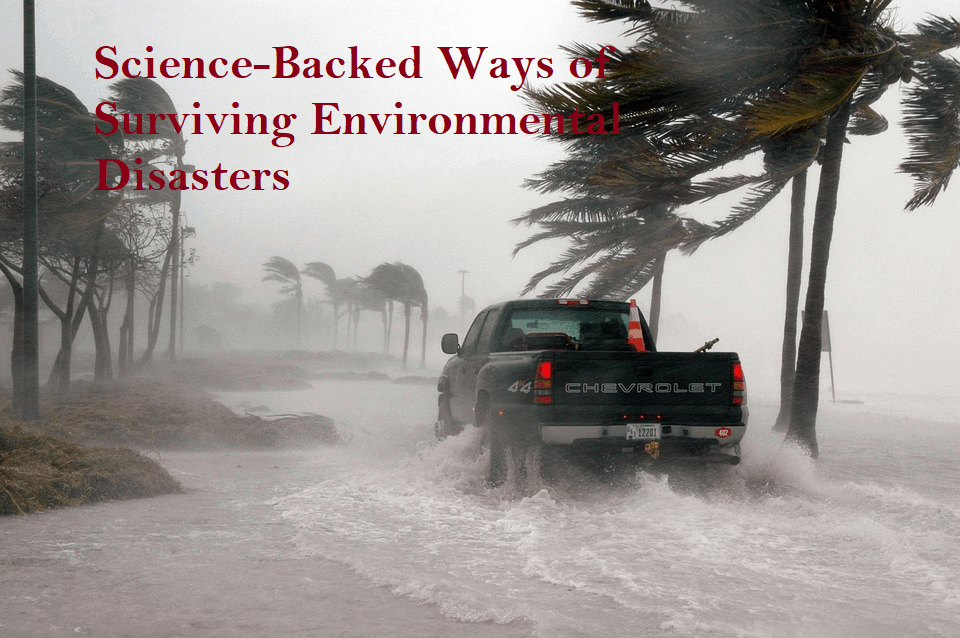
key-west-FLOOD

by Roger Gallager

Have you been seeing tsunamis, earthquakes, volcanic eruptions, devastating hurricanes and other natural disasters in the news more often? Have natural calamities become more frequent? According to a report released by the Centre for Research on the Epidemiology of Disasters (CRED), there had been 385 disasters recorded during the 2000 – 2009 period. This figure marks an increase of 233% from 1980 to 1989 and a 67% increase from 1990 to 1999.

This means that the increase in the frequency of natural disasters you see on the television and the internet is no coincidence. There has been a steady increase in natural disasters since 1980. Earthquakes made up 60% of natural disasters from 2000 to 2009 while climate-related events, such as droughts, storms, and floods, had made up the majority of disasters overall, increasing tenfold since data was first collected in 1950.  The resulting economic losses from these disasters were estimated at $446 billion.

Now, the question is, are you and your family prepared to face a natural calamity? According to a study conducted by the University of Iowa, College of Public Health which was published online in the American Journal of Public Health, older Americans are not adequately prepared to face natural calamities likes tornadoes, floods, hurricanes, and earthquakes.

Only one-third of the 1,304 adults interviewed said they had read information or participated in a disaster-preparedness program while fewer than twenty-five percent reported having emergency or contingency plans. A disturbing fifty percent of the respondents said they would not know where to seek shelter if they were forced to evacuate their home and about a quarter said they did not have access to transportation during emergencies.

Are you one of these people who are not prepared to face natural calamities? If the world’s worst disasters were to hit your city next week, would you know what to do for survival? If you are not sure, you better take a look at our seven ways to survive environmental disasters.

Surviving a Flood:

Flooding can be caused by different phenomenon. It can be natural, like excessive rain or a tsunami or man-made like the opening of a dam. A flood can develop slowly, over time or rapidly, as in the case of flash floods which can develop in just a few minutes and without visible signs of rain. A flood can be limited to a neighborhood or a community or very large and span the entire river basins or multiple states.

  1. Be aware if your area of residence is at risk of a flood. This is the first thing that a prepper should do. It is unwise to rely solely on history to determine whether your area is at risk of flooding. A number of factors which include, but are not limited to, rainfall, topography, flood-control measures, river-flow and tidal-surge data, and changes due to new construction and development can affect your area’s risk of flooding.
  2. Elevate electric panels, water heaters, and other electrical appliances in your home to reduce the chance of short-circuiting and accidental electrocution during a flood.
  3. Create an evacuation plan and route in case you have to evacuate your home. Be aware of the designated safe areas you can go to. Prepare food kits for natural disasters that you can easily take with you if you have to leave your house. It would help to stock up on your food storage through food preservations for emergency situations.
  4. If there is a possibility of a flash flood, leave your home and move immediately to higher ground. Do not wait for instructions to move. Evacuating may also cause a shortage in available food supply. During these cases, hunger becomes a very real threat. To survive, one must rely on food storage.
  5. While evacuating, avoid walking through moving water. Six inches of moving water can make you fall. If you have to walk in water, walk where the water is not moving. Use a stick to check the firmness of the ground in front of you.
  6. Do not drive into flooded areas. If floodwaters rise around your car, abandon the car and move to higher ground, when water is not moving or not more than a few inches deep. You and the vehicle can be swept away quickly. If your vehicle is trapped in rapidly moving water, stay in the vehicle. If the water is rising inside the vehicle, seek refuge on the roof.
  7. Stay on higher ground even if the floodwaters seem to be receding. There is no telling when another flash flood may occur.

Surviving an earthquake:

A calamitous earthquake is a violent shaking of the ground that can cause massive destruction to people and property. The most common cause of earthquakes is the moving of subterranean rocks to release tension that has accumulated over time.

  1. As with every natural disaster, try as much as you can to assess how much you are at risk of an earthquake. It is much harder to predict an earthquake-prone area compared to other natural disasters. The best one can do is to avoid building in areas which have soft rock foundations as these areas are prone to take more damage in the event of an earthquake.
  2. Most injuries caused by earthquakes are from falling objects hitting people. You can avoid this by fastening shelves securely to walls, placing  large or heavy objects on lower shelves, storing breakable items such as bottled foods, glass, and china in low, closed cabinets with latches and fastening heavy items such as pictures and mirrors securely to walls and away from beds, couches and anywhere people sit. You can also brace overhead light fixtures and top heavy objects.
  3. Earthquakes also usually cause fires as every household is filled with flammable items that can ignite easily when dropped or mixed together. That is why it is important to store flammable materials such as weed killers, pesticides, and flammable products securely in closed cabinets with latches and on bottom shelves.
  4. Always remember three things when it comes to an actual earthquake: drop, cover, and hold. Drop to the ground; take cover under tables or other solid pieces of furniture, and hold on. Remain stationary until the earthquake ends.
  5. If you are outdoors, stay away from buildings, streetlights, and overhead wires. Try to stay where you are unless there is imminent danger.
  6. After the earthquake, it is best to leave your house or building even if it seems to have taken no damage. Beams and foundations may have been broken which might cause collapses that might gravely injure you. In case of earthquakes with strong magnitudes, do not attempt to enter your house unless ensured safe by an expert.
  7. Even if your house and your family manage to take no damage from the earthquake, your surroundings and community could be extremely damaged.  In cases such as these, there might not be a steady stream of a dependable food supply. It would be best to be prepared for these cases by having emergency food ready and having the best survival kits for the situation.

These are just two of the natural disasters that you must be ready to face. Always remember that when it comes to natural disasters, always be aware, prepared, and alert. You never know when disaster might strike.

Filed Under: Bugging Out, Prepping

  • « Go to Previous Page
  • Page 1
  • Interim pages omitted …
  • Page 55
  • Page 56
  • Page 57
  • Page 58
  • Page 59
  • Interim pages omitted …
  • Page 87
  • Go to Next Page »

Primary Sidebar

Subscribe to Blog via Email

Enter your email address to subscribe to this blog and receive notifications of new posts by email.

Join 7,202 other subscribers
  • Amazon
  • Facebook
  • Substack
  • Twitter
  • YouTube

“Do more with less.”

– Minimalist proverb

Recent Posts

  • Just so you know
  • Weather Update for My Corner of Appalachia
  • Why I’m Ordering Ivermectin + Mebendazole Every Year
  • The Website’s Shutting Down (But Here’s the Plan)
  • You Are Hated! Start Training Like It!

Footer

Recent Posts

  • Just so you know
  • Weather Update for My Corner of Appalachia
  • Why I’m Ordering Ivermectin + Mebendazole Every Year
  • The Website’s Shutting Down (But Here’s the Plan)
  • You Are Hated! Start Training Like It!

More about me

Books I’ve written

Books I’ve read

Follow Me on YouTube

Follow Me on Facebook

Gear I Use and Recommend

Newsletter

Search this site

Follow me elsewhere

  • Amazon
  • Facebook
  • Substack
  • Twitter
  • YouTube

© 2008–2025 M.D. Creekmore · As an Amazon Associate, I earn from qualifying purchases.