
• Skip to main content
  • Skip to secondary navigation
  • Skip to primary sidebar
  • Skip to footer

M.D. CREEKMORE

  • Blog
  • Books
  • Newsletter
  • Gear I Use
  • About
  • Contact
  • Facebook
  • YouTube
  • Blog
  • Books
  • Newsletter
  • Gear I Use
  • About
  • Contact
  • Privacy Policy

Blog

Is Kentucky a Survival Retreat Location For Preppers

October 11, 2018 M.D. Creekmore

kentucky-preppersBy Joel Skousen

Author,  Strategic Relocation and The Secure Home

Kentucky and Tennessee are a couple of my favorite states for relocation for those already in the East looking for safety.  They are both in or beyond the Appalachian chain of mountains which will channel refugee flows coming from the east into known highway corridors, which can be strategically avoided.  First, let me offer some general comments about Kentucky, which is a very diverse state, with 13 distinct geographic regions, each with their good points and bad.

Far western Kentucky includes alluvial plains and small hills with good basement potential but not as much forestation as the east.  But be careful, certain western counties surrounding Madisonville also have large coal deposits. The low lying areas south of the Ohio River, however, are nearly flat and thus poorly drained, thus leading to a lot of wetlands.

Where good drainage allows, the land is fertile and productive.  The cities of Louisville, Owensboro, and Henderson along the river are highly industrialized, with pockets of poor crime-prone areas.

The East/central Bluegrass region around Lexington is probably the most sought after area in Kentucky and is known for its horse farms. The land is expensive because of that but you can still find reasonable land away from the horse farms.  I’m partial to the south/central area around Bowling Green, Ky, This is a great small city that has friendly people and low crime.  It is surrounded by great country farms with lots of patches of forest and trees.

Kentucky has the advantage of having huge swaths of forested land out in the main farm areas of the state.  If you look on the satellite view at Google Maps you can see a very broad swath of forest land starting just south of Louisville and meandering back and forth, east and west of I-65 on its way south to Bowling Green.  When you find farmland backed up to these forested areas, you get both farm self-sufficiency and forested retreat privacy.

Your choices in Kentucky are broader than you think, but the important thing is to follow these general criteria:  1) find land with basement potential, 2) good water resources (well, spring, or creek), 3) a mix of forestation for shielding and open land for cultivation, and 4) the home site should not be visible from any main or secondary paved road.

For higher security farms and retreats, a lot of preppers are attracted to the Daniel Boone National Forest which is located along the Cumberland Plateau in the Appalachian foothills of eastern Kentucky—the subject of this briefing.  It encompasses over 700,000 acres of very rugged terrain and characterized by steep forested ridges and deep ravines—less than 15% is in private hands.

This is also coal country, especially in the regions abutting the national forest, where the most private land is found.  Here, you do have to be careful of pollution from mining as well as the uncertainties of not owning the mineral rights under your property.   Be especially careful about buying land after it has been strip-mined and then “reclaimed,” by bringing in fill dirt of unknown quality.

As a consequence of coal and difficult terrain, the region is highly depressed financially as coal has been strangled by environmental regulation and farming has never done well in small plots—though that’s what we want for retreat farming if they otherwise meet the above criteria.  The eastern counties of Kentucky have hundreds of small, mostly dying towns.  The downside of all this is that newcomers to the area are looked upon with some suspicion.  Why would anyone want to come to a place where there are few jobs?

Another negative is the political orientation of Eastern Kentucky–a Democratic stronghold due to the mining and welfare mentality that persists in this area.  Even though Kentucky is in the hands of two Republican Senators, Rand Paul is a positive, and future Senate Majority Leader McConnell is a problem—a compromising Republican leader who talks a good story but doesn’t follow through, except to support the Powers That Be.

Weather is often cloudy and rainy in the Appalachians, so you have to be prepared for that.  The rain provides abundant water resources but is not the best for livability.

For a look at the various divisions of the national forest, open up this link to the official map. The long national forest extends almost to the Ohio border in the north down to Tennessee in the south.  It is divided into 3 districts, the Cumberland to the north, the London district in the center and the Stearns district to the south. But, notice that there is a large district to the East called the Redbird district that is rarely shown in green (designating national forest) on most maps.

That’s probably because it is riddled with private land, which is great for retreat farms.  And there’s a good-sized town in the middle, Manchester, Ky.  In this district, you’re surrounded by national forest but there’s plenty of private lands to choose from—unlike the West where most national forests are locked up tight and where “inholders” are few and far between (and treated with some hostility by the Forest Service).  By the time these large forested lands were turned into national forests in the Appalachians, there was already way too much private farming to buy them all out, so they remain as “inholders.”

Normally, in Western states, I discourage the buying of remote inholding lands because there are too few property owners to mount an effective legal battle against the federal government should they choose to arbitrarily close off your access (which they have done in the past).  I don’t think confiscation of inholding land is a danger in this area because there are so many private holdings, and the constitution requires compensation (money the feds don’t have).

Some of the best areas of the National Forest in which to find private land is in the Southern Stearns District, West of Williamsburg along highways 92 and 478.  You don’t want to locate along those particular highways, but there’s a lot of private land and smaller roads branching off from both where you can find secluded homes and forested land.  In the middle of the district are the tiny towns of Stearns and Pine Knot which become the tourist and service centers for those living inside the National forest.

I actually prefer the land outside the forest between the town of Montecello, Ky and the western border of the DB National forest, bounded by the meandering south fork of the Cumberland river.  This is where you find real retreat land, already carved out by small farmers, but no major tourist roads or traffic—and less coal mining.

The central London District goes from Lake Cumberland in the south to the Kentucky River farther north.  This district is between the two major towns of London to the east and Somerset to the West, which provide good commercial access to those who find retreat sites amid the forest in between.  I-75 also crosses through the forest from SE to NW so stay clear of that passageway.  Much of the good retreat property near Somerset is to the East before you get to the National Forest, so don’t think you have to get within the national forest to be safe.  This central district is one of the few places that has a river running north/south through it (most other rivers simply cross the plateau West-East).  There isn’t much private land along this Rockcastle river, but there is some.  Follow it on Google maps (satellite view) to find cultivated parcels.

The northern district (Cumberland) is East of Lexington, Ky, a major city so there is more pressure on this area for second homes for the wealthy of Lexington.  But still, there are plenty of rural farms available. If you need to be near a big city like Lexington, locate east of I-75 so you don’t have any major obstruction blocking your access to the mountains to the east. The towns of Winchester and Mt. Sterling are ideal for being fairly close to Lexington but also very close to the mountains.
Filed Under: Prepping

The Best Camouflage Pattern for Hunting By Season

October 10, 2018 M.D. Creekmore

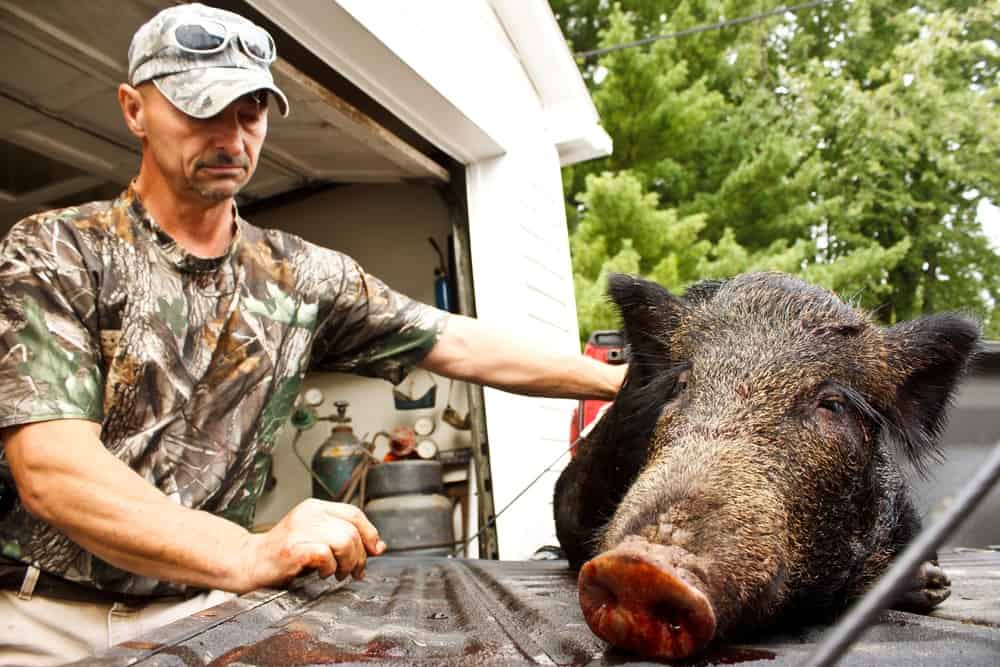
Camouflage for hunting wild bore

by Brandon Cox

When shopping for camouflage, it’s hard to resist the bargain area where camos are sold for less than retail. Usually, the camos featured in the clearance section are out of season. However, some hunters will jump at the chance to save on camouflage and wear it in the woods – regardless of the season.

Some hunters will even go as far as mismatching their camos with many different seasons in one outfit. While they may have saved a few dollars, they might have ruined their chance to catch a buck, which can be a much bigger loss in the big scheme of things. Why you ask? Despite what people will try to tell you, camo patterns matter, especially when hunting whitetail deer.

Why Does Camo Pattern Matter so Much?

You don’t have to take our word for it, or anyone else’s just evaluated the science. Whitetail deer have one focus in life, and that is to survive. Scientists have told us that whitetail deer have 2 cone cell eyes. What this means is they don’t see the same way other animals or humans see.

Due to the way their eye is created, deer don’t see the colors yellow or red very well. Instead, they mostly see all colors in shades of yellow or blue with some shades of green. While their sight is somewhat limited, deer see the best in low light, which mostly includes sunrise and sunset.

Deer are also known to have great eyesight right after fresh snow hits the ground. While deer don’t usually see colors, they do have pretty clear vision. In fact, a deer’s eye can dilate anywhere from 7mm to 8mm. In comparison, a normal human eye can only dilate to a maximum of 8mm.

You’re probably catching on by now and realize that deer’s eyesight and changing foliage has a great deal to do with camo patterns. Basically, if you get caught wearing the wrong camo at the wrong time of day or season, your chances of killing a buck are based more on prayer than talent or planning. To avoid being caught unprepared, you need to know what camo patterns are best for which season.

Preferable Early Season Camo Patterns

In most states, early bow season for whitetail starts towards the end of September. Usually, the trees and grass are still pretty green at this time. This is a good thing for hunters because they can opt for their trusty green patterned camouflage.

Everything in the woods is pretty green, so a deer isn’t going to immediately notice you covered in a green pattern stalking him from the woods. However, as the trees begin to shed their leaves and the grass loses its bright green luster, you need to rethink the color of your camos if you want to go undetected.

Wear Broken Green Camos in Fall

Once the trees have changed color, you need to change the color of your camos. Since the area around you isn’t bright green anymore, you don’t want to appear that way to deer. Shades of green are easy for deer to see, especially when everything around you is changing.

You might think you can get away with wearing bright green camos if you’re sitting in a treestand, but that simply isn’t true. The only way a deer might not notice your green camo in a tree is if you’re sitting in an evergreen. Otherwise, if a deer catches a glimpse of you in the tree, you’ll look more like a blob sitting in a tree instead of a part of the tree.

Since deer are engineered to focus on survival, the simple presence of an odd blob in a tree might be enough to spook them. And once deer runs, they’re sure to spook all their friends.

Instead, fall deer hunters should opt for a broken pattern. A broken pattern has a duller brown and green color with hints of orange and rustic changes, which will help you stay hidden in the woods.

Late Fall – Stick with Fall Camos

Luckily, you don’t need camos for every season. As long as there isn’t any snow on the ground yet, you can wear the same camos in late fall as you did when the trees first began to change. The only exception to this rule is right after it snows.

Don’t Cloak Yourself in White After it Snows

Many hunters want to cloak themselves in white camo patterns after the first snow. We understand the logic, but you have to remember that deer see extremely well after fresh snow hits the ground.

Instead of opting for an all-white approach, hunters should try to wear camouflage with broken patterns. It’s important to avoid solid white or other solid dark clothing. By wearing broken patterns in the winter, you’ll be harder to see and won’t spook deer as you climb into and out of your treestand.

Now you know why there are so many hunting camo patterns on the market. Not all are created the same nor do they all deliver the same results. Instead, each is unique and it’s up to you to decide which color or pattern is right for your area. No matter what color, shade, or pattern you choose, it’s important to keep the following information in mind.

  • Make sure your hunting packs match your camo (so they won’t give you away)
  • Never wash camos in a laundry detergent that uses UV brightening agents (it will make any camo easier for deer to see)
  • If something isn’t working, don’t be afraid to change it

Now that you know why camo patterns are important to the success of your hunt, you’re ready to go shopping. You no longer have to fear the bargain section. Just remember if you’re buying out of season camos at a discounted price, it’s important to keep those in the closet to the following year.

It’s a bunch cheaper to buy new camos for every season then it will be to stock your freezer with meat for the winter if you lose out on a buck because you wore the wrong gear hunting.

Filed Under: Bushcraft

Why You Should Learn Bow Hunting for Survival

October 10, 2018 M.D. Creekmore

bow hunting for survivalby JimShyWolf

Let’s clear the air first. I’m not a professional archer or survival bow hunter. I’ve never published an article in BowHunter or Archery magazine, nor have I ever competed in the Olympics in any venue, let alone archery. (Regardless what you may have heard to the contrary.) Nor have I ever traveled out-of-state to hunt any animal with a bow (and only did it once with a rifle, so am no expert there, either).

Nor have I any formal education beyond what a college phy-ed class attempted to teach me after I’d been shooting and studying archery for twenty years. When push comes to shove, I am a ‘purist’ but I don’t let that stop me from using modern materials or style of bow.

At 64 years of age, what I have is more than fifty years experience shooting, hunting, ‘kind of’ studying archery from the bowhunting and zen aspects, and shooting since I was eleven because Mom didn’t think kids should have guns before they could walk.

So my career with archery began as many do: parents don’t equate bows and arrows with their ability to kill. And, as any child of a parent knows, they’re wrong. A 45-pound draw hunting bow has the killing ability of a 30-06 rifle. Actually, in expert hands and in the right circumstances, even a 25-pound draw weight bow will have the killing ability of a 30-06, or any other shoulder-fired weapon you want to stack against it.

Please note: I did not mention anything other than killing ability. I did not say “at 800 yards” or “point-blank range” or “with a 220-grain JHP” or any other round. I said “ability”. There isn’t an animal on earth that has been killed with a rifle before it was killed with a bow.

We won’t get into how the first bow was accidentally made by a caveman when he discovered his fire drill bow would shoot sticks across the fire faster than he could throw it, or how Nimrod was the first Mighty Hunter with a bow.

But how does a bow have the same killing capacity as a 30-06?

Because of much the same reason a bullet does: blood-letting. A bullet has ‘shock’ value as well, yet an arrow will bleed even more quickly than a bullet because of it’s cutting edges. And when hunting or speaking of hunting, the arrowhead is equally as important, if not more so, than the bow or arrow. Let’s look at this from the beginning, getting to the arrowhead in a few minutes.

When it comes to surviving in a true wilderness setting, a bow, In My Opinion, is the absolute best weapon you can have. Better than a rifle or pistol for several reasons.

First: a bow can be made from almost any hardwood material, especially the maples, yew, ash, and best of all, the Osage orange. Birch, some pines, and aspen can be used as well, with brittle oak being a fairly down-the-line choice. There are exotics that can be used, but we’re talking survival in North America so will limit our choices to anything growing around us.

Second: an arrow can easily be made from reeds (think cattail for one) or whittled from other woods, Port Orford Cedar being the most commonly used (until the Spotted Owl terminated the harvesting of it, and over-harvesting as well, to be totally honest).

Cedars make the best wood arrows because they don’t warp as readily as most other woods, have a more stable grain pattern and can be bereaved most easily into sheaves for arrow stock, and can be compressed most readily.

Arrowheads can be chipped from flint, or other stones, even panes of glass, and bone, or just the fire-hardened tip of the arrow itself. If you’re industrious, you can file steel down to a very serviceable point. But, we’re talking survival and what’cha got with you, not what you’d like to have.

Bowstrings can be spun quickly from the inner bark of many commonly available plants- milkweed being a common material or cut from any animal hide or, in a survival situation, from the cords of one’s jeans. (Just don’t tear away your groin cloth, Tarzan!) Now: name one bullet you can do this with. ‘Nuffa that. Now let’s get to the bow.

Regardless where you live, any archery shop now is going to convince you that “you must absolutely gotta have the very best top of the line got more speed than light double helix hyper snappy wheel compound that we happen to sell right here” bow. I won’t say BS on that, but I will tell you this: a salesman’s job is to sell. Not necessarily what you want or need, but to sell.

Here I’m going to state my opinions, not some scientific hyperbole an engineer came up with or what a catalog will say. What kind of bow you get- be it traditional longbow, recurve, or compound- is up to your preferences. I’m going to tell you mine.

I shoot them all. I love them all. All are very serviceable and sturdy. The newest bow I have, a Fred Bear compound, is darn close to 30 years old and shoots as well today as it did the day I bought it- only more accurately ‘cuz now it’s got ‘sperience. It’s also the only bow I have sights on. The oldest I have is 53 and my son learned to shoot with it as I did: one arrow at a time.

My second oldest- 39- is the original Fred Bear takedown with two sets of limbs (one target, one hunting) on a B riser (it came with choice of A,B, or C- diferentiated by length of the riser, which also was the deciding factor of draw weight).

There are others in my collection- a Ben Pearson takedown (TD) a year younger than the Bear, a Paul Bunyan fiberglass longbow, and a very antique pure aluminum bow made by ParX of Jackson, Michigan. (I should google them to see if they still make bows.) Sorry- thinking out loud again, and digressing. Some odds and ends complete the collection.

My point is, it won’t matter what style of bow you choose, just be sure it’s the one you want and dream about. If your imagination is filled with Robin Hood or Fred Bear or Ben Pearson or Howard Hill, you would probably feel more comfortable with a longbow or recurve. Either will be a fine choice.

Longbows have a tendency to ‘stack’, which means they get harder to draw as you draw them. If it’s a very short bow, it will stack more than a longer bow. Recurves stack less than longbows due to the curve. Too, the length of your personal draw will also cause it to stack more or less.

Draw length is measured the old-fashioned way: Hold your arms out in front of you, fingers extended, to make an arrowhead. The distance from your fingertips to your chin is your arrow length, your draw length is from your wrist to your chin.

Bowyers have simplified this for us, however, and make their bows with an ‘average’ draw length of 28 inches. The reason for the arrow length? So you don’t cut your fingers with the sharp broadhead, it extends beyond your hand. Arrows can be cut to length as required, even simply at home with a sharp knife.

If your dreams extend to the modern mystique of wheels and pulleys, cams and short, snappy- and very fast arrows- then you may be dreaming of a compound. Other than Bear, I won’t comment on who makes the best, but there are many out there. Some very good bows are made by some very unknown people, and a good way to learn about some is pick up a copy of a Bowhunter magazine. (No plug, just reference.)

Compounds do send arrows down range faster than other bows and use very light arrows. (Do not use a wood arrow on a compound bow- ever. Nothing may happen, but then again, you may end up with an arrow shaft in your forearm, or worse.

That’s experience talking, and manufacturer’s direction.) If TSHTF, my choice will be the recurve or longbow because of the simplicity of their design, maintenance, and ease of repair. I just don’t have the shop to rebuild steel/aluminum/magnesium pulleys and steel cable strings.

Not to mention, compounds are much heavier than stick bows. I’d rather carry more arrows than more bow.

Arrows for longbows and recurves run from cedar to esoteric compounds like graphite. In short, any arrow can be shot from a stick bow. Wood and aluminum have been around for… well, ever, almost. OK- when Alcoa came out with their first aluminum arrows, I was skeptical. Still am, but dang, they shoot nice. Almost as tough as wood.

Almost. In some instances, tougher: and they can be reasonably straightened of mild bends. (Wood can as well- use steam and pressure to do that, though.) Fiberglass and graphite… well, you ain’t gonna straighten those breaks. Some have told me graphite is tougher than wood, but my opinion is still out- and will be until I test some, which I don’t intend doing.

Compound bows shoot aluminum, ‘glass and graphite with equal aplomb, but never wood. (Don’t ask.) With today’s compounds, the biggest ‘thing’ is the speed factor. Everyone’s trying to get their bow to shoot as fast a 30-06 bullet. Or so it seems. I’ve heard excuses (ok, reasons) from things such as “the deer don’t jump the string” (which I laugh at), to “the lighter arrows need the speed” (which I agree with).

To gain this speed of the arrow, they use the lighter carbon or graphite arrow, which usually weighs less than the broadhead on the end. And speed creates penetration- which the lighter arrows need. Badly.

So my opinion of light arrows is still out. In “the old days”, we used to ‘spike’ our aluminum arrows with a wood arrow to increase the weight so they’d get better penetration. We didn’t need speed- we had power.

Arrows are ‘fletched’ with feathers- real turkey feather is best and be sure they come from the same wing- or plastic vanes. The debate rages as to which is best. I’ve used both, have some mighty old arrows with turkey feathers. And some mighty old vanes as well.

The biggest problem I’ve had with vanes is cold temps. They seem to stiffen and don’t stabilize the arrow as quickly. But that may just be my imagination. Some say feathers aren’t as waterproof as vanes, but I don’t see that. I sprayed mine with Camp Dry once and forgot it. No problems. Water runs off like a duck’s back.

Some people also claim wet bowstrings stretch and make the bow lose power due to less ‘fist’ in the bow. To which I say nonsense: I’ve never lost ‘fist’ with a string or cable. (‘Fist’ is your hand-made to a fist, thumb extended upward, and from the riser to the string is the height of the string from the riser.) I will admit that a vegetable fiber string will most likely stretch, as will leather. Soak them in tallow before use.

What does make a bow lose power can be on the string, though. Silencers. Attachments that quiet the string vibration after the shot- which vibration is also what the animal hears and causes it to ‘jump’ the string- and evade the arrow.

Silencers can be as simple as a feather tied to the string, both ends of the bow, or as complicated as gobs of rubber bands woven into the string layers. Here, less is more. Go as simple as you can get away with. Some people don’t use silencers at all.

Arrowheads (told’ja we’d get here) are what does the killing with an arrow. Where I live, there are several rules to follow with arrowheads used for hunting. (Note: in a survival situation, there is only one rule: survive.

So forget about ‘nice’ and ‘laws’ and ‘fair chase’.) MN requires arrowheads “be of barbless design with at least two blades and a circumference of two inches for three or more blades and weigh 125 grains”. Which just means, go to your local sports shop and buy what they sell cuz they’ll most likely not be selling illegal products.

If they are, call the local game warden and let him know and your butt is covered when you go to court. Other states probably have similar rules, so check yours if you’re interested in being ‘legal’. Fred Bear makes the Bear Razorhead, which was an original design two-blade with a third and fourth blade insert, and which has probably killed every animal on the planet.

They’re extremely difficult to find these days. Now hunters are using all kinds of jury-rigged designs, some utilizing real genuine razor blades as cutting edges.

Complicated monsters that cut quickly and cleanly, to be sure, but no where near as hardy as the old Razorhead. The closest I’ve seen to the Razorhead is the Magnus two-blade, and they’re great. Not to mention, take a very fine edge.

Oh, yes- I sharpen all my broadheads. Not something you’ll do with the more modern designs- all you need with them is more razorblades. And a few hundred bucks. Dang- those heads are very spendy now!

Between a two blade and three, or four, blade the biggest difference is cutting power. Or cutting ability. An arrow kills by bleeding the animal out- so expect it to run and have to track it- like cutting its throat. The more blades, the more damage to arteries and muscle and veins and… you get the idea, and the more easily tracked.

The more damage, the faster it bleeds out. Too, shot placement may be a bit more precise with an arrow than with a gun because arrows do not go through bone. Hitting the critter in its vitals is, well- vital.

So practice-practice-practice! Side note on broadheads: round over the tip so it passes by bone rather than trying to penetrate it and getting stuck. You don’t need a pointy point, you need something that slides past the bone. Also, an arrow wound to a non-vital spot with a rifle can cause an animal to bleed out, so there are more areas to aim at with a bow.

Also, MN does not allow crossbows unless one is handicapped and proven by a doctor’s permission slip. I’ve shot crossbows, don’t own one, and have little to say about them. I have considered getting one just ‘because’ and no other reason.

A friend uses one, loves it, and has lots of fun with it- but he’s not a hunter. Some compounds will draw hundreds of pounds and shoot a bolt (arrow) fast as… umm… lightning… but they lose speed, therefore power, quickly. Maybe others have more experience with them and can comment. Some states do allow hunting with crossbows, so they can’t be all that bad.

When it comes to shooting, a crossbow is probably the easiest to learn quickly since it’s so much like a rifle. Compounds are easy to learn and be accurate with when loaded with sights- and some with stabilizers, levels, and flucks (or whatever they’re called)- but have their limitations in those conditions. (More on that in a minute.) Most difficult- but certainly not hard- to learn is the recurve and longbow using instinctive shooting techniques (my fave method).

Shooting a bow is relatively simple. Nock an arrow on the string, push-pull the bow and string apart, bring the hand to your cheek, look at the target as you point the arrow at it, and let the string go. All bows are shot in that manner. The hardest part is doing the same thing over and over again and never varying that technique.

Let’s examine the shooting aspect a moment.

‘Instinctive’ shooting is how archers first shot. By looking at the target, pointing their arrow at it, and release. No sights, no levels, no floofloos. Use a push-the-bow-pull-the-nocked arrow method as you raise the bow to point the arrow at the target.

The string hand anchors someplace on your face- usually the corner of the mouth- prior to releasing the shot. The bow arm is extended almost straight out, with just a slight curve, the upper body leans forward slightly and the head is ‘cocked’ over the arrow.

Focus on the target- a small patch of hair (in hunting)- and not on the arrow. Let your eye aim the shot just as you would by pointing your finger at it. Release smoothly- release smoothly- release smoothly- by extending the shooting fingertips. Right: don’t go past the first joint on your finger to pull the string-arrow.

Just open your fingers and let the arrow go. Once released, hold the bow in place- don’t drop it or let it fly into orbit. And don’t let your release hand fly off into space, either.

Instinctive shooting can be done with any bow in any position. If you’re laying on your back, you can shoot with this technique holding the bow level with the ground, no need to bring it to a vertical position. If you’re leaning forward ducking under a branch, the bow can be shot without lifting it to a vertical position. If you’re hanging by your hair or the skin of your teeth, a bow can be shot without having to bring it to a vertical position.

Now let’s talk about sights and levels and stabilizers and… all those modern contrivances that require a bow be held vertically and level before it can be shot. Which usually includes all the compound bows being sold today because they ‘just gotta have all this stuff to make them work’. BS. IMO. Sights are wonderful on bows, just as on rifles and handguns. But they do limit a bow a lot more than a rifle- kind of.

When using sighted bows, the weapon must be held in a vertical position for the sight to be any use. In short, you can’t ’tilt’ your bow and expect the sight to be ‘on’, ‘cuz it won’t be. Any deviation of the axis the bow was sighted in at will negate the sight.

And in the bush, you’ll have a lot of fun trying to find a vertical position 100% of the time. For sure, it’s not the most difficult from a stand- through some shots from a stand with a sight are nearly impossible and only uncomfortable with instinctive shooting.

I enjoy the sights on my compound for tournaments and field shooting at the club, but for hunting, I feel they’re pretty ‘iffy’ if I’m stalking. As to having a sight level… I ain’t building a house, I’m shooting a bow, probably at a deer or pesky wabbit or partridge… I don’t need any stinkin’ levels.

Two additional items you’ll need- again, don’t ask why, just trust me on this- are some sort of finger protection such as a glove or tab. Mechanical releases are very good, make the release butter smooth, but again, use the KISS principle. Unless you absolutely positively gotta have the latest gizmo… I prefer the glove because ‘it’s on my hand and no fiddling involved’ when I want to use it. Not the best for some, but for me it removes a lot of other dilemmas.

An arm guard is mandatory, especially if you’re shooting with a jacket or ghillie suit or long sleeves- anything the string can whack on its way to resting. And it’s doubly mandatory if you’re shooting sleeveless. You don’t need broken blood vessels in your arm swelling to the size of a birthday party balloon. Trust me on this- I know. (Don’t ask!)

If you’re going to hunt with a bow, be sure to spend time honing your tracking skills as well. Nearly any animal shot with a bow is going to move out of the area before it bleeds out and you don’t need to waste a life or food. After all, that food may save your life or that of someone you love.

I know a lot of people have spent gazillions on their armories and think they have all the bases covered, but until they have a bow, they’ve only got to third base. Home plate is a long way off- about 90 feet, which is farther than the average deer shot with a bow.

So might I suggest getting a bow and half-dozen or more arrows, a finger glove or tab, an arm guard, and a few hours of practice to really round out your survival preps?

Who knows- the opportunity may arise you want a silent shot… and we haven’t even gone fishing or bird hunting yet.

Filed Under: Archery

Inexpensive Bows for Hunting, Bushcraft, and Survival

October 10, 2018 Jesse Mathewson

Recurve BOW for hunting“Immerse yourself in the outdoor experience. It will cleanse your soul and make you a better person.” Fred Bear
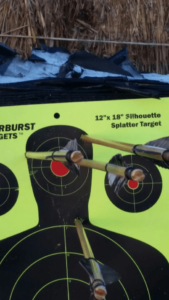
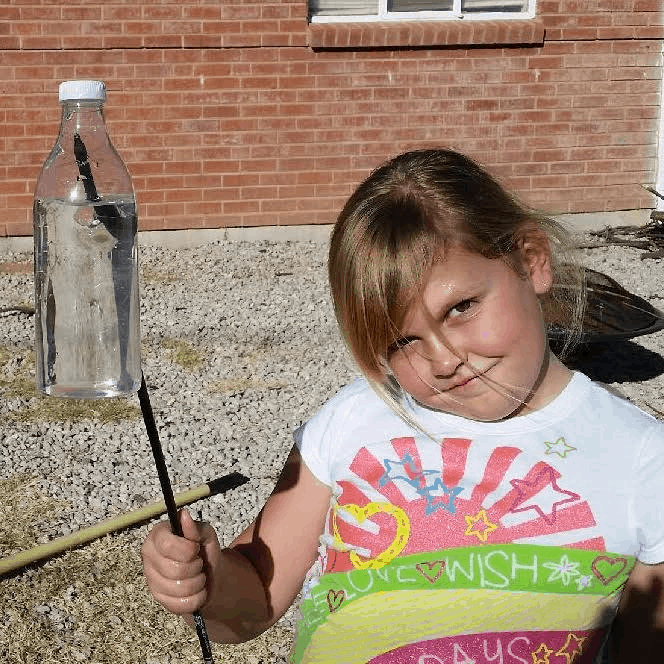
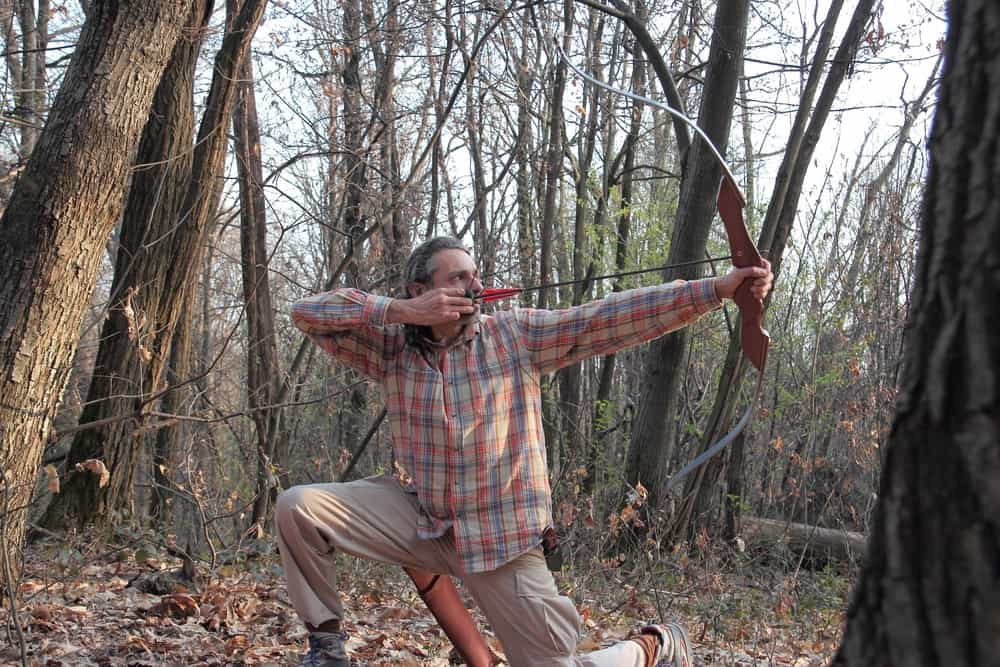
“Nothing clears a troubled mind better than shooting a bow.” Fred Bear

For thousands of years, archery has been utilized as a tool for hunting, defense and waging war. It is the one tool that has seen the littlest real advancements and yet remains solidly on the forefront for sports-related sales and use around the world.

Sure, we now have mechanically driven bows, special wheels and different styles of shooting, however, the basics remain the same. A “stick” a “string” and another “stick” combined to create one of the most historically terrifying and relevant tools of all time.

Obviously, I am simplifying things to say the above, however, using pure reasoning, one can see this being a true statement in a general way.

I grew up shooting rifles, handguns, using knives and bows and arrows. It was part of the tradition of the rural American to have this knowledge when I was a child, these days people will call you negligent to teach your children these arts…and yet, I firmly believe the opposite is true.

For safeties sake alone, knowledge of these tools is essential. So let’s get on with the review of the Sammick Sage takedown bow as well as the Sososhoot Buffalo style horsebow.

Takedown bows are superbly beneficial for individuals with space restricted, my Sammick Sage bow in its taken down configuration with two dozen arrows can fit inside of a 30” by 18” package and is less than “4 inches thick. I can easily fit string wax, spare strings, spare fletches and materials for building or repairing arrows and bow as well inside this package and it will be under 10 lbs.

shooting a recurve bow more accurately

While I do not use a bow stringer, some recommend this and it is beneficial for most. In fact, I should get one, if simply to extend the life of my bows. The horsebows are under 48” unstrung and strung and are about 2lbs lighter than the Sammick Sage package, with other measurements remaining the same.

The horsebows cost between $120 and $165 dollars depending on draw weight, on Amazon, this is something you should make sure you get correct. (Buffalo Hunting Bow and Arrow Handmade Recurve Horsebow Longbow for Adults By Sososhoot) A bow with 30-65lb draw weight will work to take medium game (deer etc.,) 40-120lbs will easily take much larger game.

I have read stories of people with 45lb draw weights taking elephants so, don’t feel the need to be overly manly when choosing the bow you will use. You should be able to shoot 4-8 flights of arrows and not be sore afterward. These bows are shipped from China, I own two currently and have purchased several as gifts, the shipping time is within 2 weeks generally.

The Sammick Sage recurve take down bow runs between $126 and $200 on Amazon, these you can get within two days if you have Amazon Prime or a week without. They are absolutely worth every single penny and I have yet to have one fail or be a problem. Both companies are quite good about communicating and will work with you, yes, even and especially the Chinese company, Sososhoot.

The arrows I use range from Easton Aluminum through my cedar shafted wooden, turkey fletched favorites. (Huntingdoor Black Feather wooden arrows 30” length, tri tip bodkin style iron tip) Again, I have found the best pricing to be on Amazon and shipped from China by the same manufacturer. I use the 3 sided 150-grain bodkin style tips and truly love them, they puncture well, cause rapid exsanguination, (internal bleeding leading to death) and are reusable.

For practice, I use the 150-grain field points or have made my own stumping arrows, “stumping is shooting small grass clumps/ wood stumps with flat tipped, or cloth wrapped arrows for practice as you are walking about the woods.” I have had two pass through shots at 35 feet and one at approximately 70 feet on Javelina. Upon inspection after death, one of the arrows had pierced a shoulder bone and gone through it.

Understand that unless you have a serious set up with a dozen straw bales and styrofoam backstops, you will lose arrows during practice. Its the cost of archery, arrows are not cheap, HOWEVER, they are reusable and for myself at least I find that having 4 – 6 flights per bow is satisfactory and keeps the package weight under what I can carry with physical problems.

This being said, as the old saying goes, one can NEVER have too much ammunition…so remember that. Unlike firearms, high capacity magazines and the like archery should be available and or can be made from materials close at hand.

Now for the meat and potatoes of the review of these bows. It is essential to understand these are low cost, but NOT low-quality bows and arrows. They are worth every penny and then some. I have owned PSE bows, Bear bows and collectibles from several renowned boyers.

I prefer these bows simply because I am not afraid to bang them about a bit as they didn’t cost me $500+ as almost every major manufactures bow for adults will end up costing.

The pros of these bows.

Cost, they are quite simply the most cost-effective approach outside of making your own, which is a skill you would be better for learning.

Longevity, I have been using one of the horsebows and a Sammick Sage takedown for over three years and shoot 3-4 times a week in my backyard, 4 straw bales, a sheet of half inch plywood and a $60 Field Logic Classic Block black and white target has worked well for 4 years now, and this is in Arizona sun, rain and more.

You can easily purchase an inexpensive $15 or $20 foam and plastic block target from Walmart as well. Or, stuff a medium size box (24” by 24” cubed at a minimum) with crumpled up newspaper and this will also work.

Quality, again, after owning many different bows, I have not realized any real major loss in quality purchasing and using these versus the name brand ones that cost two or three times as much on average.

They work, are easy to take down and or are extremely lightweight, being made of wood laminated with fiberglass for the horsebows and coated with faux snakeskin for a fun look!
The cons, very few but there are cons!

They are inexpensive bows, you may have one that misses quality controls and need to return/ both companies allow for this and have solid customer service via email.
You will want to purchase spare strings, the strings that come with the bows are not the best.

girl-with-bow

They work fine for quite a while, but they are definitely a lower quality, thankfully you can purchase strings from Trad Gear on Amazon, B-50 Dacron 16 strand strings run around $7 apiece. Wait till you get the horsebows before purchasing new strings, this way you can measure the string that comes with it. These bows sometimes vary as much as an inch either way as they are handmade.

The Sammick Sage has proper measurements available when you purchase them.

The horsebows do NOT have arrow rests on the bow or a place for one, the entire purpose of these bows is to shoot them from all angles, different sides and positions, literally shooting a horsebow is VERY different than shooting a standard recurve or longbow.

But, they are designed for strength and the ability to be shot from horseback without getting in the way of riding the horse, the Mongols, plains Indians and more used similar bows and did so with great, deadly efficiency.

That’s it, all I can say is, practice daily, it really is a great workout and has helped me strengthen my core which is essential with a bad back. Besides, it is also quiet, deadly and something discounted by governments around the world as a threat.

Understanding this places you ahead of them in the eternal battle for our individual freedom. While they may kick your doors in for your guns…they won’t look twice at the bows.

Comment, ask questions and please add knowledge. It is essential to our growth as a pack. Free the mind and the body will follow.

Filed Under: Archery

Why Are Compound Bows Better Than Traditional Bows?

October 10, 2018 M.D. Creekmore

Compound Bow vs Recurve Bow for Beginnersby Brandon Cox

If you’re in a survival situation or planning to live off the grid, you are probably interested in weapons. Specifically, what weapon should you take with you. Guns are a logical choice, but they’re hard to maintain over long periods of time because they require ammunition.

Once you run out of ammo, the gun will be useless. A better choice for survivalists is a bow. But, there are choices there as well. Here, we will compare a compound vs. recurve bow, which one is best for survival?

What’s the Difference between a Compound or Recurve Bow?

Many people have an opinion about which is better but don’t have any evidence to back it up. To help you make the best choice for you, we’ll go over the differences between a compound bow and recurve bow. Bows have some similarities. Both a recurve and a compound bow use leverage as a mechanical advantage.

Also, these weapons depend on stored energy to cast an arrow fast and far. In both situations, the arrow will travel much further than a person could throw it.

Recurve bows store energy as it is drawn. As more energy stores, it gets harder to pull the string. Compound bows are different because they use their mechanical advantage through cables and cams. Cables and cams let off some of the weight used to draw the string back.

A compound bow will through an arrow farther than a traditional bow. The differences between compound bows and traditional models like a recurve have several other differences including price, accuracy, weight, power, and speed.

Price Differences Between Recurve and Compound Bows

Just looking at a recurve and compound bow, you can tell there is a price difference. A top of the line recurve bow can cost as much as $1500. However, most traditional archers can get a great model for around $200. Any archer interested in a compound bow should expect to pay around $250 for an entry-level model.

But, most compound bows fall in the $500 to $600 range after they are all set-up. If you are trying to decide what type of bow would be ideal for a survival situation, the prices for each model are similar.

Which is more Accurate Compound or Recurve?

When set up right a compound bow is extremely accurate. A peep, release, and other shooting accessories help make an average archer a great shooter. With the help of cams and other mechanisms, a recurve bow is harder to draw and increases the possibility of the shooter shaking or quivering.

The movements can make shooting less accurate because of poor alignment. If you take an average shooter and give them both choices, they will likely be much more accurate with a compound bow. Since accuracy can be the difference between eating or starving in a survival situation, a compound bow makes a better choice.

Recurve Bows are Much Lighter than Compound Models

Another consideration to make for a survivalist is whether weight makes a difference. If you are going to carry your bow with you always, it might. A compound bow can be heavy. In comparison, a recurve bow is extremely light.

In fact, a recurve bow could weigh just a fraction of a compound bow. Even compound bows made of super light material weigh more than a rifle, which still makes it pretty heavy. If you have a ton of ground to cover, will be climbing, or running, a recurve bow is a better choice because it won’t slow you down.

Not convinced? Think about this as well. A bow isn’t the only thing you’ll be hauling on a daily or regular basis. Likely, you’ll also have a canteen, hunting light, knives, and much more. With so much to carry, it doesn’t make sense to weigh yourself down with a heavy weapon too.

Compound Bow vs Recurve Bow for Beginners
Ready for the hunt…

A Compound Bow has More Speed and Power than a Recurve Bow

We talked about it earlier, but it’s worth going over again. Not only is a compound bow more accurate than a recurve, but it also tosses arrows faster and further. Compound bows can do this because of their mechanical advantage. For even better results, archers can use a heavy arrow, which will go far fast and penetrate deep.

Does Shoot Ability Matter?

Now, it’s time to talk about shoot ability. It’s a controversial topic and those that favor either the traditional or compound bow may never agree completely. However, there are still a few topics to highlight for consideration.

When shooters aim and fire a recurve bow there it’s silky smooth. There’s no jerks or unexpected hand movements. For this reason, recurves are often considered more shooter friendly. But, it’s important to consider whether losing some accuracy is better than a smooth shot. Other factors to consider include noise.

Compound bows are noisier than a traditional bow. Some older bow models make sounds like rifles being shot when the string is released. There’s also a ton more hand vibrations when shooting, which makes it difficult to repeat repeatedly.

The Perfect Bow for Bushcraft and Survival

When it comes to survival situations, the best bow choice may be one that is made of raw materials. Arrows and fletchings can be made with natural materials. Broadheads can also be made or be made of stone. If you have a traditional compound bow and run out of arrows, it’s not easy to make arrows for this type of bow.

A wooden arrow in a compound bow could cause the arrow to explode and become dangerous. With all things considered, a traditional bow is a better choice for survival situations because the resources used to create are readily available in nature.

In conclusion, the best choice for survival situations are whatever you feel most comfortable using. If you are comfortable shooting a compound bow before you found yourself in a survival situation, you’ll still be most comfortable with that choice afterward. The same goes for a traditional recurve bow.

Both weapons have relatively the same costs associated with them. As far as accuracy goes, the best compound bow has some advantages. But, in terms of weight and the ability to move while carrying the weapon, a traditional bow has the compound bow beat.

What this means is that it’s really a personal choice as to what type of weapon you want to use in a survival situation. But, because of sustainability and the ability to reproduce arrows and even the entire bow if possible, we recommend relying on a recurve bow first with compound bows as a close second.

Filed Under: Archery

How to Make Your Rural Home Safe From Intruders

October 9, 2018 M.D. Creekmore

by Patrick F

Alarms are usually one of two types, audio, or visual, although some can be a combination of the two. Alarms are also a great resource if used effectively and acted upon when triggered. They allow an extra layer of protection/defense especially if one is short of personnel. Placed effectively alarms can enable a single person to monitor a much larger area than would normally be possible.

While there are many types of alarms and alarm systems available, many are expensive and often require a power source to run and operate. Some systems can even be custom designed and built for an individual’s specific situation and needs.

If you have the resources to obtain one of these systems that’s great. I, however, do not. So I have found and/or made other less expensive, yet still reliable setups. Now please don’t assume these less expensive or homemade setups are useless.

I have personally used these on my own property as well as using them in paintball and other more specific simulations, and I assure you they are reliable and effective.

So with that in mind let’s start off with some inexpensive alarms that can be easily purchased and then I will detail some homemade alarm systems. With both, I will begin with systems that can be used at a distance and then we can move to a shorter range setup. Also, I am going to make the assumption that you will be in a position to observe or hear the alarms when they are tripped.

One unit I particularly like is the wireless driveway alarm manufactured by Bunker Hill as well as others. These units run on batteries and usually cost around twenty dollars or less. The sensor unit takes a nine volt while the receiver unit takes three C Batteries.

The range for this unit is listed at 400 ft. with both of the units being weatherproof. The range is variable depending upon terrain although I have used these units at several hundred feet both insight and out of the line of sight.

Besides the advantages of the unit being wireless and weatherproof, they also work well at night and during the day. Also since the sensor and receiver are two separate units, anyone tripping or activating the sensor does not know that they have d0one so as the signal is sent to the receiver.

Although the sensor unit usually comes in white it can easily be spray painted to allow for better concealment. Although this next piece of advice is most likely unnecessary I add it just in case. When painting be sure to tape over the motion sensor before painting so that you don’t block the functionality of the sensor, and of course also remember to remove the tape afterward to let the unit function properly.

Additionally the box set, of one sensor unit and one receiver, function together on one channel which is often listed on the box and/or the units themselves. The advantage of this is that one is able to buy a different unit with different channels for use in covering separate approach routes.

For example, one unit (on channel 9) could be located on the driveway while another unit on another channel (on channel 17) could be placed on a walkway or trail. Depending on which alarm sounds, you would know which approach route the intruder was taking.

Another advantage I have often found useful is that the sensor unit is set off every time someone passes it. This allows anyone with the receiver unit to count how many intruders are approaching by that route.

I have only two drawbacks that I have experienced with these units. The first is when the receiver is first turned on it beeps to inform you that is on and active. This is normal and only happens when the unit is first turned on. So be sure to set up these units and have them on in advance of any needed situation.

The second is that one needs to understand that the sensor will pick up anything that passes within its range. This can be animals as well as humans depending on sensor placement.
On the positive side, these units are compact and can easily be deployed quickly as needed in almost any location or situation.

I have often used them when camping for a reliable early warning system. Also, I have had the units at my home run continually for a minimum of six months straight before a battery change was needed.

Another type of alarm that I have purchased and use regularly is the battery operated outdoor wireless motion sensor light. There are several companies that manufacture these although I have only used Mr. Beams brand. These units are almost all strictly visual alarms in which the light comes on when anything gets within range and triggers the motion sensor.

By being battery operated (usually three C Batteries) they can be placed anywhere, and the light they put out can be seen from a good distance away. Most also have a time setting for how long the light remains on usually as short as 30 seconds up to 10 minutes.

Some of the disadvantages of these units will be obvious. Such as requiring batteries, although how often they need replacing is dependent on often they are tripped and how long the light stays on. Another is although they light up once tripped allowing you to be alerted and possibly to also see the intruder, anyone who activated it will also know.

Finally, since it is a light that activates, the unit’s effectiveness is seriously reduced during daylight hours. Along with that is the fact that most of these units have a sensor that keeps them from operating during the day when the sun is out. Yet even with these disadvantages, I have found these units to be effective if properly placed.

Another type of alarm that I have purchased involves some type of motion sensor located in garden statuary. These could be visual in that they light up or audible in that they make various noises. They come in various styles and types; from flowers to animals. I have even seen some that were made to look like fake rocks. One of my favorites was a frog that croaked when someone passed within sensor range. Some, like said, were made to function during the day or at night, so if you’re considering purchasing one of these try to get one that will work during the day as well as at night.

Some advantages to these are that some are solar powered, so they need little maintenance and are almost always ready. Another is that they can be placed in more open locations, even inside homes, requiring little concealment. This is advantageous in the event that an intruder activates the unit it doesn’t necessarily mean that they are aware of its significance as an alarm.

The major disadvantage is that they need to be placed somewhat close for an observer to see or hear them clearly. Although some, like my frog croak, can be heard at a distance it is still closer than one would like, especially if one is hoping to be alerted in advance.

Wireless widow alarms are yet another inexpensive system available for purchase at most hardware or retail stores. While specifically designed for use on windows, with a little imagination they can be adapted for other locations. Constructed of two pieces, they are designed to alarm when the pieces are separated, like when a window is opened. Knowing this, with a little imagination, you can easily adapt the unit for use in other locations. Although small they do emit a loud alarm.

The major disadvantage of these small units is that once activated, or separated, the unit will continue to sound until manually turned off or the pieces placed together again. This, of course, requires that someone to physically do this task. Not the ideal situation if you are still dealing with intruders.

The other type of widow alarm operates by “hearing” glass break and emitting an alarm. I feel that this is a major drawback for two reasons: one most people would hear any glass breaking and two if an intruder is breaking the glass they are already breaking in. These are the major manufactured units that I have purchased and used effectively as early warning and alarm systems.

Now let me talk about some effective and often inexpensive homemade systems, again first discussing alarms that will work or be heard/seen at a distance and then moving closer. Once again I am going to make the assumption that you will be in a position to observe or hear the alarms when they are tripped.

Please note that the following alarms I will describe to you are single-use systems unlike most of the purchased alarms discussed above. This means that they will alarm once and then they need to be reset manually to be used again. Although this may seem a drawback at first, if they successfully alert you in advance of danger or intruders then they have fulfilled their purpose.

Also, most of these systems, when set off, will alert the intruder to the fact that they have set off some type of alarm or early warning system.

Let’s start with Rat Traps. Yes, you read that right Rat Traps.

With a little modification rat traps can be effectively used as an alarm system in a variety of ways. I must warn you though when using rat traps they are very sensitive as well as somewhat dangerous as they have the strength to easily break a finger or two. So use extra caution when setting. As a safety suggestion, attach the trip line to the trap trigger prior to arming the trap.

When using and setting rat traps I prefer to use thread as the trip or trigger line, rather than wire or fish line. Wire I find is too stiff, while fishing line is often hard to work with, especially when tying knots.

Thread is easy to use and easily strong enough to act as the trip line. If you feel you need to use something stronger you can also use upholstery thread. The thread has the advantage of being hard to see, or find before and after the trap has tripped, especially at night.

If you don’t believe that thread is strong enough to act as a trip line to trigger a Rat Trap, try it for yourself. I assure you that it doesn’t take much to trigger a Rat Trap. Also while you’re at it, set one and then trip it with a stick or something similar. You will see (hear) that when the trap goes off it is sufficiently loud enough to hear and distinctive, even at some distance, and especially on a quiet night.

There are many ways to set/secure the rat trap, limited only by your imagination. One of the best I have found is to attach the rat trap to a stick, or tent stake. Then you can stick the trap in the ground, which helps keep it secure while you run the trip/trigger line across the designated trail/path.

For use as a visual alarm, try attaching a light stick better known as a glow stick, to the trap. When triggered the rat trap is strong enough to break the internal capsule and activate the light stick. As an added benefit there are many types of light sticks in many different colors and sizes. Separate colors can be used to mark distances from the triggered traps to one’s position.

Also available are Infrared glow sticks, which cannot be seen by the naked eye but can be seen with Infrared or Night Vision devices. My personal favorite is the Ultra High Intensity orange five-minute glow stick. These are visible at a good distance and effectively light up a good area around the trap revealing any intruders.

Another easy to use alarm system makes use of pull string fireworks or pull string poppers. These are also sold under the name pull string perimeter alarms. They are relatively cheap and come twelve poppers to a box. Basically, these are small firecrackers but are not under restricted shipping, so they can be purchased and shipped by mail.

How these poppers work is when the string, which comes out of both ends, is pulled it creates friction inside the popper which sets off the small amount of gunpowder inside the popper itself. To use these effectively one will need to attach a longer string or better yet thread to the popper as the original strings are too short for most uses.

The best way to use these is to attach the thread to the string on one end and anchor this end to a secure location.

Then with thread attached to the other end string, run this as a trip line across the trail and secure it to an anchor. When setting these, the tighter or tenser the trip line/string is the better, although they will still work if somewhat slack, just not as well. They are set off when an intruder walks through the trip line pulling on the popper’s string and setting it off.

For added security, I would often place two or more of these popper alarms close to one another on the same trail. This is because due to the uncontrolled manufacture of the poppers they sometimes fail to go off or pop. By placing several on the same trail one increases the odds of the poppers working as designed.

Another nice place to locate these popper alarms is on a door. Simply attach one end of the popper to the doorknob and the other end to the doorframe. When someone opens the door the popper will go off alerting you.

The major drawback of these string poppers is that they are only made from cardboard and paper and so are easily affected by the weather. Wrapping the popper with a small amount of dark duct tape helps keep them somewhat dry. However be careful not to accidentally duct tape the strings, as this will render the popper useless. Also, the original strings that are attached to the poppers are white and will need a little camouflage help.

Now let’s discuss using trash as an alarm system. Yep, that’s right trash or more specifically empty soda, beer and/ or other aluminum cans. Don’t discount this system because of its simplicity. Empty cans, filled with small rocks or pebbles were often used and are sometimes still used in combat situations attached to concertina wire in defense situations. Enemy personnel would often end up rattling the cans as they tried to get through the wire, thereby alerting the defenders.

So the simplest system is placing some small rocks or pebbles inside the empty can, attaching thread to the pull tab. Secure the end of the trip line thread and then place the can on the other side of the trail. Preferably on something raised up, so that when the intruder hits the line the can will fall and rattle.

The can will still rattle if on the ground, but I find it better if on some type of raised surface. Placing the can in a small tree or bush with the line running down diagonally across the rail also works.

A great advantage to this “can” alarm system is that the intruder may assume they have accidentally kicked a can rather than tripping some type of alarm. Experiment in advance and see what works best for your specific application and terrain.

A nice one that I learned from some good friends is to connect two cans with thread and then hang them from tree branches. One can on one side of the trail and the other on the opposite side of the trail. This can be placed at any height with the trip line across the trail. When an intruder walks into the line the cans will rattle.

Read this article for details on how to set a tin can trail alarm…

Finally, one of my favorites which may seem silly but it has always worked for me when placed properly is the use of a whoopee cushion as an alarm. A dark-colored whoopee cushion works best, but the lighter colored ones can easily be spray painted.

Placement is the most important part of this alarm because in order to operate effectively the whoopee cushion needs to be on a hard surface or hard ground. Also, you need to study the area and determine approximately where someone walking along would put their foot.

If you’re inventive you can alter the terrain in a way to make someone place their foot where you want them to. This is where you would place the whoopee cushion and cover it with some debris. Then when stepped on the cushion will expel its contained air and alarm you to someone coming. I can assure you that the sound from this alarm is sufficiently loud as well as being distinctive.

Well, that’s it for now; there are some easily affordable alarm/early warning systems for you to experiment with if interested. If you can afford and maintain better systems please feel free to do so. I just wanted to offer everyone some alternative systems.

As with any alarm system redundancy often adds an extra layer of protection. I would recommend using several different types of alarms with backups to be sure that you have enough warning in advance, in the event one system fails.

Also, understand that if an intruder manages to detect or trip one alarm then they will be wary of the possibility of others in the area. This could be either good or bad depending on your intent.

Experiment and play with these alarms now while you have the time before they are needed. If you come up with more ideas on some inexpensive and easy alarms or early warning devices please write them up and send them in for all of us to try and have in our toolbox.

Filed Under: Security

  • « Go to Previous Page
  • Page 1
  • Interim pages omitted …
  • Page 62
  • Page 63
  • Page 64
  • Page 65
  • Page 66
  • Interim pages omitted …
  • Page 87
  • Go to Next Page »

Primary Sidebar

Subscribe to Blog via Email

Enter your email address to subscribe to this blog and receive notifications of new posts by email.

Join 7,202 other subscribers
  • Amazon
  • Facebook
  • Substack
  • Twitter
  • YouTube

“Do more with less.”

– Minimalist proverb

Recent Posts

  • Just so you know
  • Weather Update for My Corner of Appalachia
  • Why I’m Ordering Ivermectin + Mebendazole Every Year
  • The Website’s Shutting Down (But Here’s the Plan)
  • You Are Hated! Start Training Like It!

Footer

Recent Posts

  • Just so you know
  • Weather Update for My Corner of Appalachia
  • Why I’m Ordering Ivermectin + Mebendazole Every Year
  • The Website’s Shutting Down (But Here’s the Plan)
  • You Are Hated! Start Training Like It!

More about me

Books I’ve written

Books I’ve read

Follow Me on YouTube

Follow Me on Facebook

Gear I Use and Recommend

Newsletter

Search this site

Follow me elsewhere

  • Amazon
  • Facebook
  • Substack
  • Twitter
  • YouTube

© 2008–2025 M.D. Creekmore · As an Amazon Associate, I earn from qualifying purchases.