• Skip to main content
  • Skip to secondary navigation
  • Skip to primary sidebar
  • Skip to footer

M.D. CREEKMORE

  • Blog
  • Books
  • Newsletter
  • Gear I Use
  • About
  • Contact
  • Facebook
  • YouTube
  • Blog
  • Books
  • Newsletter
  • Gear I Use
  • About
  • Contact
  • Privacy Policy
You are here: Home / 2018 / Archives for September 2018

Archives for September 2018

Morakniv Companion Review – It’s A Great Knife For A Great Price!

September 11, 2018 Jesse Mathewson

Morakniv-Companion-knife-reviewChoosing a knife for purposes of survival, bushcrafting or simple camping is a bit of a chore. The Morakniv Companion is an amazing choice regardless of your location on this ball of dirt and water which we live. It comes in stainless steel and carbon steel versions, this review and article are using the carbon steel version!

(Disclaimer, I do use the HD (heavy-duty) models as well, and the Craft-line models, this is simply one of a line of knives I find personally to be indispensable to my personal kits regardless your choice.)

Now one can easily say that the Morakniv Companion is too thin of a blade, or it is only a ¾ tang or how can you say it is a good survival knife? Honestly, I can say that if I had only one choice of a blade to carry with me for an extended length of time, it would be the Morakniv Companion. I can say this based on a wide variety of testing, and from several years of using it.

Others may have their $100 – $5000 survival blades specially designed by some Ex-Army Ranger who was UDT and a Navy Seal and also an Air Force Rescue while cross training with the CIA and NSA for operations deep in the Mossad and GSG9.

I prefer a blade design that has been around for over a thousand years, and folded steel that is rivaled only by Japanese folded steel in overall quality and strength. After all, this is not an article about specific uses, and blades designed for each of those uses. I have already written one or more articles dealing with this. Generally, blades, in my opinion, are very much designed with a specific reason in mind.

Morakniv-Companion-Fixed-Blade-Outdoor-KnifeSo for specific purposes, you will find better blades, after all, a 4” blade isn’t going to be a great weapon against a bear, but I can carve a dozen spears and fire harden them or use it to make punji pits to prevent the need for a close encounter with a bear.

Sure the ¾ tang isn’t a full tang, though in all honesty, most people, even modern blade designers (not blade smiths) but those guys with powdered super steel and solid programming skills and a lathe who churn out thousands of bulky, over-designed or in most cases poorly designed bu ever popular blades have no real idea what or even why certain tangs exist.

Do you? (If you would like to know comment and ask, I’ll gladly explain what the differences are and why the idea of a “full tang” being stronger is not exactly correct. Lastly, if slitting throats you wish to engage in, this will work, but not as nicely as that Ka-Bar or Khukri you may have. (I prefer the Khukri for many reasons)
Morakniv-Companion-Fixed-Blade-Outdoor-Knife-with-Carbon-Steel-Blade

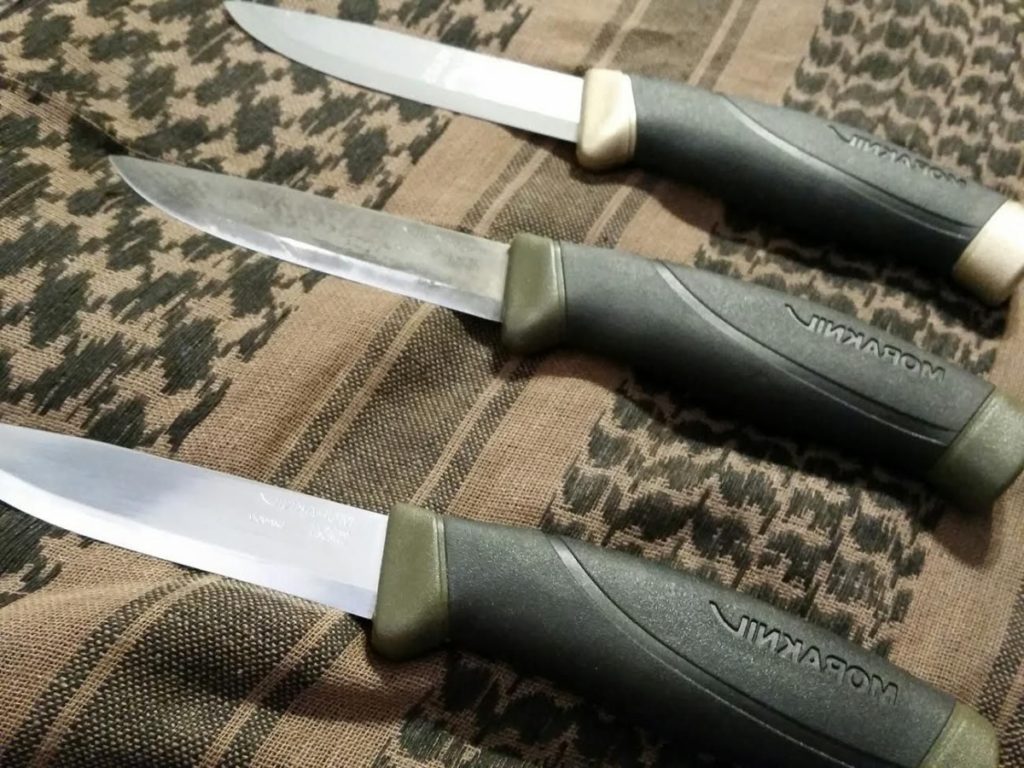
This is a review of the Morakniv Companion in stainless or carbon steel with a lowly ¾ tang and an inexpensive yet very functional polymer sheath, a 4” blade with a scandi grind (shallow and long allowing for much easier cutting, food prepping and even bush work) lastly it has a handle that is made of TPE rubber, which allows gripping even when wet, sandy or cold! This is the single most inexpensive yet important addition you can make to your prepping regardless the reasons for doing so.

There are several benefits outside of the knife itself that give it that step up over other knives. For instance, it is marketed as a TOOL, not a weapon, it can be used quite easily for kitchen meal preps. I have a few different models that I enjoy using for this alone.

It is legal to carry in most places, though some may require you keep it in your pack, rarely will you find a country that does not allow the use of a small (4.1” blade) for making kindling, cleaning fish, game, and all around camping chores.

Across the United States, there are a plethora of ridiculous carry laws with regards to sizes and types of blades. However, this is a blade I have dropped in my checked baggage (usually two) and never seen it walk away, nor has it ever stopped my baggage from boarding the plane.

After flying through or into most major airports in the USA and a few outside, I have never had an issue with this blade itself. I use a bright orange or blue handled one for foreign nations and states, (like California and New York City) as these for some reason bear no threat while the far more realistic green model seems to evoke the idea that it is somehow dangerous and may leap up on its own.

So how does one go about creating a survival kit using JUST this knife and its sheath as the base? Its simple really, the Morakniv Companion MG alone is a great tool, however, if you add 20 feet of 550 cord or 50-100 feet of different strengths of bank-line* wrapped around it using any number of wrap types (I prefer a simple loop, and pull method as it allows easier use of the rope) This addition would be wonderful by itself, however, we are going to add two more items.

Duct Tape (my favorite brand is Gorilla brand, some things are worth the money spent) and a 5/16th by 3” fire-steel or ferrocium rod for starting fires are two more additions that are essential in my opinion.

So all I do is wrap the duct tape (around a yard of 2” wide tape) around the middle of the sheath, capturing the ferrocium rod inside of the tape, and then wrap over that with bank line (my preferred go to for survival line for numerous reasons) or with 550 cord, whichever you choose using the knot and or wrapping type you prefer.

Again in my opinion simple is best, as this is meant to be used, not set on a shelf to show the world how amazing you are. Now, these four items alone offer many valuable uses and are by themselves necessary in any bug out bag or the like, however, when put together with this knife, it becomes the ultimate basic prepper kit.

I am including a video showing some test results with this blade, please understand I own several dozen of these blades, they make great gifts and honestly I see them as an investment. I have tested in the extreme this particular model from standing on it while stuck in a tree to splitting cordwood with it, and yes it is mesquite that is in the video. I have yet to break a single one of these knives. I have bent them, but only after attempting to break it in half using a vice.

I had pulled it well past 90 degrees and when it returned it was only about 15-20 degrees off its center line. I have put nicks in the edge of it, it’s a blade, I have yet to see single blade get hammered through a solid piece of wood or rocks and concrete (as I did with this one) and NOT sustain some minor damage to the edge, however, within 5 minutes with my DMT diamond plates I had it back up to shaving sharp.

The Morakniv Companion certainly proved itself, now folks, the video was filmed by my wonderful 8-year-old daughter so apologies for some disruptions but you get the idea, this knife specifically the Morakniv Companion is insane in its abilities! And this was just the torture testing!

It is lightweight, as in honestly it feels toy-like, so chopping a tree down isn’t going to work well, unless you use a baton while doing so, and then it’s just a matter of time.

The lightweight nature is a plus for myself, being old and broken down weight is everything, I would rather carry two or three of these blades than one Becker (popular prepper blade for some) of any size, after all, you generally won’t find a Becker blade that weighs anywhere close to this one and honestly, I would be willing to put one of these up against a Becker.

Again, I feel it is necessary to have you understand that I tend to carry more than one blade at all times regardless. As I feel blades are purpose-built. However, this is an article that allows for the individual who may not have that overall benefit or ability. Not to mention, one of the blades I always carry when in the woods is a Morakniv Companion in green or any number of other colors.

Others will state their love of any number of knives, however, what can be agreed upon by many if not all bush crafters, hikers, campers and survivalist types is that this specific blade style the mora styled blade is among the most popular and best all-around blade type available regardless the manufacturer.

Personally, I have several variant blades all made of the amazing Scandinavian or Swedish folded steel, Karasuando Kniven only available from the linked site and extremely expensive it is my absolute favorite blade of all times. However, the kniven (knife) I have from Karasuando is identical in almost every way (shape, form and edge type) to the Morakniv Companion.

Now, if you are someone who prefers or wants a thicker blade, get the Morakniv Companion HD (Heavy Duty) or get the Craftline Heavy Duty by Morakniv or the Morakniv Light My Fire all of these blades are thicker, and feel much better if you need that reassurance. Cost is still at or under $20 regardless.

So what are the pros for carrying the Morakniv Companion?

  1. It is lightweight at just 4.5 ounces or 125 grams for what it provides, its hard to find lighter and if weight is an issue, eg., age or physical ability than this is a benefit.
  2. It is strong, as in under normal circumstances, you will never see it break or fail, and as you can see in the video, under abnormal and quite abusive circumstances you will rarely if ever have an issue.
  3. It is sharp and holds an edge well, the carbon steel holds a much better edge longer than the stainless steel. However, the carbon steel requires more cleaning and lubrication than the stainless steel blade version does. However, the stainless version does not work as a fire striker like the carbon version does.
  4. It is easy to clean and easier to sharpen properly, there is no exact science approach if you have a decent sharpening set the bevel of a Mora styled knife allows for a VERY easy experience in sharpening and maintaining that sharpness.
  5. These knives cost less than a fast-food burger in many places, currently, on Amazon, you can have a brand new one shipped to your door for less than $13 – find any other single knife that will do what this one can and do it for this price.

What are the cons?

  1. It’s small and lightweight – it is NOT a fighting knife or a pig sticker or even really meant for clearing brush though you can do so if needed.
  2. It’s not a specialty name and your friends who own the newest blade from Benchmade (I love Benchmade knives) or a custom Skelton knife (again I really like these blades) will look at you differently for carrying it. (this is actually not true, especially if they understand and know knives, but I thought it would be fun to throw in there.)
  3. The controversial Pathfinder school supports this brand and regularly does commercials and more for Morakniv Companion, so there is that as well. (If it matters to you, that and they are made in Sweden, NOT in the United States, and we all know if it isn’t made here it can’t be any good.)

Please comment below and share the article with others. Let’s remember information is knowledge is power and one can never have too much good knowledge. Also please feel free to comment and let me know how I am doing, what you would like to see more reviews of and remember, I generally buy these products myself and write based on my experiences so that you can benefit from them.

“In bush crafting and camping, then, let your great object be victory and living well, not lengthy and sometimes fruitless attempts.” Sun Tzu for the Bushcrafter

Free the mind and the body will follow…

Filed Under: Knives and Blades

Palmetto State Armory (PSA) AR-15 Review

September 11, 2018 Jesse Mathewson

Photo of rifles and ar-15's

Palmetto State Armory firearms are a “MADE entirely IN America” firearms manufacturer that has created a stand out product within an industry full of products. There have been dozens even hundreds of AR15 manufacturers within the United States, among these, there are few that hold up to the full expectations of what an AR15 can be.

Modern AR15s can be extremely reliable, accurate, and versatile firearms. Palmetto State Armory is one of the few manufacturers that has consistently turned out a product I am proud to own and use.

It should be noted that I have at NO point received compensation or product from Palmetto State Armory for writing this article, in fact, I have purchased out-of-pocket the large percentage of reviews I do.

Please remember this when commenting, I am disabled, 40 years old and write reviews because you all deserve to have honest reviews in your corner. Even when a product is received gratis (as is not the case with this article) I provide completely honest reviews. Lying only hurts the liar in the end!

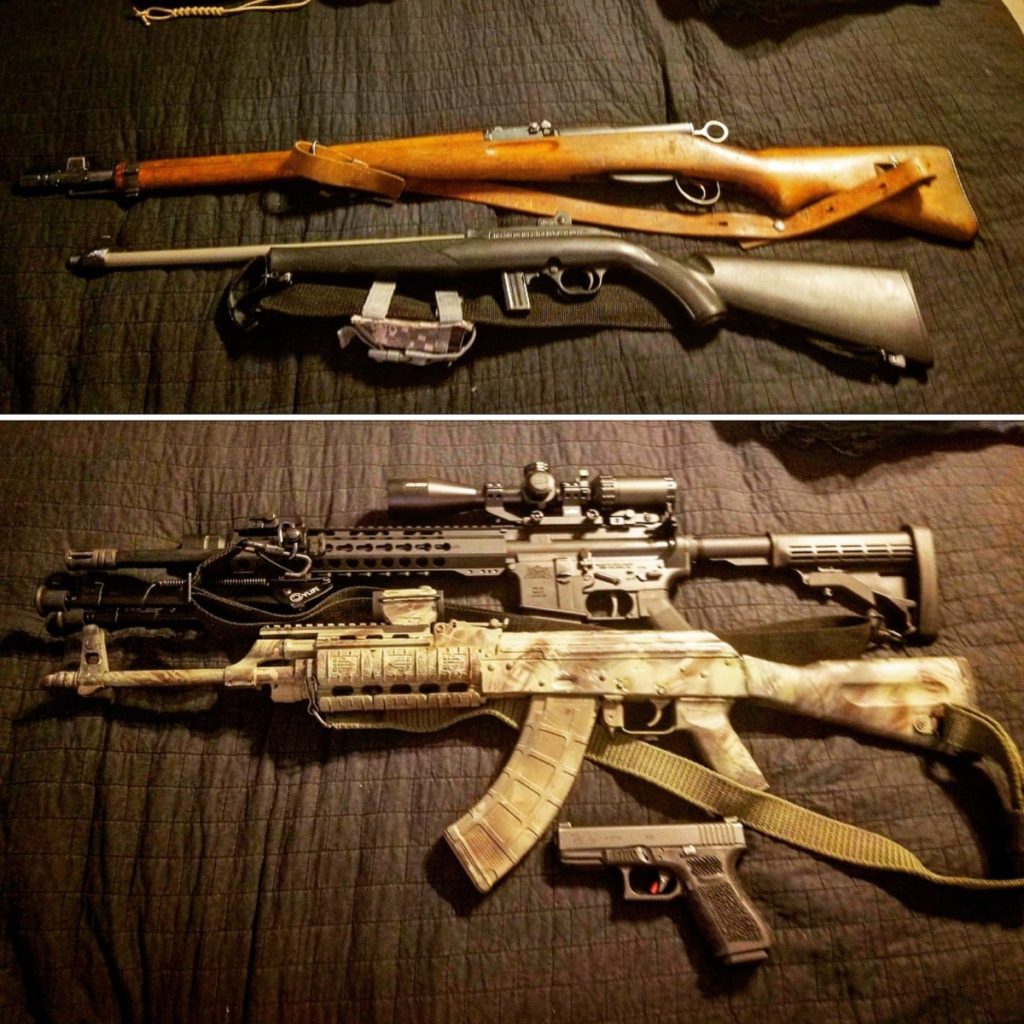
Personally, I discovered Palmetto State Armory AR15s a few years ago when I purchased one from a friend. After using this one for quite a bit I quickly discovered that it was an amazing piece of hardware. I then decided to purchase from Palmetto State Armory myself, and did so, purchasing the following items over the course of two years.

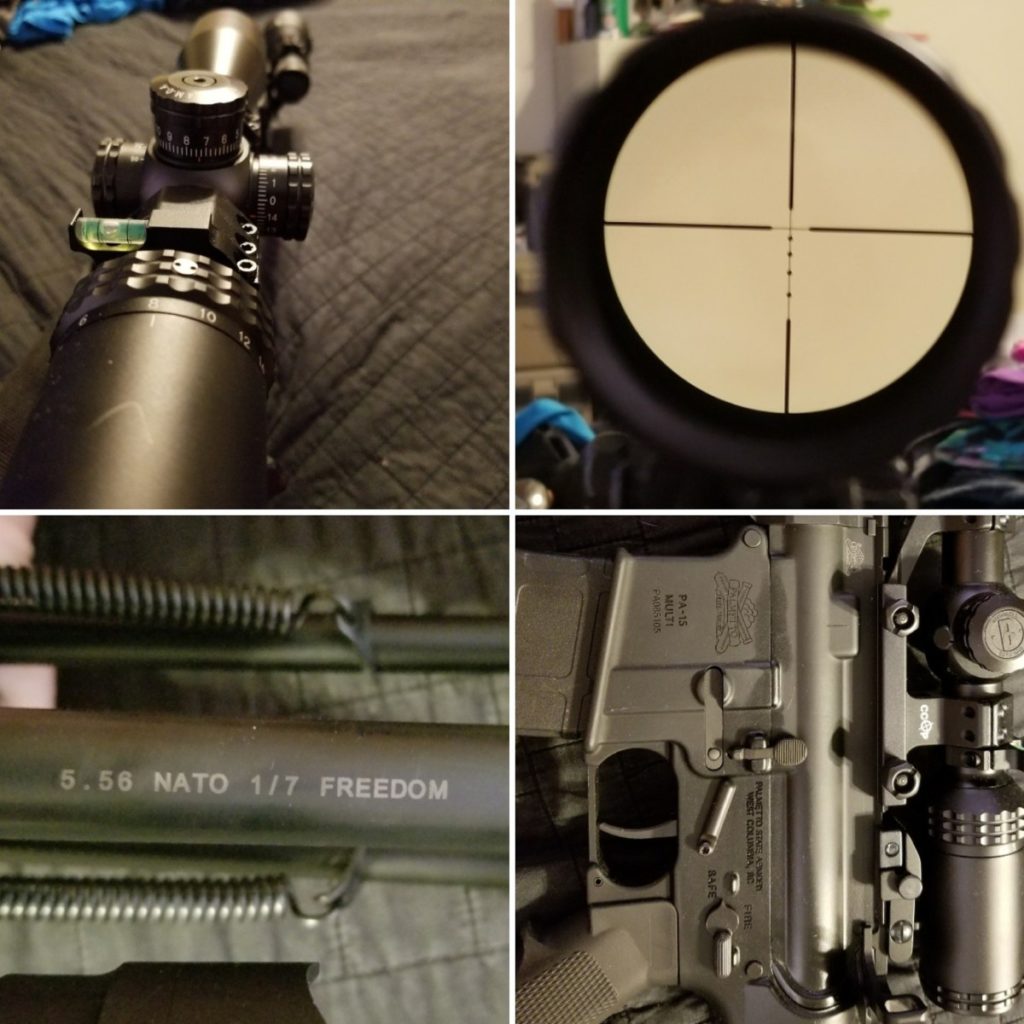
  1. PSA 16″ 5.56 NATO 1/7 Mid Melonite 11″ Keymod Freedom Upper – w/BCG & CH
  2. PSA AR-15 Complete Blem Lower – Classic Edition
  3. PSA Freedom Complete 6 Position Mil-Spec Diameter Buffer Tube Assembly
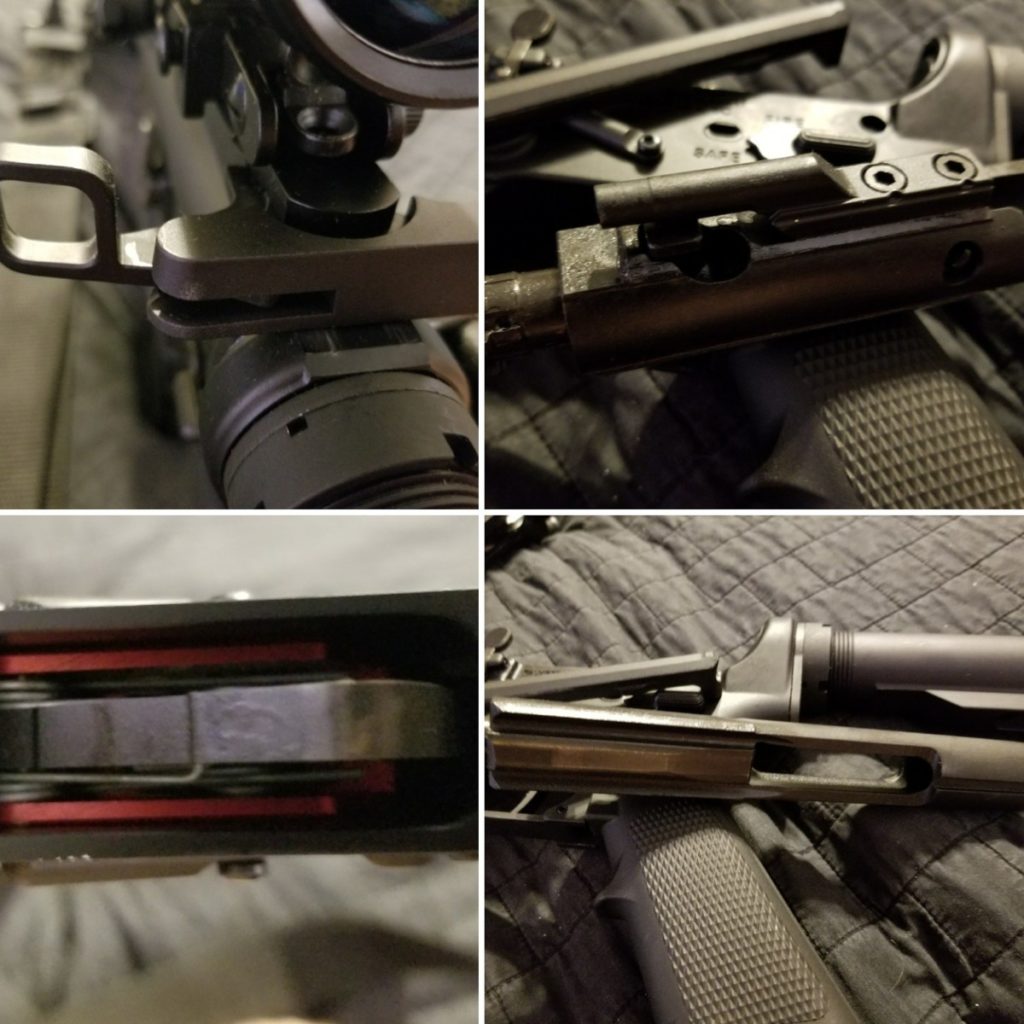
  4. PSA 5.56 Premium HPT/MPI Full Auto BCG, No Logo & PSA Charging Handle with Tactical Release Latch
  5. PSA 5.56 HPT/MPI Bolt Carrier Group
  6. PSA 5.56 Premium HPT/MPI Full Auto Bolt Carrier Group
  7. PSA 10.5″ 5.56 NATO 1:7 M4 profile carbine length gas tube

Interestingly I have not yet had a negative experience and this is, to be honest rare. After all, everything man-made can and does eventually fail especially firearms. I own several Glock 19s, and have had maybe 4 failures to fire and or feed or eject, in almost all cases it was ammunition related, in two cases it was gun related, I had failed to perform the necessary replacement of springs/ parts that wear out first. Like changing the oil in your car, maintenance is essential in firearms.

photo of two ar-15 rifles a bolt action and glock handgun

For instance on my Glock’s I change barrels every 30,000 rounds, firing pins every 50-60,000 and pins and springs every 5-10,000 rounds, on the gun and in magazines. This ensures continued relatively flawless reliability. Additionally, I do not use sub-par ammunition.

Especially when practicing, I use Aguila, Speer Lawman or MEN German milsurp for practice purposes. And Speer gold dot for self-defense. With my rifles, the same is approximately true, with variations in some rifles depending on the amount of use.

This means that in a given year I could change barrels as many as 4 times if I run a gun hard enough, obviously for 22lr firearms this is not such a large issue, and I have easily gone well over 50,000 rounds before needing to change out springs etc., barrels, if maintained well, will outlast me.

photo of an AR-15 rifle and rifle parts

In my high-pressure carbines and rifles such as the AK and AR variants specifically from Palmetto State Armory, I have found I need to do less maintenance while still seeing exceptional performance overall. The only other brand firearm that even came close in longevity and quality was my Delton Sport model which had a little over 65,000 rounds through the barrel before I replaced gas rings, barrel (it had begun keyholing) and buffer assembly.

It is still running like a mule today, accurate, wonderfully reliable and an amazing firearm. Now, to date I have only been able to put around 28,000 rounds through my oldest Palmetto State Firearm, (prior to melonite/ barrel is chromium steel mix) however, it is still running hard, it is not my defensive tool, as to be honest I am running it specifically to see what fails first. The only issue I have seen is the gas stake on bolt loosening (I tightened and used loc-tite) but no failures overall.

ar-15 scope

I called Adam Ruonala the Chief Marketing Officer for Palmetto State Armory to ask some serious questions about their processes. (On a side note, he is like all of the individuals working with Palmetto State Armory approachable, and honest!)

  1. Do you make your barrels in-house?

Yes, we make our barrels in-house. Exception for the hammer forged barrels, all other barrels stainless, and nitride barrels –

  1. Are all major components (eg., stripped lowers/ barrels and bolts) machined in-house?

Bolt carrier groups currently are outsourced, however, we are in the process of bringing it in-house to keep all – they are made in the United States!

  1. Does the same apply to AR10s and your Ak47 line?

Yes, absolutely the same applies to all firearms made and or stamped Palmetto State Armory!

shooting 100-yard milk jugThe reality is that AR and AK platforms are adult lego’s they are not difficult to put together, in fact, there are dozens of videos showing people building AK47s using shovels and AR’s using a plethora of parts from a dozen different manufacturers.

What is a not well-kept industry secret is that your name branded AR carbines like Spikes Tactical, BCM, and even COLT have many if not all of their parts outsourced and simply stamp their name on it and then raise the price 200-500% and make crazy claims of infinite reliability?

The reality is quite different, comparatively, I have run my Delton and Palmetto State Armory guns against all of the above and in almost every case have continued to run long after they began having failures, feeding, firing, and more.

A popular YouTube channel that destruction tests both AR and AK rifles called The AK Operators Union recently proved that Palmetto State Armory is, in fact, the ONLY all American made AK rifle to date, to pass their stringent 5000 round destruction testing.

*

They also destruction tested the AR15 Freedom model, currently going for under $450 through Palmetto State Armory – and guess what, it passed again!

*

And the AR’s I have tested, well, lets just say that as it stands today I have yet to be disappointed. In fact on August the 6th I will be doing the 1000 yard milk jug challenge with a Palmetto State Armory AR, specifically the PSA 16″ 5.56 NATO 1/7 Mid Melonite 11″ Keymod Freedom Upper – w/BCG & CH the only specialized adjustments I have made are adding a Bushnell 4.5-18x40mm BDC AR scope, P.O.F. trigger (made in Arizona) single stage 4.5lbs and a CVLife 9”-13” Bipod, everything else is exactly as it came from the factory – To make this an even better event, I am using 69 grain IMI MatchKing ammunition, each round being used will be weighed and measured to ensure continuity in load but they will be as loaded by the factory.

The 6th of August is my 40thbirthday and I plan on making a bit of a splash by completing this challenge from the Long Range Shooters of Utah Association with what amounts to a stock AR15 with a 16” barrel – something I think will be a first. And yes it may take a week, as my editing skills are atrocious, but after letting the officials review the video, and editing it, I will post for all to see!

Here is the thing folks, regardless what name brand you are currently in love with, from Ruger through Colt, the odds are the barrels are made by Palmetto State Armory or one of the other 2 or 3 actual builders of barrels in the country and re-branded. In some cases the parts are outsourced too Taiwan or Korea, while Palmetto State Armory keeps its parts entirely in house, or are in the process of bringing everything under one roof! AND THEY DO IT FOR LESS than anyone else on the market today!

What are the pros to owning a PSA (Palmetto State Armory) AR or AK over any other brand name –

  1. Pricing, they offer regular daily deals that are far lower than most manufacturers and do so while ensuring a product that functions well easily 97% of the time (all man-made-products can and do fail at times)
  2. They offer an in-house 1911, AK47, AR10 and AR15 – and do so with components made IN HOUSE!
  3. They have absolutely great customer service, I have never had a single member of their staff be rude, and in fact when I am down South again plan on stopping in and meeting them, I am that impressed with their services.
  4. Quality, overall their quality as has been proved by myself and many independent individuals is second to NONE, in fact, I would suggest to any new owner or older owner looking for a backup piece, go to their website, sign up for daily alerts and take advantage of their daily deals!

Cons –

  1. For the first time, I have none, absolutely NO cons to owning a Palmetto State Armory part of the entire firearm!

So do you have anything to add, what are your experiences, and by all means feel free to share FIRST hand experiences with me. Comment below and if you enjoyed this article and want to see others, share and thanks again!

Free the mind and the body will follow…
Filed Under: Uncategorized

Is The Lever Action A Good Bug Out Rifle?

September 9, 2018 M.D. Creekmore

Lever action rifle ready to bug out By Jim Ballou

For a lot of potential wilderness survival emergencies, a lever-action carbine of one variation or another chambered for a versatile hunting/defense cartridge seems especially practical in my view. With such a weapon you’d have rifle-like accuracy and power in a comparatively compact, portable platform, and for this reason, I believe the carbine lends itself well as the basis for an emergency survival or bug out kit.

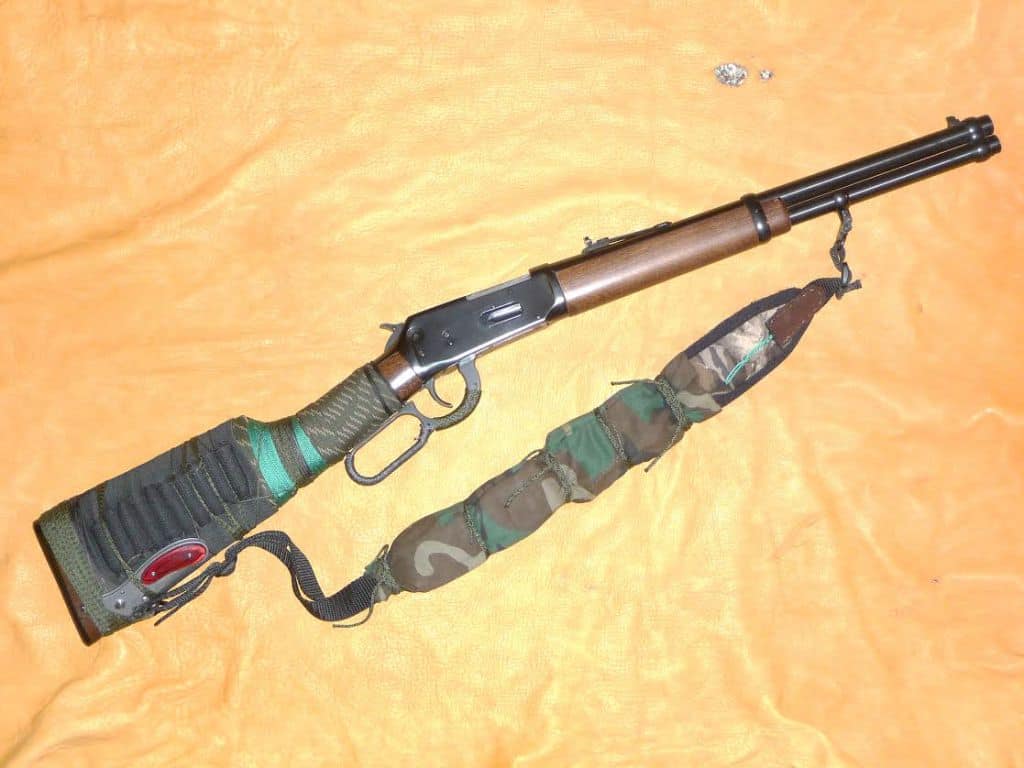
I chose to make my own such survival kit out of a Winchester Model 94 “Trapper” carbine with a legally minimum 16-inch barrel, chambered for 44 Remington Magnum (an earlier glimpse of this same project is featured in my book, Arming for the Apocalypse.

I like this gun for this particular purpose because it’s a fast-handing repeating lever-action of a conveniently short and handy size, and its cartridge is not only interchangeable with my favorite revolver but is also quite versatile.

The 44 Magnum has been used since its introduction in the mid-1950’s to successfully hunt every species of North American big game if my information is correct. My little carbine holds nine loaded rounds in its magazine tube, plus one in the chamber.

For me, this is the perfect sit-around-the-campfire kind of gun. If some beast were to suddenly burst into my camp in the middle of the night and threaten my being or the safety of anyone else in the camp, I believe I would feel fairly secure having nine or ten fast rounds of 44 Magnum at my disposal to answer the threat with.

I am aware that this particular variation of the Model 94 is no longer manufactured by Winchester, but I still frequently see plenty of used ones offered for sale. I purchased mine new in 2002 when they were still in production, and I paid around $300.00 for it at that time.

butt sock survival kit
Plate removed, showing small cavity in butt of stock for housing small survival gear.

The used ones I’ve seen lately have been priced considerably higher. By the way, this same model was also offered in .357 Magnum, and I believe one in that chambering would also be an excellent choice for this purpose. Additionally, there are at least a few other lever-action rifles and carbines chambered for 44 Magnum currently available from other gun makers.

No doubt readers will think of other viable or possibly even more suitable carbine designs for their purposes, but whether we opt for a lever-action, semi-auto, pump-action, single-shot, or bolt-action, I think the general idea of a survival carbine would be basically the same.

I began my project by removing the butt plate and drilling a 5/8” diameter hole into the wooden stock, just deep enough to hold a few wooden matches, a hobby knife blade, some sewing needles with a length of thread, a cotton ball (for emergency fire starting tinder), and some fish hooks.

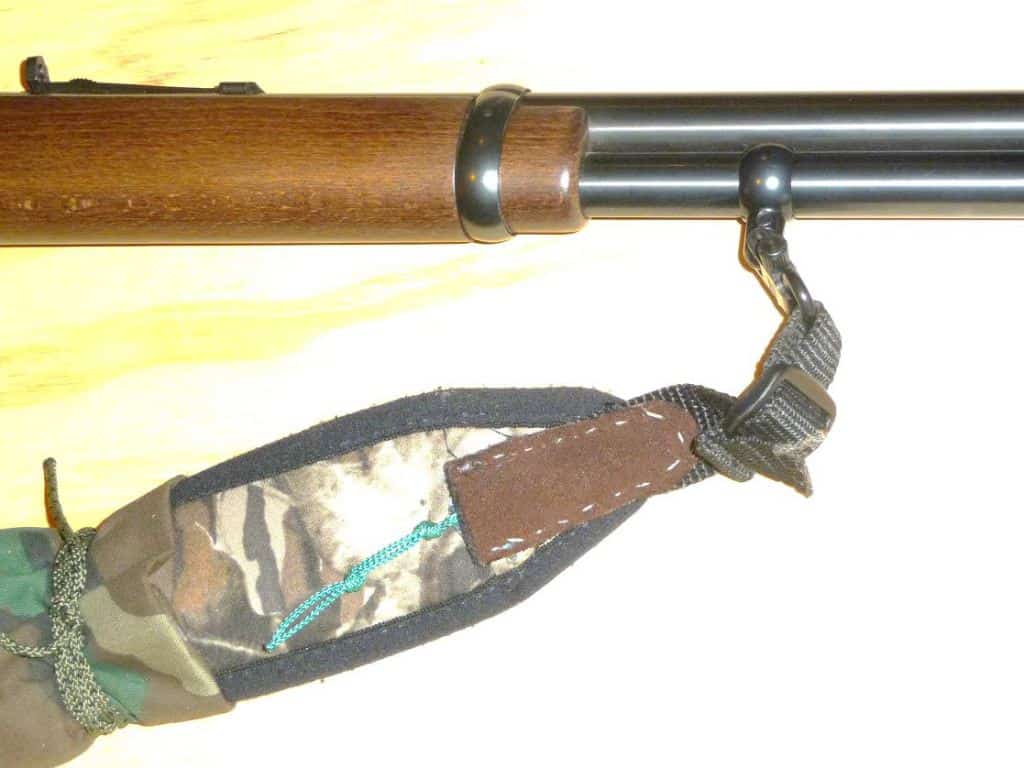
I avoided the temptation to drill a larger hole that would house more gear, being careful to avoid compromising the stock’s structural integrity. After screwing the plate back on, I decided to sew a tiny pocket to the gun’s sling for stowing a short key-shaped screwdriver with the gun that fits the screws used to hold butt plate to the stock.

sling swivel on lever action rifle
A tiny pocket made from leather scrap was stitched to the sling to house the key-shaped screwdriver for the butt plate.

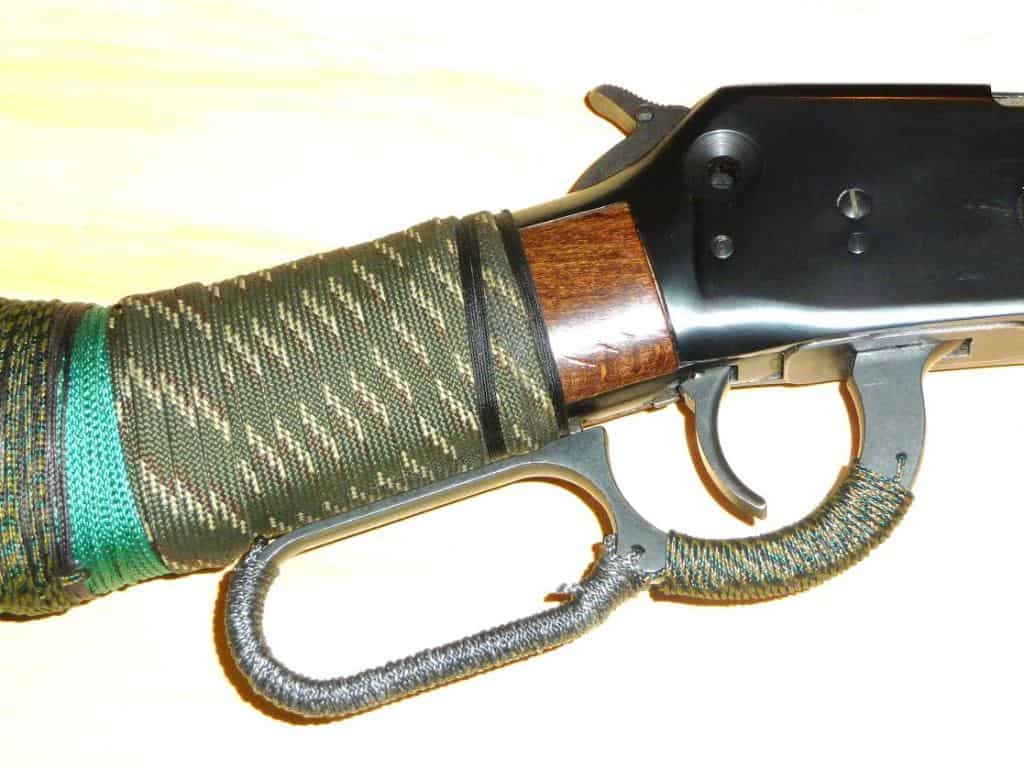
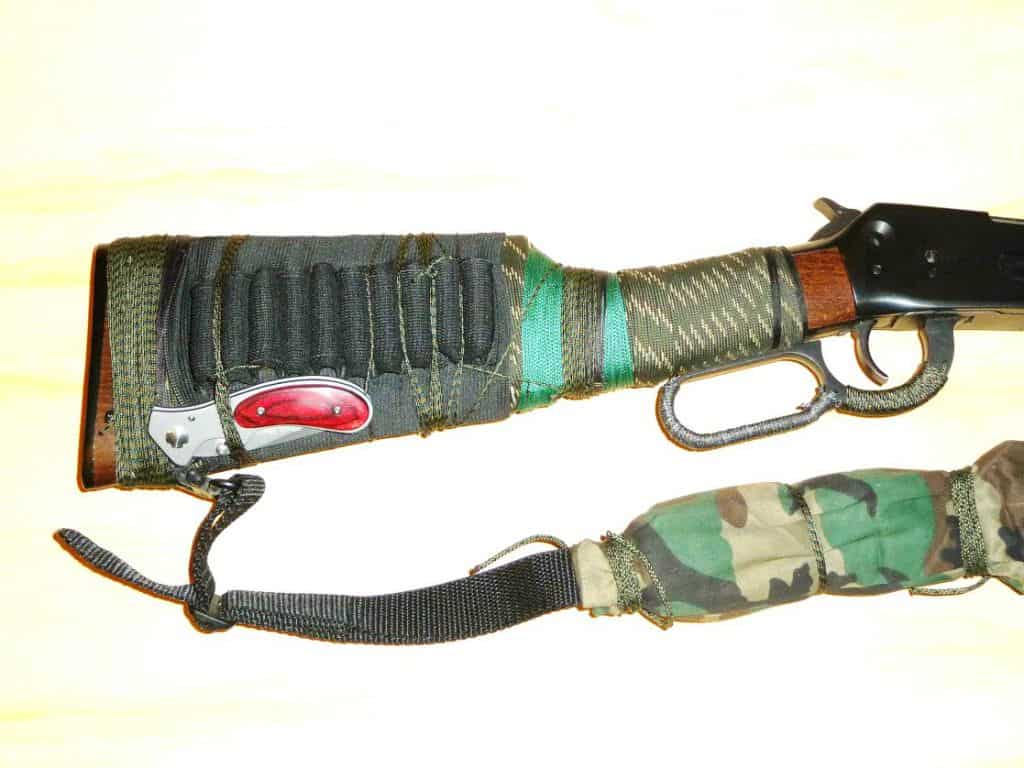
Next, I wrapped the entire buttstock of the carbine with several sizes of utility/survival cord. If there is one type of product more generally utilitarian to a wilderness survivor than cordage, I am not aware of it. When I visit the woods I invariably end up using the cord in shelter building or tent raising, tying down the gear, repairing items, hanging supplies from tree branches, replacing boot laces, etc.

The task of wrapping a rifle stock with cord can be tricky, but I’ve learned a few little tricks that make this process easier and more successful.

First, it is much easier when attempting to tightly wrap any tapered object with cord to start the process from the smaller diameter end of the thing and progress toward the larger portion, because the windings of cord have a tendency to slide apart while wrapping them on a body tapering downward. You will want to keep your wraps even and tight together.

A second trick involves using a wrapping technique commonly employed in whipping the ends of rope with small cord, and this is how you can avoid entirely the use of bulky knots that eventually unravel, while also maintaining a more permanent and tighter wrap.

cordage wrapped around rifle stock
Close up view of the wrist area. Note also that the lever itself has some cord wrapped onto it.

This can be done simply by forming a bight in the standing end of your cord and laying this bight stretched out along the length of the item you want to wrap, and wrap your windings of cord over it together with the (gun stock, in this case) until your windings approach the remaining eye in the end of the bight.

At that point, you feed the running end through the eye and pull on the standing end of your cord to draw the bight and running end under the tight wraps. I sometimes use two pairs of pliers to firmly grip and keep both ends of the cord taut during this finishing stage.

Finally, I discovered that by adding a furniture tack at the comb of the stock I was able to provide a much-needed ledge to hold back the wraps of cord at that point. Without something like this, there is nothing to prevent the windings of cord from merely slipping over the edge of the comb.

Wrapping the wrist area of a Model 94 Winchester requires some care because there is a safety button in the lower tang that must be depressed by the closed lever before the gun will fire. So, any wraps of cord around that area must not be too thick or interfere with that little button, because if they do the weapon won’t work.

lock bladed knife attached to rifle stock
A lock blade knife with a belt clip fits conveniently onto the stock’s shell holder.

After I had wrapped several layers of small cord on the carbine’s stock, I decided that a cloth shell holder that goes over the buttstock could be a handy thing. After adding that, I found that a lock-blade knife with a belt clip that would firmly slide under the back end of the shell holder could also be very handy to have in the woods. I eventually secured this knife into position more permanently by tying it on using several lengths of small diameter cord.

At some point, it occurred to me that the gun’s sling would lend itself quite well as a shell holder as well as a pouch for more small survival gear. The sling I had purchased for the carbine came with a few cartridge loops already, but I wanted a few more.

bug out survival kit
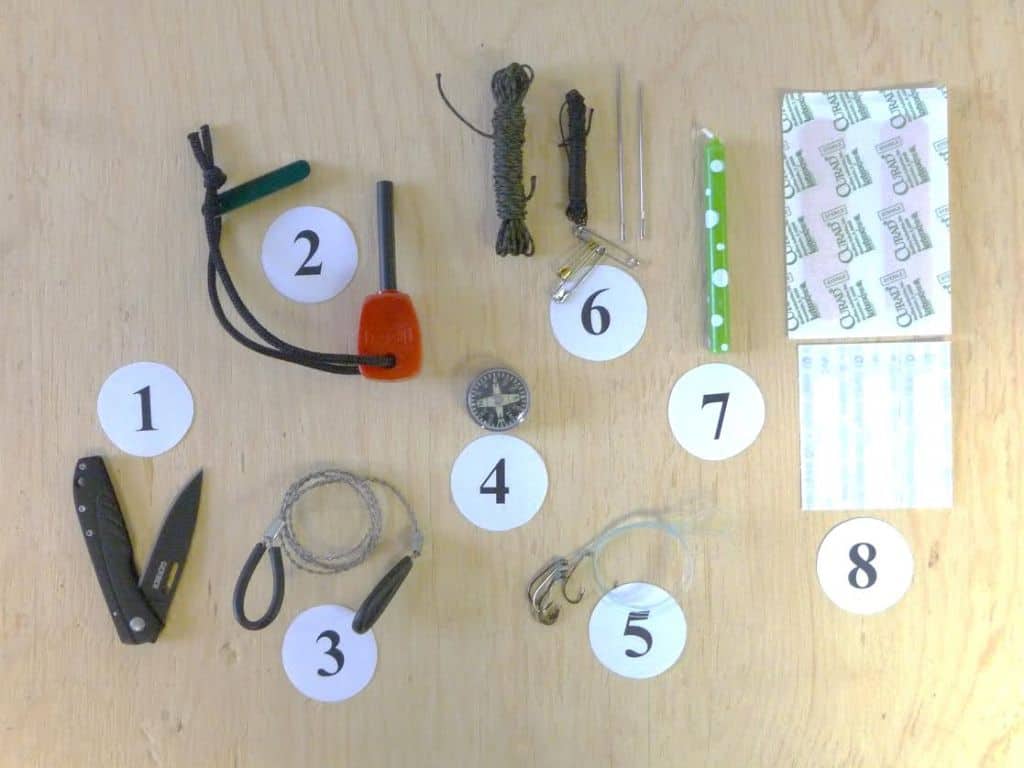
Examples of lightweight survival gear that can be carried on a rifle sling: 1) small knife, 2) sparking tool, 3) wire saw, 4) button compass, 5) #6 barbed fish hooks, 6) needles & thread for emergency repairs, 7) birthday candle, will sustain small flame for 35 minutes, and 8) band-aids and butterfly sutures.

I discovered that a belt slider with six cartridge loops could be positioned in a convenient section of the sling and stitched into place to prevent it from sliding around. I also discovered that this created a sort of convenient pocket between the belt slider and the sling, inside which I managed to fit a small bag of some basic survival items like a ferrocerium sparking tool, a small knife, a wire saw, bandages, more small-diameter cord and fishing tackle, a button compass, etc.

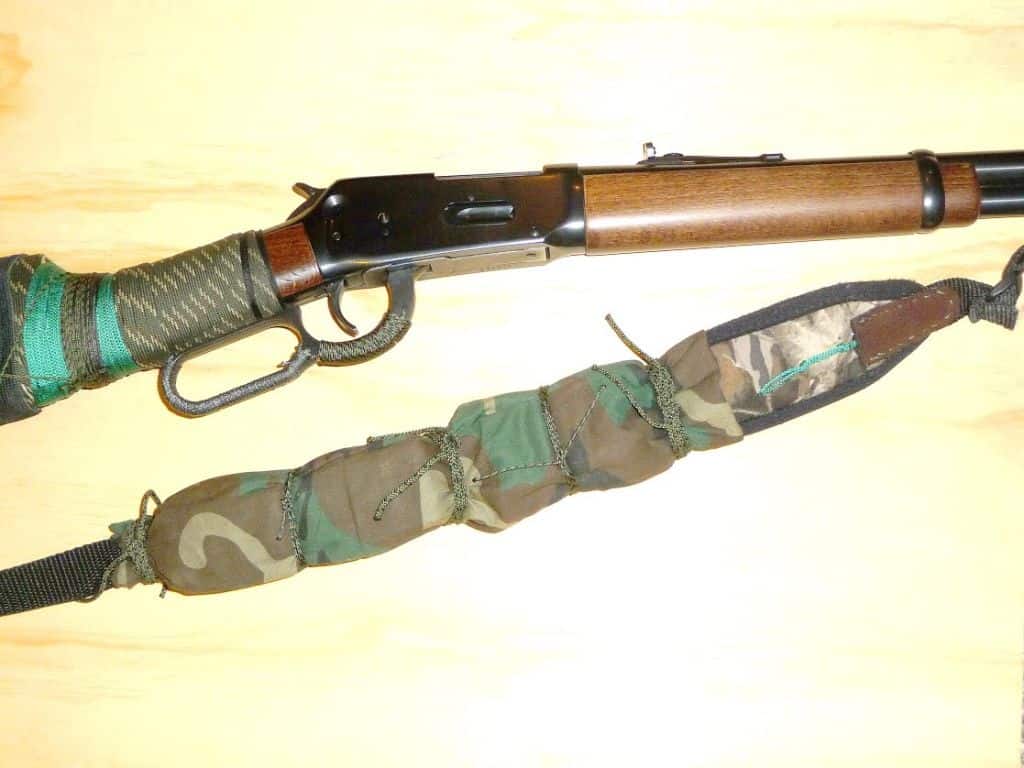
To make all these goodies thus mounted on the sling (including those spare rounds stowed in the cartridge loops) more secure, I ended up wrapping a handkerchief around the whole works and binding it up with a few lengths of small cord. While the sling may now be a tad bulkier and heavy with all of these things on it, it is still nevertheless usable as a carry sling.

Sling on lever action rifle and ready to bug out
A handkerchief tied on helps to protect the ammo in cartridge loops and all the survival gear on the sling.

Ultimately I ended up with not only a handy little 44 Magnum carbine to take along camping and scouting around in the woods, with its spare ammunition stowed “on board”, but in fact a survival kit system of its own. So, will this resulting mess of outdoor gear form part of my emergency Bug-Out Bag arsenal? You bet it will. With a set-up like this, a survivor would have plenty of possibilities available to him in an emergency.

Bio:  Jim Ballou has worked as a self-employed, independent insurance agent and a freelance writer for over sixteen years. More than sixty of his magazine articles on a variety of topics ranging from primitive and early American crafts and tools to wilderness survival skills have appeared in five periodicals since 2000, including Backwoods Home Magazine, The Backwoodsman, Wilderness Way Magazine, Primitive Archer Magazine, and Modern Survival Magazine.

Mr. Ballou’s first non-fiction book titled: Long-Term Survival in the Coming Dark Age was published by Paladin Press in 2007, and it quickly became a Paladin best seller. This was followed by four other popular non-fiction titles with Paladin Press, including Makeshift Workshop Skills for Survival and Self-Reliance, MORE Makeshift Workshop Skills,Arming For The Apocalypse, and the most recent title, The Poor Man’s Wilderness Survival Kit.

Ballou’s interests are too varied to list here but include blacksmithing, gun collecting, target shooting, reading and learning about history, writing, camping, hunting, fishing, treasure hunting, exploring, experimenting with tools and creative processes, survival and self-reliance related topics, plus all of the primitive skills, among numerous other interests and hobbies. He lives with his wife and two kids in Idaho.

Filed Under: Bugging Out

What’s The Best Rifle Sling For The AR-15?

September 9, 2018 M.D. Creekmore

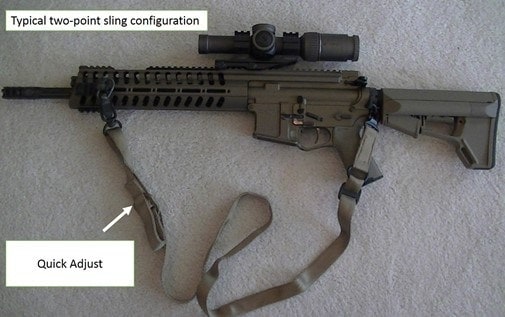
photo showing a two-point sling configuration
by Joe Nobody

One extremely important accessory for a shoulder-fired weapon is frequently overlooked by preppers. It is unpretentious, cheap, readily available, and easy to install. It’s the sling.

Suffering from a lack of sex appeal, lost in a plethora of available furniture, and definitely not the cover-girl of gun porn, the lowly sling often suffers from a lack of appreciation – until your body has paid the price.

Through the years, I have conducted numerous training sessions and can now easily identify the guys and gals who have experience in the field… the folks who have carried a long gun for an extended period of time. Their slings are functional and comfortable – like an old pair of well-worn blue jeans or a seasoned pair of boots.

They fit, function, and perform critical tasks without fanfare or ritz. Those who have ignored this critical component suffer – sometimes badly. More on that down-article.

No doubt some of you are wondering, “Why is Joe ranting on and on about something as simple as the humble sling? It’s just a length of material that you use to attach a weapon to your body – right?”

Not really. Not in a practical application:

In the gun-candy store, it’s easy to get distracted by lights, lasers, and fancy optical doodads. At the range, other shooters rarely stroll over and say, “Wow, what a nice sling.” In the gun safe, they tangle and annoy. But if you ever have to keep a shoulder-fired weapon on your person for extended periods of time, there is nothing you’ll appreciate more than a good sling.

photo showing how to use a sling as a plumb lineMany of the folks I work with haven’t spent a lot of time with a weapon in the field. That’s not a criticism or a sin; it’s simply a fact that few occupations or lifestyles demand the need or naturally deliver those experiences. Most of us do not walk into corporate America carrying a long gun.

Even the gents who have served for years in the infantry may not consider that their military experience will likely differ from that of a post-event prepper. Protecting the homestead while accomplishing daily activities, chores and movements is different than the routine of a soldier who is a component of a fighting unit.

I often challenge my friends to perform one simple task without leaning their rifle against a tree – set up camp. Pitch the tent, build a fire, and empty the packs while wearing your blaster. The experience can be a real eye-opener.

Take that exercise one step further; envision a typical post-event day from dawn to dusk with security as part of your plan. This mind-movie will help you realize the need for comfortably accommodating your weapon. Unless you find yourself surviving in a densely populated urban area, you’ll most likely spend a lot more time carrying your rifle than shooting it. This is a critical point. You probably won’t be fighting, sweeping, clearing, or defending all the time. (If your environment requires such diligence, it might be time to consider another location.)

Photo of Joe Nobody climbing a ropeYou will, most likely, be spending countless hours gardening, gathering, harvesting, and performing manual labor. If there is no rule of law, you’ll probably want a firearm close by, or on your person. You may spend considerably more time traveling by foot than you do now. There’s a reasonable chance you’ll be outside and exposed for significant portions of the day.

All of this translates into the lowly sling playing an important role. The wise prepper will evaluate this humble piece of kit now, rather than later when it’s too late. Prove that you can carry that blaster comfortably, securely and in a manner that is “mission configurable.”

Types of Rifle Slings

For years, there were two basic types of slings: Single-point and 2-point. (For a short time, there was a 3-point sling, but it faded from the market quickly.)

A few years back, the single-point sling was all the rage. It debuted as a cool accessory, and droves of shooters wanted to convert their battle rifles to accept this option. For most, this was a huge mistake.

Single-point slings are for SWAT teams, hostage rescue units, and other outfits that are expecting short duration encounters of intense violence. Single-point slings are great for moving a weapon to the weak-side shoulder, close-quarters combat, and other tactics that require a lot of movement of a weapon.

They, however, suck as a way to secure a long gun for extended periods while on the move.

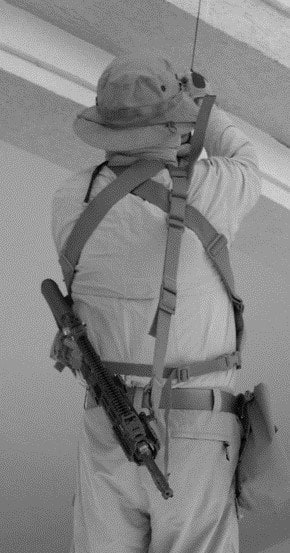
Infantry soldiers, hunters, search and rescue responders, and probably preppers need slings that secure the weapon tightly against the torso. This configuration allows running, jumping, climbing, walking, and picking berries without the rifle banging into knees, thighs, or more personal regions between a male’s legs. A hot barrel can make this capability even more critical.

Consider that you may need to slide the rifle around to your back if you have to use your hands to carry something heavy or to climb. You’ll want to be able to tighten and tuck that fancy AK either in front or across your shoulders and do so in a way that doesn’t rub off significant swaths of flesh.

Recently, a new design has eliminated the need to make a choice. Several vendors now offer what I call “hybrid” slings that easily convert from single-point (when you’re expecting to fight) to a more comfortable two-point arrangement. This nifty invention gives us preppers the best of both worlds.

When shopping for a sling, consider these factors:

  • Be aware of the strap width and thickness. When you have a pack, body armor, load-rig, jacket or other paraphernalia on your shoulders, strap-pollution can be an issue. Wide and thin slings are typically the best option.
  • At least one connection point should swivel. This avoids tangles, twists, and hang-ups.
  • Metal rings, clips, and buckles will hold more weight than their plastic counterparts.
  • Look for quick adjustment straps. These are extremely handy.
  • Quick Detach (QD) connectors are also great innovations. Over the years, I’ve been in numerous situations where I wanted to get the weapon off my body in a hurry. QD mounts work well.
  • The company Magpul probably offers the most configuration/options: http://store.magpul.com/category/slings

But wait. Carrying the weapon is only part of the equation:

photo showing a sling converted into a single point sling

Have you ever read those great articles on a gazillion uses for paracord? Well, a good rifle sling has its own list of secondary applications. Not as many as 550-cord, but more than many people realize.

A sling can be used to provide a brace for several different shooting positions. Used correctly, it can steady a shooter’s aim.

Or how about an angle indicator for non-level shots? If you live in a mountainous or hilly country, you know that making a shot 40 degrees down into a valley requires some adjustment. Often, it’s difficult to judge the correct angle. This handy little accessory can help you with the estimate by creating a plumb line.

Properly selected, a sling can form a tourniquet, elevate an injured arm, tow something, fashion a stretcher or drag bag… the list could go on and on.

Essentially, a sling is a fancy 4-foot section of very strong rope. What could you do with that in an emergency situation?

Consider a scenario where you have three people in your group and need to climb a tree in order to scout. Three of these cords attached end-to-end would yield a 12-foot section of climbing rope.

In my fictional series, Holding Their Own, the protagonist uses his rifle sling and backpack straps to make a safety harness for a dangerous climb.

What I have come to respect most about preppers is a mindset of adaptability and creativity. I’m sure if you put 50 like-minded individuals in a room, they would devise dozens more innovative uses for this little length of material.

All the best! Visit Joe’s website, www.joenobodybooks.com, for more articles, reviews, books, and other resources for those who believe in the self-reliant lifestyle.

Recommended Reading

  • AR-15 Rifle Builder’s Manual: An Illustrated, Step-by-Step Guide to Assembling the AR-15 Rifle
  • AR-15 Skills & Drills: Learn to Run Your AR Like a Pro
  • How To Shoot Your M16/AR-15 In Training And Combat

Filed Under: Uncategorized

How Many Rounds Of Ammo Does A Prepper Need?

September 9, 2018 Jesse Mathewson

Photo showing a prepper shooting an AK-47 how many rounds of ammo does he need?
My suggestion for long-term storage is a bare minimum of 250 rounds of defensive ammunition per defensive firearm in the house with 500 to 1,000 rounds being ideal.

There is an economic concept, the law of diminishing returns, that can be applied to your life. The law of diminishing returns refers to a point at which the benefits are less than the amount of effort invested. This applies directly to ammunition stored for personal use and firearms as well as general prepping supplies.

I should add that I detest the term prepper, as it is defined using modern vernacular and is seen as a negative to many. Rather I am someone who considers that even though I may never need insurance, it is a wise idea to have it.

Ammunition Storage

When it comes to prepping it is possible to have too many things and by default cause issues with both storage and distribution of the items needed. Ammunition if it is not stored properly does age rather poorly even if it is sealed in spam cans. Food regardless posted shelf life must also be stored in a relatively climate controlled environments.

In fact, there is very little that has an extended shelf life if it is not stored in a climate controlled environment. Look at the packaging for any dry frozen or dehydrated food supplies, store between temperatures are listed on the package.

Temperatures are somewhat important for ammunition, however, the real killer for stored ammunition is moisture. I do not suggest leaving ammunition in your car during an Arizona summer, the temperatures reached can negatively affect performance.

However, in personal testing with ammunition stored openly in magazines and original packaging as well as loaded in magazines I have found that overall the temperature variations rarely affect the ammunition by itself, though with un-crimped hand loads I have found it causes greater issues than crimped loads both factory and not.

What has always been the hands down ammunition killer is moisture and the subsequent corrosion that occurs.

Except for personal defensive ammunition I have on me at the moment and in my house for use at a moments notice, my ammunition is stored in watertight cases that are also somewhat airtight. I use desiccants inside the ammunition storage containers as a way to reduce the free oxygen and moisture amount even more.

With my testing and others, I have found that ammunition stored this way can be good for many decades, especially when temperature extremes are prevented. When it comes to defensive ammunition you should be rotating this every 6 months or so. You are not rotating it because it compresses in the magazine and becomes oval or for any reason other than your carry ammunition by default is carried on your person.

This means that it is subjected to temperature extremes and humidity, sweat and general degradation that occurs with carry ammunition.

My Bare Minimum Recommendations

For this purpose, my suggestion for long-term storage is a minimum of 250 rounds of defensive ammunition per defensive firearm in the house. This takes a rotation of 30-45 rounds every 6 months for handgun and between 60 and 240 rounds for the rifle and lastly 12-24 rounds for the shotgun if you have or use one.

Personally, I prefer buying a half a case for handgun and a full case at a time once a year of premium defensive ammunition. This covers needs for the firearms in use as a defensive tool at my house and keeps a decent supply for practice and storage as well.

With very few exceptions I keep all of my magazines loaded, modern Magpul magazines can be kept loaded fully and older NATO/STANAG magazines loaded at 28 for rifle and one round short for magazines not in current defensive rotation for the handguns.

This is not to reduce spring tension, instead, it is specifically because many older magazines do not seat easily or fully in a firearm that has a closed bolt or closed slide.

I am not going to argue the merits of learning how to count your rounds or other similar approaches as these are foolish and outdated approaches that at least will add steps that will only confuse you under stress and at worst get you killed. My suggestion is, use proven modern magazines and firearms.

How many rounds of non-defensive ammunition should you keep on hand? This is where the law of diminishing returns really comes into play. Ammunition weighs allot in quantity, for instance, a 30 round magazine of 5.56 or .223 weighs approximately 1 pound.

ammo in storage how much is enough?


Whereas a loaded 8 round magazine for a 1911 weighs around 9 ounces and a 15 round Smith and Wesson M&P magazine or a loaded 15 round Glock magazine will weigh around 8-9 ounces. Two defensive magazines for your handgun will end up weighing around 16 ounces and a single 2 ¾ inch 00 buckshot shell will weigh a little over one ounce by itself.

Unless you train regularly with your bug-out bag and a full load out of ammunition, I highly doubt you will be humping more than 3 or 4 magazines for any great distance.

Does this mean you shouldn’t keep more than 120 rounds on hand? Absolutely not!

In fact, I recommend at a bare minimum having 500 rounds of quality range ammunition for practice and long-term use. My suggestion is to avoid big box store ammunition, I do not mean specific ammunition retailers and resellers, I mean Walmart, Big Five, and other similar large box stores ammunition.

What is made for them will ALWAYS be a reduced quality than even military and law enforcement training overruns! Big box ammunition is loaded with far less QC being applied than is done with the more expensive yet better overall ammunition that is available.

If you reload, and this is something that takes great patience and dedicated time and effort to do well, store supplies for as much as you may need at current training use for 2-3 years. This can be applied to factory new loads as well. I like having several months at a bare minimum stored away, with my maximums being around 5 years at my current level of use.

If you go to the range and shoot 150 rounds a week, then calculate based on this number. If you carry defensively and do not train with at least 50 rounds a month, please remember a very simple reality, shooting is absolutely a perishable skill.

Certainly, many people get lucky and have used firearms successfully with little or no regular training or any real training. However, you will find a much greater level of success if you at least keep your basic skills sharp with 50-100 solid rounds downrange once a month.

I have taught and worked with law enforcement officers and soldiers who refused to practice regularly, leading them to have to shoot their generous qualifiers multiple times just to maintain employment!

how many rounds of shotgun ammo does a prepper need

Next, it is important to understand that you and your wife will not be taking on an armed group of marauders even with your multiple trips to FrontSight timeshare and firearms training facilities. I know that the Dr. who owns that training facility has told you that because you are a diamond member you are now better than Rambo, the reality is…you will still be best served with not clearing your house and avoiding issues whenever possible!

This is why individual focused training on your own and or with experienced real-world instructors is best. This means that you need to have additional amounts of ammunition available and stored safely and properly. What you will need much of your ammunition for is hunting, getting rid of predator or scavenger animals and potentially defense against two-legged marauders.

All of my ammunition except what is currently in use is stored in a dry, temperature controlled environment. What is currently in use is also kept dry and cleaned and maintained to promote longevity and 99.9% function when it is needed!

So before you have 50,000 rounds delivered, make sure you know why, how and what you are storing it for. Some places have passed laws recently regarding how much you can legally have. Be sure you follow the local laws whenever possible or whenever morally necessary. A few simple guidelines I use as a disabled middle-aged man with a family and some added individuals in potential problem times.

  • What can I carry by myself
  • What can I keep safely secured
  • How much do we use monthly multiplied by each person using monthly and 2-3 years minimum for EACH firearm
  • Use only what works best in each firearm for each required use, (hunting firearms/defensive/ etc.,)
  • What can my group carry
  • What can my family/group keep safely secured

As always use your head, ask yourself why you are doing or considering doing anything and by all means, avoid falling into the age-old trap that is doomsday prepping. Yes, this approach has been around since before the bronze age and is largely due to a time when humans did not have working networks for trade and exchange.

Certainly, being prepared for this is not a terrible idea though it will take more than stockpiling ammunition and can be extremely cost prohibitive to all but the most wealthy of us.

Free the mind and the body will follow…
Filed Under: Prepping

Must Know Bushcraft Survival Skills for Living Off the Land

September 8, 2018 M.D. Creekmore

by Tony Nester

bushcraft skills field-dressing-a-rabit
Field-dressing a jackrabbit during a survival course.

Living off the land is a skill that can pay off in large dividends if you are stranded in the wilds long-term; want to add more variety into your daily diet at home and reduce food bills, or be prepared in the event of a grid-down situation where the grocery shelves empty.

Having taught extended bushcraft courses during the past 26 years, I’ve found the area of procuring food in the wilderness to be the most challenging skill in the field of wilderness living. Once learned and regularly applied, you will gain greater confidence in the back-country and know how to obtain food from a land that has much to offer, to those who know where to look.

The following material intends to convey practical methods that a person, with little experience in the outdoors, can use to get started obtaining food from Nature’s Kitchen. The emphasis of this article is on small game and not big game animals like elk, moose, and deer.

On any given day in the wilds, you are going to come across a greater concentration of rabbits, squirrels, woodchucks, marmots, raccoons, and other smaller critters. For the survivor, these animals will provide sustenance until you can procure the larger game.

Food procurement has a lot of myths and misconceptions surrounding it, however. The idea that one can simply grab their bug-out bag and head into the hills to live off nature’s kitchen for a few months has been perpetuated in the reality shows and can get you into trouble. It took a tribe to feed a tribe and our ancestors relied on sheer numbers to obtain wild food, not on a lone-wolf mentality.

I’ve had the opportunity to eat just about everything that crawls, flies, walks, or slithers- from snakes and coyotes to rats and grasshoppers. Under conditions where hunger is constantly gnawing away at the body (and mind), my food prejudices quickly fade after a few days and you will eat anything that runs in front of you. My success is also greatly increased by having a few key hunting and trapping tools with me at all times. Keep in mind that game laws vary tremendously from state to state so research your region of the country to determine what’s legal.

The Challenge of Living Off the Land

Procuring food in the wilderness can be a challenge because of some or all of the following reasons:

1) Few people subsistence hunt or trap like they did a generation ago and the skills and knowledge base in the community have been reduced or completely disappeared in some regions.

2) When many people hunt today, it is mostly for Big Game trophies which means sport first, and meat second. Plus, the sheer number of hunters taking to the woods each season is staggering. As a result, state game laws are becoming more restrictive and the pressure from often ill-informed animal rights groups have all but eliminated certain practices such as trapping from many states.

3) The geographic region (desert, mountains, etc…) may not support much life to begin with. It is far easier to make it as a hunter-gatherer in the lush, Pacific Northwest than in the desert lowlands of the parched Southwest.

4) It may have been a particularly tough year for your region. Perhaps the drought is severe or wildfires are wreaking havoc, and thus the animals and plants are suffering.

5) Modern game laws are much different than when our ancestors walked the planet and could harvest any species of animal in any season, day or night.

6) Subsistence hunting and gathering is best performed as a group (tribe) and not as a solo pursuit. The more eyes, ears, and hands out on the land the greater the odds of obtaining wild meat, fish, and plants. Many of us today have little choice but to go solo which reduces “caloric efficiency.”

7) Finally, one cannot discount the TBH Effect- “Trained By Hollywood Effect.” There is a constant barrage of romantic notions that we receive from movies and “reality” shows depicting how people are supposed to live in the wilds. If you trek into the wilderness like Jeremiah Johnson, then have realistic expectations of your own skills, what the land can provide, and what is reasonable (and legal) for your region. Even then, don’t expect it to be easy.

Four Areas of Study for the Modern Hunter-Gatherer

In today’s world, if you want to feed yourself reasonably well in the backcountry, you must focus on the following four areas of study:

  1. Proficiency with a .22 caliber rifle or pistol.
  2. Basic fishing methods such as angling.
  3. Knowledge of the ten common edible plants in your region.
  4. How to use traps and snares.

Granted, there are other methods of procuring wild game such as bowhunting, slings, bolas, etc… but the above four represent the core skills to set your sights on as a beginner, in my opinion. If you are a skilled archer then, by all means, work with what you know. The more skills you possess in this realm, the more options you have.

If you are new to firearms and hunting, then seek out an experienced family member or friend who can show you the basics of firearm safety and marksmanship. I highly recommend taking a Hunter Safety class. This will provide the foundation skills of safety and basic gun handling skills as well as covering game laws specific to your state.

Tools of the Trade

Traps-for-living-off-the-land-and-bushcraft-survival
Simple tools of the trade


Provided you are in good habitat, a quality rifle along with the proper training can tip the odds in your favor for procuring wild game. Having been on countless survival treks where we lived solely off the land using primitive skills (no modern gear), I can say that I will gladly take a small caliber firearm any day for filling the stew pot.

There are two approaches to living off the land: Passive and Active. 1) Passive is using traps, snares, deadfalls, trotlines, cast nets, etc…. You are setting out the device and letting it do the work for you while you are back at camp or home. 2) Active is where you are moving across the landscape or still hunting. This is more calorie intensive and not as productive as trapping. I find it is best to employ both methods which increases your food procurement capabilities.

Bushcraft Rifles

I use a Ruger 10-22 with a scope for small game. This is the most ubiquitous .22 on the market with plenty of products if you want to modify the stock, trigger, sights, etc…. CCI Minimag hollow points are my preferred ammo for hunting. I also have a Marlin Papoose collapsible .22 that I use on occasion.

Bushcraft Shotguns

I am a sucker for the old H & R single-shot 20 gauge for hunting small game. You can still find these for under $120 and many a youth has bagged his first squirrel with this simple but efficient shotgun. H & R also makes a hollow, synthetic stock called the Survivor. The stock has enough space to stow basic survival supplies.

Combination Rifles

I think the best of both worlds is getting an over and under rifle. I use either a Savage Model 24 which is a .222 caliber over a .20 gauge or a Savage Model 42 which is a .22LR over a .410 gauge. Both of these are excellent for taking large and small game. I have a penchant for the older rifles with a real wood stock and a nice heft.

Air Rifles

A former student of mine, who was involved in air gun competitions, introduced me to high-powered air-rifles for hunting small game. Until my vision changed recently, I was using a Benjamin 392 with iron sights but have switched to a Hatsan 125 with a scope. This shoots .25 caliber pellets and is excellent for dropping squirrels and rabbits easily within a 30-yard range not to mention that the ammo is cheap. The Pyramyd Air Company has a wide selection of air rifles and is a good place to start your research.

Recurve Bows

During archery season, I use a Bear Kodiak recurve or a handmade cherry bow both of which have a 45# draw weight. I like making my own cedar arrows and use blunt tips for small game and Zwickey Eskimo broadheads for large game. I fletch my own arrows with a Bitzenburger jig.

Slingshot

I like making my own high-powered slingshots using tubular bands and use these each Fall for squirrel hunting. The beauty of practicing with a slingshot is that the muscle-memory carries over to your archery skills. I use .50 caliber black powder balls for ammo.

Conibears

When we teach trapping courses in Utah, we utilize conibears and snares. A #110 conibear is an excellent game-getter that we use for procuring small animals while we use the larger #330 conibears for beaver and raccoon.

These are extremely efficient traps that can easily fracture your fingers or limbs if you are unfamiliar with how to use them. Take a trapper’s education course, obtain a permit, and then spend time with an experienced trapper if you plan on using conibears.

There’s a reason that the archeological record, the world over, indicates that trapping was the prime means of sustenance for indigenous cultures.

Rat traps, obtained from big-box hardware stores, would be another option for procuring small game and don’t have the hazardous kickback that the Conibear possesses.

Fishing

fish-on-open-fire-bushcraft-survival-skills-fishing
Fish filets and trout baking over the coals. These are secured with split, green willow shoots.

Fishing isn’t something I do much in Arizona but when I head up to northern regions I bring a collapsible Shakespeare fishing pole, 6-pound test line, three-dozen assorted fish hooks and assorted artificial baits.

Obviously, if you live in a more productive state then your fishing tackle should be heartier than my kit and you may even want to add in crayfish traps. The latter can be found at Wal-Mart.

Cast & Gill Nets

Both cast and gill nets allow the fisherman to harvest a large quantity of fish while expending little effort. These are the time-tested methods used throughout the world by maritime cultures. If I were venturing into a remote waterway or wilderness region and weight wasn’t an issue, I would definitely pack along a cast or gill net for survival purposes. Cast nets range in size from three to eight feet while the standard survival gill net is 12’ by 4’ and packs down to the size of a softball.

A Menu of Small Game

Small game includes cottontail rabbit, squirrel, marmots, skunk, gopher, woodchuck, jackrabbit, chipmunk, ringtail, raccoon, and porcupine. Not all of these are legal to hunt and you will have to check out your state’s game laws.

One squirrel or rabbit will generally provide a single meal for one person. On the other hand, a fat raccoon or porcupine might last one person for four days. Raccoon tastes like roast-beef, if grilled over an open fire or the barbecue, and is an outstanding meat.

Most of us tend to have a romantic image of the native hunter relying on deer or buffalo as their sole means of sustenance, when in fact, it was the microfauna or small mammals that provided the consistent day to day food source in many parts of the world.

In terms of animal population density, you will be able to sustain yourself with small game far easier than larger animals like deer and elk (and obtaining hunting permits for small game is far easier!).

One wildlife biologist in Nevada found that the number of small mammals per square kilometer was around 4600! Another study in Manitoba, Canada revealed 10 squirrels per acre. The research also suggests that spring and early summer show the highest concentration of mammals.

Summary

If you are reading this article, then you had ancestors who hunted and gathered, fished and foraged. Our body and mind evolved from a much different lifestyle than the one we lead today in our largely urban world. You were born with the senses and abilities to be a hunter. They are already hardwired into your being. Spend some time focusing on one of the four key areas listed here and get started this weekend.

Learn about the top ten edible plants used in your region, acquire proficiency with a .22 rifle or air-rifle; get a small-game hunting permit and take to the field; spend time fishing with your family on the next camping trip. The time to learn how to feed yourself from nature’s kitchen is before a crisis hits and the grocery shelves empty.

Start out with a few of these activities and you will be, not only eating healthier but prepared to supplement your home pantry in the event of an emergency.

Recommended Reading

  • Camp Life & the Tricks of Trapping
  • The Modern Hunter-Gatherer
  • Subsistence: A Guide For The Modern Hunter-Gatherer: Hunting, Trapping, Fishing & Foraging for a Living in Texas
  • The Forager’s Harvest: A Guide to Identifying, Harvesting, and Preparing Edible Wild Plants

About the Author: Tony Nester is the author of numerous books and DVDs on survival. His school is the primary provider of survival training for the Military Special Operations community, and he has served as a consultant for the NTSB, Travel Channel, NY Times, Backpacker Magazine, and the film Into the Wild. Tony also writes post-apocalyptic fiction under the pen name JT Sawyer.

For more information, visit www.apathways.com or www.jtsawyer.com.

Filed Under: Bushcraft

  • « Go to Previous Page
  • Page 1
  • Interim pages omitted …
  • Page 5
  • Page 6
  • Page 7
  • Page 8
  • Go to Next Page »

Primary Sidebar

Subscribe to Blog via Email

Enter your email address to subscribe to this blog and receive notifications of new posts by email.

Join 7,202 other subscribers
  • Amazon
  • Facebook
  • Substack
  • Twitter
  • YouTube

“Do more with less.”

– Minimalist proverb

Recent Posts

  • Just so you know
  • Weather Update for My Corner of Appalachia
  • Why I’m Ordering Ivermectin + Mebendazole Every Year
  • The Website’s Shutting Down (But Here’s the Plan)
  • You Are Hated! Start Training Like It!

Footer

Recent Posts

  • Just so you know
  • Weather Update for My Corner of Appalachia
  • Why I’m Ordering Ivermectin + Mebendazole Every Year
  • The Website’s Shutting Down (But Here’s the Plan)
  • You Are Hated! Start Training Like It!

More about me

Books I’ve written

Books I’ve read

Follow Me on YouTube

Follow Me on Facebook

Gear I Use and Recommend

Newsletter

Search this site

Follow me elsewhere

  • Amazon
  • Facebook
  • Substack
  • Twitter
  • YouTube

© 2008–2025 M.D. Creekmore · As an Amazon Associate, I earn from qualifying purchases.