• Skip to main content
  • Skip to secondary navigation
  • Skip to primary sidebar
  • Skip to footer

M.D. CREEKMORE

  • Blog
  • Books
  • Newsletter
  • Gear I Use
  • About
  • Contact
  • Facebook
  • YouTube
  • Blog
  • Books
  • Newsletter
  • Gear I Use
  • About
  • Contact
  • Privacy Policy
You are here: Home / 2019 / Archives for June 2019

Archives for June 2019

Are You Living in a Nuclear Death Zone? Find Out with the U.S. Nuclear Target Map

June 27, 2019 M.D. Creekmore

U.S. Nuclear Target Map

A few days ago I was doing research on nuclear war, world war 3, and potential nuclear targets and safe distances from those target sites when I came across the NUKEMAP.

The U.S. nuclear target map is an interesting and unique program unlike other nuclear target maps because it lets you pick the target and what size nuclear device that the area you chose is hit with and then shows the likely effects and range of damage and death that would be caused by that nuclear device if it hit and detonated on your chosen target area.

The NukeMap looks to be fairly accurate as to the blast area, fallout and damage but of course all any  U.S. Nuclear Target Map can do is represent an educated guess as to effects of a nuclear blast from and to a given area.

If you’re curious to know if you’re living in a nuclear death zone then go over and give the NukeMap a try if nothing else you’ll be entertained for a few minutes. Be sure to scroll down to the bottom of the page and look to the right side and click the “Don’t log usage data” before choosing and nuking your target.

I used the NukeMap set to the closest possible nuclear target to my location, that is Oak Ridge Tennessee and according to the map I’m safe from the detonation blast of the largest Russia bomb the Tsar Bomba, however, thermal radiation could be an issue.

According to the site Thermal radiation can cause:

Third-degree burns extend throughout the layers of skin and are often painless because they destroy the pain nerves. They can cause severe scarring or disablement and can require amputation.

Not good… however, there is some “good news” according to the U.S. Nuclear Target Map below from Wikimedia Commons…

U.S. Nuclear Target MapAs you can see Oak Ridge Tennessee isn’t shown as a target on the map, but then the nuclear target map is from 1984 so those targets might have changed and or more target areas added to the list, and who knows where the bombs will land during a nuclear exchange, one could go off course and land right in my bedroom…

But, then with nuclear detonations, it’s usually not the blast that but the radioactive fallout that kills the most people, and as you can see from the map below the most likely path of radioactive fallout across the U.S. from potential target areas. However, radiation can and will spread around the globe if it enters the jet stream.

Fallout_map_USAHave you considered and planned for nuclear war? Are you living in a nuclear target area? What are your plans if and when a nuclear world war three begins?

✅Recommended books

Nuclear War Survival Skills: Lifesaving Nuclear Facts and Self-Help Instructions
No Such Thing As Doomsday: How to Prepare for Earth Changes, Power Outages, Wars & Other Threats

How To Prepare For and Survive a Nuclear Attack ?
Radioactive nuke attack survival

Added by Joel Skousen

First, let’s be clear about one thing:  nuclear war is very survivable, even with minimal preparations, so don’t believe the “everyone is going to die” claims about nuclear winter and total destruction.  50% of Hiroshima survived without any preparations, though many were very sick.

Keep in mind too that even Russian and Chinese war doctrine doesn’t include nuking American cities on a first strike, despite the verbal threats.  In reality, they intend to nuke US and NATO military facilities first and blackmail the West into submission.

There are 3 phases of nuclear war that you must be prepared to confront:

1) Initial blast and radiation.  The blast area of destruction is only 5-7 miles from any nuclear target, so don’t prepare against blast effects, which is very expensive—relocate instead.  Avert your eyes immediately from even a distant explosion and duck behind anything that will shield you from the instantaneous line of sight radiation and intense heat and light.

Most will never see any blast effects, but almost everyone will have to deal with residual radiation from anywhere from 2 weeks to a month, which is not that difficult if you prepare in advance.

2)  Immediate panic and cut off of electricity and supplies.  Because both Russian and Chinese nuclear doctrine dictates the use of high attitude Nuclear Electromagnetic Pulse weapons (EMP)  just before a physical nuclear strike, the electric grid will go down—which guarantees a lot of panic as people are plunged into darkness, lack of communication, and the cessation of all government services, like sewer and water.

Don’t believe the hype about Iran or North Korea doing an EMP strike.  It takes six simultaneous high altitude nuclear weapons exploding to blanket the entire US grid, not one.  So, only Russia and China have that capacity.

Remember too, that a total loss of electricity, including all TV and Radio may be your best immediate warning that a physical nuclear strike is about to fall within 15 or 20 minutes.  That’s not a lot of time, but it may allow you to get a head start out of town or make a quick call to warn the family.

This threat requires preparation to get to your secured home or retreat very quickly without getting caught in major traffic snarls.  Don’t get on a freeway that is already packed.  Use secondary roads, and map out routes that allow you to cross any freeways at an over or underpass NOT associated with an on-ramp or an exit.  Those will be the only ones not blocked with traffic.

3) Long-term famine and Social Unrest:   This gets into full swing within 3 days of an attack and may last more than a year depending on how quickly parts of the grid can come back up and how well industry can re-establish supplies lines.  While it’s hard to predict how these things will play out, this is where your long-term food and water storage supplies come in.

Don’t expect to be able to grow a garden that first year in a suburban area during high levels of social unrest without lots of theft. That will only be possible in rural and secluded areas.   That’s where having a rural retreat is a good long-term solution.

This article will deal mainly with the first threat—surviving the radiation.   It takes a heavy mass of materials to shield from gamma radiation, which is much more potent than X-rays, so forget about using medical grade X-ray shielding materials. Your wooden house and roofing materials are like paper to gamma rays, so not much shielding there either.

Nuclear protection purists would demand a reduction in radiation that is almost total requiring  13.8 feet of water, 10 feet of earth, 6 feet of concrete, or about 1.3 feet of lead—a Protection Factor (PF) of a billion, all of which are very costly to achieve.  This Survival Blog article discusses the relative protection factors for various materials.

As a practical matter, we have to arrive at a compromise between the cost of construction and shielding.  You need less shielding the farther you are away from an explosion since radioactive dust starts to fall out from the sky closest to the detonation and only the finer high altitude particles travel longer distances, depending on the wind direction.

In short, you get less radiation the farther from blast zones you are located.

For example, Immediately to the West of Seattle, which has multiple nuclear targets around Puget Sound including the Trident submarine base, you would probably need a PF of 1000 to shield against several inches of radioactive dust on your roof.

That amounts to 22 inches of concrete or 3 feet of dirt. But, further to the West in Idaho, the radioactive dust from Seattle would be a fraction of that, requiring much less shielding.

Many experts demand a “one size fits all” PF of 1000, but that means that very few could afford to build a shelter or safe room—and they don’t.

Because most areas of the country, not directly downwind and within 50 miles of a blast one, are not subject to those high levels, most people can survive with a protection factor of only 32, meaning that that radiation level is reduced to 1/32 of normal.  That involves 12” of concrete over your basement shelter—not 22”, which is doable, and not too costly.

Because of the much higher costs of protection close into target areas, in my book Strategic Relocation, I recommend that your money is better spent relocating, even within the same general area, to avoid being directly downwind or close to a nuclear target.

In the book, I have maps of all the nuclear target areas for guidance, but also indicate the one or two prevailing wind directions in your area necessary to mapping out an avoidance strategy.

Choosing the type of shelter

Your two basic choices are to buy a prefabricated tank style shelter that is buried underground, or to build a basement style shelter within your own home, or as an extension.  The only advantages to the buried tank shelter are that it is quicker to install, and covering with dirt is cheaper than concrete.

However, they are more expensive per square foot of usable space, and they often come designed with expensive blast doors and valves, which you don’t need outside of a blast area.  Sadly, many also are designed with costly NBC or HEPA filters inside the shelter, but the sheet metal filter enclosures are not thick enough to stop radiation trapped in the filter from reaching those inside the shelter. The average cost is $50k-$75k, and you can build a lot of basement for that price.

But the worst problem with buried shelters is the fact that you have to go outside and open a hatch to get inside.  The notoriety of bringing in a huge tank shelter on a semi-truck and burying it in your backyard with a crane guarantees that the whole neighborhood is going to know about it.

How do you get in if that entrance is surrounded by others wanting shelter?   All your loading of supplies and equipment is down through that vertical ladder well, which is not easy.  In addition, the ventilation pipes emerge from the ground and are subject to tampering or blocking.  If you do use a buried shelter, put a shed or building over it.

That way the vents are protected from view and tampering.  Still have to cross open ground to get into the shed, which is a security risk.

The basement shelter avoids all of those disadvantages since you access it and stock it with supplies from within your home.  No one can view any of that activity.  Vents go up through walls into the attic, and HEPA air filters can be concealed in or under normal cabinets.

The basement safe room or shelter (never call it a “bunker”) is also easier to conceal, and it should be concealed.  In cases of massive social unrest, you want to have the option of avoiding confrontation by hiding out in a concealed safe room with a steel security door, communications, and alternate battery-powered electricity.

If you do an extension to your home with a basement shelter underneath, label the basement part as non-livable “storage” only, and don’t show any of the plumbing that might pertain to a future shelter.  Install all that after the occupancy permit is granted.  My book on the Secure Home has all of the architectural details on how to do that plus detailed listings of all the equipment necessary to outfit the shelter.

But, if you have an existing basement the best way to achieve total privacy without a permit or inspection, is to build a concealed shelter within the basement.  We have engineered plans to do just that here.

As a minimum, prepare your home to give you added protection without a formal shelter.  In a basement, that would involve building two addition stacked walls of concrete block (6ft high and 8ft across) into a corner of a room away from any window, but leaving a 24” entryway. & Cover that with a makeshift ceiling of 2×4 on 12” centers with ¾” plywood.

Then stack 3 levels solid 4” concrete blocks on top of that makeshift ceiling.  That will give you the minimum radiation protection you need.  Have a port-a-potty inside as well as some food and stored water.  It will be tight, but at least you’ll survive.  If you don’t have a basement, you’ll have to do four block walls inside an above ground room to get the sidewall protection. Do the lowered ceiling on top of those 4 six foot high walls.

It takes about two weeks for gamma rays to dissipate so you will need to buy a radiation meter to tell when it is safe to come out or to go back into a shelter (since in a war, there may be multiple nuclear events).  KI4U.com has a range of nuclear meters at good prices.

Resources:

  • https://www.ready.gov/nuclear-blast
  • Are You Ready – FEMA Guide
  • Nuclear War Survival Skills – Cresson H. Kearny
  • U.S. Nuclear Target Map (Do You Live In a Death Zone?)

Joel Skousen has designed high-security residents and retreats for over 40 years.  He is the author of Strategic Relocation, the Secure Home, The High-Security Shelter, 10 Packs for Survival, and is the publisher of the weekly World Affairs Brief, which analyzes the week’s top stories from a perspective of what the government and the mainstream news won’t telling you.

Surviving a nuclear attack – Irwin Redlener

How to Protect Yourself from Nuclear Fallout and Survive an Atomic Attack – 1950s Educational Film

Webb Pierce – more and more – love this song.

I know that most of you don’t want to think about it but we are heading towards a nuclear world war three, possibly within the next few months, but more likely within the next five years.

  • Urban Survival Basics: How to Survive in the City When Disaster Strikes
  • The Best Urban Survival Kits and Get Home Bags For Preppers

Here are some of my favorite prepping gear

Thank you for investing your time in this article, and I sincerely hope it has provided valuable insights to strengthen your survival preparedness. As a survivalist, I make use of a variety of tools and gear, many of which have proven to be indispensable in my journey. Here, I’ve compiled a list of some of my favorite survival gear, which I believe you will find beneficial as well.

These are affiliate links, meaning if you decide to use any of them, I’ll earn a commission at no additional cost to you. However, I assure you that these recommendations come from personal experience – these are the exact tools I trust, use, and confidently recommend to everyone, including my own family.

  1. Long-Term Food Storage: ‘My Patriot Supply‘ is my top choice for emergency food supplies. Their selection caters to long-term storage needs, ensuring you’re always prepared.
  2. Water Filter: Clean, safe drinking water is a priority in any situation. This water filter has served me well, and I trust it will for you too.
  3. Versatile Cooking Solution: The Zoom Versa Cook Stove is a reliable, versatile cooking solution perfect for outdoor and survival scenarios.

I’ve compiled an extensive, frequently updated list of my top survival gear recommendations for your convenience. Equip yourself with the best and latest gear here.

Remember, true survival isn’t merely about making it through – it’s about effectively navigating and thriving in challenging circumstances. Equip yourself well, stay informed, and always be prepared.

Filed Under: Prepping

What Are The Best Survival Knives For The Money [2019 Hands-On]

June 26, 2019 Jesse Mathewson

what is the best survival knife for the moneyWritten by – Jesse Mathewson

One of the most underrated and over marketed essential components of a bug out, survival, bushcrafters kit are the knife, or in my case knives. Since the rollover in 2000 and failure to collapse of anything at that time, the prepper, survival world has blossomed as an entirely new industry.

This has led to knife builders getting into designing knives for large production companies versus the plethora of smaller individual builders that used to exist. There are now machine shops producing show-stopping advanced design knives, however, are any of these modern art pieces really worth the money you pay for them?

And do they have a purpose outside of looking pretty when you post an Instagram of your never used daily carry?

As a lifetime prepper/bush crafter who has lived for over two decades in the High Deserts of North America having a useful knife on hand is not only essential, it is a life or death decision. There have been numerous times in my life where a simple Opinel #8 kept me from going hungry, allowed me to start a fire and set up camp.

Knives are tools, essential tools. If you live where you are not allowed to carry a knife, move; honestly it is the height of political arrogance, that people not be allowed to carry even a simple folding or sheath knife.

This being said, time for the basic reviews of three manufacturers I recommend to people wanting to start their kits on the cheap, or even for experienced individuals looking at expanding their tool chest.

Mora of Sweden – manufactures the famous Morakniv line of knives. There are dozens of models available though I have found that for most tasks the simple Companion in either stainless or high carbon works just fine and at an average of $13 apiece on Amazon, they are worth buying in bulk.

1.  These are fixed blade, sheath knives and come with a standard working plastic sheath. Modern polymers have proven time and again to be as strong as many steels so don’t let that deter you. The stainless version most commonly seen is made of Sandvik 12C27 a Swedish steel that is almost naturally occurring and well known for its longevity.

The HC or high carbon version is made of laminated high carbon and softer external steel.

2.  The edge bevel or grind is called the Mora grind, and is a very shallow, thin grind that allows easy cutting and shaving of kindling. It is NOT a good knife to use for chopping, though you can do so, as the bevel of the blade itself lends itself to edge rolling and it will need a quick strop before continuing on.

3. Stainless steel models do not hold an edge as well as compared to the high carbon models; however, they are far more rust resistant than the latter. So it is a toss-up as both easily work for the same tasks when called upon. One simply needs more touch up than the other.

4. The grip is a rubberized plastic and they are a ¾ tang, which is quite strong. Initially, upon testing I hammered two into a tree about 5 feet off the ground, I then hung from the handles and put my full weight on them for as long as I could hold it several times. I have also pried with them, putting them in a vice and bending the blades almost double without any harm occurring in the handles themselves.

5. Speaking of the blades, they are relatively thin running .078” to .098” of an inch wide, however, this is a good thing as it means they will work very well for cooking, camping, picnicking, cleaning game, filleting fish and much more. And yes I have done this with them.

6. Over time they will get a patina from use, this is a benefit, of course, if you want to prevent rust upfront and add a little personal touch, there are hundreds of videos about using mustard through vinegar. My preferred method is heating apple cider vinegar up to boiling and placing the blade in this for 5-10 minutes, rinsing with cold water, repeating until quite dark. Than using mineral oil or really any gun or knife lubricant/ cleaner you wipe the blades down well and store them away. It works and they look very tactical after you are finished.

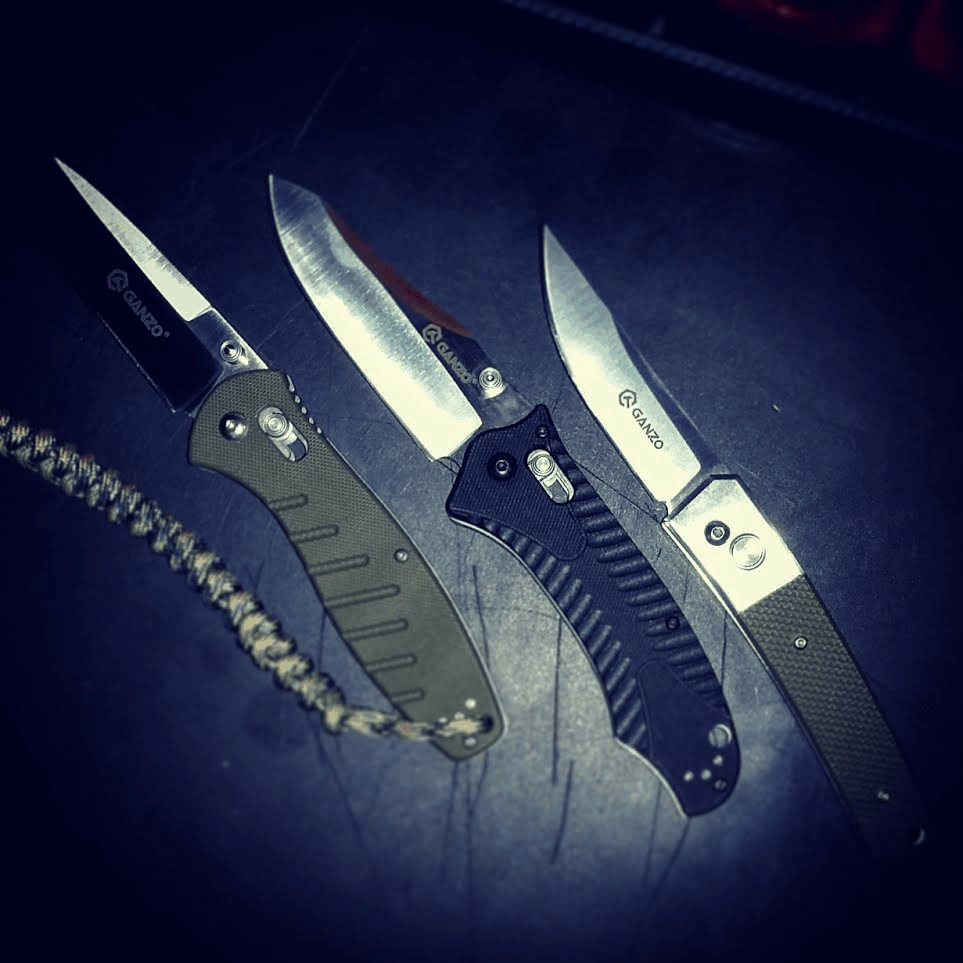
knives-budget-Ganzo

7. Lastly the spine, these blades do not have a 90-degree spine, however, with a hand file you can quickly put one on and even the stainless model with throw sparks from a Ferro rod!
Ganzo Folding Knives – A Chinese manufacturer of folding knives that has grown in popularity and is very well made using solid steel and well fit parts for a low price.

1.  Again there are several models; they have automatic folders, flippers, frame locks and the much talked about the Chinese version of Benchmade’s famous Axis Lock. For the purists, I have several Benchmade knives and love them all.

The axis lock that is being used on the Ganzo is nothing like the lock Benchmade originated. The design is similar, however, it is not as smooth or easy to use.

2. The blade material is 440C stainless steel, with the plethora of modern super steels and machinist designed blades in existence this steel has lost ground. However, for those of us who understand the purpose of a folding knife and tend to use it for that, buying one or more of these for $13-$31 apiece versus a Spyderco, Benchmade or high-end Kershaw at $100-$1200 apiece is the intelligent approach.

3. I tested several models including one auto version, my favorites are the G738 and G724 and lastly the G7212 (auto) model. They come quite sharp, hold an edge as well as most of the other high-end comparable size, styles available and easily take an edge or retouching if needed.

4. I have destruction tested these as well, nearly cutting my thumb off with one test (it was the Spyderco that failed) where I was testing lock strength. I carry one of the above three as my daily user in my left pocket; my right pocket has a defensive styled folder (Fox Karambit, Benchmade Emerson CQC7, Spyderco Paramilitary) and carry this way every day.

5. They are worth the money and easily among my favorite carry knives these days.
Lastly the large bush crafting blade – my first choice (non-khukri style or blade) is Ontario Knives of the USA. You can get a well-made machete, large butcher knife or the Ka-Bar made by Ontario and all of the above will fit well in the large blade category.

1. I highly recommend any of their machete styles though I am personally a fan of the Parang style for its cutting ability.

2.  The butcher knife is a 7” blade length, inexpensive handle, and no sheath though the ka-bar styled sheath will fit it easily and can be found for under $10 on Amazon. The knife itself runs $10-$12 on Amazon and is worth every penny. You can chop with it and do all sorts of things with it, it is inexpensive enough that even if it breaks (the handle is not attached well) you lose nothing and can try your skills at re-handling.

3.  The Ka-Bar well, it has proven itself as a fighter and for many, myself included as a large bush crafting blade as well.

4.  The steel most commonly used by Ontario Knives is 1095 high carbon which is treated properly, takes and holds an edge well, though I do have my blades chip regularly. (Easily fixed, but still something to consider)

So there is three of my favorite low budget bush crafting knives for your consumption. What say you? Which do you like and why? And remember, this is low budget, not bad knives simply under $100 bucks for the three types of knives every bush crafter should have (to begin with).

Filed Under: Knives and Blades

How to Pack a Bug Out Bag

June 16, 2019 M.D. Creekmore

packing a bug out bag

by Everyday Prepper

Bug Out Bags (BOBs) have been hotly debated on the internet for some time and while I don’t expect my post on how to pack a bug out bag to put an end to the discussion I thought I would throw in my two cents for those readers out there that are just getting started.

Why do we need a BOB?

Let me start of by saying that if you’re searching for information on survivalist or preppers then chances are you already realize the need to get ready for situations that may be out of your control.  These situations can include anything from a problem with your house to a world crisis.

As preppers, we generally say you need to get ready for what you consider to be the most devastating realistic event you can think of.  If you honestly believe that the worst thing that can happen is a tornado touches down and blows away your house then you should start preparing for that.

When you prepare for the worst you can think of you generally cover a whole broad spectrum of smaller things that you can’t think about or don’t want to think about.

When prepping for any event whether great or small one thing that is most likely needed across all situations is a way to leave wherever you are quickly and without too much thought about what you will need.  This is where the BOB comes in handy.

If prepared before an emergency then when an emergency comes you don’t have to think about what to grab.   Now you may ask “What about the situations where I don’t need to leave and I need to stay instead?”

Well, you see, having the BOB didn’t hurt you and the supplies in the BOB can still be put to use where you’re at and you don’t have to scrounge around to find them.  Having one just makes sense and by creating one early in your prepping adventure you will find this to be one baby step toward your ultimate goal.

The .gov folks have stated that in any national emergency you should be prepared to get by for at least 72 hours by yourself without any assistance.  For a horribly real example of this look at what happened after hurricane Katrina.

As far as I can tell the .gov had been telling people about the 72 hour waiting period for some time and still, people didn’t believe or they chose not to listen.  We can look back and see what crazy things happen in the aftermath of the storm and while not every location lost control (although the media didn’t talk about the calm and reasonable people) some did.  I went to Mississippi shortly after Katrina to help in the relief effort on the coast and got to see what shelter life was like.

I can promise you that you don’t want to be in that situation, especially with a family.  Where we were staying was a campground about 30 minutes outside of the national guard lines that blocked the coast and there were tarp houses set up in the “primitive living” campsites.

We didn’t understand what that was about when we were there but looking back after visiting the shelters and hearing stories about what was going on at some of the shelters I can see how sleeping in a tarp house would be better than sleeping in a shelter.

I say all of this to make you understand that if you buy gear now for a BOB and prepare for a 72 hour period extending that period becomes an easier and easier job.  You simply get more gear and also (more importantly) you get more knowledge about what it will take to survive an emergency.  The more prepared you are the less freaked out or panicky you will be in the time of emergency.

Who needs a BOB?

In my opinion, every member of your family should have a BOB just for them.  Yes, there will be duplicate supplies but as the saying goes “two is better than one” or as the survivalist saying goes “two is one and one is none”.  Having a BOB for each member of your family will ensure that you have the supplies you need to make it through a short-term emergency.

Where do we get a BOB?

There are several prebuilt solutions available but in general, I would stay away from them.  I personally believe your BOB should be tailored to you or your family members and the generic solutions just can’t promise that.  Also with a generic version you are paying for someone to assemble a group of cheap supplies.

You can build a good BOB suited for you with good gear for around the same price or less most of the time.  Not only will you possibly save money but you will know the gear that is in your BOB instead of just reading about it in the printed 8.5×11 piece of paper that comes with your prebuilt BOB.

When to use your BOB?

One of the most difficult questions to answer is “When do I use my BOB”.  There are many theories and many arguments but it really all comes down to what you and your family plan to do during the emergency at hand.  With many emergencies staying at home and sheltering in place might be a necessity.

With other situations, you may be forced to leave your home.  Having plans for what you will do beforehand makes the decision of when to use your BOB much easier because all the information doesn’t need to be weighed while you are stressed and going through the situation.

If you already know that in the event of a blizzard you will stay home, ride it out and contact some out of state relatives to let them know what you are doing then the decision to not use the BOB has already been made for you.

The same is true for the situation where you know you will use your BOB if someone knocks on your door at 3 am and tells you that you must be ready to leave your house in 5 minutes because you are being evacuated to a “safe” location because a wildfire threatens your house.

Planning is what will help you determine when to use your BOB.  Planning for every possible event that might happen is very important and can make your life much easier and a little less stressful during very stressful circumstances.

With that said however you can’t plan for all situations so you need to be ready to make a split second decision under stress at any given moment.

 Here are some things you may want to consider when deciding to use your BOB.  (These are in no particular order)

  1. Is your family safer at home or elsewhere
  2. Are you worried this event could lead to lawlessness or vandalism
  3. Is this a personal, community, state, national or world level crisis
  4. How long will this emergency last
  5. Is your family healthy enough to travel or be moved currently
  6. Is the weather good enough to change locations
  7. When you get to the other location will you be able to survive with only what you are bringing
  8. Is there a way to not only survive but to thrive and prosper when you get to site b (not meaning get rich but meaning live and continue living once your BOB supplies run out)

Packing a bug out bag:

There are a lot of list on the internet about what items you should pack in your BOB.  I don’t offer any individual items most of the time because it really all depends on your comfort level with the locations you will be bugging out to and through.

For instance, if you are a seasoned backpacker and your plan is to escape 60 miles through the woods to a cabin that you own then your supply list may be very small.  The more you know the less you have to carry on your back.  This is especially true with bushcraft related skills but also applies to urban environments.

Here is a basic overview of what type of items you should have for most scenarios.

  • Shelter
  • Clothes
  • Water
  • Fire
  • Food
  • Hygiene

Conclusion:

While you may be feeling overwhelmed or intimidated by building your first BOB it’s really not as bad as you think.  Going to the library to find books on backpacking or even going to a store and talking to the “experts” there will help you quite a bit.  Just remember the people at stores are there to sell you lots of stuff.  Most of it you won’t need and much of it will just be dead weight that you have to carry on your back.

Overall you should really be looking to carry only about 25%-30% of your total body weight.  At first, you will probably buy cheaper heavier equipment and that OK.  Don’t put off building a BOB just because you’re on a budget.

My first BOB weight almost 50% my total body weight and nearly killed me my first 10-mile hike.  Slowly but surely you’ll find lighter gear and you’ll learn what you don’t really need to carry.  All this will add up to a lighter and better BOB.

Get started today and you’ll be hooked, just don’t forget to actually practice some hiking and overnight stays with your BOB every once and awhile.

Filed Under: Bugging Out

10 Tips to Secure Your Apartment for Under $30

June 16, 2019 M.D. Creekmore

Tips to Secure Your Apartment

by Charlie

If you’re looking for simple and effective tips to secure your apartment without breaking your bank account then you’ve come to the right place……

Buying a ready-to-occupy or customized apartment is just one part of the story. There also is the need to ensure that the apartment remains in the best of the condition and also is safe and secure. It is common for most homeowners and tenants to hire professionals to take care of apartment security.

While there is no doubt that this could be a good decision, there are also many other options that could help you to secure your apartment without having to burn a big hole in the pocket.

How Do The Minds Of Burglars Work? ?

No burglar would like to get noticed as he or she attempts to rob or burgle a home. Hence, if they find that the home has surveillance cameras and other such monitoring systems, they would like to stay away from such homes.

Contrary to opinions and beliefs, robbers find day-time the most appropriate for burgling. This is because in most cases, the apartments and homes remain unoccupied and totally empty of human beings because of obvious reasons.

Robbers are intelligent in guessing whether an apartment is occupied or not. They look garbage bins, recycling containers and trashcans. A lawn that is unkempt and overgrown is a definite sign that the apartment in question could be unoccupied at a particular point in time.

Burglars always love to enter into a home without forced breakages as much as possible. They prefer improperly sealed or closed windows and doors as the easiest and safest means to break into a house and rob it.

Checking and testing the waters is a tactic that is often used by robbers and burglars. They knock at the front door or ring the bell and if there is a response from within, they come out with some vague and false stories. Professional robbers and burglars will not just break into the homes suddenly.

They certainly try and understand the overall plan of the home. They would rather break into the master bedroom instead of the kids’ bedroom. This is because they know for sure that some of the most valuable household belongings could be kept in the master bedrooms.

When we talk about intelligent security tips, we should bear in mind that robbers would not like to risk entering homes where there is the sound of a television or sound system running.

Now that we have some idea as to how the minds of the robbers work, we are happy to share some useful and pertinent information that could be quite efficient and useful. These ideas and tips will not cost a fortune and it could be completed just under $30. We firmly believe that they will be useful for all those apartment owners, who are running on a tight budget.

Further, it could be useful for those who are moving into an apartment on rent as a new entrant. Once a person decides to buy an apartment, in almost nine out of ten cases, he or she would have spent almost their entire savings and would also be in a big debt because of mortgage loans.

In such situations, spending a few thousand dollars more on answering for the question of how to secure an apartment could certainly be a tough ask.

They certainly would be on the lookout for cost-effective tips. We are sure that the following tips could be useful in more ways than one. They are all affordable but at the same time, we also believe that they are also efficient and perhaps even foolproof.

Get Inputs From The Local Police Station ?

Expenditure: Free – No Cost

There is no doubt that each and every neighborhood has a police station. It contains complete information about the law and order situation, in general, It has full details regarding the number of successful and attempted break-ins robberies and other such criminal activities.

They also will be able to give specific details about the specific localities that are at higher risk for such break-ins and robberies. This will help you to plan your apartment security accordingly and incorporate special features in areas that are more at risk.

Quality Window Locks

Expenditure: Under $10

According to cops and also experts who research burglaries and robberies, windows are considered to be the most vulnerable when it comes to home security. The job for robbers becomes easier if your window is located near a fire escape ladder.

Hence, you must try and find out ways and means by which it is possible to strengthen your windows. Simple and low-cost window locks can do the job adequately well. You have many options to choose from, including window wedge, sliding window locks and burgle bars.

You must do your research and then choose the right taking into account the exact needs and requirements depending on the type of windows that you have in your apartments. They are easy to install and by following simple DIY tips, anyone should be able to install the same.

Window And Door Alarms

Expenditure: A Pack Of 4 would cost around $20

This is another extremely cost-effective way of protecting your apartments from burglaries. It takes just five minutes to install these alarm systems. They work the same way as window and door alarms that are installed by security companies.

You don’t have to pay anything extra for monitoring the same. The siren or alarm is built right into the sensor. The sensors also have keypads. These keypads help in arming and disarming the system.

When you are home, you could disarm the system and open the windows and doors and enjoy some fresh air, especially during summer. They are extremely useful and robbers are paranoid about touching homes that have door alarms and windows.

Glass Break Alarms

Expenditure: around $12 or $25 for four.

Glass break alarms are considered extremely useful and effective in preventing robberies and burglaries. You could go in for window bars, or even choose a shatterproof film. These make it extremely hard for robbers to break the glass of your windows.

There are also vibration alarm systems that can be placed right to your glass window and is capable of detecting vibrations. If there is an attempt to break the window or open the window when the alarm is set, it will send a warning signal.

This will alert your neighbors and will also deter to robber to carry on further with the robberies. I like these ones that you can get at Amazon.com.

Door Barricades

Expenditure: Below $30

It takes just around a minute to install door barricades. The door is the most common place where intruders try their luck out. Just locking the doorknob may not be enough to completely secure your home.

Unless you have a deadbolt lock, it is quite easy for robbers to break through your door. These days even deadbolt locks can be easily broken open using sophisticated bump keys. This is where door barricades could come in handy. Check out current pricing here.

This is a device that helps to physically keep the door closed. They are much more effective than deadbolt locks. They could be perfectly suitable for rented apartments where the owners do not permit drilling holes in the floor.

Door Stop Alarms

Expenditure: About $7

If you are not keen on choosing the barricade route and are looking at some other efficient security tips then going in for door stop alarms could be the right choice. There are many apartment inhabitants who do not like to use the barricades even during the day.

This has a simple technology and it does work quite effectively and efficiently as far as securing your home is concerned. The alarm sits on the floor and a lever is pushed down when somebody tries to open the door.

Once the lever is pushed down, it sets off an alarm and sends an alert that somebody might have entered through your door. You can check out the ones that I use at Amazon.com.

Dummy Security Cameras ?

Expenditure: Under $8

If you cannot spend big money on real security or surveillance cameras, it would be always better to look for something that is less expensive but also effective at the same time. You could install something that is not real but looks almost real.

This will make the intruders believe that they are entering a high-risk area. In nine out of ten cases, it has been found that intruders would prefer keeping away from homes. At the end of the day, burglars know that there is no point in robbing or burgling if the chances of getting caught are extremely high.

Just the thought that the home is a high-risk target is enough to keep the intruders away. We are talking about a dummy camera. They are low-cost but they look almost like real. In fact, at times even experts find it difficult to differentiate the dummy cameras from the real ones.

It comes with a blinking camera and it blinks, thereby giving it a near-natural look. The battery that powers the LED blinking lights lasts for many months. Yes, it is a fact that dummy cameras are not like real ones in terms of functionalities and features. It can have the desired impact on the intruders and robbers and act as a powerful deterrent.

You can, later, if you wish to go in for a real camera so that the real needs and requirements are taken care of. There are different models and makes of dummy cameras and if you do your research, you will be able to come across some of the best ones.

As mentioned above, they look as good as real cameras and it takes quite a bit of time and effort to make out that they are dummy ones. Robbers work under a lot of stress and time is against them always. Hence, it is almost impossible. These ones at Amazon are low-cost for a set of four.

Home Security Stickers

Expenditure: Just $8 for a whole pack.

Home security stickers, work almost like dummy security cameras. You can place stickers that talk about security systems on your doors and windows. In most cases, it will act as a deterrent and will shoo away possible intruders.

This is because they will be convinced the particular apartment may not be the right one to break into. You could install the security camera up there and back it up with a warning sticker stating that “the home is under camera surveillance”.Robbers will for sure be terrified and would rather try their luck elsewhere.

Hence, by spending a small amount, you could keep your home safe and in good condition. It would be better to buy these stickers along with a dummy camera. These are generally sold as a bundle along with dummy cameras.

Even if the intruders miss out on the cameras will most certainly not miss the colorful and eye-catchy stickers that have big words stating the fact that the home is under surveillance. You could also do away with the dummy cameras and instead go in for stickers making bold and fearful announcements.

You could use stickers that talk about the cameras and monitoring devices being placed out of sight and in indiscreet places

Solar Spotlights

Expenditure: $26

These are easy to install and cost-effective ways to protect your apartment from unwanted intruders and robbers. They offer around 45 feet of illumination range. They come in weatherproof casings. They certainly can work on the psyche of robbers and intruders.

This is because they would always like to carry on their work without being seen. These outdoor solar spotlights could give everything away as far as the robbers are concerned. However, it may not work on cloudy days and dark winter months because of the lack of sunlight that is needed to power the solar spotlights.

Also installing these could be against the rules at some apartment complexes. 

Etched Glass Window Film

Expenditure: Under $15

This could be helpful for keeping prying eyes away from the insides of the apartment. It could keep valuables like jewelry, clothing, electronics, and furniture out of view. It will reduce the temptation psyche of the robbers.

It is user-friendly and can be installed using simple DIY steps. These window films while ensuring privacy do not hinder the flow of light inside the rooms. They are available both in readymade sizes and also customized sizes.

They do not have a sticky adhesive that could damage the window glasses. You must research and buy only fully opaque ones failing which may not serve the purpose.

Conclusion

The above are some simple hacks and tips to secure your apartment that will go a long way in enhancing overall apartment security. The inhabitants of the apartments or the apartment owners can do it on their own without the need for professional help (and the cost).

Finally, these tips are extremely cost-effective and could prevent big and gaping holes in your pocket in the name of professionally thought out and implemented apartment security tips and solutions.

Filed Under: Security

The First 23 Things I Put In My Survival “Go Bag”

June 16, 2019 M.D. Creekmore

Some people might consider a bug-out bag and a 72-hour kit as essentially the same thing. For the purposes of this article, we will consider them as two separate kits. The 72-hour kit is more of a “stay at home and ride out the short-term disaster” kit, while the bug-out bag described below is more of a “grab and go” kit.

The very idea of leaving the security of your home to “bug out” to the woods has never set well with me.

In nearly every instance, it is better to hunker down or “bug in” than to bug out. Why leave the safety and familiar surroundings of your home for the open and unforgiving wilderness? For many people, fleeing is their first line of preparation against disaster.

Unfortunately, most will end up joining the multitude of other refugees freezing in a cave; dying from exposure, starvation, or violence at the hands of the mob; or becoming wards of whatever government entity is still functioning.

I live in a fairly safe area and have prepared to survive at home. I can conceive of only a few scenarios that would force me to leave. Even then, I would go to the house of an out-of-state relative with whom I have an agreement: if need be, he can come to my place or I can go to his after a disaster.

I know what you’re thinking: what about an “end of the world as we know it” type of event? Well, if such an event does take place, there will be no 100 percent safe place for most of us anyway, and do you really think you would be better off trying to hide in the open wilderness than hunkering down at home?

Don’t get me wrong—I’m not saying you should never bug out; you should keep all options open because you never know what you’re going to have to do to survive until the time comes to make that decision.

What I am saying is that there are better ways to survive most disasters than heading into the bush. You need to weigh the risks of bugging out vs. hunkering down and make your final decision based on logic and type of threat.

That’s the way decisions should be made. Unfortunately, when making survival decisions, many people rely on emotion (to run and hide) rather than more tried-and-true logic. Relying on emotion instead of logic can make for some interesting adventures.

However, without sound planning, those adventures are likely to be short-lived. For example, I recently asked a fellow in his late 30s what he would do if disaster struck his area. He thought for a moment and said he would gather his family and all the food, guns, and ammunition he could find and head for the mountains that lie some 75 miles north of his home.

Depending on the type of disaster, his “plan” might work short-term for a lone survivor or a small group of individuals in good physical condition and equipped with proper gear and mindset. But he is the father of a newborn, and his wife thinks missing an appointment at the nail salon is the end of the world as she knows it.


Making matters worse, the young father has no outdoor survival training or skills other than watching reruns of Les Stroud’s Survivorman television show and camping at a national park campground with all the utilities and hookups provided.

Why he thinks he can survive in the wilderness while dragging his young family along, I don’t know. He isn’t thinking logically, and if he ever has to put his plan to the test during a real emergency, his family will likely suffer or possibly even die.

Unfortunately, this “Batman in the boondocks” mentality will continue to be the chosen survival plan for many who haven’t thought survival through logically and come up with a realistic plan.

When making survival plans for your family, you have to honestly weigh the risks of your decision based on logic. In almost every disaster scenario, it is better to stay put (bugging in) or head to a prearranged safe place at an out-of-town relative’s or friend’s house than it is to head to the woods to eat twigs and pine bark.

Therefore, for most people, an evacuation bag is a better choice than a bug-out bag. An evacuation bag should contain the gear necessary to get you from point A to point B, whereas a bug-out bag (in most cases) is geared more toward wilderness survival. I have both, but admittedly my bug-out bag is an option of last resort. Knowing when to go is much more important than the contents of your survival pack or even where you will go.

You don’t want to jump and run before you need to, but if you wait too long you may never reach your destination. If you wait for the authorities to give the order to evacuate, it may already be too late.

The roads leading to safety could be blocked or impassable by motor vehicle, and walking to your destination may be impossible or too dangerous to attempt. On the other hand, if you jump and run in response to every potential disaster, you’ll soon deplete your resources and the patience of your family, school, and employers.

For example, say you live in an area prone to tornadoes, like Texas, and you evacuate to Arkansas (which has also suffered its share of killer tornados over the years) every time the clouds turn dark or the wind shakes the leaves.

You would be on the road nonstop during tornado season—which seems to be most of the time in Texas. But waiting until the twister is at your door will also put you at unnecessary risk. There are no easy answers.

All you can do is weigh the dangers of bugging out vs. hunkering down logically based on the situation at hand. You have to consider the nature of the threat and ask yourself which option gives you the better chance of surviving the type of disaster you are facing.

Of course, there are times when evacuation is a no-brainer. Say, for example, you live on the Florida coast and a category 5 hurricane has been predicted to hit your area within 72 hours.

In that case, you would be foolish not to go as soon as possible, even if you have no prearranged bug-out location. On the other hand, let’s say there is a snowstorm heading your way and you have food, water, heat, and a way to cook even if the power goes out for an extended time.

Then you are probably better off to hunker down where you are. In my opinion, the bugging out vs. hunkering down debate is moot because it all comes down to the type of threat you face, your personal situation, and your preparedness level. In the end, you’ll have to decide what to do on a case-by-case basis.

Survival Go Bag Checklist

Please note that the following list is intended only as a suggestion. Your bug-out bag should be customized to suit your
individual needs, plans, and location.

  • ❏ Antibacterial hand wipes
  • ❏ Cash—$100 in ones, fives, and tens
  • ❏ Cell phone and charger
  • ❏ Change of clothes
  • ❏ First aid tactical trauma kit
  • ❏ Fishing kit
  • ❏ Fixed-blade knife (the linked to knife is the best survival knife available in my opinion)
  • ❏ GPS navigator (handheld)
  • ❏ Handgun and 200+ rounds of ammunition
  • ❏ LED flashlight (small) with extra batteries, as well as a crank-type flashlight that doesn’t require batteries
  • ❏ Lighters – two
  • ❏ Map of area and compass
  • ❏ Multitool (the one linked to is the best multi-tool available in my opinion)
  • ❏ OC spray
  • ❏ Paracord, 25 feet
  • ❏ Prepaid calling card
  • ❏ Prescription medications, as needed
  • ❏ Sewing kit (small)
  • ❏ Space blanket
    ❏ Sterno folding stove (less than $15 on Amazon)
  • ❏ Trail mix, a box of energy bars (15), and electrolyte packets
  • ❏ Wooden matches in a waterproof container
  • ❏ Water filter or bottle

Note: If forced to bug out by car, load both your 72-hour kit and bug-out bags…

Special Considerations For Children

In stressful situations, it is important for you to appear relaxed, confident, and in control—even if you are a trembling bag of nerves on the inside. The last thing children need is extra stress brought on by a panicked parent. Another consideration concerning children is familiarity.

During a bug-out situation, you will be away from home, and this can be extremely stressful for children. It is important to eliminate as much of the stress as possible. One way to do this is by bringing along items that are familiar to them. If they have a favorite blanket, pillow, stuffed toy, or other objects that comfort them, be sure to pack it before heading out the door.

This is very important. Children tend to bore easily, so adding items to forestall or extinguish their boredom will make the time away from home much easier for all of you. You may want to put together a bug out pack just for them consisting of toys, books, cards, writing/drawing materials, and games.

Don’t forget extra batteries for those games and toys that need them. Of course, children aren’t the only ones who get bored; include things that will keep your boredom in check as well.

Filed Under: Bugging Out

Bug-Out Bag Guide and Checklist

June 16, 2019 M.D. Creekmore

bug out bag checklist
The Ultimate DIY Bug-Out Bag Kit and Checklist

by Mike

If you are like me, you may find prepping for everything to be a little overwhelming. It can seem that no matter how much you have, there just is never enough. I have read hundreds of articles and watched endless videos on what to carry for EDC and how to make a BOB/INCH bag.

I also seemed to focus on one aspect at a time and way overdo it while letting the rest slip by. So to keep me from having the most awesome arsenal in town and dying of thirst, or keeping me from caring an 80 lb. backpack everywhere I made a graph of what I might need in a survival situation vs. how long I need to survive.

My first concern in any emergency is can I breathe, see, or am I bleeding? Next question is am I in immediate danger and what can I do to remove the threat?

After that, I need to ascertain what threats are likely to come from this situation and prepare my surroundings to deal with them. Once the threat is no longer my focus, it should turn to how can I sustain myself in this situation?

Now many of the answers may change depending on what type of emergency you are facing. I am bleeding but an EMT is currently coming through my door would be handled a lot different than I am bleeding and marauders are currently coming through my door.

The two situations require both different responses from me as well as needing different gear.

To know what I need, I need to know how long the emergency will last. Here is where the problem comes in, I don’t know when what, or how long. Many Preppers feel the best way to combat this is to always be prepared for everything, and that is where the sense of overwhelming comes from. It’s almost impossible to be prepared for everything all the time.

So here is the solution I find works best for me.

I broke it down into 10 categories.

  1. How to transport my kit (Carry).
  2. How to deal with injury (Care).
  3. How to stay warm and dry (Cover).
  4. How to make what I need (Cutting).
  5. How to make light and fire (Combustion)
  6. How to transport/prepare food and water (Container).
  7. How to secure and repair (Cordage).
  8. How to replenish/get food (Collecting)
  9. How to stay in touch (Communications)
  10. How to obtain/replace gear (Currency)

I borrowed heavily from Dave Canterbury’s 5 C’s on this.

First I listed what I need to survive, then based on how long it might take I made my different kits. If the situation is over in an hour or so I should have everything I need in my pockets to survive. If it were to take the rest of the day then I would need my sling pack/handbag.

Overnight to a week then I would need my large pack. A week to a month I would need a cache, and a month to a year I would need to make it to my retreat. There will be some redundancy but the five should build on each other.

I am going to use level one through five for my emergencies. This is in no way an official scale, just me sorting what I might go through. Level one examples could be a power line down, flat tire, a fire, first date, minor accident, a confrontation, etc.

Can I breathe, am I bleeding?

For both of these, a couple handkerchiefs can help. To both cover the face to keep smoke, dust, and other stuff from being drawn into your lungs and as a makeshift bandage.

These are temporary measures until you can make it to help or help can find you. (Note, if you can’t breathe because of a windpipe, lung, or chemical issue that is not a level one emergency.) I also keep some gauze, alcohol wipes, anti-bacterial cream, and a few band-aids wrapped up in the handkerchiefs. For seeing I keep a small single battery flashlight.

Am I in immediate danger and what can I do to remove the threat? Here you have to make a decision, get out or stay. In level one cases removing yourself from the situation is usually the preferred method. If you don’t then you will focus on the threat.

For cold/rain I keep a paracord bracelet, space blanket, lighter, and a pocketknife. Seasonal, sturdy clothing and dressing in layers is a huge help in this. For danger from physical attack (dog, snake, biker, ex-wife) I have my knife and my CCW pistol, but in a level, one escape is still the best option if available to you.

Preparing your surroundings to deal with threats and sustaining yourself usually are not a worry as the emergency will have passed before you need either of those in a level one.

However, if I were to need to collect water or food I have my pistol and I keep the handkerchiefs in a ziplock baggie with a water filtering straw.

I can use the baggie to collect the water and drink through the straw. Communication during a level one can usually be accomplished with a cell phone, but I carry a sharpie as well just in case. For levels 1-3 Currency I carry cash.

Level two emergencies are ones that last several hours to all day. They might include breaking down, getting lost, flooded streets, bad break up, freezing rains, terror attack, second dates, all day power outage, riots, etc.

For this, I carry my kit in a sling pack or messengers bag, whichever looks less conspicuous. I have a small first aid kit, with tape, gauze, painkillers, antihistamines, anti-diuretic, and more options in band-aids and would cleaners.

For cover, I have a self-folding Rain Jacket/Wind Breaker, gloves, and watch cap, if you are already dressed appropriately these will make a great difference.

My cutting tool is a strong belt knife. I highly recommend you get a full tang, high-quality one as this knife seems to take the most abuse. I also carry a multi-tool, small pry bar, and lockpicks.

For combustion, I have another lighter and a 2 cell flashlight as well as spare batteries and a magnesium fire starter.

My container is a metal water bottle already full. For cordage, I have 50’ of paracord and zip ties. For collecting, I have my full sized pistol as well as extra ammo.

At this point, a few Cliff bars are going to get you a lot further then trying to set snares, fish, or hunt, and the pistol is more for protection but can still be used to collect game if needed.

Finally, in communication, I have my iPad mini, a notebook, and pens.

While in the first two levels of threat it is possible and even likely you would live through without preparations, a level three there can be a considerable danger.

A Three can be a tornado, hurricane, blizzard, coordinated act of terror, nuclear meltdown, helplessly lost, mother-in-law visit, martial law, etc.

In a level three, you are likely going to be spending several days away from your normal comforts and routine. In a situation like this staying put is not always a bad idea, and in most cases preferred. If you are home, don’t head for the hills.

If you are somewhere safe, going home could be more risky then staying put. If you are not safe, this pack should help you get to a place that is.

For carry, I use a full sized backpack. A good sized duffle or gym bag could also be used, but I find them to be less comfortable if you do end up heading out.

For care, I have a full first aid kit, including quick clot, bandages, scissors, irrigation syringes, Epi-pens, wound closers, etc.

Cover can change a lot depending on the time of year, but I like to always have at least a bivy roll (t-shirt, underwear, and socks), Sweat shirt, long underwear/base layer, extra socks, hammock, tarp, ground cloth, and blanket/sleeping bag.

Tent and change of clothes are nice if you have the room or don’t have to pack them far. For my cutting tools, I carry an entry tool, a tomahawk, and a large knife.

Combustion at this point can be one of the things that can make or break you. You will need it to cook food, make water safe, warm you up, and see at night. There is also a great psychological aspect to having a fire that can bring up your spirits.

For this, I have a wood burning camping stove that also accepts an alcohol burner for fast fires and to cook without smoke. I carry several fire starters for wet conditions, a head lamp to keep my hands free, flares for signaling and really wet conditions and rechargeable batteries for my lights.

For containers, I carry a water bag that can be used as a hydration pouch, metal cup, and hiking water filter. I also add light wire and tape to more paracord and zip ties for my cordage. For collecting, I now have snares, fishing gear, and a carbine as well as more ammo.

Finally, for communications, I have a solar panel that can charge the iPad, cell phone, or batteries for lights, and walkie-talkies.

While Level 3 are possible to die in, Level 4 emergencies are those you are likely to die in without proper gear/experience/help. They can last up to a month long and could include things like Katrina/Sandy, Nuclear accidents, large scale Terror Attacks, ending/becoming Engaged, run on the banks, or as in the only Level 4 I have ever been, a blizzard that lasted a month.

The first night power went out and we were stuck for weeks until the National Guard arrived.

A level four Carry for me is a stash. Now I know most people think of stash as something buried in a hole in the woods, and while it can be that, a Stash can be many other things as well. Supplies left in the attic, basement, closet, or spare room can be your stash.

Things you leave at a friend’s place, storage center, locker, hunting blind, or favorite campsite. Stashes are only limited by your imagination and can very well mean the difference between like and death.

For care, I recommend a full EMT kit. You can find them on Amazon pre-built, or buy a good bag and make your own. If you are on prescriptions meds it is a very good idea to have a supply of them in your bag, but remember they do expire so have a plan to rotate them. Cover should be something you can live in for some time.

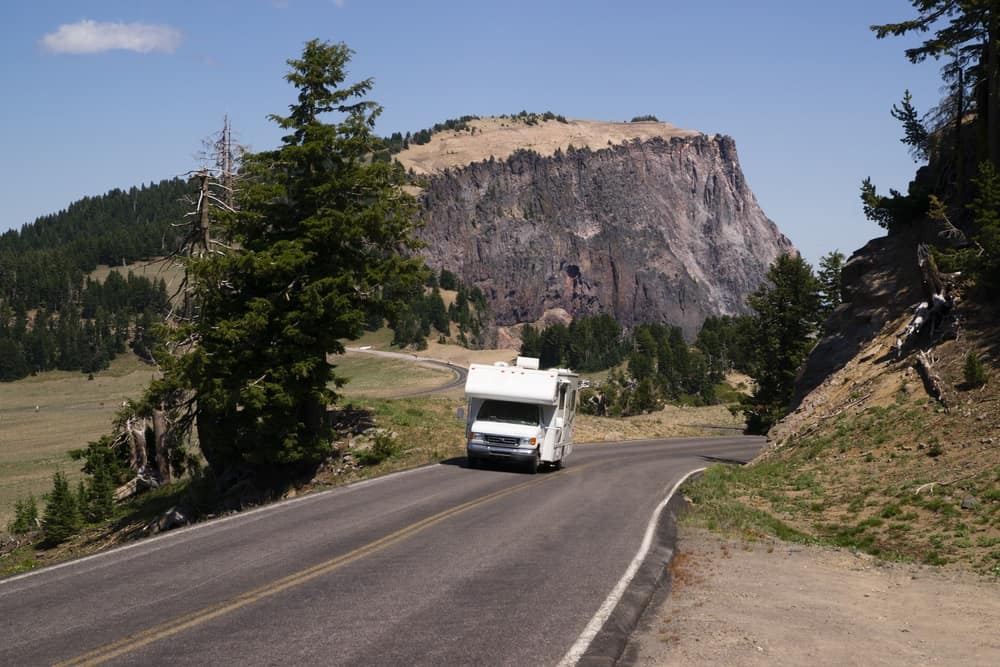
One of my stashes is the RV I lived in while attending college, another is a shipping container several of us use.

RV for bugging out

Our stuff is already there along with the tools to make it a livable structure with minimal work, and still, another just has a tent buried along with the gear, and not to be discounted the homes of everyone in our group.

I also recommend at lease complete changes of clothes and 3-4 extra changes of undergarments never hurts to have. Whatever you choose just make sure you can live in it for 7-30 days. The last place you want to be is the superdome with everyone else.

Cutting at level 4 includes things like Axes, Bow saws, hammers, nails, shovels, etc. I have several places where we stashed enough tools to build a dugout cabin if necessary. Combustion includes things like a rocket stove, the Solo Stove Campfire, and whatever you start a fire with while camping.

I also like to keep a decent number of tinder/fire starters, you never know when you will get there and getting a fire going quickly could be vital. As for Containers, all the camping pots, plates, kettles, water bags, collapsible buckets, regular buckets, and bottles that were too heavy or just didn’t make it for the BOB’s can be used.

As for cordage you really want rope, straps, and even nails or screws to help make a secure and comfortable shelter. For collecting, I feel shotguns and high powered rifles work well here. Also steel traps, nets, and even cage traps.

For Communication, I like to have a wind up/solar radio and several drop points that are known to me and the rest of the group. For Currency, I like extra food, alcohol, batteries, candles, blankets, or pretty much anything that you would want to stay comfortable on the run.

When it comes to Level 5 I am really talking about something I know nothing about. These could include an invading army on our soil, nationwide EMP, stock market/total economic collapse, a divorce, Zombie Apocalypse, or cutting off welfare and food stamps.

Since nothing like that has happened in my life time I can only speak third hand what I have heard from those who have gone through it. The one thing I gather from those who have gone through it is decide ahead of time what you will and won’t do. I will leave that up to you to decide what that means to you.

For carry, I recommend it already be at your retreat, if it’s not, then plan on only bringing what you have in a level 3. For Care, I recommend learning as much as you can about alternative treatments and care.

We are lucky to have a Surgeon, a trauma nurse, and an EMT in our group and most of the care items has been left up to them.

If you do not have these you will have to decide how far you are willing to go and stock accordingly. Cover is the house at our retreat. It has wood stoves, beds, blankets, and most of the clothes that we no longer wear but still fit.

For cutting we have all the implements you would find on a farm, since it is on a small scale being used as such, we just have extra of everything we use (while we do have gas powered equipment, we have a section that is only farmed with hand tools to keep our skills and knowledge of needs up to date).

Combustion is the wood stoves, rocket stoves, wood grills, solar stoves, wood smokers and a fire pit, as well as lanterns, candles, candle making equipment, solar panels, rechargeable batteries, and spare part for all of the above.

For containers, we have pretty much what you will find in our homes, as well as larger ones to accommodate larger groups, canners, jars, lids, and bins in the cellar. Cordage goes from fishing line to logging ropes. Collecting we have raised beds, an orchard, a pond, two creeks, barns, pens, fenced fields, and the land we can and do hunt.

For communication, we have a Ham radio both at the farm and at our homes as well as the smaller hand held units. Currency is pretty much anything we have extra, as well as tools that can make both replacement and barter gear.

I could go on forever about the retreat and what we have done, but the truth is, if you aren’t living on one now (at least part-time), a lot of it will just be a waste. For the long term, it is my opinion that skills are what will bring you through and while I could tell you the best thing for me, it may not be the best thing for you.

A lot of full time farmers argue forever about how things should be done, and for you to know what works for you, you really need to be doing it. But then again I am only guessing, I have never been through a Level 5, and if you haven’t prepared for the lower level ones, maybe that’s where you should start. Anyways hope this helps.

Some thoughts on bug out bag firearms selection…

bug-out-bag-gunAdded by M.D. Creekmore

Most people will suggest a .22 caliber rifle, such as the Ruger 10/22 and this is a great choice. A .22 caliber rifle can take small game as well as larger game such as deer with proper shot placement.

Another advantage for having a .22 Long rifle is the relatively low-report especially when using CB caps and the ability to be effectively silenced with a commercial or homemade sound suppressor aka “silencer”.

Just remembered that such a device is illegal without proper government approval and will land you behind bars if you’re caught, and is suggested here for a worst case scenario only or after you have gone through all of the legal hoops.

The downside of the .22 Long rifle round is the limited range, penetration and stopping power all of which limit the rounds effectiveness when used for self-defense.

I suggest a backup handgun chambered for a cartridge suitable for self-defense. I would not go below a 9mm or 38 special and then us good expanding ammo.

Even with a 9mm and 38 special, you should seriously consider using only the +P rounds such as the 115 or 124-grain JHP +P in the 9 mm or 158-grain lead semi-wadcutter hollow point .38 Special +P for defensive purposes.

Your location would also determine weapons choice. For example, those bugging-out in grizzly country should definitely consider something more powerful than the aforementioned 9 mm or 38 special.

My first choice for protection against such large game would be a center-fire rifle chambered for 308 or larger. My second choice would be a magnum revolver with a 5.5″ to 7.5″ barrel chambered for .44 magnum or larger.

It is wise to avoid any armed confrontation if possible. Trust me you are not a coward if you avoid the possibility of being shot or having to shoot someone else. You are not expendable – neither are the lives of your family or those in your bug out group. Those with the macho kill ‘em all attitudes will not last very long after the poop hit’s the fan.

With that being said, a semi-auto military style rifle should be considered especially if you are trying to get from an urban area to the country, where facing organized gangs or other threats attempting to block your exit could be a possibility.

An AR-15 with collapsible buttstock or folding stocked AK-47 (for compactness and concealability) could help get you out of a dangerous situation if you’re forced into one while taking up little space and not adding significant weight to your overall survival gear.

The $10 Fire Kit For Your Bug Out Bag

Added by P. Mueller

FIRE-KIT-for bug out bagIt all began this past winter while watching the national news. Apparently, an older couple decided to try an untested shortcut home from a nearby casino. This shortcut happened to be through a lightly traveled mountain pass. Did I mention there was a blizzard going on at the time?
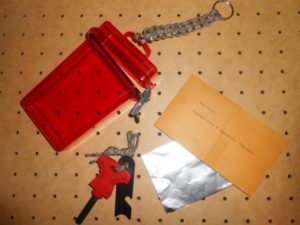
Well, there was. You know what happens next. The folks got lost and their car became stuck in the snow and they weren’t going anywhere. They must not have believed in being prepared for situations like this because they had no useful supplies with them, not even a bit of food, water or matches.

After hearing this story, I decided that I would build an inexpensive fire kit for each of my vehicles, and while at it, another for a prepper friend whose birthday was coming up.

Since there are typically higher priorities for my cash, I thought I’d challenge myself to build a waterproof fire kit for under $10. And the challenge was on.

The first step was to comb the internet websites, blogs and YouTube for ideas. To say there are a lot of great ideas is an understatement by far. There are tons of styles and types of containers alone, from mint tins to plastic zipper bags, along with content suggestions too numerous to name.

As stated earlier, the container had to be waterproof, so mint tins and the like were out. I browsed an online retailer for containers and found dozens, so once I refined the search by cost, I stumbled upon a 14 cm x 10 cm x 4 cm, a waterproof plastic container for $5 with free shipping.

There went half the budget and I hadn’t even started on the contents. But that was okay because I knew that I had many of the contents already in the house. I bet you do as well. This hard plastic container is watertight and closes securely against a rubber gasket with a locking latch; a prolonged submersion test was performed on each to verify that fact.

The completed kits were placed into freezer zip bags as the first line of defense anyway.

Since I was already at the online retail site, I ordered small, but stout, 2” ferrocerium flint rods with red plastic handles and an attached striker. These cost about $3 each and also had free shipping.

While waiting for these items to arrive, I set about pulling together the rest of the contents of the kit. In an empty coffee can, I’d drop items as I found them, not knowing if they would actually be used.

FIRE-KIT for bug out bag containerFinally, the day came when the items were delivered; the assembly process could now begin. The first step was to pull out the 550 paracord that’s kept on hand for miscellaneous tasks and projects. The container had a cheapie cord which definitely needed replacement.
After watching various online videos, I decided on an attractive braid called the Cobra Weave. According to the video, there was approximately one foot of cord for each inch of braid; three feet of cord would be sufficient.

That should also be enough for a bow drill cord if needed. I attached a medium sized split key ring on one end and connected the other end to the box. Now the kit could be hung in a tent, a car or from a go bag,

By this time, the rest of the needed materials had been gathered so it was time to get to work. Below is the kit inventory is broken into three categories: ignition sources, tinder and miscellaneous.

IGNITION SOURCES

Disposable butane lighter – This is your standard, full-sized Bic lighter, not the mini or the cheapie. I guess the mini would work, but in an emergency situation, I would want as much fuel as possible. The lighter does have a leash clip cover with a split key ring to protect against the fuel being inadvertently released. The leash clip and lighter cost approximately $2 each.

Ferrocerium flint rod – There are many options to choose from when you order these. I needed something that would fit in the container, but would not be so small that it would be tricky to grip and strike with cold hands.

The two-inch rod I found fit the bill. This particular model had a red plastic “winged” grip that made holding the rod very easy. The rod itself is also quite stout so there are lots of strikes before it is worn out. The metal striker was attached with a small bit of elastic cord and I knew I could do better.

Out came the paracord as a replacement. It is important that the rod and striker are not separated because one without the other is useless. I know you could use a knife edge, but that assumes you have a knife.

Lifeboat matches – Here I cheated a bit. I already had the matches so I didn’t need to buy them. I wrapped six matches in plastic cling wrap along with the striker pad cut from a matchbook. For those who don’t know, lifeboat matches are waterproof and can be ignited even when wet. Make sure that the matches can’t rub against the striker or each other while in storage to avoid accidental ignition.

Matches – Again, these I had from a previous camping trip. I took a small matchbox and replaced half of the stick matches with waterproof camp matches. My thinking was that having different types gives options.

Just make sure the striker on the box works with all of the matches in the kit. On one of the Alaska reality shows I watch, one gentleman said that he prefers paper matches in the freezing cold, so I included a book of plain, old paper matches.

TINDER

Cattail – Last Fall while out golfing, I came across some dried cattail at the end of the season. I broke a couple off and stuffed them in the golf bag; now I had a use for them. I cut a section long enough that it would fit snuggly in the lid of the container and stay there. Once I wrapped it in plastic wrap, it stayed in place nicely.

Char cloth – This type of tinder intrigued me. I’d seen it work in videos, but had never made any or started a fire personally utilizing char cloth. Now was a great time to acquire a new skill. Using an old, clean t-shirt, I made enough for three patches, each 2”x 3”. Once completed, the cloth was placed into a small brown paper envelope to minimize the mess.

Due to space restrictions, I can’t go into the actual process here. That could be a whole post on its own. It is simple to do though.

Cotton balls with petroleum jelly – This was a bit of a project. I cut large drinking straws into 1.5” sections and stuffed it with half a cotton ball slathered in petroleum jelly. The ends are then sealed using a lighter and needle nose pliers. This eliminates the mess and keeps the jelly from drying out or getting all over the rest of the contents.

Jute twine – This I use around the house to tie up plants or wrap packages. I cut an 18” piece and wound it tightly around two ten penny finish nails driven into a piece of scrap lumber. It snuggled next to the cattail in the lid.

There is just enough friction to keep both firmly in place. I realize that 18” is not a very long piece, but it should be enough for a fire or two in an emergency situation. More twine could be stuffed into the voids of the container when done.

Wet Fire – Individual tabs are sold at a big box hardware store nearby for $1 each. These things are great; they burn while wet. Better living through chemistry indeed.

MISCELLANEOUS

Aluminum foil – 18”x 24”piece folded neatly so that it could be slipped on the side of the container taking up virtually no room. The foil is very handy if you need to start a fire on a wet surface. Spread this on the ground and build up from there.

Candle – This is a 4” long cylindrical candle with the diameter slightly smaller than a dime. The family got these at a church function and it was a perfect fit. The candle can be used for multiple purposes including light, heat and melting snow to make water.

550 paracord – The usefulness of this item in any emergency kit goes without saying. Altogether the kit consumed about five feet of cord. I used what I had on hand, but there are fifty plus sheath cover colors including a really cool reflective variety. By the way, don’t buy the cheap stuff, you’ll regret it later.

All in, I spent $11. Drat, I missed by $1.00. That’s okay though because I had a blast putting this kit together. I combined many things I already had into a potentially lifesaving kit. There are many items that you could substitute in your kit. Maybe you can get birch bark in your area or prefer fatwood or dryer lint and a magnifying glass. Customize the kit to fit your needs.

Take the $10 Fire Kit Challenge, I dare you! Make mods to this kit like wrapping it in duct tape (itself a nice fire tinder) or connect items to the key ring.

Oh, I almost forgot, the stranded folks finally made it out a week later. Hungry and cold I would imagine, but wiser for the experience.

Cheap, Light Shelter Ideas for Your Bug Out Bag

setting up a bug out camp shelterAdded by Mike

I have the same mindset as M.D. – bugging out is your absolute last resort. You’ll never be able to carry as much as you can store in your house, and your house is (or very well should be) water tight.

That being said, there are going to be situations where you have to get out. If your city is under water. If Ebola is going around (stay away from people with blood coming out of all of their orifices, eh?), if martial law is called, if the power is out and you live in a big city – all these things are good cues for you to leave.

Everyone should have a bug out bag. Everyone. Disasters and situations can come very quickly where you need to leave and NOW – you won’t have time to pack a bag in all cases, so you must have one ready to go.  But if you’re like me, you don’t have all sorts of excess money to throw at high-end products for something you may (and hopefully never)  have to use.

Also if you’re like me, you’re healthy and in not too bad shape, but you’re also no Olympic athlete. There’s a saying when it comes to bags for camping, hiking, and especially bug out bags where you have to be mobile – “Ounces mean pounds and pounds mean pain”.

Your bug out bag should overall be small, light and portable. But that’s a whole topic for an entire another article of a type that’s already saturating the internet.  I’m here today to talk about cheap, light ideas for shelter to bring with you on your bug out.

What Is Shelter?

Shelter is the idea of keeping the elements at bay so you can stay warm and dry.  This is why you live in a house or apartment, and not out in the open. Humans, with our slow crappy metabolisms and our hairless skin, are probably one of the most susceptible creatures on the planet to the elements.

We need to stay out of the wind, we need to keep our temperatures at a decent level, and an excess of water tends to make our skin shrivel, then get infected, then rot and fall off.

No one wants their skin to fall off, I’m almost 100% sure of that.

Seeing that we can die of exposure almost as fast as we can die of thirst, a shelter is an absolute must in your bug out bag. I’m sure you’d all like to bring a 3,000 square foot holiday house with granite counter tops, but that’s not going to fit in your 45-liter bug out bag.

Your shelter will not be comfortable, but it will keep you alive, that’s the idea. It will not be heavy, and it will not be expensive, and here are some ideas for you.

Contractor Grade Garbage Bags.

They are thick, they are big, they are cheap, they are durable, they are light, they can fold up into a teeny space, and they have a million uses.

I have one in my bug out bag specifically to use as a ground sheet.  The ground can conduct cold and wet very quickly.  Using a big garbage bag will stop moisture from getting through the ground to you.

If you are in an area with some dry vegetation, stuff the garbage bag full of dry leaves, or soft pine branches or grass or straw or whatever is around. This will give you both some insulation from the grounds cold, as well as some padding for comfort.

You can also use a garbage bag as a makeshift bivvy sack (see below) or a makeshift rain poncho or tarp. Put a few in your bug out bag, you won’t regret it.

Bivvy Sacks

A bivvy sack, or bivouac sack, is a small, light and 100% waterproof sack that’s designed to slip over a sleeping bag. It’s an alternative to a tent and basically wraps you in a cocoon of waterproofing.

It’s incredibly small and light and very, very portable.  You can pick one up online very cheaply and store it in your bug out bag.  I have a bivvy in my bug out bag made by a company called SOL. They are thermal bivvy’s made from a mylar material that reflects your body heat back to you and they are completely waterproof.

You can get the original product for less than $20, and it’s actually about the same price for a two-person version if you’re bugging out with someone you don’t mind spooning within a giant plastic bag.

I actually have the SOL product with the breathable fabric that is still 100% waterproof but will not build up any condensation in. It’s a bit more expensive but at $40 it’s totally worth it to not be damp, in my opinion.

Tarps

Again, a small tarp is cheap, light and waterproof. It can be folded up to take no space in your bug out bag. If you have some rope, you can tie a tarp in such a way that it will keep most of the rain off of you. Even if your bivvy sack is waterproof, I’d still like not to get rained on if at all possible.  Tarps can also be used to help conceal you if you decide to buy say a green or brown tarp and not one of those bright orange ones.

Single Man Tent

I have a single man tent I purchased a couple of years ago. I absolutely hate it. Sure, it was cheap, and light, and small (rolled up its smaller around and shorter than my forearm). Sure it’s waterproof.  But the top of the stupid thing is inches away from my face and if it’s warm and even a bit humid out you get some serious condensation in the thing.  That’s why the bivvy is in my bug out bag and not the single man tent. That being said, to each their own, and I would a million times rather be claustrophobic and slightly damp than soaked and exposed.

Multi-Man Tent

Multi-Person tents are larger, harder to set up and heavy.  However, if you know for sure that you’re bugging out with several people and you don’t think you’ll get separated, having the stronger person carry this on their pack might work.  You’ll certainly get more space in your shelter but for the reasons I listed above, I don’t like or recommend this.

A Folding Shovel

You heard that right. A folding shovel. This can absolutely help with shelter.  If you live in a cold climate, and if you’re in the horrible situation of having to bug out in the winter, that totally completely sucks and should only be done if you have absolutely no other choice, a shovel makes sense.

That’s because if there’s snow on the ground, snow can be used as a shelter material. Take your shovel and make the snow into a wind block. If you’re really good, you can build an underground snow shelter, because snow actually is a good insulator. Only do this if you know what you’re doing though. No one wants a snow collapse to deal with.

Putting it all together

So, in my bug out bag, I have a tarp, a couple of contractor garbage bags, and a watertight, heat reflective bivvy sack.  I find some high ground in between a couple of trees. I tie my tarp up on an angle to form a sort of tarp lean-to.  I stuff my contractor garbage back full of dry grass and leaves and put it under the tarp lean-to.

I put my bivvy sack out on top of the stuffed garbage bag. All these items together weigh less than two pounds, cost a little over $40 ($20 if you get the cheaper bivvy) and if put together right, form a weather resistant, dry and (relatively) comfortable place to sleep.

There it is. If I’m very lucky, I’ll never have to use it…

A Combat Vet’s Perspective on Bug Out Bag Water Filtration

Added by David

hiking clean drinking water filters

There is no shortage of products or systems to choose from, but which ones are the best investments? I’ve been doing a lot of research into the packable water filtration systems currently on the market and I’d like to share my findings and opinions.

In this section, I’d like to try to cover which products successfully filter/purify water of toxic industrial chemicals, viruses, bacteria’s, protozoa, cysts, algae, spores, and sediments, and which do not. Also, some of the pro and cons of each variety. So, here we go.

Product Group 1A: Katadyn Hiker / Hiker Pro / Vario

These pump style filters have found their way into many bug out bags, and for good reason. They’re simple and effective. There are very few differences between the models listed above, but I’ll highlight the differences here.

Hiker and Hiker Pro $50 – $75 – Fact Sheet / Pro Fact Sheet

The Hiker and Hiker Pro are both decent backpacking filters and they are both fairly reasonably priced if you shop around. In fact, I own the Katadyn Hiker and I’ve successfully used it to pump my canteens and hydration pack full of pond water with no ill effects.

The products are compact, light weight, easy to use, and relatively effective, but you assume some risk because the filter media is only capable of capturing particles of 0.3 microns average size or larger. They do leave a slight tinge to the water and if the water is particularly nasty there can be some mild odors or taste left in the water.

It probably won’t kill you, but there are better options out there so that in the event you do have to drink water that is potentially contaminated with a virus you won’t contract it, especially post SHTF when treatment will be harder to come by.

  • •Filtration Quality: 0.3 Microns (bacteria, protozoa, cysts, algae, spores, sediments)
    •Filtration Volume: 200gal / 750L (Pro 300gal / 1150L) 1-3 people
    •Filtration Media: replaceable glass fiber media with activated carbon core
    •Filtration Flow: +/- 1 quart / liter per minute
    •Filtered Turbidity: Mildly Tinged / Mostly Clear
    •Filtered Aroma: Very Mild
    •Filtered Taste: Mostly Pure

Vario $75-100 – Fact Sheet

  • •Filtration Quality: 0.3 Microns (bacteria, protozoa, cysts, algae, spores, sediments)
    •Filtration Volume: 528gal / 2000L 1-4 people
    •Filtration Media: replaceable glass fiber media with activated carbon core
    •Filtration Flow: +/- 2 quart / liter per minute (1q/lpm in long life mode)
    •Filtered Turbidity: Slightly Tinged / Almost Clear
    •Filtered Aroma: Slight or None
    •Filtered Taste: Mostly Pure

With the exception of volume, these filters are almost all identical. If you are going to purchase one of these, purchase the most inexpensive version because no improvement in particle size is gained by purchasing the upgrades.

The replacement filters (Hiker / Vario) are reasonably priced to stock up on and easily replaceable simply by unscrewing the top discharge lid, disposing of it, and installing a new one (don’t throw it away though because you can drill a hole in the bottom, clean out the charcoal, and reinstall to use the filter system as an unfiltered pump unit as I’ll discuss later).

In the end, these are decent products, but make sure you stock up on the filter cartridges if you intend to use it for any extended period of time or buy a Sawyer (if you’re sold on Katadyn’s brand name then upgrade to one of their endurance series products for greater filtration volume).

Product Group 1B: Katadyn Pocket / Combi / Expedition

These pump style filters are designed to support multiple people (anywhere from 1 – 20 depending on variety) or for a longer period of time. They range from on the expensive side to outrageous, but if you have the money they’re awesome. There are some variations to discuss though.

Pocket +/- $270 – Fact Sheet

  • •Filtration Quality: 0.2 Microns (bacteria, protozoa, cysts, algae, spores, sediments, and some viruses)
    •Filtration Volume: 13,200gal / 50,000L
    •Filtration Media: Replaceable Ceramic
    •Filtration Flow: +/- 1 quart / liter per minute
    •Filtered Turbidity: None
    •Filtered Aroma: None
    •Filtered Taste: Pure

Combi +/- $225 – Fact Sheet

  • •Filtration Quality: 0.2 Microns (bacteria, protozoa, cysts, algae, spores, sediments, and some viruses)
    •Filtration Volume: Ceramic 13,200gal / 50,000L, Charcoal 105gal / 400L
    •Filtration Media: Replaceable Ceramic / Replaceable Activated Charcoal
    •Filtration Flow: +/- 1 quart / liter per minute
    •Filtered Turbidity: None
    •Filtered Aroma: None
    •Filtered Taste: Pure

Expedition +/- $1200 – Fact Sheet

  • •Filtration Quality: 0.2 Microns (bacteria, protozoa, cysts, algae, spores, sediments, and some viruses)
    •Filtration Volume: 26,400gal / 100,000L
    •Filtration Media: Replaceable Ceramic
    •Filtration Flow: +/- 4 quarts / 4 liters per minute
    •Filtered Turbidity: None
    •Filtered Aroma: None
    •Filtered Taste: Pure

There are some variations here, but with the exception of volume and flow, the pocket and Combi filters are almost identical, the expedition is more of a camp filter, but I suppose you could pack it.

The replacement filters (Pocket / Combi Cer – Car / Expedition) are fairly expensive, but the volume they’re capable of makes up for the cost if you plan to use the filter this much. These are really great products, but the initial cost will be prohibitive to people on tighter budgets.

Product Group 2A: Sawyer Point One Biological Filter Variations – Print Brochure

These filters are sold as a squeeze, gravity, and pump style with different adapters and configurations. The filters are Non replaceable sealed element hollow fiber membrane (kidney dialysis machine technology).

But they’re guaranteed for 1 million gallons (I’m not sure that the guarantee will work for you post collapse though) and are touted as an indefinite use filter by the use of periodic back flushing and maintenance. If the filter ever does happen to break on you though, they’re very affordable and stocking up on them won’t be too difficult. Let’s delve in.

Point Zero Series $20 – $220 (average $50) – flow rate report – microbiological test report

  • •Filtration Quality: 0.1 Microns (absolute) (bacteria, protozoa, cysts, algae, spores, sediments, and some viruses)
    •Filtration Volume: Indefinite (yes indefinite with maintenance back flush and care)
    •Filtration Media: Non Replaceable Hollow Fiber Membrane
    •Filtration Flow: 4 quarts / 4 liters per minute Squeezed or up to 5 gallons per minute at max inlet 40psi
    •Filtered Turbidity: None
    •Filtered Aroma: None
    •Filtered Taste: Pure

These filters are excellent. They’re lightweight, easy to use, filter down to an extremely small micron size, and are extremely inexpensive and reliable. They do not have replaceable media, but they are considered indefinite use as long as you regularly back flush the filter with the included back flush syringe and prevent it from freezing with water inside.

If you do happen to break it, they’re so affordable you can buy backups. These filters really only have 1 draw back in my opinion, and that is due to their hollow membrane pore construction they do not filter out and dissolved solids or solutions. That is to say that they cannot filter out anything that is completely dissolved into the water.

Product Group 2B: Sawyer Point Zero Two Biological Purifier Variations

These purifiers are sold as a squeeze, gravity, and pump style with different adapters and configurations. The purifiers are Non replaceable sealed element hollow fiber membrane (kidney dialysis machine tech).

But they guaranteed for 1 million gallons and are touted as an indefinite use filter by the use of periodic back flushing and maintenance. If the filter ever does happen to break on you though, they are fairly affordable and stocking up on a small supply is doable.

Point Zero Two Series $140 – flow rate report – microbiological test report

  • •Purification Quality: 0.02 Microns (bacteria, protozoa, cysts, algae, spores, sediments, and all of the most common viruses CDC: Scroll all the way down)
    •Purification Volume: Indefinite (yes indefinite with maintenance back flush and care)
    •Purification Media: Non Replaceable Hollow Fiber Membrane
    •Purification Flow: 4 quarts / 4 liters per minute Squeezed or up to 5 gallons per minute at max inlet 40psi
    •Purification Turbidity: None
    •Purification Aroma: None
    •Purification Taste: Pure

If you haven’t noticed the above facts, these are actually not considered filters anymore, but purifiers. These purifiers are capable of removing every harmful thing (that is not in dissolution) from the water.

Again, the only drawback is that due to the hollow fiber technology, these purifiers do NOT remove anything that is completely dissolved into the water. They pass everything that is smaller than .02 Microns in size without absorption.

Product Group 2A & 2B both function in exactly the same manner, but the Point Zero Two variation has smaller pore sizes. Both of them utilize an ABSOLUTE micron measurement which is much more stringent than the AVERAGE micron measurement. This basically means that absolutely NO particles, biology, or vectors of the specified micron size or larger will be found in the processed water.

The different variations of these products are the same core filter or purifier with different peripherals included in the package. For example, the SP129 package contains one Point One filter, one 1L collection pouch, and a mouthpiece valve for $45 while the SP131 contains one Point One filter, 3 collection pouches, a back flush syringe, and a mouthpiece valve for $45, and the SP181 All In

One packages contains 1 Point One filter, 2 mouth piece valves, 1 faucet adapter hose, 1 back flush syringe, 1 1L collection pouch, and a bucket adapter kit for $60. Here’s a view of their water products.

At the end of the day, in my opinion, the best investment would be to purchase both a Sawyer Zero Point Two purifier and the Katadyn Hiker Pro along with some extra filters for the Katy.

The reasoning is that while some chemicals can slip by all but the most advanced filtration and purification techniques, a glass fiber / activated charcoal filter pump unit used as a post-filter would help to capture some chemicals by absorption while the Sawyer purifier will function to eliminate all of the smaller non dissolute “badies” such as HEV/HAV/SARS.

The sawyer will benefit and accommodate the pressurization that the pump filter will add to the line and this will speed your collection up as the drop tube can be easily dropped into the water source, the pump outlet can be connected to the Sawyer very easily, and the Sawyer can be adapted to a hydration pack drink tube so you never really have to drop your kit to refill your bladder if you’re traveling with a buddy.

If you are trying to collect water in an environment that is potentially hostile you can just use the sawyer collection pouches to grab the water and take it with you to purify it in a safer environment. Just bear in mind that the Katy media would need replacement after about 200 gallons (you could probably get more since it’s used as a post filter).

Most filters cannot remove toxic chemicals due to the dwell time required to absorb them onto the charcoal media. In fact, even distillation does not remove all chemicals because of some exhibit the same properties of evaporation and boiling/condensation points.

Choose your water source more wisely, and/or use the old-fashioned method of digging a hole a few feet from your source water and collect from the water that has flowed into the hole. The Katy is mainly used as a pump, but the filter can help to improve taste that the Sawyer may not. You can refer to the CDC for further information on filtration properties and effectiveness here.

My personal configuration currently is a combination Katadyn Hiker Basic / Sawyer Point One filter connected in series so that the Sinker/Screen and Bobber are connected to the inlet of the Sawyer Point One filter, the Sawyer outlet is connected to the Hiker inlet, the Hiker outlet is connected to a quick disconnect Camelbak adapter and the QD connects to my Camelbak drinking tube after removing the bite valve.

Connected in this manner I am using the Katadyn prescreen and bobber to screen the water out going into the Sawyer. Since the Sawyer is back-flushable I use it to capture all sediment, bacteria, and protozoa prior to the Katadyn Glass Fiber / Charcoal unit to extend the life of the filter.

I am using the Glass Fiber / Charcoal filter to absorb any dissolved contaminants that the Sawyer passes through which can help to improve any taste issues that the Sawyer may miss, and I’m using the pump unit to speed the process by pressurizing the line.

An added benefit to using this system is that by slightly pressurizing my Camelbak’s bladder I can allow the filtered water to back flush the Sawyer filter automatically and lose only 1 liter of water from my 3 liter reservoir providing me with a freshly back flushed Sawyer filter and 2.5 liters of very clean water.

Bear in mind that while this system is excellent for most water sources in the US, it does not filter our viral contaminations. I plan to upgrade the Sawyer Point One to a Point Zero Two purifier in the not too distant future.

If viral contamination is a concern you can add 4 drops of unscented bleach per liter/quart or 12 drops to a full bladder directly into the drinking tube prior to connecting the filtration system and allow the bleach 10-15 minutes of contact time in the bladder before drinking.

Now, if you remember, I recommended saving your used Katadyn filter cartridges because they can be reused in a way. Allow your filter to thoroughly dry out by leaving it in the sun for a day or two. Take your used filter cartridge and turn it upside down to see a plastic circle in the center of the bottom plate.

Using a 1/4″ or similarly sized drill bit you can drill a hole through it. Now, just dump out any charcoal media that you may find inside. Now find a drill bit that just fits into the outlet hole in the top of the filter cartridge and drill down through the top to clear the silt barrier that holds the charcoal in.

Now, run some tap water through the inlet hole of the filter to wash out any residual charcoal or drill shavings that may still be inside.

Now reinstall the filter into your pump and cycle about a quart of fresh tap water through the filter to remove any more filtration media or shavings that may have survived your first two attempts. You now have a cartridge that can turn your Katadyn filter into a basic hand pump to use on your Sawyer indefinitely.

Warning: This is only recommended for filtration cartridges that have only ever been used as a post filter behind a Sawyer or other similar smaller micron filtration system.

If you’ve ever used a filter cartridge to directly filter contaminated water this is not recommended because bacteria and or cysts could be present on the dirty filtration media and could potentially make their way through the filter in the future.

If you want to convert a used filter of this type be sure to allow the filter to soak in a water/bleach solution of at least 1% for 24 hours, then allow the filter to thoroughly dry out in direct sunlight.

Take your bug out bag for a walk

test your bug out bagAdded by Georgia Boy

For any of you with a BOB or GHB, congratulations – it’s a big important step to being prepared. But…have you ever taken it for a walk? If not, I urge you to do so. A long walk. It’s the only way to know whether it’s heavier than it ought to be and to know how fast you can travel with it.

I’m in my 50s and have done a lot of backpacking. I’ve carried some heavy loads on some long trips, and one thing I can tell you is that it is no fun humping a heavy pack. In looking over many posts on what people include in their BOBs, I often think that people tend to way overload them, trying to be able to meet any contingency.

Taking your BOB out will give you an idea of just how heavy it will feel in a bug out situation.

I’d recommend at least a day’s hike, which will give you an idea of just how much ground you can cover. That should give you a much better sense of how long it will take you to reach your BOL than just guessing.

If your bag is too heavy, you’ll need to think hard about what to cut, but one thing I’d cut out of a lot of the loads I see is cooking gear – it may not be as pleasant, but you can certainly live on cold food (protein bars, energy bars) until you reach your BOL.

Even in a very cold environment, having enough calories and adequate clothing and sleeping bag are more important than eating hot food (I know, I know, I’m from Georgia, what do I know about cold weather?, but I have done a fair amount of cold weather camping). I have no cooking gear, not even a cup or bowl or fork or spoon in my BOB.

I’d keep some way to start a fire for a cold weather bugout, but keep in mind that a fire may compromise your security, as may cooking over a stove to a lesser degree. I love starting a fire with a magnesium fire starter, but with the weather here and a relatively short distance to my BOL I could forego it.

A lot of BOB gear lists include hunting/fishing / snaring equipment. While I’m a big believer in all these for the long term, they all take time to use – I’d forego them for a BOB unless your trip is so long you cannot pack enough food to make the trip. I want to get to my BOL as soon as possible rather than spend time along the way hunting or fishing.

Clothing choice is obviously dependent on where you will be traveling, but I would recommend wool and fleece garments. while you want to avoid overdressing while on the move, wool and synthetic fleece have the great advantage over cotton of remaining warm when wet, something cotton fails miserably at.

Again, try out your clothes on your walk-you don’t want to spend hours walking in pants that chafe or bind. A practice walk is also the time to find out if you have the right shoes, not after TSHTF.

For a warm weather or dry country bugout, water is critically important, but damn if it isn’t heavy. Unless you’re going to be in a desert, I’d take no more than 2 or 3-quart bottles and instead rely on a Lifestraw or something similar if you’ll be crossing streams or creeks. I do carry Gatorade powder. While I am both frugal (cheap?) and old school, if you’re doing a long walk in the heat,

Gatorade definitely beats water.

A tent is another thing to consider leaving out, in favor of a small lightweight tarp or shelter half or bevy sack (like a form-fitting tent for your sleeping bag), or just a sleeping bag alone. A down bag is worthless when wet, but a synthetic fiber bag will keep you warm even when wet. I don’t carry a tent but I darn sure carry bug spray to keep from being eaten up at night.

One thing I would absolutely, positively include in any BOB is Dr. Scholl’s moleskin. Blisters can be debilitating and completely screw up your timeline for reaching your BOL, and moleskin is incredibly effective at preventing and protecting blisters.

Take care of your feet-stop if you feel a hotspot developing and take care of it. One benefit of a lighter BOB is that depending on the terrain you’ll be crossing, it may allow you to hike in much lighter shoes than heavy hiking boots, which reduces the chance of blisters.

I have gotten to where I hike and backpack in sneakers on even the roughest terrain, and much prefer them to my heavy boots. Unless you’re used to walking, the practice hike should leave you sore. In a real bug out, expect to be quite sore the second and third days. Usually, by the fourth day, the soreness will begin fading and you’ll be getting into shape, and the hiking will get easier and maybe faster as well.

If after your practice hike you are still worried that your bag may be overloaded, you may want to add a plastic lawn bag to the BOB, so that you can cache non-essential items during your bug out.

Filed Under: Bugging Out

  • « Go to Previous Page
  • Page 1
  • Page 2
  • Page 3
  • Go to Next Page »

Primary Sidebar

Subscribe to Blog via Email

Enter your email address to subscribe to this blog and receive notifications of new posts by email.

Join 7,202 other subscribers
  • Amazon
  • Facebook
  • Substack
  • Twitter
  • YouTube

“Do more with less.”

– Minimalist proverb

Recent Posts

  • Just so you know
  • Weather Update for My Corner of Appalachia
  • Why I’m Ordering Ivermectin + Mebendazole Every Year
  • The Website’s Shutting Down (But Here’s the Plan)
  • You Are Hated! Start Training Like It!

Footer

Recent Posts

  • Just so you know
  • Weather Update for My Corner of Appalachia
  • Why I’m Ordering Ivermectin + Mebendazole Every Year
  • The Website’s Shutting Down (But Here’s the Plan)
  • You Are Hated! Start Training Like It!

More about me

Books I’ve written

Books I’ve read

Follow Me on YouTube

Follow Me on Facebook

Gear I Use and Recommend

Newsletter

Search this site

Follow me elsewhere

  • Amazon
  • Facebook
  • Substack
  • Twitter
  • YouTube

© 2008–2025 M.D. Creekmore · As an Amazon Associate, I earn from qualifying purchases.