• Skip to main content
  • Skip to secondary navigation
  • Skip to primary sidebar
  • Skip to footer

M.D. CREEKMORE

  • Blog
  • Books
  • Newsletter
  • Gear I Use
  • About
  • Contact
  • Facebook
  • YouTube
  • Blog
  • Books
  • Newsletter
  • Gear I Use
  • About
  • Contact
  • Privacy Policy
You are here: Home / Archives for 2019

Archives for 2019

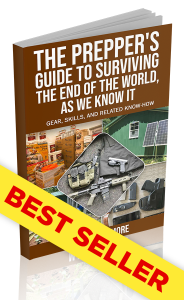
Book Review: The Prepper’s Guide to Surviving The End of the World as We Know It – review by Joel Skousen

October 31, 2019 M.D. Creekmore

The latest book offered by M. D. Creekmore is called The Prepper’s Guide to Surviving The End of the World as We Know. This useful guide quickly and easily covers the full range of essentials in stockpiling and equipment from water, food, and tools to medicine, communications, and weapons.

It’s a 176-page book that is chock full of really good advice about the most important areas. A big benefit of such an accessible book is to get a quick overview of essential preparedness so you can see where you might have gaps in your own setup.

No single book can cover everything in complete detail so this “primer” includes recommended reference books in each topic–all of which appear to be practical, useful books for rounding out your reference library.

Within his guidelines are a few nuggets of in-depth reviews, like his personal experience with hand grain grinders and animal traps. We were glad to see he got water purification issue right: he first recommends filters and only reluctantly chemicals.

I would probably have done the medical section a bit differently, but at least, he does mention natural and alternative remedies and sources. Most people forget about preparing for dental problems and he mentions some good options there.

His comprehensive coverage of what makes a good Bug Out Bag is worth the price of the book alone, and comes complete with pictures of the type of gear he uses to prepare for a quick exit.

This is an excellent guide for everyone. He adds a lot of practical, tactical advice to his lists which is very valuable even if you are advanced in your preparations. It is nice to “compare notes” with other experts. The book is rooted in practical advice and is quite motivating because of the concise way he cuts through the clutter of unknowns.

Read Customer Reviews on Amazon.com

Highly recommended – Joel Skousen – worldaffairsbrief.com/

Filed Under: Gear Reviews

A Guide To Concealed Carry Reciprocity In Tennessee

October 24, 2019 M.D. Creekmore

Tennessee Concealed Carry

Tennessee has the ideal configuration to border numerous states. “The Volunteer State” shares borders with the following states located in the Midwest and Southeastern regions of the United States:

  • Alabama
  • Arkansas
  • Georgia
  • Kentucky
  • Mississippi
  • Missouri
  • North Carolina
  • Virginia

Only one state (Missouri) touches as many states as Tennessee touches. Throw in neighboring states like Illinois, Indiana, Louisiana, and South Carolina to increase the number of states to 12 that require short drives to reach Tennessee. The popularity of Memphis and Nashville for tourists begs one important question.

How does Tennessee handle concealed carry of firearms and do nearby states honor the same statutes followed by Tennessee residents that are on vacation, business trips, or simply passing through…

Tennessee Constitution and Gun Laws

The Tennessee Constitution makes the right to bear arms clear. “That the citizens of this State have a right to keep and to bear arms for their common defense; but the Legislature shall have power, by law, to regulate the wearing of arms with a view to prevent crime.” Every gun statute enacted in Tennessee owes its legal language to the interpretation the Founding Fathers had of the inalienable right to bear arms.

What Does Concealed Carry Reciprocity Mean?

Reciprocity is the fancy word defining how other states treat conceal carry statutes for residents of Tennessee that visit their states. Anyone that possesses a legally authorized concealed carry permit issued by one state can travel to any other state and never worry about fines or arrest because another state has stricter gun laws. Not every state reciprocates on conceal carry laws. States with strict gun laws such as California, Massachusetts, and New York enforce the gun laws passed by state legislators, not the gun laws enacted by other states. According to many gun law experts, 43 states have implemented some form of concealed carry reciprocity.

Tennessee Preemption Statute

Preemption when it comes to gun laws covers how state lawmakers address local governments going beyond the legal scope of state laws. For example, some states have passed laws that allow for concealed carry of both handguns and long guns everywhere a gun owner travels. However, one or more cities in the state have added restrictions on the concealed carry of firearms, such as banning concealed weapons from vehicles.

Here is how the Tennessee preemption statute reads:

“(a) Except as provided in § 39-17-1311(d), which allows counties and municipalities to prohibit the possession of handguns while within or on a public park, natural area, historic park, nature trail, campground, forest, greenway, waterway or other similar public place that is owned or operated by a county, a municipality or instrumentality thereof, no city, county, or urban-county government shall occupy any part of the field of regulation of the transfer, ownership, possession or transportation of firearms, ammunition or components of firearms or combinations thereof; provided, that the provisions of this section shall be prospectively only and shall not affect the validity of any ordinance or resolution lawfully enacted before April 8, 1986.”

Reciprocal Concealed Carry in Tennessee

Under Tennessee law, the state recognizes another state’s concealed license to carry statute, if the state reciprocates by recognizing the Tennessee concealed carry statute when residents visit another state.

“(1) A facially valid handgun permit, firearms permit, weapons permit or license issued by another state shall be valid in this state according to its terms and shall be treated as if it is a handgun permit issued by this state; provided, however, the provisions of this subsection (r) shall not be construed to authorize the holder of any out-of-state permit or license to carry, in this state, any firearm or weapon other than a handgun. (2) For a person to lawfully carry a handgun in this state based upon a permit or license issued in another state, the person must be in possession of the permit or license at all times the person carries a handgun in this state.”

Anyone planning to visit Tennessee and conceal carry a firearm should become acquainted with how “The Volunteer State” reciprocates with border states and nearby neighbors. The same principle applies to Tennessee residents that travel on business or take family vacations out of state. Check with the Tennessee Commissioner of Safety to review the most recent list of states that promote concealed carry reciprocity with Tennessee.

Refer to the comprehensive reciprocity website to learn more about how Tennessee addresses the reciprocation of conceal carry and other gun laws. Remember changing political climates mean the possibility of rapidly changing reciprocity statutes. What you are allowed to conceal carry in Tennessee might suddenly become illegal by changes to a reciprocity statute in another state.

States Recognizing TN Permits

(Taken from TN Department Of Safety Website)

  • Alabama
  • Alaska*
  • Arizona*
  • Arkansas*
  • Colorado – Does not honor 18-20-year-old permits or non-resident permits
  • Delaware
  • Florida* – Does not honor 18-20-year-old permits or non-resident permits
  • Georgia*
  • Idaho
  • Indiana
  • Iowa
  • Kansas
  • Kentucky*
  • Louisiana*
  • Maine
  • Michigan*
  • Mississippi*
  • Missouri
  • Montana
  • Nebraska – Does not honor 18-20-year-old permits
  • Nevada
  • New Hampshire*
  • New Mexico*
  • North Carolina*
  • North Dakota – Does not honor 18-20-year-old permits
  • Oklahoma
  • Ohio*
  • Pennsylvania* – Does not honor 18-20-year-old permits or non-resident permits
  • South Carolina*
  • South Dakota*
  • Texas*
  • Utah
  • Virginia
  • West Virginia* – Does not honor 18-20-year-old permits or non-resident permits
  • Wisconsin – Does not honor 18-20-year-old permits
  • Wyoming*

* Indicates the state has a formal reciprocity agreement with Tennessee

(NOTE: Persons with a valid Tennessee Handgun Carry permit should contact any state for information on carrying such handgun prior to entering the state.)

Tennessee law allows gun owners to keep loaded firearms in a vehicle

In Tennessee, gun owners may legally keep loaded firearms in their vehicles even if they don’t have a state-issued handgun carry permit as long as the firearm isn’t on your person i.e. in a holster on your hip or in your pocket. However, you’ll need a handgun-carry permit before you can legally carry concealed outside of your vehicle or on your person inside the vehicle. With that said, I’m not sure how or if that law applies to out of state visitors.

None of the material in this article should be interpreted as legal advice.  I am not a lawyer.  Never take any action with legal consequences without first consulting with a lawyer licensed in your jurisdiction.  This article should not be relied upon for making legal decisions.  This information is provided for scholarship and general information only.

Filed Under: Security

Is Medical Training Needed For Concealed Carry?

October 24, 2019 Jesse Mathewson

Concealed carry and medical training

Medical knowledge and medical supplies are used far more frequently than defensive tools in the United States. When I was much younger I had several things occur that helped me understand the benefits of understanding trauma care and remaining current with my training.

After watching an individual bleed out in front of me and being able to do nothing, and intervening and saving the life of two people trapped in a bad car wreck, I made the decision to learn as much medical knowledge as I could. This led me to search for solid instruction from real medical professionals.

At first, I was limited to learning from my friends in local Emergency Rooms, between them and EMT friends I was able to learn quite a bit. Of course, with time that knowledge became outdated and as a result I have over the years taken training regularly.

It is important to note that I am not a medical professional, I simply have enough experience and training to stop some major bleeds, assess the bleed, perform CPR, assess- insert and use any one of the top three utilized tourniquets, use a Halo Chest Seal, nasopharyngeal airway, and even suture or staple depending on need.

Obviously, it is my intent to never have to use any of this again. However, I also understand that medical knowledge is much more necessary in daily life than most people understand. Additionally, I have taught and continue to work with others from very young through the elderly in this and other areas.

In 2015 27.6 million people were treated in an emergency department for injuries. 2.8 million were hospitalized due to injuries and 214,000 people died from injuries in the United States. (Injury prevention and control, 2017) These numbers are fact, they are compiled from raw data and regardless your feelings on the CDC they keep very detailed records.

Now, firearms are used between 200,000 and 3 million times every year in self-defense, with most legitimate studies showing that a firearm is used closer to 3 million times. (Leshner, 2013) (For the naysayers understand that this is based on several agencies who did not want to release this data because it showed that the benefits outweighed the negatives.) The book referenced costs $38 and is worth reading if you have the chance.

Here is an excerpt, “studies…have found consistently lower injury rates among gun-using crime victims compared with victims who used other self-protective strategies.” Another quote is as follows, “The estimate of 3 million defensive uses per year is based on an extrapolation from a small number of responses taken from more than 19 national surveys.

The former estimate of 108,000 is difficult to interpret because respondents were not asked specifically about defensive gun use.” It should be noted that the book/study does its best to discount any use of firearms in defense, however, at no point does data support their assertions. Rather, the data clearly support the use of firearms in defense.

There is a simple reason for including the data that is available, it is not meant to build sides in an endlessly pointless political battle. The reason is that without data and facts one cannot know for certain what works and what does not.

In this case training in medical knowledge, specifically EMT or Trauma Care basics at a minimum is necessary to be well rounded as a solid individual practicing their natural rights. To this end, there are several solid schools in the United States.

When it comes to self-defense and the surrounding needs that accompany this, it is essential to have as much solid education and hands-on experience as possible. I would suggest the following for their training and reputable approach. All of the listed have embedded links directing you to them.

  • Gunsite Academy (founded by Jeff Cooper)
  • The Firearms Academy of Seattle (Marty Hays)
  • Active Response Training
  • Your local community college likely offers EMT/Trauma medicine classes which can be applied!

There are other schools around the United States today, however, not all of them offer classes at the same level that you will get in the above-mentioned locations. Certainly, there is a surplus of experienced Army (and marine/navy and even air force) Medics as a result of the 17-year war we have been involved in.

What I suggest when it comes to medical and firearms training is getting training from individuals who can prove their abilities and have a legitimate background in the area. There are several large schools that offer basic/intermediate instruction for firearms using the timeshare approach to teaching.

This means that while you get some benefit, the reality is you are cycled in and out as quickly as feasible and then sent endless emails and phone calls to beg you to upgrade your membership or sell it to your friends. A solid school and approach does not need to be sold.

So far we have established that having modern, basic medical training is an essential life-saving component of being prepared and carrying a concealed firearm for self-defense. What is important now is understanding that trauma based medical care has advanced greatly in the last 20 years alone and what worked even a decade ago or what you learned in medical school or a first aid class 5 years ago may no longer apply.

For instance, just in the past few years using tourniquets and what and how they are made has changed drastically. Make sure you get up to date training from individuals who understand and use these approaches.

Once you receive solid training you will need to put together a simple easily carried trauma kit for your personal use. This kit should be small, and, should include the following items these are the most important.

  • Tourniquet, there are several types the SOFTT-W, SWAT-T and the CAT style tourniquets. While I personally use and practice with a CAT tourniquet the others have their place based on need and intent. Stopping the bleed is a term you will hear a lot in modern classes. This tool is used for extremities.
  • Israeli Bandage or similar product, again the intent is to stop the bleed. This is used for non-extremities, bleeds that are on the trunk of your body or head is where this one will be used most.
  • Bandages, both gauze 4×4 and 2×2 and standard Band-Aid bandages for smaller issues. Infection is a serious possibility and to avoid this you want to wash the wound with clean water and bandage it.
  • Sheers, medical-grade sheers are absolutely necessary.
  • Sterile individually wrapped nitrile gloves. Make sure you get the non-allergenic ones.
  • A small bottle of sterile water for wound washing.
  • Hypo-Allergenic medical adhesive tape
  • CPR mask, you can get small disposable versions that work very well for an EDC kit. It is essential to have CPR supplies and KNOW how to apply CPR properly. Again, what was taught even 10 years ago is NOT what is being taught now.

The above are the very basics that are necessary for a trauma kit. All of this can be easily stored in a small package that can be worn on the belt, tucked in a pocket or purse easily. Some individuals I know often carry just the tourniquet and Israeli bandage based on space available.

This works when needed. For myself personally, I have a full trauma kit with everything from antibiotics through surgical needs. In addition to the large kit I have vehicle kits and then personal kits for each member of our family.

When it comes to my family their safety is something I take very seriously. I know that we are the only ones who can prevent problems or solve them as they occur, and that responders are quite often too late which is why deaths from injuries are quite high.

For myself and my family, prevention is worth far more than a “cure”. I teach them what I know and we all test our knowledge regularly so as to prevent stagnation. Active involvement with our environment is the easiest way to prevent issues from happening.

As with the other articles, please let me know if you see something that is missed and if so comment below. I learn daily and cannot learn if I do not know where I am making mistakes. Additionally, it should be noted again I am not a medical professional, I am simply a dad who trains and trained and practices to prevent issues in my and my families lives!

Thank you for reading and make sure to check out the links in the article for some great products, by purchasing through the links you support this site and allow the owner and individuals writing like myself to continue to put out solid material for your educational benefit.

Free the mind and the body will follow

Injury prevention and control (2017). Key Data and Statistics|WISQARS|Injury Center|CDC. [online] Cdc.gov. Available at: https://www.cdc.gov/injury/wisqars/overview/key_data.html [Accessed 9 Aug. 2018].

Leshner, A. (2013). Priorities for research to reduce the threat of firearm-related violence. 1st ed. Washington DC: The National Academies Press.

Further Study on DVD

  • Gunshot Wound First Aid
  • Basic First Aid Training
  • Knife Wound First Aid

Filed Under: Health and Fitness

What Medical Training Should I Get For Concealed Carry?

October 24, 2019 Jesse Mathewson

first aid training for concealed carry

This article is meant to show you what training you should get for concealed carry. What is included in the article are references, links for additional training and resources and lastly definitions and descriptions. Always remember, make sure you and your family are safe before attempting to offer assistance to anyone. Never do so if it means sacrificing your own safety.

To answer what medical training you should get, you have to know why medical training is essential. It is important to note that I am not a medical professional, I simply have enough experience and training to stop some major bleeds, assess the bleed, perform CPR, assess- insert and use any one of the top three utilized tourniquets, use a Halo Chest Seal, nasopharyngeal airway and even suture or staple depending on need. I firmly recommend getting any training you can, when it comes to caring for your self and family, make sure you find the best that you can afford.

In 2015 27.6 million people were treated in an emergency department for injuries. Over 2.8 million were hospitalized due to injuries and 214,000 people died from injuries in the United States. (Injury prevention and control, 2017) These numbers are fact, they are compiled from raw data and regardless of your feelings on the CDC they keep very detailed records.

Now, firearms are used between 200,000 and 3 million times every year in self-defense, with most legitimate studies showing that a firearm is used closer to 3 million times. (Leshner, 2013) The book referenced costs $38 and is worth reading if you have the chance.

Here is an excerpt, “studies…have found consistently lower injury rates among gun-using crime victims compared with victims who used other self-protective strategies.” Another quote is as follows, “ The estimate of 3 million defensive uses per year is based on an extrapolation from a small number of responses taken from more than 19 national surveys.

Concealed carry medical training needsThe former estimate of 108,000 is difficult to interpret because respondents were not asked specifically about defensive gun use.” It should be noted that the book/study does its best to discount any use of firearms in defense, however, at no point does data support their assertions. Rather, the data clearly supports the use of firearms in defense.

Now that we understand why medical training is so essential to concealed carry, what medical training do we need to have? There is a phrase that has been popularized over the past few years, “stop the bleed.” What this phrase means is quite simple, train to stop bleeding. Medically there are other important items to consider, airway blockages, CPR and a few other important medical considerations.

For a concealed carrier, the plan should always be centered around what they may encounter most. In this case another individual with a knife, firearm or other deadly weapons. The damage that will occur from a wide variety of deadly weapons carried today regardless of location can range from penetrating or slash wounds causing rapid exsanguination (blood loss) and crushing injuries causing broken limbs coupled with exsanguination of the rapid or slow type both of which can result in death. Lastly, shock and or extreme trauma induced heart attacks and stress-related breathing issues can also result.

Interestingly the government has released a few little known publications in the public sphere regarding trauma care and the need for immediate action. For instance per the Department of Homeland Security, FEMA, these are the five “simple” steps that may save a life. Call 9-1-1, Stay Safe, Stop the Bleeding, Position the Injured, Provide Comfort. (FEMA, 2014) Follow the links and take the on-line training, while it is not the same as hands-on training, this will help you better understand what is needed.

Additional bleeding control training is made available by the American College of Surgeons through the website, bleedingcontrol.org, lastly, FirstCareProvider offers instructor courses and has been endorsed by a few organizations that offer it legitimacy.

Care is a term coined and used by DHS and FEMA that stands for the following. Control bleeding with direct pressure or tourniquet. Airway improvement with recovery position. Respirations improve by covering open chest wounds. Exposure to the elements causes loss of heat. This can help understand the added training needs everyone who carries concealed should have as a precaution.

Find a course that offers you training in CARE as well as carries specific trauma care. Call 9-1-1 first, do not panic, panic prevents care from occurring. Control bleeding, find the source of bleeding. Open or remove the clothing over the wounded area so that you can see the wound. Head wounds will always bleed profusely, they will always seem very bad.

direct pressure on woundPressure should be used on the head and trunk (body, not arm or leg) injuries. Using a clean cloth if possible, fold it and press firmly on the wound, hold a firm pressure and maintain that pressure until the paramedics arrive. Stopping the bleed is far more important at this stage than preventing infection.

Both should be attempted when possible, which is why I suggest wound cleaners and sterile gauze, homeostatic bandages and Israeli style bandages. However, this is not always the case, so stop the bleed first! If the wound is on the groin, trunk or close to the body and is deep and bleeding steadily, pack the wound using a clean cloth and if you have a trauma kit use your Israeli style bandage or a homeostatic bandage. I keep two of each in my vehicle-based trauma kits.

On extremities, legs and arms, unless close to the body, use a tourniquet. If you do not have a specialized modern tourniquet use a belt, long cloth rolled diagonally, 550 cord doubled or another similar device to stop the bleed. All pictures have been borrowed from the booklet stop the bleed (Pons & Jacobs, 2017)

Next is Airway improvement with recovery position. This is extremely important of the person is having difficulty breathing or has lost consciousness. Establish that the airway is not obstructed, the tongue is the most common obstruction. If you see a foreign object and it can be removed easily, remove it. Tilt the head back and lift the chin, this will straighten out the airway and make it easier for breathing to occur.

Using your CPR mask if you have one, place it over the victim’s mouth and nose, ensuring the head is tilted as can be seen in the attached picture, blow air into the mouth, two one-second breaths forcing the chest to rise and fall with each.

packing wound

If the breaths do not cause the chest to rise and fall, engage in chest compressions. These are given differently for adults and children so make sure you take a course that teaches this! Chest compressions should be administered at a 30:2 ratio, meaning 30 chest compressions with two solid breaths in between.

Continue compressions until EMS arrives or the person begins to breathe on their own. If they begin to breathe on their own roll them into the recovery position, pictured here.

Respirations improve by covering open chest wounds. This part of care is more tricky and requires chest seals or again clean clothes applied directly to the wound area. Finding training in CARE will help you better understand what to do in this regard.

Not all wounds are the same, and all should be assessed and treated per the guidelines given in prior linked articles and through the application of learned materials from classes linked.

tourniquet wrap

Lastly is Exposure to the elements causes loss of heat. This has a more simple solution, use a blanket or space blanket which should be carried in your trauma kit or vehicle. I keep two 90% or greater wool blankets inside of 9’ square tarps in my vehicles along with 2-4 small mylar space blankets in each trauma kit and in the vehicle.

Preventing exposure can increase the possibility of a beneficial outcome with someone who has been in a vehicle accident or other form of traumatic incident. If the person is unconscious, check for obstructions in the airway, check for bleeding and than place them in the recovery position inside of the blanket or space blanket.

For concealed carry the medical training you should get is the same as the medical training you should have for driving a vehicle, camping, hiking, bicycling and swimming activities. It is worth the time invested to ensure your training stays up to date as well.

New approaches are innovated quite often in the medical community and this means training does not end with your medical license 30 years ago or a course you took in the 80s for CPR. What is known and taught now is far different than what was taught in the 80s, 90s, and even in the early 2000s. Stay abreast of the new knowledge and utilize common sense.

first-aid-training-recovery
The recovery position If the victim starts to breath normallyFree the mind and the body will follow…

FEMA (2014). You Are the Help Until Help Arrives. Retrieved October 26, 2018, from https://community.fema.gov/until-help-arrives

Injury prevention and control (2017). Key Data and Statistics|WISQARS|Injury Center|CDC. Cdc.gov. Available at: https://www.cdc.gov/injury/wisqars/overview/key_data.html

Leshner, A. (2013). Priorities for research to reduce the threat of firearm-related violence. 1st ed. Washington DC: The National Academies Press.

Pons, P., & Jacobs, L. (2017). How to Stop the Bleed. Retrieved from https://www.bleedingcontrol.org/~/media/bleedingcontrol/files/stop%20the%20bleed%20booklet.ashx

Filed Under: Health and Fitness

Is There a National Concealed Carry License?

October 24, 2019 Jesse Mathewson

What is the national concealed carry qualification? 

Graphic By Jeff Dege

In 2004 the Law Enforcement Officers Safety Act (LEOSA) was enacted in the United States. This law allows to classes of persons, the qualified Law Enforcement officer” and the “qualified retired or separated Law Enforcement officer” to carry a concealed firearm in any jurisdiction in the United States or United States Territories, regardless of state or local laws with minor exceptions.

At this time this is the only national carry or national concealed carry law on the books. It should be noted that this article is not meant to offer legal advice merely to allow others to better understand LEOSA and national carry restrictions or allowances.

This article is meant to clarify what is legally allowed and not allowed for the qualified, or qualified separated or retired Law Enforcement that may be reading this article. Additionally, the article is meant to explain what it takes to maintain and keep as well as use the LEOSA permit.

Here is the law paraphrased, “Notwithstanding any other provision of the law of any State or any political subdivision thereof, an individual who is a qualified law enforcement officer and who is carrying the identification required by subsection (d) may carry a concealed firearm that has been shipped or transported in interstate or foreign commerce…” (LII / Legal Information Institute, 2004)

So what is a qualified law enforcement person? In most states, commonwealths and territories have codified Law Enforcement training centers. These are known as P.O.S.T. or Peace Officer Standards and Training. While some locations within the United States have differing qualifications for firearms training, these differences are relatively minor.

A qualified Law Enforcement person is one that is active duty with no behavioral or legal restrictions or who has served 10 years or more as a federal, state or local POST certified or federally certified law enforcement officer.

If you search this term in your browser replacing your state with your states name, “(your state) LE POST” it will pull up information on your state’s qualifications. For non LE concealed carriers if you can train and pass a verified course of fire for your states LE POST qualifications this can be beneficial if you have to use deadly force in defense of self.

I suggest getting the target you passed on signed by a range master on duty who can verify you passed it and whichever instructor or other person attended, a minimum of two witnesses for legal reasons, sign, and date!

Legally this law has seemed some blowback, specifically in New York state, the District of Columbia and California. Thankfully, each case saw the defendants who were, in fact, Law Enforcement officers or agents cleared and has set precedents supporting the initial LEOSA law.

In 2006 Arthur Rodriguez a Pennsylvania Court Constable was found in a New York court ruling to qualify for protection under LEOSA. In 2012 Barbusin a special police officer of the District of Columbia Protective Services Police Department was found to have satisfied the LEOSA’s broad definition for qualified law enforcement.

In 2008 a Coast Guard reservist named Booth was found to be a law enforcement officer and his rights were upheld in a ruling in, surprise, surprise, New York again. The ruling stated that his job was to “prevent, detect and enforce federal law” as a coast guard serviceman. California arrested Jose Diaz in 2007 for having a loaded firearm in his vehicle in San Fernando.

The charges were dismissed and the subsequent lawsuit filed for violation of civil rights was settled outside of court by the city, the city redrafted the police training standards on LEOSA. (Baranowski, 2014)

Directly quoting the article – Does the LEOSA carry law apply to you, “On Jan. 2, 2013, LEOSA was amended to specifically allow for active and “retired” (as defined by LEOSA) military and DOD police and law enforcement officers with UCMJ (Uniform Code of Military Justice) apprehension authority to qualify for the statute; however, also hidden within the amendment was language mandating that all QLEOs now carry a photographic ID that “identifies the employee as a police or law enforcement officer of the agency,” and that QRLEOs carry a photographic ID “that identifies the person as having been employed as a police or law enforcement officer.” (Baranowski, 2014) If you go to the LEOSA website they offer the ability to easily sign up for a national carry identification card allowing ease of use and carry. Click here, LEOSA, and make sure to read it and ask them questions as needed.

Another solid resource is found on PoliceOne under LEOSA. As a civilian who has trained and taught Law Enforcement and various military over the course of two decades I can say that PoliceOne authors are almost all slanted away from law-abiding civilian carry.

Given that law-abiding civilian carriers outnumber every other demographic that carries it may be a beneficial idea to work with us rather than join the loud cries against our carrying.

Obviously, not all civilians are trained well enough to carry in a trustworthy manner, however, during my training of law enforcement and military over the years it is no small wonder that friendly fire is a rather high statistic there as well.

Training is essential whenever deadly force is prepared for in any way. I would suggest that training be increased if you plan in carrying regularly. Never relax completely, never let your guard down to your own potential missteps and more importantly live in yellow, relaxed but aware.

It is not a negative and given statistical evidence that the largest percentage of incidents occur close to your home, this is a reason to be more aware of your actions when at home.

This leads into the current desire for law-abiding civilians who are wanting a national carry law to be enacted. Given the current political climate, a national carry law would be at best a two-edged sword with the handle of the sword also being a blade.

National carry would allow a much easier time collecting data on law-abiding carriers, currently, data is collated at a national level using the background checks performed at the time of purchase as well as the various state-issued permits.

Regardless of what is said, all of this data is collected. What is not done at this time is keeping it all in one database. Between social media, digital communication, and the various state and federal steps needed for law-abiding firearms ownership most of the firearms bought and sold over the past three or four decades can be quickly and easily traced through purchasers and even past that level if the firearm was sold to others.

National carry could be easily used to come down on law-abiding citizens who carry for self-defense if the political winds changed more than they already have. Currently, there are many very vocal people who disparage law-abiding carry, even though not a single law-abiding person has ever committed a crime using a firearm. After all, the very nature of the term precludes the commission of crimes.

In addition to the political issues, there are the media and social media pushed emotional views based on spurious lackadaisical “truths” which have been promoted as “facts.” Some of these are, gun owners are more likely to commit crimes, etc. et, al., promoted by any town and the Brady camp. The real facts are simple, criminals do not care if you are black, white, red, female, male, trans, gay, straight or a horse. If you have what they believe they should have, they will commit crimes against you.

Certainly depending on areas and demographics, some demographics are more likely to commit crimes. However, when you look at the facts you will quickly find that the myths behind mass murder and or mass shootings are just that.

Myths and the reality is every single one of the individuals who committed one of these crimes was bat shit crazy insane. And yes, mass murder occurs and has occurred more frequently with much higher body counts in many nations in Europe, Asia, and even Africa than in the United States.

What you will not find as often outside of the United States is the use of firearms to prevent mass violence, or to stop it. In fact, outside the United States and in fact in many states in the United States people have become the equivalent of sheep, they bleat and complain making an awful racket and have lost almost all ability to care for themselves in any real manner.

If you can carry legally, do so, regardless of your status as a privileged badge carrier or not. If you cannot carry legally, move. I have not found a single instance of voting or political action that does not negatively affect far more people than it helps. This is why I say move. I understand that many readers regardless of side they support will rabidly state their objections.

However, none can rationally argue that I am incorrect. As I am not insane, I choose to personally not repeat the same actions endlessly in a futile hope that it will somehow make life better. Rather, I have dedicated my life to raising my children, training and being prepared as best I can.

I hope you also consider investing as much time in your children as you may invest in your social media accounts. (It should be noted I do not have social media accounts, I do have social interactions in person with others as well as gardens, children, animals and the regular constant acquisition of more knowledge which I than put into practice, something so many walking dictionaries fail to do.)

If you enjoyed this article or have any questions, please leave them in the comment section below!

Free the mind and the body will follow…

  • Baranowski, J. (2014). Does the LEOSA Carry Law Apply to You?. [online] NRA-ILA. Available at: https://www.nraila.org/articles/20140117/does-the-leosa-carry-law-apply-to-you [Accessed 25 Oct. 2018].
  • LII / Legal Information Institute. (2004). 18 U.S. Code § 926B – Carrying of concealed firearms by qualified law enforcement officers. [online] Available at: https://www.law.cornell.edu/uscode/text/18/926B [Accessed 25 Oct. 2018].

Jesse Mathewson BSCJA et, al.,

520 249 8495

Filed Under: Uncategorized

My Favorite Concealed Carry Gear (For 2020)

October 24, 2019 M.D. Creekmore


IWB Holsters

When it comes to inside the waistband holders I have several favorites but if I had to narrow it down to just one IWB holster I’d have to choose the Alien Gear Holsters Cloak Tuck 3.0 IWB, Holster (check Amazon.com for current price and availability). As far as IWB holsters go this one is the most comfortable and well made of all the ones that I’ve tried and it’s available to fit a large number of different brands and models of concealed carry handguns.

My second choice for an IWB concealment holster is the Concealment Express IWB KYDEX Holster (click here to check current price and availability at Amazon.con). Fortunately, most brands of KYDEX IWB holsters are well made and to be honest it’s hard to find a meaningful difference in the majority of them.

And if you’re on a super-tight budget then the BLACKHAWK Inside-the-Pants Holster is a super low priced IWB holster that will serve you well (check current price on Amazon.com).

Belt Holsters

I seldom carry in a belt holster because I prefer to carry concealed, however, the exception being when I’m hiking the national park trails or riding my UTV in deep far-a-way back in the boondocks locations and for this, my favorite belt holster is the Model M12 Universal Military Holster. This holster offers protection while still leaving the sidearm easily assessable.

My second favorite belt holster is the Desantis Facilitator Holster (check current price and availability at Amazon.com). One of the downsides to open carry is the possibility that an attacker will try to take your handgun when starting their attack and the Redi-Lok system that comes with Desantis Facilitator Holster will make doing this successfully much more difficult for the attacker.

My third favorite belt holster is the Bianchi Accumold Holster Belt Slide (check Amazon.com for price and availability). It’s light-weight and offers some extra retention via the thumb-break, however, it’s not as secure from a grab-attack as the Desantis Facilitator Holster that I mentioned above.

Pocket Holsters

When carrying smaller handguns a good pocket holster is hard to beat. Need to run to the corner store or out to the mailbox? Don’t want to go through all of the trouble of putting on a belt and IWB or belt holster? Well, the pocket holster is your best option. Just slide it into your pocket and go…

I carry my Smith and Wesson Air-Weight in a DeSantis Nemesis pocket holster and love it (you can check it out on Amazon.com). I concealed carry the Smith and Wesson Air-Weight more than any other handgun and I don’t see that changing anytime soon.

Tactical Knives

Oh, wow, choosing my favorite concealed carry knives was very difficult, to say the least because there are so many great knives on the market today and I own so many, but then owning so many allows me to give knowledgeable suggestions from hands-on experience.

Once Tennessee changes the knife laws allowing legal ownership and carry of automatic (switchblade) knives, I went as fast as I could go and bought a Hogue automatic knife, and I’ve carried it every day for over two years and give it my highest recommendation.

My second favorite concealed carry knife is…. wait for it… the Columbia River Knife & Tool M16-Z! This is a very well made quality knife that’s also very reasonably priced. And the locking system is fantastic! If you’re looking for a concealed carry knife and automatic knives like the Hogue that I mentioned above aren’t legal in your state then this is a great alternative.

Okay, now on to my third favorite concealed carry knife and that’s the BLACKHAWK! Crucible II Folding Knife with a plain edge (check it out at Amazon.com). I’ve owned this knife for over five years and carried it a couple of those and have no complaints at all and at the current listed price on Amazon.com it’s hard to beat.

Please read my article on Tennessee Knife Laws if you’re interested in carrying a knife in Tennessee.

Tactical Lights

Like concealed carry knives, the mention of tactical knives gets folks looking straight and paying attention because most of the folks who are into such things as firearms and concealed carry have their own opinions as to what’s the best tactical light. Below are my current top picks…

My number one choice is the SureFire G2Z MV Combat Light, small, light-weight and easy to carry while putting out a blinding amount of light onto (you can check current price and availability at Amazon.com).

As for a general-purpose light, my top choice is the Duracell Durabeam Ultra 700 Heavy-Duty LED Flashlight (check current price and availability on Amazon.com). I have four of these with two in my house, one in each automobile and one in the garage. It’s hard (probably impossible) to beat these at the same or lower price.

Carry Belts

If you’re going to open carry and or concealed carry then you’ll need a good belt and my current favorite is the Relentless Tactical The Ultimate Concealed Carry CCW Gun Belt. It’s a little pricey, well, for me anyway, but it’s a belt that will last a lifetime and in fact, it has a lifetime warranty.

Non-Lethal Options

Okay, we all know that carrying a concealed handgun is a big responsibility because once you pull the trigger to defend yourself and the bullet is out of the barrel there isn’t any bringing it back and if it hits then death or grave bodily injury will be the result.

This is why I like to have a non-lethal alternative available, so I have a choice of lethal action or non-lethal action depending on the situation and what is warranted. My favorite and what I believe to be the best non-lethal alternative is OC or pepper spray.

My choice is from Fox Labs – Fox Labs Pepper Spray – Flip Top Cone (1.5 ounces) click here to check current prices and availability on Amazon.com.

My Favorite Watch

While having a watch isn’t really connected to concealed carry, every man should own a good watch and it’s not necessary to spend several hundred dollars to own a good functional watch that also looks great.

When it comes to watches I have a couple of favorites. My number one favorite is the Vincero Luxury Men’s Chrono S Wrist Watch in all black and my second favorite is the Victorinox Men’s  Original XL Swiss Quartz Watch.

Filed Under: Security

  • « Go to Previous Page
  • Page 1
  • Interim pages omitted …
  • Page 13
  • Page 14
  • Page 15
  • Page 16
  • Page 17
  • Interim pages omitted …
  • Page 31
  • Go to Next Page »

Primary Sidebar

Subscribe to Blog via Email

Enter your email address to subscribe to this blog and receive notifications of new posts by email.

Join 7,202 other subscribers
  • Amazon
  • Facebook
  • Substack
  • Twitter
  • YouTube

“Do more with less.”

– Minimalist proverb

Recent Posts

  • Just so you know
  • Weather Update for My Corner of Appalachia
  • Why I’m Ordering Ivermectin + Mebendazole Every Year
  • The Website’s Shutting Down (But Here’s the Plan)
  • You Are Hated! Start Training Like It!

Footer

Recent Posts

  • Just so you know
  • Weather Update for My Corner of Appalachia
  • Why I’m Ordering Ivermectin + Mebendazole Every Year
  • The Website’s Shutting Down (But Here’s the Plan)
  • You Are Hated! Start Training Like It!

More about me

Books I’ve written

Books I’ve read

Follow Me on YouTube

Follow Me on Facebook

Gear I Use and Recommend

Newsletter

Search this site

Follow me elsewhere

  • Amazon
  • Facebook
  • Substack
  • Twitter
  • YouTube

© 2008–2025 M.D. Creekmore · As an Amazon Associate, I earn from qualifying purchases.