In this video, I go over some food storage foods and ideas that you might want to consider for your own long-term prepper food storage plans.
Prepping
Here you will find articles about emergency preparedness and prepping including articles on prepper food, prepping checklists, home defense, bugging out, bugging in, and the best prepper gear ideas.
Long-Term Storage : Know your Enemy The Moth

by Bandurasbox – AKA Salena.
Not too long ago, my husband took a three-week-long business trip to the West coast. Although he has traveled often domestically and abroad for his job in the past, this trip was particularly difficult for me and our special needs son.
Our son was out of school for the summer, and because he has special needs, he requires more monitoring and care than most children. I was working on a difficult semester in the Ph.D. program to which I am involved. To add to this typical stress, several things around the house needed repairs that couldn’t wait.
One morning as I was putting on my running shoes, I noticed a moth flying around in our walk-in closet. A brief look through our clothing led me to find several more. Needless to say, I was not the least bit thrilled. Although our house is not that large, our walk-in closet is rather roomy. As a result, we store more than clothing in there, including books, backpacks, my husband’s military equipment, uniforms, and our food preps.
Once I determined how to get rid of the moths, I began tackling a tiring job without any assistance. I moved everything out of the closet except for our food stores. I spent several days washing every article of clothing in hot water, and those that couldn’t be washed were dry cleaned or placed in the freezer. I sealed off the closet until my DH came home and I had his help cleaning the walls, shelves, and floor. We undertook this with a vengeance!
We covered the food stores with visqueen, and vacuumed all of the larvae. Then we scrubbed the shelves, ceiling, and walls with bleach water. Once that dried, we vacuum the floors and coated the whole closet with Permethrin. The closet was sealed off for four days before we began moving everything back in.
Flash forward to a recent morning. As my husband was getting dressed for work, he noticed moth larvae all over the walls and ceiling. We were both very frustrated as you can imagine. All of that work for nothing as the pesky critters had come back with a greater vengeance that our cleaning efforts.
He took off work and once again, we began a second cleaning effort. This time, however, we consulted our neighbor who is in pest control. He said he would come over and spray once we had everything moved out of the closet. Everything, including the food preps.
We gathered as many boxes as we could find to put the food in and once we started moving it, we noticed the rice had live larvae inside the bags. Both hubby and I felt like idiots at this point. Our “moth patrol” efforts had been in vein.
Being unfamiliar with moths, and since neither of us had any experience with clothes moths, we both assumed this was the pest with which we were dealing. As it turned out, we had an Indian meal (pantry) moths all along. Our first cleaning effort was a waste of time because we left all of the infested food in the closet. As a result, the moths were safe and had a nice clean breeding ground with lots of food to eat.
We were able to salvage about half of the food we had been storing in our closet for five years. We lost hundreds of dollars of rice, beans, dry potatoes, pasta, snacks, Ramen, and powdered milk. We were heartbroken that so much had to be thrown out, but relieved that we were finally able to identify our enemy thereby gaining a permanent solution to the problem. We also learned that our food storage practices had to change.
We will now store our dry foods in sealed Mylar bags inside of sealed buckets. It’s pricier than just stacking things on a closet shelf, but not anywhere near as pricey as losing hundreds of dollars in contaminated food.
An important lesson we learned is that it is crucial to know your enemy. Had we have spent the time to educate ourselves on the different types of moths, we could well have saved ourselves some time, some energy, and a great deal of frustration.
This lesson goes a long way not only in our experience with insects but in our lives as preppers. We weren’t able to share our moth experience with but a few people because we were fearful that being “exposed” as a preparedness family could jeopardize our safety in the event of a WTSHTF scenario.
Fortunately for us, we trust our neighbor who is in pest control. We take care of his dog when he is busy or out of town. He loves our son, and he watches over our property when we travel. He is now interested in participating in preparedness efforts. Thankfully, he owns and knows how to use his firearms, and his loyalty to us give us the encouragement to “bring him on board”, so to speak.
One thing I would like for you to take away from this: We learned that pantry moth exists on bags of beans and rice and other malleable food items before they are brought into our homes. If you purchase your stores from places that have large warehouses (Sam’s, Walmart, Target, Kroger, Publix, etc.), you run the risk of introducing pantry moths to your home.
In the south, it’s very common. My best advice is to check the bags/packages for larvae prior to purchase, and not store them in an open-air area (closet, garage, etc). The best storage practices involve the reduction of air/oxygen and humidity. It will save you what can end up being a ton of money and a great deal of stress.
The Lights Went Out in Texas
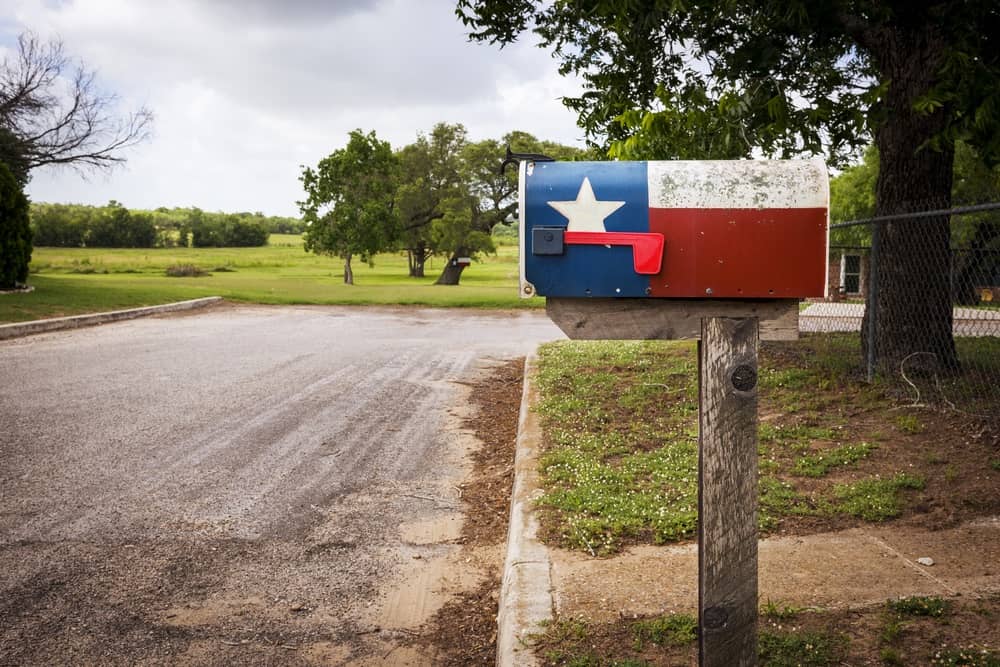 by Texican
Last week our small area of the world experienced a power outage which lasted just an hour and 55 minutes. The power went out at 5:55 pm. Not a big deal, right? I’m prepared, I have batteries, I have flashlights, I have candles, I have lanterns, I have kerosene, I have…….! Yep, I pretty much have it all. Now if I could only find it all.
I write about this very simple inconvenience for the simple fact that although I had everything I needed to get through it, I did not have all I needed very handy. Sometimes it’s the very small things, like this power outage, that show some major flaws in our preparedness.
So, it’s 5:55 pm and since it is late November it is already dark. The power goes off while I’m on the computer in the front part of the house. My wife is in the living room in the back part of the house. I don’t know why this came as a surprise to me but, it did…. it is pitch black in my house with no lights!
For the first few seconds, I just sat there waiting to see if the power would come back on. After about a minute I decided it wasn’t coming back real soon and I figured I needed to do something to get some light in the house.
The problem was I could hardly see to get out of my chair much less out of the room and down the hall to the living room. Luckily I had my cell phone with me and I used it as a flash light to get to the living room to make sure my wife was alright.
She used hers to get to the kitchen to get a flashlight and I took mine to another room to get a second flashlight. Once we both had a light source the first hurdle was jumped. This took no more than 5 minutes so we waited another 5 minutes or so just in case the power should come back on, which it has some times in the past.
But, after 10 minutes or so we were still in the dark. Now we start thinking of having more light than just the flashlight. I have that covered because a few months back we were without power for almost 4 hours. It was during the day so we didn’t need much extra light but, I decided to get two of my lanterns out of storage and fill the tanks and store them in a reachable location inside the house.
I also put 3 of the quart bottles of kerosene and a small funnel and a box of kitchen matches with the lanterns. That foresight worked out well for us and they really were in a good location and easy to get to, once I found the flashlight.
Now, here is an embarrassing admission, I have never in my life lit, used or otherwise depended on a lantern for light. Come on be honest, how many of you have never used a lantern? My knowledge of lantern use comes from watching Little House On The Prairie and I know enough to never leave one unattended in the barn!
Well, I raised the mantle and the wick, struck the match, placed it on the wick and just like that we had light, a very poor light but it was still light. I adjusted the wick a bit and I was so proud of myself that I was just a beaming. Since I did so well with the first one I grabbed the second one and got it going so each of us would have our own light source.
After a few moments of patting myself on the back, we became aware of just how little light the two lanterns were putting out. It was nothing like the light on Little House! I think they may have used a little trickery on the set.
My wife and I both like to read and since there was nothing else to do we picked up our books and started to read. OK, we tried to read and found out real quick that the only way to do so was to get right up to the lantern with the book pretty much touching the lantern. I swear I got a couple of nose hairs singed! We did manage to do some reading but it was accomplished by twisting the body in too many ways for me to describe.
After a few minutes of reading, we decided we needed a smoke break. We never smoke in the house and we couldn’t just flick the switch for the outside lights so we each took our lantern and went out back to the patio. Now that was the only nice thing about the outage. It was kinda like mood lighting and not too bad.
That was over all too soon and we had to return to the dark house. We picked up the books again and read until the lights finally came back on. That was the longest hour and 55 minutes we have spent in a long time. We were happy to have the use of electricity again.
Now to the lessons learned from this minor yet very instructional time period. The first thing I plan on correcting is the number of flashlights in the house. I want at least 1 in every room plus extra batteries in each room. Secondly, I will learn the number of steps to get to and from each room in the house.
Thirdly I will purchase several more lanterns and more quart bottles of kerosene. My storage location for the lanterns and kerosene is a good location and doesn’t need to be altered. From this experience, I would like to be able to get more light in the living area.
I don’t know if more lanterns is the answer or something else, any suggestions?
With very little light we noticed it to be very depressing and somewhat stressful which was something we did not count on. During a prolonged period like months or more that could be a real problem, for us anyway. Since my only knowledge of lanterns comes from Little House On The Prairie, as noted above, I have a question.
I know by extending the wick(turning it up) the flame burns higher and brighter. The higher it goes the more smoke it emits and darkens the mantel. Is there a ROT for how high the wick should be? My lanterns are cheap ones, do more expensive ones work better(I think I know the answer to that)?
To sum up our little outage, I know that light is good. I know that some light is better than no light. I know a small amount of light in a living area is depressing. I’m sure one could get used to it but at my age, I may not have enough time.
I know now that having everything one needs to survive most anything that comes along is worthless unless it can be retrieved quickly and put to use easily. I know that preparing for the unknown future is a lot more fun than it will be living it.
Well, that is a description of my little survival moment. I hope it may serve in some small way to assist some of you in your preparations. At the very least it should tell you not to depend on Little House On The Prairie for your survival needs.
Think on your FEET! A Prepper’s Guide To Shoes and Feet…

by Arthur X
“Keep your eyes on the stars, and your feet on the ground.” – Theodore Roosevelt
As preppers, we have to prepare ahead. We have to look ahead and notice any potential problems and deal with those problems. Foot problems are one such area. That is my goal today, to have you merely recognize your feet for the next few minutes. This is about taking care of your FEET now, not later, and some downright simple solutions that will keep you walking for the long haul. Read along and learn how to save your feet for only $20.
First, two questions:
Have you ever had a pair of shoes that really hurt your feet but you wore them anyway?
Have you ever worn a pair of shoes until they have literally fallen apart?
I’m definitely guilty here
Do I have feet problems?
No, I do not. I think mainly because I have been proactive with my feet. If my shoes wore out, I would immediately buy a new pair of shoes. Wearing insoles is a way of life for me and I don’t own a pair of shoes without them.
When I was younger I wasn’t so lucky and developed some calluses from not wearing good shoes. Nothing too serious or needing any type of surgery. However, I learned from my mistakes and I am sharing my own personal experience. Let’s talk about some solutions!
Been there done that!
Have you ever been to your local store and visited the foot section? Most of us probably have. And it has grown over the years to very big business. That is good news because preppers have options that make our life easier. What’s the best product, field-tested?
Gel or Foam?
Personally I do not like gel insoles, for example, Dr. Scholls. I have tried many brands. But the ones I have tried, I didn’t like. They do seem to be durable and have quality standards; however, I could not find a comfortable pair of gel insoles.
I really like foam insoles, such as Sof Sole or New Balance. Personally I use Sof Sole Arch Insoles. Mainly due to my high arch, I also love the cushion and support.
Sof Soles are a type of latex or composite foam material. They hold up extremely well, are worth the money, and offer outstanding protection. The foam tends to hold heat a little, and I have noticed this with foam insoles. This can be a benefit or a weakness. If you live in a cold climate they will generally offer a little more warmth.
In a hot climate that can make your feet sweat a little more. This usually is not a problem considering the manufactures usually make sport or athletic insoles that will help in this area, only something to consider. In my years of use, heat from Sof Sole insoles has never been a problem. I live in a very hot part of the country.
Very few pairs of shoes that I have bought were comfortable “without” insoles. Very few. Shoes like Air Jordans, New Balance, and higher quality running shoes are the exceptions here. Shoe technology is much better than say, 20 years ago, I can testify to that.
Let’s make it easy
I recommend Sof Sole insoles. Part of the reason is ‘accessibility’. Sof Soles are in every major department store and shoe store. At only, $20 they will not break the bank. I know you are thinking, those insoles are expensive, “I can buy a pair of shoes for $20”! Yes, you can, however what about buying a pair of shoes for $20, AND some quality insoles for $20.
Then, for $40 you have a really comfortable pair of shoes. This isn’t only about comfort. These types of insoles really do lessen the impact of your joints.
Over a period of years, the damage could be significant, especially if you wear really hard sole shoes. You may not feel the pain now, but down the road, you could develop some serious feet problems. And like back problems, feet problems can’t be ignored, they can get much worse.
Orthotics
Custom orthotics are not usually an option for preppers. Mostly because of a cost issue, not anyone can afford a custom pair of orthotics. I’m sure there are some benefits here, however, with new, over-the-shelf products offering such high quality I don’t feel custom orthotics are needed unless you have a foot problem. Then this article is not for you! I’m not a foot doctor only sharing my experience.
There are also heel supports and other store-bought orthotics. I never really liked these because I like more cushioning on my feet. For example, if you work on concrete floors for 8 hours a day, you are going to need a lot of support and a really good pair of shoes. If not, your feet will be hurting.
Tips for Happy Feet
Don’t remove the insoles that come with your shoes
Merely put the Sof Soles on top of the insoles already in your shoes. This will give you more support. It may make your shoes wear a little tighter, adjust your shoes, or shoe size accordingly.
Buy new shoes
If you have no tread or your shoes are torn etc., go buy a new pair of shoes. Shoes are so cheap nowadays there is no reason not to buy a new pair of shoes. Even if they are not the highest quality, buy a new pair. Insoles can help those shoes feel and perform much better.
Quality not quantity
In essence, this is what I’m saying. Not everyone can purchase a $120 pair of New Balance running shoes, or Air Jordan’s. As a solution, find shoes on clearance for $40, then purchase a pair of insoles for $20. For $60 you have a really comfortable pair of shoes. And your insoles should outlast your shoes, so you’re only helping yourself here. If you can afford those high-quality shoes, by all means, wear them!
Shop on the cheap
Big stores like Kohls, Kmart, Walmart, Big 5, eBay, offer shoes at great prices. Many times I will walk into big-box retailers and find shoes for $10.00 on clearance. Shop around, and if you find a good pair of shoes you like, buy two pairs. Why not?
Waterproof your shoes
I can recommend Sof Sole Water Proofer. In most shoe stores you can find leather conditioner and Water Proofer. This stuff isn’t usually cheap, but I do believe it is worth the price. Let me explain.
High-quality boots, Gore-tex or waterproof shoes are usually expensive. Water will kill shoes pretty quickly, especially if you live where it rains a lot. If it rains a lot where you live, you might need boots or a water-proof pair of shoes.
However, if you are like me and wear shoes most of the time, I can save some money and water-proof my own shoes. It will help them last longer and keep your feet drier. If your shoes are wet a lot, you might NOT notice the wear on your shoes on a daily basis; however, over time water is a real threat to your shoes. It breaks apart the glue in shoes and wears them down. It basically ages shoes faster than normal.
If you have leather boots or shoes, a leather conditioner is also recommended as it will help your shoes last longer. You can even use olive oil on your leather shoes or boots.
Be a lightweight, not a heavyweight
Shoe weight is important to me. For example, have you ever worn a pair of steel toe boots? They are heavy! Alternatively, you could buy a pair of steel toes shoes and cut the weight in half. Your feet will thank you later. For example, Nike Men’s Manoa Leather Boots are extremely lightweight for a boot. I own a pair and they are very comfortable for a boot. I do wear them with Sof Sole insoles because they didn’t come with any good support.
Reflexology
Reflexology might be an option if you have feet problems. Very therapeutic and you might be able to find a local Groupon deal and save some money
Future Technology
D30
D30 is a company that created a unique shock-absorbing material. They have been in business for a number of years. They became well known by their snowboarding gear, where you can literally get smacked in the head with a shovel!
Products made with their material in them are starting to become more widely available, helmets, jackets, gloves, etc. I have not had the opportunity to try out their new line of insoles at this time. I could only find their comfort insoles for sale on the internet. I’m really looking forward to trying out this new technology. Look for them possibly next year with more insoles on the market.
17 Things For Pandemic Survival that You Probably Forgot to Include in Your Medical Kit
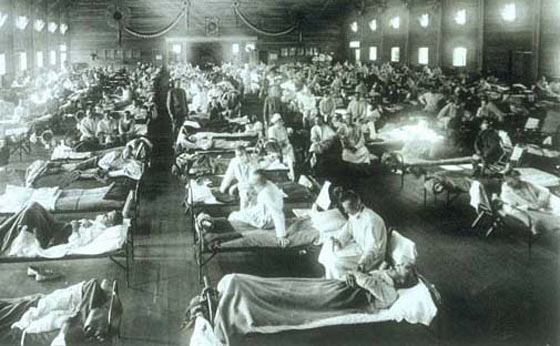
The following list is for items that most people forget to include in their basic first aid kits and supplies. If you’re worried about an outbreak like the current Ebola outbreak hitting the U.S. in the near future (you probably should be) then adding the products on this list should be your top priority right now.
Keep in mind that I’m not including basic first-aid items or meds in this list, because most of you already have a stockpile of those necessities on hand.
- Plenty of Hand sanitizer and soap – wash hands thoroughly with hot water and regular or anti-bacterial soap, then use hand sanitizer.
- Disposable thermometers
- N95 HEPA (High-efficiency particulate air filter) masks
- Heavy 4 – 6 mill clear plastic for building quarantine areas
- Duct Tape (for putting plastic up)
- Staple Gun and Staples (for putting plastic up)
- Vent fan for negative airflow into the quarantine areas – an air filtering system would be great but probably not possible for most. Ducting can be installed to route contaminated air to someplace safe.
- Medical Grade Gloves
- Lysol Professional Quaternary Disinfectant Cleaner Concentrate
- Plenty of Bleach
- Spray bottles for bleach and/or other disinfectant solutions
- Large washbasins for washing and disinfection
- Bed coverings (Fluid Protective)
- Biohazard Waste Disposable Bags
- Body Bags
- Hydrated lime
- Large trash bags
Please add your thoughts and suggestions in the comments below…
10 Must Use/Read Prepper Food Storage Resources

1. Food storage calculator: Use this calculator to determine the minimum food storage requirements for your family for one year. While not an exact science it is a good starting point – you’ll still need to make the final list based on each family members needs.
2. Start your food storage on $10 a week: Good article written by Alan T. Hagan for Backwoods Home Magazine. He states “Depending on what you decide is important to you, everything you will need for a complete food storage program can be had from your local grocer and, perhaps, some other local businesses.”
3. Family Home Storage: Some good information by LDS, even if you’re not religious or a member you’ll find the information useful.
4. Food Storage Videos: Results from a search on YouTube for the term “Mormon Food Storage” – while I didn’t watch them all the ones I did watch looked and good offered sound advice.
5. Prudent Food Storage: More survival food storage information presented by Alan T. Hagan via his free online book Food Storage FAQ. Worth printing and putting in a binder.
6. Food Storage Guide: Good information and chart listing the estimated shelf life of various foods…
7. My Free Food Storage List Printable (click to download the PDF).
8. And a follow-up more complete printable checklist for stocking up at Walmart (click to download the PDF)
9. And my article “The Prepper’s Food Storage Checklist (click here to read it now.)
10. And my best selling book which is in itself a complete prepping course (click here to read the reviews of my book at Amazon).
Please share your best food storage resources in the comments below.