
• Skip to main content
  • Skip to secondary navigation
  • Skip to primary sidebar
  • Skip to footer

M.D. CREEKMORE

  • Blog
  • Start Here
  • Freedom Files
  • Books
  • Subscribe
  • Facebook
  • YouTube
  • Privacy Policy
  • Affiliate Disclosure
  • Contact
You are here: Home / Archives for Uncategorized

Uncategorized

Here you will find articles that don't fall into another category (or that I forgot to assign a category to), so look out you might find anything here!

Should a Faraday Cage Be Grounded?

January 22, 2019 M.D. Creekmore

Should a Faraday Cage Be Groundedby blogRot.

Yes, a Faraday cage should be properly grounded to be more effective at preventing damage to electronics as grounding provides a discharge path for EMP. I’ll cover the why and how below so read on…

Electromagnetic Pulse (aka EMP) or a Coronal Mass Ejection (CME) from our sun produce high-powered electromagnetic ‘rays’ that are very damaging to electrical and electronics based equipment. Rubbing your bare feet across the carpet generates a significant electrostatic potential that you feel when you then touch something metal like a door handle – that spark is a discharge of roughly 4,000 volts to 35,000 volts.

Lightning cracks across the sky are 10,000 volts and more.  YES, the voltages created from you rubbing your feet and lightning is roughly the same but there is an ‘umph’ factor behind the voltages that I could explain but do not want to have anyone’s eyes cross.

Ever tried to heat up some Earl Grey with your DW’s gold trim porcelain tea cups in the microwave?  Did you notice the fireworks from that boneheaded move?  For comparison, EMP is both similar and different to the above but much more powerful the closer to ground zero one is, and CME could not only be up to EMP powerful but is also sustained – the Earth could be in the sun’s blast zone for hours or days whilst an EMP burst is milliseconds.  EMP from a nuclear detonation can still be higher than 100,000 volts hundreds of miles away.

What this electromagnetic energy does is to create (‘induce’) energy potential (voltage) in equipment even when it is not plugged in.  This is bad, as not only is this not controlled (like plugging something in backward the energy doesn’t go in the correct pathways and it burns up) but also that energy could very easily exceed tolerances of the components of the equipment – something as low as 30V inducement could irreparably damage electronics.

And electronics are everywhere and are needed for/included in electrical systems like your car, generators, central air conditioners, etc.  If that electronic control goes kaput it is hard if not impossible to get that electrical system it controls/manages to work.

Furthermore, the susceptibility of electronic memory components needs to be considered: even if the electronic memory component physically survives the inducement there is a strong chance that the critical programming codes it contains may be altered enough to ‘break’ it!

Your Kindle or laptop may survive undamaged but the software it needs to power up and run would be corrupted enough to make it useless and its data irretrievable.

To be honest, until there is a detailed study of a modern-day nuclear detonation near a population center I do not believe the magnitude of EMP effects are truly understood, anticipated or expected – I can only fantasize about what the results are and believed that most experts just don’t know every cause-and-effect nor the true extent of the damage (the good-stuff data is Classified).

Yeah, there was Project Starfish Prime in Hawaii, but that was more of an incidental byproduct and not specifically set up to be monitored – “ugh… Honolulu just called and said their streetlights all went out; did we just do that?  Yes, but let’s call it part of a study so Congress will fund it. Ka-ching!”  I do recognize EMPs and CME events as being catastrophic no matter what.

So how does one protect his precious ham radio, her dc/ac inverter, or their computer from these high energy discharge events?  While some special equipment can be ‘hardened’ by design the chances of you acquiring this military-grade engineering or old-school manufacturing is not expected.  Automobiles and airplanes used to be made without electronics; today nearly everything is and today’s products are soundly engineered using the least amount of material necessary in its construction.

Great for cost savings, but no wiggle room for extra capacity.  Grandpa’s wire wound antenna I inherited in his vacuum-tube based radio weighs more than my entertainment center – this is the old-school manufacturing that I am referring to.

The wiring in those old electrical systems would be considered over-engineered in today’s standards; they were bigger back then and those bigger wires can conduct more power through them before overheating and burning out.  Hardening and modern RF shielding is a whole ‘nuther bag of beans topic-wise, and this is just a brief snippet to show contrast to the other option.

…and that other option is to Shield it.  There is a reason UFO nutters wear tinfoil hats – it is actually sound physics in shielding from electrical waves; however, unless it is properly Grounded then it is useless.  So do you truly know what ‘grounding’ is?

Earth ground is special in that it is ASSUMED to be able to absorb an unlimited amount of Current without changing its potential (Voltage).  Another way of saying it is that earth ground is always ASSUMED to have zero volts, no matter how much current/power it is subjected to.  Electromagnetic radiation continues to propagate until dissipated through earth ground… err… it travels until stopped by the earth.

Let us assume the equipment is plugged into the wall outlet and is exposed to EMP.  This means that is being zapped and induced with ~100,000 volts of energy, more than likely turning whatever was plugged in into a heavy paperweight.  Light bulbs will explode, electronics will pop n fizzle, and if it was already running then it may catch fire.

Not to mention that the power lines are already saturated with its own induced energy, causing further mayhem and destruction.  “But I had it turned OFF” you say; well, unfortunately most On/Off switches only opens one leg of the circuit loop so that induced power will flow through the ‘neutral’ just like if it was running (and destroying it) or it will flow at the speed of light through the ‘hot’ and then to another piece of equipment you have running and THEN back to earth ground.

It still goes ‘poof’.  Or it may even arc the distance across the leads of the On/Off switch.  Multiply this effect by all of the items you have plugged into the walls of your house, then all of the houses tied into your electrical grid.  Many, many ‘poofs’.  Even if the mains breaker on your house trips you’re still left with 100,000v inducement in the house wiring.

“So just leaving it unplugged will protect it, right,” you ask?  Not really.  Let us say you’ve got a nice 1000W dc inverter tucked away on a shelf.  It will still get zapped by 100,000 volts, but that induced energy potential doesn’t go anywhere until that energy potential is great enough to overcome the resistance of air(!) to get to Ground.

And since we know from the paragraphs way up there at the beginning that lighting can arc through the air at somewhere around 10,000, we’re still turning that nice 1000W inverter into a paperweight as that induced energy somehow, someway discharges itself to ground.  Or it might not immediately, and stay at 100,000 volts potential, but then you touch it… ouch, or plug it in.. ‘poof’.

“But I want my eyes even further crossed – what else you got?”  You are masochistic, my friend.  Let us continue to Shielding.

Electromagnetic radiation wants to go to earth Ground – it is its destiny, that’s its sole purpose in the universe, its feelings would be hurt if it couldn’t.  To protect equipment we either need to “hide” it ten feet or more underground or “shield” it before the energy waves find it.

Hiding doesn’t mean putting it in the basement or the storm cellar – you need at least ten feet of earth above your abode; we’re talking underground bunkers here.

By surrounding it with – but not touching – a grounded conductive enclosure the electromagnetic waves and/or static discharges are harmlessly shunted around the sides of the enclosure.  Some dead dude name Benjamin Franklin (I’ve never heard of him either) noted as the discoverer of this but some other dead dude named Faraday codified it, thusly the Faraday Cage.

Almost anything can be made into an effective Faraday cage, provided it is:

  • conductive (“Yay!” screams the tinfoil hat crowd),
  • properly Earth Grounded (“Hissss!” boos the tinfoils),
  • adequately surrounds whatever is trying to be enclosed (“Hey, we need to breathe yo!” the tinfoils’ excuse is),
  • whatever is inside is sufficiently insulated from this cage. (“I got nothing.” Me either.)

Microwave ovens are designed and built as faraday cages and continue to function as such even if it doesn’t work anymore.  Ever loose cell phone reception in an elevator?  That is the Faraday cage effect, my friend.  A grounded safe or vault.

Properly grounded tinfoil around a box.  You can use a military surplus ammunition can, drill and tap a hole, screw in a lugged ground wire and clip it to the metal shelf support next to the other ammunition cans you’re using as such, and tie that shelf into earth ground.

“But what about using bird cages, chicken wire, and/or DW’s heirloom spaghetti strainer bowl?”  Depends, and this is where the lack of public information comes in to play.  The spacing of the electromagnetic permeable conduits acts as a wave-guide of sorts and determines what frequency of electromagnetic radiation is rejected, attenuated or passed.  WAIT- Please don’t leave, I didn’t mean to get too technical!

Think of an EMP burst as a golf ball passing through a Faraday minefield of putting holes of different sizes – too small a hole and the ball will roll over it and too big a hole the ball will bounce out and continue on.  Complicate that further by not knowing what size of the golf ball is to begin with.  So it might just be that the hole spacing in a birdcage and chicken wire won’t be able to shield out enough of the EMP.

I can’t say for sure that these materials would be 100% effective against EMP or CME events, but something is better than nothing and this something is *significant*.  I use chicken wire over certain things I’ve got in the shed; if you think the holes are too widely spaced then add another wrap around it.

There is no Prepper Law that says you can’t have DW’s spaghetti strainer covered by chicken wire over a birdcage.  Solid cage is best, next is the smaller the spacing of the holes the better off you are.  Just make sure whatever you use is properly grounded to earth ground.

“So what does properly earth grounded mean?” A good earth ground is a conductive rod that is driven into the ground 10 feet or so – and the depth is dependent on where the damp earth starts; Texas building code is 10 feet so that’s what I stuck to.

The licensed electricians I work with say some houses have copper plumbing that acts as the earth ground.  The shield has to be connected to it and you need to make sure the grounding wire is thick enough to handle the ‘funneled’ energy (if you’re covering an entire safe room then tiny 24ga speaker wire will not be sufficient – use a battery jumper cable) and makes a good, solid contact to whatever earth ground you are using as well as the shielding material.

“Properly insulated?” If the equipment you want to shield is actually touching the cage then there is a conductive path for the energy burst to follow that could compromise your equipment; it becomes part of the shield, therefore, it is fully exposed.  Put that inverter in a cardboard box, wrap it in a garbage bag, then put it in that properly grounded junky microwave.  Throw in a desiccant bag for good measure.

“’Conductive’; you keep using this word.  I do not think it means what you think it means.”  Copper is the best common material that conducts electricity and the higher the content of the copper in the conductor the better it does that job.  Aluminum (probably the worst), steel, brass, tinfoil and other commonly available alloys do work but are not as efficient as copper.  But those *do* work as conductors, so don’t disregard them if that’s what you’ve got available.

EMP or CME related puns welcome in the comments; I enjoy electrifying conversations.  (<- see what I did there?  Hah! I kill me!)

Filed Under: Uncategorized

New York City Knife Laws: A Simple Cheat Sheet With All You Need To Know

January 21, 2019 M.D. Creekmore

New York City Knife Laws

Many weapons law experts believe New York City knife laws are at best confusing and at worst contradictory to the knife laws mandated by the State of New York. Several court decisions have attempted to unify New York state and city law, with many of the cases appealed for further clarification.

[ Note: Out of all of the pocket knives available on Amazon.com this one is my favorite everyday carry knife – click here to see what it is on Amazon.com. I love this knife! It’s built like a tank and holds an edge better than any other knife that I’ve owned…]

On average, more than 4,000 people are arrested every year in New York City for carrying a gravity knife. One of the reasons for the high arrest rate is New York City knife laws include a provision that states it is a crime for anyone to open a knife by flicking a wrist.

Here are the knives New York City residents and visitors are allowed to own:

  • Hunting
  • Dirk
  • Dagger
  • Stiletto

Here are the knives you cannot own in New York City:

  • Ballistic
  • Can Sword
  • Metal Knuckle
  • Throwing Star

You must be a United States citizen to own a knife in New York City. Municipal law makes it illegal to own a gravity knife unless you obtain a valid hunting and/or fishing license. City law prohibits owning a knife of any kind, if the intention of using the knife is to hurt another person.

What New York City Knife Laws Mandate

Here is the how New York City knife law reads in regards to criminal charges:

  • 265.01.  Criminal possession of a weapon in the fourth degree

A person is guilty of criminal possession of a weapon in the fourth degree when:

(1) He or she possesses any firearm, electronic dart gun, electronic stun gun, gravity knife, switchblade knife, pilum ballistic knife, metal knuckle knife, cane sword, billy, blackjack, bludgeon, plastic knuckles, metal knuckles, chuka stick, sand bag, sand club, wrist-brace type slingshot or slungshot, shirken or “Kung Fu star”; or

(2) He possesses any dagger, dangerous knife, dirk, razor, stiletto, imitation pistol, or any other dangerous or deadly instrument or weapon with intent to use the same unlawfully against another.

RESTRICTIONS ON CARRY

Written into a New York City ordinance, a resident or visitor to the city is allowed to carry a knife that measures fewer than four inches.

“It shall be unlawful for any person to carry on his or her person or have in such person’s possession, in any public place, street, or park any knife which has a blade length of four inches or more.”

Although legal to own, New York City law prohibits the open and concealed carrying of a dirk, dagger, or stiletto, if the intent on carrying any of the three knives is to use the weapon to harm another person. New York City does not have either an open or concealed carry law. Implicit in the absence of open and concealed carry knife laws is the premise that carrying any type of legal knife is allowed based on good intent.

One of the many quirks of New York City knife laws is the provision that presumes bad intent for people open and concealed carrying legal knives such as dirks, daggers, and stilettos. You can contest the presumption of bad intent in court, but that leaves you at the mercy of a judge or jury that might view New York City knife laws in a legal light that is not favorable for your case.

Determining whether someone carried a dirk, dagger, or stiletto with the purpose of hurting someone else is a murky legal water to traverse. As it is hard to read someone’s mind, judges and juries often turn to past criminal records to determine guilt in a legal to carry knife law case.

In the People v. Richards, the jury ruled in favor of Mr. Richards because he did not display the knife he was carrying in a threatening manner, nor did he make a verbal threat to harm another person. In this case, Mr. Richards told arresting officers he carried the knife for self-defense and the jury concurred. However, other cases have ruled against the defendant because of a prior arrest for committing a violent act.

Important Provisions of New York City Knife Laws

One exception to the knives deemed illegal to own and carry involves possessing a gravity knife and/or a switchblade. New York City knife laws permits the use of the banned knives for fishing, hunting, and trapping purposes, but you must present a valid fishing and/or hunting license to enjoy the legal exemption. New York City law defines a switchblade to be “any knife which has a blade which opens automatically by hand pressure applied to a button, spring or other device in the handle of the knife.” Gravity knives contain a blade that releases from a handle, sheath, or the application of centrifugal force.

Knives Stored in Vehicles

Any knife discovered inside a vehicle in New York City is deemed to be the property of every occupant of the vehicle. That is, unless a knife is discovered on one of the occupants. Several court cases have established the precedent that even if one occupant takes a knife out of a pocket and places in on a car seat unseen, the knife is still considered the possession of every occupant of the vehicle. For any vehicle hired by a customer, the driver of the hired vehicle is not presumed to be the owner of the knife.

Age and Schools

New York City knife laws states anyone under the age of 16 is not permitted to own and/or carry a “dangerous knife,” as defined by New York state law (N.Y. Penal Law § 265 05). The next clause in the New York state penal code makes it unlawful for anyone to possess a weapon on school grounds.

New York City Knife Laws Moving Forward

The growing calls for gun more control legislation in New York state has Second Amendment advocates worried about the status of knife laws in the state. Moreover, since New York City often sets the standard for weapon restrictions in the state, it is possible more stringent knife laws might receive approval from the New York City Council as soon as 2019.

Note: None of the material in this article should be interpreted as legal advice.  I am not a lawyer.  Never take any action with legal consequences without first consulting with a lawyer licensed in your jurisdiction.  This article should not be relied upon for making legal decisions.  This information is provided for scholarship and general information only.

Check out these related articles:

  • What’s The Best Multi-Tool to Buy For EDC
  • Best Survival Knife of for Under $100
  • Best Folding Knives For Self-Defense
  • Work Sharp Pocket Knife Sharpener Review
  • SOG Tactical Tomahawk Review

Filed Under: Uncategorized

Types of and Effects of Nuclear Weapons on Humans and The Environment

January 18, 2019 M.D. Creekmore

Effects of Nuclear Weapons on Humans

by Ron G

Think of this as a primer if you will. It is written to cover the basics that will matter most to you as a prepper. I am intentionally leaving out a lot of technical jargon; there are others willing to throw that out at you.  There will be some terms and concepts that do need to be understood. One I will use a lot is Ground Zero (GZ).

Ground Zero is that point on the surface of the earth directly under, at, or over, a nuclear detonation. Your location, distance, and direction, from GZ is very important.

It’s important that you understand that there are four types of nuclear detonations or “burst”. Sub Surface Burst, Surface Burst, Air Burst, and High Altitude Burst.

All nuclear burst will produce the same basic effects, blinding light, tremendous heat, massive blast wave, radiation, and the electromagnetic pulse. However, the type of burst will greatly determine the degree of each effect upon the target.

A Sub Surface Burst is one that occurs underground in which the fireball produced does not break thru to the atmosphere. The ground will shake and there may be a surface collapse at GZ but on the surface, there will be no radiation or EMP released or blast wave.  Really nothing to be concerned with and I mention it only because they have been used during weapons design testing programs in the past.

A Surface Burst is a detonation on or near enough to the surface where the fireball touches the earth’s surface. This is the one we almost always see in the movies and in illustrations for articles like this.  There will be a brilliant flash of light, a massive fireball, and an intense outward-bound blast wave outward from GZ. As the fireball starts to rise a second blast wave, this time returning towards GZ, arrives and brings with it massive amount of debris.

This debris is forced upward into the fireball and creates the stem of the familiar “Mushroom Cloud”. At GZ there is total destruction and depending on the size, design of the weapon, and to a degree, the terrain, the area of total destruction can be considerable. Large areas of partial and incomplete destruction will extend even further.

Meanwhile, the Mushroom Cloud continues to rise through the atmosphere, the stem discontinues and temperatures inside the fireball start to cool down. As it cools the prevailing winds will start to push the fireball downwind. The material inside the fireball, now radioactive, cools and starts to fall, largest, heaviest material first.

By the time it reaches 30,000 feet the fireball will appear to be just another cloud but this cloud will be leaving behind a trail of radioactive fallout for several hundred miles.

GZ will not be survivable and will be radioactive for a long time. The further away from GZ you are the better your chances. A safe distance downwind will be much further then a safe distance cross or upwind.

An Air Burst is a detonation in which the fireball does not touch the surface of the earth. It has all the other characteristics of a Surface Burst but there is no Mushroom Cloud and most important there will be no significant fallout. What the Air Burst will do however is create a much larger area of destruction. It does this by creating three blast waves.

As the expanding blast wave (or initial wave) strikes the surface of the earth, it is reflected off the ground to form a second shock wave traveling behind the first. This reflected wave travels faster than the initial wave since it is traveling through the air already moving at high speed due to the passage of the initial wave.

The reflected blast wave will merge with the initial wave to form a single wave. This is called a Mach wave. The overpressure at the front of the Mach wave is generally about twice as great as that at the initial blast wave.

If you have trouble picturing this try thinking of a ripple hitting the edge of a calm pond. This deflected wave becomes a second wave. The third wave will be the displaced air mass returning to GZ.

These types of detonation will double the area of destruction without the messy fallout. You can see the military advantage of this type of detonation. GZ will not be survivable but will not be radioactive for long. The distance from GZ you will need to survive the destructive blast are much greater but fallout will not be an issue.

Last of all is the High Altitude Burst. A detonation above 100,000 feet is a High Altitude Burst. No blast damage. No fallout. Your personal physical threat from this would be the potential flash blindness from the initial burst. The purpose of this type of detonation is the Electro Magnetic Pulse.

Lets review. A Sub Surface Burst is really not a military option. Surface or Air Burst, if you are at or are too close to GZ you are either toast or soon to be toast. If it was an Air Burst fallout is not a threat. If it was a Surface Burst and you are located far enough up or cross wind you should be in good shape. If you are downwind…

Fallout.  Fallout is material that was made temporarily radioactive in the fireball through a process called ionization. It has a known decay rate.

There are multiple layers in the atmosphere; each layer is capable of having different wind speeds and directions. As the fireball becomes a fallout cloud and raises and lowers thru each layer the winds in that layer will have an effect. Lower levels will have less effect while upper levels will have more. In predicting where the fallout will go it helps to be a weatherman.

Generally, Continental US weather patterns flow from the South to North and West to East. But, there are seasonal variations. Understanding Highs and Lows and where you are in relation to them, would be useful information.

Knowing that your westerly winds are the lower part of an upper-level low that is moving south you can determine that the fallout will mostly travel south and east. (I once had to explain why surface winds have no effect to an Air Force General. The Major who ran the DoD weather school just sat there and grinned.

Fallout Protection is all about Time, Distance, and Shielding. The longer it takes for fallout to arrive the less there will be. If you are in a safe space, the longer you wait to go out the less you will be exposed to. The greater the distance between you and fallout that has arrived the less radiation you will be exposed to.

The more mass between you and the fallout the less radiation will reach you. I think everyone understands these concepts well enough.

The next thing topic is very important. Targeting in Nuclear War.

In an all-out war the first strikes will be against an enemy’s ability to strike back. Missile Silos, Bomber and Submarine Bases, and Command and Control Centers will be the first targets. Major military bases, seaports and manufacturing centers would be secondary.

In a nuclear war, most targets are going to be hit with Air Burst. Let me say it again. In a nuclear war, most detonations are going to be Air Burst. (ICBM Silos and Cheyenne Mountain in Colorado will be exceptions to this). The fallout will be a problem, but probably not to the extent most of us think. Nuclear Winter? Forget about it. Totally made up bull!

One last thing, if you are outdoors and see an unexplainable, sudden, intense, flash of light and cannot identify the source, immediately drop to the ground, close your eyes, and cover your ears and open your mouth. You want to protect against flash blindness and the oncoming overpressure of the blast wave.

Remember, there will be a second blast wave in the opposite direction, so don’t be in a hurry to get up. Of course, you may be far enough away that the wave(s) may never get there. Count that as a blessing.

Filed Under: Uncategorized

Prepping For Beginners – Simple Ideas on How to Get Started
January 17, 2019 M.D. Creekmore

budget prepping tipsBy A Different Drummer

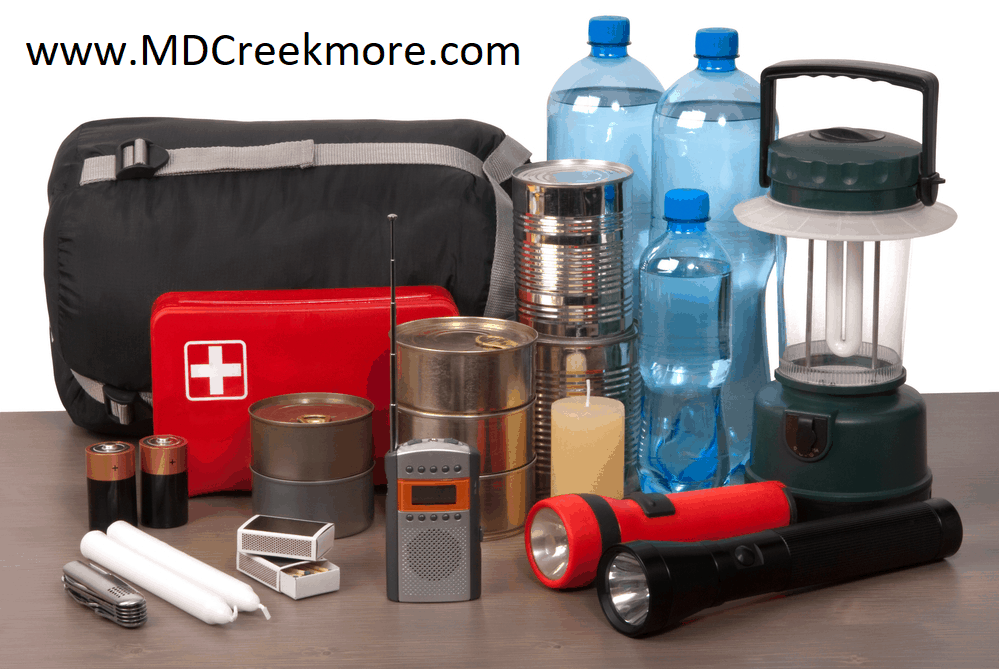
There are many aspects of personal preparedness that make sense, and I know firsthand that once you take a trip down the rabbit hole, the path to preparedness can be daunting at best, if not completely overwhelming.  To this overwhelming state of mind, I wish to remind everyone that you must walk before you can run.

I know it sounds obvious, but once you start “waking up” to the real world we find ourselves in many are drawn into panic because there is so much to do and seemingly so little time.

Where to start?  What’s most important? Bug out bags (click here to read an awesome article on bug out bags)?  Food storage (click this link to read MD Creekmore’s detailed article on long-term food storage)?  Water purification? HAM radio? Alternative energy systems?  Defense “tools”?

The list of needs in a SHTF situation is staggering.  However, I believe that while all those things (and more) are important, maybe even essential given the scenario, what I see most overlooked is just good ol’ common sense personal safety in the home.

For example, are you aware that in 2014 there were over 1.2 million fires reported in the U.S. alone?  Those fires led to 3,275 civilian deaths and over 15,000 civilian injuries.  In other words, the S hit the fan for close to 20,000 people that year, from house fires.  Not financial collapse, CME/EMP or the New World Order, house fires.  Just think about that for a minute and let it sink in…

When is the last time you checked your smoke detectors?  Not only do they need to be checked routinely for battery replacement, but smoke detectors also have expiration dates.  This is something most people aren’t aware of.  If you haven’t checked yours in a while, do it today.

Now let me ask you, where are your fire extinguishers?  Do you know off the top of your head or do you need to think about it for a second?  Can you easily grab one, or is it behind a bunch of stuff that will need to be knocked out of the way?

Do your spouse and/or children know where the fire extinguishers are located?  Do they know how to use one if necessary or when NOT to use them? When is the last time you checked the extinguisher to see if it is still good?  Some extinguishers are disposable and have expiration dates; others can be serviced and can last for years.

Have you made a family/household evacuation plan?  If so, have you ever practiced it?  Nothing can make a minor emergency spiral out of control faster than not knowing what to do in said emergency.  Everyone needs to know at least two ways to get out of the home and where to go once they’re out.

I’m not talking about “bugging out”; I’m talking about evacuating your house due to fire, earthquake, tornado, etc.   You’ve made it out of your home, but the street is blocked off, there are emergency vehicles everywhere, maybe news vans and reporters and of course the curious neighbors and passers-by.  Where do you go?  How do your kids find you if this happens while they are away from the house and the LEO blocking the road won’t let them through?

At the very least you should practice your evacuation plan at least once a year.  The more you practice, the more your response becomes automatic.  And besides, things change.  Another example; my family’s “muster point” should we need to evacuate is in a little courtyard at a small shopping center down the block.

This worked great for 10 years until suddenly the courtyard was fenced off completely for construction and was off limits for a year… It’s important to keep things up to date and even better to have a Plan B, just in case.

Aside from the obvious hazard of a house fire, it’s important to prepare yourself, your family and your home for the type of natural disasters most likely in your area.  For me, its earthquakes, so keeping tall shelves bolted to the walls and keeping a wrench handy to shut off the natural gas valve are some simple, inexpensive preps I can do to help mitigate risk.

Maybe you live in a hurricane zone, so having pre-cut (and labeled!) plywood sheets for your windows would be a simple, low-cost prep that will save you time, energy and further damage when the storms come.

My point is this, we all live with danger, every day of our lives.  There are many things we can do to lower our risk and shorten recovery time, but you have to identify them ahead of time. That is why we all participate in this thing called preparedness!

Sure, smoke detectors aren’t exciting and nobody is going to care about the picture you posted of your freshly serviced fire extinguishers in the survival forums, but these are simple things that will most likely do more to save your life and the lives of those you care about than the latest tactical gear.

It’s easy to get caught up with the preparedness “stuff”, I know because I’m guilty of it too.  And I’m not saying the gear and the long term storage foods and all those other goodies aren’t great to have around.

I’m a firm believer in the better-to-have-it-and-not-need-it-than-need-it-and-not-have-it camp but the fact of the matter is that you and your loved ones are far more likely to face a house fire, a natural disaster or some other mundane crisis than you will need to grab your B.O.B. and your AR-15 and head off into the great unknown to fight the Illuminati.

If you’re one of the newly awakened, take a step back, a deep breath and ask yourself “what type of disaster is the most likely to happen to ME?” and go from there.  Apply a little common sense and get your house in order before you spend all your time and resources on the survival toys that so many crow about.

After all, nothing is going to ruin your day more than having all your hard earned preps lost forever for want of a $6 smoke detector.  It’s often said that skills trump gear nearly every time and I believe that.  I also believe that critical thinking is a skill and one that is underused by many.

If you really think about it, I believe you will agree that preparing your home for the everyday, common emergency will give you a much better chance of survival in the long run than say, another hank of paracord or the latest and greatest gadget to show up on the magazine covers.

Prepare smart, with serious consideration for your location and personal needs and before long the overwhelming panic will subside. And once you got your home base covered, you’ll be ready to move on to your next preparedness phase with a clear head.

Filed Under: Uncategorized

Bug Out Bike – Building a Bug Out Bicycle

January 17, 2019 M.D. Creekmore

by Barry B

Bikes in a TEOTWAWKI situation may be the standard form of transportation and highly valued.  I’m speaking more about mountain bikes (MB) than the traditional multi-speed road bike. Mountain bikes are a great utility vehicle. They can traverse rough terrain, are rugged, and geared to make pulling a small trailer much easier.

This article is more about other things that you might need to support your bike, but first a few things about mountain bikes.  Buy your mountain bikes ahead of a world-changing event – now.  Not all MBs are created equal.

Mass produced bikes that are sold by WalMart, Target, etc. are cheaply made and designed for riding on hard surfaces. They are not designed for off-road riding.  Brands such as Giant, Specialized, Fisher or Cannon are designed for the rigors of off-road riding.

They are double or triple butted at the frame joints for better strength. They also use double-walled rims that will endure hitting rocks and roots without folding like a taco. BTW, the term “tacoing” is used to describe a wheel that basically folded in half on a rough trail.

They use quick release wheels for easier repair. But the greatest difference is in the quality of the drive-train. The shifters, sprockets, derailleurs, and chain are the heart and soul of your bike. The bike brands mentioned above will use higher quality components in the drive train,  that will withstand off-road conditions without breaking. Not only are the materials more durable, but they are machined so as to shift gears more smoothly, even when under torque during climbing.

In a situation where a trip to the bike shop isn’t possible, you need to have high-quality bikes, to begin with. And because bike shops might not be available, you will need essential tools and spare parts to be able to make repairs yourself.  A great reference for your survival bookshelf is, Zinn and the Art of Mountain Bike Maintenance, by Leonard Zinn. This book describes, with good illustrations, how to adjust or repair anything on your MB. 

The minimum tools and equipment you should have include spare tubes in your bike’s size, tire levers, AND several tube repair kits.  Replacing a damaged tube with a new one is faster and gets you back on the road faster. Tire levers assist in breaking the bead between the tire and rim so that the tube can be removed.

Save the damaged tube to be patched later and reused. Tube repair kits contain sandpaper for roughing the area to be patched, several sized patches, and glue. Patching a tube requires a bit of practice and should be learned before the skill is needed.  To re-inflate the tire, you will need a hand-pump.

Many riders carry CO2 dispensers to inflate tires, but you will quickly run out of CO2 canisters.  Hand pumps are more work, but you never run out.  Spare tubes filled with Slime (a name brand sealing compound) will also self-seal small punctures and keep you moving until you can get to a safe location and in my opinion are worth the extra expense.

You should also have spare tires stored at your location. Tires eventually wear out but also may be punctured to the point they cannot be repaired. Plain rubber tires are the least expensive, but tires impregnated with Kevlar are more puncture resistant and will last longer (and a bit pricier).

A broken chain can be fixed in a matter of minutes if you have a chain tool. A chain tool runs $10-15 and the price beats walking home if your chain breaks.  Chain tools simply hold a link in place while the pin is pushed out or pushed back in.  It keeps the pin aligned with the link.

The broken link can be removed and two links rejoined with this tool. Again, fixing a chain requires some practice that should be done ahead of time. You don’t want to be learning these skills on the side of the road, especially in a WROL world. Spare chains should also be kept on hand.

Many parts of a MB use hex screws. There are three common sizes. While you can carry three hex wrenches, bike shops sell a three-in-one tool with a handle that is very convenient and not as easy to misplace.

A key to keeping your drive train in good shape is to regularly clean the system and lube it. Depending on where you ride, the chain lube will attract and hold sand and dirt. Sand and dirt are the enemies to closely machined moving parts.

There are many compounds that will clean dirty chains and sprockets, but a 10% mixture of Simple Green and an old toothbrush is economical and effective.  Scrub the sand and dirt out of each link with the toothbrush and clean in between each gear sprocket. Use the toothbrush to also clean each roller and tensioner.

Once clean, re-lube using chain lube.  DO NOT lube with WD 40. WD 40 works to unfreeze a rusted chain, but the lubricant does not stay where it is needed. Even 30 weight motor oil is better than WD 40 for your drive train.

In summary, if you plan on depending on a bike during TEOTWAWKI, purchase a quality machine first. Be prepared to pay at minimum $500 for a new bike. Be sure to stock up on spare tubes (store in a cool, dry place), spare tires, tire repair tools, a chain tool (and spare chains), along with hex wrenches and a good multi-tool.

And finally, get in shape by riding your MB regularly and gaining the off-road riding skills you will need.

Filed Under: Uncategorized

How To Make Saving Money Fun – Practical Tips for Saving More and Having More!

January 11, 2019 M.D. Creekmore

saving moneyby Lynn (aka The Thrifty Prepper)

Unfortunately, I am a lot newer to prepping than I would like to admit. That feeling in your gut that something just isn’t right has been there for a while before I finally listened.  Now my family struggles to make up for lost time.

I have become like a machine in the last years attempting to streamline and speed our progress to feeling like we at least are somewhat “set”. My husband asked me what I wanted for Mother’s Day and I told him an AK-47 clone was what I wanted the most. He delivered after selling, scrimping and saving.

I was surprised and thrilled. I have gone from being someone who was nervous even having a loaded gun in the house, to someone who is very capable with my weapon.  A bad experience with firearms in my late teens made me a little gun-shy (pun intended) even though I grew up in a family that would target practice once a week. Thank god for muscle memory.

I realize that I am far behind most of you as wisdom goes but can offer some information.  I have rapidly been reading, watching and gathering as much knowledge as fast as possible. One thing that I have a gift for that may be of some use to readers are my skills with shopping.

By utilizing coupons (click here to read MD Creekmore’s article on using coupons) and watching sales, I have been able to rapidly build up a stockpile. Why I realize many of us may be skittish when it comes to social media, I also know what an excellent tool it can be when it comes to saving money.

On Facebook, I have liked sites such as The Frugal Family, Motherhood on a Dime and Thrifty Wifey and when the deals are posted, they scroll across my news feed. For instance, today I was able to score 6 -24 packs of Crayola Crayons for .29 each.  Less money on school supplies, stocking stuffers, birthday presents equals more money in the pocket for preps. Kroger’s this week has a buy 10 save 5 this week. I will purchase 10 gallons of water for 4.90!

Take advantage of the programs that many drug stores offer. I used to just assume drug stores were too expensive to shop at.  CVS and Walgreens (the two main drug stores in my area) are like gold mines. They both offer reward programs with Extrabucks being at CVS and Register Rewards available at Walgreens. The websites I mentioned above are excellent sources that basically spell out which coupon is needed to get the deal you are after.

Sometimes a coupon is not even needed. For example, CVS and Walgreens both will offer contact solution for 8.99 with 8.99 EB or RR back. That equals free! You pay for the product and then upon check out are issued the 8.99 back to be used in the store.  I haven’t bought a contact solution in two years but have 5 boxes sitting in our pantry/store in the basement.

Start looking around to find your favorite sites that fit your situation the best. I have used coupons/store deals to build up three impressive first aid kits (read MD Creekmore’s review of Survival MD by clicking here) for virtually nothing.

I even got the actual first aid kits for free by purchasing two Johnson and Johnson products (at a great discount + coupons).  Study sales cycles and get a feel for when things will go on sale next. Walgreens frequently has baking soda and salt on sale for .59 each approximately one a month.

Buy the limit and build your pantry up.  You can easily search “Sale Cycles” on the net and find when the most optimal time to buy any given item is. I am on a first name basis with the manager at several stores in my hometown. They help me out so much by pointing me to deals I may have missed and making sure I get a rain check for any items they may not have in stock.  I am always polite and thankful and they appreciate it and in return, they look out for me.

So get that Sunday Paper and pull those ads/coupons and sit down and make the deals work for you! There are also excellent coupon sites on the web where you can print out coupons as well. Couponmom.com and coupons.com are two of the best.

Also, even Sam’s club has jumped in with the preppers.  They now sell Auguson Farms products at great prices and allow us to build up our stores quickly (you can also find Auguson Farms products on Amazon.com).   Less money on beans and more money on ammo is working out pretty well for us.

Amazon is another great asset. While of us may not have a “Kindle”, you can download the Kindle for PC free and those sites I mentioned above are always alerting me to free books. I have gotten books on how to make soap, can, garden, survival medicine, you name it! While I realize these tools would not be available in a grid down situation, I print or write out the most important information and put it together in a grab and go form.

I have a young daughter and she outgrows shoes and clothes as fast as we buy them. Yard sales, Thrift stores, and Goodwill are a godsend in these times. When I find something at a yard sale that is three sizes too big but in great shape for the right price, I snatch it up and put it a labeled bin with the size on the side.

We have picked up brand new camping cookware set at a yard sale for only 5.00! Our major scores have also been hand crank grinders, old-fashioned washboards, iron skillets, and camping gear. We have been able to accelerate the rate of our prepping by utilizing these sales to gather things that we could never afford to pay full price for.  Keep a list of things you are looking for and carry it with you. I almost believe it wills the item to you.

Several times I have set out thinking, I hope I can find some shoes for our girl only to happen upon a yard sale with shoes in her size or one size bigger to get us through the school year that is in fantastic shape! I have happened upon a nice dehydrator in this same fashion as well as affordable second-hand tools.

In part of my education, I follow my grandma and grandpa around as they can and garden and they patiently explain to me exactly what they are doing and why. I have also taken to watching documentaries that have changed and challenged me in ways I can’t even explain. If you have not already viewed the documentaries below, they are what shook me awake and I am in complete awe of what our great country is coming to.

  • Zeitgeist: The Movie
  • Independent Intervention
  • Food, Inc.
  • 911 In Plane Site
  • Loose Change 9/11 An American Coup
  • Ethos
  • The End of America

Highly recommended and if you are a Netflix customer, free to watch.

We are working on a plan to acquire land and unfortunately, that is a slow process. My biggest fear is looking into my daughter’s eyes and not being able to help her. I know that is not something that needs to be explained to most parents. I learn daily from you all here on this blog and am so thankful for the valuable information that you all share. Thank you for reading.

Filed Under: Uncategorized

  • « Go to Previous Page
  • Page 1
  • Interim pages omitted …
  • Page 25
  • Page 26
  • Page 27
  • Page 28
  • Page 29
  • Interim pages omitted …
  • Page 33
  • Go to Next Page »

Primary Sidebar

About the author

M.D. Creekmore is the author of five books on preparedness and self-reliance, and the creator of The View From Appalachia YouTube channel. Read more→

Appalachian Freedom Files ⬇️

Appalachian Freedom Files
Hundreds of preparedness and self-reliance resources on a USB drive for offline access.

Subscribe to Blog via Email

Enter your email address to subscribe to this blog and receive notifications of new posts by email.

Join 7,043 other subscribers

Footer

Recent Posts

  • WHAT THEY SAY VS. WHAT THEY LEAVE OUT
  • Have We Lost the Right to Be Left Alone?
  • Are You Still Here?
  • You Have Less Time Than You Think
  • This Is Happening Right Under Our Noses

Start Here

    • About M.D.
    • Freedom Files
    • Books
    • YouTube
    • Newsletter


Follow me elsewhere

  • Amazon
  • Facebook
  • Instagram
  • Twitter
  • YouTube

© 2008–2026 M.D. Creekmore · As an Amazon Associate, I earn from qualifying purchases.