by Tara Dodrill
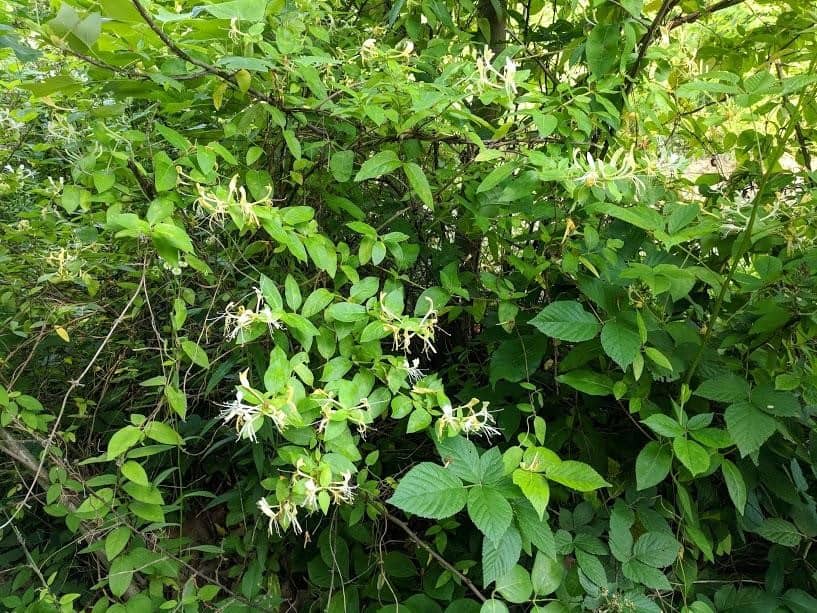
The honeysuckle bushes are good for a whole lot more than making a sweet-smelling wildflower bouquet. Not only are most varieties of honeysuckle edible, the boast copious amounts of medicinal benefits as well. The common and highly invasive vine has been used by herbalist and in traditional Chinese medicine for centuries to treat minor to serious illnesses.
Honeysuckle Medicinal Benefits
The wild vine has been used to help treat and prevent a long list of ailments and disorders. Although, like with most natural herbal remedies, there is no scientific evidence of FDA guidelines to back up the claims of success from herbalists or other users of honeysuckle home remedies. Some users maintain using honeysuckle is useful in treating cancer symptoms.
Top 15 Honeysuckle Natural Remedy Uses
- Inflammation and Joint Pain
- Headaches and Migraines
- Common Cold
- Nausea, Digestive Disorders, Ulcers, and Stomach Aches
- Detoxification from Toxins
- Flu
- Arthritis
- Fever Reduction
- Congestion
- Skin Rashes, Insect Bites, and Boils
- Immune System Booster
- Urinary Disorders
- Diabetes
- Rheumatoid Arthritis
- Lowering Cholesterol
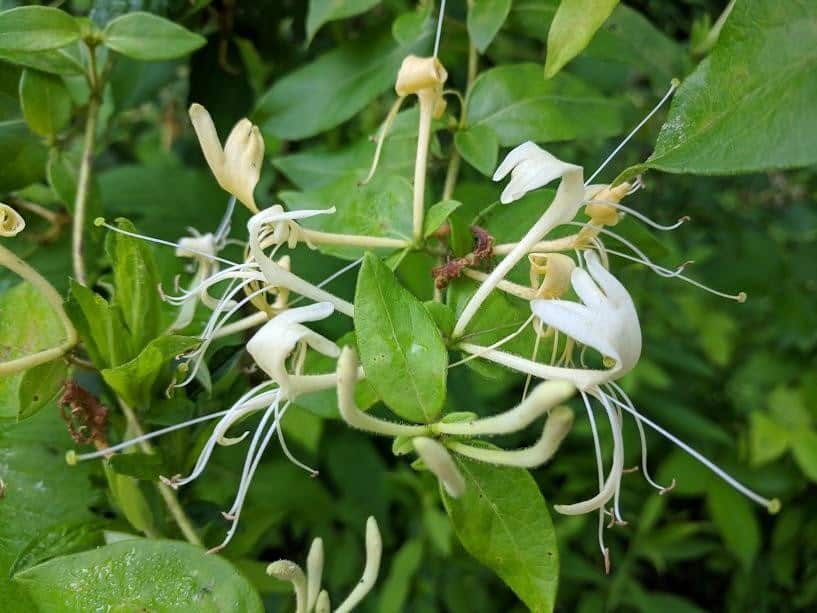
Honeysuckle is a great source of Quercetin, an acid that thwarts free radicals internally, vitamin C, calcium, potassium, and magnesium. The beautiful vine also possesses a vast array of natural antibacterial and antiviral properties.
Honeysuckle medicinal tea and a syrup have been used to help treat pneumonia, staph, tuberculosis, chicken pox, and salmonella, and strep infections. The wild invasive bush also contains salicylic acid – a natural predecessor of aspirin.
Honeysuckle Stem
The stems from honeysuckle bushes can be rubbed directly onto the affected area of the skin to help relieve swelling and to dry up a rash. Although any part of the plant can be used to help treat a skin condition, it is the stem that seems to provide the best and most timely results.
Honeysuckle stems have also been ingested after being chopped finely or mixed into a syrup in an effort to treat mumps, arthritis, and hepatitis.
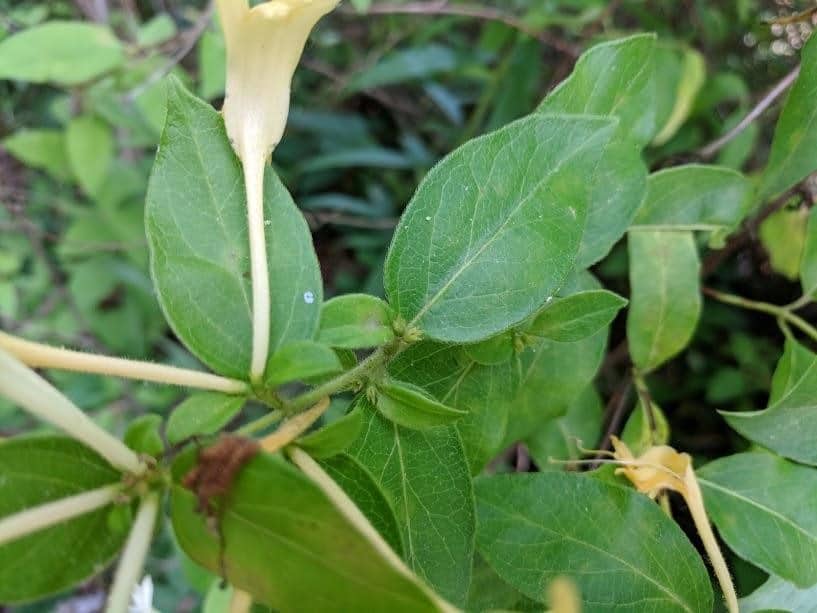
The stem is the base of the long white or yellow floom leading up to the blossoming flower.
Honeysuckle Bark
The bark of the plant can have a diuretic effect on the human body. Because of this quality, honeysuckle bark has been ingested to treat conditions such as kidney stones, gout, and various ailments of the liver.
Honeysuckle Leaves
The plant’s leave are often used in natural mouthwash recipes and used as a facial astringent. Although it is usually only the blossoms that are used in creating homemade flower perfume, the leaves can be infused into such a mixture as well to create an overall natural beauty recipe.
The leaves can also be tossed into the medicinal honeysuckle tea in an effort to alleviate sore throat pain more quickly.

Learn to identify the leaves of the honeysuckle plant so you can easily identify it even when no in bloom.
Honeysuckle Flowers
When harvesting honeysuckle flowers for medicinal use or cooking, it is best to pluck them from the stem as close to the branch as possible to avoid losing any of the nectar contained in the stem.
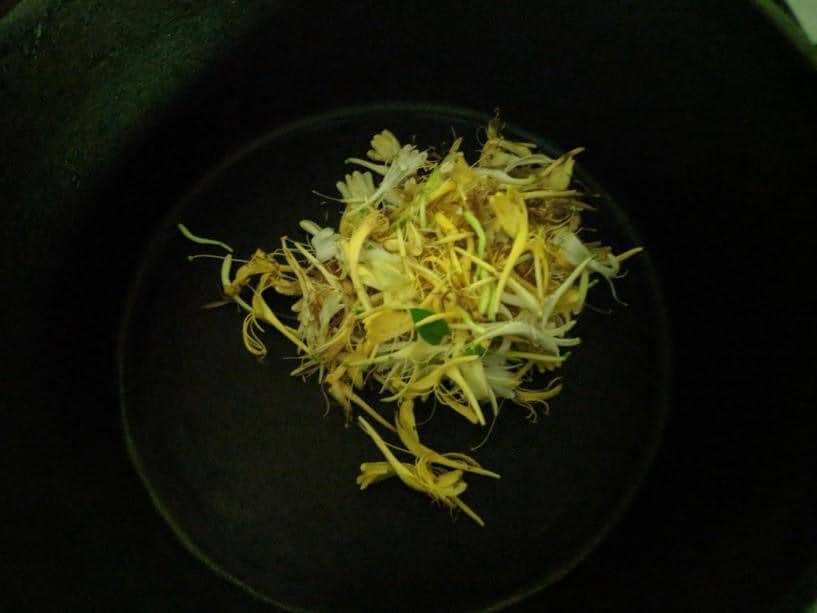
Honeysuckle flowers are the primary ingredient in the medicinal tea, syrup, and glycerite brewed from the plant. They are also the most often used part in recipes containing the wild edible. The taste of honeysuckle is so deliciously sweet it has been used to make both ice cream and cake.

If you have goats on your survival homesteading retreat, you will never have difficulty identifying honeysuckle vine even when the bushes are not in bloom. Goats of all breeds just can’t seem to resist the sweet taste of the entire plant year round.
Preserving Honeysuckle
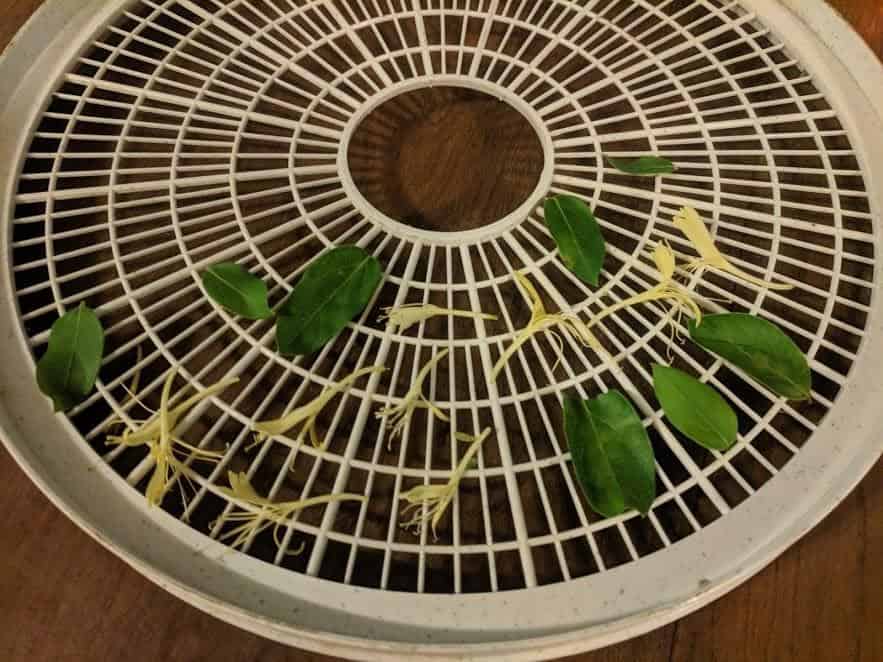
The leaves, flowers, and stems of the wild edible can be dehydrated and stored in an airtight container for long-term use. If using an electric dehydrator, dry the plant at the lowest possible setting (approximately 130 degrees )to for approximately four to six hours – or until the wild edible has a crispy feel.
You can finely chop the honeysuckle parts and blend them into a powder once they are dried, place a plastic solid or mesh liner into the dehydrator tray to hold the fine matter. Make sure to leave plenty of room for air to circulate around the flowers, leaves, and stems if you leave them whole.
How To Make Honeysuckle Syrup
Ingredients
- 1 cup of water
- Approximately 50 honeysuckle flowers
- 1 cup of water
Directions
- Mix together all of the ingredients in a medium pot.
- Turn the burner to medium heat and stir constantly while the mixture comes to a boil.
- Turn down the heat and allow the mixture to simmer for about four minutes.
- Remove the pot from the stove and allow mixture to cool entirely before storing in a Mason jar or other airtight container.
Honeysuckle Syrup Uses
You can use the medicinal and sweet syrup as a topping for desserts, pour a pinch into water, tea, or lemonade, or freeze in ice cube trays to preserve it for long-term use in recipes and cough natural homemade cough syrups.
How To Make Honeysuckle Tea
Ingredients
- 2 parts water
- 1 part honeysuckle flowers
- Two pinches of honeysuckle leaves – optional
Directions
- Bruise or lightly crush the honeysuckle flowers between your fingers or gently with a wooden spoon.
- Place the flowers into a pitcher – or a cup if making a single serving.
- Pour the water over the flowers and stir.
- Place the pitcher or cup into the refrigerator or a cool place or at least six hours – overnight is best, if possible.
- Strain the flowers through cheesecloth, a coffee filter, or clean T-shirt, etc.
- Drink the tea over ice or heat it through to serve as a hot tea.
* You can also make a honeysuckle sun tea by putting the same mixture into a pitcher and placing it in direct sunlight for about four hours, depending upon the season.
How To Make Honeysuckle Glycerite
Directions
- Fill a glass jar of your choosing with honeysuckle flower blossoms leaving only about a half an inch of headspace.
- Pour vegetable glycerin into the jar, still being mindful of the headspace.
- Put a lid on the jar and place it in a sunny spot – a windowsill works great.
- Shae the jar once daily to move the honeysuckle flowers about in the glycerin or 30 days.
- Strain the flowers from the mixture using cheesecloth or a similar material, at the end of 30 days.
- Store the honeysuckle glycerin in an airtight container in a cool dry place until ready to use.
How To Use Honeysuckle Glycerite
This natural concoction makes a superb remedy for sore throats. Adults can take one teaspoon of the glycerite up to three times per day. Reduce the dosage amount by half for children.
Warnings
- Honeysuckle remedies are intended only for short-term use. The flowers, leaves, and stems are extremely low in toxicity, but prolonged use could cause negative effects.
- Folks with an allergic reaction to tree pollen could also have an allergic reaction to honeysuckle.
- Symptoms of honeysuckle poisoning include drowsiness, photosensitivity, and dilated pupils.
- Individuals undergoing treatment for chronic illnesses or experiencing diarrhea could have an adverse effect when consuming honeysuckle.
- The wild edible may slow the clotting of blood and could pose a risk if surgery occurs within two weeks of consumption.
Proper identification of honeysuckle is essential when foraging for the wild and medicinal edible. Although most species of honeysuckle are not poisonous (like the Japanese variety shown in the above photos) some species of the plant contain glycosides in the stems and vines and carotenoids in the berries. Honeysuckle plants of this type can be at least mildly toxic to adults and more harmful to young children and pets.
A great book on herbal and natural medicine is The Everyday Roots Book – it’s 350+ pages will show you how to replace all of the toxic products and medications with safe natural alternatives. This book is a must-have for all preppers and homesteaders. Check it out here.


 In an effort to not repeat articles that have already been written, I had held back on sending in anything. “The Pack” is so large and with so many backgrounds, I wondered what I could say that would be of benefit to the community we have become. Then, I realized that because of the expanse of our experiences, some of us have “holes in our preps” of knowledge, that others do not have. I treasure the time I spend here learning and those I have learned from. I realized that my life experiences are unique to me as each of yours is to you.
 Our time management is one of the simplest items to change while being one of the most beneficial for our overall safety. Consider what occurs when you are “in a hurry” how much do you miss and have you ever considered your route while in a hurry? Manage your time in a manner that will ensure you arrive early to engagements which by default helps you be more proactive in your approach to physical monitoring of your surroundings. And maintaining your situational awareness! This leads directly into your physical demeanor, you show stress with your face and nothing increases stress more than bad time management!