• Skip to main content
  • Skip to secondary navigation
  • Skip to primary sidebar
  • Skip to footer

M.D. CREEKMORE

  • Blog
  • Books
  • Newsletter
  • Gear I Use
  • About
  • Contact
  • Facebook
  • YouTube
  • Blog
  • Books
  • Newsletter
  • Gear I Use
  • About
  • Contact
  • Privacy Policy
You are here: Home / 2019 / Archives for June 2019

Archives for June 2019

Is Prepping Keeping You Poor?

June 30, 2019 M.D. Creekmore

Is Prepping Keeping You Poor?

Face it, you probably don’t have the financial resources of the fictional survivalist character ‘Burt Gummer’. Most of us don’t, but that doesn’t mean you can’t be prepared for disaster, but I’ll admit, it would be nice to have all the toys and survival gear the character has on the Tremors movies and television series…

The underground bunker with hardened panic room and escape tunnel, the five-year supply of MRE’s (meals ready to eat), 1,000-gallon fuel storage, backup generators, percussion grenades, tricked out four-wheel drive truck, Barrett .50 caliber and a room full of other firearms, weapons and other assorted gear.

I’m getting excited just thinking about all of that stuff. But, getting back to reality, (yes, I know it sucks) I know I’ll never be able to afford all that stuff and chances are you won’t either. But that’s okay because we can be prepared for disaster without spending a lot of money. I’ve done it and you can too.

The truth is, you don’t have to be rich or spend a lot of money. Unfortunately, emergency preparedness has been commercialized to the point where most people give up before they start, thinking what’s the use, I’ll never be able to afford all this stuff. Why should I even try…

I often hear this from new readers who have just started reading the blog. Like I tell them, there is no need to spend a lot of money, there are alternatives to big-budget survival planning.

Let’s take a look at three areas that we all must consider…

Survival Food

There is nothing wrong with commercial survival foods (I have some myself), they take up little space, are lightweight and have a long shelf life – but they are expensive. A basic years supply can cost several thousand dollars and most of us don’t have that kind of cash.

Most of what you need can be bought at your local supermarket or grocery and best of all you don’t have to buy it all at once. Since most canned foods from the supermarket shelf have a listed self-life of two years or more if stored properly you can add to your supplies as finances allow.

The key to keeping a fresh supply is to eat what you store and to rotate – first in, first out. You can build a rotating canned food shelf or you can buy one prefabricated but these are expensive.

What should you buy at the supermarket you ask. That depends on your particular needs and tastes, but this post “10 Things To Do Now!” should start you in the right direction. Be sure to read the comments as there’s some great advice given by readers there too.

The bulk of my food storage consists of whole grains, however, a lot of people aren’t interested in processing their own foods from basic grains. That is a shame because stocking up this way is the most cost-effective way of building your food storage and saving money now on your food budget.

Even if you skip the farmers market and buy your grain pre-packaged for long-term storage through one of the commercial survival food vendors the saving can still be huge compared to an equal amount of other commercial survival foods.

Just be sure to use what you store in your everyday meals to avoid the shock that can result from a drastic change in diet and be sure you’re not allergic before stocking up on large amounts of wheat.

Water Filters

A source of clean drinking water is essential to survival and while there are many ways to go about this, from boiling to purification with sunlight, I think an effective water filter still makes a lot of sense, especially for a family, but they can be expensive.

I’m a fan of the Berkey Water Filters but most of us can’t afford to spend $258 for a water filter (I got mine through a barter deal with an advertiser) luckily it isn’t difficult to make your own for less than half the cost. I give full details, with photos of how to make your own filter in my book “31 Days to Survival“.

Firearms For Foraging and Defense

I recommend starting with a reliable .22 caliber rifle. A .22 rifle will allow you to take both small and large game with proper shot placement and it can be used for self-defense if needed. Best of all ammunition is cheap enough to allow the stockpiling of thousands of rounds without emptying your wallet.

As to budget rifle choices, I’ve received good reports from several readers about the Romanian M-69 .22LR Training Rifle, however, I can’t vouch for these myself, because I’ve never owned one, but I think they are worth looking into if you can still find one for sale.

If anyone has any experience with these rifles please share with us in the comments below.

A good used break open single shot shotgun such as the 12 gauge H&R Pardner can often be found in used / like new condition for under $100. I’ve seen several recently at the local pawn shop priced for under $75. A 12 gauge shotgun is a very versatile survival tool.

Any retailer selling ammunition will carry at least a few different sizes and weights of shotshells, but in my option #, 6 shot offers the most versatility for hunting small game. Slugs and #00 buckshot work best for larger game and self-defense (check local laws).

The Smith & Wesson Model 10 Military & Police Revolver is the most successful handgun of all time. This revolver has been manufactured since 1902 and has been produced with many variations for both commercial and military use.

Even after a full century of technological advancements the Model 10 is still hanging in there as a reliable weapon with respectable stopping power. As a survival handgun one could do much worse than having a model 10 strapped on your side. Used ones start at around $275 in my area but are getting hard to find.

As you can see you don’t need a lot of money to prepare for disaster but you do need realistic expectations. In the words of Burt Gummer; “You have to do the best you can with what you’ve got”.

We would love to hear your ideas on how to prepare on a budget in the comments below… I’m sure we can all learn something new from each other…


Filed Under: Prepping

The First 50 Things to Disappear from Store Shelves During an Emergency

June 30, 2019 M.D. Creekmore

The Top 50 Things to Disappear from Store Shelves during an EmergencyBy Tom Sciacca

Have you ever noticed how, whenever a big storm is predicted, people start rushing to stores to clean them out of every food item and supply they have on the shelves? In one sense, it’s probably good that they are trying to anticipate the emergency, despite being last-minute about it. It sure beats those people who don’t bother to prepare at all, then complain when emergency services are overwhelmed by requests for assistance.

But why panic in the first place? Why not have a stash of necessary items always ready for such an emergency? Even if there isn’t a storm approaching, it’s nice to know that you don’t have to rush out to the store every time you run out of toilet paper. Keeping some extra around the house is always a good idea!

With this in mind, I decided to ask CampingSurvival.com’s Facebook fans what they felt were the emergency supplies that stores were most likely to run out of when people start to panic. Then I compiled the top comments in various categories so I could share it with you.

Since this list is based on the comments of our Facebook fan page, some of the items (canned meat, for instance) may not be the absolute first things for a store to run out of but are still items that you should consider having among your emergency supplies nonetheless.

Without further ado, here the list of the Top 50 Things to Disappear from Store Shelves during an Emergency, compiled by yours truly:

FOOD

1.Bread
2.Butter
3.Cereal
4.Coffee
5.Eggs
6.Flour
7.Fruit, canned and fresh
8.Honey
9.Meats, canned
10.Milk
11.Peanut butter
12.Pet food
13.Salt
14.Sugar
15.Vegetables, canned and root vegetables
16.Water

POWER AND LIGHT

17.Batteries
18.Candles
19.Charcoal
20.Coolers
21.Flashlights
22.Gasoline
23.Generators
24.Glow sticks
25.Ice
26.Lamp oil and oil lanterns
27.Lighter fluid
28.Matches
29.Propane, propane stoves

FUN

30.Alcohol, drinking
31.Beer
32.Cigarettes
33.Condoms

FIRST AID

34.Alcohol, rubbing
35.Antiseptic
36.Aspirin/pain relievers
37.Cold medicine
38.First aid kits

HYGIENE

39.Feminine hygiene products
40.Paper plates/napkins
41.Shampoo
42.Soap
43.Toilet paper

BABIES

44.Baby food/formula
45.Diapers

IMPROVISATION

46.Duct tape
47.Plastic bags
48.Plywood
49.Radios
50.Rope

Now, before you file this away as mildly interesting reading, take this list and compare it to what you have stocked up. Check to see what you may be missing or what you need more of. And don’t forget that this is only a Top 50 list, so there are plenty of other items that I don’t have space to talk about in this (already long!) blog entry.

Tom Sciacca is a former US Marine, a veteran of the Gulf War, a survival enthusiast and President of CampingSurvival.com.

Filed Under: Prepping

What You Need to Know About Storing and Disposing of Medications

June 30, 2019 M.D. Creekmore

What You Need to Know About Storing and Disposing of Medications

by CB

There are some basic principles that need to be taken into consideration when saving medication, which includes the expiration date, storage conditions, and what type of medication you are attempting to store. 

The easiest way to get extra medication would be to start refilling your medications five days early from the pharmacy.  This will give you a small amount that will slowly increase over time.  Alternatively, you could get samples from the doctor’s office (this will only apply to brand name products).

Make sure to keep the medications in the original containers, if possible, and, as with food storage, employ the FIFO (first-in-first-out) strategy to help ensure the best expiration dates possible.

Medications should be stored in a dry, cool space that is preferably in a darker place.  Medication cabinets in the bathroom places next to heat (like stoves) and areas of high humidity should be avoided because they cause the medication to deteriorate faster and reduce shelf life. 

Generally, the medication should be good for 1 year past the date on the prescription bottle.  Occasionally, some pharmacies will print the expiration date on the medication bottle.

Medications that DON’T store well

Some medications that are for serious conditions, like myocardial infarctions (or heart attacks), some anticoagulants, or “blood thinners,” and other medications have shorter shelf lives.  These should be followed closely since the amount of medication in these disease states is extremely important.  A short list of medications that should be closely monitored for expiration dates and storage include:

  1. Pradaxa (dabigatran) – store in an original bottle; expires 4 months after opening
  2. Nitroglycerin (sublingual, spray, etc) – store in original container; expiration: sublingual – 6 months, spray – 3 years
  3. Insulins – all insulin should be stored in a refrigerator until ready to use.  Insulin can be stored at room temperature away from direct sunlight after it has been used for the first time.  Expiration dates for insulins vary (see table).  The expiration date should be the date from 1st use or the expiration date on the vial or pen, whichever comes first. 
Drug Name Expiration date – after 1st   use
Lantus (insulin glargine) vials, cartridge, pens 28 days
Apidra (insulin glulisine) vial, cartridge, pen 28 days
Humalog (insulin lispro) vial, cartridge, pen 28 days
Humalog mix 50/50, 75/25 Pen – 10 daysVial – 28 days
Humulin R U-100, U-500 vials 31 days
Humulin 70/30 vials, pens Pen – 10 daysVial -28 days
Humulin N (insulin NPH) vials, pens Pen – 14 daysVials – 31 days
Levemir (insulin detemir) vials, pens Vials – 42 daysPens – 42 days
Novolog (insulin aspart) vials, pens, cartridge 28 days
Novolog mix 70/30 vials, pens Vials – 28 daysPens – 14 days
Novolin N vials 42 days
Novolin R vials 42 days
Novolin 70/30 vials 42 days


  1. Insulin Test strips – store in the original bottle away from direct sunlight at room temperature.  Follow the expiration on the test strip bottle.
  2. Also, note that the meters themselves can go “bad” after several years and can give false readings if not replaced.
  3. Aggrenox (aspirin and dipyridamole) – store in the original container

Medication Disposal

Medication disposal is crucial to keep medications from contaminating the drinking water supply.  Some medication does enter the water via human waste, which has shown up in fish that have been sampled.  We can control, however, unused medications from entering the water supply. 

Unused or expired medications, including medications that you can buy over-the-counter, such as Tylenol (acetaminophen) should all be disposed of properly.  That can be accomplished a few different ways.

There are now yearly medication “take back” programs at local pharmacies and even law enforcement offices (for controlled substances such as pain killers) where patients can drop off unwanted or expired medications.  If you choose to do this, black out your name, address, and the prescription # off of the bottle.  If it is a controlled substance (such as Oxycontin®), make sure to leave the name of the drug on the bottle.

If you want to dispose of the medication at home, pour a little water in the pill bottle (after removing the label) to dissolve the pills.  Then, add a substance such as coffee grinds or bleach that will make the pills unpalatable to anyone that may dig through your trash.

Recap the bottle and throw away.  If the pills are in the “blister packs” that require you to pop them out individually, wrap them in several layers of duct tape and then dispose of. For patches, like Lidoderm® or nicotine patches, fold in half and wrap in duct tape or put unpalatable substances on them.

As a brief aside for nicotine products, especially the patches, make sure they are in something that dogs cannot or would not want.  Dogs can easily develop nicotine poisoning by chewing on used nicotine patches.

There are also services available, like the TakeAway® program where you mail the unwanted medications (postage paid) to a disposal factory. For details on the TakeAway® program, ask your pharmacist if that program is available in your area.   Note: this does not include controlled substances such as prescription pain killers, testosterone.

Note: This information is not intended as medical advice or to replace the advice of a physician – always seek the advice of your Doctor first. Also, medication information, including stability, is sometimes updated and listed dates and information presented here are an approximation only.  For the most up-to-date information on expiration dates of any medication, check the package insert or information provided from the pharmacy.  You can also ask your pharmacist or Doctor for more information. 

Filed Under: Health and Fitness

Self-Employment Ideas With Low Start-Up Costs

June 30, 2019 M.D. Creekmore

Self-Employment Ideas With Low Start-Up Costs

by Seeuncourt

“Opportunity is missed by most people because it is dressed in overalls and looks like work.” – Thomas A. Edison

Whether you want to leave the rat race, get off the grid, retreat from the city, enjoy a simpler life, or become self-sufficient, whatever your motive – to achieve your goals you need an income.  You can work for someone else or work for yourself.  Starting a cottage industry can be daunting but it doesn’t have to be. 

Start by exploring your talents and hobbies.  What are you good at doing?  Could you make money from it?  Then, look at your area; is there a niche market for what you do?  Are you able to create that market?  Starting small is key.  The temptation to “go big or go home” may cause you to invest your precious capital in the wrong areas of your business.

Hawking Your Wares

Begin with an analysis of your area for marketing.  Determine if your local area has a farmers market or flea market and how to participate.  Develop an Etsy or eBay page, or your own website.  Ensure that you are not using colloquialisms or local lore to market your product.  I’ll explain; as a youth, I went to a local restaurant with my father. 

My father is from Tennessee, but I was raised in Iowa.  At the restaurant, the menu read, “Ham n Aigs with Taters”.  I asked my father, “What’s an “Aig”?”  After he composed himself he whispered, “Egg”.  Some local cute-isms are lost on the young or international travelers!  Market accordingly! 

The best and most enduring way to market your product, in my humble opinion, is to donate your product or service.  Your generosity will be remembered and passed on to new customers.  Often your donation can be accompanied by your business card revealing to others how to obtain such a good or service.  Happy and satisfied customers are the best advertisement.

Green Thumbs

If gardening is your forte, attend your local or regional farmers markets.  Take notes on what is there.  Identify the excess and the rare.  See what people like and are taking home.  Tailor your efforts toward what is popular, but not in great supply. 

Some ideas that are surefire sellers:  Herbs, Onions, and Greens.  Nothing says “take me home” like fresh culinary herbs, onions, shallots, garlic, and fresh spinach, and salad greens. 

All can be grown year-round outdoors, in greenhouses and high tunnels, and in cold frames.  Low in overhead, simple to grow organically, and to harvest, they are easily packaged with a simple rubber band at the stems or stalks or in plastic baggies.  Think non-GMO, heirloom, and organic!

Cut Flowers and Floral Arrangements

This takes a bit more gardening know-how, but if you are a flower image, put them to work for you!  Donate an arrangement to a local church or nursing home.  Include a “donated by” business card with your business details.

More than Whirly-gigs and Lawn Ornaments

If your talents include woodworking consider items picnic tables, vegetable hods, window boxes, bookshelves, storage cubes, vertical gardens, antler mounting plaques, and natural walking sticks (add a hand-carved wood spirit and leather grip!)  Donate a picnic table to the nursing home or a mini-table to the daycare center with a “donated by” card.  Take orders for your creations by posting with pictures on Craigslist or in the free local add paper.  Consider furniture refinishing as a side industry.

A Stitch in Time Saves Nine

Sewing can encompass everything from quilting to mending and alterations to custom tailoring orders.  It can be basic or include machine embroidery.  You are limited only by your creativity and the capabilities of your sewing machine. 

Be aware that some may not be interested in your finished product, but in learning to make their own.  Offer sewing lessons as a mainstay of this industry.  Consider volunteering to teach a basic sewing course to a 4H or homeschool group. 

Investigate how to teach an adult education course through the local school system choosing an interesting finished product.  Consult with local fabric stores and hospitals to determine if they will display finished class products.

Knitting and Crochet

While a fabulous pastime, hand knit and hand crocheted items are not often lucrative given the cost of fiber and the amount of time invested.  This and the influx of cheap china-mart knits make handmade fiber crafts money losers.  Better to offer a class as above with a finished walk away product.

Givin’ the Dog a Bone

We love our pets, thus, the pet products industry is very lucrative if you can create a product that appeals.  All natural dog treats packaged in human-appealing packaging, for instance, are a boon.  Or, hit up the local thrift shop on “fill a bag for a buck” day (or ask for the unserviceable items at a deep discount) and buy blue jeans and fleece coats or blankets. 

Turn these into creative two-sided recycled pet beds.  Stuff them with fabric scraps and cedar shavings for natural flea repellant.  Collars and leashes:  nylon webbing, paracord, leather – plain or covered in bling, these simple to make and high return for investment items are a must-have for dog and cat owners. 

Think of ways to make them original or trendy.  Donate a few of these items to your local animal shelter.  Ask them to post your business cards in return.

Bartleby the Scribner

Tutoring, typing, medical and legal transcription, resumes –put those 65 wpm+ typing skills to work for you!  Legal and medical offices often search for individuals to take on “a la carte” typing jobs.  Canvass your local area presenting a professional business card.  Obtain a “good conduct” certificate from your local PD and indicate that you will present it upon request.  Consider tax preparation as a seasonal side industry.

Are You Being Served?

Process Server and Notary Public:  With a small investment in training and certification or licensure, depending on your area population, you can make a decent wage as a process server.  Upon certification, make your service known to the local courts and attorneys by sending a business letter describing your qualifications and services. 

Include professional business cards.  Consider the dangers that accompany process serving and consider self-defense classes and/or a concealed carry permit.  Hang out a shingle stating you are a notary public, run a newspaper advertisement and post a notice on the community bulletin board.

Think Outside the Box

Do you own a truck and/or a trailer?  Put it to work for you!  Advertise “two grunts moving” on Craigslist, the free add paper, at the local storage units, and farm store.  Offer to move everything from hay bales and firewood to Aunt Fanny’s antique armoire.  Consider the overhead for packing materials, strapping, and added insurance when pursuing this venture.

Show me Angry – Now Sexy

Quality photography and photo products can be produced with a small investment in equipment and software.  If you have a digital camera, a computer, and a working knowledge of Photoshop, you have the makings of a popular business. 

Use your innate creativity to make stunning birth announcements, senior pictures, graduation announcements, holiday photo cards, etc.  Consider specializing in pet or infant photography. 

Add an additional creative niche selling matted photographs.  Take black and white photos of common objects that look like alphabet letters.  Arrange the photos to spell the name of a local popular establishment.  Mat and frame the photo montage and donate to the establishment with a request that they display your business card.

Tis the Season

Some work is only available dependent upon the season or your geographic area.  The key is to observe what is popular in your area and determine how you can get in on the action.  Some seasonal industries include:  cleaning gutters, sealing hot-top driveways, wreath making, gift baskets, rotor tilling/garden preparation, lawn care, leaf raking, camp wood and ice vending. 

Break up pallets (often free for the hauling) into 16-inch lengths, mix hardwood and softwood pallets, including a pack of matches and one commercial fire starter.  Saran wrap into a bundle.  Sell these and ice at or near local campgrounds (with the appropriate vendors’ permits, of course.)

Dressed in Overalls and Looks like Work

Don’t have all of the skills you need?  Explore the enrichment or continuing education credit courses at your local technical or community college.  These are usually offered at reduced price tuition.  Contact the local High School or Cooperative Exchange Office and determine what adult education classes are available in your local area. 

Request to apprentice with a local tradesperson during the “off” season.  Offer to work for free during the high season as payment to learn the trade.  Some trades to consider include butcher, welding and fabrication, and carpenter.

Your choice of employment doesn’t have to be conventional.  You may develop the next big thing.  Above all else, you must make wise choices and believe that you can be self-sufficient.

How about you?  What is your cottage industry success story or suggestion?

Filed Under: Uncategorized

DIY Homemade Mosquito Trap [That Actually Works!]

June 27, 2019 M.D. Creekmore

Homemade Mosquito Trap - girl spraying on mosquito repellent

By Matt D

You can keep mosquitoes away from your home for good with a few homemade mosquito traps and other simple and easy DIY steps that you can do at home cheaply and quickly…

(Note: If you want to skip all of the details about mosquitoes and how they can spread sickness and disease and get right to the details of how to make a homemade mosquito trap then simply scroll half-way down the page to get all of the nut and bolts details about how to make a DIY homemade mosquito trap…  

Okay, then let’s get started…

Anyone who loves the outdoors knows mosquitoes can be a nuisance. Their relentless search for blood and whining buzz can drive even the toughest outdoor enthusiasts indoors with ease. Along with the allergic reaction that causes itchy red bumps, mosquito bites pose numerous health risks to humans all around the globe.

From the West Nile and Zika viruses to malaria and yellow fever, illnesses spread by mosquitoes can be serious and even potentially deadly (such as microcephaly and encephalitis).

How do mosquitoes spread disease?

mosquito bugMosquitoes are primary vectors for numerous human diseases, which together infect and kill millions of humans each year. The female mosquito sucks blood because it provides nutrients for its eggs. Besides drawing blood when they bite, female mosquitoes also inject an enzyme to prevent blood from clotting.

Therefore, there’s an exchange of fluids between your bloodstream and the mosquito. Mosquitoes are vectors which carry infections between animals and humans.

When the mosquito feeds off an animal or person with a disease, it passes on the infection when it bites another person or animal. The itchy red bumps are an allergic reaction to this enzyme. Mosquitoes find their targets using chemical signals, observing our movements, and by detecting the infrared radiation emitted by warm blood.

Learning how mosquitoes spread disease and how to control them is an important step toward protecting yourself and your loved ones from mosquito bites and the diseases they spread.

The dangers of mosquitoes

According to the WHO (World Health Organization), mosquitoes infect more than 300 million people per year with Dengue and malaria, just two of the most dangerous illnesses mosquitoes can carry. Of those 300 million people, 800,000 die from malaria, and another 20,000 people from Dengue.

West Nile virus deaths illustration

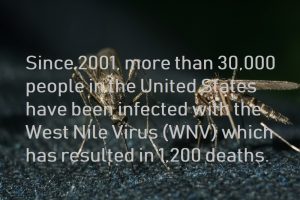
Since 2001, more than 30,000 people in the United States have been infected with the West Nile Virus (WNV) which has resulted in 1,200 deaths. In 2002, the cost of West Nile Virus-related health care alone in the United States was estimated at $200 million.

Besides carrying infections that can be transmitted to humans, mosquitoes can also transmit several parasites and diseases that dogs and humans are very susceptible to (such as West Nile Virus, eastern equine encephalitis, and dog heartworm). Mosquitoes have a 4-stage life cycle (egg-larva-pupa-adult) and they lay their eggs in different breeding areas such as:

  • Ponds
  • Lakes
  • Tree holes
  • Toys
  • Old tires
  • Tarpaulins or plastic covers
  • Buckets
  • Potted plant saucers and trays

These sites are also potential breeding areas for some of the most dangerous species such as the Asian tiger mosquito.

What types of illnesses do mosquitoes spread?

? Chikungunya

Most commonly found in North and South America, Africa, the Indian subcontinent, Asia and Europe, the chikungunya virus is now spreading in the United States. Chikungunya is transmitted by a mosquito species known as the Aedes aegypti mosquito.

It causes fever, severe muscle and joint pain, nausea, tiredness, headache, and a rash that may last several weeks. Patients usually need fluids and rest until symptoms go away. Doctors may also suggest pain relief medication.

? Zika

Zika Virus is transmitted by the Aedes albopictus (Asian tiger mosquito) and Aedes aegypti mosquito. These mosquito species breed entirely around the home. Zika is found in the Pacific region, Mexico, South East Asia, Africa, and North and South America. Symptoms include joint and muscle pain, mild fever, irritated eyes (pinkeye), a skin rash and headache.

The symptoms are usually mild and run their course in less than 7 days. However, if a pregnant woman is infected, Zika can also impact the unborn child. Zika has also been linked to more serious health problems such as a birth defect known as microcephaly and a nervous system disorder called Guillain-Barre syndrome.

Microcephaly: This is a birth defect that causes the baby’s head to be abnormally small and not fully developed. Babies with Microcephaly may have intellectual and developmental delays.

Guillain-Barre: This nervous system disorder usually causes general weakness and mild paralysis. However, most victims recover over time. There’s no vaccine to prevent Zika virus.

? West Nile Virus (WNV)

West Nile Virus is found in Asia, Africa, Europe, North and South America, and the Middle East. WNV is transmitted by the Southern House Mosquito (Culex quinquefasciatus) and the severe version of the virus (neuroinvasive WNV) can be fatal.

Homemade Mosquito Trap

Although some people who get WNV do not have any symptoms, 1 in 5 will have flu-like symptoms such as mild fever, headache, a stiff neck, and weakness of the muscle. Some of the severe symptoms of WNV include confusion, convulsions, and coma.

However, the fatality rate of WNV is less than 1%. The virus usually starts out as a bird disease which is then spread from bird to bird by mosquitoes. WNV spreads to humans when a mosquito feeds on an infected bird and then bites a human.

However, man is the dead-end host (the virus cannot be spread from human to human). Neuroinvasive WNV can also cause more serious infections that cause meningitis or brain swelling.

? Malaria

Malaria is the oldest illness that is caused by mosquito bites. The disease is transmitted by the female Anopheles mosquito. Areasa that have the most cases of malaria include the Pacific islands (such as Papua New Guinea) and Sub-Saharan Africa. Malaria causes over 400,000 deaths worldwide per year. Its symptoms include headache, fever, and vomiting.

? Yellow fever

Yellow fever is found in Latin America and Africa and it is transmitted by a mosquito species known as the Aedes aegypti mosquito. Although some people who get the disease won’t notice anything, some may notice symptoms such as muscle and back pain, headache, fever, vomiting, and lack of appetite.

Yellow fever can be fatal and some people may feel tired and weak for several months. Some people who notice mild symptoms at first may develop serious symptoms such once they start feeling better, including bleeding, jaundice and high fever. Yellow fever can cause kidney and liver failure, and it can be fatal.

? Encephalitis

Mosquitoes can transmit viruses that can cause inflammation around the brain and spinal cord. The type of encephalitis you get usually depends on your location:

  • LaCrosse encephalitis: States on the eastern side of the Mississippi River
  • Eastern Equine encephalitis: the Caribbean, South America, and the Gulf Coast, Atlantic, and Great Lakes States.
  • Saint Louis encephalitis: Throughout the United States, especially the Gulf of Mexico and Florida states.
  • Japanese encephalitis: Western Pacific and Asia.

Some of the mild symptoms of encephalitis include sore throat and mild fever. However, you should seek immediate medical attention if you experience symptoms such as seizures, muscle weakness, and confusion, to help prevent brain damage and other serious complications. Encephalitis can be fatal.

? Dengue Fever

Found in Asia, Africa, Europe and North, and South America, Dengue Virus is transmitted by a mosquito species known as the Aedes aegypti mosquito. Symptoms of Dengue fever include joint and muscle pain, nausea, headache, and a fever. Some people may get a high fever and bleed a little from the gums or nose.

Dengue can be very uncomfortable and the only things you can do is treating the symptoms and resting.

Some victims may develop a more severe form of dengue fever, called dengue hemorrhagic fever, which causes the small blood vessels to become leaky. If fluid starts building up in the lungs and belly, the patient should seek medical care immediately. In the last 15 years, there have been dengue fever outbreaks in the Florida Keys, South Texas, and
Hawaii.

? Dog Heart Worm

This is a parasitic roundworm that affects various animals including dogs. The heartworm takes residence in the heart as it grows. This worm is a major concern in dogs.

What can you do to keep mosquitoes away from your home?

Eliminate stagnant water ?

Many female mosquitoes lay their eggs in stagnant water. Make sure there is no stagnant water anywhere around your house including in open cans, buckets, old tires, toys, plates under flower pots and even in bottle caps.

Improperly drained yards, kiddie pools, and ponds can also be breeding spots for mosquitoes.

Since most mosquito breeds can’t fly too far, eliminating breeding grounds can help reduce the number of mosquitoes that plague your home. It is also important to change the water in your bird bath regularly and ensure your yard has proper drainage.

Check hidden spots ?

Inspect areas such as gutters, which can easily collect water and become mosquito breeding spots. It’s also important to replace any window screens that are broken, ripped, or nor fitting well, especially if you live in a hot, humid area.

Clean up debris ?

Some mosquito species lay their eggs in damp soil and debris such as leaf piles and decaying logs. Be sure to get eliminate debris and leaves around your home and from gutters, too. You may also consider mowing your lawn regularly and trimming your trees to increase light levels, reduce shade in your yard and make the landscape less habitable to mosquitoes.

Make mosquito-repelling plants part of your landscape ?

The essential oils and fragrances in some plants such as marigolds and lavender naturally repel mosquitoes. Therefore, if you really enjoy spending time on your patio or deck, plant some of these plants around the perimeter of your yard or simply pot them up and place them around your home to ward off mosquitoes and improve the aesthetic appeal of your yard.

Other plants that can help keep mosquitoes at bay include lemongrass, catnip, peppermint, sage, basil, citronella, bee balm rosemary, and ageratum.

Use backyard mosquito and bug control ?

Treating your yard can also help reduce mosquito infestations. You should spray during the day because this is when mosquitoes tend to hide in humid areas such as thick brush, tree hollows, grass, and shrubs.

Light lanterns or candles that contain oil repellents ?

You can keep mosquitoes away from your porch or patio by lighting lanterns or candles that contain essential oils that repel mosquitoes. These essential oils include lavender, eucalyptus, geraniol, clove, cedarwood, and lemongrass. However, it’s essential to keep in mind that mosquito-repelling candles and lanterns work best in small areas with very little air movement.

How to make a homemade mosquito trap

You can also set mosquito traps to keep these annoying pests away from your patio or porch. However, most types of mosquito traps need to be changed on a regular basis.

If you’re having a barbeque or outdoor party, mosquito traps can be a very effective way of protecting guests from mosquito bites, especially when the traps are used along with other mosquito control methods such as repellents.

Here are some simple DIY mosquito trapping ideas that really work:

Photo Instructions of How to Make a Homemade Mosquito Trap 

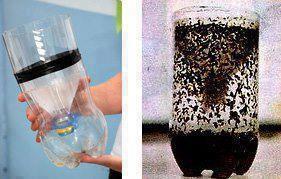
Homemade Mosquito Trap bottle and bait

Items needed:

✅ 1 cup of water

              ✅ 1/4 cup of brown sugar

✅ 1 gram of yeast

✅ 1 2-liter bottle 

HOW:

1. Cut the plastic bottle in half.
2. Mix brown sugar with hot water. Let cool. When cold, pour in the bottom half of the bottle.
3. Add the yeast. No need to mix. It creates carbon dioxide, which attracts mosquitoes.
4. Place the funnel part, upside down, into the other half of the bottle, taping them together if desired.
5. Wrap the bottle with something black, leaving the top uncovered, and place it outside in an area away from your normal gathering area. (Mosquitoes are also drawn to the color black.)

Change the solution every 2 weeks for continuous control.

If you don’t like making things or can’t get this thing to work correctly for some strange reason, then you can always try one of these that are guaranteed to work.

Video Explanation of a DIY Homemade Mosquito Trap

i.Use limes and cloves ?

Slice limes in half and adorn them with cloves. Surround your outdoor area with the fruits to create a mosquito-free zone.

ii.Trick mosquitoes into drowning ?

Fill a bucket with water and add detergent into it. Mosquitoes will be attracted to the stagnant water you’ve provided because they need it to lay their eggs in. However, the water will have no surface tension due to the detergent you’ve added and the mosquitoes will drown.

You can increase the efficiency of this trap by aiming a light source to the water because mosquitoes are also attracted to light.

How can you stop mosquitoes from biting? ?

Whether you’re swimming, riding your bike, hiking, or enjoying other outdoor activities, mosquitoes will always find a way to ruin the fun. You can make yourself less desirable to mosquitoes by trying some of these ideas:

·Skip the perfume ?

Many lotions, perfume, deodorant, and even hairspray, attract mosquitoes to us. If mosquitoes seem to be particularly attracted to you, try wearing scents that have a strong eucalyptus, lavender, basil or even rosemary scents.

·Wear long sleeve shirts and pants ?

If you’re planning an outdoor adventure, wear clothes that will help keep away mosquitoes. Loose fabrics and light colors work best. A light-colored hat can also help keep mosquitoes away from your head and face.

·Apply repellent ?

Sprays or lotions containing IR3535, DEET, lemon oil, eucalyptus oil, or Picaridin are particularly effective when it comes to keeping mosquitoes away. Mosquito repellents usually wear off after a few hours and you may have to apply again when necessary. Lotions and sprays containing DEET are safe even for children when used as directed.

·Spray yourself with vanilla ?

Add three teaspoons of vanilla to a cup of water and put the solution in a spritz bottle. Simply spray yourself when you’re outside biking, hiking or enjoying other outdoor activities. Vanilla will mask your body odor and help keep mosquitoes away.

·Cover your feet ?

Mosquitoes love bacteria and sweat, making your feet one of the prime blood sucking spots. In fact, the mosquito species known as Aedes aegypti, which is responsible for spreading the Zika virus, tend to bite the lower parts of the body. You can consider wearing high socks or high-top sneakers.

Human and mosquito movement is to blame for transferring uncommon mosquito-borne diseases to new areas. Climate change also contributes by pushing mosquitoes into more suitable areas.

However, these simple ideas can help you keep mosquitoes away from your home and prevent them from biting.

Filed Under: Bushcraft

Best Throwing Tomahawks [SOG Tactical Review]

June 27, 2019 M.D. Creekmore

tomahawk reviewby Mike

I’m always on the lookout for new and better gear.  We should all be doing that, and for most of the readers of MDCreekmore.com, I think that statement holds true. Today I’d like to talk about the SOG Tactical + Throwing Tomahawk. I saw it for sale on Amazon and decided to snap it up for the following reasons:

  • The cheap hardware store hatchet I bring backpacking with me is heavy, dull and clumsy. The SOG Tactical Tomahawk is listed as much lighter and I wanted to see if it could cut branches and wood as well or better than the average cheapo hatchet.
  • I wanted something that could also be used for self-defense if need be. I reasoned that if the tomahawk was used successfully by both the Native Americans AND later the American military, there had to be something to that.   This holds especially true because as a Canadian, I cannot bring firearms into provincial parks and conservation areas where I typically backpack, and as of late the bears, coyotes, and wolves have been getting more aggressive as they get hungrier.
  • I’ve read good reviews of it elsewhere and:
  • It was very reasonably priced.

Before I go on any further, let’s get a look at this thing.  It looks pretty mean, and it also looks pretty functional in my opinion:

Let’s look at some cold facts about this device.  The overall length is 15.75”, and it weighs in at less than 2 lbs (24 ounces).  The blade length is 2.75” and 0.26” in width and it’s made of 420 stainless steel with a black finish (except for the end of the blade). It has a fiberglass reinforced nylon handle and comes with a nylon sheath with a belt loop in it.

SOG-Tactical-Tomahawk

The uses of this device listed on the website include “… breaching operations, excavation, obstacle removal, extraction, and other utility applications.”.

So, my first impressions were good. Anybody with any kid left in them will look at this thing and exclaim “COOL!” I’m pretty sure that’s exactly what I did. It does have a mean look too it, something that when you pull out in the company of friends, they want one, and in the company of enemies, they might think twice about messing with you.

Aside from the aesthetics, this is a fairly light axe but it does have heft.  SOG claims its well balanced and I agree. Gripping it at the end of the shaft it has a natural swing to it. I feel that it follows the proper path with my stroke. It seems well designed for the mechanics of the human swing.

There’s quite a bit of meat to the blade. As you can see from the picture above, it’s quite thick and should stand up to quite a bit of abuse.  Just like the shaft.  The fiberglass reinforced nylon is very light, provides excellent grip and it seems to be very strong.

There are videos on the SOG website showing them propping the shaft on a piece of wood and driving over the shaft with a truck. The shaft flexes but does not break. Sorry folks, but we’ll just have to take SOG’s word on that one unless you want to buy one of these and do it for yourself.

Still, I tried bending it in my hands and beating the shaft against some concrete and it held up with no breaking and no marking up.  That should give us some clue on to the longevity.

The blade is attached to the shaft with what seems to be a tang of fair length. It’s hard to tell but I’d say it’s about 3”.  The blade is held onto the shaft by what looks like two screws as well as a tight metal band that is about 1.5” in length.  It is attached with a lot of strength and I feel zero give or wiggle to it.

I really just got this Tomahawk so I haven’t had a chance to use it much. However, I wanted to try it out as best I could before actually taking it into the field (my next backpacking trip isn’t until August 12th, sorry).  I did beat up a big stump pretty good and I did bury the end of the blade into a tree with minimal effort.

But to show you how it works, I put together a video showing what it does to both a 2×4 and a pineapple.

The 2×4 is pretty self-explanatory.  How well does it split wood?  The pineapple, well, I wanted to show how well it would work in a self-defense application. The example I use in the video is for protection from animals and nothing else just for the sake of the YouTube moderators.

Be that as it may, I selected a pineapple while feeling both my head and different fruits in a grocery store and it seemed to me that the pineapple best felt like my Neanderthal skull.  For your viewing pleasure:

The SOG Tactical + Throwing Tomahawk retails for about $65. I bought it on sale from Amazon.  I’m sure there are better axe devices out there, but how much money are you going to spend? This thing seems solid, VERY solid and well worth the price if you’re in the market for one.

Also, the pineapple was delicious. Just thought I’d let you know… please share your thoughts in the comments section below. Thank you!

Filed Under: Knives and Blades

  • Page 1
  • Page 2
  • Page 3
  • Go to Next Page »

Primary Sidebar

Subscribe to Blog via Email

Enter your email address to subscribe to this blog and receive notifications of new posts by email.

Join 7,202 other subscribers
  • Amazon
  • Facebook
  • Substack
  • Twitter
  • YouTube

“Do more with less.”

– Minimalist proverb

Recent Posts

  • Just so you know
  • Weather Update for My Corner of Appalachia
  • Why I’m Ordering Ivermectin + Mebendazole Every Year
  • The Website’s Shutting Down (But Here’s the Plan)
  • You Are Hated! Start Training Like It!

Footer

Recent Posts

  • Just so you know
  • Weather Update for My Corner of Appalachia
  • Why I’m Ordering Ivermectin + Mebendazole Every Year
  • The Website’s Shutting Down (But Here’s the Plan)
  • You Are Hated! Start Training Like It!

More about me

Books I’ve written

Books I’ve read

Follow Me on YouTube

Follow Me on Facebook

Gear I Use and Recommend

Newsletter

Search this site

Follow me elsewhere

  • Amazon
  • Facebook
  • Substack
  • Twitter
  • YouTube

© 2008–2025 M.D. Creekmore · As an Amazon Associate, I earn from qualifying purchases.