• Skip to main content
  • Skip to secondary navigation
  • Skip to primary sidebar
  • Skip to footer

M.D. CREEKMORE

  • Blog
  • Books
  • Newsletter
  • Gear I Use
  • About
  • Contact
  • Facebook
  • YouTube
  • Blog
  • Books
  • Newsletter
  • Gear I Use
  • About
  • Contact
  • Privacy Policy
You are here: Home / 2019 / Archives for October 2019

Archives for October 2019

What Medical Training Should I Get For Concealed Carry?

October 24, 2019 Jesse Mathewson

first aid training for concealed carry

This article is meant to show you what training you should get for concealed carry. What is included in the article are references, links for additional training and resources and lastly definitions and descriptions. Always remember, make sure you and your family are safe before attempting to offer assistance to anyone. Never do so if it means sacrificing your own safety.

To answer what medical training you should get, you have to know why medical training is essential. It is important to note that I am not a medical professional, I simply have enough experience and training to stop some major bleeds, assess the bleed, perform CPR, assess- insert and use any one of the top three utilized tourniquets, use a Halo Chest Seal, nasopharyngeal airway and even suture or staple depending on need. I firmly recommend getting any training you can, when it comes to caring for your self and family, make sure you find the best that you can afford.

In 2015 27.6 million people were treated in an emergency department for injuries. Over 2.8 million were hospitalized due to injuries and 214,000 people died from injuries in the United States. (Injury prevention and control, 2017) These numbers are fact, they are compiled from raw data and regardless of your feelings on the CDC they keep very detailed records.

Now, firearms are used between 200,000 and 3 million times every year in self-defense, with most legitimate studies showing that a firearm is used closer to 3 million times. (Leshner, 2013) The book referenced costs $38 and is worth reading if you have the chance.

Here is an excerpt, “studies…have found consistently lower injury rates among gun-using crime victims compared with victims who used other self-protective strategies.” Another quote is as follows, “ The estimate of 3 million defensive uses per year is based on an extrapolation from a small number of responses taken from more than 19 national surveys.

Concealed carry medical training needsThe former estimate of 108,000 is difficult to interpret because respondents were not asked specifically about defensive gun use.” It should be noted that the book/study does its best to discount any use of firearms in defense, however, at no point does data support their assertions. Rather, the data clearly supports the use of firearms in defense.

Now that we understand why medical training is so essential to concealed carry, what medical training do we need to have? There is a phrase that has been popularized over the past few years, “stop the bleed.” What this phrase means is quite simple, train to stop bleeding. Medically there are other important items to consider, airway blockages, CPR and a few other important medical considerations.

For a concealed carrier, the plan should always be centered around what they may encounter most. In this case another individual with a knife, firearm or other deadly weapons. The damage that will occur from a wide variety of deadly weapons carried today regardless of location can range from penetrating or slash wounds causing rapid exsanguination (blood loss) and crushing injuries causing broken limbs coupled with exsanguination of the rapid or slow type both of which can result in death. Lastly, shock and or extreme trauma induced heart attacks and stress-related breathing issues can also result.

Interestingly the government has released a few little known publications in the public sphere regarding trauma care and the need for immediate action. For instance per the Department of Homeland Security, FEMA, these are the five “simple” steps that may save a life. Call 9-1-1, Stay Safe, Stop the Bleeding, Position the Injured, Provide Comfort. (FEMA, 2014) Follow the links and take the on-line training, while it is not the same as hands-on training, this will help you better understand what is needed.

Additional bleeding control training is made available by the American College of Surgeons through the website, bleedingcontrol.org, lastly, FirstCareProvider offers instructor courses and has been endorsed by a few organizations that offer it legitimacy.

Care is a term coined and used by DHS and FEMA that stands for the following. Control bleeding with direct pressure or tourniquet. Airway improvement with recovery position. Respirations improve by covering open chest wounds. Exposure to the elements causes loss of heat. This can help understand the added training needs everyone who carries concealed should have as a precaution.

Find a course that offers you training in CARE as well as carries specific trauma care. Call 9-1-1 first, do not panic, panic prevents care from occurring. Control bleeding, find the source of bleeding. Open or remove the clothing over the wounded area so that you can see the wound. Head wounds will always bleed profusely, they will always seem very bad.

direct pressure on woundPressure should be used on the head and trunk (body, not arm or leg) injuries. Using a clean cloth if possible, fold it and press firmly on the wound, hold a firm pressure and maintain that pressure until the paramedics arrive. Stopping the bleed is far more important at this stage than preventing infection.

Both should be attempted when possible, which is why I suggest wound cleaners and sterile gauze, homeostatic bandages and Israeli style bandages. However, this is not always the case, so stop the bleed first! If the wound is on the groin, trunk or close to the body and is deep and bleeding steadily, pack the wound using a clean cloth and if you have a trauma kit use your Israeli style bandage or a homeostatic bandage. I keep two of each in my vehicle-based trauma kits.

On extremities, legs and arms, unless close to the body, use a tourniquet. If you do not have a specialized modern tourniquet use a belt, long cloth rolled diagonally, 550 cord doubled or another similar device to stop the bleed. All pictures have been borrowed from the booklet stop the bleed (Pons & Jacobs, 2017)

Next is Airway improvement with recovery position. This is extremely important of the person is having difficulty breathing or has lost consciousness. Establish that the airway is not obstructed, the tongue is the most common obstruction. If you see a foreign object and it can be removed easily, remove it. Tilt the head back and lift the chin, this will straighten out the airway and make it easier for breathing to occur.

Using your CPR mask if you have one, place it over the victim’s mouth and nose, ensuring the head is tilted as can be seen in the attached picture, blow air into the mouth, two one-second breaths forcing the chest to rise and fall with each.

packing wound

If the breaths do not cause the chest to rise and fall, engage in chest compressions. These are given differently for adults and children so make sure you take a course that teaches this! Chest compressions should be administered at a 30:2 ratio, meaning 30 chest compressions with two solid breaths in between.

Continue compressions until EMS arrives or the person begins to breathe on their own. If they begin to breathe on their own roll them into the recovery position, pictured here.

Respirations improve by covering open chest wounds. This part of care is more tricky and requires chest seals or again clean clothes applied directly to the wound area. Finding training in CARE will help you better understand what to do in this regard.

Not all wounds are the same, and all should be assessed and treated per the guidelines given in prior linked articles and through the application of learned materials from classes linked.

tourniquet wrap

Lastly is Exposure to the elements causes loss of heat. This has a more simple solution, use a blanket or space blanket which should be carried in your trauma kit or vehicle. I keep two 90% or greater wool blankets inside of 9’ square tarps in my vehicles along with 2-4 small mylar space blankets in each trauma kit and in the vehicle.

Preventing exposure can increase the possibility of a beneficial outcome with someone who has been in a vehicle accident or other form of traumatic incident. If the person is unconscious, check for obstructions in the airway, check for bleeding and than place them in the recovery position inside of the blanket or space blanket.

For concealed carry the medical training you should get is the same as the medical training you should have for driving a vehicle, camping, hiking, bicycling and swimming activities. It is worth the time invested to ensure your training stays up to date as well.

New approaches are innovated quite often in the medical community and this means training does not end with your medical license 30 years ago or a course you took in the 80s for CPR. What is known and taught now is far different than what was taught in the 80s, 90s, and even in the early 2000s. Stay abreast of the new knowledge and utilize common sense.

first-aid-training-recovery
The recovery position If the victim starts to breath normallyFree the mind and the body will follow…

FEMA (2014). You Are the Help Until Help Arrives. Retrieved October 26, 2018, from https://community.fema.gov/until-help-arrives

Injury prevention and control (2017). Key Data and Statistics|WISQARS|Injury Center|CDC. Cdc.gov. Available at: https://www.cdc.gov/injury/wisqars/overview/key_data.html

Leshner, A. (2013). Priorities for research to reduce the threat of firearm-related violence. 1st ed. Washington DC: The National Academies Press.

Pons, P., & Jacobs, L. (2017). How to Stop the Bleed. Retrieved from https://www.bleedingcontrol.org/~/media/bleedingcontrol/files/stop%20the%20bleed%20booklet.ashx

Filed Under: Health and Fitness

Is There a National Concealed Carry License?

October 24, 2019 Jesse Mathewson

What is the national concealed carry qualification? 

Graphic By Jeff Dege

In 2004 the Law Enforcement Officers Safety Act (LEOSA) was enacted in the United States. This law allows to classes of persons, the qualified Law Enforcement officer” and the “qualified retired or separated Law Enforcement officer” to carry a concealed firearm in any jurisdiction in the United States or United States Territories, regardless of state or local laws with minor exceptions.

At this time this is the only national carry or national concealed carry law on the books. It should be noted that this article is not meant to offer legal advice merely to allow others to better understand LEOSA and national carry restrictions or allowances.

This article is meant to clarify what is legally allowed and not allowed for the qualified, or qualified separated or retired Law Enforcement that may be reading this article. Additionally, the article is meant to explain what it takes to maintain and keep as well as use the LEOSA permit.

Here is the law paraphrased, “Notwithstanding any other provision of the law of any State or any political subdivision thereof, an individual who is a qualified law enforcement officer and who is carrying the identification required by subsection (d) may carry a concealed firearm that has been shipped or transported in interstate or foreign commerce…” (LII / Legal Information Institute, 2004)

So what is a qualified law enforcement person? In most states, commonwealths and territories have codified Law Enforcement training centers. These are known as P.O.S.T. or Peace Officer Standards and Training. While some locations within the United States have differing qualifications for firearms training, these differences are relatively minor.

A qualified Law Enforcement person is one that is active duty with no behavioral or legal restrictions or who has served 10 years or more as a federal, state or local POST certified or federally certified law enforcement officer.

If you search this term in your browser replacing your state with your states name, “(your state) LE POST” it will pull up information on your state’s qualifications. For non LE concealed carriers if you can train and pass a verified course of fire for your states LE POST qualifications this can be beneficial if you have to use deadly force in defense of self.

I suggest getting the target you passed on signed by a range master on duty who can verify you passed it and whichever instructor or other person attended, a minimum of two witnesses for legal reasons, sign, and date!

Legally this law has seemed some blowback, specifically in New York state, the District of Columbia and California. Thankfully, each case saw the defendants who were, in fact, Law Enforcement officers or agents cleared and has set precedents supporting the initial LEOSA law.

In 2006 Arthur Rodriguez a Pennsylvania Court Constable was found in a New York court ruling to qualify for protection under LEOSA. In 2012 Barbusin a special police officer of the District of Columbia Protective Services Police Department was found to have satisfied the LEOSA’s broad definition for qualified law enforcement.

In 2008 a Coast Guard reservist named Booth was found to be a law enforcement officer and his rights were upheld in a ruling in, surprise, surprise, New York again. The ruling stated that his job was to “prevent, detect and enforce federal law” as a coast guard serviceman. California arrested Jose Diaz in 2007 for having a loaded firearm in his vehicle in San Fernando.

The charges were dismissed and the subsequent lawsuit filed for violation of civil rights was settled outside of court by the city, the city redrafted the police training standards on LEOSA. (Baranowski, 2014)

Directly quoting the article – Does the LEOSA carry law apply to you, “On Jan. 2, 2013, LEOSA was amended to specifically allow for active and “retired” (as defined by LEOSA) military and DOD police and law enforcement officers with UCMJ (Uniform Code of Military Justice) apprehension authority to qualify for the statute; however, also hidden within the amendment was language mandating that all QLEOs now carry a photographic ID that “identifies the employee as a police or law enforcement officer of the agency,” and that QRLEOs carry a photographic ID “that identifies the person as having been employed as a police or law enforcement officer.” (Baranowski, 2014) If you go to the LEOSA website they offer the ability to easily sign up for a national carry identification card allowing ease of use and carry. Click here, LEOSA, and make sure to read it and ask them questions as needed.

Another solid resource is found on PoliceOne under LEOSA. As a civilian who has trained and taught Law Enforcement and various military over the course of two decades I can say that PoliceOne authors are almost all slanted away from law-abiding civilian carry.

Given that law-abiding civilian carriers outnumber every other demographic that carries it may be a beneficial idea to work with us rather than join the loud cries against our carrying.

Obviously, not all civilians are trained well enough to carry in a trustworthy manner, however, during my training of law enforcement and military over the years it is no small wonder that friendly fire is a rather high statistic there as well.

Training is essential whenever deadly force is prepared for in any way. I would suggest that training be increased if you plan in carrying regularly. Never relax completely, never let your guard down to your own potential missteps and more importantly live in yellow, relaxed but aware.

It is not a negative and given statistical evidence that the largest percentage of incidents occur close to your home, this is a reason to be more aware of your actions when at home.

This leads into the current desire for law-abiding civilians who are wanting a national carry law to be enacted. Given the current political climate, a national carry law would be at best a two-edged sword with the handle of the sword also being a blade.

National carry would allow a much easier time collecting data on law-abiding carriers, currently, data is collated at a national level using the background checks performed at the time of purchase as well as the various state-issued permits.

Regardless of what is said, all of this data is collected. What is not done at this time is keeping it all in one database. Between social media, digital communication, and the various state and federal steps needed for law-abiding firearms ownership most of the firearms bought and sold over the past three or four decades can be quickly and easily traced through purchasers and even past that level if the firearm was sold to others.

National carry could be easily used to come down on law-abiding citizens who carry for self-defense if the political winds changed more than they already have. Currently, there are many very vocal people who disparage law-abiding carry, even though not a single law-abiding person has ever committed a crime using a firearm. After all, the very nature of the term precludes the commission of crimes.

In addition to the political issues, there are the media and social media pushed emotional views based on spurious lackadaisical “truths” which have been promoted as “facts.” Some of these are, gun owners are more likely to commit crimes, etc. et, al., promoted by any town and the Brady camp. The real facts are simple, criminals do not care if you are black, white, red, female, male, trans, gay, straight or a horse. If you have what they believe they should have, they will commit crimes against you.

Certainly depending on areas and demographics, some demographics are more likely to commit crimes. However, when you look at the facts you will quickly find that the myths behind mass murder and or mass shootings are just that.

Myths and the reality is every single one of the individuals who committed one of these crimes was bat shit crazy insane. And yes, mass murder occurs and has occurred more frequently with much higher body counts in many nations in Europe, Asia, and even Africa than in the United States.

What you will not find as often outside of the United States is the use of firearms to prevent mass violence, or to stop it. In fact, outside the United States and in fact in many states in the United States people have become the equivalent of sheep, they bleat and complain making an awful racket and have lost almost all ability to care for themselves in any real manner.

If you can carry legally, do so, regardless of your status as a privileged badge carrier or not. If you cannot carry legally, move. I have not found a single instance of voting or political action that does not negatively affect far more people than it helps. This is why I say move. I understand that many readers regardless of side they support will rabidly state their objections.

However, none can rationally argue that I am incorrect. As I am not insane, I choose to personally not repeat the same actions endlessly in a futile hope that it will somehow make life better. Rather, I have dedicated my life to raising my children, training and being prepared as best I can.

I hope you also consider investing as much time in your children as you may invest in your social media accounts. (It should be noted I do not have social media accounts, I do have social interactions in person with others as well as gardens, children, animals and the regular constant acquisition of more knowledge which I than put into practice, something so many walking dictionaries fail to do.)

If you enjoyed this article or have any questions, please leave them in the comment section below!

Free the mind and the body will follow…

  • Baranowski, J. (2014). Does the LEOSA Carry Law Apply to You?. [online] NRA-ILA. Available at: https://www.nraila.org/articles/20140117/does-the-leosa-carry-law-apply-to-you [Accessed 25 Oct. 2018].
  • LII / Legal Information Institute. (2004). 18 U.S. Code § 926B – Carrying of concealed firearms by qualified law enforcement officers. [online] Available at: https://www.law.cornell.edu/uscode/text/18/926B [Accessed 25 Oct. 2018].

Jesse Mathewson BSCJA et, al.,

520 249 8495

Filed Under: Uncategorized

My Favorite Concealed Carry Gear (For 2020)

October 24, 2019 M.D. Creekmore


IWB Holsters

When it comes to inside the waistband holders I have several favorites but if I had to narrow it down to just one IWB holster I’d have to choose the Alien Gear Holsters Cloak Tuck 3.0 IWB, Holster (check Amazon.com for current price and availability). As far as IWB holsters go this one is the most comfortable and well made of all the ones that I’ve tried and it’s available to fit a large number of different brands and models of concealed carry handguns.

My second choice for an IWB concealment holster is the Concealment Express IWB KYDEX Holster (click here to check current price and availability at Amazon.con). Fortunately, most brands of KYDEX IWB holsters are well made and to be honest it’s hard to find a meaningful difference in the majority of them.

And if you’re on a super-tight budget then the BLACKHAWK Inside-the-Pants Holster is a super low priced IWB holster that will serve you well (check current price on Amazon.com).

Belt Holsters

I seldom carry in a belt holster because I prefer to carry concealed, however, the exception being when I’m hiking the national park trails or riding my UTV in deep far-a-way back in the boondocks locations and for this, my favorite belt holster is the Model M12 Universal Military Holster. This holster offers protection while still leaving the sidearm easily assessable.

My second favorite belt holster is the Desantis Facilitator Holster (check current price and availability at Amazon.com). One of the downsides to open carry is the possibility that an attacker will try to take your handgun when starting their attack and the Redi-Lok system that comes with Desantis Facilitator Holster will make doing this successfully much more difficult for the attacker.

My third favorite belt holster is the Bianchi Accumold Holster Belt Slide (check Amazon.com for price and availability). It’s light-weight and offers some extra retention via the thumb-break, however, it’s not as secure from a grab-attack as the Desantis Facilitator Holster that I mentioned above.

Pocket Holsters

When carrying smaller handguns a good pocket holster is hard to beat. Need to run to the corner store or out to the mailbox? Don’t want to go through all of the trouble of putting on a belt and IWB or belt holster? Well, the pocket holster is your best option. Just slide it into your pocket and go…

I carry my Smith and Wesson Air-Weight in a DeSantis Nemesis pocket holster and love it (you can check it out on Amazon.com). I concealed carry the Smith and Wesson Air-Weight more than any other handgun and I don’t see that changing anytime soon.

Tactical Knives

Oh, wow, choosing my favorite concealed carry knives was very difficult, to say the least because there are so many great knives on the market today and I own so many, but then owning so many allows me to give knowledgeable suggestions from hands-on experience.

Once Tennessee changes the knife laws allowing legal ownership and carry of automatic (switchblade) knives, I went as fast as I could go and bought a Hogue automatic knife, and I’ve carried it every day for over two years and give it my highest recommendation.

My second favorite concealed carry knife is…. wait for it… the Columbia River Knife & Tool M16-Z! This is a very well made quality knife that’s also very reasonably priced. And the locking system is fantastic! If you’re looking for a concealed carry knife and automatic knives like the Hogue that I mentioned above aren’t legal in your state then this is a great alternative.

Okay, now on to my third favorite concealed carry knife and that’s the BLACKHAWK! Crucible II Folding Knife with a plain edge (check it out at Amazon.com). I’ve owned this knife for over five years and carried it a couple of those and have no complaints at all and at the current listed price on Amazon.com it’s hard to beat.

Please read my article on Tennessee Knife Laws if you’re interested in carrying a knife in Tennessee.

Tactical Lights

Like concealed carry knives, the mention of tactical knives gets folks looking straight and paying attention because most of the folks who are into such things as firearms and concealed carry have their own opinions as to what’s the best tactical light. Below are my current top picks…

My number one choice is the SureFire G2Z MV Combat Light, small, light-weight and easy to carry while putting out a blinding amount of light onto (you can check current price and availability at Amazon.com).

As for a general-purpose light, my top choice is the Duracell Durabeam Ultra 700 Heavy-Duty LED Flashlight (check current price and availability on Amazon.com). I have four of these with two in my house, one in each automobile and one in the garage. It’s hard (probably impossible) to beat these at the same or lower price.

Carry Belts

If you’re going to open carry and or concealed carry then you’ll need a good belt and my current favorite is the Relentless Tactical The Ultimate Concealed Carry CCW Gun Belt. It’s a little pricey, well, for me anyway, but it’s a belt that will last a lifetime and in fact, it has a lifetime warranty.

Non-Lethal Options

Okay, we all know that carrying a concealed handgun is a big responsibility because once you pull the trigger to defend yourself and the bullet is out of the barrel there isn’t any bringing it back and if it hits then death or grave bodily injury will be the result.

This is why I like to have a non-lethal alternative available, so I have a choice of lethal action or non-lethal action depending on the situation and what is warranted. My favorite and what I believe to be the best non-lethal alternative is OC or pepper spray.

My choice is from Fox Labs – Fox Labs Pepper Spray – Flip Top Cone (1.5 ounces) click here to check current prices and availability on Amazon.com.

My Favorite Watch

While having a watch isn’t really connected to concealed carry, every man should own a good watch and it’s not necessary to spend several hundred dollars to own a good functional watch that also looks great.

When it comes to watches I have a couple of favorites. My number one favorite is the Vincero Luxury Men’s Chrono S Wrist Watch in all black and my second favorite is the Victorinox Men’s  Original XL Swiss Quartz Watch.

Filed Under: Security

How to Live in a Travel Trailer Full-Time

October 21, 2019 M.D. Creekmore

Most people don’t know that I’ve lived in two different travel trailers… this is the second one.

Can you live full-time in a travel trailer? Yes, you can. The main drawback is limited space but with a few simple hacks and downsizing, you can definitely live full-time in a camper trailer or RV. How do I know… I know because I’ve done it and even wrote a book about how I did it and how you can too.

While this article will cover the basics of what you need to know to successfully live full-time in a camper trailer or RV my book goes into greater detail and I suggest that you get yourself a copy of that book as soon as possible. You can click here to see it and read the reviews on Amazon.com.

Why Live Full-Time in a Travel Trailer?

Or course different people will have different reasons for living or wanting to live full-time in an RV or camper trailer, but the most common reason given by people I’ve talked to is to save money by not paying rent. And with the rates for rent going up and the size and included amenities going down choosing to live full-time in a travel trailer makes a lot of sense.

For me, it was out of necessity after a divorce. I already owned the land and the 26-foot travel trailer and it made sense to put the two together and have a paid-for place to live. It worked out great and I lived in that one for over two years.

Living there allowed me to save enough money to pay cash for another property, that was larger at almost six-acres. I sold the other property and camper and bout the one that you see in the photo above for $4600. It was one of the FEMA trailers that had never been used and was in like-new condition.

I don’t think that $4600 for a home is a bad deal at all… do you? Nope! I lived in that trailer for over a year while I saved money and then bought a two-bedroom mobile home and moved it to my property and then sold the FEMA trailer for $4000!

You can do the same. You just have to overcome the stigma associated with living full-time in a travel trailer or RV and learn to downsize your belongings or set up a storage building on your property to keep the things that you don’t have room for inside your trailer.

Choosing The Best Travel Trailer For Full-Time Living

Travel trailers are a lot like automobiles—they depreciate in value over time. From the moment you pull the trailer off the lot, it starts to lose value. In fact, recent research has shown that new travel trailers can depreciate as much as one-third over the first three years of ownership.

I bought my travel first trailer from a local man for $3,500. By comparison, he had paid $28,000 for it 11 years earlier. Folks, that’s a savings of more than $24,000. Buying new is a fool’s game and best avoided. Fortunately, finding a good used travel trailer isn’t difficult if you know where to look.

first travel trailer homestead
My first travel trailer full-time “homestead”. Note the solar panels…

It is amazing what you can find by driving the backroads. Many people who have travel trailers for sale will park them beside the road in front of their houses and tape a for-sale sign in the window. In fact, I spotted two trailers with for-sale signs attached yesterday on my way to the hardware store.

Keep in mind that these people are typically motivated sellers and will usually take less than they initially ask, sometimes a lot less. It doesn’t hurt to make an offer. Who knows? You could get lucky.

Simply let the seller know that you’re interested but your budget doesn’t quite cover the asking price. I often see used travel trailers listed in the classified section of the local newspaper or community shopper.

Again these are motivated sellers, who will usually sell far below their original asking price. Sometimes it is amazing at the price reduction you can get by making an insanely low offer. Sometimes travel trailers are listed on such Internet sites as eBay and craigslist.

Over the years, I’ve seen some nice ones listed for $2,000 to $3,000, but most are newer models that are out of your price range. As with buying properties online, never buy a travel trailer or RV sight unseen

Be sure everything in the trailer works properly before buying. The last thing you need is to expend all your resources on the land and the trailer only to find out later that your electrical system, plumbing, refrigerator, cookstove, hot-water heater, or furnace doesn’t work.

While some sellers are inherently honest and will tell you about known problems, needed repairs, or other surprises, many are not and have no compunction about ripping you off. The only way to be certain you are getting what you are paying for is to do your own inspection and tests of the essential components.

Start with the 12-volt lights. Simply flipping on the switch can check these devices. If the seller tells you the lights don’t work because the batteries are dead—charge them up. If the trailer doesn’t have any batteries at all in the battery compartment, use the one from your truck.

Next check the cookstove, furnace, water heater, and refrigerator to make sure everything works off propane. If the trailer’s propane tanks are empty, you could take one of the tanks to a propane distributor to have it filled, but preferably you have brought your own full tank to use if needed. Whatever you do, don’t buy without doing your due diligence.

Batteries that charged by solar and fed the power to the inside of the trailer.

The seller could have used the propane on his last camping trip, but then again he could be trying to hide the fact that some or all the propane appliances don’t work. Don’t forget to check the propane lines and appliances for leaks. You can do this with a spray bottle filled with water and soap. Spray the lines and look for air bubbles to form, indicating leaks.

After you are satisfied that all the propane appliances work, it is time to check the plumbing and water systems. Fill the holding tank and check for leaks. Turn on the 12-volt water pump to pressurize the system and check the sinks, shower, and toilet.

Don’t forget to check for leaks in the water lines, as well as under the sinks, pump, and tanks. Some of the lines can be in difficult- or impossible-to-reach places, such as behind walls, under floors, and inside cabinets, but check the best you can.

While you are checking for leaks, feel the floor and areas around and under the sinks, holding tank, shower, toilet, and water heater for soft spots and rot. Also, inspect the areas around windowsills and doors. Look for dark spots on the ceiling indicating leaks.

Be sure to double-check around rooftop air-conditioning units. Once you are satisfied with the interior, it’s time to look underneath the trailer. Check for rot, especially where the walls and floor meet the underneath area.

Problems here can often be fixed by replacing rotted wood, but if prevalent throughout, I would pass on this trailer. Inspect the condition of the insulation and weather barrier, but don’t be overly concerned if it is not perfect, as most of this can be easily fixed by adding more insulation and covering with 6-mil plastic sheeting stapled underneath.

Contrary to what you may have been told, size matters. You’ll obviously be spending a lot of time between those four walls, so the bigger the trailer the better. Just be sure you have a way to tow it to the site. Personally, I would not consider a trailer less than 21 feet in length.

Finding Cheap Land to Live On

Some of the best opportunities for buying cheap land come from individual sellers who no longer have use for the land. Heirs, retirees, farmers, timber and mining operations, and other types of owners may have land that they no longer need and are willing to sell for a reasonable price.

You never know unless you ask. “Fragment” properties held by states, counties, municipalities, or corporations are a good option to explore as well. They can sometimes go begging at an auction and be had on a negotiated sale.

After deciding where you want to live, get the word out that you’re looking to buy a small amount of acreage in the area for use as a campsite. No one needs to know that you plan to live on the property full time or use it as a survival retreat.

An RV park or rented lot is one option…

Run ads in the local paper and place notices at the local post office and area businesses. You might even consider running an ad on the local radio station or TV station. Try craigslist or other online sites. Perhaps the most productive way of finding land is to ask.

If you spot a parcel that you’re interested in but don’t know who owns the property, find the nearest neighbor and ask. This neighbor may own the property, or he probably will know who does. In my area, there are several small logging operations that purchase tracts of property for the timber, and after the timber has been cut they move on to the next tract.

They have no further use for the property after cutting and are happy to sell.

Since most of this land is in remote areas, you can often buy land at a ridiculously low price. And since it has been logged, if you replant some states will give you a tax break as a “tree farm.”

I found my first property by placing an ad in the local newspaper classifieds.  After running the ad for several months, I heard from the owner of a small logging operation that had operated in the area. The voice on the other end of the phone explained that he had several hundred acres of land that had recently been clear-cut that he no longer had use for and would sell for a reasonable rate.

I explained that I only had $2,000 and could not afford the entire property. We agreed that if I paid to have the parcel I wanted to be surveyed, he would sell me two acres for $2,000. After paying the surveyors, filing fees, and $2,000 to the seller, I was a landowner.

I haven’t had much luck finding cheap land through real-estate agents. Most make their income through commissions and generally aren’t interested in selling lower-priced properties, but then again, what do you have to lose but a few minutes of your time?

Tell the real estate agent that you are looking for a suitable partial of land to use as a campsite and weekend getaway. Explain that electricity, sewer, and water hookups are a plus but not necessary. Real-estate agents in my state can show and broker any property listed in the state where they are licensed, regardless of the original listing broker.

On the surface, buying land through a land contract arrangement with little or nothing down sounds like a great idea. It’s not. The purpose of buying cheap land is staying out of debt by paying cash, which is easy enough to do because of the quality and measure of the property being discussed here.

The standard land contract allows the seller to hold the title until you make all the payments. If you are late with a payment, even one time after paying on time for the past 19 years of a 20-year contract, the seller can have you removed by court order and take back the property while keeping all your money from past payments.

Another potential land mine with the seller holding your title is that he could have a mortgage himself on the property or he could lose it through a divorce or other court proceedings, in which case you could lose the property and any previous funds invested.

All land contracts are best avoided, as is any kind of mortgage debt if possible. One option, which might work if you would have a seller willing to work with you, is to buy the land incrementally. As in: “I have $2,000 and want two acres now; next year (or whenever) I want an option to buy XXX more adjoining acres for $x more cash.” This is subject, of course, to local ordinances regarding subdivision, etc.

Taking Care of Water and Sewage

When living full-time in a travel trailer providing for your water needs can the most difficult tasks to figure out and the solution depends of course on where you decide to set your trailer up for full-time living. Travel trailers and RV’s have a water holding tank and pump to pressurize the water that makes it a little easier to get the water into your trailer where you can use it.

If your property or rented lot has water on tap from the utility company or you are lucky enough to have talked a family member or friend into letting you park your travel trailer on their property then you’re in the catbird seat. Simply run a hose from the water source to your trailers intake to fill your tank turn on the trailers pump to pressurize the water and you’ll have a working sink, shower, and commode.

As for sewage, you might be able to empty your holding tank directly into your family member’s or friend’s septic tank system. If not then you’ll probably have no other choice but to hook to your trailer and pull it to a proper and legal location to empty your holding tank.

If you’re off the grid (away from public utility hookups), then things get more complicated in a few areas but it can be done. You might have to haul water in to fill your freshwater tank or if you have a suitable water source then you might be able to pump or use a gravity-fed system to keep your water tank full.

You could set up a rain-water catchment system and cistern set up in such a way that rainwater could be fed via gravity directly into your freshwater holding tank. Or you might be able to pump it from a nearby source such as a stream or spring, but this water would need to be filtered and purified before drinking.

Taking care of sewage when “off the grid” can be done by digging in a small “sepic tank” system using buried 55-gallon to collect waste. As detailed in Brian D. Kelling’s book Travel-Trailer Homesteading Under $5,000.

But keep in mind that this probably won’t be a “legal” setup but there shouldn’t be any problem unless you tell your business to someone and that someone then reports you.  But as a disclaimer, I have to tell you to check and follow all the laws and codes in your area.  

I took a different approach at my first “travel trailer homestead” and I go into detail about how and what I did to take care of waste in my book “Dirt Cheap Survival Retreat” be sure to pick up a copy of that book as soon as possible if you think living in a travel trailer full-time is something that you still want to do.

Power, Heating, and Cooling

Getting power inside your travel trailer can be as simple as plugging into the source or as complicated as putting in a solar setup if you’re going off the grid. While I don’t have the time or space to go into all of the information on setting up an off-the-grid solar power system (whole books have been written on the topic), I will instead point you to an excellent article that keeps it as simple as possible – Do It Yourself Off The Grid Solar Power System.

Propane refrigerator inside my first full-time trailer...
Propane refrigerator inside my first full-time trailer…

You will also find detailed plans about how I did it in my books linked to above and how Brian Kelling did it in his book. There isn’t any certain way to do this… you’ll need to follow the basic principles and safety precautions and figure out what works best for you but that article and those books will give you a great start.

Generators for Campers

One of the biggest mistakes I made was buying a cheap gasoline-powered power generator that after a few months use started giving me trouble and not starting and or shutting off when in use. I suggest that you buy a good power generator from the start.

Two that I recommend are the Honda EU2200i, you can read my full review here, and the Champion 75537i. Get the best that you can afford from the start and you’ll have less trouble and be much better off in the long-term.

propane cook stove
Propane cook stove inside my first full-time trailer…

To keep the inside of the trailer cooler in summer it’s best to park it in the shade… or better yet, under a shed… think about a carport such as this one on Amazon. Parking your trailer in the shade or under a carport such as that will help to keep the sun off it and thus help to keep it cooler on the inside.

The carport will also help to keep your trailer looking new and also it will last longer covered by the carport because there is less of a chance of a leak developing in the roof of your trailer that could cause water damage inside.

For heating, I prefer propane and propane and a propane wall heater such as this one at Amazon.com will keep you warm during the colder months.

Cooking and Refrigeration

This part is actually the easiest because travel trailers are already set up perfectly for off-the-grid cooking and refrigeration using propane. With the correct adapters, you can easily hook your trailer up to the larger 100lb propane tanks if you want to change out the empty tanks for full ones less often.

Legalities of Living Full-Time in a Travel Trailer

Depending on where you are in the country (or the world) laws differ and there could be some legal hurdles to overcome when living full-time in a travel trailer or RV, however, these are typically easy to find a “work-around” that will keep the paper pushers happy and still allow you to live full-time in your camper, travel trailer, or RV.

Conclusion

Living full-time in a travel trailer isn’t for everyone, and there are a few challenges but it is a great way to save money to buy or build a “proper home” later and be debt-free. I’ve done it so I know it can be done. I hope that this article gave you a few ideas and answered some of your questions.

If this is something you’re interested in doing then I suggest that you get my book “Dirt Cheap Survival Retreat” and Brian D. Kelling’s book Travel-Trailer Homesteading Under $5,000. These two books will cover everything else that you could need to know.

Filed Under: Homesteading

What Are The Best Alternative Heat Sources to Use During a Power Outage?

October 21, 2019 M.D. Creekmore

Let’s face it, heating your home during a long-term power outage is probably one of the biggest challenges that a homeowner facing the cold winter has to overcome. You have to keep your body temperature in the normal range i.e. above 95 F (35 C) or hypothermia will start to set in.

When your body temperature drops, your heart, nervous system and other organs can’t work normally. Left untreated, hypothermia can eventually lead to complete failure of your heart and respiratory system and eventually to death. From: The Mayo Clinic – Hypothermia.

In other words, you need a shelter and to be able to keep that shelter warm enough to keep your body temperature above 95 F (35 C) and you need to be prepared to do this for as long as the disaster that caused the grid to go down lasts and depending on the severity and length of the situation you’ll need to be able to do this without attracting unnecessary attention to your location.

Not an easy task to say the least – but it can be done with proper planning, preparation, and work… Let’s get started…

What are the best alternative heat sources to use during a power outage? That’s a good question and our top choices include a wood stove, coal stove, fireplace, ventless propane heater, natural gas wall-heater or fireplace. It’s also, important to have warm clothing and cold weather sleeping bags. Also, having a well insulated house goes a lone way towards keeping warm during a power outage.

Location

One of the first things to consider when planning ways to heat your home during a power outage or long-term grid-down situation is where you’re located. Where is your home/survival retreat? No, I’m not asking you to tell me or to post it in the comments section, I’m just asking you to consider where you are or plan to be and the winter climate in that area.

For example, if you’re a prepper living in Sanders Montana or in Great Falls where the coldest recorded Temperature was a bone-chilling 43 degrees below zero then you would have to put more thought and effort into keeping your home heated during the long winter months than you would if your location was in the redoubt of the east (Tennessee’s Cumberland Plateau area).

Keep your location in mind when reading the rest of this article and plan accordingly… the warmer the average winter temperatures are in your chosen area the less of an issue heating your home in winter will be. This is so important that I think that winter temperatures should be a major consideration when choosing a survival retreat location.

Your Home

Your second consideration for heating your home during a power outage or long-term grid-down situation should be the home itself. My advice is that if you’re building your home yourself or remodeling then over-insulate, meaning go above the recommended home insulation standards for your area.

If your home is already built and you’re not planning a full remodel then do what I did and add extra insulation inside the attic. My attic was already well insulated for my area, however, I decided to have a contractor add extra blown-in insulation to the attic to a rating of R-60.

Also, make sure all doors and windows seal tight when shut and are the best that you can afford. If your windows are old, worn out and not energy-efficient then have those replaced with better windows if your finances will allow it.

Also, consider adding a clear plastic sheeting, heavy insulating curtains and window shades to help keep the cold out and heat in. The heavy curtains will also help to hide any light inside the house from anyone passing by outside which could be a security risk.

Here is an excellent article on energy-efficient windows with tips to make yours more energy-efficient… Read it and then implement all the tips and advice that you can and you’ll see a big improvement now and when the grid goes down.

Dress For The Cold

To survive the cold during a short-term power outage or long-term grid-down situations you’ll need to dress properly for the environment. And keep in mind that you’ll probably be sleeping in your winter clothes so be sure to think of comfort as well as warmth when buying your cold-weather clothing.

When dressing for cold weather the key is layering. Start with thin layers first and then top it off with a protective outer layer that insulates as well as traps air and stops the wind. This outer protective layer should also protect your other clothes from rain and moisture when you’re outdoors.

For example when indoors without heat or when having to conserve heating resources in the home you could wear heavyweight thermal underwear as a base layer, and top it off with RefrigiWear Iron-Tuff Hooded Coveralls or similar outerwear.

If you’re like me then no matter how well dressed your body is your feet still get cold. I can be warm and comfortable everywhere else and still have cold feet. To help with this use the same layering principle that you did with your other winter clothing.

To keep my feet warm in cold weather indoors and outdoors I start with ultra-lightweight liner socks to keep my feet dry and then a cold-weather boot sock and then well-insulated winter boots. My top choice for a winter boot is the Sorel Men’s, Conquest Boot.

The same layering principle should also be used to keep your hands warm i.e. thin gloves or glove liner like the Terramar thermasilk glove liner covered by a thicker insulated pair of winter gloves will keep your hands warm during a power out long-term grid-down situation.

Let’s not forget about the face and head, consider a skull-cap or stocking cap for cool weather and a Russian style earflap hat for colder weather.

Last but not least invest is a good cold weather sleeping bag (or two) for each member of your family or group, or better yet have them to buy their own. I prefer the Military Modular Sleep System – you can read a full review here.

The Urban (or rural) Igloo

It’s easier to keep a smaller space warm then a larger one so if fuel to heat is limited it’s a good idea to only try to heat part of the house. For example, if the main heat source is in the living room area as is commonly the case then you can keep the interior doors that lead into the other rooms closed. You can also hang heavy blankets or similar insulating materials over those doors to keep the warm air from the heat source in the confined space and the colder air out.

Doing this will help to concentrate the heat into a smaller area which will keep you stay warmer while at the same time conserving fuel resources.

Taking this a step further is what I call the urban igloo. This concept will work in the country as well but would probably be more likely to be put to use by folks who were caught in the city or apartment or public housing where having alternative long-term heat sources are not an option.

The urban igloo is a simple concept and just about everyone should have the materials needed for its construction.

The First step is to take the mattress off the bed and place it underneath the kitchen table or similar table or frame. Next drape heavy blankets, quilts, rugs and whatever else that’s on hand over the top and down the sides to make what is essentially an indoor tent or igloo. Hang the insulating materials all the way down to the floor being sure to leave a small gap in one corner edge near the floor to keep condensation to a minimum.

Body heat and your exhaled breath will help to heat the “igloo” somewhat and if you have dressed for the cold and have a good cold weather sleeping bag as detailed above you can stay comfortable even when it’s extremely cold outside the home.

The more people you have in your indoor igloo the warmer it will be.

Best Alternative Heat Sources to Use During a Power Outage

heating home in winter
Part of my firewood supply…

This is the most difficult part of staying warm during a long-term grid-down situation because there are so many things to consider. You’ll need a way to heat, you’ll need a way to resupply your fuel resources, and you’ll need to not draw unwanted attention to your location.

Not an easy task to say the least but there is hope…

One of the best situations to be in is to have your own gas well and have your heat, cook stove, water heater, generator, etc hooked up to that resource – here is a great example of a perfect prepper property with two gas wells and everything else needed to live off the grid for a large family or prepper group. However, at a listing of nearly two-million dollars most (probably none) of us could afford such a place, I know I couldn’t even come close.

The best or at least the most practical heat source for most of us is propane. If you have your own property you can have a 500-gallon or even a 1,000-gallon propane tank installed (or do it yourself) and use that to power an efficient ventless propane heater. The tanks can be coated with roofing compound and buried out of sight.

The next most practical option for most preppers would be wood, however, the main downside to heating with wood during a long-term collapse is the smoke and smell which under the right conditions can be seen or smelt from a mile away or more. This can be a problem if you’re trying to not attract unwanted attention to your location.

However, there are manufacturers who claim to be producing smokeless wood-stoves, however, I’ve never seen one of these in operation and so I can’t vouch for their effectiveness or efficiency. If you’re handy then you can probably make your own smokeless wood-burning stove, here is a link to an MIT article that has some ideas that might be of use.

And below is a good video with instructions on how to turn an existing wood stove into a nearly smokeless wood stove…

At any rate heating with wood might require some tools and skills that you don’t currently have like a chainsaw. Yes, I know it’s loud and would attract attention and it also requires gasoline, mixing oil, bar oil, chains, and other spare parts to keep it running properly, but go on ahead and try to cut a winter’s worth of firewood with a human-powered crosscut saw…

Yes, it can and has been done before, but it’s not easy and will take a lot more time and energy compared to using a chainsaw.

But if you’re prepared to heat your home with wood then this would not be an issue for the first year or three because you’ll have a one to three supply of seasoned firewood already cut down, cut up, split and stacked.

And yes, you can just buy the firewood now and use and rotate like food storage on a first in first out rotation so that you always have a fresh supply. However, firewood that is kept dry and out of the elements will store for many years.

But, you really do need to have the tools needed and to learn how to cut your own firewood if you plan to use firewood as a heating source. The more you know the more independent you’ll be and that’s a good thing.

Don’t forget to have smoke detectors and carbon monoxide detectors installed and working anytime you’re heating with wood or any other combustible fuels. Be sure to have extra batteries for these as well. And last but not least ensure proper ventilation for the home and closed in areas.

Recommended Reading

  • Wood Heat: A Practical Guide to Heating Your Home with Wood
  • Keeping Warm in Hard Times: The Art of Saving Money on Home Heating Costs
  • Homeowner’s Complete Guide to the Chainsaw: A Chainsaw Pro Shows You How to Safely and Confidently Handle Everything from Trimming Branches and Felling Trees to Splitting and Stacking Wood
  • Firewood Heat Value Comparison Chart

Any thoughts, or suggestions… then please add those in the comments below…

Filed Under: Featured Articles

5 Powerful Life Lessons from Outdoor Adventures

October 19, 2019 M.D. Creekmore

test your bug out bagby Mike J

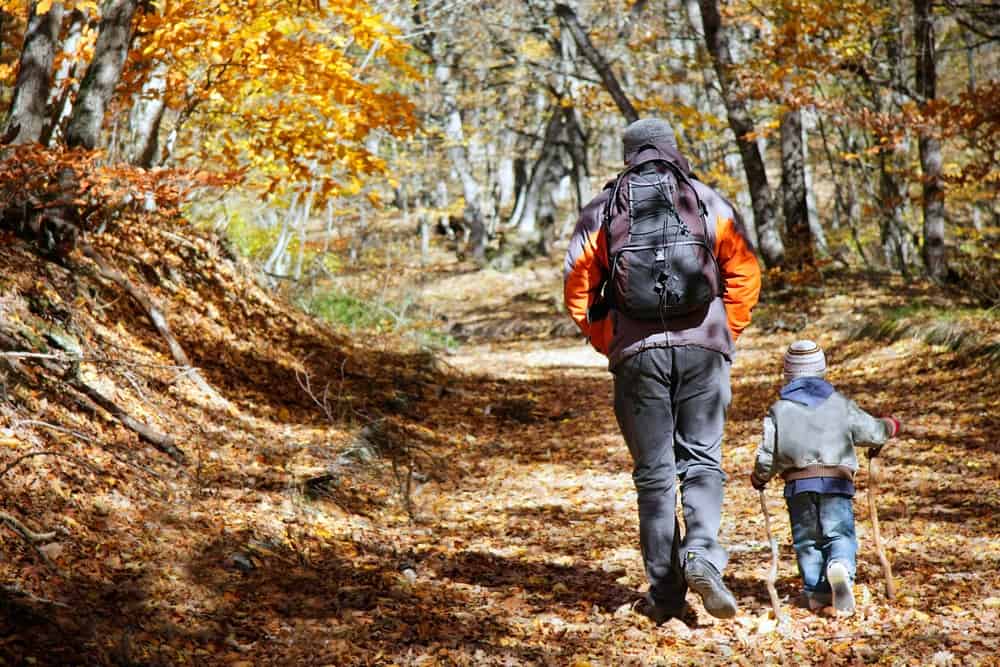
Believe it or not, your next outdoor adventure could be doing more than merely fulfilling the adrenaline junkie in you. There are a surprising number of powerful life lessons thrown into the mix when embracing the great outdoors. And you probably aren’t even aware of them.

Take a leap of faith and embrace the great outdoors and you could be giving yourself much more than an exhilarating day out or weekend away. Life in the great outdoors has an extraordinary way of teaching us the greatest of life’s lessons. We’ve picked out 5 powerful life lessons you can make the most of on your next outdoor adventure.

Living in the present moment: Mindfulness for the adrenalin junkie
Much has been written about mindfulness and meditation and you’d be forgiven for thinking it’s not something the average adrenaline junkie would give much time for. Surprisingly though, participators of extreme sports dedicate a huge amount of concentration and effort on one particular thing. Mountain and rock climbers, for example, are focused on the task in hand as a matter of safety. They are practicing mindfulness without even realizing it.

When engaging in an outdoor activity you are truly absorbing and observing your surroundings. It’s a far cry from everyday life, which is in most cases driven by a zillion distractions and the constant pinging of your phone. The pull for outdoor adventure is more often than not associated with a desire for adrenaline-laced activities. The irony is, outdoor adventures offer much more than excitement and release. They also offer direct, no-nonsense mind training.

A sense of connection part 1: Appreciating community
Our sense of appreciation for community is all too often dumbed down by busy modern living. Community happens around us all the time, but we often fail to appreciate it. There’s nothing quite like a team outdoor adventure in the wilderness to inspire appreciation for our diminishing community involvement. Hiking with a group in the wilderness gives us a stark reminder that our own existence depends upon the co-operation and involvement of others.

A sense of connection part 2: Appreciating nature
It’s a terrible thing, but many of us in the modern Western world are slowly disconnecting ourselves from nature. We are inadvertently closing off a general fascination with the natural world around us. Let’s face it, the closest many of us get to nature is an episode of David Attenborough’s Planet Earth on TV.

The fact is, connecting with nature is important for our well-being. It nurtures our natural creativity. A study last year conducted jointly by the University of Derby and The Wildlife Trust measured the impact of a daily practice to connect with nature over a period of 2 months. As reported by the BBC, the study showed that there was a scientifically significant increase in people’s health and happiness in accordance with a connection to nature, from simple activities such as feeding birds or planting flowers.

Appreciating nature comes with the territory of outdoor adventures, and that connection with the wild is it seems good for our health and our happiness.

Connecting to inner-resources
Part-taking in an outdoor adventure brings a great sense of accomplishment and can be extremely empowering. Whether you choose to rough it in the wild for a couple of weeks with friends or spend a day on an organized adventure activity, like those offered by Into The Blue, you’ll need to rely on your wits to get you through.

The Wilderness Foundation UK teaches adults and children to love our wild and wonderful planet. In their mission statement, they go as far as to say “The wilderness is an irreplaceable catalyst for personal transformation and growth.” Outdoor adventures offer the opportunity to discover inner resources we are unaware we have, or more succinctly we have forgotten about. The great outdoors presents the opportunity to strengthen life skills and reinforce crucial life lessons.

A sense of perspective
In the great outdoors many people experience a real sense of perspective. It’s so easy when we are running from pillar to post to lose perspective of what is important in life. We think we can’t live without checking our phones, Snapchatting or watching YouTube or even looking in the mirror. We see pretty much everything we rely on in modern life as a necessity.

An outdoor adventure reveals that it’s not only possible to live without checking social media channels and cooking in microwaves, but that in the right environment something as simple as cooking over a campfire is actually an unforgettably enjoyable experience. Swapping the TV dinner for a foraged bowl of soup in the great outdoors may not feel very appealing at face value, but try it and you’ll be surprised at how quickly your reliance on home comforts ebbs away.

It’s a wonderful world!

Filed Under: Bushcraft

  • « Go to Previous Page
  • Page 1
  • Page 2
  • Page 3
  • Go to Next Page »

Primary Sidebar

Subscribe to Blog via Email

Enter your email address to subscribe to this blog and receive notifications of new posts by email.

Join 7,202 other subscribers
  • Amazon
  • Facebook
  • Substack
  • Twitter
  • YouTube

“Do more with less.”

– Minimalist proverb

Recent Posts

  • Just so you know
  • Weather Update for My Corner of Appalachia
  • Why I’m Ordering Ivermectin + Mebendazole Every Year
  • The Website’s Shutting Down (But Here’s the Plan)
  • You Are Hated! Start Training Like It!

Footer

Recent Posts

  • Just so you know
  • Weather Update for My Corner of Appalachia
  • Why I’m Ordering Ivermectin + Mebendazole Every Year
  • The Website’s Shutting Down (But Here’s the Plan)
  • You Are Hated! Start Training Like It!

More about me

Books I’ve written

Books I’ve read

Follow Me on YouTube

Follow Me on Facebook

Gear I Use and Recommend

Newsletter

Search this site

Follow me elsewhere

  • Amazon
  • Facebook
  • Substack
  • Twitter
  • YouTube

© 2008–2025 M.D. Creekmore · As an Amazon Associate, I earn from qualifying purchases.