• Skip to main content
  • Skip to secondary navigation
  • Skip to primary sidebar
  • Skip to footer

M.D. CREEKMORE

  • Blog
  • Books
  • Newsletter
  • Gear I Use
  • About
  • Contact
  • Facebook
  • YouTube
  • Blog
  • Books
  • Newsletter
  • Gear I Use
  • About
  • Contact
  • Privacy Policy
You are here: Home / Archives for 2019

Archives for 2019

How to Escape New York During a Catastrophe

January 22, 2019 M.D. Creekmore

How to Escape New York During a Catastrophe

by K.C.

About two years ago, we moved our family to New Jersey so that my wife and I could pursue jobs based in New York City. Our commute is about 23-25 miles each way and as a result, we use public transportation to bring us back and forth from work.

Since our move, we have experienced an earthquake, a “snowpocalypse” and two hurricanes; the most recent being superstorm Sandy, which wiped out key transportation and electrical grid infrastructure; some of which is still being repaired like Hoboken station.

Additionally, New York is the unfortunate target of terrorists, even as recent as this past October, a Bangladeshi man was charged with trying to blow up the Federal Reserve building in New York.

About a year ago, my wife and I took a long overdue “couples getaway” and as we were driving along the California coast, we were listing to the radio and one of the stories was about 9/11. Our conversation turned to that fateful day and how would we have managed to get home if we were working in the city, remembering the pictures of thousands of New Yorkers walking out of the city across the myriad of bridges.

It’s easy to forget that Manhattan is an island with restricted access dependent entirely on a system of tunnels, bridges and water taxis to access the city. Couple this with the fact that there are about 66,000 people per square mile and you find yourself in a potentially difficult and dangerous situation should a disaster occur.

With this realization, we decided that we needed to assess the situation and determine an emergency plan with the objective of getting us off the island and to our home 23 miles away without access to personal vehicles. Like any large, complex problem, we decided to break it down and create a critical path to make a plan. We netted out 6 key questions to explore:

  1. How will we find each other?
  2. How will we communicate with one another and/or family?
  3.  What modes of transportation can we plan for?
  4. What are the best exit point(s) off the island to get us to our home in North NJ?
  5. How long will it take us to get home; the best and worst scenarios and how will we navigate home?
  6. What should our get home bags (GHB) contain and what are the legal restrictions we need to be mindful of?

Below, I will outline our conclusions, but I will be leaving out certain details for obvious reasons. However, I hope that the questions and conclusions might help other folks that are in similar situations. Also, it will be great to get your collective perspectives on the plan that might help us refine/upgrade, etc.

How will we find each other?

My wife and I work in different parts of the city. I work in the Flat Iron district and my wife is up past Grand Central Terminal. The total distance between us is around 1.5 miles so not too far. However, a lot of times, either one of us are out and about meeting with clients all over the city and neither of us would know that we were out of the office should an emergency ensue.

As a result, we realized that we should predetermine meeting a meeting spot should a situation arise where we needed to evacuate the island. As we started to evaluate a meeting spot, we realized that we needed more than one due to the fact that the spot needed to be predicated on when and where an event occurs. For example, what if we picked Times Square and that is exactly where an incident or emergency occurred?

As a result, we segmented Manhattan into two zones, North and South, with the rule that if an issue or event happens in one zone, we would meet in the “safe zone.” If no actual event occurs in either of the zones, and we are facing a general evacuation, then we would meet in the north zone, assuming our exit points are still operational (more on that later). Within these two zones, we have picked a spot to meet.

At first, our inclination was to meet at some popular tourist attraction. After thinking about it, we realized that this was a bad idea and that we should identify two places close to the river but away from popular tourist attractions. From this spot, we would assess our exit options off the island.

There is the reality that one of us might not be able to make the meeting point for a myriad of reasons. The cold truth is that it could be a reality and that our highest priority is getting back to the kids. With that in mind, we established a “waiting window” that if one of us didn’t show up within that window of time, the other would start navigating towards home alone with the hope that the other would make contact later and rendezvous along the route home, assuming we are able to.

How will we communicate with one another and/or family?

When the earthquake hit in August of 2011, it was impossible to make calls with your cell phone. Texts had a 50/50 chance of getting through. The landlines seemed to work fine but if you were calling a cellphone from a landline, odds are you would get a busy signal.

Also, if there was a more dubious situation, a common tactic for police are to shut down cell service as a means of crippling signals that might be used for coordination and/or other outcomes. Walkie-talkies are an option but with all the tall buildings, success for long-range contact will most likely be slim.

Our first objective is to establish contact with each other before obtaining contact with our family at home. With communication being impaired on the island, we realized that we need to start heading to our predetermined meeting place, with an objective of initially cutting straight west over to the Hudson riverbank as soon as possible, regardless of which meeting zone we pick, so that we would maximize the ability of either grabbing a cell phone signal from the NJ side of the river or getting a better signal for the walkie-talkie.

In terms of contacting our family, it is our assumption that we wouldn’t be able to get a line of communication until we got off the island and into New Jersey. We determined that my wife’s sister, who lives between our home and Manhattan would make a great relay and would be our back up plan should we not be able to call home. We do have a set of walkie-talkies at home but we highly doubt that they will be useful 23 miles out.

We have instructed our children’s caretaker to monitor the walkie-talkie but set the expectation that it was possible that they wouldn’t hear from us until we got close enough for a clear signal. The most conservative expectation we decided to set was that odds are that if the situation is really bad, you probably aren’t going to hear from us and that our care taker’s main objective is to contact the children’s grandparents (live just a few miles away) and bring them to our home ASAP so that she can get to her own family.

Also, we can’t expect a non-family person to prioritize our kid’s welfare so we wanted to make it crystal clear that she should get our kids taken care of ASAP. We also set expectations about how long it could possibly take for us to make contact given a worst-case scenario, both to help the family calm and to enable the grandparents with timelines should they need to make critical decisions. More on timelines later.

What modes of transportation can we plan for?

There are three segments to the journey home we needed to plan transportation for:

  1. Getting to the meeting spot
  2. Traveling from the meeting spot to exit point off of Manhattan
  3. Travel from Exit point back to home

Next, we discussed what modes of transportation we might have access to (or could acquire in advance or at time of need) during our journey home, keeping in mind that we take public transportation back and forth to work (e.g. no car):

  1. Feet
  2. Folding Bikes
  3. Good Samaritan with car/Hitch Hike
  4. Limited Public Transportation
  5. Paying off a taxi driver
  6. Paying off a boater to ferry us across the river

Each one of these options is going to be dependent on the severity of the emergency. For example, if the emergency is minor, the odds of leveraging taxis, boats and public transportation are high. If the emergency is major, we will be stuck with feet, folding bike or possibly a Good Samaritan.

A Good Sam is very unlikely if you have spent any time in NYC. Pregnant women and older folks are constantly knocked around on the subway just to take a seat from them. It’s not very often you see a gentleman here in NYC! Anyway, like most folks, we hope for the best but plan for the worst. With this in mind, we came to the following conclusions:

  1. Feet: We will be doing a LOT of walking and we need to take this into consideration with our GHB
  2. Folding Bikes: These mini folding bikes are very popular here in Manhattan. Very common to see in someone’s office by or under their desk. I found 3 folding bikes in Manhattan with small cargo racks for under $175.
  3. We had three major concerns when it came to the folding bikes:
  4. Would the bikes make us a target in a major emergency?
  5. What if one of us didn’t have access to our bike (attending a meeting out of office) and had to proceed on foot? Could two of us fit on a tiny mini bike and would the benefit in speed make up for any gear we would have to leave behind (assuming both GHB’s couldn’t fit on a mini bike with two riders)
  6. My wife is a complete klutz and has no coordination…..

In the end, $300 spent on used folding bikes seemed like cheap insurance to us and provided alternate transportation for normal situations where maybe taxis or subways were undesirable.

You might be asking yourself why I am not more bullish on the subway option. I was at first but that was before the post-Sandy transit experience. People are losing their tempers, yelling, etc and this is over silly things like making room for a passenger to sit.

The thought of being stuck underground, packed like sardines with super aggressive New Yorkers in an emergency situation didn’t seem to be a smart move. So regardless if there is a minor or major emergency, I am avoiding the subways. Plus, for some reason, I prefer the options available above ground vs. below ground.

What are the best exit point(s) off the island to get us to our home in North NJ?

Manhattan is 13.4 miles long and 2.3 miles wide. There are 14 bridges and 5 tunnels accessible by car and in some cases foot (I don’t believe the tunnels allow for pedestrians under normal circumstances). There are another 11 train tunnels and one train bridge. For access directly to NJ, here are our options:

  1. George Washington Bridge (GWB)
  2. Lincoln Tunnel
  3. Holland Tunnel
  4. NY Water Taxi to Hoboken

The best option is the GWB followed by the Water Taxi. The tunnels possess a unique danger; carbon monoxide poisoning. Even though the underwater tunnels are vented, the fumes build up very quickly.

One day, I rode my motorcycle into the city and instead of taking the GWB, I took the Lincoln Tunnel. What a mistake. When I got to the other side, I felt like I had a hangover that would rival a 3-day bachelor party binge in Vegas.

Although these are options, they aren’t the best options in my opinion. You would have to have a pretty good respirator to make it across without getting sick IMO.

If for some reasons our direct routes are inaccessible, we will be facing a very long and circuitous journey home. If we head north, we will be on the wrong side of the Hudson River and the next bridge is very far away, being the Tappan Zee bridge.

If we go south, our options are to go through Brooklyn and find our way back from there. My bias is to go north as populations are smaller and the chances of finding a cab and/or working public transportation will go up. Also, outside of the direct routes, going north is the next most efficient route even though it takes us several miles north of our home.

How long will it take us to get home; the best and worst scenarios and how will we navigate home?

Assuming we have to walk, there are three likely scenarios where we assume the water taxis will be over capacity:

  1. We have to walk north up the island and then across to the GWB where we will have access to cabs and/or public transportation in Fort Lee, NJ. This is about 10 miles and will take between 3.5-5 hours to make it across assuming minor issues or delays. Assuming traffic back home once we catch a ride, other 1-2 hours making it a conservative total of 7 hours
  2. We have to walk north up the island, across the GWB and then all the way home. Assuming only minor issues or delays, this could take anywhere from 10-20 hours conservatively.
  3. We have to take an alternate northern or southern route through New York to alternative entry points into NJ where we had to walk home. These routes could end up doubling our distance to 40 miles which would most likely take 1.5-2 days assuming we have to stop and sleep for a bit. If we are able to get a ride or other transportation after leaving NYC, we estimate this would probably be anywhere from 10-20 hours but that is a wild guess as there are too many variables with this option.

The net/net here is that we believe that we could possibly not be heard from for 2 whole days or as little 7 hours. Obviously, the time of day we evacuate will also have impacts into timing and also how we prepare our GHB (get-home-bag).

You will probably notice that I didn’t account for the time it would take if we had our folding bikes. We figured if we used walking as our primary transportation option, we would set a more realistic/conservative estimation for friends and family.

This way, if we are gone for one day after a very serious emergency, friends and family won’t necessarily give up hope. But if day two goes by and we aren’t home, it is probably time to start making some assumptions and making decisions.

What should our get home bags (GHB) contain and what are the legal restrictions we need to be mindful of?

The topic of GHB’s have been discussed ad nauseam and we used these resources to build our bags. We have built our bags around a 2-3 day walk, assuming 1-2 overnights with limited access to food and water. Good shoes, medical, etc are all accounted for in our bags. What we ran into as an issue was in regards to options for protection. New Jersey and New York have some of the strictest rules around defensive weapons.

Forget guns; you can’t carry them anywhere; concealed or not. In NJ, if you have a fire arm in your car and you can’t prove you are heading to a gunsmith or shooting range, you will be arrested. Even BB guns, extendable batons and pepper sprays are illegal or require permits and would/could cause issues with authorities if found in the GHB. There is also no reciprocity. I may have a permit for my pepper spray in NY but it wouldn’t hold in NJ.

I also can’t license the same can of pepper spray in NJ and NY and transport it between states (click here to read MD Creekmore’s article on pepper spray). You also have to assume that your bag can and most likely will be searched by transit police, NYC police or military depending on the location (e.g. Penn Station has military, police, etc).

When I brought my GHB into the city, I put it inside my favorite suitcase just so I didn’t have to go through an inconvenience of a search, even though my bag has no items that would violate any law. So what options do I have? Here is what I have put together:

  1. Big Flashlight: Heavy and useful for light. Would zip tie on the bike for a head light, although we have head lamps in our GHB
  2. Ax: You can buy them at the home depot. This is a gray area that I will explain below. Also allows me to chop wood, etc.
  3. Tactical Gloves: These will help my hands a little bit if I have to use physical force to defend myself and also serve to protect my hands for climbing, riding, etc.
  4. Boots with steel toes: These are very well worn and have many hiking miles on them. Good kick to the head, knee or groin will give me an option to run away or defend my wife.
  5. Tactical pen (you can get a free tactical pen by clicking this link).

As you will see, each item is a multi-tasker which keeps the weight down in my GHB and/or gives me more space for other items. Obviously, I have a pocket swiss army knife but you need to be careful what you carry. Here is an excerpt of NYC law:

A person is guilty of criminal possession of a weapon in the fourth degree when:

(1) He possesses any firearm, electronic dart gun, electronic stun gun, gravity knife, switchblade knife, pilum ballistic knife, metal knuckle knife, cane sword, billy, blackjack, bludgeon, metal knuckles, chuka stick, sandbag, sandclub, wrist-brace type slingshot or slungshot, shirken or “Kung Fu star”; or

(2) He possesses any dagger, dangerous knife, dirk, razor, stiletto, imitation pistol, or any other dangerous or deadly instrument or weapon with intent to use the same unlawfully against another.

Whether a “knife” is a “dangerous” knife may be determined on the basis of three alternative considerations: one, its own characteristics which show that it is primarily intended for use as a weapon; second, a modification, which converts what would otherwise be a utensil into a weapon; and third, the circumstances of the possession which may reveal that the possessor considers it a weapon and not a utilitarian tool.

Read MD Creekmore’s article on Knife Laws in New York City here…

I guess my ax could fall into the camp of weapon if I consider it a weapon. Maybe I will be removing that from my GHB….might be too risky.

Summary

Working in NYC can be a lot of fun and very rewarding. But as I outlined above, it poses some unique challenges should an emergency arise that requires you to get home without transportation. Hopefully, my wife and I have planned sufficiently enough to get us home to our kids.

Our next topic for consideration is evaluating our situation should a bigger storm or something awful like an attack hits the island that requires people to flee NYC for long periods of time. Being less than 30 miles from NYC with limited resources in the area (farms, etc) presents scenarios where we might want to get out of dodge…..


Filed Under: Bugging Out

Building a Get-Home Bag and Action Plan

January 22, 2019 M.D. Creekmore

Building a Get-Home Bag and Action Plan

by John R (AKA SickSkilz)

There have been multiple discussions on getting home during a disaster and the contents of a GHB (get home bag).  In the 11/18 weekly preps, I mentioned that I decided to test out my get home plan with the assumption that I would not have my truck available and would have to travel on foot.   Here is how it went and what I found:

I work downtown in a medium to large city.  I drive a bit over 25 miles to work each day and part in a parking lot. In January, I developed my plans to get home from work which included stocking my truck box with the things I thought I would need and keeping other things in my office.

If traveling by vehicle is possible and realistic, I am not too concerned about getting home.  I have a path mapped out that avoids highways at least until I can get to one with a grass medium and shoulder so I could not get stuck.  I also made a rough path to travel on foot.

I suspected that being in really good shape, I could get home in a max of 5 hours.    However, I had never really tested a plan like that.   So, with a day off work that my wife was going to be busy, I decided to test it out.

The route I would take during an actual event involves going near the highway in a north-south direction.  I would not want to do this as a test because the path is more dangerous (and stupid) so I mapped out an east-west path that goes through similarly mixed terrain but not near highways.

I had my wife drop me off a similar 25 miles from home at about 10 am with the things that I carried in my truck and would have on me at work.  I took my phone, but intentionally did not use the GPS on it as something like a solar flare or EMP that would stop me from being able to use my truck could also take out GPS.

The experience was a real eye-opener.   What I thought would be under 5 hours turned out to be 9.5 hours despite the fact that I am in my early 30s and in the best shape of my life.

Significant Learnings

  • The constant changes in terrain and rarely stopping was really hard on my feet. I was on concrete and grass and went up and down hills.   The old tennis shoes I had were only barely better than my work shoes.
  • My work route is 25 miles by car which is 90% straight highway. My test route was a similar distance on the main roads.  I didn’t track it, but I presume that my actual travel distance was a bit longer.   I know how to tell which direction is which, but multiple times I either got sidetracked or got to a place where I had to turn around.  Note: for the purpose of this experiment, I didn’t do a lot of trespassing and stayed near a road most of the time.
  • While I did have some food and did not get excessively hungry, I got very dehydrated because I only had two 12 ounce bottles of water
  • Given that it took much longer than expected, my wife now knows not to freak out if I don’t get there quickly.

I also found that there were a lot of things in my GHB that I no longer think I would EVER need in a GHB or are things I could have with me at work or in my truck and only carry with me as needed depending on the specifics of an event.  I figure I could have saved at least another hour traveling lighter.  Below I have listed the contents and some changes I made.

* – would leave in my truck

** – would only take with me as the situation warrants

*** – removed from GHB


Get Home Bag

  • Glock 19 with 2 clips and 100 rounds
  • Mace ** – as needed unless I buy a smaller can.
  • Lighter
  • Fire starters *** – I decided this was not useful to carry. 1 lighter could last me weeks
  • Minimal food/water for 1 day – Changed to 2 boxes of granola bars, a 24 count case of water and a few cans of Mountain Dew (my preferred method of caffeine intake. If I leave my truck, I’ll only take 6 bottles of water or so.   Great for bartering as I have extra.
  • First aid kit – It was way too big. I took out a respirator mask and 1 large bandage that I would take with me.  The rest would stay at the truck.  I would not be putting on band-aids and ointment in the interest of time
  • Crank radio/flashlight ** – it’s a bit bulky and weighs almost 2 lbs. Nice to have in the truck but not that necessary to carry on me.
  • Blanket and jacket ** – I wore the Jacket and ended up putting it in my backpack within 15 minutes. Though it was quite chilly, the pace I was moving more than kept me warm.
  • Multi-tool and screwdriver *** – I will probably get some flak for this but I never conceived of a use for it that warranted their weight.
  • Gerber machete – I debated bringing this but I loved loved loved having it. Multiple times I found myself wanting to cut through the woods and it was really nice. For those of you who have never done yard work with a machete, its way better than using pruning shears for clearing thin brush.   The Gerber one has a saw on the back for trimming anything bigger.   Really convenient
  • Pen and Paper *** – Dear diary, I feel stupid that I even thought I needed this at all
  • Rope *** – I only carried this because Boondock Saints told me too. However, not encountering any mobsters, I figure I am safe without it.  Again, the usefulness does not justify the weight
  • Hat and Gloves ** – I could see myself not needing a coat while moving but a hat and gloves would help a lot. Just not if it’s warm out.
  • Medicine – Stress can give me a headache. A few ibuprofen are more than worth their weight
  • Vitamins *** – more for long term well-being than immediate needs
  • Backpack – while this was necessary, it was big enough that things jostled too much inside it. Needed a smaller one

More on Water

Riverrider aptly suggested I use a water purification bottle.  I sort of go back and forth on this but decided to keep the water because the weight of 6 bottles of water would not slow me down as much the time and energy spent looking for water and filtering it.  I could also use the water for bartering or to get out of a bad situation. Another option might be to go with 3 bottles and a water purification bottle.  Water could also likely be obtained on the way home depending on the circumstance. I still debate this but for now, sticking with bringing the water.

Action Plan

  • I got a smaller backpack packed with the bare essentials from above that I can grab quickly.
  • If the plan is needed, the first step is to add anything extra from my stash at work to my backpack
  • I had been keeping old backup shoes in my GHB (since I wear dress shoes to work) but I needed a better pair. So now I keep a much newer pair in the truck.
  • Keep a change of clothes at work. Especially in the summer I will be way overdressed in my work clothes.  Changing will make me faster.
  • I had always kept a coat in my truck but now also keeping a light jacket in the office. I’m pretty warm and it rarely ever gets cold enough that I won’t keep warm constantly moving.

Finally, now that I’ve made changes, I hope to try it again in February.  While I am not very concerned with the cold, traversing snow will definitely make a big difference.

Filed Under: Bugging Out

How to Be A Vegan Prepper (and still survive TEOTWAWKI)

January 22, 2019 M.D. Creekmore

how to be a Vegan prepper

by DocJ

I have passed my 70th birthday.  A year ago, I ate lean meat, dairy products, eggs, and olive oil.  It was an overall healthy diet.  I was a controlled diabetic dependent on medication, not insulin, statins for high cholesterol, and an ace inhibitor, blood pressure medication, to protect my kidneys from diabetes.

Last February, two sisters and two cousins contacted me about starting a program developed by Dr. Esselstyn from the Cleveland Clinic to clear a blockage in a sister’s neck and diabetes, high cholesterol, and high blood pressure in my brother-in-law.

Knowing I also had the same medical issues, I was invited to join the group and today I can report that neither my brother-in-law nor I have any signs of diabetes, high cholesterol, or high blood pressure and everyone in the group has lost 25-45 pounds.

It also looks as though the blockage in my sister’s neck is decreasing in size.  I now know if TEOTWAWKI (read MD Creekmore’s book on how to survive TEOTWAWKI) happens I am no longer dependent on medication for survival.  The first step to survival; get healthy! Then stay with the program!

Always begin prepping by assessing skills and resources.  I am a long-time gardener now retired from teaching special education of children with more severe disabilities.  I left the classroom at 71 years and began a backyard business of propagating landscaping plants through cuttings, germinating seed and growing herbs, perennials, and vegetable plants.

I broker blackberries, raspberries, jostaberries, currants, strawberries, etc. each January and February which gives me access to affordable additional berry plants when I begin enlarging the garden this year. I am also at home with woodworking and general carpentry.

I bought my “walking, talking, singing, dancing” table saw for my 70th birthday. I love tools.  If I cannot be found in a store, look in the tool department.  My only daughter is like me so the two of us are learning electricity, plumbing, general maintenance, and new woodworking skills together.  But the main skill I have is growing food in the garden and putting back food.

As I need a diet based on grains and beans and my garden is in the process of being enlarged, I began buying 25-pound bags of winter wheat, oats, buckwheat, white rice and brown rice several varieties of beans including soybeans for soy milk and tofu.

I prefer Almond milk but if TEOTWAWKI happens, Almond milk will not be available.  In Arkansas, we cannot buy dry ice for treating storage grains and beans.  I layered edible DE in about 6 layers in each 5-gallon tub.

The amount is 1 cup per 5-gallon bucket.  Buckwheat, brown rice, soybeans, and rolled oats are stored in their bags in the deep freeze to prolong their shelf life.  If and when TEOTWAWKI happens, I will not be able to keep the oils in those foods from turning rancid after a while.  From some of the literature, I have been told 6 months to a year in storage is all I will probably get with those foods.

While building my supply of the above staples, I started buying frozen vegetables on sale-mixed vegetables, peas, peas and carrots, baby limas, and corn.  I am the bugout point for the family so I need enough vegetables for a year to allow the year’s garden to replace what has been saved.  I held the vegetables in the freezer until I started dehydrating them.  My Excalibur dehydrator does 9 trays at a time and the 3 round dehydrators can dry 5 trays each.

Stores often have sales on vegetables and fruit in the fall.  I bought lots of potatoes, onions, carrots, celery and dehydrated them as diced vegetables. Coleslaw mixes are dried as.  The dried vegetables are stored in half-gallon containers for soup and additions to any cooking to increase nutrition. I often put a handful of vegetables in many of my bean dishes.

I prefer one-pot meals.   I bought lots of apples and some were given to me.  They become applesauce or dried slices.  Christmas oranges are peeled, sliced, and frozen until I start making apple/orange preserves.  Any fruit I can slice and dehydrate is fair game.  Grapes, I cut in half and dry flesh side up. Dehydrating grapes is much easier that way.

At this time, I am redesigning my garden to increase 20 fold.  I now have the plant stock for apple, apricot, cherry, peach, fig, pomegranate, and nectarine trees to plant this coming spring.  The blueberries are 15 years old, but I want to double the number this spring.

I have some primocane (2-year-old canes ready to produce this year) blackberries and raspberries to transplant into the new area. The strawberry bed will be increased.  I potted up 3 varieties of seedless grapes recommended for growing in NW Arkansas.

They also will be planted this spring.  Plus, I am growing mulberry, elderberries, gooseberries, jostaberries, currants, hardy kiwi, wild roses (for hips), and any other edible plant I can find around the cleared area.  Now for the hard part; growing enough dried beans to feed me and at least four other adults using heirloom seed so I can keep seed for the following year’s crop.

I am opting for pole beans whenever possible; otherwise, I will be planting beans in blocks or wide rows. I have had tremendous production using square foot gardening planting seeds 3 inches each way-9 plants to the square foot.

My raised beds are 4 feet by 8 feet.  I like raised beds as they are more productive and easier on the back.  A good portion of the garden will be for all the different types of beans I like and use-black turtle, pinto, chickpea, navy, northern, small red, Vermont cranberry, etc.  I eat a lot of lentils, but I have never grown them.  My goal this year is to learn how to grow this very nutritional food.  My granddaughter’s new husband is from India and tells me lentils, dal, is the first food of babies because of its protein level.

Tomatoes are vital in prepping.  I plan on using tomatoes at least 4-5 times a week in dishes.  I grow mostly paste/sauce heirloom tomatoes. I want to save all my vegetable seed.  Until things are bad, though, I will continue to use some favorite hybrid seeds, but not depend on them.

I sauce or dice for canning and I dry a good portion of the available tomatoes.  A large number of cherry tomatoes was given to me that was too much to eat right now.  I washed, blanched, sliced in half and then put the tomatoes in the dehydrator.  I just chopped some for a dish a couple of weeks ago and they were quite tasty.

The soup mix as I call them all take to being grown in the raised beds.  These are the onions, garlic, celery, carrots, parsnips, and potatoes etc.  I dry most of these including some of the potatoes as this climate is not good for keeping vegetables long term.

I will be growing Irish potatoes for the family, but my diet depends on sweet potatoes and winter squash.  Both keep well in an unheated room in my house.  I also dehydrate and can some sweet potatoes for quicker use.  I tend to be too busy to spend a lot of time in the kitchen cooking.

I think about what will I do if a disaster is so serious, I run out of grains. As a diabetic, I am better with wheat, buckwheat, and oats than with corn.  Yes, I add frozen, canned, or dehydrated corn to the bean dishes, but I do not eat a lot of cornbread.

The family will eat lots of cornbread so I will need to address their needs.  I am learning about growing grain crops by planting small areas and processing to learn what to do if necessary.

A vegan preparing for TEOTWAWKI is no different except for the increased almost double the amount of beans, grains, fruits, and vegetables that are put into storage.  As I eat no fat added to my foods and no eggs, baking is non-existent except for pancakes made with applesauce for oil and egg replacer for the eggs, whole grain bread, and maybe cornbread.

Grains and root crops are increased or decreased to lose, maintain, or gain weight. The beans, vegetables, and fruit provide the basic foundation to the diet. I eat from my storage daily so everything is always in rotation.  The doctor has been testing me quarterly and is amazed with my bloodwork.   He tells me to continue whatever I am doing so I know this works for me and for 11 other members of the family.

My children and grandchildren want the traditional diet which means I also prep with their needs in mind.  My late husband and I homesteaded on this property for 11 years without utilities.  During those years I raised reject chicks from the local brooder houses supplying chicks to the farmers with the huge broiler chicken houses.  I had no electricity so it was necessary to can the meat.

Also during those years, I worked a 35 doe rabbitry producing 3200-3300 kits a year to a local company.  I also raised a herd of milk goats.  Starting this spring, I will begin growing laying hens for eggs and new chicks and I will get a small rabbitry up and going again.

Starting after the SHTF is not the way to go.  I want a flock of birds and at least 3 breeding does and 2 bucks in the rabbitry well in advance. I learned the hard way; never settle for one breeding buck.  If the buck dies and he might, no more kits!

There is also a one-acre pond with abundant fish, turtles, frogs, etc. and a herd of about 25 deer with loads of small game on this land.  The family will have the meat and eggs to eat with the beans and grains to supplement the meat.  This is the difference between prepping for a Vegan and the more traditional American diet.

Here are a few of the books I go to often for reference:

  • ‘The Resilient Gardener” Food Production and Self-Reliance in Uncertain Times by Carol Deppe.
  • ‘Gardening-when it counts’ by Steve Solomon.
  • Any book by Eliot Coleman dealing with growing vegetables the year around using frost fabric and low tunnel hoop houses.

Filed Under: Prepping

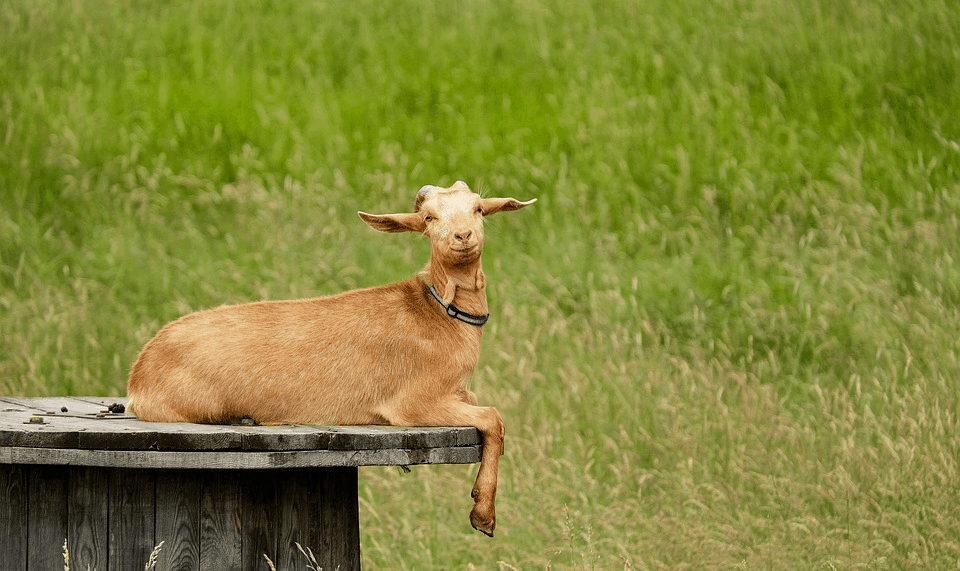
The Complete Guide to Raising Goats for Beginners

January 21, 2019 M.D. Creekmore

Raising goats guideby Millie from KY

Goats are fun, quirky and are great pets!  But we Pack Members are interested in with them for an “off the grid” homestead or SHTF situation.  That being the case, the previous qualities only enhance the fun of having them.  They are a great homestead and often dual purpose animal to raise and enjoy.

And they are fun in spite of what some will say!  Perhaps you have heard that “billies” are stinky, mean, hard to handle.  That goat milk smells funny or tastes funny.  That goats butt people and are unsafe around adults or children.  Or that they will eat your plants and jump on your vehicle, damaging it.

The answer to most of the above questions is “could be”, but only if you realize that most of these problems are from poor management. Because people tend to treat goats as you would dogs, they often are frustrated at the results that they achieve.

Bucks are only stinky during “the rut” which is the time when they start to feel amorous.  This will bring the does into season.  They do disgusting things such as pee on their beards or mount each other.  In other words, they sometimes act like the teenaged version of Jackass… but it is normal.

Once the rut is over, they quit smelling and return to their normal selves and become my buddies again.  I do go and pet and scratch them but make sure I have on an old jacket and gloves.  They can’t help being Jackasses.  And one of the best things you can do when choosing a buck for your herd is to choose one that has been reared on a bottle.

They are much tamer, friendlier and easier to handle.  Now and then one of my boys will refuse to do something during the rut (I want them to go here or there) but when they figure out that sometimes they got to visit the does when I am trying to move them, they become much more compliant when I ask them to do something.

The rut for my breed lasts from about August thru December.  The rut is what causes them to smell bad, and you must keep your does that are milking away from the bucks in rut or it will cause a flavor to the milk

Milk must also be kept extremely clean, the udders/teats cleaned before and after each milking, the milk that is produced gotten into a refrigerator as quickly as possible.  If cared for correctly, you will not be able to tell the difference between goat’s milk and cow’s milk.

Goats are very safe for the most part around people. The secret is to bottle raise your babies.  I let my babies have a few sips for colostrum after birth and then they are started on the bottle.  Bottle raised babies to see you as part of the herd and someone to be trusted.

This is when you can teach them to not jump up (push them down and be not so nice about it) and say NO.  It will take a few times.  NEVER encourage a goat to jump up on you with a treat, you have just taught them how to do it!

Goats are BRIGHT.  They can be taught tricks, or to carry a pack if you are hiking. There is quite a community of goat packers out there.  They can pull carts and help with farm chores.  They can get into trash cans to eat grain and yes, they can get very sick from too much grain just as a horse can.

My goats get very little grain.  It’s bad for the bucks because it causes urinary blockages that CANNOT be fixed and the goat will die.  The girls just get fat on it.  So grain is used to lure them from here to there or as a special treat a few times a year and on Christmas.  Mine also like animal crackers, most any kind of fruit, raisins, and bread.  When I pass by the day old bread store, I get a few loaves for the goats and the horses.

Goats are FUN.  They are very much like a big dog.  I enjoy walking our property with my herd following, munching on everything, finding the oak leaves and acorns that they adore.

Goats will eat almost any plant including poison ivy. This causes problems for the humans because if they are wading through Poison Ivy, it’s getting all over them.  It doesn’t bother them because they have hair but woebegone to the human who grasps the collar to lead that goat somewhere or hugs that goat!  The Goat Manual states that if the goat gets loose, it will eat your most expensive plants first.

Goats are walking fertilizers.  They make little pellets as a bunny does.  But they are harder and take a while to break down. This is actually good because it’s a slow release into the soil of the beneficial things that poop gives to our gardens.  Mine walk about the field and actually since we have been here for three years now, the field has never looked better!

Now that I have convinced you to try out your hand at goat farming, let’s talk about some practical things.

There are three different kinds of goats and you can sometimes use one goat for two or all of these purposes.

The first is for fiber.  Angora goats produce a fabulous fiber that is wonderful for spinning, knitting, and weaving. They are an ancient breed, going back several thousand years.  If you are looking for a post SHTF business and like to create things, this may be the choice of goat for you.  Currently, Angora yarn goes for $ 5.00 to $20.00 an ounce when it is ready to knit.  Angoras are not a meat goat because the focus on breeding them is to produce the fiber.

Angora goats should not get wet because the water goes through to the skin rather than rolling off as would happen with another breed of goat.  Angora/cashmere is highly sought after for the non-felting qualities that this particular type of wool has.  In addition, it is the softest of the wools that are produced.

The finest and softest yarns come from the youngest animals.  Goats are shorn twice a year and produce about 10 lbs of fiber on average, a year.

Angoras generally produce one kid, occasionally there may be twins.   Kids are very delicate as newborns and must be kept dry and watched the first couple of weeks of life.  The low birth numbers mean that your flock will be built slowly.  However, since both sexes produce wool, bucks (males) are as valuable when born as a doe (female) is.  And yes, let us use the correct terms for the sexes.

They are not billies and nannies, the correct terms are bucks and does (or bucklings and doelings when they are young).  They are a medium size goat, from 70-100 lbs for a doe to 180-225 lbs for a buck.

goat-guide

You can butcher a hair producing goat but there is not as much meat on them.  You could attempt some breedings to get more meat on your goats by crossing with a meat goat but the wool production would go down or be of less quality, so probably better to just raise fiber goats on their own for what they are bred to produce.

Meat goats are very popular with many farmers, and excess kids can be raised and fattened for many ethnic groups for their holidays, mostly in the spring.  Goat meat is much like venison, it has a little different taste than beef.  It is a low fat meat and very healthy.

You must add a little fat for cooking or if you are making sausage.  I have had hamburgers with goat meat, they are a little dry but if I had cooked them, I would have done so in a little bacon fat which would have greatly enhanced the meat.  I have also had it as kielbasa which was excellent!

Although you can butcher any goat, the most common meat goat here is the Boer goat. They are very large and beautiful goats, some have a traditional pattern of a white goat with a red or black head and neck.  Some breeders are producing Boers with splash or “moonspot” patterns.

These are big goats, indeed!  Boers average 200 to 300 lbs.  They were developed in the early 20th century from indigenous goats in South Africa along with a sprinkling of some other breeds.  The focus was on meat production, and does may be bred 3 times in 2 years, five months carrying her kids, 3 months raising them, bred again, 5 months/3 months and then again.

They are able to be bred year-round with their cycles.  For the production of meat, medium sized does are best for the raising of meat, they cost less to feed yet produce the same number of kids. After the first kidding, usually one kid, they generally produce twins.

Boers can also be milked although their milk production will not be as much as dairy goats.

You can buy Boers in lower percentages, 50% Boer/50% other breed, etc.  These are usually much less costly in terms of getting started in meat goats.  Then you buy a better buck and breed your way back up to a higher percentage of Boer blood.  The higher the percentage of Boer blood, the more muscular and heavy that goat will generally be, which is what you want, more meat.

The last kind of goat is the dairy style.  Think about a Guernsey cow.  Delicate looking, big wide hips that stick up high, more weight in the abdomen than anywhere else and this describes a good milk goat, too.  There are dozens of breeds of milk goats but I will focus on Nubians for the purpose of this article.

The biggest reason is because Nubians are a good sized goat, and have been bred specifically for milking for many years.  One of the things besides the milk production of the dam of the goat you may wish to purchase and the genetics of the sire (his dam and any sisters he may have, as well as what he has produced in terms of milking does), is to look carefully at the udder.

If you are purchasing a doeling, this will be hard to determine, that is why you look at the dam and any other goats that are related through the sire.  There are two critical things to examine.  One is the length of the teat itself. Short teats, say 1-2 inches long, are difficult to hand milk.

Long teats are better, 3-4 inches.  This is hard to determine in a young doeling.  Compare her to any other youngsters that the herd owner may have in his flock.  The other thing in a milking goat to consider is the “attachments”.

Look at the goat’s udder from the rear.  The udder is shaped like a “U”.  If the “U” is flatter and attached further down the sides of the goat when viewed from the rear, this is considered good attachment.  If it is a longer, saggy “U” (and the doe is not in the process of drying up), that is not good attachment.

This is important because it will affect the animal’s life as well as milk production.  Less attachment means saggier udders.  Eventually, you will run into the problem of a doe getting up from lying down and stepping on and damaging her own teat/udder, or another goat doing so.

Goat Shelter:

Goats need a sturdy shelter.  It should be dry and draft-free.  If you are in the North, make it four sided but make the door big enough that you can get a wheelbarrow in and out. Add a door if you wish, it may be necessary in the most cold climates.  I live in southern Kentucky and our door stays open year round and they stay quite comfy if they are dry.  Make sure the floor stays dry for them.  If you put straw in, they will bed on it but are just as likely to eat it.

Goat Food:

Goats require good pasture/brush to eat.  There is very little that they cannot eat other than the odd poisonous plants and they seem to stay away from those. What they cannot eat is wilted cherry leaves.  So be sure that this is not on your land, or that they cannot get to it.

If you feed hay, good horse grass hay with little or no alfalfa in it is good. No mold, not old, not crappy hay, which a lot of people will tell you is “fine” for goats because they believe goats will eat anything.

I look for hay that has some greenness when you open it up but smells sweet and pleasant.  A little alfalfa is ok for the does to eat but can also cause urinary blockages in bucks and wethers (a wether is a neutered male goat).

Goats can waste a lot of hay. The best way to feed it is in a feeder with small holes so they can only pull out a few strands at a time, or in a hay bag with small holes.  These can be found if you type in “slow feeder hay bags” into your search engine.

Another thing I have seen that works well is to put in a section of hog panel as part of your fence.  Concrete the length of this area, about 2-3 feet wide.  You can spread your hay there and they can stick their heads through the holes in the panel (consider this carefully if your goats do have horns, this may not be practical for them) and eat without walking or pooping on their food. At the next feeding, what is not wanted can be raked up and burned or used as bedding.

Goats prefer to eat brush and branches rather than grazing. They can and will graze but would much rather be turned out to do the bush hogging chores.  You can teach them to be on a strong line with a collar but be aware that many goats get into trouble this way, with a rope wrapped the wrong way around the neck or the leg.  They jump and get the rope hung over things.  Collars can and do break or twist into a death trap for a goat.

Be very careful in thinking about trying out. This might be attempted with an older wiser goat but I would never do it with a youngster.  As a matter of fact, I never tie mine out. I do have a friend who ties hers out to keep the brush down on a steep bank and the girls have mastered just lying down if they are unable to turn around or get out of a tangle of branches.  She uses a heavy cable to tie them with and it works great for her to do it this way.

Goat Fencing:

I have mini Nubians which are not as tall as the standard Nubians.  I have a 4-foot fence around the goat barn, one side for the does, one side for the bucks.  Make sure that the fence between is very sturdy and preferably solid and can take some hits.  When the does are ready for breeding, the bucks will do everything they can think of to get to them.  We do hope in the future to move the boys up the hill to give some space between them for a little more peace.

Goats will walk right through barbed wire.  I prefer smaller mesh field fencing, 4 x 4 inches or 6 x 6 inches.  Garden fencing can often be broken down as it is welded.  You can also use goat or cow panels which run about $20.00 a 16-foot section but that is very sturdy.

If you have babies, though, they may get through the fence to explore.  If there are no predators, it’s probably fine.  I also put a hot wire on top, then out about 6 inches on the outside, and then again, a few inches from the bottom on the outside. This is to keep predators out of the goat yard when I am not around.

If your fencing is poor, if the goats can escape, then your car will get jumped on and your roses will look like they have been run over by elephants…and trust me, they will eat the most expensive plants you have first.  There goes the $50 gorgeous day lily that you just had to have because the color was so rare!

Water for Goats:

It must be clean and changed daily. In the summer they will need more water, in the winter, they LOVE it if you take down warm water for them to drink or put their water in a heated bucket.  They will drink more then.

Salt/minerals:

This is a biggie.  Goats cannot eat or lick enough off of the commercial salt blocks for what they need. Further, they require more copper than most animals.  I will write about that more in a bit.  They must have a loose salt feeder, they make plastic “double” ones that you can get at Tractor Supply.  Mount this higher on the wall and put a step so that they must put their feet on the step in order to reach over and get the salt.  This keeps them from pooping in the holder.  I don’t know why they do this but every goat owner I have ever talked to says the same thing, they poop in it.  There is sweetening in the salt and minerals to encourage them to take more in.  Check this daily, especially in the summer.

Vet Care for Goats:

Your goats must have a CD & T shot each year. These are given subcutaneously and are easy to do if you have someone to hold the goat for you.  Tetanus is a terrible disease and one of mine died from it this year.   There are pneumonia and other vaccinations available but I have not used them.  Any goat coming into your flock must have one CD & T shot and then a second one in 4 weeks.  Thereafter, it is a yearly vaccination.

Kids are vaccinated for CD & T at four weeks and again at 8 weeks of age.  You must do the same for adults that have never gotten their CD & T shots, wait 4 weeks and give a second one to be sure there is full immunity.

If you choose to get the pneumonia vaccination, the same schedule applies as for the CD & T vaccination.  You can order CD & T and pneumonia vaccines online or get them at TSC.

Most vets know very little about goats so I would suggest calling around to other goat people to see who you can find.  It is sometimes worth it to toss a goat in the back of your van and drive an hour or two.  There are some excellent veterinary goat books for purchase, Mary Smith’s Goat Medicine, Second Edition is pricy but invaluable.  Most of us have learned to be our own vets for our goats.

As with all animals, it’s good to have the basics on hand. Goats can bloat, so some baking soda mixed in water and given with a syringe (no needle) into their mouth is helpful.  Some people put in a second salt feeder just to keep baking soda in so they can eat it if they are feeling not so good.  It’s an excellent idea.  Worming medication, you can use goat or horse products. For MOST horse products you will use three times the weight advised, in other words, your goat weighs 100 lbs and you give a dose for three hundred pounds.  Do some research into the products that you can do this with.

First aid items, vet wrap, blue kote, Vetrimycin, some oral banamine for pain or aspirin.  A pill baller is a good item, put the pill in, get down the back of the throat and administer.  If you have babies, a couple of nipples that can be attached to a 20 oz soda pop bottle is a good idea, and always have spares because sometimes they bite them off!

Worming Goats:

Goats are very susceptible to worms. Worms kill a lot of goats.   It has been discovered that a goat that is wormy often does not have enough copper in their systems. Copper helps to keep the worm load down. It is a natural way for goats to fight them off.

You can buy capsules with copper rods in them.  Down the throat, the capsule dissolves in the digestive juices in the stomach and they move on to the intestines where most worms reside.  The rods tend to get stuck there and then there is the slow oxidation of the copper and it’s absorbed into the bloodstream.  Something about the copper getting into the goat’s system helps them to naturally fight off worm and keep the numbers down.

You can use Quest Plus (horse paste wormer) or Cydectin (orally) for barberpole worms.  This does not have to be 3 times the dosage.  For Quest Plus, follow the weight instructions; for Cydectin, you will use 1 mL per 5 lbs.

For other worms, Ivermectin (horse paste wormer) will be used at 3 times the recommended dosage. Or you can use the 1% injectable ORALLY at 1 mL per 50 lbs.

Tapeworms:  Valbezan can be used according to the bottle directions, orally.  Do NOT use Valbezan on pregnant goats.

When you worm, you must not use the milk for consumption for about 2 weeks afterwards, freeze and mark that for when you want to make goat’s milk soap.

A large load of worms will cause anemia, they attach within the organs of the animal and feed themselves by sucking blood. Anemia can be checked by holding the goat’s head and rolling back the lower eyelid.  You want to see a nice healthy pink.

Go look at your dog’s gums to get an idea of the color.  If it is white, whitish, very light pink or just a little pink…you have an anemic goat.  It will need to be wormed, to have plenty of copper, both in mineral eating form and in the way of the copper boluses.

It is a good idea to take in a stool sample and have the vet see what kinds of worms you are dealing with so the right wormer can be used. I wait for the worst looking goat to poop with a plastic bag nearby and take that one in.

Worms can also cause “fishtail” where the tail is partly short and partly long, looking like a fish’s tail, redness to a black coat, a rough coat or a coat that has hair that curves back somewhat like a fish hook.

The anemic goat may also benefit from a B12 shot and some Red Cell, a supplement that is readily available.  Red Cell can be given 1 cc orally per 20 lbs, twice a day for a week and then 1 time a day for a week.

Goat Hoof Care:

You will need to learn about hoof care. This is EASY.  I was surprised by just how stunningly easy it is to do.  You need a pair of trimmers or pruners and someone to show you.  And a third person to hold the goat while this is done.  If you get a milking stanchion that is raised, it will be doubly easy.  I had to do them several times a year when we had sandy soil, now that we have rocks on the land, I do them maybe once a year.

I usually keep collars on my goats all the time, it makes a handle so that you can have some control.  Because I have dairy goats, I do disbud (remove the horn buds) when they are around 3 days old.  If you have meat goats, traditionally they are left on.  However, do remember this is a weapon for the goat and can be very dangerous.

Now for the rest of the story.  You know what to feed, how to house and how to enjoy your goats.  What else?

Goat Breeding:

Well, there is breeding, having kids and raising them up.  There is also butchering, but until I have actually gone through the process and see what can be done better or what was useless to do, I don’t want to write about that right now.

You have a doe.  You have or can get access to a buck. What now?

The goats should have been kept wormed, have loose mineral available at all times, be up to date on CD & T vaccinations.  Both sexes should be healthy, well-nourished (dairy goats carry their fat in their abdomen, not so much over the body, but you don’t want to see ribs).  They should be sleek and shiny and act like they feel good.  Please don’t breed a goat that is not feeling well or is skinny.  You will lose the kids and maybe the doe, too.

Bucks can be stinky.  It’s usually best if they are separated from the does for several reasons.  One is that if a doe cycles, he is going to breed her. This could be a problem in July because you will have January kids.  When you have a newborn, wet kid and sub-degree weather, it’s a recipe for disaster.

If you have a protected barn and lots of straw and some kind of heat source, even if it is just the other does around with the door closed, that will raise the temp a good 30 degrees.

In the north, I used to use a heat lamp but be aware that goats are curious and like to get into things.  A heat lamp that is still on and in the straw will mean dead goats and a burned out barn.  I hung them up over the place where the kids could go to stay warm, which was the bottom of an old plastic dog house.  But the doe still must be watched regularly when she is near her time to kid.

Breeding usually takes place in the late summer or fall.  Count up 5 months for an approximate date of kids arriving.  Bucks will go into rut about mid-summer to late summer.  They will do disgusting things like pee on their faces and sometimes on you, too!

Some people cannot abide the smell, it doesn’t bother me but it is stinky.  If you must do something with your bucks during this time, move them somewhere, give them vaccinations, trim their feet, worm them, then wear old clothes and wash them with double the soap when you are done.

I find plenty of dish soap on my hands and a good scrub removes most of the smell, or you can wear gloves.  My boys are friendly and sweet even when they are stupid with the rut, and like to be petted, so I generally wear gloves just so I can rub them some. Learning to mouth breathe helps.

Being in rut will entice the does to cycle and come into season.  You will see the bucks gather at the fence, rolling their eyes, doing a spitting noise, braying, peeing on themselves.  Pretty much what you see at Bubba’s Bar and Grill on a Saturday night.

The girls will let you know when they are ready, too, standing nearby, walking up and down in front of the boys, sometimes there is a whitish discharge.  The most reliable thing for me to notice is that they wag their tails, quite vigorously.  I watch my does every day to see who is ready to visit their boyfriend.

Now we are ready to accomplish The Deed.

I will not elaborate a lot on the birds and the bees here; I’m hoping that you all understand the basic mechanics of the process!  There are three ways to accomplish this.  One is to leave the buck in with the does.  This will make your milk have an odor if you are currently milking the doe.  It also means that you never know for sure if the deed has taken place and you may wait 5 months for nothing.

The second way is to put the two lovers together and let nature take its course over an hour or so.  Then put the buck back where he lives and the doe back where she lives.  I usually linger nearby during this time, to observe and be sure she was actually bred.  The third way is called “hand breeding” and consists of you holding the doe’s collar/head while the buck mounts her.  This is what I usually do.  It is quick like a bunny.  Very quick.  You will know if he has penetrated because the doe will arch her back and squat almost like she is trying to pass urine.

Just as a matter of information, there is a fourth way to breed with artificial insemination but I could probably write a lot on it and it would go over your heads. For the average goat owner, this is usually not an option.

Make sure your does have access to plenty of fresh hay, good pasture and maybe a handful of grain if it makes you feel good.  They are feeding 2 or more now!

Kids have an average gestation period of around 150 days (5 months). This can vary each way by about 5 days.  If you leave your buck in with your does, you never quite know “when” things will happen and run the risk of losing kids, particularly if it is cold.  Most does have 2 kids, one kid on the first kidding, then two, and some girls have had a litter, as many as six kids!

Signs of pregnancy are not obvious until 1-2 months before kids are due. They will thicken around the waist, and begin to develop an udder.  When they lie down to rest, you will think “battleship” and will pet and apologize to them.

While the rumen is prominent on the right, the left side will fill out, too.  Some are still not as obvious but in that case, I treat them as if they are pregnant because they could have a singleton kid in there, and need the same care.

Some of the signs of kidding being imminent are:  the ligaments around the tail disappear. If you look around on the internet, you can see how to feel for this.  I have not learned the “knack” yet so I only mention it in passing.

I can’t feel the ligaments for 2 weeks before they kid, but people who are skilled at this can narrow it down to 24 hours.  A day or two before, you may notice some white “goo” from the doe’s vulva. This is perfectly normal.

Sometimes you see it a week before, too.  My girls tend to keep to themselves, in the barn, quietly contemplative, just chilling out.  I am thinking of beginning to take their temperatures, in dogs, the temperature drops about 24 hours before a girl will whelp pups, so I wonder if that is true with goats.  I will let you all know if this is so next spring.

Just a note:  the rumen, one of the stomachs, is on the right side of the doe.  It can look quite huge at times and can often be mistaken for pregnancy or more babies inside than there really are.

I have stalls so I fill them with straw, a small hole hay bag (goats waste a lot of hay) and a water bucket.  Hang the bucket up high because 1) they poop in it and 2) they could have a kid in it.  If you have to, put a small step of some kind so they must step up to drink.

My stalls are made of wire panels so they can see each other and that seems to calm them, they are still in a herd situation.  Keep some old towels and a couple of rolls of paper towels down in the barn, along with a bucket of fresh water for you to rinse your hands in if necessary.

Keep your cell phone with the vet’s number in it and it’s always helpful to call the vet a day or two before and tell them that you are a first-time goat kidder and that you may need assistance.  It’s rare that you will have to call them.

Once you have decided that the time is close, stay nearby.  You may see her begin to dig in the straw.  Sometimes they just lie down and wait, chewing their cud.  I check about every 30 minutes.  If I see contractions, I turn a bucket over, have a seat and get ready to help.

Mostly they don’t need much help but I do go in with my does.  You will see a series of contractions and then some hard pushing.  This can take anywhere from an hour or maybe two, to move the kid down into the right position.  You may see a “bubble” presented first and this is normal.  It will break and the baby will follow in a while.

A perfect kidding will have the kid be presented right side up, first two front hooves and then quickly a nose.  A few good pushes and soon the most darling of animals will be on the hay.  I tear open the membrane on the face if it is still intact and push it back.

Then take some paper towels and wipe the nose and inside of the mouth to clean it up.  The baby should be breathing when you wipe them up.  This just gets the gunk and goo out of the way so he can breathe better.

Usually, the umbilical cord will tear and separate, if it does not then DO NOT PULL ON IT!  Take your fingers and tear a little bit a time, as close to the vulva as you can.  The afterbirth will come out in a while.  You don’t want to cut it because it will bleed quite a bit.

You can tie it with a piece of string or even dental floss if it seems to be bleeding more than you are comfortable with.  And I should mention that most does have their babies just fine on their own but I still like to be present.

On occasion, you will have a breech birth.  These are tricky because being presented with the back feet first, the umbilical cord (lifeline) of the kid may be compressed or torn before the kid is completely out.  You have four minutes to get that kid out safely before it dies in that case.

If you feel the doe is having trouble, you must rinse your hand/arm and go inside.  It doesn’t happen often but sometimes kids get mashed together and you must try and push one back and encourage the other to come into the space so it can come out.

At this point I don’t care whether it comes out front or back, I just want it out.  A kid may be presented with the head thrown back and will never be born, so if you don’t push it back a little and then get that head turned around, you will lose the kids and the doe.

If you cannot do this, call a vet to come out and help.  Another malpresentation is with one leg and the head coming out and one leg back along the side of the body.  If there is room for you to get your hand in there, you can often bring that leg forward.

If the doe is having problems, pushing and you have a presentation occurring, wait until the legs appear.  Take about 6 paper towels, wrap them around the middle of the lower part of the legs (like between your wrists and your elbows) and pull steadily, arcing towards the ground.  Only pull when she is pushing.

When she stops, you stop.  I had a very large kid that I had to help this spring, and I wondered that I would ever get him out.  It seemed to take 20 minutes but a friend who was there with me said it only took about 4 minutes.  He would come out about an inch with each push/pull.  Momma was yelling the whole time and she wanted him out.

Once the kid is out and you have cleaned his face, take the towel and rub him dry.  Kick some clean straw over the wettish area and put the kid on a dry area.  Encourage the doe to nose and lick, when she does, you can step back.  If it is cold, though, I keep rubbing and drying.

I am always surprised at how quickly they dry out.  In a few minutes, he will be trying to stand and it’s so sweet to sit in a stall with a new baby, the smell of sweet hay in your nose and the miracle of birth in front of you.  Jesus was born in a barn and I can’t think of a better place to be.  Time for some smiles at the standing lessons and a nice pat for Momma Goat.

If there are more kids, then within an hour or even less, you will see more contractions.

I like to give Momma Goat a bucket of warm water to drink and will freshen up the stall, take out the wet spots of straw and fluff up some new straw for the new family.

Watch to be sure the babies find the teat and drink.  They will just take 2 or 3 sips and then walk away.  They will drink more vigorously as they grow. Watch the little ones, if you have more than two, the big ones will push it away and it will weaken and die in a day if you don’t pull it away from Mom and get a bottle with some formula in it.   If you are going to milk Momma Goat, let them stay with her about 12-24 hours, then move them to a separate stall where she cannot see them.

You can begin to give them a bottle then.  You will have to train them to it and remember they like it quite warm.  Momma Goat should have had stanchion lessons before the birth, be able to stand on the milking stanchion, eat grain, have her head restrained and you touching her teats and udder on both sides.

She may struggle a little on the first milking or two but when she sees that you are relieving the pressure she feels, and she has grain, she will be cooperative and give her milk willingly.  She can then go out with the general herd in a day or two.  Watch her for mastitis, an infection of the teat/udder, redness, swelling, heat, pain.

Also, watch her general demeanor, if she acts off or sick in any way, she may have retained a placenta and you will have to call the vet.  Sometimes a placenta will come out and just hang for a while.  It’s enough to drive someone with OCD out of their minds but do not pull it.  It will come out in a day or so.  I have cut it off about 6 inches away from the vulva just so it doesn’t look so gross.

The first milk is called colostrum and is essential for the kids to have some of this.  If you have a weak kid, you may have to milk her and try to get it down him with a bottle or you can tube feed it.  I do have a tube feeding kid for young kids, I have never had to use it, though.  They usually drink from the bottle.

The milk will be watery looking for a few days, they will become more opaque in a week or so.  Give the kids the milk right along and all that they want.  You will have to milk twice a day if you do this.

You can let Momma Goat raise the kids herself if you don’t want the milk, but the kids must be handled and held every day for a few minutes to keep them friendly toward humans.  I raise all my babies myself, they are friendly and easy to sell this way.

I prefer my babies to go as pets or as milkers because they are dairy goats.  This probably isn’t an issue if you have meat goats but some of them are really big so if you want to be able to handle your goats well, I would advise milking and feed the babies, keeping the extra milk for yourself.

Goats can be milked for nearly a year but most advise to slow down the milking and stop when they are getting close to being bred.  This will allow the doe to have a rest.

I’m sure there is more I can write but will need to think about other subjects on goats that will be important to know!

Filed Under: Homesteading

Illinois Knife Laws: A Simple Cheat Sheet With All You Need To Know

January 21, 2019 M.D. Creekmore

Illinois knife lawsYou probably have heard about the ratcheting up of violence on the streets of Chicago. The nightly news has covered the stories of street violence (mostly gang related) extensively, as well as nationally recognized publications such as USA Today and the Wall Street Journal. Has the publicity coincided with a push for more weapon control legislation by the Illinois legislature?

The answer is no, which is good news for outdoor recreational enthusiasts that use a wide variety of knives to cut fishing lines and set up duck blinds.

[ Note: Out of all of the pocket knives available on Amazon.com this one is my favorite everyday carry knife – click here to see what it is on Amazon.com. I love this knife! It’s built like a tank and holds an edge better than any other knife that I’ve owned…]

Overview of Illinois Knife Laws

Illinois represents one of several states that refer to intent when it comes to determining the legality of possessing a knife. State law defines intent as attempting to injure another person by using a knife.

However, intent is not the only criterion for determining how to write Illinois knife laws. The state has decreed specific types of knives to be illegal: ballistic, throwing and automatic. Residents of and visitors to the State of Illinois are prohibited from owning and/or selling the banned knives.

(720 ILCS 5/24-1)  Sec. 24-1 defines the unlawful use of weapons:

(a) A person commits the offense of unlawful use of weapons when he knowingly:

(1) Sells, manufactures, purchases, possesses or carries any bludgeon, black-jack, slung-shot, sand-club, sand-bag, metal knuckles or other knuckle weapon regardless of its composition, throwing star, or any knife, commonly referred to as a switchblade knife, which has a blade that opens automatically by hand pressure applied to a button, spring or other device in the handle of the knife, or a ballistic knife, which is a device that propels a knifelike blade as a projectile by means of a coil spring, elastic material or compressed gas; or

(2) Carries or possesses with intent to use the same unlawfully against another, a dagger, dirk, billy, dangerous knife, razor, stiletto, broken bottle or other piece of glass, stun gun or taser or any other dangerous or deadly weapon or instrument of like character;

Illinois law emphasizes the intent to use a legal knife can change the legality of owning the knife. For example, accidentally hurting another person by handing a dagger over is not typically considered bad intent. However, using the same dagger to threaten someone is cause for seeking a warrant for the violation of Illinois knife laws.

A Word about Automatic Knives in Illinois

Like many states, Illinois has banned automatic knives. You cannot create, own, sell, and/or trade an automatic knife. Legal restrictions placed on automatic knives have gotten tougher over the past few years in response to the violence epidemic plaguing the streets of South Chicago. Nonetheless, several Illinois legislatures that represent rural districts have formed a coalition to loosen the restrictions placed on automatic knives, which are popular among anglers and hunters. Avid anglers and hunters should pay close attention to any legislation introduced in Illinois that makes it legal to own an automatic knife.

Knives that are Considered Legal by Illinois Law

  • Pocket
  • Folding
  • Bowie
  • Butterfly
  • Sword
  • Machete
  • Dirk
  • Dagger
  • Stiletto
  • Hidden
  • Misleading

At one time deemed illegal according to Illinois knife laws, switchblades moved into the legal column in 2017 thanks to a coordinated push by legislators representing districts outside of Chicago. On August 11, 2017, Governor Bruce Rauner signed into law SB 607, which repeals a ban on switchblades in Illinois.

Open Carry Knife Laws in Illinois

Despite the media attention paid to the violence in Chicago, Illinois has remained a knife ownership friendly state. Only a few styles of knives are outright banned and in some areas of the state, you are not allowed to open carry a knife that exceeds three inches in length. Areas of concern that regulate open carry knives include public property, such as a state landmark and a federal courthouse. All other types of legal knives are eligible to be open carried anywhere in the State of Illinois.

Concealed Carry Knife Laws in Illinois

As opposed to open carry laws, Illinois does not place restrictions on the concealed carrying of a knife, as long as the knife is legal to own. However, like open carry knife laws in Illinois, concealed carry statutes ban the carrying of any kind of knife in the following public places:

  • Public schools
  • Public housing
  • Courthouses
  • School buses
  • School sanction activities held off-premise
  • Public transportation
  • Prisons
  • All types of athletic venues

Illinois Laws and Knife Length

Illinois law places few legal restrictions on the length of knives carried by residents and visitors. Yet, a couple of laws exist that prohibit the carrying of knives that are more than three inches long.  The length restriction is in place on properties partly or entirely owned by state, federal, and municipal governments. There does not have to be bad intent to ban knives measuring more than three inches in length.

Illinois Knife Laws and Minors

In an attempt to prevent the onset of illegal behavior by minors, Illinois legislators have focused on crafting knife laws that target minors. Under Illinois statute 105 ILCS 5/10 22.6, any student in possession of a knife while on school grounds is legal cause for expulsion of the student between one year and two years.

A group of legislators have proposed Illinois knife laws that increase the penalty for minor ownership of any type of knife off school grounds, but each bill has fallen short of receiving enough votes in the Illinois legislature.

Illinois Knife Laws 2019

Perhaps no other state has such a wide disparity in political perspective than what you find in the State of Illinois. Representatives of Chicago districts-especially districts located on the south side-want stricter knife possession laws, as well as harsher penalties for violating the laws. Rural legislators prefer a much more lenient approach to Illinois knife laws. Nonetheless, neither urban nor rural Illinois legislators have placed any bills on the 2019 legislative docket that address knife issues. Stay up to date to legislative activity by joining the email list created by your state representative.

Please note: None of the material in this article should be interpreted as legal advice.  I am not a lawyer.  Never take any action with legal consequences without first consulting with a lawyer licensed in your jurisdiction.  This article should not be relied upon for making legal decisions.  This information is provided for scholarship and general information only.

You can read my other knife law articles for other states here…

And check out these related articles:

  • What’s The Best Multi-Tool to Buy For EDC
  • Best Survival Knife of for Under $100
  • Best Folding Knives For Self-Defense
  • Work Sharp Pocket Knife Sharpener Review
  • SOG Tactical Tomahawk Review

Filed Under: Knives and Blades

New York City Knife Laws: A Simple Cheat Sheet With All You Need To Know

January 21, 2019 M.D. Creekmore

New York City Knife Laws

Many weapons law experts believe New York City knife laws are at best confusing and at worst contradictory to the knife laws mandated by the State of New York. Several court decisions have attempted to unify New York state and city law, with many of the cases appealed for further clarification.

[ Note: Out of all of the pocket knives available on Amazon.com this one is my favorite everyday carry knife – click here to see what it is on Amazon.com. I love this knife! It’s built like a tank and holds an edge better than any other knife that I’ve owned…]

On average, more than 4,000 people are arrested every year in New York City for carrying a gravity knife. One of the reasons for the high arrest rate is New York City knife laws include a provision that states it is a crime for anyone to open a knife by flicking a wrist.

Here are the knives New York City residents and visitors are allowed to own:

  • Hunting
  • Dirk
  • Dagger
  • Stiletto

Here are the knives you cannot own in New York City:

  • Ballistic
  • Can Sword
  • Metal Knuckle
  • Throwing Star

You must be a United States citizen to own a knife in New York City. Municipal law makes it illegal to own a gravity knife unless you obtain a valid hunting and/or fishing license. City law prohibits owning a knife of any kind, if the intention of using the knife is to hurt another person.

What New York City Knife Laws Mandate

Here is the how New York City knife law reads in regards to criminal charges:

  • 265.01.  Criminal possession of a weapon in the fourth degree

A person is guilty of criminal possession of a weapon in the fourth degree when:

(1) He or she possesses any firearm, electronic dart gun, electronic stun gun, gravity knife, switchblade knife, pilum ballistic knife, metal knuckle knife, cane sword, billy, blackjack, bludgeon, plastic knuckles, metal knuckles, chuka stick, sand bag, sand club, wrist-brace type slingshot or slungshot, shirken or “Kung Fu star”; or

(2) He possesses any dagger, dangerous knife, dirk, razor, stiletto, imitation pistol, or any other dangerous or deadly instrument or weapon with intent to use the same unlawfully against another.

RESTRICTIONS ON CARRY

Written into a New York City ordinance, a resident or visitor to the city is allowed to carry a knife that measures fewer than four inches.

“It shall be unlawful for any person to carry on his or her person or have in such person’s possession, in any public place, street, or park any knife which has a blade length of four inches or more.”

Although legal to own, New York City law prohibits the open and concealed carrying of a dirk, dagger, or stiletto, if the intent on carrying any of the three knives is to use the weapon to harm another person. New York City does not have either an open or concealed carry law. Implicit in the absence of open and concealed carry knife laws is the premise that carrying any type of legal knife is allowed based on good intent.

One of the many quirks of New York City knife laws is the provision that presumes bad intent for people open and concealed carrying legal knives such as dirks, daggers, and stilettos. You can contest the presumption of bad intent in court, but that leaves you at the mercy of a judge or jury that might view New York City knife laws in a legal light that is not favorable for your case.

Determining whether someone carried a dirk, dagger, or stiletto with the purpose of hurting someone else is a murky legal water to traverse. As it is hard to read someone’s mind, judges and juries often turn to past criminal records to determine guilt in a legal to carry knife law case.

In the People v. Richards, the jury ruled in favor of Mr. Richards because he did not display the knife he was carrying in a threatening manner, nor did he make a verbal threat to harm another person. In this case, Mr. Richards told arresting officers he carried the knife for self-defense and the jury concurred. However, other cases have ruled against the defendant because of a prior arrest for committing a violent act.

Important Provisions of New York City Knife Laws

One exception to the knives deemed illegal to own and carry involves possessing a gravity knife and/or a switchblade. New York City knife laws permits the use of the banned knives for fishing, hunting, and trapping purposes, but you must present a valid fishing and/or hunting license to enjoy the legal exemption. New York City law defines a switchblade to be “any knife which has a blade which opens automatically by hand pressure applied to a button, spring or other device in the handle of the knife.” Gravity knives contain a blade that releases from a handle, sheath, or the application of centrifugal force.

Knives Stored in Vehicles

Any knife discovered inside a vehicle in New York City is deemed to be the property of every occupant of the vehicle. That is, unless a knife is discovered on one of the occupants. Several court cases have established the precedent that even if one occupant takes a knife out of a pocket and places in on a car seat unseen, the knife is still considered the possession of every occupant of the vehicle. For any vehicle hired by a customer, the driver of the hired vehicle is not presumed to be the owner of the knife.

Age and Schools

New York City knife laws states anyone under the age of 16 is not permitted to own and/or carry a “dangerous knife,” as defined by New York state law (N.Y. Penal Law § 265 05). The next clause in the New York state penal code makes it unlawful for anyone to possess a weapon on school grounds.

New York City Knife Laws Moving Forward

The growing calls for gun more control legislation in New York state has Second Amendment advocates worried about the status of knife laws in the state. Moreover, since New York City often sets the standard for weapon restrictions in the state, it is possible more stringent knife laws might receive approval from the New York City Council as soon as 2019.

Note: None of the material in this article should be interpreted as legal advice.  I am not a lawyer.  Never take any action with legal consequences without first consulting with a lawyer licensed in your jurisdiction.  This article should not be relied upon for making legal decisions.  This information is provided for scholarship and general information only.

Check out these related articles:

  • What’s The Best Multi-Tool to Buy For EDC
  • Best Survival Knife of for Under $100
  • Best Folding Knives For Self-Defense
  • Work Sharp Pocket Knife Sharpener Review
  • SOG Tactical Tomahawk Review

Filed Under: Uncategorized

  • « Go to Previous Page
  • Page 1
  • Interim pages omitted …
  • Page 23
  • Page 24
  • Page 25
  • Page 26
  • Page 27
  • Interim pages omitted …
  • Page 31
  • Go to Next Page »

Primary Sidebar

Subscribe to Blog via Email

Enter your email address to subscribe to this blog and receive notifications of new posts by email.

Join 7,202 other subscribers
  • Amazon
  • Facebook
  • Substack
  • Twitter
  • YouTube

“Do more with less.”

– Minimalist proverb

Recent Posts

  • Just so you know
  • Weather Update for My Corner of Appalachia
  • Why I’m Ordering Ivermectin + Mebendazole Every Year
  • The Website’s Shutting Down (But Here’s the Plan)
  • You Are Hated! Start Training Like It!

Footer

Recent Posts

  • Just so you know
  • Weather Update for My Corner of Appalachia
  • Why I’m Ordering Ivermectin + Mebendazole Every Year
  • The Website’s Shutting Down (But Here’s the Plan)
  • You Are Hated! Start Training Like It!

More about me

Books I’ve written

Books I’ve read

Follow Me on YouTube

Follow Me on Facebook

Gear I Use and Recommend

Newsletter

Search this site

Follow me elsewhere

  • Amazon
  • Facebook
  • Substack
  • Twitter
  • YouTube

© 2008–2025 M.D. Creekmore · As an Amazon Associate, I earn from qualifying purchases.