• Skip to main content
  • Skip to secondary navigation
  • Skip to primary sidebar
  • Skip to footer

M.D. CREEKMORE

  • Blog
  • Start Here
  • Freedom Files
  • Books
  • Subscribe
  • Facebook
  • YouTube
  • Privacy Policy
  • Affiliate Disclosure
  • Contact
You are here: Home / Archives for Jesse Mathewson

Jesse Mathewson

Arizona since 86', lifetime prepper, camper - criminal justice advanced degrees, numerous certifications, 1+ million rounds (shooting for decades), prior contractor, instructor, current volunteer, disabled, honest, father of two husband of one - all budget and prepared. Jesse Mathewson reviews because regular people need someone in their corner as well!

Morakniv Companion Review – It’s A Great Knife For A Great Price!

September 11, 2018 Jesse Mathewson

Morakniv-Companion-knife-reviewChoosing a knife for purposes of survival, bushcrafting or simple camping is a bit of a chore. The Morakniv Companion is an amazing choice regardless of your location on this ball of dirt and water which we live. It comes in stainless steel and carbon steel versions, this review and article are using the carbon steel version!

(Disclaimer, I do use the HD (heavy-duty) models as well, and the Craft-line models, this is simply one of a line of knives I find personally to be indispensable to my personal kits regardless your choice.)

Now one can easily say that the Morakniv Companion is too thin of a blade, or it is only a ¾ tang or how can you say it is a good survival knife? Honestly, I can say that if I had only one choice of a blade to carry with me for an extended length of time, it would be the Morakniv Companion. I can say this based on a wide variety of testing, and from several years of using it.

Others may have their $100 – $5000 survival blades specially designed by some Ex-Army Ranger who was UDT and a Navy Seal and also an Air Force Rescue while cross training with the CIA and NSA for operations deep in the Mossad and GSG9.

I prefer a blade design that has been around for over a thousand years, and folded steel that is rivaled only by Japanese folded steel in overall quality and strength. After all, this is not an article about specific uses, and blades designed for each of those uses. I have already written one or more articles dealing with this. Generally, blades, in my opinion, are very much designed with a specific reason in mind.

Morakniv-Companion-Fixed-Blade-Outdoor-KnifeSo for specific purposes, you will find better blades, after all, a 4” blade isn’t going to be a great weapon against a bear, but I can carve a dozen spears and fire harden them or use it to make punji pits to prevent the need for a close encounter with a bear.

Sure the ¾ tang isn’t a full tang, though in all honesty, most people, even modern blade designers (not blade smiths) but those guys with powdered super steel and solid programming skills and a lathe who churn out thousands of bulky, over-designed or in most cases poorly designed bu ever popular blades have no real idea what or even why certain tangs exist.

Do you? (If you would like to know comment and ask, I’ll gladly explain what the differences are and why the idea of a “full tang” being stronger is not exactly correct. Lastly, if slitting throats you wish to engage in, this will work, but not as nicely as that Ka-Bar or Khukri you may have. (I prefer the Khukri for many reasons)

Morakniv-Companion-Fixed-Blade-Outdoor-Knife-with-Carbon-Steel-Blade

This is a review of the Morakniv Companion in stainless or carbon steel with a lowly ¾ tang and an inexpensive yet very functional polymer sheath, a 4” blade with a scandi grind (shallow and long allowing for much easier cutting, food prepping and even bush work) lastly it has a handle that is made of TPE rubber, which allows gripping even when wet, sandy or cold! This is the single most inexpensive yet important addition you can make to your prepping regardless the reasons for doing so.

There are several benefits outside of the knife itself that give it that step up over other knives. For instance, it is marketed as a TOOL, not a weapon, it can be used quite easily for kitchen meal preps. I have a few different models that I enjoy using for this alone.

It is legal to carry in most places, though some may require you keep it in your pack, rarely will you find a country that does not allow the use of a small (4.1” blade) for making kindling, cleaning fish, game, and all around camping chores.

Across the United States, there are a plethora of ridiculous carry laws with regards to sizes and types of blades. However, this is a blade I have dropped in my checked baggage (usually two) and never seen it walk away, nor has it ever stopped my baggage from boarding the plane.

After flying through or into most major airports in the USA and a few outside, I have never had an issue with this blade itself. I use a bright orange or blue handled one for foreign nations and states, (like California and New York City) as these for some reason bear no threat while the far more realistic green model seems to evoke the idea that it is somehow dangerous and may leap up on its own.

So how does one go about creating a survival kit using JUST this knife and its sheath as the base? Its simple really, the Morakniv Companion MG alone is a great tool, however, if you add 20 feet of 550 cord or 50-100 feet of different strengths of bank-line* wrapped around it using any number of wrap types (I prefer a simple loop, and pull method as it allows easier use of the rope) This addition would be wonderful by itself, however, we are going to add two more items.

Duct Tape (my favorite brand is Gorilla brand, some things are worth the money spent) and a 5/16th by 3” fire-steel or ferrocium rod for starting fires are two more additions that are essential in my opinion.

So all I do is wrap the duct tape (around a yard of 2” wide tape) around the middle of the sheath, capturing the ferrocium rod inside of the tape, and then wrap over that with bank line (my preferred go to for survival line for numerous reasons) or with 550 cord, whichever you choose using the knot and or wrapping type you prefer.

Again in my opinion simple is best, as this is meant to be used, not set on a shelf to show the world how amazing you are. Now, these four items alone offer many valuable uses and are by themselves necessary in any bug out bag or the like, however, when put together with this knife, it becomes the ultimate basic prepper kit.

I am including a video showing some test results with this blade, please understand I own several dozen of these blades, they make great gifts and honestly I see them as an investment. I have tested in the extreme this particular model from standing on it while stuck in a tree to splitting cordwood with it, and yes it is mesquite that is in the video. I have yet to break a single one of these knives. I have bent them, but only after attempting to break it in half using a vice.

I had pulled it well past 90 degrees and when it returned it was only about 15-20 degrees off its center line. I have put nicks in the edge of it, it’s a blade, I have yet to see single blade get hammered through a solid piece of wood or rocks and concrete (as I did with this one) and NOT sustain some minor damage to the edge, however, within 5 minutes with my DMT diamond plates I had it back up to shaving sharp.

The Morakniv Companion certainly proved itself, now folks, the video was filmed by my wonderful 8-year-old daughter so apologies for some disruptions but you get the idea, this knife specifically the Morakniv Companion is insane in its abilities! And this was just the torture testing!

It is lightweight, as in honestly it feels toy-like, so chopping a tree down isn’t going to work well, unless you use a baton while doing so, and then it’s just a matter of time.

The lightweight nature is a plus for myself, being old and broken down weight is everything, I would rather carry two or three of these blades than one Becker (popular prepper blade for some) of any size, after all, you generally won’t find a Becker blade that weighs anywhere close to this one and honestly, I would be willing to put one of these up against a Becker.

Again, I feel it is necessary to have you understand that I tend to carry more than one blade at all times regardless. As I feel blades are purpose-built. However, this is an article that allows for the individual who may not have that overall benefit or ability. Not to mention, one of the blades I always carry when in the woods is a Morakniv Companion in green or any number of other colors.

Others will state their love of any number of knives, however, what can be agreed upon by many if not all bush crafters, hikers, campers and survivalist types is that this specific blade style the mora styled blade is among the most popular and best all-around blade type available regardless the manufacturer.

Personally, I have several variant blades all made of the amazing Scandinavian or Swedish folded steel, Karasuando Kniven only available from the linked site and extremely expensive it is my absolute favorite blade of all times. However, the kniven (knife) I have from Karasuando is identical in almost every way (shape, form and edge type) to the Morakniv Companion.

Now, if you are someone who prefers or wants a thicker blade, get the Morakniv Companion HD (Heavy Duty) or get the Craftline Heavy Duty by Morakniv or the Morakniv Light My Fire all of these blades are thicker, and feel much better if you need that reassurance. Cost is still at or under $20 regardless.

So what are the pros for carrying the Morakniv Companion?

  1. It is lightweight at just 4.5 ounces or 125 grams for what it provides, its hard to find lighter and if weight is an issue, eg., age or physical ability than this is a benefit.
  2. It is strong, as in under normal circumstances, you will never see it break or fail, and as you can see in the video, under abnormal and quite abusive circumstances you will rarely if ever have an issue.
  3. It is sharp and holds an edge well, the carbon steel holds a much better edge longer than the stainless steel. However, the carbon steel requires more cleaning and lubrication than the stainless steel blade version does. However, the stainless version does not work as a fire striker like the carbon version does.
  4. It is easy to clean and easier to sharpen properly, there is no exact science approach if you have a decent sharpening set the bevel of a Mora styled knife allows for a VERY easy experience in sharpening and maintaining that sharpness.
  5. These knives cost less than a fast-food burger in many places, currently, on Amazon, you can have a brand new one shipped to your door for less than $13 – find any other single knife that will do what this one can and do it for this price.

What are the cons?

  1. It’s small and lightweight – it is NOT a fighting knife or a pig sticker or even really meant for clearing brush though you can do so if needed.
  2. It’s not a specialty name and your friends who own the newest blade from Benchmade (I love Benchmade knives) or a custom Skelton knife (again I really like these blades) will look at you differently for carrying it. (this is actually not true, especially if they understand and know knives, but I thought it would be fun to throw in there.)
  3. The controversial Pathfinder school supports this brand and regularly does commercials and more for Morakniv Companion, so there is that as well. (If it matters to you, that and they are made in Sweden, NOT in the United States, and we all know if it isn’t made here it can’t be any good.)

Please comment below and share the article with others. Let’s remember information is knowledge is power and one can never have too much good knowledge. Also please feel free to comment and let me know how I am doing, what you would like to see more reviews of and remember, I generally buy these products myself and write based on my experiences so that you can benefit from them.

“In bush crafting and camping, then, let your great object be victory and living well, not lengthy and sometimes fruitless attempts.” Sun Tzu for the Bushcrafter

Free the mind and the body will follow…

Filed Under: Knives and Blades

Palmetto State Armory (PSA) AR-15 Review
September 11, 2018 Jesse Mathewson

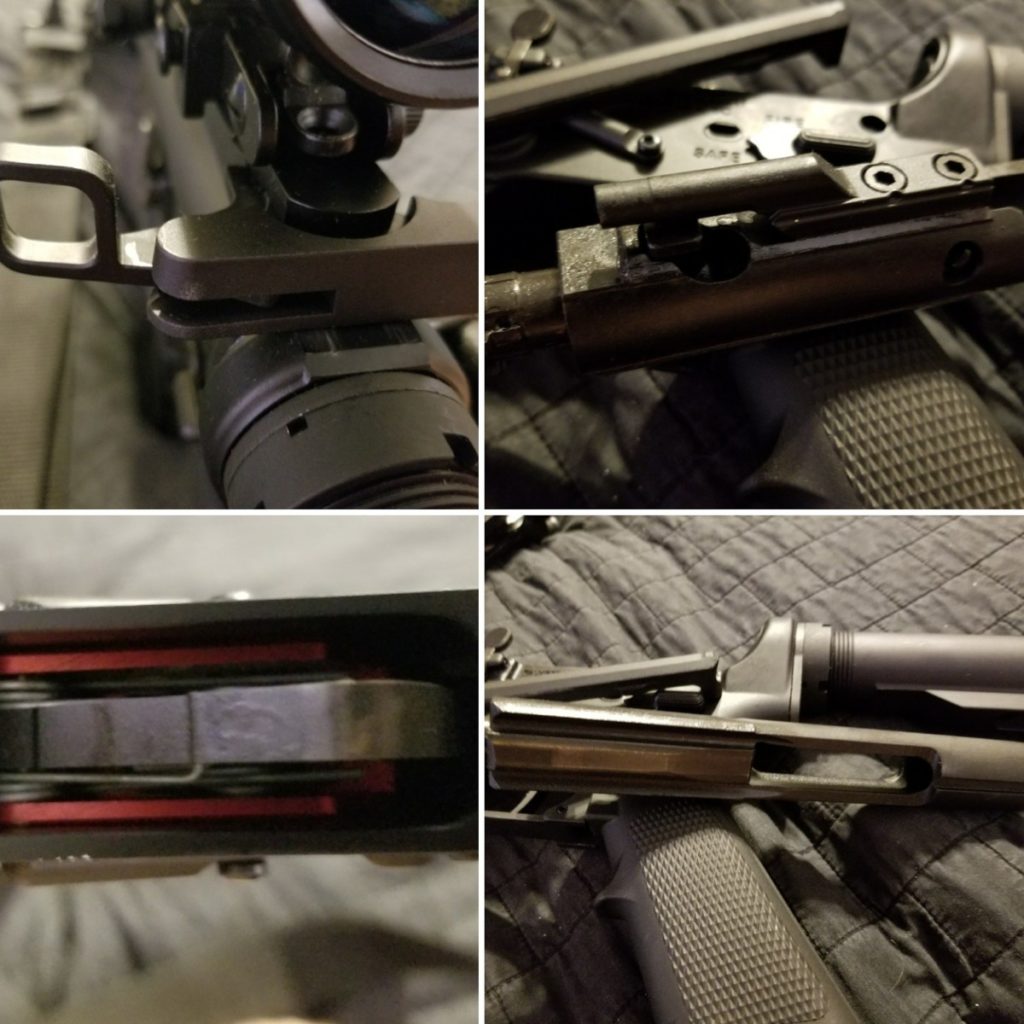
Photo of rifles and ar-15's

Palmetto State Armory firearms are a “MADE entirely IN America” firearms manufacturer that has created a stand out product within an industry full of products. There have been dozens even hundreds of AR15 manufacturers within the United States, among these, there are few that hold up to the full expectations of what an AR15 can be.

Modern AR15s can be extremely reliable, accurate, and versatile firearms. Palmetto State Armory is one of the few manufacturers that has consistently turned out a product I am proud to own and use.

It should be noted that I have at NO point received compensation or product from Palmetto State Armory for writing this article, in fact, I have purchased out-of-pocket the large percentage of reviews I do.

Please remember this when commenting, I am disabled, 40 years old and write reviews because you all deserve to have honest reviews in your corner. Even when a product is received gratis (as is not the case with this article) I provide completely honest reviews. Lying only hurts the liar in the end!

Personally, I discovered Palmetto State Armory AR15s a few years ago when I purchased one from a friend. After using this one for quite a bit I quickly discovered that it was an amazing piece of hardware. I then decided to purchase from Palmetto State Armory myself, and did so, purchasing the following items over the course of two years.

  1. PSA 16″ 5.56 NATO 1/7 Mid Melonite 11″ Keymod Freedom Upper – w/BCG & CH
  2. PSA AR-15 Complete Blem Lower – Classic Edition
  3. PSA Freedom Complete 6 Position Mil-Spec Diameter Buffer Tube Assembly
  4. PSA 5.56 Premium HPT/MPI Full Auto BCG, No Logo & PSA Charging Handle with Tactical Release Latch
  5. PSA 5.56 HPT/MPI Bolt Carrier Group
  6. PSA 5.56 Premium HPT/MPI Full Auto Bolt Carrier Group
  7. PSA 10.5″ 5.56 NATO 1:7 M4 profile carbine length gas tube

Interestingly I have not yet had a negative experience and this is, to be honest rare. After all, everything man-made can and does eventually fail especially firearms. I own several Glock 19s, and have had maybe 4 failures to fire and or feed or eject, in almost all cases it was ammunition related, in two cases it was gun related, I had failed to perform the necessary replacement of springs/ parts that wear out first. Like changing the oil in your car, maintenance is essential in firearms.

photo of two ar-15 rifles a bolt action and glock handgun

For instance on my Glock’s I change barrels every 30,000 rounds, firing pins every 50-60,000 and pins and springs every 5-10,000 rounds, on the gun and in magazines. This ensures continued relatively flawless reliability. Additionally, I do not use sub-par ammunition.

Especially when practicing, I use Aguila, Speer Lawman or MEN German milsurp for practice purposes. And Speer gold dot for self-defense. With my rifles, the same is approximately true, with variations in some rifles depending on the amount of use.

This means that in a given year I could change barrels as many as 4 times if I run a gun hard enough, obviously for 22lr firearms this is not such a large issue, and I have easily gone well over 50,000 rounds before needing to change out springs etc., barrels, if maintained well, will outlast me.

photo of an AR-15 rifle and rifle parts

In my high-pressure carbines and rifles such as the AK and AR variants specifically from Palmetto State Armory, I have found I need to do less maintenance while still seeing exceptional performance overall. The only other brand firearm that even came close in longevity and quality was my Delton Sport model which had a little over 65,000 rounds through the barrel before I replaced gas rings, barrel (it had begun keyholing) and buffer assembly.

It is still running like a mule today, accurate, wonderfully reliable and an amazing firearm. Now, to date I have only been able to put around 28,000 rounds through my oldest Palmetto State Firearm, (prior to melonite/ barrel is chromium steel mix) however, it is still running hard, it is not my defensive tool, as to be honest I am running it specifically to see what fails first. The only issue I have seen is the gas stake on bolt loosening (I tightened and used loc-tite) but no failures overall.

ar-15 scope

I called Adam Ruonala the Chief Marketing Officer for Palmetto State Armory to ask some serious questions about their processes. (On a side note, he is like all of the individuals working with Palmetto State Armory approachable, and honest!)

  1. Do you make your barrels in-house?

Yes, we make our barrels in-house. Exception for the hammer forged barrels, all other barrels stainless, and nitride barrels –

  1. Are all major components (eg., stripped lowers/ barrels and bolts) machined in-house?

Bolt carrier groups currently are outsourced, however, we are in the process of bringing it in-house to keep all – they are made in the United States!

  1. Does the same apply to AR10s and your Ak47 line?

Yes, absolutely the same applies to all firearms made and or stamped Palmetto State Armory!

shooting 100-yard milk jugThe reality is that AR and AK platforms are adult lego’s they are not difficult to put together, in fact, there are dozens of videos showing people building AK47s using shovels and AR’s using a plethora of parts from a dozen different manufacturers.

What is a not well-kept industry secret is that your name branded AR carbines like Spikes Tactical, BCM, and even COLT have many if not all of their parts outsourced and simply stamp their name on it and then raise the price 200-500% and make crazy claims of infinite reliability?

The reality is quite different, comparatively, I have run my Delton and Palmetto State Armory guns against all of the above and in almost every case have continued to run long after they began having failures, feeding, firing, and more.

A popular YouTube channel that destruction tests both AR and AK rifles called The AK Operators Union recently proved that Palmetto State Armory is, in fact, the ONLY all American made AK rifle to date, to pass their stringent 5000 round destruction testing.

*

They also destruction tested the AR15 Freedom model, currently going for under $450 through Palmetto State Armory – and guess what, it passed again!

*

And the AR’s I have tested, well, lets just say that as it stands today I have yet to be disappointed. In fact on August the 6th I will be doing the 1000 yard milk jug challenge with a Palmetto State Armory AR, specifically the PSA 16″ 5.56 NATO 1/7 Mid Melonite 11″ Keymod Freedom Upper – w/BCG & CH the only specialized adjustments I have made are adding a Bushnell 4.5-18x40mm BDC AR scope, P.O.F. trigger (made in Arizona) single stage 4.5lbs and a CVLife 9”-13” Bipod, everything else is exactly as it came from the factory – To make this an even better event, I am using 69 grain IMI MatchKing ammunition, each round being used will be weighed and measured to ensure continuity in load but they will be as loaded by the factory.

The 6th of August is my 40thbirthday and I plan on making a bit of a splash by completing this challenge from the Long Range Shooters of Utah Association with what amounts to a stock AR15 with a 16” barrel – something I think will be a first. And yes it may take a week, as my editing skills are atrocious, but after letting the officials review the video, and editing it, I will post for all to see!

Here is the thing folks, regardless what name brand you are currently in love with, from Ruger through Colt, the odds are the barrels are made by Palmetto State Armory or one of the other 2 or 3 actual builders of barrels in the country and re-branded. In some cases the parts are outsourced too Taiwan or Korea, while Palmetto State Armory keeps its parts entirely in house, or are in the process of bringing everything under one roof! AND THEY DO IT FOR LESS than anyone else on the market today!

What are the pros to owning a PSA (Palmetto State Armory) AR or AK over any other brand name –

  1. Pricing, they offer regular daily deals that are far lower than most manufacturers and do so while ensuring a product that functions well easily 97% of the time (all man-made-products can and do fail at times)
  2. They offer an in-house 1911, AK47, AR10 and AR15 – and do so with components made IN HOUSE!
  3. They have absolutely great customer service, I have never had a single member of their staff be rude, and in fact when I am down South again plan on stopping in and meeting them, I am that impressed with their services.
  4. Quality, overall their quality as has been proved by myself and many independent individuals is second to NONE, in fact, I would suggest to any new owner or older owner looking for a backup piece, go to their website, sign up for daily alerts and take advantage of their daily deals!

Cons –

  1. For the first time, I have none, absolutely NO cons to owning a Palmetto State Armory part of the entire firearm!

So do you have anything to add, what are your experiences, and by all means feel free to share FIRST hand experiences with me. Comment below and if you enjoyed this article and want to see others, share and thanks again!

Free the mind and the body will follow…

Filed Under: Uncategorized

How Many Rounds Of Ammo Does A Prepper Need?

September 9, 2018 Jesse Mathewson

Photo showing a prepper shooting an AK-47 how many rounds of ammo does he need?
My suggestion for long-term storage is a bare minimum of 250 rounds of defensive ammunition per defensive firearm in the house with 500 to 1,000 rounds being ideal.

There is an economic concept, the law of diminishing returns, that can be applied to your life. The law of diminishing returns refers to a point at which the benefits are less than the amount of effort invested. This applies directly to ammunition stored for personal use and firearms as well as general prepping supplies.

I should add that I detest the term prepper, as it is defined using modern vernacular and is seen as a negative to many. Rather I am someone who considers that even though I may never need insurance, it is a wise idea to have it.

Ammunition Storage

When it comes to prepping it is possible to have too many things and by default cause issues with both storage and distribution of the items needed. Ammunition if it is not stored properly does age rather poorly even if it is sealed in spam cans. Food regardless posted shelf life must also be stored in a relatively climate controlled environments.

In fact, there is very little that has an extended shelf life if it is not stored in a climate controlled environment. Look at the packaging for any dry frozen or dehydrated food supplies, store between temperatures are listed on the package.

Temperatures are somewhat important for ammunition, however, the real killer for stored ammunition is moisture. I do not suggest leaving ammunition in your car during an Arizona summer, the temperatures reached can negatively affect performance.

However, in personal testing with ammunition stored openly in magazines and original packaging as well as loaded in magazines I have found that overall the temperature variations rarely affect the ammunition by itself, though with un-crimped hand loads I have found it causes greater issues than crimped loads both factory and not.

What has always been the hands down ammunition killer is moisture and the subsequent corrosion that occurs.

Except for personal defensive ammunition I have on me at the moment and in my house for use at a moments notice, my ammunition is stored in watertight cases that are also somewhat airtight. I use desiccants inside the ammunition storage containers as a way to reduce the free oxygen and moisture amount even more.

With my testing and others, I have found that ammunition stored this way can be good for many decades, especially when temperature extremes are prevented. When it comes to defensive ammunition you should be rotating this every 6 months or so. You are not rotating it because it compresses in the magazine and becomes oval or for any reason other than your carry ammunition by default is carried on your person.

This means that it is subjected to temperature extremes and humidity, sweat and general degradation that occurs with carry ammunition.

My Bare Minimum Recommendations

For this purpose, my suggestion for long-term storage is a minimum of 250 rounds of defensive ammunition per defensive firearm in the house. This takes a rotation of 30-45 rounds every 6 months for handgun and between 60 and 240 rounds for the rifle and lastly 12-24 rounds for the shotgun if you have or use one.

Personally, I prefer buying a half a case for handgun and a full case at a time once a year of premium defensive ammunition. This covers needs for the firearms in use as a defensive tool at my house and keeps a decent supply for practice and storage as well.

With very few exceptions I keep all of my magazines loaded, modern Magpul magazines can be kept loaded fully and older NATO/STANAG magazines loaded at 28 for rifle and one round short for magazines not in current defensive rotation for the handguns.

This is not to reduce spring tension, instead, it is specifically because many older magazines do not seat easily or fully in a firearm that has a closed bolt or closed slide.

I am not going to argue the merits of learning how to count your rounds or other similar approaches as these are foolish and outdated approaches that at least will add steps that will only confuse you under stress and at worst get you killed. My suggestion is, use proven modern magazines and firearms.

How many rounds of non-defensive ammunition should you keep on hand? This is where the law of diminishing returns really comes into play. Ammunition weighs allot in quantity, for instance, a 30 round magazine of 5.56 or .223 weighs approximately 1 pound.

ammo in storage how much is enough?


Whereas a loaded 8 round magazine for a 1911 weighs around 9 ounces and a 15 round Smith and Wesson M&P magazine or a loaded 15 round Glock magazine will weigh around 8-9 ounces. Two defensive magazines for your handgun will end up weighing around 16 ounces and a single 2 ¾ inch 00 buckshot shell will weigh a little over one ounce by itself.

Unless you train regularly with your bug-out bag and a full load out of ammunition, I highly doubt you will be humping more than 3 or 4 magazines for any great distance.

Does this mean you shouldn’t keep more than 120 rounds on hand? Absolutely not!

In fact, I recommend at a bare minimum having 500 rounds of quality range ammunition for practice and long-term use. My suggestion is to avoid big box store ammunition, I do not mean specific ammunition retailers and resellers, I mean Walmart, Big Five, and other similar large box stores ammunition.

What is made for them will ALWAYS be a reduced quality than even military and law enforcement training overruns! Big box ammunition is loaded with far less QC being applied than is done with the more expensive yet better overall ammunition that is available.

If you reload, and this is something that takes great patience and dedicated time and effort to do well, store supplies for as much as you may need at current training use for 2-3 years. This can be applied to factory new loads as well. I like having several months at a bare minimum stored away, with my maximums being around 5 years at my current level of use.

If you go to the range and shoot 150 rounds a week, then calculate based on this number. If you carry defensively and do not train with at least 50 rounds a month, please remember a very simple reality, shooting is absolutely a perishable skill.

Certainly, many people get lucky and have used firearms successfully with little or no regular training or any real training. However, you will find a much greater level of success if you at least keep your basic skills sharp with 50-100 solid rounds downrange once a month.

I have taught and worked with law enforcement officers and soldiers who refused to practice regularly, leading them to have to shoot their generous qualifiers multiple times just to maintain employment!

how many rounds of shotgun ammo does a prepper need

Next, it is important to understand that you and your wife will not be taking on an armed group of marauders even with your multiple trips to FrontSight timeshare and firearms training facilities. I know that the Dr. who owns that training facility has told you that because you are a diamond member you are now better than Rambo, the reality is…you will still be best served with not clearing your house and avoiding issues whenever possible!

This is why individual focused training on your own and or with experienced real-world instructors is best. This means that you need to have additional amounts of ammunition available and stored safely and properly. What you will need much of your ammunition for is hunting, getting rid of predator or scavenger animals and potentially defense against two-legged marauders.

All of my ammunition except what is currently in use is stored in a dry, temperature controlled environment. What is currently in use is also kept dry and cleaned and maintained to promote longevity and 99.9% function when it is needed!

So before you have 50,000 rounds delivered, make sure you know why, how and what you are storing it for. Some places have passed laws recently regarding how much you can legally have. Be sure you follow the local laws whenever possible or whenever morally necessary. A few simple guidelines I use as a disabled middle-aged man with a family and some added individuals in potential problem times.

  • What can I carry by myself
  • What can I keep safely secured
  • How much do we use monthly multiplied by each person using monthly and 2-3 years minimum for EACH firearm
  • Use only what works best in each firearm for each required use, (hunting firearms/defensive/ etc.,)
  • What can my group carry
  • What can my family/group keep safely secured

As always use your head, ask yourself why you are doing or considering doing anything and by all means, avoid falling into the age-old trap that is doomsday prepping. Yes, this approach has been around since before the bronze age and is largely due to a time when humans did not have working networks for trade and exchange.

Certainly, being prepared for this is not a terrible idea though it will take more than stockpiling ammunition and can be extremely cost prohibitive to all but the most wealthy of us.

Free the mind and the body will follow…

Filed Under: Prepping

Best Folding Knives For Self-Defense

September 5, 2018 Jesse Mathewson

What's the best folding knife for self-defense

Using a knife for self-defense is difficult at best and deadly to the wielder in the worse case.

Training is essential, and not your friendly TKO/Americanized karate instructor either. I firmly recommend if you decide to carry a knife for self-defense get training from someone who has experience using one.

Personally, the recommendation for bladed defense will always be the same until something truly better is invented.

Escrima, Arnis or Kali are hands down the best knife fighting practices available at this time. Each of these approaches has variations that exist. The basic approaches embraced within these arts are taught to most major armed forces and embraced by tens of thousands of advanced martial artists around the world.

When discussing self-defense it is essential to understand that there is only offense and counter offense, I am not sure where I heard that once but it is true! For legal purposes, there is self-defense against initiated aggression by others. This is, however, a legal term the reality is we are offensively countering an offense against us.

Over the years I have sustained many cuts and even punctures in practice and in actual incidents. Obviously, I suggest avoidance is the primary goal, however, because there will be a time when avoidance is not possible there is a need to train and understand your blades.

A dull or poorly manufactured blade is far more dangerous to the holder than it is to the attacker. A properly sharpened blade regardless of length makes a great slashing implement, however, the real damage is done by puncturing a target in places that bleed allot.

Remember, just like with firearms it is rapid and substantial blood loss or exsanguination that stops a threat fastest. Your other option is breaking support structures of the body, and knives simply are not designed to break bones.

Next, you need to understand the 21-foot rule, this is a simple concept taught to every single modern police officer in the United States and most first world nations around the world. Without solid training using a firearm, knife, taser or pepper spray could put you in more danger than simply fleeing if you have the ability to do so.

As a fully disabled individual who cannot run and can barely walk on the best days, I train regularly to be able to quickly counter any threats presented.

One of the things I train with and understand completely is the 21-foot rule. This means that the average assailant regardless of physical condition can cross 21 feet within 1.5 seconds. I have tested this personally with dozens of people in classes. 1.5 seconds is not enough time for most individuals to understand an attack is occurring and prevent it by drawing and engaging with handgun, knife, taser or pepper spray.

Situational awareness is absolutely essential in every location regardless of your belief that you may or may not be safe. Know your surroundings, at the very least be ready to get off the X by moving one step minimum to the side or even forward if in a wheelchair.

Folding knives regardless design will never be as strong as a well-made sheath or belt knife. This said there are a few folding knives I can recommend highly for defensive purposes. What follows are my recommendations based on use, testing, and overall effectiveness. Cost is not taken into account, neither is the brand name.

Whether you disagree or agree, what is recommended has been tested to the breaking point by myself and those I surround myself with. I will be listing them based on the overall effectiveness in no particular order, it is important to understand that each is mass-produced which means it is possible to get one that is not up to par.

Used properly all of the recommended knives work well by themselves or with others depending on training. As I cannot give you the best folding knife for defensive purposes I am going to list a few of my favorites and daily carry blades.

First, we have my personal favorite folding knives for personal carry. Spyderco ParaMilitary 2 (click here to check the current prices at Amazon.com) is in my estimation one of the finest folding blades on the market today. This blade offers an easy to use locking system that has stood up to some of the toughest tests I have thrown at it. The blade is made of CPM S30V steel, a relatively newer crucible steel.

There are other steels that can be better or worse, this is for defensive purposes a solid steel and holds its edge well while being relatively corrosion resistant. The Spyderco PM 2 has a 3.4-inch blade with a nice sharp point that is very resilient and has worked great over the years. I have owned 3 to date and never lost a tip, of course, I do not pry with my defensive tools.

Next is the Spyderco Endura 4 (click here to check current prices at Amazon.com) is hands down my wife’s favorite folding blade to carry. It is lightweight and extremely durable with a solid lockup. The blade is made of the fantastic VG10 steel which holds a brilliant edge and resists corrosion well.

Unlike the CPM S30V steel, it is easier to put a mirror edge on this blade, both can be made very sharp, the Endura is able to cut paper by dropping the paper across the edge versus slicing. With both of these Spyderco blades are amazing, however, they both cost quite a bit so if you are on a budget and still want Spyderco goodness, go with the Spyderco Byrd Cara Cara.

This blade is made from 8Cr13MoV steel, similar to 440c steel in its tolerances and ability to hold an edge decently this blade is extremely strong the knife as a whole is very strong and would work very well as a defensive tool. The Endura 4 has a 3.75-inch blade with a very solid point that again with normal use has never failed.

My wife owns one and I own one as well. The Cara Cara has an almost identical blade pattern and shape. Additionally, the Cara Cara runs around $23 shipped from numerous locations which is a significant savings though the steel is not as good as the others.

Karambits are favorites of mine for fighting, defensive purposes. Fox 478 and Fox 479 are amazing blades with the Emerson wave featured for quick drawing and application. I firmly recommend training with a solid instructor in the use of a karambit.

The blades are curved to promote greater slashing effectiveness, made with N690 Stainless Steel they are 3” in length and more difficult to sharpen than a straight blade. You can easily stab and slash with these blades which is why I carry one as much as possible in my support hand side.

I will say that the tips are NOT extremely strong, the steel lends itself to being very corrosion resistant, but not as strong as the Spyderco blades above. I own two and one of them is missing the last millimeter or two of the tip due to a training incident. These blades cost around $130 shipped.

Benchmade is my next favorite blade maker for defensive tools. The Black Class by Benchmade houses some of my all time favorites. I own and carry the Benchmade CqC7 and the Benchmade Griptilian and the Mini Grip all of these are extremely well made, strong and come in a couple different steels.

The best steel from Benchmade is the 154CM version, this is a very tough, edge retaining steel that works well regardless of situation and conditions. I have had some rusting over time, however, to be fair my oldest blade is from 1993 and still rides in a pocket much of the time so some degradation is fully expected.

The blades are between 3 and 4 inches in length and come with sheepsfoot, tanto and drop point profiles. I prefer a tanto or drop point profile on these blades. Benchmade knives commonly run between $120 and $250 for their better ones in 154Cm steel.

Lastly, a personal favorite of mine is the Kershaw Grid (click here to check current price and availability at Amazon.com) which is a lower cost very solidly built blade. I recently had this on me for a trip and some whitewater fun. It weathered the rapids run well and even stayed in my pocket during an interesting capsizing event. The blade is 3.7” long and has an assisted opening system which lends itself to faster deployment as needed.

It is built using 8Cr13MoV steel and aluminum handle for durability. While the steel is not as good as the super steels mentioned above, it is very sharp and when used for dinner through cutting twine it functioned well.

I will say that this steel is more prone to chipping and rolling, that said, all lower end steels are a trade-off for what you get versus what you want. I can and do trust my life to this blade and firmly recommend it. The cost is around $25 shipped from numerous locations.

There are my top picks for defensively orientated folding blades. If you have any questions or additions please comment below! Remember, a sharp knife is a safe knife. Learn to sharpen your blade or cheat and get a mechanical sharpener, but be careful these are not always better than hands-on sharpening with a good set of water stones.

Free the mind and the body will follow…

Filed Under: Knives and Blades

What’s The Difference Between Military and Civilian Firearms?
August 22, 2018 Jesse Mathewson

The more it changes, the more it is the same thing. Alphonse Karr 1849

Arguments against civilian ownership of firearms have been debated as far back as the innovation of firearms. I am certain at some point a Roman Cesar or Egyptian Pharaoh also launched campaigns against the evils of the civilian owned swords or spears as well. There is a reason “civilized” nations tend to want no non-government employee ownership of firearms. It is a balance of power, and this is exactly why the astute individuals who refused to sign the Constitution unless it ensured continuing ownership of firearms for all citizens did so.

Interestingly it was the delegate from Vermont who was the initial refuser of the Constitution without the Second Amendments inclusion. It is interesting because Vermont has long been a staunch ally of individual liberty, and only recently has begun to cave into Yankee demands of regulation of natural rights of self-defense. I use the term Yankee to describe those individuals who desire absolute dedication to the state and its employees regardless of the cost. I am a civilian who lives in Arizona and yes, I do not much like what has been occurring most recently in this regards.

However, before we get too far off course, I want to delve into what makes a “military grade” firearm and what makes it civilian. Military grade is a term recently coined to make up for the losses that have occurred by those intent on regulating our natural right to self-defense with their use of the term “assault rifle”. Assault rifle was coined in the 80s by a Californian legislature (Reagan’s legislature) who desired to demonize the idea of semi-automatic, magazine fed firearms. The use of military-grade as a term is actually even more ridiculous and can be easily countered with simple facts.

Military grade applies to firearms that come in military standard calibers, NATO (North Atlantic Treaty Organization) or STANAG (STANdardization AGreement) calibers are as follows.

  • Handgun is 9×19 or 9 mm luger otherwise known as 9 mm parabellum
  • Small rifle is 5.56×45 (civilian standard .223 remington)
  • Large rifle is 7.62×51 (civilian standard .308 winchester)
  • There are other military grade calibers, however, they are not NATO/STANAG calibers but rather calibers used by Eastern Bloc and non-NATO signatories –

Now here is where things become a bit more interesting, military-grade the real definition of this term would mean that a firearm that is used by the military with military standard calibers is military grade. So if you use the United States Army for a point of reference, M16a2 and the M4 carbines are military grade small caliber rifles, SigP320 is a military grade handgun and the Remington 700/M14/Mk14/AR-10 are military grade large caliber rifles. It should be noted that with the exception of the handgun and the Remington 700 bolt action rifle the firearms themselves all have single shot per trigger squeeze and burst or fully automatic capability.

These firearms by definition are the only military-grade firearms in the United States. However, this also means that anything that may look similar may fall under that definition on a legal basis. This is where things get difficult, realistically what preforms the same is different than what looks the same. If looks were all it took to convict an individual than you would have a biased/discriminatory system of justice, right? So why are we okay with using how something looks to judge it in any approach? It is essential to remember a simple reality, not everyone is the same, not everyone has the same or similar circumstances. I am someone who is physically unable to flee from a threat and as I have shown in The article, Why you need to be trained and armed: or how to prevent a fire before it starts; the threat of real violence is greater than even a vehicle accident. This means that if you purchase vehicle insurance, wear seat belts and have working airbags and have no life insurance or plan for self-defense there is a gap in your preparations for life.

Civilian firearms that look like military firearms have been demonized for decades and longer. However, they are very different in function. The civilian AR15 carbine/rifle looks like the M16a2 or in some case the M4 carbine/rifles, though its function is quite a bit different. The AR15 is only capable of shooting one round per trigger squeeze/press. The AR15 is almost always built to exacting measurements, but in performance is not expected to meet or exceed rigorous military expectations. While some manufactures prefer to ensure their firearms are tested to the same specifications, they still cannot perform the same functions as a military grade firearm. Between 3 round burst (3 rounds fired with a single trigger press) and fully automatic (all rounds fired with a single trigger press) the civilian version cannot accomplish these tasks and without massive amounts of background checks and expensive licenses, the average civilian cannot own a rifle that does these things. The civilian AR15 is built without certain key changes to allow it to do these things.

The receiver of an AR15 civilian rifle does not have the appropriate cutouts for installation of the mechanical differences that allow for burst or fully automatic fire. The reality is the civilian AR15 is not designed to go to war or fight long drawn out battles. In fact, in many cases where criminals were shooting at people to cause harm using civilian AR15s they had malfunctions occur because of this reality. Military grade are designed specifically to function under adverse conditions and during drawn-out engagements. The essential thing to remember is that these are tools, and honesty are far more civilized than using a sword or bow and arrow to dispatch attackers. On a personal note I would rather be shot than stabbed. There are other minor changes that occur with some military firearms, though the large percentage of differences are based in volume and rate of fire.

Quite simply the differences between military grade and civilian are extreme. And the average civilian will never use a military grade firearm or own one. They are expensive to own and use and illegal without large fees and background checks that take several months to complete. The next time you read an article from any major news source that talks about assault rifles and military grade, remember this simple reality of journalism, what is reported is the rare event not the regular event. Normal and standard does not sell papers or airtime for advertisers. Rather it is what can be seen as extraordinary and amazing that is what you will see most often in media reports. It is important to always know facts and have access as much raw unfiltered data as possible. I suggest using FBI statistics and weigh data used against other sources to come up with a median that you can base decisions in.

Understanding that the use of AR15s in criminal activity is actually quite low when compared to overall ownership of these same firearms will make things much easier for you. In looking at concealed carry applications if others wish to use the term in reference to evil machines, than simply purchase and use handguns that are not used by your military. For the United States this means, the SIG M17 or M18 (civilian version is the SIG P320) and the phased out Beretta M9A1 or the Glock 19M (which is not available for civilians). Military grade firearms are almost always different designations and include a variety of changes from civilian. On handguns you will find that military grade handguns have a lanyard ring at the grip for securing the firearm to self in case it falls out of the holster. Additional requirements for military-grade handguns are as follows.

  • Integrated rail
  • External safety
  • Adjustable for ergonomics by means of grip inserts
  • grip panels
  • front or back straps
  • different triggers available
  • higher benched accuracy requirements

The question posed was, what is the difference in firearm types? The answer is, military arms are designed for military use, civilian arms are designed for civilian use! Since 1934 it has been illegal without special permits and background checks to own or use fully automatic firearms eg., military grade firearms. There have been dozens of small and major gun control acts passed since the founding of this country and the ratification of the Constitution. The reality is simple, guns scare people who do not have them or have experience with them. In today’s world, we want to blame anything – other than our own decisions – for events that occur. This results in several generations that believe everyone else is the problem, and they are victims.

As always thank you for reading and if I missed anything as I am certain to do, do not hesitate to comment and make suggestions. I learn from you as much as you may learn from me.

Free the mind and the body will follow – and please check out TN Concealed Carry right now!

Filed Under: Uncategorized

P-38 or P-51 Can Opener Review

August 6, 2018 Jesse Mathewson

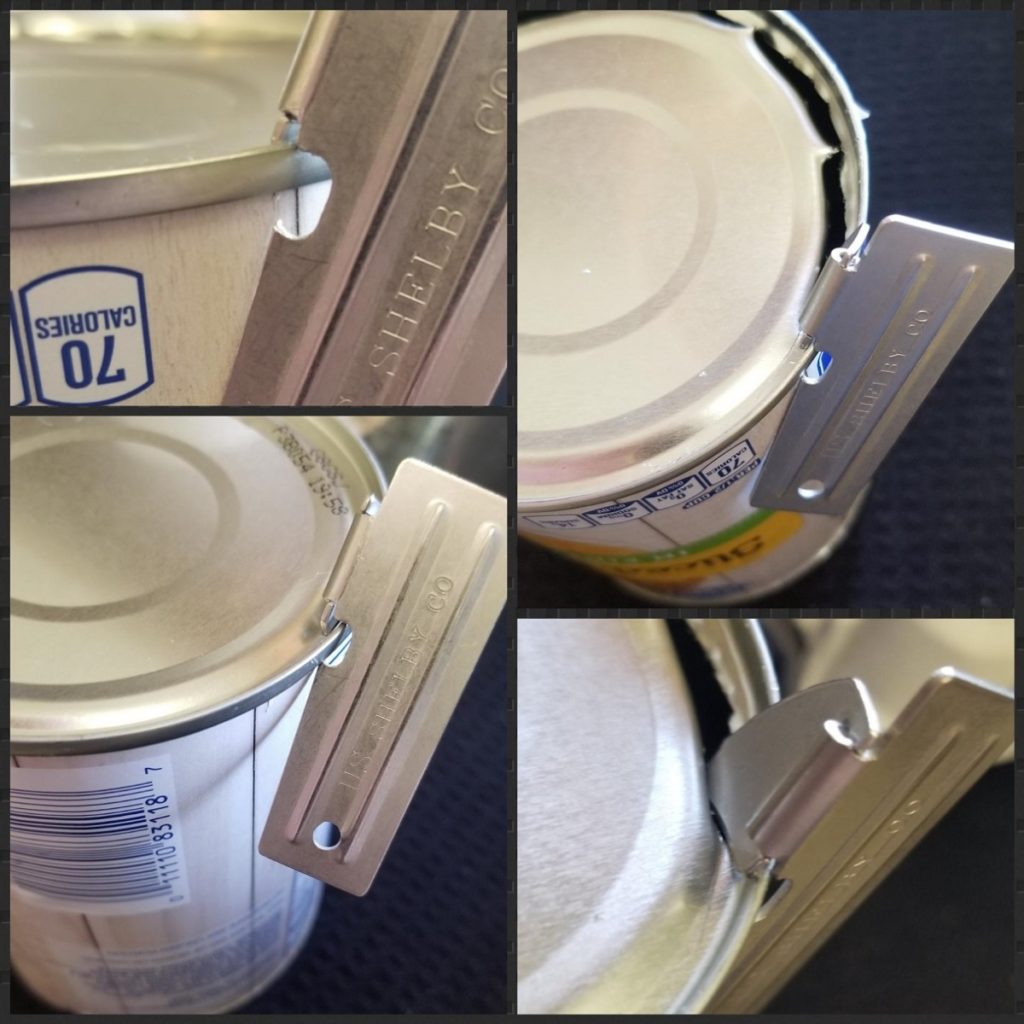
can opener pic

Not everything made for the military is truly well made. In many cases what is made for the military, regardless of nation of origin, often is low-end and fits into a rather loose set of restrictions guiding its building.

This is the case with the amazing folding can opener known as the P-38 and P-51. 

The P-38 can opener was designed for soldiers in 1942, it filled the need for a can opener for the C Rations that existed in some form through the early 1980s when MREs replaced these. It should be noted that an identical tool was featured in a 1924 Popular Mechanics issue in tools for women. (see picture) The provenance as we can see is slightly murky.

Can opener

This is not a history lesson, I will leave that for others who are willing to dig further than I am at this time. It should be noted that it was not the Army that invented it, but rather an individual working under contract out of a private laboratory in Chicago, possibly far earlier than 1942. The P-38 or P-51 has never been known to break, need sharpening or rust. It simply works and it works very well!

Every single soldier that has had one has embraced them and ends up keeping them for many years. This truly is one of the best inventions ever made. It is a true multi-tool in that its design allows use for many applications and it does those well without fuss or being large and complicated like so many approaches to the same issues today.

They are extremely easy to use and inexpensive to purchase. Here are the instructions for use of the can opener regardless type as printed by the military.

can opener instructionsCan Opener Directions

  1. Open blade
  2. Place can opener as shown in diagram (see attached diagram)
  3. Twist down to puncture slot in the top of the can
  4. Cut top by advancing opener with a rocking motion. Take small bites as you move forward.

Sterilize it after every use!

There is really nothing I can say that will detract from the overall benefit seen in this simple tool. I would suggest purchasing U.S. Shelby Co. labeled product versus others available. Because of the very low cost to produce these great tools, there is no real market for knock-offs, the profit margin is extremely low. You can buy a package of ten of them for under $10 using this link here. And yes, I have specifically tested and used these. Again, they make amazing stocking stuffer type gifts.

If you are thinking, why do I need 10 of these, well the answer is literally this good. One for the keychain, two for the tool drawer in the kitchen, one for your car and one for each bug out type bag, another for traveling and always have spares because…the airport security may indeed take yours. Personally, I have purchased several dozen over the years. Between losing them and giving them away it is definitely something to buy a few of!

There it is, my review of the P-38/P-51 can opener and with a definite buy a couple more as a suggestion I can end this article with a two thumbs up. Hope you enjoyed this article, comment and let me know when you got your first can opener and if you use it regularly.

can opener pic

Free the mind and the body will follow

Filed Under: Gear Reviews

  • « Go to Previous Page
  • Page 1
  • Page 2
  • Page 3
  • Page 4
  • Page 5
  • Page 6
  • Page 7
  • Go to Next Page »

Primary Sidebar

About the author

M.D. Creekmore is the author of five books on preparedness and self-reliance, and the creator of The View From Appalachia YouTube channel. Read more→

Appalachian Freedom Files ⬇️

Appalachian Freedom Files
Hundreds of preparedness and self-reliance resources on a USB drive for offline access.

Subscribe to Blog via Email

Enter your email address to subscribe to this blog and receive notifications of new posts by email.

Join 7,043 other subscribers

Footer

Recent Posts

  • WHAT THEY SAY VS. WHAT THEY LEAVE OUT
  • Have We Lost the Right to Be Left Alone?
  • Are You Still Here?
  • You Have Less Time Than You Think
  • This Is Happening Right Under Our Noses

Start Here

    • About M.D.
    • Freedom Files
    • Books
    • YouTube
    • Newsletter


Follow me elsewhere

  • Amazon
  • Facebook
  • Instagram
  • Twitter
  • YouTube

© 2008–2026 M.D. Creekmore · As an Amazon Associate, I earn from qualifying purchases.