• Skip to primary navigation
  • Skip to main content
  • Skip to primary sidebar
  • Skip to secondary sidebar
  • Skip to footer

M.D. CREEKMORE

  • Home
  • Article Index
  • Books
  • Newsletter
  • Gear I Use
  • About
  • Contact
You are here: Home / Archives for M.D. Creekmore

M.D. Creekmore

Hello, I’m M.D. Creekmore. I’ve been interested in self-reliance topics for over 25 years. I’m the author of four books that you can find at Amazon.com as well as Barnes and Noble. Over the years, I’ve learned a lot about prepping, homesteading, and self-reliance topics through first-hand experience and now I want to share what I’ve learned with you.

How To Cure Insomnia Sleep Better At Night Naturally

May 30, 2018 M.D. Creekmore

How To Cure Insomnia Sleep Better At Night Naturally

by Denise H

Consider “sleep” …What is sleep? What good is it? Why is it important? How can I help myself to get adequate amounts? Am I doing the things for me to get the restorative rest I require? Are there relatively safe things I can do, to assist when I have a wakeful night? What am I doing to sabotage healthy sleep habits?

These are the things I have been struggling with for some time. I had many things that break the rule of good restorative sleep. Some of those things were beyond my control. Since my responsibilities have changed, I no longer have an excuse for sitting up late, drinking coffee late at night, and remaining awake until zero-dark thirty! Now is the time, for me to make changes to reduce the stress, and restore my health. This is a journey, and mine is not complete, but I am making headway and you can as well.

I found have found several tips that have begun to help me. Evaluate your life and see if they could help you.

In general, I found if a sleep issue is still bothering you, after one month, you should see a Dr./ PCP. It could be a symptom (of an illness) OR a side effect of a medication. An occasional night of “late wakefulness” is not something to stress over, but adds to your overall stress and health issue flares.

Proper sleep is necessary for our health and safety, and for the sanity of those who care for us.

There are many things that can interfere with restful sleep…including the medical issues of restless leg syndrome and sleep apnea. If you believe you have one of these things, go get it treated to start things off.. and apply these tips to help set you up for sleep success.

Tips: In no particular order……General… with specific notes.

1. MAKE SLEEP A PRIORITY. How?

  • Set a specific time for sleep and wakefulness.
  • Go to a quiet place for meditation, and/or quiet reading with reduced light stimulation. Turn the lit clock dial away, turn off/ block the light from all electronics. Reduce electronics at least one hour before bedtime. The light at night prevents the body’s natural release/production of Melatonin that regulates sleep cycles.
  • Avoid all stressful things just before sleep.
  • When you awake, get out in the bright light as soon as possible. The bright light stimulates the melatonin production which regulates sleep cycles.
  • Get a quality mattress and pillow. Put good covers on the mattress, box springs, and pillow to reduce allergens.
  • Limit bed sharing to your spouse…not children or fur children.

2. CONTROL DIET. What? How? When?

  • Limit caffeine, allow at least 6 hours before bedtime…
  • Reduce sugars and chocolate during this time, too
  • Stop most liquid intake at least three hours before bed…if it goes in, it will come out even if it is in the middle of your sleep time.
  • Generally, Night meal should be lightest, with fewer spices, for ease of digestion.
  • Reduce alcohol use. Even tho you may be initially sleepy after ingestion, it can disturb your ability to remain asleep.
  • Seek natural foods or fluids to enhance your sleep cycle.

3. UN-WIND … after your routine day.

  • Take time for meditation/ evaluation.. soon after you get home, then put your work away…
  • Do some kind of exercise, change it up!
  • Enjoy your companions, whether 2 or four-footed
  • Avoid afternoon naps, in any case, limit to 20 min max.

4. SET A SOOTHING BEDTIME routine…It could include…

  • Reading time
  • a favorite calming tea with a light snack
  • Cuddle (or more,) time with your sweetie
  • Special night-time routine with your child
  • A calming bath
  • Reduce outside noises. This can be done by turning off a dripping faucet or wearing earplugs.
  • Use white noise, if sleep still an issue… a wind machine, low calming music …whatever you find calming

NOTE: Of course, bedtime medications and regular nutrition for management of medical conditions are exempted from this rule. Some persons must eat at night to maintain blood sugar levels, or to maintain hydration in the case of extremely small capacities. If you are in trouble see your DR. These are general guidelines, garnered through observation and assimilation of varied materials.

POSSIBLE SLEEP SOLUTIONS… Common remedies for the occasional night of late wakefulness.

List… is in no particular order, some with a rationale…

A. FOODS

  1. Certain foods…that boost tryptophan/ one of sleep hormones… like turkey.
  2. Foods high in carbs, like whole grain crackers…
  3. Foods high in B6… wheat grain, sunflower seeds, Bananas
  4. Foods high in Magnesium and calcium
  5. Herbal teas: There are some commercially prepared…Two of those are called Sleepytime and Sleepytime extra. common ingredients are chamomile, passion-flower and/or Valerian.

These are all available as separate herbs, but use them with caution. …IF you are unsure of your response to them.. ex…Valerian works well for some people with no adverse effects, but I have a poor tolerance to it…it produces sleep very well, for too long with me!! The amount in the Sleepytime extra is minimal because I do well with it.

If you are in doubt, Here is MY solution, brew it for a shorter time, (3-5 min.) in a whole cup of water. Drink half, for the first serving..if still awake after an hour, drink the rest..

B.NATURAL SUPPLEMENTS

  1. These include but are not limited to Valerian, chamomile, passion-flower, holy basil, L-Theanine, 5 HTP. Chamomile tea is also very soothing to the intestines, so is a good choice, when I just feel yucky.
  2. A warm bath with Epsom salts could have a profound effect as it is high in magnesium. Magnesium and Calcium supplements assist in all kinds of muscle issues that often make us, just uncomfortable enough, to not be able to go over into dreamland.
  3. Vitamin supplements with vitamin D3, B- supplements and specifically Niacin.. these should be taken routinely during the morning, especially the Vitamin B, as a dose can provide an energy boost. Gastric acids destroy much of the dietary B vitamins, so sublingual are the preferred method.
  4. There are OTC herbals and sleep supplements to boost your sleep routine into a set pattern…they are many and varied…if you do not get satisfaction from one, there are many… Do your due diligence.

C. AROMATHERAPY Aromatherapy is very simple and inexpensive. It is practiced by placing a soothing fragrance on a cotton ball, sniffing it a couple of times and laying it near your pillow. Some common products used for this are Lavender, Clary sage and Roman Chamomile oil.

D. MEDICATIONS There are OTC meds for the occasional night, if nothing else has worked Pharma has given us anti-histamine and they do make most people sleepy, Benadryl is in most of the OTC sleep preparations. When these are not effective it is time to see a Medical professional… to check for underlying conditions and medication side effects. It could take some time and testing many products to find one that you tolerate. Do not despair, there is something that can help you to find a night of peaceful rest.

E. OTHERS. There are several other things that can be done for sleeplessness. Many of these I have explored briefly. I will mention them briefly, with and without comments.

Meditation… Calm thoughts, dwelling on meditative readings such as the Word of God..can take you away from the cares of the world and direct attention to things most important in life. This would include Prayer.

Hypnosis can be done alone, with training… I used this for childbirth with success. It can be applied to whatever area of your life you choose. I was trained, for that purpose by a licensed psychologist. Had not considered putting that to use for this until studying this subject.

Light Therapy… Light in the morning, when too low, affects sleep hormones that are released at night. Lack of proper light in early evening can have a similar result. A sleep log and weather/light log can be kept to help a healthcare professional work you through needs. There are broad-spectrum light bulbs that help some people through seasonal disorders. Those same bulbs are not expensive and could help here too if appropriate.

Acupuncture… I have not and AM not exploring needles in any form, but it has a history of working for some people and for some things…I just am not desperate enough!

Traditional Indian and Chinese Medicine practices, I know nothing about these, but they care for large populations of people with basic herbs and compounds and have for many centuries, so I am not knocking them.

Common sense notes, and thoughts…

  • I try to limit my use of even herbals to no more than two nights a week. The rest of the time I use the other methods to limit my sleep disruptions.
  • Try to go to bed with a clear mind, this is one of the benefits of doing what you can where you are and leaving the rest to a loving Creator.
  • Most common sleep issues can be addressed without medications. In general, they can create a bigger monster and produce their own side effects
  • If you are having sleep issues… frequently.. a health check is in order to determine any underlying issues and treat them.

Note: Nothing in this article should be perceived or taken as “medical advice”, this information is presented here for informational purposes only. If you have any reacquiring sleep issues please consult a certified medical professional for treatment.

Please share your tips for getting a good nights sleep in the comments section below this article… thank you.

Filed Under: Health and Fitness

Best Generator for Campers and Emergency Backup Power

May 25, 2018 M.D. Creekmore

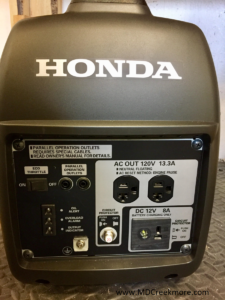
Honda eu2000 generator

You never know what life is going to throw your way. Whether your property runs on solar power, wind power, water power, the power company grid, or a combination you should expect something to happen regardless of how well you design your power system or how well the power company has provided power in the past.

That is why you need a backup power system. You don’t want to be without power whether your loss of power is due to strong storms that came through the area or as the result of a major long-term disaster or complete collapse TEOTWAWKI type collapse. Just look at it as another insurance policy.

What should you use? A backup generator provides peace of mind when living off-grid and during emergencies. And today’s generators are lighter, quieter and more efficient than ever.

Why you need a generator

We’ve all seen the stories of people rushing to hardware stores the moment a hurricane or some other natural disaster is on the radar. For many who never pictured a life off-grid, that quickly becomes a reality and they are scrambling.

That is not what you want. When you are homesteading and when you are living off-grid, everything should be outlined, and you should have preparations in place. Preparations in place for ‘what if.’

By purchasing a generator now, it will be ready when you do need it.

How do you choose the right generator

We’ve established that it is in your best interest to have a backup generator. But before you simply go to the store to buy the first generator you see, there are several questions you should ask to make sure you have the right generator for your property. Especially if you are purchasing a generator for the first time.

This is a significant investment, so let’s make sure it’s the right decision.

  1. Does it provide the power you need?

If you have already constructed your off-grid power system, you should have a pretty good idea of how much power you use. If you haven’t done that yet, this is a great time to start.

But for your generators, you can determine what you need, rather than just want, to keep running. This means the wattage will likely be less than what you are used to with your power system. Go through your house, look at the labels detailing wattage for each item you want to keep running (if they have it). If you can’t locate that information, here is a good chart to help you get started.

When you’ve calculated the wattages, multiply it by 1.5 and that’s what you need. With that information, you can begin looking for a generator that can provide the necessary wattage.

  1. Is it easy to operate?

I will always prefer easy over hard. And that certainly includes generators. So what makes something easy to use? I would look into how easy it is to maintain with prior knowledge. Is it easy to start with little force? Is it fairly automated? That can be something as simple as a fuel shutoff valve when the engine is low on fuel? it portable and easy to move if necessary?

These are just a few of the questions I would ask in determining how easy (or difficult) a generator is to operate.

  1. Is it durable?

While we want something that is easy to operate, we can’t sacrifice performance.

The quality of a generator can vary greatly. It often has to do with price, but there are just certain engines you know you can trust. You aren’t just buying a generator to last a few months or maybe a year or two. You want it to last.

Look for a generator that has a strong engine and is built using high-quality materials. Because you don’t want to be wondering if your generator will be there when you need it.

I chose the Honda EU2200i

Honda EU2000i My favorite generator for backup powerIf you are ready to purchase your generator, I recommend the Honda EU2200i (check current price and availability at Amazon.com) And here’s why.

First, the quality. I want something that I know I can count on. You can trust Honda. The EU2200i is a generator that was introduced in early 2018 and replaced the legendary EU2000i. That’s not always an easy thing to do, but Honda’s generators are better than ever. Between the engine and the build, the quality of this generator is tough to beat.

The engine is 2200 watts, about 10 percent more than the previous model. And one great feature is that you can pair this generator with another EU2200i or the EU2000i model for more power when necessary.

At the same time, you also get Honda’s noise reduction. I know many people think generators are just going to be obnoxiously loud. The EU2200i has a maximum of 57 decibels at full power which is about the normal noise level for conversational speech. So you get the power without the noise.

You will also enjoy great fuel efficiency. It can run for up to nine hours on less than one gallon of fuel.

It has the performance you need and it’s built to last. It has other great qualities that make it easy to use: It is lightweight, weighing less than 47 lbs. so moving it won’t be difficult, and it is pretty small at 20” x 11.4” x 16.7.” These are little things you need to keep in mind.

The engine and durability make the EU2200i or EU2000i. are both great choices. The ease of use, noise reduction, and portability make it even better.

When you are living off-grid, you need to be prepared for life to happen. For the unexpected. But with the right backup generator, you will be ready and what could have been a disaster will just be a small inconvenience at worse…

Filed Under: Power Generation

Alternative Energy Sources For The Homestead Part Three – Water Power

May 23, 2018 M.D. Creekmore

water power off grid

Off-grid living will give you a life of security and freedom that few experience today.

You will be living a sustainable life; a life where you are producing more than you consume. A life where you are not dependent on outside resources because you create your own resources. An environmentally responsible life that uses renewable sources to create energy.

But when you’re not getting your electricity from a power company, or the ‘power grid,’ where do you begin?

For many, this might seem daunting. But you have options. Solar and wind power are an option many choose, but they can often be inconsistent. With micro-hydro systems or water power, you don’t have that volatility. Water generally runs throughout the day, regardless of the time of day or weather conditions outside. If you have the right resources on your property, you can produce large quantities of electricity.

Perfect for off-grid living. Ready to get started?

What you need to know about water power

  1. You need to start by understanding your energy needs. This means you need to assess the amount of power you use in a day. You can do this by going through your house and looking at the labels detailing wattage for each item. If you can’t locate that information, here is a good chart to help you get started. Make sure your numbers are right because you don’t want to waste any energy.
  2. A word of caution: Check with local authorities to ensure you have permission before you get started. Even if this is on your own land it’s better to be safe.
  3. Now, to get started, you obviously need a source of water. But not just any water. Water must be moving and or falling to generate power. You don’t want ‘flat’ water. This would ideally be water falling down the hillside. Because there must be enough volume and elevation drop to create the pressure that will spin a turbine and generate power. If the water volume decreases, the power will go down. You also need to be mindful of seasonal changes. It is natural to see water flow lessen depending on the seasons. Just be aware of that. You can design a system to handle varied flow rates.
  4. You can run your system on as little as two gallons of flowing water per minute. However, you will need a lot of drop. The same is true for your drop. If you have just two feet of drop, you will need 500 gallons of flowing water per minute.
  5. There will be some maintenance required for your micro-hydro system. This means bearings must be checked, lubricated and occasionally replaced. Intake systems must be cleared of debris and the pipeline needs to be free of damage. A little regular maintenance will go a long way to ensure your system is running well.

And while the best location is not always the location closet to your house, it should be a spot with easy access if you can help it for when you are performing maintenance.

What you need to get started

After you’ve evaluated your water resources and determined your site, you need to identify the components you need to get started.

  • Turbine: The turbine serves as the ‘engine’ of your system by converting water into electricity. There are numerous types of turbines, but make sure yours matches your specific head and flow. The smallest differences in specifications can significantly impact your energy.
  • Intake: The intake is usually the highest point of your system where water is diverted from the stream to your pipeline. This will allow for a deep enough pool of water to provide a smooth inlet to your pipeline. It will also remove debris from the system.
  • Pipeline (or Penstock): The pipe is effectively a ‘fuel line’ that brings water to your system. It moves water through the turbine and creates head pressure as the vertical drop increases.
  • Generator: The generator converts rotational energy from the turbine into electricity.
  • Powerhouse: This is the building that houses your turbine, generator, and other controls. There is no one design for this. It is simply there to protect the components of your system from the outside elements.

With each of these items, you will have choices. It’s important to make the right choice based on the individual needs of your water system.

For an off-grid system, there will be two types of system configurations.

  • Off-grid without batteries: This is generally for larger systems that have enough power to run all loads.
  • Off-grid with batteries: This is your more common system that you will probably utilize. Similar to other alternative energy systems, the charging source puts energy in the battery while the battery runs the loads either directly or via an inverter.

Can I do this myself?

For many people, the reasons behind alternative energy sources like water power are to save money, have independence or environmental concerns. Or maybe all of the above. Whatever your reasons, a water power system is a great option.

For most, the first question they will ask is ‘how much does this cost?’ That is certainly understandable. But the good news is that it is the least expensive way to generate power off-grid and it is something you can do yourself. It will take preparation and planning before you can even begin. And you will need to make sure you are selecting the right components for your operation.

If you want more information, I suggest you start with this book which will guide you through the process of building your micro-hydro system.

And because this is a renewable energy project, you can qualify for a federal tax credit. Even if you do the work yourself. The credit is equal to 30 percent of the cost and since this is a credit and not a deduction, you take the amount directly off your tax payment. So a nice little bonus.

If you want to live off-grid, you have many options for harvesting energy. Water power is a reliable, inexpensive option that could be just right for you.

Also, read:

  • Alternative Energy Sources For The Homestead Part Two – Wind Power
  • Alternative Energy Sources For The Homestead Part One – Solar Power

Filed Under: Power Generation

Homesteading and Preps For The Week: May 19, 2018

May 19, 2018 M.D. Creekmore

bulletproof survivor CD ad

Well, folks, I’m happy to let you all know that this site is growing at what I consider a spectacular rate with a DAILY average of over 100 people signing up for our newsletter/site updates!

Yes, you read that right! Over 100 per day… every day… this is great! The goal of any site owner is to get more readers, because well if no one is reading then there really isn’t any use in writing.

Writing without readers… well that’s like talking to yourself just to hear your own voice with no one else in the room.

Thankfully, that’s not the case here on MDCreekmore.com because our readership is growing and our subscriber numbers are too…

I’m also happy to say that sales of my Bulletproof Survivor CD have been phenomenal with a large number ordered in the past seven days!

I’ve been working 12 to 15 hours a day trying to get all of the orders packaged and shipped out!

If the orders keep coming in at the current volume I’m going to have to make it unavailable for new orders until I can catch up with the demand. Thank you all for your support and patience it’s greatly appreciated.

As for preps and homesteading progress this week I didn’t get a lot done (but I did mail over 500 copies of The Bulletproof Survivor), other than planting more tomatoes and peppers.

I also ordered a copy of Prepper’s Natural Medicine: Life-Saving Herbs, Essential Oils and Natural Remedies for When There is No Doctor.

By the way, if you’ve not signed up for my FREE courses then please do that at the links below:

  • Free Prepper Course
  • Free Homesteading Course
  • Free Start Your Own Blog Course

And, just in case you missed it… I published parts one and two of my alternative power sources articles this week:

  • Alternative Energy Sources For The Homestead Part One – Solar Power
  • Alternative Energy Sources For The Homestead Part Two – Wind Power

Parts three and four will be published next week… I hope you enjoy and find those useful.

And, as always, if you have any questions feel free to email those to me. I do my best to answer every email but please be patient because sometimes I get behind and it can take awhile to catch up. Thank you.

Okay, now over to you…

Filed Under: Uncategorized

Alternative Energy Sources For The Homestead Part Two – Wind Power

May 18, 2018 M.D. Creekmore

wind power off grid

This is part two of a four-part series on alternative energy sources for the homestead – you can read part one Solar Power here.

Wind can provide a great source of energy for you and your family when you are living off-grid or for a backup power source.

By choosing a life off-grid, you are choosing a life of independence, a life of self-sufficiency. It is a life where you use the resources the Earth provides and only take what you need. The grocery store doesn’t provide your food, your backyard does.

But it’s not the easiest life. It’s much simpler to just flip a light switch and not even think about where that electricity came from. Because for most people, that electricity just came from some power company that you are vaguely familiar with.

But when you live off-grid, you harvest the energy.

One of your options for energy when you live off-grid is wind power. This invisible mass of air that we often complain about can provide energy to your home. And you can get started yourself. But what does that entail?

What is the off-grid wind system?

There are four different types of wind power systems. One is the off-grid wind power system that uses batteries to store power that is produced by the wind generator for later use.

Another common system is wind-electric water pumping. This couples a wind generator to an electric pump.

Do you have a good location?

As you would imagine, wind power systems take space. Particularly if you want a tall tower that is more efficient. If you need, or just want, something smaller the GOWE small wind generator is an excellent option and good place to start. This turbine might be small but has a high-efficiency motor and can produce up to 600 watts and is available in either a 12 or 24 volt. So I highly recommend this if you are conscious of the size and or on a budget.

Unfortunately, you may also face legal hurdles in some locations, especially if you are close to a city. The most common restrictions are height limitations and mandated distance between a tower and a building or property line. In some instances, you might even need to get consent from your neighbors.

If nothing else, these laws provide a great reason to move out on to a homestead a little further from the city lights. But as a word of caution, I would suggest anyone check with local ordinances before putting in a system.

Does your location make sense?

So you have the space and the green light from local authorities to move forward, but do you have the necessary wind resources on your property. If you don’t, obviously it doesn’t make sense.

To begin, you should find the strength and quality of your wind. That will be an early test in how well your wind power system will work. So how do you do this? You need to determine the average wind speed of your site. To do this, you can reach out to a professional for help. But wind mapping data is available to give you the insight you need.

Your wind speed will likely vary greatly depending on where you live. As this map shows, different parts of the country are better suited for wind power. Areas with a wind average above six miles per hour is usually considered at least doable for off-grid systems.

How much energy do you consume?

A good idea for anyone who is moving off-grid is to have an idea of your energy needs. This means you need to assess the amount of power you use in a day. You can do this by going through your house and looking at the labels detailing wattage for each item. If you can’t locate that information, here is a good chart to help you get started. Make sure your numbers are right because you don’t want to waste any energy.

When you have that information, you will be able to purchase the right turbine and tower for your system.

You will need to perform maintenance

A wind power system requires maintenance on your end. Usually once a year. If you do this, good equipment can last more than two decades. Most of the maintenance is centered around inspections to the turbine and the tower.

So just follow the basic maintenance suggestions and you’ll be fine.

Can I combine wind power with solar?

The wind and solar power combination are relatively common in off-grid living for a few simple, but good reasons. The first is the ability for one type of energy to serve as a backup. When one source isn’t providing energy, you have the opportunity to receive energy from another source.

And think about. When it is a clear, sunny day, you traditionally have less wind. On cloudy or overcast days, or days when the weather is just ugly, you are more likely to have wind. It’s just nice how they cancel each other out.

The two working together will also charge the batteries even faster.

Wind power can be a great option for off-grid living. You will find wind power is able to power most loads depending on the size of the wind turbine and your resources available. If you are wanting to live a life of independence, and you are doing it on a budget, a DIY wind power system will be a great start for you.

Filed Under: Power Generation

  • « Go to Previous Page
  • Page 1
  • Interim pages omitted …
  • Page 87
  • Page 88
  • Page 89
  • Page 90
  • Page 91
  • Interim pages omitted …
  • Page 93
  • Go to Next Page »

Primary Sidebar

About Me


M.D. Creekmore is the author of the preppers guide to surviving TEOTWAWKI and other books. Read more→

Subscribe to my newsletter

A prudent man foresees danger and takes precautions. The simpleton goes blindly on and suffers the consequences.
Proverbs 27:12

Secondary Sidebar

Read My Books

Paperback and Kindle

Paperback and Kindle

Footer

DISCLAIMER

This website is for informational and educational purposes only.
I’m not a financial advisor, medical professional, or legal expert.

Everything shared here is based on personal experience, research, and opinion.
Use your own judgment and do your own research before making decisions.

Recent Posts

  • The Appalachian Freedom Files
  • Weather Update for My Corner of Appalachia
  • They Keep Raising Prices… Here’s How I’m Fighting Back
  • How to Remodel a Manufactured Home for Security
  • Everyday Carry in Appalachia — My No-Nonsense EDC

© 2008–2025 M.D. Creekmore · As an Amazon Associate, I earn from qualifying purchases.

  • Home
  • Article Index
  • Books
  • Newsletter
  • Gear I Use
  • About
  • Contact
  • Privacy Policy