• Skip to main content
  • Skip to secondary navigation
  • Skip to primary sidebar
  • Skip to footer

M.D. CREEKMORE

  • Blog
  • Books
  • Newsletter
  • Gear I Use
  • About
  • Contact
  • Facebook
  • YouTube
  • Blog
  • Books
  • Newsletter
  • Gear I Use
  • About
  • Contact
  • Privacy Policy

Blog

Quick Tips For Planning an Effective Family Bug Out

January 2, 2020 M.D. Creekmore

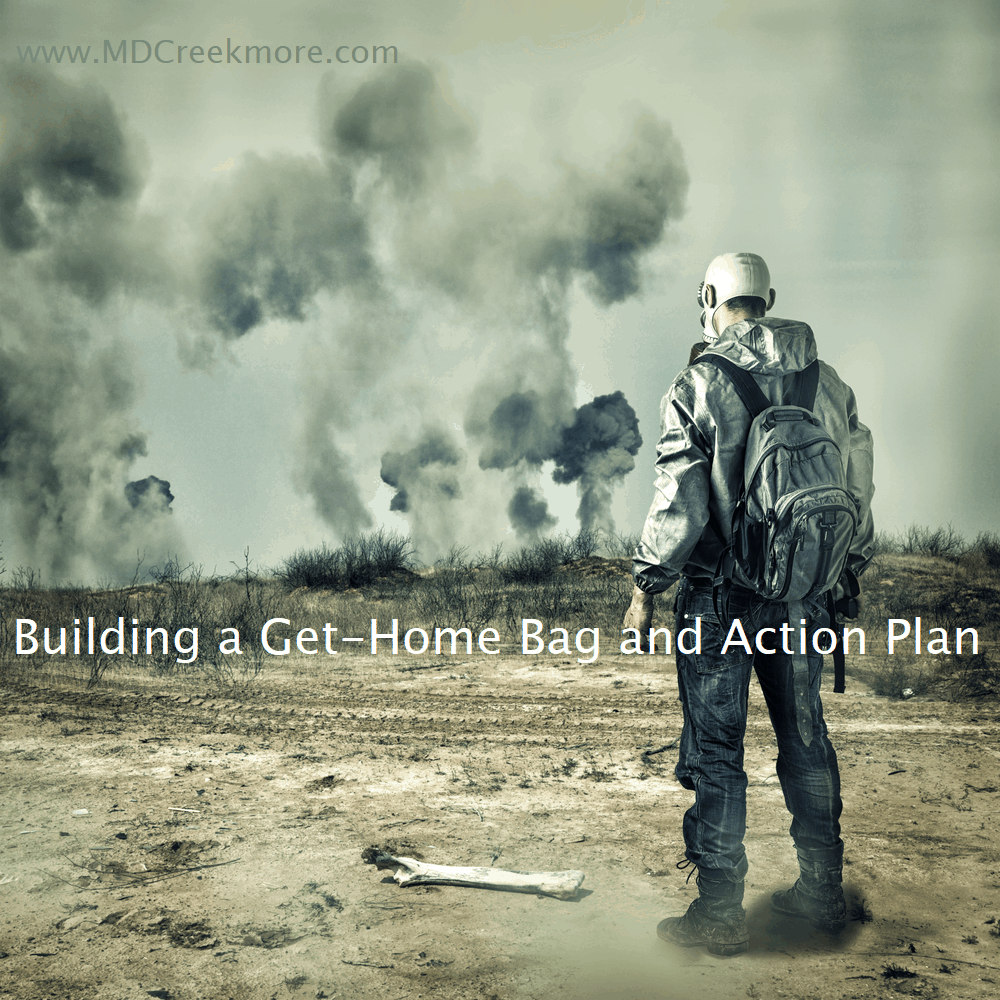
What Should I Put In My Child's Bug Out Bag?by Anonymous
 
If you are a family leader, you must plan for the entire family also.
 
I recommend a grab bag for each person who is old enough to carry and hang onto one…and a separate medical pack for the entire group (here is a great kit on Amazon.com). Besides a separate well-stocked medical kit, each pack should have a small first aid kit (this kit at Amazon.com is perfect for individual bug out kits).
 
Each person, even children who are old enough to carry a small book bag type pack, should carry a pack of some sort. Each pack should have some food, extra underwear and clothing and rain protection, and toilet paper and soap and a washcloth.
 
MD Creekmore has gear article on bug out bag contents here – The First 23 Things I Put In My Survival “Go Bag” and you can see his bug out bag video below for his most recent bug out bag recommendations. 

Bug Out Bag Checklist | Survival Prepper Gear Recommendations

 
Each person should have at minimum a bar of soap, dry or dehydrated energy food, etc. Remember to take salt along also. A bottle of saccharine tablets (available at Amazon.com) and some kool-aid packets and instant coffee will make life a lot more pleasant for everyone, especially children in a harsh environment. Remember, keeping spirits up is essential, especially for the young.
 
Each adult pack should have two rolls of toilet paper. Pull half-used rolls out of your bathroom and squeeze them flat so they don’t take up much space.
 
Sheets of toilet paper can also be used for marking trails if you want someone to follow you, or for marking the blood trail of a wounded animal or person…just leave a sheet at the last drop of blood, and cast forward until you find another drop, and so on until you find the wounded animal or person.
 
A wounded animal or person will seek shelter and a place to rest and hide.
 
Mouth-blown game calls can be used as signaling devices. Where crows are, you can outfit your crew with crow calls, and set up natural-sounding signals. A crow will caw three times in a row if danger is near, and this is a good way to warn your team if you spot danger…or a crow might warn you also.
 
All packs should have some tough plastic ground cover sheets in them. Remember, you must separate yourself from the cold ground with some kind of insulation in the winter. Pine boughs covered with plastic will do, or else, the cold earth will absorb your body heat and cause hypothermia. In summer, the plastic keeps chiggers and ticks and other creepy crawlers away from your skin.
 
Meaning no disrespect for women, but mature females need extra consideration for the cleaning of their vaginal area in a wilderness environment since their urethra is shorter than males making them much more susceptible to bladder infections. A bladder infection can literally drain the energy from a person.
 
Just ask anyone who has ever had one. So, soap and two washcloths and tampons for female menstrual periods should be in their packs. These essential considerations make all of the difference in the world in a harsh environment, and these extras keep spirits up.
 
Also, sulfa drugs to treat female bladder infections should be packed in the medical grab bag…and condoms should be packed for all females who are sexually active, if the wilderness stay might be an extended one.
 
For weapons, except for young children, I recommend the above-suggested choices of a .22 and one or more team members with a …….308 or .223 semi-auto or other weapons.
 
For other members, especially female family members I suggest a very small palm-sized .22Lr revolver or other small reliable derringer or small pocket pistol which can be hid in a pack or shoe or pocket of each adult, especially each woman and girl who might be susceptible to rape from roving males who might try to overpower them when other team members are away from camp and they are venerable.
 

The goal is to have a weapon of last resort handy if the person is overcome by someone who gets the drop on them and then wants to do them extreme harm. Just some ideas from my tour in Vietnam and from my years of deer stalking.

If you have other ideas and or advice, please add in the comments section below…

Filed Under: Bugging Out

Fixed Blade and Folding Survival Knives (Selection and Care)

December 31, 2019 M.D. Creekmore

fixed blade survival knivesGuest post by Josh C  

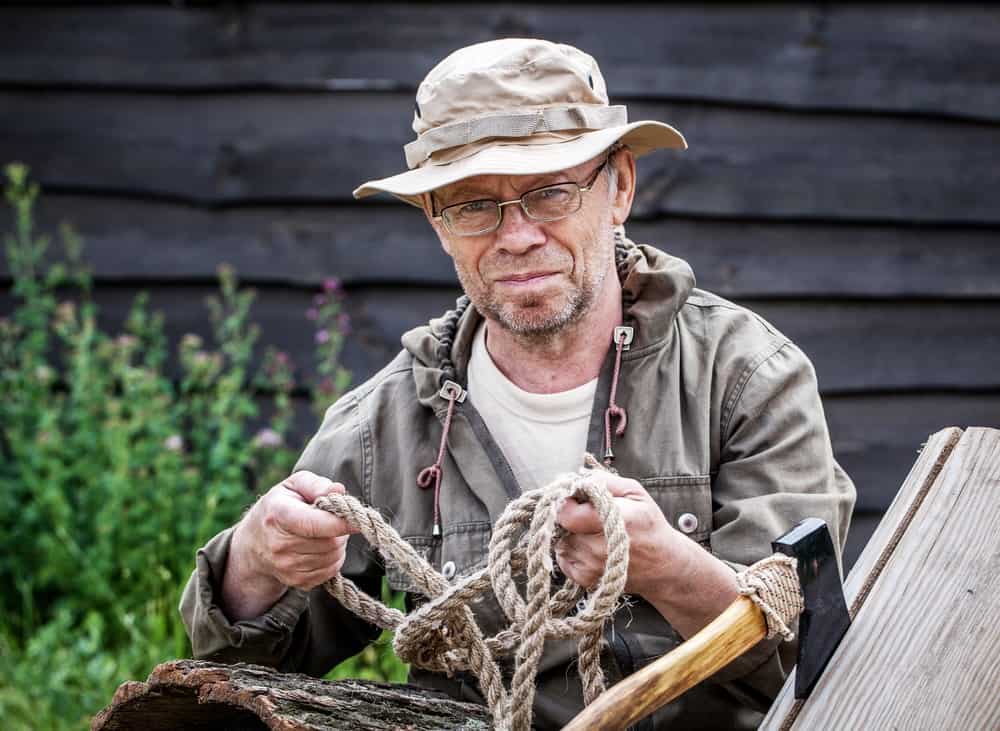
Any Prepper, Survivalist, Hunter, Camper or Outdoor Enthusiast should have a good knife and know how to use it.  A good survival knife is the single most important piece of equipment you will ever have or use.  With it, you can procure fire and food, and create shelter and other structures. Just as there’s a tool for every job, a wrench for tightening bolts, a hammer for pounding nails, there’s a knife for every task.  

If you’re blazing trails or clearing brush you would want a Machete (check out this awesome CRKT Machete out on Amazon). If you’re splitting kindling or dressing game the obvious choice would be a Fixed Blade. Cutting rope and carving tent stakes then falls to the Folding Knife (this is one of the best folding knives priced at under $20).  

Let’s take a look at the parts of a knife. The blade is made up of the edge, the tip, the point, and the coil. The tang is the part of the blade that runs through the handle.  

When choosing a knife there’s a simple guideline to follow:  

Hold the knife, how does it feel in your hand? Does it fit your hand comfortably? Is it too heavy for you to use effectively? Is it too big?  Look it over, what is it made of? Are you going to be comfortable carrying it around with you on outings?  

Use the knife, is the blade-shaped correctly for the jobs you may need to use it for? Will you be able to comfortably use it for an extended period of time? Go over all the cuts and slices you may need to make.  

Research it; ask people who have it how it handles. Read reviews on it, many times have I bought a knife on impulse to have it break the first time I use it.  

Price It, I have never spent more than twenty-five dollars on a knife. That said you should not skimp on quality, the knife you purchase has to be perfectly suited to you for you to survive.  

Now, let’s take a look at the types of Cutting Edges there are available.  

Machetes:

In a survival situation, a good chopper can make a world of difference. While an ax or hatchet would be equally useful for chopping, they lack the finesse of the machete.  

There are several different styles of machetes ranging from the Gurka Kukri to the South American Bola. The only good way to find the style that suits you is to get out there and use it.  

Fixed blades:

A good fixed blade is essential to your survival. When choosing a fixed blade one thing to keep in mind is whether or not it has a full tang.  

The tang is the portion of the metal that runs through the handle. A full tang provides extra support for chopping and slicing or anything that requires putting any stress on the blade.  

Also, try to stay away from hollow handled “survival” knives. These are accidents waiting to happen.  

If it has a hollow handle than it has no support from the tang and is therefore probably the worst tool you can take into the woods.  

A blade length of between 4 and 7 inches is probably best for survival and bushcraft purposes, any larger and it becomes too cumbersome to use effectively, any smaller and you might as well use a folding knife.  

Folding Knives:

The Folding Knife provides amazing control when carving and doing fine work. There are to types of folders, Pocket Knives, and Multi Tools.  

Pocket Knives can be divided into two further categories, Jack Knives, and Pen Knives. Jack Knives are hinged on only one end but may have more than one blade.  Multi-Tools are divided between Multi-blade Knives and Multi-pliers.

Multi-blade Knives are hinged on both ends like Pen Knives but in addition to multiple blades, they have tools such as scissors, bottle openers, corkscrews, and screwdrivers.  They are traditionally the only type of knife with a blade that locks in place, although it does not have to. Pen Knives are hinged on both ends and have multiple non-locking blades.  

This style of knife was made popular by the Victorinox knife company. Multi-pliers are basically Multi-blade Knives that fold up inside folding needle-nose pliers. The Leatherman Knife Company made this tool popular. Sometimes generic multipliers are referred to as Leatherman tools.  

survival knives fixed blade

There are two common types of steel used in making knives. The first being stainless steel, stainless steel has the advantage that it is virtually indestructible and in theory, won’t rust.  

That said, it will tarnish over time, and will not keep a good edge for very long. The other type of steel is ‘carbon steel’. Carbon steel will take and hold an edge better than stainless but will rust if exposed to the elements.  

There are several things that you can do to extend the life of your knives or any tool for that matter.  

First, keep it dry. ‘Dry knives live long lives’. The process of rusting is scientifically known as rapid oxidization. If you leave an apple out in the open air for any period of time you will notice that it will start to turn brown.  

That is called oxidization, which basically means that the fruit is losing moisture. Rusting occurs when metal gains moisture (whether it’s through being left out in the rain or other), and then rapidly losing it.  

Keep it clean. If you ever have to cut a piece of food with your knife, and it’s still all sticky from that piece of pine you cut through the other day, then what are you going to do.  

Sap and other sticky substances and residues can easily be removed by rubbing at the sap with rubbing alcohol and using a dish scrubby or rough sandpaper.  

Finally, keep it sharp. A dull knife is much more dangerous than a sharp one. When carving with a dull knife you have to force the knife more than is necessary, making it harder to control. It is also a lot easier to work with a sharp knife.  

There are many methods of knife sharpening, included are:  

The Sharpening Steel (honing rod). The honing rod is a long round file used for quickly sharpening longer blades. Sharpening (wet) Stone. The sharpening stone is the most reliable knife sharpener out there. It has been used since before our forefathers came to America.  

Precision Sharpening Systems. There are many different types of manual sharpeners and kits on the market. Okay, now I have a question… What’s your favorite survival knife? 

Filed Under: Knives and Blades

Sea Salt – An Indispensable Commodity for Uncertain Times

December 30, 2019 M.D. Creekmore

Guest Post by Roxanne L. Griswold

When we think about setting aside emergency supplies, most of us would agree that preserved food and purified water are the essentials and everything else is secondary to these. Some might even choose to incorporate things like a manual grain mill, a water purifier, a food dehydrator, a solar cookstove and so on.

But who would ever consider something as simple and humble as sea salt as an indispensable necessity and commodity in the tumultuous days ahead? I would even go so far as to say if sea salt is not a part of your survival provisions, it’s time to tuck away this invaluable, hidden treasure.

In fact, salt was once valued as a form of currency – it was that scarce, and considered a luxury of few. The ancient Greeks used salt to trade for slaves and Roman soldiers were paid in “salt money” or “salarium argentum” where we derive the English word, “salary”. Homer called it “Divine”. Jesus calls His followers (which I’m honored to say I am) the “salt of the earth”.

Wars have been fought and whole settlements turned into cities and nations over the pursuit of salt. Just as gold and silver have once again gained ground in this present economic meltdown, so also will sea salt be a valuable and tradable commodity, literally “worth its weight in gold.” It will be a supreme bartering tool.

Sea salt has a unique ability to draw out the flavor in food like no other seasoning, but this is secondary to yet another one of its amazing values. Salt has long been known for its ability to preserve foods. If in the event of societal and economic collapse, refrigeration may be a thing of the past. Unless you plan to consume what you pick immediately, depend on your air dehydrator or live off your food storage, you will need salt for preserving food.

During harvest time, there should be plenty of fresh food (assuming you thought ahead to plant a garden), but the long harsh winters will inevitably come and preserving food will be a crucial issue. Even hunting for game, chances are you will not be able to consume it all in one sitting – salt preservation will be key. And without power, your pressure canner or electric dehydrator will not get you very far, so salt can be the perfect alternate route.

With salt’s same ability to retard spoilage, “mineral-dense sea salt” will also aid in the disinfecting and healing of wounds. A simple salt paste or soaking a wound in a salt/water solution several times a day should achieve positive results.

Sea salt also rejuvenates the skin keeping a more youthful appearance while aiding in the healing of acne, psoriasis, eczema and other skin related problems. Ever wonder why your skin felt so tight, free and clear of irritation or blemishes after spending a day at the beach?

Sea salt has miracle healing properties that are often overlooked. In fact, the Blue Lagoon in Iceland is world renown for its hot salt springs that people flock to with skin conditions. Dead Sea salts are another sought after skin commodity.

But might I be quick to add that not just any salt will suffice when it comes to you and your precious loved ones, especially typical table salt (sodium chloride) and in some cases, certain brands of sea salt. Salt that is processed for vast human consumption while meeting the public’s demand for a product that is cheap and convenient, much is also sacrificed.

Table salt has been stripped of all but two of its 84 trace minerals through a chemical process, dried at extreme temperatures, and oftentimes – for the sake of appearance – anti-caking, free-flowing, or conditioning agents are added along with iodine.

But buyer beware of even some brands of so-called sea salt: It may be mechanically harvested from dirt or concrete basins and piped through metal conduits; artificially processed; heated to extreme temperatures to break the molecular structure; stripped of its essential minerals and further adulterated by chemical additives.1 In essence, many highly acclaimed “sea salts” are no different than plain old table salt.

So where do you find pure, unadulterated salt – as God intended in nature? The best sea salt we have discovered on the market is Celtic Sea Salt®. Dense with vital trace minerals along with its light grey hue from the pure clay sole it’s harvested from, this sea salt is unmistakable in old-world flavor and nutritious. (And taste may mean everything with a bland diet of survival foods!)

Extracted from the natural evaporation of the sea and wind alone, the ocean brine is channeled from the sea to the pristine shallow clay ponds, surrounded by vegetation. It provides a natural habitat for the salt while the salt farmer gathers the dazzling white crystals with a long, shovel-like tool then collects it daily by hand.2

Celtic Sea Salt® can be a simple addition to any food storage plan that just makes sense. It not only stores indefinitely, it provides so many hidden health benefits to mention in this article, but here are just a few: Supplying well over 80 (24 of which are essential to life) minerals needed for proper metabolic functions and the assimilation of necessary nutrients in the body, natural sea salt is also an excellent immune booster and helps keep the body alkaline.

It works synergistically with vitamins and other minerals for their bioavailability to the body. For instance, we know that calcium needs both magnesium and Vitamin D3 to be absorbed; Sodium and potassium need each other in the proper proportions to help maintain normal blood pressure and water distribution.

Since natural sea salt contains a balance of minerals including sodium and potassium, the body is able to safely eliminate any excess sodium without the complications of typical table salt. This is a huge benefit for those who have to monitor their salt intake.

In an age of degenerative diseases and in the difficult times that may lie ahead, no doubt sea salt is and will be worth its weight in gold – in more ways than one. It’s not only essential for health and vitality but clearly carries a vast array of benefits. Discover for yourself why sea salt should be an important part of not only your emergency storage plan but to a healthier “you”.

“Seawater contains minerals such as ionized sodium, magnesium, calcium, potassium, and selenium, plus many trace elements such as copper, iron, zinc, manganese, and chromium. The human body uses the minerals & trace elements in sea salt to create electrolytes, maintaining the “internal ocean” which is vital to the proper functioning of every system in the body.”

Copyright Roxanne L. Griswold – Readymade Resources

Filed Under: Prepping

Survival Through A Home Business

December 28, 2019 M.D. Creekmore

We survivalists AKA preppers spend a lot of time worrying about a national or worldwide collapse scenario, giving little thought to collapse on an individual level. The fact is many things can happen to send your life into turmoil creating a personal collapse.

You can be laid off from your job or fired. Your employer could move or company close. You could become sick or injured, no longer able to work at your present capacity or industry.

You should consider starting a home business. With a home business, you have a hedge against unemployment and become an asset to your neighbors.

No doubt many of you have thought of starting your own business but lack the willpower to actually get it going.

Every home business started with an idea followed by action. You have to put your ideas to work, if not you’re guaranteed to fail.

Starting a home business need not be expensive or time-consuming. Many can be started part-time with little resources or cash outlay. A good book that has been a great resource for me is Small Time Operator by Bernard B. Kamoroff. 

Ideas to consider:

  • Mail order or Internet Sales
  • Craft Sales (can be combined with above)
  • Freelance Writing (click here to read my article on freelance writing for pay)
  • Gunsmithing
  • Locksmithing
  • Reloading
  • Auto Repair
  • Computer Repair
  • Knife Making
  • Greenhouse / Produce Sales
  • Firewood Sales
  • Odd Jobs / Handyman
  • Welding
  • Childcare
  • Start a blog (click here to read my full article on how to start a blog)

I’m sure you have many other home business ideas and I can’t wait to read about them in the comments below. Just remember ideas should have low start-up costs that the operator can run from home. I have a full-length article covering 31 home business ideas that you can read by clicking on this link. 

Now the bad news. Even a home business can falter. According to statistics on average 50% of home, businesses fail within the first year. This may sound discouraging but one thing is guaranteed –  if you never start you will never be included in the 50% that make it.

Steps To Success

  • Consider your Skills
  • Make a plan
  • Avoid entering a saturated market
  • Don’t go into debt
  • Set a work schedule and stick to it
  • Consider customer needs
  • Look for a “recession-proof” business
  • Prepare to work long hours for little pay
  • Don’t quit your current job (if you have one) until you’re established

Having a home business is just another step toward survival and self-reliance. Think about it; how can you be self-sufficient if you depend on others for your livelihood?

Do you run a home business? What is it? What advice would you give others starting out?

Filed Under: Homesteading

Where I Live as A Survival Retreat Location

December 27, 2019 M.D. Creekmore

Yesterday, a reader dropped an email asking specifics about my retreat location. I’ll admit being caught off guard by such a sensitive question. However; I don’t think the sender has evil intentions only curiosity. Maybe he was looking for an example to compare his situation – I don’t know.

To be honest, I didn’t know what to think at first, but after some thought, I decided it probably wouldn’t hurt to elaborate on my general area (Southern Appalachian Mountain Range) without divulging details that could present a security risk.

No doubt some of you have considered this area yourself.

The Good

The area has a long growing season with plentiful rainfall, sunlight and fertile soil. Raising a garden here is not a problem.

Many areas are covered by thousands of acres of forest, with most of the population being concentrated in a few areas.

Wild game is abundant, with black bear, white-tail deer, wild turkey, rabbit, and squirrel. And the rivers, creeks and other bodies of water are loaded with aquatic life.

During spring and summer, the forests and fields are teeming with eatable plants such as blackberry, cattail, wild rice, butternut, stinging nettle, sheep sorrel and lamb’s quarters.

The Bad

But the area isn’t perfect with a number of negative factors to consider.

It’s nearly impossible to find any type of work. Currently, the county where I live has an official unemployment rate of 5.2%. But it’s really MUCH higher than that because a large part of the population is on the “draw” AKA the disability/welfare check from the federal government. Jobs are few – if you’re an outsider forget about getting a good-paying job.

The decent employment opportunities that do exist are quickly filled by friends and relatives of established workers, management and officials.

Reported unemployment numbers, only include those looking for work.

The real unemployment rate here is much higher. I would estimate the number at 60% to 70% since those living from social security, disability benefits and welfare aren’t included in the official number.

The area has a large welfare-dependent underclass. Nearly everyone is on “the draw” and living from government handouts at the first of the month. They’ve learned to work the system, many being second or third generation, welfare addicts.

I know several dozen “disabled” residents, all in their thirties who’ve been receiving social security disability payments most of their lives, (they claim to have a bad back) yet riding horses, dirt bikes and ATV’s is a common activity and doesn’t seem to bother their condition in the least, while work is another story often leading to severe pain.

How is that possible? Could it be they’re faking so they can stay on the draw?

The Ugly

And let’s not forget the drugs. Both illegal and prescribed. When I was growing up here, all you heard about was marijuana. Now the drugs of choice seemed to be methamphetamine and Oxycontin.

With the amount of drug use in the area, I’m surprised there isn’t more crime. But then for a population of just over 20,000 countywide we do have our share of property crime and the occasional homicide.

Conclusion

I don’t look for much rioting or looting, however, I do expect a huge increase of home invasions and property theft, especially if the government checks stop.

If you’re known to have supplies you could become a target. I expect to spend many sleepless nights guarding what I have.

You’re probably asking yourself why I continue to live here? To answer in one word – family.

How about you

Would you recommend your current location as a retreat area? Why? Why not? Looking forward to your recommendations. Also, if you don’t already own a copy then I suggest that you get a copy of Strategic Relocation: North American Guide to Safe Places then I suggest you get a copy if you’re looking for a safer area to call home.

Filed Under: Homesteading, Prepping

What Are The Benefits of Doing 50 Squats a Day?

December 20, 2019 M.D. Creekmore

It is no more a secret, that to stay healthy and fit there is no better option than exercising well and daily. A fifteen-minute to half an hour session of exercise can do wonders for your health and overall wellness. Well, to begin with, you must know that about 90 percent of health disorders are caused due to our lazy and sedentary lifestyles and as a result of obesity and weight.

And what is more shocking to know that only about 3 percent of the people in the United States live a healthy and active lifestyle while a whopping 97 percent are living dangerously with loads of health conditions arising due to increasingly laidback lifestyle that involves little to almost no exercise.

But the good news is, that no matter how badly you are gripped into the clamps of this unhealthy way of life, it is never too late to embark on a journey of wellness and good health. You can, in fact, do some of the best exercises without even stepping out of the house. Experts from the fitness world have devised many helpful exercises that can be done at home and that can provide you with an all-round body exercise.

One such super exercise that you can include in your daily life is Squats. This is, in fact, a traditional exercise that needs no equipment. In this exercise, your body is, in fact, the equipment that you work with. Though in modern times, fitness regimes and methodologies have evolved and you may also see people in the gym adding weights to the squats. But, the basics of this exercise and how it is done remains the same. Let’s look at how Squats are done and then we will decode the benefits along the way.

Squats – The Origin

Squats are in fact one of the most fundamental positions of our lives. Our bodies are naturally made to squat but as we grow older our squat positions and forms go from bad to worse.  Forget squatting, at times we find it difficult to even bend and pick up something from the ground. We are sitting in unnatural postures and positions throughout the day, that is impacting our spine and overall health bigtime.

The evolution of mankind and the patterns suggest that we as human beings are genetically designed to squat too often and almost all our activities. However, the amenities of the contemporary world has made our lives more seamless and to such an extent that we no longer need to squat for any of our activities. And, the irony is that the same modern world looks at a natural ability of the human body as a very helpful exercise. Though, most of us would know how to squat let us tell you how a basic bodyweight squat is done.

Doing Squats the Right Away

Before we go any forward knowing how to do a squat in the right away is absolutely important to get all the benefits it claims. That’s because often doing an exercise the wrong way can lead to injuries and many other health issues. Let’s have a closer look at the Steps to do this exercise:

Step 1:

Stand Upright and Tall in a proper and firm posture. Put your hands by your sides and your feet at shoulder-width apart. Your toes should be pointing forward for a proper form.

Step 2:

Maintain a straight back and keeping your core tight you can push your hips really back. Bend your knees and lower your body down until your thighs are at a position parallel to the ground. It’s like coming to a position to sit on a bench minus the bench.

If you need to you can extend your arms forward for better balance…

While doing this step remember not to bend too far forward from the waist area. If you do that you put too much stress to your spinal area.

Step 3:

Take a short pause at Step 2 and then slowly raise your body up to the original position. This completes you one Squat purely on your Body Weight.

Do 50 reps of this exercise every time you do it and you will be amazed at the way it helps to improve your health and overall well-being. You can also combine weights along with the squats as well for the best results. Now that you know the process of doing your squats the right way, let us look at the glaring benefits of squats.

To increase the intensity of the squats you can add free-weights.

To begin with, we will start with the Physical Benefits of Squatting every day.

Squats – The Physical Benefits

Doing squats obviously, have far more benefits than just burning some calories. Squats are the main exercise in almost every men’s fitness program of athletes and trainers. These squats help you in achieving and making the most out of your workout routines. Here we have listed the physical benefits as under:

1. Doing squats regularly helps you in developing those rock-solid glutes that you always dreamt of. Since squats focus on almost all muscle groups, glutes are one of the main target areas of squats.

2. With regular and consistent reps of squats, you can enhance your thigh muscles including the area of your front things known as quads. As such squats can help improve your quad strength.

3. With squats focussing on your thigh muscles your hamstrings are also targeted. Which implies stronger hamstrings and better thigh muscles.

4. Along with the thighs doing squats regularly helps you in building your calf muscles as well. So your entire lower body is covered just by doing these 50 reps of squats.

5. Doing squats regularly helps you in increasing your leaps in a jump. That helps you stay prepared and ready for workouts that you need to do for weight loss and workout.

6. With squats, you can enhance and build your core strength as well. When included with all your other workouts it works wonder in establishing your core strength.

7. Squats will obviously be burning some calories with every rep. However, the calories burnt may be few if you rely on squats alone but when coupled with all other workouts it works just fine.

8. Doing squats regularly drastically improves the overall blood circulation of the body. The logic is simple, this exercise conditions the heart and thus pumps more blood thereby improving the overall blood circulation.

9. Doing Squats regularly disposes of the cellulite in our body. Squats target your major muscle groups of your entire body thereby helping in toning and getting rid of the saggy cellulite all over your body.

10. Involving squats in your daily routine improves the overall flexibility. That’s because squats help you get to positions and body postures that you rarely attain in your daily lives.

11. Doing squats regularly helps in improving the overall elasticity of the body and you will see a substantial improvement in your reflexes, thereby preventing some of the injuries that arise when your bodies are stiff due to no workout.

12. With proper squats regime and when done regularly, you can achieve a better posture of the spine. That’s simply because squats improve your spine by stretching it well.

13. Squats as you observed in the process and the way it is done is a low impact exercise, so you get the most out of this exercise without getting too spent and exhausted.

14. With improved blood circulation and a combination of all the effects, squats can act in the overall removal of waste and toxins from the body.

15. Since squats focus on almost all lower body and core muscle groups, the overall strength of your bones and joints improve. The more squats you do the better your bone strength becomes.

16. With improved and stronger lower body your mobility and overall balance increase manifold. A stronger lower body simply means better movements.

17. And if that was not all to expect from one exercise, doing squats regularly also triggers and increases the levels of testosterone in your body which implies increased libido.

18. Squats also help in increasing your resistance and endurance, and hence you will see your speeds are increasing while you are running.

19. Doing regular squats means you are triggering the processes of your body to produce optimum levels of hormones in your body.

20. When you are doing squats regularly, your motor patterns improve while you are exercising implies efficient workouts overall.

21. Squats undoubtedly help you in achieving the best leg shapes. Especially because they target almost all your leg muscles providing perfectly toned legs.

22. The activities involving your legs become seamless and easy because of the fact that your lower body gets wonderfully toned and slim.

23. When you are doing squats regularly your body aches and backaches diminish and are reduces completely in the long run.

24. With all the above benefits you can expect a boost in the overall performance of the body.

25. Last but not the least with improved performance, condition and strength you gradually transform yourself into a beast full of power.

Now that we have covered the physical benefits, let’s look at some of the psychological benefits as well.

Psychological Benefits of doing Squats

Apart from all the benefits that we listed there are some amazing psychological benefits of doing 50 squats a day. Let’s try and list some for you:

1. Conditions your mind for Mental Strength:

Squats are a hard exercise to do and not only do they increase your physical endurance of the body but they also help you in increasing the overall mental endurance. Squats help you push your limits to the highest degree thereby increasing your tolerance limits. That trains your mind to push a little harder every time wither while exercising or in real life.

2. Relieves Stress, Anxiety, and Signs of Depression:

Including squats regularly in your workout regime improves the levels of happy hormones in your body which helps you in getting rid of stress, anxiety or any signs of depression. Apart from that doing Squats regularly helps you to get rid of your sleep issues by helping you to relax better when you sleep and better sleep leads to a better day and elevated moods.

3. Builds Self Confidence, Boosts your Self-esteem:

Doing squats regularly means you are full of confidence due to that fit and fulfilling feeling and that in turn boosts your self-esteem. Not only that it helps you live with that pride of physical accomplishments that is greatly uplifting for your mood.

4. Helps in enhancing the Central Nervous System:

Including squats in your daily regime helps increase the overall capacity of your Central Nervous System. That’s because almost all the muscle groups get activated with this amazing exercise that trains the whole body to control the muscles centrally. Improved CNS means stronger brains and better control of the body.

5. Increase in concentration levels:

With all the benefits that this exercise does to your mind and body, it improves your overall focus and concentration levels as well. That means you can focus well on whatever you do in a better and more effective way.

That covers more or less all the benefits of Squats in a rather comprehensive manner.

Final Takeaway

Now that we have covered almost all the aspects of this wonderful exercise, it is fair to say that this is one of the best exercises that you can opt for. Whether you are a gym rat trying to build your core and lower body strength or a mere mortal trying to embark on a journey of wellness from all the obesity and illness, this exercise is the right one for you.

But, of course, hard work has no replacements but if you can take this little pain of doing this low-intensity exercise, you will reap those sweetest rewards for a lifetime.

So, without wasting any further time, do those 50 reps right away and watch yourself transform into a man of amazing prowess, truly, in mind, body, and spirit.

Filed Under: Health and Fitness

  • « Go to Previous Page
  • Page 1
  • Interim pages omitted …
  • Page 21
  • Page 22
  • Page 23
  • Page 24
  • Page 25
  • Interim pages omitted …
  • Page 87
  • Go to Next Page »

Primary Sidebar

Subscribe to Blog via Email

Enter your email address to subscribe to this blog and receive notifications of new posts by email.

Join 7,202 other subscribers
  • Amazon
  • Facebook
  • Substack
  • Twitter
  • YouTube

“Do more with less.”

– Minimalist proverb

Recent Posts

  • Just so you know
  • Weather Update for My Corner of Appalachia
  • Why I’m Ordering Ivermectin + Mebendazole Every Year
  • The Website’s Shutting Down (But Here’s the Plan)
  • You Are Hated! Start Training Like It!

Footer

Recent Posts

  • Just so you know
  • Weather Update for My Corner of Appalachia
  • Why I’m Ordering Ivermectin + Mebendazole Every Year
  • The Website’s Shutting Down (But Here’s the Plan)
  • You Are Hated! Start Training Like It!

More about me

Books I’ve written

Books I’ve read

Follow Me on YouTube

Follow Me on Facebook

Gear I Use and Recommend

Newsletter

Search this site

Follow me elsewhere

  • Amazon
  • Facebook
  • Substack
  • Twitter
  • YouTube

© 2008–2025 M.D. Creekmore · As an Amazon Associate, I earn from qualifying purchases.