• Skip to main content
  • Skip to primary sidebar
  • Skip to footer
  • Blog
  • Books
  • Newsletter
  • Gear I Use
  • About
  • Contact
  • Privacy Policy

M.D. CREEKMORE

  • Blog
  • Books
  • Newsletter
  • Gear I Use
  • About
  • Contact
You are here: Home / Archives for Bugging in

Bugging in

Oct 21 2019

What Are The Best Alternative Heat Sources to Use During a Power Outage?

Let’s face it, heating your home during a long-term power outage is probably one of the biggest challenges that a homeowner facing the cold winter has to overcome. You have to keep your body temperature in the normal range i.e. above 95 F (35 C) or hypothermia will start to set in.

When your body temperature drops, your heart, nervous system and other organs can’t work normally. Left untreated, hypothermia can eventually lead to complete failure of your heart and respiratory system and eventually to death. From: The Mayo Clinic – Hypothermia.

In other words, you need a shelter and to be able to keep that shelter warm enough to keep your body temperature above 95 F (35 C) and you need to be prepared to do this for as long as the disaster that caused the grid to go down lasts and depending on the severity and length of the situation you’ll need to be able to do this without attracting unnecessary attention to your location.

Not an easy task to say the least – but it can be done with proper planning, preparation, and work… Let’s get started…

What are the best alternative heat sources to use during a power outage? That’s a good question and our top choices include a wood stove, coal stove, fireplace, ventless propane heater, natural gas wall-heater or fireplace. It’s also, important to have warm clothing and cold weather sleeping bags. Also, having a well insulated house goes a lone way towards keeping warm during a power outage.

Location

One of the first things to consider when planning ways to heat your home during a power outage or long-term grid-down situation is where you’re located. Where is your home/survival retreat? No, I’m not asking you to tell me or to post it in the comments section, I’m just asking you to consider where you are or plan to be and the winter climate in that area.

For example, if you’re a prepper living in Sanders Montana or in Great Falls where the coldest recorded Temperature was a bone-chilling 43 degrees below zero then you would have to put more thought and effort into keeping your home heated during the long winter months than you would if your location was in the redoubt of the east (Tennessee’s Cumberland Plateau area).

Keep your location in mind when reading the rest of this article and plan accordingly… the warmer the average winter temperatures are in your chosen area the less of an issue heating your home in winter will be. This is so important that I think that winter temperatures should be a major consideration when choosing a survival retreat location.

Your Home

Your second consideration for heating your home during a power outage or long-term grid-down situation should be the home itself. My advice is that if you’re building your home yourself or remodeling then over-insulate, meaning go above the recommended home insulation standards for your area.

If your home is already built and you’re not planning a full remodel then do what I did and add extra insulation inside the attic. My attic was already well insulated for my area, however, I decided to have a contractor add extra blown-in insulation to the attic to a rating of R-60.

Also, make sure all doors and windows seal tight when shut and are the best that you can afford. If your windows are old, worn out and not energy-efficient then have those replaced with better windows if your finances will allow it.

Also, consider adding a clear plastic sheeting, heavy insulating curtains and window shades to help keep the cold out and heat in. The heavy curtains will also help to hide any light inside the house from anyone passing by outside which could be a security risk.

Here is an excellent article on energy-efficient windows with tips to make yours more energy-efficient… Read it and then implement all the tips and advice that you can and you’ll see a big improvement now and when the grid goes down.

Dress For The Cold

To survive the cold during a short-term power outage or long-term grid-down situations you’ll need to dress properly for the environment. And keep in mind that you’ll probably be sleeping in your winter clothes so be sure to think of comfort as well as warmth when buying your cold-weather clothing.

When dressing for cold weather the key is layering. Start with thin layers first and then top it off with a protective outer layer that insulates as well as traps air and stops the wind. This outer protective layer should also protect your other clothes from rain and moisture when you’re outdoors.

For example when indoors without heat or when having to conserve heating resources in the home you could wear heavyweight thermal underwear as a base layer, and top it off with RefrigiWear Iron-Tuff Hooded Coveralls or similar outerwear.

If you’re like me then no matter how well dressed your body is your feet still get cold. I can be warm and comfortable everywhere else and still have cold feet. To help with this use the same layering principle that you did with your other winter clothing.

To keep my feet warm in cold weather indoors and outdoors I start with ultra-lightweight liner socks to keep my feet dry and then a cold-weather boot sock and then well-insulated winter boots. My top choice for a winter boot is the Sorel Men’s, Conquest Boot.

The same layering principle should also be used to keep your hands warm i.e. thin gloves or glove liner like the Terramar thermasilk glove liner covered by a thicker insulated pair of winter gloves will keep your hands warm during a power out long-term grid-down situation.

Let’s not forget about the face and head, consider a skull-cap or stocking cap for cool weather and a Russian style earflap hat for colder weather.

Last but not least invest is a good cold weather sleeping bag (or two) for each member of your family or group, or better yet have them to buy their own. I prefer the Military Modular Sleep System – you can read a full review here.

The Urban (or rural) Igloo

It’s easier to keep a smaller space warm then a larger one so if fuel to heat is limited it’s a good idea to only try to heat part of the house. For example, if the main heat source is in the living room area as is commonly the case then you can keep the interior doors that lead into the other rooms closed. You can also hang heavy blankets or similar insulating materials over those doors to keep the warm air from the heat source in the confined space and the colder air out.

Doing this will help to concentrate the heat into a smaller area which will keep you stay warmer while at the same time conserving fuel resources.

Taking this a step further is what I call the urban igloo. This concept will work in the country as well but would probably be more likely to be put to use by folks who were caught in the city or apartment or public housing where having alternative long-term heat sources are not an option.

The urban igloo is a simple concept and just about everyone should have the materials needed for its construction.

The First step is to take the mattress off the bed and place it underneath the kitchen table or similar table or frame. Next drape heavy blankets, quilts, rugs and whatever else that’s on hand over the top and down the sides to make what is essentially an indoor tent or igloo. Hang the insulating materials all the way down to the floor being sure to leave a small gap in one corner edge near the floor to keep condensation to a minimum.

Body heat and your exhaled breath will help to heat the “igloo” somewhat and if you have dressed for the cold and have a good cold weather sleeping bag as detailed above you can stay comfortable even when it’s extremely cold outside the home.

The more people you have in your indoor igloo the warmer it will be.

Best Alternative Heat Sources to Use During a Power Outage

heating home in winter
Part of my firewood supply…

This is the most difficult part of staying warm during a long-term grid-down situation because there are so many things to consider. You’ll need a way to heat, you’ll need a way to resupply your fuel resources, and you’ll need to not draw unwanted attention to your location.

Not an easy task to say the least but there is hope…

One of the best situations to be in is to have your own gas well and have your heat, cook stove, water heater, generator, etc hooked up to that resource – here is a great example of a perfect prepper property with two gas wells and everything else needed to live off the grid for a large family or prepper group. However, at a listing of nearly two-million dollars most (probably none) of us could afford such a place, I know I couldn’t even come close.

The best or at least the most practical heat source for most of us is propane. If you have your own property you can have a 500-gallon or even a 1,000-gallon propane tank installed (or do it yourself) and use that to power an efficient ventless propane heater. The tanks can be coated with roofing compound and buried out of sight.

The next most practical option for most preppers would be wood, however, the main downside to heating with wood during a long-term collapse is the smoke and smell which under the right conditions can be seen or smelt from a mile away or more. This can be a problem if you’re trying to not attract unwanted attention to your location.

However, there are manufacturers who claim to be producing smokeless wood-stoves, however, I’ve never seen one of these in operation and so I can’t vouch for their effectiveness or efficiency. If you’re handy then you can probably make your own smokeless wood-burning stove, here is a link to an MIT article that has some ideas that might be of use.

And below is a good video with instructions on how to turn an existing wood stove into a nearly smokeless wood stove…

At any rate heating with wood might require some tools and skills that you don’t currently have like a chainsaw. Yes, I know it’s loud and would attract attention and it also requires gasoline, mixing oil, bar oil, chains, and other spare parts to keep it running properly, but go on ahead and try to cut a winter’s worth of firewood with a human-powered crosscut saw…

Yes, it can and has been done before, but it’s not easy and will take a lot more time and energy compared to using a chainsaw.

But if you’re prepared to heat your home with wood then this would not be an issue for the first year or three because you’ll have a one to three supply of seasoned firewood already cut down, cut up, split and stacked.

And yes, you can just buy the firewood now and use and rotate like food storage on a first in first out rotation so that you always have a fresh supply. However, firewood that is kept dry and out of the elements will store for many years.

But, you really do need to have the tools needed and to learn how to cut your own firewood if you plan to use firewood as a heating source. The more you know the more independent you’ll be and that’s a good thing.

Don’t forget to have smoke detectors and carbon monoxide detectors installed and working anytime you’re heating with wood or any other combustible fuels. Be sure to have extra batteries for these as well. And last but not least ensure proper ventilation for the home and closed in areas.

Recommended Reading

  • Wood Heat: A Practical Guide to Heating Your Home with Wood
  • Keeping Warm in Hard Times: The Art of Saving Money on Home Heating Costs
  • Homeowner’s Complete Guide to the Chainsaw: A Chainsaw Pro Shows You How to Safely and Confidently Handle Everything from Trimming Branches and Felling Trees to Splitting and Stacking Wood
  • Firewood Heat Value Comparison Chart

Any thoughts, or suggestions… then please add those in the comments below…
Written by M.D. Creekmore · Categorized: Featured Articles · Tagged: Bugging in

Apr 30 2018

K-Tor hand crank generator (pocket socket 1 amp usb) : Weekly Product Review

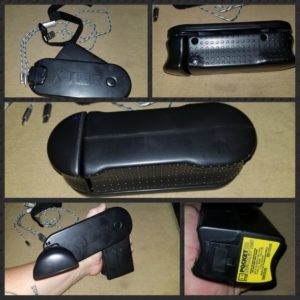
K-Tor hand crank generatorLegally I have to tell you if I have received the product or any compensation for writing this review. I bartered for a K-Tor hand crank charger in 2014 from an individual who is not affiliated with this website, Amazon or K-Tor (you all know I enjoy Amazon for shopping ease). I recently contacted K-Tor to get some information to write a review; they saw fit to send me a K-Tor Pocket Socket 1 amp charger. I can honestly say that this is one of the few products for which I have no real reservations in recommending fully to all of you!

Modern electronic devices have come quite a long way in a few decades, from filling a room to literally size of a wristwatch. This means that while we oldsters still have our books and writing implements, the reality is that not only is written information more easily available via the internet it is being replaced by it.

I have hundreds of books, actual written books. I also have over 200,000 digital books that easily fit in the palm of my hand. The K-Tor Pocket Socket 1 amp hand-cranked charger allows me to ensure charging even when my solar panels cannot!

While it does need a minimum of 3 minutes of solid rotation to push a charge, it is something that works regardless the weather or time of day! It is made very well, and charges electronic readers, cell phones, radios, GPS units, flashlights and much more; virtually anything that can be charged with a USB outlet is able to be charged with this device!

While many of my flashlights are still battery powered I have recently been investing in USB rechargeable ones as the technology really is getting much better. I will have a review for some of these shortly as well.

Dimensionally it is well within needed requirements for my personal uses. It is approximately the same size and half the weight of a half liter bottle of water, which makes it an easy fit and addition to my typical vehicle kits and of course when camping. Additional benefits can be seen in the construction which is robust, to say the least, it is easy to grip comes with a strap to attach the unit to your hand and more importantly is designed to be cranked!

The downside to this charger is the noise, while not unpleasant it is not quiet. Additionally, the rotation of the crank can quickly become tiring as it is essential to rotate the crank two full turns every second for at least 3 minutes to see overall results. This being said, the design and function of the unit allows for ease of use and can spell the difference between no light, phone or GPS and having one when needed!

K-Tor hand crank generatorI added this to my power kit, with the understanding that solar panels have at best a 15-year lifespan while this could easily outlast you! Better yet they make a serious unit that is pedal power! This is the one I want to have in my house for long-term needs. The Power Box pedal power cost quite a bit more at $195 versus the $69-75 for the smaller power setup. Given the benefits from using your legs and keeping your cardio up, added into the ability to generate power as needed for Ham Radio, GPS units and other items this is a small price to pay.

I am aware that there are multiple approaches to generating power this way, however, all of those approaches require careful building to avoid surges and promote best power results. This is a setup that has already taken all of that into account. These are built specifically to provide energy without surges and at rates that are equal to wall outlets and standard plugins.

If you have the chance pick one or more up! The pocket socket may not be the easiest unit to use when compared to solar panels and the like, it does, however, provide a mechanical approach to generating energy.

As with all reviews, ask any questions you want and be sure to let me know what your results are if you have one!

Check the current price on Amazon.com

Free the mind and the body will follow…

Written by Jesse Mathewson · Categorized: Gear Reviews · Tagged: Bugging in, Bugging out

Apr 09 2018

The Lost Ways Book Review

the lost ways book review
The Lost Ways Book – A Guide to Real Life Homesteading and Survival Skills From Our Past That Work!

Legally I have to tell you if I have received the product or any compensation for writing this review. This product was received without charge to myself, it was received as a gift without the need to review. I am choosing to review it because it is simply THAT DANG GOOD!

Everyone enjoys having knowledge that others deem to be special, necessary or unique. Some of us understand that the knowledge necessary to start a fire with sticks or rocks is something most humans do not have anymore.

In fact, even our military elite cannot survive without their massive supply chains and chemically stable Meals Ready to Eat. The Lost Ways is a book, that does something many other books have tried to do, but in an extremely well put together package bound together in a way most books haven’t been in decades now.

As an avid reader and practitioner of many lost arts, I can honestly say that I have read so many “survival” books that I have become jaded with them.

I own and can recommend the following books, all of which offer something special for your use! Off Grid and Free by Ron Melchiore, Basic Butchering of Livestock and Game by John Mettler, Emp-Hardened Radio Communications by William Prepperdoc, The Prepper’s Guide to Surviving TEOTWAWKI by our M.D. Creekmore, Beekeeping for Beginners by Aileen Brosnan, Foraging for Beginners by Kenneth Miller, Beekeeping: A beginner’s guide to beekeeping by Nancy Ross, The Working Chicken by Anna Hess, Solar Power Demystified, Medicinal Plants by Nathan Sempers, Preparedness Gardening by Jeff Fry and many more some older than the United States!

Among these books are my favorites, the Foxfire series is hands down the single most important series of books anyone can have, who is truly serious about their desire to emulate the old ways in their homestead. (They now have a 45th-anniversary single book combining some of the many things into one).

how to make pemmican
In the book – Learn How to Make Pemmican The Ultimate Survival Food.

This being said, if you could only have one book to help you remember many very important things that would allow you to continue living a life of relative happiness and prosperity regardless what may happen in the world; that book would be The Lost Ways. This book is not carried in paperback on Amazon except by some entrepreneurs who have it listed for $90+ which given the information included is not a terrible deal.

What this book does is guide you through the more advanced aspects of frontier living. It will not teach you 5 ways to build a fire or 150 knots every boy scout should learn! In this respect, I can easily see this book becoming my chief go to for the more involved aspects of long-term water storage without modern chemicals or making the perfect long-term survival foods.

This book will fill the need for a basic guide to edible/medicinal plants and includes the “folk remedies” as suggestions as well as the proven benefits to suit all flavors in approach! It won’t show you the best techniques for skinning a deer but it does guide you through tanning it, and then how to make charcoal as well!

In the book – Similar to Morphine: The Best Natural Painkiller that Grows in Your Backyard

This is a book for the individual who already has some basic knowledge and or a small library or access to basic knowledge. It is my strict opinion as someone who has done many of the things that are outlined in this book, and in many cases searched for years to gather the information for things like pemmican balls and smokehouses; this book gathers many of those things together into an easy to read option for your consumption.

It does all of this without pretentious airs and honestly bullshit claims of being the only way like so many others do. Rather, the book itself is presented in a well-made book that will stand the rigors of use and time and easily be passed down to loved ones.

My favorites parts of this book include information I can verify as valid because I have used it myself for years. “How to sharpen a blade like a samurai”, “How to make hardtack biscuits”, “how to render lard”, “how to make activated charcoal pills”, “how to make gunpowder the old-fashioned way.”

Self-Feeding_Fire
In the book – How to Start a Self-Feeding Fire That Lasts All Night Long

Are all amazing bits of information with detailed explanations and practiced uses! Each one of these approaches works and works well. This is an amazing book that is easily worth the $22 it costs, for myself it is a book I can gift to others and am planning on doing so this Christmas season.

Now for the downside, and there is one! Some of the information is somewhat incomplete, going from hunting a deer to tanning the hide and missing the skinning portion for instance. Or trapping, beaver and muskrat but leaving out the fact that using the same traps and similar but dry land methodology you can trap hares, rabbits, squirrels, fox, coyotes and more.

These are minor issues, after all it is a single book and I’ve never found a single volume of any literary type that successfully covers the entirety of the subject at hand without being simply too large or absolutely impossible to read, (ie., War and Peace).

This being said, I can easily recommend the purchase of this book and in fact would go so far as to suggest purchasing two, one for reading and absorbing and one for the shelf.

So there you have it, my review this week and one I am truly happy to be doing! If you’re interested in getting your own copy of The Lost Ways then you can find out more at the author’s website here.

Free the mind and the body will follow…

Written by Jesse Mathewson · Categorized: Gear Reviews · Tagged: Bugging in, Bugging out, Bushcraft

Mar 29 2018

The Best Survival Foods to Buy at The Grocery Store

best survival foods to buy at grocery storeOver the years I’ve consulted with many clients through my consulting business who know that they should stock up on food, water, and other needed gear but they’ve become so overwhelmed with all the “prepper foods” and “prepper gear” suggestions that are being promoted on nearly every survival blog and prepper website that they don’t know where to start – so they contact me for help.

I love seeing the look on their faces when I tell them that they don’t really need all of that stuff or need to order anything online because everything needed to prepare for a local disaster or even a total SHTF event can be found and purchased at their local Wal-Mart.

Prepping should be a simple and low-cost expenditure, unfortunately prepping has been made into a business where you’re intentionally led to think that you have to spend thousands of dollars on long-term storage foods, firearms, bug out vehicles and other related gear, when in reality everything that you really need can be purchased quickly and cheaply at your local Wal-Mart Supercenter.

Below I’ve put together a 20 step prepper’s checklist that once completed will make you better prepared than probably 95% of the U.S. population – all at a fraction of the price of purchasing an equal amount of foods and gear from the prepper supply vendors that you see promoting their products everywhere online nowadays.

You can do all 20 steps at once if you want or you can divide each step into separate days, weeks or months. But you need to get it done as soon as possible. Keep in mind that this is only a starting point and isn’t presented here as a completed end-all list. Prepping is a lifestyle and you’ll always be working on and improving your skills and adding to and or altering your supplies.

Now let’s get started…

1. Head to the nearest Wal-Mart and pick-up 20 lbs. of white or brown rice (white rice stores longer but brown rice is more nutritious) and 20 lbs. of pinto beans. White rice has a better storage life while brown rice has more nutritional benefits – your choice.

2. While you’re there grab 5 lbs. mixed beans, 5 lbs. of white sugar, 5 lbs. of iodized salt, one gallon of olive oil (can be frozen to extend shelf-life), 5 lbs. oats, 10 lbs. each of white or wheat flour and cornmeal.

3. Now head over to the canned foods and pick-up 20 cans of canned fruits and 20 cans of canned vegetables. Be sure to buy only those brands and contents you normally eat and nothing exotic. No need to shock the senses.

4. Now over to the canned meats. Pick-up 20 cans of various meats, salmon, stews, spam, and tuna. Again buy only those brands with contents you normally eat and nothing exotic.

5. Okay. Now to the to the peanut butter shelf and toss two 40-ounce jars in the cart. The listed shelf life is just over two years and each jar has over 6,000 calories. Peanut butter is an excellent instant survival food.

6. Over to the powdered drink mix – go on I’ll wait…Okay, pick up two 72 Ounce Tang Orange drink canisters (provides 100% of the US RDA vitamin C requirement per 8 oz. glass). Also, grab six 19-Ounce Containers of Kool-Aid Drink Mix.

7. Off to the vitamin and supplement aisle, pick up 400 tablets “one a day” multivitamin and mineral supplements. I buy this brand at the local Wal-Mart – comes in 200 count bottle for $8 each.

8. Now to the department, we all love – sporting goods. Go to the camping aisle and pick up 4 five gallon water containers. Fill with tap water as soon as you get back home.

9. While you’re there buy 250 rounds of ammunition for your primary defensive weapon. More if you can, but this will be a good start. Also a good universal cleaning kit.

10. And while you’re in the sporting good department pick up the best flashlight you can afford, extra batteries and bulb. Also, grab two boxes of wooden matches and several multi-purpose lighters. Don’t forget to date, use and rotate – remember first in first out. Let’s get started. What would you add to the list?

11. Go to back the grocery department and pick up 5 lbs of powdered milk or the equivalent of canned, now go over to the next aisles and throw in 5 lbs of rolled oats and a case of Ramen noodles. Ramen noodles aren’t the most nutritional food but they are cheap, add bulk to the diet and store well –  just don’t rely on them to provide all your nutritional needs. And don’t forget a good manual can opener.

12. While you’re in the grocery department be sure to pick up an assortment of spices to taste, such as Basil, Chili powder, Cinnamon, Garlic, Sage, Marjoram, Oregano, Rosemary, Thyme and Black Pepper. Spices can go along way toward making unfamiliar foods palatable. Also, while you’re in that area add 5 or more lbs of salt to your shopping cart, as you know salt has 101 uses.

13. Okay, counting what you bought during our first trip to the shopping center, that should do it for the grocery. Now go over to the area near the pharmacy and pick up 3 large tubes of toothpaste, 3 brushes, 100 double edge razor blades, (note: if you don’t have a razor you’ll probably have to order one from Amazon.com and don’t forget a brush and bowl), I’ve used this type razor for years and think it is a cheaper long-term solution than disposable.

14. While you’re there, add the most comprehensive first-aid kit that you can find to your cart and don’t forget over the counter pain meds (Tylenol, aspirin etc.). If you’re a woman (or have one in your life) go over a few shelves and pick up enough “feminine” supplies to last three months or longer.

15. With all that food in your pantry its only a matter of time before you have to poop. I know, its shocking but we all do it.  If you have a water source such as a stream or lake nearby you can still use the toilet in your bathroom, all you have to do is manually fill the tank in back and flush as usual. If this isn’t an option, you’ll need to look for other alternatives such as the Portable Toilets sold in the sporting goods department or making a  sawdust toilet from a five-gallon bucket.

16. What’s next? You guessed it toilet paper. If you poop you need to wipe, if not you probably need to start. You could use a corncob, cloth, Roman sponge on a stick or paper from discarded books or newspapers but I would wager most of you prefer the softness of Angel Soft. Get enough to last at least a month, more if possible and remember women need more than men so plan accordingly.

17. While you are in that area of the store pick up a supply of disposable plates, bowls and plastic utensils. Don’t go overboard here but having a small stockpile of these items on hand can save a lot of water that would otherwise be used to wash dishes. Also add two or more gallons of regular, unscented bleach to your cart.

18. This is a biggie and can’t be done (legally) at the department store pharmacy without the signature of a doctor – that is stocking up on prescription meds.  Getting more than a 30 day supply, at least in the U.S., can be difficult if not impossible. But there are ways to get most of what you need for long-term survival. See this book (note: some of the information in the book is dated but there is still good advice to be found).

19. Now push your cart (man this thing is getting heavy) over to the hardware department of the store and pick up a carpenters hammer, vise grips, adjustable wrench, screwdriver set, duct tape, electrical tape, ax, pry bar, crosscut saw, hacksaw and a large can of WD-40. This is your bare minimum survival toolkit.

20. After you get your toolkit, go over to sporting goods and in the camping supply aisle pick up a propane camp stove and 5 or more 1 pound propane cylinders or a bulk 20 lb tank and hose adaptor – yes the pressure in the small bottles is the same as a 20 lb cylinder or even 100 lb tank, just be sure to get the proper adapter and hose assembly. Another alternative and the one I prefer is the Volcano Stove because I can use propane, wood, and charcoal.

21. Okay, we are just about done  – only a few more steps you’ll be out the door and heading home. You’ll need a way to keep in touch with your group so go to the electronics department and pick up the best two-way radios that you can afford – I have these. Don’t forget a battery-powered radio and extra batteries for both. While not necessary, I prefer a radio capable of receiving AM/FM and shortwave broadcasts – I have this one.

This shopping list will have you better prepared than probably 90% of the U.S. but it should not signify the end of your preps only a good start. There’s always something to do and learn never become complacent – remember the quote “On the plains of hesitation lie the bleached bones of those who on the very threshold of victory sat down to rest, and while resting died.”

best survival foods to buy at grocery store

>Download The Free Printable Here<

What did I leave out? What would you add? Let us know in the comments below.

Written by M.D. Creekmore · Categorized: Prepping · Tagged: Budget tips, Bugging in, Food storage

Primary Sidebar

About Me

Subscribe to Blog via Email

Enter your email address to subscribe to this blog and receive notifications of new posts by email.

Join 7,184 other subscribers
  • Amazon
  • Facebook
  • Substack
  • Twitter
  • YouTube

A prudent man foresees danger and takes precautions. The simpleton goes blindly on and suffers the consequences.
Proverbs 27:12

Footer

DISCLAIMER

This website is for informational and educational purposes only.
I’m not a financial advisor, medical professional, or legal expert.

Everything shared here is based on personal experience, research, and opinion.
Use your own judgment and do your own research before making decisions.

  • Blog
  • Books
  • Newsletter
  • Gear I Use
  • About
  • Contact
  • Privacy Policy

© 2008–2025 M.D. Creekmore · As an Amazon Associate, I earn from qualifying purchases.