• Skip to main content
  • Skip to secondary navigation
  • Skip to primary sidebar
  • Skip to footer

M.D. CREEKMORE

  • Blog
  • Books
  • Newsletter
  • Gear I Use
  • About
  • Contact
  • Facebook
  • YouTube
  • Blog
  • Books
  • Newsletter
  • Gear I Use
  • About
  • Contact
  • Privacy Policy
You are here: Home / 2018 / Archives for September 2018

Archives for September 2018

How To Collect Rainwater For Home Use

September 14, 2018 M.D. Creekmore

water-barrel-system-completedby Chuck H

Water has always been an afterthought for me and my prepping. It’s so easy for me to take it for granted when all I need to do is turn a faucet handle and fresh, clean water is made available. But what if the power goes down for a significant amount of time and eventually the water stations with it?

So I finally decided to store some water for just such an occasion. The most efficient way I could find to do this was by rain collection in rain barrels.  I tell the neighbors it’s for watering the garden and yes we use it for that as well. But if the SHTF I have 220 gallons of water available for my family to use.

That’s right, four 55-gallon, food-grade barrels collect rainwater. This was quite a process. I Googled it, YouTubed it, and overall did a lot of research. I combined what I thought to be the best way to do it for what I had available. The first step was to acquire the 55-gallon plastic barrels which I got from a local, large-scale food distributor.

You’d also be surprised who has these with just a simple Facebook request. You would also be wise beyond your years to purchase a bung wrench to unscrew the caps on these bad boys. It just makes life a lot easier.
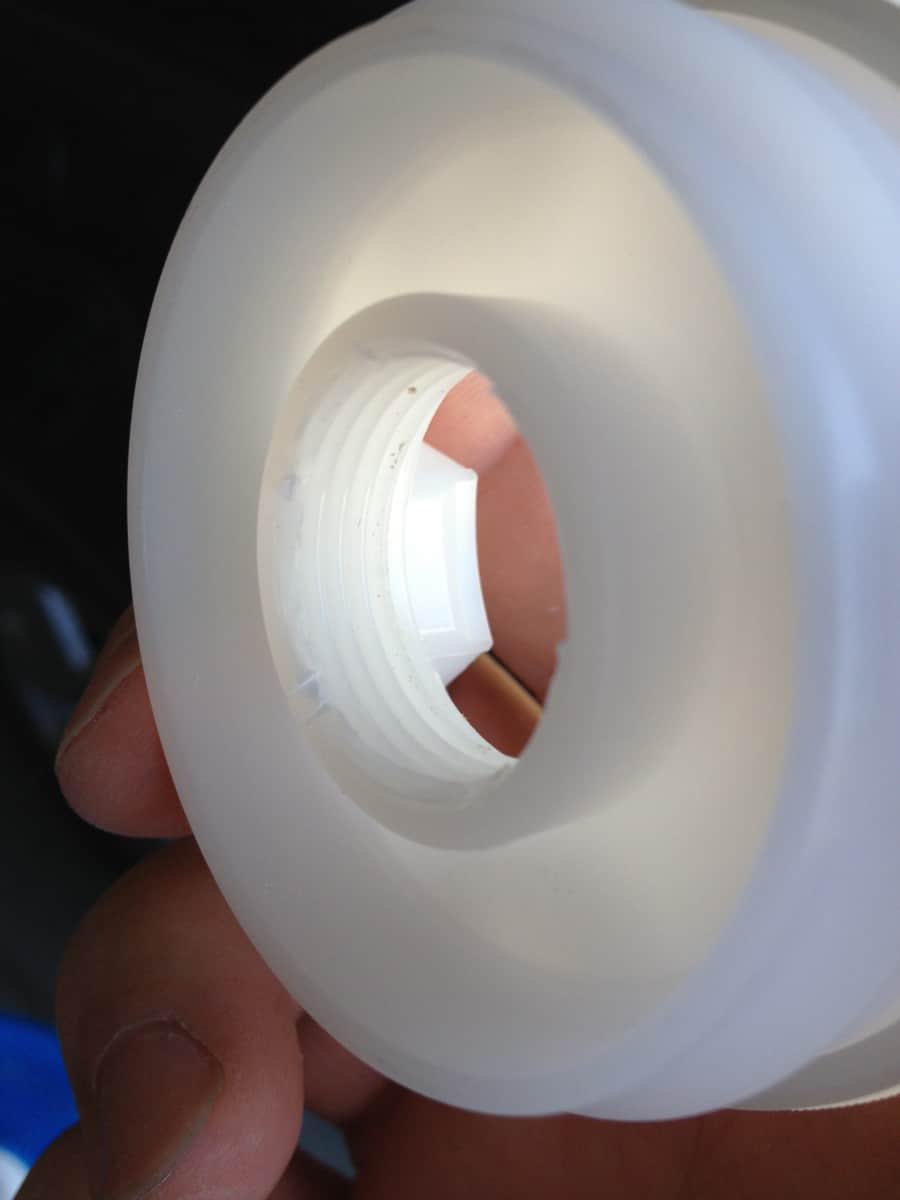
fitting for barrel and rainwater catchment system

Anyhow, the barrels contained salted vodka (not any good…I tried). So I definitely needed to clean them out. It was a matter of putting some hot water and soap in them and screwing the cap back on. Then just have the kids roll it around the backyard a bunch of times, rinse, and repeat as necessary.

Once cleaned I chose to spray paint them a color similar to the siding on my house in the hopes it would blend in a little better than the bright blue plastic it was made of. After they were cleaned and painted I moved on to the deck I would build for the barrels.

I read in my research that the higher up the barrels the greater the flow of water due to an amazing scientific discovery called…gravity. So my deck would end up being high enough off the ground for me to fit a watering can or 5-gallon bucket under the spigot (about 4′ off the ground). Using treated lumber I ended up with six 4×4 posts as the legs.

They were cut to the appropriate height. Next, I used treated 2x4s and framed out the legs as you see in the pictures.

I basically framed a wall around the legs like you might frame a wall in your house (header, footer, studs, etc.). Once the frame was fixed to the legs I put the deck on which consisted of a treated piece of plywood cut to the dimensions of the frame. This is what my barrels would sit on. Since my plumbing would be under the deck I also cut a hole for each barrel to be plumbed underneath.
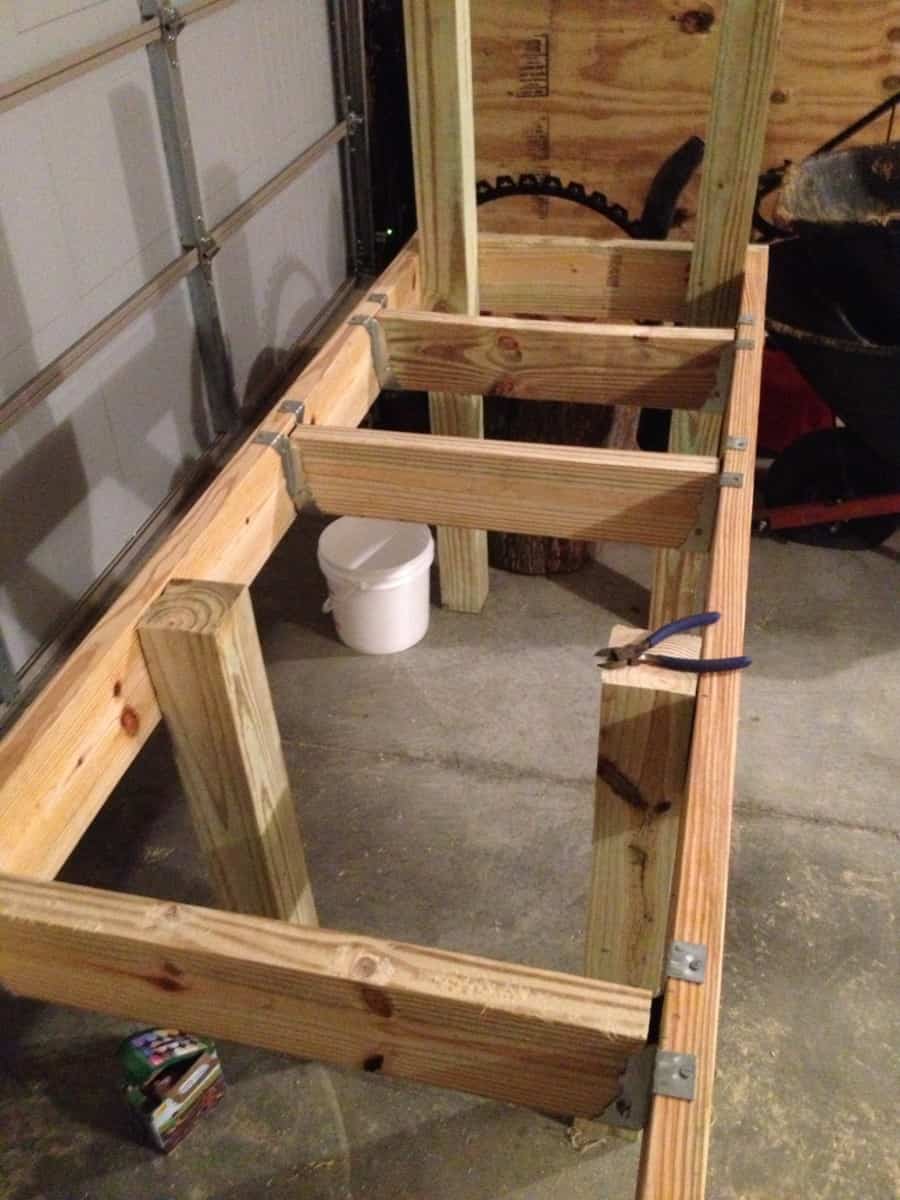
Building a wooden frame for water-barrels

My deck was basically complete for now, so I turned my attention to the plumbing. Now I either got extremely lucky with these four barrels or all barrels are like this, but you’ll notice that one of the bungs is threaded in the middle. A threaded PVC adapter will fit this perfectly.

I planned to store rain in my barrels upside down. Since the hole would be at the bottom of the barrel I was all but assured every last drop of water from the barrels. Water will naturally self-level itself so by plumbing all of the barrels underneath the water would enter the first barrel (from the downspout) go to the bottom of the barrel and into the PVC pipes and then rise up into the other barrels.

That is how I planned to fill all of the barrels without extra holes in the top, just let water and gravity do the work for you. It is VERY important that you dry fit all pipes before permanently affixing them to the barrel and each other. So I set my barrels upside down on the deck and began measuring and cutting the PVC pipes.

I planned for a shutoff valve at each barrel and another at the spigot (5 total) in case anything needed replacing or isolation it would be easier to shut off the water from that barrel. Once everything was dry-fitted I used some clear, silicone caulking and applied it liberally to the two bungs in the bottom of the barrel.

This is where the bung wrench comes in handy to tighten the bungs completely. Next, I applied the same caulking to the PVC adapter that conveniently threaded inside the one bung. I tightened it all the way thus making a leak-proof seal on all my barrels. I waited to permanently affix the plumbing until everything was in place. So now I had to prepare my yard for the deck and barrels.
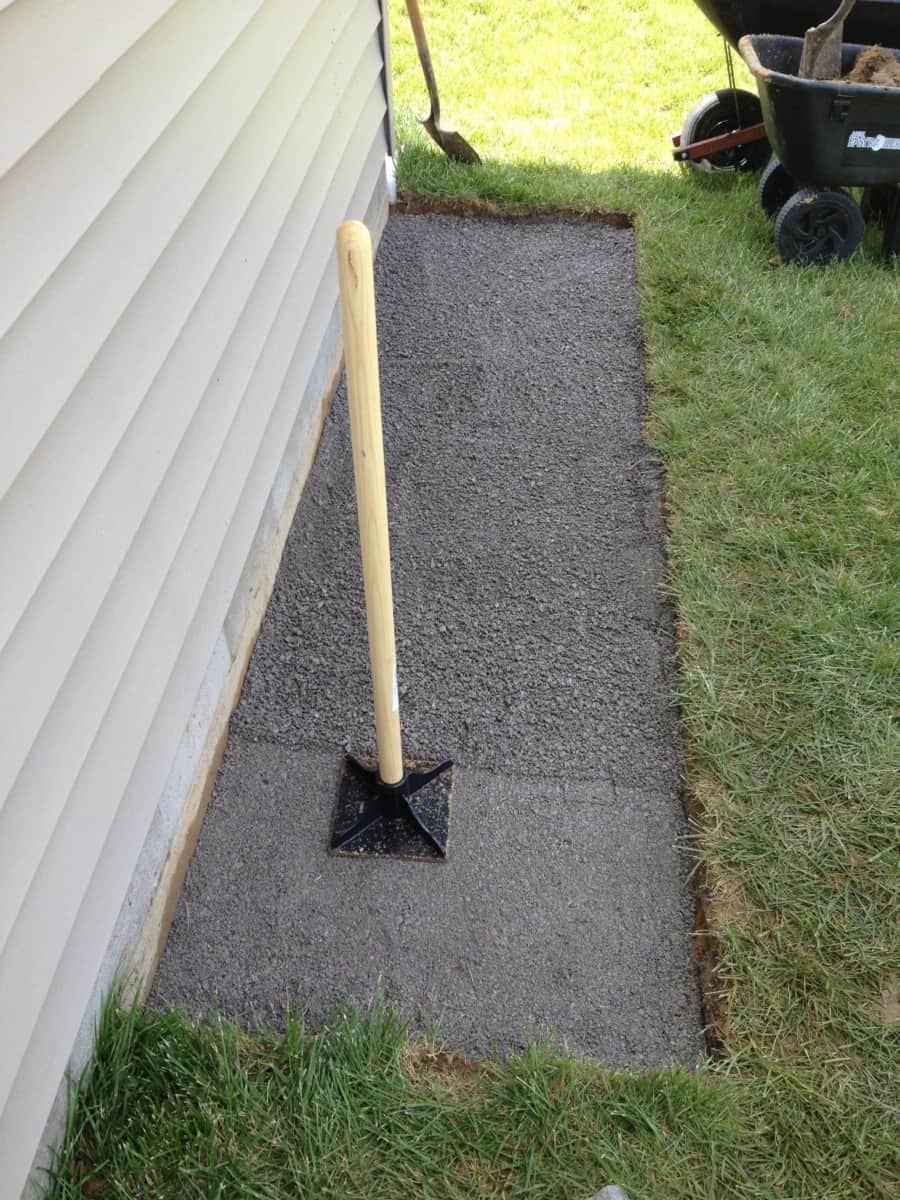
preparing the ground for rainwater catchment home use

With the help of my wonderful wife, we dug up the sod in the backyard closest to the downspout we wanted to use. We dug a 32” x 115” section of the sod out, about 4” deep, and filled it with crushed rock. Here is where the hardest part of the project comes in.

Using an 8” x 8” tamper I tamped down all of the crushed rock making it about the density of cured concrete. Next, I placed six concrete piers on the crushed rock and, with the help of a friend, set the deck in the piers.
It was time to put the plumbing together permanently. I sanded the rough edges off the cut ends of the PVC pipe and applied the purple primer to the end of the pipe and inside the pipe, I would attach to.

I went a little farther up the pipe with the primer than what I would need so it would be a complete seal. After applying the primer I put PVC cement on the purple primer. Then you push the pipe in the adapter and twist a quarter turn. Hold this in place for 30 seconds and then test your work.

This “twist and hold” method is really important because you’ll notice the pipe wanting to push out of the adapter if not held in place. When done correctly it will be pretty solid. Once I plumbed everything together I used metal, nail-on straps to hold them in place (especially at the spigot). I also angled the spigot down a bit to make sure water wouldn’t sit in one place forever.

Now that the barrels were in place and the plumbing secured I built a small fence around the barrels. If you haven’t noticed by now I did a lot of overkill. The decking, the crushed rock, the concrete piers, etc. I wanted to make sure this much weight would hold (220 gallons of water weighs almost a ton!). So the fence keeps the barrels from blowing off the deck when empty.

At this point, I’m almost finished with the project. I used flexible downspout extenders to route the water from the downspout to the top of the far right barrel. Then another flexible downspout was used as an overflow.

finshing the platform for rainwater system

I put them in place and traced around the end where it met the barrel on one end and the downspout from the house on the other end. I cut the barrel and downspout and installed the flexible downspout to the top of the barrel and the downspout from the house.

Since mosquitos love standing water I placed a cut section of window screen around the opening in the barrel (sealed around the edges with the leak-proof caulking mentioned earlier) and around the end of the flexible downspout (attached with an adjustable ring used for dryer vents) to catch particles that washed off the roof. Now water will enter my barrels!

As I mentioned I did a lot of research before attempting this project. Part of that research mentioned drilling a small hole in the top of the barrels because of pressure that may build up in them would reduce the flow of water. I was skeptical about this but it didn’t hurt to drill a small hole in each and place more window screen over them. I sealed these with the same caulking.

The overflow spout is a necessary part of the project. If the barrels continued to fill past capacity then the plumbing could be damaged and that would be a nightmare. So at the very top of the same barrel the water entered, I measured and cut a hole to install another flexible downspout that would return to the original downspout from the house and flow away from the house.

This part was tricky because I wanted a watertight fit and not to have water spilling out of the hole down the barrel and all over the deck/ground. So I got a large diameter PVC adapter and put it in the hole I had cut. I made it watertight using a metal flange and some all-purpose bondo to seal it to the barrel.

Now the flexible downspout fits perfectly around the PVC adapter and overflows to the original downspout on the house and away from the house.
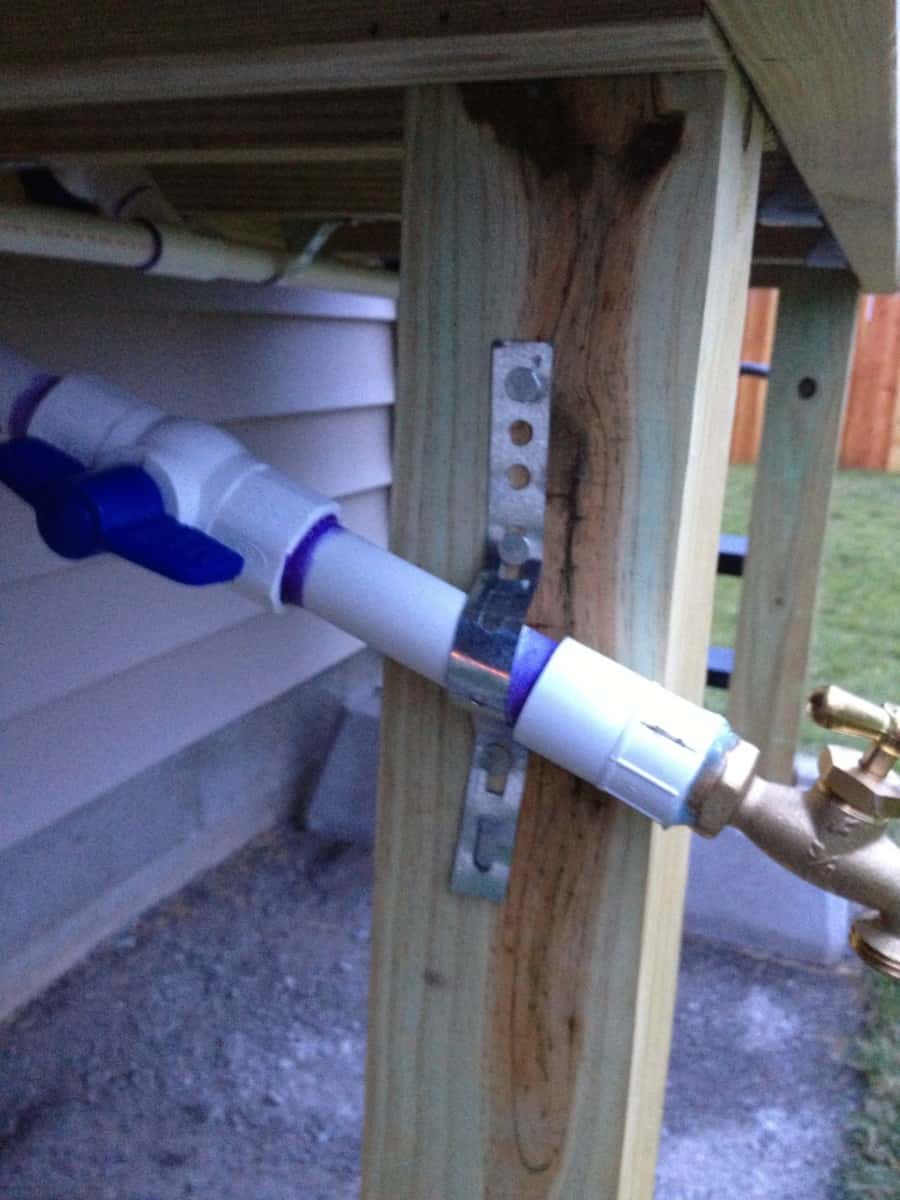
water catchment system for home useI failed to mention that I also have a small retention basin in my backyard. I drain the barrels before winter so they won’t turn into huge ice chunks. The plan is to use water from the retention basin during the winter if needed. While doing my research I read that rainwater off a roof is not potable.

So if the need arises we will be filtering and boiling any water used from the barrels (and retention basin for that matter). Also during the winter, I take the piece of the downspout from the house that I removed and put a couple adapters on each end, remove the flexible downspouts from the barrels, and place the original downspout back in place. This allows melting snow to flow through the downspout like it’s supposed to.

When spring rolls around I just switch back to my flexible downspouts and I’m refilling the barrels with May showers. It took about 2-3 days to finish the project, a little bit of sweat, and a lot of cuss words, but it was finished. What I like most about the rain barrels is the capability to have 220 gallons of water available to me at almost any time.

A body can survive longer without food than without water so knowing we have this stored away gives me peace of mind. In the meantime, my garden loves the water and occasionally my lawn does too. It’s tucked away behind my house and not many people know it’s there.

You could add some lattice fence-work around the deck frame to hide it even more if privacy is a concern for you.

Hopefully, you’ve learned a little bit about how to make a rain barrel system and its benefits. And that’s really what this blog is all about… learning new things to help us stay prepared.
Filed Under: Homesteading

Do It Yourself Off The Grid Solar Power System

September 14, 2018 M.D. Creekmore

EMERGENCY-SOLAR-POWER-SYSTEMby Robert B

Building an off-grid power source for your home or “Bug Out” location is not as difficult as you may think. Having power can drastically improve the quality of life during a long or short-term power outage. After losing all of our food during a three-day power outage after a severe storm, we learned quickly that taking the power grid for granted was not a good time.

Please keep in mind that we are not experts and there are always dangers when dealing with electricity.

The solar generator constructed at our home is basically the same as the generator constructed at our bug out location.

EMERGENCY-SOLAR-POWER-MADE-SIMPLE
HQST 100 Watt 12 Volt Monocrystalline Solar Panels

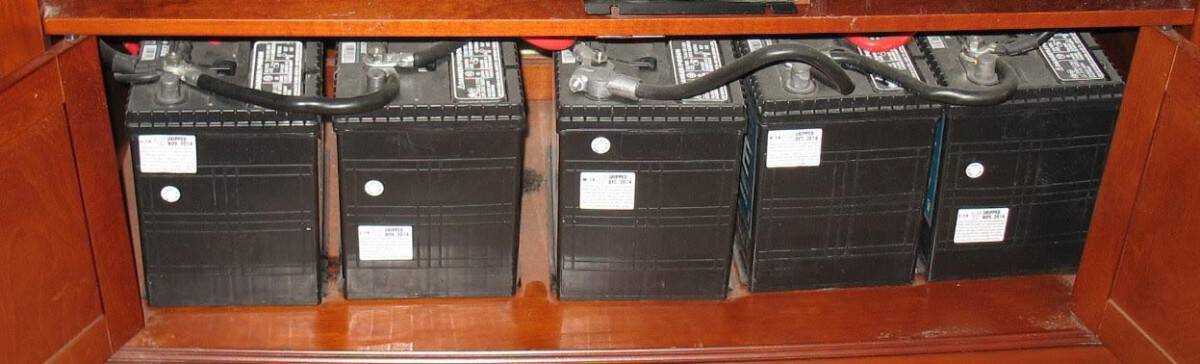
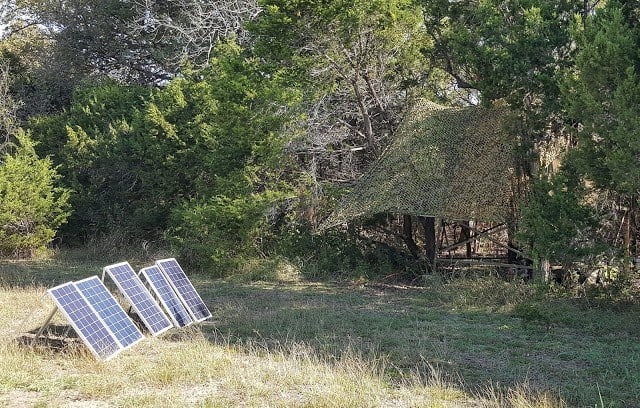
First, determine what it is you wish to power and determine how many watts you’re going to need. As an example, I use eight 100 Watt panels and five large RV batteries to run my full-sized Maytag refrigerator. My set up allows me to run the refrigerator throughout the night if I turn the ice maker off and settings down on the fridge and freezer sides. I turn them to setting “two.”

There are four major components to our 12-volt solar generator:

  • Solar Panels
  • Charge Controller
  • Battery Bank
  • Power Inverter

Solar Panels

Solar Panels generate power during daylight hours to charge your battery bank. I use eight 100 watt panels to provide up to 800 watts of power to my battery bank. Generally speaking, the power generated by the panels is less than the advertised or rated watt output meaning eight solar panels probably put out 10 percent less power than the full 800 watts as advertised.

While the panels do in fact still provide power on a cloudy day, they will not be quite as efficient as full sunlight.

The solar panels I used are found on Amazon for about $114.00 each seen above.

I have been impressed with them but keep in mind the technology improves almost daily so do your research and read reviews.

These panels are very easy to connect. The male and female connections are clearly marked (+) and (-) for positive and negative respectively. You will also need Y branch connection cables to connect more than one panel for your system. You will need a long set of cables run power to the controller.

I used a 100-foot cable with a male connection at one end and a female at the other end. Cut the cable in half and expose the wires. This will give you 50 feet of wire. Of course, depending on your situation, you may need a longer cable or shorter cable. The shorter the cable the better.

The longer the wire, the more electricity you will lose in the transmission of the power going inside to your charge controller.

Battery Bank / Power Inverter

battery-bank-for solar power set up and systemThe battery bank is the most important component of your system. Once the sun goes down, the battery bank will provide electricity throughout the night if built correctly. The trick to the battery bank lasting throughout the night is to obtain the correct ratio of solar panels to the number of your batteries in your battery bank. It’s equally crucial to have the correct number of batteries in your battery bank. Your battery bank should provide enough power storage to run your refrigerator overnight until the sun returns to fully charge your batteries during the day.
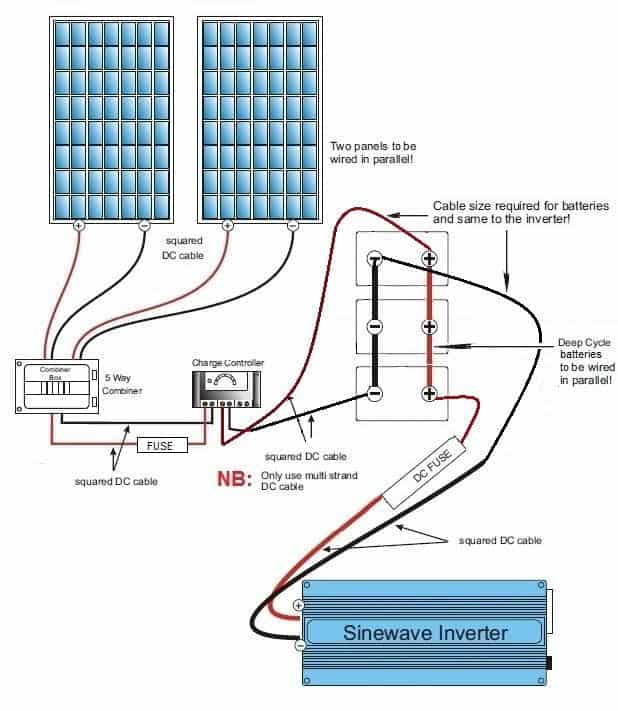
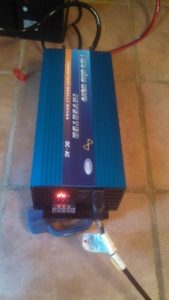
Building the battery bank is the most intimidating part for most people, but it’s really not that difficult. There is plenty of information on how to build a 12 volt, 24 volt, or 48-volt system, but I will be illustrating how to build a simple 12-volt system.

Types of Batteries

There are several different types of batteries on the market that will work with your system. These batteries range in price and efficiency, so it’s best to find the right balance between your budget and your power needs.

The batteries used in any solar or wind generator must be deep cycle type batteries. Regular car batteries are not made to charge and discharge like a deep cycle marine, RV, wheelchair, or golf cart batteries. Regular car batteries are not designed for this purpose.

Lead Acid Batteries (Pictured above) – Lead Acid batteries are probably the most inexpensive but are not the most efficient. I am using five Lead Acid batteries for the battery at my home. While they do work just fine, when they start losing their efficiency, I will replace them with AGM batteries such as the batteries at my bug out location.

Vmaxtanks Vmaxslr125 AGM Deep Cycle 12v 125ah SLA rechargeable battery for use with Pv Solar Panels

Absorbent Glass Mat (AGM) batteries (Pictured above), in my experience so far, has been the most efficient. However, they do cost significantly more. While the AGM is still considered a Lead Acid battery, the construction of the battery is superior to a regular Lead Acid battery and tends to be more efficient. The Lead Acid RV batteries cost approximately $100 each while the AGM batteries cost approximately $250 per battery.

You will have to do your research and determine your budget for your batteries.

Wiring Your Battery Bank

First, you will need battery cables that will run from your charge controller to your battery bank. I recommend using two gauge battery cables or lower for this purpose and zero gauge cables (The largest cables available) to run from your battery bank to your power inverter,

I wired my battery bank in parallel meaning that the positive cable from the charge controller goes to the closest positive terminal on the first battery in your bank. The next cable runs from that first positive terminal to the next positive terminal on the next battery and so on.

The negative cable coming from the charge controller will run to the negative terminal on the LAST battery in your battery bank. The cables running from your battery bank to your power inverter will be connected just the opposite.

The positive cable from your battery bank will be connected to the positive terminal on the last battery in your bank and the negative cable will be connected to the negative terminal on the first battery in your battery bank (Closest to the charge controller).

The ground wiring will attach to the same negative battery terminal where the negative power inverter cable is attached. It’s best to run that cable to a grounding rod obviously outside your home.

wiring-your-battery-bank-photo

By wiring your battery bank together as described above, this will cause each battery in your bank to charge and discharge evenly and maximizing the efficiency and life of your battery bank.

Pictured above is my battery bank prior to adding a fifth battery and purchasing a cabinet to put them in.

If you place your battery bank inside an enclosed cabinet or container, make sure that the batteries get proper ventilation.

Note: Do not let your batteries fall below 11.9 volts as to keep them from discharging too much which could possibly damage them.

Power Inverter

power-inverter for DIY solar system3000W Pure Sine Wave Power Inverter 6000W Peak 12VDC to 110VAC
When choosing your power inverter, I would recommend purchasing at least a 3000 Watt (6000-watt peak) Pure Sine Wave inverter. The pure sine wave inverters along with the MPPT charge controller will provide a much more stable current for running sensitive electronics and appliances.

Unfortunately, like the MPPT charge controller, the pure sine wave power inverters are more expensive, but again, you’ll thank yourself later.

Do your research and read reviews on all of the components. I haven’t had any trouble with the one I use at my home (pictured above).

Volt / Amp Meters and Fuses

There are all kinds of other things you can attach to your system such as meters and fuses. I have a simple voltmeter attached to my battery bank to make it easier to read the voltage of the battery bank. I simply disconnect the cables from the solar panels if there is a thunderstorm coming as to not take the chance on frying my entire system.

There are plenty of different types of systems out there from all-inclusive, to pieced together the way I built my system. I like my system because I can purchase the components a few at a time, and I can expand the system as needed very easily.

Plugging in your refrigerator

Once you’ve completed your system, watch your voltage either on your meter or on your charge controller if you have a meter built into the controller. During the charging phase, you will see your voltage reach upwards of 14.5 volts. This is normal and the voltage will level out around 13.5 volts during the day.

On your first attempt at this, you will be a bit nervous, so do it when your bank has a good charge coming in from the panels. I highly recommend doing this at least around noon or so after a few hours of sun.

Turn your ice maker off (ice trays work just fine) and turn the settings of your refrigerator and freezer down. I turn mine to about “two” and it still works just fine. Once the sun goes down and you’re totally running off the battery bank, limit opening and closing the freezer or refrigerator. This is where common sense comes in. During the day, with continuous power coming in, you can use it normally.

Before unplugging your refrigerator, wait for the current cycle of your fridge to complete itself so you’re not interrupting the cycle.

Next, unplug your fridge and using a low gauge extension cord (much thicker than your normal extension cords), plug your fridge into one end of the cord. I used a 25-foot cord that is professional grade. Common cheap thin extension cords are NOT good for this purpose as they do not transmit the power from your inverter as well. Spend the money on a good extension cord. Also, the closer your battery bank is to your fridge, the better.

Turn your power inverter on and check the voltage. The display on my home inverter tells me the available voltage of the battery bank, but the inverter at my bug out location displays the voltage of the battery bank and the optimal voltage to run a device.

Once your inverter is on and your voltage is up to speed, plug the extension cord into the inverter. This is where the magic happens. Even if your fridge is not currently running, you will see your voltage drop a bit. This is normal and if you have enough battery power, you’ll see it level out. Mine levels out around 12.5 volts. This will last several minutes.

When your fridge compressor comes on, you’ll see the voltage come back up. Not sure why and perhaps someone out there can explain why, but I’ve only seen this huge draw that one time after plugging the fridge into the inverter. After that, the compressor coming on barely drops the voltage at all. After that initial draw, even overnight, I only see the voltage drop approximately .2 volts mean if the voltage level of the battery bank is 13.5 volts, it only drops to 13.3 or so.

In the morning, my voltage usually reads around 12.6 volts dropping only to 12.4 volts during operation.

As long as your voltage doesn’t drop below 11.9 volts, you’re good to go.

Bio: Robert B has his own site called Keeping Up With The Preppers – however, it looks like the site hasn’t been updated in over a year.

Filed Under: Power Generation

Vintage Army Advice on the Importance of Staying Fit (Applies To Everyone… Even You!)

September 14, 2018 M.D. Creekmore

PHYSICAL TRAINING

Editor’s note: The following excerpt was included in FM 21-13, an Army field manual published in 1952. Staying in as good of physical condition as possible is important for everyone (even you) and this article gives some good tips on why and how you can do that.

FM 21-13
THE SOLDIER’S GUIDE

Section VI. PHYSICAL TRAINING

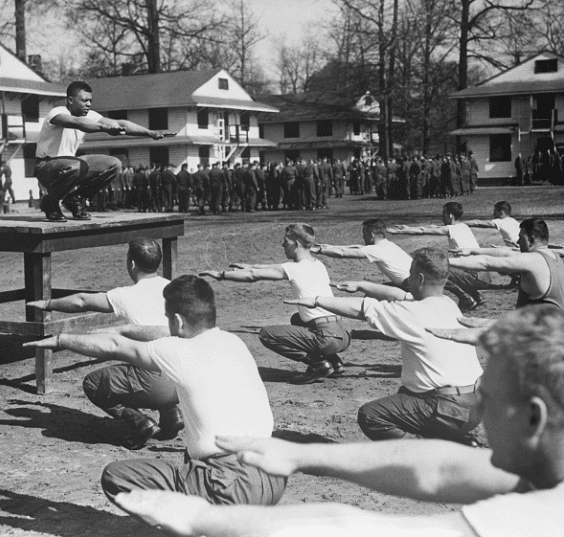
Military leaders have always recognized that soldiers do a much better job if they are in good physical condition. This applies to a soldier pounding a typewriter in the communications zone as well as the rifleman fighting in the front lines. Warfare is a grueling ordeal and makes many severe physical demands on individuals in all types of jobs.

You may have to march long distances through rugged country with a full pack, weapons, and ammunition. You may be expected to fight upon arriving in the combat area at the conclusion of such a march. You may have to drive fast-moving tanks over rough terrain, to run and crawl long distances, to jump into and out of foxholes or trenches (some of which you may have dug), and to keep going for many hours without sleep or rest. All these activities and many others require superbly conditioned troops.

The importance of physical fitness has not decreased with the rise of mechanized warfare. Soldiers must still perform most of the arduous tasks which fighting men for thousands of years have had to do. The machines are no better than the men who operate them, and every improvement in our machines must be matched by an improvement in the quality and fitness of their operators.

A close relationship exists between physical fitness and mental and emotional fitness (morale). The rugged, tough, well-conditioned soldier has a feeling of fitness and self-confidence. He’s a hard man to beat.

You can become or remain physically fit only through physical training. Long experience has shown that few men enter the Army physically fit for the arduous duties ahead of them. The softening influences of our modern civilization make the problem of conditioning men more difficult than ever. For these reasons, a good plan of physical training is a part of the Army’s training program. It is the only way to prepare you for your strenuous duty in the Army and may actually be responsible some day for saving your life or the lives of your friends.

The old saying about “a sound mind in a sound body” is as true today as it ever was. Your mind works best if your body is healthy. As the condition of your body improves under physical training, you will find that you can work longer and still remain mentally alert.

You will feel more like doing things that require both mental and physical activity. You won’t mind the hard jobs because you won’t tire as easily. Your waistline will look trimmer; your chest expansion will be greater; and you will seldom be “out of wind.” Small problems will be easier to solve, and the big ones won’t look so big. Your self-confidence will increase, and you’ll feel ready to tackle anything or anybody.

The service benefits through having the maximum number of men ready and willing to do their jobs every day. Fewer and fewer men report for sick call as the health of the outfit improves. The over-all strength and fighting ability of the Army increases as each individual’s physical condition improves. Such an army is able to fight harder and to keep it up longer than a poorly conditioned enemy. Such an army has high morale, is vigorous, and takes pride in its accomplishment — it is an army that wins.

The Army has developed exercises to improve your physical fitness. Some of these are strenuous, but their value has been proved through use. Athletics also are excellent for improving your physical condition. Detailed information on physical training can be found in FM 21-20.

You’ve heard the old saying that “a chain is no stronger than its weakest link.” This is especially true in a military organization. In the offense the weakest section of an attacking company is stopped first. In the defense the enemy probes your position until he finds the weakest section; then he hits your weak spot with everything he has.

The only answer is to strengthen your whole outfit until it has no weak spots. Physical training is a means of strengthening and conditioning your body so that it will have no weak spots.

When you have strengthened your weak spots, the next thing is to get everyone working together. Everyone on the team must help his teammates toward the common goal. The combination of a group of well-conditioned men working with each other will produce victory whether on the playing field, in the office, or in battle.

Filed Under: Health and Fitness

Home Security and Safety Tips for Single Women Living Alone

September 13, 2018 M.D. Creekmore

by Susan B

The security at home essay reminded of something that happened to me a few years back. I was having another sleepless night a few months after my husband had passed away, I fell asleep around 3 AM, I woke up 20 or 30 minutes later to my back door being kicked in, a man screaming to let him in.

I was certain he could not gain entry as I’d replaced the door when I first bought the place with a metal door and I had every type of bar and safety feature on this door to make sure it could never be rammed in.

I told him I called 911, my dog was very old and he had hit her hard enough she was hiding from him but still barking. After the longest 15 minutes of yelling and pounding on my door the cops finally arrived and as they were hauling him away he reiterated I should have let him in, he was at a party gone bad and some guys were chasing him, so he said.

I certain as were the officers he was very drugged up. I told him if he’d been able to gain entry I would have had to shoot him with the 12 gauge shotgun I was holding and I certainly would have blown his F&^%ing head off.

My husband always said to keep the shotgun loaded where you can get to it fast, also a handgun, I tried to load the chamber of one of his .45 handguns but I was shaking so bad I couldn’t do it, not that I relished the idea of using it anyway, thankfully there was a shotgun ready to go and I have used one often enough before to be comfortable with.

I lived at the time in a low crime area in the suburbs, I/we were there 12 years and nothing had ever happened before.

Soon after I went and got my concealed carry and bought a new handgun I was comfortable using, a Glock 19. I have it next to me on my nightstand right now. I put it up if anyone is coming over. I have several hidden in other parts of the house as well. It did get me thinking about home safety. No matter how safe you think your area is you should be prepared.

It is a good idea to take a close look at your home from a viewpoint of how easy it would be for someone to gain entry. I think it is a good idea to make it so people have no way of knowing when your home, cover garage windows.

Don’t answer the door if you don’t know who is standing there, have a way to see who is there without them seeing you. Make sure to have an extra layer of protection at all doors and windows, I had alarms on everything and storm shutters on all windows.

The front door entry was gated. I now live out in the country and am working toward the same level of security here. Sometimes it isn’t someone from outside your area that is your biggest threat but someone living not very far away.

I have a yapper dog that keeps me aware of people pulling down my driveway. I have a gate and I intend to add another further down the driveway, it is a very long driveway.

You’d be surprised how easy the average door is to kick open, get some safety bars or other such gizmos to make it nearly impossible without a ramming bar from a swat team. They don’t cost all that much and are easy to install. Use long screws and make sure you’re attaching to the framing studs and not just the trim.

I have several driveway alarms as well, one for each side of the house; I have the beams set at different angles from the window and a few outside as well at a height that keeps them from going off from small animals. I find the dogs are the better bets as alarms.

The driveway alarms are always on sale at harbor freight and they are very user-friendly. I bought the other items online or at local hardware stores. Even a simple hasp for a back door with a sturdy padlock can help slow down an intruder. I also have door stop alarms.

There are new types of sensor alarms that will call 911 and tell them you have an intruder, these are stand-alone alarms not connected to an alarm company that charges you a monthly fee. They do need a phone line though. There are alarms that go off if someone outside puts their hand on your doorknob or handle. These are but a few of the multitude available these days.

Not many of us will have a well-trained law enforcement man in the house, maybe not even close by, so we need to eliminate as best we can the possibility of an intruder/robber etc by using the means we have available to make our homes less of a target.

There are all kinds of home security products one can utilize and install without the help of professionals these days that can add to our home security. Just as now is the time to prepare with food, water, energy, etc it is also the time to heighten security in our homes.

Learn what guns may be best for your home or person. I gravitated to what I was comfortable and familiar with; it may not be a right fit for others.

To have things in order enough to eliminate concerns over a home intrusion to a significant degree gives me peace of mind.

Make sure to have a neighbor you trust most number on your speed dial in case you need their help. Often just a drive or walk by can cause a potential intruder to change their plans and leave. Fake or real cameras posted signs of security systems, and neighborhood watch signs all help. But most of all make it one of the most difficult homes to gain entry, without looking like you have much of anything worth stealing or being too obvious.

Here in the south it just looks like I’m more prepared for a hurricane or tornado, even still it makes my home less of an easy target than many of the other homes in the area. I don’t put out adornments to keep up with the Jones that would give anyone a clue to there being anything worth stealing behind my doors. I believe this to be a prudent future trend we’ll all see more of. You want to be as invisible as you can be. No expensive new cars or toys to draw attention to you will be the order of the day. Why advertise you have anything worth taking you down for?

I love this blog and I really enjoy reading what you all have to say about everything, many of you have an enormous amount of horse sense in a time when it is rarely found.

I’m looking forward to reading all your thoughts and ideas on home security for us women living alone and lay people…

Filed Under: Security

How To Prepare For and Survive a Nuclear Attack

September 13, 2018 M.D. Creekmore

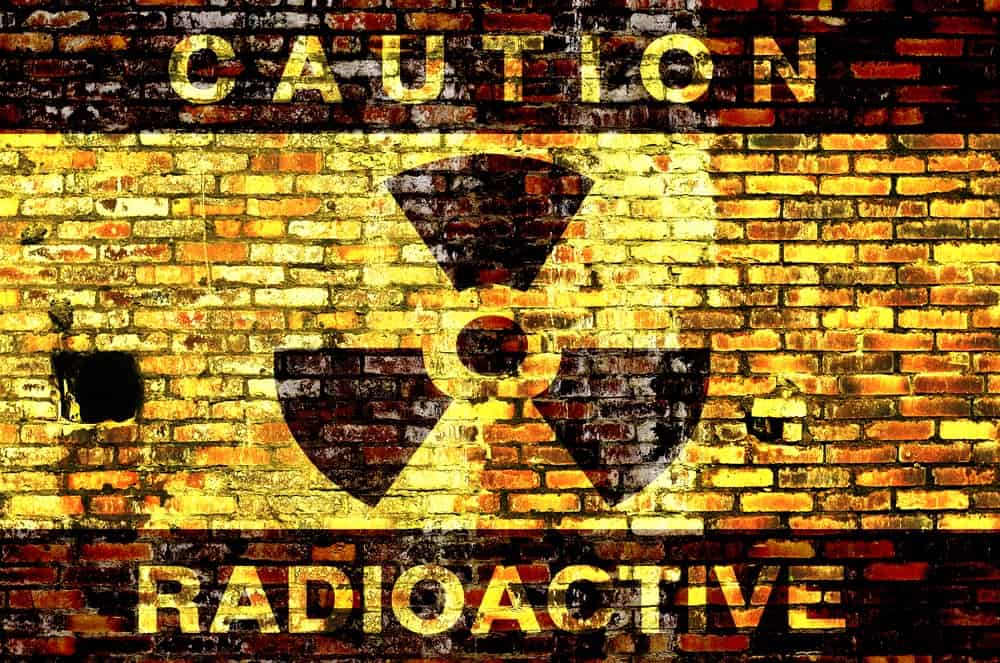
Radioactive nuke attack survival

by Joel Skousen (first published on November 28, 2017)

With this week’s claimed test of a hydrogen nuclear device, North Korea is one step closer to making good on its threat to nuke some portion of the USA or its territories.

It is still not an imminent threat since North Korea apparently lacks the technology to build a warhead can withstand the extreme heat of high-speed reentry into the atmosphere—the last two missile warheads burned up on reentry.

Even more disturbing is that North Korea has long been suspected of being the “trigger event” for a third world war between Russia, China, and the United States.  So, with President Trump threatening a military response, it’s time to take nuclear preparations seriously.

That said, I do not think Russia and China are ready yet to take on the US in a full-blown war (until into the next decade) so it is still possible that another Korean war may not cause Chinese and Russian intervention—though you should count on that as an absolute.

First, let’s be clear about one thing:  nuclear war is very survivable, even with minimal preparations, so don’t believe the “everyone is going to die” claims about nuclear winter and total destruction.  50% of Hiroshima survived without any preparations, though many were very sick.

Keep in mind too that even Russian and Chinese war doctrine doesn’t include nuking American cities on a first strike, despite the verbal threats.  In reality, they intend to nuke US and NATO military facilities first and blackmail the West into submission.

There are 3 phases of nuclear war that you must be prepared to confront:

1) Initial blast and radiation.  The blast area of destruction is only 5-7 miles from any nuclear target, so don’t prepare against blast effects, which is very expensive—relocate instead.  Avert your eyes immediately from even a distant explosion and duck behind anything that will shield you from the instantaneous line of sight radiation and intense heat and light.

Most will never see any blast effects, but almost everyone will have to deal with residual radiation from anywhere from 2 weeks to a month, which is not that difficult if you prepare in advance.

2)  Immediate panic and cut off of electricity and supplies.  Because both Russian and Chinese nuclear doctrine dictates the use of high attitude Nuclear Electromagnetic Pulse weapons (EMP)  just before a physical nuclear strike, the electric grid will go down—which guarantees a lot of panic as people are plunged into darkness, lack of communication, and the cessation of all government services, like sewer and water.

Don’t believe the hype about Iran or North Korea doing an EMP strike.  It takes six simultaneous high altitude nuclear weapons exploding to blanket the entire US grid, not one.  So, only Russia and China have that capacity.

Remember too, that a total loss of electricity, including all TV and Radio may be your best immediate warning that a physical nuclear strike is about to fall within 15 or 20 minutes.  That’s not a lot of time, but it may allow you to get a head start out of town or make a quick call to warn the family.

This threat requires preparation to get to your secured home or retreat very quickly without getting caught in major traffic snarls.  Don’t get on a freeway that is already packed.  Use secondary roads, and map out routes that allow you to cross any freeways at an over or underpass NOT associated with an on-ramp or an exit.  Those will be the only ones not blocked with traffic.

3) Long-term famine and Social Unrest:   This gets into full swing within 3 days of an attack and may last more than a year depending on how quickly parts of the grid can come back up and how well industry can re-establish supplies lines.  While it’s hard to predict how these things will play out, this is where your long-term food and water storage supplies come in.

Don’t expect to be able to grow a garden that first year in a suburban area during high levels of social unrest without lots of theft. That will only be possible in rural and secluded areas.   That’s where having a rural retreat is a good long-term solution.

This article will deal mainly with the first threat—surviving the radiation.   It takes a heavy mass of materials to shield from gamma radiation, which is much more potent than X-rays, so forget about using medical grade X-ray shielding materials. Your wooden house and roofing materials are like paper to gamma rays, so not much shielding there either.

Nuclear protection purists would demand a reduction in radiation that is almost total requiring  13.8 feet of water, 10 feet of earth, 6 feet of concrete, or about 1.3 feet of lead—a Protection Factor (PF) of a billion, all of which are very costly to achieve.  This Survival Blog article discusses the relative protection factors for various materials.

As a practical matter, we have to arrive at a compromise between the cost of construction and shielding.  You need less shielding the farther you are away from an explosion since radioactive dust starts to fall out from the sky closest to the detonation and only the finer high altitude particles travel longer distances, depending on the wind direction.

In short, you get less radiation the farther from blast zones you are located.

For example, Immediately to the West of Seattle, which has multiple nuclear targets around Puget Sound including the Trident submarine base, you would probably need a PF of 1000 to shield against several inches of radioactive dust on your roof.

That amounts to 22 inches of concrete or 3 feet of dirt. But, further to the West in Idaho, the radioactive dust from Seattle would be a fraction of that, requiring much less shielding.

Many experts demand a “one size fits all” PF of 1000, but that means that very few could afford to build a shelter or safe room—and they don’t.

Because most areas of the country, not directly downwind and within 50 miles of a blast one, are not subject to those high levels, most people can survive with a protection factor of only 32, meaning that that radiation level is reduced to 1/32 of normal.  That involves 12” of concrete over your basement shelter—not 22”, which is doable, and not too costly.

Because of the much higher costs of protection close into target areas,  in my book Strategic Relocation, I recommend that your money is better spent relocating, even within the same general area, to avoid being directly downwind or close to a nuclear target.

In the book, I have maps of all the nuclear target areas for guidance, but also indicate the one or two prevailing wind directions in your area necessary to mapping out an avoidance strategy.

Choosing the type of shelter

Your two basic choices are to buy a prefabricated tank style shelter that is buried underground, or to build a basement style shelter within your own home, or as an extension.  The only advantages to the buried tank shelter are that it is quicker to install, and covering with dirt is cheaper than concrete.

However, they are more expensive per square foot of usable space, and they often come designed with expensive blast doors and valves, which you don’t need outside of a blast area.  S

adly, many also are designed with costly NBC or HEPA filters inside the shelter, but the sheet metal filter enclosures are not thick enough to stop radiation trapped in the filter from reaching those inside the shelter. The average cost is $50k-$75k, and you can build a lot of basement for that price.

But the worst problem with buried shelters is the fact that you have to go outside and open a hatch to get inside.  The notoriety of bringing in a huge tank shelter on a semi-truck and burying it in your backyard with a crane guarantees that the whole neighborhood is going to know about it.

How do you get in if that entrance is surrounded by others wanting shelter?   All your loading of supplies and equipment is down through that vertical ladder well, which is not easy.  In addition, the ventilation pipes emerge from the ground and are subject to tampering or blocking.  If you do use a buried shelter, put a shed or building over it.

That way the vents are protected from view and tampering.  Still have to cross open ground to get into the shed, which is a security risk.

The basement shelter avoids all of those disadvantages since you access it and stock it with supplies from within your home.  No one can view any of that activity.  Vents go up through walls into the attic, and HEPA air filters can be concealed in or under normal cabinets.

The basement safe room or shelter (never call it a “bunker”) is also easier to conceal, and it should be concealed.  In cases of massive social unrest, you want to have the option of avoiding confrontation by hiding out in a concealed safe room with a steel security door, communications, and alternate battery-powered electricity.

If you do an extension to your home with a basement shelter underneath, label the basement part as non-livable “storage” only, and don’t show any of the plumbing that might pertain to a future shelter.  Install all that after the occupancy permit is granted.  My book on the Secure Home has all of the architectural details on how to do that plus detailed listings of all the equipment necessary to outfit the shelter.

But, if you have an existing basement the best way to achieve total privacy without a permit or inspection, is to build a concealed shelter within the basement.  We have engineered plans to do just that here.

As a minimum, prepare your home to give you added protection without a formal shelter.  In a basement, that would involve building two addition stacked walls of concrete block (6ft high and 8ft across) into a corner of a room away from any window, but leaving a 24” entryway.  Cover that with a makeshift ceiling of 2×4 on 12” centers with ¾” plywood.

Then stack 3 levels solid 4” concrete blocks on top of that makeshift ceiling.  That will give you the minimum radiation protection you need.  Have a port-a-potty inside as well as some food and stored water.  It will be tight, but at least you’ll survive.  If you don’t have a basement, you’ll have to do four block walls inside an above ground room to get the sidewall protection. Do the lowered ceiling on top of those 4 six foot high walls.

It takes about two weeks for gamma rays to dissipate so you will need to buy a radiation meter to tell when it is safe to come out or to go back into a shelter (since in a war, there may be multiple nuclear events).  KI4U.com has a range of nuclear meters at good prices.

Resources:

  • https://www.ready.gov/nuclear-blast
  • Are You Ready – FEMA Guide
  • Nuclear War Survival Skills – Cresson H. Kearny
  • U.S. Nuclear Target Map (Do You Live In a Death Zone?)

Joel Skousen has designed high-security residents and retreats for over 40 years.  He is the author of Strategic Relocation, the Secure Home, The High-Security Shelter, 10 Packs for Survival, and is the publisher of the weekly World Affairs Brief, which analyzes the week’s top stories from a perspective of what the government and the mainstream news won’t telling you.

Filed Under: Prepping

How to Make Homemade Soap Bars for Beginners

September 13, 2018 M.D. Creekmore

how to make homemade soapby Krystal Brown

Making your own soap is an enjoyable and useful activity. Homemade soaps are also better for the skin because they contain glycerin. Glycerin is a natural product of the soap making process. But, with many commercial soaps, the glycerin is removed and used to make lotions and other cosmetics.

With self-made soaps, the glycerin is not removed and you will benefit from its soothing and moisturizing effects.

When you are just starting out making soap, it is not good to use a complicated recipe with expensive ingredients. You do not want to get overwhelmed. You also do not want to waste money on fancy imported oils and 50 different types of milk and additives when you are not yet confident with your craft.

When starting out, it is better to keep things simple and low cost. I am going to teach you how to make an uncomplicated soap using just four ingredients.

<a href="https://www.thesurvivalistblog.dream.press/wp-content/uploads/2017/10/crisco-and-orange-oil-soaps-1.jpg"><img class="size-medium wp-image-39365" src="https://www.thesurvivalistblog.dream.press/wp-content/uploads/2017/10/crisco-and-orange-oil-soaps-1-263x350.jpg" alt="Crisco and orange oil soaps " width="263" height="350" /></a> Crisco and orange oil soaps Making your own soap is an enjoyable and useful activity. <a href="http://amzn.to/2yxcA2j">Homemade soaps</a> are also better for the skin because they contain glycerin. Glycerin is a natural product of the soap making process. But, with many commercial soaps, the glycerin is removed and used to make lotions and other cosmetics. With self-made soaps, the glycerin is not removed and you will benefit from its soothing and moisturizing effects. When you are just starting out making soap, it is not good to use a complicated recipe with expensive ingredients. You do not want to get overwhelmed. You also do not want to waste money on fancy imported oils and 50 different types of milk and additives when you are not yet confident with your craft. When starting out, it is better to keep things simple and low cost. I am going to teach you how to make an uncomplicated soap using just four ingredients. Those ingredients include Crisco, orange essential oil (which is optional), lye and olive oil. You don't have to use any essential oils if you want a fragrance free soap. Usually making soap from scratch involves a “cure” time of 4-6 weeks. During this time, the soap becomes milder and harder. However, I am going to also teach you a simple oven <a href="http://amzn.to/2yxcA2j">processing technique that can make your soap</a> safe to use within a couple of days. <u>Items Needed</u> <ol> <li>Goggles: This is to protect your eyes from the “fumes” generated by the lye water. I have used my old swimming goggles and they worked just fine. You can also get goggles from the Dollar Tree.</li> <li>White Vinegar: This is used to neutralize the lye if any of lye water splashes on you.</li> <li>Rubber Gloves: These protect your hands and can also be obtained from most dollar stores.</li> <li>Stick Blender: I purchased mine for less than $10 from a local discount store.</li> <li>Silicone Cake Molds: I got some from Dollar Tree. I used 5 small silicone cake molds for my soaps. You can also use a regular pan lined with lightly oiled wax paper so that the soap will not stick to the pan.</li> <li>Candy Thermometer: The first time I ever made soap, I didn't have one of these and it made things harder. Get a candy thermometer. I purchased one for a couple of dollars on eBay.</li> <li>Lye: I use “Instant Power Crystal Lye Drain Opener” from Walmart. It costs $5.16 and I still have plenty of lye left over to make more batches of soap. Your lye must be 100% pure lye...not  Drano or anything like that. You can also purchase lye from eBay, Amazon or various online soap making shops. I have heard of people buying the 100%  pure lye from Lowe's as well. You will need ¾ cup of lye for this recipe.</li> <li>Crisco: You will need 3 pounds of this. I got 3 containers of Crisco from Dollar General. Each container was a pound. You can use generic Crisco as well but it must be 100% vegetable shortening.</li> <li>Olive Oil: You will need 1 tablespoon of this. I purchased mine from Dollar General. It must be 100% pure olive oil, not the “olive oil” blend sold at Dollar Tree which is mainly just soybean oil. The olive oil hardens the soap.</li> <li>Orange Essential Oil: I used about ½ of an ounce. It smells heavenly. You can get essential oils on eBay, Amazon and at drugstores such as Rite Aid.</li> <li>Kitchen Scale: This is optional for this recipe (in my opinion). It will make things more precise, but I did not use a scale because I did not have one at the time. I just measured things out carefully using measuring cups and I had no problems.</li> </ol> <strong><u>The Steps</u></strong> <a href="https://www.thesurvivalistblog.dream.press/wp-content/uploads/2017/10/cake-pan.png"><img class="size-full wp-image-39363" src="https://www.thesurvivalistblog.dream.press/wp-content/uploads/2017/10/cake-pan.png" alt="Cake Pan" width="216" height="161" /></a> Cake Pan <ol> <li>Measure out your lye. If you have a scale, measure out 220 grams of lye. If not, very <strong>very</strong> carefully measure out ¾ cup of lye and pour the crystals into a non-metal container.</li> <li>Measure out 330 grams (or 1 and ½ cup) of distilled or filtered water. Very carefully pour the lye crystals into the water. There will be fumes. Stir with a spoon (again no metals are allowed...use plastic or wooden spoons). It is good to place the lye water under the stove exhaust fan if you can. If not, open the windows for adequate ventilation.</li> <li>Melt your Crisco and add your olive oil.</li> <li>After the oils are melted together, turn off the stove and remove the pot from the stove. Use a thermometer to measure the temperature of the oils. The oils should be about 120 degrees.</li> <li>Check the temperature of your lye water. It will be about 175 degrees.</li> <li>You must get the lye water and the oils to a similar temperature. So, place your lye water container in a sink full of ice water until it has cooled down to 97-100 degrees. While you are waiting for this to happen, your oils will be cooling down naturally.</li> <li>When both the oils and the lye water are between 97-100 degrees, mix them together. Pour the lye water into the oils. Use your stick blender to blend the mixture until it looks like pudding. When the mixture reaches this stage, it is said to be at <em>trace</em>.</li> <li>When your mixture reaches trace, add your essential oils to the mixture. Blend well and quickly pour your mixture into your cake pans. Certain essential oils will sometimes cause the mixture to “seize” so work quickly once you add your fragrance oil.</li> <li>Place your soap in the oven at 170 degrees (or on the lowest setting your oven has available. If your oven has a “warming” feature, you can use that). Let the soap stay in the oven for about 2 hours. However, check on the soap every 20 minutes or so to make sure that it does not “bubble over”. The heat from the oven is forcing the saponification process. If you didn't use the oven method, it would take 4-6 weeks after you pour your soaps before you could be able to use them.</li> <li>Let your soap rest for a few hours and then cut it into soap bars.</li> <li>Let the soap rest for another day so the excess water will evaporate and the soap will become milder and harder.</li> <li>Enjoy your homemade soap!</li> </ol> This bar cleans very well and has a medium amount of lather. Many people (myself included) love lots of lather. But, the amount of lather a soap produces does not measure its cleaning ability. My Orange Crisco Soap is not extremely moisturizing like a Dove beauty bar, but it does not strip the skin either. Your entire family can use it or <a href="http://amzn.to/2yxcA2j">you can even sell the soap at flea markets or online</a>. The ingredients are cheap and readily available which make it perfect for a novice soap maker. I showered with my soap 2 days after making it. I have a whole box of soap from this one batch. It's easy, economical and fun. Please try it! <strong>Also Read:</strong> <ul> <li><a href="https://www.thesurvivalistblog.dream.press/diy-rendering-fat-making-soap/">DIY Rendering Fat & Making Soap</a></li> <li><a href="https://www.thesurvivalistblog.dream.press/homemade-laundry-soap/">Judy’s Homemade Laundry Soap</a></li> <li><a href="https://www.thesurvivalistblog.dream.press/soap-thieves-surprising-lesson-prepping/">Soap Thieves, A Surprising Lesson About Prepping</a></li> <li><a href="https://www.thesurvivalistblog.dream.press/making-selling-soap/">Making and selling soap</a></li> <li><a href="https://www.thesurvivalistblog.dream.press/how-to-make-laundry-soap/">Making Laundry Soap</a></li> <li><a href="http://amzn.to/2yxcA2j">Making Soap From Scratch: How to Make Handmade Soap - A Beginners Guide and Beyond</a></li> </ul>Those ingredients include Crisco, orange essential oil (which is optional), lye and olive oil. You don’t have to use any essential oils if you want a fragrance free soap. Usually making soap from scratch involves a “cure” time of 4-6 weeks. During this time, the soap becomes milder and harder.
However, I am going to also teach you a simple oven processing technique that can make your soap safe to use within a couple of days.

Items Needed

  1. Goggles: This is to protect your eyes from the “fumes” generated by the lye water. I have used my old swimming goggles and they worked just fine. You can also get goggles from the Dollar Tree.
  2. White Vinegar: This is used to neutralize the lye if any of lye water splashes on you.
  3. Rubber Gloves: These protect your hands and can also be obtained from most dollar stores.
  4. Stick Blender: I purchased mine for less than $10 from a local discount store.
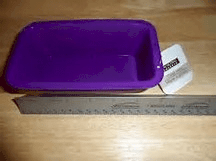
  5. Silicone Cake Molds: I got some from Dollar Tree. I used 5 small silicone cake molds for my soaps. You can also use a regular pan lined with lightly oiled wax paper so that the soap will not stick to the pan.
  6. Candy Thermometer: The first time I ever made soap, I didn’t have one of these and it made things harder. Get a candy thermometer. I purchased one for a couple of dollars on eBay.
  7. Lye: I use “Instant Power Crystal Lye Drain Opener” from Walmart. It costs $5.16 and I still have plenty of lye left over to make more batches of soap. Your lye must be 100% pure lye…not  Drano or anything like that. You can also purchase lye from eBay, Amazon or various online soap making shops. I have heard of people buying the 100%  pure lye from Lowe’s as well. You will need ¾ cup of lye for this recipe.
  8. Crisco: You will need 3 pounds of this. I got 3 containers of Crisco from Dollar General. Each container was a pound. You can use generic Crisco as well but it must be 100% vegetable shortening.
  9. Olive Oil: You will need 1 tablespoon of this. I purchased mine from Dollar General. It must be 100% pure olive oil, not the “olive oil” blend sold at Dollar Tree which is mainly just soybean oil. The olive oil hardens the soap.
  10. Orange Essential Oil: I used about ½ of an ounce. It smells heavenly. You can get essential oils on eBay, Amazon and at drugstores such as Rite Aid.
  11. Kitchen Scale: This is optional for this recipe (in my opinion). It will make things more precise, but I did not use a scale because I did not have one at the time. I just measured things out carefully using measuring cups and I had no problems.

cake-pan-for making homemade soapsThe 12 Easy Steps

  1. Measure out your lye. If you have a scale, measure out 220 grams of lye. If not, very very carefully measure out ¾ cup of lye and pour the crystals into a non-metal container.
  2. Measure out 330 grams (or 1 and ½ cup) of distilled or filtered water. Very carefully pour the lye crystals into the water. There will be fumes. Stir with a spoon (again no metals are allowed…use plastic or wooden spoons). It is good to place the lye water under the stove exhaust fan if you can. If not, open the windows for adequate ventilation.
  3. Melt your Crisco and add your olive oil.
  4. After the oils are melted together, turn off the stove and remove the pot from the stove. Use a thermometer to measure the temperature of the oils. The oils should be about 120 degrees.
  5. Check the temperature of your lye water. It will be about 175 degrees.
  6. You must get the lye water and the oils to a similar temperature. So, place your lye water container in a sink full of ice water until it has cooled down to 97-100 degrees. While you are waiting for this to happen, your oils will be cooling down naturally.
  7. When both the oils and the lye water are between 97-100 degrees, mix them together. Pour the lye water into the oils. Use your stick blender to blend the mixture until it looks like pudding. When the mixture reaches this stage, it is said to be at trace.
  8. When your mixture reaches trace, add your essential oils to the mixture. Blend well and quickly pour your mixture into your cake pans. Certain essential oils will sometimes cause the mixture to “seize” so work quickly once you add your fragrance oil.
  9. Place your soap in the oven at 170 degrees (or on the lowest setting your oven has available. If your oven has a “warming” feature, you can use that). Let the soap stay in the oven for about 2 hours. However, check on the soap every 20 minutes or so to make sure that it does not “bubble over”. The heat from the oven is forcing the saponification process. If you didn’t use the oven method, it would take 4-6 weeks after you pour your soaps before you could be able to use them.
  10. Let your soap rest for a few hours and then cut it into soap bars.
  11. Let the soap rest for another day so the excess water will evaporate and the soap will become milder and harder.
  12. Enjoy your homemade soap!

This bar cleans very well and has a medium amount of lather. Many people (myself included) love lots of lather. But, the amount of lather a soap produces does not measure its cleaning ability. My Orange Crisco Soap is not extremely moisturizing like a Dove beauty bar, but it does not strip the skin either.

Your entire family can use it or you can even sell the soap at flea markets or online. The ingredients are cheap and readily available which make it perfect for a novice soap maker. I showered with my soap 2 days after making it. I have a whole box of soap from this one batch. It’s easy, economical and fun. Please try it!

Also Read:

  • DIY Rendering Fat & Making Soap
  • Judy’s Homemade Laundry Soap
  • Soap Thieves, A Surprising Lesson About Prepping
  • Making and selling soap
  • Making Laundry Soap
  • Making Soap From Scratch: How to Make Handmade Soap – A Beginners Guide and Beyond

Filed Under: Uncategorized

  • « Go to Previous Page
  • Page 1
  • Interim pages omitted …
  • Page 3
  • Page 4
  • Page 5
  • Page 6
  • Page 7
  • Page 8
  • Go to Next Page »

Primary Sidebar

Subscribe to Blog via Email

Enter your email address to subscribe to this blog and receive notifications of new posts by email.

Join 7,202 other subscribers
  • Amazon
  • Facebook
  • Substack
  • Twitter
  • YouTube

“Do more with less.”

– Minimalist proverb

Recent Posts

  • Just so you know
  • Weather Update for My Corner of Appalachia
  • Why I’m Ordering Ivermectin + Mebendazole Every Year
  • The Website’s Shutting Down (But Here’s the Plan)
  • You Are Hated! Start Training Like It!

Footer

Recent Posts

  • Just so you know
  • Weather Update for My Corner of Appalachia
  • Why I’m Ordering Ivermectin + Mebendazole Every Year
  • The Website’s Shutting Down (But Here’s the Plan)
  • You Are Hated! Start Training Like It!

More about me

Books I’ve written

Books I’ve read

Follow Me on YouTube

Follow Me on Facebook

Gear I Use and Recommend

Newsletter

Search this site

Follow me elsewhere

  • Amazon
  • Facebook
  • Substack
  • Twitter
  • YouTube

© 2008–2025 M.D. Creekmore · As an Amazon Associate, I earn from qualifying purchases.