• Skip to main content
  • Skip to secondary navigation
  • Skip to primary sidebar
  • Skip to footer

M.D. CREEKMORE

  • Blog
  • Books
  • Newsletter
  • Gear I Use
  • About
  • Contact
  • Facebook
  • YouTube
  • Blog
  • Books
  • Newsletter
  • Gear I Use
  • About
  • Contact
  • Privacy Policy
You are here: Home / Archives for 2019

Archives for 2019

The Lights Went Out in Texas

September 3, 2019 M.D. Creekmore

by Texican

Last week our small area of the world experienced a power outage which lasted just an hour and 55 minutes. The power went out at 5:55 pm. Not a big deal, right? I’m prepared, I have batteries, I have flashlights, I have candles, I have lanterns, I have kerosene, I have…….! Yep, I pretty much have it all. Now if I could only find it all.

I write about this very simple inconvenience for the simple fact that although I had everything I needed to get through it, I did not have all I needed very handy. Sometimes it’s the very small things, like this power outage, that show some major flaws in our preparedness.

So, it’s 5:55 pm and since it is late November it is already dark. The power goes off while I’m on the computer in the front part of the house. My wife is in the living room in the back part of the house. I don’t know why this came as a surprise to me but, it did…. it is pitch black in my house with no lights!

For the first few seconds, I just sat there waiting to see if the power would come back on. After about a minute I decided it wasn’t coming back real soon and I figured I needed to do something to get some light in the house.

The problem was I could hardly see to get out of my chair much less out of the room and down the hall to the living room. Luckily I had my cell phone with me and I used it as a flash light to get to the living room to make sure my wife was alright.

She used hers to get to the kitchen to get a flashlight and I took mine to another room to get a second flashlight. Once we both had a light source the first hurdle was jumped. This took no more than 5 minutes so we waited another 5 minutes or so just in case the power should come back on, which it has some times in the past.

But, after 10 minutes or so we were still in the dark. Now we start thinking of having more light than just the flashlight. I have that covered because a few months back we were without power for almost 4 hours. It was during the day so we didn’t need much extra light but, I decided to get two of my lanterns out of storage and fill the tanks and store them in a reachable location inside the house.

I also put 3 of the quart bottles of kerosene and a small funnel and a box of kitchen matches with the lanterns. That foresight worked out well for us and they really were in a good location and easy to get to, once I found the flashlight.

Now, here is an embarrassing admission, I have never in my life lit, used or otherwise depended on a lantern for light. Come on be honest, how many of you have never used a lantern? My knowledge of lantern use comes from watching Little House On The Prairie and I know enough to never leave one unattended in the barn!

Well, I raised the mantle and the wick, struck the match, placed it on the wick and just like that we had light, a very poor light but it was still light. I adjusted the wick a bit and I was so proud of myself that I was just a beaming. Since I did so well with the first one I grabbed the second one and got it going so each of us would have our own light source.

After a few moments of patting myself on the back, we became aware of just how little light the two lanterns were putting out. It was nothing like the light on Little House! I think they may have used a little trickery on the set.

My wife and I both like to read and since there was nothing else to do we picked up our books and started to read. OK, we tried to read and found out real quick that the only way to do so was to get right up to the lantern with the book pretty much touching the lantern. I swear I got a couple of nose hairs singed! We did manage to do some reading but it was accomplished by twisting the body in too many ways for me to describe.

After a few minutes of reading, we decided we needed a smoke break. We never smoke in the house and we couldn’t just flick the switch for the outside lights so we each took our lantern and went out back to the patio. Now that was the only nice thing about the outage. It was kinda like mood lighting and not too bad.

That was over all too soon and we had to return to the dark house. We picked up the books again and read until the lights finally came back on. That was the longest hour and 55 minutes we have spent in a long time. We were happy to have the use of electricity again.

Now to the lessons learned from this minor yet very instructional time period. The first thing I plan on correcting is the number of flashlights in the house. I want at least 1 in every room plus extra batteries in each room. Secondly, I will learn the number of steps to get to and from each room in the house.

Thirdly I will purchase several more lanterns and more quart bottles of kerosene. My storage location for the lanterns and kerosene is a good location and doesn’t need to be altered. From this experience, I would like to be able to get more light in the living area.

I don’t know if more lanterns is the answer or something else, any suggestions?

With very little light we noticed it to be very depressing and somewhat stressful which was something we did not count on. During a prolonged period like months or more that could be a real problem, for us anyway. Since my only knowledge of lanterns comes from Little House On The Prairie, as noted above, I have a question.

I know by extending the wick(turning it up) the flame burns higher and brighter. The higher it goes the more smoke it emits and darkens the mantel. Is there a ROT for how high the wick should be? My lanterns are cheap ones, do more expensive ones work better(I think I know the answer to that)?

To sum up our little outage, I know that light is good. I know that some light is better than no light. I know a small amount of light in a living area is depressing. I’m sure one could get used to it but at my age, I may not have enough time.

I know now that having everything one needs to survive most anything that comes along is worthless unless it can be retrieved quickly and put to use easily. I know that preparing for the unknown future is a lot more fun than it will be living it.

Well, that is a description of my little survival moment. I hope it may serve in some small way to assist some of you in your preparations. At the very least it should tell you not to depend on Little House On The Prairie for your survival needs.
Filed Under: Prepping

Earthquake Log Splitter Review (read before you buy)

September 2, 2019 M.D. Creekmore

By BCTruck – rebuild, repair, repurpose

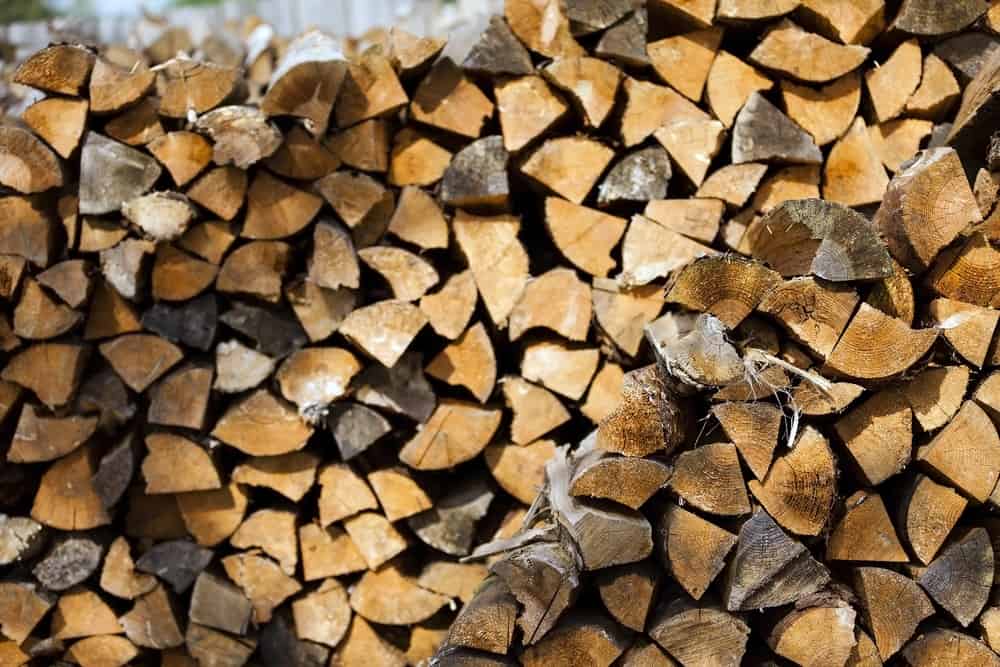
Strange things are occurring all over the world. One of those strange things is that​ wood has grown tougher and far less tolerant to being split, as I’ve grown older. To combat this ever-increasing hardness, I decided to use my head and not my back. I did a lot of research concerning log splitters.

Mostly I concentrated on gasoline engine powered splitters in the 20 to 30-ton range. I scoured for sale ads in the paper and on craigslist. I put my own ad offering to trade a garden tractor for a splitter.

Finally, after months of trying to barter and wheel and deal my way into something I could get cheap, even if it needed repair, I realized I was going to have to buy new. I started looking at Lowes, Home Depot, Tractor Supply, and Harbor Freight.

What I found was that the prices were so high on these gas-powered splitters that I just couldn’t justify buying one, considering I was just heating my shop, in Louisiana. The ROI on something that costly would take many years to realize.

So, I started doing some research on electric splitters which were 1/4th the price of gas-powered ones. I read a lot of reviews and while most brands seemed to have the same amount of satisfied purchasers, I settled on one that,while wasn’t made here in the states (surprise surprise) The distributor/importer,kept a substantial amount of parts on hand and had great reviews by the folks who had the need for warranty or just wear and tear replacement parts.

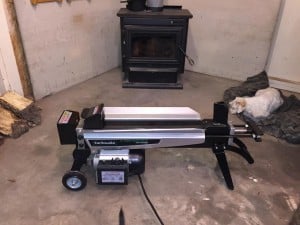
That brand was “Earthquake” sold on Amazon. They only offer the five-ton splitter and though there are electric splitters that offer higher ton ratings, both the cost of the machine and demand for electricity increase as well. I mentioned to the manager that harbor freight had their 5 ton marked at $279, and the manager knocked 20 bucks off the $299.00 price tag.

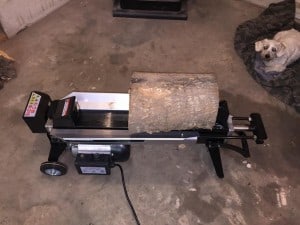
So, I get up in the truck without making to many unmanly grunting noises (its 100 pounds). I get it home and unbox it and within a few minutes I had the handle bolted on and the wheels and metal shroud that goes around the operating lever bolted on as well. It comes already filled with hydraulic fluid, so I am ready to split wood.

I get it in my shop, find an extension cord, put a log on the splitter. Now I have to press a button on the motor, while simultaneously throwing the lever that operates the ram, ​​that pushes the log against the splitting wedge.

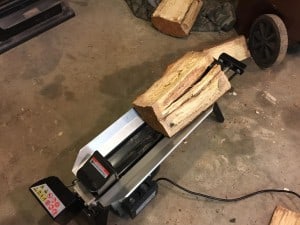
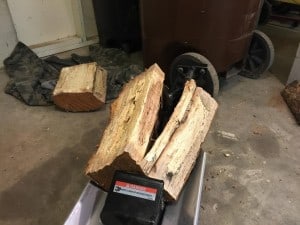
Success!!! This modern wood with advanced hardening technology just pops into small pieces like… well like a sharp wedge through firewood.

The instructions, ( I swear didn’t read them) I’ve heard, say that the limit in size of log you should be able to split is nine inches. Me, not being one to conform to instructions and rules, used a 12-inch log for the first test, and a 15-inch log for the second test. I’m totally blown away with the results.

Now I’ll list the pro’s and cons as I’ve found so far;

Pro’s ?

Very quiet machine. no gas, no oil, no engine maintenance, just an occasional check of the easily accessible hydraulic fluid level. Easily capable of splitting the hardest wood known to man ( I used white oak) in sizes that far exceed their puny recommendations.

No need to trailer it to a location, just pick it up and toss it in the truck, or ask for help if you’re a girly man.

Cons ?

It says that it requires 120 volts at 20 amps, and they mean it! I had to cut the fans that circulate my wood heat into the other side of my shop, off. When I went inside to get coffee,my wife said the house lights dimmed a few times. It pulls a lot of juice and unless you can provide that, it won’t work. I have a generator that will more than suffice if power becomes problematic.

I don’t like the fact that it requires two hands to operate the splitter. You have to press a button on the motor with one hand while operating a lever with the other hand. My devious mind is already thinking of ways I can circumvent this safety feature. “life on the edge” I always say.

Weight. This thing is freegin heavy! Like wood that is much harder to split,100 pounds is far heavier than it was in the 80,s and 90,s

That’s all folks. I feel good about this purchase and I think I’m gonna get a lot of use out of this thing in the future.

Click here to see it on Amazon, check price and read customer reviews

Filed Under: Gear Reviews

Think on your FEET! A Prepper’s Guide To Shoes and Feet…

August 31, 2019 M.D. Creekmore

prepper shoes

by Arthur X

“Keep your eyes on the stars, and your feet on the ground.” – Theodore Roosevelt

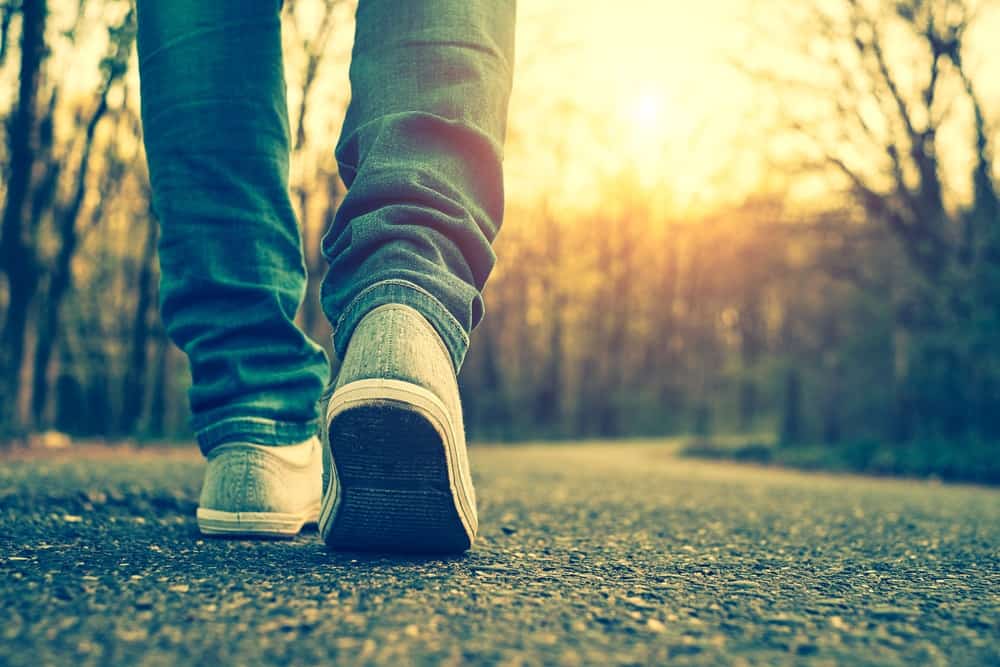
As preppers, we have to prepare ahead. We have to look ahead and notice any potential problems and deal with those problems. Foot problems are one such area. That is my goal today, to have you merely recognize your feet for the next few minutes. This is about taking care of your FEET now, not later, and some downright simple solutions that will keep you walking for the long haul. Read along and learn how to save your feet for only $20.

First, two questions:

Have you ever had a pair of shoes that really hurt your feet but you wore them anyway?

Have you ever worn a pair of shoes until they have literally fallen apart?

I’m definitely guilty here

Do I have feet problems?

No, I do not. I think mainly because I have been proactive with my feet. If my shoes wore out, I would immediately buy a new pair of shoes. Wearing insoles is a way of life for me and I don’t own a pair of shoes without them.

When I was younger I wasn’t so lucky and developed some calluses from not wearing good shoes. Nothing too serious or needing any type of surgery. However, I learned from my mistakes and I am sharing my own personal experience. Let’s talk about some solutions!

Been there done that!

Have you ever been to your local store and visited the foot section? Most of us probably have. And it has grown over the years to very big business. That is good news because preppers have options that make our life easier. What’s the best product, field-tested? 

Gel or Foam?

Personally I do not like gel insoles, for example, Dr. Scholls. I have tried many brands. But the ones I have tried, I didn’t like. They do seem to be durable and have quality standards; however, I could not find a comfortable pair of gel insoles.

I really like foam insoles, such as Sof Sole or New Balance. Personally I use Sof Sole Arch Insoles. Mainly due to my high arch, I also love the cushion and support.

Sof Soles are a type of latex or composite foam material. They hold up extremely well, are worth the money, and offer outstanding protection. The foam tends to hold heat a little, and I have noticed this with foam insoles. This can be a benefit or a weakness. If you live in a cold climate they will generally offer a little more warmth.

In a hot climate that can make your feet sweat a little more. This usually is not a problem considering the manufactures usually make sport or athletic insoles that will help in this area, only something to consider. In my years of use, heat from Sof Sole insoles has never been a problem. I live in a very hot part of the country.

Very few pairs of shoes that I have bought were comfortable “without” insoles. Very few. Shoes like Air Jordans, New Balance, and higher quality running shoes are the exceptions here. Shoe technology is much better than say, 20 years ago, I can testify to that.

Let’s make it easy

I recommend Sof Sole insoles. Part of the reason is ‘accessibility’. Sof Soles are in every major department store and shoe store. At only, $20 they will not break the bank. I know you are thinking, those insoles are expensive, “I can buy a pair of shoes for $20”! Yes, you can, however what about buying a pair of shoes for $20, AND some quality insoles for $20.

Then, for $40 you have a really comfortable pair of shoes. This isn’t only about comfort. These types of insoles really do lessen the impact of your joints.

Over a period of years, the damage could be significant, especially if you wear really hard sole shoes. You may not feel the pain now, but down the road, you could develop some serious feet problems. And like back problems, feet problems can’t be ignored, they can get much worse.

Orthotics

Custom orthotics are not usually an option for preppers. Mostly because of a cost issue, not anyone can afford a custom pair of orthotics. I’m sure there are some benefits here, however, with new, over-the-shelf products offering such high quality I don’t feel custom orthotics are needed unless you have a foot problem. Then this article is not for you! I’m not a foot doctor only sharing my experience.

There are also heel supports and other store-bought orthotics. I never really liked these because I like more cushioning on my feet. For example, if you work on concrete floors for 8 hours a day, you are going to need a lot of support and a really good pair of shoes. If not, your feet will be hurting.

Tips for Happy Feet

Don’t remove the insoles that come with your shoes

Merely put the Sof Soles on top of the insoles already in your shoes. This will give you more support. It may make your shoes wear a little tighter, adjust your shoes, or shoe size accordingly.

Buy new shoes

If you have no tread or your shoes are torn etc., go buy a new pair of shoes. Shoes are so cheap nowadays there is no reason not to buy a new pair of shoes. Even if they are not the highest quality, buy a new pair. Insoles can help those shoes feel and perform much better.

Quality not quantity

In essence, this is what I’m saying. Not everyone can purchase a $120 pair of New Balance running shoes, or Air Jordan’s. As a solution, find shoes on clearance for $40, then purchase a pair of insoles for $20. For $60 you have a really comfortable pair of shoes. And your insoles should outlast your shoes, so you’re only helping yourself here. If you can afford those high-quality shoes, by all means, wear them!

Shop on the cheap

Big stores like Kohls, Kmart, Walmart, Big 5, eBay, offer shoes at great prices. Many times I will walk into big-box retailers and find shoes for $10.00 on clearance. Shop around, and if you find a good pair of shoes you like, buy two pairs. Why not?

Waterproof your shoes

I can recommend Sof Sole Water Proofer. In most shoe stores you can find leather conditioner and Water Proofer. This stuff isn’t usually cheap, but I do believe it is worth the price. Let me explain.

High-quality boots, Gore-tex or waterproof shoes are usually expensive. Water will kill shoes pretty quickly, especially if you live where it rains a lot. If it rains a lot where you live, you might need boots or a water-proof pair of shoes.

However, if you are like me and wear shoes most of the time, I can save some money and water-proof my own shoes. It will help them last longer and keep your feet drier. If your shoes are wet a lot, you might NOT notice the wear on your shoes on a daily basis; however, over time water is a real threat to your shoes. It breaks apart the glue in shoes and wears them down. It basically ages shoes faster than normal.

If you have leather boots or shoes, a leather conditioner is also recommended as it will help your shoes last longer. You can even use olive oil on your leather shoes or boots.

Be a lightweight, not a heavyweight

Shoe weight is important to me. For example, have you ever worn a pair of steel toe boots? They are heavy! Alternatively, you could buy a pair of steel toes shoes and cut the weight in half. Your feet will thank you later. For example, Nike Men’s Manoa Leather Boots are extremely lightweight for a boot. I own a pair and they are very comfortable for a boot. I do wear them with Sof Sole insoles because they didn’t come with any good support.

Reflexology

Reflexology might be an option if you have feet problems. Very therapeutic and you might be able to find a local Groupon deal and save some money

Future Technology

D30

D30 is a company that created a unique shock-absorbing material. They have been in business for a number of years. They became well known by their snowboarding gear, where you can literally get smacked in the head with a shovel!

Products made with their material in them are starting to become more widely available, helmets, jackets, gloves, etc. I have not had the opportunity to try out their new line of insoles at this time. I could only find their comfort insoles for sale on the internet. I’m really looking forward to trying out this new technology. Look for them possibly next year with more insoles on the market.

Filed Under: Bugging Out, Prepping

17 Things For Pandemic Survival that You Probably Forgot to Include in Your Medical Kit

August 31, 2019 M.D. Creekmore

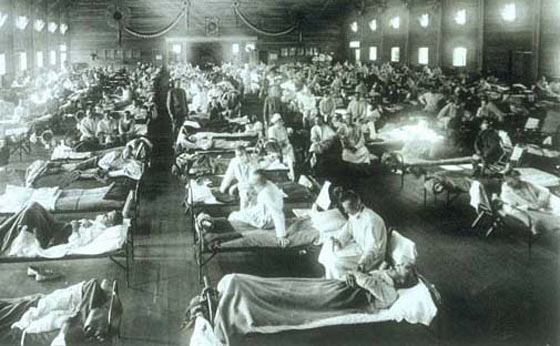
The following list is for items that most people forget to include in their basic first aid kits and supplies. If you’re worried about an outbreak like the current Ebola outbreak hitting the U.S. in the near future (you probably should be) then adding the products on this list should be your top priority right now.

Keep in mind that I’m not including basic first-aid items or meds in this list, because most of you already have a stockpile of those necessities on hand.

  1. Plenty of Hand sanitizer and soap – wash hands thoroughly with hot water and regular or anti-bacterial soap, then use hand sanitizer.
  2. Disposable thermometers
  3. N95 HEPA (High-efficiency particulate air filter) masks
  4. Heavy 4 – 6 mill clear plastic for building quarantine areas
  5. Duct Tape (for putting plastic up)
  6. Staple Gun and Staples (for putting plastic up)
  7. Vent fan for negative airflow into the quarantine areas –  an air filtering system would be great but probably not possible for most. Ducting can be installed to route contaminated air to someplace safe.
  8. Medical Grade Gloves
  9. Lysol Professional Quaternary Disinfectant Cleaner Concentrate
  10. Plenty of Bleach
  11. Spray bottles for bleach and/or other disinfectant solutions
  12. Large washbasins for washing and disinfection
  13. Bed coverings (Fluid Protective)
  14. Biohazard Waste Disposable Bags
  15. Body Bags
  16. Hydrated lime
  17. Large trash bags

Please add your thoughts and suggestions in the comments below…

Filed Under: Prepping

10 Must Use/Read Prepper Food Storage Resources

July 31, 2019 M.D. Creekmore

1. Food storage calculator: Use this calculator to determine the minimum food storage requirements for your family for one year. While not an exact science it is a good starting point – you’ll still need to make the final list based on each family members needs.

2. Start your food storage on $10 a week: Good article written by Alan T. Hagan for Backwoods Home Magazine. He states “Depending on what you decide is important to you, everything you will need for a complete food storage program can be had from your local grocer and, perhaps, some other local businesses.”

3. Family Home Storage: Some good information by LDS, even if you’re not religious or a member you’ll find the information useful.

4. Food Storage Videos: Results from a search on YouTube for the term “Mormon Food Storage” – while I didn’t watch them all the ones I did watch looked and good offered sound advice.

5. Prudent Food Storage: More survival food storage information presented by Alan T. Hagan via his free online book Food Storage FAQ. Worth printing and putting in a binder.

6. Food Storage Guide: Good information and chart listing the estimated shelf life of various foods…

7. My Free Food Storage List Printable (click to download the PDF).

8.  And a follow-up more complete printable checklist for stocking up at Walmart (click to download the PDF)

9. And my article “The Prepper’s Food Storage Checklist (click here to read it now.)

10. And my best selling book which is in itself a complete prepping course (click here to read the reviews of my book at Amazon).

Please share your best food storage resources in the comments below.1 8 Must Read Food Storage Resources


Filed Under: Prepping

Top 5 Tips for Avoiding Becoming a Crime Victim

July 31, 2019 M.D. Creekmore

Tips for Avoiding Becoming a Crime Victimby WL

We live in a suburb of a large metropolitan area. Our suburb is typically considered safe. Safe enough, in fact, that I know people who leave their first-floor windows wide open at night or when they’re gone for the day. Safe enough that people go for a walk around the neighborhood and leave their home unlocked. Safe enough that people warm up their vehicles unsupervised in the winter.

I have a background as a news reporter. I covered the police beats for several nearby suburban local papers; one suburb was surrounded by the “bad side” of the metropolitan proper. I’ve taken a concealed carry course, a “practical” conceal carry (click here to go to MD Creekmore’s concealed carry site) follow-up course, and a women’s self-defense course, as well as attended an ALICE training course at my place of work.

I intend to take more of such classes. I’ve read several books about personal safety and survival (click here to see a list of MD Creekmore’s favorite survival books). I work in a school – and am conscious of the safety of our students and staff at all times, am aware of what’s going on around us.

Much of what I write here seems like common sense, yet I’m continually amazed (and saddened) at how many news reports demonstrate that too many people obviously don’t think like me. Please ensure you talk with your children and parents about safety!

1.) Never be totally alone if you can avoid it.

I spent much of my young adult life, prior to being married, alone. As an only child, I’m used to being alone! Once an adult, I lived alone. I shopped alone. I went for walks around my apartment complex and at parks alone. As a college student, I often walked alone across campus or around town. I drove alone. I traveled far distances alone – to visit my parents or my boyfriend in another city 2 1/2 hours away.

Looking back on it, I can’t believe I took such great risks. I had a can of mace; I don’t even know if it worked and I rarely carried it (it was usually on my bedside table in my apartment). I didn’t own a firearm, had never shot a gun, and I’d never taken a self-defense course. My apartment did not have close-by parking and the path from the parking lot to the apartment was not well-lighted.

I was quite used to being by myself and apparently, that’s still normal: As I drive to work, I pass several parks. I am amazed at the number of individuals, many of whom are women, jogging and walking alone in the early hours of the morning. In the dark. With earbuds crammed into their heads.

Don’t assume that you’re safety is guaranteed anywhere!

Recently, an individual was walking alone after dark on a local bike path and was robbed at gunpoint in what most people consider a “safe” part of a nearby town.

Such incidents are avoidable — don’t be alone!

Many elementary schools have a rule that students must be in pairs (buddy system) at all times. It makes sense when you think about it — if a child falls ill or is injured, a friend or classmate is there to get help. Students should never leave a classmate alone in the locker room, or alone in any room; that way, there are two to witness anything that might happen.

The buddy system isn’t just for children: Be with someone you know as much as possible. Travel with a friend. Walk with a friend or coworker as much as you can. If you and a neighbor arrive home at the same time, make it a habit to get know that person well and walk toward your homes at the same time. Make sure someone knows where you are at all times when to expect you home.

If you can’t avoid being alone, ensure you know how to protect yourself. Carry mace or pepper spray (click here for pepper spray laws by state) and know how to use it. Consider getting your conceal carry and take many, many classes and get as much instruction in the use of your firearm as you can. Take a basic self-defense course — then consider enrolling in a martial arts class. You can never be too safe.

2.) Be aware of what’s going on around you, always.

Experts call this “situational awareness”, but I call it being aware of LIFE. Know what the normal condition is for where you are. Are you in a work parking lot? Do you recognize cars that are always there every day, or do you walk while texting on your phone or staring at your feet on the pavement?

Look around you! Notice which cars are typical for your work or apartment complex parking lot — people are habitual, they’ll usually park in or near the same spot every day. Only when you’re familiar with the “normal” will you notice if something is “out of place”.

Get to know people you see regularly. Know your coworkers (and their spouses or children if they frequently visit). Don’t just recognize their faces — really get to know them! Be nosy — have lunch with them, talk with them at break time or in the hall or in the restroom, while walking across the parking lot at the start or end of the day.

Ask questions — do they have kids/grandkids/pets? What are their hobbies? Do they read? What kinds of books do they like? What’s their favorite show? Get them talking, get to know them. They are your allies in this world!

3.) Listen to your instincts.

This is one right out of “The Gift of Fear” by Gavin de Becker – the concept was repeatedly discussed at my self-defense class.

Background: I worked at a public library years ago, shelving books in all the departments. There were some of the nicest people who visited the library frequently. And there were also some of the creepiest people that hung out there, daily. Men who, when I’d walk past them, gave me “the willies”: the hair on my arms would stand up, I’d get a shiver up my spine, and I wanted immediately to run away. Interestingly, I had co-workers who said they felt the same way about the same people.

Got the “willies” or the feeling that someone is “creepy” or that something “just isn’t right”? This is your body’s natural warning system. Humans are animals: we have instincts and senses, too: we’ve just been socially trained to ignore such feelings.

Don’t ignore your feelings, don’t ignore your intuition. If someone gives you the creeps or doesn’t seem “right”, get away from them instantly. Find a safe place where there are many people, or police, or security officers, and be aware if the creepy person follows you.

4.) Don’t ever leave belongings in plain sight in your car.

This is something I learned the hard way: my car was broken into when I was in college. They wanted my stereo system (it said “Pioneer” on it). They took my cassette tape carry-case (hey, this was in the 1980s!), my spare change, and a duffel bag (which contained a pair of dirty socks and a pair of jeans that had a rip in the crotch).

After that, I learned never to leave anything insight — it’s just temptation for those not-so-nice people looking into car windows. (I put black electrical tape over the brand name of my stereo and speakers, too, since the stereo and speakers were black plastic.)

As a police beat newspaper reporter after college, I was always flabbergasted at the number of people who would leave purses, wallets, or other valuables in their cars, in plain sight, even if only for a minute or two while they ran into a shop or store — and then were surprised to return to their vehicle to find their belongings gone.

Your purse, wallet, briefcase, backpack, keys (and your cell phone, tablet, or laptop) should NEVER be left anywhere — they should always be with you.

5.) Lock up!

Locks have a purpose and they don’t fulfill their purpose if you don’t use them.

When you walk into or out of your house: lock the door behind you. Always close the garage overhead door.

When you get into your car, lock the doors immediately. When you leave your car, always close your car windows and lock the doors.

If you are sitting out on the back patio, ensure your front door is locked. Make sure your front windows aren’t wide open for someone to easily pop the screen out and enter that way. (I read a police report recently about residents in a nearby suburb who were robbed, at gunpoint: they’d been on their back patio during the late evening hours, the dog was in the house and started barking.

The owners walked into the house and right into a man with a gun standing in their front room. The front door had been left open and unlocked.)

If you’re to be away at work (or home asleep), and you wish to leave second-floor windows open, ensure they’re not easily reached from a nearby tree, a roofline, or fire escape. Use the “part-way-open” locks many newer windows have that allow you to have the window open, but not open far enough that someone could climb into the open window, or open it further. Close your blinds.

Don’t leave items near windows, in plain sight, in your home (such as computers or large screen televisions to be easily seen by passersby); don’t leave televisions on screened porches.

Do leave lights on the outside and inside your home.

Simple, common-sense habits can keep you and your family from becoming a crime victim. It takes minimal thought and effort to ingrain these routines into your lifestyle, but that effort is worth it.

Click here for my most recommended home security/retreat defense plan for when the SHTF…

Filed Under: Security

  • « Go to Previous Page
  • Page 1
  • Interim pages omitted …
  • Page 16
  • Page 17
  • Page 18
  • Page 19
  • Page 20
  • Interim pages omitted …
  • Page 31
  • Go to Next Page »

Primary Sidebar

Subscribe to Blog via Email

Enter your email address to subscribe to this blog and receive notifications of new posts by email.

Join 7,202 other subscribers
  • Amazon
  • Facebook
  • Substack
  • Twitter
  • YouTube

“Do more with less.”

– Minimalist proverb

Recent Posts

  • Just so you know
  • Weather Update for My Corner of Appalachia
  • Why I’m Ordering Ivermectin + Mebendazole Every Year
  • The Website’s Shutting Down (But Here’s the Plan)
  • You Are Hated! Start Training Like It!

Footer

Recent Posts

  • Just so you know
  • Weather Update for My Corner of Appalachia
  • Why I’m Ordering Ivermectin + Mebendazole Every Year
  • The Website’s Shutting Down (But Here’s the Plan)
  • You Are Hated! Start Training Like It!

More about me

Books I’ve written

Books I’ve read

Follow Me on YouTube

Follow Me on Facebook

Gear I Use and Recommend

Newsletter

Search this site

Follow me elsewhere

  • Amazon
  • Facebook
  • Substack
  • Twitter
  • YouTube

© 2008–2025 M.D. Creekmore · As an Amazon Associate, I earn from qualifying purchases.