• Skip to main content
  • Skip to secondary navigation
  • Skip to primary sidebar
  • Skip to footer

M.D. CREEKMORE

  • Blog
  • Books
  • Newsletter
  • Gear I Use
  • About
  • Contact
  • Facebook
  • YouTube
  • Blog
  • Books
  • Newsletter
  • Gear I Use
  • About
  • Contact
  • Privacy Policy
You are here: Home / Archives for Prepping

Prepping

Here you will find articles about emergency preparedness and prepping including articles on prepper food, prepping checklists, home defense, bugging out, bugging in, and the best prepper gear ideas.

I’m Coming To Your House When The SHTF!

December 19, 2019 M.D. Creekmore

No matter how prepared we are, supplies and space are finite. Providing for the needs of everyone showing up at our doorstep after the SHTF is impossible, but the question remains who should be turned away and what will you do if they refuse to leave?

How many people could you provide for and for how long? Most of us have only enough for ourselves and our immediate family. A family of four with a year’s supply, taking in just one extra person reduces their stockpile by 25%. Two extras and your down to six months at best. Three extra – you get the idea.

My family knows not to come to me looking for a handout. They are welcome to set up camp at my place if needed, but they know to bring their own food and supplies and to be ready to do their share of the work.

It’s true that there is safety in numbers, but only when everyone works together for the common good of the group. More hands make lighter work but there will be no room for slackers.

The thing with family is they often bring extended family and sometimes even their friends, who may not share your beliefs or work ethic. Should you take them in or turn them away? What will you do if they refuse to leave?

Most people think they are entitled and will feel no remorse or debt while sponging off you, and if you don’t give them what they want, don’t be surprised if they try to take it by force. They may leave but they will come back, possibly with reinforcements.

It’s best to keep your mouth shut and to look as poor and helpless as everyone else. Most people think I don’t have a pot to piss in or window to throw it out of – or even know where I live for that matter. Hopefully, they will pass me by thinking it’s not worth the effort.

In a sense survival is looking after number one, putting yourself first may seem selfish, but sometimes we need to make difficult decisions in order to stay alive. If it comes down to me or them – it’s them.

What will you do when unwanted visitors come to your door looking for a handout post-collapse? Will you turn them away? Or will you pull the trigger if they refuse to leave? Could you live with yourself in the aftermath?

What have you done to prepare for new arrivals who show up at your place looking for a handout? By the way, if you need help getting your preps together then please consider buying a copy of my book – The Prepper’s Guide to Surviving the End of the World, as We Know It: Gear, Skills, and Related Know-How from Amazon.com.

That reminds me; I need to finish digging that hole out back – never know when it could come in handy…

Filed Under: Prepping

Top Ten Ways Not To Survive TEOTWAWKI

December 18, 2019 M.D. Creekmore

1. Don’t Prepare: Many won’t prepare, putting their faith in a collapsing system – holding to the belief that someone, somewhere will fix the problem, before it gets too bad. Our “leaders” won’t let this happen after all this is America, not some third-world country, everything will work out, we’ll get back to normal, all we need is to pull the right political strings.

2. Investing In Gold, silver, diamonds, etc: These are based on perceived value, not actually need. Mainly an attempt by the wealthy to maintain their wealth after the collapse. Don’t get me wrong – Investing in gold and silver is not a bad thing, it just makes more sense to stockpile food, water-filters, first-aid supplies, ammo, etc. – these are needed items – isn’t this the reason you are investing in gold and silver, so you can barter for these items after the collapse?

3. Relying On One Food Source: This is a big mistake. What happens when your supplies are depleted, or you lose possession of those goods? Strive for at least three independent sources to fill your nutritional needs. Always have a backup plan AND ANOTHER PLAN TO BACK THAT PLAN UP.

4. Bugging Out: I’m not a fan of the head for the hills survival strategy. In most cases, your better off preparing to stay where you are. Having a grab and go bag is a good idea (click here to see what I have in my bug out bag), just don’t make bugging out your only plan or first priority. Remember; bugging out is just another word for becoming a refugee.

5.Too Many Guns: I would love to have an underground bunker overflowing with the latest weaponry, but it’s not going to happen. Nor is it necessary. You don’t need that many guns to survive. The biggest mistake made by most preppers is spending a fortune on an arsenal while neglecting their food storage and other supplies. A centerfire rifle and handgun, shotgun and a .22 rimfire rifle will cover everything you need a firearm for.

6. Gadgets: We’ve all heard the expression “he who dies with the most toys wins”, I’m still trying to figure out what the winning prize is. I have nothing against using the latest technology and gear – just don’t depend on it. Things break, get lost, stolen or don’t work as intended. Your best asset is between your ears – which brings us to my next point.

7. Lack Of Skills and Knowledge: Most books on survival and self-reliance are never read or put to use. They are bought, flipped through and put away – never tested or learned from. This is a mistake. Read the books, study and try it for yourself. This is the only way to learn and know what actually works, for you in real life.

8. Not Finding Your Own Path: Many survival authors try to force their plans and beliefs on readers. You need to find your own path – people are different with varying needs, skill levels, and backgrounds. There is no one way or course of action that will serve all purposes and individuals. Find what works best for you in your situation and plan accordingly.

9. Picking A Fight: A lot of survival types can’t wait for the collapse and eventual breakdown of law and order, they imagine one firefight after another, where they are the ultimate killing machine taking down the bad guys in a hail of gunfire.

Most won’t last long. You and your family/group are not expendable, if you go looking for a fight there will be casualty’s and there’s no guarantee they will be taken by your opponent. Don’t go looking for a fight, stay hidden and avoid confrontation.

10. Becoming A Raider: A few days ago I was at the local sporting goods store when a guy standing over the handgun display started a conversation. He seemed interesting enough, we talked about the usual; guns, ammo and gun control. Eventually, the conversation turned to world events the economy and the possibility of collapse followed by a lack of services, food shortages, and lawlessness.

To gauge his response, I suggested that we should put back some food just in case. His response was typical of the unprepared. His “plan” is to take what he needs; by force. This might work a few times but eventually, his luck will run out. Don’t plan on being a raider, prepare.

If you like this website and enjoyed this article then you’ll love my books – click here to find out more. My books cover everything that you need to know about prepping and surviving the end of the world as we know it… but before you buy read the reviews on Amazon.com. You won’t be disappointed! 

And if for some reason you don’t like books then you might want to take a close look at my Bulletproof Survivor CD Rom.

Filed Under: Prepping

What My Chihuahua Can Teach Us About Prepping and Survival

December 17, 2019 M.D. Creekmore

I wrote this post way back in 2009. I hope that you find it interesting. Let me know what you think in the comments section below…

I found this little dog a few months ago near my place. Someone had apparently abandoned her mother before she had her puppies because I found her mother and the puppies up in under an old truckbed. It was December and only two puppies were still alive. I took all three home and took care of them.

I eventually, gave the mother and the other puppy away and kept the one in the photo above. She is 11-years old in the photo above and still in good health for a dog that age. No matter, I was lucky to find her.

Okay, the original article for 2009 starts below…

She is the most intelligent of my three dogs and her loyalty is uncanny. For instance; she is fine with me talking to someone as long as they stay their distance – get closer than four or five feet and the barking starts.

Touch me or make any kind of aggressive behavior and you’ll have 10 pounds of a psycho dog attacking you.

A few weeks ago the girlfriend and I were play fighting when she pulled her leg back to kick at me, the dog attacked, biting her inside the right thigh, leaving teeth marks that pierced the skin. Needless to say, my girlfriend wasn’t very happy.

So what can my pint-sized bodyguard teach us about survival?

Like most preppers, she is a sort of a hoarder. Most dogs have a natural instinct to hide food, but this one is the most proliferate hoarder that I’ve seen. She manages to hide at least 25% of the food that I put in her bowl.

She has dozens of food caches scattered around the area and she is smart enough to find hiding places that the bigger dogs can’t get into it. I mean this dog can fit through a 5-inch opening, places where the other dogs can’t start.

prepping for pets
Here she is watching the chickens at my old homestead. Notice she has no tail? She and her sister where both born that way.

We preppers would be wise to do the same. Having several caches of food and gear hidden around our area is a good idea and cheap insurance if we get cut off from our main food storage supplies for some reason. Things happen – remember Murphy’s Law?

Another thing we can learn from this little dog is to always be on alert for potential threats. She is always scanning the area, looking for intruders. Her detectors seem to always be turned on – anything out of the ordinary and she is alerted.

It seems humans have lost their alertness. Most people are so preoccupied with themselves that they have no idea of what is going on around them. They make themselves easy targets.

I’m not saying you should be in a state of constant red alert, the stress of such a lifestyle would probably kill you before an aggressor. What I am saying is, be more attuned to your surroundings, don’t get into the habit of walking around blind to what is going on around you.

Pay attention. Sometimes, something small can alert you to potential danger. For example, let’s say it’s been raining most of the day, you get home from work and notice the pattern of moister on the doorknob has been disturbed by someone turning the knob. Be like this little dog – pay attention. It could save your life.

Another thing I’ve noticed is that she isn’t afraid to run if the situation necessitates it. She will go after the biggest, meanest dog that wanders into her territory. But the thing is, she knows when to run. If the fight is too much and she has no chance of winning, she isn’t above running to me for help or hiding.

To many of us, the idea of running or hiding from danger is unthinkable. But sometimes it does make sense. No matter how well armed we are we can not win every battle. When it’s your family one casualty is too many.

Sometimes the best way to win a battle is to avoid the fight altogether. Other times it may be necessary to retreat to a better location offering a tactical advantage.

Take a lesson from this little Chihuahua – don’t be too brave –  avoid a fight that you know you can’t win.

If you want to learn more about prepping and survival then check out my Bulletproof Survivor CD program. It’s thousands of pages of the very best prepping, survival, homesteading information that available anywhere. Click on this link to find out more about it.

Filed Under: Prepping

The Quickest Way I Know To Get a Family of Four Prepped for The Coming Economic Collapse

December 15, 2019 M.D. Creekmore


The Quick-Start Guide to Survival & Preparedness for a family of Four

This morning as I was trying to catch up on my email (I get a massive amount of email each month), I opened a great one from John W. In a nutshell  John is new to prepping and hasn’t really done anything prep-wise yet, but he has been thinking and making plans.

John said that he has his home on two acres paid-off and that he has a job and works to support his wife and two children (one 6 and the other 9 years old). He said that he knows from all of the news and the tell-tell signs that something big is coming and that his main fear is a total economic collapse.

He said that he has $15,000 to spend on preps and that he wanted to be ready as quickly as possible, without all of the buying a can of food here and another can another day or a few extra cans each time he goes to the grocery store.

He also insists on long-term storage foods, with a shelf-life of 25 years or more, because he doesn’t want to be bothered with all of the rotating and other stuff involved when stockpiling perishable foods.

John’s question to me was, if you had nothing prep-wise, and just starting out and wanted to be ready within the next month and with a budget of $15,000 what would you do and buy to be prepared as quickly as possible?

I’ll answer that question below.

Six Month+ Food Storage for Four People

To start I would order the MEGA 1-Year Emergency Food Supply – the $3,189.95 might seem like a lot at first glance, but considering this package will provide 2,250 calories/day (for each person for three months) and will feed a family of four for three month, with a 25-year self-life it’s really a pretty good bargain, especially for those wanting to get prepared NOW.

The My Patriot Supply products make up the bulk of my long-term food storage and I can attest to the quality and taste of their products, their Traveler’s Stew is absolutely delicious!

I would then order four of the Survive2thrive 100% USDA Organic 40-day Nutrition Emergency Food Supply Buckets, then I would top it all of with eight gallons of cooking oil (store it frozen and it will last a long time), 32 pounds of salt, yes that sounds like a lot, however, salt is cheap and has so many uses you can’t have too much.

Add 15 to 20 pounds of sugar, and an extra 48 cans of Augason Farms Country Fresh 100% Real Instant Nonfat Dry Milk in the #10 can it has a 20-year shelf-life. Then I would add an assortment of herbs and spices for cooking and about 10 pounds of assorted hard candies for threats for the kids (and yourself).

I would also add 12 large jars of peanut butter, 24 cans of SPAM and 12 canned hams.

If you drink coffee be sure to add that in the amounts you normally consume over a 12 month period. And don’t forget multivitamins and extra vitamin C.

Total Cost of approximately five to six thousand dollars…

And be sure to add store bought canned fruits, vegetables, soups, and stews as mush and as often as possible and use on a first in first out rotation.

Protection and Foraging

If I had no firearms now (get training) I would buy a Mossberg  500 Combo package and 100 rounds of 00 buckshot, 50 rifled slugs and 200 bird-shot (preferably #6 shot), then I would buy a Ruger 10/22, 1,000 rounds of .22 ammo and five of the Ruger factory 25 round BX 25 magazines.

Total Cost around $750

Water Storage and Purification

I would store as much tap-water as possible (limited by space) in every suitable (but free container – avoid the plastic milk jugs, they are weak and fall apart after a few months) that I could find. Then I would order a ProOne Water Filter and a set of extra elements.

Total Cost Around $350

Food Production

John said that he had two acres of paid-off property, so I would find the best place (most level, sun exposure, and best soil) and have the largest area that I could work tilled and add as much free organic matter that I could get, check with any local large production chicken, horse or dairy farmers in your area, most of the time they will give you all of the manure that you need if you’ll haul it away.

gardening on the homestead

Spread this on your newly tilled garden plot and till again, now cover this all with about six inches of straw and throw some old lumber on top to keep the straw in place. Leave it to compost in the ground over the fall, winter and into spring. When it’s time to plant in late spring, till it all up (including the straw) again and plant.

If I did not already have gardening tools on hand, I would get a good quality shovel, hoe, and a bow rake, spading fork,  a big box of  Miracle-Gro all-purpose plant food and a copy of Gardening When it Counts.

Then I would build a small chicken coop from mostly scrounged building material and buy 8-10 six-month to one-year-old chickens or ducks. Then I would build rabbit hutches along one of the sidewalls of the coop and buy two does and one buck for breeding stock.

I would also plant fruit and nut trees everywhere that I have space on my property…

Total Cost Under $650

Power Production

I would order a OUPES 2400W Solar Generator with 2pc 240W Panels, and a gas-powered portable generator. Then I would get five-5 gallon fuel cans and fill with gasoline, add STA-BIL fuel stabilizer, then rotate every year.

Total Cost Around $4,400

Random Items

Two hundred and sixty-five rolls of toilet paper, (more if you have room), 24 tubes of toothpaste, 48 toothbrushes, feminine hygiene products (ladies you know how much you’ll need for a year – I stay as far away as possible during that time), 24 bars of soap for bathing, 24 56 FL OZ bottles of dish-washing liquid, (can also be used for hand-washing of clothing.

A good first-aid medical kit (get training if you need it and include any personal medications), download free copies of Where There is No Doctor and Where There is No Dentist and print them to paper or just buy copies from Amazon.com.

Then while on Amazon.com, I would order a Zoom Versa Stove, a Kaito Voyager Pro KA600 Digital Solar/Dynamo AM/FM/LW/SW & NOAA Weather Emergency Radio and two sets of Motorola MR350R 35-Mile Range 22-Channel FRS/GMRS Two-Way Radios for family communications when separated from family members.

Cold weather sleeping bags for every family member.

Total Cost Around $900

Conclusion

As you get more money put in a wood stove if possible, or at the least a propane wall heater and enough propane to last through a rough winter. Having both a wood-stove and propane is a better and more flexible solution.

Then add a good handgun or two (I suggest the Glock model 19 and a Browning Buckmark) extra magazines and ammo. Then look into buying a center-fire rifle, this can be something like an AR-15 or even a 30.30 lever action.

And get all of the training possible. Not only firearms training but, medical, auto mechanics canning, wood-shop, sewing, etc. you can never know too much.

Add some non-hybrid garden seed.

So there you have it, folks – how to get a family of four quickly prepped to survive for a period of six months or longer – in the easiest way possible… and at a total cost of $10,000 to $13,000 (approximately, depending on inflation)…

Filed Under: Featured Articles, Prepping

Do Ramen Noodles Expire? Myths About Ramen Noodles Exposed!

November 13, 2019 M.D. Creekmore

Ramen Noodles
Ramen Noodles… Do They really expire? What you need to know!

by Kelly L

Ramen noodles come in different package sizes that can be consumed. The restaurant version of Ramen noodles are made on the spot and should be consumed immediately and not stored. The popularity of the instant Ramen noodles could be derived from the fact that restaurants readily make similar delicious versions of the Ramen noodles for a high price. Do Ramen Noodles Expire and if so how long is the storage life?

To answer your question – The shelf life of instant Ramen noodles is around two years from the time the manufacturer produces the noodles. When shopping for instant Ramen noodles, the first thing a consumer should look for is the expiration date. The expiration date should be long enough from the date of purchase so that one can enjoy the inexpensive nutritional meal. People can consume instant Ramen noodles even though the package says that the item expired. Expired instant Ramen noodles do not mean that the Ramen noodles are contaminated. However, the expiration does indicate that the overall freshness of the Ramen noodles has deteriorated.

Instant Ramen noodles at American grocery stores come in different types of packages. Packages include plastic sealed and wrapped square blocks of noodles. These square packages can be purchased at about $0.20-$0.30 per block and provide about 200 calories worth of nutrition.

Instant Ramen noodles also come in sealed Styrofoam cups and sealed bowl packages. It is believed that these Styrofoam cups and sealed bowls help make it convenient for consumers to consume the Ramen noodles by just adding water.

These Styrofoam cups and bowls go for around $0.20-$0.30 per package and include more calories. The calories in these packages come close to 300 calories worth of nutrition.

Do Ramen Noodles Expire?

The packaging of the instant Ramen noodles encourages consumers to believe that the food is similar to survival food storage. Survival food storage is packaged in a way so that the food can last up to a decade or even more. Survival food that lasts more than a decade is usually wrapped in air-tight sealed plastic similar to instant Ramen noodles. The same packaging does have different expiration dates. Instant Ramen noodles do not have an expiration date that extends out to more than a decade. It is quite less.

The Shelf Life of Instant Ramen Noodles.

The production of instant Ramen noodles begins at the noodle company. In America, food companies are required to post an expiration date for consumable goods somewhere on their package. Like canned goods, the packaging might communicate that the products can be stored forever, but they can have an expiration date.

Instant Ramen noodles have an expiration date that is printed on the package. This date could be anywhere from two months to two years from the time you have looked at or purchased the noodles from the store. Stores actively review the expiration date of items that are not selling fast. They do this so that they can keep new things on their store shelves. Stores will take instant Ramen noodles off of their shelves if they are expired.

 Consuming Ramen noodles before the expiration date is recommended so that one can enjoy the vibrancy in the taste and quality of the meal. Expired Ramen noodles are likely to taste stale.

Why Ramen Noodles Have a Long Shelf Life

When produced, Ramen noodles go through a dehydration process where all moisture is removed. This dehydration process ensures that bacterial growth and microorganisms cannot grow inside of the product. Food dehydration is intended to elongate the shelf life of the product.

Ramen noodles have a long shelf life because there are a lot of preservatives added to them. Preservatives are chemicals used in food to make them last a long time.

Comparatively speaking, instant Ramen noodles can last years longer than other forms of noodles due to dehydration and preservatives. Highly processed pasta like wheat noodles can last anywhere from 3 to 6 months. Wheat instant noodles do not go through the same dehydration preservative process as instant noodles. Fresh Ramen noodles are unprocessed noodles that should be stored in the fridge to keep its freshness. Fresh Ramen noodles have a shelf life of anywhere from 2 to 3 weeks.

What Causes the Instant Noodle Package to Spoil?

Understanding how instant noodle packages spoil will help us answer the question, “how do Ramen noodles expire?” The main factor that causes the instant noodle package to ruin is the ingredients. Some instant noodle packages have hydrated meats or vegetables. These packages have issues with absorbing moisture. Containers that absorb moisture tend to be a good breeding ground for bacteria and mold.

In the manufacturing phase of the Ramen instant noodle packages, the noodles are cooked then pre-fried. They are done in order to remove any water. Removing water from the noodles is necessary to keep the container and its contents from spoiling.

The noodles are pre-fried by the manufacturer, and pre-fried goods lose their quality around the predicted expiration date. For example, fried and stored chicken does not taste as good as when the chicken was first fried. Pre-fried noodles will spoil eventually over a long period of time.

Do Ramen Noodles Expire Faster Than the Expiration Date?

Instant Ramen noodles come in cheap packaging to save money for the manufacturer and the consumer. The cheaply made packaging poses a possibility of product spoilage before the expiration date. Many times consumers have come across instant noodle products that have holes and rips in their packaging. When looking at an instant Ramen noodle package, the buyer should always ignore packages that have been opened, have holes in them, or have ripped.

Every instant Ramen noodle package should be completely sealed for optimal freshness. Ramen noodle purchasers should carefully transport their instant Ramen noodles to their homes. This is because open instant Ramen noodle packages only last anywhere from 2 to 3 weeks in the refrigerator. If opened by accident, the instant Ramen noodle package should be re-sealed using air-tight plastic sealing technology.

To avoid potential store package seal issues and transportation issues of the instant Ramen noodles, the purchasers should consider buying higher-end noodle packages such as the Nissin noodles. This noodle package is a bowl package that has a tight seal on the top of the bowl. This package is convenient too. To prepare the Ramen noodle meal, the purchaser only has to add boiling water. The package is designed to prevent the possibility of rips and tears. Due to the package design, the expiration date should be longer on average.

Storage : Do Ramen Noodles Expire Quicker When Stored in Wet Areas?

The instant Ramen noodles that are purchased at the store are intended to be stored in similar conditions. Instant Ramen noodles should be stored in a dry place at room temperature. They should be stored in this dry place already sealed in its manufactured container. If the Ramen noodles have been opened, the Ramen noodles should be re-sealed in an air-tight container and placed back in a dry place at room temperature.

Exposing instant Ramen noodles outside of its packaging in wet areas is likely to shorten the expiration period. Instant Ramen noodles placed in wet areas that are exposed to the air are likely to be infected with bacteria and mold.

Instant Ramen noodles should be placed away from sunlight and heat sources. This is to prevent the packaging from wearing down and ripping. Packages that wear down due to excessive heat could have small holes in them. The small holes could have been made due to the extreme heat.

How to Know if Your Ramen Noodles Have Gone Bad

Instant dried noodles have packages that keep moisture out of the noodles. Moisture is a breeding ground for mold and bacteria. As long as the package is still intact, moisture should be outside of the package making the noodles consumable.

However, to be safe, the Ramen noodles should be checked to ensure that there are no mold, bugs, or any other unusual growth inside the package. After opening the Ramen noodle package, a close look should be given to all sides of the Ramen noodles. If the Ramen noodles are in a square brick, break the noodles apart and examine them. Look for any dark specks or signs of mold on the noodles.

After examining the noodles, check the expiration date and the conditions of where the noodles were stored at your home. Compare the noodles to pictures on the Internet if you question the quality of the noodles. This is the best way to know if your noodles are still good.

Summary : Do Ramen Noodles Expire?

Instant Ramen noodles are a cheap way to bring valuable nutrition to your daily diet. When taken in moderation, instant Ramen noodles can lower your overall grocery bill while satisfying hunger. These noodles are an easy and better way of preparing for workplace lunchtime than other methods. Fast food restaurants and other means of preparing food quickly do not match the use of instant Ramen noodles.

When people are introduced to instant Ramen noodles, they tend to fall in love with their properties. For one, the instant Ramen noodles are similar to the restaurant made noodles for less than 1/10 of the restaurant price. Consumers fall in love with this fact and believe that they can buy instant Ramen noodles in considerable quantities to serve all of their food needs.

The instant Ramen noodle packaging may give the buyer the idea that the noodle products can be stored similar to emergency food storage. The buyer of instant Ramen noodles should be aware that there is a manufactured expiration date that can be anywhere from 2 to 24 months from the time of purchase. Those who purchase these noodles should consume them before the expiration date.

Consuming the instant noodles before the expiration date will ensure that the quality and freshness of the product will be enjoyed. After the expiration date, instant noodles tend to become stale and loses their taste. After opening the expired product, the consumer should examine the contents for spoilage.

This should be done especially if the instant noodle packages were stored in wet areas and areas with excessive heat. Instant noodle packages should be stored in dry areas at room temperature. Remember that open packages should be re-sealed in air-tight containers. Any open packages at the grocery store should be ignored and not purchased.

The PERFECT INSTANT RAMEN Recipe? – Roy Choi’s Favorite

Ramen Noodle Hacks – Greg’s Kitchen

Filed Under: Prepping

The Complete Guide to Ham Radio for Beginners [and emergency frequencies list]

November 11, 2019 M.D. Creekmore

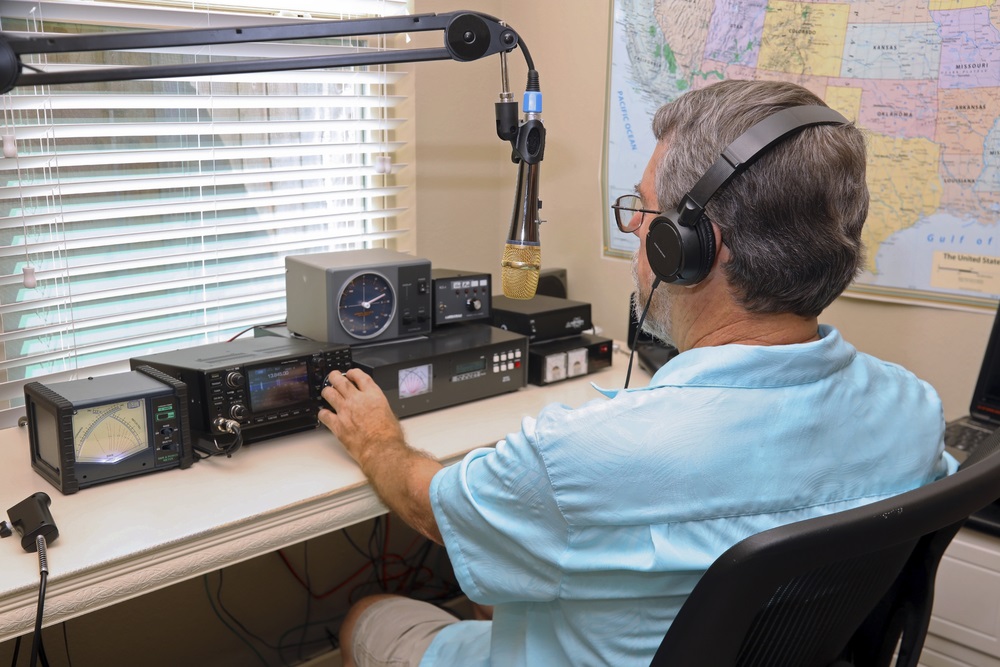
Ham Radio

by Old Hillbilly Prepper

Let me say upfront that I am not a writer (as you will soon learn) and I tend to ramble on and on and on….just as I do in person! Please forgive this shortcoming as my intent is not to bore you to tears but to do my best to cover every point, large or small, that I think will be of assistance to you based on my personal experiences.  Hopefully what follows will be of help to some of you regardless of all my failings as a writer.)

HAM RADIO COMMUNICATIONS-ON THE CHEAP…or…How I put together a HAM radio setup for less than $120.00 that allows me to talk with other HAMS hundreds of miles away

Water… food… shelter… medical supplies… security.  Since you are reading this on a blog dedicated to prepping then I imagine you have these priorities covered or at least are working toward covering them.  But what about communications?

If the world goes to hell in a handbasket will you be able to contact relatives, friends, loved ones, or emergency personnel when the communications infrastructure goes down?  Even if you don’t want to transmit, will you at least be able to listen to shortwave frequencies to hear what is going on in the world?

Maybe even gain a little INTEL as to what is going on in your area?  I frequently read posts on various survival forums where folks like us say they are woefully inadequate when it comes to communications and quite often some of the reasons given are:

  1. I don’t know where to start.
  2. It is all too technical for me.
  3. I have no clue what kind of equipment to buy.
  4. Getting good equipment is just too expensive.
  5. I don’t want to get involved in the licensing process required for some types of radio use.

I can say for certainty that EACH of these thoughts was in my mind for several years before I took the plunge into amateur radio.

Hopefully, in this article, I can shed some light on at least one area that I have had a small measure of success in….amateur radio commonly referred to as HAM radio.  First off let me state for the record that I am a novice when it comes to HAM radio, having received my Technician license less than 4 months ago.  I dabbled with CB back in the late ’70s and more recently with marine radio, but until just recently I had ZERO experience with amateur radio.

About two years ago I contracted a rare muscle disease that is rapidly crippling me to the point that I spend most of my days sitting in the house “playing” on the internet.  Much of that “playing” eventually turned into research involving HAM radio.  As stated, I am a novice and about as far from an expert as one can get but feel I have made some progress, learning that amateur radio communications do not inherently have to be overly technical or expensive.

It is my intent in this article to share some of my experiences with those of you in hopes that you may benefit from my research and brief experience.  Before I go further let me say that there are probably many who will read this that know far more about HAM radio this I will ever know.  To those individuals I say…please bear with me and forgive my oversimplifications and PLEASE, jump in and add your expertise or correction should you feel it is warranted.

Why HAM Radio?

Why not CB or FRS or GMRS or Marine?   Over the last 40 years, I have dabbled a little with each of these radio types with varying degrees of success.  In my neck of the woods, CB was great for a number of years until the channels became so clogged with nonsense and vulgarity that I finally gave it up.  I still own a CB base station but consider it only a backup.

The GMRS and FRS radios are nice little units but after trying them I found that the range was quite limited….nothing near the exaggerated claims of their manufacturers…15 miles…25 miles…30 miles…all of which are based on ideal conditions over a totally flat surface like water…which is rare in most places.  They are great for short-range communications, especially for patrolling purposes, but in my experience, that is about it.

Ham Radio
Ham radio operators are used in emergency situations to provide communications when phone lines, cell phone towers are down and power is out!,at times you can communicate with the space station!

Marine radio, on the other hand, is great!  The equipment is reasonably priced.  The range is good (I can hear local bear hunters talking 30 miles away without a repeater) and since they are FM, the reception is very clear.  However, marine radio use (transmission) is legal for maritime purposes ONLY, unless all you do is listen.

That leaves amateur radio also referred to as HAM radio.  Depending on the license you acquire (more about licensing later) your range is only limited to the size and type of equipment you use, some of which will allow you to talk to other operators thousands of miles away.  Someday I hope to be able to talk these great distances but holding only a technician license at this point, the likelihood of talking to someone halfway around the world is slim.

With the technician license (the beginner’s license) you are pretty much limited to “line of sight” use when speaking from one radio directly to another. (known as “simplex”).  However, by using what is called a repeater (more about repeaters later) you can greatly expand the effective distance of your communications.

One of the greatest benefits I have found thus far that HAM radio has over other types of radio (other than distance) is what I will call “community”….. or interaction with other HAM radio operators.  Thus far I have found them for the most part to be a very friendly (as long as you have a license), welcoming, and talented group of individuals.  At one point in time not too long ago, the HAM radio hobby was losing popularity caused, according to some, by the advent of the cell phone.

However, in the last few years, things are looking up as there are now more licensed HAMS than ever before… over 700,000 in the U.S.   I have to think that the popularity of amateur radio in the survivalist community is responsible for a large part of this increase.

Do I Really Need a Ham Radio License?

Simply put, no.  You don’t need a license to buy a HAM radio and you don’t need a license just to listen to HAM radio.   You only need a license to transmit LEGALLY on a HAM radio.   I have heard many folks in the survival community say they will just transmit when they have to and take their chances of not getting caught.

I must admit that they have a point…especially if the balloon has gone up and the rule of law no longer exists.  In that case, who cares if you have a license or not…certainly, not me.

Actually, the FCC rules say that it is not illegal to use a HAM radio without a license IF a life-threatening event requires such use.   SO…why do you need this license then (other than the obvious answer that the FCC requires it for you to legally transmit)?

The answer is…training and practice.  When you bought your firearms to defend your family and your homestead, did you simply sit them in the corner and look at them and never learn how to use them?  I doubt it.  If you did then should that fateful day come when you need to use them…will you know how to operate them? Will they work?   The same holds true for HAM radio equipment.

While transmitting is as simple as keying the microphone and speaking into it…knowing what to say, how to say it, when to say it, and how to get the most range, is not that simple.  Just like becoming proficient with your firearm takes practice, so does proficiency with your radio.  I know what you are thinking….”I don’t need a license….I will go ahead and start talking to people and avoid the hassle of getting a license”.

Wrong.  You might get away with it a time or two but the HAMs I have spoken to, while a friendly and supportive group, will not condone the use of a HAM radio by an unlicensed operator.  In fact, some HAM operators go so far as to use radio triangulation to locate broadcasting non-licensed operators using directional antennas and once found, report them to the FCC.  Please don’t think that just because I have a license that I condone this practice!

I am only stating what I have read regarding the practice.  In other words…if you broadcast without a license a large fine (up to $10,000.00) could be coming your way.  NOW….I know what you are thinking. HOW does someone on the listening end know from your transmission if you are licensed or not?  Simple….if you are a licensed HAM, you are required to give your call sign at the beginning and end of your transmission as well as every 10 minutes during that transmission.

Another HAM might forgive a novice forgetting this a time or two, but not indefinitely.  If you don’t give that call sign they may just pull out the triangulation equipment!  “Well…why can’t I just make up a call sign?”   You can but it probably won’t work very well.

There are a number of online services that allow HAM operators to do callsign searches to determine the name and location of any licensed operator.  They simply type in the call sign and if it is for real, your registration information pops up.

Many HAMS even go so far as to download database programs directly onto the computers that allow them to search by callsign without the need for an internet hookup!   So, while you don’t need a license just to listen, it would be a very wise idea to have one if you intend to become proficient in using your radio as well as making on-air acquaintances with other HAMS.  Such contacts could be extremely helpful in times of emergency (more about this later).

How Hard Is It To Get A Ham Radio License?

As with most things in life that are worth having, getting an amateur radio license takes some effort…but not nearly as much as some folks think it does!  At one point in time, every person desiring to be licensed had to be able to send and receive Morse code!

Fortunately (at least in my opinion) this requirement was dropped totally in 2007.   There are currently three levels of license available to HAM operators…..Technician (the beginner’s license like I have), General, and Extra.  With each upgrade in a license, a wider array of frequencies is opened to you which equates to longer ranges of communication.

The test you are required to take for a Technician license is composed of 35 questions randomly selected from a set group of questions in the FCC question database.  The FCC requires that the database contains a pool of 394 questions from which each 35 question test is chosen.

All the multiple-choice questions and answers are available to anyone wishing to take the test.   There are many study guides available that will cover EVERY question in the current database which means once you go through the guide, you will have covered every possible question and answer!

These study guides vary in price but since this article is about HAM radio “on the cheap”, the one I used was FREE!  It is easy reading and written in a manner that actually teaches you about the basics of amateur radio while preparing you for the actual test questions at the same time.

As you read through the guide you will notice words in bold letters which are actually the ANSWERS to actual test questions.  This allows you to zero in on the actual answers you need to know.   You can download this free guide in PDF format:

http://www.kb6nu.com/wp-content/uploads/2010/06/2010_Tech_Study_Guide.pdf

(NOTE: The questions in this guide are good through 6/30/14 at which time a new pool of questions will be used)

Once you have read through this 49-page guide you can start practicing for the test by using any of a number of free online sites that generate practice tests using randomly chosen questions from the FCC test pool.

The site I used can be found at  http://www.eham.net/exams/    To start taking the sample test, go to this site and click the “Technician” button and start your test.  The great thing about this site is that it grades your test instantly when you are finished and then tells you the ones you missed PLUS it then gives you the correct answer!   I took the sample tests many times until I was consistently scoring in the mid-’90s.  You must make at least 75 on the real test to pass.

(NOTE: Many local community colleges offer HAM radio study courses that conclude by giving the actual test to the applicant.  Not only do most of these classes give an in-depth study but they also allow you to meet others interested in HAM radio (many of which are probably survival oriented just like you) as well as having the opportunity to ask actual questions of the instructor…something the free guide above cannot offer.  However, since I was doing this “on the cheap” I opted to study on my own for free. )

Once you feel you are ready to take the test you need to find a testing site.  Fortunately, there are now many volunteer examiners which are actually amateur radio club members authorized by the FCC to give the test.  To find a local test site you can go to http://www.arrl.org/find-an-amateur-radio-license-exam-session  and search by Zip Code.   This site, http://www.arr.org  is a great site with lots of free info (can you tell I like “free”?).  If you want to find out if there are any licensed HAMs close to where you live you can go to http://www.arrl.org/fcc/search  type in your zip code and see the name(s), call sign, and license class of those living close to you.

When I tried to search the ARRL site for a testing location close to where I live all I came up with were places at least 75 miles away!  My next idea was to do an online search of amateur radio clubs in my area.  I started typing in names of local towns and counties in my area in my search engine ( www.bing.com ) along with the words “amateur radio” and found there was a club located in my neighboring county that had a website on which I found a contact email address.

I inquired of them about a testing site and was pleased to learn that their club gave tests quarterly with the next testing session only a week away!  I told them I would be there!  When I arrived at the site I was very pleased to meet a fine group of people all interested in helping me get my license.

I filled out a short application, paid $14 to take the test, and 30 minutes later I learned I had made a grade of 92 and would have my call sign issued within a week!  I was cautioned by the examiner that even though I had passed, I could not legally broadcast on my radio until my call sign was posted in the FCC database…which happened in about 4 days.

Now, at this point I a sure some of you are wondering just how “technical” these test questions are?  If I said there was nothing technical in them, I would not be truthful.  Some of the questions require a little bit of math using Ohm’s law and some require being able to identify certain schematic symbols found in typical electronic circuits.

However, please remember that the study guide mentioned above covers ALL of this and gives you the exact answers in bold as you go through it!  Also, when you take the practice test(s) the questions will be the exact questions you will see on the real test.

After taking the sample test a few times you will soon begin to remember the answers based on repetition, at least I did.  You will also notice that many of the questions are nothing more than common sense, especially the safety questions involving grounding, climbing antenna masts, etc.   So, all of this being said, don’t let the fear of too many technical questions deter you in pursuing your license if that is your goal.

To wrap up the section on licensing, I would like to touch briefly on privacy.  I resisted getting my license for many years because I did not want to be involved with a governmental licensing procedure unless I had too.  Over time I began to realize that since I have filed an income tax return for over 50 years, driven a car for about the same length of time, and purchased a firearm through a dealer, my personal data is already in numerous governmental databases.

Most of us have concerns also about being on governmental “watch lists” and I am no exception.  Rest assured that if you have bought a firearm legally, secured a concealed carry permit, or even frequented a website dedicated to survival/prepping, there is a good chance you are already on several “lists”.    After weighing this against the benefits of being a licensed HAM operator I decided that being on yet another government list probably wouldn’t matter in the overall scheme of things.

That being said, if YOU don’t feel comfortable with getting a license, then by all means DON’T!  As stated earlier, you can always listen and learn the best you can and then should the SHTF you can always key your microphone and broadcast in a life-threatening situation.

If the rule of law no longer exists, broadcast to your heart’s content as a license will not matter at that point.  Just remember that by getting a license now you can practice and learn how to use your radio along with the amateur radio network of users…and LEARN…just like you learn to become proficient with your firearms from use, not just looking at them

The Equipment – What It Costs and Where to Get It…

If you have survived my rambling this far then you must be interested so now let’s talk about what equipment you will need.  If you have ever looked at a HAM radio equipment supplier catalog then you are no doubt familiar with the dizzying array of radio types, brands, and configurations, not to mention all the other meters, antennas, cabling, and connectors.

I spent a long time researching what I needed to get started and then reading product reviews and blogs to come up with the best “bang for the buck” to get started in HAM radio.

I’ll cover the needed items one at a time and at the end of this section post a direct link for each item to the site where I bought it. (Note that almost all of the equipment can be purchased from Amazon.com so PLEASE make sure you use the direct link provided by M.D. so that he will at least get a little benefit from your purchases should you decide to make them.)

The Radio:  First let me say that with your technician license you are most likely going to want a 2-meter radio or a 70cm radio, or a dual-band unit that is both.  I am not going to get into the technicalities of bands at this point as you will cover this in your license study…only to say that the 2-meter band is where you will find the most activity….or at least it is in my neck of the woods.

Radios range from “base stations” that you set up in your home, to “mobile units” you can mount in a vehicle or connect to a power supply and use as a base unit, to “portable units” that some refer to as handi-talkies, or simply put, small portable handheld radios.

For the purpose of this article, I will talk about the small handheld unit as that is what I started with.  Prices on these units are all over the board and usually the higher the price the better the equipment.  Two well know brands are Icom and Yaesu, both of which offer handhelds that can cost several hundred dollars.

Once again since this is an article about doing it “on the cheap” I will sidestep these makes and move directly to the Chinese made handhelds that are sweeping the HAM radio market.  There are several brands of these radios but the one I settled on is Baofeng.

I found it is probably the cheapest handheld you will find and surprisingly enough it has a very good reputation! The unit I went with is the UV-5RA.  This little radio is not much larger than a king-sized pack of cigarettes but doesn’t let the size fool you!  While it only has 4 watts of output power, it has allowed me to access repeaters 50+ miles away which have then enabled me to extend out close to 200 miles away in all directions!

As offered by Amazon, the radio comes complete with a rechargeable lithium-ion battery pack, an a/c plug-in charger and a vox operated earphone/microphone combination.  Imagine the uses of a vox (voice-operated switch) microphone that will allow you to transmit hands-free as well as listen through your earpiece…especially patrolling where your hands are busy pushing through cover or holding/using a firearm.

The radio offers both 2 meter and 70cm band receive/transmit functions along with marine receive functions once programmed.  It comes complete with a “rubber duck” antenna that attaches to the top but with the addition of a small adapter (listed in the “what you will need” section below), you can also attach it to any antenna of the proper wavelength!

Now…I know you are wondering…what does this little electronic marvel cost? $100…$200…$300? NO, as of this writing you can get this amazing little radio for $32.98!  That’s right, less than $34.00!   Don’t let the price scare you, folks.

I am a firm believer in “you get what you pay for”, however, in the case of the UV-5RA, you get a whole lot more than you pay for when compared to similar radios costing many times more!   Before moving onto what else you will need, I need to point out that you may find similar radio’s from Baofeng that do not have the “A” on the end of the model number.  From what I read, these are pretty much all the same…only with small differences in the internal firmware.

As long as you order from the link listed below, you can rest assured you will get the most modern up to date model with the most current firmware…as far as I can tell.  If you see a UV-3A, stay away.  This is a fine little radio also but only has 3 watts output power so for a few more dollars, go with the UV-5A which has 4 watts output power.

Before moving onto accessories, it should be noted that this little radio also gives you access to the National Weather Service frequencies as well as “scan” capability of all programmed frequencies, including many police and fire frequencies.  So not only do you get a great HAM radio but you also get a weather alert radio as well as a scanner all wrapped up into one!

If you decide to buy the UV-5RA then PLEASE go to this website and read all the information listed.  It will answer a lot of questions and make your use of the little radio much more enjoyable, plus it has good information about using CHIRP.    http://www.miklor.com/uv5r/Ham 

Ham Radio Accessories: OK, I can hear it now….”the radio is only $32.98 but now he tells us we have to buy accessories that will cost us hundreds of dollars”!  Wrong.   As shipped from Amazon, you can take the UV-5RA out of the box, attached the included antenna, place it in the charger for an hour or so and be ready to transmit or just listen (if you are not licensed).

However, like most things we buy these days, accessories can add a lot more utility to our purchase in making it easier to use or increasing its capabilities.

This little radio is no different.   If there is a drawback to the UV-5RA, it is that like most HAM radios, it can be confusing to program, at least for me.  There is a manual in the box and there are several useful websites that will assist you in programming.

After researching about the UV-5RA  I learned that the easiest and fastest way to program it with the frequencies needed to access repeaters or to directly connect with friends or group members is to use a piece of freeware called “CHIRP” for which I will list the link below.  CHIRP is in the form of an Excel spreadsheet that allows you to enter the frequencies(s), tone and offset (both required for repeater access) and then quickly upload this data to your radio.

One of the best features of “CHIRP” is that it gives you the option of naming a frequency with a name that will allow you to keep up with the repeater name you are talking to without having to remember the frequency.

For instance, the highest elevation repeater east of the Mississippi is located on Mount Mitchell, North Carolina at approximately 6,600 feet above sea level.   Rather than having to remember that this repeater is on a frequency of 145.190 MHz, all I have to do is search the LED screen for the “Mt-Mit” name I typed into CHIRP for this frequency am I am quickly ready to transmit or listen whichever the case may be.

The only catch to using “CHIRP” is that you will need to buy a “programming cable” which comes with its own driver disk to load on your hard drive.  As of this writing, you can get the programming cable and driver from Amazon.com for $7.35!  I will list the direct link to the cable at the end of this article.

Another great (but optional) accessory is a plug-in microphone/speaker.  While the speaker and built-in microphone on the UV-5RA work fine, having an external microphone will allow you to place the radio in a shirt or vest pocket or clipped on a chest rig and still communicate without removing the radio from your pocket (assuming you don’t want to use the vox headset).

All you have to do is plug the microphone into the socket in the side of the radio and you are all set.  The great thing about this microphone is that it also doubles as a speaker for the radio!  I have mine set up as a “base unit” currently with the radio staying in the charger all the time so all I have to do to broadcast is pick up the external accessory microphone and talk…works great.   The external microphone/speaker can be purchased from Amazon.com for $8.80. (see direct link below)

Ham Radio Antenna:  I know, I said the radio comes with an antenna and it does, but if you want to get the best transmit/receive range possible from your radio and hit those far away repeaters, a longer antenna is definitely in order.  The little “rubber duck” is fine for local use and may even, depending on your location, allow you to access a local repeater, but if you want to reach repeaters farther away, a better antenna would be a wise investment in my opinion.

There are as many antenna options out there as there are radios but I am only going to mention one…the one I have found is one of the most durable and functional antennas on the market for what I consider a very reasonable price, considering what it can do.

I am speaking of a class of antenna called a “Slim Jim”.  I am not going to attempt to get into all the wavelengths and building or “cutting” of antenna’s to tune them because, to be honest, I don’t understand it all!  What I do know is what works for me.

I am speaking of an antenna offered by 2wayelectronix.com, found specifically at http://www.2wayelectronix.com/Dual-band-2m-70cm-Slim-Jim-Antenna-dual-slim.htm  .  This antenna is entirely handmade and is of the highest quality craftsmanship.  As you will note, it comes rolled up which means you can easily carry it in a bug-out-bag should you wish to carry your radio in the field.  The antenna is made from a piece of heavy flat ribbon wire similar to the old flat ribbon TV lead-in wire (if you are old enough to remember such as I am), but much larger.

It comes complete with a ferrite choke built in to prevent interference.  The method of mounting is entirely up to you.  I mounted mine between two PVC pipe standoffs on a PVC pole on the eve of my house.  Another consideration is to tie a piece of paracord to the end (push it through the hole made in the end just for this purpose) and then throw the line over a limb and hoist your antenna up!  (the higher the better…more about this later)  As you will note on the order form, you are given your choice of end connector.

In order to hook to the adapter (discussed next), you will need to choose the UHF Connector so-239.  This allows you to use a “standard” piece of coax in between the antenna and your radio. (more on coax later).   The price of this antenna is $22.99 plus shipping which will vary depending on where you live.  I will include the direct link again at the bottom of this article.

Finally, regarding this antenna, let me just say that I cannot believe the difference it makes.  Using the UV-5RA “rubber duck” antenna I never was able to access the Mount Mitchell repeater from my home 35 miles away.  However, as soon as I plugged in the “Slim Jim” antenna I could access the repeater with ease, being told on the other end that I was putting out a good signal on my little 4 watt $32.98 radio!

Adapter & Coax:    Simply put, if you use the “Slim Jim” antenna then you MUST have an adapter to attach it (or a longer piece of coax) to the UV-5RA.  It is called a “Reverse SMA to PL-259 Adapter” which will cost you $16.34 including shipping at Amazon.com (see direct link below).  There may be cheaper adapters out there but I know this one works, and take my word for it, if you are as radio illiterate as I am, it is very easy to order the wrong adapter.  Please don’t ask me how I know.  Still, as long as you can find one that says “Reverse SMA to PL-259” it should work.

Coax (short for coaxial cable) is what you need to be able to place your Slim Jim antenna up in a tree or on a mast on top of your house.  Consider it the same as you old TV lead-in wire or the cable that you now have run from your satellite dish to your TV.  In fact, that cable will probably work if it has the correct adapters and is 50 ohm.  You can pick up this cable at any number of places including Radio Shack or any number of online sources including Amazon.com.  I ordered 50 feet of the RG-8X cable with PL-259 cable end connections from Amazon for $28.61 including shipping.   Shop around….you may be able to beat this price as the prices vary.  If you don’t want to spend time shopping around, see the direct link below showing where I got mine.

Now I Have It…What Do I Do With It?

The first thing to do is get the radio out of the box, make sure everything is there, and then install the battery pack in the back of the radio.  Then plug the charging base into your wall outlet and place the radio in the base to charge the internal battery pack.  Next, turn your attention to your antenna.  If you are going to stick with the small “rubber duck” antenna, simply screw it into the top of the radio and you are finished!

However, if you are going with an external antenna like the Slim Jim you need to find a suitable place to mount it…the higher the better.  Why higher?  Since you are dealing with an FM signal you are transmitting and/or receiving “line of sight” so usually the higher the antenna the longer the line of sight distance is and therefore the longer the distance you can communicate.

The Slim Jim can be mounted any number of ways.  As said earlier, I have mine on a PVC pipe mount on my house.  Some folks put them in a tree on a mast and some simply hoist them up in a tree using a line thrown over a limb.

Just remember that however you do it, you need to BE CAREFUL and not get yourself or the antenna or coax near any electrical lines.  Also, try not to mount the antenna close to any large metal objects as this can lessen the receive/transmit ability of the antenna.

The manufacturer of the Slim Jim tells me that as long as the antenna is at least 18” from a metal roof it should be fine.  Before I forget, make sure you attach your coax cable to the end of the antenna before hoisting it up in the air.  You also need to consider a grounding method for your coax.  You can go to the following website for some great information about the Slim Jim antenna including mounting ideas.   http://www.n9tax.com/Slim%20Jim%20Info.html

Now that you have your antenna mounted and your radio battery charged, you need to attach the coax adapter to the top of the radio and then attach the coax cable to the end of the adapter with the screw-on fittings.  Your radio is now ready to transmit/receive as soon as you tell it which channel you want to use.

Ham Radio Frequencies (Channels)

The UV-5RA has 128 channel memory slots available.   As mentioned earlier, there are two ways to use your radio.  One is called “simplex” which simply means one radio communicating directly to another radio.  Suppose you and your friend(s) want to carry on a conversation.

You simply decide on the frequency such as 144.320 MHz and then each of you manually inputs this into your radio using the keypad.  That is all there is to it!  Once each of you has the same frequency punched in, all you do is key the mic and start talking.

As stated earlier, it is advisable to have your HAM radio license if you are going to transmit unless you are in an emergency situation or the rule of law no longer exits.  If either of these are the case, then I doubt a license will matter much, if at all.

The second communication method and the one that will give you the most communication range is by using a “repeater”.  Think of a repeater as being an “automatic radio” located at some high point in the area.  It could be on top of a building, or on top of a mountain, or on top of a tall tower.  Notice the pattern here…high in the air.  Repeaters operate by receiving your transmission and instantaneously re-broadcasting it again at a higher wattage output.

Since your UV-5RA is a low power unit with only 4 watts of output power, if you can hit a repeater with your signal, that repeater will boost your signal to a much higher wattage output and re-broadcast it simultaneously from its high location, greatly extending your communication range.  Each repeater uses two frequencies,  receive and transmit.  If it used only one frequency it would most likely destroy itself by overloading its circuitry.

However, by using two different frequencies and what is known as a duplexer, the repeater allows you broadcast to it on its “receive” frequency and then it “offsets” that frequency to a higher or lower frequency and re-transmits it at a higher wattage output.

Typically on 2 meter, the “offset” is 600 kilohertz.  You will also need to know if this is a plus or minus offset which indicates if the 600 kHz is added to the repeater’s receive frequency or subtracted from the frequency.  Many repeaters also require a “sub-audible” tone from your radio before they will listen to you…just another safeguard to keep the repeater working for everyone.

At this point I need to point out that just like your radio, repeaters operate on electric current and in the event that we are faced with some type of disaster or societal collapse that shuts down the power grid, it will most likely negatively impact repeater usage.

If you are lucky you will find a repeater to use that is powered not only by grid power but also by an alternate source such as solar or wind power.  Also, since HAM radio is such an integral part of most local government emergency response communications I would hope that efforts will be made by emergency services to keep the repeaters up and running…at least as long as emergency services exist!

If we suffer an EMP then all bets are off for any type of electronic communications.  Fortunately, the UV-5AR is inexpensive enough that it may allow some to purchase two or more to keep in a Faraday cage if desired, at least giving a means of radio to radio communication locally.

NOW, before you start screaming “THIS IS TOO TECHNICAL” let me say this….now you see why I said you need to buy the programming cable and download the free CHIRP software.  If you do this, you simply type in the repeaters receive frequency and whether it is a plus or minus offset and if there is a tone, the tone frequency…and that is it.

Once you get all this entered into the spreadsheet your click “upload to radio” and you are done!  Believe me…I am not very radio literate but after a few minutes of research and a little trial and error, I was quickly programming frequencies easily.  Fortunately, the software has a “help” menu as well as a website that will help if you have problems.

At this point, you are probably wondering “how do I find a repeater I can access and once I find it how do I know how to program my radio (using CHIRP) to access it”?   Simply put, go online and search on Google or Bing for “ham radio repeaters” and look for a link to one of the many online databases that allow you to enter your zip code to find local repeaters.  OR, do a search by typing in “amateur radio club” and then the name of your (or a nearby) town or county.

Once you find a clubs website, look around the site and there is a very good chance you will find info relating to a local repeater.  In that info, you should find the repeaters receive frequency, the offset (most likely 600 kHz) and whether it is plus or minus.  You should also find listed the tone frequency if the repeater requires one…not all do.

My advice would be to program in several repeaters at various distances from where you live and then start listening.  You can push the “scan” button on the UV-5RA and it will continuously search your programmed frequencies until it hears activity.  LISTEN for a while.  It is amazing what you can learn, especially when it comes to broadcast techniques and protocols used by other HAMS.  It doesn’t take long to catch on!  One last point regarding repeaters…virtually all of them are open to anyone that can access them, free of charge! (there’s that “free” thing again)

How Far Can A Han Radio Transmit and Receive?

The short answer is…” it depends”.   As stated earlier, since you are using FM transmission, you are pretty much restricted to “line of sight” usage.  If you live in an open, flat area, or are using your radio over open water, then you can probably transmit or receive 5 miles or more…maybe even a lot further if you are on a hill and depending on atmospheric conditions.

I am hesitant to give a specific distance as there are a lot of variables.  Let’s just say that your 2-meter radio will transmit a lot further than a CB, GMRS or FRS radio, at least in my experience.  FM transmissions from a 2-meter radio do not normally bounce off the ionosphere so you don’t get the “skip” like we use to talk about in the hay day of CB but they can sometimes bounce off of buildings if you live in an urban setting.

There are times however that you do get a measure of skip that will let you talk a few hundred miles, so I read.   NOW… where you get the real distance is when you can hit a repeater that is located at a high elevation.  As a case in point,  I don’t live within direct line of sight of the Clingman’s Peak repeater on Mount Mitchell, NC, and could not access it with the standard rubber duck antenna, although I could pick up its transmissions.

Once I got my Slim Jim antenna hooked up I was able to access this repeater easily with my little 4 watt UV-5RA.  Since this repeater is the highest repeater east of the Mississippi, it has a tremendous coverage area which enables me to talk with other HAMS located in East and Middle Tennessee, Southeast Kentucky, Southeast Virginia,  Upstate South Carolina, Northern Georgia, and Central North Carolina….and all points in between.

As best I can measure it this means on a good day my coverage area can be up to 400 miles from one side to the other!  In fact, I have read reports that on occasion HAMS in Maine and Florida have been able to hit the Mt. Mitchell repeater!

I don’t know how often this happens but when it does happen that means anyone accessing this repeater can talk to others up to a thousand miles away! I have no way of verifying this other than what I read but considering the elevation of the repeater tower I would not rule out the possibility.  Another example for me is using a repeater located on Holston Mountain near Bristol, Tennessee.

Sometimes I can hit this repeater and once I do, I am able to talk to other HAMS located near Middlesboro, Kentucky which is 85 miles west of Holston Mountain and much further from my home.

At this juncture, I do need to point out that my home is on top of a mountain at an elevation above 3,000 feet and this adds greatly to my transmit/receive capability.  Your mileage may vary up or down depending on where you live and your surrounding terrain.

Now, if you wonder why I brought up Middlesboro, Kentucky, if I am not mistaken this, is fairly close to where M.D. lives in the “Redoubt of the East” also known as the Cumberland Plateau!   Hence…this brings me back to what I mentioned in the introduction to this article is the mechanism for folks in this group that live in or plan to live in the “Redoubt” being able to communicate with each other!

Even if you have no intention of ever living in or even visiting this area, still this radio setup will give you the capability to talk to others in your own area and far outside your area if you are so minded!   To conclude discussing repeaters I need to mention what is called a linked repeater system.

I’m no expert on this by any stretch of the imagination but as best I can understand, a linked system simply means that one repeater links to another repeater which links to another repeater and on and on and on.  If you are fortunate enough to live in an area that has a linked repeater system then by being able to access any repeater in the system you could be linked to all other repeaters which could increase your effective range tremendously!

NOTE:  It needs to be noted here that just because you cannot transmit to a distant repeater or radio receiver does not mean you can’t receive from it.  That repeater or radio may be running much higher output wattage (power) than your 4-watt radio which explains why you can hear transmissions from it but cannot transmit to it.

Wattage on your end does not relate to how far a distance you can receive from, only to how far away you can transmit.  They type and height of your antenna directly relates to both transmit and receive capabilities on your end.

One final point to consider regarding how far you can communicate involves other HAM operators.  It is not uncommon for amateur radio operators (those holding a General or Extra license) to use more than one type of radio.  While 2 meter and 70cm are most used for line of sight communications (referred to respectively as VHF and UHF radios) another type of radio communications referred to as HF can be used to communicate long distances, even to the other side of the planet!

While an operator holding a technician license is not authorized to use the HF bands, still he/she may be able to contact another operator via 2 meter that does have HF equipment.  Imagine you are in a SHTF situation and you need to find out about the well being of a friend or relative located on the other side of the country, or that person needs to find out about you.

If you are able to contact another HAM that has HF equipment, that operator may very well be able to contact someone close to where your friend or relative lives and get a message to them or receive a message from them directed to you.

During crisis situations amateur radio operators do this regularly, having specific organizations set up for such a purpose.  This is just one more reason to get to know the HAMs in your area by communicating with them and listening.  Many times I have heard operators on my 2-meter radio talking about a contact they just made on one of the HF bands, a contact halfway across the nation!

Putting the numbers together along with where to buy:

Since the title of this article includes “on the cheap” it is time to put the numbers together.  Below you will find the necessary items discussed above, what they cost me and the direct link where you can get them.  At this point let me say that I have no financial stake in any of these companies and do not stand to profit in any manner from your purchasing any of the listed items.  However, as stated earlier, if you decide to buy any of the items sold by Amazon.com (which includes everything except the antenna) PLEASE click through M.D.’s Amazon.com portal so that when you purchase he can make a little money on the deal to compensate him for all he does for us through his site.

  • Radio:  Baofeng UV-5RA  (click here to check price and availability)
  • Antenna: Slim Jim  Cost:  $22.99 (shipping extra-amount depends on shipping location)
  • Coax:  RG8x (50 ohm) 50 ft.  Cost:  $28.61 (price on Amazon.co includes shipping)
  • Coax adapter: SMA to PL259   Cost:  $16.34 (price at Amazon.com includes shipping)  – shop around on this cable and you may find a cheaper one…just make sure it is an SMA to PL259)
  • Programming cable   Cost:  $ 7.35 (free shipping using Amazon “Prime”)
  • Aux. microphone/speaker   Cost:  $ 8.80 (free shipping using Amazon “Prime”)
  • CHIRP programming software   Cost:  FREE http://chirp.danplanet.com/projects/chirp/wiki/Home
  • Exam training guide  Cost:  FREE http://www.kb6nu.com/wp-content/uploads/2010/06/2010_Tech_Study_Guide.pdf
  • Sample Ham Radio Test Cost:  FREE http://www.eham.net/exams/

TOTAL COST    $117.07

It should be noted that shipping is factored in on some of the above but not others.  Where Amazon listed a set shipping amount, I included it in the price.  For other items, they only listed it as free when using Amazon “Prime”.

If you do not have Amazon Prime (which requires an annual fee) then, by all means, shop around!  Amazon often lists the same item from several suppliers so if you look around you might find free shipping or their own free shipping on orders $25.00 and over.   Shipping on the antenna will vary depending on where you live.  I think mine was around $5.00 which still brought me in under $120.00 total!

Your cost could vary up or down a little depending on price changes for specific items or the length of coax you need and if you can find it on sale or not.  I noticed that some of the prices are up and some down between the time I ordered mine about 3 months ago and now.

Any way you cut it, $120.00 for a HAM radio setup that allows you to communicate for hundreds of miles seems like a bargain to this Old Hillbilly but I guess it all boils down to one’s financial ability. (Note that I did not list the cost of taking the test either as this apparently varies based on where you take it so I won’t even hazard a guess what yours will cost although mine cost $14.00)

I hope this rambling article that you no doubt thought would never end is of some help to you.  As I stated at the start, I am a novice to HAM radio and am in no way saying the way I did it is the best or only way to do it.  All I can say is that it works for me and I am pleased.   Should you have any questions about my experiences I will do my best to respond to them in the remarks section.

I am sure there are lots of others here though that can answer your HAM radio questions much better than I can. May God richly bless each of you in all you do for His glory.

Filed Under: Prepping

  • « Go to Previous Page
  • Page 1
  • Page 2
  • Page 3
  • Page 4
  • Page 5
  • Page 6
  • Interim pages omitted …
  • Page 15
  • Go to Next Page »

Primary Sidebar

Subscribe to Blog via Email

Enter your email address to subscribe to this blog and receive notifications of new posts by email.

Join 7,199 other subscribers
  • Amazon
  • Facebook
  • Substack
  • Twitter
  • YouTube

“Do more with less.”

– Minimalist proverb

Recent Posts

  • Just so you know
  • Weather Update for My Corner of Appalachia
  • Why I’m Ordering Ivermectin + Mebendazole Every Year
  • The Website’s Shutting Down (But Here’s the Plan)
  • You Are Hated! Start Training Like It!

Footer

Recent Posts

  • Just so you know
  • Weather Update for My Corner of Appalachia
  • Why I’m Ordering Ivermectin + Mebendazole Every Year
  • The Website’s Shutting Down (But Here’s the Plan)
  • You Are Hated! Start Training Like It!

More about me

Books I’ve written

Books I’ve read

Follow Me on YouTube

Follow Me on Facebook

Gear I Use and Recommend

Newsletter

Search this site

Follow me elsewhere

  • Amazon
  • Facebook
  • Substack
  • Twitter
  • YouTube

© 2008–2025 M.D. Creekmore · As an Amazon Associate, I earn from qualifying purchases.