• Skip to main content
  • Skip to secondary navigation
  • Skip to primary sidebar
  • Skip to footer

M.D. CREEKMORE

  • Blog
  • Books
  • Newsletter
  • Gear I Use
  • About
  • Contact
  • Facebook
  • YouTube
  • Blog
  • Books
  • Newsletter
  • Gear I Use
  • About
  • Contact
  • Privacy Policy
You are here: Home / 2018 / Archives for April 2018

Archives for April 2018

This Week On The Homestead

April 21, 2018 M.D. Creekmore

I have a new and FREE homesteading course for those of you who are interested you can get that here – Free Homesteading Course. Also, two other free courses that you might be interested in – Free Prepper Course and my Free Blogging Course. Yes, they are 100% free with no hidden catch attached!

Well, folks, it seems that my switch from a “survivalist blog” to a “homesteading blog” was a great decision! The response has been overwhelming in support of the change and most have said it is a great improvement.

One concern that many readers of my old blog (www.thesurvivalistblog.net) did express was about the loss of the content on that site when it is taken offline and asked for a CD or thumb drive with that content archived.

Well, that’s a good idea, however, I think that a better idea would be to pick and choose the very best articles and then combine those into an anthology and make that available in paperback! What do you think about that idea?

Let me know what you think of that idea in the comments below and also if you have favorite articles from www.thesurvivalistblog.net then, please mention those with a link to the article in the comments below.

Also, let me know if you have any ideas for other free courses that I can put together for you all, article ideas and or any other improvements to this site. I want this to be the best homesteading blog with a prepper twist that’s online…

Okay, now what happened on the homestead this week…

I cleared up an old dead tree that fell on my property, repaired some fencing, planted some roses, organized my tools in my shop (still not finished with that), and a few other small jobs.

Unfortunately, my biggest plans this week were thwarted by a garden tiller that refused to run.

Now, that the threat of frost is over (I hope!) I had planned to till my garden area and start planting, unfortunately, my tiller which is only three years old refused to run long enough to get the job done. So I’m taking it to have it repaired today.

garden tiller
My tiller loaded and ready to go… to the repair shop.

Hopefully, it will be fixed by next week and I can get to moving some dirt and planning some seed.

Okay, that’s it for me this week… what about you?
Filed Under: Uncategorized

You Don’t Need To Be Wealthy to Homestead

April 20, 2018 M.D. Creekmore

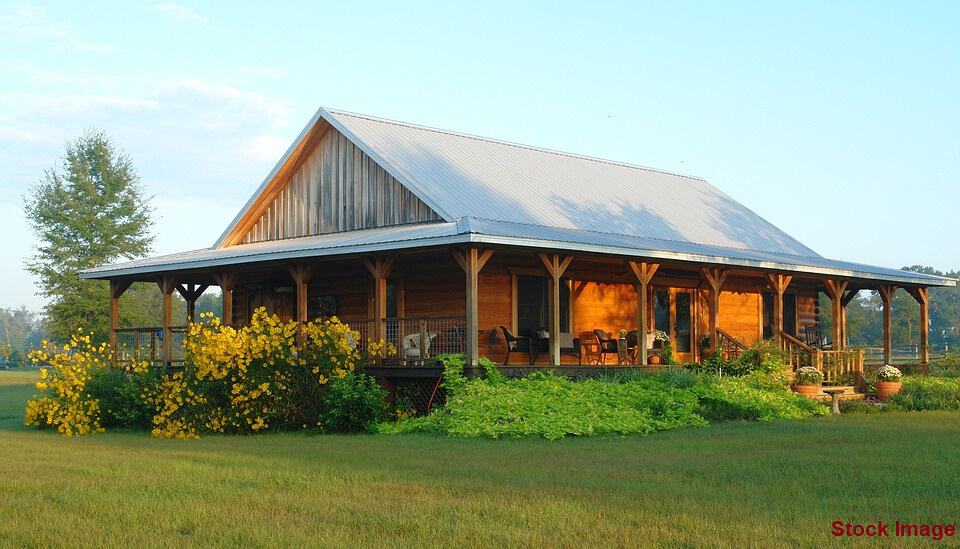
LOG HOME HOMESTEADSo you want to homestead but don’t think you can afford it? You see sprawling ranches on television with seven-figure price tags and think that is what homesteading is all about.

I’m here to tell you that’s not true. You don’t need to be wealthy to start a homestead. You don’t need a trust fund or a rich relative. For most people, this isn’t a hobby or a vacation house, it’s a way of life.

A life of self-sufficiency. A life that includes hard work and discipline, but also one where you will feel rewarded when you lay your head down each night.

If that sounds like the kind of life you want, you can follow these steps and begin your dreams of homesteading sooner than you might expect.

  1. Where you choose to live is important

We all know location is everything is real estate, and that is certainly true when looking to purchase a homestead. Generally, the further you are from town, the cheaper- and more available- land becomes. In some cases, that might mean moving to another part of the state or out of the state altogether to follow your dreams.

Whether you move across town or across the country, keep a couple things in mind. What is more important to you? More land or being closer to town? And if you have kids, school could be a consideration. Would you be happy moving to another state and potentially leaving your family?

There is no right or wrong answer. But these are things you will need to think about as you begin your life on the homestead.

  1. Buy what you can afford

You don’t need to start out big. You can begin homesteading on a couple acres and build it up over time. That’s usually a great place to start so you don’t get over your head and potentially discouraged by the amount of work a large homestead entails.

And one of the great parts about living in the country is that you can usually buy more land around you as you have the money and the need.

But it will be no fun if your property is larger than you can work or more expensive than you can afford.

  1. Go into homesteading debt free

As you prepare to begin homesteading, becoming debt free should be in your plans. Pay off your student loans, credit cards, medical bills or any other type of consumer debt before moving forward. You might think most everyone has debt, and that’s just normal. You’d be right, but you need to be different. Why?

Because your debt will just be a stranglehold on you and your homestead. You will constantly be paying back debts, and interest to the bank, rather than being able to save for the future. This will take commitment and might mean you put off your dreams for a few years, but it will be worth it.

If you don’t think getting out of debt is possible, I am here to tell you it is. To get started, I recommend you read Dave Ramsey’s The Total Money Makeover. It will bring you financial peace and change your life forever.

  1. Buy used

That new shiny tractor at the dealership looks mighty nice. And it sure would look really nice on your property. But I’m not interested in the fancy price tag that goes along with it. Like anything with a motor, it is going down in value. So buy used. Whether it’s a tractor, trailer or your truck.

This is part of debt-free living and living within your means. If money is not an issue, buy whatever you’d like. But if you are wondering how you can make it on a budget, buy used and save.

  1. Do work yourself

Learning how to fix things yourself– whether it’s a plumbing issue in the house or something on the tractor- will save you mightily. You’ll save money, but you’ll also save time from not having to wait for someone to come to your property when they can.

But if you’re not a DIY pro right now, it’s okay. You will learn a lot along the way, whether it has to do with your house, your property, your animals or something else. Just be ready.

  1. Monetize your homestead

There are multiple ways that you can make money on your homestead.

First, and most obvious, is selling what you harvest. Fruit, vegetables, eggs, milk, even meat. There are still plenty of people who sell what they harvest out of the back of their truck on the side of a highway. You can do that, but in the interest of being more efficient, you can sell at farmers markets, online or through personal networks.

In this same category, you can also barter. If you need some work done that you can not do, instead of paying cash, see if you negotiate a fair trade.

You can also share your experience on the homestead through blogging. Blogging is how I was able to quit my day job and earn a full-time living without having a regular job and a boss. If you are interested in getting started, I’ve put together a comprehensive step-by-step guide to starting a profitable blog. Be sure to check it out.

  1. Live off the land as much as possible

Maybe one day you dream of being 100 percent off-the-grid eating only food you harvest on your homestead. Even if you’re not there, as most homesteaders are not, you can still save by living off the land.

A good way to start this journey is to set goals. These goals will be different for everyone depending on experience and size of your homestead. But outline what percentage of food you want to harvest by season. See if you are hitting those goals and increase them each year.

If you follow these steps and make some sacrifices along the way, you will be homesteading very soon.

Filed Under: Self-Employment

Straw Bale, Rammed Earth, and Earthbag: Three Unique Building Methods for Your Homestead

April 18, 2018 M.D. Creekmore

by Adam Leviness

If you’re reading this site it’s probably because you either are or dream of becoming, a homesteader. Living off your own piece of land, becoming more self-sufficient, and living a more simple lifestyle.

Maybe you have even started looking at pieces of land in the country that will be able to provide everything you and your family need. If you’re really lucky you already own that piece of land and are just waiting for the right time to move there and start your new life as a homesteader.

If that’s where you’re at then you are probably chomping at the bit to break ground on your plot of land and build your very own house. Maybe you’ve seen other homesteaders who have rolled up their sleeves and built beautiful homes from the ground up or hitched a tiny home they made to a trailer.

The problem with these homes is they are all basically made using the same materials and building techniques that almost every home in the country is made with. In the Western World, we have been making our homes from wood, screws, and maybe some bricks for hundreds of years. And, while that’s all well and good for the average person, these materials don’t really mesh well our homesteader mindset.

Unless you have a large timber field on your property or your own personal quarry in your backyard, you will have to ship in the necessary materials from somewhere else. And, the process of making these materials plays a part in the continued destruction of our planet. Forests are cleared for the wood and strip mining gets us our stones to make traditional homes.

This doesn’t exactly line up with how homesteaders tend to appreciate the land and everything it provides for us. Luckily there are ways to build a home that fall more in line with the homesteader lifestyle.

If we look around the world other cultures have been using building materials and techniques to make their homes without being as wasteful, with little carpentry know-how, and for much cheaper than what the average home in the West cost to build.

Homesteaders are starting to find that things like earthbag, rammed earth, or straw bale houses not only make it easy for anyone to design and build their own home but to build them using mainly what their piece of land provides.

These types of homes are great for homesteaders and people looking to go off-grid alike. If your property is far out in the country, away from towns or possibly even paved roads, then shipping in the materials to build a traditional style home will not only be difficult but it could be rather expensive as well.

That’s why I suggest you consider building your house using one of these techniques instead. They can be built with all the modern amenities you would find in any other home, so while you’re living off-grid, you don’t have to live in the stone age.

Each one has its own benefits as well as downsides, so it will be up to you which one serves your needs best. Whichever one you decide to build with, however, you can be happy with the fact that no matter your skill you can get your hands a little dirty and feel the pride that comes with building a house with your bare hands that your family will enjoy for years to come.

So, let’s get right to it so you can figure out which one is best for you.

Straw Bale House

I’m starting with the straw bale house because of the three it is closest to the traditional home design we are all so familiar with. If you don’t want to stray too far off the beaten path then this is probably the best option for you.

Straw bale houses look a lot like a traditional home, but as the name implies the walls are made of bales of hay or straw and then generally covered with plaster. The frame, roof, and foundation are all made using traditional techniques.

Now, I know what you’re probably thinking; wouldn’t a straw bale home be a huge fire risk? As it turns out these types of homes are actually less vulnerable to fire than a house made out of wood. Because the bales are so compact a flame has a hard time catching and is more likely to fizzle out resulting in nothing more than a few embers.

In fact, what you need to worry about with a straw bale house is moisture. Water damage to a straw bales house can do more harm than it would to a normal wooden house. But, if you are planning on building a house in a dry, arid region then it could be the perfect option for your new home.

And, while the water damage is a potential problem there are far more benefits to using straw to build your house. For one straw is amazing at insulating a home, which means your heating and cooling bills will be much cheaper. If you are going off-grid and planning on getting energy from solar panels or wind turbines than straw bale walls can go a long way in cutting down your energy use.

They are also pretty simple to build. A basic knowledge of building techniques and a little help from a skilled carpenter to guide you through the harder parts of the job is all it takes to build your very own straw bale house. But, in all fairness, they do take more skill than the other homes listed here.

With proper upkeep and maintenance, a straw bale house can stand for over a hundred years. But, if and when you are done using your home the materials are biodegradable and will be taken right back by the earth it came from.


Rammed Earth Homes

Rammed earth construction has been used for building for thousands of years. It is one of the oldest building techniques known to man, and it was in fact used to build part of the Great Wall of China.

Planks, which can just be a couple pieces of plywood, are set up to serve as a guide of sorts for your wall. Then a small layer of a dirt, clay, and gravel mixture is then poured in between the planks, and using simple tools or machinery the mixture is pressed and compressed as tight as you can get it. You simply repeat this process until you have finished your wall.

While it can be a laborious task without modern machinery, with time and patience anyone can make their own house using this method with almost no carpentry skill whatsoever.

Rammed earth houses also have the benefit of looking a lot like a traditional home. While the walls are made of dirt and sand you still have the type of square rooms we’re so familiar with but with a more aesthetically pleasing look of wavy sand layers.

The list of benefits doesn’t end there, however. Rammed earth homes have noise reducing properties, they are fireproof, pest proof, durable, keep your house at a tolerable temperature year round, and are environmentally friendly.

The one big downside to rammed earth is that it is somewhat susceptible to water damage. This doesn’t mean that after one rainfall your new home will turn into a sloppy, muddy mess. But, it does mean they are best used in drier climates. However, with a little upkeep, they can be built in any place that doesn’t get an unusual amount of rainfall each year. In fact, for being made of basically dirt it holds up well enough to rain that buildings have been made using rammed earth in places like Australia, France, and even South Carolina. Taking some simple waterproofing measures with your walls can ease your concerns about water damage.

Earthbag Homes

Earthbag homes are very similar to rammed earth and have many of the same benefits. And, they might be even easier to make for a first time home builder.

While the dirt in a rammed earth home is exposed, in an earthbag home that dirt is kept inside of sandbags before being used to build the walls of your home.

The first step to building an earthbag home is to level and ram down a large, circular layer of land that will be used as your foundation, no concrete needed. The filled sandbags are then laid in a circle end to end overlapping at the openings. Once you have your first layer of sandbags laid in a circle you then place a length of barbed wire on top of them that will be used to help hold all of your bags in place. Then continue the process until you have a dome-shaped room to your desired size. Finally, plaster is used to coat the entire structure inside and out.

This method of building is easy enough that one person could build their entire home even without any knowledge of carpentry.

While it is possible to make just about any shape house using earthbag, most people that design them have found that a domed shaped earthbag house is the best way to go. That’s because a dome shape will make your house earthquake proof on top of all the other benefits.

Those benefits include being soundproof, fireproof, bulletproof, and flood proof, and environmentally friendly. But, the best advantage to having an earthbag home is that they can cost as little as $5 per square foot to build.

As homesteaders and people willing to live off-grid we do things a little differently than everybody else, so why would you want to live in a house that’s the same as everybody else?

These unconventional building techniques let anybody build their own dream homes mostly using materials the land provides, in an extremely affordable manner.

Your home is where you build your life from, using these methods for building yours you can make it as comfortable and as personal as you like. And, since all three are extremely energy-efficient they will get you one step closer to living the type of self-sustaining life every homesteader dreams of..

Filed Under: Homesteading

LifeCard® by TrailBlazer Firearms: Weekly Product Review

April 16, 2018 Jesse Mathewson

Legally I have to tell you if I have received the product or any compensation for writing this review. I did receive this product in exchange for a review! There may be affiliate links in the material that utilize Amazon as a platform. The LifeCard® has been designed to be discreet, hidden and functional, this article will explore all of these and look at benefits and drawbacks. It is also entirely built in the United States!

ifeCard® by TrailBlazer Firearms

When this firearm first came out I was both intrigued and dismayed, I saw another gimmick versus a workable tool for defense, hunting or competition. Over the past couple of years and with research and quite a bit of going back and forth I decided to accept the offer and test LifeCard® using several approaches. Being someone who carries backups for my primaries and even just in case firearms on top of that, this appeals to that niche. However, seeing as how it is a single shot in .22lr and not easily reloaded, the drawbacks are apparent instantly.

ifeCard® by TrailBlazer Firearms

Upon receiving the firearm the location I do my transfers at had several people that like myself had never actually seen one of these, and of course, it made the rounds quickly. Everyone checking it out and admiring the solid construction. Let me say this up front, it is VERY solidly made especially considering what role it fits and where you will be carrying it! At 7 ounces and the size of a deck of cards, it is absolutely concealable. How does it shoot and is it worth spending money on?

ifeCard® by TrailBlazer Firearms

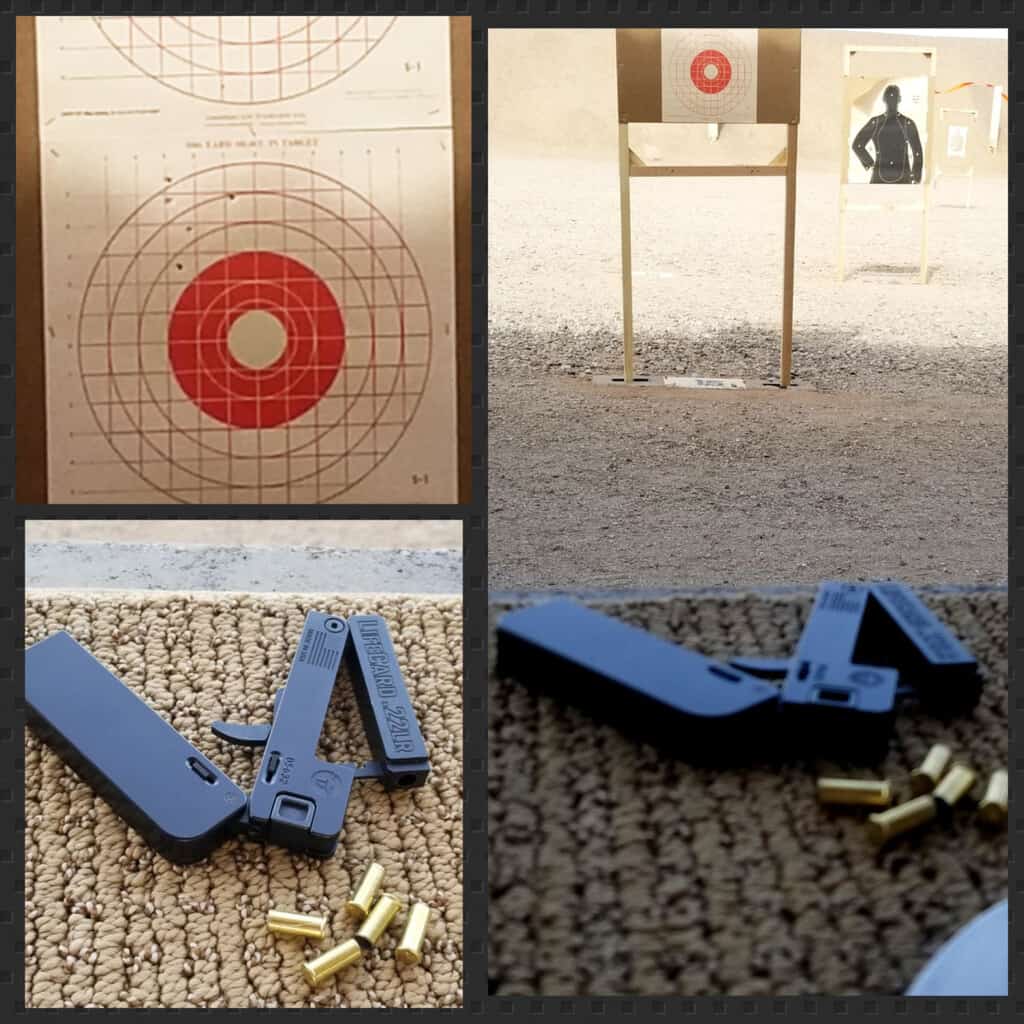
It does not have sights, it does have a simple channel machined into the top of the barrel. This allows for rudimentary sighting or what amounts to point shooting it. As you can see in the picture it groups well, though it shoots a bit high and left. The group shown was at 10 yards and was not shot to get center of the target but rather to get a group size to show you!

group shot

To shoot it you have to unfold and lock it into place, grip the bolt firmly and the firearm with your finger off the trigger and pull the bolt out until it locks into place. Aim and squeeze until it fires. After firing, keep the muzzle pointed away from people and using your fingernails or a key or a small knife pop the empty out! Reload and fire as needed. The instruction PDF can be downloaded here, LifeCard instructions for use. It is an extremely safe firearm, it cannot fire unless fully cocked, you cannot keep it cocked while folded, and the trigger is fully covered while folded. You have to consciously cock it and then shoot, making it extremely safe. Obviously, as with all firearms follow the rules of safety.

  1. Loaded or not, keep the finger OFF the trigger!
  2. Loaded or not, ALWAYS ensure the muzzle is pointed in a safe direction!

If you follow these rules you can never hurt anyone without meaning too. I know that the NRA instructors have their 3 big rules and an entire list of others. I have seen some lists of rules go pages in length. However, as with everything K.I.S.S. is essential! Keep it Simple Silly!

Like all small handguns I wanted to test it using good ammunition, I need to know it will function every time and that the round will do its job. I tested this handgun with the following ammunition,

  • CCI Stinger
  • CCI Velocitor (1400 fps)
  • CCI Segmented
  • Aguila Hypervelocity (1700 fps)
  • Aguila Interceptor (1400 fps)
  • Aguila Super Extra
  • Aguila Pistol Match
  • Remington standard
  • Winchester (333 round white box)
  • Federal Premium

All of the listed ammunitions worked, however, I chose Aguila Interceptor as my carry round in this handgun because it clocks in at 1030 fps average over 8 rounds from the short barrel; it is also a 40-grain bullet giving me more punch from a small package. Additionally, the group shown in the picture above was from the Aguila Hypervelocity round, showing that at up too 10 yards it is plenty accurate. I was easily able to put rounds inside of a 2” circle at 3-5 yards. The energy from this small round is around 94 ftlbs, which is more than adequate for a small handgun.

ifeCard® by TrailBlazer FirearmsSo why should you own this pistol? From the perspective of someone on a fixed income and with limited resources I can answer this easily. This is a pistol that easily fills multiple roles. You can use it as a last ditch or very covert defensive tool. It is NOT fast into action, it is, however, VERY easily concealed which makes it something you can get into action without notice. In addition to this, it makes a really solid hunting and trapping backup. I like having a 22lr handgun when I am hunting or trapping or harvesting meat on the farm. This really is perfect for these things. This video shows how easy it is to fire and reload the handgun.

ifeCard® by TrailBlazer Firearms

Now, this is not an inexpensive firearm, it averages $350. For quality, this is not a bad price, and of course, it is the last firearm anyone will want to ban so there is that benefit as well! I am a firm believer in having what I need all the time. This being said, something like this is perfect for your tackle box, pants pocket, purse or console of the car. It is the last ditch tool you never want to use but will have if you need it. If you need something that can be concealed and is well made and works well, this really is the pistol to get.

Here is a quick list of places you can order this amazing little handgun from, obviously you will need to transfer it in legally and fill out the appropriate paperwork for it.

  • Buds Gunshop (one of my favorite places to get firearms)
  • LifeCard (directly from the company)
  • Gun Deals (another solid place to go for good pricing)

Check with your local firearm dealer and see if they have it in stock as well. They may be able to order it for you directly or worse case you can transfer it in through them. If you have any questions please ask, and of course, also put some feedback in the comments if you have one!

Free the mind and the body will follow

Filed Under: Gear Reviews, Security

This Week On The Homestead

April 14, 2018 M.D. Creekmore

Well, folks, it’s easy to tell that spring has sprung in Tennessee…

Every morning my truck is covered with a layer of green pollen and my sinuses are killing me. The drainage in my throat, the stuffy head, and the ear pressure. Oh, how wonderful.

I love Tennessee for a number of reasons however the spring pollen count isn’t one of them. If you suffer from seasonal allergies then you might want to consider building your homestead somewhere else, somewhere where there isn’t a constant barrage of attacks on the sinuses.

I spend a large part of this week getting my new FREE course ready for you all.

As you know I make my full-time living blogging and online and it’s great. No job, no boss, and I can earn as much as I willing to put in the time to earn all right from my homestead. Being self-employed is one the if the most important part of being a successful homesteader.

And because that’s so important I put together a FREE course to show you how to do what I do. It’s a seven-part course on blogging and you can sign up for it here – Learn How To Launch A Successful Blog!

Just click on the link and then add your first name (or a nickname or whatever) and your email address and you’ll get an email asking you to confirm that you want to receive the free course, click on the confirm button and you’re all set.

Okay, now what else do I need to tell you… oh, yeah…

Instead of sending out an email to subscribers of this site every time that a new post is published I’ve decided to send out a weekly digest of posts instead. I decided to do it that way because I didn’t want to be flooding your email inbox with blog updates.

I know that time is precious and I want to save you all of the time that I can and the weekly digest does that by sending you all of the posts since the last digest and you can quickly scroll the email and then choose what you want to read and skip the rest.

The weekly digest will be sent to your email inbox every Wednesday at approximately 10:00 AM eastern time. However, you can always just come directly to the site to read the most recent updates and comments. Don’t forget to bookmark it or just do a search for M.D. Creekmore.

I noticed this morning that someone has my book 31 Days To Survival listed on Amazon for $34.83! It’s a great book, that’s for sure, however, even I don’t think that it’s worth that price, the great news is that you can get it from me for only $21.24.

Also, if you want to set up a dirt cheap homestead then I wrote a book about how to do that too, this book will show you exactly how I did it. I set it up, lived there, blogged, saved the money that I earned from blogging and bought a small two bedroom mobile home, and then saved some more and bought this house – all from blogging income and you can do it to – take my free course to find out how.

Unfortunately, I didn’t get a whole lot new done on the homestead this week. The first part of the week I mowed my grass and then the sinuses started, so I’ve stayed indoors for the most part of the last couple of days working on the free blogging course and trying to get these allergies under control.

I did order a copy of “The Backyard Homestead Seasonal Planner: What to Do & When to Do It in the Garden, Orchard, Barn, Pasture & Equipment Shed” I think this will be a great book to review here on the blog.

And this is when my allergy troubles started!

Okay, folks, that’s it for me what about you… what did you do on the homestead this week?

  • How to Start a Profitable Blog in 2018, Step-by-Step Guide
  • 30 Ways To Make Extra Money on The Homestead
  • The Prepper’s Guide to Surviving the End of the World, as We Know It: Gear, Skills, and Related Know-How

Filed Under: Uncategorized

Ducks vs Chickens For the Small Scale Homesteader

April 13, 2018 M.D. Creekmore

by MacY Osborne

ducks vs chickens for the homesteadBeginning your small homestead is an exciting process every step of the way! One of those exciting, pivotal steps in a homesteads’ early development is the introducing of livestock.  Whether you have already begun exploring the idea of creating your backyard homestead or have started living the dream, you most likely have heard the often recommended starter livestock is chickens!  They are somewhat low maintenance compared to other farm animals, take up little space, are efficient producers of eggs and meat, highly entertaining, and relatively low-cost.

Not as often considered but arguably as efficient, easy, and enjoyable an animal, even in the urban setting, is the duck. Chickens and ducks fall under the poultry category.  Both are positively entertaining, both are efficient producers of meat and eggs, both require little space, and both are relatively easy and cheap to raise.

When truly weighing the pros and cons, after acquiring the facts, one might start to see the argument over which bird is better for a small-scale homesteader isn’t so easily decided.  Maybe you live on an acre or two in the country, or maybe you live in an urban setting with a small yard.  Either one of these scenarios would be suitable for a small flock of either.

Truthfully, the backyard homestead could really never be complete without some sort of feathery friend.

If you’re looking to become a little more self-sufficient, chickens or ducks would make a fantastic addition.  One advantage to choosing chickens over ducks is the fact that there are literally hundreds and hundreds of breeds to choose from vs the 17 duck breeds typically used on the homestead and recognized by the American Poultry Association.  It is easy to find the perfect chicken breed for family needs, as well as a breed suitable for the climate, and backyard situation.

More than likely several breeds found will seem to be the “perfect fit”.  How to narrow down the never-ending choices?  Simply start with asking yourself what function and role you are expecting your chickens to serve and play.  Is a surplus of eggs top priority?

Anyone with their own backyard flock or has tasted fresh eggs will tell you that they are so much more flavorful than any egg you will find in a store!  Layer breeds are usually smaller than meat birds and cost less to feed.  The layers have been bred specifically to convert their food energy into eggs rather than to put much meat on their bones.

Leghorns, Golden Comets, and Welsumers all are considered to be excellent layers laying between 250-280 eggs per year.  This is not to say that they won’t lay more or less as it all depends on their level of care.

In the event chicken dumplings and kung pow chicken frequently make your dinner menu, it would be worth looking into meat breeds instead.  Cochin, Jersey Giant, and Dorking have all been bred to make huge meat birds.  They are not necessarily great layers because their food energy goes into making them larger and meatier.

The best meat birds are usually hybrids rather than purebreds.  The most popular chicken for the small-scale homestead is good for both egg laying and meat, the dual-purpose breed.  Rhode Island Reds, Sussex, and Silver-laced Wyandottes all are popular for first serving as efficient egg layers and then later for meat.  By the time their prime years for egg laying have passed, the dual-purpose breed has plumped up enough to butcher.

chickens and ducks hanging out on the homestead

Dual-purpose breeds neither produce quite as many eggs as the layer-breeds nor grow as hefty as meat birds but as far as space is considered they provide a happy medium for one who may not have the time or acreage to raise two separate flocks.  As long as you keep laying and meat birds separate, due to their differing nutrition requirements, different breeds may be raised together to create a mixed flock.  This makes for a beautiful collection of birds and it is fun to see the wide variety of temperaments.


Chickens require far less space than say a goat or cow!  In order for these birds to live comfortably, it is recommended they are allotted between 3sq. ft.-4sq. ft. per bird.  Folks do squeeze more into a space however, it creates an environment where chickens may be more susceptible to diseases and more likely to pick on one another.

Only two chickens are required to get the flock started. More importantly than keeping chickens from escaping will be keeping other predators from getting to your flock.  Generally, chickens do not “run away” but they have a long list of predators including larger predatory birds, cats, dogs, snakes, raccoons, and many more.

A final note on housing, birds need a place to stay dry, warm, and also to keep cool.  Providing them with a small shelter that is insulated, ventilated, and provides perches and nesting boxes are all equally important.  Coops can be easily constructed out of recycled wood, purchased brand new, or found on craigslist.

If space is super limited there are even bantam breeds that are less than half the size of “normal” chickens.  These are typically more ornamental and serve as pets or show birds.  There are competitions all over for entering beautiful poultry and can make a little side income for the homestead.


Bantams are so small they don’t make great meat birds or egg layers.  Even without entering them in shows they still have their purpose.  These sweet little chickens can really be let loose in a garden to munch bugs and till or “scratch” up the dirt.  Any chicken larger than a bantam would do some serious damage to growing plants.  Chicken poop makes excellent fertilizer.

Despite the many exciting reasons to add chickens to the small-scale homestead, one might find they are actually more of a duck person.  Ducks tend to be on the quieter side unless they are hungry or excited.  Some interesting points are to be made about the quality and quantity of duck eggs vs chicken eggs.

This may come as a surprise but many duck breeds lay more eggs than chicken breeds!  The khaki Campbell has been said shockingly to lay more than 340 eggs in a year!  Runner ducks also lay more eggs than chickens on average.  Sometimes ducks will lay more than one egg in a day.

ducks in a pool

Waterfowl also produce larger and more flavorful eggs.  It is said that duck eggs are healthier than chicken eggs.  There is a higher level of omega-3 fatty acids found in ducks eggs.  Their eggs stay fresher longer than chicken eggs due to the thicker shells.  Many folks with egg allergies claim they do not react to duck eggs the same way they do to chicken eggs and therefore may still consume duck eggs despite their allergy.

Just as there are layer-breeds, meat-breeds, bantams and dual-purpose breeds for chickens, the same goes for ducks.  Another surprise found is that ducks make a quicker meat harvest.  The most popular meat duck is the Pekin which is ready for harvest at ten weeks vs chickens which are not usually harvested before 3 months.

Rouen and Cayuga ducks also make huge meat birds that are quick to harvest.  Duck meat is comparable to chicken meat.  Both are considered lean meats.  Without stripping the duck of its skin, however, there is far more cholesterol in duck.  If you are considering ducks for a small-scale homestead again the dual-purpose breed is highly recommended.  A couple of dual-purpose breeds that are worth looking into are the Swedish and the Welsh Harlequins which are both beautiful egg laying and meaty birds.

Ducks require the maximum space that you would need for chickens.  They require on average no less than 4sq. ft. per bird.  The housing situation is a bit less complicated.  A duck will not be found perching and typically would not choose an elevated coop.   Also, ducks will lay their eggs right on the ground and do not need nesting boxes.

Simple housing is sufficient such as a dog house or even a wood box so long as they are protected from the elements.  Where the duck gets a little more tricky to keep than chickens lies in their need for a water feature.  You simply can not keep healthy ducks without having water for them to splash around in.  This water also needs to be maintained and kept or your ducks could become diseased.  A healthy pond is your best bet in a smaller space.  A kiddy pool will do just fine.

The water will definitely need to be replaced every few days for a couple of ducks and replaced every day if you have more than a few.  For this very reason, chicken keepers may argue it is worth the extra construction to house chickens vs the high maintenance of a duck pool.  The water does get nasty and if you live in a small urban backyard what would happen to the water each time it is dumped out?  Hopefully, it would not run onto your neighbor’s property.

The argument of chickens vs ducks is not easily solved.  Personal preference is what it really comes down to.  Some folks love waking up early to the sound of a rooster crowing, revel with the hens sweet clucking, and love to collect the beautifully patterned feathers of their chickens.

Others might loathe the sound of crowing, or their neighbors might, and find the down feathers of the duck to be far more useful.  It is quite convenient duck poop can be put straight in the garden unlike the chickens’ poop, which needs to be composted before used as a fertilizer.  It is definitely a possibility duck eggs will be too flavorful or not a pleasant taste, in your opinion, compared to the more popular chicken egg.


Neither choice, chicken or duck, is the right or wrong choice for the small-scale homestead.  There definitely could be a better choice for you, your family, climate, backyard situation, and neighbors though.  Assessing your needs and what you are able to provide for a backyard flock of any kind is what it truly comes down to with the chicken vs the duck.  Really though, why pick one or the other? With a little creativity in housing, it is always possible to keep both!

Filed Under: Homesteading

  • « Go to Previous Page
  • Page 1
  • Page 2
  • Page 3
  • Go to Next Page »

Primary Sidebar

Subscribe to Blog via Email

Enter your email address to subscribe to this blog and receive notifications of new posts by email.

Join 7,202 other subscribers
  • Amazon
  • Facebook
  • Substack
  • Twitter
  • YouTube

“Do more with less.”

– Minimalist proverb

Recent Posts

  • Just so you know
  • Weather Update for My Corner of Appalachia
  • Why I’m Ordering Ivermectin + Mebendazole Every Year
  • The Website’s Shutting Down (But Here’s the Plan)
  • You Are Hated! Start Training Like It!

Footer

Recent Posts

  • Just so you know
  • Weather Update for My Corner of Appalachia
  • Why I’m Ordering Ivermectin + Mebendazole Every Year
  • The Website’s Shutting Down (But Here’s the Plan)
  • You Are Hated! Start Training Like It!

More about me

Books I’ve written

Books I’ve read

Follow Me on YouTube

Follow Me on Facebook

Gear I Use and Recommend

Newsletter

Search this site

Follow me elsewhere

  • Amazon
  • Facebook
  • Substack
  • Twitter
  • YouTube

© 2008–2025 M.D. Creekmore · As an Amazon Associate, I earn from qualifying purchases.