• Skip to main content
  • Skip to secondary navigation
  • Skip to primary sidebar
  • Skip to footer

M.D. CREEKMORE

  • Blog
  • Books
  • Newsletter
  • Gear I Use
  • About
  • Contact
  • Facebook
  • YouTube
  • Blog
  • Books
  • Newsletter
  • Gear I Use
  • About
  • Contact
  • Privacy Policy
You are here: Home / Archives for M.D. Creekmore

M.D. Creekmore

Hello, I’m M.D. Creekmore. I’ve been interested in self-reliance topics for over 25 years. I’m the author of four books that you can find at Amazon.com as well as Barnes and Noble. Over the years, I’ve learned a lot about prepping, homesteading, and self-reliance topics through first-hand experience and now I want to share what I’ve learned with you.

Survival of The Fittest – Prepper Fitness Training

December 25, 2018 M.D. Creekmore

Fitness Training

by Albert S

This month a relative of mine threw his back out very badly. He was bedridden and unable to function physically in any meaningful way. Cook his own meals? No. Get to the bathroom without assistance? No. Do survival tasks like chop firewood, plant a garden, or tend chickens? No, no, and no!

This 30-something man, husband, and father of two young girls was unable to work at his white-collar managerial office job. All this happened because he bent down to pick up a 20-pound object.

Nah, it happened long before that. Through idleness and putting the body in unnatural positions for long periods and eating edible food-like substances instead of food, he planted the seeds years ago and has just started to reap the whirlwind.

What happened brings me no pleasure and I do not write to gloat but to make you think. Are you on the same path? If TSHTF today, could you live a life dramatically harder and more physical than today? Or would your knees give out after a week of walking several miles every day?

If you’re ready to embrace the physical culture, mainstream fitness doesn’t have much to offer. Glossy magazine articles with steroid-fueled monsters look impressive but aren’t very useful. Stale medical articles based on faulty government science are at heart the cause, rather than the solution, to most of today’s maladies and conditions.

Nor does true, practical, functional, SURVIVAL strength require a fancy gym with a machine for every last muscle. Actually, the body works as a unit and isolation exercises are mostly counterproductive for practical strength.

I’m not going to be able to cover every last detail in a simple article, but here are a few key concepts to keep you out of bed and in fighting shape (without ever stepping foot into a commercial gym).

By the way, the usual disclaimer applies about checking with your doctor before taking on an exercise program.

How strong is your grip?

Your hands connect you to the world. They connect a pitcher to a ball, a laborer to their shovel, and a wrestler to their opponent. At one point, the world recognized this. When we hear the story of Beowulf, we do not hear about his bench press or his bicep curl prowess, but his grip strength: he had the strength of 30 men in his hands.

Our body invests a huge portion of the nervous system to our hands. If you drew the body in proportion to the number of nerves that each part has, it would be two giant hands.

So why doesn’t the personal trainer to the local gym ever include grip exercises? Well, because they don’t “peak your biceps” or “tone your butt!”

While grip can be training by itself with heavy-duty grippers for crush grip or putting your fist into a sandbag then splaying your fingers for extension strength, it doesn’t even have to be that complicated. Simply include exercises in your regimen that already tax your grip.

If you like barbells (and a 300-lb Olympic set can still be had well under $200), the deadlift fits the bill.

If you prefer bodyweight exercises, then pull-ups and hanging exercises do the job.

If you like eclectic work, then the farmer’s carry will do. You don’t need 500 pounds per hand like the world’s strongest man. If you can carry 70 pounds per hand for distance, then your grip will be stronger than the majority (not to mention your shoulders, back, core, and legs).

Just pick up two heavy objects, one in each hand at your side, and carry them for time or distance. Done for multiple rounds with limited rest between, it’s a brutally efficient and simple strength-builder.

At my survival retreat, I’ll take a guy with a grip of iron over a guy with a big bench press and pretty biceps any day. This is a great grip exerciser at Amazon.com.

Don’t Touch the Iron Until You Can Move Your Bodyweight!

When most people think of bodyweight exercise, they think of jumping jacks, light jogging, and endless pushups for muscular endurance. Well, I’m here to tell you that your bodyweight is plenty of resistance to develop bone-crushing strength as well! By changing the leverage, bodyweight exercises are appropriate for beginners or experience strength athletes.

Take pushups. Anyone minimally healthy can stand in front of a wall and push themselves away from it. This is the place to start. Once you can do many repetitions, it will be time to engage more of your body weight by pushing up from the edge of a desk, workbench, or something else waist high. As we increase the difficulty, we pushups from the knees, do half pushups, and finally full pushups. But the fun is not done there!

Rather than increase the numbers as most people will do, once you can do 20 slow, perfect pushups in good form, bring in your hands until the index fingers touch and do close pushups. Now, the elbow is at a very narrow-angle at the bottom. Keeping control and pushing yourself out of the bottom with strength rather than bounce can be a challenge.

Then, start working towards strict one-handed pushups. A square-shouldered, square-hipped one-handed pushup is a feat of strength and even most hardened gym rats will respect (albeit from afar).

Similar progressions are available for handstand pushups, pull-ups, leg raises, and bodyweight squats. And they won’t cost you a dime.

I don’t know about you, but I’ll trust a gymnast to cover my six in a fight over any bloated bodybuilder.

Wiry Strength Trumps Muscle Mass When TSHTF.

Conventional wisdom believes that bigger muscles are stronger muscles. Wrong again. Strength comes from muscular tension, and that tension is generated by motor units, not muscles. Motor units consist of a muscle and a nerve connection. A stronger nerve connection to a muscle fiber means more tension within that fiber. Therefore, you can increase strength without adding weight by training the nervous system to tense your muscles harder.

Huge thigh muscles will chafe when you are running from zombies, and giant drooping pectorals will weigh you down when you’re trying to climb over a fence or wall to avoid marauding looters. A hulking man might also arouse suspicion among starving neighbors. So, stay lean!

Keep the reps per set low and generate as much tension as possible every time. Use a “big” movement like the deadlift (again, there’s that less than $200 barbell set) and do three sets of three, or two sets of five. That’s it: your entire “workout.” Gradually increase the weight over time, and you’ll be amazed at your own strength.

Just make sure to learn to do it properly. Make friends with a powerlifter and have them check your form. Speaking of which, making friends with a powerlifter is always better than the alternative, even before TEOTWAWKI (Click here to find out how to survive the end of the world as we know it).

And, speaking of deadlifts, that brings me to my final point:

Don’t Baby Your Back!

If your back is weak, you need to challenge it to get stronger, not baby it with back supports so that it keeps getting weaker. Properly performed deadlifts, bridges, farmer’s carries, and other total-body movements that involve the back will keep it strong. And if you spend a lot of time sitting, look into McKenzie extension therapy to put it back into balance.

Your spine is a complex structure, and small injuries can accumulate over time without much pain until one day you are tying your shoe and BAM!

Please, don’t be stuck in bed when the MZBs come calling. It’s quite avoidable, actually. It takes a minimal emphasis on remedial strength and the discipline to spend an hour or two a week (not per day) maintaining it. It’ll be much easier to get the most out of your gear, training, and skills when you can stand upright.

Click here and scroll to the bottom of the page to see MD Creekmore’s favorite fitness machine.

Filed Under: Health and Fitness

Convincing Others to Prepare – It Can Be a Challenge.

December 25, 2018 M.D. Creekmore

Convincing Others to Prepare - It Can Be a Challenge.

by Scott in the Midwest

Do the following simple things with those you care about, and I firmly believe it will bring you more happiness and more benefit than any single “prep” activity you can do on your own:

Be open with them about your feelings on being independent and prepared for any future events.

Find activities to do with them on a regular basis that incorporate your mindset into their lives.

I worked in marketing for more than 10 years, and I know that the most powerful motivator is not telling people to try something, but by having them actively experience it themselves. That is why there are so many “try it risk-free” and “90-day money back guarantee” offers out there. The companies offering them know that if they can get you to just sample their offering, there is a great possibility that you will choose to buy the product or service.

Let’s take the same approach that has been profitable for so many companies and apply it to expanding the number of people in our lives that can develop a survivalist attitude. I feel very fortunate to have been born with an independent nature and good planning skills, but sometimes I get concerned that others don’t see the same looming problems in our society as I do. No matter how much I prep, it won’t be satisfying if I survive a crisis, only to see my brothers, their spouses and children, and my parents and friends suffer, especially when I could be doing things right now to get them familiar with being more self-sufficient.

However, I feel that there is a “prepper inside of all of us.” Most people just need to be introduced to it in a casual, non-threatening way, rather than be told that the end of the world is soon approaching.

Some things I do with family/friends to introduce them to my prepping:

-One Sunday each month, I visit my parents and can vegetables with them, using the old canning equipment and jars that, until recently, were gathering dust in their garage. It’s a good way to pass the time during a visit and they keep the finished product in their basement. It gives me piece of mind to know that they have a growing inventory of food at their home, particularly now as they are entering their 70s and are slowing down.

-I have a niece and a nephew, both under the age of 10. Every few months, we sort through the loose change I collect, keeping all nickels and any pennies minted prior to 1982 for their high content of copper. It’s fun for them to lie on the floor and sort through all the pieces of money, and they are becoming aware that some coins remain valuable over time because of their content. For further emphasis, I purchase a United States Silver Eagle for each of them on their birthday and at Christmas.

-Occasionally, I visit one of the local coin stores and make small purchases of pre-1965 U.S. coins. If my brothers and I are getting together that day, I arrange it that I pick them up, so they will come into the coin store with me. They now know what “junk silver” means, and how it is different from coins being minted today, which is something that they were totally unaware of just 12 months ago.

-For friends and co-workers, I loan them books on prepping from my personal collection, all of which I have purchased secondhand from garage sales, local bookstores or online. I also forward them links to information on the Internet (like this blog) that I find extremely helpful.

For the most part, I have found people to be at least somewhat interested in why I think the way that I do and how it motivates me to prep on a regular basis. Sometimes, however, people immediately assume that I have some sort of radical political ideas (my planning has nothing to do with any politics), or that I am not as much of a “patriot” to this country as I should be. If I really wanted to start an argument, I would explain to them that our country was founded by men and women who believed in being self-sufficient, and not being dependent on energy and financing from other countries. Instead, I just smile and calmly reassure them that I don’t wish anything bad to ever happen to any of us; I just want to be in control of daily necessities as much as possible and be healthy and able to lend a hand should a crisis ever develop.

To those people who openly doubt the wisdom of prepping and being self-sufficient, I offer the following suggestion, one that does not cost anything: take one item that you spend money that is not vital to your survival (most of us have at least one thing), and go for a period of time, like one month, or 100 days, without buying that item. You don’t have to tell anyone about this, in case you are worried about failing and what others may think. Just try it, holding you accountable. At the end of the allotted time, you will feel a sense of accomplishment and empowerment, that you have greater control over your actions, your destiny, and your future than you may have ever thought.

That feeling is why I do the prepping that I do.

These are a just a few of the things that I do and share with other people. I am certain that you can come up with simple, low-budget activities that best suit your circle of family, friends and even strangers. The hardest thing I find sometimes is to keep perspective and remain patient. Those of us who frequent this blog and others like it take so much of our understanding on the importance of prepping and survivalism for granted.

However, in terms of numbers in our society, what are we, 1 in 100? 1 in 1,000? 1 in 10,000? Now, I am certainly not in favor of disclosing your bug-out location to anyone or promoting how much food, water or precious metals you may stored; but, think about how much more confident we would feel about a post-crisis situation if many more people were made aware before the fact, and started to develop a similar mindset and stockpiling of materials, no matter how small at first.

As Mahatma Gandhi said, “Be the change that you want to see in the world.”

Filed Under: Prepping

Raising Livestock on a Small Piece of Property

December 24, 2018 M.D. Creekmore

goats-small-homestead

by Robbins

I have strived for the last 10 years to become more and more self-sufficient. This was not the result of any event or premonition. I had no inkling there was a prepper movement or survival community. It was just something in my DNA. I wanted the security and peace of knowing I was prepared.

I wanted to take care of my family if something were to happen that would interrupt our modern existence. I was very interested in how people existed on small homesteads in the ’30s and ’40s.  This led to my interest in raising and eating livestock on my small piece of property.

If our modern infrastructure were to become disrupted for 1-2 weeks our supply of animal protein would disappear. This means all canned tuna, ham, salmon, spam, beef stew, chili, roast beef w/ gravy, chicken, and turkey would be used up very quickly. The fish, chicken, and beef in our freezers would go first, then the canned meat products, and finally our long-term stores.

Our menus would change immediately. The ability to raise your own meat supply would be vital. The time to learn how to raise your own food is before you have to. The learning curve is steep and unforgiving.

The gestation period of the animal considered would be important. The number of births and days to maturity also. I would want an animal that can produce the most offspring reliably. It would help if it could accomplish this with little assistance. Can the animal feed itself? Does it compete for resources with you?

What type of workload does it generate for you?  Ideally, I would look for the highest gain with the least input.   Can it be butchered easily at home? Is the amount of meat at butchering a quantity that can be preserved in one day? Preserving meat without refrigeration would mean a race against time on butchering day.

How much land and fence is needed. Are you going to be able to manage its health yourself? These are all questions that I hope to answer below.

The animal I would promote for consideration is the modern sheep. Sheep are the oldest domesticated animal used for food. They have been raised by man for  7-9000 years. I have raised the Katadhin/Dorper breed for many years. I know that a lot of people don’t think they like sheep\lamb.

Usually, this is from a bad experience eating badly prepared lamb. Some can’t reconcile the image of eating a small adorable baby lamb. Some think it is too gamey. Let me explain.

The Lamb you buy at the grocer is by no means a benchmark for lamb palatability. They are usually from wool breeds of sheep which have a stronger taste. The katadhin\dorpers that I raise are hair sheep; they do not grow the thick wool coat that is so strongly associated with sheep.

They, in general, are much milder tasting than wool breeds. Also, the idea that you are eating a baby lamb is false. The sheep that you eat are butchered at 6-12 months. This is the age which they would begin to breed and weigh from 50 to 80 lbs.

One of the attributes I find desirable in the hair sheep I raise is, of course, the lack of wool. This means the sheep devote their nutritional intake to growing meat and making more sheep. No large woolen coat to trim. Their hair coat gets thicker in the winter and is shed in the spring.

This means less work for you, fewer parasites making a home out of the wool, and more heat resistance. These sheep will mature to around 125 lbs for a ewe and up to 200 lbs for a ram. The gestation period for sheep is an average of 150 days (5-months). This means you can have 3 lamb crops every 24 months.

These sheep have the ability to breed and lamb year round. While not all ewes in a flock will breed back as quickly as others I consistently have ewes that do with zero breeding management from me.

This means a mature ewe can put a lot of meat walking around in 2 years. I can count on mostly twins out of 1-year-old ewes, younger ewes will throw out single lambs, and I have triplets every year. This means lambs of all ages in your pasture year round. My small flock of 20 ewes lambed in January.

I culled and sold off all but the best 14 ewes in August. Three rams went to the butcher and in the freezer. Last week (8\20) I had a ewe drop a single lamb. It looks like a few more will lamb soon. These few lambs will mature in six months and either be retained for breeding, sold or butchered.

Now the great thing about having a flock of sheep is the MEAT. Walking, baa-ing Meat. If we enter into a SHTF situation these animals are going to be life-savers. A self-renewing resource of hi-protein and hi-energy food.

A flock of 1 ram and 3 mature ewes could generate between 0-6 lambs every 8- 12 months. (I include 0 because nothing is for sure, animals die, predators succeed, or you have a bad set of lambs or mother ewes) Let’s say we have a lambing success of 150%. That means you add 4.5 more animals to your flock each year.

You may save the best ewe to raise. This still leaves you with 3 or more sheep that can be added to your food supply. They will be happily grazing (gaining valuable size) until you need them. These animals will be easier to manage at butchering time weighing between 50 to 100 lbs and yielding 20 to 50 lbs of high-quality meat.

They could be staggered every 3 or four months to stretch out your food supply. If you were in a TEOTWAWKI situation you could smoke, can, salt cure, or jerky the meat. (You have been stockpiling non-iodized salt haven’t you?) In a grid down event meat will disappear quickly.

These animals will become very valuable. They may have to be locked up at night and only grazed under supervision or guard. As a self-perpetuating food supply, these animals can be a very important part of your long-term food plan.

A flock of 1 ram and 3 ewes could be raised on an acre and a half with good grass. It would work best to divide it into 3 equal 1\2 acre parcels and move the sheep every 2-3 weeks as the grass gets low. In the heart of winter, you may have to bring in some hay.

These sheep are parasite resistant. Keep the sheep moving from paddock to paddock to beat the parasite load that builds up when they stay to long in one place.

Stockpile wormer, preferably 2 different kinds. Worm them before they show signs of sickness. Be proactive. Sheep have a bad rap as looking for somewhere to die. This is far from the truth. They often don’t show signs of sickness until it is too far progressed to be successfully treated, and then you waste your time and wormer treating a dead sheep walking.

Make a schedule for checking your flock and stick to it. Be a smart shepherd and cull aggressively.

Only the best sheep should be retained. The Ram is 1\2 the herd’s genetics. Breed for parasite tolerance and good mothering. Don’t reward bad mother ewes or sickly sheep by keeping them in your flock.

Each winter I cut brambles and privet hedge and throw over the fence to supplement their food. They go insane for anything green in winter.  These hair sheep are browsers as well as grazers and will clean up brambles like goats do. Start small and remember to balance your number of animals to your amount of grass. They will multiply like credit card debt when you keep them healthy.

If sheep is not a fit for your situation, try rabbits, chickens, goats or ducks. All have short reproductive cycles and can be intensively managed. I like sheep because they eat grass and turn it into meat without a lot of labor from me. —good luck

Also Read:

  • Small Acreage Homesteading Guide
  • The Lost Ways Book Review

Filed Under: Homesteading

How to Make and Save Money Living in the Country

December 24, 2018 M.D. Creekmore

barn on the farm

Homesteading is also about earning a living! by D. in Kansas

My husband and I were freaking out about the economy in 1978, so moved from a metro lifestyle in another state to rural Kansas where we fenced and planted a half-acre garden. I learned to can, soon filling the basement with Mason jars. We went “off the grid” for a while, so learned to live by the light, getting up early and going to bed early. Taking a bath by candlelight is no fun.

We bought gold and silver. We kept it under our own control. We stocked up on ammo and such (click here to read – how many rounds of ammo does a prepper need). Tools. Food. Seeds. Practical things. We had a 90-foot well. We became vegetarians. Life was good. Weekend auctions were our entertainment. It was so much fun driving to different farmstead auctions, meeting super-nice people, spending a very few dollars for fabulous deals.

About auctions. I cherish a 12-seater dining room table and caned chairs purchased at auction for a mere $210. After kids put their knees through the cane years later, it cost $22 per chair to repair in a small Kansas town. The next generation of kids, that gent was gone, so it was $450 to repair just two chairs in Wichita. Yow!

This year, I was blessed to meet a 90-year-old in Missouri who repaired three chairs for $75 total. I then bought the materials from him to cover the next round of repairs in 10 years, for all the chairs.

Had to drive for 18 hours total to deliver then retrieve my chairs, but it was a fabulous deal. He and his wife are awesome. Spent quite a bit of time with them. If you need a caned chair, they have a basement full of them that he has rehabbed. He has amazing war memorabilia, and she has a great garden. They were peeling apples and making applesauce last time I visited.

Back to survival. I substituted, tutored, and sold vegetables. I protected our homestead and worked hard in the garden, while my husband traveled and sold industrial supplies. We saved as much as we could. Gold went from about $200 to $800. Before long, we had saved enough to live 10+ years (frugally).

We had essentially traded even from our city home to our rural home, giving up a newer house with a small yard for an older home with land. It was my first experience with high ceilings, plaster walls, a basement, and tall windows being so high off the ground.

The glass in the windows had “runs” which distorted the view. Our outbuildings included a super-high-ceiling garage for a combine, a stable, and a large bee-keeper’s workroom tricked out with a deep sink and toilet.

There were pear, peach and cherry trees, and lots of roses, irises, and lilacs. The asparagus bed was impressive. I had never eaten asparagus, but now love it!

I bought all the Mother Earth News issues, and How to Live on Five Acres, and similar reading. Still, have them all. Excellent information. I spent winters poring over seed catalogs, planning next year’s planting.

I started a home-based business, to be able to work at home and raise kids. My “office” was a country sunroom with windows on three sides. No A/C, very hot in the summers, but my husband installed a gas heater from Graingers, so winters were relatively pleasant.

Here’s what I can advise.

Live on less than you earn. Life has waves. There is a rhythm. Up and down. Seasons. Hills and valleys. Cut off the tops of the hills, and tip them over to fill the valleys, and you will be fine. The difference between what you earn and what you spend is the source of your WEALTH.

For business, SOLVE PROBLEMS! All the money in the world is hidden under the rocks called problems. Great opportunity is brilliantly disguised as insolvable problems. Be a CONTINUAL LEARNER, and you will do well. While I had to order and read a bazillion books, today’s access to information makes it incredibly easy to learn. SPEND THAT TIME. Learning is the best thing you can do with time.

People will trade. The gent who painted our house was happy to work many evenings (until dark) in exchange for our old Toyota for his daughter.

Beans + Rice. All the amino acids! There’s nothing as delicious as a big bean pot plus cornbread. Soak dried beans in water overnight in the fridge, then cook them the next day. Almost all day. Slowly. The more different beans, the better.

Peanut butter + milk. All the amino acids! If you don’t like to drink milk, then soften peanut butter and mix in dried milk powder. My son, a National Merit Finalist, grew his great brain on beans/rice and pb/milk.

No chemicals. Homemade oil spray protects fruit trees. Homemade pepper spray protects most vegetables. Plant flowers, with a bias toward perennials. Established irises can survive anything. For annuals, petunias, zinnias, and hollyhocks prosper in hot weather.

Deadbolts. Lock up. Keep a loaded (though shell not chambered, to protect kids – unless children are well trained) shotgun by your bed. When you get up to pee during the night, pick up the shotgun, and go through the imagined motions of chambering a shell, taking off the safety, and shouldering the gun.

After a while, you can do it in about two seconds, second nature. The life you save will be your own, or your family’s. The chuck-chuck sound of chambering a shell is unmistakable and a powerful deterrent… maybe. It would be terrible to have to actually shoot someone, but hey, don’t break in!

Think critically. Be aware. Consider who is telling what, and why. Though country people are generally wonderful, some may try to take advantage of nice people. Do NOT give out information to anyone who calls or visits you. If you call them, that’s different.

Freeze your credit. At present, it costs $30 to freeze with all three bureaus. You will be unable to get a car or home loan until you unfreeze it (another $30), but you will not be a victim of identity theft. DO NOT be the low-hanging fruit for thieves! You can de-activate charge cards until you need them. When you are ready to go shopping, call and re-activate.

One in the hole. ALWAYS have extra.

When you need something, buy two. Back to business now. If you work for wages, you are taxed on EVERY dollar you earn. If you own a business, you are taxed on the dollars left over after you have spent for what you need.

And, if you happen to lose money occasionally, a business can GET BACK federal taxes for the past three years, and in Kansas, not have to pay state income taxes for up to 10 years forward. Sweet. So every fourth year could be a loss. You cannot take depreciation on a loss year, so plan for that. Overall, a small business can avoid most income tax (but not payroll or other taxes).

If you operate a small business, you are in charge of your schedule. You never need to miss a school meeting, a doctor’s appointment, or a child’s sporting event. Not much need for daycare. Children who grow up with a WORKING parent are blessed. They learn what work is ­– that parents don’t disappear all day then show up with money.

They learn how to speak to customers, how to organize, how to plan, how to follow through. The best thing I EVER DID was start a business so that I could stay “home” to raise kids.

Though my little business started out small, over the years it has grown to provide jobs to dozens of people. I am proud of that. Our kids come to the office, and I spend time teaching them to be learners and problem-solvers. Kids are our future.

Also, read:

  • 31 Simple Ways To Make Extra Money on The Homestead
  • How to Start a Profitable Blog – A Step-by-Step Guide
  • Start Saving Today and Live Your Homesteading Dream Tomorrow

If I can do it, anybody can do it!

Filed Under: Self-Employment

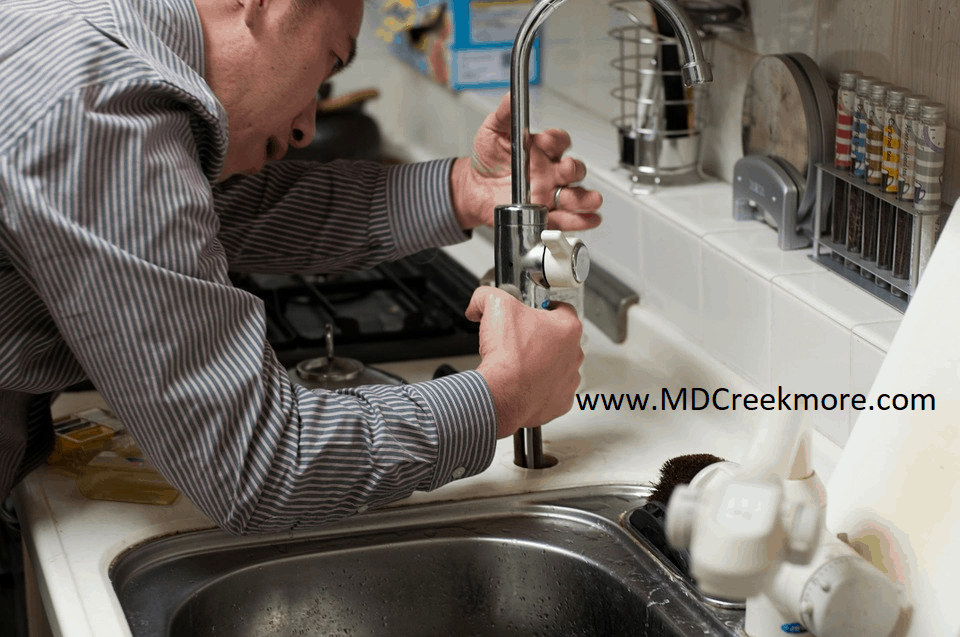
Fix It Yourself: How to Fix Things Around The House

December 22, 2018 M.D. Creekmore

fix stuff around the houseby Karen I

Being able to repair things is a useful skill to have – believe me, when you’ve knocked your iron off the ironing board repeatedly, it’s awful handy to know how to fix it.   Tackling simple mechanical objects like an iron or (my recently fixed) Foodsaver vacuum machine (see article – Can I Use My FoodSaver® to Vacuum-Seal Mylar Bags?) can be intimidating, but with certain exceptions, you can do it.

First off, find out everything you can about your non-functioning device.  Find the manual (you did keep the manual, yes?  Got it at a garage sale?  Time to Google!), check the manufacturer’s website, check sites that have manuals for sale if absolutely necessary.

You might find that instructions for your device aren’t readily available.  Fear not; much of what is inside an appliance is just air, and there is no magic dust, just mechanical and electrical/electronic parts.

The safety nag:  never, never work on anything while it’s plugged in if the cover is off or there is the possibility of getting shocked.  Electricity is your friend, but it also has a nasty sense of humor and loves to zap you.  Keep water out of electrical devices when you clean as well.

In a pinch, if you have to, a barely damp Q-tip, moistened with rubbing alcohol helps dig out crud and gunk.   Never force things to fit; having to press hard or use a screwdriver to move a latch to get something to fit isn’t forcing, trying to get things to go where they don’t fit or belong with the potential to break is.

Take care if you are using any tools that have sharp edges; you can cut yourself with a screwdriver, so work away from yourself, not toward your body.  You do not want to be driving your husband through a 25 MPH residential district at 40 MPH, panicked and looking for someplace to get his punctured hand fixed as I did once.

A muffin tin or pie pan is useful for keeping parts from rolling off the table, and paper and pencil or pen is useful for making a note of where things go like ‘long screw goes in the upper right-hand hole looking from the front’.

The first step (and hardest, believe it or not) is to get the case off or open it up.   Once you’ve done that, stop and look at the guts of the thing.  Make a diagram of where things are in case you get interrupted, or take a picture.   Doesn’t have to be technical – you can put ‘black pump gizmo’ on your diagram as long as you understand what it is.

You already know what isn’t working, so next, try to figure out just what you are looking at.  In an iron, for example, you have something that holds water to make steam, something to heat the water, something that lets you set how hot the water is, and tubes to get the water from the filling inlet to the water tank and thence to the steaming ports, plus where the electricity comes in (the cord).

The reason for doing this is because you need to find what isn’t working, and if the iron isn’t heating you don’t need to focus on the fancy steam gizmo that lets you shoot a shot of steam, you need to find what heats the water and the path it takes.

Here’s a more detailed example.  My Foodsaver II was acting funny while it was vacuuming a bag, and then completely stopped heating and sealing bags.  This renders the device unusable, and since I had things I wanted to vac-pack, I needed to fix the thing a.s.a.p.

I took it into where I had decent light to work with, and it being unplugged already, began by taking off the bottom of the case.  I set aside the screws, which were all the same length, and gently removed the bottom.  Inside, I noticed that there is an electrical transformer on one side, some wiring, some tubing, and what looks like a pump.

I also noticed that there was a partial blockage of one of the clear tubes that goes from the inlet in the device where you put the open end of the bag to the pump itself.  Solving at least part of the problem, then, was to see if I could get the blockage out because that’s an easy potential fix.  I found the ends of the affected tube, removed it from its fittings, blew out the offending blockage and replaced it.

At this point, I decided to check and see if this resolved the problem, so I put the case back on, minus the screws, and carefully set it on the kitchen counter and plugged it in and tried to seal a spare, empty bag.  The vacuuming part of the problem seemed to be fixed (at least it worked better with no intermittent stalls/chokes), but still no heating and sealing.  Oh, well…back to the repair bench.

The cycle of the machine is to pull out air and then heat and seal the bag of stuff I’m vac-packing, and since the heating and sealing only happens after vacuuming occurs, vacuuming has to be finished before heating can start.  Vacuuming seemed to work, but obviously wasn’t finishing.  Since vacuuming occurs inside what looks like a little pump (there’s a black knob-like thing I could turn and see that a piston-like device moved in and out, so obviously a pump) the next step was to take a look inside the pump itself.

I removed the set screw from the arm going from the motor to the pump arm so that I could remove the arm, onto which the pump piston was attached, and two long skinny bolts with washers and nuts that held on the pump part onto the mechanism that makes it move.

I carefully pulled out the pump piston and looked inside.  Aha!  Gunk, plus some tiny bits of something white, like miniscule rice grain bits, were inside the pump.   I carefully cleaned out any residue with a Q-tip dampened with rubbing alcohol, then got some fine point tweezers and carefully picked out the tiny white bits, then reassembled and replaced the pump in the machine.

I put the case on to test it again, and this time the machine worked, fully vacuuming and then heating and sealing.  The only tools I used were a Phillips screwdriver, fine-tipped tweezers, and my brain.

Now you might think ‘so what, this is a vacuum packer and I need to fix something else’.  Well, the basic process is pretty much the same, no matter what you work on:

  • Identify the problem
  • Open up the device
  • Identify the parts and try to figure out what they do and which ones might be the source
  • See if you can reconnect, blow out, use a Q-tip on, run a pipe cleaner through
  • Reassemble to test
  • Repeat until you’ve fixed the device or determined that you can’t fix it

What if you mess up the device and can’t reassemble it or it won’t work even as good as it did before you worked on it?  Well, think of it this way:  it wasn’t working properly before.  You didn’t lose anything except some time and gained some experience working on things.  Not all devices lend themselves to being fixed by consumers/amateurs, and sometimes all you are doing is forestalling the inevitable:  getting a new one.

Now, there are, as mentioned, exceptions to what can be worked on safely or reasonably.  Most clocks and watches of the mechanical sort are beyond the average DIY’er, and things that require testing while plugged in may fall in that category because of the difficulty of getting the covers on and off repeatedly (and nothing should be tested with the covers off).

Some devices consist of a lot of electronics or things like lasers (DVD players come to mind as an example of things that the consumer can’t easily fix).  However, many devices can be fixed by following this process, and you shouldn’t be afraid to try your hand.

Filed Under: Uncategorized

How to Be a Prepper in an Apartment

December 21, 2018 M.D. Creekmore

How to Be a Prepper in an Apartment

by K.M. Nevel

Given that the majority of Americans live in heavily populated urban areas, it’s likely that many of us are living in apartment and condo complexes and buildings, whether by choice or out of necessity. It’s reasonable to assume that apartment renters are just as likely as a homeowner, if not more so, to suffer a disaster or emergency event, so survival preparedness is critical.

But living in an apartment presents several challenges to even the most experienced survivalist. The two biggest issues that an apartment renter must consider when preparing for that disaster or worst-case scenario are security and a lack of storage.

Security is hard to come by in an apartment complex, for many reasons. Perimeter control is especially difficult. Parking lots are rarely well lit and the same can be true for courtyards and walkways. If your building is lucky enough to have a doorman, they’re usually not anyone who is well-trained or capable of fending off an intruder or determined burglar. Security alarms are often ignored completely in favor of more insurance company friendly fire alarms.

Those same insurance company policies may allow for “security cameras,” but the likelihood that anyone is monitoring them is slim and, on the rare occasion that they are working, they can be defeated, bypassed or avoided altogether.

Dogs are usually prohibited because of the noise and the potential damage involved, and, even if you’re fortunate enough to live in a dog-friendly complex, you’ll likely be restricted to a smaller dog that’s more bark than bite. The good news is that, while a smaller dog won’t protect you physically, it will give you plenty of warning that you’re about to have company. Enough time to allow you to fist your firearm of choice, for example.

Another threat to your security are those pesky neighbors that seem to mind everyone’s business but their own. The ones who watch you hungrily as you move in, eyeing with envy your widescreen TV and your camera gear.

These same neighbors seem to be present whenever you come back from the range, too, looking on as you carry various weapons cases and expensive camping gear into your abode. They can always be found in the lobby when the mail comes, noting your gun catalogs and survival magazines. You can almost estimate in your head the number of days until your place is robbed and your valuables taken.

Major modifications to your doors and windows are usually not an option, so security upgrades can be limited. The landlord probably won’t allow you to reinforce door and window frames, so a visit to the hardware store is the best you’ll be able to manage, but anything that blocks or slows down an intruder is a step in the right direction.

Obviously, in an apartment complex environment, weapons security is incredibly important. Gun safes are great to have, but they are tough to move up flights of stairs if you’re above the first floor or two, and they take up a lot of space. You won’t be able to bolt it to the floor, but I guess you could always lay it on its back and use it as a coffee table.

Absent a gun safe, put trigger locks on all your guns. Savvy burglars may not bother with them if they can’t find the keys, and, if they are stolen, they’ll at least be unusable and therefore more likely to be recovered by police.

Storage space can be an equally complicated issue when you live in an apartment. I suppose you can stack canned goods and ammo boxes in the shapes of chairs and couches, but, even with the right cushions, your friends are going to notice. Hilarity will then ensue at your expense.

Storage space inside your apartment is at a premium and is likely taken up by belongings that you use every day. Long-term storage for items that you rarely – if ever – use, is hard to come by. A spare bedroom can be utilized, of course, and it will keep supplies out of your way but close enough to rotate into your pantry, when appropriate.

A basement can also be modified to fill this need, and, with a little shelving, can be an ideal storage space for a multitude of survival goodies.

Finding an apartment with a securable garage can make things much easier, especially if you plan on having enough supplies on hand to last a month or so. Water, food, ammo, first aid supplies and other emergency equipment can take up a lot of room, so you’d better plan on parking your car somewhere else.

An open parking space with a storage bin can also be used, but again, theft is a problem. Hinges are easily removed and even the best padlock can be defeated with a suitable application of force and determination.

You may also consider a storage facility if you can afford the expensive rates. Storage lockers come in a wide variety of shapes and sizes – and are priced accordingly – but you should make sure that it’s close enough to reach, by foot, when things get ugly. Otherwise, you just provided supplies for your morally-challenged neighbors on the other side of town when the proverbial crap hit’s the fan.

A better alternative is to find some like-minded friends who live in the neighborhood and form a security plan that addresses the need – and storage – of essential items for all of you in the event of an emergency. Such a plan is also handy when money is an issue since you will have the advantage of several incomes to purchase common supplies.

In addition to having critical items readily available, you’ll have the added benefit of trusted companions to rely upon at critical moments. And that can mean the difference between life and death, no matter how well supplied you are.

Failing any of these, the trunk of your car can be a godsend. Emergency water, food rations, first aid kit, spare batteries, and extra ammo can all be stored safely and for long periods of time, and nobody but Superman is going to know it’s there. This provides the added benefit of being handy if you’re caught away from home when disaster strikes.

As an added security measure, disable the trunk release on the dashboard of your car so that the key is needed to open the trunk. This will defeat the smash-window-pop-trunk-steal-goodies method popular among car burglars and thieves.

Even with limited space and the increased risk of theft, apartment residents can be prepared for any eventuality. Secure your property as best you can, discuss evacuation plans with friends and relatives, build your stockpiles (essentials first, then goodies) and, first and foremost, prepare for the defense of yourself and your family. When tragedy strikes, you’re going to be on your own.

And finally, given the state of the world at this moment, you’d better start today.

Filed Under: Prepping

  • « Go to Previous Page
  • Page 1
  • Interim pages omitted …
  • Page 51
  • Page 52
  • Page 53
  • Page 54
  • Page 55
  • Interim pages omitted …
  • Page 79
  • Go to Next Page »

Primary Sidebar

Subscribe to Blog via Email

Enter your email address to subscribe to this blog and receive notifications of new posts by email.

Join 7,202 other subscribers
  • Amazon
  • Facebook
  • Substack
  • Twitter
  • YouTube

“Do more with less.”

– Minimalist proverb

Recent Posts

  • Just so you know
  • Weather Update for My Corner of Appalachia
  • Why I’m Ordering Ivermectin + Mebendazole Every Year
  • The Website’s Shutting Down (But Here’s the Plan)
  • You Are Hated! Start Training Like It!

Footer

Recent Posts

  • Just so you know
  • Weather Update for My Corner of Appalachia
  • Why I’m Ordering Ivermectin + Mebendazole Every Year
  • The Website’s Shutting Down (But Here’s the Plan)
  • You Are Hated! Start Training Like It!

More about me

Books I’ve written

Books I’ve read

Follow Me on YouTube

Follow Me on Facebook

Gear I Use and Recommend

Newsletter

Search this site

Follow me elsewhere

  • Amazon
  • Facebook
  • Substack
  • Twitter
  • YouTube

© 2008–2025 M.D. Creekmore · As an Amazon Associate, I earn from qualifying purchases.