• Skip to main content
  • Skip to secondary navigation
  • Skip to primary sidebar
  • Skip to footer

M.D. CREEKMORE

  • Blog
  • Books
  • Newsletter
  • Gear I Use
  • About
  • Contact
  • Facebook
  • YouTube
  • Blog
  • Books
  • Newsletter
  • Gear I Use
  • About
  • Contact
  • Privacy Policy

Blog

How To Find and Buy Land for a Small Homestead

August 6, 2018 M.D. Creekmore

When you are buying a small homestead

Are you ready to begin homesteading? You’re joining a growing number of Americans who are returning to our roots and living off what the land provides.

So how do you get started? It’s kind of obvious but you need land. In order to find the perfect piece of land, you should consider all the benefits associated with it such as increasing land value, lower cost of maintenance and especially freedom to utilize it in any way you want.

The good news is you don’t need thousands, or even hundreds of acres, to have a fully functional homestead. Indeed, you can homestead on less than ten acres. But it’s not something you should take lightly or do quickly.

As you begin, there are several factors to consider when you are looking for your perfect homestead.

What size property do you need?

The first question you need to ask yourself is what size of property you need for your homestead. And the key word is ‘need,’ and not necessarily ‘want.’ My focus is on smaller homesteads, those less than 10 acres, but there is still a significant difference between an acre or two and 10.

On a small property, it will be tough to have room for cattle to graze, particularly if you are using the property for anything else. You would likely have room for a family milk cow, but not a lot more.

So just spend time considering what your homestead will look like. And what you want it to look like in the future. Have those plans drawn out so you don’t overbuy or underbuy.

How far out do you want to be?

You also need to consider location. Homesteading on a decent sized piece of property is generally not something you do in a subdivision. That means you will likely be moving out of town. The question is, how far out can you be, or do you want to be?

Do you want neighbors? For some, they want to be as far away as they can be. That usually works well because prices would tend to be less the more rural you get (in most places). But think of life’s basic necessities. Are you okay with having to drive 30 or 40 miles to a drug store? Maybe 15 or 20 miles is more your liking. Just make sure you are happy with the location before you sign the dotted line.

Do you want to live off the grid?

For some, the beauty of homesteading is the ability to be totally self-sufficient. You can do that.

Others don’t want to take it quite to that extreme and want electricity, water, relatively accessible roads. Keep this in mind when you spot that dream piece of land.

How much do you want to spend?

As with any real estate transaction, you need to have a budget. You don’t want to make go broke homesteading, but it’s more than just the final price tag of the property to pay attention to.

How much work needs to be done? Not just to the house, but to the property. Does it have outbuildings, or will you need to build them, or at least put money in repairing them? Does the land need to be cleared out? It stands to reason you will need to put some money into making the property right for your needs.

What kind of land do you need?

When you think about the plans for your homestead, consider what you need the land to provide. If you are relying on a wood stove to heat the house, do you have sufficient trees for your needs? If you will have cattle, does it have open land for grazing?

These are just a couple examples of questions you need to ask. In most instances, you can work the land to make it right for you, but that might not be preferable.

How much work do you want to do in preparing the land?

As a follow up to the previous question, think about the work you want to put in. One response might be that you just want to purchase a small farm or homestead that is being used in a fashion similar to what you envision.

On the other end of the spectrum, you can start completely new. You can buy property that you need to clear, build a house and any outbuildings and bring in water and electricity. This will allow you to have a homestead drawn to your exact specifications but will be time-consuming and costly.

Is the property appropriately zoned?

Make sure you can have chickens, cattle or other livestock on your property. In some instances, you need to make sure you can have outbuildings. The further out you go, the less of an issue this will be. But do make sure you check this off your list.

What about Internet access?

If you are running either a full-time or side business from your homestead, or maybe just a blog, you want to have reasonably fast Internet speeds. Unless you want to spend all of your free time on your computer.

Does it make sense for your needs?

By purchasing a homestead, you are committing to a new lifestyle. It can be a great experience and something you can pass on to your children.

But, you want it to work for you. If you want to be close to school, be close to a school. If you want to be close to town, be close to town. If you have no need for a hundred acres, don’t buy a hundred acres.

This property needs to meet your needs. The previous questions served more as a checklist or bullet points to ponder as you find a property. This is a little deeper. This is about finding a property that is right for you and your family.

You don’t want to make a purchase and regret it. By thinking about these questions, you will be off to a great start in your new life on the homestead.

If you want even more in-depth prepping and homesteading information then please check out my best selling 176-page book “How To Survive The End Of The World As We Know It – Gear, Skills, and Related Know-How. It’s available in paperback and well as Amazon Kindle.
Filed Under: Homesteading

P-38 or P-51 Can Opener Review

August 6, 2018 Jesse Mathewson

can opener pic

Not everything made for the military is truly well made. In many cases what is made for the military, regardless of nation of origin, often is low-end and fits into a rather loose set of restrictions guiding its building.

This is the case with the amazing folding can opener known as the P-38 and P-51. 

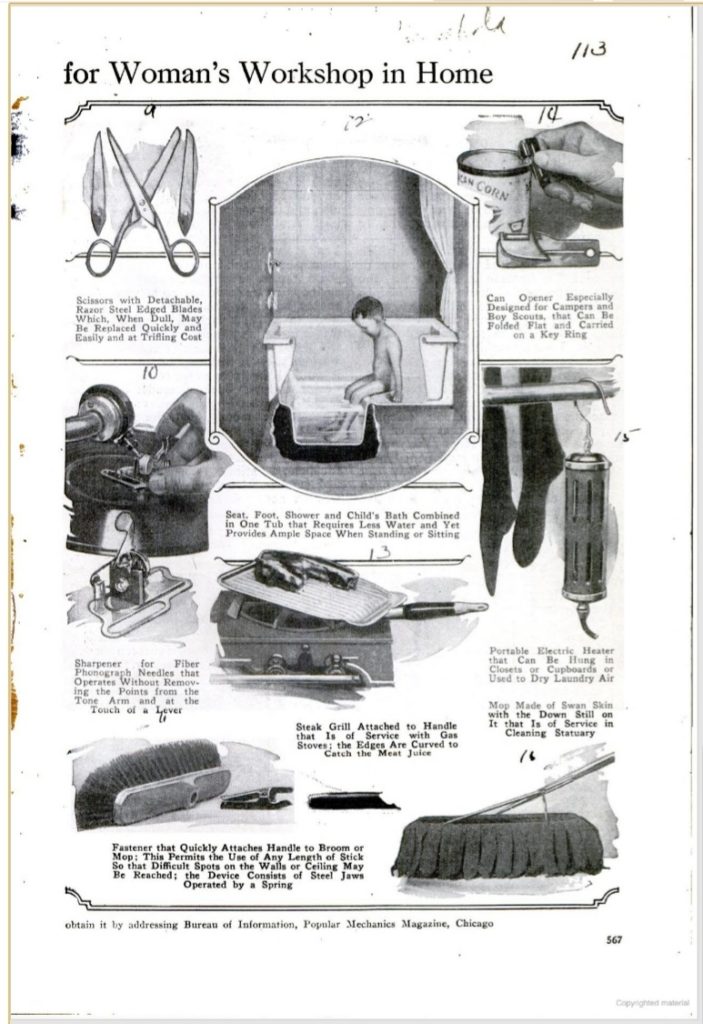
The P-38 can opener was designed for soldiers in 1942, it filled the need for a can opener for the C Rations that existed in some form through the early 1980s when MREs replaced these. It should be noted that an identical tool was featured in a 1924 Popular Mechanics issue in tools for women. (see picture) The provenance as we can see is slightly murky.

Can opener

This is not a history lesson, I will leave that for others who are willing to dig further than I am at this time. It should be noted that it was not the Army that invented it, but rather an individual working under contract out of a private laboratory in Chicago, possibly far earlier than 1942. The P-38 or P-51 has never been known to break, need sharpening or rust. It simply works and it works very well!

Every single soldier that has had one has embraced them and ends up keeping them for many years. This truly is one of the best inventions ever made. It is a true multi-tool in that its design allows use for many applications and it does those well without fuss or being large and complicated like so many approaches to the same issues today.

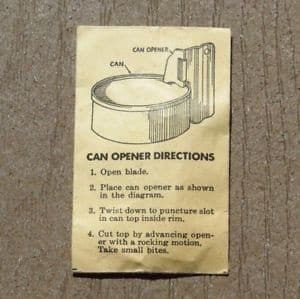
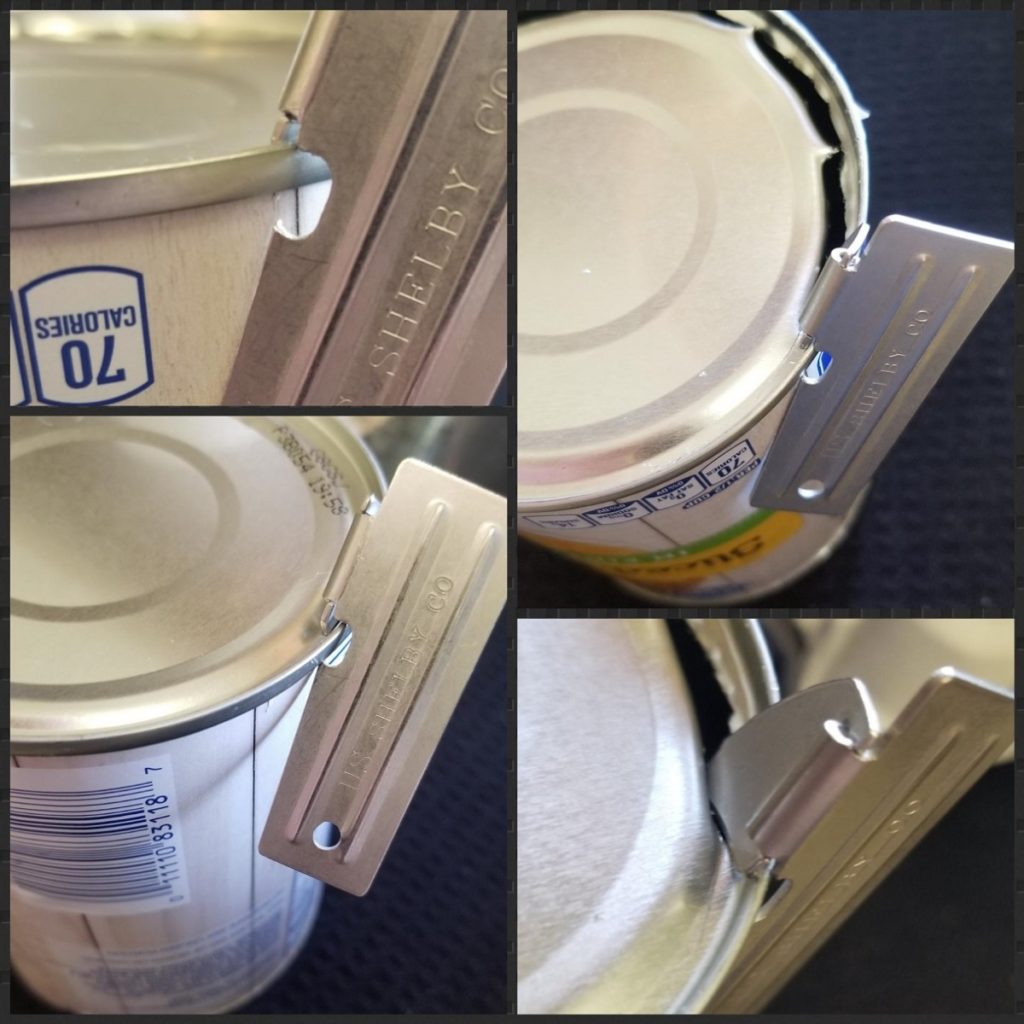
They are extremely easy to use and inexpensive to purchase. Here are the instructions for use of the can opener regardless type as printed by the military.

can opener instructionsCan Opener Directions

  1. Open blade
  2. Place can opener as shown in diagram (see attached diagram)
  3. Twist down to puncture slot in the top of the can
  4. Cut top by advancing opener with a rocking motion. Take small bites as you move forward.

Sterilize it after every use!

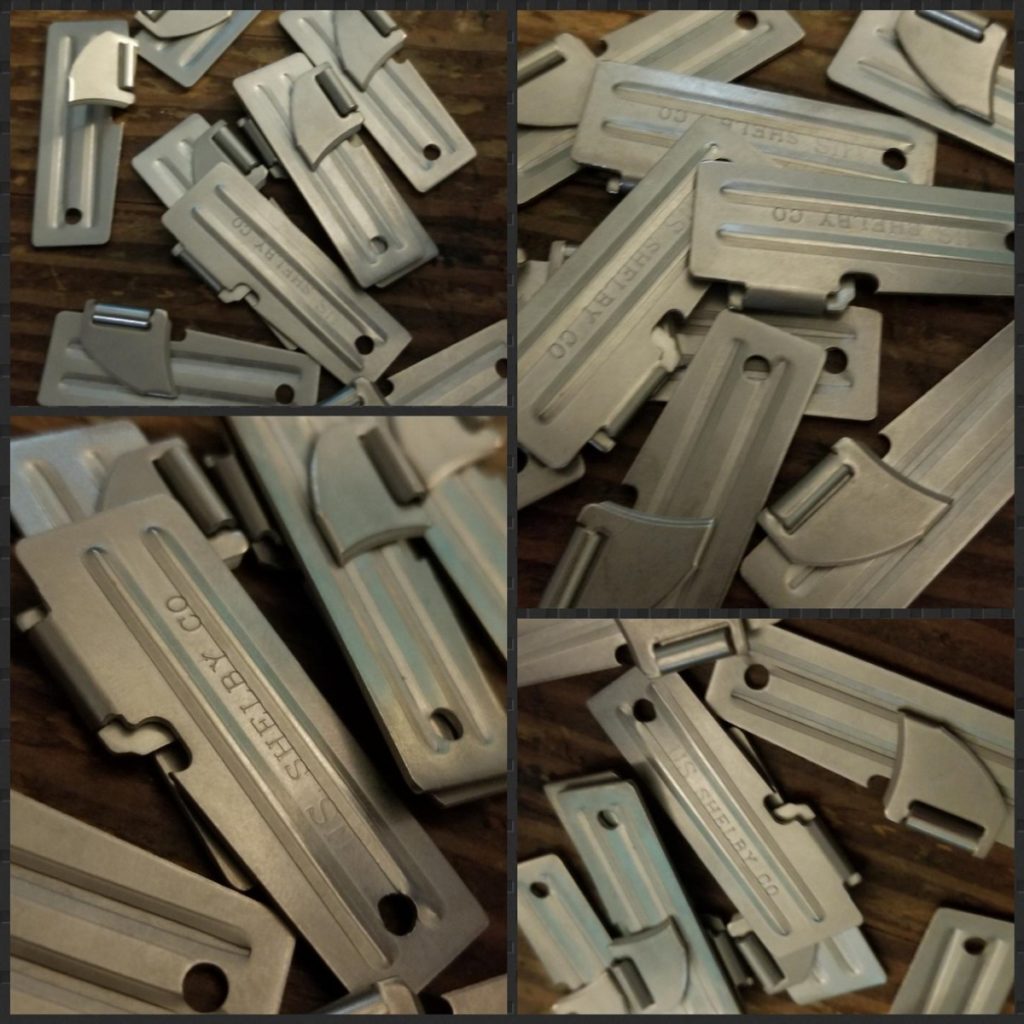
There is really nothing I can say that will detract from the overall benefit seen in this simple tool. I would suggest purchasing U.S. Shelby Co. labeled product versus others available. Because of the very low cost to produce these great tools, there is no real market for knock-offs, the profit margin is extremely low. You can buy a package of ten of them for under $10 using this link here. And yes, I have specifically tested and used these. Again, they make amazing stocking stuffer type gifts.

If you are thinking, why do I need 10 of these, well the answer is literally this good. One for the keychain, two for the tool drawer in the kitchen, one for your car and one for each bug out type bag, another for traveling and always have spares because…the airport security may indeed take yours. Personally, I have purchased several dozen over the years. Between losing them and giving them away it is definitely something to buy a few of!

There it is, my review of the P-38/P-51 can opener and with a definite buy a couple more as a suggestion I can end this article with a two thumbs up. Hope you enjoyed this article, comment and let me know when you got your first can opener and if you use it regularly.

can opener pic

Free the mind and the body will follow

Filed Under: Gear Reviews

How To Take A Shower In The Woods – Handy Shower Review

July 30, 2018 Jesse Mathewson

water in desert

Showering while hunting, fishing, camping and just being outside after a good hike is something that is essential and refreshing. Personally, my family has used, abused and gone through 3 or 4 solar/camping showers in the past decade.

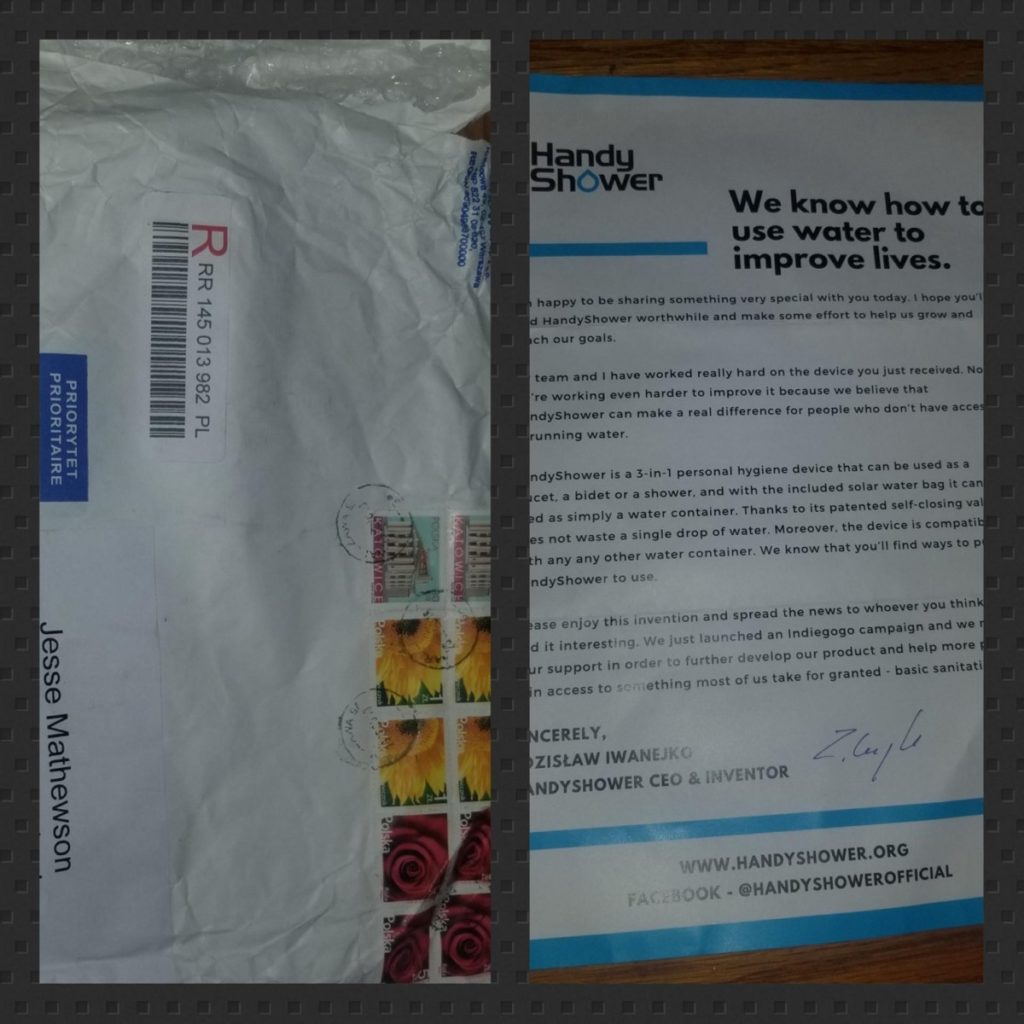
When the creator of Handy Shower contacted me I decided to accept his offer to review the product in exchange for the product. This is one of the ones I am certainly glad I accepted and did not turn down.

Due to former jobs and current hobbies and by virtue of maintaining a network of individuals I have been able to stay ahead of many of the innovative approaches that have come into the camping, hiking, hunting, fishing, prepping and general out-doors world!

While this invention has a distinctly European feel, especially when you realize it has a bidet head attachment, this is what really makes it a worthwhile investment. I will say again, in any situation cleanliness is absolutely an essential need to remaining disease-free and comfortable.

In the out of doors one can easily work up a good sweat and honestly, I find that if you are consuming enough water and not gorging on typical sodium rich, carbo based fare you will rarely actually smell and a simple rinse with clean water a couple times a day is enough to keep you healthy.

handy shower

However, I can also say that from experience any time you transition into a changed diet or set of external circumstances our internal setup will often rebel and the result can be mudslides or concrete if you know what I mean!

If you do not have adequate toilet paper or facilities this can easily lead to potential infections not too mention looking and smelling like the hind end of a Russian hog after a Texas mud bath! I devised some fun approaches over the years and get really tired of needing to always be prepped for this. To this end I adjusted my diet permanently and my exercise level as well. That being said, keeping clean is still an essential part of daily hygiene!

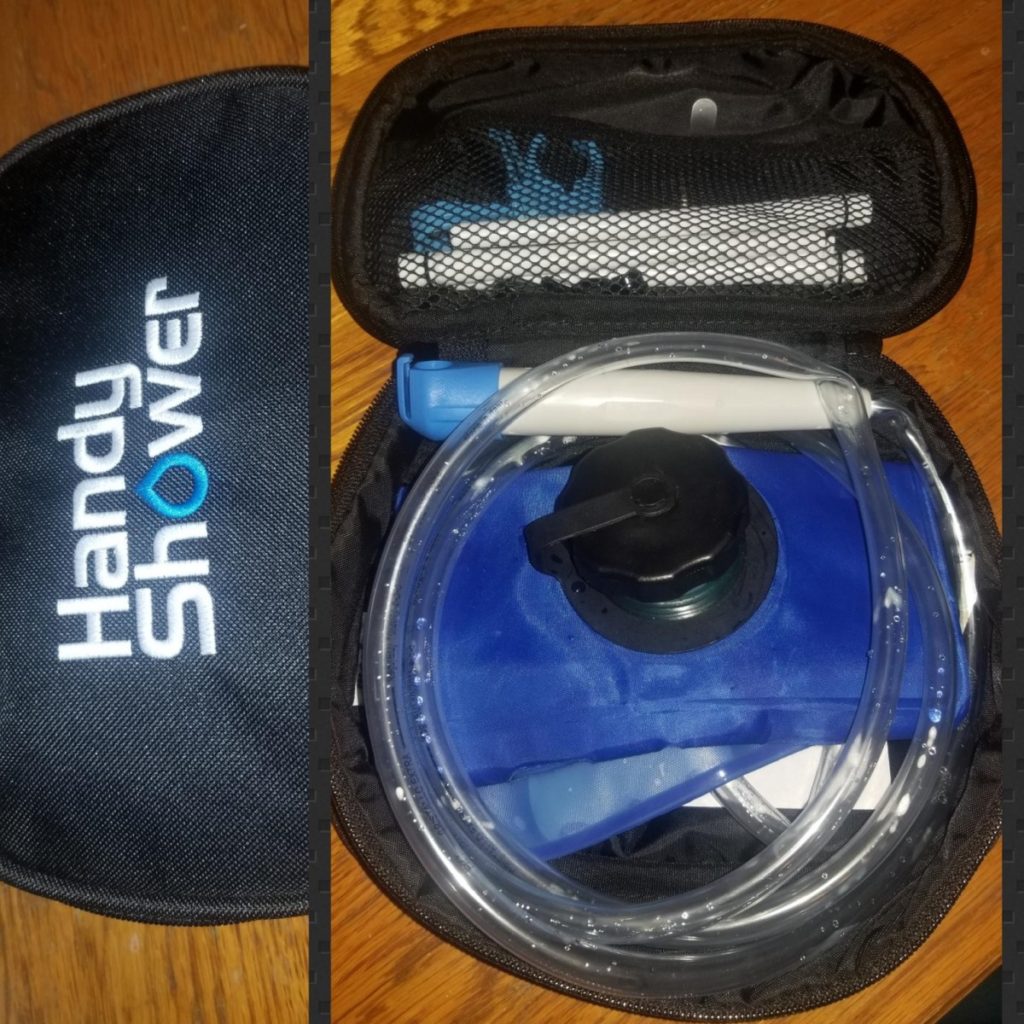
Handy Shower is pump based and is not gravity or battery powered. You can use your hand or the included foot-pump to keep water flowing. The way it is built you do not need anything more than a simple canteen to supply the water, though I did like and recommend the awesome bag that is included in their Premium version.

The different heads for showering or washing with are fun to test and take seconds to attach and detach. As with everything, make sure you are washing your body over 50 yards from your drinking water and any open sources of groundwater or food as well as living space! I cannot stress enough the importance of having a very select place for washing up!

Hand Shower which is currently active on IndieGoGo found here, offers an all in one package at a reasonable price. And after testing our unit over the course of the last week with a teenager, 9-year-old and adults attached, I can honestly say it is a winning option for campers, day hikers, climbers and virtually anyone that is active and out of doors. Let’s go over the features offered!

  • You control the water exactly, no long turn on and shut off approaches, using a simple pull line or included folding foot pedal (which seems rickety but really does work well) you remain in control of the water flow, how fast, how much or how little is your choice!
  • It works for washing your hands, hair or privates if and when needed and is easily switched between roles, with little fuss and no overt mess! (for we Americans bidets are a bit odd, but they really do work quite well!) never use it for that and still benefit!
  • Empty it weighs right at 400 grams or 14 ounces, which is really quite light and packages into a small easily managed package!
  • Set up really is very simple, first I did it without using instructions. I than checked the instructions and with one exception had everything put together properly. Easy to setup definitely easy!
  • Durability, mine withstood the onslaught of a teen boy, pre-teen girl and other adults for several days without incident. In fact, it was so easy and fun to use that everyone kept coming to the camp to check it out as my children got around the area and met other youngsters. This led to additional uses for testing and showing them as well.
  • It comes in a few different forms, I suggest the premium kit, however, the magic happens with the shower head and attachments themselves. So any of the kits will work for you.

Unfortunately, this shower is only available on IndieGoGo. I can recommend it with two thumbs up and 5 stars all the way. As long as you treat it well it should treat you well for many years to come.

The pump and attachments are well built the only real weakness I see would be in the foot pedal, it is definitely built to run with a lighter touch and not push the pedal through the floor. A harder pump does not cause it to work better, rather be smooth and consistent like you are spray painting a car and it will run well and for a long time to come!

handy shower

Make sure to check out the websites linked to the name Handy Shower in the article and let them know I sent you over! Get on their mailing list and definitely get one of these amazing products today! It was designed and is being made in Poland at the moment but they have plans to produce in many other places as demand increases.

I have a few items I love from Poland, and they do tend to engineer in a robust manner. Additionally, it is a family run business venture and the included talent is downright amazing!

Free the mind and the body will follow!

You Might Also Like:

  • You Don’t Need To Be Wealthy to Homestead
  • Urban Survival Basics: How to Survive in the City When Disaster Strikes
  • Moving Toward Self-Reliance for the Working Poor

Filed Under: Uncategorized

Homesteading and Prepping Open Discussion Forum

July 28, 2018 M.D. Creekmore

Well, folks, it’s one of those mornings… one of those mornings that I wake up feeling like I’ve been hit by a Mac truck with Hillary Clinton at the wheel and driving distracted because she was looking for a Trump Russia collision.

That’s the bad thing about living in Tennessee is the constant bombardment by some sort of pollen, dust, or mold spore. I love Tennessee but honestly, I’ve thought about moving to a different part of the country to find some relief from this allergy/sinus crap.

Anyway, enough complaining about that… by now most of you know that I have another blog, TN Concealed Carry and while that blog in less than two months old it is already getting more traffic than this one…

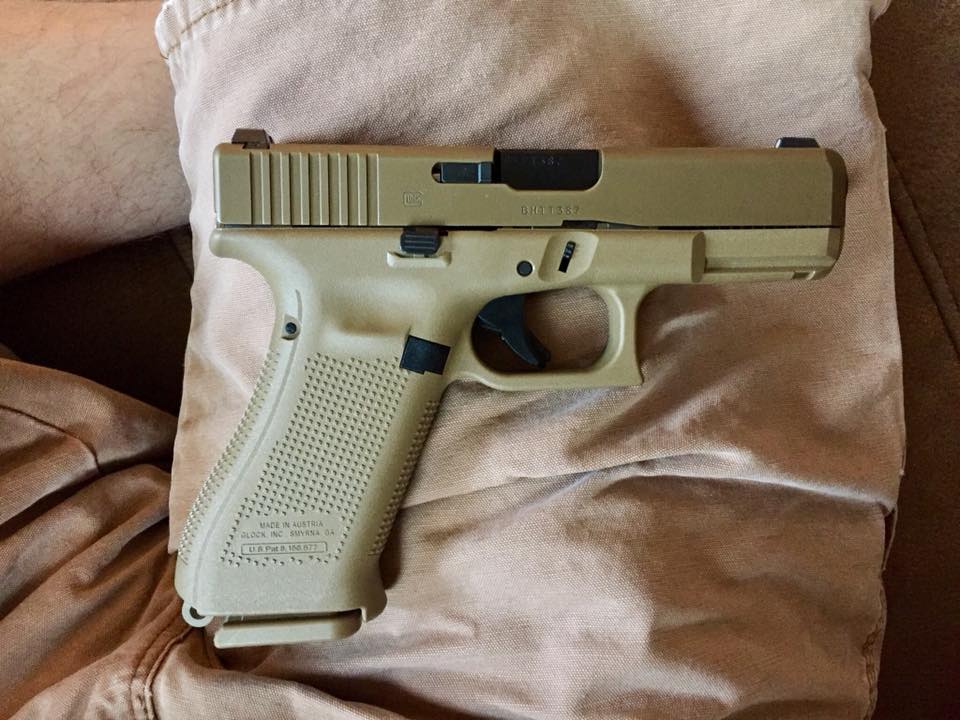
As for preps, I this week, not a lot of food or gear wise, however, I did buy a new Glock 19X a couple of weeks ago and it’s awesome!

Glock 19 X

Well, folks, over to you…

Filed Under: Uncategorized

Long-Term Food Storage How To – Plastic Buckets, Oxygen Absorbers, Mylar Bags

July 27, 2018 M.D. Creekmore

Long term food storage plastic buckets

I store all my grains, beans, and other dry foods (besides sugar, salt, or sprouting seeds) inside food-grade five-gallon plastic buckets. There is some controversy over what is considered food grade. Most (but not all) buckets with #2 inside a small triangle on the bottom are food-grade. But the only way to be certain is to contact the manufacturer and ask.

You can also order food grade buckets directly from Amazon.com – click here to check the current price and availability.

I buy mine from the local hardware store in the paint department. They also have them at my Wal-Mart, but I prefer to buy from local business owners, if possible. Sometimes they can even be gathered free from bakeries and restaurants. Just make sure that they only contained food products, not paint, chemicals, or other things that can make you sick or dead.

Foods packed in oxygen do not store as well as those in an oxygen-free atmosphere. Oxygen absorbers (available from Amazon.com) work by removing the air from the enclosed container, leaving an atmosphere of 99% pure nitrogen in a partial vacuum inside the buckets.

Do not open the bag of oxygen absorbers until you’re ready to use it because they will absorb oxygen from the surrounding environment, rendering them useless. Have everything ready to go before you open the package. Any unused oxygen absorbers can be stored inside a small canning jar until needed.

Be sure to have everything ready to go before you start. Line the inside of the bucket with an appropriately sized Mylar bag (also available from Amazon.com). These help to keep light and moisture out, thereby extending the storage life of the foods inside. The Mylar bag also offers a layer of protection between the food and the plastic bucket, if for some reason the bucket that you are using is not food-grade.

Pour the food into the buckets a little at a time, shaking each bucket as it is being filled to settle and distribute the contents. Fill each bucket to about ½ inch from the top and throw in one 2000 cc oxygen absorber in each five-gallon bucket of food.

Sealing the Mylar bag is simple. First roll the top of the bag closed on one end, leaving an opening at the other. Then press out any air that is trapped inside. Next, place a 2×4 piece of wood across the top of the bucket, pull the Mylar bag over the 2×4, and seal it across the board with a clothing iron that is set at the highest setting.

Quickly put the lids on each bucket and pound shut by laying the board across the top and striking it with a hammer or rubber mallet (or use a Gamma Lid). After a few hours, the absorbers will create a vacuum that will cause the lids on the buckets to “pop down”, which indicates that there is a good seal and a proper atmosphere for long-term storage.

Be sure to label each bucket with a permanent marker with the date, contents, and weight written on the front.

You might also like:

  • The Doomsday Preppers Quick and Easy Food Storage Checklist
  • Free Printable: 21 Point Prepper’s Checklist For Stocking Up at Wal-Mart

Please add your thoughts, comments, and long-term food storage tips below…

Filed Under: Prepping

How to Store Water for Emergency Preparedness (and It’s Purification)

July 25, 2018 M.D. Creekmore

Prepper water storage tips

Without the threat of severe weather or the need for immediate emergency medical care, potable water will be your first concern following any type of disaster. I always advise my consulting clients to strive for at least three independent sources of water for cooking and drinking. For example, stored water, a water well, and a rainwater collection system.

I cannot stress enough the need for reliable water sources. Without water, most people will die in only 3-4 days – a lot sooner if the weather is hot and you have no shelter, or you have to do a lot of physical labor or activity. So how much water do you need for emergency preparedness and how to you store it?

The answer to the question is that a person needs about two quarts of water per day to stay healthy barring extreme weather or a lot of physical exertion. Adding a minimum of one gallon of water for cooking, cleaning, and sanitation, a medium-sized family of four requires almost 30 gallons of water per week at a minimum just to stay alive. That is around 1,440 gallons per year. This water can be stored in a number of way including five-gallon water jugs for smaller amounts and cisterns for larger amounts of water storage for emergency preparedness… 

Unfortunately, most preppers do not have enough room to store 1,440 gallons of water. Therefore, I suggest that you strive for, at a minimum, 55 gallons per person. If you live in an arid region of the country, I suggest you double or triple this amount.

You will also need to have several different methods of water purification available to you. We will go into detail about water purification methods in the following paragraphs, as well as how to store water long-term.

A Death by Contaminated Water: A few years ago, my grandfather told me a story that illustrates how deadly contaminated water can be. It happened in the summer of 1934 when he was only 9 years old. He was out in the fields gathering corn with his dad, brothers, and sister.

He said it had to be at least 100 degrees because the sun was bright in the sky and the sweat burned his eyes as it dripped from his forehead. His eleven-year-old sister got thirsty, and instead of going to the house to get water, she drank from a nearby stream. She died a few days later.

Upon further investigation, it was discovered that a cow from a nearby farm had died upstream from where she drank, contaminating the water. They used the water from that same spot for years with no ill effects, so they thought it was safe, but it was not.

From U.S. Army Field Manual 21-76

By drinking non-potable water, you may contract diseases or swallow organisms that can harm you. Examples of such diseases or organisms are:

  • Dysentery – Severe, prolonged diarrhea with bloody stools, fever, and weakness.
  • Cholera and typhoid – You may be susceptible to these diseases regardless of inoculations.
  • Flukes – Stagnant, polluted water – especially in tropical areas – often contains blood flukes. If you swallow flukes, they will bore into the bloodstream, live as parasites, and cause disease.
  • Leeches – If you swallow a leech, it can hook onto the throat passage or inside the nose. It will suck blood, create a wound, and move to another area. Each bleeding wound may become infected.

Moreover, pollutants from human activities often find their way into the water – e.g., trash, animal feces, fertilizers, herbicides, oils, heavy metals, salts, and pollutants from vehicles etc. It’s impossible to tell with 100% certainty what water is safe to drink without laboratory testing.

There are, however, some general guidelines that can help. Running water is generally safer than still water. Below are tips to keep in mind as you look for water:

  • Look for clear water.
  • Avoid water that has algae growing in it.
  • Avoid discolored water.
  • Avoid water from marshes/swamps.
  • Avoid cloudy water.
  • Avoid water that has an odor.
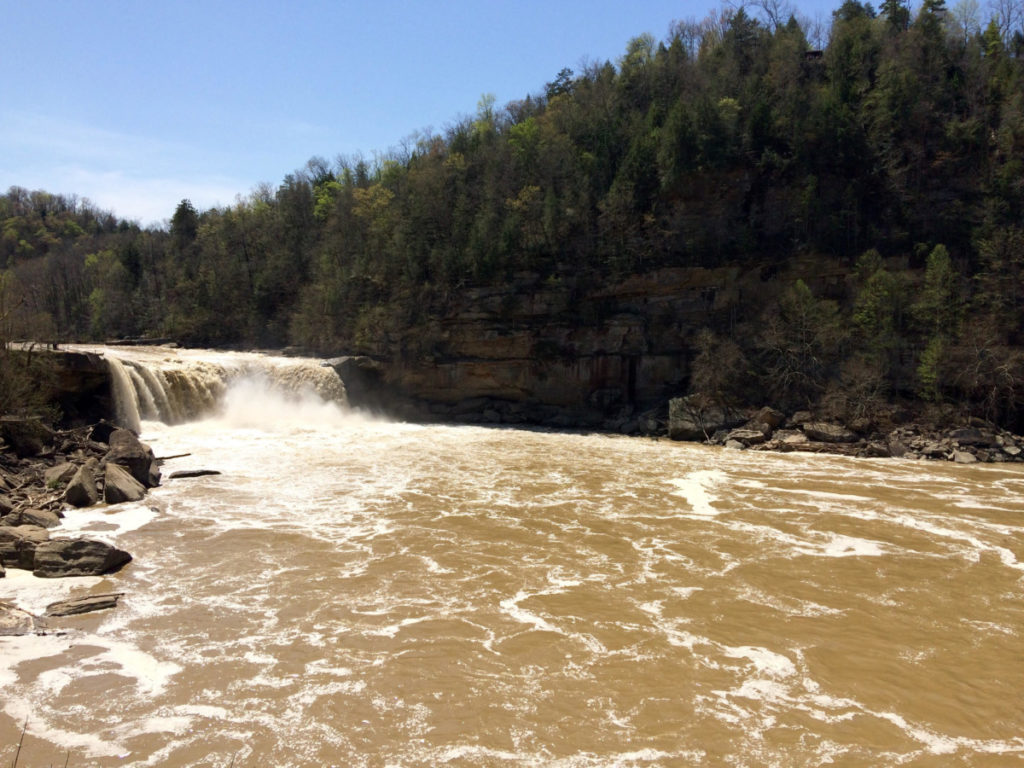
  • Avoid floodwater.
  • Water always flows downhill.
  • Listen for the sound of frogs.
  • Never eat snow without first melting it to avoid speeding up hypothermia.
  • Freshly fallen snow on a clean surface is fine but old snow might be contaminated with bacteria.
  • Never drink water from a lake or stream that is near or downstream from agricultural land, factories or mines.
  • Rainwater is perfectly drinkable as it falls from the sky.
  • The safest way to treat questionable water is to first boil it and then filter it.

Water Filters

berkey filterThe spring water where I live runs in a constant flow from the side of the mountain and it is as clear as bottled water; however, I will not drink it or use it for cooking without first running it through my Berkey water filter. A good water filter is necessary, and one of the very first survival preps that you should invest in. I suggest that your first choice is a Berkey water filter system.

My father and grandfather used to drive out to my place most weekends and fill their jugs from the spring – they drank and cooked using the water without any filtration or other purification. They have never had any trouble. Still, I prefer to filter all of my water before drinking.

The Berkey filters are extremely effective at removing pathogenic bacteria, cysts, parasites, chemical contaminants, and impurities. The elements have an indefinite shelf life and will filter at least 3,000 gallons of water before needing replacement. My filters are stored in zip-lock bags inside a small plastic tote.

Boiling Water

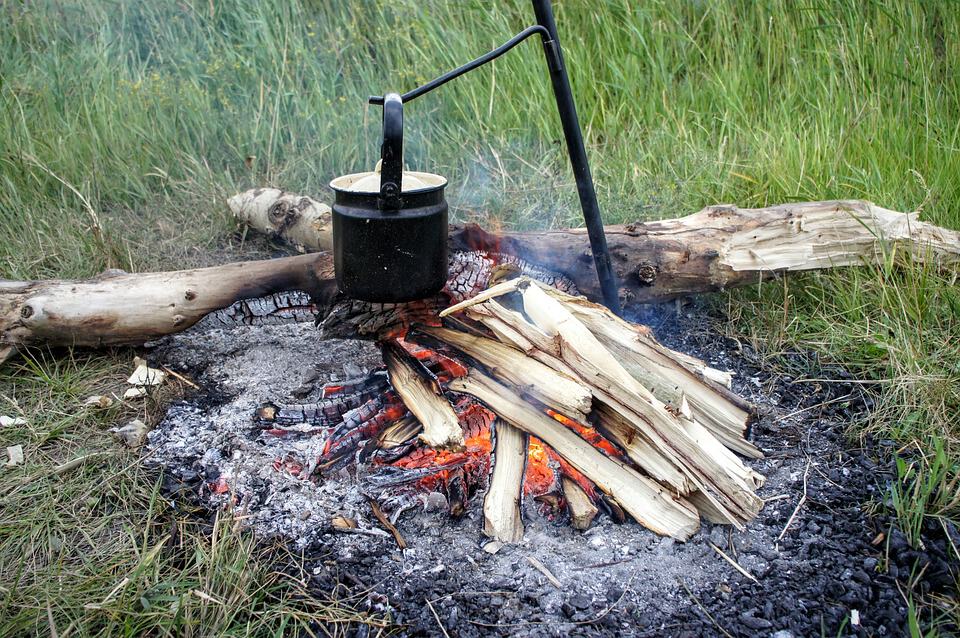
boiling water for purification

Boiling water is one of the surest methods of water purification. This method of water purification will effectively kill viruses and bacteria. However, boiling will not remove chemicals and other pollutants such as lead, oil, and fuel.

To purify water by boiling, all you need is a heat source, a suitable container, and water. Bring the water to a rolling boil to kill any viruses or bacteria that may be present. Contrary to what a lot of survival “experts” say, you do not have to boil the water for five to ten minutes in order to kill any viruses and bacteria that it might be harboring. All that is required is that the water reaches a rolling boil.

Warning: boiled water tastes stale; however, the taste is improved greatly by pouring the water back and forth between two containers to re-oxygenate it.

Sodis Method of Water Purification

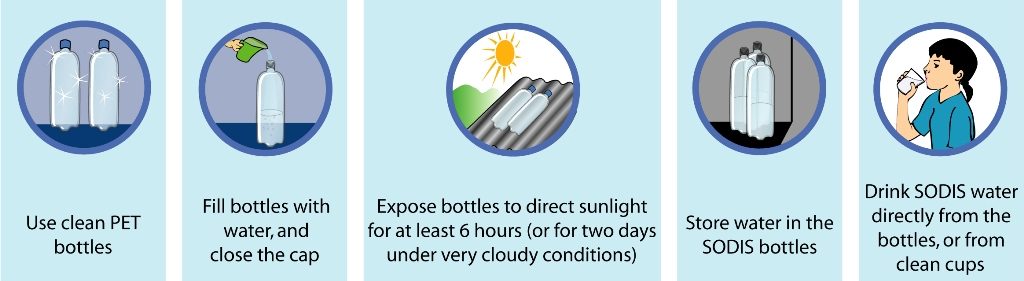
The Sodis method of water purification is one of the simplest and most cost-effective water purification methods available to the prepper or anyone needing potable water; however, like boiling, the Sodis water purification method does not remove chemicals, metals or other solids. All you need are plastic (PET) or glass bottles, water, and sunlight. The image below from https://goo.gl/m03zMY explains it better than I can in words (image used with permission).

Water Purification Tabs

Water purification tabs have been used by hikers and the military for years. They are a lightweight and portable way to effectively purify water for safe consumption. However, like boiling and the Sodis method, these tabs will not remove chemicals or metals.

The military suggests adding two tablets to a quart of water and letting it sit for thirty minutes or more before drinking. However, there are a number of different brands of water purification tablets on the market and you should follow the exact instructions for the brand you are using.

Purification with Bleach

water purification with bleachWater purification with bleach is one of those methods detailed in every survival book and any article that even hints at ways to purify water. However, it is not my first choice. If possible, I would use another method such as boiling or Sodis.
Water treated with bleach (only use unscented bleach) tastes like, well like bleach. Long-term use may lead to an increased cancer risk. I do not like it and will not use it unless no other alternative is available. Add four drops of unscented bleach (or two teaspoons per ten gallons) to each two-liter of water and let stand for 30 minutes before using.

Making Urine Drinkable through Distillation

Urine can be made drinkable (and clean) via simple distillation, which will also work for seawater. However, the downside to distillation is that it takes a significant amount of energy to boil the water for the duration required.

Pre-filtering

No matter what water purification method you use, it is a good idea to “pre-filter” any dirty or murky water. You can use a coffee filter, a clean shirt, or a bandana. This will help remove any larger particles from the water, making it more potable and increasing the life of water filters used.

Tips for Storing Water in a 55-Gallon Plastic Barrel

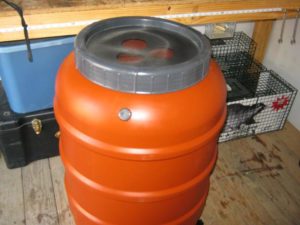
55 gallon water drum for catching rain waterAs for water storage, I have six five-gallon containers that I bought at Wal-Mart in the sporting goods department. I have also set up a 200-gallon rainwater catchment system and another 55-gallon food-grade barrel that I installed to catch water runoff from the roof of my chicken coop. I use this water for my chickens, but of course, if needed, I could filter and drink it too.
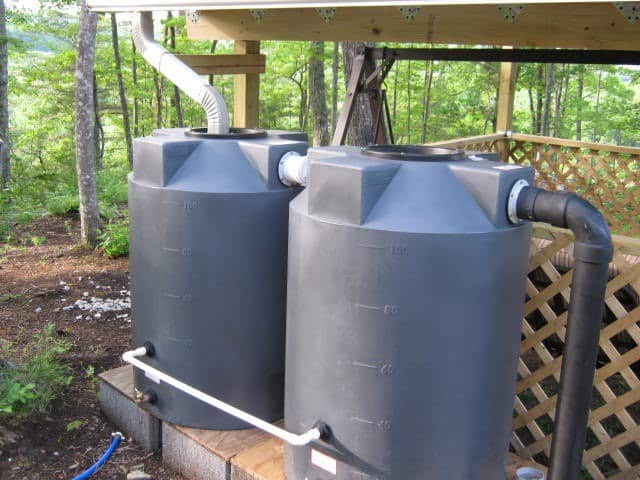
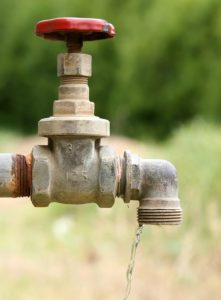
If you live in one of the drier desert regions, water would be a major concern and that may necessitate the storage of thousands of gallons of water for an emergency. A rainwater catchment can be as sophisticated as the one pictured below or as simple as purchasing a livestock watering tank or kiddie pool and catching the rainwater from your downspouts.

You can also rig tarps or plastic sheeting to funnel the rainwater into the containers. Do not store water in used five-gallon milk jugs. They are not strong enough for long-term storage and will break down and leak.

The five-gallon containers sold in the sporting goods section of most department stores work great as do the 55-gallon food-grade plastic drums. Just be sure that the drums are clean and contain no harmful chemicals before filling. If you must use small containers, emptied 2-liter soda bottles work well. They are stronger than the aforementioned milk jugs, have better lids, and are more convenient to use.

rainwater-catchement-system

A Note about Tap Water for Long-Term Storage

tap water long-term storageIf you are storing tap water from a municipal water system, there is usually no need to add bleach as suggested by some writers. Water from the municipal tap already contains enough chlorine to prevent any bacterial growth and can be stored without any other additives.

When putting water away for long-term storage, I use a Water Preserver Concentrate from Amazon.com instead of bleach. Water preserver concentrate will extend the storage life to up to five years.

Choosing the Right Retreat Property to Ensure Water Independence

When buying a retreat property, your first consideration should be to secure a reliable, non-grid dependent water source. The best source would be a deep well (have it tested before using, especially if it’s an old well). The next best option would be a full-time spring. And finally, the next best option would be a river or creek, or even a pond or lake.

All water from ponds, rivers, and streams should be treated as if it is contaminated with the worst pathogens, just to be on the safe side. Better safe than sorry, I always say.

You might also like:

  • The Doomsday Preppers Quick and Easy Food Storage Checklist
  • What You Should Know About Non-Hybrid Vegetable Seed
  • Mountain House Long-Term Storage Foods: weekly product review

Filed Under: Featured Articles, Prepping

  • « Go to Previous Page
  • Page 1
  • Interim pages omitted …
  • Page 74
  • Page 75
  • Page 76
  • Page 77
  • Page 78
  • Interim pages omitted …
  • Page 87
  • Go to Next Page »

Primary Sidebar

Subscribe to Blog via Email

Enter your email address to subscribe to this blog and receive notifications of new posts by email.

Join 7,202 other subscribers
  • Amazon
  • Facebook
  • Substack
  • Twitter
  • YouTube

“Do more with less.”

– Minimalist proverb

Recent Posts

  • Just so you know
  • Weather Update for My Corner of Appalachia
  • Why I’m Ordering Ivermectin + Mebendazole Every Year
  • The Website’s Shutting Down (But Here’s the Plan)
  • You Are Hated! Start Training Like It!

Footer

Recent Posts

  • Just so you know
  • Weather Update for My Corner of Appalachia
  • Why I’m Ordering Ivermectin + Mebendazole Every Year
  • The Website’s Shutting Down (But Here’s the Plan)
  • You Are Hated! Start Training Like It!

More about me

Books I’ve written

Books I’ve read

Follow Me on YouTube

Follow Me on Facebook

Gear I Use and Recommend

Newsletter

Search this site

Follow me elsewhere

  • Amazon
  • Facebook
  • Substack
  • Twitter
  • YouTube

© 2008–2025 M.D. Creekmore · As an Amazon Associate, I earn from qualifying purchases.