• Skip to main content
  • Skip to secondary navigation
  • Skip to primary sidebar
  • Skip to footer

M.D. CREEKMORE

  • Blog
  • Books
  • Newsletter
  • Gear I Use
  • About
  • Contact
  • Facebook
  • YouTube
  • Blog
  • Books
  • Newsletter
  • Gear I Use
  • About
  • Contact
  • Privacy Policy

Blog

This Week on The Homestead: Homesteading Progress and Preps For The Week / June 23, 2018

June 23, 2018 M.D. Creekmore

Good morning everyone… remember…

Morning is wonderful. Its only drawback is that it comes at such an inconvenient time of a day.

Anyways, we are all up and awake and that’s great, however, I do have some bad news to report…

After days of my brain not registering the fact that my email load had dropped from an average of 100 emails a day down to 15 or 20 at that those emails that were being sent were sent directly with my email address and not with the contact form of my contact page.

Well, once it finally did register I started looking into it and to my dismay, I discovered that my email contact form was broken and NOT sending me any email. So if you have sent an email using my contact form and I’ve not answered, then, please don’t think that I’ve been ignoring you… I’ve simply not gotten your email because the form was broken…

But the good news is that it’s fixed now, so if your email was really important then please resend it and I will get back with you as soon as possible… thank you for your understanding.

Okay, if you look closely you’ll notice a few changes to my blog design… look closely… there have been five changes to the design over the past few days… the first person to describe all five changes in the comments below will get a new Lifestraw Personal Water Filter!

I also made a few changes to my recommended must have prepper gear page but we won’t include those in the five design changes mentioned above. Now let’s see who has been paying attention… Good luck.

Okay, now let’s get on with our homesteading progress and preps for the week…

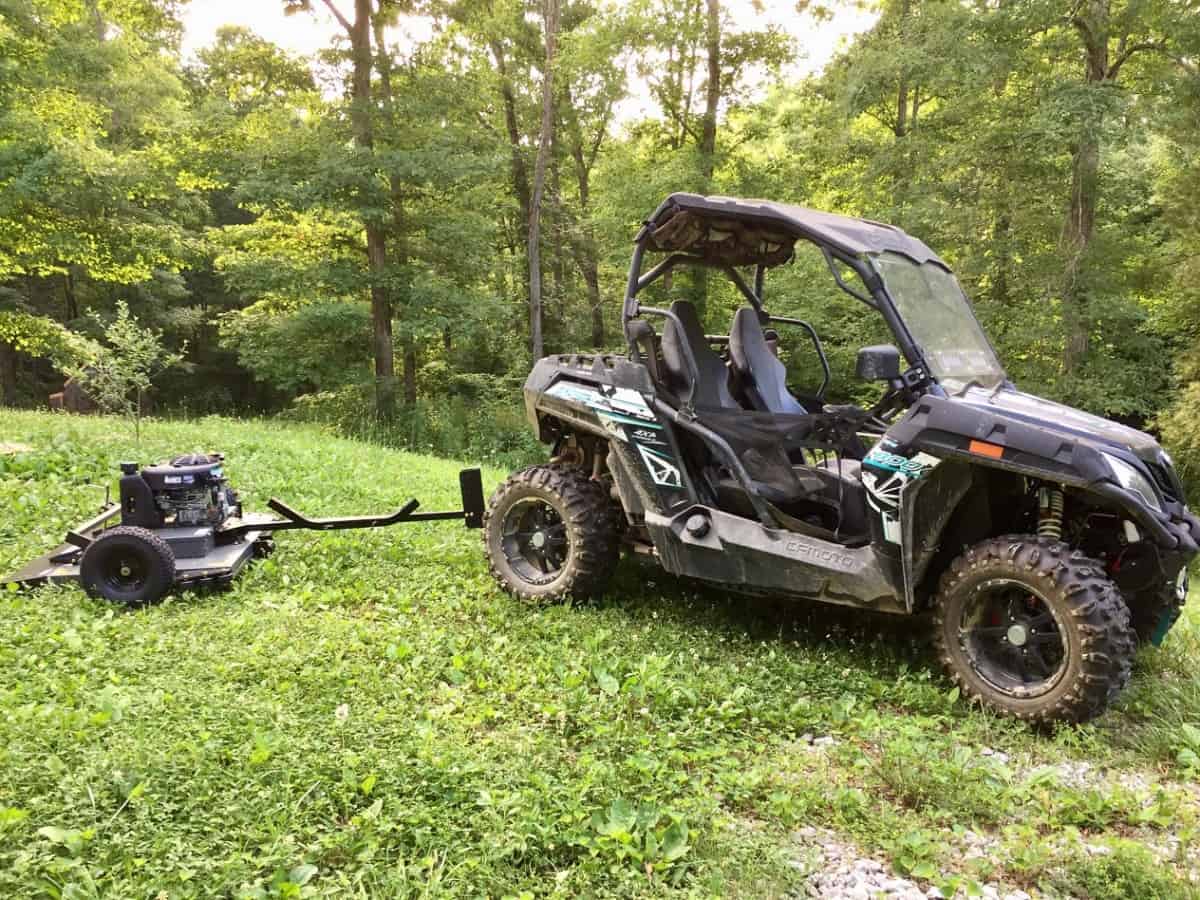
My main homestead expensive/progress for this week was that I received my Swisher 10.5 HP 44-Inch Finish Cut Trail Mower. I had to order the mower through Amazon.com because, unfortunately, no one in my area is a dealer for that type of mower.

I have some hillside on my property and mowing it with a typical riding mower was dangerous and exhausting. Once that I finally got the Swisher 10.5 HP 44-Inch Finish Cut Trail Mower unloaded and uncrated, I checked to make sure it had been filled with engine oil (it had) and then I filled with 100% gasoline as I prefer to not use gasoline that has had ethanol added.

I gave it three cranks and it started up and after letting it run idle for about ten minutes I hooked it up behind my side-by-side UTV and proceeded to mow my hillside in record time.

This mower is great for mowing on hillside land if you have a UTV or ATV and it can also be pulled behind a regular riding mower while off-set to the side to mow two times the normal area in one pass which cuts mowing time in half. However, if you’re pulling it behind a regular riding mower then you’ll need to stay on level ground.

Well, folks, that’s my main homesteading for the week… of course, I did other stuff like gardening and removed the suckers for my tomato plants and fed the chickens several times but I know that you probably don’t want to hear all of the details about that…

Now over to you…

Filed Under: Uncategorized

What to Do When You Get Pulled Over by the Police

June 20, 2018 M.D. Creekmore

by Scott G

dealing with law enforcement

DISCLAIMER: I am not an attorney (I’m not a liar), so what I’m telling you is based on my best understanding of the law and experience. For legal advice, you must see an attorney (although they don’t always know what they’re talking about – you may need a second opinion).

Speaking as a former law enforcement officer, the one thing we are always on guard against is for anyone armed with anything that can be used as a weapon, be it a knife, blunt instrument or a firearm. That said, without question, no person, let alone a law enforcement officer has anything to fear from an armed, responsible, person.

The mindset of a law enforcement officer is that anyone, not a law enforcement officer or his/her spouse or personal friend is a potential threat. The reason for this is that a law enforcement officer has a target on his body. Anyone, no matter how seemingly innocent, can snap and turn on you. A couple weeks ago, in Portland, CT, two boys ages 7 and 11 tried to carjack and rob a woman at gunpoint. In September, in D.C., a group of boys ages 7-14 were panhandling and when a man said go away, one boy pulled a gun and fired it at the victim. During August, in Abilene, TX, a 91-year-old man was convicted of armed robbery.

I could go on and on, but the point is that in the eyes of a law enforcement officer anyone not in a uniform is a potential aggressor. A cop looks at everyone the same way, looking for any signs that fit certain profiles. Cops are big on body language and the better ones also listen to their gut. A potential suspect does subtle and not so subtle things that send up alarm signals. Things like constantly looking around in a certain manner or their way of dressing.

So many people (whining liberals specifically) scream that LEO’s only profile certain races. This is largely a pile of male bovine fecal matter (I don’t swear, so figure it out). Most cops are not racists, they simply hate criminals. I once had a member of a minority race (not black) accuse me of being prejudiced. I told him, “That’s not true. I hate everybody.” The fact of the matter is that LEO’s target people who have a propensity to commit crime. It doesn’t matter the race of the person, it only matters if the suspect fits a certain profile that in the experience of the LEO, falls within a certain criminal profile.

LEO’s know that a legally armed citizen (LAC) doesn’t wear his pants with the crotch dragging on the ground. His hat isn’t on sideways and his underwear doesn’t show. The LAC doesn’t keep his weapon stuffed behind his waistband but in a good holster. The vast majority of felons simply do not use a holster. Studies have shown that LAC’s use the same types of holsters as a LEO. Also, LAC’s usually wear the same style clothes and accessories as cops. Also, LEO’s know that the vast majority of LAC’s are pro-law enforcement and would come to their aid in a heartbeat.

A person illegally carrying a weapon will always give off obvious and subtle clues in the presence of a cop. Things that a law enforcement officer are looking for are gang-style clothing, aggression, challenging and belligerent behavior, looking away or avoiding the LEO altogether. The suspect will be evasive in his answers, fidgeting and nervous, has his hands on hips, arms folded, scowling, etc. The LAC usually does not put off these clues. Yeah, they will be anxious, but the majority of people are anxious when stopped by a cop. This is expected. Good behavior or demeanor is an intuitive characteristic. It is highly difficult to fake. You either have it or you don’t.

However, because everyone not in a uniform is a potential threat, even an off-duty LEO, they are often suspected to be an aggressor and proned out until identification can be made. This is also the case even when a LAC has a suspect at gunpoint, has informed the police and is waiting for a law enforcement officer to arrive.

There are a number of things you can do to alleviate the stress on both you and the LEO:

1. Be polite and respectful. Politeness and respect will get you a long way. In fact, sometimes it will get you out of a ticket (at least with me it did). Many criminals get nabbed during a traffic stop because they were an ignoramus toward the LEO.

2. Do not be aggressive or challenging. This will immediately send up red flags in the mind of a law enforcement officer. Ninety-nine times out of a hundred, a law enforcement officer believes you did something to warrant being stopped. If you did something wrong, you don’t have to admit to it, but don’t carry on as if you are innocent. If you don’t think you did something wrong, try to politely explain why you didn’t do what you are accused of. If that doesn’t work, take it to court.

3. Answer his questions honestly. If he wants to know what you were doing driving at 2 AM, tell him. Don’t lie because most people are lousy liars and a law enforcement officer will spot this. Do not sit there and argue. The LEO will dig deeper to understand your aggression. Most likely, he will ask you to get out of your car and then search you. This is legal. He also will probably ask to search your car. You don’t have to consent to this search, but then he might call in a K-9 unit to sniff your car. Personally, I would not consent to any search of my vehicle no matter the circumstances. It’s usually a fishing expedition.

Most people who are stopped by LEO’s comply with orders and answer questions willingly.

4. Don’t refuse to sign a ticket or identify yourself. SCOTUS has opined that while you are not required to carry identification, you are required to ID yourself. If you lie about it, that’s a crime and at the least, you will be detained until your true identity is verified. More often than not, you will be arrested and jailed.

5. Don’t act like a lawyer. LEO’s have a very low opinion of lawyers. One of my favorite jokes is:

What’s the difference between a lawyer and a catfish?

One’s a scum sucking, bottom feeding scavenger and the other one’s a fish.

Don’t start spouting the law even if you are a lawyer. It will not get you anywhere. It will irritate the LEO and guarantee you at least a ticket and probably a deeper check into your background. Not all LEO’s are fully in tune with the law, but most are. If you come up against one like I was, he will know the law forwards and backward.

Quite often, even if he’s wrong and it’s something minor, simply agree with him then take it up with his supervisor and chain of command at a later time.

Matt. 5:25 Agree with thine adversary quickly, whiles thou art in the way with him; lest at any time the adversary deliver thee to the judge, and the judge deliver thee to the officer, and thou be cast into prison.

6. No sudden moves. Don’t get out of your car. Stay put. Don’t reach under your seat and don’t open your glove box. If you are armed, tell the LEO immediately. Some states require you to immediately notify a law enforcement officer if you are packing. Know the laws of your state. Personally, I’d do it no matter what. A criminal will not do this. If you are stopped while driving, keep your hands on the steering wheel.

When reaching for your wallet, if your weapon is on your hip, let him know where it is and that you are getting out your wallet. He may stop you, he may not. It depends on the LEO. Some of them will ask to see your weapon and verify that it’s not stolen. Usually, only a rookie who doesn’t know any better will do this.

7. Follow all commands. Simply put, do what you’re told. A law enforcement officer doesn’t want to hurt you or for you to get hurt. If you argue or hesitate, you are begging for trouble.

Doing the above things will demonstrate to the LEO that you are cooperative and are not a threat. Remember, a law enforcement officers main goal is to go home in the same condition in which he went to work.

For more information, refer here: http://www.policeone.com/police-products/firearms/articles/2144601-Dealing-with-citizens-legally-carrying-a-concealed-weapon/ and http://www.legallyarmed.com/.

Now, on to if the worst happens.

If you are unfortunate enough to be involved in an incident involving the use of deadly force, be prepared to be treated with suspicion unless it is obvious that you had no other choice but to defend yourself. This brings up the issue of whether or not you should talk to the police or invoke your rights. Simply put, it depends on the circumstances surrounding the incident.

If you are forced into shooting someone, I’m assuming that you are justified in your use of force (UOF). In our society, UOF must be reasonable based on the totality of the circumstances. I’m a pretty big dude. At 6’1” and well over 200 pounds, I would not be justified in shooting an unarmed assailant who was 5’8” and 160 pounds. However, a 5’6”, 130-pound woman would be justified in shooting me. Also, it depends on the law of your particular state.

Some bleeding heart states require you to retreat if possible from an aggressor, even in your own home. Some laws allow you to use deadly force in your own home only if the person is armed or otherwise able to harm you. My favorite states are those with the “Castle Doctrine.” In these states, you have no duty to retreat if you are in a place you are legally permitted to be.

So, if you do shoot someone and you decide to talk to the police, remember this one thing: tell the police that you shot to stop the suspect. You never, ever tell them that you shot to kill. In the eyes of most pshrinkologists, this makes you a dangerous, unstable person. You tell the police that you stopped shooting when your attacker was no longer a threat. This is nothing more than legal mumbo jumbo, but it is very important mumbo jumbo. It will keep you out of court.

Tell the officers that because of the threat, you were in fear of your life or the life of another person. Explain why you were in fear of your life, i.e., “It was dark; I didn’t know the person; my family was in the other room; he kept advancing on me,” etc. Let them know if you warned the suspect or if you attempted to retreat. Tell them everything. Do not lie. A law enforcement officer can smell a lie a mile away.

Be able to articulate the threat that made you feel that you had no other recourse but to use deadly force. If the suspect had something in his hand that made you believe it was capable of being used as a weapon, be able to describe it and why you thought it was a weapon. I.E., it was a shiny object that appeared to be a knife or a pipe, or a gun, etc.

Whatever you do, do not disturb the crime scene. Don’t move the body or remove anything from the room. The detectives are very, very good at reading a crime scene. A homicide detective is usually very experienced and if something is out of place, he will eventually discover it. If your story doesn’t match the scene, it will eventually be discovered. Maybe not right away, but sooner or later and you will be put to the Inquisition.

As to whether or not you should invoke your rights that depends on the circumstances. By law, if a law enforcement officer believes that you have committed a criminal act, he must advise you of your Constitutional rights. When you are being questioned after a shooting, the LEO will be asking questions to determine what happened. At this point, he is not required to advise you of your rights, but if you say something obviously incriminating, then he should read you your rights. There are some exceptions to this and I don’t know all of the most recent rulings.

Remember, cops are devious when it comes to finding out the truth. After a shooting, you will probably be interviewed two or three times even if you aren’t suspected of doing anything wrong. If a law enforcement officer does suspect you of lying, his questioning will become sharper and certain questions will be rephrased and repeated to see if your story changes. This is a tactic used in court and interrogations. If this happens, you’re in for a long night.

My personal advice is if you think you may have done something wrong, invoke your rights and talk to an attorney. If it’s obvious that your shooting was righteous, then talk away, but with great feelings of remorse. While sadly shaking your head, make sure to express regret and that you were forced into defending yourself. Possibly ask for referrals for counseling and most importantly, do not show the satisfaction of knowing that you defended you and yours from the devil. You can do that later with your close friends.

I’m sure I haven’t covered everything, but you get the gist.

Remember, generally, local law enforcement is on your side. Most LEO’s are on the conservative side and believe in the 2nd Amendment. Most of them know that LAC’s are the good guys. However, there are bad apples in every barrel and there are exceptions to every rule. But as a general rule, the vast majority of LEO’s are honest and won’t screw you over. As for the feds…well, enough said.

Recommended Books:

  • Arrest-Proof Yourself
  • You Have the Right to Remain Innocent
  • You & the Police!
  • Battlefield America: The War On The American People
  • After You Shoot: Your Gun’s Hot. The Perp’s Not. Now What?

And to add in some controversy to this article below are two of the most controversial videos that you’ll ever watch…

  • When Should You Shoot a Cop?
  • Cops Are Cowards

Filed Under: Uncategorized

This Week on The Homestead: Homesteading Progress and Preps For The Week / June 16, 2018

June 16, 2018 M.D. Creekmore

Hello everyone. Over the past couple of weeks, I’ve received a number of emails from readers letting me know how broke that they are and how that they could not afford to buy any preps, or homestead, however, the strange thing was that when I emailed back asking what they were doing to try and earn some extra money the conversations went silent.

Folks, complaining about being broke isn’t going to help you. As far as I know, complaining isn’t a marketable skill and no one is hiring for it. So stop complaining and get off your butts and do something to earn more money if you need it.

I’ve been broke and I’ve even been homeless, however, I did not just give up, nor did I expect anyone to give me anything. Instead, I got up and hustled. I planned, I worked and I failed a lot, but I kept at it and I finally started earning a living as a handyman.

And you know what… the more jobs I got, the more satisfied customers that I had, which led to repeat business with those customers and also to those customers letting their family and friends know about me and my work which led to even more customers…

And then about 12-years ago I decided to start a blog.

At that time I didn’t know anything about blogging or doing anything online other than a google search. But I had always wanted to publish a print newsletter and a blog is a modern version of that so I moved forward. And after doing a lot of studying, and planning I started my first blog.

I spent hours every day working to add content and to get everything just right. Somedays I’d work 16 hours a day just on my blog and you know what… nothing happened. No one was reading, no one was commenting… nothing.

But I didn’t give up because I have knowledge that I wanted to share with others. I wanted to teach and help others so I kept at it and after a few months and hundreds of hours of work, I started to see my pageviews trickle upwards.

So I kept working, and the page views started to grow along with my subscriber numbers by which 10 or more every day, and it just kept going. It was slow, very slow but as long as those numbers kept going up, even slightly, I knew that I was doing something right, so I kept doing it.

And then after several years and thousands of hours working on my blog for free, I started earning a few dollars a month from it. If I remember correctly my first month as an Amazon.com affiliate I earned just over $1.50.

Keep in mind that this $1.50 was after several years of blogging and having several hundred subscribers at that time. But I kept at it and each month my page views and subscriber numbers increased as did my earnings to the point where I was able to stop working as a handyman and start blogging full-time.

Anyways, the point is that instead of complaining while doing nothing isn’t going to work. You need to figure out how to earn more while spending less on stuff that you don’t really need.

I’ve written several articles recently on doing both… but just reading those articles isn’t going to help you… you have to actually do something.

I’ll link to a few of those articles below:

  • 31 Ways To Make Extra Money on The Homestead
  • How To Start A WordPress Blog On Bluehost
  • How to Start a Profitable Blog in 2018, Step-by-Step Guide

I even have a free blogging course – yes, it’s truly free, with no strings attached – just click on this link to get started.

Okay, now what about my homesteading and preps for the week.

This week, I put in another raised garden bed, set up a 55-gallon barrel to catch rainwater runoff, that I’ll use to water my garden. Planted more peppers and tomatoes.

And ordered one of these that I’ll pull behind my UTV.

Oh yeah, I only have a limited supply of the super awesome Bulletproof Survivor CD left so order now if you want a copy.

And don’t forget to check out my T-shirts and book.

Please, let me know which of my T-shirt designs that you like the best as well as the one that you dislike the most.

Well, folks, that’s it for me… what about you?

Filed Under: Uncategorized

Budgeting for Fixed or Low-Income Families: My Personal Journey and Advice

June 15, 2018 Jesse Mathewson

For the past 11 years I have been on a fixed income, with a family this not easy nor is it recommended. If you can avoid a fixed or low income, by all means, do so, after all a greater quality of life is essential to spiritual, physical and emotional self. However, the reality is that due to substantially raised costs of living around the United States if you make under 30,000 dollars a year and have a family you are struggling to meet your obligations in rent, utilities and more than likely shop at Walmart regularly because you believe that lower cost is saving you money. The real test is going from comfortable to strict in budget, which is difficult when single, even more so when you have a family!

My goal is to show you how to prepare in a way that allows for eating better, building supplies, gaining more knowledge and still meeting your obligations. I believe firmly that you can, in fact, raise your individual or families quality of life by simply doing what I am going to show you. It is important to note that my approach is not a quick and easy save, rather it is a journey like all good things in life. Everything takes time to be well done and of course if you take the time necessary it will mean that much more as well. We are going to look first at budgeting based on an income of $15,500 dollars. This is the current fixed income I live on and support myself, two children and still prep regularly including but not limited to actively seeking new training in medical, firearms and even food preparation.

Form local groups or get to know your neighbors. Lower-income families need to have support to do better for themselves. It is essential to understand that I firmly believe that to gain support one must also be willing to lend it! This means that I am not suggesting you seek out charity for the sake of charity, but rather look at generating acquaintances and friend groups that benefit you as much as you benefit them. As an example, my knowledge and active abilities which allow me to trade that for items or abilities I cannot and do not know or need to know have allowed me to have work done on my vehicles for the cost of parts. I than gift a bottle or two of spirits that they cannot make themselves. With that, it is time to look at eating as a part of prepping.

Eating better, this is essential to a healthy life and a greatly improved quality of life. How do you eat better, when you have an annual income that is less than most people will make over the course of 3 months in the United States today?

  • Buy local and look for programs that have large amounts of greens, vegetables, and fruits for little or no cost. We have two locally in Arizona called the 3000 club and Produce On Wheels. By attending one or both every week or even every other week I have been able to not only keep ourselves well fed with vegetables and fruits but also the chickens and canning which simply benefits us even more as a result! And this is all for $20 and a few minutes of time on a Saturday.
  • Reduce your carbohydrate intake, a large amount of food manufactured these days is carbohydrates. While pasta, rice and grain-based products can seem to be inexpensive; the reality is the overall health costs will in fact cost you more than simply reducing your intake of them. Regardless your income you can easily gain excess weight if you have limited mobility and bad diet!
  • Even if you live in the city, you can have a garden, once you begin growing your own greens you will find that your taste and desire for them increases. I am most definitely a lover of meat-based products, I enjoy steaks, hamburger, ham, bacon, venison, chicken and fish. However, whittling down the amount of animal products we eat and replacing with greens can, in fact, have a large impact on our health and weight.
  • Buy or barter local, grass/pasture fed for your meat, you will pay more on average for small cuts of meat if you buy local. However, if you have other individuals you trust around you, you can look at group buying a full beef, pigs and more and by doing so actually save money in the long term.
  • Alcohol and cigarettes; in moderation, good alcohol can be beneficial and is definitely fun to drink, however, if you are unable to control yourself I would suggest staying away from this. Cigarettes are a habit that has no long-term benefits, nicotine has anti depressant properties but for anyone who hunts and is active we know that long-term heavy use of these reduces our chances to capture prey or continue being active.
  • Avoid all fast food and cut your eating out down to once a month or less! This alone has been a significant factor in my reducing weight and feeling healthier in the last few months. Additionally, it has reduce expenditures and allowed for a greater amount of healthier food options in shopping.
  • Coupons, use them, learn to use them and do not be afraid of the people who get mad while you are using them (though for manner reasons alone I suggest waiting till after 7 pm to use them in a major store simply to avoid the rushes and prevent issues.) My wife has been a coupon using lady for years and is struggling to teach me her craft! With coupons and knowledge of how to use them appropriately, you can easily save hundreds of dollars every month! (just do not get caught in the trap of addiction with coupon use). M.D. published a good article on using coupons a few months ago that you’ll want to read.

Next, we need to look at ways to build supplies while staying within our budget, this part has become increasingly easier for myself and my wife as we have been more willing to look for the deals while still maintaining quality especially in life-saving items.

  • Personally, I budget 15% of my monthly income specifically to this. With a monthly income of $1300, it stands to reason that to simply survive it is essential to have an extremely regulated budget. I will admit that saving money overall is quite difficult. However, it is possible to still maintain prepping and do so well. With $145 or less every month for the following extras, it takes planning and preparation to properly ensure solid approaches using quality items. (this is why I write the reviews I do).
  • Buying gas when the prices are down and you have spare funds, using the stored gasoline when funds are tight! I buy 15 extra gallons every few months and always have a half or more full tank! Store it in a well-ventilated area that is relatively temperature controlled. I use gas extension products that allow me to use this gas as long as a year to 18 months after purchase. Gasoline costs rise around elections, and weekends and are lowest after elections and from Monday through Wednesday.
  • Firearms, it takes 4 to 6 months for me to have the funds available for a firearms purchase. I refuse to do so if it means shorting our family for any reason. This is also why I am a budget shopper with firearms. As I have noted in several articles less expensive is not a bad thing much of the time. I have tested 3 different AR15 brands over the last decade to the tune of 10,000 to 15,000 rounds each, what I found was that Palmetto State Armory Freedom AR15s (their budget line), worked exceedingly well and were 90% reliable. However, I will be writing and article with my overall findings soon. It must be noted that the 90% reliability was not all firearms, this means that one of the tested firearms had issues occasionally and was replaced for one that functions, FREE OF CHARGE BY PALMETTO STATE ARMORY, all of the ones we currently have run 99% of the time which is the most you can expect. Additionally, I have saved and purchased used Glock 19 gen 3, Mossberg 702 .22lr rifles and other firearms all which function almost perfectly and which allow for easy repair should they have any issues.
  • Ammunition, some people suggest buying a box or two here and here and there as you get the money. I actually suggest a different approach for several reasons. I suggest saving for a month and buying a minimum of a case at a time from a dealer online. Firstly, you will actually save money by doing this and you will get exactly what you want and what works best for your firearms! I enjoy using The Lucky Gunner and *SGammo* for my needs, though I do sometimes shop pricing using AmmoSeek which allows me to input exactly what I need and then find the best overall prices including shipping. I can suggest defensive and hunting ammunition for your use as long as it is in the following calibers, 7.62×39/5.45×39/ .22lr/ 5.56×45-.223/.308-7.62×51/7.55x55swiss/.243/9x19luger/9x18mak/.40sw/17hmr . For practice purposes, any Walmart special will work, unless you are me.
  • Dry goods, like sleeping bags, tarps, blankets and tents or even ropes can be had for reasonable prices with a quick Amazon search. Again quality is essential, however, you can get that quality without always buying a certain name brand! Especially because most if not all of those name brands are sourcing their materials from the same factories making the off brands these days. While some people believe a cotton duck tarp is best, I have used poly-plastic tarps for years with no real negative effect. Additionally, I peruse local second-hand stores and pawn shops regularly. It is amazing what you can find for little or no money especially if you also haggle for it before buying. One of my favorite websites to use for prior used military gear is KeepShooting.com they also manufacture aftermarket magazines for one of my favorite 22lr handguns and many others!
  • Medicines, these take a whole other approach. I know people that swear only home remedies and others that do not use any home remedies, I prefer a balanced approach and while I have access to doctors and testing equipment will continue to avail myself of their services. This being said I also tend to use our local flora for many really solid home remedies that do in fact work quite well. For instance, I use apple cider vinegar, blackstrap molasses and local dark honey for a daily “pill regimen”. I also am versed in and use many other local wild plants that are amazing for their many uses. I also keep stocked several full “runs” of modern antibiotics, even though we rarely use them in our house!
  • Car and animal repairs and adjustments fall under this category as well. You may need to invest in a prepaid credit/debit card that is not attached to your bank account for saving purposes. These do not generate interest, however, they will allow you to place the cards out of sight out of mind and ready for emergencies. Additionally, you can have direct deposit of small amounts sent directly to the cards in most cases and there are several that have no charge or a small opening fee.

Gaining more knowledge, this takes an active mindset and desire to better yourself and your family overall. Knowledge these days can be had with nothing more than a mobile device or library membership. As a child, I spent many hours reading, practicing what I read and testing hypothesis based on presumptions taught me and or learned by reading and studying. I was a voracious reader, who at this point in my life have read over 12,000* books and have no plans to stop. Even with my active ability to learn and apply knowledge acquired through reading, I have found it necessary to find others who have greater knowledge in areas I wish to acquire and solicit their help or pay for it.

budgeting for low incomeAmong those who read this, I am aware of two engineers, a doctor, several nurses, a professional highly skilled dog trainer, several law enforcement (current or prior) and a plethora of mechanics and much more. I doubt that any of these trained professionals simply learned their craft by reading books at a library, though many of them have augmented their knowledge by doing so! (and this is highly recommended) Rather, it is the active engagement with qualified instructors and solid material that allowed most to learn their trade. This means that for many areas it is essential to learn the basics from others who know and then build on that knowledge gained.

What I have found to be the best approaches for this with a small fixed income is this,

  • Barter your skills and knowledge for theirs, I would not associate myself with anyone who believes what they know is so valuable that they would not be willing to exchange that knowledge or teach it for a reasonable sum.
  • If you must pay for some knowledge, seek out avenues that allow you to make payments over a few months. (lay away for education exists especially in the firearms training and legalities training world)
  • Local shooting ranges often need volunteer assistance with range master duties, they will often offer to pay for your NRA range master class in exchange for your volunteering a few hours every other month or so. (I received my RSO certifications this way)
  • Shooting instructors will often need RSO assistance on the range, and this can be exchanged for a free class or two! This assists you in making connections and finding others who are accomplished shooters, as well as opening the door to the groups that exist on every public or semi-public range I have ever been on across the United States and in Canada, the groups of advanced shooters who train regularly. (training with individuals like these will help you polish your skills and because many of these groups are people who work in various fields that require regular training it will also allow you to increase your knowledge further in those areas as well. )
  • For medical and other skilled professions I have found that if you are willing to exchange your skills they are often willing to divulge information for little or no fee. For instance due to my continued visitation of various medical professionals over the last many years I have learned how to gather information and supplies by simply asking! (I am not suggesting you beg or steal, rather I would suggest you ask the doctors and nurses caring for you or your loved ones what care is required, write it down and be specific, than ask what supplies may be needed- in many cases hospitals cannot reuse supplies that have been in a patients room, asking about these can mean you end up with added stock)
  • Seek out training groups, I have found a few over the years made up of individuals who recognize that more civilians need medical and firearms based knowledge. Some are defunct and others are non-starters, however, all have further increased my direct network allowing for the added benefit of knowledge of local and national (even international) training centers and individuals whom I can recommend without hesitation.
  • Learn to read a diagram, schematic, map and the like. Do not hesitate to use one or gather any that may be of assistance to you on your homestead or while prepping. For instance, I have a collection of maps spanning the American Southwest and much of Mexico. Additionally, I have manuals for my vehicles and several in-depth slightly outdated but still viable medical tomes as well. Buying these written works from 3 or 4 years ago will allow you to have access to amazing amounts of knowledge while avoiding the high fees associated with brand new volumes from this year. For instance, the Physicians Desk Reference from 2012-2014 is around a half or quarter of the cost of the same from this year or even two years ago! It is an extremely valuable guide to have available in print.

Meeting your obligations, the unfortunate reality of life in the United States is that our government promotes rapid inflation which quickly outpaces the value of our dollars which depending on the type of fixed income we may be on will not rise fast enough to make a large difference. For instance the real inflation over the past 10 years now has meant that while I used to be able to pay rent, utilities and buy food with some money left over for special extras that are essential for quality of life with children, I am instead forced to resort to gray market and back door dealing to continue simply paying rent.

Our house that cost $500 to rent 10 years ago now costs $1100 and utilities have increased over 200% since 2008. My income has increased by 15% overall which means that paying for the mandatory “free” insurance, taxes (yes, poor people pay taxes too), utilities and rent I am left with a deficit every month of around $250. This is before I put aside for extras and saving for just in case emergencies. The government has mandated that I am not to work given the extent of injuries, this means that I am forced to find alternative means of meeting my obligations every month while still raising two amazing children and maintaining my personal strict code of ethics.

There are many ways to generate additional income that are legal yet for fixed and low-income families will need to be gray marketed simply because of the regulations governing additional incomes. Some of those approaches have been bartering, buying – fixing – reselling items using local craigslist and other sources and there are many other avenues that may be available to you depending on your individual abilities and ethical considerations. For myself it is simple, I believe that whatever is agreed with open knowledge and consent between two individuals is always right, if something is done that has not had the consent of all involved it is always wrong. I have neighbors in a similar situation that have a yard sale every couple of weeks for a couple weeks running then take a break to stay within the law. I barter our chicken eggs and the product of my hands for items that I then resell at times.

Case in point my computer failed on me several weeks ago, I had several other partial computers I had been cannibalizing for a few years and unfortunately this one needed parts I could not afford nor did I have access too. I was partially assisted by one person (thank you) and looked around at locally available rebuilt computers and was able to purchase a computer that I am now using to write this article on. The computer is not brand new, it is, however, extremely solid and with the addition of two parts will easily run for at least two more years allowing me time to save for a new or newer one.

Simply put to save money and really be independent you have to be willing to forgo designer clothing, and addictive habits like coffee, smoking and soda. We drink water at our house, and I make teas from local and traded tea gathered. We have our chickens and I trade my knowledge and abilities to local farmers, ranchers and take advantage of every single available program that exists at this time. While I detest the idea of state-based welfare, I endorse the idea of private aid and earning your way. I worked for decades and still pay taxes today (though grudgingly so) as a result I do not see my main income as a problem. After all, I earned it, unlike so many others who abuse it. However, this is not a political article, it is a guide meant to help those who may need that!

Free the mind and the body will follow…

* It should be noted that this number of books is based on my average reading speed, time that I have been reading and may be off plus or minus a few hundred. Additionally, the number will increase as long as I am able to read, for instance at the writing of this article I had just completed a 9 book series I began 3 days ago. (I love good well thought out science fiction/ alt history/alt future)

Filed Under: Self-Employment

Everything That You Ever Wanted To Know About Honeysuckle Medicinal Benefits

June 13, 2018 M.D. Creekmore

by Tara Dodrill

honeysuckle health benefits

The honeysuckle bushes are good for a whole lot more than making a sweet-smelling wildflower bouquet. Not only are most varieties of honeysuckle edible, the boast copious amounts of medicinal benefits as well. The common and highly invasive vine has been used by herbalist and in traditional Chinese medicine for centuries to treat minor to serious illnesses.

Honeysuckle Medicinal Benefits

The wild vine has been used to help treat and prevent a long list of ailments and disorders. Although, like with most natural herbal remedies, there is no scientific evidence of FDA guidelines to back up the claims of success from herbalists or other users of honeysuckle home remedies. Some users maintain using honeysuckle is useful in treating cancer symptoms.

Top 15 Honeysuckle Natural Remedy Uses

  1. Inflammation and Joint Pain
  2. Headaches and Migraines
  3. Common Cold
  4. Nausea, Digestive Disorders, Ulcers, and Stomach Aches
  5. Detoxification from Toxins
  6. Flu
  7. Arthritis
  8. Fever Reduction
  9. Congestion
  10. Skin Rashes, Insect Bites, and Boils
  11. Immune System Booster
  12. Urinary Disorders
  13. Diabetes
  14. Rheumatoid Arthritis
  15. Lowering Cholesterol

honeysuckle health benefits joint pain

Honeysuckle is a great source of Quercetin, an acid that thwarts free radicals internally, vitamin C, calcium, potassium, and magnesium. The beautiful vine also possesses a vast array of natural antibacterial and antiviral properties.

Honeysuckle medicinal tea and a syrup have been used to help treat pneumonia, staph, tuberculosis, chicken pox, and salmonella, and strep infections. The wild invasive bush also contains salicylic acid – a natural predecessor of aspirin.

Honeysuckle Stem

The stems from honeysuckle bushes can be rubbed directly onto the affected area of the skin to help relieve swelling and to dry up a rash. Although any part of the plant can be used to help treat a skin condition, it is the stem that seems to provide the best and most timely results.

Honeysuckle stems have also been ingested after being chopped finely or mixed into a syrup in an effort to treat mumps, arthritis, and hepatitis.

honeysuckle stem health benefits

The stem is the base of the long white or yellow floom leading up to the blossoming flower.

Honeysuckle Bark

The bark of the plant can have a diuretic effect on the human body. Because of this quality, honeysuckle bark has been ingested to treat conditions such as kidney stones, gout, and various ailments of the liver.

Honeysuckle Leaves

The plant’s leave are often used in natural mouthwash recipes and used as a facial astringent. Although it is usually only the blossoms that are used in creating homemade flower perfume, the leaves can be infused into such a mixture as well to create an overall natural beauty recipe.

The leaves can also be tossed into the medicinal honeysuckle tea in an effort to alleviate sore throat pain more quickly.

honeysuckle leaves and their health benefits

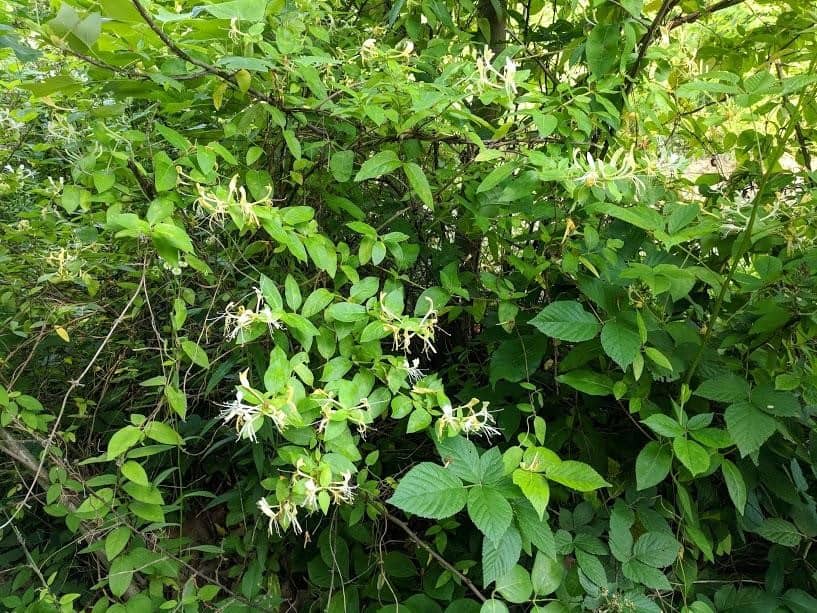
Learn to identify the leaves of the honeysuckle plant so you can easily identify it even when no in bloom.

Honeysuckle Flowers

When harvesting honeysuckle flowers for medicinal use or cooking, it is best to pluck them from the stem as close to the branch as possible to avoid losing any of the nectar contained in the stem.

Honeysuckle flowers are the primary ingredient in the medicinal tea, syrup, and glycerite brewed from the plant. They are also the most often used part in recipes containing the wild edible. The taste of honeysuckle is so deliciously sweet it has been used to make both ice cream and cake.

Honeysuckle and goats... goats love it!

If you have goats on your survival homesteading retreat, you will never have difficulty identifying honeysuckle vine even when the bushes are not in bloom. Goats of all breeds just can’t seem to resist the sweet taste of the entire plant year round.

Preserving Honeysuckle

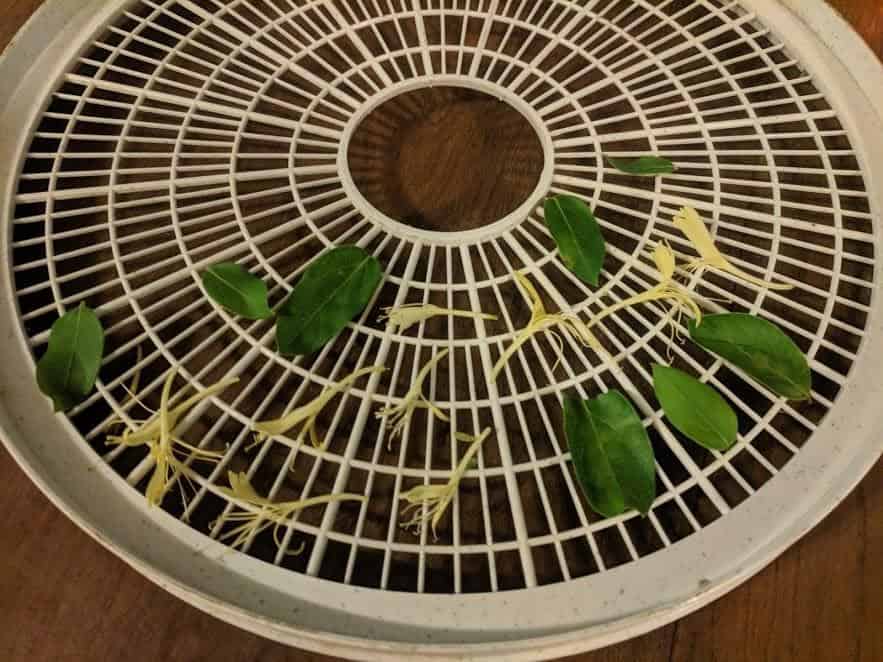
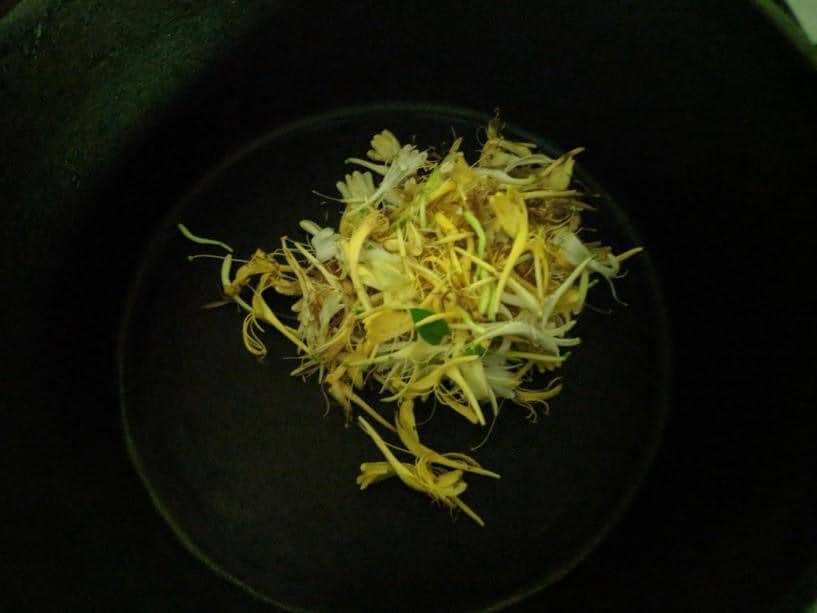
The leaves, flowers, and stems of the wild edible can be dehydrated and stored in an airtight container for long-term use. If using an electric dehydrator, dry the plant at the lowest possible setting (approximately 130 degrees )to for approximately four to six hours – or until the wild edible has a crispy feel.

You can finely chop the honeysuckle parts and blend them into a powder once they are dried, place a plastic solid or mesh liner into the dehydrator tray to hold the fine matter. Make sure to leave plenty of room for air to circulate around the flowers, leaves, and stems if you leave them whole.

drying honeysuckle

How To Make Honeysuckle Syrup

Ingredients

  • 1 cup of water
  • Approximately 50 honeysuckle flowers
  • 1 cup of water

Directions

  1. Mix together all of the ingredients in a medium pot.
  2. Turn the burner to medium heat and stir constantly while the mixture comes to a boil.
  3. Turn down the heat and allow the mixture to simmer for about four minutes.
  4. Remove the pot from the stove and allow mixture to cool entirely before storing in a Mason jar or other airtight container.

Honeysuckle Syrup Uses

You can use the medicinal and sweet syrup as a topping for desserts, pour a pinch into water, tea, or lemonade, or freeze in ice cube trays to preserve it for long-term use in recipes and cough natural homemade cough syrups.

drying honeysuckle complete

How To Make Honeysuckle Tea

Ingredients

  • 2 parts water
  • 1 part honeysuckle flowers
  • Two pinches of honeysuckle leaves – optional

Directions

  1. Bruise or lightly crush the honeysuckle flowers between your fingers or gently with a wooden spoon.
  2. Place the flowers into a pitcher – or a cup if making a single serving.
  3. Pour the water over the flowers and stir.
  4. Place the pitcher or cup into the refrigerator or a cool place or at least six hours – overnight is best, if possible.
  5. Strain the flowers through cheesecloth, a coffee filter, or clean T-shirt, etc.
  6. Drink the tea over ice or heat it through to serve as a hot tea.

* You can also make a honeysuckle sun tea by putting the same mixture into a pitcher and placing it in direct sunlight for about four hours, depending upon the season.

How To Make Honeysuckle Glycerite

Directions

  1. Fill a glass jar of your choosing with honeysuckle flower blossoms leaving only about a half an inch of headspace.
  2. Pour vegetable glycerin into the jar, still being mindful of the headspace.
  3. Put a lid on the jar and place it in a sunny spot – a windowsill works great.
  4. Shae the jar once daily to move the honeysuckle flowers about in the glycerin or 30 days.
  5. Strain the flowers from the mixture using cheesecloth or a similar material, at the end of 30 days.
  6. Store the honeysuckle glycerin in an airtight container in a cool dry place until ready to use.

How To Use Honeysuckle Glycerite

This natural concoction makes a superb remedy for sore throats. Adults can take one teaspoon of the glycerite up to three times per day. Reduce the dosage amount by half for children.

Warnings

  1. Honeysuckle remedies are intended only for short-term use. The flowers, leaves, and stems are extremely low in toxicity, but prolonged use could cause negative effects.
  2. Folks with an allergic reaction to tree pollen could also have an allergic reaction to honeysuckle.
  3. Symptoms of honeysuckle poisoning include drowsiness, photosensitivity, and dilated pupils.
  4. Individuals undergoing treatment for chronic illnesses or experiencing diarrhea could have an adverse effect when consuming honeysuckle.
  5. The wild edible may slow the clotting of blood and could pose a risk if surgery occurs within two weeks of consumption.

Proper identification of honeysuckle is essential when foraging for the wild and medicinal edible. Although most species of honeysuckle are not poisonous (like the Japanese variety shown in the above photos) some species of the plant contain glycosides in the stems and vines and carotenoids in the berries. Honeysuckle plants of this type can be at least mildly toxic to adults and more harmful to young children and pets.

A great book on herbal and natural medicine is The Everyday Roots Book – it’s 350+ pages will show you how to replace all of the toxic products and medications with safe natural alternatives. This book is a must-have for all preppers and homesteaders. Check it out here.

Filed Under: Health and Fitness

Where There is No Doctor a Village Health Care Book: Weekly product review

June 11, 2018 Jesse Mathewson

where there is no doctor
Some reviews are simple to write, some are difficult. This is one of the simple ones, firstly I need to tell you that I purchased this book with the intention of adding to my library of medical knowledge. I did not receive it for free or in exchange for anything.

Some purchases can be seen through hindsight with eyes tinged with regret. This is one of those purchases. I purchased this book on Amazon for $27 including shipping. On the cover of the book and in the description it is promoted for the “villager/ pharmacist/ storekeeper/ teacher/ health worker/ mothers and midwives who live far from medical centers.”

Unfortunately, there are maybe only half the pages of the 445-page book that have applicable medical knowledge.

In fairness, there are several subjects broached that are extremely necessary for sub-third world nations or areas filled with people who believe using lollipops that have been dipped in open sores is a good approach for reducing potential chicken pox/ smallpox and other viral infections.

My real issues with this tome are how it was written and the language used most frequently which shows a disproportionate level of reliance on socialist life approaches. It should be noted that I do not see any government outside of self-governance or at most tribal approaches as a beneficial approach.

If the book had shown a disproportionate amount of “democratic/republican” leaning it would have received the same response from myself. I find that many items of interest in the book I agree with. Such as the statement, “if you can use what is best in modern medicine with what is best in traditional healing you are often better than using either alone” (quoting from memory so it may be a bit off).

Additionally, the insistence that we share knowledge eg., medical in nature adds to the potential that the book begins with. Where I believe it falls apart is its insistence on poor health being a direct result of an unfair distribution of land and wealth. While I am someone who lives daily in a system where my poverty is ignored by most others due to my being born “privileged” as a white male, even though I was also born with debilitating spinal conditions and even though I worked for decades with spinal conditions.

I still firmly believe that to better ourselves and our world we should instead focus on solutions which I promote individually through my writing reviews without charge and other one on one actions I take regularly without charge or profit personally. I share my extensive knowledge with people regularly and do so basically free of charge. This does not mean I am a socialist, communist nor does my rejection of these institutions and definitions mean I am a capitalist or otherwise. Rather it means I am a self-determining individual and this is my choice.

Additional direct critiques of the book are the use of imagery to associate firearms with deadly medicinal uses. (page w18) or (page 49). Additionally, they do not address the use of beneficial approaches such as the assessment of and stoppage of serious bleeds on extremities. (eg., use of tourniquet and or use of alternatives for a tourniquet when needed.) Instead, they chose to apply antiquated medical science to these issues. (page 90-91) and while it is not terrible, it is not in the best interests of anyone to follow outdated medical science when better-proven alternatives exist.

On page 116 the authors recommend avoiding meats and instead of growing a mixture of vegetables and groundnuts because animal-based food is ‘more expensive and less nutritious” than these grains, vegetables and nuts. In the very next paragraph, the author states the importance of raising chickens for food. There is an extreme cognitive dissonance with the authors given their supposed hands-on experience with villages in Mexico in the 90s’, I find their experience to be lacking especially in this area.

Unlike first world nations where the editor originated food is not often purchased from Walmart or Publix and is in fact raised, hunted, or otherwise gathered for the poorer individuals. While some nations have become completely dependent on foreign aid, eg., welfare states like Haiti, Nigeria et., al, there are many many others that still have a sense of self-ownership and desire to do for themselves. There are several dozen other minor and major issues I recognized and I am not a doctor or even nurse.

It should be noted further that there are many very good ideas and approaches noted within the book. Some of the wonderful ideas are regarding clean living, specifically avoiding mixing ones pets or food animals with ones home life, (something we Americans are sadly repeating with our current legislation supporting animals in eating establishments). I should note that it is the overall approach promoted sometimes subtly and other times overtly that drives me to say this is not, in fact, a beneficial book for the homesteader.

I do not, however, believe these outweigh the issues within the book and if the authors or editors happen to read this article would gladly assist with editing future editions at little or no cost simply to help others in the future.

My final recommendation for this is simple. Save your money and purchase one of the other fine medical books available. Several which I have reviewed in the past and some which I will be reviewing soon here. If you have questions or suggestions please make them below. I cannot learn without knowledge from others and through self-reflection.

Note: You can download this book and others for free here.


Free the mind and the body will follow…

Filed Under: Gear Reviews, Health and Fitness, Uncategorized

  • « Go to Previous Page
  • Page 1
  • Interim pages omitted …
  • Page 78
  • Page 79
  • Page 80
  • Page 81
  • Page 82
  • Interim pages omitted …
  • Page 87
  • Go to Next Page »

Primary Sidebar

Subscribe to Blog via Email

Enter your email address to subscribe to this blog and receive notifications of new posts by email.

Join 7,202 other subscribers
  • Amazon
  • Facebook
  • Substack
  • Twitter
  • YouTube

“Do more with less.”

– Minimalist proverb

Recent Posts

  • Just so you know
  • Weather Update for My Corner of Appalachia
  • Why I’m Ordering Ivermectin + Mebendazole Every Year
  • The Website’s Shutting Down (But Here’s the Plan)
  • You Are Hated! Start Training Like It!

Footer

Recent Posts

  • Just so you know
  • Weather Update for My Corner of Appalachia
  • Why I’m Ordering Ivermectin + Mebendazole Every Year
  • The Website’s Shutting Down (But Here’s the Plan)
  • You Are Hated! Start Training Like It!

More about me

Books I’ve written

Books I’ve read

Follow Me on YouTube

Follow Me on Facebook

Gear I Use and Recommend

Newsletter

Search this site

Follow me elsewhere

  • Amazon
  • Facebook
  • Substack
  • Twitter
  • YouTube

© 2008–2025 M.D. Creekmore · As an Amazon Associate, I earn from qualifying purchases.