• Skip to main content
  • Skip to secondary navigation
  • Skip to primary sidebar
  • Skip to footer

M.D. CREEKMORE

  • Blog
  • Books
  • Newsletter
  • Gear I Use
  • About
  • Contact
  • Facebook
  • YouTube
  • Blog
  • Books
  • Newsletter
  • Gear I Use
  • About
  • Contact
  • Privacy Policy

Blog

Using Coupons To Save Money When Stockpiling Your Homestead Pantry

April 25, 2018 M.D. Creekmore

Extreme Couponing: Learn How to Be a Savvy Shopper and Save Money

Using coupons offers an opportunity for huge saving on food that you should take advantage of.

According to Wikipedia.com, a coupon is “A ticket or document that can be exchanged for a financial discount or rebate when purchasing a product. Coupons first saw widespread use in the United States in 1909 when Post conceived the idea to help sell their breakfast cereals”. So the concept is nothing new.

When I was in my early teens, I remember my mother clipping coupons from the Sunday paper; she would organize them in a small purse that she kept just for the purpose. She would wait for double or triple coupon deals to be advertised, and then she would go shopping.

I remember one time she managed to get over $260 worth of stuff for less than $10 – I was impressed.

I’ve used coupons to save money and stock up on survival supplies and food for several years and the saving can really add up fast. I’ve used coupons to save when buying everything from canned foods, tissue paper and toothpaste to dog food.

Now with the age of the internet, there is no need to clip coupons from the Sunday paper (but you still can). Now you can easily find discounts for virtually any product by simply going online and printing them off with your home printer – two of my favorite places for this is Coupons.com and MyPoints.com.

No, using coupons doesn’t emit the typical perceived image of a survivalist, but it sure makes a lot of sense from a financial stand point.

I think the main reason a lot of people avoid using coupons is that they are afraid of looking poor (even if they are). This is nonsense, and really, who gives a rat’s behind what the person waiting in line behind you thinks. I don’t. If they don’t like it they’re free to move over to the next checkout lane.

Stop worrying about what other people think – trust me your life will be better when you do.

Before you can start using coupons to save on your survival supplies, you’ll obviously need coupons. Coupons are all over the place you just have to know where to look.

The bulk of mine are printed off from the web or clipped from the Sunday newspaper. I’ve worked out a deal with a local store owner, where I get the papers they don’t sell for free. I often get ten or more all loaded with coupon inserts.

The vendor only has to send the header of the papers that didn’t sell to the publisher to get credit for unsold papers because the newspaper doesn’t want the old papers back and could not care less what the vendor does with them.

If you don’t want to buy the paper and getting a local vendor to give you the leftover papers isn’t an option, you can often get the paper and the coupons for free by asking friends, neighbors and relatives who buy the paper to pass it on to you when they are done reading it.

It’s common knowledge among couponers that some of the best coupons are found in print magazines, coupon mailers, food packaging inserts, and grocery store receipts.

Once start clipping and using coupons you’ll need to a way to stay organized. You’ll need to be able to find what you’re looking, when you need it, and to know what you have so you can avoid letting your coupons expire without using them.


I use a recipe box with dividers and sort by date and coupon type. For example; canned foods, deserts, over the counter meds, staples such as beans, rice, and oats, dog food, kitchen supplies such as dish soap, bath supplies, such as soap and toothpaste etc.

Working out a system to stay organized isn’t difficult, but it will go a long way toward maximizing savings and lessening your frustration. You can buy ready-made coupon organizers but I prefer my box because it was free. I go through my coupons once a month and weed out coupons that have expired or that I no longer want to use.

When using coupons you’ll be tempted to buy stuff that you really don’t need or never intended to buy, just because you have a coupon for it. Don’t do it. Unless of course, you can get it free. If you start buying stuff you don’t need just because you have a coupon for it, you’ll end up losing money.

Be sure to check prices before you buy – keep in mind that even with coupons, some brand named products can cost more than generics with coupons. Never buy a more expensive product because it has a brand name on it, many of these are from the same companies as their generic counterparts.

Watch for sells and stock up on items that you use that are on sale, especially when you have coupons for those items. Remember; some stores offer “Double Coupon Sales” or even “Triple Coupon Sales” that actually doubles the value of the coupons you have, such offers can lead to huge savings on the items you need.

And don’t overlook rebates and refund opportunities that are sometimes offered by-product manufactures – most manufacturers require you buy the product then mail in the cash register receipt along with the UPC barcode from the product. Keep these organized and send for the rebate or refund asap so you don’t forget and possibly let the offer expiration date pass.

Filed Under: Self-Employment

Herbal Medicine: Trends and Traditions, Et Al: weekly product review

April 23, 2018 Jesse Mathewson

Medicinal Plants of the American Southwest (Herbal Medicine of the American Southwest)Legally I have to write a disclosure here, I PURCHASED THE BOOKS BEING REVIEWED HERE WITH MY MONEY and did not receive anything in exchange for a review of any type. Additionally, I am not a doctor any advice given is done so as part of a review and any questions or issues should be addressed to a medical professional. I did attempt to clarify some minor points such as his background and biography, however, he was unavailable for comment at the time of submission.

Books are among the most important tools that I can invest in when it comes to my children and the future through them. Specifically, literature that allows them to be better prepared where they live and outside these areas as well. One of the most important books I have in my extensive collection is, Herbal Medicine: Trends and Traditions. Additional works from this author include but are not limited too, Medicinal Plants of the American Southwest by Charles W. Kane as well as several others.

It is my opinion that some people make good teachers, others make great doers and lastly, there are a few who are both great doers and great teachers. I strive to simply do most days, this being said Charles W. Kane is someone who easily fills the role of teacher and doer. He is quite the opposite of what most people would expect, maintaining a low key life and attempting to stay out of the spotlight whenever possible. I believe, however, that his work is easily among the most important of the modern herbalists available.

His in-depth, well researched and proven methodologies allow for little argument from informed individuals who want to bolster their knowledge base or further increase it, to their great benefit. Additionally, his experience in the military, specifically in Afghanistan is something that does come into play with Herbal Medicine: Trends and Traditions.² Overall, I highly recommend his work regardless your place of residence, and especially if you live in the American Southwest and Northern Mexico.

I personally have lived in and around the American Southwest and other minor areas for over 3 decades now. Having moved to Cochise County, Sulfur Springs Valley specifically as a child in the 1980s the high desert is very much in my blood. In the 30+ years, I have spent in and around the Southwest easily 30% or more of that time has been spent quite literally living with the land. I know the plants, animals and even environmental habits of this arid land I love so very much. So the review of Charles W. Kane and his amazing masterpiece Medicinal Plants of the American Southwest is easily accomplished. My personal knowledge and experience in herbal medicine are not as in-depth as many here on this site.

Pros –

  • The work is concise and informative without being overbearing or discombobulated like so many tend to be.
  • Easy to read descriptions and step by step approaches allow for the well-read individual to easily navigate and utilize the information included.
  • Mr. Kane treats the reader as an adult, his approach is educated without being preachy, an important and very nice difference compared to many authors.
  • Pictures and descriptions are included with English, Spanish and even Latin names of plants included.
  • He also includes information with citations of that information if is based in medical journals and guide books.
  • My favorite information included is the techniques used for collection of EACH included plant as well as preparation techniques per medical information prior to the modern medicine approach.
  • He disabuses the notion that herbalism alone or western medicine alone are enough, quite in line with the simple approach of balance in all things.

Cons –

  • Pictures are included with blooming plants, however, in the Southwest, we have far more time spent with plants not in bloom, I understand the depth of work he put in so this is not a true problem though it may be something to consider for the future.

“How an herb is prepared is as important as how it is dispensed.” ¹ This is the constant reality that he promotes regularly. He is clear in showing that each individual plant may, in fact, have different approaches best suited to its preparation and the application of said herbs. Per the author, “I have included an extensive glossary, but know it is better to stretch yourself mentally than stay in the confines of “if you have xyz ailment take xyz herb”. Additionally, he states, “The usefulness of this book hinges on two questions: When should I use herbal medicines and how should I use them?” ²

I firmly recommend these books and others in the series for anyone interested in a serious examination of herb-based medicinal approaches. As the author states, “I have attempted to clarify the therapeutic value of the most popular plants currently used in western herbal medicine” and his strident warnings resonate with myself who have been the recipient of misinformed holistic care resulting in further degradation of issues not fixable with herbs. He writes, “Do not use herbal medicines as replacement for ambulatory care. Herbs perform poorly of used for organic problems when an organ or tissue group is broken beyond repair.” ² As a firm believer in a balanced approach, something akin to Taoism in my own life there is a very real need for a balance of physical, spiritual and emotional within our persons. Regardless our definition of spiritual, the idea is that we must, in fact, nourish the aspects of our individual person if we want to see a net benefit overall.

While these amazing books do not outline much in this regards he understands that herbal medicine is not, in fact, a cure-all. A most important distinction that many individuals fail to recognize within their own approach and a failing that I have seen quite often among the independent and individualistic persons that make up the homestead community at large; most especially within myself. We all have approaches that have worked for us over time, and in many cases, we have clung to our fixes and approaches at the potential exclusion of additional valuable information from others. It is my goal as with all of my reviews to present you with information that may assist you in better preparing your life and that of your loved ones for success on the homestead and in our daily prepping journeys.

While I am certain there are many knowledgeable individuals with regards to various herb-based medicines, I am also well aware of far more who have decided to ride the wave of old wives tales and bad information that plagues the internet and this sadly is not a good thing. Knowledge of and ability to use herbal medicine can be a very valuable, valid item to add to anyone’s chest of skills on the homestead; this being said, misinformation can kill you. Follow the precautions laid out by those who know and avoid approaches sold as a “cure all”. I for one have little to no real time or energy for individuals who peddle snake oil. This author and the many valuable books he has written are not snake oil, rather they are extremely beneficial additions to anyone’s chest of tools on the homestead.

Free the mind and the body will follow

¹ Kane, C. W. (2016). Medicinal plants of the American Southwest. Oracle, AZ: Lincoln Town Press.

² Kane, C. W. (2009). Herbal medicine trends and traditions a comprehensive sourcebook on the preparation and use of medicinal plants. Oracle, AZ: Lincoln Town Press.

Related Review:

  • The Lost Ways – “A Guide to Real Life Homesteading and Survival Skills From Our Past That Work!”: weekly product review

Filed Under: Gear Reviews, Health and Fitness

Ten Amazing Book Related Life Hacks for the Modern Homesteader!

April 23, 2018 Jesse Mathewson

Books learning homesteadingSome of the following hacks will be familiar to many of you. While they will not all work for everyone they are all tested and work amazingly well. Things like these are often a balance of desire, need, and monetary ability.

For myself, I have time while I do not have excess monies which is why these hacks are used in some cases. For legal purposes, this is only an educational article and all hacks have been done by experienced professionals.

Bookshelves – line with plexiglass, this allows for ease of cleaning as well as protecting the books from sap and wood mites, long-term storage requires well thought out approaches!

Book storage – always upright with dust covers on, out of direct sunlight, keep temperatures stable between 65-75 degrees and as close to 40% humidity as possible.

Box storage for books – keep in stable climate controlled area, stack them horizontally with largest books on the bottom and working like a pyramid upwards.

Antique books – do not touch them with bare hands unless no other option is available, use dust free latex or poly gloves, clean hands well and dry well – oils in your skin can speed the deterioration of paper and ink faster, this is a negative thing!

L-Shaped brackets – use these for safe storage of your books, out of direct sunlight.

Cannot sleep after reading with your electronic reader? – on your reading device, the blue light filter allows for reading without overstimulation of the optic nerves and this allows for much easier sleep

Night vision – for the safety conscious use an eye patch on your best eye or keep it closed while reading at night, this will allow that eye to work as your vision if you need to switch from reading to something else at night! (practice shooting and or doing normal tasks with that eye alone!)

Reading powers your mind!– The more you read the more intelligent you become!

Cant read at the moment or know someone who doesn’t read well? Use audio books! – there are several great systems to use from Overdrive through Amazon and audible you can always expand your abilities and or simply get some enjoyment!

Want a reading nook and have no room? – over the ear headphones, your favorite tea or drink, and put a chair where you have air flow and out of direct sunlight…regardless space if you can fit a chair in it you now have your den! Use the headphones to block out sounds or pipe in some Strauss, Beethoven or Vivaldi and just relax!

Free the mind and the body will follow

Filed Under: Homesteading

This Week On The Homestead

April 21, 2018 M.D. Creekmore

I have a new and FREE homesteading course for those of you who are interested you can get that here – Free Homesteading Course. Also, two other free courses that you might be interested in – Free Prepper Course and my Free Blogging Course. Yes, they are 100% free with no hidden catch attached!

Well, folks, it seems that my switch from a “survivalist blog” to a “homesteading blog” was a great decision! The response has been overwhelming in support of the change and most have said it is a great improvement.

One concern that many readers of my old blog (www.thesurvivalistblog.net) did express was about the loss of the content on that site when it is taken offline and asked for a CD or thumb drive with that content archived.

Well, that’s a good idea, however, I think that a better idea would be to pick and choose the very best articles and then combine those into an anthology and make that available in paperback! What do you think about that idea?

Let me know what you think of that idea in the comments below and also if you have favorite articles from www.thesurvivalistblog.net then, please mention those with a link to the article in the comments below.

Also, let me know if you have any ideas for other free courses that I can put together for you all, article ideas and or any other improvements to this site. I want this to be the best homesteading blog with a prepper twist that’s online…

Okay, now what happened on the homestead this week…

I cleared up an old dead tree that fell on my property, repaired some fencing, planted some roses, organized my tools in my shop (still not finished with that), and a few other small jobs.

Unfortunately, my biggest plans this week were thwarted by a garden tiller that refused to run.

Now, that the threat of frost is over (I hope!) I had planned to till my garden area and start planting, unfortunately, my tiller which is only three years old refused to run long enough to get the job done. So I’m taking it to have it repaired today.

garden tiller
My tiller loaded and ready to go… to the repair shop.

Hopefully, it will be fixed by next week and I can get to moving some dirt and planning some seed.

Okay, that’s it for me this week… what about you?

Filed Under: Uncategorized

You Don’t Need To Be Wealthy to Homestead

April 20, 2018 M.D. Creekmore

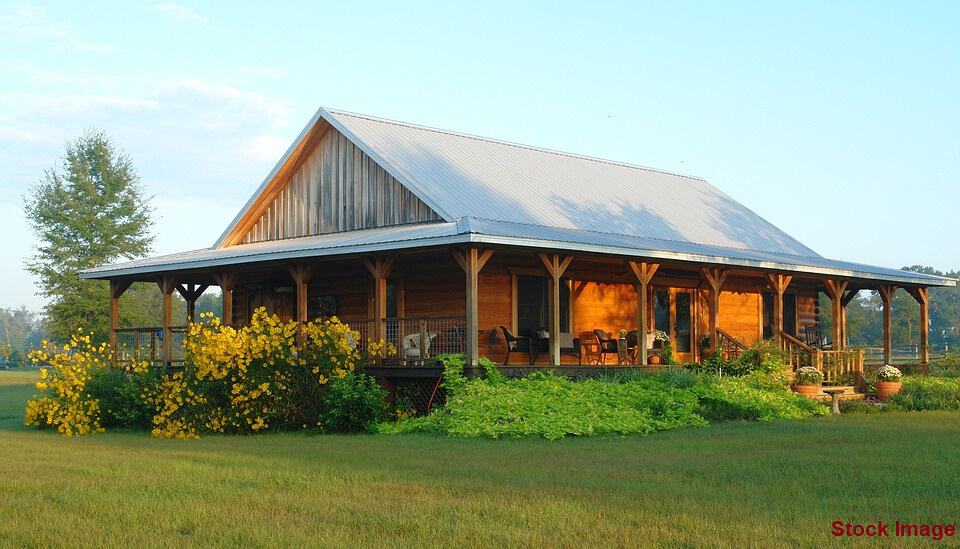
LOG HOME HOMESTEADSo you want to homestead but don’t think you can afford it? You see sprawling ranches on television with seven-figure price tags and think that is what homesteading is all about.

I’m here to tell you that’s not true. You don’t need to be wealthy to start a homestead. You don’t need a trust fund or a rich relative. For most people, this isn’t a hobby or a vacation house, it’s a way of life.

A life of self-sufficiency. A life that includes hard work and discipline, but also one where you will feel rewarded when you lay your head down each night.

If that sounds like the kind of life you want, you can follow these steps and begin your dreams of homesteading sooner than you might expect.

  1. Where you choose to live is important

We all know location is everything is real estate, and that is certainly true when looking to purchase a homestead. Generally, the further you are from town, the cheaper- and more available- land becomes. In some cases, that might mean moving to another part of the state or out of the state altogether to follow your dreams.

Whether you move across town or across the country, keep a couple things in mind. What is more important to you? More land or being closer to town? And if you have kids, school could be a consideration. Would you be happy moving to another state and potentially leaving your family?

There is no right or wrong answer. But these are things you will need to think about as you begin your life on the homestead.

  1. Buy what you can afford

You don’t need to start out big. You can begin homesteading on a couple acres and build it up over time. That’s usually a great place to start so you don’t get over your head and potentially discouraged by the amount of work a large homestead entails.

And one of the great parts about living in the country is that you can usually buy more land around you as you have the money and the need.

But it will be no fun if your property is larger than you can work or more expensive than you can afford.

  1. Go into homesteading debt free

As you prepare to begin homesteading, becoming debt free should be in your plans. Pay off your student loans, credit cards, medical bills or any other type of consumer debt before moving forward. You might think most everyone has debt, and that’s just normal. You’d be right, but you need to be different. Why?

Because your debt will just be a stranglehold on you and your homestead. You will constantly be paying back debts, and interest to the bank, rather than being able to save for the future. This will take commitment and might mean you put off your dreams for a few years, but it will be worth it.

If you don’t think getting out of debt is possible, I am here to tell you it is. To get started, I recommend you read Dave Ramsey’s The Total Money Makeover. It will bring you financial peace and change your life forever.

  1. Buy used

That new shiny tractor at the dealership looks mighty nice. And it sure would look really nice on your property. But I’m not interested in the fancy price tag that goes along with it. Like anything with a motor, it is going down in value. So buy used. Whether it’s a tractor, trailer or your truck.

This is part of debt-free living and living within your means. If money is not an issue, buy whatever you’d like. But if you are wondering how you can make it on a budget, buy used and save.

  1. Do work yourself

Learning how to fix things yourself– whether it’s a plumbing issue in the house or something on the tractor- will save you mightily. You’ll save money, but you’ll also save time from not having to wait for someone to come to your property when they can.

But if you’re not a DIY pro right now, it’s okay. You will learn a lot along the way, whether it has to do with your house, your property, your animals or something else. Just be ready.

  1. Monetize your homestead

There are multiple ways that you can make money on your homestead.

First, and most obvious, is selling what you harvest. Fruit, vegetables, eggs, milk, even meat. There are still plenty of people who sell what they harvest out of the back of their truck on the side of a highway. You can do that, but in the interest of being more efficient, you can sell at farmers markets, online or through personal networks.

In this same category, you can also barter. If you need some work done that you can not do, instead of paying cash, see if you negotiate a fair trade.

You can also share your experience on the homestead through blogging. Blogging is how I was able to quit my day job and earn a full-time living without having a regular job and a boss. If you are interested in getting started, I’ve put together a comprehensive step-by-step guide to starting a profitable blog. Be sure to check it out.

  1. Live off the land as much as possible

Maybe one day you dream of being 100 percent off-the-grid eating only food you harvest on your homestead. Even if you’re not there, as most homesteaders are not, you can still save by living off the land.

A good way to start this journey is to set goals. These goals will be different for everyone depending on experience and size of your homestead. But outline what percentage of food you want to harvest by season. See if you are hitting those goals and increase them each year.

If you follow these steps and make some sacrifices along the way, you will be homesteading very soon.

Filed Under: Self-Employment

Straw Bale, Rammed Earth, and Earthbag: Three Unique Building Methods for Your Homestead

April 18, 2018 M.D. Creekmore

by Adam Leviness

If you’re reading this site it’s probably because you either are or dream of becoming, a homesteader. Living off your own piece of land, becoming more self-sufficient, and living a more simple lifestyle.

Maybe you have even started looking at pieces of land in the country that will be able to provide everything you and your family need. If you’re really lucky you already own that piece of land and are just waiting for the right time to move there and start your new life as a homesteader.

If that’s where you’re at then you are probably chomping at the bit to break ground on your plot of land and build your very own house. Maybe you’ve seen other homesteaders who have rolled up their sleeves and built beautiful homes from the ground up or hitched a tiny home they made to a trailer.

The problem with these homes is they are all basically made using the same materials and building techniques that almost every home in the country is made with. In the Western World, we have been making our homes from wood, screws, and maybe some bricks for hundreds of years. And, while that’s all well and good for the average person, these materials don’t really mesh well our homesteader mindset.

Unless you have a large timber field on your property or your own personal quarry in your backyard, you will have to ship in the necessary materials from somewhere else. And, the process of making these materials plays a part in the continued destruction of our planet. Forests are cleared for the wood and strip mining gets us our stones to make traditional homes.

This doesn’t exactly line up with how homesteaders tend to appreciate the land and everything it provides for us. Luckily there are ways to build a home that fall more in line with the homesteader lifestyle.

If we look around the world other cultures have been using building materials and techniques to make their homes without being as wasteful, with little carpentry know-how, and for much cheaper than what the average home in the West cost to build.

Homesteaders are starting to find that things like earthbag, rammed earth, or straw bale houses not only make it easy for anyone to design and build their own home but to build them using mainly what their piece of land provides.

These types of homes are great for homesteaders and people looking to go off-grid alike. If your property is far out in the country, away from towns or possibly even paved roads, then shipping in the materials to build a traditional style home will not only be difficult but it could be rather expensive as well.

That’s why I suggest you consider building your house using one of these techniques instead. They can be built with all the modern amenities you would find in any other home, so while you’re living off-grid, you don’t have to live in the stone age.

Each one has its own benefits as well as downsides, so it will be up to you which one serves your needs best. Whichever one you decide to build with, however, you can be happy with the fact that no matter your skill you can get your hands a little dirty and feel the pride that comes with building a house with your bare hands that your family will enjoy for years to come.

So, let’s get right to it so you can figure out which one is best for you.

Straw Bale House

I’m starting with the straw bale house because of the three it is closest to the traditional home design we are all so familiar with. If you don’t want to stray too far off the beaten path then this is probably the best option for you.

Straw bale houses look a lot like a traditional home, but as the name implies the walls are made of bales of hay or straw and then generally covered with plaster. The frame, roof, and foundation are all made using traditional techniques.

Now, I know what you’re probably thinking; wouldn’t a straw bale home be a huge fire risk? As it turns out these types of homes are actually less vulnerable to fire than a house made out of wood. Because the bales are so compact a flame has a hard time catching and is more likely to fizzle out resulting in nothing more than a few embers.

In fact, what you need to worry about with a straw bale house is moisture. Water damage to a straw bales house can do more harm than it would to a normal wooden house. But, if you are planning on building a house in a dry, arid region then it could be the perfect option for your new home.

And, while the water damage is a potential problem there are far more benefits to using straw to build your house. For one straw is amazing at insulating a home, which means your heating and cooling bills will be much cheaper. If you are going off-grid and planning on getting energy from solar panels or wind turbines than straw bale walls can go a long way in cutting down your energy use.

They are also pretty simple to build. A basic knowledge of building techniques and a little help from a skilled carpenter to guide you through the harder parts of the job is all it takes to build your very own straw bale house. But, in all fairness, they do take more skill than the other homes listed here.

With proper upkeep and maintenance, a straw bale house can stand for over a hundred years. But, if and when you are done using your home the materials are biodegradable and will be taken right back by the earth it came from.


Rammed Earth Homes

Rammed earth construction has been used for building for thousands of years. It is one of the oldest building techniques known to man, and it was in fact used to build part of the Great Wall of China.

Planks, which can just be a couple pieces of plywood, are set up to serve as a guide of sorts for your wall. Then a small layer of a dirt, clay, and gravel mixture is then poured in between the planks, and using simple tools or machinery the mixture is pressed and compressed as tight as you can get it. You simply repeat this process until you have finished your wall.

While it can be a laborious task without modern machinery, with time and patience anyone can make their own house using this method with almost no carpentry skill whatsoever.

Rammed earth houses also have the benefit of looking a lot like a traditional home. While the walls are made of dirt and sand you still have the type of square rooms we’re so familiar with but with a more aesthetically pleasing look of wavy sand layers.

The list of benefits doesn’t end there, however. Rammed earth homes have noise reducing properties, they are fireproof, pest proof, durable, keep your house at a tolerable temperature year round, and are environmentally friendly.

The one big downside to rammed earth is that it is somewhat susceptible to water damage. This doesn’t mean that after one rainfall your new home will turn into a sloppy, muddy mess. But, it does mean they are best used in drier climates. However, with a little upkeep, they can be built in any place that doesn’t get an unusual amount of rainfall each year. In fact, for being made of basically dirt it holds up well enough to rain that buildings have been made using rammed earth in places like Australia, France, and even South Carolina. Taking some simple waterproofing measures with your walls can ease your concerns about water damage.

Earthbag Homes

Earthbag homes are very similar to rammed earth and have many of the same benefits. And, they might be even easier to make for a first time home builder.

While the dirt in a rammed earth home is exposed, in an earthbag home that dirt is kept inside of sandbags before being used to build the walls of your home.

The first step to building an earthbag home is to level and ram down a large, circular layer of land that will be used as your foundation, no concrete needed. The filled sandbags are then laid in a circle end to end overlapping at the openings. Once you have your first layer of sandbags laid in a circle you then place a length of barbed wire on top of them that will be used to help hold all of your bags in place. Then continue the process until you have a dome-shaped room to your desired size. Finally, plaster is used to coat the entire structure inside and out.

This method of building is easy enough that one person could build their entire home even without any knowledge of carpentry.

While it is possible to make just about any shape house using earthbag, most people that design them have found that a domed shaped earthbag house is the best way to go. That’s because a dome shape will make your house earthquake proof on top of all the other benefits.

Those benefits include being soundproof, fireproof, bulletproof, and flood proof, and environmentally friendly. But, the best advantage to having an earthbag home is that they can cost as little as $5 per square foot to build.

As homesteaders and people willing to live off-grid we do things a little differently than everybody else, so why would you want to live in a house that’s the same as everybody else?

These unconventional building techniques let anybody build their own dream homes mostly using materials the land provides, in an extremely affordable manner.

Your home is where you build your life from, using these methods for building yours you can make it as comfortable and as personal as you like. And, since all three are extremely energy-efficient they will get you one step closer to living the type of self-sustaining life every homesteader dreams of..

Filed Under: Homesteading

  • « Go to Previous Page
  • Page 1
  • Interim pages omitted …
  • Page 83
  • Page 84
  • Page 85
  • Page 86
  • Page 87
  • Go to Next Page »

Primary Sidebar

Subscribe to Blog via Email

Enter your email address to subscribe to this blog and receive notifications of new posts by email.

Join 7,204 other subscribers
  • Amazon
  • Facebook
  • Substack
  • Twitter
  • YouTube

“Do more with less.”

– Minimalist proverb

Recent Posts

  • Just so you know
  • Weather Update for My Corner of Appalachia
  • Why I’m Ordering Ivermectin + Mebendazole Every Year
  • The Website’s Shutting Down (But Here’s the Plan)
  • You Are Hated! Start Training Like It!

Footer

Recent Posts

  • Just so you know
  • Weather Update for My Corner of Appalachia
  • Why I’m Ordering Ivermectin + Mebendazole Every Year
  • The Website’s Shutting Down (But Here’s the Plan)
  • You Are Hated! Start Training Like It!

More about me

Books I’ve written

Books I’ve read

Follow Me on YouTube

Follow Me on Facebook

Gear I Use and Recommend

Newsletter

Search this site

Follow me elsewhere

  • Amazon
  • Facebook
  • Substack
  • Twitter
  • YouTube

© 2008–2025 M.D. Creekmore · As an Amazon Associate, I earn from qualifying purchases.